
 Ask ChatGPT


 Rosebud with Gyles Brandreth
12 May 2026 · 55m · 28 chapters
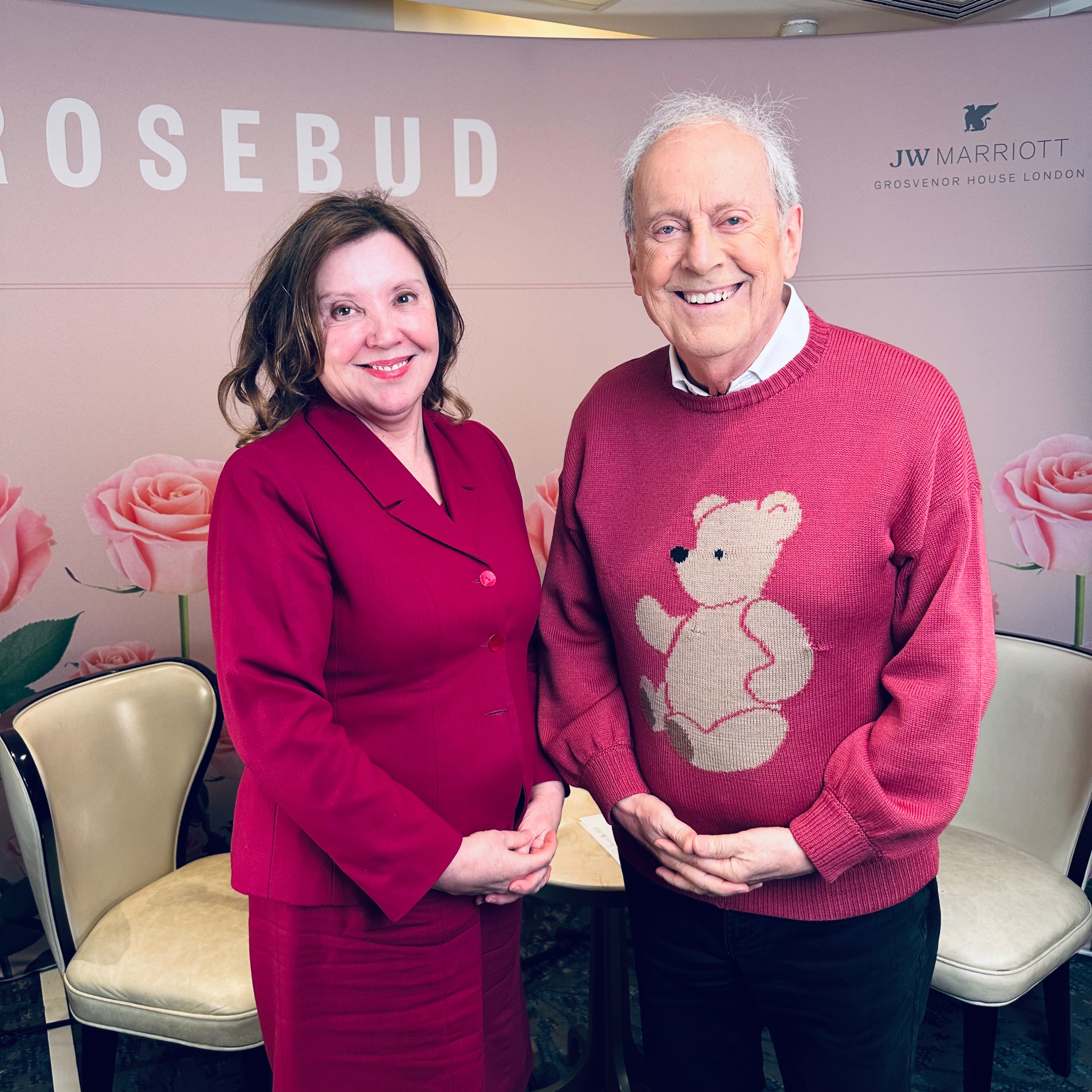
Childhood’s long-term impact; England’s children’s rights and school attendance after COVID; how to prevent harm by listening to children and supporting families and mental health.
Dame Rachel De Souza, England’s Children’s Commissioner (sixth/final year, started March 2021 after lockdown). Previously a headteacher/academy leader who turned failing schools around; also has experience as a teacher and head. Personal background includes a working-class Scunthorpe upbringing, Catholic faith, and family disruption tied to her mother’s difficult early life and later mental health challenges; two brothers later ended up in prison.
The Commissioner’s role is a six-year public post to protect/promote children’s rights and ensure Parliament hears children’s voices; she has “superpowers” to enter child settings, obtain child data without FOI, and require responses to letters. Children’s top ambition in her “Big Ask” survey: “great job, great future,” plus support at school and getting back to school. Attendance and mental health problems often have solvable “push and pull” factors (e.g., uniform, bullying, fear, poverty). Closing schools after lockdown was a major mistake; schools should not close again.
Manchester attendance work found children missing school due to practical barriers like not having the correct uniform; fixing it enabled return. She describes children in “ghost” cases found via scouring data, and a broader need for flexible, longer-term mental health and school re-engagement support.
Written by AI. May contain mistakes.
Gyles discusses the lasting impact of childhood experiences.
“We've discovered over the last three years, recording Rosebud, that a childhood lasts a lifetime.”
Gyles introduces Rachel D'Souza and discusses her background.
“Anyway, she is now the Children's Commissioner for England.”
Rachel explains her role and responsibilities as Children's Commissioner.
“Our guest is Dame Rachel D'Souza, and she is the Children's Commissioner.”
Rachel shares insights from the Big Ask survey of children's needs.
“So I talk about under 18s because that is the legal framing of it in the Children's Act.”
Discussion on the barriers children face in returning to school.
“So I literally, we scoured the data to find who had fallen off roles, where were these children, and we went and actually found out, why are you not at school?”
Rachel talks about mental health challenges and support for children.
“Because having spent my life around Westminster, I'm used to wonderful reports coming in saying we've identified this problem, that problem, what we need is more mental health support.”
Explore the lasting impacts of lockdown on children's education and future.
Rachel shares her earliest memories and the significance of her family dynamics.
“Because I have the feeling that childhood lasts a lifetime.”
Delve into Rachel's mother's challenging past and its impact on her family.
“Renate Fekete, although she was Renate, well, she was Renate Dornemann, Renate Fekete, but she was baptised Dagmar.”
Understanding the positive influence of nuns on Rachel's mother's upbringing.
“And how has this heritage affected your mother?”
Rachel discusses her father's background and the dynamics of her family.
“And who is your father and how did your mother meet her?”
Explore the struggles faced by Rachel's younger brothers as they grew up.
“In fact, we always say the brother younger than me, Ryan, was the pretty one and everyone that spoilt him.”
Discussing how family issues affected mental health in childhood.
“So you've gone and you leave these 13, 14-year-old boys in this family that has moved to a new place.”
Discussing the connection between personal trauma and artistic expression.
“But you realise things are not going well.”
Reflecting on the challenges of family dynamics and the importance of education.
“So I had, you know, as a youngster, my great teacher at Sixth Woman taught us philosophy and theology.”
Sharing experiences in school and the impact of music on personal growth.
“But we also, I think the two or three of us had that, particularly Anne and I had that, you know, we're going to learn, we're going to go do something else.”
Exploring the significance of faith during childhood and its influence later in life.
“What did you get most from it at that age when you were a girl?”
Discussing the psychological benefits of confession and the importance of community.
“Do you remember him, the Irish psychiatrist?”
Recounting the story of meeting her husband during university days.
“And I just looked and I thought, that's him.”
Discussing the transition from university to the workforce and initial career struggles.
“So you go through university in love with your husband.”
Explore how a philosophy graduate transitioned into a fulfilling teaching career.
“I mean, I love my degree and I just did it for it.”
Learn the strategies implemented to successfully turn around failing schools.
Discuss the impact of lockdown on children's education and mental health.
“From grooming gangs at one end to, you know, people not turning up at school and then being there.”
Examine how childhood experiences shape individuals and the need for support.
“But I think there are solutions and we do know what to do and we should be doing it.”
Delve into the complexities of family life and its impact on children.
“But her creative ambition maybe wasn't as fulfilled as she'd liked it to have been.”
Reflect on personal childhood moments that shaped identity and resilience.
Explore Rachel De Souza's journey from childhood to becoming a dame.
“I wonder where they came from, your grandmother maybe?”
Discover Rachel's evolving views on family and education's role in society.
“So I think up until I did this job, and I still believe it, and I gave my life to it, I would have said, education, education, education, right?”

Get the gist, explore an idea or ask about something said.
 Claude
On Rosebud with Gyles Brandreth, what are the key points of this episode?
Searching your listeningAutomatic transcript. May contain errors.
0:00This is a Monday.com ad. TheSameMonday.com helping people worldwide getting work done faster and better. TheSameMonday.com designed for every team and every industry. TheSameMonday.com with built-in AI, scaling your work from day one. TheSameMonday.com that your team will actually love using. TheSameMonday.com with an easy and intuitive setup. Go to Monday.com and try it for free. Yes, TheSameMonday.com. Hi, who here loves when their nails are perfectly done? Me, I'm Sarah Gibson Tuttle, and I started Olive in June because let's be real, we all deserve to have gorgeous nails, but who wants to spend a fortune or half their day at the salon?
0:43And that's why I created the Manny System, so you can have that salon perfect manicure right at home. And guess what? The best part? Each Manny only costs$2. Yep, you heard me,$2. No more$30,$40,$50 salon trips that eat up your day. Now you can paint your nails whenever you want, wherever you want. And trust me, you're going to be obsessed with your nails and everyone is going to ask you, where did you get your nails done? And here's a little something extra. Head over to OliveAndJune.com and get 20 % off your first Manny system with code PERFECTMANNY20 at OliveAndJune.com slash PERFECTMANNY20.
1:19That's code PERFECTMANY20 for 20 % off at olivanjune.com slash PERFECTMANY20. You're all set for a nail glow-up. Let's get those nails looking fabulous, shall we? I'm Giles Brandreth, and this is more Rosebud. Cue the music.
1:56Welcome to More Rosebud. I'm Giles Brandreth. And because it's Tuesday and it's More Rosebud, it's me chatting with my friend and producer Harriet Jane. How are you today, Harriet? I'm well, thanks, Giles. You're in good form? Yes. Our show is very much about childhood. We've discovered over the last three years, recording Rosebud, that a childhood lasts a lifetime. Good childhood, bad childhood, whatever it is, it's still in people's heads. It's very, very vivid. Your childhood is still very much in your head. Yeah. My childhood is very much in mine. And that's why we've got as a special guest today, somebody who has thought a great deal about childhood and childhood in our time.
2:44Her name is Rachel D'Souza. Did I tell you how I first came across her? I don't know, maybe. I am a supporter of, maybe even a patron of, something called the Longford Trust. Yeah. The late Frank Longford, Earl of Longford, Knight of the Garter, once a member of Clement Attlee's government, I think later a member of Harold Wilson's government, a Labour peer, and a very interesting person, a social reformer, a prison reformer. and I got to know him when I was very young indeed and admired him and liked him and he was a kind of sort of father figure in a way to me he took an interest in me which was jolly good of him in fact one of my first books was published by a publishing company which he was the chairman anyway he died and his family started something called the Longford Trust which was particularly concerned with people who've been in prison rehabilitation for them and education for them and it's a wonderful charity and I love supporting it and if you want to know more about it just look it up Longford Trust and find out what they're doing and support them.
3:47Well they give an annual lecture and I've had some fascinating people and I went to the annual lecture this year because I'm one of their patrons or supporters and Rachel D'Souza the children's commissioner was giving the talk and I was both impressed by her and what she had to say about where we are with children in 2026 particularly children from challenging backgrounds and children who are living in conditions where they might get into trouble, children who have already got into trouble, how that happens and how it can be prevented, but also by her own story. And I thought, this is intriguing stuff.
4:24I would love to her to be a Rosebud guest. Anyway, she is now the Children's Commissioner for England. and I think I'm right in saying they've just the Children's Commission's Office have just published a report yes they have it's called the big future I think they've interviewed thousands of children about their views on childhood today and what their worries are and their concerns and their hopes and dreams so they've listened to the children's voice so it's a it's a portrait of where children are what they want what they aspire to written by somebody who has been for five years England's children's commissioner a very interesting person with a very interesting story herself a childhood lasts a lifetime so this is Rachel D'Souza on more Rosebud cue the music
5:29well I'm very excited Our guest is Dame Rachel D'Souza, and she is the Children's Commissioner. What does that mean? Who employs you? Who are you working for? Oh, so the Children's Commissioner is a really interesting post. It came in 20 years ago after the death of a little girl, Victoria Climbier. Some of you may remember it. She was killed by those who should have cared for her the most, but every professional missed it. so government at the time decided to create a children's commissioner's post to make sure that sort of thing never happened again and that children's voices were heard and that the public service parliament from prime minister right the way through listen to the voices of children so it's a six-year public role my job is to protect and promote the rights of children to take their voices to parliament to make sure no law is made about them without hearing from them and thinking about them and I have some superpowers.
6:26I have three superpowers. I can enter any public building that has a child. Any school, any hospital. And I do. I can call for data from any public body that holds data about children without doing a freedom of information request. The only place that's ever tried to stop me having data is a home office, but I won in the end because I would taken them to court and I can get a reply from any public body to a letter I write about children. How many years have you been doing this? I'm in my sixth and final year so I started just after lockdown in March 21. And what for you is your big achievement?
7:04What do you feel when your head hits the pillow at night? At least I've done that in my six years. So when I came into role I did a massive survey called the Big Ask, the biggest survey in the world of children. We got over half a million responses and we basically asked them what do they need to thrive following lockdown, what do they want for their futures. So that hearing from children, which is always unusual and remarkable and surprising, really creating policy and taking those voices to Parliament and making sure the government acts on those, that's been the big achievement, the unique What is a child?
7:41What age are children, children? So I talk about under 18s because that is the legal framing of it in the Children's Act. So under 18s. And so often I will use with teenager rather than just child. But and the problems are very different, you know, for a five year old, for a 17 year old. But I think there is something we really need to be consistent about and protect there. And not every service does in the NHS. You know, often 16 is the cutoff point. But I am really clear, especially nowadays, I mean, I'm a mother of a 30-year-old and they don't just, you know, walk out the door at 16 fully formed.
8:18We need to sort of think about children for the whole span to 18. You are a mother, you've been a child, you've been a head teacher, you've been a teacher and you've listened to the voices of literally millions of children. What is the big ask? What are they wanting? Their number one ambition was great job, great job, great future. They wanted support at school. They wanted to get back to school. You wouldn't think that from the attendance figures. And, you know, they had great passions and interests and things they wanted to do. Get off their phones, get off the internet, especially after lockdown, get out and play.
8:52I mean, these are things that are great to hear, but it's not what we see. And I think we have a real issue about how we're bringing our children up, about what childhood is, and whether we can really help children thrive. I think it's so important. And as you come to the end of your six years, what's the big difference you've made? Or the little difference? What is the difference that you feel proud of? So I think we've done major work around children getting back to school. So we've done, I've used my powers to find every single child that was out of school. The lost children, the ghost children, we found them.
9:25We found out what's wrong. We've made policy proposals. You've literally found the individual children. Yeah, yeah, yeah. So I literally, we scoured the data to find who had fallen off roles, where were these children, and we went and actually found out, why are you not at school? Where are you? What's happening? So I think we have given, my little team of 30 and I have given a body of knowledge about children and what they want to government that I think is second to none. Can you give me one example of a child who wasn't going to school and as a result of your endeavour, the story of that child is now going to school and what was holding them back from going to school?
10:07So I think I can think of some children, a couple of children in Manchester and one particularly because we did an attendance, big attendance review in Manchester with all the services, all the children. and I can think of children who were not going because they didn't have the correct uniform and I can think of one child particularly where when we got the school just to sort out getting them a uniform they went to school and that's why and why I tell you that story is because it is there is always something there's always both a push and a pull so it might be poverty I haven't got a uniform you know I can't my mum's got mental health problems I have to get the other children to school.
10:47It might be that. And if it's that, you can solve it. It might be something around a particular teacher or something that's frightening them or bullying. But then the pull factors are, I love that lesson. Or if I could just solve this thing, I could go. It's often really, really small. And the best place people to solve that are actually not the children's commissioner. It's their own teachers and headteachers with their parents. But the challenge for you is there are 30 of you in all yeah and how many children were being reluctant to go back to school oh thousands yeah no no it's hundreds it's terrible i mean you can't touch the lives you 30 individually you can set out a framework yep but is it happening is it being so so look we we can survey children talk to children and we do get involved in some individual cases but normally the most vulnerable children we can't you know they're as you say there are only 30 of us what we can do is advise teachers advise head teachers which we do i've just surveyed every single head teacher in the country got a 90 response rate for what their biggest concerns are but what would make things better for them for what they're worried about children for and that we can disseminate share make sure that policies are made around that what are they most worried about so interestingly mental health support came out very very high what would they Give me an example of what that means.
12:11Because having spent my life around Westminster, I'm used to wonderful reports coming in saying we've identified this problem, that problem, what we need is more mental health support. But actually when it comes down to it, I'm thinking of a specific child in a bedroom that I know who she has not been back to school since lockdown. And her parents don't know what to do. the local authorities know what do you do? So identify the problem, say we need more money, we need more of this, send, et cetera, we've got it underfunded, there's poverty, et cetera. I'm asking you how you as the Children's Commissioner, as well as identifying it, how you can help the people on the ground make a difference.
12:56Yeah, and we do work with advising on this and there are tens of thousands of children like that. You know this child, I've met many others and talked to them and this is not an easy problem this is a result of what happened during lockdown um you know it was I think schools were closed when you ask that question what's what's the worst day of your life probably the worst day of my life for me was closing schools because I knew I absolutely knew that the tale of that was going to be worse than even I could have imagined actually I don't think any of us had understood the extent of these mental health of the children who are staying in their bedrooms and I think there are a number of things we can do I think sometimes it's about being flexible about settings and trying to help to find out what might motivate and interest that child where we can get them to even a day a week in the right sort of setting doing the thing they want to start getting them back I think we should have invested a lot more in that you know right after lockdown because I think now we're years in and we've got that child has probably been in that situation for a number of years and I think we also need to be thinking longer term as well like what about 16 and 18 what's going to happen you know if if school it has to go partly online and partly trying to step back what do we then do about college and about adult life so we cannot give up on it and I think all of those things I've just spoken about things that need to happen and need investing in and needed investing in.
14:32And what we've done is forget about it. Well, we're going to come back, I hope, to talk a little bit more about what you've learnt about the nature of childhood. Because I have the feeling that childhood lasts a lifetime. Yeah. So it's lovely if we can get it right. But I want to begin by talking about your childhood. Because here you are, Rachel D'Souza, interesting name, want to hear about that, born on the 12th of January 1968. 68. My first question to you is my first question always, Rachel D'Souza, what is your very first memory? Gosh, so I am one of five children. The brother older than me died as a baby, so I've got three living brothers.
15:13And I remember being a very little girl and my mother bringing my baby brother home and feeling a little bit nonplussed because I'd been the treasured daughter you know and feeling a little bit nonplussed but you know and she what she did she sat down with me and she read my favourite poem the highway man you know is it Walter Lemaire uh no um Alfred Noyes you know um the uh yes the road was a the road was a ribbon of moonlight and the highway man came riding you know and Beth the landlord's black coat daughter I can remember it and all the poems she used to read me and and just that making time for me like that and sort of connected to that about that same time my eldest brother was going to school and I remember being really like I want to go to school how can you know he's going first and I want to go and she would walk we'd walk him to school so that sense of been read to and the family growing and it's all having our little bit of time.
16:16So who was this mother of yours? So my mother was born in 1945. She had a Austrian-Hungarian mother. What was her name? Renate Fekete, although she was Renate, well, she was Renate Dornemann, Renate Fekete, but she was baptised Dagmar. So she had a German father from Leipzig and my granny really did not want to live under communism. She was a real Austro-Hungarian. She was an interpreter. She was from a Hungarian family in Bratislava. So she wanted to go west and my mother's father didn't. So she left my mother in a convent in Passau and she was there for seven years and made her way, took a passage west, came in through Manchester here, got passage, so worked in the mills.
17:08This is your grandmother? My granny, yeah. And then brought my mother over when she was seven and my mother experienced some pretty terrible things so there was lots of it was southern bavaria just after the war so there was lots of poverty she had hepatitis she's only four foot eleven um so that seven years been brought up by nuns with 50 other children i've got the photos of it um and her father disappeared did he we still i've never traced him found him no so the family split up basically yeah granny came to manchester yeah to make a new life. Yeah. Leaving your mum. Renata. Yeah, and the nuns rebaptised or rebaptised are called Renata, which means born again in German.
17:48Very good. Leaving her there for seven years with no, you know, there were, my grandmother says she sent letters and things, but, you know, my mother wouldn't have known. She was just brought up as a baby. So your mother then is brought to Manchester. So my granny married again. So she married my lovely step-grandfather's Ukrainian Semen Televny. and they moved to Scunthorpe where he worked in the Still What's in the Day as they did. And then at night he was a distant journalist against the Soviet Union. So he was very well known. He was sued by the KGB a number of times. He was well known in Ukrainian circles.
18:26So when she married again, she brought my mother over. And I mean, it's hard to imagine. And how has this heritage affected your mother? She's still alive? She is still alive, yes. And how has it affected her? She, I think, is always on the look for home. She's always on the look for, you know, she's moved a lot, travelled a lot. She's 80 and she's just started her MA in fine art at Sheffield, at the University of Sheffield. Yeah, yeah, she's pretty fit. Does she ever talk about the first seven years being with the nuns? Yeah, yeah, she sees those nuns. I have a carving in my house. She's very artistic.
19:02My mother-in-law has painted a drawing field. She's got this fantastic carving of a nun. and I know that's a mother figure for her and the nuns and I think that orderly having five children and the way she brought us up it was I was taught by nuns and I can see the influence you know that it was order it was calm there was lots of love there was a love of education because one hears occasionally terrible stories of nuns well I think they were mixed you know but they were good kind of but overall it was a good experience yeah
19:38ActiveCampaign is the marketing automation platform built for big swings and big dreams. Generate ideas in seconds, import your brand, and create full campaigns with simple prompts. Get started for free at ActiveCampaign.com.
20:05idea. Today is the day that you learn to do your own nails. So whether you're brand new to doing your nails or already obsessed with your at-home Manny routine, this is your invitation to level up your nail game with expert guidance every single step of the way. So no matter where you are in your nail journey, we've got you covered at Olive in June. Are you ready to take the DIY Manny Challenge? We've taught millions to Manny and now it's your turn. So go to oliveinjune.com slash DIYLove20 for 20 % off your first system using code DIYLove20. That's Olive and June dot com slash DIY L-O-V-E 2-0.
20:44And who is your father and how did your mother meet her? So my father is from an Irish Catholic background. And he grew up in Scunthorpe and he was quite bright. He got sent to the technical grammar school they had in those days. And he could have gone on to his university, but his father sent him out to work. So I think that was always a bit of a thing with him. What is his name? Dave. Dave Kenny. David Kenny. Yeah, yeah. And it was an unusual marriage, right? I can't think of two more different people. Were they quite young? So she was 18. He was 25. He was the cousin of one of my mother's close friends.
21:23And he was tall and blonde and Viking and looking. you know she's quite small isn't she she's tiny and european and yeah so that it was it's just one of those you wonder you know they got together did it did it work they did so for many years it worked but unfortunately that there was quite a difficult divorce but it was after i'd just gone to university and that perhaps you know explains some of the difficult things that happened in the family you say there were five of you but in fact there were six because you mentioned earlier no five one died five which one died a patrick the one the year a bit older than me and i think it was just baby where were you in the pecking order then three so you're three so you have a brother i only ask because sometimes from these conversations it's clear that affects the the parents quite a lot and therefore it affects how they treat you yeah but it did i i felt i've always felt despite the fact that we were very much a working class family money was short i just felt very loved.
22:23I was very loved. I wasn't spoiled. In fact, we always say the brother younger than me, Ryan, was the pretty one and everyone that spoilt him. But I was very loved and I was very attached to my grandmother. So I was always, I remember being a tiny little top and put on the bus and my grandmother picked me up the other end and every Saturday and she'd like teach me to cook Hungarian things. And how were you with your brothers? Oh, I adore them. I adore them so um eldest brother and i were like a two um and he's wonderful i mean he's still you know very much they they all are in our in our life the two younger younger ones had a tough time i think yes because i've heard you talking about that you were able to talk a little bit about it tell them yeah so so the eldest one sean and i um very much at 80 we were the first to go off to university he went off to be an engineer trying to be an engineer i went off to study theology but um so in philosophy but the two at that point I think my parents my mother was just in her 40s and I think their early life caught up with her a bit and so she sort of went through a difficult time I think they moved her solution was always to move so we lived it forgive me unpick that a bit I say unpick that a bit only because you have this role as a trans commissioner which means you have this great view of things but as i've discovered doing this conversation it's actually all about individuals it's all about individual stories individual families and people say i had a difficult time that affects different people in so many different ways yeah and how people handled it and you're telling me one of these ways of her handling was to move on to a different place but what was the breakdown or the unhappiness and how did she deal with it so i think she'd had the you know the large family you had so many children and you are sort of looking after them and she was excellent as a mother I mean she was she was superb and but I think she probably came to a point where um she had to face those first seven years and there were some very very difficult things in those first seven years so um and I think perhaps the marriage had been a bit tricky because he had been like he'd worked away a lot and although everything was smooth on the surface things were perhaps a bit more difficult so she'd hoped to sort of make a new start move to Sheffield without him with him no with him with him with the two younger brothers I'd gone at university at this point in fact my grandmother gave me a hundred quid and said never come back she was very Hungarian but what does she mean by that well don't talk on our doors again no no no No, I think it was just...
25:04You're on your own now. No, I think that there was a sense in working class families often where you were on your own, like 18, you were on your own. And that was far more normal then. No, but with her, I think it was more about her reliving her experience, actually. And, you know, she went, she left, didn't she? And she was like, there isn't a future. Go to the city, have a future, you know? So I think it was an encouraging thing. It just sounded a bit dramatic. No, but mum and dad moved to Sheffield. And literally, I think the marriage unraveled. And I think mum wasn't well. And I think dad did that thing that often happens in these situations where perhaps he wasn't as connected as he should have been to the two younger brothers.
25:48So they had a really tough time. How much younger were they than you? So the one younger than me is about three and a half years younger. And then one four and a half years younger. Oh, so they're quite a bit younger. At that age, that's quite a big difference. So you've gone and you leave these 13, 14-year-old boys in this family that has moved to a new place. That's challenging. The mother is having her own issues. The dad is not very present and feels a bit remote from all this. Doesn't quite know how to cope with it. And they get into trouble, do they? What happens? Yeah, it's a bit of a slippery slope.
26:19So it's a bit like some of the children I deal with as children's commissioner. You know, missing school, not much money, in with a bad lot. And then by, certainly by the time they were in their 20s, both of them, I had to go visit them in prison. Yeah, it was difficult. And it does, I see it so much. When people ask me about solutions, when you started asking me about solutions with children, the family, the home, the stability, those early things are the things we should be protecting and supporting. How was it for your mother when they got into trouble and ended up in prison? um i think she was trying to cope trying to do her best she was an intelligent woman so she was seeking support um but it was tricky um and she but she was also you know going through her own experiences as well it's different to know what to do my mother who also had five children and indeed one died um i now realize in retrospect had a kind of breakdown in her 40s basically retreated to her bed.
27:26I never understood why mum was in bed all the time, but she was. And she was taking these black bombers, which is what my father called these pills that the doctor gave, to boost her morale. But nobody actually did anything. I realise that now. My father was a kind person. And eventually he gave in. Her answer wasn't moving, was having another child. So they adopted, even though the adoption agent says you're both far too old, you already had five children you really but she wanted to replace the child she'd lost yeah that was part of it and that gave her then a new sense of purpose so really what I'm I'm saying is I'm understanding this you know years after my mother is dead and we're now beginning to think this through and you're telling me that in your mother's case she was going through this on her own yeah and you are telling me it was her childhood because that's a rational thing to say but do we know that she was having bad dreams about her childhood do we know any of this yeah I mean I think she went to art college she started sort of exploring you know through art it's a very intense experience I think and I think perhaps things that had you know that things were remembered and things were thought about and experienced so I think it was all of that I think maybe the marriage coming to a certain point as well so i mean she we we talk about it a lot but she is an artist and she talks about it in that way good now i'm just thinking i'm thinking of when your marriage collapses yeah and your boy is true of your your pride and joy yeah very difficult very difficult in a city where you've lost all your all your things it's a pretty awful thing to happen to you how did you cope when you were in your late teens and 20s going away to university offered by the grandmother£100.
29:15Never come back. Never come back. But you realise things are not going well. The boys are getting into trouble. Mum and dad have split up. You're anxious about your mother. Yeah. What was going on in your head? So I also was trying to survive, I guess. So I had, you know, as a youngster, my great teacher at Sixth Woman taught us philosophy and theology. And so I read James Joyce and I was like, right, I'm going to go to London, I'm going to study philosophy, I'm going to study theology, I'm going to know what he knows. I'm going to, you know, London was like Dick Whittington. Did you feel a bit of an outsider with the family?
29:52Because you're clearly the clever girl. What sort of primary school did you go to? State primary school, but actually the state system, particularly when I was growing up, offered the most, it saw you. So I remember being about nine years old. And, you know, the music person came in from local authority and tested us all and I was given a violin. And before you knew it, I was doing my grade three, my grade four, playing in the local orchestra. One of the teachers could speak German, so he taught me German. You know, I was learning Ukrainian. So I went to a very kind of ordinary primary school, but I had great opportunities there.
30:28My secondary school was fab. It was a local Catholic school. It was a state school, but it was a great school. And we were taught by nuns. Was it a girl's school? No, no, no. And there's a little cluster of friends that you had? Oh, yeah, a couple of great friends. And we sort of read things and thought things and had plans. Who do you remember best from the cluster? So Anne, Anne Stamford, who's – and she was from a family where the cousins were doctors and her parents were like my parents. And so they used to sort of look down on her, the cousins. So she was like, she was going to do something about this.
31:06And Dominique Russell, her dad was a French teacher. So we were a little gang of friends and we enjoyed all that Scunthorpe life has to offer. I mean, we had a great social life. It was very communal. But we also, I think the two or three of us had that, particularly Anne and I had that, you know, we're going to learn, we're going to go do something else. Do you have a Scunthorpe accent? If I'm back there, I have a very, I think you can easily tell. What is a Scunthorpe accent? You can tell if you ask me, you know, I have a bath. I don't have a bath. You can see the flat A's. It's quite northern.
31:38But you present as a middle-class English woman. Do you know why this happened? First few weeks at university. Which was what? So it was University of London, Heathrop. So it was a Jesuit university. It's closed now. Is it part of London University? Yes, yes, yes. It was King's and now it's closed. It was Cavendish Square just behind John Lewis. You know where the big Epstein, the Donner is, yeah. And it literally was like going to a seminary because it was very very small classes most people but I went because that teacher who taught me at sixth form I didn't know he'd been a Jesuit so I said to him you know sir I know I haven't done any work but I'd like to go to university you know I've been learning your stuff and I was quite sassy and I hadn't done a UCAS or anything and he said well of course you can so you can go to Oxford to Cambridge to Durham I was like my god and I said well what where did you go and he said well I went to Cambridge then I became a Jesuit and I went to Heathrop and I studied there for my second degree so I thought right I'm going I'm going I want to learn what he knows I'm going it was a bit unconventional because there was no history of going to university in my family was there faith in your family though um probably the most in me I was a very very sort of um devout young girl um so I would walk three miles to mass at night and I remember the head nun calling me in and saying and I was so swatty and good as a sort of 11 year old I was quite different as a 16 or 17 year old but I've had none calling me in and saying um Rachel you know we think you'd make a wonderful head girl one day and then she said and we'd be so pleased if you'd join us and I thought oh I wasn't so sure in fact I think that probably turned me actually but Yeah, yeah, yeah.
33:29So I was very, I loved my Catholicism. I loved it. What did you get most from it at that age when you were a girl? What did it give you? Imagination, colour, beauty, mysticism. I loved it. You loved the ritual? You loved the music? You loved the smells? Yeah, and also it was so different from family life as a steelworker's daughter with three brothers. You know, there was this thing that was beautiful. Yes. And my step-grandfather used to take me to the Orthodox Church as well. So, you know, we'd hear the music, the polyphonic music. Yeah, I used to love it. And has the faith stayed with you? I think one of the joys of being a cradle Catholic is you don't really ever have to ask yourself that question.
34:14It's just like it's something you have. It's yours. It accompanies you. And sometimes you're more that way and sometimes you're not. But certainly as I get older, yeah. Is confession useful? Yeah. Is it helpful? hugely at the right at the right points for people and in different ways for people it might not put everything right but it's a good i think it's a great psychological um technique i mean i think i like i studied with the jesuits and not just confession but things like ignatius's spiritual exercises are written by the great great psychologist it's an understanding of human nature and we've lost we lose a lot of that when we think we can recreate it all ourselves in in Years ago, I had an interesting conversation with Anthony Clare.
34:56Do you remember him, the Irish psychiatrist? And he told me one of the rules for being happy is to break the mirror. Stop looking at yourself all the time. And he, of course, came from an Irish Catholic tradition. And he said, well, the great advantage of the Catholic Church is through prayer, you're talking to somebody else. So you're not internalizing it. You're not actually brooding about yourself. You're externalizing it and sharing it and giving it to someone else. You may not be able to give it to your family or your friends, but there is an outside figure in the shape of God to whom you can do it without it just banging your head against the wall.
35:26Yeah, you can offload. I think his point there about the rumination, the over-obsession with the self, which is the downfall of so many poor young people who are just, because of social media and things like that, they're constantly looking at themselves and thinking about how they look and what they think. When I was a child, the thing about the nuns, you would know they loved your soul, but they were totally not, you know, you were not a thing of interest it was something about our generation talking to Anthony Clare he said all the research shows that having a faith does give you you're more likely to be happy it doesn't need to be conventional faith just said a line of life like a sort of golden thread through your life of faith or belief in something does tend to make it's that dimension is it kids children so in the big surveys children talk to me a lot about uh something wanting to be part of something bigger than themselves and i think that articulation is really interesting well this goes but another of anthony's rules was to be happy you have to be a leaf on a tree something that is bigger than yourself every human being is unique like every leaf in every tree is unique off the tree you feel independent that's lovely but you float about a bit and that's fun and then you quickly drop to the ground and you die you need to be part of an organism that is bigger and larger than yourself which is another reason why going to school is important because alone in your room you're not a leaf on a tree you're a leaf alone in a room absolutely schools the institutions although we often criticize them actually in terms of you know some of that old wisdom about about family school how we bring children up how you can be happy it's really really important to whom did you say for the first time in a romantic way not a family way I love you oh no it was definitely my husband so although there was plenty of childhood sort of you know we were we all grew up together it was lovely but they were that was just kids kids play but I met my husband the first week I was at university and he this man walked into the room and I was not I mean I was there for the life of the mind I was not at all interested in this tall, dark, with dark hair and in a leather jacket, walked into the room.
37:47And everybody went quiet. And I just looked and I thought, that's him. That's the man I'm going to marry. Wow. Before you'd even spoken to him. He thinks this is completely bonkers. So, yeah. And anyway, it turned out he was… Was he older than you? Yep, 10 years older than me. So he had just left the Jesuits. And that's why everybody went quiet. and he'd come back to finish his final year of his degree. He'd been in for four years. And his life was to be a clergyman. He was going to be a Jesuit priest and he made the decision that he was not going to do that and left. So I met him that day I saw him.
38:29He'd left, he'd signed the papers, he was ex-aunt in Catholicism, you know, you're in or you're out. And what in his head had he decided to do with his life? So I think that was his challenge. So he was going to finish the degree. And then what he did do in the end was he went to do his MPhil at Oxford, was supported by the probation service and had a long career in probation. But I actually think he was just a Jesuit in Mufti, to be honest. And how quickly did you become a couple? So there were some things to overcome. So first of all, I had to get to speak to him. I mean, I was just a little first year and he was like this serious.
39:12I was 18. And he was 28, 29. So I think that first Christmas holiday, that first Christmas, because I would work during the holidays doing things like be given tasks where I was living, paint the building or something. So I was going into university. So we actually met and got to know each other that first Christmas. But he was meant to be involved. So his family, quite interesting. He has a, his dad was Goan from, yeah, who came here in the 50s, dentist, but a big family. So that's where we get the Portuguese, the Susan name. There's a lot of Portuguese in Goa. Indeed. And his mother was Zoroastrian, Parsi.
39:52Oh. And from a very sort of, well, her uncle ran shipping. They were very well-to-do mum by family. and they had eloped and were cut off from their fortunes and sort of came in the 50s came here as dentists trained got married and were cut off but he Chris had been introduced to his mother's best friend's daughter and there was she was a lawyer in Australia and they visited and this was meant to be and then I kept turning up so my mother-in-law had to cope with she wasn't my mother-in-law then was like she said to me you know you know there is someone else and I said Yeah, but they were lovely.
40:30So my in-laws really, so I soon got to know them. Within a year or two, we were always fine.
40:59So you can have that salon perfect manicure right at home. And guess what? The best part? Each mani only costs$2. Yep, you heard me,$2. No more$30,$40,$50 salon trips that eat up your day. Now you can paint your nails whenever you want, wherever you want. And trust me, you're going to be obsessed with your nails and everyone is going to ask you, where did you get your nails done? And here's a little something extra. Head over to oliveandjune.com and get 20 % off your first Manny system with code PERFECTMANNY20 at oliveandjune.com slash PERFECTMANNY20. That's code PERFECTMANNY20 for 20 % off at oliveandjune.com slash PERFECTMANNY20.
41:38You're all set for a nail glow up. Let's get those nails looking fabulous, shall we?
41:46So you go through university in love with your husband. When do you marry? 23. I was 23. He was 32. Quite soon after graduation. And what were you going to do? So I got to the end of my degree. I mean, I love my degree and I just did it for it. What was it again? Philosophy and theology. So I mean, I was reading, taught by some of the best Jesuit minds, you know, Freddie Copleston, some of the great thinkers. I loved it. But obviously it's not practical. It's not obviously practical. And one of my tutors said to me, who explains that he loved Kierkegaard, old he used to be and he was like go he was all trying to give you the challenge and he's go go you know do something in the world you know don't be you know one of these people who just sort of is trying to save the world like what a rubbish um go do something and I thought well you know from humble origins I've got no one to look after me I should do something so I went and got myself a job as an accountant with one of the big accountancy firms I thought do it you know fine and that was their job then everyone was you know you wanted to go work for another big four um and I did it for two weeks and I cried every night I hated it I just hated it I thought you know I've lived for the mind and now I'm sitting here now for the right person I'm sure it's wonderful and I realized what I wanted to do was to be a teacher so I remember saying to Chris I mean we were just courting and something to him you know I'm so miserable he was like stop don't worry don't worry do whatever you want to do I said I want to be a teacher and he was like like oh I'm gonna be marital teacher nightmare but um the second I stepped into a classroom I loved it I loved it it was education was my vocation I loved it what was your best ever day as a teacher oh the day when I took on my first to kept first as a head teacher it was as a head teacher how quickly did you become a head teacher but quite very quickly I can see that so probably I was Tony Blair's number 69th academy principal in 2005 I was only 35 so you know in those days the academy principals were all 60 years older called sir something and I was just this sort of 30 something year old skitty but the the school where I was a deputy the school down the road that had been failing forever was going to become an academy and this academy thing right it was really the early days and I went and had a look at it just I had that gripping feeling of like I've got to do it everywhere I looked there was failure it's you know I know I'd been working in this really good school as a deputy and I was every teachers but I looked at the kids I thought they're great you know we could do this and it was a real turnaround job so how do you turn it around what happens what do you do on day one you well so I mean my day ones because literally I've done you know i did another one then i had 14 schools so turning around failing schools was very much my thing 14 yeah you've helped turn around yeah yeah so i had to trust so basically i i did this one um got it from failing to outstanding and how did you tell me so i think the first thing and this always sounds very depressing but it's the right thing to do is to be absolutely honest about where you are right the first thing is no everybody wants to pretend that it's okay or if you just do this or if you just do that actually there are so many elements that go into running a great school and you know you have to be honest about your start point and where your gaps are then you know what to do about it then i would throw the rule book out window because there is no way doing some national strategy or whatever's going to work it's not going to work kids haven't had a maths teacher for five years and you know and the football team fight every time they go out and you know what i mean that you're dealing with really really practical things um so i would literally then get my team we are going to go like every hour of that first day every minute of that first day of that first the strategy was so detailed and what truly truly needs to happen for example the fighting football team we're going to buy them a new kit we're going to give them a whole load of you know we're going to we're going to talk to them about being winners and we're going to talk to them about how you behave and then we're going to go with them and I as headteacher will stand on that sideline and nobody will fight you know and in fact they if they lose they will shake hands with the other team it's that level of absolutely I mean I'm loving this in a sense because this is the bottom up thing I was talking about earlier yeah yeah that school so it had been the school that Andrew Tate had gone to like literally he'd gone the year before I took it and in my first couple of weeks there was a really difficult boy turned up at the gates with a gun now those were the days when there weren't those sorts of things and like the primary school parents down the road were pushing up arms and wrote disaster and it for me you know that was like a key moment what do i do what do i do and like i wanted to exclude no one do that i dealt with it but by the time i left that school the only crime was wearing spot pink spotted socks to try to get in you know if you it children are children and if you set the bar where that bar needs to be and you you know do it properly you can turn it turn it around but attention to detail and I'm not someone who loves that but that's what you have to do.
47:06I know you're going to say that you're optimistic about children because you should say that and that's what your survey has showed you but talking to people about meeting you today maybe they were older people they all said oh you know it's all terrible the lack of discipline no one no backbone is awful Everything is awful. From grooming gangs at one end to, you know, people not turning up at school and then being there. It's all terrible. In your view, is it terrible? I think it's significantly different after lockdown. So I really, really, that's why I did, that's why I took this job. I remember sitting in Yarmouth, my school in Yarmouth, seeing this job come up and thinking, I'm going to go do that because part of the problem is about what happened with workforce part of it is children's attendance part of it is mental health we can characterize it however we want but it's like a long tail of covid and we should have gone harder um and focused on the children straight after lockdown we shouldn't have closed schools i mean i would never close schools again i think that was the first time we closed schools since uh the evacuation and we had no idea how bad the results were going to be we still have a backlog of problems but I do think with the right focus and energy and particularly in public service we could move it we did it before I mean we did it before with you know when I was a teacher in the 90s everyone would have said what you'd said how bad the state system is how difficult and that kind of foot on the gas of Blair and Gove and And, you know, and the way we just expected so much more and praised headteachers and pushed them and worked really well.
48:53It didn't work well for all. We need to do it for all. But I think there are solutions and we do know what to do and we should be doing it. The people who behave badly towards children were once children. That's always what amazes me. So I mentioned in passing the grooming gangs, but the people who were doing that were once children themselves. themselves people creating pornography disseminating it to the young were once children have you looked at all at adults attitudes to children have they changed worsened or is this again just headlines that make people depressed i think there's a couple of ways of answering that question and i think one of the things i've done a lot of research on is around you mentioned you know some of the most heinous things that are happening like um children being groomed online pornography grooming gangs and such like and it we have done a lot of research showing how so many of those abuses including peer-on-peer abusers and it's all worse than everybody thinks because i see the private data from the ncaa there are some things that i just could not say on here on this program often have been abused themselves or are looking at this material themselves as as children and that's one of the biggest factors you can now see so that is why we really need to clean up the internet for kids.
50:17I've been trying to think how a children's commissioner could have helped your family and I'm not sure that they could because human beings are human beings and you had good parents who meant well you had lovely grandparents your mother had lots of challenges. The first seven years of her life, she couldn't do anything about that. It wasn't her fault. Then she lost a child. Then she had all new children. Meant so well. But her creative ambition maybe wasn't as fulfilled as she'd liked it to have been. Maybe her husband didn't quite understand that. He had his own preoccupations. Then you left school.
50:56These two other boys, it coincided with her bad times. They got into bad company. These things happen. This is, this is the complexity of life isn't it i mean i think we need to be far less squeamish about talking about supporting family life and um and supporting young families and making sure whether that's that's everything from family hubs to the institutions to whatever whatever we can do i think to help families stay together be together and to we I was in Oslo recently and really interesting what with criminal justice system they really don't lock up children there are 10 children in prison in Oslo and I've been to see them all and they are because really they wouldn't be safe not been but what they do do is have an apps a national network of volunteers often older adults who basically mentor those children weekly those children you know children who've gotten into trouble they are curfewed they have to go to to school to school clubs there's a there's compulsion there and it's incredibly positive and what we do is we're very English and we sort of like we want to help but we don't know how and it really is family community and what do you think saved your two brothers they're now on the straight and now they are totally absolutely absolutely um very different stories so and they were very different people so one of them has a fantastic i mean goodness knows he has the most fantastic relationship the most lovely partner i i find it you know and that is his salvation and the younger one was much more interesting story in many ways he was less involved but by sort of got got involved almost by accident with difficult things and ended up you know having to go to prison i remember picking him up from prison and he actually found it sounds so so unusual this but he got involved with a harry krishna movement and he went to the monastery and spent three years in the monastery he traveled the world with them and you know thought deeply and now i mean he's just wonderful he's um he's got his own little house he grows his own vegetables he works with the homeless and it's incredibly productive and and there you've got just different kinds of relationships save you which is exactly what I was trying to say earlier I do think though some of those very traumatic experiences when you're young are so much harder and that's what I see with the young now you know the most vulnerable when your brain is developing whether it was my mother in the whether it's my mother abandoned and starved in the orphanage whether it was you know my brothers you know without without a father without stability I think when the brain is developing it's much harder which is why the interventions matter but the trouble is the state is very bad at giving love it can't do it it's it's human relationships so yeah so it's true that a child would last a lifetime and what you're telling me is because of the nature of the brain the memories we form in these early years will actually come back either to enhance our lives or to haunt our lives in later years i'm an optimist i think we i think with self-awareness with reflection i i absolutely agree with you they they we live our our childhoods are here aren't they but um but i'm an optimist i think we have we we we can form relationships we can make sense of our lives we can be productive we can be positive but i don't think we can necessarily do it on our own we've almost has reached the end I want you now from your younger life to give me a moment of joy what comes quickly into your head so probably as a little nine-year-old playing for the first time at the big sixth form college in the scumfolk district orchestra playing beethoven's ninth and I remember just sitting at the I was the back desk I wasn't very good at orchestral music and just hearing that fantastic you know the ode to joy and just looking around and thinking wow so for me music has always been a great thing and a moment of sadness probably for me one of the worst things was when um all the steel workers went on strike I remember that so we all were on free school meals and I remember sitting in my school and the school was really good because they just all everyone was on free school meals we all had to be and we all sat there and all the priests and the nuns and everyone came and just sat with us and but there was a sense of worry about money and worry about the future and worry about all the boys in my school had all gone to the steelworks and it was going to stop and that just been at that pivot point in history felt I didn't again I felt I'm going but I did feel you know that that sense of where it was financially difficult, uncertain.
55:58And finally, what have you learnt in your fascinating and long life, this complicated childhood, this brilliant girl who clearly has natural leadership qualities. I wonder where they came from, your grandmother maybe? Or maybe also your mother actually, not that she was given the chance. But anyway, natural leadership qualities, head teacher at 35, turning around at least 14 schools, being made a dame. Congratulations. Who gave you that gong? coalition coalition now how interesting most people say Her Majesty the Queen you are clearly a political animal and you think this is Princess Anne it was a wonderful day Princess Royal was given a whole adult life to public service indeed she has and is excellent excellent attitude but that's quite exciting the girl from Scunthorpe becoming a dame of the order of the British Empire and that was exactly what the Princess Royal said to me she gave it to me she said well how's a little girl from Scumfop turned around all these schools in Norfolk then.
56:57So we had a great chat. Lovely. It's a great achievement. So congratulations. So what have you learned? What has life, Rachel, taught you? So I think up until I did this job, and I still believe it, and I gave my life to it, I would have said, education, education, education, right? That is the way, the way through, the way to a better life, the way to a civilised society, the nearest thing to the silver bullet. But I think after doing this job, I've changed. I think I probably, I would still hold that, but I would say family, family, yeah, and stability for children. Family, stability, and then education.
57:41Education, education, education. Exactly. We couldn't ask for much more. Thank you so much, Rachel D'Souza. Thank you.
58:19Thank you.
Our More Rosebud guest today is the Children's Commissioner for England, Dame Rachel De Souza. Dame Rachel advocates for children in parliament, and on May 8 published a major survey of 1 million children in the UK - entitled "The Big Future". The children she's surveyed are especially those who are hardest to reach, living away from home, with disabilities, or in care – and the survey provides an urgent and definitive state of the nation of childhood, at a time when children are facing numerous challenges.
Regular listeners to Rosebud will know that we're particularly interested in childhood, and the huge impact the memories of our earliest years have on us. A childhood lasts a lifetime. And that's why Gyles is talking to Dame Rachel today - to ask her about the state of childhood in the country today, and to find out about her own story. Rachel tells Gyles about growing up in a working class family in Scunthorpe, about studying theology, and about becoming one of the most successful headteachers in the country.
Thank you to Dame Rachel De Souza for this frank and fascinating conversation.
Hosted on Acast. See acast.com/privacy for more information.


