
 Ask ChatGPT



Dylan Jones discusses growing up through chaos and trauma, then building a life in London’s creative culture (comics/magazines as a child; punk-era art school; music/fashion publishing). He also reflects on therapy and “small moments” of change, plus how media editors can shape culture.
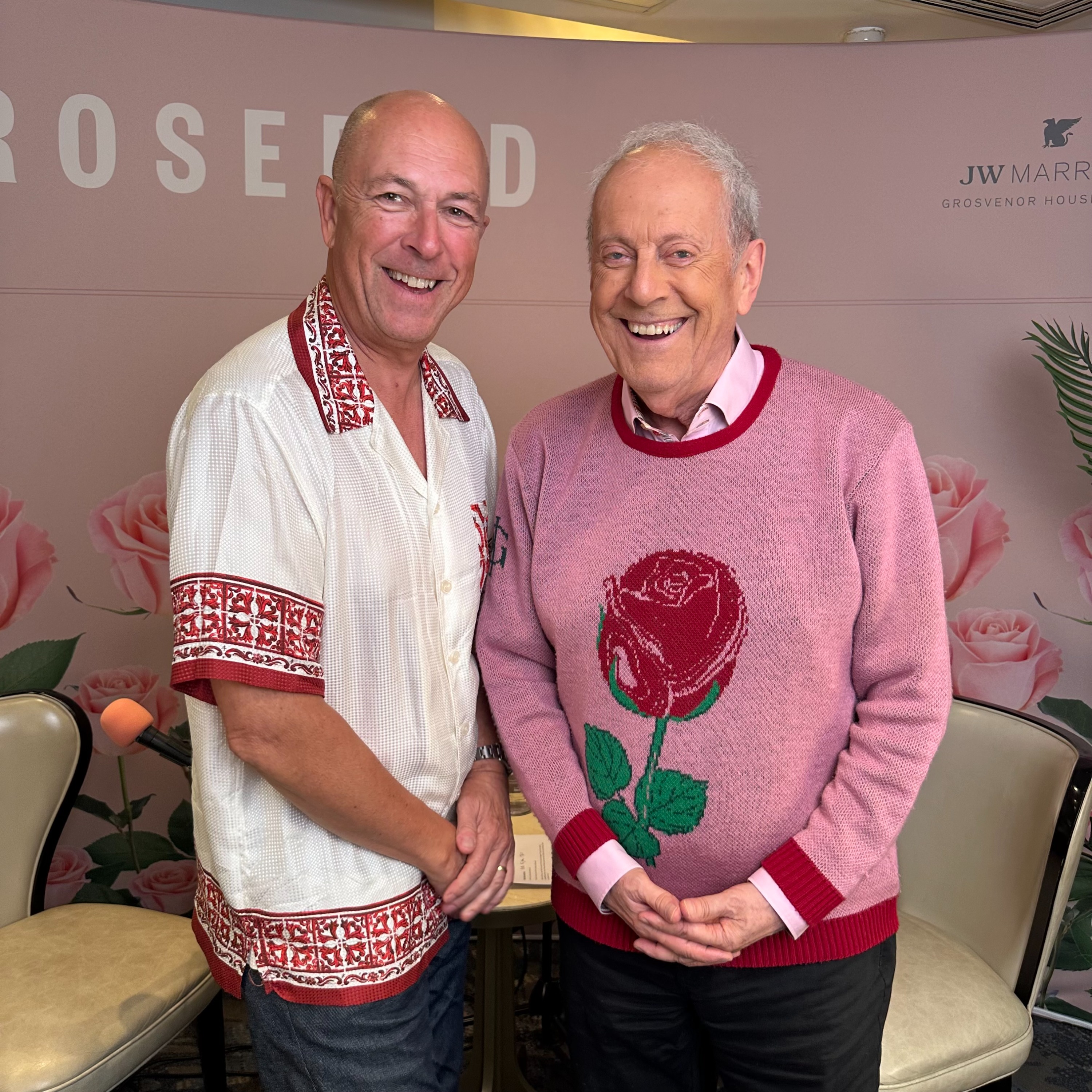
Dylan Jones (born Jan 18, 1960), editor of GQ; previously worked on Arena; later edited GQ and helped make it a major men’s magazine. Giles Brandreth hosts; Harriet Jane is producer/friend (not a guest).
Jones grew up in an RAF family (born in an RAF hospital near Ely; father RAF flight lieutenant/squadron leader; mother Audrey Wilshire, WAF). He moved frequently and had learning difficulties (failed 11+; later suspected dyslexia/learning issues). He became a classic autodidact and studied at Chelsea School of Art and St Martin’s.
Therapy’s impact is often subtle (avoiding escalation, saying what you mean). Jones says he learned control/avoidance as coping; he minimized trauma to avoid minimizing others’ experiences.
childhood violence (punching/kicking/locking under stairs); stammer; Christmas as a “safe space”; first romantic confidante Linda Shearsby; rape at 17; trust improving only after meeting his wife at 34; later London obsession (film premieres, David Bowie references) and punk-era art school life.
Written by AI. May contain mistakes.
Discover how therapy influences daily life in subtle, transformative ways.
“Therapy's biggest impact doesn't show up in some dramatic breakthrough.”
Gyles and Harriet reminisce about their favorite childhood comics and magazines.
“I am in quite a state of excitement because at the weekend, I went into the basement looking for a box of bits and pieces and came across a box that hadn't opened in years and I opened it.”
Discussion on the transition from childhood magazines to influential adult publications.
“Yes, and there was a kind of, well, hill that one went over.”
Gyles shares insights on Dylan Jones' influence in the magazine industry and culture.
“Well, Dylan Jones made GQ into the men's magazine.”
Gyles discusses Dylan Jones' book on the London restaurant scene in the 90s.
“This isn't when I was a child, I used to love the there was a thing called the radio radio fun.”
Dylan Jones discusses his childhood memories, family background, and the dynamics of his early home life.
“I've got the right person, the right date of birth.”
Explore the impact of childhood violence and speech difficulties on personal development.
Discussing the complexities of family relationships and the role of the mother in childhood trauma.
“And like I say, my brother wasn't really subject to this at all.”
Reflections on the home environment, feelings of safety, and the significance of family holidays.
“I always thought my father was bisexual too, but I've never got any proof of it.”
Exploring the influence of parental relationships and the effects of their separation on childhood.
“No, because one doesn't know about one's parents' sex life, really.”
The challenges of socializing and adapting in various school environments amidst family turmoil.
“And then the other passengers go by and they're smiling, waving at them.”
Discovering a passion for art amidst childhood challenges and the drive to pursue an artistic path.
“I said, thank you very much, but I'm not.”
Remembering early visits to London and the excitement of cultural experiences.
“And then I discovered at a very precocious age, 11, 12, probably 10, I became obsessed with the world surrounding people like Andy Warhol and Tom Wolfe.”
Exploration of the fascination and experiences with London during childhood.
Discussion about a significant first romantic relationship and its impact.
“Tell me about the first girl in your life, your first romantic encounter, because clearly she's the person you first began to tell your secrets to.”
Sharing of past traumatic experiences and reflections on their significance.
“I think we all think that we're individual people and you're sort of looking for someone to dovetail perfectly.”
Narrative of attending art school during the rise of punk and its influence.
“So it's a long time to be mistrustful of the world.”
Reflections on early career beginnings and life as a film extra.
Learn about Dylan Jones's experiences as a film extra and his early interviews.
“watching channel four and then going to a nightclub and that's pretty much what i did on the days i wasn't a film extra and i was a film extra and i was in two films i shoot down Roger Moore's plane in Octopussy.”
Discover how Terry Jones gave Dylan a break in his journalism career.
Hear about the memorable interviews Dylan conducted and the connections he formed.
“But then perhaps I would say that because I think I've done it.”
Explore Dylan's achievements and philosophies during his tenure at GQ Magazine.
“What was the achievement of your 22 GQ years for you?”
Reflecting on a memorable journalistic achievement and its impact.
Describing the first meeting with his future wife at an event.
“It's one of the great journalistic triumphs of our time.”
Discussing how his wife's family influenced his life positively.
Exploring the role of therapy in managing anxiety and personal issues.
Discussing changes in his career after leaving GQ magazine.
Introducing his new book about the history of London restaurants.
“Because he'd been important in your life.”
Recounting a transformative moment during a course he attended.
Reflections on sadness and unresolved issues in his family life.
“I would advocate it as something to do if you're in a dark place.”
Dylan Jones shares insights about family relationships and personal growth.

Get the gist, explore an idea or ask about something said.
 Claude
On Rosebud with Gyles Brandreth, what are the key points of this episode?
Searching your listeningAutomatic transcript. May contain errors.
0:00Therapy's biggest impact doesn't show up in some dramatic breakthrough. It shows up in the smallest moments. You bite your tongue instead of escalating. You put your phone down instead of firing off that text. You say what you actually mean instead of what would hurt someone else the most. Nobody applauds those moments, but they quietly change your life. That's what growing feels like, and that's exactly what Grow Therapy is here for. Grow is therapy that works, covered by insurance. Sessions average$21 with insurance, and some pay as little as$0, depending on their plan. There are no subscriptions, no long-term commitments.
0:37You just pay per session. Grow connects you with thousands of high-quality, licensed therapists across the U.S., offering both virtual and in-person sessions, nights and weekends. You can search by what matters, like insurance, specialty, identity, or availability. And you can book a therapy session in minutes and begin in as little as two days, not the national 48-day average. See if you could pay as little as$0 for therapy in seconds at growtherapy.com slash ACAST. That's growtherapy.com slash ACAST. growtherapy.com slash ACAST. Availability and coverage vary by state and insurance plan. If you felt stuck trying to lose weight, you're not alone.
1:20Enter Weight Loss by HERS. It's designed to support you in reaching your goals. And HERS now offers access to an affordable range of FDA-approved GLP-1 medications, including the WeGovi pill and the WeGovi pen. Even better, with a range of affordable GLP-1 options, HERS makes it simple to find an approach that fits your needs and your budget. If eligible, you'll get a treatment plan personalized to you and unlimited dosage changes as needed. It's weight loss designed to work with your life. Ready to reach your goals? Visit 4hers.com slash eligible to get personalized, affordable care that gets you.
1:55That's F-O-R-H-E-R-S dot com slash eligible. 4hers.com slash eligible. Weight loss by HERS is not available in all 50 states. Wegovi is the registered trademark of Novo Nordisk AS. To get started and learn more, including important safety information, Wegovi clinical study information, and restrictions, visit 4hers.com.
2:39This is Rosebud, my name is Giles Brandreth and I'm not in the room alone. I've got with me my producer and friend Harriet Jane. How are you today Harriet? I'm fine, thank you. Giles? I am in quite a state of excitement because at the weekend, I went into the basement looking for a box of bits and pieces and came across a box that hadn't opened in years and I opened it. And I found inside it a stash of comics and magazines from the 1950s and 1960s. Wow. When I was a little boy, I had magazines every Thursday. I looked forward to Thursday like nobody's business. I had comics, not just The Beano and The Dandy, which were the kids' comics of my generation and a preceding generation, but also The Beezer, Topper, other magazines, larger format than The Dandy and The Beano.
3:36And I discovered all these and that. And then I discovered a magazine called The Eagle. Have you heard of that magazine? Yes, I think some guests have mentioned it. Yeah. And there was a girl's equivalent called Girl. Ooh. Yeah. I never really got into Eagle. There was the green Mekon. It was sci-fi. Dan Dare was a hero. Oh, so it's comic. It's a comic. It's a cartoon. No, no. Comic strips. No, it isn't. Cartoons, cartoonish. Dandy, Beano are cartoonish. Yeah. Eagle was more illustrated adventures. Oh, that sounds fun. So they were more realistic. Yeah, no. They weren't jokey and cartoonish. Though I remember, what was the magazine that had Lettice Leaf, the greenest girl in the school?
4:19Quite bizarre. She may have been in Girl magazine, and I rather fancied her. And she was a cartoon character with sort of funny little glasses. Yeah, or you can fancy cartoon characters. Did you ever fancy a cartoon character? Well, no, but I remember thinking on TV, you know, Penelope Pitstop was really attractive. And, you know, definitely there are female cartoon characters that are pretty, aren't they, or sexy. Yes. Curiously, Popeye's olive oil. She was, I thought she was attractive. She was attractive. And I was really confused. I'm still confused about the relationship between olive oil and Popeye.
4:56Because I think they had a child called Sweet Pea. Yeah. But I don't think they were married. Wow. I mean, no, but this all began. That's the kind of thing Popeye got up to, you know, all that spinach. Spinach, that's for you, boing, boing. Absolutely. You don't even need to do it. Children just appear. Wow. For you, before we get on to magazines, did you have comics before you had magazines? Well, I read the Beano. Yeah. I used to really like the Beano. Bash Street Kids, Mini the Minx. Yeah. Loved the Beano. And then I did get into magazines when I was quite young. I used to love buying a magazine that was called Smash Hit.
5:31Oh, yes. I used to, you know, they'd put the lyrics of the top 10 singles of the week, whatever in there. and I would learn them off by heart and read all this trivia about pop bands. And you could get a poster. There'd be a poster in the middle. You could rip that out, put that on your wall. I used to write into them. I mean, I don't know what about, but letters I thought were funny that I thought they'd pick out. And then I used to buy a magazine when I was a bit older called Miz Magazine that was kind of a young teenage. Was that spelled M-S or M-I-Z? M-I-Z. Zed. It was a sort of proto-women's magazine, but for sort of 15-year-olds or 14, 15-year-olds.
6:09So that was fun, that makeup and fashion. And boys, did they feature a lot? Oh yeah, all that sort of thing. There'd be, you know, things about the sexy men of the time and interviews and yeah, it was to make you feel grown up. It was really good. I think they're a really important part of growing up for girls my generation. And then, yeah, we were talking about Jackie. Of course, because we had as a guest last week, Jacqueline Wilson. And if you haven't heard that episode, it's very interesting. Yeah, because she says she went to work for DC Thompson. Yeah, who made a lot of these magazines, including Dandy, Beano and others.
6:46And Jackie and Jackie and Jackie was named after her, apparently. Well, she said she was told by the people that ran DC Thompson, what were they called? Two old men, old Dundee men, very serious. They told her that they'd named Jackie Magazine after her because she was the youngest employee, which is amazing. But I loved that because I loved photo stories. Oh, yes. Do you remember them? I do. They would sort of tell, usually a sort of moral dilemma, often about a relationship, often a tiny bit. A little bit near the knuckle. Yeah, there was a bit of sort of sex education in there. Because there's a boy and a girl photograph.
7:26Yeah. And they moved from the kitchen, maybe in the corridor, maybe they were about to kiss. Yeah, and there was something was happening, some drama. And there was a mum from upstairs calling down. And if you were sort of 13, 14, it was quite exciting somehow. And I loved these photo stories. And you learn things about relationships and, yeah, what you should do in certain situations. It was very clever. So I loved Jackie magazine. but Dylan Jones, our guest today, was the editor of GQ, which is an altogether more sophisticated and grown-up affair than what we're talking about. Yes, and there was a kind of, well, hill that one went over.
8:05From your Jackie magazine, I then, as you know, worked for, when I was still a teenager, certainly in my early 20s, for a magazine called 19. Oh, well, that's a bit like Miz. Ah. Yeah. And for a magazine called Honey. Honey, yeah. And I think they were for slightly older girls. Yeah, they're kind of bridge to kind of Elle and Vogue. They were a bridge. To the women's magazines. To the women's magazines. And as you will remember, I was engaged when I was still at university by Gillian Cook, who went on to be the editor of a magazine called Nova, which was a pioneering, a cool pioneering magazine.
8:41She was then the editor of Honey. And she came to see me, to ask me to take on a column that was called Luke Jarvis. Oh, I remember you got the sack. Well, because I didn't know you. I wasn't really good enough. Man about town. You weren't about town enough. I wasn't sufficiently about town. It was supposed to be. And I do remember that they were allowed to kiss. There were certain words that were allowed and certain words. Breast was allowed, but nipple wasn't. Why were you writing about breasts? Because it was that sort of a magazine, honey. You were on the edge. Yeah, yeah. Okay. Nothing happened.
9:15You could think about it. but none that there was he had a fast car he had a little sports car luke jarvis was a kind of character and i wrote his diary oh i think and i was given a list of things that you could talk about and couldn't talk about words you could use and couldn't use and i do remember that nipple was one of the banned words fair enough no one wants to bandy the word nipple around not even nowadays certainly not and also given that you know me now yeah uh imagine what i was like at 20 I would have been a ludicrous figure writing this. I didn't know what the swinging 60s scene was.
9:47And then I was supposed to be writing about it. But actually, I think that's what's interesting in today's chat with Dylan Jones. I mean, this is such a fascinating interview that you're about to hear. Not just the magazine bit of the chat, which is fascinating, but Dylan's childhood is so interesting. So in a nutshell, for people who just think, oh, Dylan Jones, Dylan Jones, who is Dylan Jones? So I was going to say that one of the things he says is that he was at the forefront. So swinging 60s is what you're talking about. Honey, Nova, these magazines. Dylan Jones was at the heart of what he called the second wave of London cool.
10:29Or maybe the third. Is this the 90s? Yeah. Cool Britannia. The 80s and 90s. Yeah. And at the heart of that was music, was fashion, and magazines were very, very important. spreading and disseminating this culture and he talks about other magazines which people will have heard of like face id and gq was a sort of heir to those amazingly cool arena which dylan worked on that's how he started out and then he went on to edit um gq which was a big conde nast men's magazine and he really made that into you know we had graden carter and we were saying he made Vanity Fair into the magazine to read. Well, Dylan Jones made GQ into the men's magazine.
11:13And when in the 70s and 80s I was working as a young journalist, I remember going into the Condé Nast building, which I seem to think was in Barclays Square. It was a huge building and it was like going into a fantasy world. Because the power of these magazines, the power of the editors, the power of the picture editors, The whole thing was a huge cultural phenomenon. Absolutely. I mean, it's easy to forget that now because it doesn't exist. And to be a cover girl on a magazine like that or to have a feature in it was big bananas. And if you're the editor, which Dylan was, you're a kingmaker. You know, you're, I mean, he talks about becoming David Bowie's journalist of choice.
11:55And he's getting personal 20 minute long phone calls from David Bowie because Bowie knew, oh, I get in with this guy and I get my name out there. So, you know, you're at the centre of the culture. This is social history we're going to listen to. But it's also personal history of, I think, quite a painful kind, isn't it? Yeah. I mean, should there be trigger warnings today? Because some of the issues touched on are difficult and uncomfortable. Yeah. Yes. Trigger warnings because, unfortunately, Dylan experienced serious sexual assault or rape. So that is discussed, not in graphic detail, obviously, but it's mentioned.
12:36So please bear that in mind if you're listening with children or anything like that. And but, you know, I think this is just so interesting. This isn't when I was a child, I used to love the there was a thing called the radio radio fun. and then there was a TV comic I got every week. Radio Fun, the cover story, the cover cartoon was about Arthur Askey. This is a world away from that. No, but the thing is actually... It evokes an ear in a different way. No, but also I don't think it is just misery. You know, I actually think... Oh, no, our conversation isn't at all. Yeah, it's so interesting. Oh, yeah, and it's also got mentions of domestic violence as well.
13:16So, yeah, there are serious things discussed in the first half of the interview. Don't let that put you off. No, absolutely not. It is a human story and then a social story, a publishing story. Well, it's the story of our times. Yeah. And we should say, too, that Dylan has a really interesting book out about the London restaurant scene in the 90s. Oh, and he and I. Called Table Hopping. I remember this because we talk about several restaurants that I knew first time round. Yeah. That he came to explore later. Yeah, like Langan. Yes. Yes. And Les Gargots and, yeah, the golden age of London restaurants.
13:53So that's discussed in this episode too. So it's a fascinating episode. I wanted to mention in passing, but people will think, oh, well, come on, let's get on with Dylan Jones. But I will just say to people that Christmas is coming. Oh. And we've just confirmed that we're going to be having a Christmas party for members of the Rosebud family. Crumbs. This is a big announcement we're making here, guys. Have we not shared it with people before? No. Oh, my goodness. We've shared it with the Rosebud family on Sundays, but we haven't told everybody else. Hello, everyone else. Hello, everyone else. As you know, Rosebud is here for everybody free at the point of delivery on a Tuesday and on a Friday.
14:32On a Tuesday, often we have my diaries, which I read with Harriet. And then we also have interviews like the one today with Dylan Jones and the one we had last week with the great Don Black. I love that. But, oh my gosh, his show is so good at the Garrick Theatre. Anyway, that's by the by. But we have also, for people who want to listen without ads, and I think most podcasts do this, we have a service where you don't have to listen to the ads. Yeah, a club. A club. And we call it the Rosebud Family. And there are little add-ons as well. Yeah, and it is like a family, isn't it? It's so like a family.
15:08We do an episode every Sunday, and it's become much more and more family-like every Sunday, isn't it? Yeah, it's quite intimate, I would say. and Giles and I chat and we share sort of indiscretions and secrets. Well, one of the episodes is called Family Secrets. It is. And I think we have actually. There have been some family secrets. I mean, I think Giles came out on there three weeks ago, didn't you, Giles? Okay. And there are trips down memory lane and we do... Lol. LOL. We read from some of our favourite books. Anyway, we thought we can't have, because we're very lucky. We are very lucky indeed.
15:42Indeed, I will mention this to you, Harriet, on air. We have had on YouTube, which we only just joined recently, wait for it, 11 million views. Wow. We've gone up a million. Gosh, you have been watching a lot of YouTube, Giles. In a fortnight. Whoa. The fastest growing YouTube channel there. What? Yes. In the world? Yes. Or in SW? believe no in the world what in a particular week they couldn't believe that we grew by 10 % in a week we remember we were at 10 million only a week ago two weeks ago that's the jeffrey archer effect yeah oh maybe it is yeah because we we uh that last conversation i had with jeffrey we put absolutely um anyway uh that's quite exciting so the point is we can't have millions of people to the party so right sorry this we're taking a rambly way to say yeah we're taking a rambly way to say we're having a party we're having a party on the 5th of december at grosvenor house hotel in park lane but but because we can't have a million people or even a hundred thousand people even a thousand people we're already going to have a hundred or two hundred people we're going to invite first of all members of the rosebud family yes so if you are a member of the rosebud family please send us an email if you're not and would like to join it's very easy to join you simply go to patreon p-a-t-r-e-o-n.com forward slash rosebud patreon.com rosebud and you can find out about joining the club yeah ad-free listening and for some extras including an invitation to the party for free yeah essentially um the party's free to rosebud family members uh so yes if you'd love to come and meet Giles and me and hear some carols and have a mince pie and a hot chocolate or a mulled wine and see Giles's Christmas jumper and go to Grosvenor House which is a lovely place to be near Oxford Street so you can do some Christmas shopping too if you want to do that it'll be a really lovely event um you need to be a member of the Rosebud family um which is£4.99 plus fat a month.
17:56Fine. Yeah. So that's so exciting, isn't it? We're having our first party. So we're having our first party. Please, if you like watching, Dylan Jones will be on our YouTube channel as well, won't he? Yes, yeah. At the moment, it's just the interviews that go onto YouTube. You just go to YouTube and you put on the Rosebud podcast channel or Jazz Brand with Rosebud and it'll find us. Yeah. And there are lots and lots of our conversations to watch. Absolutely. Which is fun. Yeah, you can see all Giles' different jumpers. Yeah, but more to the point, you can see our guests in conversation. Because I find watching it is slightly different to listening to it.
18:33But I still want to listen first. I listen first, I watch later. And I think listening to Dylan Jones is moving and funny. And it's a portrait of a time that is quite gripping. I think we've created a bit of social history with this episode. Agreed. Good. Okay, that's enough from Harriet Jane and from me, Giles Bradroth, except I'm staying with you because I'm moving from what I am now, but I'm going to say something. And then after I've said it, you'll hear some music and then you'll hear me with Dylan Jones. Cue the music.
19:21Dylan Jones, born on the 18th of January 1960? Correct. Good. I've got the right person, the right date of birth. What is your very first memory? I'm not... I have a variety of first memories, but my strongest memory is coming back home when I was five and my mother had just had my brother and I was really out of sorts because she looked like my mother but she was a lot thinner so I sort of didn't trust her for a while and then I went outside in the back garden and saw this creature in a pram which obviously I didn't like because he was getting all the attention That's my strongest memory from childhood.
20:10Do I probably have memories of... I had a metal car as a toy, quite an extravagant toy, when we were in Anglesey in our forces house. I don't know how old I was there. Probably around the same time, probably five. Okay. Is that late? That's quite late. Three to five is about right. Let's begin to unpack that. Where is this home, the first home, when your brother comes? Who is the mother? Who is the brother? The thing is, I was conceived in London, but I was born in an RAF hospital somewhere on the outskirts of Ely because my father was in the Air Force. My mother was a WAF and they met, I think, when they were in Egypt, just after the war.
21:01Yeah, so we moved around a lot when I was a boy. So conceived in London, you are the firstborn? Yeah, my brother Dan is five years younger than me. So tell me a little bit more about these parents of yours. They met in the RAF. Yeah, my mother, working class from Neasden, father was a greengrocer. Her father was a greengrocer. It's that thing, that generation who wouldn't talk about the war because the war was so important to them and so transformative. but when she did talk about the war it all it all came out um what came out well just her impressions of it how awful it had been um yeah it and how it had just changed everyone's life she she became a waft i can't remember in precise what circumstances but she did it to travel the world because she had no prospects and I've got these amazing pictures of her when she was younger surrounded by men just happy and it was an odd thing for a person like that to do at the time 1950s girl yeah late 40s yeah um just after the war so I think 46 47 and then my father um his father was a farmer sort of lower middle class and yeah they met in Egypt and they and and they married in Egypt So they met, they were serving in Egypt.
22:25Yeah. Married in Egypt. Yeah. And what is your first recollection of them together as a couple? There are instances when I was young when the RAF life was quite, it felt quite glamorous. Because we'd be in these quarters in different places around the world. What rank was your father? He was flight lieutenant, then squadron leader. Was that senior? Yeah. until he came out in the early 70s and tried to become Lovejoy for a while and then went back into the forces. It did seem quite glamorous,
23:08but most of my recollections of them as parents is of them fighting. And that was a very strong narrative of my childhood. Let's just describe each of them. What did your mother look like? And what was her name? She's called Audrey. Audrey Wilshire. I thought she was very glamorous. I look at pictures of her today when she was in her late teens, 20s and early 30s. Quite glamorous. And my father, I mean, I've got one picture which I love of them, which is when they were sort of in their pomp there at a cocktail party. it's very 1950s which is a very evocative period anyway he's in a mess suit she's dressed up they're both smoking they've got cocktails that's how i like to remember them although that's it seemed to be um one of one of few sort of isolated memories what was his name michael and what did he look like he was tall he was strapping quite athletic became very fat in in old age, but yeah.
24:23And do you have a moustache? Because they were allowed to wear moustaches, weren't they? I think he probably experimented like they all did because they could, as you say. But like a lot of things back then, the forces was respected enormously, as you know. And being in the RAF was a smart thing. It felt glamorous. Because it felt like important work. but your early recollections of them are them fighting have you any idea why they were fighting uh yeah um i think there were there were um yeah there were lots of indiscretions on on both sides and i think that led to marital indiscretions running off with other people yeah having affairs very well put yeah and and lots of domestic violence my my father was very violent very violent from an early stage with your mother or with you?
25:20No, with my mother and then me. And were you aware of that as a little boy? What do you mean? Did you, well you can't, not obviously when it was happening to you, you were, but in relation to your mother. Yeah. The first recollection is you, age five, your mother is thin, she's come home. Yeah, I mean, I think. Her brother has arrived. I mean, I was beaten a lot as a child, a lot. and I think a lot of it happened before I was five. Before you were even conscious of remembering it. Because my brother didn't really suffer the same things that I did. I mean, I was, yeah, it's pretty horrible. And when you say you were beaten, what do you remember happening to you?
26:02Being punched, being hit, being kicked. Being punched in the head, in the face. And you are five years of age or younger. Yeah. And your dad, is he a drinker? Not really. So what? I think it was frustration. I think, yeah, I think that's where most of these things come from, whether it was economic, sexual, to do with status. I don't know. I mean, I've had a fair amount of therapy in my time, but I did the Hoffman once. And what's that? It's a course you go on to go deep, which I didn't want to go on, but my wife told me I ought to and it was a fascinating thing and I did remember things I hadn't remembered before but it's...
26:47Can you give me an example of what you remember? Being locked under the stairs for an afternoon and this is... How old are you at this time? Probably around five, five or six, yeah. Maybe smaller. So from the time of your memory existing onwards one of the recollections is your dad. Did you call him dad or... Yeah. Yeah, nothing else. Your dad punching you. hitting you with the back of his hand as well? Yeah. Kicking you? Yeah, occasionally, yeah. And then locking you in a cupboard under the stairs, among other things. Yeah. Is this done in anger? Yeah. And where does the anger come from? Like I say, I don't know.
27:27I assume it's frustration. But what is triggering it on the days it happens? Because you might be trying to avoid it. Well, I think my life has always been about avoidance, actually. I'm a very careful person I try to be not always successfully but I can get where you might be now thinking back on it but all I'm trying to get at is what it must be like if you can remember being five or six you're in a state of chaos all the time potential chaos and voices would be raised things would be thrown arguments would ensue and then your collateral damage because you're because you're in the way and you've done something that wasn't right and you're you're you're stupid or you've yeah i mean i don't want to sound like a misery memoir because i think lots of people had this you know and it's a generational thing but it's um i mean i had a terrible i still stammer it it's um obviously a lot less pronounced than it was but i yeah i stammered it when i was um young i couldn't and if i found it very difficult to say my name and introduce myself because d is literally the worst thing to pronounce if you have a stammer because i did a lot of work on this as an adult um journalistically as well um yeah i mean this sounds really boring but it's um yeah it was there were elements of my childhood which were very challenging so these incidents occur from what the impression you're giving me there's a row between them the tension is between them and you are getting in the way kind of and it's oh god dylan and get out of the way and in his fury he is he's hitting you are you fighting back you defending yourself you run into your bedroom locking the door i only did it once and it was the last time i was 16 and he, I mean, he'd become a lot less violent as I got older.
29:30And like I say, my brother wasn't really subject to this at all. But yeah, it still wasn't an easy relationship. But yeah, he tried to get physical with me when I was 16 and I pushed him up against a wall and that was it. That was the, that was the... You never did it again? No. And when this was happening when you were younger, what was your mother's attitude? Did she intervene? Did she? Yeah, I'm... Yeah, she did.
30:03I think as I got older, I perhaps began to think that she hadn't intervened enough. And when you were small, did you share this with anyone? Your brother was five years younger, so he was too young, but did you have friends outside the home? Do you remember your first friend outside the home? Yeah, but I wouldn't have shared something like that. I mean, I didn't, I never shared it. I don't think I shared it. I probably, when you start having girlfriends, you start having partners. And the thing that always surprised me was I say this almost in passing and people would be quite shocked. Whereas for me, that was what happened when I was younger.
30:46And your character is formed because of it and you develop mechanisms and shelves and ways of coping with things. God, it sounds really indulgent. I don't want to sound indulgent. A, it isn't indulgent because I'm asking you the questions because I want answers. B, can I say I am shocked. I'm shocked and I'm distressed for you, even though we're going back 60 years. I'm distressed for you. And I think it is worth talking about because it really happened. yeah was it happening on a daily basis a weekly basis or once a month obviously less as the years went by but when you were a little boy it felt like it was constant yeah it felt like it was constant and i've written about it and the older i became um when obviously being a journalist for 40 years you where everything is copy you do start to write about it and um i've written about it in in memoirs and
31:49I sometimes feel a bit guilty about sharing it and thinking was it really that bad but I think I think it was actually that bad it was yeah it's pretty awful and was that a safe space at all at home what was your bedroom like describe your bedroom oh we had so many because we moved around we'd moved we'd move every year or every 15 months or or something and when I was younger um I mean almost always sharing with my brother I mean you know they weren't grand houses um so yeah I probably I think every bedroom I had until I was sort of 11 or 12 13 14 maybe um was was shared with my brother give me the best memory of your childhood before you're 11 or 12 Christmas because Christmas is always a safe space it's a place where they obviously went out of their way not to argue and christmas has always been very important to me as an adult as a parent as a family person christmas to me is sacrosanct i because when i was younger i tried to make christmas laugh for as long as possible because they didn't seem to fight and i didn't seem to get hit so the run-up to christmas was always very exciting and um i try to encourage my father not to go back to work for as long as possible because um yeah because that was a christmas was a very important period so that was the that was the the safe space i suppose and did they stay together um they they split up many times so you would there would be a sense of abandonment as well And when they split up, did you stay with your mum or were there aunties that you went to stay with or grandparents?
33:33I would spend time with both of them. And then my mother had... She would have... She was bisexual. I always thought my father was bisexual too, but I've never got any proof of it. But yeah. So she had girlfriends, did she? Yeah. And were you aware of that as a child? Not really. No, because one doesn't know about one's parents' sex life, really. Auntie Rita was very prevalent. Ah, she was a family friend. Family friend, yes. Who was often there. Yeah. Wearing a tweed jacket, possibly. Yeah, I think she probably was, actually. I think she worked in the Scotch house. Oh, well, literally, a Scottish tweed jacket.
34:16And bingo, got her in one there. Yeah, staff discount. And she was just your mum's special friend. Yeah, I think so, yeah. Yeah. And so, but eventually it was clearly just, it wasn't going to work for them. But were you grown up by the time they properly split up? No, it was, I think they properly split up. The thing is, my father would travel a lot because he was in the forces and he would be in South America or Kenya or, I don't know, I mean, all over the place. We travelled a lot and he was not often home, which was a blessing, obviously. From the moment you backed him up against the wall. the violence ceased did you in later years ever talk to him about it do you ever address him on this issue not really my wife always said that i should confront him because she said i would regret it and i i'm not sure i'd regret it but it possibly would have been either he i mean we had a a pretty good relationship when he was older he'd calm down he was slurry he was full of regret and he talked about it occasionally he would apologize but there was certainly no there wasn't a narrative that I could take out of that to excuse the behavior and I possibly didn't prod enough I'd um I yeah I didn't um you don't excuse it but do you forgive it do you forgive him in your head?
35:44Yeah, I suppose so. I try not to dwell on it, because it... When did he die? About 10 years ago. They died like always happens. My mother died, and then he died quite quickly afterwards, so... Oh, because they were still, in some ways, codependent, you think? Yeah, they were living in a sort of RAF retirement community behind GCHQ in Cheltenham. And it turned into a Beckett play in the end. I mean, because lives shrink. There's always guard against downsizing. Because you downsize and you downsize and you downsize and you end up in a Beckett play. Like two dustbins on stage, a man in one and a woman in the other.
36:27That's the entire play. I hate you. I've always hated you. And I think the dynamic changes because I think that as my mother, towards the end of her life became very ill and immobile and wracked with illnesses and malfunctions and she took it out on my father and my father basically became her carer and she she didn't treat him very well because she obviously felt that she hadn't been treated well herself there's an old card song that begins we're a dear old couple and we lose one another and we've loathed one another for a very long time. And then the other passengers go by and they're smiling, waving at them.
37:07Are people outside of the family aware of this? I would imagine so because I like to think I'm a quite gregarious person now and I love people, I love meeting people, I love big families and I like, I just, yeah, even though I can be very solitary, but I like that. And I think it's because we didn't have, my parents didn't appear to have family friends, which I always thought was quite odd. And I would have liked that. I would have liked a bigger family. I would have liked my parents to be more social. Because also, if your parents are not social, you don't really learn up knowing how to behave.
37:50and I always think that's you know when you when you grow up and you become a teenager and then you go to college and university I mean going to art school for me was in many respects it was the best thing that ever happened to me it was an obsession I'd had since I was sort of 11 or 12 and the added benefit of going to Chelsea and then St Martin's in those days in the days when people didn't do that when it was an odd thing to do and you felt very special doing it not like now um you'd meet people from backgrounds you had no inclination you had no understanding that these backgrounds existed all these people could be like this from these backgrounds fascinating rich poor this one that one amazing well before we get to that stage that glorious stage from your life let's just finish with your childhood at home there is all this going on we have a bisexual mother a violent father we have a boy with a stammer because of the way he's constantly beaten living in a world of chaos the younger brother who escapes this because you are the focus because you're in the way you go to school how are you at school you're obviously not sharing this is anyone at school your first your primary school did you okay i took years later about 10 years ago we were doing some work supporting nick jones at soho house because he who is famously dyslexic and i had a meeting in my office in condé nast in vogue house with a very nice woman who ran the national dyslexia organization and we had all these chats about what we're going to do to support and charitable events and this one and that one.
39:36And then she said, you're dyslexic. I said, thank you very much, but I'm not. And then she gave me a test to do and I did all this. And so I think when I was, I know everyone blames everything on everything now. You become alphabet people. But I think I was dyslexic. I definitely had learning difficulties. I didn't do very well academically. And I found it very difficult to retain information. So I went to a primary school and then I failed my 11 plus and went to various secondary moderns. So I didn't have a great education and I'd become a classic autodidact, I suppose, like lots of people. You were moving from different schools because you were in different parts of the country.
40:18Yeah, and the world, yeah. And the world. But were you quite sociable at school? Did you manage to get on reasonably well with the other boys and girls? Yeah, and I think there was a period when I became a joker because that was the easiest thing to do, as people do. yeah because every 12 or 15 months you're in a completely different social environment and you have to start again were you still having the stammer at this stage oh god yeah that went went on until you were an adult yeah yeah until i was yeah i mean it's um public speaking really helped i used to hate public speaking and now i I can't enjoy it.
40:58It's fun. And I've had to do so much with work. And it was entirely the stand-by. There weren't other things. There wasn't bedwetting. There wasn't nightmares. No. Oh, that's something. So here you are at school, and in your head what's happening? You want to go to art school. You've decided that in your head. How did you discover this? I was very precocious, I think. And I loved the creative world. And I loved art. And I thought I was good at art. Probably wasn't. I wasn't a great reader. I'm a huge reader now, but I couldn't, I didn't really read at all until I was 10 or 11, 12, maybe. But I drew.
41:38I was really into art, really into it. And then I discovered at a very precocious age, 11, 12, probably 10, I became obsessed with the world surrounding people like Andy Warhol and Tom Wolfe. I mean and I'm reading Tom Wolfe books at the age of 12 I'm not sure I really understood them but I understood it a little bit and I was incredibly curious and you understood there was a world out there yeah it's and it's it's such a cliche it's such a classic thing abroad of course it was New York it was it's it was kind of everything London was big I mean lots of very eloquent artists and creative people have expresses particularly musicians Paul Weller's very good on it because i always felt in my heart that i was a londoner even though i sort of wasn't but if you live on the outskirts of london or if you live in the suburbs you are obsessed with london it's all that matters all you care about is coming to london and i used to love coming to london what's your first best exciting london moment as a kid coming up at christmas or to see film premieres or not probably wasn't a premiere but you know a film in london a film in leicester square yeah i remember being in um being in oxford street or regent street and seeing the chitty chitty bang bang car in a window thinking that's amazing that's amazing and then later i would come up by myself and i'd go to kensington market and i'd seek out places i'd read about where david bowie had been photographed on the cover of zicky stardust and then i'd come up to gigs when i was sort of 14 or 15 and um so it was always about london obsessive about london
43:29Therapy's biggest impact doesn't show up in some dramatic breakthrough. It shows up in the smallest moments. You bite your tongue instead of escalating. You put your phone down instead of firing off that text. You say what you actually mean instead of what would hurt someone else the most. Nobody applauds those moments, but they quietly change your life. That's what growing feels like. And that's exactly what Grow Therapy is here for. Grow is therapy that works, covered by insurance. Sessions average$21 with insurance, and some pay as little as$0, depending on their plan. There are no subscriptions, no long-term commitments.
44:06You just pay per session. Grow connects you with thousands of high-quality, licensed therapists across the U.S., offering both virtual and in-person sessions, nights and weekends. You can search by what matters, like insurance, specialty, identity, or availability. And you can book a therapy session in minutes and begin in as little as two days, not the national 48-day average. See if you could pay as little as$0 for therapy in seconds at growtherapy.com slash ACAST. That's growtherapy.com slash ACAST. growtherapy.com slash ACAST. Availability and coverage vary by state and insurance plan. If you felt stuck trying to lose weight, you're not alone.
44:50Enter Weight Loss by HERS. It's designed to support you in reaching your goals. And HERS now offers access to an affordable range of FDA-approved GLP-1 medications, including the WeGovi pill and the WeGovi pen. Even better, with a range of affordable GLP-1 options, HERS makes it simple to find an approach that fits your needs and your budget, if eligible. You'll get a treatment plan personalized to you and unlimited dosage changes as needed. It's weight loss designed to work with your life. Ready to reach your goals? Visit ForHERS.com slash eligible to get personalized, affordable care that gets you.
45:24That's F-O-R-H-E-R-S dot com slash eligible. ForHERS.com slash eligible. Weight loss by HERS is not available in all 50 states. WeGovi is the registered trademark of Novo Nordisk AS. To get started and learn more, including important safety information, We go for clinical study information and restrictions. Visit ForHers.com.
45:48Tell me about the first girl in your life, your first romantic encounter, because clearly she's the person you first began to tell your secrets to. The woman who broke my heart is a woman called Linda Shearsby, who I followed to St. Martin's School of Art when I was 18, 17, 18. And why was she so special? special from what something was to be to be callous because she was first and i think also if you're my if you're me you don't share and you've and you're with someone that you started sharing and then that person is no longer there you think you've been massively betrayed so everything was heightened and exacerbated and it was so dramatic and i look back upon it now it's just a stupid adolescent affair.
46:39I mean, I think, you know, I always think you can have your heart broken once, but probably not twice or any more than that. Please don't dismiss it, because I think it's fundamentally important to you. Almost the first thing you said was that you kept it to yourself until you began to have a girlfriend, and you found somebody with whom you could share this terrible, terrible secret that was manifested in a stammer but had ruined, made chaotic early years. And this girl listened. You had someone to listen. Yeah. And that was lovely. So she did you a great service. She probably did. But then she lost interest.
47:18No, I stupidly got rid of her and then regretted it. I know. Classic. I ticked all the boxes. Now, this is a memory I want to hear. When was the day? How did you get rid of her? What did you say? What happened? I can't remember. I think I found her. Try to remember. you're tough aren't you no well i know because this is think i was 19 and i don't know i think when you're young unsophisticated people you don't have the ability you don't learn the ability or attempt to have the ability to compromise and understand other people's issues and to and to try to be harmonious. I think we all think that we're individual people and you're sort of looking for someone to dovetail perfectly.
48:07And of course that doesn't happen. And you grow up, you mature, and you understand that you have to adapt your behaviour, I suppose. Yeah. So you just gave up on her? Do you remember if you told her, oh, people used to write notes in those days. Oh, no, we would have had a row on that and that would have been it. Oh, the slam door and you left and that was it. And one of us got on the 19 bus back to Chelsea and the other one probably mooched around Soho for a while. In your teenage years, you'd also had an attack, physical, sexual attack. What was that? Yeah. In the cuttings, I've got. It says rape age 17.
48:47Yeah, I was, yeah. Unpack that a little bit. Being drunk at someone's house, having had a lift, drinking too much passing out waking up being raped by a man yeah an older man yeah oh god yeah but again i think throughout my life i've been very good at minimizing things did you complain about it at the time no no it just happened yeah yeah i didn't i didn't enjoy it i i fleetingly i've written about it i fleetingly thought you know for seconds am i enjoying this and then realized immediately that i wasn't but it's um i didn't the reason i i very rarely spoke about it was not because i was embarrassed and the reason i only wrote about it recently when it became so i thought so unimportant in my life was the same reason i didn't want to talk about it or write about it because i didn't want to minimize the experience for other people and i know a fair number of people who've been raped and it's awful and it's traumatic and it had leaves huge scars that wasn't my experience and so and even when i was more when when i was callow and young and you sort of have things in your life that you have as badges to kind of impress upon people that you've had a tough time.
50:19I didn't talk about it then. I think I was sophisticated enough to know that it was so awful as an act for most people that for me to talk about it would have been to have minimised it for other people. Can you remember the moment you began to be able to trust people given that your mother you felt let you down, your father was violent to you, you were violated age 17, can you remember the first moment of being with somebody and thinking, this is okay, I can trust now? Probably when I met my wife. Gosh, when was that? I was 34. Wow. So it's a long time to be mistrustful of the world. how did it manifest itself in your behaviour generally
51:18I think I became a shapeshifter you fit in, you learn to fit in you have your own agenda but you keep things very you know, you clam up you don't share in that way that's a pretty banal way of looking at it, but I'd say that's pretty true, I think so you control you control yourself it's all about control everything is about control and you guard against being hurt by not being empathetic yourself well i'm not empathetic still to this day i think i've become a little bit better i mean my wife has been very good at encouraging me and trying to develop me to be more empathetic but i'm probably the least empathetic person i know and i don't say that in a kind of i don't think it's cool but i think i generally am yeah i don't i'm not overburdened with empathy and what does that mean you can't feel oh i can feel yeah and you do feel you're a person of feelings i can see that um you don't feel for other people you don't really my my family and my friends but i do remember thinking i wrote about this once and i felt guilty for writing about it about disasters and terrible things that happen in the world and i think well there's just less people in the world now it's awful isn't it so you leave school yeah and you think what am i going to do what do you do um do you get a levels do you do that no i had i would i've very poor academic career but i loved going to art school that was literally the only thing i didn't know i've never had a plan i never had a these are good art schools you got into the chelsea art school inst martin's these are top these are yeah the first division so you had gift you had a stat they we did you got in yeah i think i obviously had um enough of a gift or i was lucky enough to get into um chelsea it's best thing that ever happened to me i'm so lucky and why is it the best thing define in practical terms why it made a difference because i moved to chelsea in the summer of 1977 the world of punk rock is exploding and not only am I in uh Chelsea School of Art which is a brilliant place to be and I'm meeting all these amazing people and kind of doing what I want to do which is make stuff and be creative and learn and travel and get on buses and go to places and go to nightclubs and gigs and shops and and stare at restaurants and it was amazing I just loved it but also i was in a place called the ralph west halls of residence which is no longer there which was on albert bridge road which is where one went if one had been accepted at a central london art school and you didn't live in london i lived right at the end of a corridor i can't remember what floor what floor i was on but it's that time when everyone is so passionate about music and walking along the corridor you'd hear the sex pistols coming out of one room genesis coming out of another one reggae here soul all of this stuff it was it was fantastic it was like a like a juke box and also as i said before because you're meeting people from you know i'd never met a liverpuddle in before i'd never met someone who was insanely posh before in some respects i had a very narrow life even though i look back upon it it seemed to be quite exotic but it's um and suddenly you're exposed to all this all this stuff and it's yeah it's it's fascinating and how do you get from that you're what you're at art school what are you going to be what's your object well i didn't have a heseltine plan i wish i had have done yes michael heseltine wrote it on the we had him on the podcast on the back of an envelope yeah brilliant it actually got him from where he was to be prime minister it almost worked i know fantastic i didn't have that all i wanted to do from the age of 11 or 12 was go to art school so when I went to art school I had no I know I had no ambitions yeah and then I became very good at going to nightclubs but even I realized that that was a pretty dissolute and narrow thing I knew I had to get out of it and so I was skirting around the worlds of media and then I was lucky enough to be plucked out of no no way and i think and this is very important to me i lived in a housing association flat in peckham my life consisted of uh getting up as late as possible going out for fast food coming back watching channel four and then going to a nightclub and that's pretty much what i did on the days i wasn't a film extra and i was a film extra and i was in two films i shoot down Roger Moore's plane in Octopussy.
56:15You're welcome. And I was also in a nightclub scene, which was filmed at heaven in the David Bowie, Catherine Deneuve movie, The Hunger, where Bauhaus, the plane, Bela Lugosi's dead. And I had to walk up and down this stainless steel staircase in front of Bowie and Catherine Deneuve, which at the age of 20 was quite exciting. And then I got a call from a photographer friend of mine called Mark Bailey he said what are you doing tomorrow and I said well I'm probably getting up very late going blah blah blah and he said well I need someone to interview these people I'm shooting for ID magazine I said I'll do that so I went up to a photographic studio I think in Hoban and I interviewed all these people and I think my questions were the level of sophistication of sort of where did you buy your clothes and how much you hate Margaret Thatcher that kind of thing and I came back and my father had given me this old red Remington typewriter and I typed it up put it in an envelope got a second class stamp posted it and then um off to uh Terry Jones who ran ID magazine and had been a very prominent art director of um Vogue and I was a friend of mine in St Charles Square in Notting Hill Labrock Grove a couple of weeks later because I didn't have a telephone said we're looking for dylan do you know where he is and i know and and i was there and he offered me a job and and i look at all these interviews and i read all these reams of people talking about how brilliant they are and all this stuff someone gave them all a break and people don't talk about the people who gave them breaks and if it hadn't been for terry jones i don't know what i would have done but he saw something in me that i didn't see i think he saw enthusiasm I couldn't write to save my life I mean I look back at some of that stuff now I literally grew up in public because some of this stuff was published it was gibberish but it didn't matter it was enthusiastic and yeah and then I threw myself into it and as soon as I went into that room I realized that I didn't want to do anything else and I just loved it so much and that's how you spent your life yeah and I think it probably suited you then because you are as a journalist you're an observer yeah you can legitimately stay a little bit outside yeah forming any intimacy yeah uh and yet you can see it all and they have to give you what they've got to give you correct yeah you're always it's liminal yeah you're always on the edge and um because i was never a great joiner i met a lot of people and i've been involved in a lot of worlds but i never had both feet in i had one foot out i mean looking through the cuttings there's nobody of that era and indeed later because of your 22 years on GQ that you haven't met or known so give me your favorite stories give me give me the ones give me the ones that stand out still that if you when your head hits the pillar you think oh yeah actually I'm glad I'm glad I've spent my life doing that oh I've been lucky enough to meet some extraordinary people and after a while you learn that you can manufacture this meeting and say I want to interview so and so and um and it happens but at the same time when i was working on id and then went to work for nick logan who had the face and arena um we knew very arrogantly and conceitedly we were writing about the third iteration of swinging london so you'd had the 60s and the ad lib and david bailey then you had the 70s with ritz and punk and boulevard and all those wonderful things and then in the 80s we knew that we were the bee's knees and we were arrogant and cocky and conceited and we knew that as well as writing about this world that we were part of it give me an example of one of the people that you encountered or wrote about that where you actually think you got below the surface or even got to know them i'm thinking of years ago being sent to interview Naomi Campbell which I was and it was a very interesting experience but I came away with nothing I wrote perfectly serviceable piece but I couldn't I couldn't really tell you anything about the encounter whereas the same period I was sent to interview Roman Polanski had the same amount of time with him and came away having known someone and we stayed in touch yeah so I'm looking for people well like that in your experience i think that you can i i mean i can mirror that if you if you go an interview if you have dinner say with mc jagger who's charming and funny and vibrant etc etc you often come away you're thinking oh that was amazing you can't remember much then you meet keith and keith mumbles and you know slurs and goes off on tangents you you play the tape back and you've got gold it's all there on the floor all you got to do is pick it up and sort of put it put it together um i was lucky enough to have a a quite a good relationship with David Bowie and what does that mean I mean how how I'll tell you I'll tell you exactly Bowie was someone and he was criticized for this personality trait Bowie was someone who latched on to people and it's writ large with musicians because he'd be with a musician and he'd suck everything out of that person and use it up and and and move on and some people think that's very expedient i think it's just clever collaboration and like like a few people like a few bold-faced names he would go through periods of having a sort of a pet journalist in the 70s it might be someone like Charles Sharp Murray but then it may have been someone like Tony Parsons in the 80s and then in the 90s I was one of those people so and which for me was such a joy because he had been like many people of my generation such a formative influence because I was obsessed with David Bowie like many of us were just completely obsessed now I think that obsession has turned into an industry and is actually rather tiresome.
1:02:46But then perhaps I would say that because I think I've done it. But yeah, we did have a very good relationship. Give me an example of a moment in that relationship that is special in your memory. I've got a funny one. I remember I was at the Sunday Times and the phone rang. And we were in a part of the Sunday Times on the highways all full up and our office was right up against the highways. You had like a motorway. And it was middle of winter and terrible thunderstorms outside. I think it was mid-morning, the phone rang. And he had, his mother's name was either Peggy or Margaret. And he had a nickname.
1:03:29And he used the nickname. He said, is that, say, Margaret? And I said, no, is that David Bowie? And he said, yes, is that Dylan? And we'd done a phone interview like a week beforehand. It was the third or fourth time I'd interviewed him. I think he was doing, he was involved in a big project with Bosnia at the time. It was either that or the Laura Ashley wallpaper. It was one of the two. And he stayed on the phone for 20 minutes. I'm going to be... All of this stuff. I was never under the illusion that it was real. And I was never less than flattered. but it would i trade that for not having it at all of course i wouldn't because it was brilliant and he was a genuinely brilliant person i also found it fascinating knowing someone at close quarters how they operated and how they charmed and i think there are people you can meet someone a george martin i don't know if you knew i did know him the producer george martin had an ability to you can meet them for the first time in a minute and a half you think you've bonded with this person and you are soulmates that's he was brilliant at that that's very interesting because i think i now realize i only met him three or four times he was the guy who produced the beatles that was his first claim to fame yeah but i would put him on a list of my friends yeah there you are and i now you're questioning that yes i some people have that innate ability in some people you think it's expedient and a bit not very nice.
1:05:11And other times you think, well, actually go with it. It's nice.
1:05:38and the WeGoviPen. Even better, with a range of affordable GLP-1 options, HERS makes it simple to find an approach that fits your needs and your budget. If eligible, you'll get a treatment plan personalized to you and unlimited dosage changes as needed. It's weight loss designed to work with your life. Ready to reach your goals? Visit forhers.com slash eligible to get personalized affordable care that gets you. That's F-O-R-H-E-R-S dot com slash eligible. ForHERS dot com slash eligible. Weight loss by HERS is not available in all 50 states. WeGovi is the registered trademark of Novo Nordisk AS.
1:06:15To get started and learn more, including important safety information, WeGovi clinical study information, and restrictions, visit ForHERS dot com. Therapy's biggest impact doesn't show up in some dramatic breakthrough. It shows up in the smallest moments. You bite your tongue instead of escalating. You put your phone down instead of firing off that text. You say what you actually mean instead of what would hurt someone else the most. Nobody applauds those moments, but they quietly change your life. That's what growing feels like. And that's exactly what Grow Therapy is here for. Grow is therapy that works, covered by insurance.
1:06:51Sessions average$21 with insurance and some pay as little as$0 depending on their plan. There are no subscriptions, no long-term commitments. you just pay per session. Grow connects you with thousands of high-quality licensed therapists across the U.S., offering both virtual and in-person sessions, nights and weekends. You can search by what matters, like insurance, specialty, identity, or availability. And you can book a therapy session in minutes and begin in as little as two days, not the national 48-day average. See if you could pay as little as$0 for therapy in seconds at growtherapy.com slash ACAST.
1:07:30That's growtherapy.com slash ACAST. growtherapy.com slash ACAST. Availability and coverage vary by state and insurance plan. What was the achievement of your 22 GQ years for you? Was it there that you started the man of the year? Yeah. That is probably the thing I'm most proud of because that was created out of out of a biscuit tin basically yeah explain um i inherited you know lucky enough to inherit this fantastic title at condé nace got a lot of freedom and we um hired a lot of great writers and a lot of great photographers and produced something which was a very good a very good product and very successful and we made condé nace a lot of money but one of the things that i inherited with this thing called men of the year which is an award show that had been created for sort of marketing reasons and it wasn't very good and no one had any enthusiasm for it and they kind of wanted to bin it but they had a commercial relationship which meant that we had to deliver another one so we did it it wasn't very good and then my old publishing director said i think we should this year we should um we should do a sit down like okay and we did it at the royal opera house and we got two celebrities we got chris tarrant and we got paul mccartney oh we had got jamie oliver as well and i thought to myself there might be something in this and then we started taking it really seriously and it became apart from the brits and the baftas it was the biggest thing in the entertainment industry was huge and my i had many doctrines and many policies but i always wanted the person giving the award to be more famous than the person receiving so you would have martin scorsese giving to um georgio armani or um michael cain giving to madonna or things like that and it was yeah it was it was it was a big deal it was a big deal and then the following morning quite early i didn't care what what time people i said if you can't come in you can't go out you can go out to six o 'clock in the morning but we've got an 8 30 meeting we have a meeting the next day post-mortem where we'd be rigorous in all the things that we that weren't good enough and then we wouldn't touch it for three months we'd come back after christmas and just work like stink six people no more and it was um yeah it was i'm really proud of that because it was really good and it was really fun and the proudest or most fun moment of those years so many the reason people came is because it was fun and my ambition was always when you're in the car leaving the event or the after party which tended to be at matthew freud's house um i wanted the talent to say to their hairdresser girlfriend boyfriend wife minder pr i'm really glad we did that that's all you wanted and it became something that people lobbied to get their talent involved with because they knew a it was a really good night and it would get press in the days when getting press from something in print was a big big deal anyway i'm wanging on about that but i I was very, yeah, I'm very proud of that.
1:11:03It was a good thing. Well, it's why you're here. It's one of the great journalistic triumphs of our time. Well, you're very kind. No, and you did it. You did it. You made the magazine famous. You made that event famous. So congratulations. Thank you. Tell me about the moment you first saw your wife. You literally first saw her, said Eisenhower. Where were you? I was at the Sunday Times working with a friend of mine, and we'd just been invited to go on this league. And when we were at the Sunday Times, he didn't do many leagues. What's a league? Like a freebie. Ah. Because we were working too hard.
1:11:36And also, Andrew Neil, who's kind of frowned upon, he didn't just bugger off for a day to do a jolly. Quite right. No, he's quite right. He was the editor at the time. Tag Heuer were launching a watch, and it was in a stately home somewhere in the Midlands, and they'd hired Jonathan Palmer to do a race day where you went and you competitively drove half a dozen different types of cars go-karts catering sevens four by fours little sports cars formula three all this stuff we thought we're doing this and we there was um there's a coach taking all these fashion people off to um and and journalists off to the midlands and i got on and i saw her sitting she was sitting with um she was working with Vogue at the time.
1:12:25What was her name? What is her name? Sarah Walter. Sarah, Sarah Walter. Sarah with an H and she was sitting, I think she was working at Harper's Bazaar when there was Harper's Bazaar and she was sitting next to a friend of hers called Kate Phelan who worked for Vogue and I clocked her and I said okay and so we went up there, did all these races, Sarah who'd just come back from living in Africa for four years, she won every race which was very impressive and she he was also awarded the driver of the day um anyway there was a dinner that evening and i'm sitting next to her she had no interest in me anyway after dinner i get talking to her and we work out quite quickly that we own the same car we drive the same car it was a silver 1984 320 i bmw and we arranged to have a race around the m25 okay oh my god silly we're drunk anyway i think two days later or maybe the following day or two days later i send her a note saying dear sarah to her work address lovely to meet you i capitulate but would you like to have dinner i send that the very same day she calls me up basically to say the same thing and then we had dinner and the rest is history 33 years of history yeah and what was it in her because she changed you she's made you a normal person yes she has uh how did she do that by perseverance um i mean she was taking on not realizing it damaged goods yeah i think she didn't she had no idea how damaged um or what poor what poor condition the goods were in no she's been amazing and she's stood by me through a hell of a lot but she was pretty and sexy and funny and smart and and probably quite normal i think can you give me an example of how in the early days she helped you yeah and also our fathers did exactly the same thing exactly the same rank oh oh she had a father in the RAF who was also ended up as a whatever wing commander same rank squadron reader yeah and um apart from herself and her being her I think it was her family she had a really strong family and and i used to spend a lot of time with her family so she gave you the family you'd never had to put it in a bit of a cliche no yeah yes yes yeah yeah and i loved her parents i really loved them and how quickly did you have children oh we had a huge row about that because i didn't want kids probably because i thought i put them through what i've been through yeah and i didn't i suppose i didn't trust myself i wasn't that i think i was very selfish and yeah the blueprint that i had i didn't want to replicate and she suggested you go to therapy did she was she the one no i was i started going to therapy I don't really know why in my early 30s and my therapist who I still very infrequently speak to she said what therapists don't say and I loved her for it she was the second therapist I saw one, he was just like my dad he looked exactly like my father sat in the corner, wrote things and kind of grunted and I thought waste of time, sorry um and then i met josephine and she was fantastic and and she said so this works for you putting things in boxes does it i said yeah she said well keep doing it and i have by that she meant compartmentalizing yeah compartmentalizing put that there this is my work this is my anger this is my joy does it work like this is the thing that causes me incredible anxiety this you know quite a few of those and yeah put them in boxes what which traditionally is something that oh you can't do that what causes you anxiety lots of things give me an example uh macro micro um i don't like being outside my comfort zone at all physically or mentally i'm i always sit in the cinema i always sit on the edge um i very very particular about where i sit in restaurants not necessarily for kind of status reasons i just i like having my back to the wall i yeah i'm very careful about where i which roads i drive down i don't like i when i try to i try to eradicate surprise from my life and this we assume goes all back to this childhood thing probably trying to bring order to the chaos so you know where you are and when you put the things in the boxes does that help yeah if you put the anxiety in the box we can forget occasionally they there's an overspill but um yeah yeah i mean i don't want to be overly dramatic about bad but yeah it's a it's a system but it works you're in a good place now yeah generally yes i am and your work now because gq came to an end at your volition you've done enough you wanted to move on really it was after covid the company went through a very swift transformation and basically reappointed itself so that everything is run out of new york so there are satellite operations around the world but it's basically a new york run company now and then uh i did various bits and pieces and then i edited the evening standard for two years which i absolutely loved even though i had to fire a lot of people but as an experience and um yeah it's wonderful i had a a big thing for my book last night and lots of people from the standard came and i loved them they were fantastic great group of people the book this is your new book yeah and what is this called it's called table hopping and it's the history of the london restaurant basically since the war but it it really kicks off with langan's which is 50 years old i love it 50 years old this um i knew peter langan back in the odin's day did you yes devonshire street i should have interviewed you i wish i had have done and what the nightmare it was uh but the art in that restaurant yeah was colossal and well it was odin's who gave him the template for for langans and which which is something that everyone who is involved in that particular world has done since which is you you give you donate and then you earn it down don't you the mushroom brioche at odin's i'm from the first customers at odin's wow still features in my dreams really i love that as does peter interestingly both in those early days yeah when he was attractive yeah uh and it was an honor yeah you felt this is his restaurant he came sat at your table or rather stood over you yeah detained you and even towards the end I felt a kind of sentimental gratitude.
1:19:56Good. Because he'd been important in your life. He'd been important. And I would go to Sotheby's where he'd be buying pictures and would see him shambling about. How wonderful. Oh I can't wait to read this book. What's it called? It's called Table Hopping. The secrets of the London restaurant from Langans Brasserie to the Wolseley. And it's not really a book about food. It's about it's a social history of london it's those places we convened one of the things that surprised me is the way in which the 90s is now perceived to be the golden period of the london restaurant not just for people who were there but also for people who weren't there and i people now look upon the 90s in the way that i looked upon the 60s three more quick questions before i ask those have you got a secret in your head don't you tell it to me i'm not going to um but is there something not a big secret no i think i've had a quite a public life i think that i haven't shied away from talking about the the problematic parts of my life um we i think everyone has secrets to a certain extent but i don't have a big secret no i meant do you have a secret that you haven't told sarah no fine that's good so we get to our final three questions yeah um and i really have enjoyed your company me too and i'm really looking forward to your book um i'm going to ask you three quick questions one is for a moment in your life of joy suddenly what comes into your head a moment of joy particularly well from your early years because we talked a lot about childhood but actually from any time in your life just joy as it comes into your head right now the penultimate day on the hoffman course how long does this last this course a week and it's residential yeah and you go to get deep down yeah into whatever is down there yeah what happened uh the the penultimate day is a day of euphoria and i can't really describe it and i shouldn't describe it you should if you want to do it you should go and do it yourself but it's it was a good course it's a correction it's quite traumatic but the the penaltimate the final day is wrapping stuff up but the the final sort of operational day is a is a day of great joy and you're on this sort of metaphorical magic magic carpet ride it was it was great as an adult i think that's yeah and how old were you when you did this maybe 10 years ago so you're 50 in your 50s yeah and you decide this is the moment i've got to i didn't decide my wife decided she said you're going on this course because we have to exorcise these demons from your childhood yeah because uh less that more the manifestation of me as an adult because i being difficult and being obsessive and yeah and it worked it did uh not conclusively i think it was a good correction it It was a good...
1:23:09I would advocate it as something to do if you're in a dark place. Yeah, it was very helpful. Good. Well, I'm glad you're in a sunnier place now. And a moment of sadness.
1:23:33I tend not to... I don't know. i think that i'm always looking for the sun i'm always looking for the sun and i think if you've had a bit of sadness in your life you don't go looking for it and i think the older one becomes you you avoid you you avoid the dark you avoid darkness i think i think your taste my taste culturally have certainly become warmer um perhaps more centrist and less spiky i think that's because you you age you you mature but also because if you run towards the dark when you're younger you you kind of if you're lucky you stop before you get to the cliff with your father you were reconciled at the end but it was like a door closing there wasn't sadness in that sense not really but with your mother was there sadness possibly i think there was some unresolved issues there i think i knew her less well when she was older i think she became very bitter and she became a less nice person i do have great memories of her when i was younger and she had a great a sunny disposition which i think my father literally and metaphorically beat out of her that's a sadness i think yeah what has your extraordinary life taught you dylan how lucky i am to have my family yeah well i feel we've been very lucky having you on you're very kind dylan thank you so much thank you
1:25:25Thank you.
1:25:57Thank you.
Dylan Jones was for twelve years the editor of the UK edition of GQ Magazine, and turned that men's style glossy into essential reading for those interested in the culture, fashion and cool of the 90s. Prior to that he worked on i-D Magazine and Arena. At GQ, Dylan also turned the GQ Man of the Year Awards into one of the big events of the London social calendar, and after GQ Jones went on to edit the Evening Standard. Dylan and Gyles talk about all this in today's fascinating conversation. And they also talk about Dylan's childhood. Born into a military family - Dylan's dad was in the RAF - Dylan moved around a great deal and was subject to his father's physical violence on a regular basis. He describes living in this "chaos" and talks about the lasting impact this difficult childhood has had on his character. This is a really important, powerful and intimate conversation, which doesn't wallow in difficulty or pain, but discusses it openly, calmly, and with real candour. (This episode does contain discussion of serious sexual assault and domestic violence).
Dylan's new book, Table Hopping: The Secret History of London's Restaurants, from Langan's Brasserie to The Wolsley is highly recommended. It's available here.
Our deep thanks to Dylan for being our guest, and for sharing his wisdom, wit, and brilliant conversation with us on Rosebud.
Hosted on Acast. See acast.com/privacy for more information.


