
 Ask ChatGPT



Francis Rossi, co-founder/creator of Status Quo, discusses his life story from South London retail upbringing and Catholic family tensions to forming bands, addiction and quitting, and how Status Quo’s chemistry and Live Aid 1985 opening performance became historic.
Francis Rossi (born 29 May 1949), working-class South London upbringing; Italian heritage via father Dominic; mother Anne/Nancy from Liverpool; grew up in retail (ice cream/candy shops). He formed early beat groups (Spectres) with Alan Lancaster and Alan Key, later becoming Status Quo’s singer/guitarist. Producer Harriet Jane is the studio host/producer, an 80s pop-music fan who mentions Live Aid.
Therapy’s impact is in small moments (Grow Therapy ad segment). Rossi credits retail work ethic, “keeping the finger on the pulse,” and band alchemy (especially with Rick Parfitt) for longevity. He says he quit drinking and cocaine by deciding to stop and “cut it off,” not gradual tapering.
childhood saucepan-lid play; being bullied for being “four-eyed” and Italian; first gig at age 13; expelled at 15; meeting first wife and Rick Parfitt at Butlins; Matchstick Men title origin; Live Aid 1985 as opening act—press/euphoria and snowballing media; addiction timeline (drinking leading to cocaine) and one-cigarette-a-day ritual.
Written by AI. May contain mistakes.
Gyles and Harriet discuss their musical influences and the significance of Live Aid.
“From your girlhood, what are the bands, what are the performers that resonate still in your head?”
Francis Rossi shares his early memories and family background.
“I have to ask you to begin with, Francis, what is your very first memory?”
Explore the challenges of family life and financial pressures.
“with her sister, which was really annoying my dad.”
Delve into the impact of mental health issues and familial secrets.
“Now, just let's try, since we've brought this up now, let's try and nail this once and for all.”
Discuss the transformation of family roles and relationships over time.
“But also your attitude to life, what you said about when something ends, we cut it off.”
Reflect on childhood experiences and forming friendships.
“and your eight children and the part that...”
Examine experiences in secondary school and the dream of becoming a musician.
“Well, I met, and it's tricky, I met Alan Ancaster, who I formed a band with, or we formed a band together, and another guy called Alan Key.”
Francis Rossi reflects on his early aspirations to become a musician.
“So that was going on in secondary school.”
Rossi shares the story of how he and his friends formed their first band.
“and I don't know why, but him and I and Alan Key used to have these trumpet lessons and I enjoyed playing trumpet somewhat.”
The experience of Rossi's first live performance and the role of their manager.
“But nonetheless, the specters and a manager, he as you sees you says, I'm going to look after you.”
Rossi discusses his school expulsion and transition into the music scene.
“You don't want to work in front of a clock, dear.”
Reflecting on early relationships and the lessons learned from them.
“Now, you imagine you're sitting with your mother and she's gone all up with what I've been through.”
The transition from youth to marriage and the evolving dynamics within the band.
“Yes, she did warn me about you, she said.”
The formation and rise of the band Status Quo, detailing their name change and success.
Learn about the origins of the band Status Quo and their early days.
“And he said, we're going to change the name.”
Discover affordable therapy options with Grow Therapy.
“Grow is therapy that works, covered by insurance.”
Explore the experience of performing at Live Aid and the dynamics within the band.
“At QVC, shopping is more than just checking out.”
Explore Francis Rossi's family history and relationships with his children and wives.
“Let's touch on the three, were they all wives?”
Discusses the moments of joy in his life and how small things affect his mood.
“We were at home last Christmas when I was doing, being at home in the winter, light the fire, do the jigsaw puzzle.”
Francis shares his experiences with the deaths of his mother and father, exploring feelings of sadness and personal lessons learned.
“A moment of joy in your life, particularly from your earlier years.”
Francis reflects on lessons learned from life and the nature of performance, including his dynamic with Rick.
“That lady came and told me he'd died that morning, fell at the stairs, he'd been out dancing.”

Get the gist, explore an idea or ask about something said.
 Claude
On Rosebud with Gyles Brandreth, what are the key points of this episode?
Searching your listeningAutomatic transcript. May contain errors.
0:00Therapy's biggest impact doesn't show up in some dramatic breakthrough. It shows up in the smallest moments. You bite your tongue instead of escalating. You put your phone down instead of firing off that text. You say what you actually mean instead of what would hurt someone else the most. Nobody applauds those moments, but they quietly change your life. That's what growing feels like, and that's exactly what Grow Therapy is here for. Grow is therapy that works, covered by insurance. Sessions average$21 with insurance, and some pay as little as$0, depending on their plan. There are no subscriptions, no long-term commitments.
0:37You just pay per session. Grow connects you with thousands of high-quality, licensed therapists across the U.S., offering both virtual and in-person sessions, nights and weekends. You can search by what matters, like insurance, specialty, identity, or availability. And you can book a therapy session in minutes and begin in as little as two days, not the national 48-day average. See if you could pay as little as$0 for therapy in seconds at growtherapy.com slash ACAST. That's growtherapy.com slash ACAST. growtherapy.com slash ACAST. Availability and coverage vary by state and insurance plan. You need something from Lowe's, but your day is already jam-packed.
1:23Since MyLowe's Rewards and MyLowe's Pro Rewards members get free same-day delivery, we'll make the run for you. Seriously, just lock in your order and we'll do the rest. See you soon. Members get more at Lowe's. $25 minimum and loyalty membership required. Order eligible items by 2 p.m. Subject to weight and size restrictions and availability. Terms at lowes.com slash shipping terms.
2:10Hello, I'm Giles Bradworth, and this is More Rosebud, which means I'm not alone in our studio. I have with me my producer and friend Harriet Jane. Hello. Harriet, we don't often talk about music, you and I. From your girlhood, what are the bands, what are the performers that resonate still in your head? Oh, well, I was an 80s child, so I was obsessed with pop music from about the age of nine, eight. Goodness. I used to buy smash hits, learn all the lyrics. If something comes on the radio now, I could still sing all the words to hundreds of 80s songs. But I loved Duran Duran. I loved Wham. I loved Aha.
2:58In this interview that we're about to play today, there's talk of Live Aid. I mean, that was a huge event in my life and I'll never forget it. Yeah. So I loved music. I still love pop music. and I love that period in particular, the 80s. Well, you mentioned Live Aid, 1985, the big Bob Geldof moment. And we are going to be meeting today somebody who was central to that, the first act. The first act on stage. The first act on stage. He's going to talk about that. It is the man who created Status Quo. Yes. Francis Rossi. Yeah. And his story is completely extraordinary. It is. It's the story of a working class boy from South London done good.
3:47Done not just good, but super good. I mean, because his success is phenomenal. I mean, the number of records sold, the number of, I mean, just completely amazing. Basically, it all began in the 70s for them. Can you remember any of the, maybe it's before your time, it's more my time. Albums like Piledriver, On The Level, songs like Paper Plane, Caroline, Down Down, I think that was the number one hit. Yeah. Any that you can do? Well, probably you can do the one from that day. Yeah, I mean, everyone knows rocking all over the world. What were the other songs, the big songs they had at that time?
4:23Whatever You Want. Whatever You Want, whatever you need. Yeah, they've got a lot of groove, energy, drive, rhythm, and he talks about that. It's rock and roll. Rock and roll, what you're proposing. What is fascinating to me about, so much, his story is fascinating, personally, his family, his relationship with his mother, which is really a rollercoaster relationship, his relationship with his father, who is of Italian heritage, his mother comes from Liverpool, the Catholic faith when they were young, all of that is fascinating. His three big relationships, his eight children, all of that is intriguing.
5:03The ice cream business. The ice cream business. But one of the most amazing things to me in the conversation is him describing him and Rick Parfitt. Yeah. Their combination. Their chemistry. Their chemistry, the X factor. Yeah. And he analyzes that in a riveting way. He does. He analyzes the energy they create on stage and through their dual playing of guitars. And there was something he describes the energy Rick Parfitt's able to create by keeping this rhythm, driving rhythm going. and then his, Francis Rossi's interaction with that. It's very interesting and he describes a sort of alchemy that he can't even really describe, which is obviously the sort of sound of status quo.
5:43It's quite interesting to hear someone talk about that. I think this is one of our most remarkable conversations because it does a number of things. It's a human story that is very intriguing. I think he reveals two sides of his personality. He is a Gemini and there are two sides to him, which I think come to the fore. It's got what you would expect, I suppose, from somebody of his generation, status quo. It's got sex, drugs and rock and roll. True. At the heart of the story. Yeah. It's also got, well, the challenge of his relationships in his life, his eight children, the daughter he didn't speak to for 17 years.
6:20It really is a very rich episode. But I very much liked him, didn't you? I loved him. What a charmer. A real charmer. And he looks so smooth, the earring. I loved the way he explained the earring away. And he's going on tour all over the country. Yeah, so we must mention that. We are mentioning that. And we will, you and I are going to go as groupies. Yeah, let's go. And he said, don't tell me you're there. So we won't reveal when we're there. We'll make him nervous. Yeah, because he's actually shy, isn't he? He is shy. Yeah. He is shy. Anyway, I think this is a fascinating conversation. Yeah, but the tour's all over the country, isn't it?
6:55Buxton Opera House, among other lovely places. Well, we might go there. Or we might go to the story house in Chester. Oh. Or there may be one nearer to London. Yeah, I mean, that's a long drive. Yeah. But it's quite quick by train. Oh. And it's near my daughter's constituency. Yes. So we can go and see her at the same time. Lovely. It is. Very nice. Great. So this is more Rosebud with a true rock legend, Francis Rossi. Status quo. Here he is. Cue the music.
7:37Francis Rossi, born 29th of May 1949. I have to ask you to begin with, Francis, what is your very first memory? I can see my brother breastfeeding, so he's two years younger than me. But I'm not sure. Well, that's kind of blurry and I get put off by it somewhat. But it's another memory around that time. My brother was in the bath. My mother was bathing him. I was at the top of the stairs. She'd given me a saucepan lid. So I used to play and make in circles in the carpet at the top. And I had a migraine. I later found out it was a migraine. And I was crying and I can hear her pleading with me just to stop.
8:23Oh, just give it, kind of give it a break. it must have all been getting too much for her. Very vivid first memories. And your mother's central to both. Who was your mother? What was her name? What was she like? When I was growing up she was called Nancy but her name was Anne I believe. And she married, she came from, was born in Liverpool to a large family. But she, much later in life when I was probably 20, had gone, went kind of ultra-religious over the top. And that kind of ruined my relationship except with my father and my brother. All sorts of strange things went on. And when one's been brought up, a Catholic, I think you...
9:02I remember desperately thinking, I need to get it right, like life, I suppose. And that was dictated to by my mother's form of Catholicism or Christianity or whatever. So she was an English Catholic from Liverpool, from a large family. Yeah. She married your father, who... He was an unfortunate little fellow, yeah. What was he? No, he was lovely. He was an Italian fellow, born in Deptford, I believe. He got thrown out of school when he was 13 for changing a teacher around the room with a cane. But he was a carpenter by trade, so was my grandfather. But they eventually went into ice cream, and the whole ice cream was the family we were into retail, which gives you a really good lesson for life, I think, retail.
9:47OK, well, I've got parents. I've got this mother from Liverpool, from a large family. I've got your father, who is, you say, small? They were both short, yeah. What was his name? Dominic. He was a delightful fellow. I really liked my father. So how many children did they have in all? They had one they lost before my daughter. Died of a hole in the heart very quickly after birth. And then myself and then my brother. I think my mother lost one other after that. So there were three or four children, two surviving. Tell me a little bit about your mother as a childhood Catholic and what that meant to her.
10:26It wasn't so evident then, although we were brought up as Catholics. She took me to Confirmation and Holy Communion. More than anything, my parents and my family generally taught me about retail. And as I said to you, I think it's a good lesson for life. I have this thing I'm looking for to go back out on tour in a couple of weeks and then I'm back home in November. Now, I love the winter. I can't stand the summer. But my self-analysis is that when we saw blue skies and it was hot, my parents and my entire family would be out working and work much longer hours from earlier hours to longer hours.
11:06So that was good. Selling more ice cream. Selling more ice cream. But as the season went and the darker nights came in, The idea of them selling ice cream got less and less. And then we would have the grey times by the fire, doing the jigsaws. My dad would have bags of satsumas and eat them and nuts and stuff. And he was great at just being. So I love being indoors, like this time of year now, where it's starting to go the light. And I love that. And that's one of the reasons I like to be at home. And I figure I got that and learned that by being in retail. but you knew that it had to, you know, that we would have a shop in Ballam at one point and it had to open at eight and it was closed at eight.
11:51No matter what, my dad said, no, we have to open it. No matter how you... And this was an ice cream parlour? This was later on we had just a regular sweet shop in... I think it was trying to get him out of ice cream. What was it called, the shop? The candy shop in Bedford Hill, Ballam. The candy shop Bedford Hill, Ballam. That's central to your childhood? Yeah, when I was about 12, I think. Ah, describe your parents, if you can remember, what they were like together when you were a little boy, before you were 12, when you were small. My dad always made my mother laugh. So we figure he may have got caught playing away at some juncture, which might have sparked all that other thing off.
12:29But they were always very happy together. And very much that retail working ethic, everything was about the work. Because we'd been self-employed, and I grew up self-employed, and I became self-employed. and as you know if we don't do something nothing comes in so i learned that when i was very very young they were always very happy together we went to south end on sea once or twice to the cursal or to margate to the dreamland and my dad loved fairgrounds as my mother did so once i don't know how many times that would have been when you're young you think oh we did that every year it may have happened three times in your childhood give me your sweetest recollection of you, Francis, as a little boy with both your parents.
13:15What comes to your head is a really... What comes to my head is coming out of the... In the Curzel in South End, they had this helter-skelter at the bottom. You went into this huge bowl, which was wooden, like parquet floor, and you whizzed around that. And all of us ending up... My brother too. And my mother... she had to get up quickly and cross her legs because she was going to pee, because she was going to laugh. You made her laugh anymore, and of course my dad would make her laugh. They were fabulous together until all that stuff later on. What went wrong? I don't know. There was some, she had a sister who married an Italian guy who was in, they were in New York.
13:58And she started having these ridiculous long conversations with her sister, which was really annoying my dad. and it was a time when it was costing serious amounts of money. Because on the phone, she was talking to New York. To New York, yeah. And money was important, of course. Yeah, just throwing it away. And then she went to, decided she was leaving my father and I thought, she said, I need to come and live with you. I thought, just my luck. And, you know, later on I thought, there wasn't much else I could do to be branded as this kid who just blanked his mother. With all that money you've got, You know, you could have looked after.
14:36And so I did. I took my mother in. She lived with me for 20 years. Now, just let's try, since we've brought this up now, let's try and nail this once and for all. You're giving me the impression that as a child, it was a happy family. And retail, i.e. running the business, was key to their life. They worked hard for that. When they were together, they seemed a happy couple. They laughed a lot together. You went on holiday. It was a good childhood. And then down the road, something happened. Something happened, yeah. Had he been playing away too much, you think? That's what my, it may have happened.
15:10My brother and I speculate to him. Something like that must have happened. Or my sons tend to think that their grandmother must have had some, she had hysterectomy, she had various nervous breakdowns and stuff earlier on in our lives. So don't know what that was, but it just messed us up. and I was probably about 18 or 19 and saw my mother for something and she quite viciously in a sense said, well, I'm not your mummy anymore. I'm not your mum. You don't call me your mummy. You call me Annie. And, but there was this thing that at that point, I lost my mum. My mum, that close thing. And whether it's my parents taught me this, once I get, you chop something off, it's finished, it's done.
15:59there's no more before we leave this have you tried to analyze what caused this change it's clear she had mental health issues she had physical issues that may be to do with just growing older and she possibly had problems with your father because he may have played away i think she had an underlying faith something was triggered maybe it was the conversations with her sister in new york well okay was it a clergyman who no no she was although she was very religious she's mocked the church somewhat that it was all what was wrong with the church and there were many things wrong with the church there was something from her sister that I think was particularly vicious that for some reason that's why I assume maybe he played a way she confided in him and she told me certain things that she one day she said me her sister said I've been hurrying myself you're telling your son this I've been whoring myself.
16:58So I think there may have been a sort of what we call now role play perhaps going on with my parents in the evening. And I suddenly thought one day, Dad, you crafty son. But they were happy doing that. And then she perhaps confided in her sister and this is what became the whore. Forgive me, I'm not quite understanding what you're saying. I know, I've confused things, don't I? Well, yes, but we must get this clear because it's central to, in a sense, your growing up. But also your attitude to life, what you said about when something ends, we cut it off. It's finished, yeah. When you say she was whoring herself, well, they were playing role play games together.
17:33I'm assuming this. I don't see it. My mother actually changed me. Or was she going out and having men? No, no, no. Oh, she's joking. She's far too holy for that. No, I don't think that would have happened at all. I assume that something went on, because one day she said to me, someone said, you've been whoring yourself. And I went, oh, great. And that's when I started to, I remember my mother having the black horn rim, 50s glasses and the French bun and the hair done red and I saw another picture of red curly hair and I went ding oh this is how it was going with them and they were fine doing that I didn't have a problem with that my brother can't do we're talking about them actually doing anything like that and um that's I put that together I may be completely and utterly wrong so let me get this right.
18:23Your father may have strayed from the marital path. Your mother obviously wouldn't have liked this. She discussed it at great length with her sister in America. They maybe tried to keep things going. You call it whoring, by which I think you mean that they played games at home where she sort of dressed up in a tarty way. That didn't work out. She leaves him. She wants to reject him she clings on to her faith she becomes someone different she comes and lives in your house for 20 years until she dies and you have you have a good relationship in the sense that you look after her yeah i i was doing as i was told it was a deal and my i'd there was she she had a fact she was very fractious relationship with my first wife and to kind of that gave her we were having this thing she was going to live with us and we're going to have this meeting my wife and her and and my mother she asked her my mother how long was she going to stay living and she said I'm here for good but it was a play on words she would have said I'm here for the good because I'm doing God's work kind of and that forced the divorce which was going to happen anyhow and she and she left and then the deal was that my my mother would look after my children when they came for the weekends and such so your mother came to live with you that precipitated the divorce from your first wife which was on the cards anyway and the deal was that your mum at weekends would be the good there's the blackmail later on over the years there was this sort of explain the blackmail what does that mean well it was seen implied that it was just implied quite often that well how are you going to do this who's going to look after the children order.
20:12And also, my ex-wife was vilified as this evil woman. And again, the Catholic boy trying to believe that his mother was kind of the way or, you know, that God, the religion, everything. And I now, I've got no problem believing in a supreme being of a sort. But if there is one, we're all fine. There's not just one for these lot, one for that lot, one for this lot. We're better than your lot. and that seems to be how we play the religions card. During these years when your mum is living with you, what's happened to your dad? He's gone off elsewhere? He'd gone off elsewhere. I know it's just cut off from him because it was not the wise thing to upset my mother.
20:57Plus she made him, painted him into this vicious corner of vicious things that she just, she'd want nothing to do with him or speak of him. Nothing was good that my father may have done, could have done thought, nothing at all. Let's now go back to your childhood. We will have to return, I'm afraid, to your mother when we come to deal with your three partners and your eight children and the part that... You're right, it does be. The part that your parenting has played in the way you are. But let's take you back to you, the little boy, who is having fun making shapes on the carpet with the saucepan lids, playing at the top of the stairs.
21:40Who was your first friend outside the home, other than your brother? Outside the home, there was a guy that lived in these prefabs. His name was Stuart Norton, and I really liked him. And Christine and Tina that lived in this other prefab, and I knew them, and we played with them quite happily for years until one hits 11, 12 years old, and all that other stuff kicks in. You were happy at primary school, weren't you? Pretty much so. There was a sense that bullying went on, and I was four-eyed and picked on-ish. Why were you picked on? Why were you four-eyed? Four-eyed and Italian, as far as I was thinking.
22:16And you were treated as, I mean, they called you the eye-tie. Yeah, all that. It's not that long after the war, after all. No, it wasn't, which is why I said earlier that we spoke Italian. My brother doesn't remember. And by the time we'd went to Italy for a couple of months, three or four months, and I was six, seven, coming up to seven. and by the time we came back, one of my uncles had said to Nonna, my grandmother, that we mustn't be speaking Italian anymore, so it was cut down in the house, so therefore we became really English. So I find that such a shame in my family that we didn't maintain that Italian speech.
22:53It was great, but I loved it. Thank you. And that's exactly what Grow Therapy is here for. Grow is therapy that works, covered by insurance. Sessions average$21 with insurance, and some pay as little as$0, depending on their plan. There are no subscriptions, no long-term commitments. You just pay per session. Grow connects you with thousands of high-quality, licensed therapists across the U.S., offering both virtual and in-person sessions, nights and weekends. You can search by what matters, like insurance, specialty, identity, or availability. And you can book a therapy session in minutes and begin in as little as two days, not the national 48-day average.
24:03See if you could pay as little as$0 for therapy in seconds at growtherapy.com slash ACAST. That's growtherapy.com slash ACAST. growtherapy.com slash ACAST. Availability and coverage vary by state and insurance plan. You need something from Lowe's, but your day is already jam-packed. Since MyLowe's Rewards and MyLowe's Pro Rewards members get free same-day delivery, we'll make the run for you. Seriously, just lock in your order and we'll do the rest. See you soon. Members get more at Lowe's. $25 minimum and loyalty membership required. Order eligible items by 2 p.m. Subject to weight and size restrictions and availability.
24:48Terms at lowes.com slash shipping terms. at QVC fall shopping is more than just checking out it's discovering the brands you love across beauty, fashion home and culinary all in one place whether you're getting ready for crisp mornings cozy nights or everyday moments QVC has what you need for the season ahead with brands like Laura Geller, Philosophy Ninja and so many more shop now at QVC.com
25:23Primary school was okay. It was okay. Secondary school, not so good. Well, I met, and it's tricky, I met Alan Ancaster, who I formed a band with, or we formed a band together, and another guy called Alan Key. He played trumpet in the school orchestra and such. And I remember being really, wow, that's where I really learned to swear and do a real fucking call, blimey, like, lead, like, sort of like, fuck, an old man. and I can do that and um so you were were you playing this jack the lad character or do you think you were playing that jack the lad character I think ever since and I always want to be funny I always want to make people laugh and that that started there because it was a form of defense and I remember walking home in the first year walking down this hill trying to swear like this guy at school and I walked past this woman who's probably younger than I am now and she went oh and it definitely hurt her ear when she oh that was all those consonants doing the thing with the vowel in the center there bang you know and I often thought I'd like to apologize to that lady but I did end up being everything I wanted to be of which I'm pretty much ashamed of now I think I don't want to be that way it was a form of defence in that school in order to blend in with everybody else to blend in with I always say in a classroom you'll get the main guy and he's got four or five guys and if a teacher walks in and number one tries it and the teacher shuts it down it goes quiet if the number one gets away with it number two tries it number three tries it and I'd be number five and I would try it.
27:15And if we got away with it, the class was finished. There was a guy called David Waldron. There was a time then there was this fascination or trend for going to people down the back of their head and really slapping them as hard as you could. The kids did that to each other? Yeah. And in the class, we all walked out of this class, number one, number two, number three, number four and number five. and number five, I got to him and I smacked him round the head so hard and it's just, I can see him now, he just looked at me and he rested. And that's another person I really needed to apologise to and I never have, I never got to see him again.
27:54But I belted him as hard as I could because I didn't want these guys to think I didn't do it and get you afterwards for it. So that was going on in secondary school. And what was going on in your head? This is the actual... I'm going to be a rock star. You were going to be a rock star. Well, that wasn't the term. I was just going to be in a group. I had this thing people talk about these days that particularly somebody I know want to manifest what's going to happen and they'll ask the universe as such. I knew I was going to do this and how it's going to happen, how it was going to be, I don't know.
28:26You say, you hoped, in your head, you thought I'm going to be a rock star. It wasn't a phrase we had. I don't know what we'd call them, pop star. Pop star, we're going to be in a group. I was going to be in a group. You were going to be in a group. There is such a joy in playing an instrument with somebody else. If you get a guitar and we play together, I could be gone. That's it, I'm happy. Your first guitar came into your life when? You asked for it, didn't you? It was a Christmas present. Yeah, it was before that. My brother and I had seen the Everly Brothers. I said I wanted to do that. And he said, yes, I would get guitars for Christmas.
28:56So we asked him. And he changed his mind before Christmas. I've got a train set, trying train set. But he wouldn't have been, my brother wouldn't have been any good at it. You have to be, apart from diligent, it's obsessed and obsessive and never take your finger off the pulse. You know this. And a lot of people in the show business, there's no good letting go and just say, oh, I'll come back, it's gone. We shouldn't let it go. And I've been like that since 12 or 13. And what age were you when you met Alan Lancaster? 11 or 12, the first year at that school. Gosh. and I don't know why, but him and I and Alan Key used to have these trumpet lessons and I enjoyed playing trumpet somewhat.
29:39And I think it was Alan Key one day who said we should form a beat group. He said, well, one of you is going to have to sing. I said, well, I'll never go. I said, Michael, roll the boat a shore. I became the singer because I had the, I can't understand where I got the guts to do it. but I just sang that and that's what we said you ought to sing it so I started to sing and you've been doing that basically ever since from the age of 11 trying to sing yeah trying to sing people think I'm being modest or joking but I'm trying to sing and you can tell I'm getting so octogenarian it won't be long when did you first do it in front of an audience and can you remember the reaction yeah I was 13 in October 62 and Lancaster's dad worked for Samuel Jones this place in Peckham and he got us this gig to play at their sports ground in Dulwich it was probably about as big as this maybe and I couldn't go on that's the first time I've ever known oh no no no no no no until Alan's mother was there not my mother not my father Alan Lancaster's mother May and she turned up and we went on and did it and I was very lucky this guy came and said I want to marry you I beg your pardon?
30:59Our manager group. I said, you'll have to ask Alan's mum. And, you know, he went, well, so he went and asked Alan's mum. And then she looked back at me. She went, OK. She had a word with him. And he was our manager from then on. So at the first gig we ever had, we had a manager who was always pushing for us. This is incredible. So how old are you three boys doing this? 13. And what are you calling your little group at that stage? The Spectres, I believe, yeah. The Spectres. Good name. Well, of the time it was, yes. Yes, it's a bit tarnished now as an inspector. Yeah, it wouldn't work now, no. But nonetheless, the specters and a manager, he as you sees you says, I'm going to look after you.
31:37That was the luckiest thing, I think, is that we did various auditions and we always failed the auditions. And he eventually got one for Butlins. He would drive people wherever he was. Was it Butlins at Minehead? It usually is. Yeah, and we, because, I'm a believer that because it wasn't particularly important, we'd failed so many, and it was taken, ah, we'll fail, so we went in and just did the thing. And we passed, and then we got the key. It all went pear-shaped from there, really. No, it all went like a rocket. The test took off, that was it. It just took off. That made me even more obsessed with it, and you cannot take your eye off the ball.
32:20What age did you leave school? I was 15 in May and I was left in July. And is it true that you were actually expelled on the last day? Yeah. For doing what? For having your blazer signed up. You'd seen previous years' leavers get the bounce. And everyone said, yes. Went back in class and this teacher, Mr Gaze, lost his rag, so to speak, and sent me to the headmaster. And the headmaster looked to Mr Brown, who I had a lot of respect for before this. And he said, you're out, you know, kind of, I'm expelling you. And I stood outside the school at about 2.15 in the afternoon. And it's good because of these moments that you suddenly go, all this respect one had for the system.
33:06I still had a certain amount of respect for it. I remember thinking, dickheads. Probably some other word, not dickheads. And then I went to the same, and I got on the train, I went home and that was that. went on to whatever I did next. And what you did next was the band? Well, before I went to work in Albert T. Harris in Bromley, Bromley South, as opticians, standing opposite a clock, huge clock across the road. You don't want to work in front of a clock, dear. Well, we do. And I've got these lenses, you had the lens on the wheel dropping, with water dropping like that, and you had to push them into the lens.
33:43And I worked there and I thought, I can't deal with this. But that was retail. In form of retail? It was, of course. They were selling spectacles. They would charge you. If you cracked the lens, they took it out in money. You go in, you work the day. And how did the band go on developing? You had a manager? He was, that's right. In that period, we must have gone for the audition. There had been subsequent auditions and gigs. And even met my manager, my agent, who still is to some degree, Neil Warnock. And we were playing above Burton's in Lewisham. do you remember Burton's always had these ballrooms and it very steep said and he came up to see us and he got half way up and the guy said don't come up here, he said I'll knock you straight down he said I've never heard a band as bad as this in my life and it went on from there but we went to Butlins and you played once in the afternoon, once in the evening and they were long sessions and you got sore blistered fingers you lost your voice but we didn't use the time I think I lost the view a bit there, I think.
34:46You slightly took your finger off the bus. Well, I think so, yeah, because we could have improved somewhat, because as musicians we were probably below average, I would assume. Had you met girls at the school? I like girls. I like girls. Well, that is clear. That's what we've come on to. And you're going to get me for the children, aren't you? I am. Well, I mean, it only happens one way. Traditionally. Apparently. Well, not entirely because I seem to remember that your mother came to the conclusion that you had not been conceived the normal way, that you were the result of an immaculate conception.
35:19Have I imagined this? But isn't that obvious? What's the matter with him? Yeah, yes. But she did go through a phase. That was another thing. Now, you imagine you're sitting with your mother and she's gone all up with what I've been through. Yeah. And one day you're sitting there quite seriously. She said, well, your father never came in here. I said, oh, come on, I'll be so... However, I said, I had a problem being the immaculate conception, but you then perceived my brother's conception to be a dirty one. Well, yes. so one loses that respect for one's mother as well, I believe. I feel I did. So girls, were there girls at your comprehensive?
35:53Lovely. Pardon? Yes, there were. I learnt all sorts of stuff from girls. Can you remember your first kiss? Yes, Priscilla Cole. So she taught me to kind of kiss properly. Before that, it was, you know, TV. That's quite sweet. It was quite sweet, yeah. Well, not from her point. How long did it last with Priscilla? Not long. I went out the first night and that's I suppose that's that growing up thing what am I going to put on a top of school uniform and I met her and she must have been you know 14 or so and there I am 11 or so thinking well oh she was an older girl yeah I was like older girls oh my gosh so you're 11 and Priscilla is teaching how to kiss properly when you're 11 you're getting me excited here I might have to leave the room for a moment how marvellous Who was your first serious girlfriend?
36:45Susan Small. Oh, I know Susan Small. She comes to see me occasionally in this show. And, yeah, she was nice, very nice. I probably should have stayed with her. But I do Q &As occasionally, I did do. And the question people offer, do you have any regrets? As though one never has regrets. Well, yeah, I'd have many. I shouldn't have left Bernadette's mum. I shouldn't have done cocaine. Or they drink, which led me to cocaine and so on. but we are the sum total of aren't we so if i hadn't made those mistakes and everyone assumes if they hadn't made mistakes that they'd be in a better place i don't really want to take that chance of saying i'd be in a better place no but susan small was clearly a lovely lovely girl lovely woman yes and you got on really well and yes it was a special relationship what's you trying to say no i'm just saying i know what you're saying i'm savoring the sweetness of susan You warned me, didn't you?
37:41Yes, she did warn me about you, she said. All I'm wanting to establish is the loveliness of Susan Small. She was lovely. And why do you think you lost her? I went to Butlins. Ah. And then I met my first wife. Your first wife? I did. I walked through the door at Butlins. I told you it went personal. But you're still a teenager. 16. The day I was 16, I went to Butlins. And I walked through the door. I met her, her sister and Rick Parfit and my life went past. From then on, you thought I was joking. My gosh. Well, let's take them in order. The wife, we'll come on to Rick Parfit because that's part of the trajectory.
38:21Everyone knows about Rick Parfit. The girl you meet is your first wife. So poor old Susan Small is immediately forgotten because before your very eyes. Yeah, that's what I'm a kid I am, really. Well, I'm getting the impression. Show business, we're kids. Absolutely. So you see her and her sister. But interesting, you choose her, not her sister, but never mind. Sister, I still know very well. I get on very well with her. I don't necessarily get on with my first wife very well. That's not a train. That's tricky because of her sons, my first three sons. How quickly did you get married? Well, I made up my mind.
38:51I can see her dancing and we were, I forget what song we were playing, but she was dancing and I actually thought, I'm going to marry her. I said to John Cogler, I'm going to marry her. That would do me. Lovely. And I kept pushing her for some time. and then somehow the baby arrived, Rodney. That's us Catholic boys. We never leave when we should. And then two more arrived as well. Yeah, but I make all those jokes about my first wife and I don't, as I said, don't get on particularly well anymore. But without that, I wouldn't have my first three sons. They're all delightful. How long were you with your first wife?
39:30From when I was 16 until 1970, so 65 to 79, which was a long time by your standards it's almost a lifetime you're writing this down as well now so go back we are at Budlands and Minehead it's going well Rick Parfit you meet I met you walking through the frigging door yeah and why did you and he click and what did you decide to do together we didn't at first we were playing one afternoon and there were these stairs and we'd see people walk up and they'd walk along the back and go out oh fuck I know and then one day this guy came up and he walked up to the centre and he had a silver suit on I remember the line in a Bob Dylan song I want you and he walked up the centre there and he's got that real flash look on that we tend to have and he came and spoke to us afterwards and then got to know him quite well there but our relationship later on developed when our first manager Pat Barlow he said um we need a singer i thought well that's me out there isn't it kind of and uh when he said rick i went oh that's different i like it i got on well with it had you changed the name yet you still we changed our name in this period from inspectors to traffic to traffic jam within the week had one or two singles and we're doing this gig the first one with Rick and he'd been through rehearsals and he stayed with Rick all his life he was terrible he'd learned the songs in theory and we're setting up and he said Ross I was called Ross Ross what?
41:12I haven't learned the songs what? I haven't learned the songs oh we'd better just unplug and mime all night so he unplugged and mimed all night and afterwards the others realised and they wanted rid of him and I just said no which was one of the mistakes really there were years of him and I so so close and then as time goes by we drifted apart rather a lot went different ways somewhat but he is the joint author of the success in a sense yes but I mean the band had already had its record contract we'd already become, decided it was going to be the status quo. In fact, our manager came down the stairs in Lambeth Walk, in this basement.
42:03We used to rehearse in the basement. And he said, we're going to change the name. He went, Quo Vard, he said, yeah. And he said, what about status quo? We said, yeah, that's fine. We're just learning something or whatever. And hence we were the status quo. Initially you were the status quo, weren't you? Yes, everybody was there first. As in the Beatles, the Rolling Stones. Yeah, everything was there, and that all got dropped, yeah. And T-Rex was another one. They were Tyrannosaurus Rex, and they did that T-Rex, so everybody started to be S-Quo, and all the names got shortened all the more. The Stones then became the Stones.
42:37So was, Status Quo was the manager's idea in passing, and stuck. And then when does the lift-off moment happen, when you suddenly realise, actually, this dream I had when I was 11 of being, I'm now bigger than the Heavenly Brothers. Well, that's interesting because Matchstick Men was being recorded. And who wrote Matchstick Men? Me. And did you like the paintings of L.S. Lowry? No, I didn't really know about them. But that is the origin of the title, isn't it? I know, it's in there. But that was something that came, my first wife came up with pictures. I'm like, Pitches, Matchstick Men, oh, fair enough.
43:12I didn't know about Lowry at all. It turned out a very good record. and they released it in November and it became a hit in February 68. That's a long time, right? It was when we first did Top of the Pops and whatever, then I realised that very quickly, well, you know, showbiz, there it is, quickly just saw you just need to get on with it and from then on, you're hanging on, and I'm still hanging on. Dan, I'm white-knocking, you can't let go. Dan, let go. But you kept your finger on the pulse through sales of many millions of records. Yeah, many, yeah. Up there, top 40, top 20, top 10, number one with Down Down.
43:55Yeah, 20 minutes nearly, number one. Well, never mind. Yeah, it's long enough. And in all, what is it, 120 million or something? Anyway, it's fantastic. And you kept going. During that time, there was the distraction of sex, drugs and rock and roll. Lovely. Yeah. Yeah, you went, I don't know why I say that. You brought it up. I know. How did you get into the, you said the drink got you into the heroin, or was it the other way around? Well, we all do that, men do that to men. It goes back to the school I've been with that sort of, boy, you fucking, have a drink, boy. I don't want a drink, thank you.
44:29Have a platy drink, what's up with you? What kind of boy, poof are you, or what, that sort of. And it was, we were in Montreux making an album, and Queen used to record there too, and they came there one night, or they were playing there, and we all went out together for this Mexican meal. And John Coughlin was one of those people. Lots of people did it, not just him, have a drink. Andrew Bowne still does it to me. Taste that, you know. And I sipped this margarita. Salt and sugar, that's going to work with me. Bit of lemon, lovely. And so I drank six. Oh, that's quite good. and that started me drinking and I do believe we all become somewhat a-holes once we start drinking and how long did that last?
45:216, 7 years quickly the cocaine I would never have touched coke putting powder up my nose and a dirty pound note first not going to happen and it did and I'm one of those addictive natures in the good and the bad I can be addicted to something But also, when you get to the end, as you've explained, you're someone who can't stop, cut it off and move on. Yeah, I did that. So overnight you gave up, did you? Did somebody help you? I gave up drinking first. It's just what I don't fancy feeling that way. And who helped you give up drinking? No, I just grew up in Moscow. In Moscow? We did 14 shows at this one place with 17 ,500 people a night.
45:59It was phenomenal. But I would drink this time and I thought I would have them on the encore. I'll drink on the encore. and I thought, man, what are you looking at the encore? Is it kind of? And I just thought, no, I don't want to do this anymore. So I stopped and that was it. And the same with cocaine. We were going to make an album in Nassau. It was the worst place to go to give up coke because... Roger! That's about as much as you needed to do to get coke from this. And I just thought, well, I'll tell you what I'll do. We were going to have three or four days on and then have a day off. so I thought I'll have a toot the night before a day off because I don't want that being in the studio thinking I need something and it got to each night it got to the day before the day off I thought I'll wait another day I'll wait till the next day off and I just kept waiting till the next day off and then part of me doesn't want to let me down by doing it or slipping back down to and then the craving goes and I'd done the same.
47:03I smoked one cigarette a day in the evening. Put it out until one has gone. You do that still? Yeah. You have one cigarette. That's your one indulgence. Yeah, whenever I go to medicals and such, they just don't believe you do one. Yes, I do. One. It'll start at about ten past eight tonight and be finished by, I don't know, half past nine. Oh, it's nice. It's a little ritual, a habit for you. Yes, it is, and I still get the kick, which I like.
47:58Thank you. for. Grow is therapy that works, covered by insurance. Sessions average$21 with insurance, and some pay as little as$0, depending on their plan. There are no subscriptions, no long-term commitments. You just pay per session. Grow connects you with thousands of high-quality, licensed therapists across the U.S., offering both virtual and in-person sessions, nights and weekends. You can search by what matters, like insurance, specialty, identity, or availability, and you can book a therapy session in minutes and begin in as little as two days, not the national 48-day average. See if you could pay as little as$0 for therapy in seconds at growtherapy.com slash ACAST.
48:44That's growtherapy.com slash ACAST. growtherapy.com slash ACAST. Availability and coverage vary by state and insurance plan. You need something from Lowe's, but your day is already jam-packed. Since MyLowe's Rewards and MyLowe's Pro Rewards members get free same-day delivery, we'll make the run for you. Seriously, just lock in your order and we'll do the rest. See you soon. Members get more at Lowe's. $25 minimum and loyalty membership required. Order eligible items by 2 p.m. Subject to weight and size restrictions and availability. Terms at Lowe's.com slash shipping terms. At QVC, shopping is more than just checking out.
49:30It's discovering something new every day. Start with today's special value. Then explore exciting finds across the brands and categories you love. From beauty and fashion to home, culinary, and outdoor living. Shop now at QVC.com.
49:57chatting with people about you you coming here several people said oh god live eight 1985 yeah that because you were the opening act weren't you and you didn't expect that to be an extraordinary day but it's become not a part of a part of a bit of history it gets more important and bigger and more wow the further we get past it yeah did you feel on the day that it was going to be pretty wow no i didn't want to do it rick and i were in phonogram on a day off in the summer we weren't working that summer and i think i come this upstart irish fellow i wanted to drink again fucking say i don't know what you're talking about son but he went on about this gig we said no thank you thanks very much goodbye and let him go and then maybe within three weeks we were there again doing promo and he came in again and badgered and badgered he said i need an older band to and subsequently found out he said this to Rahu and various other people, which is probably true.
50:54That's what made it work, all the older acts, I suppose. And then there was this story that was obvious that we were going to open. No, it wasn't, son. And if you open, you're at the bottom of the bill. I remember asking Colin Johnson, have they sorted the bill out yet? He said, no, nobody wants to get. Once everyone had agreed, well, no one's going on before anybody else because they're bigger than everybody else, kind of goes on. and in the end him and I said well we'll go first we'll be out of there by 12.15 and be back home by 12.30 you know didn't realise that it was going to snowball into the gig it snowballed plus when we went on that was the moment we looked at each other the amount of press or media we called it media and people in the pit was just never seen that before and the sense of euphoria from the audience and and when we came off we realised we'd hit every newsreel on the planet and did do for the rest of that week.
51:52And you could see people going, should have gone on first, shouldn't we? We just, everybody learnt that lesson. And maybe things changed that. And we never realised it was going to happen like that. You stayed through the night, though, didn't you? You couldn't really get out. You couldn't just start flying helicopters all over the place. We stayed there, yeah. Didn't want to, far from it, because Bob wanted to do a finale and all that. oh, Bob. So I just crept up the back ramp and sat on the floor. The pictures of you and David Bowie? Me and David Bowie were sat on the table at the back and then the lights went out and the table collapsed and I don't know what happened.
52:30But I just thought, I can't go and do that. I can't push my way to the front. Ricky was very, very good at that. He would just get out and whine. Why did you and Rick fall out eventually? I think outside influence is my wife his wife consecutive wives whatever girlfriends and it happens in all bands
52:55your wife would say it's all about you darling and just keep pushing why is he why can't you why is he getting and that became a very easy way to get to Rick and he said he said to me one day I'm fed up being number two. Well, I'm quick. I thought that means you want number one's job. Whoa, that's not going to work. Because I don't believe one can be, I couldn't be Rick. Rick, the people who love Rick still love Rick and they hate me for speaking about Rick. But you were reconciled before you died? Oh, no, we were still together as such, but it just wasn't what it was at all. There'd be moments, I have a picture, one picture of him and I at home, and you can see it.
53:41He's looking at me. It was only a couple of months before he died. I thought, there's Rick. This is why I kept the picture because I can see he's the guy that I always loved and always was a pleasure to be with. We would make each other laugh and he was great when he was great. Have you analysed your success? Why? Obviously part of it is keeping the finger on the pulse and producing records that people want to buy. but do you stop and think about it or have you just gone on doing it a bit of each i think i'm pretty sure that it's fairly simple music as people deride it somewhat i've only recently in the last five or six years realizing that whatever him and i were doing the way we do then then then it drives me freaking mad here and it too and particularly when people send you a track this you'll love this one to be it's right for you don't dad and dad oh how do you tell this first but I've only realized the interplay between him and I he played this straight and pushed ahead of the beat I'm going so this interplay went on there's something going on I don't really know what it is I don't want to overly analyze it because I'll disappear at my own bottom but I realized a lot of that and they talk about the x-factor which is a ridiculous program because you can't find it it's the x factor that's why it's called that but something goes on when you look at him and i know you can't take away what him and i could do something comes off it you know to some of the two parts either one of us is good i believe but together something else happens and then we would start talking and then we could be funny we could do and that became the more common wise of rock and roll.
55:31So it's easy that the musical side of things is kind of ignored. But you cannot ignore Rick's drive. I don't know any guitar player that can play da-da-da-da-da-da-da-da-da-da-da-da-da-da for four, six, eight, ten minutes. Keep going. And never talk. Da-da-da-da-da-da-da-da-da-da-da-da. But between you, you combine to have the X factor. I believe so, yeah. And that's not being big-headed. That's just analysing the entire thing. What is it? I don't know what it is. So therefore it has to be. Yeah, and we can't argue with the success. Let's touch on the three, were they all wives? No, Bernadette's mother.
56:09I would have, Bernadette, my first daughter, she said to me one day, why didn't you marry my mum? I don't know. So we phoned her mum who was back in Canada. She said, I'd never have married you. That's typical Irish, you know. I would never have married you. Is Bernadette the one you didn't speak to for 17 years? Sorry, that was my fault, not her fault. she was with me very recently her and her three children and her husband and her mother I'm glad you should have had them now no because obviously the reason you didn't speak to her for 17 years is because of this thing that you mentioned right at the beginning of when something's over I cut it off and I move on yeah but that was really pertaining to things where as with my mother when she said I'm not your mummy anymore fair enough that's that done whereas I walked out on Elizabeth I was this wonderful Indian girl Forgive me, Elizabeth is Bernadette's mother.
56:59She is. And you left her. I did. And obviously Bernadette was quite small at the time. She was. And she does, she still holds it against me somewhat. They were here, as I said, just, what, a month ago? So, three boys by your first wife. Then Bernadette. Then Bernadette. And then what next? Some American woman that lives at my house. Oh, she's still there? That one, yeah. She was there this morning, I believe. but she hasn't heard this yet she's a delightful woman and you have four with her oh wow actually it's quite conventional yeah but I've had a full two minutes so it's about 16 minutes of sex I could have done with a bit more I could have lasted a little longer perhaps that's the Catholic thing something to eat then shall we you're very funny but obviously you've been settled then with your present wife for some years Yes.
57:53Yeah, I do moan at her rather a lot. Are you easy to live with? No, I don't think I am at all. You're fun to live with, I'm sure. I don't know. When I'm fun, yeah. But I have a terrible thing. Mood's gone. Something can really upset my mood. We were at home last Christmas when I was doing, being at home in the winter, light the fire, do the jigsaw puzzle. I love the jigsaw puzzle. Something that really made me feel down that day, probably something about work, blah, blah, blah. And I realised that it was a part of the puzzle that I was doing that I was having trouble with. It was a guy sat in a wheelchair in the garden in a wheelbarrow with a paper over him.
58:35And I got this bit and I was like, yes, that made my afternoon. So my mood, which was really... went just like that. I feel something as light as that. The other night before last, she did some fish. It was particularly brilliant. I said you'd run your rod for your back now because you won't do it like that quite again will you? That really was so good and it made my evening I was like oh god that was good Why are you going on tour again? It's a big tour Yeah I've been doing them, I started as a talk tour I'm getting quite good at talking and then I was asked to play a song and I thought no thanks so I did and I thought I like this I started at 150, 200 people We're getting up to 1800s, perhaps.
59:22And I enjoy myself. Look, I'm enjoying myself immensely, and I don't know why or what it is. I'm going to come and see you. Maybe the Story House in Chester or the Opera House in Buxton. Buxton, oh, that's a lovely thing. Well, it's a beautiful theatre. Oh, I love it there. And I love that town. God, the houses. I love the way you've still got your finger on the pulse. We're coming to the end now. I want you to answer what straight comes into your head. That's difficult. You know that. You've talked to me for six or seven hours now. Yeah, exactly. People are just seeing the edited highlights. This was our first ever 12-hour rose one.
59:58Just go straight in. Totally. I want Francis from your head. Quick responses. Quick responses. I'll do my best. A moment of joy in your life, particularly from your earlier years. Seeing my first few children born. The second one, Nicholas. My wife was fussing about in the Dulwich Hospital. and this nurse said, oh, come on, dear, you'll be fine. You're on your first charge, my second. She went, oh, shit. And so we had to panic, and I had to cut the cord and whatever else, and blood splattered up my... But for some reason it was such a joyous moment, and I don't know why. And various children I've seen born, it's great moments.
1:00:38Are you on good terms with all your children now, the all eight of them? I can't stand any of them. Yes, I am, as far as I know, yes. Do you have grandchildren yet? Yeah. Are you good with that? My wife thinks they're sacred. I just think they're children. And I'm not one of those that thinks, oh, my child, she's gone missing. She's the most beautiful child. She's very, very friendly. Everyone loves her at school. My daughter's a little shit. What do you think? I still love her, though. So I don't see why we don't do that. They're my children. That's it, really. Nothing else is great about them.
1:01:12They're just my kids. There's quite a lot of the Italians still in you, isn't there? Or the gestures. The gestures, the look, the way you speak, the language. Do you feel British, Italian? What do you feel? International, global? I feel British. But I desperately want to be Italian. I miss that. It's my childhood that I can't get hold of because I don't speak the language anymore. My aunts, the ones that are surviving, there's only one to remind me, Zia Teresa. She will talk to me in Italian. and I go so far and then I get embarrassed. So I still, I do really would love to have been Italian, although they're gobshites basically.
1:01:56That's Liverpool, isn't it? You're gobshite, yeah. You're such an interesting mixture. I'm a mess. No, you're not a mess. You're a mixture, like most people are. There's still inside you that shyness and you still do the Jack the Lad. Yeah, but I'm very shy, but when I stand at the side of the stage, I go out next two weeks. I have no idea what I'm going to tell. The stories I tell you, you know when you tell stories, you have one or two, okay, we'll start with or we'll try. I have no idea what I'm going to do. And I'll be standing at the side of the stage and I'll walk. And as you know, something happens.
1:02:31Jack the lad comes back. Off he goes because he has to. But I don't understand how I do that when I'm that frightened. Well, we've been very lucky because we in this conversation have seen both sides of you. I think and I've liked I'm shutting up I've liked both sides after joy give me a moment of sadness that comes into your head oh I don't have to think on that I don't are you into star signs at all yeah well I'm a Gemini so therefore oh it's fucking this is and each star sign has two sides so you've got these four things going there's this juggle going on all the fucking time so what's my sad this moment um there's been so many and they and they're gone the moment your mother died were you with her no not i was with her my wife came eileen had to go and go and lift her onto the toilet each time and blah blah blah and eileen came into me about seven in the morning she said annie's dead i said okay i turned over and i was getting up i used to get up 10 o 'clock then i said i'll be down stone but a thing i can i learned as well whether other people have learned this she was lying there and i went and touched her oh there was that thing another lesson that one had been taught there's nobody there unless you've done that there's nobody there that woman is not there i can see the outside i can see the yep and i think okay i've got to go to rehearsals and i I went to rehearsals, same.
1:04:04Just go on with it, you go on with it. And when your dad died? I wasn't there. That lady came and told me he'd died that morning, fell at the stairs, he'd been out dancing. And apparently he got to the top of the stairs and went, hit the deck, and he was dead by the time and he hit the floor. So I was kind of saddened. But all of that had gone when my mother split the family up, so to speak. And I thought, oh, well. So I went to his funeral as well. and went on to rehearsals because this is important what I do. And I'm trying to display the sort of vacuousness of it and the self me, me, me about it.
1:04:47And that's actors, people in show, all people in showbiz. It has to be me, me, me, darling. It's me, darling. But you don't need to apologise for any of this because the career has been a total triumph. You've had ups and downs in your relationships. Yeah, but don't you think even if it hadn't, he would still be this vacuous, me, me, me, darling, still trying to do it. But I don't think you need to feel that. You are a performer, therefore there is that narcissistic element. You go out there, you do it. Sometimes it requires Jack the Lad, sometimes it requires something more thoughtful. I'm getting better at that, I think, yeah.
1:05:24And you were a very good partner with Rick, despite the divisions between you. you recognise on stage something is happening that we can't do without each other, that we're doing together. That's right. And that's the reason that status quo has been and remains in people's heads so huge. Great. I can see it occasionally, yes. I feel good about that. What has life taught you, Francis? You never get too carried away with yourself, I think, basically. And there's always that battle to get carried away. which is why I said to you on a few things back at Dungeonhead because he'll take it with him. I will take what you said with me and one has to be very careful of that.
1:06:06Well, I'm taking with me that we have been very lucky to see the two sides of this Gemini. He's working. That is Francis Rossi. Thank you. You're very special. I'm going to come and see you on tour. Oh! Yes. There will be a critical audience for a change, not just a fan. Yeah, I realise that. Somebody knows and understands what's going on. Yes, somebody knows what he's talking about. you are explain the ring in your ear before we go because some people really think I just thought it was groovy when I was about 19 and I went in the shop and said can you put and they did and they put one and this one I got in Dubai the other one before was marginally bigger you know and I see other people with it I got a dickhead and then I realised oh I've got one I forget same with the white socks so I changed the white socks to grey socks he's a very strange person but fascinating Francis thank you very much Thank you very much.
1:06:56It was a joy.
1:07:53düşüncelями You need something from Lowe's, but your day is already jam-packed. Since MyLowe's Rewards and MyLowe's Pro Rewards members get free same-day delivery, we'll make the run for you. Seriously, just lock in your order and we'll do the rest. See you soon. Members get more at Lowe's. $25 minimum and loyalty membership required. Order eligible items by 2 p.m. Subject to weight and size restrictions and availability. Terms at Lowe's.com slash shipping terms. At QVC, fall shopping is more than just checking out. It's discovering the brands you love across beauty, fashion, home, and culinary, all in one place.
1:08:35Whether you're getting ready for crisp mornings, cozy nights, or everyday moments, QVC has what you need for the season ahead. With brands like Laura Geller, Philosophy, Ninja, and so many more. Shop now at QVC.com.
1:09:20at BKFSEA.com.
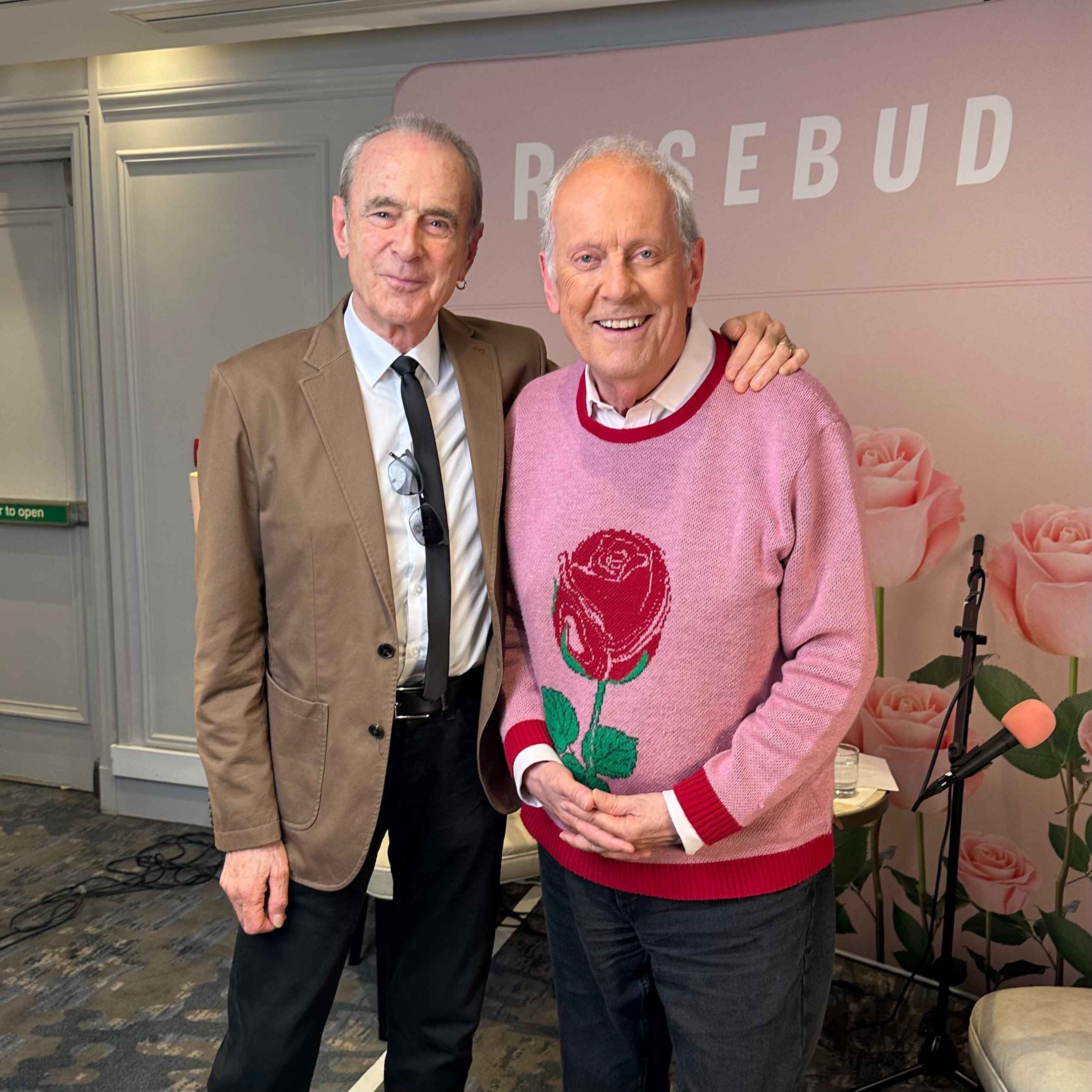
Gyles's guest today is Francis Rossi: the lead singer, guitarist and one of the founder members of the legendary British rock band Status Quo. Francis tells Gyles about his childhood in Forest Hill and Balham, South London, where his family ran ice cream stalls and sweet shops. He talks about his Italian heritage, and his love for the language and culture. Francis talks about his parents' complicated marriage, and his mum's increasingly fervent Catholic faith. He talks about secondary school, where he hid behind a jack-the-lad persona, and made friends with Alan Lancaster while playing trumpet in the school orchestra. They started playing music together, and eventually went on to be called Status Quo. Francis also talks about his friendship and musical chemistry with Rick Parfitt, and about Live Aid, and about marriage and children.
This is a fascinating conversation with one of the UK's most enduring rockers. We hope you enjoy it. And our deep thanks to Francis for sharing his wit, wisdom and stories.
Hosted on Acast. See acast.com/privacy for more information.


