
 Ask ChatGPT



Graydon Carter, former editor of Vanity Fair, discusses his path through magazine publishing (Time, Spy, New York Observer, Vanity Fair) and his New York experiences, including satirical stunts and encounters with Donald Trump, plus how Vanity Fair built long-running, high-impact features.
Edward Graydon Carter (Canadian-born; Order of Canada). Worked at Time magazine in the late 1970s; co-founded Spy magazine; later edited Vanity Fair for 25+ years. Also founded/ran Spy stunts and later led the New York Observer before taking the Vanity Fair editorship.
Vanity Fair’s success came from repeating a formula for big stories: access, narrative (beginning/middle/end), conflict, and disclosure. He describes Spy as “nonstop fun” that still carried legal risk. He says he couldn’t verify “Deep Throat” (Mark Felt) with 100% certainty before press, yet the story still broke as confirmed.
“short-fingered vulgarian” epithet for Trump; Trump cashing a 13-cent check; Waverly Inn menu quote “Worst food in the city, Donald J. Trump.” Spy’s “10 most litigious New Yorkers” list included Gore Vidal. Vanity Fair’s Deep Throat reveal: Mark Felt identified via lawyer contact; confirmed after release. Vanity Fair Oscar parties: hosting Prince; George Lazenby’s “fuck off” reaction; Babe Ruth’s pig incident (fake “Babe” with a pig on a leash).
Written by AI. May contain mistakes.
Discussion on Graydon Carter's influential role in magazine journalism.
“where we have spent some time recording Rosebud's with interesting people.”
Graydon shares stories about his encounters with Donald Trump and Spy Magazine's influence.
“Which was a satirical magazine, very controversial in its day.”
Graydon recounts a humorous experiment with small checks sent to wealthy New Yorkers.
“Yeah, it was a friend of mine who was working for Margaret Thatcher at the time, his friend Steve Proben, and he said, why don't you try to get New Yorkers, really rich New Yorkers, to sign really small checks?”
Exploration of Graydon's upbringing, family, and heritage.
“It says, Waverly Inn, worst food in the city, Donald J.”
Graydon discusses his parents' influence and memories from his childhood.
“And I remember playing with these small, beautifully made plastic cars that went with HO trains.”
Listeners will learn about the guest's reflections on his childhood, family dynamics, and relationships.
“the way that parents are supposed to do now.”
The discussion covers the guest's transition into his career, his experiences at Time Magazine, and the launch of Spy Magazine.
“No one accidentally listens to a podcast for 45 minutes.”
Discover the humorous anecdotes behind running a satirical magazine in NYC.
“People just loved the magazine because, and especially the children of the rich people we picked on, they really loved the magazine.”
Explore the personal life of Graydon Carter, including marriage and children.
“this to make money because of the fun of it?”
Learn about the financial struggles and decisions faced while running a magazine.
“I mean, given that we've had Gary Oldman as a guest on this podcast, who has had five wives, we are very relaxed about this.”
Hear about the shift from a magazine to leading a newspaper in NYC.
Graydon Carter shares his journey and experiences as editor of Vanity Fair.
Discover the behind-the-scenes stories of hosting Oscar parties and meeting celebrities.
“So we had 150 people for dinner, and then we invited 150 people from the Oscars afterwards.”
Explore the behaviors and interactions of movie stars at high-profile events.
Understand the key elements behind powerful storytelling in magazines.
“So, the parties are a huge success and they go on being a success.”
Hear the story behind the identification of Deep Throat during Watergate.
“I took suggestions from people I didn't know.”
Explore the challenges of maintaining friendships while being a journalist.
“Are you a bit of an outsider, even though you're socializing with?”
Discuss the evolution of Vanity Fair and its cultural significance over the years.
“probably made him feel better about the whole situation because i love rip torren it came to an end why did you come to an end you did 25 years oh because my my wife and i we i wanted to move to friends.”
Graydon Carter reflects on his friendships with notable personalities and the characters of the past.
“There were these sisters on 57th Street called the J Sisters, and they were Brazilian sisters who invented a lot of waxing operations.”
Carter discusses the joy of work and his current projects, highlighting the need to stay engaged.
“well I've trying too hard What do you mean trying too hard?”
Carter shares insights on joy, sadness, and learning from life's experiences.
“I'm not interested in fashion, but I like clothes.”

Get the gist, explore an idea or ask about something said.
 Claude
On Rosebud with Gyles Brandreth, what are the key points of this episode?
Searching your listeningAutomatic transcript. May contain errors.
0:00Let's be honest, if you have a cat, you've probably wondered what your house smells like before guests walk in. Thankfully, Arm & Hammer Cat Litter helps take that worry off your plate. Because not all litters are the same. Arm & Hammer Hardball Cat Litter gives you long-lasting odor control, plus strong clumps that make scooping quick and easy, with low dust too. It's a 5-in-1 litter made for busy people, helping your home stay fresher every day so you can feel confident opening the door for family and friends. Candles? Air fresheners? Not needed here. odor control is arm and hammer cat litter's job not yours be guest ready with arm and hammer hardball cat litter find it now at walmart or amazon while every other channel is fighting for your customers attention podcasts are where they've already given it no one accidentally listens to a podcast for 45 minutes they choose to be here they trust the voice in their ears and when that voice talks about your brand it doesn't sound like advertising it sounds like a recommendation from a friend.
0:56Acast gives you that trust at scale. Digital precision, post-read authenticity, and performance data that proves it worked. Don't fight for attention. Buy it with Acast. Learn more by visiting acast.com slash advertise.
1:14More rosebud. More the merrier sometimes. Occasionally, more the sadder. But it's more, more, more. and people say we want more, which is rather nice. Anyway, this is more Rosebud and welcome to it. Cue the music and notice it's slightly different music on a Tuesday.
1:51This is More Rosebud. I'm Charles Brandruth. And because it's More Rosebud, I have a companion with me. She's with me every week, all the time, because she's the producer of Rosebud. She's Harriet Jane. But on a Tuesday, when we put out More Rosebud, though you may be listening to it any time you like, well, she steps in front of the microphone and she says a few words. What are the few words you're going to say today, Harriet? Good morning, America. Because we are in New York City, where we have spent some time recording Rosebud's with interesting people. And I think today's guest is one of the most interesting.
2:29He is a magazine editor. But somebody, when I said we've got Graydon Carter on, he's a magazine editor, they said, no, he isn't a magazine editor. He is the magazine editor from the golden age of magazines. He worked when he was young on Time magazine, on Life magazine, in an era that was then coming to an end, but an era when that's how people got their news in depth, their pictures in depth. Before, well, it was from a different era. And he then became famously the editor of Vanity Fair, where he made it a very special magazine over a quarter of a century. Did you ever read Vanity Fair when he was the editor?
3:15I was a subscriber when he was an editor because of him. Really? Because Vanity Fair became the magazine. It sort of took a glossy magazine and made it intelligent, interesting, unusual, but still glossy, glamorous. And you felt you wanted to read what was in it. You weren't just buying it for the pictures. You were buying it for the words and the pictures. Very good. And before he got that job, and he's going to tell us how he got that job, how I think he was offered either that job or editing the New Yorker. Extraordinary, which is one of the great iconic magazines of America. He had founded, co-founded another magazine called Spy.
4:03Yes. Which was a satirical magazine, very controversial in its day. Yeah, kind of the private eye of New York City. I think he said he was very influenced by private. He's going to talk about that, isn't he? Yeah. He did some fun stunts at Spy, which I think people are going to love hearing about. I think people are going to love this. I want to say, I don't know if I do mention it during our conversation, that he is Canadian. He doesn't just... Oh, yeah. He talks about Canada. Of course he does. Of course he does. But he is not just Canadian. He is a member of the Order of Canada. So he has the highest honour that Canada can afford.
4:37So this is a very distinguished dude who is Canadian. And I think maybe he's also American. I don't know. but he's interesting and he's funny and he's got the measure of me yeah he has and you are fearful that he may have the measure of you you said to me you've got to edit i've got to do this carefully he's no fool he's going to see what we're doing i mean i'm about to edit this episode with the best editor alive today so watch out harriet make sure you make the correct cuts in the correct places and tell this story as effectively as you possibly can. There you are. So let's do our bit. Yeah.
5:13Let's do our best with the best of the magazine world, Graydon Carter. Cue the music. Cut.
5:30Now look, Graydon, before we begin, we've just been gossiping off camera before we start, Rosebud itself, about President Trump. And I seem to remember when I first came to be aware of you, it wasn't through the Vanity Fair years, it was through a magazine called Spy. Are we on doing this now? We're doing it. Oh, we are doing this. This is live. We're live. I can't tell whether you're live or... Because I'm the same off-screen as on-screen. Oh, you are the same off-screen. We have occasionally had guests who have been very dure. And Harriet, my producer, and I, we thought, oh, yeah, ours is going to go.
6:01And they come alive. And they sit down. And suddenly, they're alive. They're probably show people. They are. And then the moment it's over, the moment it's over, you know, is my car here? Okay. So this is for real. Okay, I'm doer no matter what, so there's no change. We were gossiping about Trump when people meet in New York. Somehow they talk about Trump. But you had encounters, I know this from Spy Magazine, your big magazine, the one you co-founded back in the day. We'll talk about it later. But you had a Trump moment? oh had many trump moments i spent three weeks with him in 1982 doing a big story on him for gq magazine and it was his first national exposure he was a you know a tabloid fixture here in new orc and i did the story and uh he hated it he sort of portrayed him as sort of an outer borough sharpie and that his hands were too small for his body so then we come to spy magazine and We had epithets for people.
7:07His epithet was, we called him a short-fingered vulgarian, which he hated. He was always threatening to sue us. He was predicting our demise. Then I become the editor of Vanity Fair. He decided he had to make friends with me. Then he invited me to his wedding, to the one to Marla Maples. He would ask me to dinner. It just couldn't stay. Then when he discovered Twitter, he was just all over me in a bad way. Oh, because of the short fingers. You know, it sort of became part of the national, the presidential debates. The Waverly - It became part of the presidential debates. The Merkel Rubio brought up the smallness of his hands.
7:47Even in this recent Iranian Revolutionary Guard video with the little Lego figures, they make a comment about his small hands. So he can't get away from it, and I feel badly about it. And he feels badly about it. But it goes back to you. Did he send evidence that his hands were not as small? He would regularly send me photographs of his hands. In fact, he sent one. It was an old ad from the book The Art of the Deal. And he circled his hands in a gold sharp. He said, see, quite large. And I stapled a note onto the card. I said, actually, quite small. And I had it messengered right up to him that afternoon.
8:26This is when I was still at Vanity Fair. Oh, my God. You also, there was a kind of teasing thing that you did in SPA, I think, where you sent people checks for quite small amounts of money to see who, if anybody, would cash the checks. Yeah, it was a friend of mine who was working for Margaret Thatcher at the time, his friend Steve Proben, and he said, why don't you try to get New Yorkers, really rich New Yorkers, to sign really small checks? so i thought this is a great idea so we set up a company called like the national check retrievals uh company and we sent checks out to 100 32 cent checks out to 100 uh rich new yorkers at the time this is like late 80s and then we wait for them to come back and then 25 of them signed the 32 cent check and we thought i wonder if we can get them to sign an even smaller check So we sent out checks for 13 cents, and we waited because you didn't have to wait for the checks to be endorsed, and people have to write for deposit only and sign their signature.
9:30And after about a month, a box comes back. We all gather around to open it. There's two checks. Two people had signed and deposited the 13-cent checks. One was Adnan Khashoggi, who was then the biggest arm trader in the world at the time. And the other was Donald Trump. And it's just, I thought, that is almost a perfect ending. At the Waverly Inn, a restaurant we're part owners of down in the village. At the top, we've had it for the last 20 years. It's a quote. It says, Waverly Inn, worst food in the city, Donald J. Trump. And it's been at the top of our menu. It's been great for business. Did you, though in the early days, rather like him?
10:12Did you find him quite entertaining company? He's got the charm of a salesperson. So he'll use your name, Giles, every three or four sentences, which creates an intimacy between the two of you. He's not without his charm. I don't recognize the man in the White House. He's not the sort of loose charmer that he was before this. You, of course, are Canadian. You're not American. I'm American and Canadian. Oh, you're both? Oh, yes. But you were born Canadian. I was. But you're proud to be both. You don't foresee the amalgamation. Why does he say things like, it's going to become the 51st state? Just to rile an ally.
10:52America's become like the hermit kingdom. We have one ally in the world, and that's over in the Middle East, Israel. We're sort of alienated from every other country in the world, including two wonderful neighbors, Canada and Mexico. And I'm very proud of the way Mark Carney handles him. He plays him the way a cat plays with a small ball of string. He's really clever. Well, Canadian and American you are, Graydon Carter. We're going to begin our conversation now properly. Let me get the name right. It's Edward Graydon Carter. Right. Edward is actually your first name. Yes, but Edward is my father's name.
11:29So I was Graydon from birth. Gray, my family called me, yes. Oh, may I call you Gray? You can. Oh, Gray. Yes. I'm really liking this, too. I've said the name three times now in order to establish an intimacy. So, Gray, and I got the date right, born on the anniversary of the French Revolution, the 14th of July, 1949. That's it. Gray, what is your very first memory? Oh, I knew you were going to ask this. I mean, we lived in Germany after the war, and my parents would go away skiing a lot, so I spent a lot of time on my own, and we had a nanny called Frau Flieger who took care of us. And I remember playing with these small, beautifully made plastic cars that went with HO trains.
12:14And I had an HO Fleischmann train, which was... HO stands for... That's the size of the track. And just playing with that when I was four or five years old in Germany. I wasn't lonely because I didn't know what lonely was or anything like that. And you were in Germany because your father was in the Canadian... He stayed on after the war. And he was in the forces. Yeah, he was a pilot. That's why I was born in Germany. Really? I was born in Wuppertal because my father was part of the British forces in Germany. Amazing. Yeah, well done. So you've got a German passport as well. Well, I haven't. That's what I can do.
12:47It's EU, you know. Maybe I should. So when everything goes to hell in a handbasket. I can say. You can go to Italy. Ich bin Berliner. Yes. Yeah, I'd get it right too. I think it means I'm a donut, doesn't it? No, ich bin ein Berliner means I'm a donut. Okay, sorry. Maybe I've got it the wrong way around. that's the famous kennedy mistake is exactly i'm a donut okay tell me about these parents who was your father he was uh his father's english he read the call of the wild jack london's book and decided he didn't want to be uh an engineer in london he moves to western canada back when it was truly wild in the 1920s and he he becomes a fur trapper and then builds up a huge trading post he sells it to the hudson bay company and my father grew up in that environment and then they moved to a town called moose jaw in saskatchewan great name and he um he loved flying he he enlisted at 16 during world war ii and he just loved flying planes was he a heroic figure to you no i mean he was no he was a sort of cozy father and he you know i know he was a really good athlete he skied a lot he wasn't around that much so Why wasn't he around that much?
13:59Parents weren't. They didn't come to all your sporting events in those days the way that parents are supposed to do now. Childhood is very sort of performative. It's like a spectator sport being a child today. Parents are always at the games. My parents never came to any of our sporting events, and nor did any of my friends' parents. What did he do for a living after the army? He became the administrator in the government. So he was a civil servant? Yes. And was he a benign figure? Oh, completely benign. And a happy man in his life? Very happy and really funny. Oh, good. I mean, largely inadvertently funny, but very funny.
14:33Yes, because I seem to remember reading something. Funny in a Basil Fawlty sort of way. Oh, that's nice. Yes. Is it he who occasionally would break wind? One of his great talents was his ability to break wind at the most unfortunate times. And my mother would just put up with it. And finally, when they bought their first sailboat, he wanted to call the boat passing wind. and she put her foot down. Oh, bless him. But he was quite unselfconscious about that. He just took it in his stride. Yes, and my mother would just go, oh, your father, you know, during a social engagement. So who was your mother?
15:09What was she called? Her name was Margaret, and she grew up in a wealthy family in Toronto, and I think they had greater aspirations for her than to marry a pilot after the war. But she loved my father, and they had a wonderful marriage, and she was a housekeeper and a Sunday painter. That's nice. And tall, short, long? Five foot six. What's your recollection of them together? Try and paint a picture. Oh, no, truly a loving marriage. And it set a good example for how I wanted to be with my wife and my children. And that lasted, their marriage lasted. Right to the end. And that intimacy between them.
15:49Yes. You saw that they were friends as well as being. Absolutely. how nice yeah what for you is the coziest the sweetest memory of seeing them together as a couple you know i think they were happiest when they were either skiing or on their boat especially on their boat and um i by that time i was living in new york so i'd go back and stay with them and we'd go sailing and on a sunday and i think they had a great time and they uh they loved they loved that four o 'clock hour on a boat when you sort of break out the gin that was their favorite part of sailing i think oh well done well done them happy can you remember a bad time is that was there ever a row or a day that things went wrong no i'm serious no that's great yeah that's lovely were they brothers and sisters were you the only brother and a sister and how did you get on with them um i you know i got on great and then my brother is very different for me he he's in business and i think he's much more conservative in his politics than i am i'm very close to my sister who's had she's had health issues up and down and but I'm very close to her.
16:53So you stayed in Germany for quite a few years. Like four years. Only four years. Yes. And then it was time to go home you went back to which part of Canada? To Canada to Ottawa. Ottawa the capital city because he was in government he worked he joined the civil service by then. Yes. And picture I remember going to Ottawa in the 1960s and people then said it's like that being in the 1930s. Is Ottawa today like That's really rude. I mean, it's like being in the 1940s, perhaps. It seemed very conservative and very quiet compared with, say, Quebec or Toronto. Yes. It was very grey, very sort of post-Edwardian, very grey architecture, extremely cold.
17:34I mean, extremely cold. And if Canada and Mexico could swap climates, I'd probably move to Canada right now. But it was brutally cold with a lot of snow. But if you're a kid, I love playing hockey and I love skiing. So that's what you did in the winter. You skied and you played hockey. Who was your first friend outside the family? Oh, Bruce McLennan. He's still one of my closest friends. And his parents and my parents were best friends. His father was a sort of well-known architect. And he lives in western Canada. And we emailed yesterday. I mean, I see him all the time. He's in France right now.
18:10He's got a barge in France. And were you an easy child? I thought so. likable with lots of friends? Not tons of friends, but enough friends. And what sort of games would you be playing as a child? What books would you be reading? What music? Oh, I read a lot. Remember the first one? The first book that stuck in your head? Interesting. No, but I read a lot of, I mean, Beverly Cleary was a wonderful writer. She wrote the books called Henry and Ribsey. I read all, you know, classic children's literature, but I read all the time when I was a teenager. And what schools did you go to? I went to high school in Ottawa.
18:48I went to two universities in Ottawa. And I stumbled on these people starting up a small magazine literally my first week at school, and I'd always wanted to move to New York. I wanted to either be a writer or work at a magazine. What age did that begin? What age do you think, I want to be a writer? 12, 13. Gosh. Why does one think, I want to be a writer, age 12? I liked writing. What triggered that? Partly because I just loved reading. I thought, I'd like to have that life. Just be on your own for periods and write something, and hopefully it would turn out okay. Anyway, I stumbled across this magazine that these guys were doing, and so I joined them, and that was the greatest thing in my life.
19:32All of a sudden, I had no idea what we were doing. I eventually became the editor. What age is this? 19, 20. So this is after your high school. What are the universities you go to? This is at University of Ottawa. Anyway, that consumed my life. It was the great, I have no idea what I was doing. Nobody knew what they were doing. What was the magazine called? It was called The Canadian Review, and it was a political literary magazine. It had a very healthy circulation, but it did nothing but lose money. And it failed. We eventually sold it to our closest competitor, and I came to an editing program in New York City.
20:07And from there, it led to a job at Time Magazine in 1978. so this is a rush into what actually has become first your career and then your life but before we go with you to new york as a teenage boy uh loving writing wanting to be in magazines did you have romantic interest can you remember your first crush
20:31yes i had a lot of girlfriends i was yeah i was okay with ladies with the ladies and i it's funny I thought you were going to ask me like a rosebud question. And then I was in the car on the way up here. I thought, okay, I taught canoeing at summer camp every year. And that's one of my few skills is I'm really good in a canoe. And you got earned chevrons from the Canadian Canoeing Society, whatever it was, to go on your paddle. And I had these two beautiful paddles, one for the stern and one for the bow. and I brought them to New York as sort of decoration for my apartment, which was slim on appointments.
21:10They were sitting in the corner. I got into a fight with an early girlfriend in New York and she grabbed one of them and smashed it over my head. There's blood everywhere. I had a big lump on my head, but that's not what upset me is the canoe splintered and the blade. So I saved all the parts. I eventually glued them all back together. I have one of the two paddles still that I use, but this one is now just for show, but I can't throw it out. You're telling me that you were quite successful with the ladies as a teenager. I don't want to make it sound like I was a Romeo or anything like that. No, no, no.
21:44But this sounds like... I had really nice girlfriends. You had nice girlfriends, but this is a slightly traumatic experience. The canoe thing? Yeah, you'd done something... No, it was traumatic. Well, I mean, you can't just tell a story like that, that a girl is beating her over the head with her... She didn't beat me over the head, she hit me over the head. That beat sounds like it was repetitive motion. Yeah, okay, very good. This is an inter-speaking. You wouldn't have allowed that as a headline, that you were beaten over the head? I'd probably stop her at a certain point. She caught me off guard.
22:11But the point is this, this guy who's had just average success with the ladies is a nice guy, is being hit over the head, maybe not beaten repeatedly, hit over the head by a girl. What triggers this? I think it was in the process of breaking up. Ah. Okay. We don't need to go into details. We don't need to go there. I just wanted to tie up that story. As an editor, you will know, you would have said to me, you began that story, but you didn't have the payoff. We didn't know what happened. No, okay. So we've got an ending to it now. We've got an ending to the story. So you are here. And she's still a friend.
22:44Yes. I don't bring up the canoe paddle that often, but she's still a friend. But you've got the canoe paddle. I do. So when she comes around for a drink, you can just glass it. And leave it on the table, yes. Oh, this whole thing, yes.
23:03Let's be honest. If you have a cat, you've probably wondered what your house smells like before guests walk in. Thankfully, Arm & Hammer Cat Litter helps take that worry off your plate. Because not all litters are the same. Arm & Hammer Hardball Cat Litter gives you long-lasting odor control, plus strong clumps that make scooping quick and easy with low dust, too. It's a five-in-one litter made for busy people, helping your home stay fresher every day so you can feel confident opening the door for family and friends. Candles? Air fresheners? Not needed here. Odor control is Arm & Hammer Cat Litter's job, not yours.
23:36Be guest ready with Arm & Hammer Hardball Cat Litter. Find it now at Walmart or Amazon. While every other channel is fighting for your customer's attention, podcasts are where they've already given it. No one accidentally listens to a podcast for 45 minutes. They choose to be here. They trust the voice in their ears. And when that voice talks about your brand, it doesn't sound like advertising. It sounds like a recommendation from a friend. Acast gives you that trust at scale. Digital precision, post-read authenticity, and performance data that proves it worked. Don't fight for attention. Buy it with Acast.
24:09Learn more by visiting acast.com slash advertise.
24:17So you're here in New York and Time Magazine? Time Magazine then was, they've had like 800 employees. And, you know, we had our own building on Sixth Avenue over here. And it was the biggest selling news magazine in the world, wasn't it? Yes, it was. It had a circulation of just under 5 million. And it was surrounded by incredibly talented people, including my eventual partner at Spy Magazine, my eventual partner at Air Mail, something I did after Vanity Fair. It was an incredible group of people. And we basically have all stayed in touch over the past 50 years. And did you feel comfortable there?
24:49You were a Canadian boy who arrived in New York. I felt a bit like a fish out of water. And I don't, I tried not to have a Canadian accent. I just wanted to sound like everybody else there. I tried to dress like everybody else there, but with like some, I had an old blazer that my father had given me, and it had a sailing crest on it, but it was really thick. It was like one of those old wool melton blazers that you need in Canada because it's so cold. And it had the crest on it, and at a meeting once, somebody asked me if I was working as a doorman at one of the buildings here I was so much so I went back and I with a razor blade and sewed the crest off that night and but it left a like it was darker where the crest had been than where the jacket was so I looked even more foolish when I went into work the next day but I know I fit in pretty well I mean Canada the thing is if you live in Canada you're sort of got your nose pressed up two glasses one to Britain and one to the United states you're sort of you're aware of both senses of humors and both cultures and what was your role on time magazine what were you doing i was a lowly writer and but you were actually writing stuff that was getting published printed yes i mean yes it went through many everything went through many layers of editing and only years later did i realize where you fit in in the whole thing there was probably four layers five layers of editing after you turn in a story that they would stamp what the writer had wrote with a stamp that said writer's version which I would later have thought very funny but you would compose these on huge typewriters big Underwood typewriters because they were big enough strong enough to have uh five pieces of paper with with carbon in between and they were huge they were very tall everything had to be on carbon paper there were copies and then you go down and there was a wall of pneumatic tubes where you'd like put the copies and they'd go to copy editors and fact checkers and photo department all the rest of it gosh what was the biggest or most interesting or most memorable story that you wrote or i wrote nothing memorable or interesting really no i wasn't i wasn't really i i just sort of it was not i was not a success the way all my other peers were okay so where do you go next i'd had an idea because i'd had a magazine before.
27:09It wasn't very good, but at least I knew that you could start a magazine. So I wanted to, I wanted, I thought of a magazine about New York City that was fact-based, but funny. And New York was coming back alive. When I got to New York, it was, you know, burnt out cars everywhere and graffiti and stabbings. And New York was coming back to life. They are, you know, all of a sudden there were investment banks, which meant there were investment bankers. And there was the ladies who lunched. And there's a lot of big characters in New York. And I thought a funny magazine about this city and private eye was a huge influence on on both the the outlook and the writing style the sort of dense fact-based but slightly removed writing style so i my i found a partner in kurt anderson and we started spy magazine and for the first time in life i had a huge hit on my hand nice yeah it was really it was very pleasing and why was it what was the first story you broke or Was it a group of stories?
28:05Oh, there was a million things. People just loved the magazine because, and especially the children of the rich people we picked on, they really loved the magazine. And it was just an incredible amount of fun. You know, we annoyed a lot of people. You know, we had a, we did a story about the 10 most litigious New Yorkers, and on the list was Gore Vidal. And we were listed in the phone book in those days, and the receptionist came back and said, great and i've got gore vidal on the phone so i pick up the phone and i say hello mr vidal he says i don't like being on this list of the 10 most litigious new yorkers and if you don't take me off the list i'm going to sue you so i was just about to say do you not see the irony in that and he hung up on me and so there were there was always do you feel able to print that in the following issue no but we at one time there was a man called larry tish who was a real estate person here in new york and he bought cbs the big tv network the tiffany network and he was firing a lot of people that i knew and we did a column on larry tish and we we had for these we had these funny epithets for people and this one's quite rude but we called him a dwarf billionaire and a man who was working with him was a man called john scanlon who was a famous pr guy in New York at the time and he was a friend of mine and he called me up he was always saying Graydon you've gone too far but he calls up this time he said Graydon you've really gone too far I said what do you mean he said Larry Tisch he said well first of all he's not technically a dwarf so I just wrote that down not technically a dwarf so the next month we did a column on this but we said we have a correction to make we got a call from a CBS factotum pointing out that Larry is not technically a dwarf.
29:52Even greater flurry of angry phone calls. Well, it makes me laugh even now. Yes. You were doing this to make money because of the fun of it? You don't start a satirical magazine in New York to make money. But did it break even? Did it make a bit of money? Well, Private Eye over the years has made a lot of money. Private Eye, it's a unicorn. It grew too fast. We planned a magazine that would have a circulation of about 25 ,000 copies in New York. But within three issues, we were having to send them out to Los Angeles and then Washington and then London and then Canada. And we had to print more and more copies.
30:31So you've got to pay for that. And it takes a long time before you get any revenue from an issue. You've got to pay your writers at a time. You pay your rent on time. And then you wait 120 days before you get paid from the newsstands and you get 90 days before you get paid by the advertisers. So after about two or three years, we'd lost money. We ran it for five years, and then we sold it to Charles Saatchi and Johnny Pagazzi, who's a very close friend of Charles, who's sort of a man about town around France and London. And you were beginning to meet these sorts of people, were you? I mean, in this period, who were the interesting people you were encountering?
31:11Oh, no, no, we got invited nowhere, so we weren't meeting. we just were around our friends all the time and i had children by that time i had three kids so i tried to get home at 5 30 every night and how do you got married how did i get married the regular way i asked her and when she said yes but i mean how did you encounter her oh my best uh my best friend brought her over for drinks one night and we just fell in love and we i asked her to marry me 10 days later well well that was good and you've got lovely children so they worked out well yeah I got five kids, yeah. No, it didn't last. It lasted 20 years.
31:45Well, that's good. I mean, I'm sorry. And five children with her? Four children with her and one child with my current wife of 20 years. Good. And you've only had two wives or three? I've had three, but I had one in college, but that was, yeah. Easy come, easy go. These are youthful. The training, yes. I mean, given that we've had Gary Oldman as a guest on this podcast, who has had five wives, we are very relaxed about this. And Mickey Rooney had eight. Yeah, but unfortunately we missed him for the podcast. Yes. But I think we are thinking of having the widow of Alan J. Lerner. Oh, interesting, yes.
32:21She was who told me that marrying you is Alan's way of saying goodbye. He was married quite a bit. He was married. I think eight. Okay. That is remarkable. That's up there with Nicky Roney. So there you are. You've got a wife. You've got three kids. This is awfully personal, but go ahead. We're moving on now. Okay, okay. We're moving on. never mind i mean you're the you're the guy who called this distinguished uh person of restricted growth a uh not i know it's very rude exactly so i mean i feel like i can almost get away with anything i know but rest assured i won't push it too far okay so here you are the magazine what for you was the high point of that of those five years that magazine it was sort of every day was a blast.
33:02We had a core group of about 10 of us. It was just nonstop fun. It was terrifying at times. You're worried that people you'd get sued and that sort of thing. But it was just a romp. And these people, they were all really smart. In my book I write, it was very sort of Hellenic. It was just the perfect situation. Was that a low point because you were sued or when you decided you had to sell when we decided we had to sell we realized we were running out of money and uh si newhouse had tried to buy the magazine three or two years before he ran condonest he ran condonest and random house he was the si was the most important cultural figure in the city and and one of the most important in the country but we thought it was too soon to be taken over by a large company like condonest that owned vogue and vanity fair and the new yorker and we had said no and it was the i mean one of the stupidest things we'd ever done yeah we sold it to charles saatchi and johnny pegazzi and i left and what did you do i took over this newspaper i wanted to do a newspaper in new york a twice a week newspaper but i took over this weekly newspaper called the new york observer and it was a sort of broad sheet of salmon colored and it was unrelentingly dull and um most of my friends made fun of me when i took it over but i thought i could do something with this i can i worked out a six month 12 month 18 month plan of how i would make it a must read and within like eight months all of a sudden it was a thing it was being read by people on the upper west side in the in the greenwich village so i started sending comp copies complimentary copies to friends of mine who were editors and writers outside the city and unbeknownst to me Cy Newhouse he would make a twice a year trip of his European properties so he'd be stopping off in Milan and Paris and London and each time he goes to visit one of his editors he sees a copy of the New York Observer on their desk so he comes back to New York under the wildly misguided impression that this was an international hit and and he called me and he said I've got two magazines and I wonder if you'd be interested in either one of them and I was actually quite happy with the Observer I didn't much like the man who owned it but I was happy with the way it was going I loved my schedule and the paper agreed with me but he said I've got the New Yorker Vanity Fair he was offering you the editorship of either one we had made fun of we'd made great fun of of the Vanity Fair when we were at Spy for five years we had made fun of the editor we had made fun of the house writing style we made fun of a number of the writers so i thought that sounded slightly toxic i said but like i've read the new yorker since i was a kid and she said okay it's the new yorker so we agreed on a salary and then i started working on a six month 12 month 18 month plan for the new yorker and then the day it was supposed to be announced and a winter called me and said it's going to be the other magazine i went okay and she said cy's going to call you in about 10 minutes act surprise so anna winter was then what what was the other vogue at the time fine and and a friend and a friend of mine yeah and again a good friend and not quite right hand but very close to him so cy calls you know 10 15 minutes later and he tells me it's vanity fair and i say you say you okay with that i said absolutely it's great because i by that time you know i had three kids a fourth on the way and so i i wind up at vanney fair the least popular candidate i could have chosen and uh for the two years i didn't fire anybody i really only fired one person up to that point in my life but i i sort of let wanted to see i did a lot of listing finally one week i realized i've had it with three of these employees i let all three go in over a two-day period and then it changed i had the next 23 years were slightly i mean the wheels are always falling off if you're running something um but i had a a wonderful uh pleasing run for the next 23 years and what was your first hit your first moment of this is i've made vanity fair my own this is the interview with or the picture story with it wasn't anything like that so there were a lot of great stories it was probably the swifty lazar who's a famous agent in Hollywood and represent a lot of great writers and actors and he'd been given the nickname Swifty by Humphrey Bogart who was a client and he invited me to lunch after I became the editor of Vanity Fair and I think he took a shine to me so he invites me to his Oscar party because he invented the Oscar party and he had it at this restaurant called Spago which was like north of Sunset and uh i went and i saw what he did and how he did it because i didn't know that many people and so i got a lot of chance just to sort of people watch and then he died that december this was in march or february he died that december and i thought you know we could take this over we could assume that so um and we only had two or three months to plan it so we we did it small because my feeling is always if you're going to fail, fail before as few eyes as humanly possible.
38:20So we had 150 people for dinner, and then we invited 150 people from the Oscars afterwards. And we had both people like Prince and movie stars, but also like Nancy Reagan for the dinner part. So it was a great mix, and David Hockney and Mick Jagger. And these people accepted the invitation for what reason? I don't know. I mean, probably thought they'd meet other interesting people. Very good. and they did yes and so um and they met you too the least interesting person but you were there on the door welcoming them i do i do feel that i think most people are very anxious when they go to a social event and i think it's really nice if the host is there to welcome you so i would stand outside and greet 150 people as they were coming in and i would also have to sometimes introduce them to Cy and his wife, Victoria.
39:13Because they were paying the bill for the party. Well, they were there, and I loved Cy. They owned the magazine. Yeah, but Cy was like my second father. I adored the man. So, yeah, so anyway, it was a moderately good success. Well, it was a major success because it began a whole... It became enormous, yes. And in the early days, who were the biggest names or the most memorable? Any difficult encounters, happy encounters? I mean, we had got everybody at a certain point. But I remember one year, I was trying to have interesting, unexpected guests or groups of guests. So one year, I decided to invite all the men who had played James Bond up to that point.
39:55But Sean Connery was playing golf in the Caribbean, and Roger Moore was in the south of France and didn't want to leave. Anyway, Timothy Dalton was doing something. We wind up with George Lazenby. who your older listeners will recognize as a sort of ruggedly good-looking Australian actor who was in this sort of forgotten Bond film. But it's a rather good Bond film. Yes, it is. On Her Majesty's Secret Service. And so that's the Bond we get there. I realize there's going to be no photo shoot. But during the party, I was sort of... That was your one Bond. You'd hope to have all of the James Bond and you end up with George Raisenby.
40:32Then nobody knew who he was. Who, in his claim to fame, had been doing an advertisement for chocolates, as I remember. I didn't know that. That was his one time on screen prior to being James Bond. Okay. Anyway, very nice looking. So I see him over by the bar and I was making my rounds and I go over to him and I tap him on the shoulder and say excuse me Mr. Lazy Me, I just want to introduce myself, I'm Graydon Carter, I'm your host and he kept looking straight ahead with his drink and he just turned to me and went, fuck off. So that didn't work out too well. Are the legendary people from an earlier era, who's the one you remember most or were most excited about to think i'm hosting this party and in this room i've got whoever it was well i adored billy wilder loved his films i adored the man and i would have dinners with him i gave him a book party and a great art collector and yeah i just i've i've seen every one of his films a half dozen times you know the wonderful line that he told apparently to my friend Leslie Brickus when they met up when uh he Billy Wilder was in his 90s and making a film and Leslie said oh I've not seen you for a while you how are you doing I'm doing I'm loving making this movie and then advised Leslie said whatever you do don't waste your 80s that's good advice very good advice people of our age should bear this in mind oh yes we're prepping for them yeah there you want to that that was exciting yes any disasters any people you thought well we invited them because they're a name but good grief do they not know how to behave um people actually were very well behaved movie stars were very anxious and i think a lot of them unless if you're a successful movie star the only people you get to meet in hollywood are people you've made movies with because you're you're out you're not living and sleeping in your own bedroom most nights so i did a lot of introducing them to other movie stars and you know we we had very good security we had very few uh upsets but i remember the year that babe one was was up for academy warden the one about the little pig and a man shows up and he's got a dinner jacket on and he's very well dressed and he's got this little pink pig on a leash and he said can babe come in and so we looked what do we know from barnyard animals and so we we let the pig in and yes of course it was not really babe oh it wasn't the real babe no of course not it's babe standing but i i don't even think it was a stand i think it was just he'd rented the pig but i thought really inventive and so he deserved to get in 100 what was prince like prince he's still off in the corner sucking on a lollipop but he was prince it was there you have no idea how excited people were to see him i have every idea yeah okay and did you often find people standing alone george lazanby um yes i would go over and try to rescue or introduce them to somebody because one thing i've noticed over the years that often the stars going backstage often the big stars dressing room is the quietest one unless they've got friends in personal friends in yes because people are overawed and feel they can't approach them it's why we let them bring their manager or their hairstylist so they've got someone to talk a crotch very good
43:56Let's be honest. If you have a cat, you've probably wondered what your house smells like before guests walk in. Thankfully, Arm & Hammer Cat Litter helps take that worry off your plate. Because not all litters are the same. Arm & Hammer Hardball Cat Litter gives you long-lasting odor control, plus strong clumps that make scooping quick and easy with low dust, too. It's a five-in-one litter made for busy people, helping your home stay fresher every day so you can feel confident opening the door for family and friends. Candles? Air fresheners? Not needed here. Odor control is Arm & Hammer Cat Litter's job, not yours.
44:29Be guest ready with Arm & Hammer Hardball Cat Litter. Find it now at Walmart or Amazon. You've got social dialed in. Search is doing its thing. So why do your marketing results look the same as six months ago? That's because you're fishing in the same pond as everyone else. Podcast listeners are a different audience entirely, more engaged, harder to reach through traditional channels, and ready to act when someone they trust makes a recommendation. We're Acast, and we put them right in front of you. Browse thousands of the world's leading podcasts, book host reads or run your own ads, and track every conversion in real time.
45:05Same skills you already have, brand new results. Acast. Acast.com slash advertise.
45:16So, the parties are a huge success and they go on being a success. But the magazine, why did your magazine become, for 25 years under your editorship, the phenomenon that it did become? It was slowly, you know, incremental steps. I wanted to produce a magazine that I wanted to read. And, you know, producing big stories, some of them run 20 ,000 words. It's a big, complicated business and very expensive. And so for a big story to have a lasting impact when it comes out, it needed four elements. You needed access, and that is you needed sort of access to the people who were involved in the story or on the periphery.
45:54You needed narrative, meaning that you needed by that time a beginning, a middle, and an end to the story. There had to be some sort of culmination. You needed conflict, which is always good. A story about one person sitting in a chair is one thing, but two people fighting over the same chair, that's conflict and that's better. And you needed disclosure in that you had to advance the story in some way. It's a tall order, actually. It is a tall order. But after a while, after four years, I knew exactly where the story would go in the magazine. I knew exactly the photographer to shoot the story.
46:30I had a rough idea of what it would even look like. So then it became a... Give me a couple of examples of stories that for you were very powerful or rewarding or challenging. Well, I took all sorts of phone calls. I took complaints. I took suggestions from people I didn't know. And a man called me one day and said that he was a lawyer in San Francisco, that he represented the man who was Deep Throat. And Deep Throat in America was the secret source that Bob Woodward had used when he and Carl Bernstein were reporting on the Watergate scandals. and that they used for their book, All the President's Men.
47:07It was one of the great mysteries of American popular culture. Who was Deep Throat? It was a big thing. So this man called me, and he said he represented Deep Throat, and we talked for a while. He said there were some issues. He said the man was in his 90s, that he had suffered a number of strokes, and that he was slipping into Alzheimer's. But I said, let me have somebody get back to you. So I had one of my editors, David Friend, call him back, and over the next two or three months, they went back and forth, and finally David Fran came to me and said we've got a name I said what is he said Mark Felt and I had no idea who Mark Felt was but we discovered that he was the number two at the FBI so for the next eight months we worked on closing this story and trying to verify it through other sources but he had never told his email and even told his family so he was trying to pin it down now we I could have as we were getting closer to press I could have called Bob Woodward or Carl Bernstein carl was on our masthead if i called carl he'd immediately call bob and bob would get into the washington post the next day because remember we're a monthly magazine if i called bob the same thing would have happened so we had to go to press with this story without knowing that a hundred percent that this was the mark felt was deep throat anyway i i get married and i'm on my honeymoon and my wife and i are coming back to new york we're in the airport in the bahamas and I didn't have a cell phone in those days.
48:31I was one of the last people to get one, but she had a flip phone, and she gets a call, and she answers. She said, David, friend. So I pick up the phone, and the editor was working on the Deep Throat story. So I pick up the phone, and I said, David, hey. He said, I just want to remind you that we released the Deep Throat story wide to all the newspapers, the wire services, and the television networks. I said, God, I completely forgot in the sort of, you know, getting married. Your third marriage, exactly. By the way, yeah, okay, okay. He said, but Woodward and Bernstein say they'll make an announcement in 45 minutes.
49:07So they're about to call the plane. It's a small airport. And I am really nervous. This was during the Bush administration, the George W. Bush administration. And getting something wrong could be highly detrimental to your career. so we're we're uh on the we're just about to get through handing her boarding passes and her phone rings and i pick it up he said david please give me some good news he said woodward and bernstein just confirmed that mark felt was deep throat so we get on the plane i get order a gin on the rocks we fly back to new york and it's on the front page of every newspaper in the world the next day a story broken by by an inch of a hundred year old legacy monthly sleepy old monthly magazine fantastic it was great and moved yes were there people whose stories you missed i mean did you think about people like michael jackson if you knew oh no we did a huge story on michael oh did you oh my god yes no no we did a huge story and we did a huge story on muhammad al-fayed going into his racism and his sexual harassment he sued us for 100 million pounds oh we spent two and a half three years two years um in discovery and he he dropped the case on basic on the the steps of the courthouse congratulations yeah no no there was um there's probably a million stories i missed but you know i i've seen do you do anything on him we did a story on epstein uh in 2003 um not the story that was written in 2017 or whatever it was and completely missed him that who could imagine somebody could be such a monster we you know i couldn't get the story on harvey weinstein because nobody would talk in the early days everybody knew that he was but people just thought harvey weinstein's a sexual harasser but they thought that's hollywood that's the casting couch if you are a journalist and an editor, is it possible to be friends with these famous people?
51:12Or do you keep yourself to yourself? Are you a bit of an outsider, even though you're socializing with? I mean, I'm pretty, I think that I would tell a friend, if you stick your hand in the wood chipper, there's nothing I can do. We have to do a story. So there were a number of friends involved in the story. Yeah, I met a number of friends involved in the story. Not a lot. I was careful with my friends and my friend john scannan the fellow who had called me about larry tish saying he wasn't technically a billionaire so he got involved with brown and williams at a big tobacco company that was trying to besmirch the reputation of this whistleblower named jeffrey wygand it didn't reflect well on john and i i had to call him just tell him we were doing this story and we didn't speak for a year after that but it is the story was an amazing piece about this very complicated whistleblowers saying that the tobacco companies knew that smoking caused cancer and that it was addictive and it became a movie it became the michael mann movie called the insider with russell crowe but john scannin was played by the wonderful actor uh rip torren so i think that probably made him feel better about the whole situation because i love rip torren it came to an end why did you come to an end you did 25 years oh because my my wife and i we i wanted to move to friends.
52:31I'd done 25 years. I thought I've done everything I wanted to do. I knew that that the economics of the magazine business were changing. I was tired. I mean, it's a big job. It's a lot of work and you're managing a lot of, you know, big scale writers and photographers. And you're sort of you're basically like a talent manager half the time. And so, yeah, I was just I was done. Has the world changed? You began by working for Time Magazine, Life Magazine, when we were boys. These were global brands and enormously important and significant magazines in all our lives. Vanity Fair, through your years, was a cultural phenomenon and it was huge.
53:19Am I wrong was just my age. I don't think that's the same now. No. Is it not? And is that sad? Is that bad? What is your take? Well, if you're of that world, it's very saddening. I mean, you know, the CBS Evening News with Walter Cronkite helped set the agenda for American politics. And the good thing is that newspapers like the New York Times and the Wall Street Journal are as strong as they ever were. And I don't know what this country would be like without them. but the magazine business is you know it's a niche business now and young people will rediscover magazines in five years the way they rediscovered vinyl but they won't be getting magazines for information the way they subscribe to time or life magazine so the magazine business will never return to what it was but you know books seem to be very healthy big scale newspapers where people have invested in in the quality of the papers they seem to be doing quite well i look i read all the English papers, the Times and the Mail and the Guardian and the Telegraph and they seem to be doing fine British magazines, the oldie, private eye, the shelter magazines all seem to be like 2008 never happened they seem all very successful it makes me really happy.
54:36Of people that you like to see again, you no longer see again, can you name me a couple that we would have heard of? I know because I spoke to him about you that you were a friend of somebody who was a contemporary of mine at university christopher hitchens oh my god yes well there's a lot of friends who i miss yes i mean was he a special friend to you yes and i'm doing a documentary on him for hbo oh uh with john batsick who's remind people of of why he was in his day he was an iconoclast to put it mildly christopher was the the the the beating sort of moral soul of the magazine i'd hired him from he'd been writing for left-wing magazines like The Nation.
55:14I hired him away from Harper's Magazine. He was the first person I hired at Vanity Fair. And he would do anything. We'd send him off to, like, you know, wretched republics. He'd return with great stories. He was fearless, absolutely fearless. He underwent waterboarding during the Bush administration. Waterboarding? You mean being tortured? Yes. He said it was one of the most horrible experiences of his life. Who was doing the torture? He hired a... To experience what it's like to be... My parents like to be waterboarded. But then I would send him on this course of self-improvement where we would tidy him up and get him a proper suit made and go to a Savile Row tailor and get shoes made for him and get a proper haircut and get his nails done.
55:59And then I'd heard about this. There were these sisters on 57th Street called the J Sisters, and they were Brazilian sisters who invented a lot of waxing operations. and they invented the bikini wax for instance for women but they also invented something for men called and i'd heard about this called the back the crack and the sack oh yes so i thought i called christopher and i said okay the last thing let's let's try this and i it took him a while to understand what i was talking about and then he just sort of shuddered and he said i'll i'll try Anyway, he goes up to 57th Street. The Jay sisters wax him.
56:43He comes back. He's white as a sheet. And he told me it was worse than the waterboarding.
56:54Well, there you go. But I miss him. I miss Fran Liebitz and I. I had a dear friend who was the first female super agent, Sue Mengers. We adored her. I miss her. I miss a friend of mine, Jerry Weintraub out there, who both toured Frank Sinatra at the beginning of his career and produced all the Oceans movies at the end of his career. I miss Robert Evans, who produced the Godfather films when he was the head of Paramount Pictures. He was a strange, wonderful friend. And so, you know, I miss a lot of friends who are dead. What do these people have? They were characters. That's it, characters. And why did they like you, do you think?
57:36Because I appreciated characters. And yeah, because if you go to Hollywood now, I mean, they're not much different than most of the people running the studios or the television networks. They could be employees at a hardware store at this point. They're just not into, they're number crunchers. And these people, you know, they had big personalities. And they also, they had fun in the jobs they had. And that's the one thing you'll never get, it may take a while to get back from the magazine world if it ever comes back is working in a big magazine was a lot of fun what are you doing now that's fun in your life oh gosh i mean uh well talking to you and that's the great honor of my life and then i'm starting a book imprint with my partner from airmail alessandra stanley i'm thinking of opening a working on a restaurant in london with a francois o 'neill who owns maison francois in london and what else am I doing?
58:36Oh, and documentaries. And what makes you want to do this still? Is it curiosity? You're blessed with energy? What are the Graydon Carter? Oh, I like working, and I think, you know, you sort of, I get to work with all people I like, people I've worked with before. You have to keep busy. I'm really lazy, and so if I stop working, I'd be just lying around reading all day long, and I do read a lot, but I think you've got to keep you've got to keep out of working and it keeps you engaged do you have a weakness? oh where do we begin? I mean well we begin with the first one your name well you first of your weaknesses?
59:16no of your weaknesses oh my weakness is is a desire to be liked we all have that well it is a weakness yes well I've trying too hard What do you mean trying too hard? Well, leaning forward when sometimes it would be good to lean back. I'm a lean forward sort of person. Yes, I know. Okay, well, I've given you a couple there. I agree. It's a difficult question. Let's leave it at that. You're echoing my two. I'm echoing yours quite a bit. And, yeah, I try to be a really good dad. And I was always around for my kids. And the results are that I love, that my kids are great company. Good. So you basically have no weaknesses.
1:00:03I do have weaknesses. I have the same ones you do. We have these weaknesses in common. And just being perfect. No, I'm just joking. But we're all trying to be perfect at what we're doing. Yeah. Or better than we actually are. We clearly are quite similar in more ways than we realize. They're identical, except for the crazy sweaters, yes. Well, but I've got to have, you've had Vanity Fair. All I've had is crazy sweaters. Novelty knits, yes. That's it. Do you call them novelty knits? We do. They're called novelty knits. I've been done in books. If you have a restaurant, literally the first signs of the restaurant's demise are people showing up in novelty next.
1:00:39I'm sorry it's true. Because it means they don't live in the city where the restaurant is. Oh, God. Just FYI. Now, look, I've got three more quick questions that I always ask at the end. But before I do, earlier on you gave us a lesson in what an editor requires of a good piece, which included various things like, well, we've been on a journey, which I think is good. We haven't, though, had necessarily a revelation. We haven't had a, have we had conflict? I don't think so. Over the sweater, I think. Maybe there's a mild conflict. A little mild conflict. Good human conflict, yes. What if you were the editor of this as a magazine piece?
1:01:24Are the missing elements that you as the editor would be saying, I've enjoyed the writer's version, but we need just before we go to print to have something extra? First of all, I'm so boring. I would never make an interesting magazine piece. That's that right there. So we wouldn't have commissioned the piece. You wouldn't commission the piece in the first place. Harriet, we may be strapping this whole interview. Go on. So the revelation, before I ask you these last questions, what's the revelation going to be? Okay, I don't know. Give me an hour and I'll come back to you. There may be a postscript.
1:01:59I'll add it on at the very end. Oh, by the way, an hour later he called back, and this is the revelation. No, I love clothing. That's one of my revelations. Yes, you like clothing. I do like clothes. I don't like fashion. I'm not interested in fashion, but I like clothes. But you have a style that's your own. So to speak. No, but it's quite distinctive. Yes, yes. I mean, I would have known who you were as you came into the lobby. Okay. I mean, the hair, the whole outfit, it's good. Okay, okay. All right. It's called branding. It is. It is called branding. As I mentioned to you, Clive James, great Australian, in a sense, cultural critic.
1:02:30Yes. When he observed my sweaters, he said, well, that's very good, Giles. A jumper, very good substitute for an act. Yeah, I mean. It's kept me going for almost half a century, so I'm not complaining. Yeah. A moment, Gray, and I want this to be the first thing that comes into your head, okay? There's no, there's no. Oh, Lord. no falling back on blue oh do i you're gonna ask a question gray is your name okay okay okay okay gray okay you've got to answer this a moment of joy in your life particularly maybe in your earlier years well i'll be honest i i wake up i wake up every morning and i sit on the side of the bed i check the weather to see what that's like i check my phone to see if there's any calls or with anything, everything that's going on with my kids that I need to know about.
1:03:19And I think of just how blessed I am. I love my wife, I love my family, I love my dog, I love my apartment, I love our house in the country, and I've worked hard, and I, yeah, every morning. I love waking up in the morning, and it makes me really happy. Good. And a moment of sadness. And how do you cope with sadness? You're just taking your stride. I take it in my stride. I think, you know, I've had a lot, I mean, I think my book, one thing it shows, it's a it's a litany of of of failure and and that leads to you know something a relatively decent professional uh life and i think that if you you you know you build sadness muscles as you go along through hardship and i've lost five of my closest friends have died uh in advance of me and um uh So I, but you know, I internalize it.
1:04:11I don't tend to share it. I'm sharing it now with you. Thank you. So the last question is this. You kept saying every single question is the last question, but go ahead. That's the technique. You're tricking me. That's the technique. I'm trying to trick you. You know, I'm trying to be the journalist in the face of the editor. I want you to feel that I'm a good journalist. I'm seeking your approval, Gray. Okay, perfect. So that when it's over, you say, hmm, not bad. Yeah, I'll overlook the sweater. Yeah. Yes. Gray, what has life taught you? Oh, gosh. I mean, I think that it's a fast ride. My two oldest kids are in their 40s, and I want to say jump on every day because the next 30 years go by like that.
1:04:57And, you know, to make the most of it, leave things better than you found them. Great. Well, you've left Rosebud better than you found it. It is a fast ride. I am very thrilled that you jumped on today. Me too. My friend, Graeme. Okay. Thank you very much. Bless you, John. Thank you. Thank you.
1:05:40Thank you.
1:06:11Let's be honest. If you have a cat, you've probably wondered what your house smells like before guests walk in. Thankfully, Arm & Hammer Cat Litter helps take that worry off your plate. Because not all litters are the same. Arm & Hammer Hardball Cat Litter gives you long-lasting odor control, plus strong clumps that make scooping quick and easy with low dust, too. It's a five-in-one litter made for busy people, helping your home stay fresher every day so you can feel confident opening the door for family and friends. Candles? Air fresheners? Not needed here. Odor control is Arm & Hammer Cat Litter's job, not yours.
1:06:44Be guest ready with Arm & Hammer Hardball Cat Litter. Find it now at Walmart or Amazon. While every other channel is fighting for your customers' attention, podcasts are where they've already given it. No one accidentally listens to a podcast for 45 minutes. They choose to be here. They trust the voice in their ears. and when that voice talks about your brand, it doesn't sound like advertising. It sounds like a recommendation from a friend. Acast gives you that trust at scale. Digital precision, post-read authenticity, and performance data that proves it worked. Don't fight for attention. Buy it with Acast.
1:07:17Learn more by visiting acast.com slash advertise.
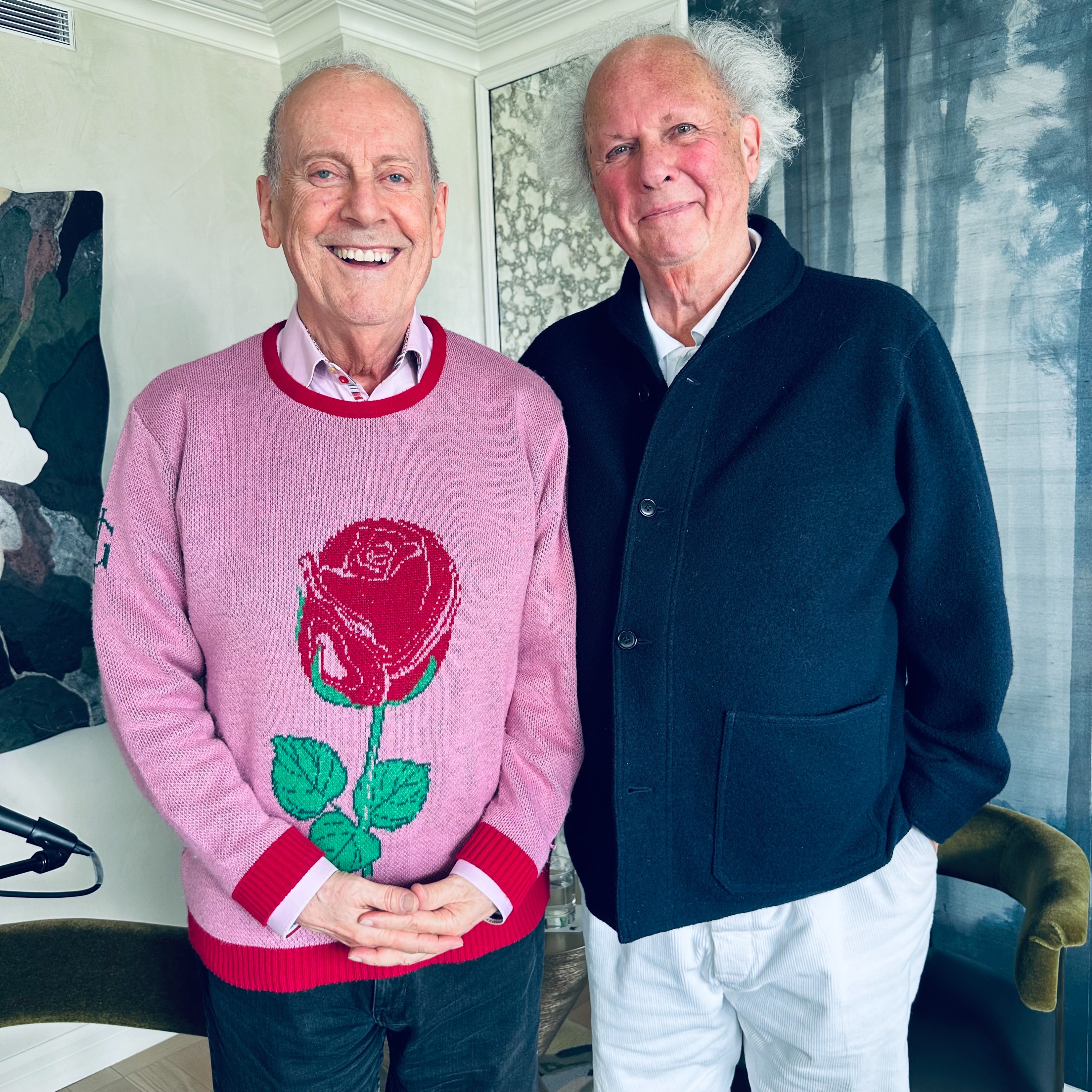
Graydon Carter, the celebrated magazine editor, is the second guest in our New York series. Carter edited Vanity Fair for 25 years and transformed the magazine into the must-read glossy for the intelligent, the curious and the culturally-savvy. He talks to Gyles about his vision for Vanity Fair and why it was such a success, about the four elements you need to put together a good story, and about the famous Oscars Party. He talks about Spy magazine, the celebrated satirical New York weekly he co-founded and ran prior to his job at Vanity Fair. He talks about his long-standing beef with Donald Trump, his love of clothes, and his childhood in Ottawa. And, along the way, he teases Gyles for his "novelty knits" - which you'll enjoy listening to!
This is a witty, perceptive, sharp and fascinating interview with a man who has been at the heart of American cultural life for half a century. Graydon's book When the Going Was Good is available here and is highly recommended.
Our thanks to Graydon for his time, energy and fabulous stories.
Hosted on Acast. See acast.com/privacy for more information.


