
 Ask ChatGPT



The episode of More Rosebud is a conversation with model Jean Campbell about her life, first memories, and managing chronic pain. The hosts also discuss fashion culture, including the idea of “skeletal” models and body-size trends, and reference The Devil Wears Prada. Key claims Jean makes: she has hip dysplasia diagnosed at 15 (shallow hip sockets with ~10–11 degrees coverage), leading to multiple surgeries (a pelvis break/readjustment at 16, then repeated procedures; later doctors suggested up to eight more surgeries over six years). She describes a period of hopelessness and likely clinical depression around ages 19–20, then finding coping tools: guided meditation, journaling/collage scrapbooks, strength/conditioning (pilates/yoga/weights), hydration, and staying connected with others.
her first memory is running on a beach with siblings and pretending to be a horse; she was scouted at 14 (tube) and later got a 20-page British Vogue spread after a first shoot with stylist Joe McKenna and photographer Bruce Weber.
Jean Campbell (born May 31, 1997), plus hosts Giles Brandreth and Harriet Jane (no other guests).
Written by AI. May contain mistakes.
Gyles and Harriet discuss their views on fashion and personal style.
They reminisce about supermodels and influential figures from their youth.
“And I have maybe two or three places that I look at and I get close from there and I don't really look around much.”
A conversation on aging, beauty standards, and societal expectations.
“That, and his face crisscrossed with lines.”
Gyles and Harriet introduce their guest, model Jean Campbell, and her background.
“We've got the great Anne Hathaway in it.”
Jean shares her early memories and describes her family dynamics.
“When I meet a woman, all I am looking for is energy.”
Jean discusses her childhood experiences and home life in Scotland.
“with the great, the brilliant, the interesting, and the not without challenges in her life, Jean Campbell.”
Jean reflects on her imaginative play and connection with nature as a child.
“Well, well, but you survived, which is good.”
Jean shares her interests, including horses and fantasy, during her childhood.
“I have a brother who's 13 months younger than me, who I'm really close to.”
Explore the joys of childhood through imagination and outdoor adventures.
“And so my brother and I were in the shoot and they said, do you want clothes or would you like to be paid?”
Discover how early modeling experiences shaped her childhood memories.
“This is the romance of your early childhood.”
Learn about her transition to school life and early struggles with shyness.
“when I had literally just turned 16 but except you modeled at the age of five when you were the mini Bowdoin catalogue, were you conscious we're being photographed?”
Hear the story of a ski accident that dramatically changed her life.
“And I can't really feel my fingers off my right arm.”
Understand the progression of her health challenges following the accident.
“But I guess what happened after that was a more complicated thing to go through for me as a teenager.”
Learn about the early signs and diagnosis of hip dysplasia.
“But it would have happened whether I'd had the shoulder accident or not.”
Understand the decision-making process behind undergoing surgery.
“So it started getting worse and my mom actually said, you know, what is going on?”
Explore the sensations and emotions associated with going under anesthesia.
“So I woke up and my body was shaking, really, was shaking in a way that felt sort of quite intense.”
Learn about the difficulties faced during recovery after surgery.
“Yeah, so I remember my dad actually asking, how do you do the operation a few days after it had happened?”
Discover the psychological struggles during the long recovery process.
“I think what was really important for me was I had a scrapbook and I found journaling actually really helpful for me as an outlet for the stuckness.”
Understand the ongoing nature of medical treatments and surgeries.
“the kind of sense of hopelessness, which was huge.”
Learn about the decision-making process regarding multiple surgeries.
“starts to become pretty painful and it's getting worse and worse and i go and have more scans and And the doctors say, well, you have 11 degrees of coverage on your left side.”
Learn about the challenges and coping mechanisms of dealing with pain and depression.
“four more minor, well, minor compared procedures.”
Explore the journey of becoming a supermodel amidst personal struggles.
“Every day and so in a nutshell give me the main things you do to manage this pain.”
A light-hearted discussion about first crushes and childhood fantasies.
“But at the, you know, when you're young and you're given a start like that, of course.”
Discovering the significance of early crushes and the importance of vulnerability in relationships.
“I never had any, you know, extreme situations when it came to my work.”

Get the gist, explore an idea or ask about something said.
 Claude
On Rosebud with Gyles Brandreth, what are the key points of this episode?
Searching your listeningAutomatic transcript. May contain errors.
0:00Hi, this is Hannah Burner from Giggly Squad. Have you ever put on a bra that makes you feel like a goddess? Prepare to be obsessed with the Dream Angels Wicked Bra from Victoria's Secret, the iconic brand behind the world's most comfortable bras. And I only wear the most comfortable bras. The bestseller features an innovative sling for perfect lift without padding. And the fit is chef's kiss. Awaken your inner goddess with new colors and super femme lace embroidery. Find out why this bra has thousands of five-star reviews and counting. Shop it in stores and online at victoriasecret.com. I'm here on the job site with Dale, who's a framing contractor.
0:38Hey, good morning. Dale traded up to Geico Commercial Auto Insurance for all his business vehicles. We're here where he needs us most. Yep, they sure are. We make it easy for him to save on all his insurance needs, all in one place, with coverage that fits his business and bottom line. Oh, I shouldn't have looked down. It's all right. We're so far up here. Look at me. Take a deep breath. No, I'm good. So good. Get a commercial auto insurance quote today at geico.com and see how much you could save. It feels good to Geico. This is Giles Brandreth and Harriet Jane. We're together with you again for another episode of More Rosebud.
1:14Cue the music, we're here, we're ready, and we're quite keen.
1:38This is Rosebud. In fact, it's more Rosebud, which means there's more than me, Giles Brandreth, there's my friend my muse my companion my producer harriet jane how are you today harriet i'm fine thanks good you i think always look well presented to me you always look you wear nice things i'm not sure about that i think you wear really nice things in a casual way does fashion interest you though um i like to have nice clothes but i don't think i really know what's going on and I don't spend a lot of time on it because I'm busy. I don't really like going to the shops. And I have maybe two or three places that I look at and I get close from there and I don't really look around much.
2:24I mean, are you one of those people who buys those now? To me, it's incredibly expensive magazines like Vogue that are full of models showing the latest things. Yeah, looking so artistic and beautiful. I like seeing them when I see them, but I don't buy them anymore. But I used to. I used to buy Elle when I was young. and I used to tear all the pictures out of them, the supermodels and I'd put them on my wall, my wall was covered all my friends, our walls were covered with pictures of supermodels, isn't that strange? That is strange. Not boys people like Claudia Schiffer and Naomi Campbell and Kate Moss prior to that was Duran Duran.
3:01And I had posters on my wall of William Shakespeare and Noel Coward Oh yes, yeah. So ridiculous I had a bit of Virginia Woolf, I was into Virginia Woolf Oh yeah, that's good She's a good picture. I mean, some of these, like, actually one of the best writer photograph is of Samuel Beckett. Oh, it's a brilliant photograph. It is so, his face looks so... It's an amazing, leathery face. W.H. Auden. Yeah. That, and his face crisscrossed with lines. Yes, amazing. You know when Noel Coward saw that photograph of W.H. Auden, the great poet, Wiston Auden. Yeah. Literally, I mean, crisscrossed with lines.
3:37Noel Coward looked at the photograph of his face and said, well now, imagine his scrotum. Really? It's a funny line, isn't it? He went straight there. That's funny. It's funny how I think men look beautiful when they're wrinkled like that. I really do. I think, I mean, that picture of Samuel Beckett, he still looks incredibly handsome. But it's harder for women to get away with that for some reason. And I can't quite work out. there is just this idea that you should be young and fresh and gorgeous which is great for me because that's the look that as you know i'm i'm putting out there and you are successfully the reason we're talking about this is that we have coming on today a very special model who i think is a super model she is super at several levels yeah and she's young and fresh and gorgeous and the reason i began talking about fashion and you is because i wanted to ask you if you'd seen the film The Devil Wears Prada.
4:35I have indeed. The original. You saw the original back in the day. There's a sequel. The Devil Wears Prada 2 coming out. Same similar cast. We've got the great Anne Hathaway in it. The great Meryl Streep. And Stanley Tucci. Of course. And his sister-in-law I think. Emily Blunt. Might be in it as well. Sounds fun. I'm looking forward to it very much indeed. but emanating from the set has been stories that anne hathaway was very insistent they were going to film some of it at the milan fashion show that there were no skeletal models oh fair enough fair enough yeah and i thought the skeletal model thing was a few years ago i didn't realize that was still going on i think unfortunately with the rise of a zempick manjaro in this country we're back to skeletal and you see it on the red carpets it's a real thing i mean it's actually a thing to the extent where some people are starting to look really odd oh yeah the big head the tiny body so we're back to size zero we're i think we might be size minus four oh no yeah i think you need to you need to lose another stone giles sorry i have lost a stone i'm still aiming to get down a bit further.
5:51Yeah, I can get you some Manjaro. I'm not having that. I'm doing it nature's way. I am eating less and moving more. That's my idea. But I thought we were now just with comfortable shapes. Be what you are. I'm with comfortable shapes. Yeah, so am I. As we know, as you and I know, actually, what do you find attractive in a man? What do you go for? I don't think I'm too bothered. I don't need them to be tall. I like smaller people. I guess fit and healthy. That's what you want isn't it fit and healthy i wouldn't want someone that was sort of shuffling along that's why sorry josh
6:31it's not as funny as you think i do not i stride with you you do stride i do stride i stride i stand up tall and i stride and i should be striding even more now no shuffling no shuffling and when When I meet a woman, all I am looking for is energy. Woo-hoo. Yay. Zest. So you're my zesty bestie. Who is our guest today? Our guestie, our zesty guestie is a model called Jean Campbell. Yeah. You can see her if you look her up. I think she's currently the face of Burberry. Yes. She's been on Vogue, on the front of Vogue, time after time after time after time. Yeah. I mean, she's up there. Yeah. And we were very lucky to get this super, super model.
7:18We are. But that's not what she's talking about, really, is it? Well, she's talking about her life, because it's always the same first question. What is your very first memory? And then we unpack her life, which has included beauty and pain. Yes, and I think that's what's so interesting. And a fascinating family as well. So, let's cut to the chase. Let's give you more Rosebud on a Tuesday with the great, the brilliant, the interesting, and the not without challenges in her life, Jean Campbell. Cue the music.
8:01I'm so excited to see you, Jean. I'm so happy to be here. Thank you very much for having me. Before we begin, can I ask seriously, are you in pain today? today i would say that my pain is manageable it's not a particularly bad day good uh i would say it's actually a good day good are there some days when it is so unmanageable that you would have cancelled this morning to say i'm so sorry i can't make it not anymore not anymore in the past yes good well we're going to talk about your pain later i just wanted to check that you were a okay Thank you. Good. Thank you. So, welcome. So, Jean Campbell, born 31st May 1997.
8:43Yes. Well done. Well, no credit to me. Well, well, but you survived, which is good. We have to ask you to cast your mind back. Many of our guests have to cast their mind back in about 90 years. Yes. You have to cast your mind back perhaps a quarter of a century or so. Yes. To your very first memory, your actual memory, not something from a photograph, What is in your head as your very first memory? I think the first thing that comes to mind is just running down the beach with my siblings and some of our childhood friends. And the other is having my baby sister on my back. I must have been seven and pretending to be a horse running really fast.
9:31Well, seven is quite old for the first memory. I know. Well, I can't. It's funny because you can't. It's actually quite difficult to think of a really tangible thing. Well, let's take the first one. We'll have both of them because they both have you running. Yes. One stage you're running as a horse. Yes. Another is you're running as a little girl. Maybe something to explore in therapy. Tell us where the beach was, who the siblings are. Yes. And who your parents were who brought these siblings into the world. Okay, so I'm the oldest of four. I have a brother who's 13 months younger than me, who I'm really close to.
10:08He's called James. And then a sister who is a year and a half younger than him, called Eleanor, who I also completely worship. and then the baby sister is called Beatrice and she was born when I was six and a half and my parents are called Colin and Isabella and they are wonderful amazing parents who I really look up to tell me about Colin we'll start with the dad yes he is from an ancient Scottish line yes so I grew I spent the first seven years of my life in Scotland which is where my dad is from. And is he related to the ancient kings of Scotland? Because he has this title Earl Cawdor. Yes.
10:55Which, knowing the play Macbeth, Macbeth is promised that he's going to be one day Earl Cawdor, Thane of Glam's, and all sorts of other titles. Yes. I assume, I don't know, Shakespeare may have made all this up, that there is some royal lineage. So if Macbeth were a true story Macbeth would would be an ancestor well I think Macbeth is probably based on a true story yeah so your father is the Earl of Cawdor or Earl Cawdor how does it what is the full title the Earl of Cawdor Earl of Cawdor as in the play and that goes back a thousand years or more yes excellent so and your mother is who my mother is called Isabella and she is from she grew up in Limerick in Ireland and so she had a very Irish upbringing lots of like huge family and they're both very creative which I find really inspiring and very good at problem solving and my dad is very wise actually when it comes to offering advice or empathizing with situations.
12:06Can you give me an example of that well i remember asking him as a teenager thinking when am i going to actually learn how to be when do you become an adult and he told me that you your childhood and your youth is all about basically learning and he said that you become an adult when you have a child oh how interesting yeah and his business is what he manages the estate i hope you were born in a castle so he i wasn't born in the castle no um but his so he um studied architecture um but his his kind of biggest thing has been renewable energy well done yeah so he's very absolutely up to the minute and what was the sort of home you were born in then the first home you remember yeah so i grew up in scotland in the middle of nowhere which i feel very lucky to have had there was no wi-fi or phone reception until about a year ago um and so my childhood was kind of spent um in my imagination sometimes on my own sometimes with my siblings i spent a lot of time outside imagining this sort of micro world of fairies or uh whatever was going on in this sort of leafy patch that I was focusing in on.
13:30The house itself, before we get into the garden and the woods where the fairies dwell, the house itself was what kind of a house? So the house started off as a cottage and then my dad built an extension and then it became a house. It's on a river called the River Fintorn and it looks out over the river. So important to you of this early years is being out of doors. Yes. And obviously running along a beach, which beach would this be? nan beach yeah so you're running along the beach you're loving later on being a horse you're an outdoors girl big horse yes um yeah no tell me about the fairies and then we'll come to the horse this is a lovely world of imagination yeah so the best i would really say the best parts of my childhood were spent running around and essentially being quite wild and it was just this sense of freedom and wherever it was that I was playing whether it was in a kind of mossy area or at the foot of a tree I loved to imagine the micro ecosystem of what was going on in that tree and the characters that lived there yeah I loved fantasy and imagining um these these other worlds so yeah I did love the flower fairies when I was little so very beautifully illustrated books and when did you get into horses what age were you so Minnie Bowden did a shoot in Scotland and me and my brother were in the shoot and they very kindly said would you like clothes or would you like to be paid Minnie Bowden as in catalogue Bowden yes and so that was our first morning how is this suddenly happening in your life one moment you're playing with the fairies innocently yeah next mini boden is turning up saying oh you look rather cute would you like some of our clothes yeah we'd like you in a photo shoot what age is this happening i think we were probably five and six oh i see very very mini yeah very yeah mini boden were your parents into this is that how it came about because your parents knew the people who were doing the boden catalogs so boden had i guess they were sort of scouting around and wanted to do a shoot in the hill, on the hill.
15:45And so my brother and I were in the shoot and they said, do you want clothes or would you like to be paid? And we said, we'd like to be paid. And so my granny actually found a really naughty pony with the money that we had been given. Oh, you were well paid. Well, I think the pony was probably quite cheap. Oh, many ponies are cheapy now, yes. yeah it was a limerick pony um brought over from ireland yeah um and he was really naughty what was he called spot and have you kept up the riding no sadly not i mean i i'm not really able to i i can ride but with with everything that um kind of came about with my hips and the pain condition and everything else I have to be quite careful with the kind of sports that I do so I can't run or have any impact through my hips pelvis whatever we'll come back to that just to focus now on you as a small girl I'm getting a picture of a contented household the four children and it's the freedom that you are remembering of actually being out of doors on the beach, in the field, on the pony.
17:05Yes. The wind in your hair. This is the romance of your early childhood. Yes. Lovely. Who was your first friend outside of the family? My first friend was a really lovely person called Lucy Barkley, who lived quite close by. And she actually now has children and is a nurse in Scotland. Goodness. Yes. so we used to hang out a lot when I was little and she grew up on a farm so that kind of running around outside continued with her. Good where did you go to school what was your first school? It was Corder Primary School which was in Corder and it was quite a small school yeah it was great. What's the naughtiest thing you did as a little little girl?
17:54the naughtiest thing i did um i actually colored in i colored in the porch which was this wooden porch in the cottage where um i grew up and i colored it in with my um godmother's son and you could see the sort of crayon height came up to only our height and we thought you know we're making this real beautiful work of art and obviously it's a terrible thing to do did they did they leave it as it was they repainted it or cleaned it off it actually got knocked down when they um built the extension it wasn't that bad they had to knock the building down yeah yes your your artwork yeah good so at school what do you like at school i would say at school i was very shy actually as a child i think i probably didn't find it the easiest to fit in when i when i was a small kid um and we moved to london when i was seven and that was abandoning scotland i mean just left scotland behind or became the holiday home no well my dad was working in london and so we moved to London and whereabouts a flat house we moved into a flat in London and I went to to school there and then I went to boarding school when I was 10 when did the shyness begin to leave you oh I don't think it ever has I think probably I mean I started modeling when I had literally just turned 16 but except you modeled at the age of five when you were the mini Bowdoin catalogue, were you conscious we're being photographed?
19:43Did you take up poses? It wasn't a professional career for me at that point. Whereas I would say... But did you enjoy the moment? Can you remember the day and enjoying the moment of being photographed when you were five? I think I enjoyed the process of playing dress up. I loved playing dress up. As I said, I loved fantasy and characters and imagining all of those things. And that's something that I really loved actually about entering the fashion industry when I did in a serious way at 16. Coming from the country, in London now, going to this school, can you remember the first day? Can you remember what the building felt like?
20:26Yes, I do remember the first day. So I woke up at three in the morning and we all shared a room at that point. All four of us shared a room. and I woke my siblings up and we all got dressed into our uniform at three in the morning. Goodness. Ready to go because obviously we didn't know the time and going up and waking my parents and saying, okay, we're ready. And what was the uniform like? And they told us to go back to bed. What was the uniform like? Blue gingham with a winter in the summer. No, it was a gingham shirt with a grey pinafore. Very good. Yeah. and what did you make of the school when you got there it felt a lot more um kind of serious and academic and it went from being this kind of running around and um playing to sort of quite serious about exams and um you know i i took it seriously that i needed to do well in my exam suddenly which i had never really thought about before and you did do well because you go into this what's the the boarding school you go to i went to a school called downhouse and i'm really grateful for that i have four amazing friends who i'm still really close with from my school um and i was on the sports team and what in the sports team what was your sport so well i loved so um long distance running um high jump and lacrosse very good so you're this sporty girl you've got good friends at downhouse you're beginning to feel settled yeah and this is when you're 12 that your life changes yes now tell us how your life changes what happened so at the age of 12 i am sporty and um that's a really important thing to me i'm really into art i'm taking my studies seriously blah blah blah and then we were skiing as a family and i was at ski school and where is this um in switzerland and we i'm i'm out for a day at ski school and someone a man crashed into me from the side and i flew 10 meters and landed on the right side of my body and my right arm flew backwards tearing the muscles tendons ligaments and a chunk of my growth plate off my shoulder you're quite an experienced skier at this stage for a girl you're a young girl no i'm learning you're learning and you're coming down a steep slope not even do you remember the moment yes yeah so i see so i'm going along quite quickly um and i see out of my periphery this um black ski ski suit coming towards me and before I've even seen it I'm flying through the air and landing and this sort of rush through my body and a numbness and a sort of shock actually um and it was sort of like a rush and um I got up and my skis are kind of everywhere and um the guy kind of waited for me to sit up and then skied off and um And then I get this sort of rushing, burning feeling in my sort of chest and arm.
24:12And I can't really feel my fingers off my right arm. And I got up and I didn't really realise what had happened. And so I continued skiing. So you stood up. Were family or friends or did people rally around you immediately? No. You went on skiing? I went on skiing, yes. And then I went and I couldn't really move my arm. And so I went and had it checked out that evening. Do they, I mean, I'm not a skier. Do they have hospitals and things near the ski slopes in case this sort of thing happens? Yeah, yes, they do. But this particular accident took quite a while to diagnose. and so it was when I went back to I went to Scotland went to the to Rakemore hospital there and I had a sort of black line you know on the underside of my arm and I had a series of x-rays and whatnot and then the issue was diagnosed and I then had surgery what was the diagnosis so my my subscapularis muscles and tendons had been torn off my growth plate with a chunk of bone which is actually quite a rare injury and so that's why it took some time to diagnose you 12 years of age what is happening in your head at this time nothing or just a blank about it well i don't really i'm not really thinking i'm not sort of analyzing it as it's happening because because it's sort of not something that I...
25:49Hindsight's an interesting thing, but I'm not sort of analysing it as I go. You're not feeling frightened at the moment? Not feeling frightened or apprehensive? No, not really, because I was ignorant. And then I go and have this operation, and I was the youngest person that the surgeon had operated on for this particular thing in London. You come to London, you see what we used to call the great man, who says, I've done this operation before, never on someone as young as this. but I'll give it a go. Yes. And he gives it a go. He gives it a go and it was definitely an intense experience. But really, the process of that operation and injury was one that I suppose is fairly standard and then I was able to recover and the recovery time took nine months.
26:39Were you off school? I was not off school, actually. I had a sling and had various exercises that I had to do. But ultimately, it was fine. You know, I was lucky that I could do that. But I guess what happened after that was a more complicated thing to go through for me as a teenager. At 14, I started experiencing pain in my right hip. and then it sort of crept up so initially it felt like a paper cut you know, like the significance of a paper cut and then just almost like that it suddenly became really difficult to walk and it was just one day this happened and did you in your head it gradually crept up and did you connect it with the shoulder?
27:38no You just thought this is something new? Well, I mean, the shoulder had recovered and it was, you know, was it connected with the shoulder? It was and it wasn't. The impact that I had, that my body experienced, meant that it sped up the process at which I started experiencing symptoms and sped up the process of being diagnosed. But it would have happened whether I'd had the shoulder accident or not. and so yeah it crept up on me and you know I had that attitude of of um you know not really wanting to complain or make fuss and um so I didn't but I also didn't think oh this is so painful I need to address this I was expecting it to go away you know but it didn't it didn't it got worse
28:40Hi, this is Hannah Berner from Giggly Squad. Have you ever put on a bra that makes you feel like a goddess? Prepare to be obsessed with the Dream Angels Wicked Bra from Victoria's Secret, the iconic brand behind the world's most comfortable bras. And I only wear the most comfortable bras. The bestseller features an innovative sling for perfect lift without padding. and the fit is chef's kiss. Awaken your inner goddess with new colors and super femme lace embroidery. Find out why this bra has thousands of five-star reviews and counting. Shop it in stores and online at victoriasecret.com.
29:18And what happened? What did you do when it got worse? So it started getting worse and my mom actually said, you know, what is going on? You know, you have a limp, you can't really walk properly, da-da-da. and so then I started seeing physio I had scans and whatnot and again I was quite young to be diagnosed with hip dysplasia dysplasia yeah so it's where your hip sockets are too shallow for the hip joint essentially to work properly and usually people are diagnosed with hip dysplasia either at birth or when they're in their 30s. You're meant to have 30 degrees of coverage of your hip socket. And I had 10 on one side and 11 on the other.
30:08And I didn't really have any concept of what that meant. You know, the surgeon said this is either you could have a hip replacement, but you'll have to have one every eight years. And obviously I was 15 at the time of being diagnosed. so he said the better thing to do would be to break your pelvis in three places and readjust it so you have the right amount of coverage so you said well that's what we'll do or rather your parents said at that age i assume it's your parents who have to make the decision um it is well they it's a conversation because i'm not you know it is me who's going to be having the operation so you agreed we'll give this a go well from the way that it was explained to me i didn't really have a choice yeah i wanted to be able so i went ahead with the operation can i ask you about general anesthetic yes are you somebody can you remember the moments of going under yes can you just describe one of them to me uh i'm lying on the bed in this brightly lit room and there are lots of people in the room and they say okay we're going to insert this cannula into the into your arm and then they say we're going to we're going to give you milk of amnesia and if you just count backwards from 10 to 1 I do remember lying on the bed and them saying okay count backwards that being the moment where I did feel scared um because I was you know going under and not going to be in control of my body.
31:46And can you remember waking up? Yes. So I woke up and my body was shaking, really, was shaking in a way that felt sort of quite intense. It wasn't like shivering. It was like convulsing, but I was cold. So that's why I was shaking. and um you can hear people sort of muffled going um okay uh you're awake you know you're the the operation is done um can you hear me i remember feeling like i want to go back to sleep and feeling this shaking and suddenly coming to and so they're then putting lots of blankets and this sort of um shiny foil blanket on and saying you know you lost a lot of blood but we put we put it back into your system uh so i'd had blood transfusion and then just this sort of weird because you can't feel anything when you first wake up and this weird sensation of suddenly feeling like the sort of bottom half of my body from my stomach down was like set in concrete um and not really being able to move at all.
33:05Because he dismantled your pelvis. Yeah, so I remember my dad actually asking, how do you do the operation a few days after it had happened? And at this point, I didn't know that there would have to be another one and another one.
33:25And he said, oh, well, you know, we use chisels and a saw and a hammer and I remember kind of trying to move actually you know you're you're completely not for six obviously and then um the first kind of movement that I tried to make it suddenly feeling the impact that had um happened and everything was really swollen and um I have to get up and that was when it kind of felt quite challenging and actually I remember one of the most painful parts actually of being in the hospital bed was when you're lying down all day your back starts to hurt and you know along with the swelling and inflammation you're very stuck essentially so i think you know for anyone being stuck or physically debilitated there's a challenge there in terms of you know how trapped you feel but yeah the most difficult part was having to kind of like activate out of that um but i remember my physio I loved my physio so much.
34:48He was called Jeremy, and he was a really lovely guy and made it feel very possible. He was also really good looking. And my mom has teased me that I used to blush when he'd come into the room, which I'm now mortified about. But maybe that helped me to get out of bed. Who knows? But it's a strange thing to not be able to wash yourself to not be able to really do anything you lose your appetite but in many ways the part in hospital is almost the easiest bit ah so it got more difficult not easier the operation did not solve the problem no no it didn't it solved a part of the problem you know it solved the problem that we knew about but it's the part afterwards where the the length of time that it takes to recover and the slowness of that process that is it's challenging in a physical way but i would almost say the psychological challenge of believing that you can walk or you can do what your body doesn't want to do because you have to push it how old are you in this big operation the pelvic operation is happening how old are you then i'm i just turned 16 You're 16.
36:11So how do you keep yourself positive? I don't. But then, did you try? Yes, of course you tried. Yeah, of course I tried. I think what was really important for me was I had a scrapbook and I found journaling actually really helpful for me as an outlet for the stuckness. And what were you writing in your journal? What form did your journaling take? uh drawing collages um i think i wasn't trying to write some kind of masterpiece you're writing your thoughts yeah and today i'm feeling this that and the other i wonder if jenny's coming tomorrow more abstract and my friends were so so amazing in this process because they would come and i remember i had one friend who's very small and she'd come and lie in bed next to me and we would watch the same episode of gossip girl uh every single time multiple times a day because the effect of the painkillers was that i couldn't remember anything um and you know i don't know if you know anyone or maybe you've had an anesthetic yourself but it does give you memory loss uh as do the strong painkillers and so she was so patient watching the same episode of Gossip Girl with me.
37:33And really, it was about being around other people. And I think it was anything that stopped the kind of sense of hopelessness, which was huge. Did your parents try to do anything? I mean, did they talk to you to remember any of the things they did or said? I think it was really difficult for my parents because I was really frustrated. I had gone from being someone who was probably quite composed, minded about doing well in exams and whatever, to then not having control of my physical body or mind. And so I, whatever filter I had, had gone. Did you become quite stroppy? Yes, I found the lack of control that I had over sadness and frustration quite difficult because really I was frustrated with myself and not being able to manage better.
38:34but I definitely was difficult and you know being a teenager also you're difficult anyway and so I think my main thing was my friends and also the small wins really mattered so the sense of feeling okay well now I've managed to walk across the kitchen or now I've managed to walk halfway down the block but at this point i didn't have any concept of of what was to come and so really it felt like okay this is a job that i need to get done and then i'll be back to normal what was to come let's stick with the medical journey and then separate your life and career from that yes the medical journey goes on yes you thought this is all going to be over i'm going through this hell but there will be a day when i can walk again yes we can move on but it was not to be yes well I can walk now I walked in here which is a total triumph and I just want to also say that I do feel conscious of not kind of making this sound like one big complaint because it really isn't the purpose of me I guess talking about it is what I've learned from it and what it's given me now anyway so i have one it takes a year and a half to recover from and i get the screws removed and then in that process the left side of my hip pelvis whatever starts to become pretty painful and it's getting worse and worse and i go and have more scans and And the doctors say, well, you have 11 degrees of coverage on your left side.
40:19And so I then have the same process again when I finish school at the age of 18. You're going still back to school and hobbling around the school. I am. And I wasn't, you know, I think I found this sort of black hole of pain quite challenging because it stopped me from being able to focus properly, being able to do well in school, being able to be present with other people, all of that stuff. So sport was out of the question. Yeah. Did you take GCSEs? I did. And A-levels? I did. Well done. Well, yeah, but I wasn't able to do it in the way that I would have hoped to have been able to. But congratulations on doing it at all.
41:06Thank you. Okay, so the medical journey goes on, and there's the initial big operation, then the same thing has to be repeated 18 months or so later. Yes. And then you have to have it a third time? No. So then I finish the second side, which is worse, because you know what you're in for. Oh, God. And it's slow. And then not long after getting the screws removed from the second side, the pain is getting, there's this new kind of pain it's getting worse and i have more scans and i find out that actually the angle of the bone going into the hip socket is wrong so in order to be pain-free i would need to have eight more surgeries to break the tops of my legs and readjust them eight more surgeries yeah the equivalent of this operation eight times the equivalent of the operation four times with four more minor, well, minor compared procedures.
42:05Over how many years? Six years. So this, you're told this is, to solve this, this is the solution. We could do this over six years, with eight operations, and you're thinking, I've been through hell already. Well, I'm not thinking I've been through hell already, I'm just thinking I can't do that, and there's no guarantee, clearly, that this is going to be a resolution. You say, I can't do that. You just, you knew that I can't do that did you discuss it with your mother and father either together or separately not in a serious way I remember going you know at that point I was 18 19 so I was going to the doctor on my own and um and so I made an informed decision and really it was out of the I desperately didn't want to have to do those operations but I also didn't feel like I wasn't ready to say okay let's go ahead with that because I just finished three years of having the surgery.
43:11Among the drugs you had were there ones to boost your mood and or did you have any therapy people trying to help you to stay positive? Not at the time no. So what is the decision you make, age 19? Do nothing. Do nothing. And I kind of fell into a pit of hopelessness, I would say. I have this dread about the future and this feeling of wanting to unzip myself and run away. And how does that manifest itself? Try and describe it. so the time that I spent in my own head I would say was a dark unhappy place that was full of fear fear about the future fear of my own body I I had lost a sense of you know the promise of youth had slightly dimmed for me it was so all-encompassing and effortful to do things that I really took for granted before you know things like having a shower suddenly was really difficult or having a conversation and and and being free of insecurity and the heaviness that came with it led me to feel very separate and burdensome and really it was out of hopeless that I started to find solutions because I had got to a bottom and that bottom was, okay, this is how it is, get over it.
45:01In that bottom, would you say that you were clinically depressed? Yes, I probably would say that. And if one's clinically depressed, you would be eligible for help for that depression. Yes. other in terms of drugs or therapy. Did you look for that? Were you offered that? Was that part and parcel of how you've solved this? That wasn't, well I think part of the challenge was that I kind of denied to myself that I probably needed help. I denied that this is a situation where you should have help. I felt like you need to get over yourself and deal with this. And so I then did start having help and I started doing guided meditators.
45:43and i think that involved it involves speaking to someone um so having the outlet and the sense of of being um understood and that gave me a sense of separation from my body and a sense of separation from my thoughts i'm not my thoughts and my thoughts could be i'm worthless i'm you know you're so it's so bad that you don't know how to deal with this how pathetic it gave me a sense of separation from that and in doing so I was able to reconnect with my body and another thing that was super helpful to me was so despite being told okay you the less you do the better um you know exercise was sort of off the cards the physio and strengthening of my core so the muscles that support your skeleton has been everything and so I started to feel sense of progress I started to feel a sense that actually um you know i'm i'm experiencing change in this unchangeable diagnosis and that gave me a sense of hope which i didn't have and um it's the same with the meditation the the sort of what started out as a couple of seconds of calmness led to an understanding that actually that is an accessible thing and it was through that that i then became curious and i started to adopt these things into my life and those things have become absolute imperative foundations for managing the pain but also having a very full and happy life that I have now
47:34hi this is Hannah Berner from Giggly Squad have you ever put on a bra that makes you feel like a goddess prepare to be obsessed with the dream angels wicked bra from victoria's secret the iconic brand behind the world's most comfortable bras and i only wear the most comfortable bras the bestseller features an innovative sling for perfect lift without padding and the fit is chef's kiss awaken your inner goddess with new colors and super femme lace embroidery find out why this bra has thousands of five-star reviews and counting. Shop it in stores and online at victoriasecret.com.
48:12So you're still living with pain? Yes. Every day and so in a nutshell give me the main things you do to manage this pain. Your routine, what do you do to manage it? First things first, there's no such thing as a perfect schedule. I definitely don't have that. My life as it is can be quite chaotic and last minute where possible which is most days i will do some kind of strength and conditioning exercise i'll spend an hour doing that things like pilates yoga weight training all of those things have been really important to me meditation has been really important for me so whether that's closing your eyes and listening to some ambient sound lighting a candle and just looking at the flame of the candle for 10 minutes quieting the mind has been really important for me connecting to other people that has almost been the most important thing because I had a sense of separation I am different from the other people my age that I happen to know by being able to essentially be honest with other people and say well actually this thing's pretty hard has allowed me to find solutions and it's also allowed me to recognize that I'm not the only person.
49:32Do you still have to take painkillers on some days? I try not to because the painkillers in my experience had a really negative effect on my stomach and digestive system so I try not to take painkillers. There are obviously situations where sometimes I need to. I think sleep, water, being properly hydrated it sounds so sort of amateur but being properly hydrated is really important for pain management I definitely am not an example of how to manage your life I have a tendency to be very busy and forget that actually I need to take care of myself but those things have been really important and by taking care of my body and my energy levels it then means that i'm able to actually connect with other people and and and also help other people too well that's the key stuff thank you for taking us on that journey now it's not too boring no it's completely gripping it's fascinating and if i may say so very helpful we now take you back to becoming because while this journey's been going on you've become a supermodel an international star on vogue the cover time after time about 13 times now something like that yeah so how on earth does that happen age five your little mini bowden enjoying dressing up but then age 16 you start a career while you're still at school as a model how does that happen does somebody see you in the street I'm sure it can happen that way.
51:07Yes, it can. I think it happens that way a lot for most people. My grandson, walking around the streets in Edinburgh, an agent stopped him and said, would you mind? Amazing. And he said, yeah, fine. So what happened? Who saw you and what happened? So I actually first got scouted. I was at the clothes show live in Birmingham and then I got scouted on the tube when I was 14 and it started happening a little bit. And so I spoke to my mum about it and she said, well, you're really young, so no. And then we had an agreement that once I'd finished my GCSEs, if the option was still there, then, you know, maybe have to have a go.
51:55And my first shoot was with a stylist called Joe McKenna on Long Island outside of New York. and it was with Bruce Weber and Joe McKenna and it opened up this world that I just had no idea about. I'd never seen so many clothes, shoes, bags, everything in my entire life. And that shoot actually led to 20 pages in British Vogue, which is just wild. I can't believe that that happened and I feel unbelievably grateful that I was taken in in that way and that it's led to this extraordinary life. Well, they recognize what you've got and you have since had an extraordinary life. Yeah. I'm assuming, I'm hoping, that you've not come across badly behaved photographers, agents, stylists.
52:51Have you been lucky in that respect? I would say it would be unrealistic to imagine that you would never have a bad experience with anything. The most difficult time was actually when I was having the surgeries and, you know, I was also having this career and trying to meet the expectations of the brands. I was on contract with a brand and I had had one of the surgeries. I was coming off crutches. It was a difficult time. I wasn't sleeping. I was not able to obviously move at all, really. I would say that the stress that my body was under was evident in the way that I looked. You know, that cliche of beauty comes from within.
53:48It's true in many senses because the way that you feel is going to be visible in the way that you look, actually. so I was in a particularly wood louse like era not really able to go outside not able to move under the cosh of this like physical constraint that I was living in and um I went to go and um see this client and I get complaints like you know she's not the same she's so unprofessional she's to this do that and it was explained to me you know this is a really serious multi-trillion dollar business how can you be so unprofessional and I was 17 and you know contending with some pretty complicated stuff in terms of my physical situation.
54:39So how did you handle that? Oh I internalized it and I felt like oh yeah how dare I do that I'm so unprofessional I can't believe that I didn't show up looking a certain way. There was no other way that I could have been at that point. And I think now, you know, I'm older. I've been doing it for nearly 13 years. But at the, you know, when you're young and you're given a start like that, of course. I don't have the luxury of feeling like I can argue with the complaints or the demands or the standards that I'm to meet because there's hundreds of thousands of other people waiting. Were you confident enough to deal with any predatory behavior?
55:27Were you good at that, saying, go away, no thank you, not interesting? I think it's really challenging to be a young woman in the world where it's full of predators of different kinds, whether it's people wanting to take advantage of you, people, whatever. And I think, you know, it's only through experience that you learn how to really tell someone to go away or to see them coming before they actually come to you. I never had any, you know, extreme situations when it came to my work. good now tell me can you remember your first maybe it's before jeremy or maybe it is jeremy your first crush oh jeremy of course um was there anyone before jeremy my first crush oh peter pan oh peter pan in the film peter pan was my first crush very understandable yeah i actually don't know the name of the actor but it doesn't matter it was peter pan you fell for Yeah.
56:41It was like me with Alice in Wonderland. I totally understand. Yeah. Very good. Relatable. Totally relatable. And also, Peter Pan could fly. Exactly. Peter Pan was probably everything that we all wanted to be. Yeah. Well, no. He was a difficult man. He couldn't grow up. Yeah. That was the problem. I didn't know about that at that stage. Ask me how I'm feeling. How are you feeling? I'm fine. Tell me more. What does that mean to you? That means to me that I'm saying that automatically. I'm using that phrase. people who don't know your podcast it's called I'm fine yes and I'm assuming it's called I'm fine because I may be saying I'm fine because it's too complicated to tell you actually how I am at the moment um and it certainly is too complicated but we haven't well come on to your podcast and tell you then but that's why it's called I'm fine your podcast well I'm yes I'm fine is the automatic response that most of us give and when you are in pain and you are still in pain often yes you would simply say how are things today gene and you say i'm fine yeah it's like a way of um just you know i don't want to go i don't need i don't want to engage with you but it also closes closes you off and i think being able to connect with other people being able to have honest conversations um being able to find a community does lead to to freedom and understanding that you're not the only one i'm looking forward to the new season what have you learnt most from doing I'm fine?
58:10What's the wisdom it's given you? Pain is universal and pain can be, can actually be something that can enrich your life. It can make you have a deeper appreciation for the things that you have, the way that you approach new things. It can be a great educator but you have to accept it and you have to be able to be honest. I think being able to be vulnerable is in fact an incredible strength that's really overlooked. Well done. We've niched almost the end. Three quick questions. One is, and you've got to come up with straight away what's in your head, a moment of joy.
58:54Seeing my friend the first time I saw her with her new baby. Oh. Yeah. Lovely. Well, that's lovely. And a moment of sadness from your whole life. What quickly comes into your head? Losing a really close friend of mine. Was this somebody of your age? Yes. Oh. I lost a really close friend of mine to suicide. Oh, no. And it's, you know, it's so sad that that happens and that the world is such that people find themselves in that position. And finally, you've led an interesting life so far and there's lots of excitement still to come. you're barely started what have you learnt? what has life taught you?
59:44that none of us are actually alone and that we are more similar than we might think despite our differences and
59:57that you can't have true connection without vulnerability well I feel I've learned a lot being with you and I also thank you very much well I've loved it and I'm still picturing you I haven't really got out of my mind the things you chose as your first and I feel you chose them you running freely along a beach and then you being the horse for me you running along that beach given all the vicissitudes that you since suffered is a very good first memory and I think you are now in your head running freely yes I am thank you Jean Campbell thank you so much such a pleasure
1:01:25That's this week's More Rosebud with me, Giles Brandreth, and my friend and producer, Harriet Jane. It's produced by Harriet, and I turn up too. Hi, this is Hannah Berner from Giggly Squad. Have you ever put on a bra that makes you feel like a goddess? Prepare to be obsessed with the Dream Angel's Wicked Bra from Victoria's Secret, the iconic brand behind the world's most comfortable bras. And I only wear the most comfortable bras. The bestseller features an innovative sling for perfect lift without padding, and the fit is chef's kiss. Awaken your inner goddess with new colors and super femme lace embroidery.
1:02:04Find out why this bra has thousands of five-star reviews and counting. Shop it in stores and online at victoriasecret.com.
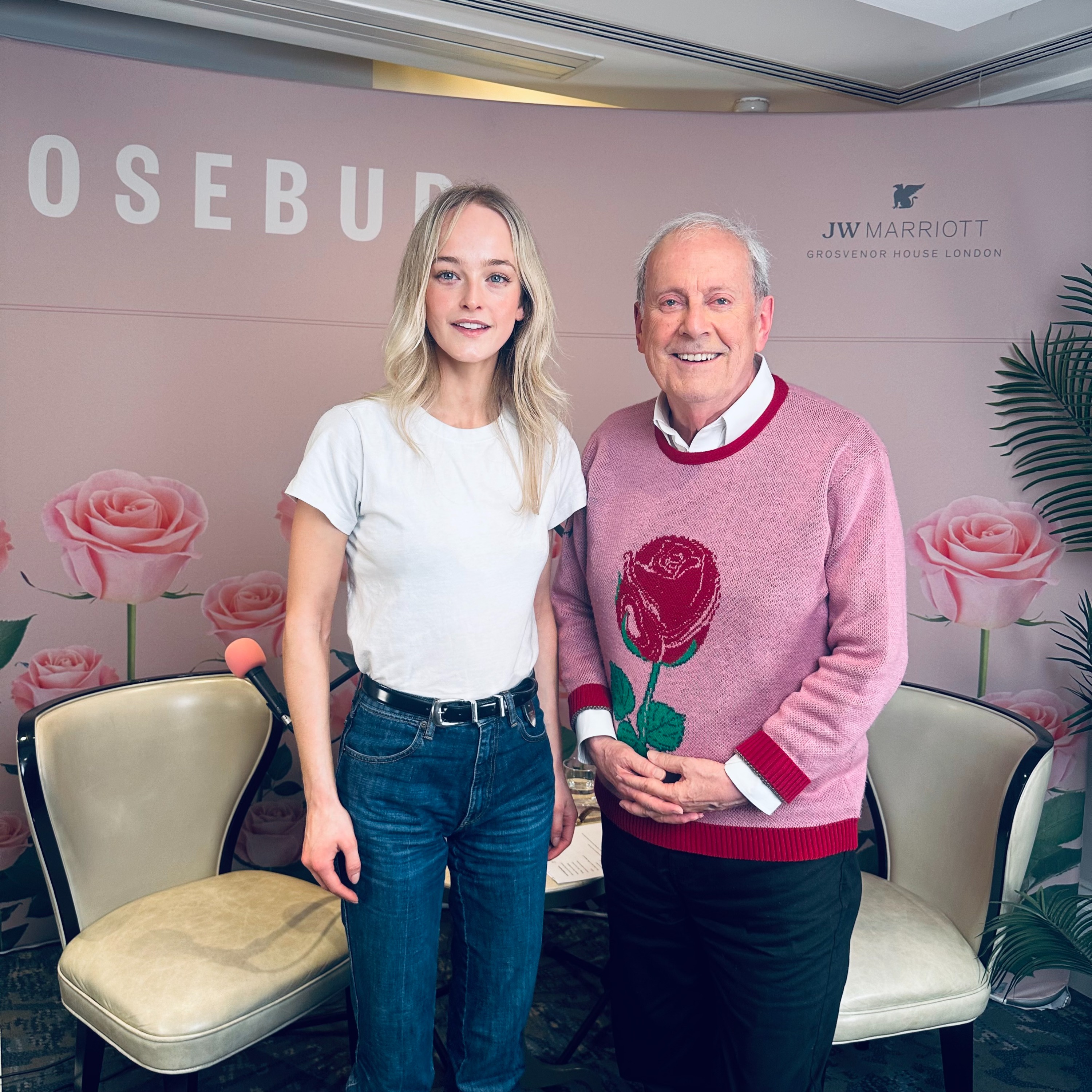
Our guest today is the model and podcast host Jean Campbell, who talks to Gyles about her wild Scottish childhood and about her experience of living with chronic pain as a result of hip dysplasia. Jean tells Gyles the dramatic story of how her hip condition was discovered - as a result of a serious skiing accident when she was a teenager. She talks about the long and arduous treatment she received, and her eventual decision to try and live with and manage the pain. And she talks about the brilliant podcast she hosts all about pain, which is called "I'm Fine", and is available to download here.
This is a fascinating episode, and - particularly - if you have experienced long-term pain or ill-health, it's highly recommended listening. Our thanks to Jean Campbell for sharing her story on Rosebud. And our thanks to you for being our lovely, loyal listeners - our Rosebud Family!
Don't forget to subscribe to our YouTube here. Join The Rosebud Family here. And visit our website here.
Hosted on Acast. See acast.com/privacy for more information.


