
 Ask ChatGPT



Written by AI. May contain mistakes.

Get the gist, explore an idea or ask about something said.
 Claude
On Rosebud with Gyles Brandreth, what are the key points of this episode?
Searching your listeningAutomatic transcript. May contain errors.
0:20On more Rosebud, we tend to have people as guests who may not be people who are hugely famous, but they're definitely people who have an extraordinary and interesting story to tell and I'm really intrigued about today's guest because I've been obviously as we all have aware of the Beatles since the early 1960s. I felt a particular link to the Beatles when I was younger for two reasons. One when I was still at university I happened to meet the actress then very young Jane Asher, who was the girlfriend of Paul McCartney. And Jane and I became friends and we're still friends. And through her, I met Paul McCartney.
1:01But I met the other Beatles because I lived in London with my parents in a block of flats called Portman Mansions in Chilton Street. At the end of it was on the corner, a shop, the corner of Baker Street and Chilton Street, a shop. It was the Apple shop. It didn't sell computers. It sold material connected with the Beatles. It was their store. And when it opened, they turned up. And they were there quite a lot in the early days. So that's how I came to meet all four of the Beatles. Anybody can meet them. You just went in to buy something, and there they were. And to me, John Lennon was always the most fascinating.
1:40I'm not quite sure why. I think because I knew he was interested in words and language and he liked nonsense verse. I thought he was intriguing. In fact, the first Beatles thing that I bought wasn't one of their albums. It was John Lennon in his own right, spelled W-R-I-T-E. And I found him fascinating. So I'm very excited by our guest today, who is Julia Baird. Now, Harriet is here. Welcome, Harriet. How are you, by the way? Yeah, I'm fine, thanks. Are you a Beatles fan? Were you a Beatles fan? Yes. Are you? Yeah. The first, in fact, I think the first tape cassette I had was Help by the Beatles.
2:21And I used to listen to it in the car, in the back of the car. And are you, like me, somebody particularly fascinated by John Lennon? Yes. My mum was into the Beatles. That's why I got into the Beatles. And she loved the Beatles. And I think her favourite was John. A lot of people like George Harrison, thinking he was the most physically attractive. He was, yeah, very good looking, wasn't he? But John Lennon, there was something quirky, funny, witty, dazzlingly brilliant about him, let's be frank. And our guest today is Julia Baird, that's her name now. But her mum is also the mum of John Lennon.
2:59Yes. So they are brother and sister, half-brother and sister. Explain to me about the situation with the mum. The mum had four children, yes? Yes. So her mum is called, also called Julia, was also called Julia. Julia Lennon was her name. And her first son was John Lennon. Then she had another daughter that was given up for adoption with another man. And then she had two more daughters, Julia and Jackie, who with a third husband. And they were John Lennon's half sisters and Julia's who we're going to meet today. because I read a really interesting interview with her in the paper and thought she'd be a fascinating guest because she grew up alongside one of the most famous people that's ever come out of Britain, John Lennon.
3:46Yes. And she would have a totally different perspective on him because she knew him when she was a child and he was her big brother. So did Julia grow up with John? Well, some of the time, but it's actually a really sad story because their mother, also called Julia, which is a bit confusing, She was sort of disgraced within her family because she had these illegitimate children. And one of her elder sisters, Mimi, intervened and took John. One of the mother's elder sisters. So her auntie, Julia's auntie Mimi. Yeah, and John's auntie Mimi intervened and said, John is going to come and live with me.
4:25He's not going to live with you because you've had other children with other men. and that's sinful and I don't approve and I'll look after John for you and she sort of took John from Julia Lennon from his mother and he lived with her and and I think people that know John Lennon's work well will will have heard of Auntie Mimi because he talks about her but it wasn't an entirely happy setup so this is a family drama as well as a period drama because it reflects the values of an earlier age absolutely and it's about one of the most fascinating people in popular culture in the shape of john lennon but also about his sister whose story is different remarkable and at times rather heartbreaking yeah oh well i'm really intrigued so this is more rosebud with julia baird and of course julia the mother was called julia she's called julia and john lennon's son is called julian yes so there are lots of echoes yeah and john lennon wrote a lovely song called julia about his mum great so we're going to celebrate john lennon and his mum and his sister the lennon family with julia baird
5:57Julia, we always begin on Rosebud with the very same first question. And it's simply this. What is your first memory? Well, it wasn't being born. But I remember my sister being born. That was two years, eight months later. But for my first memory, I would say it's in Newcastle Road, which is where we were living. Newcastle Road in the middle of? In Penny Lane, in Liverpool. And it was my grandfather, my maternal grandfather, Pop. I can see him sitting by the fire in a stripy, not dissimilar to what I've got on, with those little thin collars and a waistcoat and tweedy type trousers, reading the paper.
6:55I can see that quite, quite clearly. And I also remember his picking me up. I'd swallowed a fishbone and he picked me up by the legs, upside down, over the sink and walloped me in the back. I remember that. I'm not surprised. And who was he, your grandfather? What was his name? What did he do? His name was George and he had been at sea all my mother's growing up life. And every time he came home, he left a pregnancy or a baby. And there were seven of them. And the first two children died, Charlotte and Henry. They're buried with my grandparents in the Anglican Cathedral grounds. And then after that, Mimi was the first baby to survive.
7:50that was in 1906 then mater elizabeth in 1908 uh nanny ann in 1911 then my mother in 1914 she's julia and the youngest of all that we eventually went to live with harriet 1916. So your mother is Julia. Yes. Julia Stanley. Yes. That was her name. Yeah. And what was she like? What are your early recollections of her? Who was she? She was vibrant, funny, sad, energetic, playful, painting in the kitchen, drawing in the kitchen. My father did a lot of the cooking. You say funny and sad. How is she funny and sad? She was somebody who liked to laugh, really liked to laugh. But I do remember sad occasions.
8:55What I remember would be not having John there. There was a particular record by David Whitfield. Do you remember him? Of course I do. My son John. And she used to play it. And my father would say, come on girls let's go and make a cake well come on to her and john in a moment let's deal with your father you mentioned your father there john that's another john that's your father was called john yeah and who was he when my mother met him he was a waiter uh she met him in a place called the brook tavern you might know if you're in and out of liverpool in penny lane and my mother had had to get a job because there was no welfare state in that time and my father would come in when he was off duty, I don't know what but they met and I think he pursued her with a mission and I was the result.
10:00Very good, he wanted her and he got you, pardon, passed to the bargain. I was saying that's one way of putting it. She had, you mentioned John already, she already had a son. As a girl, though, what happened to her? What was her first relationship? With Alf, Alf Lennon. They met when they were about 14 in Sefton Park. They courted for 10 years before they got married. Gosh. And my grandparents apparently were not best happy, but it was a relationship that stuck. Did she ever talk about Alf? Alf? This is Alf Lennon. Did she ever talk about him? No, we only heard behind closed doors that Alf Lennon.
10:43But he had had a sad life himself. Many children in the family, and he and his younger sister, Edith, were children, I think, five and six, or even six and seven. And father died. The mother was left with all these children. and so Alf and his sister Edith went to stay, went to live in the blue coat in Penny Lane, which is how they met because everything was all close together. So we have Alf and Julia courting off and on for 10 years. Yes. And it culminates in the birth of? John. But did they get married? Yes, they got married first. Yes. Those are the days. it's a long time ago it is but that is what happened and um yes john was born as we know in october 1940 and what then happened to her what happened what happened to alf when she disappeared from the scene well he'd already joined the navy the merchant navy and he was traveling backwards and forwards across the Atlantic.
11:54They were traveling with food and people. And at that particular time, it was war, wasn't it? The war was on. And my mother got her allowance at the Seaman's Mission down on the dock in Liverpool. That's where she had to go for this eight shillings. I remember the sum, eight shillings, but I don't know if that was weekly, fortnightly or even monthly at that time i don't know so alf goes alf disappears alf yeah he keeps going to sea he was sort of more married to the sea i think and he disappears i mean does he is has he got people in every port is it one of those sorts of sailors no i don't think so i think he just didn't know about a family life because he'd been torn away from one himself and And when did he disappear from her life, from Julia's life, from your mother's life?
12:49I don't know exactly when it was, but at some point Mimi married George Smith. George and Frank, two brothers, owned, inherited the dairy in Walton in Liverpool. They had all the cows, the fields and the big farmhouse. and there was a little cottage at the side where we did end up. And my mother took it with John when John was just about two so that when Alf next came home, they would have their first home on their own. So they went to live in the cottage, the three of them. Well, this sounds rather charming. And this is during the war. He's a toddler. Yeah. But the sailors returned. And so this is a happy time for them, we assume?
13:43I can only think it was a happy time. But suddenly, and I don't know any details, I just know that Alf decided that land life wasn't going to be for him. And he signed up to go back to sea. Now, I do know that my mother was devastated. She didn't want a repeat of her own mother's life, which was every two years she would have another baby because he'd come home. she didn't want that she wanted a family life and he just said no he was going back to sea and they did see her when he got back so he disappeared he disappeared and how long was it before she took up with somebody else well no what happened in the meantime was that she was still having to go down to the seaman's mission to collect her money and one particular time that she went they said that there is no money for you because Alf has gone AWOL oh my yeah so she had no money for anything it wasn't like it is now and so she went home she went back to Penny Lane to pop with John and how do you come along what's the next the next man in her life the next chance she has to have another baby.
15:03Right, which was Victoria. So before my father, she met somebody called Tuffy Williams. I know nothing about him apart from his name. I didn't know that for a long time. Well, we didn't even know about Victoria. And she got pregnant. And basically, he said, I will have you and the baby, but not John. And so that was the end of that. It was the end. So my mother was left pregnant, living with Pop and John. Wow. I can't talk a lot about that because the injustice of it just drives me silly. Basically, Pop and Mimi said, well, you cannot keep this baby. It's a classic story, classic story. So she went to the Salvation Army mother and baby home.
15:49And after six weeks, she came out without the baby. and the baby was taken away and put up for adoption the baby was adopted almost immediately yeah and this was victoria who later whose name was changed later to ingrid yeah because of the family that she then joined yes her adopted father was norwegian and your poor mother returns to pop who at least is there in penny lane with still little john yeah yeah but of course this explains your mother being sad, funny, sad, but here is sadness, my goodness. Very much so. She went home, my mother went home without the baby. Now we know a lot more now about postnatal depression, about, you know, the mental stress of things not going maybe as they ought to go, or could go.
16:43and nanny talked to me my mother's middle sister talked to me much later and said your mother was in her room crying all the time wasn't eating she was in a dreadful state well it's self-explanatory isn't it i don't really i mean it's it's it's grief i mean she's lost her baby has been taken from her. Yes. So my mother ended up having to go back to work. And Mimi, in the meantime, had helped to look after John, along with Nanny. Now, my mother's middle sister was still living at home at that point. So there was lots of... This is Nanny, Anne, is the little sister. Yeah, but we all called her Nanny.
17:26Lots of women folk around John at that time. so that's that's nice that's good you come along because your mother meets a third man yeah and we hope this is going to be luckier than the first two please tell me it is what happens who is this third man well john albert dykins he came along he was a bit of a you know the knight on the horse and going to save the day and did actually did my sister and i had a very very happy childhood childhood so how many children did he have with your mother two two and which one was born first me you you come along 1947 you come along and your sister comes along when 1949 fine and do they get married your no because they couldn't get married because alf wouldn't give her a divorce he's gone absent without leave lost at sea nobody knows where he is the hlings has disappeared but she still married him so technically she can't marry anyone else no no but um they went to the next house in springwood as mr and mrs dykins yeah as though they were as you would so they had just presented themselves as a married couple good so you were brought up uh as julia dykins oh yes yeah that's what you were still jucky dykins very good and john now is living with aunt mimi he'd gone he'd gone to Mimi there'd been a bit of kerfuffle about where they were living and everything and he ended up staying with Mimi And what is your first memory of John Lennon as a little boy can you remember the first time you became aware, obviously when your sister was born you knew I've got a sister, hooray when did you realise, oh I've got a brother as well, he doesn't live with us, he lives with Aunt Mimi.
19:17Well because I'm six years younger I never knew a time without John he knew a time without me nice peaceful time without the girls but um Jackie and I can only remember a life with John in it we knew nothing about Victoria until oh years and years and years later so we only knew about John Jackie and myself. So your mother never mentioned Victoria ever? Never, no. The family never mentioned it. But you and your sister and John are siblings. How often do you see John? I can't remember. The life that you live is your normal, is your normal life. So John was there as I was growing up in the holidays, after school, during school.
20:11Mimi did try to keep him away from our mother but it's not a very good plan when you know where your mother is, is it? So John would put his uniform on and come down to Springwood and he'd be there all day. My mother never sent them back to school or anything she just um well whatever they did they drew they painted they cooked they were together they were together mother and son they were together why did mimi aunt mimi pop's eldest daughter why did she not want your mother to have time with john because my parents weren't married simple as that it was simply that oh it's not right it's not nice She had nothing against your mother as a person.
20:58She didn't think your mother was a dissolute or bad influence. She just thought it's not respectable. Probably, yeah. I mean, it's worth saying this now because the world has so changed in the last 70 years. It seems incredible to us now, but there were people who had these views. Yes. So there was nothing. She didn't mean it viciously. She just thought, no, it's better for John to be with us. He's now with me, me, me. This is as it should be. That's right. But he went and he found his mother. Of course he did. well he yes he did and there was one small gap we moved into springwood it was either late august or early september in 1949 in preparation for my sister being born and we didn't see john at that house until the new year until just after jackie was born in fact so it's just you know people talk about oh years and years he didn't see his mother absolutely just not true so not true and they were clearly good together and happy together doing things loved each other very much and did you play with him you were six years yeah yeah no well he babysat took us to the park the cinema the pictures as we called it yeah and what's your best memory of him as a boy when you were a younger sister just literally playing with us jackie and i didn't leave him alone yeah he was fun what were you like as a little girl what were you and Jackie like probably very annoying two little girls hanging all over him all the time we were just they used to call us the Dolly sisters because we used to sing songs and entertain you know entertain in the kitchen and put on little shows and things like that and John was often a party to that and did he perform as well yes
22:56And your mother died when and how? July 1958. She was killed in an accident? She certainly was, yes. And you at that time were coming up for...? I was 11. 11. Yeah. You go to live with an Aunt Harriet, is that right? Yeah. And, well, you have no choice. You've got to live somewhere. No. You're 11 and your sister is 9? Eight. Eight. Gosh. I know. It was hardest for her. It was hardest for her. And what has happened to your father at this stage? He wasn't allowed to have us because they weren't married. Oh, my goodness.
23:39Ah, did he want to have you, do you think? Yes, he did. And so we were made wards of court and went to live with my mother's sister, Harriet. Harriet. So she becomes your mother, as it were. Yes, she did. And was she a good mother? Did she do her best? I'm sure she did her best. She did her best, but, you know, I'm a lot more cognizant now. I wish I could talk to her now. Because sometimes I know she was overwhelmed with it. But when I look back, she had two children overnight. David was 10 months younger than me. and Lila these are her two children yes yes uh she was she'd just gone off to Edinburgh to study medicine she was she's exactly 10 years older than I am so she had just left the year before so there was Harry, Uncle Norman, her husband, David's father, David in that cottage and then like overnight there was Harry, David, Jackie, Julia, Uncle Norman.
24:50Good grief. So there you all are. And a dog that I insisted on having. I want a dog, I want a dog, I want. So they got me a dog. And John, meanwhile, who'd also lost his mother. Yes. Though being a few years older, was he better able to cope with it, you know? He coped with it in his own way. I mean at 17 first of all he was free to I'm not saying it was any better but he was free to go outside, meet friends do things whereas Jackie and I were prisoners in the grief within the grief I think because John has become so well known people talk about John and losing his mother naturally what about the girls what about jackie eight years old i think she was affected by far the hardest and how how did it affect you both at the time i mean john as you say he's now 17 he's out there he's beginning his life he's been his life in music i'm not saying it was the right it was a drastic time for him but for jackie i think it was well of course it's much more intense well you're younger you're more vulnerable and were you a resilient young person do you think what do you think well i think i'm still sitting here yes but at the time how were you uh not good not good how did you do at school well good so you focused i actually enjoyed school it was a bit of a sanctuary i had a very good friend there i joined in i was in all the sports all the clubs and it was a very good school i was fortunate in that and i got into that my mother knew about that which i was always pleased about because i passed the 11 plus and then this was a special school that had not long opened and we a few of us were selected to go to that school Well, you were clearly bright children.
26:58Did you and Jackie talk together about... All the time. And did you talk about serious things like your mother's death? All the time, all the time. And were you able to comfort one another? What did the talking do for you? Well, lots. We shared a bedroom and we could lie awake for hours and hours talking. You had each other. That was a good thing. We definitely had each other, yeah. And did you feel you had John at that stage? Yes. I mean, and did you chat about family things with him? Yes, we did. Yes, we did. Yeah. I'm asking that not because I'm prying into actually what you said, but more because some people cope with grief by blogging it out.
27:38And when you said you worked hard at school, I thought maybe that was what you did. The adults didn't ever talk about my mother again. But we did. It didn't stop us doing it. Yeah. Yeah. and when did you first remember seeing john perform on stage in the kitchen yeah our house was the rehearsal house because my mother had that musical bent herself and she taught john the banjo she would play the um the washboard with them my grandfather pop when he came home from sea before he started working in the shipping insurance he brought two things one was a monkey and the other one was a mother of pearl backed banjo and he played and sang and he taught my mother way before we came along and then my mother patiently taught john the um chords on the banjo not the guitar we didn't have a guitar in the house and the other instrument that she played really well was the piano accordion i mean the full the big big piano accordion and did she play with John?
28:48Did you hear them together? Yes. Her on the accordion, him on the banjo. But he was still learning the chords and he's written about it himself. Oh wonderful. Oh that's a nice memory. Yeah it is. So those were happy times. And how did for him the performing become a public thing? What happened there? Well they were playing and playing and then they'd be going to a village hall, Garston Village Hall, Woolton Fate and what we heard was what we had heard going on in the kitchen. And Jackie and I would just sort of, they would all come in and we got to play. But they were there all afternoon, in the evening.
29:26The only other person who let them rehearse was Colin Hanton's mother. They had her house on Saturday afternoon while she went shopping. But as soon as she came back, they had to clear off. You say they. Had Paul McCartney come on the scene by then? Paul came on when he was 15. and it turned out that he was living five, ten minute walk away. He lived right opposite the school that I was at. So you remember them performing together? Oh yeah. And were they doing their original stuff or were they doing other people's stuff? No, Eddie Cochran, Gene Vincent, Tutti Frutti, you know, the long tall Sally.
30:06And did you think they were any good? I didn't think anything. Liverpool is a Catholic city. many of the families are very large and it was nothing unusual to have an older brother nothing unusual at all the question would be does your brother sing as well and mine did so that i had a bit of cachet with that at school the teachers had a notice board for the various brothers that were in various bands and one by one they disappeared from the notice board in the main hall and there was only, well, the Beatles were the only ones left. And in the sixth form, which is a lot more relaxed in most schools, isn't it?
30:51Even then. I remember there were four of us in the Spanish A-level group. We haven't done this really important essay just prior to A-level. And one girl, Joan, said, can you get her off track? can you get her off track I haven't even started it yet so I just mentioned that the night before we'd been to see John and the whole double lesson she spent talking about John and about what we'd seen and what we'd done and at the end of the lesson she said I know what you were doing Julia but it was very interesting now I'll have that essay from all four of you by tomorrow morning and we were all up all night.
31:34And where had you seen them? I think it was one of the Empire shows because we saw them all. We went to everything. Right from the beginning? Yeah. So from the beginning of the Beatles, you took an interest. We were watching anything that we could in Liverpool. And were you surprised by the way it seemed to be taking off? Yes, and this is what I'm saying. All the other brothers had dropped back. And just the Beatles were there? It was sort of launching on. they were going forward, going forward. They went to Hamburg and of course that changed absolutely everything. So when we went to see the Hard Day's Night premiere, we wanted to come to London to see it.
32:14And John said on the phone, we were saying, John, we want to come to London. He was saying, the real one is in Liverpool, Drew. It's not in London, it's in Liverpool, it's tomorrow. We've just got to get through this one tonight and we'll see you tomorrow. and it was stupendous. It will never be forgotten. Did you feel pride? Oh, yes. You never felt jealousy? No. Because I've seen footage of that period and the girls were going berserk. I mean, it was ludicrous. We were replying to the fun letters. Oh, I mean, that was part of your family duties. Yeah, I will divorce Cynthia now and I'll meet you at the corner and we'll get married.
32:55Don't worry. How funny. Yeah. And so the fan letters all arrived, and John passed on the mound and said, you deal with some of these, please. Well, no, he didn't know. He was away on tour, and we were just replying to some of the letters, which is very funny. Very funny? Yeah, Cynthia said we were naughty. Cynthia, this was his then, by then, wife. She thought it was enormously funny. All these girls, you know, get rid of her, be with me, I'm the one for you. Well, it is a phenomenon. and were you aware that it was a phenomenon i mean were you smiling at it laughing at it enjoying it worried about it i think we were just having a good time yeah and i suppose you will have thought oh if only mum could have seen this oh all the time all the time we talked about it john and i talked about it if only mummy was here if only she could have seen where this was going.
33:53And years later when they were absolutely global you went to see them was it the Astoria that you went to see them? Yeah yeah. Tell me about that. Well that was a crazy time. You know when you go to a concert there's lots of screaming and stuff like that and I believe it just started with Frank Sinatra and then of course it goes on to Elvis and then the real real hit comes with the Beatles when there's four of them it wasn't so bad in Liverpool except for one time when they were supporting Roy Orbison and we all went to the uh to the concert and they closed it the Beatles closed the first half and suddenly everyone was screaming it was the first time that it drowned out every other and i couldn't get it i still don't get it i mean you wouldn't go to a beethoven concert and scream through it would you you wouldn't last two seconds you'd be out i don't understand it but it happened and then we were all looking forward to roy orbison and he came on and everyone was up on their feet screaming for the beatles all the way through and I was mortified.
35:05Absolutely. I mean, personally mortified. I just thought that was horrible behaviour. Next thing, John got the house in Kenwood. This is him and Cynthia by then? Yes. And when did they get together? Well, they got married in 62. But they'd been together since the year after my mother died. They were together since 1959 when they went to art school and they met in art school. So you knew Cynthia well as well? Oh, I knew Cynthia really, really well. And you liked her? They were a good couple? Loved her. She was super, super, super lovely with Jackie and I. And was Julian born after your mother's death?
35:47Yes, he was born in 63. My mother died in 58. My mother and Cynthia never met. But they were married and they had Julian. And we went to Kenwood. He said, the girls have got to come down and see this. but well it's still raw and there was no kitchen it was still in its raw state and that's when we went to the finsbury park astoria now we went and the stones were in the dressing room big excitement and it was five minutes or whatever it is you know before you're on stage and john said right to a security person take the girls down and the seats were a bit back and i said to john no we want to sit in the front he said no no no you've got to sit further back so john we want to sit in the front he said all right all right so we sat in the third row about one two three and there was an empty row behind us and the curtains came up and the she loves you started and suddenly everybody rushed forward oh my goodness and the entire theater was it within the space of the four empty rows.
36:59It was just, it was one step further than Liverpool, because at least they were in their seats or standing up, but this lot, they all just rushed forward like some sort of mob. And John, he's, you know, you can see him doing this, can't you, to sort of play She Loves You. And he goes to the side, get the girls, get the girls. We were hauled over the platform, over the stage, back behind the wings to stand there. And John turned round and he said, I told you so. It's in the middle of the song. Well, he was right. He'd seen it all before. Of course he was right. But he'd seen it before and we'd not seen that.
37:47How did his extraordinary success change him if it did change him? Did it change him in relation to you, do you think? well everything changed when he moved to america yeah that was the change and the change then was distance and distance changes everything doesn't it and he changed again i think a little bit towards you from the time you met yoko yes maybe come on to that but as a young person in the uk in the early glory days he was as far as you were concerned he wasn't spoiled by all this he was the same always the same john and when we spoke from the 70s onwards when he was in america he was exactly the same john and now in retrospect we see his originality we see his writing we see him as a as a as a poet yeah i see john as a poet but was that evident to you then because it wasn't evident to the world then he was just one of the beatles and then as time has gone on he has emerged as this extraordinary, thoughtful, anarchic, interesting character.
38:49What I'm trying to get at is you at the time, what were you aware of? How was he to you? He'd always been a wordsmith. He'd always been scribbling. He'd always been, he'd created the Daily Howl, which you can see little copies of everywhere, little prints of. That was when he was about nine, ten, he was always writing so the words were no surprise to me he didn't change in that and Bob Dylan when he got the Nobel Prize for literature you know I think John I think he might have been headed for a Nobel Prize for various reasons had he lived. What do you think you learned from your mother what what did your mother give you in the long term that you have today thanks to your mother?
39:34love and what about your father do you what have you what have you got from him any traits in your personality um wanting something and going for it good and what do you think you've got from being john lennon's sister
39:52wow well it's it's made my life it's put my life and my sister's life on a it's shifted course it's like you know if you're coming on a train track and suddenly the you know the um the signals shift you to a different line because we are sisters of a world icon and of course he's become a legend since he died hasn't he it's it's um all exacerbated because he's not here so we lived with John and then we lived now we live with the memory of John but still John is huge in our lives there's no escape from that and he's a huge phenomenon in your lives what do you think he gave you and your sister this character's personality knowing him when you were a little girl Well, that he shared our mother, that was lovely.
40:52That he was a very hurt boy.
40:58And again, like my mother, I wish he'd lived long enough for us to be able to do something about that. You did have material benefits from John because he helped you get a house, didn't he? Oh, material benefits, absolutely no doubt whatsoever. However, anything that I do have in that sense is because I am John's sister. And did that become a problem when he married Yoko? I get the impression that when he went to America, things did begin to change. And then when he married Yoko, he changed a bit. I mean, did he phone you? Did he used to take an interest and you keep in touch, send Christmas cards, that sort of thing?
41:39Yes, he got back in touch with us all as a family. in 1974, spring 1974, and stayed in touch right till the end by letter, not many letters, and by telephone. We talked for hours and hours and hours, mostly about mummy. So that thread, this is the world icon, once he's on the phone, made no difference at all. That time just wasn't there. you lost your mother but you didn't lose your mother because you still had your brother and your sister yes and so that that you still had your mother in a way throughout so you never lose him at the end of when he goes to because it's sort of said oh people do say once he was with yoko everything changed well i know what you're trying to get me to say but no i'm not trying to get you to say anything i'm trying to get you in a way to correct the misapprehensions because Because there are misapprehensions out there about his childhood, which you are correcting.
42:44And now... I can correct what I absolutely know about, which is the childhood, because we shared our mother. But I can't particularly correct anything that went on when he'd gone to live in New York. You know, I wasn't there. That's the thing. it would all be speculation and there is so much speculation about John Orwell this would have happened and that would have happened well did you see it did you know it did you meet someone who was with him when he did it no so anything that I would say I'd be thinking oh this must have been how it was I can't say that I just can't say that and your last time of chatting with him on the phone or last time of seeing when did you last see him when you last talked to him I last talked to him on November the 17th in 1980.
43:41It was Nanny's birthday, and she was the birthday chronicler. And I'd gone to see her, and John phoned. And he said, I'm looking forward to seeing you all at last. And Nanny had a big, big house, Ardmore. He said, it's going to have to be in Ardmore to get you all in at once. I said, yep, we're all waiting, John. And when, of course, he was murdered, from your point of view, you lost your father, your mother, and now you lose your brother. Yeah. So, well done. You are resilient, clearly. Well done, you. So now, if you have, we call this Rosebud, and sometimes we ask people if they have Rosebud, it's based on the Orson Welles film, which the lead character has this sledge that he remembers.
44:32And it was the last time he saw his mother and it's the sledge. And so he thinks of Rosebud. Is there an object that you associate with your childhood that suddenly comes into your head? It could be a record, it could be a book, it could be something from one of your homes, it could be from Springwood, it could be from Penny Lane. It's the My St John record. well we might play that in a moment going back to your childhood or your teenage years with your older brother who is one of the beatles uh can you remember your first crush your first kiss and was it affected by people knowing that you had um a brother who was one of the beatles well no we always had boyfriends even in the primary school you had somebody who liked you and things like that.
45:27It's such an innocent world, wasn't it? It was. Yeah. Him over there, sitting in that desk over there, was scribbling a note to throw at you at playtime. What I was really asking was, did it distort? I say this because I remember meeting Paul McCartney for the first time in the 1960s when his girlfriend was the actress Jane Asher. Yeah, yeah. and I was very conscious, I was at university, that people were treating him and indeed Jane, and because I then knew them, differently. I was aware of that. Even as it were, three removes me. So that must have affected, so if I was conscious of that, you must have felt that a million times more, or not?
46:20Not for me, not for me personally. I think the adulation around them is just ludicrous. And when Paul was knighted, and he came up to Liverpool, he's done a few things in Liverpool, in the cavern, and we're all there. And I said, oh, Paul, something, something. And somebody behind me said, Sir Paul. I went, pardon. And Paul said, go away. He's Paul. Of course it is. Yeah. So it's not so much that they're demanding it, it's being bestowed upon them. Paul is the most natural person and wants to be normal. I know he can't be, but he's not looking for people to genuflect in front of him or anything like that.
47:07It's not him at all. Two more questions, a simple one. Where do you think your resilience comes from? because you clearly, you are in many ways a great survivor. You survived a really challenging childhood. My sister and I both. Yeah. We're survivors, aren't we, as a species? Like the animal kingdom, like the plant kingdom, like the ocean kingdom, we're survivors and we do what we can to survive as long as we don't hurt anyone knowingly. is a pretty good maxim to live by, to go forward and to take people with you. Looking back on your long life now, well, reasonably long. Yeah. I'm older than you, it's okay.
47:59I'm not with the same age. Three days, you're the 8th of March and the 5th. Good grief. My mother was the 12th. Oh my, oh my goodness. And interestingly enough, my mother-in-law is the 5th, my wife is the 14th, our son is the 13th. Wow. So there we are. Well, and look, I'm wearing my same jumper in your honour, in our honour. We're celebrating together. What have you learned from life? What has life taught you? What do you want, what would you say is the lesson of your life that you'd like to share? Literally to live every day as if it is your last. and there's a wonderful quote in Psalms saying do not go to bed basically in an angry mood.
48:44Don't be going to sleep angry with someone that you can fix it. We don't do it, do we? We don't really adhere to that but I think it's very good advice. It's very good advice and I leave our conversation happier, wiser and moved by your story. Thank you.
49:06Hi, it's Harriet here. Before we go, I just wanted to say that I hope you enjoyed that really interesting conversation with Julia Baird. We're going to play out now with my son John, the song she talked about that her mum listened to on repeat. But before that, I just wanted to tell you about Julia Baird's book, which is called Imagine This, Growing Up With My Brother John Lennon. it's really moving I've read it and well worth reading I loved it I was just thinking that any of you who suffered from childhood bereavement because I know we've spoken about that a bit on Rosebud lately I think the book will really resonate with you and it's a love letter I think to Julia Lennon the mother of John Lennon Victoria Julia and Jackie who we talked about a lot in this episode.
49:57Julia Baird is also involved in a new immersive exhibition which is currently on in Camden Town in London called Live Odyssey. It's described as the ultimate celebration of British music and I know there's a lot of John Lennon material in the exhibition which Julia Baird has helped to put together and tickets are available at liveodyssey.co.uk so I'm sure that would be a great trip out for anyone who's listening who's a fan of 60s music or 70s music or British pop music in general so I hope you like the show today hope you found it interesting moving fascinating and we're going to play out now with David Whitfield singing the song My Son John in memory of Julia Lennon and her son John When a man has a son Like my son John He's a man who can smile when he talks And his eyes have a sparkle And he walks with his head held high
51:12When a man has a son Like my son John He must stifle the fear in his breast When his own little fledgling Wants to test his wings and fly
51:38And it's my son John who will fly someday Have a wife someday and a son someday And I know he will say like his father by and by
51:56Oh, my daughters may be the pride of their mother But no two men are as proud of each other As my son John and I
52:23Oh, my daughters may be the pride of their mother But no two men are as proud of each other as my son John and I
It's More Rosebud, and time for another guest with an unusual tale to tell. Julia Baird is the half-sister of John Lennon, and here she tells Gyles about her childhood, their mother (Julia Lennon, née Stanley) and what it was like to grow up alongside a future pop icon. John Lennon and Julia Baird's family was big, and complicated - their mother, Julia, was one of five girls. She met John Lennon's father, Alf Lennon, in the park when she was just 14, and the pair courted, and later married. John was born in 1940, but Alf got a job in the merchant navy and from then on was seldom home. After that, Julia had three more daughters with two different partners, but her family did not approve and John was taken to live with his aunt, Mimi. However, John and his mother never stopped seeing each other, and never stopped loving each other - and this is the story Julia Baird tells to Gyles in this episode. She also tells Gyles about John's success, about the band's rehearsals in her mum's kitchen, about John and Cynthia, and about going to see the Beatles play in Liverpool and the early days of Beatlemania.
This really is a must for any John Lennon fans who want to know more about his childhood.
Julia Baird's book Imagine This: Growing Up With My Brother John Lennon is available here. Tickets to Live Odyssey, an immersive exhibition about British music and featuring a new John Lennon exhibition, are available here.
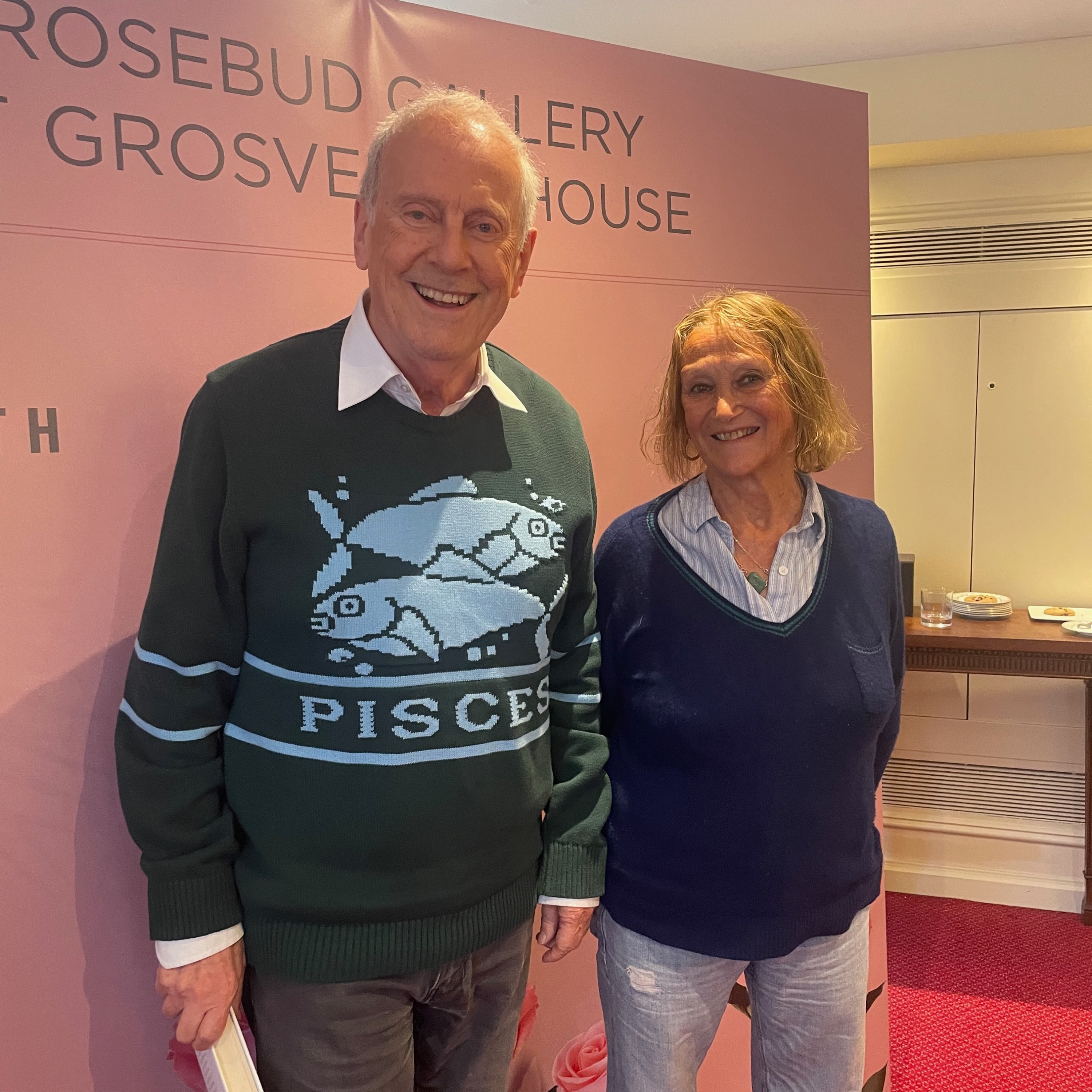
This episode was recorded at the JW Marriott Grosvenor House in London. Thank you very much to everyone there!
Hosted on Acast. See acast.com/privacy for more information.


