
 Ask ChatGPT



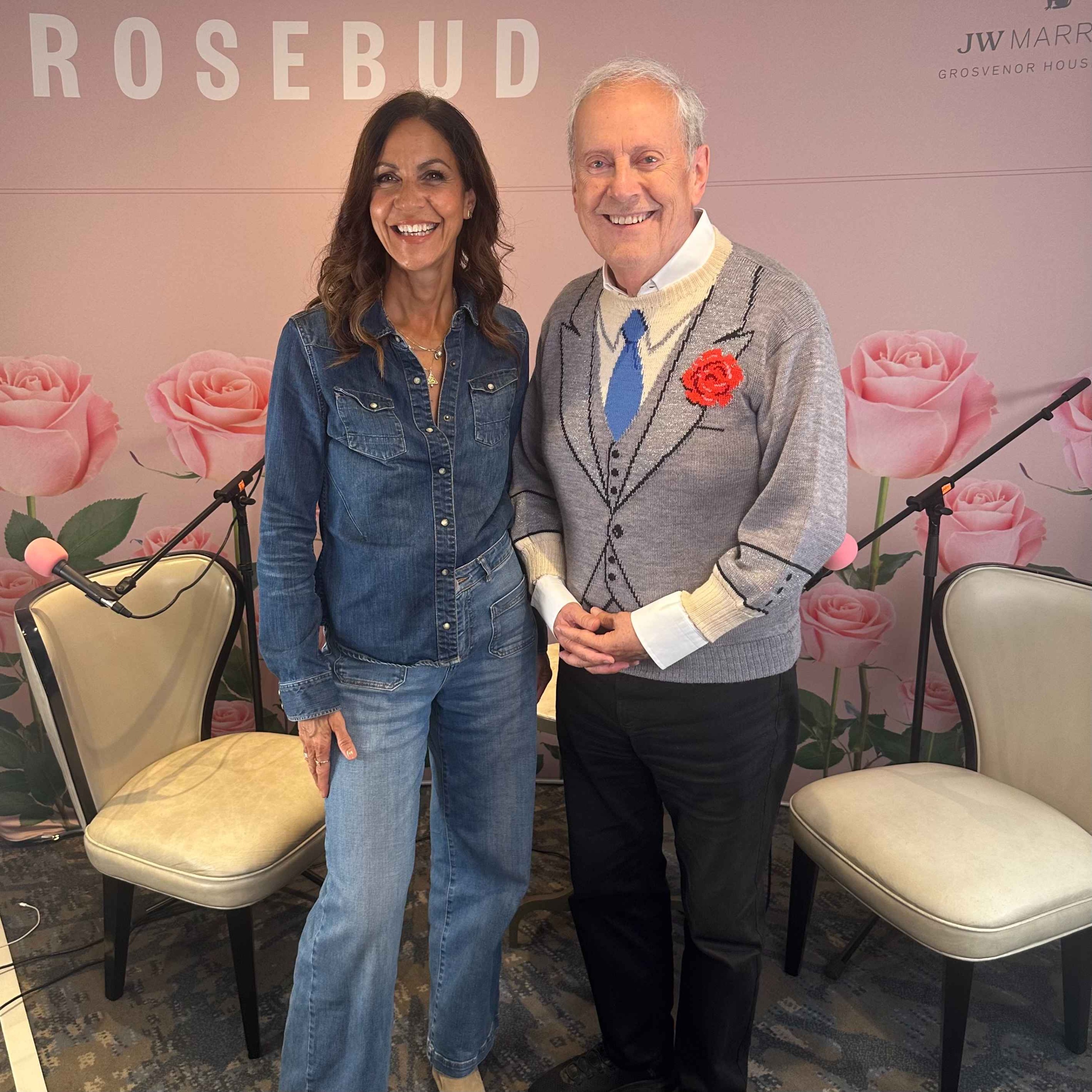
Host: Gyles Brandreth
Julia Bradbury
September 2023
Gyles Brandreth converses with Julia Bradbury about her life, health insights from her new book "Hack Yourself Healthy," and her early memories.
Written by AI. May contain mistakes.

Get the gist, explore an idea or ask about something said.
 Claude
On Rosebud with Gyles Brandreth, what are the key points of this episode?
Searching your listeningAutomatic transcript. May contain errors.
0:21Welcome to More Rosebud. we've had quite a beginning to September this year because on the 1st of September the feast of St Giles it was our second birthday and we had celebrations and with of course my producer and friend Harriet Jane and it was a fun day wasn't it we met and we were at Grosvenor House yeah And what happened to us? Well, you gave me a lovely present, which was a framed picture of us at number one in the charts, which Giles had printed off the Apple podcast app or something in a special silver frame to remember the fact that we were number one. And then we got a card from Grosvenor House.
1:07I just want to explain to the listeners. I actually got two silver frames. and I knew that Harriet wouldn't be remembering to give me a present. Oh no, don't. Because when she comes with sandwiches, she comes with sandwiches for herself. I'm cutting this bit out. No, no, you're not. Yeah, you can't. Maybe I'll keep it in, I don't know. I don't know, you can decide. She has the last word. That's what you do need to know. But actually, I was very pleased to give her a present because it's my voice to hear a lot of, but we wouldn't have it at all without her. So it's just our little team. And you're right.
1:39So I gave you a present. And then we had tea. Yes, we did. At Grosvenor House. Courtesy of Grosvenor House. It was lovely, wasn't it? Oh, it was lovely. Oh, and we had a cake, a birthday cake, which was cheesecake. Yeah, I think they're famous for that cheesecake. It is really good. But the real thing I wanted to say is that on Instagram, on X, we had so many lovely messages from listeners saying, happy birthday, Rosebud. Yeah, yeah, and we got lots of emails too. So thanks so much if you wished us happy birthday. and we had a lovely day and we celebrated and we even sang happy birthday to ourselves and just blew out two candles i did so it was a proper birthday it was a proper birthday and you will not believe this harriet but it is true i have um written to the solicitors who are keeping my list of wishes you know when you die you have a list of wishes now you don't with your with your will attached to it is a list of wishes.
2:40Oh, I don't have that. No, you're younger than me. You're not thinking about these things. Oh, golly. But when you get to a certain age, this is to say, we've got your will, you know, you update it every few years. Do you want to update the list of wishes? Yeah. How much are you giving to the Cats Protection League? Exactly. Do you want it in line with inflation, et cetera, et cetera. So that happens automatically. And I do occasionally send updates to my list of wishes, which includes my memorial service arrangements. and I've now added you as singing I do like to be beside the seaside at my memorial service.
3:14So there we are. And you're telling me that now on air. I've told you that before. I've got to sing Oh I do like to be beside the seaside at your memorial. Acapella. That. And you won't be alone. I've got some very, very distinguished people. Well of course it depends when I go. I'm sorry I can't stop laughing. I mean, that sounds horrendous. I'll be crying. You know I cry. Of course you do. From the beginning to the end of funerals. I cry the whole way through. Don't devalue crying at my funeral. I hope you will be crying at my funeral. I will be crying and singing. Oh, I do like to be beside the seaside.
3:51Yes. Wearing a yellow coat. No, not necessarily. Come, whatever you wear, whatever you feel comfortable with. Black, obviously. Not necessarily. Those details are yet to be, but you will be in some very distinguished company. Gosh. Can I say? My fear is that I've already outlived some of the people who are on the original list to perform. Well, you will have done. And a few of them are teetering on the brink now. So it's just me and the cheeky girls. Yes, exactly. So that's fine. I really want to know who else is on that list, Giles. Yeah, I think you do. Well, one day I might reveal that to you.
4:29Well, I'll find out on the day. I didn't reveal it when I did the thing with Mel. do you know she does a podcast where there's a Will it's a fun podcast which I think I'm going to be on later in the year and she kindly was on our podcast. Oh and I met up with Mel and Sue the other day because they're doing a show themselves on ITV I think Saturday nights I think it starts this Saturday. Or last Saturday or the Saturday before. Anyway their show and it's amusing in the makeup room they were each taking me aside saying did more people you know download me than her They weren't. So I did, they were in competition.
5:04So I told them, and it's true, that they are almost equi-popular. Yeah. I think marginally more may have listened to Sue, which was true, I told Sue. Then I said to Mel, that's only because Sue was on before you. So cumulatively... No, I think more listen to Mel. Oh, really? That's not what I told Sue, please. Because the listeners went up. No, no, no. The listeners went up for both of them. I don't want to be in trouble with Sue. They were both. All we need to say is they were both brilliant. Can I say they were brilliant and revelatory in a completely different way. They're very different people.
5:39They're lovely people, aren't they? So. We've got to get on with introducing this week's guest. Tell me. It's Julia Bradbury. I know Julia Bradbury. I love Countryfile. I know Matt Baker, because I work with him on the one show. I've seen Julia Bradbury. She is wonderful. She's the ultimate professional presenter. Yeah. But she has this special passion for the countryside, naturally, and also for walking. There's a reason for that. Yes, because, well, I think she did a lot of walking as a child with her father and she talks about him. And he sounds like an amazing person. And they were very close.
6:19But also she did this show, which was hugely successful, called Wainwright's Walks, where she followed in the footsteps of Wainwright. So she's a television person who's done everything on TV. That's why you might know her. But she also is somebody who's had challenges in her life. For example, breast cancer not that long ago, which was something that not only obviously physically affected her, but emotionally and made her think twice about life and where she was going. And she is sharing with me material that I as a person, well, you know me quite well, often I'm reluctant. when people say, oh, you know, the idea of mindfulness.
7:00I think, hmm, not sure about this. Well-being, hmm, do we need this? But gradually, I found her quite convincing. Though, trigger warning. If you are not into scraping your tongue, this may not be your episode. There is tongue scraping as part of the episode. So be warned. But give her the benefit of the doubt. I think she is fascinating. and a book genuinely is actually one I'm going to be following. Yeah. Oh, speaking of book, Facebook. Somebody told me something very exciting. That was you. Tell me about Facebook and us. Yes. So this is an important announcement to everybody listening. We are launching, courtesy of a Rosebud listener, actually.
7:42This is an idea that's been come up with and brought to life by a listener to the podcast who just got in touch with me, Peter Hansen, he's called. Hi, Peter, to say, why don't we do a Rosebud Facebook group, a Rosebud Facebook page? And he said, I want to start it. Do you mind? And I said, no, go for it. So it's called Rosebud Reflections. It's on Facebook. So if you're a user of Facebook, you can just go on search Rosebud Reflections and it's there. And I think there's a picture from our podcast and I've sent him a few pictures of Giles and guests and things to use. and there will be just a chance for you to chat together about things like your first memories or anything else that comes up in the podcast that you feel like chatting about or things unrelated to the podcast like what you did on your holidays so just a place to chat about things that you've liked about rosebud and get to know each other now my problem is i do instagram i do x but i to Facebook.
8:41No, but I think some people do. Good, so it's for them. Yeah. But what I'm saying is I will not be sending in my reflections. You will, but you monitor it. I'm going to be one of the admins. So that means I monitor and make sure nothing bad is happening. No, we don't want to do that. Which I'm sure it won't be. We must have some photographs taken of us. There are some pictures of us at various events. But I was in the queue, forgive me, I was passing the queue for Loose Women. As you know, on Mondays and Fridays, I go to ITV, the studios. And after this morning, which I appear on, there's a programme called Loose Women.
9:14Often as I'm leaving, there's a queue of the audience arriving for Loose Women. And somebody came up to me today and said, oh, can I have a photograph? So I fetched into my bag, well, I happened to have a fan photograph. And she said, I don't want just you. Where's Harriet? So I produced another photograph with me and Judi Dench, which I thought would impress her. She said, I don't want her. I said, well, it's Judi Dench. She said, yeah, but I want you and Harriet. where's the picture of you and Harriet so we must get some postcards done of us you should have just put some orange got an orange felt tip and given Judy Dench ginger hair and then you could say that with me exactly anyway so that's going to be fun Rosebud Reflections and also if you want an alphabetical list of all our guests you can go to our website I know the www.
10:02is not happening anymore so it's just rosebudpodcast.co.uk Okay. rosebudpodcast.co.uk. Okay, so now it's more Rosebud with a very interesting person who's written, I think, a fascinating book. And she's called Julia Bradbury. Here she is. Cue the music.
10:35well my special guest is julia michelle bradbury is the michelle with one l or two l's it's with one l and it's there accidentally because my dad did it secretly without telling my mum because he's called Michael. So when he went in to sign the papers, unbeknownst to her, he slipped the Michelle in there. I love it because my wife is called Michelle for similar sort of reasons. So I think it's a very attractive and I think Michelle's with one L are rather special people. But it's Julia Bradbury, born on the 24th of July, 1970. And my first question is always the same question. What, Julia, is your very first memory?
11:19My first memory is in my childhood home. I grew up in a little village in the county of Rutland, which you'll know, very, very small. And it was an idyllic childhood. And we lived next to a church and we had an apple tree. We still have the same apple tree in the garden. And I just remember being under and around the apple tree and picking apples up off the grass we still have the same apple tree in the same garden this implies you're still in the same house well my parents are so only this week i was fortunate enough to feed my children apples from the same apple tree and i love that oh wow i know so this is a memory going back half a century yeah the tree is still there well i don't know i think i don't know how old i was let's say seven or eight maybe or six i'm not going back i don't i don't think i was a baby when i i don't remember anything pre i was born in dublin so this it must have been after the age of two i'm reckoning about six or seven six or seven that's quite late for a first memory i talk to my children about memories all the time and i say do you remember when we went to so and so last year and they all go no and my girls are 10 and my son is 14 so i don't know when you're meant to start really cementing the memory well there's this obsessive thing now about making memories are you making memories today i went into a costa the other day a costa yeah and the nice server said oh i hope you make a nice memory today and i thought i looked around i must be positive about costa you must be positive they're in trouble but are they yeah i think they need all the help they can get maybe this is a new campaign but at least you had some social connection and interaction he was being nice because you don't get that anywhere now it was a she it was a she and indeed look she made a memory there you go could you make memories in strange ways now tell us about these parents and also then tell us about dublin who were your father, who are your father and mother?
13:10They're both still alive. They're both still alive, having been through a cancer diagnosis, both of them. They're in their late 80s now. My mum's 87, my dad's a little younger because he's a toy boy. So Chrissie and Michael. And my mum was and still is a very dynamic entrepreneurial spirit and someone who was very driven and self-taught, self-motivated and successful on her own merits. My dad is very kind, very gentle, very English, born in Derbyshire in Tideswell and is more relaxed about life not quite as motivated but very academic and probably well he is he's the cleverest person I know on the planet you can ask him anything his breadth of knowledge is phenomenal he is British and your mother is Greek that's right how did they meet they met after my mother was widowed and she ended up working for him and I don't know back in those days so we're going back to the 70s but anyway they ended up they were they were together and they ended up getting married and they moved to Dublin we're going back to the 60s if you were born within wedlock yes well I was born within wedlock so I was born yeah so they were I think it was 65 that they got married and my sister Gina who is technically my half sister Gina but I don't ever call her that she's my sister Gina she's she's been there since she's the daughter by your mother's first marriage yes and your mother was widowed and my mother was widowed yeah just describe to me your mother as you remember her years ago it's very difficult when you've got parents in their 80s not to see them my my children can only see my mother through the prism of her as a very old lady she lived to 96 and they don't know what she was like when she was well maybe in her 20s 30s when she gave birth to you yeah what's your earliest memory of her describe her physically to us she's she still is a very glamorous person, a very glamorous lady, even now she doesn't look like a little old lady.
15:03She is very glam and she takes care of herself. And I don't mean in a Botox and let's have some nips and tucks kind of way, but she has a pride in her appearance. When I was growing up, she was just beautiful, dark, always smiley. I remember her smile. She drove a blue Volkswagen Beetle, which she then passed down to my sister, which I then ended up having as well when I, when I learned to drive. And I, I've always loved cars and I learned to drive on the driveway from the age of about 11. So when I got Abo95k, because that was the number plate of the car, it was just, it was a rite of passage.
15:35And I remember driving around in Abo95k and I just always wanted to be with my mum. I wanted to hug her. I wanted to be, my favourite thing was to lie in her arms while she was talking to friends on the sofa and listen to the sound of her voice as my ear was resting on her chest. And I remember that very, very vividly. Did she have an English accent? Completely. Yeah, she was born in Wales. So she's, although Greek heritage, very Anglicised and English in upbringing. So it's my grandmother, Maria, who would be the more Greek-y one. And she eventually, she also was in Wales, but ended up falling in love after her husband died.
16:18She went back to Greece because she fell in love with a Greek sailor. But she went back there as an adult and spent the rest of her life and lived to be 103. three gosh so does the family speak greek the family speaks greek but i don't speak greek it's a bone of contention because mum said because she didn't talk to dad in greek because he's english she didn't want me to have a half language she thought that that wasn't she didn't think that was a good thing and i was like but mum greek is like the font of all language so anything would have been good and even to this day she still buys me a greek dictionary almost every christmas saying it's never too late.
16:54What did your father look like when you were a little girl? My father's a very handsome man, very tall, six foot four, has a moustache, very twinkly blue eyes. A moustache? Yes. It's a kind of period moustache. It's like an RAF moustache. No, not one of those big, long, twisty moustache, but just a good, you know, solid moustache. And he shaved his moustache off once, and I don't remember it, but Gina cried, and he had to grow it back. He did it for a job interview, because apparently he found out that the person who was interviewing him hated facial hair, so he shaved it off and he went into the living room and gina cried when she saw him and i've never seen him without a mustache he's actually turned it into a goatee now but as a consequence i've always liked facial hair on men and my partner has a beard why were you born in dublin i was born in dublin because when my parents married my dad was working in the steel industry there was a job there so off they went and they always claim that those days in dublin were the happiest of their lives they loved that life um and they bought a big pyrenean mountain dog a white fluffy mountain dog which again I don't remember but I've got pictures of me on on the dog Lara and they had a really healthy social life and they loved it and when they did move back to the mainland when I was two when they moved back to to the UK they chose Rutland because it was next to Corby and my dad was still in the steel industry so it was a nice location is it the smallest county famously still famously the smallest county Leicestershire keeps trying to subsume Rutland but the Rutters are strong and so far we have resisted on several fronts.
18:23And they are living in the same house that you remember from half a century ago? They actually live next door now because... But they have access to the orchard? Yes, they have access. Well, it's not an orchard, it's two trees. You make it sound a grand. It's a couple of trees. What's your recollection of your first home then in Rutland? What's the house like? The house is an old, tumble-down rectory with very steep stairs. And I remember running down these dark, stained wooden stairs. I mean, it's 400 years old. And I thought, when I was younger, that I could fly. And I remember thinking that I could fly down these stairs.
18:58And I would jump onto the banister and swing back and forth. And then I would leap off. And I would swear that I could fly. I think I did fly when I was a young child. Well, we're going to come back to your Peter Pan fixation later, because I have one too. Okay. So flying is an interesting phenomenon. And in this house, your bedroom, what was it like? My bedroom, well, I had several bedrooms because we were there for quite a long time. But the bedroom I remember most was next door to my mum and dad's. I liked that bedroom the most because it was closer to my mum and dad. I was a real mummies and daddies girl.
19:32I liked being close. Gina, my sister, is 10 years older than me. So she'd left by then. So essentially, I was an only child. Although she did come back and bully me when I was younger. She used to, you know, because I was really annoying to her because I loved her and just adored her. And I was just the annoying young little sister. Was there also, I don't know, an issue of the fact that your father is your father and she had lost her father? No. I mean, obviously, if we go deep into the psychology of it, then yes, there will be something. And those are things that Gina handles and has dealt with throughout her lifetime and trying to address those emotional issues.
20:09But my father is, as I said, just incredibly loving and very kind. And he adopted my sister and to all intents and purposes, Gina is his daughter. I mean, she calls him dad. He calls her, you know, his Genecki. There was never a divide and there was never, this is my daughter and this is my stepdaughter. Although his mother, my grandmother Gladys, not the Greek one, but the English one. She would introduce us as this is my granddaughter and this is my step-granddaughter, Gina, which none of us liked. Gladys wasn't very nice. I imagine that your parents' marriage is a success. They're still together?
20:44Well, they're still together. I don't know what a successful marriage is these days. They're still together. Since they've given up work, I would say that perhaps their differences have become more apparent. So my dad likes to read newspapers. He loves sport. He's always loved walking but his knees are giving way now so he can't walk anymore um and he likes a tipple mum doesn't drink and she doesn't like the great outdoors so they don't really enjoy the same things i think their common ground is the garden they both like spending time in the garden of their new house which is just a sort of a smaller patio region but they grow herbs and they have lots of lovely potted plants annoyingly because she's older than him uh he may not die before because then she could be twice a widow and find somebody more compatible to end her days with.
21:31I don't know that there's anybody more compatible now. I mean, they've been together. You do the maths. I'm terrible, but, you know, I'm 50. So they've been together 50, 55-plus years. They have. Nearly 60 years. I would say 60 years. This could be their 60th anniversary. And they haven't noticed, and you haven't noticed either. No. I suspect you may find they married in 1965. Okay. And you have missed a trick here. But they may have chosen to overlook the fact that this is their diamond jubilee. I'm sure they are. Certainly dad will have done because the ongoing joke with dad is that he has crocodiles in his wallet.
22:01He's not keen on flashing the cash, my dad. Extravagance is not the name of his game in any way. So don't mention Diamond Jubilee. The chances of my mum getting a diamond on the Diamond Jubilee are less and less than less. What, more seriously, have you learned from her in your life? What's she given you that you have now? I've learned an enormous amount from both of my parents and I feel very, very grateful. And in fact, my new book, Hack Yourself Healthy, is dedicated to my parents because based on a conversation that I had with my sister Gina one day when we were driving somewhere and we just were reflecting on the fact that we're both incredibly lucky I have a lot of friends and I've met a lot of people whose parents have not been supportive are not loving I mean I heard a a shocking story of a friend of mine recently whose parents sat them down in a room and said right we've worked out how much you owe us and tried to extract money off them for their for their childhood and for bringing them into the world, which I was just like, wow, can you even do that?
22:59But my parents and Gina and I, our parents have always been there. They're incredibly loving him. My mum just is love. She just embodies it. She wants to cuddle and hug and she loves her granddaughters and her grandson so much. So I've really learned about the importance of love and connection from both of them. My dad is more reserved. And as I've become older, I've learned the value of holding back sometimes. I didn't have that when I was younger. And I look at times throughout my career when I pushed so hard, and I think, God, you were just a really annoying, pushy young woman. And from my mum, I've learnt about drive and focus.
23:39And really, I've learnt that you can achieve anything that you like. I mean, my mum was born into a poor household in Wales. There were other members of the family living in the house. It was a one up, two down in Wales in Cardiff. And I remember her telling me, she drove me to the house and she said, I have a lot of good memories here, but I knew that I didn't ever want to come back. And that really was her driving force to succeed and to become an entrepreneur and open her own business. And she's a talented designer and seamstress. And she had a shop in Sheffield and it was the first shop in Sheffield where they made haute couture so they designed clothes for you you would go in and say I mean as you do you'd say I love sweaters and this time I'm looking for a sweater in this color with with a tie and a rose on it and she could do that she would do it in silk or she would do it in silk from Switzerland or leather and suede or you know it was it was they were beautiful beautiful clothes and that's what she did and my sister joined that business and then it grew and it went to London.
24:42So I'm full of admiration for anybody who comes from very little and creates. Can you remember a time when you might have hurt them or disappointed them for the first time in your life?
24:56So I remember the first time I lied to them. I was going out unbeknownst to them with Ian, the drummer from school. So by this time we'd moved to Sheffield because my dad again had been moved so my mum to help with the family finances opened this business so they were a real partnership together like that and when I was at school one of my boyfriends was Ian and we decided we're going to meet on a Saturday and we were going to go into town and you know have I don't know tea and then he took me to the market he bought me a little ring from the market and it was all very sweet but I told them that I was with this other friend of mine and then they it was the classic they bumped into this other friend of mine on the street and she and said oh you know where's julia and she lied for a minute and then afterwards because she was a good person she said i'm really sorry she's not with me we haven't been together today so they tracked me down i don't know how they managed to because there were no mobile phones and they tracked me down i went home and my mother was furious it was stony and stern and i was in trouble and then they explained how anything could have happened and they didn't know where I was and all the rest of it.
26:04So I remember that. And did you learn the lesson from that? I did learn the lesson from that. I was petrified. They were stern but not strict, I would say. And what they were trying to do is they were trying to teach me about values and they were trying to teach me about awareness and they were trying to teach me to be cautious and careful and safe. You learned another lesson too. You can't trust your best friend in life. Exactly. Well, she wasn't a bestie. No, I can tell. Clearly. Who was your best friend outside your home when you were a very little girl? Can you remember the first? friend outside my best friend from school was abby and abby brown lived three doors down from us in sheffield and we would walk to school together and poor abby i in the 80s got into duranduran and spando ballet i cut off my hair and i and it was sort of blondish color um hideous and um and i'd have to blow dry every day to get the to get the waves and poor abby would come to pick me up because mine was the house on the way.
26:58And she would always have to wait for at least five minutes while I finished with the hair, made sure the shirt was good, you know, the ruffly shirt, and, you know, maybe put a bit of eyeliner on. And we were very different, but we really gelled and we just got on with each other and we were there through thick and thin.
27:19And were you like you are now then, do you think? Are you just a grown-up version of that? No, I think I've changed enormously. I think, I mean, I don't know. Is anybody really the same as when they were very young? I don't know. There are traits, obviously. I'm told by my wife that I am. There's been no development of any kind. You've plateaued. Yeah, I've plateaued years. Well, I mean, gone back slightly because I've grown older. So I'm not physically what I was when I was 19. But in all respect, I'm just the same. Just the same. I'm definitely not the same. So how have you changed? So I was certainly in the second act of my life.
27:56As I said, the thing about my dad I've learned is that the patience and perhaps not being so bullish all the time. So I have learned to reflect a little more and I've learned to take slow days. Whereas before I always thought it was just go, go, go. I mean, I left school at 16. I didn't want to go to university. I just wanted to work. I wanted to be like mum. It's like I can get a job. I can get a career. I want to just get going on this path. I haven't got any time to waste. and that's what sort of pushed me through and then I went to work for an advertising agency and then I went to work for mum and Gina and I didn't like that because that was too claustrophobic.
28:28Is this because you didn't like school? I mean why did you want to get out of the world? I didn't like school. And why didn't you like school? I didn't like school because I wasn't traditionally academic as in I didn't soak up information that way. I found it very hard to learn with some like I remember our history teacher bless him he was so uninspiring it was like I just that it was just there was nothing stuck because I didn't want to remember anything that he'd said because he just had no charisma and there was nothing about it. It was like, why do I need to know this? But I didn't like school because of that environment.
28:57And I was bullied at school. And when you say you were bullied, people often say I was bullied at school. In your case, what does it actually mean? So what triggered it? So I don't know what triggered it other than the fact that I look Greek and in Sheffield being Greek wasn't wasn't great. So I was the Greeky and you know, you smell like olives and all of that sort of thing. And also my school was quite cliquey and there were gangs of girls and there were cool gangs uh girls it was girls and boys um and there were gangs of boys and the cool gang the cool girl gang hang out with a cool boy gang i just i didn't fit into any of the gangs because i wasn't cool and i was the greekie and i didn't look the same as the other girls because i had short hair and i'd done the whole spandau ballet cropping thing and all the girls had long blonde hair and and stuff so i just didn't fit and one day you'd be in and you'd be you know they'd be oh like you know you're part of the set and then next day you'd go into the into the girl's toilet and they'd like death stare you and say oh you said you said so and so you said something to so and so death stare and they're leaning against the wall are they yeah they're leaning against the wall you come in to use the toilet yeah and i go hi hi everyone because you know yesterday we were friends and then today it's like they just stare at you yeah they just stare and then you kind of go is everything all right or you're okay or and they go, you said X to Louise.
30:17And I go, did I? Yeah, you did. And then that was it. And then you were out. And then that would stay, you'd stay like that for, you know, amount of time, and then you'd be back in. And I remember, I don't, I don't know what set this off, but the school, the, the, the cool boy and the cool girl that were going out together, I was queuing at a school queue and somebody did something. And I ended up saying, oh, no, that's, you can't do that. They jumped in or they did something and I ended up squaring up to this to this guy to this boy and we had a fight and he knocked me down and he because he was the school boxing champ as well um you picked the wrong one I picked the wrong one yeah but you know you don't know you're picking the wrong fight till it's too late so best not to pick the fights that's something I've learned through school as well oh really do you think but I think maybe do the right thing to stand up for yourself yes well yeah there's but you've got you need to measure the situation don't you so this obviously the way to describe it so vividly, it's still really alive in your mind.
31:14How do you think this has affected your life, this experience? So I don't know. Did your parents know about it? No, my parents didn't know about it. And interestingly, why didn't you tell them? I didn't tell them because I didn't want to bother them with my stuff from school. They were busy and mum was working and dad was working and I didn't want to burden them. And interestingly, I ended up spending some time on a stage with the trauma specialist Gabor Marte, which again I've written about quite recently. This is much later. This is for my new book. He does this thing where he looks into the audience and he goes, give me 10 minutes and I'll unpack your unhealthy childhood.
31:52So this is you on a stage with this man who is a world famous trauma specialist, therapist, etc. What's his name again? Gabor Marte. And he says, give me 10 minutes of your idyllic childhood and I will unravel the trauma. Does he think everyone has got a trauma? He thinks everybody has a trauma. We've all got a trauma. Women have more trauma than men. Good. Because we hold it in. I'm so sorry to hear that. You've got more. We all have equal trauma, but women keep it longer inside them. Yes, we hold it. And so we have more autoimmune disease. Rest assured, listeners. More chronic disease. Gabel will be a guest in due course.
32:25Yes. So in your case, how does he unravel this? He takes two minutes. I wish I could tell you, Giles, how he did it. He looks at me. He says, tell me. And I tell him about the rectory and growing up in a lovely village. and I say something like, it was a perfect upbringing, almost too perfect. And he goes, almost too perfect. And then he looks at me and he says to me, were you bullied at school? How did he get from that? And he asked me if I told my parents and I said, no. And I gave them the same reason that you did. And then he flipped it and said, do you have children? Yes, I do. How would you feel if they were being bullied at school and they didn't tell you?
33:05and I said I would be devastated. So this is the question I'm asking you. Why didn't you tell them? Well, because they were so busy. They were busy. And you'd made it clear that... And maybe it was me. Maybe there was a pride element. Maybe I don't want to be the bullied person, the bullied girl at school. To play the poor man's gabor for a moment. Go for it. He can instantly say, of course, you've already... In fact, you've told me this to begin with, that your parents were these, in their own very different ways, high-achieving people, in a very different style. Here was your father, who was more academic, more cerebral, working in the steel industry, but there are problems in the steel industry.
33:36When you went to Sheffield, your mother was coming to the rescue in her different way with all her dynamism. These two people are on the same path during their childhood, your childhood, but then eventually the parting of the ways, all of this, maybe they didn't have enough time for you and maybe we're still brooding a little bit about this. Oh, you're good. But I feel completely loved and confident. Yeah, exactly. They did give me confidence for sure. And I think that's why I've been so bullish through my life. And maybe your mother doesn't realise that she was able to be a risk taker because of what your father gave her.
34:05Maybe. Oh, for sure. Yes, they definitely supported each other in very different ways. Do you now talk about these things with your parents? We do, but I think my parents have got to the age now where how much I'm picking do we want to do? My mum's 87. She wants to enjoy her grandchildren and her lovely little garden. I think we've gone past the stage of let's delve too deep. and cause because therapy is hard and you do unravel and you do unpick feelings and you then have to be able to work those feelings through apart from being on the stage with gabor i mean do you do therapy have you done that i do and i'm actually just about to start some emotional freedom technique therapy so some tapping don't rush through that because not everybody's familiar with that so emotional freedom technique and tapping therapy you can tap certain parts of your body.
34:56You can tap your collarbone, you can tap the top of your head, you can tap your upper lip and you can say mantras to yourself about perhaps your anxiety or what's going through your mind. And actually tapping has been shown to reduce your feelings of anxiety and to calm the nervous system. So you can tap into your parasympathetic nervous system and that is your rest and digest nervous system. That's the system that calms you and keeps you calm. Your sympathetic nervous system, which I would argue is called the wrong way around, is your fight or flight. That's the one that protects you and makes you run and delivers blood to your muscles and stops you digesting and creates saliva and gets the adrenaline and the cortisol going.
35:39The other way you can tap into your parasympathetic nervous system is through breath work, which is profoundly powerful. And you can actually slow your heart rate down and reduce your stress levels by slowing down your breathing pace. We all breathe about 25 ,000 breaths a day. And if you, you'll notice when someone's panicking, there's a lot of this going on. And sometimes you say, take a, take a deep breath. And they're breathing through an open mouth and they don't get any better. They don't calm down because breathing through the mouth isn't very calming. You should breathe through your nose and breathing fast actually does the opposite.
36:17You think you're going to get more oxygen into your blood and into your lungs and you know into your body you don't you get more oxygen into your bloodstream if you breathe gently and very softly through your nasal passages and breathe in for a shorter period of time than you exhale so we could do it now let's breathe in for four through our nose and then let's breathe out for six so really gently i don't want to hear you breathing in okay so go and i'm not going to say i'm going to point the fingers
36:53now if you do that for a minute you'll completely calm yourself your heart rate will drop i mean i can take my heart rate from 73 to 53 in a minute and a half doing that let's come back to why we should do this and why you are doing this because i'm a high cortisol person and one of the other great things that I learned. What does high cortisol mean? I'll tell you now. So one of the great things you wanted to know about my mum, my mum was go, go, go all the time. She was driven, she was on it. She was taking clothes out of the boot, designing clothes. I'm with her. That means your cortisol is high a lot of the time.
37:30And cortisol is a stress hormone. It's like adrenaline and noradrenaline. But you don't want to be in that state all the time, which a lot of us are now because of modern life. So modern life is the phone is pinging all the time you've got to run and do jars this podcast and then after this you're going home and you've got to do a zoom and then after this you've got to put the get the children's dinner ready and then after you've done that the children have got to go to bed and while they're going to bed you need to do a bit more work and then before you know it at 10 o 'clock you've got some scrolling to do and then you've got an email to do and we're on on on but it's a balancing act too isn't it's a balancing act because some of that is exciting exhilarating creative yeah but still stressful But you're with somebody who has always felt that stress was rather a good thing.
38:12Yeah. Well, I too was that person, Giles. And what I've learned is stress is a good thing and it gets you through situations. But this low-lying constant, so you're always on that plane, that's not good. That's chronic inflammation. That's disease. I mean, there are people who have been sent home after having heart attacks and cardiac arrest. And what's the instruction from the doctor? No stress. you must reduce your stress and even though no stress even though it's or less stress maybe different kind of stress maybe different kind of stress but i would argue i think you love your job and i think you're like me you're excited by life and i enjoy doing all of these things i really do but there it doesn't mean that your body isn't reading it as a stress response that there isn't a level of stress there is.
39:02So now after we have finished our lovely chat and I'm getting in a car and I'm going to my next thing, I will spend 10 minutes just doing my breath work just to cool myself, just to calm myself down. And now in the morning I wake up and I expose myself to morning light. I do breath work and a little bit of meditation, a little bit of chanting to set myself up for the day ahead. One American doctor told me that joy as if you're being chased by a tiger all day. And you know, you'll laugh and I will laugh. She said, you've got to address that. That is not healthy. It might be getting you through stuff, but actually the long-term damage is, is, is not a healthy place to be.
39:43So I do my breath work and my meditation and my chanting in the morning. And then I'll do my anchoring mid afternoon because it's a busy day. And tonight, before I go to bed, I will lie and I will put my legs up against the wardrobe because that helps you deal with anxiety and helps your uh stress and it also helps your just your blood it's a great thing to do and julia two things how do you find the time for this and how is your marriage going well my legs are progreens the wall and i'll meditate and i'll do that for 10 minutes before i go to bed i'll calm myself before bed no no that's a bone of contention in the house I bet it is.
40:21You've got one person who's now become this super health hack aware person. Well, let's try and discover how you got yourself to the state of needing all this. Okay, let's. So we'll go back to you at school, being bullied, not achieving overall, but enjoying doing the drama. Yep. And the English and the geography. Yeah. So you were comfortable there. Those were the good moments. And is this where Peter Pan comes in? Yes. Were you in the school production of Peter Pan? Yeah. Well, it wasn't a school production. It was a professional production of Peter Pan. Oh, tell me more. Peter Pan. It was my first professional gig, John.
40:51So how old are you? 16, 15? So I'm 15 and I'm in a drama club and it comes to their attention that there are going to be auditions at the famous Crystal Theatre. And they're looking for mermaids for Peter Pan. And the lead is going to be Paula Wilcox and closely followed by Joanne Wally. So big, big thing. So I go to the auditions. I have to pretend to be a tree growing out of the ground and I get the part. me with my little dark greek face i have to put on a long blonde wig and a mermaid tail and i'm going to be doing matinees and evening performances so i have to be signed out of school and i have to do you know homework outside of the the school period so i get some afternoons of school which obviously i love um and i get to see this world yeah and how were you as a mermaid i think i was pretty good my hair combing was quite strong and i did good flipping of the tail there were no words it was not a speaking part well we will not go into my mermaid obsession because that I think would lead somewhere that we don't need to go right now indeed and I think we'll need the great Gabor was he called Gabor Gabor Marte he can unpick your mermaid I think Gabor would unpick it so easily would be like filleting a hat he would have no problem with my mermaid obsession but Peter Pan does interest me very much because I've always been fascinated by Peter Pan one of the great plays written 1904 uh interestingly in the introduction to peter pan uh he uh j m barry who wrote it has a moment where wendy i think decides that from the age of two it's when she goes to her mother and her mother doesn't listen to what she says and it's the age of two that she realized that she had to be a grown-up for the rest of her life she was on her own from the age of two whereas I think most people feel it's from the age of 12 many other writers in that period fascinated by the nature of growing up yeah or do you ever grow up Peter Pan of course the boy doesn't grow up when do you think you grew up when I was 17 oh yeah when I was 17 I went to live in London having done my first job interview and secured my first job for the with the advertising agency after school and i went to live with gina and we lived in a little flat together in maida vale she's 10 years older than you yeah so she's 27 you're 17 and are you forgive me a mature 17 or an immature 17 this is the growing up moment i've got no idea giles i probably immature yeah because i hadn't i didn't have much i you know i didn't have life experience and i I was very much, as I said, the mummy and daddy's girl.
43:36I was very close to them. And Ian? Oh, he's long gone. Long gone. And you hadn't had a proper boyfriend at that stage. I'd had a few. Yeah, I didn't really anchor on to boyfriends. I had a succession of boyfriends. But that just was something that happened. Yeah. It didn't mean a lot to you. No, no. Fine. No, and I finished with Ian quite early on. So you come to London, age 17. Yeah. And what is your plan? My plan was to do my first job. So, and to start living and to start working out what am I going to do? Because my first job was a receptionist in an advertising agency. I was obsessed with copywriting.
44:09I thought that's maybe what I wanted to do. But how am I going to get from receptionist to copywriter? And how can I embed myself into the agency? And what can I learn here? And meanwhile, how are Gina and I going to live together? And honestly, within 12 months, we were best friends. and I, it was quite a rich social life at the advertising agency and by this time I was going out with various people and I would say to, if I was seeing a bloke and we were going out for a drink, I'd go, have you got a friend for my sister? And we ended up spending the next five or six years going out on the town together in London and mostly it was me who was calling in the other blokes for Gina and I was the younger sister who was, yeah, setting her up.
44:54So the growing up really is being in London with your sister at work and life is beginning. Yes. And then what is the breakout moment? How did that happen? Just take us from being in the ad agency through to... So I did actually learn a lot in the ad agency. They were really kind to me and they were very patient. And they'd let me go into the various departments. I became friends with some of the account managers and they'd tell me how the accounts worked. And I loved it. then Gina and mum came to me because they, Gina had moved to London and had set up the London arm of CB, the family business.
45:29And they said, why don't you come and do what you've, what you've been doing here? Why don't you come and do that? You know, we're going to take some small spaces in Vogue. We're going to take like an eighth of a page. You could design the pages and, and you could do some modeling and we could do, and it was just basically, let's continue the family business. And I was good at sales. I was always good at sales. Um, and so I did that for about a year and a half. And honestly, Giles, I hated it. I hated being tied to the shop from 10 till six. You couldn't go out, you can have a meeting, you can go for coffee, you couldn't go anywhere because you're in the shop because you're waiting for the next person to come in to make a sale.
46:04And I found that suffocating. And then there was all this stuff going on with mum and Gina and all the rest. And we had some hilarious times. I mean, we were on beach and place and Princess Diana poked her head around the corner one day. And I learned to deal with everybody. I learned all about people and chemistry and fantastic breeding ground and learning ground for me to become a journalist and learn about making television because it's as you know it's about people and connections and a year and a half into it I said guys I just can't stay here it's too claustrophobic we had a friend called Anna Walker who was a TV presenter and I was fascinated by her job and she'd got me an interview at Sky TV to be a weather girl and I went for the interview I didn't get it but it was i had something on tape and then i went to see somebody else and i got something else on tape and i pulled together a rough thing which doesn't exist anymore called a showreel basically it's what instagram is now little snippets of you doing stuff on camera and i ended up going to audition for janet street porter's new channel to be called live tv and she wanted a hundred new presenters who'd never been on screen before she wanted us to be green and she wanted to train us.
47:12And 50 people would go for an interview every day. And those interviews lasted for two weeks. And every day, two people got a job. And I ended up as one of those people. And I ended up presenting just all these different shows. I presented a health and wellness show. I used to go out to red carpets and have to muscle in and try and scream and shout and get Bruce Willis to come over to me. I remember that I talked us, the crew and I, I talked us into to the private premiere party for Warren Beatty's new film. And I ended up getting to him and interviewing him. And then I felt this tap on my shoulder.
47:46And this voice behind me said, who are you? And I said, Oh, I'm here with the official crew. She said, I'm managing the official crew. You're not it. And it turned out to be this formidable PR lady called Rosemary Sisk, who has passed away now. Goodbye, Rosemary. And she sort of looked me in the eye and I said, oh, I'm so sorry. I was, you know, I'm working for live TV. I was just desperate to get in. He's so lovely. Please, will you let me keep the footage and everything else? And then she took me under her wing and would invite me then to like proper. She'd go, I've got you a spot, Julie. I go, thank you, Rosemary.
48:16And so it began that whole learning curve of how to get what you want. And sometimes you have to push it. You were go-getting and lots of high cortisol. Lots of high cortisol, burning through the cortisol at that stage, literally like juggernauts of it, just like flowing through me. Somehow, when I mentioned your name, people say in recent days saying you were coming on, they always say Countryfile, Wainwright's Walks, that sort of thing. Yeah. Is that what has given you most satisfaction overall? Or have you loved it all? I've loved it all and I've learned from it all. There was a flipping point.
48:50There was a when I was presenting Watchdog and I was watching all this output on BBC 4 and I loved it. It was all unusual, fresh and loved some of the documentaries. and I decided to find out who the commissioner was at BBC Four and I organised to have a coffee. Went for this coffee, typical BBC, he was in a back room with furniture all around him and he didn't know who I was, he vaguely knew that I was on BBC One and that's why he'd taken the meeting and we just got chatting and we started talking about walking and I talked about my love of walking with my dad and the Peak District and he said to me, looked me in the eye and said, do you know who Alfred Wainwright is?
49:25To which I replied, yes, my dad is an avid reader and there are bookshelves. We've got a few of the Wainwrights on his bookshelf. And for those people who don't know, he was a famous fell walker. He wasn't from the Lake District, but he fell in love with the Lake District. And he started writing these books and he wrote 13 beautiful pictorial guides where he basically, it was poetry about the Lake District, his view of the Lake District and why it was one of the most splendid places on earth. And when I said yes, he had commissioned a documentary about Alfred Wainwright and he wanted to film some more of the Wainwright walks.
49:58And up until that point, he had imagined that a man would film them. Because back then, men were making these kinds of programs. So Wainwright was a man. And Wainwright was a man. But there weren't many women in the outdoor space then. And so I ended up presenting the Wainwright Walk series on BBC4. And they became, almost overnight, some of the most watched programs in the channel's history. Yay. Congratulations. Thank you very much. I mean, I had no idea. suddenly my inbox my emails were flooded and there were people holding Wainwright's books going oh look at me I'm like Julia Bradbury on the way and I was absolutely stunned because although I was well known I hadn't really had I don't think any fame so the Wainwright's changed that and suddenly this whole new world opened up to me and Matt Baker and I were chosen to move Countryfile which was a farmer's program on Sunday afternoons to Sunday evenings.
50:54And it went from its Sunday afternoon slot to its primetime slot on Sunday evening. And it went from having about three or 400 ,000 viewers to having 6.5 million viewers overnight. Now, what I want to ask you, because your career is extraordinary and remarkable and admirable, is do you think you were well-liked by your colleagues? I think by, I mean, I'm still friends with a lot of my early producers. So yes, I would say. And I'm still friends with all of my TV husbands. So Nikki Campbell, Ben Shepard. I mean, Matt is godfather to one of my children. The reason I'm asking, I think probably it's because of my wife's experience.
51:38She was a television reporter presenter 20 years before you and i think she found observing it that somebody with your energy because you're really a real achiever you're taking meetings meeting meetings you're making it all happen you're selling yourself beautifully she found that wasn't welcome that wasn't wanted uh she achieved the goals but along the way her fellow colleagues particularly the women did not really warm to that style so my female colleagues were producers and generally I got on well with them I had a couple of run-ins with male producers and I know that there was one female commissioner who hated me she didn't like she everything you've said she despised she didn't like about me I was too pushy I wouldn't close my you know I wouldn't shut up when I should shut up I was always asking the wrong questions and I never ever ever worked for her and i knew she didn't like me because i had some feedback what's the advice you would give to for example your daughter where she here she is here in the background everybody what's the advice you would give to your daughter about how to get on well in the work situation if you are as you clearly are uh an achieving woman how how would you play it i think well it's a very different world and have you have you do you think you ever made mistakes along the way i definitely made mistakes and i think and what were they that's where we go back to um i remember a moment so the commissioner that didn't like me it was a it was a pilot for a phone-in show and the the case study that they were setting up was a cross-dresser was phoning in and i we had to lead him through some some sort of uh advice and i instinctively just found that's a little humorous and perhaps because I knew it was a setup and all the rest of it.
53:31So I made some funny quip. But the producer had said to me, don't joke about this. Don't make a joke about this. And I thought to myself in my head, oh, it's not that. It's quite funny. And I did it. And I made a quip. And that was a mistake. That was the job I never got. And I never, ever worked for that commissioner again. And I purposely ignored what that producer had said. and I shouldn't have done because he was more experienced, he was wiser. But the lesson that I learned from that was just listen, don't be cocky and don't assume that you know everything. So I would always say to my children, listen, always be courteous, always be respectful of people's skill set as well.
54:14None of us are great at everything.
54:21with our time together i completely see why you've now found the need your cortisol has been right up there this high energy anxiety producing life eventually has led to where you are now but also on that journey was your breast cancer so tell me a little bit about that and then And I want to hear how this new book of yours, which really intrigues me, is going to help all of us deal with what you clearly are trying to have been trying to help yourself with. I was diagnosed with breast cancer in 2021. And after I shed some tears and after the fear, I thought to myself, right. And I said to my partner, how do I get through this diagnosis?
55:04and what can I do to make sure that the outcome is as positive as it needs to be and that means staying alive just tell me who your partner is is this this is the father of your children the father of my children he's very private he doesn't appear in any papers you can't see a picture of him anywhere his name is Jerry I call him Jerry he's Gerard and he's Irish lovely so breast cancer you say to him Jerry what do I do now had the doctors been helpful and good they The doctors were helpful and good and they'd explained what it was and what type of cancer it was. And by this time, obviously, it's terrible.
55:39It's petrifying. I have yet to meet somebody who's been on the receiving end of those words, you have cancer, who has not felt a level of fear. You think about death straight away. You think, oh, am I going to die? Am I going to die? What about am I going to see my children? All of those things. and then once I knew what the cancer was and what the treatment was going to be which was a left side mastectomy so I was going to lose lose my left left breast it seemed apparent that I wouldn't have to go through chemotherapy and radiation quite early on because of the type of cancer and the location of the cancer so that was great so it would be the physical recovery from the mastectomy then there was all this there were just so many questions swirling around about what is a mastectomy.
56:24We know they say you're going to lose your breast. What does that mean? How do you lose your breast? What does it feel like? Is it painful? Does it get, then there was talk about I was going to have a reconstruction. How's that going to feel? Am I ever going to be normal again? Am I ever going to feel normal again? And how long am I going to live for afterwards? Those are all my questions. And that led to this huge dive into personalised health. I wanted to know what potentially had contributed to my breast cancer. And this is not to say I'm blaming other people for their cancers. But what I will say is 30 to 40 % of cancers are preventable, which means there's a large swathe of cancers there that are down to lifestyle factors.
57:06They might not be your fault. It could be less, it's only between 5 and 10 % makes it genetic. So for people who think, oh, it's all genetics, it's not. You have environmental factors like exposure to toxins. there's more and more discussion around stress and trauma back to Gabor Marte and how that held disease can can lead to all sorts of other things um and then you get to things like alcohol sugar lack of sleep and then I went oh alcohol sugar lack of sleep I drink quite a lot because I'm in the television industry and Friday nights are always wine o 'clock sugar I'm obsessed with sugar I'm addicted to sugar I love sugar I don't put on any weight so I eat a lot of sugar sleep Oh, who needs sleep?
57:47I don't need sleep. I could be last woman standing. I can take an overnight flight. I can keep working seven days a week. I can empty my shoe cupboard and and like, you know, do tidy the drawers at midnight and not go to sleep. So three factors that I knew were contributing. And I spoke to Professor Russell Foster, who's a sleep expert in my first book, wellness book, Walk Self Happy. And I said, do you think my lack of sleep played a role? And he said, I couldn't definitively say yes. But what I always say is it's like juggling with knives. You impact your immune system if you don't sleep very well for great periods of time.
58:20So, of course, you know, there will there will be a part to play there. Then I looked into my DNA and then I looked into my hormones. So because both of my parents have had cancer, there's a higher risk because my dad had prostate cancer. My mom had bowel cancer. So that increases your risk because I have something called dense breasts. That increases my risk. And hormonally, I've always been out of shift. I've always I've suffered from endometriosis through my life, which is an excess of estrogen. And my breast cancer was estrogen positive. So now you've got quite a catalog of things where you go, OK.
58:55so what I looked at is how do I tweak those things alcohol I was told by Professor Gareth Evans who's an incredible man he's now retired we did something called apologetic risk score which was to work out my risk of reoccurrence after my breast cancer we talked about alcohol and he said if you drink four to six units of alcohol a week you increase your risk of reoccurrence by 28 done alcohol that was it no decision off sugar I cut back the sugar I eat dark chocolate I give other fruits and vegetables that are part of my longevity diet Dr Cara Fitzgerald in the book talks about the 12 foods that she has trialed and tested she's done the trials on women and men she's changed their lifestyles over a course of several months of men and women and she has reversed their biological ages.
59:46And two of those foods I will give you are omega-3 rich fishes. So your mackerel, your sardines, your salmons, and blueberries. Daylight, really important. Vitamin D, massively important. All of these are free hacks. Time in nature reduces your cortisol, reduces your response to pain. Free, massively important. I do a study, an experiment in the test where I increase my productivity and my speed, my work speed and productivity by going for a walk. And they work out the professors from the University of Exeter who I did this, this work with, they worked out how much my time outside in nature every day, I spend a lot of time outside, I make sure I take walking, talking meetings, I walk the dog three times a day, I do morning light.
1:00:35After we finished, I'll make sure before I get in the car that I go and have some outdoor time. They worked out how much I save the NHS because of my time that I spend outside. And I save the NHS£1 ,700 a year. And if the whole of England spent the same amount of time outside as I do, we would save the NHS. How much do you think? I'll give you a clue. It's billions. Well, tell me. £81 billion. Gosh. If every person in the UK spent the same amount of time nature snacking. So you're telling me that you are more productive as a result of this. Yeah. More productive and karma, less cortisol. Why is Jerry not following all this?
1:01:15Oh, he does. He's pretty good. He has to be, but he's not. I mean, I'm pretty evangelical about it now. I can tell. Because I'm driven by I'm going to stay alive and be here for my children. I'm going to be 90-year-old yoga granny and have health span in my older years. I want to be able to get up off the floor. I want to be able to carry on doing my yoga. I want to be able to be present. I don't want to be sitting in a chair in a home looking out of a window. No, thanks. Well, look, I'm going to be getting the book. I'm excited. What's it called? It's called Hack Yourself Healthy. Hack Yourself Healthy.
1:01:48And at the end of every chapter, I do things that people will, they'll throw the dart and go, it's all right for you. I can't do a full body MRI and I can't do it. But at the end of every chapter, there's a box out called Happy Hacks. and I would say 94, 5, 6 % of those hacks are free. Like floss your teeth. There's a connection between disease and stroke and not flossing your teeth. Like getting the daylight and increasing your vitamin D levels. Like taking omega-3 supplements. I'm good on the daylight because I know a blue sky before blue screen. Yes. That is my rule. And no screens before bed.
1:02:21No screens before bed. Certainly no screens at five in the morning when you wake up and you're in a blood and day. No, no, no, no. Daylight first and get some blue light blocking glasses. Oh. they're again another cheap blue light blocking glasses so well at night i mean electricity is a wonderful thing isn't it but it's keeping us up longer and longer and longer than we ever humanly are meant to have done i'm going to be using this book and i'm going to be testing myself and harriet my friend and producer we will discuss it on more rosebud on tuesdays thank you very much and work out how well i am doing the light thing is going to be a big challenge because we have a new cat and my wife is convinced that people say cats can see in the dark she doesn't believe it so we go to bed with the light on oh that is a disaster it's not a bright light it doesn't matter enough light apparently for the cat to be able to see so night lights in children's rooms disturb their melatonin production is this all in the book yeah i'm looking forward to this very much indeed harriet's wanting to know what i should be doing and am i doing it i'm going to ask you to do three things okay retro walking walking backwards so walking backwards is very good for the hip flexors and for the knees without falling over without falling over it's also very good for cognitive function because you have to learn to go with your intuition so it's a very good and a lot of people say it helps with anxiety not that you are an anxious person but it's interesting you get better at backwards walking so try that it's about 20 of your walk try and walk backwards my physio is trying to get me to walk forwards well that's a good thing i mean yeah i mean i'm assuming i'm assuming that you are walking forwards as well walking forwards I walk a great deal.
1:03:56Your physio will thank you. The challenge is walking forwards with my toe, you know, actually keeping the balance right. Walking back. I used to try to run backwards with an earlier physio, but that was many years ago. So this is walking backwards. This is walking backwards. So walking backwards to happiness. I could even be listening to that on my earphones. OK, that's the first thing. Tongue scraping. Oh, yes. Oh, no, baby. Yes. What's that mean? So you can get a tongue scraper. Oh, no. Go for a copper one. Oh, please. Irobatic medicine, they use this a lot. The microbiome, there's a lot of bad bacteria that collects overnight on your tongue.
1:04:31Try tongue scraping two or three times a week. What do I do with it then? You just flip it into the sink and rinse it off. Tongue scraping? You'll be pretty disgusted by what you see, by the way. Oh, dear. Try that one. That's going to be quite an ask. Where do you buy a tongue scraper? Oh, go online. You'll find one. I just put in tongue scraper. Yeah, they're there. And go for a copper one. because they're better. The copper one. Copper, yeah. Go for a copper tongue scraper. All right. And what's the final thing? Are you a sauna person? No. I mean, to be candid with you, I'm going to work through this program because we've agreed that I'm going to give it a go.
1:05:06Okay. So I'll go for something a little less intense. I am averse to the whole concept of what you're doing. It's only because now I've met you and we did that lovely episode together that I realize that there are benefits from it. And I can also see from your life story how you needed it. Yeah. that was the final wake-up call of the cancer. And that's, you're resetting the whole thing. But I am somebody who has spent his whole life hearing these things, but thinking, actually, this anxiety is doing me good. I'm awake at five, and this means I should be down there at the word processor. I should walk in the garden first, but I'll do that when I've written my 1 ,500 words.
1:05:43So all these things that you're saying are going to be contrary to everything I've been doing for quite a long time now. But it's worked for you, and I want to give it the benefit of the doubt because I would like to live longer. So my next one is, you've given it to me beautifully, is when you wake up, go outside. Or do what I do. I open up my bathroom window and I sit on the window sill, a window ledge. I'm not going to fall off. There's no, there's a little, there's a little thing. Get the morning light. It's amazing. It helps you, it helps with your cortisol when it's rising. It helps to reduce it more slowly.
1:06:19So you're steadying it rather than being a big in the morning because that's what gets you out of bed cortisol is there for a reason it's great stuff yeah which we know you love it you see my problem is i don't want to waste that first bit of energy i wake up ready to go and i think therefore i gotta do the work first and then i'll take the walk and then the end of the time comes during the work and i've done the work i've got the high but as you know the cars arrive to take me to my next engagement you'll be more productive if you do the walk so your words will be better after your morning walk on your morning light and I'd love you to try breathing through your nose with your mouth closed and just breathe in for a shorter period of time than you breathe out and try and do that for two minutes a day, once in the morning and once in the afternoon.
1:07:00I've given you four to do there, but you can combine them with your walking and your light and your thing. I'm going to wait for the tongue scraper until Christmas. My grandchildren are always asking, Grandpa, what do you want for Christmas? There you go. I'll say a copper tongue scraper. Perfect. Julie Bradbury told me so. And also it's quite a good tongue twister too. It is. it's great copper tongue scraper now look before we go and i you've changed my life um that's always lovely to hear and you go on in your the the cancer thing where are we now it was 21 uh it's 21 so i'm very fortunate that because i've done all these full body mris and um i've had i've done state of the art blood biopsies and all the rest no sign of disease no sign of cancer well done fighting fit and you're doing the work because it's making you feel better yes live longer be happier Yeah.
1:07:46Okay. But I don't think you've eliminated stress altogether. Definitely not. I think it's very hard, but that's why I'm working on the emotional health angle. There's a big chapter on emotional health. It's a big thing. Don't abandon stress altogether. It's kept me going all these years. Honestly, don't abandon it completely. What else would there be? Well, yes, there is that. You do have, as you can see, and as you know, energy is hugely important to me. And I think there's a balancing act to be had. And I hope that I'm getting there on the balance. excitement and reward and achieving things is that that in its way is those are the positive stress the adrenaline rush yeah it comes with getting something done on schedule on time yeah yes i love all that okay when i love you three more quick questions okay one is when i say to you joy give me a moment from your earlier years give me the first thing that comes into your head a moment of joy from your youth?
1:08:41My dad came back from a long trip away. He'd been to India and I just remember always being so excited when he came home for a long holiday and he bought me a hideous green coat which I really didn't like but I was so happy that he was home. Lovely. And a moment of sadness? It was when I was having a biopsy after the breast cancer diagnosis and that was the moment when I realised that this was serious and I shed my first tear and it was about my children. I could see my children in front of me and I just wanted to be able to stay alive and be here on planet Earth to watch my children grow up. I think you're going to be.
1:09:23How many children do you have? I've got three. I've got two lovely twin girls, Xanthe and Zina, and a son, Zeph, who's just turned 14. And twins often come about because of IVF and things. And that's, yes, that's another contributing factor potentially to my breast cancer. Can I say, so I hope that the tapping and the walking as well as helping you sell your book I hope it's made you feel good yes it has I feel in this phase of my life everything I managed to achieve now in terms of slowing down and balancing and learning a bit more I feel a bit of growth in a nice peaceful expansion I call it peaceful expansion what is the lesson you have learned in this interesting 55 years.
1:10:13Sometimes what you want and what you deserve will just come your way without you even having to try. Well, thank you for coming my way. Thanks, Giles. It's been lovely to talk to you.
1:10:34Thank you.
1:11:12That was more Rosebud with music by Phil Leppard, production by Harriet Jane, and in the chair, me, Charles Brandreth. Thank you for listening.
Julia Bradbury talks to Gyles about her life, upbringing and her new book "Hack Yourself Healthy". As Gyles finds out in this conversation, from the moment she began working her way up through the TV industry, Julia had led a stressful, action-packed and "high cortisol" life. Was this one of the contributing factors in her breast cancer diagnosis of 2021? Understandably, the discovery of her cancer led Julia to reassess her lifestyle, and ultimately to research and write the book she's talking about today. She tells Gyles about the things we can all do to increase our health and longevity: from simple steps such as making sure we spend time in the open air to breathing more deeply, to more radical ideas like walking backwards and using a copper tongue scraper.
This is also a Rosebud chat - so we also hear about Julia's early memories, her family, and her schooldays.
We hope you enjoy this fascinating chat. Julia's book, "Hack Yourself Healthy", is available to buy here.
Rosebud's new Facebook group "Rosebud Reflections" is up and running, you can find it here. It's a place to meet, discuss and digest all things Rosebud. Have fun!
Rosebud's new website is also live and is a thing of beauty - it's www.rosebudpodcast.co.uk - click here to go straight there!
Hosted on Acast. See acast.com/privacy for more information.


