
 Ask ChatGPT



Matt Haig’s life story—childhood memories, feeling like an outsider, undiagnosed autism/ADHD, teenage shoplifting and arrest, later breakdowns (panic disorder, depression, OCD), and suicidal ideation—framed through conversations with Giles Brandreth and Harriet Jane.
Matt Haig is an international bestselling novelist (born July 3, 1975). He’s known for Reasons to Stay Alive (a long-running bestseller) and has a new book, The Midnight Train. He grew up in Nottinghamshire; his mother Mary became a primary school head teacher; his father Richard is an architect and former Oxford student.
Haig describes early “unhappy” feelings as linked to his mother’s postnatal depression and her insecurities after being adopted. He argues that breakdowns can function like “barriers” that stop escalating suffering. He says autism/ADHD are “states of being,” not illnesses that ebb and flow like anxiety/depression.
falling into stinging nettles as a toddler; reading on the library’s glass conservatory-like shelves; being arrested at age 11 for stealing a crunchy bar and wet-look hair gel; a panic episode in Ibiza where his heart wouldn’t stop and he was hospitalized; suicidal ideation likened to being trapped in a burning building.
Written by AI. May contain mistakes.
Gyles and Harriet discuss their experiences living in different areas of London.
“I'm Giles Branworth, and with me, well, actually, not actually with me today, but on the other side of London, because our more rosebud and our rosebud, they come to you from London, England.”
Gyles shares a humorous story about reading Lady Chatterley's Lover on the London Underground.
“Yeah, because on the district line, you sometimes do only because the air conditioning is so poor on an old line like that, whereas on the Elizabeth line, it's always cool.”
Gyles and Harriet discuss their thoughts on raunchy literature and their recent reads.
“exhibitionist to do it on the tube because everyone can see what you're reading on the tube.”
Gyles shares insights from a survey about marital happiness across the UK.
“I read the Georgette Hare because we found ourselves talking about her the other day and she was hugely popular in the 1940s, 50s, 60s.”
Gyles introduces Matt Haig, discussing his bestselling book and the impact of their conversation.
“And so instead of, oh God, we've got people to come, actually thinking, wow, people have done us the honour of coming from Australia to Edinburgh to meet us, to see our show.”
Explore how Rosebud has broadened the host's worldview and the potential impact on listeners.
“and everybody comes out, they bring out, you bring out your own problems, nervousness, anxiety, gifts.”
Delve into Matt Haig's early memories and the influence of family on his life.
“Matt Haig, international best-selling novelist and delightful human being, born on the 3rd of July 1975.”
Discussion about Matt's family, his mother's struggles, and their impact on him.
“You mentioned your nan and your parents.”
Explore the relationship between Matt and his parents and their influence on his life decisions.
“Her name, her age, how did she earn a living?”
Matt shares his experiences with feeling out of place and the diagnosis of autism and ADHD.
“so my mum my mum definitely loves going to the theatre my dad has slept in a lot of theatres so when I picture them together it's probably my mum taking my dad to see a play and the worst of them together?”
Discuss how Matt perceived his identity growing up and the significance of his name.
“She felt like something bad was going to happen to me and she wouldn't be able to.”
Matt Haig shares his struggles with identity and fitting in during school.
“And I think, again, going back to, even though I wasn't adopted, I often felt like my mum never knew, you know, where she fit on like any sort of identity.”
Discussion about influential books and teachers in Matt's life.
“there was a book by an American writer called S.E.”
Matt reflects on his early relationships and challenges during adolescence.
“There were sort of like older boys and who, there was always an older boy who you would give the money to and then he would get you the alcohol.”
Matt shares the harrowing details of his arrest and the feelings of shame associated with it.
“And I can remember the shame of being asked if I would need handcuffs.”
Exploring the effects of his mother’s disappointment and the lasting feelings of regret after being grounded.
“you know, if I'd have known things about my mind, like no, new, you know, ADHD famously has a impulsive streak and you can have medication for ADHD.”
Matt talks about his challenges in school, particularly with French, and his reliance on alcohol for confidence.
Recounting the chaotic experiences during Freshers week at university and the struggles with drinking.
“So in the French oral GCSE, I felt to boost my confidence, I should have a glass of French wine before the oral exam.”
Describing the moment Matt met Andrea and how their relationship began amidst his turbulent life.
“until i met andrea basically um and andrea becomes your wife and she's your first proper girlfriend she rescues you what give us the moment that you meet andrea she is also a student at Hall University?”
Discussing the breakdown that led to a deeper understanding of his mental health issues.
Matt reflects on life changes and the allure of moving to Ibiza for a different lifestyle.
Exploring the context of addiction in a chaotic environment.
“because it was a place where everyone was out of their minds.”
Matt shares his experience of a panic attack and suicidal ideation.
“And I thought, am I having a heart attack?”
Discussing the pivotal moments that led to survival and recovery.
“So I think, you know, that sort of like sentimental moment.”
Matt talks about his challenging journey back to mental wellness.
“And so I think that to me, seeing this woman in front of me who had gone through something and was now in a better place, that showed me it doesn't have to be this eternal descent.”
Matt reflects on how writing helped him recover and build confidence.
“And clearly the writing had helped you the first time, the first novel.”
Learn how overcoming a deep breakdown can lead to newfound confidence and resilience.
“So actually getting a book deal, it doesn't matter how many rejections I get.”
Explore the nuances of relationships during challenging periods and the importance of friendship.
Understand how forgiveness and accepting life's unpredictability shape our journey.
“Some of my very, very best moments in life and best relationships in life have come out specifically of those hard times.”
Discover the importance of acknowledging imperfections and the power of moving forward in life.
“Before you go, remind me of that middle name you wanted to give yourself?”

Get the gist, explore an idea or ask about something said.
 Claude
On Rosebud with Gyles Brandreth, what are the key points of this episode?
Searching your listeningAutomatic transcript. May contain errors.
0:01Pool days call for cookouts and lots of laundry. This Memorial Day at Lowe's. Save$80 on a Charbroil Performance Series 4-Burner Gas Grill. Now just$199. Plus, get up to 45 % off select major appliances to keep dishes, clothes, and food fresh. Having fun in the sun is easy with us in your corner. Our best lineup is here at Lowe's. Valid for 527. While supplies last, selection varies by location. See associate or lowes.com for details. ACAST powers the world's best podcasts. Here's a show that we recommend. As we all live through the chaos of another Donald Trump presidency, it can be easy to lose sight of his most troubling legacy.
0:47The U.S. Supreme Court has reshaped the country's legal landscape on abortion, guns, religion, and more. In Slate's new season of Slow Burn, we're taking on Trump's first Supreme Court pick. He is the most unpredictable vote on this court. Slow Burn, becoming Justice Gorsuch. Out now, wherever you get your podcasts.
1:11Acast helps creators launch, grow, and monetize their podcasts everywhere. Acast.com This is Giles Brandreth and Harriet Jane. We're together with you again for another episode of More Rosebud. Cue the music. We're here, we're ready, and we're quite keen.
1:50Welcome to More Rosebud. I'm Giles Branworth, and with me, well, actually, not actually with me today, but on the other side of London, because our more rosebud and our rosebud, they come to you from London, England. And I am in southwest London. My name is Giles Brandreth. And in, is it North London that I find? Yes, North London. North London, North and South London. I used to live north of the River Thames all my life. And when I had to move south of the River Thames, I felt so embarrassed. I felt ashamed. Have you always lived north of the river? No, I used to live in Brixton, Perne Hill, various South London places.
2:32I love South London, actually. Yeah, I'm very open-minded about areas of London. I think I've lived in all four, east, west, south and north. You are a very open-minded person. I am. Fantastic. And I'm becoming more open minded. In fact, I was on television yesterday morning and the subject came up. We were discussing people reading raunchy books on the tube. Oh, that's a good subject. It was a good subject because apparently a lot of people wouldn't do this, though they would admit to reading raunchy books. Is it because they don't want to get hot under the collar on the district line, which is fair enough, I think.
3:17Yeah, because on the district line, you sometimes do only because the air conditioning is so poor on an old line like that, whereas on the Elizabeth line, it's always cool. I, as you know, as a child, loved the London Underground and went round and round on the Circle Line. Yeah, it was also, I confessed on the programme, where when in 1960, D. H. Lawrence's then notorious novel Lady Chatterley's Lover was first published. And I, regular listeners to our diaries, which we're not doing today, that's next week, will know as a boy I sent off for a copy when it was published. It had been banned from the 1920s up until about 1960.
3:59An unexplicated version had not appeared in print, but Penguin Books published one, got away with it. And I wrote off and a copy was sent to my school. It was seen by the headmaster, confiscated it, but I was given it back at the end of term. And I took the book back to London where I lived and I didn't feel I could be seen to read it at home. Where am I going to go to read the book? And I was only a little boy, you know, I was 11 or 12. So I didn't feel I could go and sit in the Lion's Corner house with a cup of tea and a penguin biscuit. I didn't feel I could go to the museums. They were among my other haunts, you know, the Natural History Museum, the Victorian Album Museum.
4:41I didn't feel I could go there. So I thought I'll go on the underground. So I went round and round on the circle line, reading my copy of Lady Chatterley's Lover. It's quite a strange, sorry, Giles, it's quite a strange choice because it's much more exhibitionist to do it on the tube because everyone can see what you're reading on the tube. In the Natural History Museum, you could have just sat in a corner, had the book on a desk, and no one would have, everyone would have thought, oh, that sweet little boy is reading something improving about birds or Darwin. But as it is, you sat on the circle line with your, the book in full view of all the other passengers.
5:21It was a very recognisable book too, because a lot of publicity about it. It was in the Penguin book Colors, had on the cover the eagle, I think it's an eagle, that they'd had on the cover of all the D.H. Lawrence novels. So you couldn't, it was, you had to recognize it. But it didn't bother me because even though I was only 11 or 12 years old, I owned a briefcase, which I've kept, it's in my memoirs boxes, a old fashioned, middle aged businessman's briefcase, which had a big that I could open. And I positioned Lady Chatterley's lover inside this briefcase. And the briefcase was on my lap. And I went round and round on the circle line, turning the pages.
6:10But I tell you what I confessed on the television yesterday. That is hilarious. Is I read this book, but I don't think I really got it. I don't think I got the bits that I knew were the saucy bits because I could tell because there was, you know, rude words. But I don't think I really quite fathomed what was going on. Well, I'm sure you didn't, Giles. I'm very glad to hear it. Anyway, so they were quite surprised on the programme to find that I'd become I was more uninhibited than they realised. And I think this is due to the influence of spending time with you, Harriet Jane. I think because of that, some of my inhibitions have begun to disappear.
6:56I've become, I'm hanging a bit looser than I used to do. Something else that we discussed on the program yesterday was this, and it's relevant to our special guest today, because we're not here to talk about saucy books. So can I ask you, before we go on to what I want to say, where are you on the saucy book arena? I've just read such a good one. I haven't got on. You know what everyone's into now, which is fairy. Is it fairy porn? Yeah. I haven't got on to that, but you never know. This is fairies and demons. Yeah. A mix between fantasy and erotic, which I guess is a good crossover. But no, the one I read recently, I might have mentioned it before, is called All Fours by Miranda July.
7:51It's so fun. It's raunchy, but very clever, very original and very funny. And it's brilliant. I highly recommend it to anyone listening. Have you finished it? Yeah. Yeah. When we next meet, would you lend it to me? I have just been reading Georgette Hare. and this will be quite a contrast. I read the Georgette Hare because we found ourselves talking about her the other day and she was hugely popular in the 1940s, 50s, 60s. My mum loved her. You said your mother Patience really loved Georgette Hare and then you told me about your mother reading books in bed, smoking her silk cup. With her teas made.
8:33She had a teas made. And I thought that's such a lovely, comfortable picture that I actually don't smoke. I almost imagined myself with my silk cut, with the nicotine rising to the ceiling. I love a cup of tea in bed and reading The Georgette Hare. So I've been channeling your mum, reading The Georgette Hare. And I thought, I'm going to read this. And I've so enjoyed it. That's what surprised me. I've been reading it every night. And I've read quite a lot of it. I've been reading about 20 pages a night. Oh, it's a real page turner, is it? It's well, it's a murder mystery. It's really pretty obvious.
9:10So I might swap my Georgette Hare for your, what is this lady's name? What's your author called? Miranda July. Miranda July. No, she's a writer, a film director, a thinker, a brilliant person. When is she appearing on More Rosebud on a Tuesday? She must. She must. She lives in America. Let us do that. Let's make that happen. Also yesterday on television, we had another item talking about marriage. And people, they interviewed, a survey had been done of, I think, 2 ,000 couples, married couples across the United Kingdom. And where they were happiest, where married couples were happiest. And people answering the survey, there were 2 ,000 of them all over the UK, by a long way.
9:57And you asked if you were extremely happy, happy, quite happy, not very happy. unhappy within your marriage. And we focused on the extremely happy people. And the extremely happily married people were all in the north of England. All of them, by a long way. The least happily married people were in Cambridge. Only 60 % there expressed themselves as being extremely happy. The presenter said, oh, that's because it's university people. I said, no, no, no, no. Oxford, in the city of Oxford, 32 % say they're extremely happy. But if you go up north to places like Leeds, to Bradford, but most of all to Sheffield, they are, the majority of people in Sheffield are reporting themselves as extremely happy in their marriages.
10:50How wonderful. I must move to Sheffield. And our guest today was born in Sheffield. this is the whole point of why i'm leading up to this so i we're going to discover what his family's story was like but the point is it was a blessed union at least at the time of conception jolly good but like many of our rosebud podcasts life is more complicated we don't want just black and white stories where people are extremely happy or extremely sad life is full of complexity that is what I have learned from you, Harriet Chain. This has been a very strange few years for me. I know today I'm talking all the time, but actually what I've discovered in the last three years is it's more interesting to listen than to talk.
11:37We're going to be listening in a moment to a remarkable writer called Matt Haig. If people have heard of him, probably the first time they of him is because he had a number one bestseller called Reasons to Stay Alive, which I think, given the title, I'm not surprised, was about 45 weeks in the bestseller list. I have to say, I found this both a hugely enjoyable conversation, at times a very moving conversation, and another conversation that for me was a learning experience. I am honoured by the openness that people show in our conversations. I think that Matt Haig is a really delightful human being.
12:20I now respect him as well as like him. Yeah. Oh, and I should say the new book that he has out now is called The Midnight Train. So that's our fair dealing with him because that's why he came in. Before we go, you'll be pleased to know, Harriet, that our show that's coming to the Edinburgh Fringe in August continues to be the top-selling show in Assembly George Square. People are buying tickets in advance. And I don't know if you saw this on our Rosebud Reflections, but there is people, there are people coming from Australia, just flying from Australia to Edinburgh to see our show, which I think puts some obligation on us for the show to be okay.
13:16Also, I want to work out how we're going to meet people afterwards. That's part of what we want to do. And so instead of, oh God, we've got people to come, actually thinking, wow, people have done us the honour of coming from Australia to Edinburgh to meet us, to see our show. Let's actually have some cookies and cream, ice cream, waiting for them and we can have a chat. Absolutely. Yeah, that'd be fun. I mean, I probably enjoy that bit more than the show. I think I'm going to be terrified when I do the show, Giles, but hopefully you get used to it after a while. I think you, well, you do. I mean, I was doing one this weekend in Worthing and I was interested.
13:53I thought, do you know this theatre in Worthing where I'm performing today, they told me in June it will be a hundred years old. I thought a hundred years, a hundred years, people are coming out of this stage and everybody comes out, they bring out, you bring out your own problems, nervousness, anxiety, gifts. Everybody brings who they are to the party. And that's what I have learned from Rosebud. I think, until I met you, Harriet, until I started doing Rosebud, lived in an echo chamber or in a series of rooms where I met similar people, similar background, similar university education, similar interests in, say, politics or theater or broadcast, the things I've been doing.
14:38And thanks to you and thanks to our guests and thanks to our listeners, my world has been expanded. And in the next hour, I think your world will be expanded too, because Matt Haig is one of the world's most successful, bestselling authors, but he's also a fascinating human being and a delightful fellow. So I think you are in for a treat. So Harriet and I are going to sit back and listen to the conversation that we recently recorded with best-selling author and human being Matt Haig. A quick trigger warning before we begin. In this episode there's some discussion of depression and suicide. Cue the music.
15:31Matt Haig, international best-selling novelist and delightful human being, born on the 3rd of July 1975. Let me simply ask you, what is your very first memory? Yeah, it's a simple question, isn't it? But it's, I think, you know, I know one of my first memories it was definitely falling into a patch of stinging nettles in our back garden when we lived in north nottinghamshire in a village called ramby wasn't a picturesque village particularly because we had the a1 just literally beyond our hedge and my nan had been looking after to me my parents were out and I fell into a patch of stinging nettles and the thing about stinging nettles and being a toddler is if you're trying to get out of the stinging nettles you're making the situation worse because you're getting stung in your effort to escape so I think that was my first certainly my first unhappy memory but it may also be tied to a slightly happier one because my favorite thing to do in the garden when my nan or my mum was out like hanging washing on the line they would have a little yellow plastic wash basket and I used to occupy myself by throwing it in the air and trying to um catch it on my head and that's that's my that was my main hobby for a year or so we have two significant early memories one the happy one of playing with that yellow laundry but that might be why I fell into the stinging metal so they might be interconnected They could be.
17:15And the singing nettles, and it making it worse when you scrabble around, it's possibly a metaphor for life. Well, absolutely. I think so. Certainly my life. I mean, yeah, absolutely. A writer's life. A writer's life, and also a life of, in the early parts, a lot of suffering. We're going to be discussing that, I think, I hope, in detail. You mentioned your nan and your parents. Who was your nan? She was your mother's mother? Yes, but my mother was adopted, so she wasn't her mother by blood. but my nan was a very special person. And, you know, after my parents was the most significant person in my life, at least when my sister was born, when I was little, she was probably the kindest person I knew.
17:56What was her name? Flora. But she was a very strong-willed, let's say. Kind, but strong-willed. She was the person you'd go to if your tooth needed pulling out. And she would do the whole thing with the string and the door handle. and literally the string of the royal i think she did once yes but i i can remember her always being the person emma was blood involved and um she was uh not particularly strong on corporal punishment but i can remember wooden spoons um her standing there her silhouette in the doorway when she babysat for me and my sister if we'd been naughty she would stand in the doorway we'd see this big silhouette of my nan she'd be holding a wooden spoon not actually to use it on us but to sort of look threatening and menacing in the doorway but she was she was a great um kind person in lots of ways and very strong-willed and i have lots of very happy memories was she a widow she was she was never divorced but she separated from my mum's adopted father they had a very difficult marriage he was a farmer I don't think he was ever fully on board with the adopting so there was all kinds of problematic things and I think my mum herself as well as having the insecurity of being adopted she also saw a lot of uh domestic turmoil i mean he was a farmer with a gun and i think at one point he threatened my nan with with a gun and was he he was drank heavily and yeah there was a lot of uh stuff so your mum how was she about being adopted she was clearly very aware of it very aware of it um my mum I think has had lots of insecurities about that and when I was born my mum had a postnatal depression for uh quite a while because she still had it when my sister was born three years later yes and I know all this because she gave me to read and she had one of those five-year diaries and you'd read sort of like the same day in 1975 1976 1977 and it She'd be in roughly the same situation and having to call my dad from work because she couldn't look after me and things like that.
20:20So, yes, that's quite. And what was her life? Her name, her age, how did she earn a living? My mum. Yes. My mum's still here and she's called Mary. And she ended up being a head teacher of a primary school. Oh. So she did a lot of good things. And who was your father? My dad's Richard. and he was an architect when I was growing up he always he he worked in London but he commuted so he was always back very late often I didn't see him until about 10 p.m at night but um if I was still up I would take our springer spaniel for one last walk to the train station and pick him up and no my dad's a very gentle man very uh very good role model in the sense that he didn't present one idea of being a man I mean he had a very quite privileged upbringing went to boarding school and everything got a place at Oxford but then had what I think was a kind of breakdown at Oxford in his first year left to because he wasn't doing what he wanted to do which was architecture I mean he left to Sheffield University to do architecture and I think within his life story there was a lot you know I always had this sense that it's better to do and sometimes even life-saving to do what you want to do with your life rather than what outwardly looks academically the most impressive so he did what he wanted to do ultimately and did he marry who he wanted to marry was a success they're still together and um yes well I mean what was his name again Richard Richard Haig, yes.
22:03And yes, they've been together since their student years. My mum was at teacher trainers college and my dad, yeah, my mum. Can you picture them together? What's the best of them together? Describe them having a good time together, your parents. Well, they love, they are quite inspirational, but they're very active. And they love going to the theatre. so my mum my mum definitely loves going to the theatre my dad has slept in a lot of theatres so when I picture them together it's probably my mum taking my dad to see a play and the worst of them together? well I've probably been involved with a lot of those probably my I mean I caused them a lot of stress in my in the shoplifting years which we'll come to teenage years yeah Yeah.
22:57Let's stick to you as a small boy. You are born and your sister's born three years later. Yes. And postnatal depression is part and parcel of this story. Are you aware of that as a little person? No, I don't think you are. I mean, you know, it's beyond my memory anyway, but I don't think I would have been or ever really was until my mum talked about it to me. And do you feel in any sense guilty about it? The very fact it's called postnatal depression. yeah it somehow links it with the birth and so well i think yeah i do i think i feel like i feel i think this has been and i don't think it's totally tied to my mother but i think i've always had a profound sense of having to justify or prove my worth or justify my existence and so that possible uh uncertainty at the start um was probably always there not that it was anyone's fault it was just there and i think it's possibly passed down from my mother because of her insecurity over being herself abandoned so i think as her first child that came with a lot of complicated issues because her mother abandoned her at that point so I was born and she loved me almost too much in a way in the sense that she didn't feel she could be responsible for me because she'd never known family in that sense herself and when she phoned your father at work saying I can't cope looking after Matt what does that mean she couldn't cope She literally didn't feel equipped.
24:44She felt like something bad was going to happen to me and she wouldn't be able to. So it's almost like a panic attack. I don't know what to do next. Please come and help. Why do you describe even this early part of your life as not being very happy? Well, no, actually, up until the sort of adolescent years, it wasn't unhappy. I think I was a little out of place always um much much later I'd be diagnosed with autism and ADHD and that would make sense of a few things but I I my parents had to move my primary school at the age of 10 I think because there'd been no incident but I just wasn't fitting in I'd just stare out of windows and sort of like um be very distant did you have friends outside of the family how were you with your sister were you good with her very good me and my sister were very close still are um but yeah we were very very close because we had a lot of time where it was just us two what's she called phoebe phoebe yes phoebe rose haig i was always jealous because she had a middle name rose and i i was just playing on matthew and no middle name so i at the age of eight, I saw my granddad on my father's side was into the family tree.
26:11And so he traced it back to 17th century. And he'd, he'd, there'd been someone in the line called Zarebubal. Who? What? With a Z, Zarebubal. It's an, I think it's in the Old... Zarebubal, I've never heard of this name. It's in the Old Testament, I believe. Zarebubal, great. How do we spell this? z-e-r-e-b-u-b-e-l i believe wonderful there's going to be a whole so i i decided to especially as at that time in the what was it early 80s there were a lot of matthews about a lot of young boys called matthew and i think we had five matthews in my class so i felt so ordinary and then i thought if i just insert a zareba ball right in the middle of my name that will make everything better And it did, did it?
26:59For a while. Well, in my head, Matt Zedd. Yeah, it's brilliant. That Zedd is so strong. Exactly. But no, it was never official. But I've still actually, to this day, on blinking social media, Instagram, my name is Matt Zedd Hay.
27:23Pool days call for cookouts and lots of laundry. This Memorial Day at Lowe's, save$80 on a Charbroil Performance Series 4-Burner Gas Grill. Now just$199. Plus, get up to 45 % off select major appliances to keep dishes, clothes, and food fresh. Having fun in the sun is easy with us in your corner. Our best lineup is here at Lowe's. Valid for 527. While supplies last, selection varies by location. See associate or lowes.com for details. 102 miles ago, the oil light came on. 100 miles ago, you noticed. Now, it's time to head to Take 5. This oil change, fall in love with your car all over again. In just 10 minutes, your dream technician will check your tire pressure, top off fluids, change your oil, and verify with Carfax exactly what your car really needs, all while keeping you in the driver's seat.
28:15Take 5, the stay-in-your-car 10-minute oil change. Save up to 30 % on your next oil change to Take 5. $15 value, valid to participating locations, terms and conditions apply. While every other channel is fighting for your customer's attention, Podcasts are where they've already given it. No one accidentally listens to a podcast for 45 minutes. They choose to be here. They trust the voice in their ears. And when that voice talks about your brand, it doesn't sound like advertising. It sounds like a recommendation from a friend. Acast gives you that trust at scale. Digital precision, post-read authenticity, and performance data that proves it worked.
28:47Don't fight for attention. Buy it with Acast. Learn more by visiting acast.com slash advertise.
28:57and the next school you go to is what after 10 well at 10 i was moved uh again because that was the school i wasn't thinking into so i had a year in a very small idyllic little primary school with i think only 28 people it was so small i was in the football team which you know um i mean but had everyone in the football team you know so i was there for a year and that was heavenly but then that made the sort of juxtaposition of going to big school a bit scarier and at secondary school that's when I started to struggle socially I'd say in a big way where I went inside myself and had difficulties what does this mean try to explain well you can do it internally I say Internally, I just felt very different and sort of had feelings that I couldn't explain in terms of just not fitting in.
29:58And I think, again, going back to, even though I wasn't adopted, I often felt like my mum never knew, you know, where she fit on like any sort of identity. So like class. so she would often make herself very middle class and so you know she'd have your radio for and you know all the symbols of middle class as my mum would be but then we lived in a very working class area so I didn't know where I fit in because my mum was a teacher my dad was an architect but I was in this quite tough working class school so automatically there was a kind of disconnect of where I fit in so to fit in often I would sort of be very downwardly mobile and sort of like be the naughtiest one or gravitate to the naughtiest.
30:48Any subjects you were good at? It's interesting because one of the subjects I ended up doing at university history I was told I was special needs by the history teacher at that time I was told I was special needs in history and in art but i was never told what those needs were or what was the special it was just a very odd way of using the term special needs well you know i didn't know anyone who was uh labeled autistic autism was dustin hoffman and rain man wasn't it that was autism and then you know obviously the spectrum's been widened and the definition's been widened since then but i just had this difference it wasn't a naughtiness specifically but i was difficult for teachers in that i wasn't concentrating ever i would be chatting away staring out the window being very blank doing something else fidgeting being on a calculator when i shouldn't be whatever it is and now you've been told now that you this this presents as actually what would be called autism but does that stay with you forever are you still autistic yes because it's a state it's not like a mental illness like anxiety or depression where you can where it ebbs and flows it's kind of a condition it's a state of being but obviously as with everything else in life yeah so i don't know i don't know if in a hundred years time i will be diagnosed with something else or whatever but in 2026 if you have this thing you know which i believe is autism you are you know different in lots of ways but going back to the 1980s when you are at school you are an undiagnosed person with autism and undiagnosed suffering from adhd and you're feeling a bit of an outsider not in the way that some of our we often have guests who felt like outsiders but loved being it loved what was going on in their mind was exciting to them they felt i'm slightly different and they enjoyed that whereas you are feeling in a gray dark space not always I mean I liked imagining and I liked stories I did like writing stories and I like reading stories and even though I grew up in a town without a bookshop and without a cinema so it's the archetypal small town that you kind of want to escape from we did have a very good library in the center of town and it's still there it was brand new then and it's unusually for a library it's it's got a lot of glass so it was like a giant um conservatory greenhouse in the center of town with a park around it and i would sit there after school before my parents um got home from work and i would just read whatever it was uh what was the what's the one book that you bring back well i often mention there was a book by an American writer called S.E.
33:44Hinton called The Outsiders which is fitting as I was a bit of an outsider which I loved because it felt so different at times but everything teachers had encouraged me to read because it was a book about quite problematic teenagers who were in teenage gangs and different things but at the same time they had this sensitive side to them they liked Robert Frost poems they liked sunsets they appreciated art and music I thought oh this might be me a little bit you know not perfect in lots of ways but had this sensitive side so that was the book and se hinton herself was i think 19 years old when she wrote that did you have a teacher who took a particular interest in you um mrs curswell my english teacher was a very good teacher and she encouraged me to write creatively and she was one of those who wasn't so bothered about your academic performance but just had a passion for books and the subject So there's an amalgam, a lot of my characters are either Mrs.
34:39Kurzweil or my nan as a sort of hybrid, with a little bit of my mum in them sometimes. So between my nan and Mrs. Kurzweil, there's been a lot of fictionalised versions. Did you have a girlfriend when you were at school? Well, at the age of 11, I wasn't particularly successful with girls as a teenager, about the age of 11, I had a sort of girl friend with a capital F friend called Ruth for six months. We called each other boyfriend and girlfriend. That basically meant we just occasionally held hands at school and also we went to see Santa Claus the movie together. Who's that? Dudley Moore, I think.
35:20That's lovely. That's a proper relationship. Yeah, exactly. When you're holding hands for six months and going to Santa Claus the movie, that's a proper date. Yeah, exactly. That's a Christmas movie. But I remember when we broke up, Neither of us were particularly sad about it. Yes, you moved on. That's good. This is the way to approach relationships, actually. Go to a good movie and then move on. Yeah. That's lovely. But a little bit later, did you have proper girlfriends? Not, I think I had something like five years of wilderness. And then 16, I had a girlfriend for three weeks. And I was a terrible boyfriend because I think I broke up with her by letter.
36:00rather than face to face. But I like to say that's because she wasn't in when I called. But I don't know. I think I knocked on her door and didn't wait around very long. And then just... What did the letter say? This isn't working. Thank you and good night. Yes. Oh, dear. Well, at least you did it. Look, nowadays people ghost one another. This is true. You at least dropped a bit around at the house, which was a nice thing to do. So these are the wilderness years in which shoplifting becomes a feature. Yes. Explain how this began. Can you remember the first time you did this? And tell us precisely what happened.
36:33I had a friend. I won't give his real name. Because he's probably managing Tesco's by now. He's probably in charge of security, Tesco's. Because he knows how it should be done. It's a big problem for Tesco now, shoplifting. Yes. But anyway, go back. What age are you? Well, I was very young when I stole my first. I was 11, let's say 11. I was 11. And he was already a shoplifter. He was one of the few kids who was friendly to me at that time. So I was his friend. And we were in a sports shop, a little independent sports shop, which is terrible. And I think the first thing I ever stole was a tennis ball, which is a ridiculous thing to steal.
37:24Why did you do it? Because he did it, and I wanted to prove to him that I was proper, like, proper, like, not this sort of, like, posh boy. I was just like, I don't know why. And it was just ridiculous. And did you get an adrenaline rush from it? No, I didn't. I felt massive amounts of guilt, and I imagined ways in which I could give the tennis ball back to the shop. And I didn't do it again for quite a while after that. and yeah I just hated myself I think what happened later on was I was back into it when I was like 13 14 and my you know I'm not making excuses but I'm contextualizing my nan had died um my I moved school again because we had to move school at 14 and there's lots of sorts of turmoil going on i'd discovered alcohol i just wasn't feeling a very good person i didn't like myself very much and so you discovered alcohol what what does that mean it means i used to get very drunk you're age 14 well 14 yes i was starting to drink i was certainly starting to smoke at that age and where do you get the alcohol and where do you get the cigarettes and how do you afford it?
38:49There were sort of like older boys and who, there was always an older boy who you would give the money to and then he would get you the alcohol. So you're in this state of turmoil. You're doing shoplifting, you're drinking, you're smoking, you're, as it were, in some ways consciously wanting to be down there with these other chaps. All this guilt's coming back now, and what are your parents? Are they noticing this? Are the teachers noting this? My parents only noticed it when I got arrested, which is how you notice things but hold on i would i remember being very sensitive with my children to the smell of tobacco they thought you couldn't smell it you can smell it yards away and alcohol yes so well your mom must have known well or not i think she must have but actually i used to smoke 10 cigarettes and i used to smoke all of them on an evening and then i'd wait half an hour before my mum's and i would have extra strong mints for my breath and on my route home i remember like if there was a particular sort of smelling plant i'd just pick up leaves and rub my hands lots and it probably didn't work but i they might have been in denial but i never had that conversation so you were smoking you were drinking and you were shoplifting and one day you were arrested tell us about the day of the arrest oh dear it was it boots the chemist and i was showing off again um to a couple of my friends because by this point and it may have been living in nottinghamshire but i'd fooled my foolish teenage brain into thinking i was like a modern day robin hood because i i had these little rules i didn't at this point steal from like small local businesses or and i i always gave i stole things i didn't want and just gave to other people and stuff like that so i had this silly little fake moral code and so anyway i went in to booze and the two items i stole and i do remember this vividly was a crunchy bar and some wet look hair gel back in the days i had hair and it was the 1980s where everyone had wet look hair and i there were a lot uh boots was not the place to steal from because plain clothes detectives who must have followed me and my two friends to the precinct in town.
41:27And I just remember seeing the police officer and the store detective, and the store detective pointing right over at us and saying that was him. And at that point, I was hit by a wall. because I was a nervous, sensitive person, you know, who just did stupid things. And so as soon as I got into trouble for said stupid thing, it all... And I am so grateful I did get arrested because that was obviously the last time I did that. What happened at the moment of arrest? What happened? Well, we were put in the police car. The policeman says, I'm arresting you. Is that what happens? And I can remember the shame of being asked if I would need handcuffs.
42:15And I said, no, I will go to the car. And the shame, because it was a long walk, because this was a pedestrianised area, to the police car. I knew it was a small town where everyone, if you didn't know everyone, you recognised pretty much everybody. So you're walking past people that your mum knew. And she's sort of like, it's just excruciating. you know when you want to just sort of like disappear outside of your own skin and ended up in a police cell at the station which was around the corner from our house and just the dread of knowing they were phoning my mum who was a head teacher at this point from school so it would look bad on her knowing how furious my mother was going to be with me she was furious but the fact that she was furious at the police station saved me from getting any kind of record because they thought, okay, he's going to get more than enough punishment.
43:10And I was grounded pretty much forever. Yes, I look back now and wonder, you know, if I'd have known things about my mind, like no, new, you know, ADHD famously has a impulsive streak and you can have medication for ADHD. You know, when you look at sort of prison populations, they've done a survey i can't get the percentage exactly right but i think it is something as high as 40 percent of prison populations have undiagnosed adhd and i so i do play it back in my mind and wonder why i needed such a big shock like to get arrested to actually stop doing silly did your mother drive you home or did you um we walked home because yeah really close to the police station walked home did you speak to you while you were walking i can picture her face i I can't remember the words.
43:59I can just remember this face like thunder. She was very good at that. And I just felt so small. And it was the last time I shoplifted, but definitely not the last time I had that feeling of regret. I think I was sort of training my brain to have that sense of sort of self-loathing. And would you describe that as the worst moment of your life? up till that point no i wouldn't really i really struggled when my nan died because she'd looked like she'd gone through breast cancer and looked like she was on the mend and then suddenly she so it was quite a shock the way my nan died and even though you know she was well into her 80s and it wasn't a shock in that sense i hadn't known anyone die before and because my nan had been so close and i think she'd been uh something that had held us all together and certainly held me together and kept me sounds silly but kept me good you said you were grounded by your mother that meant you couldn't go out I mean basically yes and did you stop the smoking and the drinking did you no I possibly did for about a week but um I used to how was your father reacting to this was did he talk to you about it he was just very disappointed he wasn't a shouter so i think but i think in a way that was worse because it was just like this confusion and disappointment is actually as powerful as anything isn't it like when someone expected you to be something and you're you're not bad you know because if if someone's screaming at you then you've got something to react against and defend yourself but that disappointment that actually hurts more than anything but you went on going to school yeah i went on going to school and i went to sixth form and I somehow managed to get um some a levels um well good enough to get you into the university of Hull yes um I mean my French is what let me down I I I chose French as a subject wasn't particularly good at it and again was struggling very much Giles with my confidence I couldn't speak very well.
46:15So in the French oral GCSE, I felt to boost my confidence, I should have a glass of French wine before the oral exam. And so I went in there, and this is in the morning, so this is 10 in the morning, and I went in there, and I had clearly red crimson teeth. I think I might have even been inventing French words. Everything sounded French. But it might not have been. Well, you should have got an A mark. A hundred percent. For Chutzpah. Entering into the spirit of it. Well, well done. Oh, not really. But so, yeah, I did very well in English and history. So I ended up going to university somehow. now yeah you arrive at hull and are you still in turmoil in your head you still yes you know you're a bit all over the place still you're still smoking drinking but you're not shoplifting anymore no i had a very intense freshers week i remember that because i you know i was always bad at being responsible for myself so freshers week got very ill all the time um i can remember getting very drunk they had a drink called blast away which was a mixture of um the cardi breezer and cast away and i had pints of it and they had uh some retro band i think it was sister sledge and so i was yeah dancing to sister sledge and then being very um closely acquainted with a toilet uh for the leaning over said toilet for the rest of the night so i was very ill um and very drunk a lot of the time in my first week and then throughout yeah throughout my first year until i met andrea basically um and andrea becomes your wife and she's your first proper girlfriend she rescues you what give us the moment that you meet andrea she is also a student at Hall University?
48:20I was 19 and it was her 19th birthday I was a year and three weeks into university she was just three weeks into university and we were at a disco but I wasn't very confident at approaching girls but my friend at university was quite confident approaching girls and he was um copping off with her Andrea's roommate and so anyway we went back nothing happened then but we had very deep chats we had a conversation where we go and so our relationship started and in fact that's how i sort of see our relationship really it's just like a very long conversation that's there's nothing better no i mean sometimes it's an argumentative conversation but it's a long conversation i would argue that deep chats can be better than sex i would argue that and we'll yeah well yeah i i think it's a better basis for a relationship if you're a friend when you were having these deep chats was it because she was in a similar place or because she wanted to rescue you what was the what was the attraction no she's very different uh to me so she's she's from uh near sunderland and very working class background very strong sense of morality and she's very organized and passionate and kind and she's she was just interesting we were talking about music and doing that thing of like looking at while I was in her house looking at her cassettes and just talking about music and and she's very um she made me this sounds terribly sexist as a reason to fall in love but she made me a toast with black currant jam on top of it and um and it was just perfectly perfectly made and and buttered and it just seemed a very i don't know at university when you feel very on your own and you're fending for yourself to have just another human being slightly care for you it's wonderful there's nothing sexist about that at all she gave you a gift yeah this wonderful toast and jam and you reciprocated by what did you give her what do you think you did give her not um i don't know i think i was i think we were we're having a lot of laughs i think we gave each other the space to be ourselves i think she had felt a little bit you know she grew up in a quite a tight-knit community and quite repressive community and she she had a lot about her and um i think we just we were both quite nervous people i think that was a common commonality andrea showed it less because she could present very well but um i think she we both were people who hid quite a lot of ourselves away so together we had that space yeah you felt free yeah and secure and cared for yes and she's still with you yes wow i know big wow for her yeah big capital w well i'm just getting she's married to one of the best-selling authors in the world so that's not a bad thing well i mean that was very recent really relatively in our relationship i mean we've been together since 1994 and um we've been married since 2007 yeah but she marries somebody who does have and she forms a ratio of somebody who does have problems even though they're you're close you're intimate you understand one another because you have this big breakdown following is it a trip to Ibiza tell me that story well I was doing a mass I did a master's in English literature at Leeds University and I was commuting from Hull and so my brain was filled with all these sort of French critical theorists and all this very intellectual stuff and i was going a little bit insane and uh excuse me what does that mean going insane well i was yeah i mean this is somebody called daddy da is he one of these people yes even the first paragraph would drive me insane in the sense of oh i'm really insane this is crazy well it's about over analyzing everything until it's not there anymore it's the sort of deconstruction was the theory so your head is yes so explain explain what that means because people use these phrases casually you know oh i was going mad i was going insane yeah what is it actually what's happening inside your head well again people say casually but i i felt like i couldn't switch off like i had very fast thoughts sleeping was difficult um relaxing was impossible unless i drank and so and I was very you know so I was wanting to escape that was a big thing up until the age of 24 when I had a full-blown breakdown that was the theme of my life always trying to escape so Andrea provided some kind of escape but there was this other kind of escape which was very you know I we would definitely not still be here if I'd have never had a breakdown because as with the teenage arrest I think without the breakdown I I kind of in those days especially not understanding my own mind I always needed to hit a barrier to stop is a breakdown a moment or is it a passage of time and what happens in a breakdown well in my eyes you know it's not a medical term breakdown um but that is definitely how it felt to me it felt like a breaking down I mean what I was diagnosed with was panic disorder depression obsessive compulsive disorders so you know compulsive little things um and thoughts but it was a panic attack but you think of a panic attack if you say to someone you're having a panic attack they think oh it's 10 minutes you can walk it off or breathe into a paper bag and then get back on with it that's what i've always thought a panic attack was and so we were uh i i was panicking and we were near the sea and i asked andrea i said we need to walk to sea even though i'd been unhealthy and i had been drinking drugs in my life before that age there hadn't been at this point we were actually we were living in abefa but this was our third year there andrea had a proper job she was uh an office manager for this big firm there and i had a job it was a little bit more casual it was selling tickets um in a bar you'd gone to be there for a kind of alternative life had you yes we'd gone to barcelona on holiday i'd always been a bit snobby about abifa and i didn't want to go but these these local barcelona people oh if you want to party in the week you have to get on a ferry and go to abifa so we went on a ferry go to abifa and we had an amazing time.
55:30And so then we wanted, then after another winter in Hull, we were just... The choice is Hull or partying in Ibiza. I love Hull. But there's one thing great about Hull and that's that it really makes you want to go to Spain. That's what it is. No, I do love Hull. And we had a great time in Hull. But at that point, when you're only having winter in England and you could have summer in, you know, a place with palm trees, I was always fantasizing about that. But it was absolutely the wrong place for me because it was a place where everyone was out of their minds. On drugs? On drugs and alcohol and everything else.
56:11So it was a very normal thing. What were your parents at home thinking about this? Because they were obviously pleased, I imagine, with Andrea. Yeah, but they were very pleased. Well, I think they felt Andrea, you know, I think so long as our relationship survived, then I'd survive. And they were kind of right, but it got as rocky as it could get. Because, as I say, I wasn't in my worst sort of state of drinking drugs when I got ill. It was 11 in the morning. I'd been for a run. I was trying to get healthy. And I just, my heart started to beat really fast and it wouldn't stop. And I thought, am I having a heart attack?
56:53and then things started to happen in my brain, physical sensations, and I was just in this state of panic, and they took me to a hospital, and I was given diazepam, and that made it. This was in Ibiza? This was in, yeah, Spanish hospital. And who took you to the hospital? Andrea, and then I got even more out of it, and then the next morning, we were beside some cliffs, and I literally, and it sounds dreadful to say because I loved Andrea, Andrea loved me, I had parents alive, I had sister alive, but the only way I can explain the sort of suicidal ideation is that you are trapped in a burning building.
57:41The person in a burning building doesn't really have a death wish, but they just don't know how to cope. they're just choosing one alternative over another and I think that was how I felt and it was distorted thinking but it was such an intense feeling of terror and depression but it's very hard to explain to people who may have known depression but maybe not known it to that degree or to that sudden nature what that felt like and i did not think i could get out of it and i did not think i could survive another minute of feeling that depression and where were you physically at this moment well we were living in a very nice place in a very quiet part of the island um with the people who were employing us they had a villa and we were in this villa and And the people who owned the villa weren't there at this point.
58:44And so it was just the two of us in this villa. And I'd had this second sort of totally sleepless night. And I was sweating and I was trembling. And I just didn't know what to do. And so I nearly took my own life. And Andrew didn't stop that happening. I stopped it happening. I'd sort of somehow... And what stopped you?
59:13um i've thought about this a lot i've written about this a lot but i think i think it was just uncertainty stopped me because i just something new that i hadn't always felt like this so i wouldn't always feel like this so it was a mixture and thank god i was a coward but a mixture of that cowardice of not wanting to do it and also of um being able to to see a future where i could make my parents happy i can make andrea happy and it'd be okay and i think the as well as andrea as well as my parents my sister was in australia at this point uh yeah i'm just remembering this for the first time so i'm sort of like getting emotional with it as i say it but my my sister had been in sydney um for over a year so i hadn't seen my sister for ages and my sister when we were little i said what we used to get on we used to sort of like do a sort of our own kind of morse code uh between our bedroom walls and so i remembered and I imagined my sister sort of knocking through to get to me there.
1:00:38So I think, you know, that sort of like sentimental moment. She got through to you and helped you survive. And what was the road to recovery? Was it a medical road to recovery after this breakdown? Did you come back to England? It should have been more of a medical road than it was because we went back. it was incredibly hard because I was instantly agoraphobic when I was in this state so at the moment I was outside I was like panicking getting on an aeroplane was incredibly difficult but we somehow got back home to Nottinghamshire to my parents house and we lived there for about a month and I could hardly leave the house but I did leave the house to go to the doctor and the doctor wasn't particularly knowing what to do or particularly useful and I wasn't offered therapy and um so basically i the path apart from calling a couple of hotlines here and there was a very sort of like me and andrea working it out together you're throwing that for a couple of hotlines this is relevant because they're often giving signs you see notices if in doubt you know if you're feeling depressed do phone did you not find them useful i'm sure people well-meaning who are answering i did find them useful but i can't remember
1:02:04what what i found most useful at that time was actually my mum was insistent i'm not someone who believes in much alternative medicine and things like that but my mum's friends swore by a homeopath so I went along to this homeopath and I don't think the tinctures or anything did that much for me but the homeopath herself was a widow and she'd had just been through I think three years she said of intense grief and depression and was coming out the other side and to have someone in front of me who clearly you know she was sort of shaking on the edge of tears who who had been through such pain and come out that to me was always the thing that carried me through that there are examples of people and i know nowadays there's a quite a little bit of cynicism around the mental health conversation and it seems like every celebrity as a mental health story down but if you go back quite a short space of time of just two or three decades the mental health conversation the people i had in mind who'd gone through depression with a famous suicide it was you know sylvia plath hemingway Kurt Cobain, rock stars, poets.
1:03:36It was this tragic trajectory. And so I think that to me, seeing this woman in front of me who had gone through something and was now in a better place, that showed me it doesn't have to be this eternal descent. It sounds ridiculous, but that's how depression presented it to me even at my worst the main feeling was it is going to get worse and from then on has it got better it's it's no it took a long time i mean i was properly ill for three years in fact when i wrote my first ever novel i was still very much agoraphobic in fact that's why i wrote my first novel because i couldn't i literally couldn't have done a nine to five office job um i mean there were warning signs before my breakdown because you know i i i wasn't that good at sort of like holding down part-time jobs and things but at that point i could not have gone to do even the easiest to even sit in a library you know i couldn't have done it and during this three years when you write your first novel are you on a medical regime have you been given drugs to calm you down and keep you on an even keel no um i'd discovered my own because as i said i'd been given anti-anxiety pills which hadn't been right for me i wish i'd pursued uh other medical routes because i think i would have found one that did work for me but i became a little bit phobic about medical health because because i tried a pill that had made me feel a bit worse i was then reluctant about um trying other things were you still drinking and smoking on the side no no i mean i gave it all up then and um you know i relapsed later on but i i i stopped drinking smoking drugs at all at the same moment in 1999 at the age of 24 and um yeah that was the easiest decision in the world where are you today mentally mentally i well i no longer ever say i'm like inverted commas better because that's what i used to say and the moment you sort of have this binary between wellness and illness and you start to feel ill then with mental stuff you can start to feel very ill because you think oh oh i'm not well so i'm ill and then you become really uh so i never sort of play those sort of tricks when you have the last bad bout though oh well but really bad bout um
1:06:27i'd say about four or five years ago gosh so andrea's put up with a lot i mean it wasn't it's never as but it's not suicidal but but it's because i i always but The thing is, you tend to know that you will get through it, and to ignore your brain, because your depression is telling you that you won't get through it. The best way of coping is to actually fundamentally know this too will pass. It's that old thing, isn't it? But to actually feel that, it needs to be more than words. You must have sort of lived that. That's why I feel like there needs to be a lot of education around people when they first become especially young people who don't have that sense of life sort of peaks and troughs yet that first experience of depression is so dangerous because you don't think and depression is very keen to tell you that you won't get out of it and all of this so that is when it feels like a prison um and also with time you learn things that are good for you and learn things that make you feel better sometimes it's physical stuff like running or you know what you eat and how you eat and whether coffee's good or bad or you know different things that work for you and your sleep and everything else so you have to become a bit boring and just sort of know know yourself but you sort of your own your you are your own laboratory and you're always tweaking your own mental health
1:08:10Pool days call for cookouts and lots of laundry. This Memorial Day at Lowe's. Save$80 on a Charbroil Performance Series 4-Burner Gas Grill. Now just$199. Plus, get up to 45 % off select major appliances to keep dishes, clothes, and food fresh. Having fun in the sun is easy with us in your corner. Our best lineup is here at Lowe's. Valid for 527. While supplies last, selection varies by location. See associate or lowes.com for details. chicagoland wayfair's memorial day sale starts may 11th and you can score up to 70 off everything home in person shop wayfair's memorial day sale may 11th through 26th at the wayfair store and we'll met wayfair every style every home while every other channel is fighting for your customer's attention podcasts are where they've already given it no one accidentally listens to a podcast for 45 minutes they choose to be here they trust the voice in their ears and when that voice talks about your brand, it doesn't sound like advertising.
1:09:08It sounds like a recommendation from a friend. Acast gives you that trust at scale. Digital precision, post-read authenticity, and performance data that proves it worked. Don't fight for attention. Buy it with Acast. Learn more by visiting acast.com slash advertise.
1:09:30And clearly the writing had helped you the first time, the first novel. well done with that well i i was not an instant success giles at all i was a struggling writer for a very long time and i think i got dropped from a publisher after three books and you know it was not really you know very reliant on andrea at that point in terms of money and everything else but eventually yes I stuck with it and out of necessity as I say at the start and I think I think kind of ambition and confidence came out of depression and in the sense that when I first recovered from that really deep breakdown it gave me a kind of invincible sense because my brain had told me it was impossible that I would recover.
1:10:24So when the thing that had been imprinted into you had been impossible to recover from, other things that seemed vaguely impossible before, like getting a book published, suddenly it's like, well, I can do that because I've done the most impossible thing in staying alive. So actually getting a book deal, it doesn't matter how many rejections I get. This is just part of the process. Did Andrea ever think of leaving you? Lots of times. she packed her bags uh on more than one occasion i mean literally packed her bags literally when we were still living in leeds i can picture the suitcases and she was packing and it was just because she felt like she got frustrated because she thought i wasn't trying and i was wallowing and it was all true i mean there's a great you know the trouble is with mental illness is that it's so inward looking it's very hard when you're froze of it to be a good partner because you are so literally wrapped up in yourself and so the way out is always through other people other things finding just the spark of curiosity in something outside of yourself a passion that's as big or could be as big as the fear you're feeling and to sort of supplement all that darkness with lightness and you know i always think and i'm saying this because it's you and i know you've written a book on the subject but i always think of a.a milne and hundred acre wood and that being his sort of like imaginative space because he'd obviously known a lot of darkness.
1:12:11He created an enchanted place for himself where he could feel safe. And where there's generosity and kindness. Exactly. But Andrea's provided that for you. She didn't. Why do you think she stayed? How did you persuade her to stay on that day in Leeds? I don't... I think...
1:12:29I... It's always hard to explain a relationship to people outside the relationship because every relationship is its own strange world. But I think with us, we'd all we'd always been there for each other and certainly in our very early years there'd been arguments where you know there'd been times where she was less than perfect as well and behaved badly and there's and there'd been forgiveness on both sides it's a relief to hear that it's a relief to hear that i mean i was definitely i definitely take the trophy for worst but you know she wasn't perfect in her younger years either but um i think we both felt like as well as being partners we were primarily friends like proper friends and it's really hard to walk away from friends and it doesn't mean you have to stay in a relationship with someone but i feel like yeah i feel like on paper she should have left me quite a few times and certainly in our first 10, 15 years.
1:13:35And I don't know. I mean, I think she's glad now that we've stuck the course because I think we have a couple we always saw in ourselves. Did you decide to have children? Yes. And did you talk about, given your histories, whether that was a responsible thing to do? Yes. I mean, yes, we did. But I will say I struggled with it. idea simply because of my mum's history and you know her being adopted my own insecurities my own sense that I wasn't a responsible person but as with so much of life you need to sort of like experience the thing to do the thing and so I actually ended up loving being a father and it changing me as much as anything changed me but not to say it was all easy or that I was a perfect father but it you know it's again having that thing outside of yourself now look your breakout books I mean they are breakout books reasons to stay sane and then midnight library just in a nutshell why do you think they were I mean we're talking about literally more I think with midnight library we're talking about literally tens of millions what do i mean and how did that change you midnight library i think i try and just write to because i was a little bit sort of lonely uh sometimes as a kid i try and write um to connect and to have a sort of uh to send out a signal i exposed to the world and get connected back so i don't know but i just try and write honestly and sometimes you can do that more in um fiction and i think everyone wants to be understood and books are a way writing and reading books are a way we can also if i may say so you do it brilliantly before we get to the end the the new book is where a character can go back and change anything yes and i'm wondering what you would change would you change the breakdown i'm guessing you wouldn't because the breakdown has helped make you who you now are and maybe you wouldn't have been the writer that you have become if it hadn't been for all the uncertainties and the turmoil of the earlier years but that's just me guessing and you're saying here no one can change the past but the midnight train can take you there we've been on this midnight train with you now is there anything that you would change um well you always have to say i i feel myself it's a no um there's lots of stuff i regret in the sense of you know like anything that has ever sort of impacted other people or hurt your parents or hurt your partner obviously you regret but to become a better kinder less selfish person i don't you know that has been my route to that and it's still i'm still on that route i'm not a saint but you know i i so i i feel like there's a massive danger nowadays especially with the internet and everything else that we're in this age of comparison to always imagine how our lives could have been if it had done this or done that and we will never know so all we can do is just sort of learn as we go and um yeah i i've had a lot of troubles with my mind but i'm also kind of like i had a lot of amazing experience as well and like when i was um younger more pretentious i used to love the word there's an italian uh term that art historians use chiaroscuro for the uh contrast of light and shade and you need a lot of shade to sort of like have the light and to appreciate things and it's something i try and tell my kids that you know not everything has to be happiness all the time in fact we're not meant for that you know we're not robots we're meant for struggle and we're meant for, you know, ups and downs.
1:18:00Some of my very, very best moments in life and best relationships in life have come out specifically of those hard times. Before I ask you my last question, is there anything that we haven't touched on that you would like to touch on? Anything you haven't said? Apart from, please read The Midnight Train by Matt Hay. no just to say that you know I'm you know I I'm very grateful for my upbringing and my parents always did the best they could with what they're given which is what I try and do too I suppose there isn't a single explanation of why you've had the life you've had it's more complicated than that isn't it and that's what in a sense this train journey has been yeah as we've gone along the train we've seen out of the window the different experiences episodes that have led to this trouble there isn't one answer why is why has this been your story what i mean is what i mean is like if you have a uh difficult childhood in some ways that doesn't mean my childhood was devoid of love entirely or laughter entirely you know there's a danger sometimes when you're creating your own stories of your life to always sort of like view it either as a comedy or a tragedy or this that and the other and it's everything all at once and I I feel like um you know my parents like everyone else I've ever known are imperfect people and i'm an imperfect person and the only way uh to sort of like not become bitter in life is to sort of like carry a sense of forgiveness not just for other people but for yourself too and to learn you know as you move on in a nutshell what's life taught you um i think it's mainly taught me um about the sheer unpredictable um nature of existence you know it's just like every time my mind has been certain about something good or bad um it's been wrong thankfully you know in the case of depression it was wrong you know i i go back to the point when I was 24 and I was convinced, I knew 100 % I would not live to be 25.
1:20:38And yet I am now 50. I'm still here. I have no idea if I'll be here. I'm 75. But you know, that's life, isn't it? That's life. I'm very glad you are here. Before you go, remind me of that middle name you wanted to give yourself? Zarebable. Zarebable. I think that's the pronunciation, but I only used to seeing it written down. Only a few people are using it. Matt Zarebable, hey. Thank you, James. Thank you so much for finding time to be with us today. That's lovely. Thanks for nearly making me cry as well. It's the least we can do. And I'm going to be finishing The Midnight Train. You're brilliant.
1:21:12Thank you. Well done.
1:21:27Thank you.
1:22:10ActiveCampaign is the marketing automation platform built for big swings and big dreams. With intelligent suggestions powered by AI and your data. Generate ideas in seconds. Import your brand and create full campaigns with simple prompts. Send personalized messages backed by real-time feedback, smart segmentation, and effortless reporting that tracks every win. Let's redefine what's possible together. Get started for free at ActiveCampaign.com. Pool days call for cookouts and lots of laundry. This Memorial Day at Lowe's. Save$80 on a Charbroil Performance Series 4-Burner Gas Grill. Now just$199.
1:22:52Plus, get up to 45 % off select major appliances to keep dishes, clothes, and food fresh. Having fun in the sun is easy with us in your corner. Our best lineup is here at Lowe's. Ballot through 527. While supplies last, selection varies by location. See associate or lowes.com for details. ACAST powers the world's best podcasts. Here's a show that we recommend. What makes a leader worth following? What should you really care about in your job as technology is changing so quickly? Is it just going to be about machines talking to other machines? I mean, should you quit your job and start something on your own?
1:23:32What would that take? What does success and risk look like when we're all at the starting gate together? These are the questions we answer each week on Lead Human with Jack Myers and Tim Spangler. Join us each week and subscribe at your favorite podcast platform and YouTube. We'll tell stories, we'll hear from some of the best, and we'll try to figure this out together.
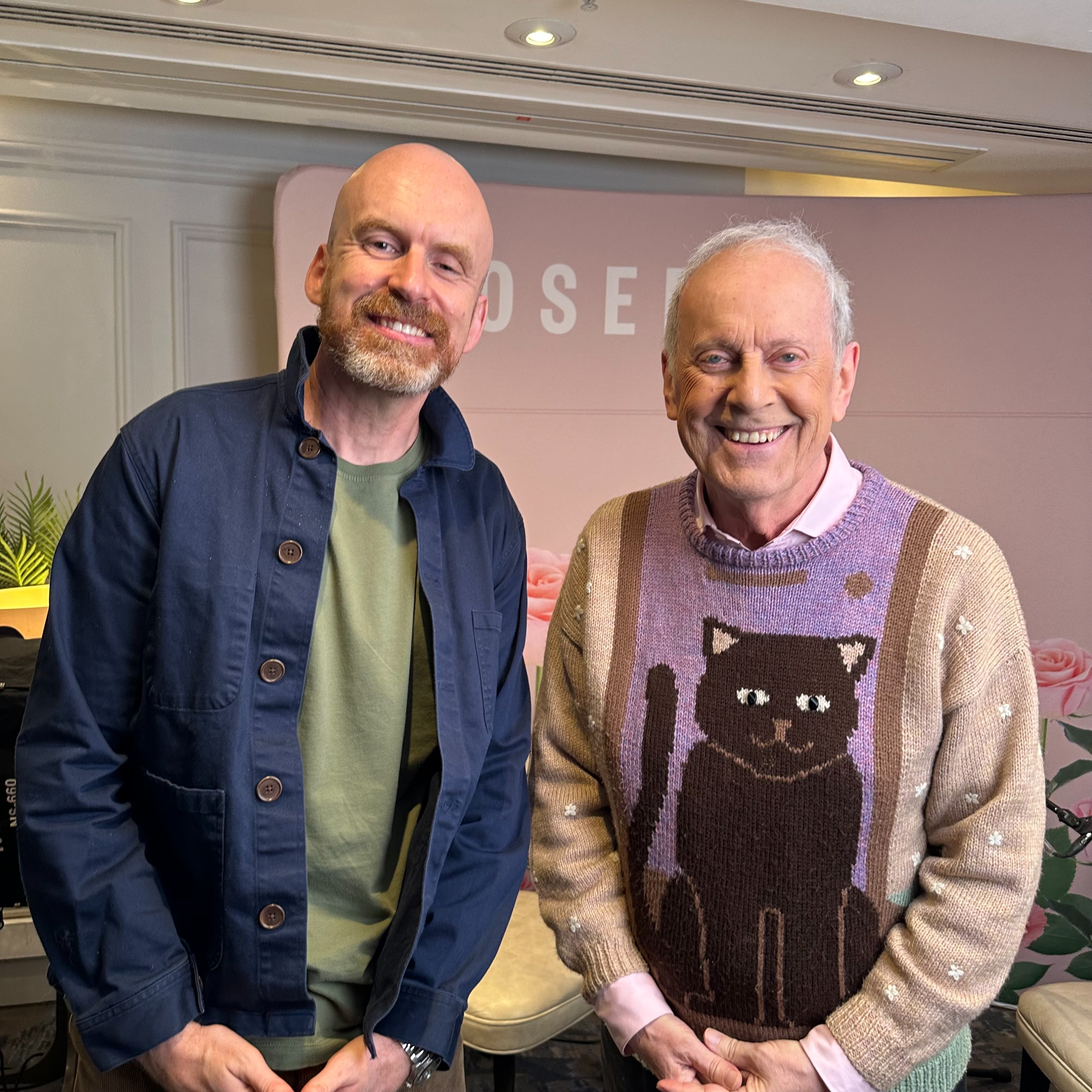
Matt Haig, the international best-selling author of books such as The Midnight Library, Reasons to Stay Alive, and his new release The Midnight Train, is our guest today. And this is one of our most in-depth and fascinating ever discussions of mental health and the true nature of depression. Matt's observations are genuinely illuminating, and full of hope and advice for anyone who has experienced despair. Matt also talks about shop-lifting as a teenager, being ADHD and autistic, and the first book he fell in love with. He talks about meeting his wife, going to Ibiza, and getting drunk in his French oral. He talks about why he writes. This is a refreshing and open conversation, full of wisdom and perception. Our thanks to Matt for this brilliant conversation.
Matt's new book The Midnight Train is out now, published by Canongate.
Enjoy this.
Hosted on Acast. See acast.com/privacy for more information.


