
 Ask ChatGPT



Written by AI. May contain mistakes.
Gyles reflects on the political career and importance of Lord Heseltine.
“Who now, Lord Heseltine, now in his 90s.”
Michael Heseltine shares his first memories and family background.
“what people now call a big beast from an earlier era.”
Heseltine discusses his upbringing in Swansea and early political experiences.
“So, happy birthday, Michael Heseltine, and now, cue the music.”
Explore Michael Heseltine's reflections on his early political experiences in Swansea.
“Oh, Swansea was at the bottom end of the Swansea Valleys and so you'd have seen all the sort of poverty that was associated with the 1930s and indeed of course when I fought the Gower constituency.”
Delve into Heseltine's childhood memories and early education in Swansea.
“I don't remember how she fitted in and out of my life.”
Discuss Heseltine's dyslexia and his love for comics as a child.
“So I don't really remember the friends from that very early stage.”
Learn how Heseltine adapted his learning process as a government minister.
“I think we're finding when you want to read something, you're suddenly able to read it.”
Understand how family relationships shaped Heseltine's early life and interests.
“but I do remember most vividly when I was a whip in government in the cabinet office, when you were the first Secretary of State Deputy Prime Minister, attending a variety of cabinet committees that you were chairing.”
Discover Heseltine's early fascination with wildlife, influenced by family walks.
“Because she had a lot of blonde curly hair.”
Explore the roots of Heseltine's competitive nature and early entrepreneurial ventures.
“by the sort of wildlife, birds particularly.”
Reflect on Heseltine's memories during the war years and their impact on his family.
“The war you mentioned, you're seven at the beginning of the war.”
Learn about Michael Heseltine's childhood memories of his parents and their impact on his life.
“My father, I have to say, was hugely proud of me and was rather embarrassingly prone to tell people how well I was doing.”
Explore the special memories Michael has with his father and their close relationship.
“But there's a great difference, it's very important, that I had a very mild heart attack.”
Understand how the death of Michael's father affected his life and motivations.
“What's the characteristic he had that made you feel this is, as you clearly do feel still, this is a special, special person?”
Discover how Michael supported his mother after the loss of his father.
“But did she, well, she lived almost as long without your father as she lived with your father.”
Hear about Michael's experiences and mischief during his school years.
“I think that in those horrendous circumstances, it was as good as you could reasonably have hoped.”
Learn about Michael's passion for gardening and birdwatching from a young age.
“Six weeks later, I had a sea of colour, and of course I was hooked as a gardener from that moment on.”
Follow Michael's academic path leading to his acceptance at Oxford University.
“sell them no other people you just kept we sold them but we had lots of them and my poor parents were left when i went back to school after the holidays with up to 40 budger guards in a cage Oh, my.”
Learn about Michael Heseltine's early political ambitions and experiences at Oxford.
“but a lot to talk about, the collecting of birds, and that's good interview stuff.”
Explore Michael Heseltine’s entrepreneurial efforts while at Oxford and his political influences.
“Well, the thing that really got me elected was my tenure of the treasurorship of the union.”
Follow Heseltine's journey after Oxford, touching on his political career and experiences with prejudice.
“Who, from that period, who are your heroes politically, and who was the first great man or woman that you met?”
Michael Heseltine shares experiences from his early political career and his stance on racial issues.
“And with my friend Ian, we had 4 ,000 pounds.”
Heseltine discusses his professional relationship with Margaret Thatcher and key moments in his career.
“As colleagues, a very good relationship.”
He details his initiatives in Liverpool and the challenges faced during the redevelopment.
“Michael will now tell you how to do these things.”
Heseltine explains the circumstances surrounding his resignation from Thatcher's cabinet.
“So I said to Margaret, Margaret, look, Tories, law and order, absolutely fundamental.”
Michael reflects on key moments of joy and sadness in his life, including family and loss.
“you cannot be Defence Secretary and be like that.”
Heseltine shares a piece of advice for younger generations about pursuing passion.
“Well, I'm asked a question sometimes by young audiences and of course you don't know them, you know nothing about them, so you cannot meaningfully give them advice.”

Get the gist, explore an idea or ask about something said.
 Claude
On Rosebud with Gyles Brandreth, what are the key points of this episode?
Searching your listeningAutomatic transcript. May contain errors.
0:00This podcast is supported by MidiHealth. Are you in midlife and feeling dismissed, unheard, or just plain tired of the old healthcare system? You're not alone. For too long, women's serious midlife health issues have been trivialized, ignored, and met with a just-deal-with-it attitude. Many of us have been made to feel ashamed or forgotten. In fact, even today, 75 % of women seeking care for menopause and perimenopause issues are left entirely untreated. It's time for a change. It's time for Midi. MIDI is not just a healthcare provider. It's a women's telehealth clinic founded and supported by world-class leaders in women's health.
0:37What sets MIDI apart? We are the only women's telehealth brand covered by major insurance companies, making high-quality, expert care accessible and affordable for all women. Our clinicians provide one-on-one, face-to-face consultations where they truly listen to your unique needs. We offer a full range of holistic, data-driven solutions from hormonal therapies and weight loss protocols to lifestyle coaching and preventative health guidance. This isn't one-size-fits-all care. This is care uniquely tailored for you. At Midi, you will join our patients who feel seen, heard, and prioritized. You will find that our mission is clear, to help all women thrive in midlife, giving them access to the health care they deserve.
1:18Because we believe midlife isn't the middle at all. It's the beginning of your second act. Ready to feel your best and write your second act script? Visit JoinMidi.com today to book your personalized, insurance-covered virtual visit. That's JoinMidi.com. Midi, the care women deserve. You know what's wild? Most people are still overpaying for car insurance just because it's a pain to switch. That's why there's Jerry. Jerry's the only app that compares rates from over 50 insurers in minutes and helps you switch fast with no spam calls or hidden fees. Drivers who save with Jerry could save over$1 ,300 a year.
1:53Before you renew your car insurance policy, do yourself a favor. Download the Jerry app or head to jerry.ai slash ACAST.
2:24Hello, this is Giles Brandreth welcoming you to another episode of More Rosebud. I'm here with my friend, colleague and indeed the producer of Rosebud. It's Harriet Jane. How are you, Harriet? I'm fine, thanks, Giles. I know you had a lively weekend away with some girlfriends boogieing in Bognor. oh in Bognor yeah that sounds perfect boogieing in Bognor doesn't it and is this is that where you were yeah Butlins Bognor boogieing is it still a Butlins or is it an old it is yeah it's like going back in time how what a fun thing yeah well I say if that was it fun it was really fun yeah tell us about you don't um you know the merry-go-rounds closed and things so you just dance you don't go on any of the rides so this is well it's March so it's is this I think it's how Butlins makes money when it's closed to families because the weather's not very nice.
3:22So it's the fall of you and you take a cabin or cabins? Yes, no, you get a room in the hotel. Oh, it's a hotel. It's not like a holiday camp. Oh, there are cabins too. There are loads of people there. Some are in the cabin, some are in the hotel. We always go in the hotel because it's nicer. And what's the boogieing? What happens? Different DJs, different types of music. Yeah, there are loads of people all over the country that we get to know. And do you sing? No, but you do a lot of shouting because it's really loud. That's why my voice is a bit hustling. Totally hustling. Because you're trying to talk to people.
3:53At the same time. Yeah. And there's food? You're chatting. There's food? Well, the food's not very good. This year we were across because one of the restaurants we usually go into was closed. We didn't know why. So we resorted to having to have a Papa John's pizza, which is not great. Wasn't great from your point of view. No, it's not very healthy. The music was good. Yeah. And there are no live artists. It's all records. There are live acts as well. Gosh. Yeah. I mean, there's so much happening in the world that I know not of. And this is a weekend. The dance music scene is a whole scene. There's all these scenes.
4:27And what is the age range from? I would say the oldest people are probably in their 70s. Uh-huh. And the youngest are probably in their early 40s. Oh. So it's older. We're, I would say, average. You're there. I know you're barely eligible, but you're there as an observer of the social scene. Really, that's a distraction because I wanted to ask you whether you were interested in politics. Yes, I am. I mean, I read the paper and I think my politics has changed a bit over the years. But yes, I keep up with it. As I do as well. As you know, I was a member of parliament. I've always been fascinated by politics and by politicians.
5:12And I'm saying that because this week on Rosebud, we've got two very different politicians. We've got an old politician today and a young politician on Friday. And they have something in common, not their political parties, because today we have a conservative and on Friday we've got a Labour politician. But I think they are people who have shared ambition. Today's politician is somebody who aspired to be prime minister, became deputy prime minister, was very senior in government over a whole generation. And on Friday, we've got somebody as a guest who certainly is described regularly in the papers as aspiring to be prime minister.
5:54And some people say that after the 9th of May, who knows when the local elections have been and gone, might even be in the running to become prime minister. Who knows? So this is Politicians week on Rosebud. And what I love about Rosebud is discovering where people come from, what makes them tick, why they choose to become politicians. And you know who today's guest is. It's Michael Heseltine. Yes. Who now, Lord Heseltine, now in his 90s. I first met him years ago. I mean, 50 or more years ago when he was a cabinet minister in Margaret Thatcher's government. Last year was a centenary of Margaret Thatcher.
6:34Isn't that amazing? And here's somebody who knew her, worked with her and for her, and contributed to her downfall. Might have indeed hoped to replace her, but didn't. When John Major, another Rosebud guest, became Prime Minister, he, Michael Heseltine, became Deputy Prime Minister. And that's, I suppose, when I got to know him. I was a government whip in John Major's government, and I found for a while I was in the cabinet office where I worked for Michael Heseltine, who was quite difficult to know. And I hope at the end of this conversation, people who didn't know anything about him will find it interesting because here is a very senior politician, what people now call a big beast from an earlier era.
7:23But also, if you did think you knew him, you'll find out a little bit more about him. did you like him when you met him yes i mean i'm ashamed to say that when i was younger and he was a big beast uh i i thought he was rather good looking in a funny sort of way people did i think he did um yeah and actually you do mention his hair to him and he he he enjoys that and he acknowledges his hair is a big thing um yeah i thought he of all the politicians of that age i mean i was really young at this point he was the hottest he was he's got a bit of swagger he has he has exactly yeah he has got swagger he's tall he you're right he was and indeed still is pretty handsome he's a hottie with a wonderful head of hair a wife keeping a close eye on him i noticed surprise yeah exactly he's he's a charmer but i think rather an elusive charmer.
8:22And we did this with an audience. We recorded this at the Concert Artists Association, also I think known as the Club for Acts and Actors. There's something quite theatrical about Mark Leseltine in Convent Garden. So there's an audience here, which I always think changes the dynamics slightly, but it's quite good with either an actor or a politician to give them an audience, because there's somebody for them to play to. But he's pretty impressive, isn't he? He is. You can feel he is a big beast. Yeah, and a very effective politician, I think. He describes a bit the way he worked, and it is quite interesting to find out what actually goes on in those groups.
9:03Absolutely. He was Environment Secretary, Defence Secretary. He talks about the way he processed the notes and get to the nub of something really quickly, get things sorted out. And people are often complaining now there aren't any big beasts, there aren't any serious grown-ups. And I think he was a serious grown-up over two or three generations in politics. He's still an active member of the House of Lords. He's a most interesting character. So we give you somebody who wanted to be prime minister and didn't quite make it today. And maybe on Friday, we give you somebody else who might like to be prime minister, but hasn't made it yet.
9:38So this is a political week on Rosebud. If you can't stand politicians happily, there are 150 other people, from archbishops to actors, all sorts. that you can listen to in our archive. Oh, and before I say cue the music, I must say to Lord Heseltine, happy birthday, because the reason we're running this interview this week is that the great man will be turning 93 on the 21st of March. So, happy birthday, Michael Heseltine, and now, cue the music.
10:24Michael Heseltine, born 21st of March, 1933, if I got that right? Yeah. What is your very first memory? I think it's probably about the age of four, asking for what I call goggy juice, which was orange juice. and I had been very ill with meningitis and of course it was a killer at that time a neighbor's child died I recovered and my first memory was coming sort of out of the sort of whatever it was, fever, asking for goggy juice. Goggy juice, that's where you began. Who were you asking? Who was looking after you? That would have been my mother. And who was she? My mother was Eileen Pridmore, married to my father, Rupert Hesseltine.
11:29Her father was an entrepreneur who created his own businesses. my great-grandfather was buried in a pauper's grave in wales and i'm you remind me i must make arrangements for a gravestone but i didn't know about this um until a welsh television program did one of those this is your lifetime programs because this is all you were born in Swansea? Indeed I was. And from both sides of your family from South Wales or just your mother's side? My mother's side certainly my father's family they had they came from a family which had done rather well the name of the company was Heseltine Kearley and Tong.
12:25Kearley and Tong was one of the big Victorian grocers and something went wrong with the Hustle Tynes side of it and my grandfather left London and married a French lady so I'm a quarter French. So describe what your childhood home would have been like. These two parents your mother coming from this family that included actually being without anything but also the next generation being entrepreneurial things coming back and your father being from quite a successful family what was the house like where you were born and brought up well i don't really remember much about that house 22 eaton crescent swansea i know that my parents had an alsacian called bob who used to sit alongside my pram but i don't really remember that i know about it but don't remember did you have brothers and sisters i had a sister yes was born 18 months later than me.
13:25My memories are when the family had moved to One Uplands Crescent, which was sort of around the corner from where I was born. And was that a move up in the world? Well, I don't think it would have been seen as a significant change. It was much the same sort of social background. And what was that social background? It would have been a prosperous middle class. And was then Swansea in that time prosperity or was there a mixture of prosperity for people like your middle class achieving family and the people who worked in the mines and the steelworks? Oh, Swansea was at the bottom end of the Swansea Valleys and so you'd have seen all the sort of poverty that was associated with the 1930s and indeed of course when I fought the Gower constituency.
14:21And I remember I had a Land Rover and a girlfriend and an Alsatian dog. I went up and down these valleys. And I remember on polling day, a miner putting his hand on my shoulder, go home, boy, you've done any good you can never do up here. And I lost by 17 ,000 votes.
14:46Did you lose the girlfriend too? I don't remember how she fitted in and out of my life. Going back now to the 1930s, you as a little boy, what's your recollection of your early years as a boy in Swansea? Oh, well, I went to a kindergarten called Oakley House. Mrs Bartlett Williams, the head mistress, I remember her with affection. My friends were there. Any friends you remember, particularly? Not now, no. They came later. And I think that's understandable because, you see, the war came and I went away to school. So I don't really remember the friends from that very early stage. But was it you were happy?
15:36I was certainly happy. Do you remember playing out of doors? Do you remember games you might have played? No. I remember being very fond of balloons. At parties, everybody had balloons. I liked balloons. And picturing you in your bedroom as a little boy before you go away to school, can you remember the early books that you read? I don't read. Oh, you don't read? I'm very slightly dyslectic. Reading is not my popular pursuit. So what was your entertainment as a little boy at home in the evening? Comics. Ah. Yes, certainly Beano, was it? The Beano, of course. I was very keen on the Beano. Biggles.
16:23I read Biggles' books. Well, you see, Biggles is a book. Yes, I did. That is a book. I did. I certainly read Biggles' books. And I think... I think we're finding when you want to read something, you're suddenly able to read it. Oh, yes. The dyslexia is to be imported when you've got something you don't want to read. Oh, I'm dyslexic. I can't cope with that. That's an important point, is when I want to read. I mean, I may have made many mistakes as a minister, but what has never been said about me is that I was under-informed. So, yes, if I have to. But there are all sorts of, well, examples. Every minister knows there's a pile of files on your desk like this and, you know, some of them go through them.
17:08I invented a different situation. I would call the civil servants together who had prepared this pile of files. And I said, I'd start the meeting by saying, what is the decision you want me to make? And so they would then have to say what the decision that I could make, what the options were. And then I would say, well, what are the case both ways? And that had two advantages. First of all, it filled me in. but secondly because in the room were the civil servants who had agreed the compromise line to take were able to open up and explain why they'd argued within themselves for either side of the argument and so by the time i looked at these files i could go through them like a dose of salts very clever i mean i have to say this is anticipating what we might be talking about later but I do remember most vividly when I was a whip in government in the cabinet office, when you were the first Secretary of State Deputy Prime Minister, attending a variety of cabinet committees that you were chairing.
18:16The speed with which you could conduct them was extraordinary. And often you announced at the beginning, tell this story if you remember it, of how you would get through a meeting. I think it possibly, it's to do with the clock chiming? Oh, yes. Yes, yes. I forgot. You're right about this. There is a faint memory. It was, was it, Morris Barra, who was Chancellor of Oxford University? He was Chancellor. Who set out to end a principal meeting of the university. He was a Vice Chancellor, in fact. A Vice Chancellor, before the clock stopped striking 12. That's it. And he did it. And he did it. I've always thought that was an admirable man.
18:59but it was very amusing because they were sitting around all these because you were then the deputy prime minister all these junior ministers who'd all come with set pieces that they were hoping to fill the air with and i think you preface this by saying the meeting will begin in a moment and i know you've got some very interesting things to say and i'm sure they are interesting but i believe and then we were three o 'clock began or whatever it was 12 noon and before the clock had struck 12 you then closed the folder and said I think we've agreed on that haven't we? Well I think what I did was say I've read all the briefing my conclusion is this does anyone disagree?
19:35And they didn't so I said well that's the conclusion you know business of government takes time you've got to get on with it. So going back to your childhood because we want to find why you become the person who does these things here you are small boy happy old younger sister who you get on with well? Yes, still. She's still? She's alive and well? Yes, absolutely. And never had a problem. What's her name? Can we know? Yvonne. Yvonne. But she's called Bubbles. Bubbles. Because she had a lot of blonde curly hair. Yes, you've been so blessed. No, well done. Well done, you. My wife, whenever your name comes up, she says, why can't you keep your hair like his gift is?
20:15It's important to be remembered for something.
20:22so we've got you reading biggles and the beano and then arthur benson ah swallows and amazon you see but the wildlife environmental side and does that come from either of your parents your interest in the wildlife did you go on walks and things with your parents well i think probably my grandfather particularly as my father tended to be away he was a territorial and then he was back in the war. And my grandfather used to take me for walks up Klein Valley. And that was a very memorable part of my early life. I definitely, from the earliest stages, I have been attracted by the sort of wildlife, birds particularly.
21:06And did you collect them? Did you have a... Oh, yes, certainly. I had eggs, which I collected. I had caged birds, budgergars, canaries, goldfinches, greenfinches, jabfinches, bullfinches. I got to know a guy called Charles Moore who was a park keeper of Bryn Mill Park and I used to fish in the lakes of Bryn Mill Park. I won the junior angling competition in seven and sixpence having caught 39 fish. the aggregate weight was 11 and three quarter ounces laughter this I'd been fishing it was a two hour competition I was fishing away and I was using bread paste on a hook and I got lots of bites but because the bread paste all came off and I didn't catch anything and a guy was sitting alongside me tried one of these and he offered me a tin of maggots and we put these on the hook and I caught the, as I said, the 39 fish in no time at all, weight 11 and a quarter of ounces and I won the prize from some poor guy who'd caught just one fish, a carp, and it was a quarter of an ounce less than my 39 fish.
22:29So there you are, you know, you win some. Winning is the important thing. Winning has been the important thing to you. Do you know what the origin of that is? When do you think this competitive streak began? I think I inherited it. From which of your parents or grandparents? Well, the Hesteltine, Keeley and Tong entrepreneurs, my grandfather, James Bridmore. Yeah, I think there's definitely an entrepreneurial flair somewhere there. And did they encourage you, or was it just instinctive, and you inherited it as it were in your bones and blood? You just do it. You don't work it out. I mean, for example, I was at school at Strasbury, and I was not a very great sportsman.
23:16And, of course, the great thing about those public schools is sports was a great dominant thing. And so I used to, all these very tough guys went off to the playing fields. I went down to the local post office where I bought crates of lemonade. and when they came off their bugger pitch or whatever they'd been, soccer pitch in Strasby terms, there was I selling them glasses of lemonade. And I made a bit of money. And this would have been, I'd have been about 12. And my father, after the war, and so this would have been again, 12 again in 1945, my father bought a house with a two-acre garden which was in some disrepair on the suburbs of Swansea.
24:03And I organized two of my friends, David Davis and somebody, Bevan, and myself. We organized ourselves into a trio called Hezbevan, and we sold ourselves for five shillings an hour to my father to do the garden clear-up. So I'd always been at it. And, of course, one thing led to another.
24:35Hi, this is Matt from P1 with Matt and Tommy, and this episode is sponsored by eBay. The cars you'll find on eBay are just different. They come with a story that you can't wait to share. Like this 1973 Dodge Charger on eBay that has been tucked away in an Arizona barn for over 40 years, only 55 ,000 miles, and somehow in great running order. It even has a rare sunroof. Suddenly, a car that was hidden for decades is being delivered in just a few clicks with eBay's secure purchase. All the paperwork handled. There are thousands of cars on eBay, from unique finds like the Pontiac Grand Prix SJ to daily drivers, and now with a new way to buy them.
25:15eBay. Things people love. Most drivers overpay for car insurance, not because they're careless, but because the system is needlessly complicated. Jerry fixes that. Traditional comparison sites give you quotes once, then disappear. But Jerry can handle all the insurance shopping legwork and never stops working. Compare 50-plus insurers side-by-side and purchase directly in the app. No spam calls, no hidden fees. They'll even monitor price trends and can alert you to better rates. Drivers who save with Jerry could save over$1 ,300 a year. Download the Jerry app or visit jerry.ai slash acast today.
25:52When it comes to managing money, forget the hype and look at the results. Bill has a trillion dollars of secure payments powering our BillPay tools. Instead of just moving money, Bill is powering the financial operations of nearly half a million customers. So stop the guesswork and start scaling with the proven choice. Ready to talk with an expert? Visit Bill.com slash proven to get started. And grab a$250 gift card as a thank you. Terms and conditions apply. See offer page for details.
26:26The war you mentioned, you're seven at the beginning of the war. Do you have any recollection of the war years? Oh, yes. I remember standing in the kitchen of one uplands present in September 1939, listening to Neville Chamberlain announce the declaration of war. I remember my father was sent to Northern Ireland in charge of a company of royal engineers. We went with him. We went through Haysham on the way, and there was an air raid. I remember standing in the garden of Swansea, in the uplands Crescent. The bombers came every night at 9 o 'clock. And so precise was the timing of the raids that the Scotty dog that we had was always waiting at the top of the cellar where we had the shelter, waiting at nine o 'clock to go down.
27:19And they always came. And I remember watching the searchlights pick out the bombers. And was this frightening to you or exciting for you? Well, I don't remember being frightened, now you ask about it. It was, of course, a matter of huge interest. But I don't remember being frightened. and I think it's fair to say that the bombing was very much the east end of Swansea with the ports and docks and steelworks so quite a long way away from where we lived. Was your mother concerned? Did you notice any apprehension from her? Well, no, I don't remember her noticing any. I'm sure she must have been but I don't remember noticing it.
28:02What do you remember of her? Was she a huggy sort of person? Did she make good food? Give us a picture of... They were marvelous parents. My father, I have to say, was hugely proud of me and was rather embarrassingly prone to tell people how well I was doing. But I adored him, and he was a wonderful father. My mother, and he encouraged me on all the time, my mother would say, Michael, why are you doing all these things? you just wear yourself out you know so my mother was telling me stop driving yourself my father saying go on you're doing so well but I mean my mother lived to be nearly 100 and I was devoted to her but my father died when I was 57 sorry when he was 57 I was 23 I think and that was shattering shattering heart attack he had a heart attack yeah at about the age I think I seem to remember 1993 when i've got to know you i think you had a heart attack yes that yeah i seem to remember the pictures of you and you were in venice that's correct on holiday yeah and i can picture i mean there's no privacy if you're a well-known person i can see pictures of you being your body being lifted into a boat to be taken to the hospital that is all true yeah but really i'm mentioning it, it's the same age as your father was when he had his heart attack.
29:33Yeah, about the same. And being... But there's a great difference, it's very important, that I had a very mild heart attack. And when the medics got at me and they looked inside my heart, I remember one of them saying, you've got arteries of a man of 40. And here I am 92 years later. Oh, good. Not 92 years later, but 92 years. Yeah, it may feel like that sometimes. going back to your father though you say you adored him and he encouraged you can you be more specific can you give me an example of one of the special things if you haven't a day with your father in your head given that you were so young when he died what is the day that you would pick well I suppose memories collecting shells on Langland Beach cowrie shells uh leaping over the rocks, prawning, collecting, shrimping and prawning, uh gardening and and I think probably going with him to his works he just go to he he was a managing director of the local steelworks he would go in on a Saturday morning and he would take me with him I would walk around with him to see and he'd go to see what was going on and all that it was just an immensely close relationship and I thought my mother and sister and I followed him from his various postings during the war so we went from Narbeth in South Wales to Dundrum in Northern Ireland to Clitheroe and then to Oxford and he was promoted more and more so I saw a lot of him in those circumstances and and of course admired what he was doing and specifically what did you admire most about him?
31:24What's the characteristic he had that made you feel this is, as you clearly do feel still, this is a special, special person? Well, he was a very upright military figure, devoted to the territorial army, devoted to his family and to the home that he was creating. I mean, he was a sort of model, really, of what I think a father should be. He even beat me once. I can't remember what I did but he did make me bend over and he did give me a nasty whack and I loved him but you didn't say more please sir no I don't know did you have serious conversations with him I don't think I did no my life had never become if I may put it in this language serious I was at school I went up to Oxford he was very proud of what was happening premiered Oxford and he saw the beginning of my entrepreneurial career because he stayed in the hotel that I owned at the time and he died whilst I still owned that hotel indeed I mean oh dear I got this phone call one evening to tell me that my father I was in London in the hotel standing by the switchboard, and I got this phone call to say that my father had had a heart attack.
32:58And I rang a medical student friend of mine who also came from Swansea, and I said, Jeff, what do I do? Should I go? And he said, no, I think we'll probably wait and see how things develop. And I said, yeah, fine. half an hour later he rang back he said Michael I think I gave her the wrong advice I'll drive you there tomorrow and we got there half an hour before my father died so you were with him when he died and you say it had this effect on you as it would how did you use that in the sense that did you break down under it did you go for therapy did it galvanize you to do greater things what was the effect of the distress that your father's death well i remember that extremely clearly the doctor had been i'd seen my father we were outside the house on the terrace the doctor was just going when the nurse rushed back and said doctor doctor and he went back and then I was told and I remember running out into the garden sort of just to get away from it too you know for probably 20 seconds and I remember vividly saying Michael you cannot run away you must go back and face this and then I did go back and of course i had to my mother and sister and all that and were you able to help your mother do you think you did help your mother did you rally around as it were yes no i think i think i hope and believe that i was of some help yes i went home every week from london i drove down the swansea valley i couldn't drive past oxford i had to drive through oxford for such weather memories but i drove home every week.
35:04And your mother, did she remarry later? No. But did she, well, she lived almost as long without your father as she lived with your father. She must have done, yes. Wow. Was the rest of her life okay? I think that in those horrendous circumstances, it was as good as you could reasonably have hoped. And of course, he was a Catholic, he will have believed in heaven. So maybe he knows what you later achieved. But is that a regret to you that he didn't see what you managed to achieve? He would have been pleased. Going back to you going to school, the war comes, you've pictured that. You go away to, is it a boarding school you go to a prep school?
35:53Well, I went to the junior school of a well-known public school, Bromsgrove. Oh yeah, in the Midlands. and it was in Clenuted Wells in Wales the junior school and I went there and I hated it I can't really remember why I hated it but I hated it I did and so I organised that the whole form in which I was would run away The entire class everybody Yes the whole lot the whole lot and so we This was completely organised, and we were out on the walk from which we were going to run away, and the time came for the breakout. And only one guy, Kellen Scott, was prepared to come with me. And so they had a whip round.
36:50They collected sixpence to finance us on this journey, and Kellen Scott and I set off to the nearest road to Swansea, hitchhiking a lift. And the first car stopped. It was very good. The problem was it was the headmaster.
37:13So he put me to bed and said, that's a very naughty boy, and my parents took me away. They sent me then to a school called Broughton Hall And there I was extremely happy, and the headmaster gave every new boy a square yard of mud and a packet of Virginia stock seeds, which I methodically covered the area. Six weeks later, I had a sea of colour, and of course I was hooked as a gardener from that moment on. Gosh, and how old are you now? I would have been, I think, about nine then. Gosh. Yeah. What a brilliant school. So that's where your love of gardens and gardening begins then, really. Yes, but then also, at the same time, my love of birdwatching.
38:02And so I organised a group of us, my colleagues, to go birdwatching with me. And that was very good. Well, we thought we'd have ourselves a club. And so we had what we called a tit club. That's innocent enough. But, of course, the step next was there was a bearded tit, a long-tailed tit, a masked tit, a cold tit, a blue tit, and there was me. The great tit. And all my political career, I have been absolutely petrified that that story would get out. Because I just know that every time I'd got up in the House of Commons, the place would have gone
38:55anyway I now tell you that occasions like this it's good for a laugh and it happens to be true what do you think it was though that attracted you to these birds and to the garden what was it when you were nine why did you find them inspiring I don't have an answer to that question I just did and the garden as well and do and do because i can see the gardening because you're doing something you're creating something you're building something and you can see it in front of you but the birds they're free they fly away oh no no no no no flying away oh with your birds i had cages of course i forgot and did you sell them no other people you just kept we sold them but we had lots of them and my poor parents were left when i went back to school after the holidays with up to 40 budger guards in a cage Oh, my.
39:47A big cage. And I had guinea pigs and rabbits. I had finger-tamed jackdaws and magpies. This is a phenomenon, the finger-tamed magpie or jackdaw. What does that mean? It means you put butter on your finger and they come and... No, no. How do you attract them? You take the babies out of the nest and you hand-rear them. And so they are totally friendly and totally dependent on you. and they will fry loose, but they'll always come back to you. So you could have been St Francis of Assisi instead of Deputy Prime Minister. I could have been both, I suppose.
40:28Well, it is what we need now. Anyway, moving back to that. So here you are, this most unusual boy. Did you feel you were unusual? No. It's just what I felt I wanted to do. Well, you then went to Shrewsbury. Yes. In Shrewsbury, there was bird watching. I was then working for the Royal Society of Protection of Birds, and I was wringing birds, trapping them, putting rings on their fingers, on their claws, and letting them loose. So I was doing that at Shrewsbury. But it was also at Shrewsbury that I had all these budger guards and things. And were you going to go to your academic work? Well... School certificate?
41:07O-levels, whatever they had in those days? I mean, I got, at school certificate level, I got five credits. And that was enough to get me offered places at Oxford and Cambridge. Really? Without an entry exam. Well, the world has changed a bit. Totally. But you did have to take an entrance exam, did you? No. Just on these five credits? Simply if you got credits, English language, history, I think physics or chemistry, maths, of course. You'd have had to have some Latin. Yes, you had to have a Latin, yes. And you didn't need an entrance exam. I was interviewed by a very nice 90-year-old Reverend Holmes Dutton.
41:52I think he was asleep, actually. This is your Oxford interview. What college was this? Pembroke. Pembroke. You go to Pembroke with these five credits, but a lot to talk about, the collecting of birds, and that's good interview stuff. You sit down with this elderly gentleman, who's possibly the age you are now, who is interviewing you, who perhaps nods off during the course of the interview? He was a very elderly gentleman. He was after lunch, you know. Anyway, he came to the right conclusion. That's all I was concerned about. Extraordinary. At school, though, it was obviously all a boys' school in those days.
42:26Yes. When did you discover girls? Oh, there, at school. Yes, we had a neighbouring girls' school. Can you remember your first crush? Yes. Can you share anything that would charm us? No, mind your own business. But I imagine you were, because you still are, tall and handsome. Did you have a lot of hair in those days? A lot of hair? Yeah. I've always had a lot of hair. So were you conscious of being attractive? No. You just were, here I am. Yeah. So you get to Oxford, and do you arrive with ambitions? do you have in your head? Yes. The answer is clear. I got to Oxford, I think, the 10th of October 1951, and that day I joined the Oxford University Conservative Association, the City of Oxford Conservative Association, and the Oxford Union.
43:26We'll come to the Union in a moment. Why were you conservative? What in your... Well, what would you expect me to be coming from the background I came from? Well, some people coming from that background might have actually gone into the reverse. They might, but not many. Not many. I mean, most people climb the ladders that are available to them. If you were born where I was born, in a prosperous, relatively prosperous middle-class background, the obvious ladder was a conservative ladder. So you were interested in the ladder rather than the philosophy? Well, the philosophy was an assumption. It was a way of life.
44:03I mean, everyone I knew was conservative. I'm only asking this because these teenage years of yours coincide with the Attlee government between the end of the war and 1951, the year you arrive at Oxford. And for many people at that time, what the Attlee government was doing was very interesting. It's, many of it, the foundation of the world we live in now. So you might have been... Were you interested in that? No, they were just high taxation government that was maintaining the post-war apparatus of controls and set the people free was the slogan that appealed to me and to my background. My father chaired conservative meetings.
44:47Indeed, I had done a certain amount of politics activity activity in Shrewsbury at the School Debating Society. And it is on the record, but I can't possibly give any credibility to it, that someone who taught me at the age of seven said, this boy will go into politics. Now, I mean, that is just something I remember, but I have no more background than that. And what did you enjoy about the idea of the ladder? Was it the sound of your own voice, winning an argument, achieving power. What drove you towards this ladder? Bearing in mind that most people are not driven towards, I mean I discovered this when I became president of the union, that most other people are not interested.
45:35They think, they thought we were absurd. I mean, but so what drove you towards the ladder? It's the center of the stage. that if you want to make a difference, you want to do something, you have to have the power to do it. And if you want to get the power, you have to become elected. And I think that you can look at my life from the earliest stages. I was always wanting to do something. Whether it was breed birds or clean up the garden or whatever it may be, I was active and there was something I wanted to do.
46:42Only 55 ,000 miles and somehow in great running order. It even has a rare sunroof. Suddenly a car that was hidden for decades is being delivered in just a few clicks with eBay's secure purchase. All the paperwork handled. There are thousands of cars on eBay, from unique finds like the Pontiac Grand Prix SJ to daily drivers. And now with a new way to buy them. eBay. Things people love. Tired of your car insurance rate going up even with a clean driving record? You're not alone. That's why there's Jerry, your proactive insurance assistant. Jerry compares rates side by side from over 50 top insurers and helps you switch with ease.
47:23Jerry even tracks market rates and alerts you when it's best to shop. No spam calls, no hidden fees. Drivers who save with Jerry could save over$1 ,300 a year. Switch with confidence. Download the Jerry app or visit jerry.ai slash ACAST today.
48:12So, at Oxford, of course, you, I imagine, became president of the union.
48:20Well, the thing that really got me elected was my tenure of the treasurorship of the union. The union faced a serious financial problem. it was losing membership and so it faced the challenge of cutting services i said you cut services you lose even more members you've got to offer a better deal and so i said we will create a nightclub in the cellars we will have back projection television which was the first television anyone ever had at that time in in a common room we will have a restaurant which gives you a four course lunch for two and six and a five course dinner for three and six and that was the offer we made to freshmen and the membership soared and so my reputation based on saving the union was pretty good so you were a 20 21 year old entrepreneur yes and that's really what got you But you see, that follows from all the other examples of entrepreneurship.
49:25And can you remember any of the speakers that you invited? Yes, I can indeed.
49:32David Gammons, oh dear. Tell us who he was. Well, he was Assistant Postmaster General. And I think probably he came as a substitute for somebody else, but that may be unfair anyway. He did come and he spoke for 25 minutes. which is much, much too long. And then he said, and now I turn to foreign affairs.
50:03And the place, just like you did, laughed. He said, I must, of course, talk about the Cold War. Some of you may think this is going on a long time. It might last the rest of my life. whereupon the place was absolutely falling apart. I have to say there were tears running down my cheeks, but I didn't, my smile, my lips didn't smile. And this poor guy, I mean, anyway, that was one. Ian McArdo, one of the Bevanites. The Bevanites of that time were the great speakers. Barbara Castle, Dick Crossman, Ian McArdo, nigh himself of course and uh they were spell winding the oxford union but nigh bevan can i tell you a story about nigh bevan we don't get enough nigh bevan stories nowadays well well that that was nearly a disaster for me because after oxford i fought the gower constituency it was a very safe labor seat and then i saw an advertisement in the south wales evening post Labour Party will meet to listen to the Right Honourable an hour in Bevan Sunday, October something at 8 o 'clock.
51:27So I thought, well, no one comes to my meetings. I'll go to theirs.
51:35And I'll never forget, it was a faint, drizzly, wetish evening. And in the rain, they came from all over the valleys. and onto the stage they came. Nybevan got up to speak and he said, my first responsibility is here tonight is to introduce my fellow colleagues who will stand and hear is Percy Morris, Labour candidate for Swansea West, Dymort, Labour candidate for Swansea East and Ifer Davis, the Labour candidate for Gower. Whereupon a voice was heard from the back of the third the chair of the Elysium cinema, you have both the candidates for GAR here tonight. And I crouched over the microphone.
52:20He said, ah, I hear the voice of an Englishman. And I turned the Labour majority of 18 ,941 into a Labour majority of 25 ,600.
52:40From that ear, though. I have to tell you, that isn't true. But it's such a good joke. What isn't true? Which part of it isn't true? Well, I actually reduced the majority. But that's no good. No, the payoff is good. When I first told this story, I had a very good laugh, but I added the business about doubling the late majority. And I've always said, well, I can't resist that. If you've got a good joke, don't throw it away. It's brilliant. Who, from that period, who are your heroes politically, and who was the first great man or woman that you met? Harold Macmillan. Harold Macmillan. Tell me why he was a hero and how you came to meet him.
53:21Because he had the courage to tell the British people the truth about the post-imperial world. And he was a hypnotic character. Hypnotic? Yes. Can you describe a little bit of that? Well, his intellectual grasp and his fluencies of expression. I remember going to the Cambridge Union to speak when he was being awarded, I think, the honorary membership or something. And I was a minister, very busy, got on a train. I forgot what earth am I going to say. I thought, OK, I'll just do the beginning and get going. I can fluff my way through the end. I did the speech and after just when I sat down a feather-like hand touched my sleeve word of advice young man always prepare the end first
54:18lovely you leave Oxford and you go into the army do you have is national service still happening then yes I went I was in the Wilsh guards so you went in as an officer did you no no So I went to an officer cadet. Officer cadet. An officer cadet. I mean, I'd been running a business. I'd been an article clerk and then running a business. Oh, forgive me. So immediately you left Oxford. What did you do? I went into it. I became an article clerk. In a solicitor's firm? In Pete Marwick Mitchell. I was article to Henry Pete. As an accountant. This would have been 1951. Of course, by that stage, I'd already started my own.
54:54Well, the Haymarket publishing business began in 1951 because I had£1 ,000, which my grandparents had created for me in a post office savings account, two and six, three and six, five shillings, whatever it is. There it was,£1 ,000. And then I found a friend who had£1 ,000 and who had a father who knew about London property, and he bought us a boarding house for£1 ,370, lease 12 years, I think, 11 bedrooms. We occupied two bedrooms and let the other nine at£3 a week, which was£27, so we had between us£27, plus the lease, which we'd paid 3 ,754, of which 1 ,750 was on mortgage. We sold it a year later for 5 ,750.
55:57Yes. And so my 1 ,000 pounds had become 2 ,000 pounds. And with my friend Ian, we had 4 ,000 pounds. We bought a 40-bedroom hotel in Inverness Terrace. Goodness. I've forgotten the figure now. It's near Paddington. But we bet that's, and that's where I was when that terrible phone call about my father came. And where actually another formative part of my life developed, well, there were two things. First, racial prejudice. I was the first conservative to criticize Enoch Powell for that river of blood speech. I was involved in the racial the immigrant issues of that time because I was first of all I had a hotel secondly I had an employment agency which we'd created and I'll never forget the hotel was full with American servicemen as much fun when a black man turned up knocked on the door I said I'm awfully sorry we can't let you room because we're full but I know that 100 yards up the road there's another hotel I know they've got a room rang the hotel and said I've got a guy here who wants to bring him along 100 yards walk open the door here's the guy who wants to and said we're full I knew it was a lie and the most the proudest moment after my Liverpool experience was when I made that speech to the Conservative Party they're black they're British They were born here.
57:36They vote here. And the party cheered me to the echo. Well done.
57:45You mentioned Liverpool there. What's that? What's Liverpool? No, as though we know this story. Yes. Well, I suppose in no part of my life, history is complete without reference to Margaret Thatcher. Oh, well, it is the centenary of her birth. Indeed. And I had a remarkable relationship with Margaret. As colleagues, a very good relationship. And that's all I asked for and all she would expect. We were never friends. You don't need to be friends at the top of government or at the top of anything. You need to be colleagues, working to a purpose and with, hopefully, an agreed sense of values. Margaret wanted to sack me after Ted had made me shadow secretary of state for trade and industry.
58:40And in The Economist, there was a story that Walker, Channon and Hesseltine were going to be sacked. The day came and Walker and Channon were sacked. Unfortunately for Margaret, I was scheduled to open for the conservative opposition against a major piece of labor legislation. So it was very difficult to sack me that day. so I survived and we got to know each other better. She made me Environment Secretary and shortly after that, 1979 this was, in 1982 when I'd been working under her for a couple of years, she told the Chief Whip, Michael Joplin, and this is on the public record, that Michael is my natural successor.
59:28so the relationship as minister and prime minister had gone extremely well it nearly had a disastrous moment because she was so impressed with the way i was running my department remember these were days of cutting expenditure well i reduced my 52 000 people to 39 000 no one was sacked it simply i took control of recruitment so every time someone left i wanted to know what they were doing and costed it and then decide whether we replace them. I discovered very rapidly that of every ten that went, you had to have replaced six. Margaret thought this was fantastic. So she called the cabinet and said, Michael will now tell you how to do these things.
1:00:16But anyway, then I began the process of rebuilding the East End of London. I wanted to create a development corporation with funds and a purpose and power to take over a very large area, I think 6 ,000 acres if I remember, of the east end of London. And this was hotly opposed by my officials who saw it was a massive intrusion into local government, and by Geoffrey, who was Chancellor. Geoffrey Howe. Geoffrey Howe, and Keith Joseph, who was Margaret's close advisor. And she summoned the four of us to number 10. And Geoffrey said, Margaret, this is money. We've got no money. And Margaret turned to me and said, what have you got to say?
1:01:02I said, well, Margaret, I don't want any more money. I've got all the money I need. Geoffrey and I have agreed a budget. But Margaret, my problem is a simple one. You will know that on our back benches now, there was a member of parliament as a conservative called Reg Prentice. until the election he was actually a Labour member of Parliament in the east end of London and I'd been talking to him Margaret and he said the problem with the councillors in the east end of London Labour councillors they're all communists it's like lighting a blue touch and I got my development corporation I got back to my department and And Secretary of State, what a triumph.
1:01:45We could not be more proud of the fact that you've managed to win this great battle. So I said, where's the second worst place? They said, Liverpool. I said, fine. We will take general powers to designate areas specifically, and we will designate London and Liverpool. So I had become a sort of technical partner with Liverpool. I'd got a development corporation. I'd done the garden festival for them. I had listed and protected one of the outstanding Dockland buildings, and 18 months later they rioted, and I felt personally responsible. So I said to Margaret, Margaret, look, Tories, law and order, absolutely fundamental.
1:02:30But I think something is not right here, and if you're happy, I will go and have a look around. Margaret let me go. I set out to walk around and talk and listen. Secretary of State, we are so pleased that you've come. Last someone's come to see what's going on. Of course, it took a riot, but here you are, and we welcome you for that. So I started to prepare a list of the things that I could see needed doing, the entrepreneur once again. and I produced this list but of course the weakness of that was well who's going to do it and I knew that there was only one person to do it and that was me so every Thursday I got a team of seconded from the private sector and the public sector and every Thursday I would go to dinner with them and we had a loose sleeve notebook with a page for a project and I'd go through every page check progress any blockages friday i'd unblock them and go back again so i became a clerk of works under margaret for 18 months and so i hotly contest the idea that margaret was this simplistic right-wing dragon she was much more flexible and practical if If Liverpool is, in the view of many, your finest hour, for many others, your undermining of Margaret Thatcher is your darkest hour.
1:04:16Do you have any regrets about that? Well, I didn't do it, and so I can't really have any regrets. But that's the view, isn't it? Yes, that's what the Thatcherists say. But it was never true. But didn't you resign from the government and then stand against her? I did indeed. It's not very encouraging. No, but you have to ask why I resigned, and that's because as Defence Secretary, she would not let me put my case to Cabinet. And if you are Defence Secretary and you are so neutered, you cannot stay in that job, because what would have happened, and you know this as well as I, that Bernard Ingham, her press secretary, would have been all over Whitehall saying he's bust.
1:05:00He believes in this, but he just gave in. And I then had to go back to my European colleagues and to British industry, who were backing me, and I said, I'm very sorry, you know, I wasn't allowed to put my case. And that would, you know, you cannot be Defence Secretary and be like that. So that was why I resigned. But after that, I didn't undermine Margaret in any way. Now, what actually happened, she introduced the poll tax now, and the poll tax created huge animosity to the Conservatives. It was Geoffrey Howe's resignation that precipitated, following Nigel Lawson's resignation, that precipitated Margaret's downfall.
1:05:46and if you remember Margaret after Jeffrey resigned called each member of her cabinet in to ask what they thought and the majority of them told her she had to go. I was the focal point of discontent that is true not because I had actually made speeches or whatever it may be I just was the outstanding person who could challenge her. Now, three last quick questions. And I want an instant answer from what comes into your head. A moment in your long life of joy. When I say joy, what comes into your head? Particularly maybe your early years. A moment of joy. Married. Oh, this is... A dark room in 1959 in Notting Hill Gate and the girl I married.
1:06:43This is Anne, The Dark Room. Can you remember? You obviously do remember seeing her for the first time. Yes. And what was she doing? What was she like? Why were you attracted? Well, I rescued her from her boyfriend.
1:06:58And it was instant attraction. What do you think? What has she given you overall, do you think? Well, three wonderful children, nine grandchildren, a shared life. We've written books together, we've created an arboretum, we've created a house we're rather pleased about. What else do you want? Blood? Does she ever criticise you? Did she ever question anything you ever did? Did she take an interest in your political career? We agree about everything in a harmonious life.
1:07:35And a moment of sadness.
1:07:42Well... Obviously it will be your father's death. My father's death. And that is still vivid to you? Yes. Yeah. And can you hear his voice in your head? Is he still... Does he... Is he part and parcel of you? And is your mother still part and parcel of you? You said you had a very happy childhood. Are they with you still? In as far as is possible, of course. And in your long life, what have you learnt? What would you like to share with us? Is it nine grandchildren you've got now? Is it nine? I think it is. Well, I'm asked a question sometimes by young audiences and of course you don't know them, you know nothing about them, so you cannot meaningfully give them advice.
1:08:31But I always say, do something that makes you look forward to Monday mornings. good advice well I look forward to next Monday morning but I have to say I very much enjoyed this Thursday afternoon with Michael Heseltine thank you
1:09:11Thank you.
1:10:04Thank you. .com slash proven to get started and grab a$250 gift card as a thank you. Terms and conditions apply. See offer page for details. ACAST powers the world's best podcasts. Here's a show that we recommend.
1:10:27What if you laughed all through your commute? Or if you heard the funniest story while at the gym? Well, now you can. I'm Jamida Jamil and guests on my new podcast, Wrong Turns, share their most mortifying and hilarious disaster stories. I'm talking people like Mae Martin, Bob the Drag Queen, Catherine Ryan, Jake Johnson, Margaret Cho, Simon Pegg, Penn Badgley, and so many more. So listen wherever you get your podcast, Wrong Turns, where dignity goes to die.
1:10:57Acast helps creators launch, grow, and monetize their podcasts everywhere. acas.com
We've got two political interviews for you on Rosebud this week, and this is the first. In the week of his 93rd birthday, Gyles is talking to Lord Heseltine - one of the so-called "big Beasts" of the British political scene at the end of the twentieth century. Heseltine was a prominent cabinet minister under Margaret Thatcher, Deputy Prime Minister under John Major, and is now a member of the House of Lords. In fact, he's been a significant figure in British politics for half a century. Michael speaks to Gyles about his childhood, growing up in the Swansea in a loving family. He talks about his love of nature - of gardening, birdwatching, and about how he founded the "Tit Club" at school. He talks about his early entrepreneurial drive - selling lemonade to fellow pupils, charging his dad to clear his garden, and how this later developed into early adult success in business. This business acumen led Heseltine to become a politician of rare efficiency - known for his skill at cost-cutting and fixing big issues. He talks about his relationship with Thatcher, his experience regenerating the Docklands of East London and Liverpool, and how he met and married his wife, Anne.
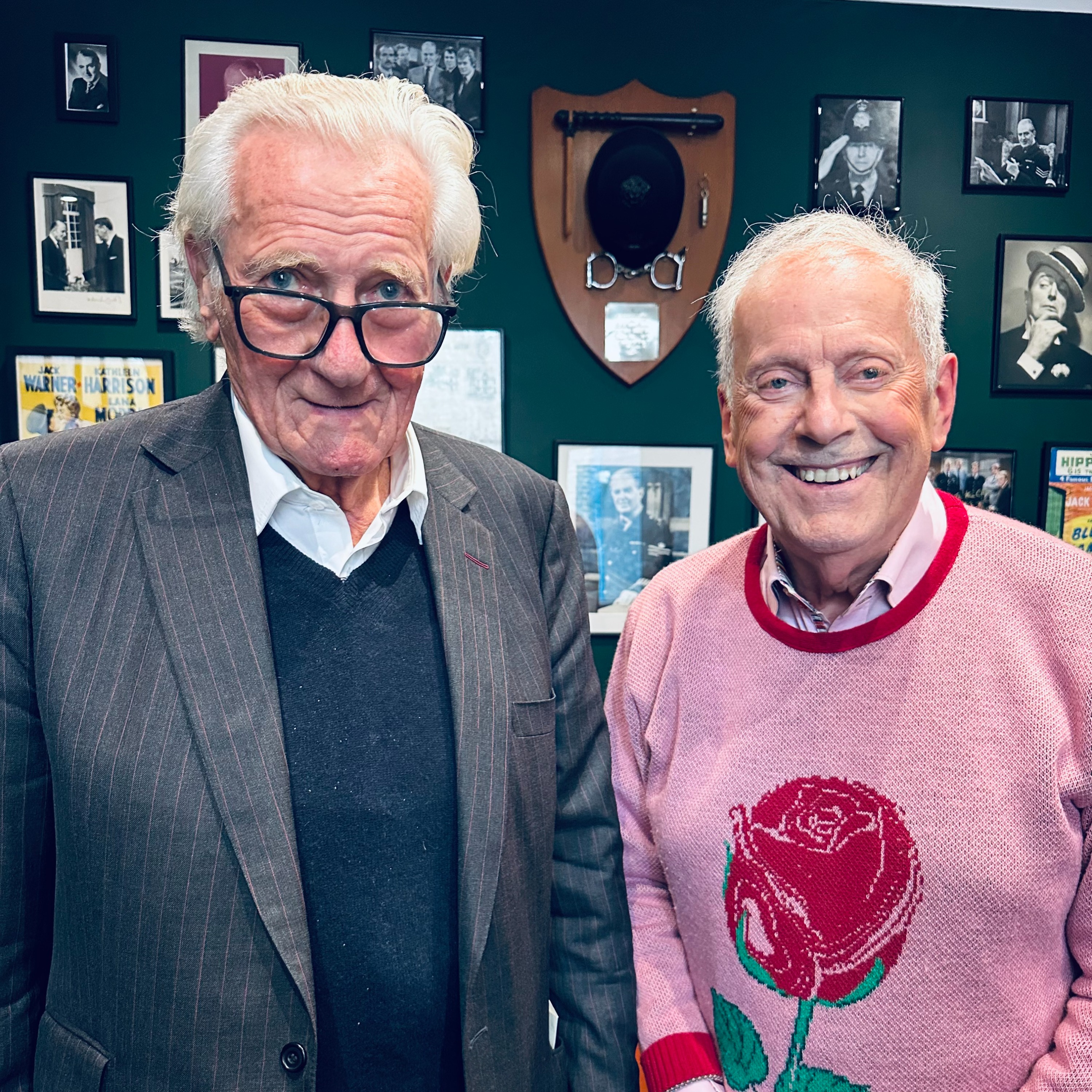
This episode was recorded live at the Concert Artistes' Association in London. Our thanks to them.
Hosted on Acast. See acast.com/privacy for more information.


