
 Ask ChatGPT



Written by AI. May contain mistakes.

Get the gist, explore an idea or ask about something said.
 Claude
On Rosebud with Gyles Brandreth, what are the key points of this episode?
Searching your listeningAutomatic transcript. May contain errors.
0:18Harriet, I was thinking, I'm noted for my capacity for name dropping, and I've been fascinated by famous people since I was a boy. And I remember once being driven by my father in the 1950s. I was a very little boy through London and we were in Knightsbridge and going up the steps into a hotel was a large man. And my father said, that's Randolph. I thought Randolph. I've heard of Rudolph, the red-nosed reindeer. Randolph. My father knew who this was and it was Randolph Churchill the son of Winston Churchill but my father recognized him and my father was excited there is something about the glamour of fame and the reason I've been doing this is I've been thinking about our special guest today and a how extraordinary she is but also that her father is somebody who is truly world famous which is unusual and he's not a film star or a writer.
1:24He's a painter, a British painter. It's Lucian Freud. And his paintings now sell for literally tens of millions. So who is our guest? So she is the daughter, one of the daughters of Lucian Freud, who had many children. And that's partly why she's so interesting, because she grew up in this very unconventional, bohemian way. It's said that this great artist may have had 14 children. I think he has 14 that were, in his will, acknowledged children. And I always think it's fascinating, these people who have a lot of children. I wonder what makes people feel, particularly people as they get older, feel they can go on having children.
2:14Well, nowadays, I think they're saying we should be doing it. Well, that's because people... The birth rate's gone down. The birth rate's gone down. So we should be grateful to Lucian Freud, actually. Well, we should be. We are grateful to him because his daughter, we're going to meet Rose Boyt, is a really interesting person. Yeah. So we're very glad that she is here. And lots of them are very talented, aren't they? Because her half-sisters are Bella Freud and Esther Freud, and Rose herself is a great writer, and that's why we've got... Novelist. Yeah, and that's why she's on the podcast, because she'd written this fascinating book.
2:44So maybe we should all be having 14 children. No. Can I be serious? You can't. You've got to actually be responsible for your children. You've got to do it when you're young enough to see them through. Oh, yeah. But Rose really has quite positive things to say about her father, as we're going to find out. I mean, she really loved him. And I think he was a good dad in lots of ways. In lots of ways. He was also an artist, first and foremost. That was everything. That was the key thing. was everything. And that's, I think, what she thought when he asked her when she was 17, 18, 19 to model for him.
3:19He was famous for his very explicit nude paintings and she agreed to model for him. She's going to tell us all about that and so much more beside. So let us stop rabbiting on. Because this is a long one, everyone, but it's full of interesting stories. It might be two car journeys or two tube train trips or 10 cleanings of the teeth because as you know i listen to rose bud in the bathroom at night and it's quite exhausting for me because i have an electric toothbrush and i can't listen to the podcast over the noise of the toothbrush oh so when are you listening to it well getting when i'm putting the toothpaste onto the brush also when i'm getting ready for the shower it's quite a i'm in the bathroom for you know a good 20 minutes because There's a shower, there's a drying, there's a toothbrush.
4:08There's a general buffing. It must take days to get through. It does. Rose Boyt's going to take you a week or so. Yeah. What's interesting is obviously I'm there when I'm doing the interview and I'm listening very intently indeed, as you know, as are you. But listening again, I often hear extra things that I hadn't heard the first time. and anyway I found her fascinating first time around I'm looking forward to meeting her again this is well we could be calling it not Rosebud but Rose Boyt cue the music
4:56rose yes my first question always on these podcasts is what is your very first memory Well, I'd like to read you a bit from my book, Naked Portrait, when I describe my first memory. On my birth certificate, I have no surname at all, although both my parents are named, each registered at a different address. my father at number 20 Delamere Terrace Paddington and my mum at 357 Liverpool Road, a house in Islington that belonged to an actor called Norman Bowler, once married to Henrietta Morais, who sat not only for my father but also for Francis Bacon. The house was full already, no spare bedrooms, but Norman was kind enough to put us up anyway, my mum on the floor of the sitting room with my brother Alexander tucked in beside her until I came along and he had to move over.
5:55He was her first child, later known as Ali, not much more than 18 months old when I was born, still small enough to ride in our pram. In my earliest memory, we're parked out front in the pram to get some fresh air and look after ourselves for a while. I'm propped up at the foot end under a thick blanket to keep warm and he's sitting in shadow under the grey braided fringe of the hood wearing some kind of leather safety harness to restrain him in case he tried to climb out. Peace and quiet for mum who was upstairs. I hope she was painting. She was a wonderful painter and believed in the importance of painting but not with such fierce zeal as my father for whom it mattered beyond anything.
6:41When life got too hard for her to go on with that type of work, she made other things, numberless manifestations of her creativity she didn't value highly enough, everything domestic and not attracting much acclaim, nobody sacrificed in the process, the thought she was making art never occurring to her or anybody else at the time. very interesting so much in there to unpack rose the pram you are in ali is in the pram with you just make it clear to me you're at one end of the pram ali is at the other he's under the hood he's under the hood shaded and where are you we're at 357 liverpool road very good in islington sleeping on the floor of Norman Bowler's house.
7:29Very good. And mum has parked us outside in the pram and left us out there. And she's upstairs. Obviously, when I was however old I was then, I wasn't hoping that she was painting, but I am now, in retrospect, hoping that when she put us outside to have some fresh air, she had a bit of time to herself. Now, tell us all about her. Who was she? What was her full name? When was she born? A little bit about her. She was born in 1935 and her name is Susie Boyt, S-U-Z-Y. And she went to the Slade, which is an art school, part of University College London, just in case anyone doesn't know. A lot of people don't know.
8:15Don't rush me to her at the Slade. We've got this lady, this mother of yours, born in 1935. who were her parents? What sort of child was she? Give me a flavour of her before she gets to the Slade. She must have got to the Slade after the war. Yes, she had, well, there was Grandpa, who was Major Boyt, who was in the army, and I think, I don't know what he was doing in the army, but anyway, whatever you do in the army, he was doing it. Maybe he was in the guards, I can't remember. My mum's younger brother, Henry Boyt, was definitely in the guards and I have a feeling that he might have done the same thing as grandpa.
8:56So this is quite a pucker family. Well it is and it isn't. It's quite ambiguous really because grandpa was a bit hopeless in some ways and mum's mum was called Linda Stevens and her father, Ernest Stevens, made a lot of money making judge wear saucepans. He had various endowments in Starbridge. He opened a public garden called Mary Stevens Gardens, Mary Stevens being his missus. And he also, I think, opened a hospital or a nursing home or something like that. So he made shed loads of money making saucepans. And did good works in Starbridge. And then did all these good things in Starbridge and was one of these people that ran his factory so that everybody was looked after a bit properly, unlike a lot of people who made a lot of money off the backs of everybody.
9:52He somehow looked after people. Rather in that Quaker tradition we associate with the Roundtrees and the Cadburys, where they looked after their workforce. I think he was more in that mode than Amazon or something. He had my mum, but he also had two sons, Uncle B and Uncle Ron. and Ernest wanted them to become gentlemen as opposed to saucepan makers. Then so, also from the internet, I found a long record of a house agent who was hired by Ernest to travel around the neighbourhood in Ernest Rolls-Royce to find a suitable property for Uncle Ron and Uncle B so they could become gentlemen. Ernest bought a house called Walcott Hall, which then Uncle B and Uncle Ron lived in together.
10:45Uncle Ron's whole thing was he was obsessed with waterfowl and other types of birds. And so they had to have lakes and all the birds were there and they lived in quite an eccentric way. And the thing that I find so lovable about them is that they became extremely friendly with Haile Selassie, who happened to be exiled in the neighborhood. Gosh, he was the emperor of Ethiopia. The emperor of Ethiopia. The person worshipped by Rastafarians. Yeah, so I have a lifelong sense of camaraderie with all Rastafarians because of Uncle Ron and Uncle B. I understand this totally. I've got a really good picture now of the challenges facing the family and the sense of desire for social upward mobility, but having had the money and doing good works with that, the Rolls Royce and all of this, and these two rather odd uncles.
11:36It's a lovely rich mix. So your mother goes through the war and she goes to the Slade Art School. She goes to the Slade and then... Which is the tip top. So she's obviously good. She's very, very good. And she... My dad was the teacher. So he had a part-time job at the Slade. So we're talking now about the late 1950s. Yeah, yeah. So there's mum, this beautiful young woman painter at the Slade doing these beautiful paintings and dad's her teacher so after a while mom got pregnant with Ali my brother who's the one in the anecdote in the pram and then then she got pregnant again that was me and mom had to leave the Slade on account of all this.
12:31And Dad, rather magnificently and also rather disgracefully, kept his job. Carried on regardless. Carried on regardless. It was a different world, wasn't it? So it was a different world. So that Mum had two children while she was still at the Slade. Because you were born in 1959? I was born in 1958. 58. So he is a teacher at the Slade. What is he teaching? I mean, what does he teach? Art. But does he teach her how many classes do they have a week? I mean, how does it operate? I imagine, I have no idea, but I imagine that they're all in the studio with a naked person and their easels and canvases and drawing books and stuff.
13:06And he's wandering around. Dad's strolling around. And how many years older than her is he at this stage? Well, he was born in 1922. So he's 13 years older than her. 13 years older. So she's a student aged 20, 22, and he's a man aged 35 who should know better. But there we are, men, they're all the same. And it's a flirtation, it's an affair. What is the nature of the relationship, as far as you could tell, looking back? Because obviously, as a baby, you wouldn't have known. Yeah, they were... Well, it went on for a very long time, and I'm sure they loved each other.
13:48And that's a bit of a difficult question to answer, really. But you must have brooded about it. She went on, where was she living, your mother, when she was a young student? When Ali was born? That's when we were living at 357 Liverpool Road. And he would come and visit the house? Yeah. And she would go to his flat or house then? No, I imagine more that, I don't know whether she went to his place and left us with somebody or whether he'd came over to ours or what happened really. and did she ever talk about what it was like putting up with somebody who was the father of your children so a serious lover not in a casual boyfriend but a serious relationship how strange it must have been the coming and the going that he was carrying on living his life she had to leave the slade to have the baby did she ever talk about that later um i think that her childhood was rather stifling.
14:46I know that she said to me that it was so liberating when she moved to London that she didn't clean her teeth for a very long time because she was so delighted not to be being bossed around by her governess and people like that and her mum probably. And so I think she felt that she was wild and free and was in love with a marvellous painter and having this marvellous time. My uncle Henry said that he used to visit mum when we were living at Liverpool Road and that he was bowled over by the whole bohemian glamour and he didn't at any point say oh it was all a bit worrying or anything. He felt that everyone was having a marvellous time.
15:32So she didn't resent having to leave the slate because she'd be made pregnant by one of the staff. She just thought well this this is I'm free I don't have to clean my teeth I don't have to go to school anymore i'm going to have a beautiful baby i've got a great artist as the father of the baby this is all quite exciting she looks incredibly happy when you see her in photographs with her children but i think i think that everything was quite experimental and it was nearly the 60s and so that maybe there was a feeling of just everyone can do whatever they like and i mean her sister her older sister beulah had got married to somebody quite conventional and they had children and they all went to boarding school and had ponies and stuff and I don't think for a moment mum was looking at her and thinking oh you lucky thing I think mum felt that it was that her life was pretty wonderful.
16:22And was the rest of the family kind to her I mean in the sense that the the heritage from the the saucepan makers through to the possible majors and the cold stream guards and the aspiring did did they welcome her and her children into the family or were they a bit doubtful mom's mom died not long after and then when she died she left mom quite a lot of money that meant mom was in much more independent in a way that actually yeah yeah so mom got got quite a bit of money then she bought a couple of houses in islington and she lived in one we lived in one and her friends lived in the other one. I can remember being rich for about, I don't know, about maybe two years.
17:12So we went, we, I can remember the bath being full of bottles of champagne and we went to a rather delightful nursery in Hampstead and we went every day in a taxi and then came home in a taxi and then that all went badly wrong not long afterwards. How did you go badly wrong? Um, because we went to live on a ship. Oh, I know. The ship is quite a story. Before we get to the ship, there's something you said right at the beginning that needs explaining. You said on the birth certificate you weren't named. Your first name was Rose, but there was no surname given. Is that right? Yeah, that's right. I didn't know that was a possible thing.
17:53Well, I know. I know. Your parents were both listed. They were both there. On the birth certificate. and um but no surname no and what was the problem though because you were born out of wedlock so you might have been called boit or your father could have given his name to you so you could have been called freud i don't know why i didn't get a surname but i didn't so maybe i'm a bit like madonna or somebody i just don't need one you don't rose you do not need one can i tell you no i need one but um but you called yourself as school and things were called rose boit yeah That was your mother's name.
18:28We're all called Roy. And at this stage, when she begins the affair with your father, and first your brother is born and then you, are there others? Yes, there are. My mum, she's got five children. And all by your father? Apart from one. Fine. So four by your father. Is he at the beginning of this famous or is it just the art teacher? No, he's not famous. Well, he's probably... Beginning to become well-known. A tiny bit. But, I mean, when I was in secondary school, no one had heard of him. So it wasn't a thing. Do you ever see them together? Are you conscious of them together? What's your first memory of them together?
19:10I can remember them together. It was much of the contact that happened was him arriving and then one or more of us been taken off for a treat and then him bringing us back. But I do remember him, yeah, he just used to materialise and then dematerialise and it wasn't much of an event and I think he was there quite a bit. Mum didn't lock our front door when we lived in Lonsdale Square, which was the first place that we lived when Mum inherited the money. you didn't lock your front door or she didn't anyway and so obviously you could be sitting there having supper or something and then suddenly dad would be there and it wasn't a big event you know what's your best and sweetest memory of your mother from those early years when you were a little girl under 10 um that's a good question i'm trying to think of of her presence was so she was so always there I think her creativity really was the thing that it's not that she wouldn't have been lovable had she not been creative but her creativity was so lovable she used to for example take us to a shop that sold dress fabric and let us choose which fabric we wanted and we'd maybe get three different bits each three different three yard pieces and then go home and then she'd make paper patterns and make us dresses how we wanted them out of the fabric that we wanted and so you could have you know you could have the fantasy pink and blue striped dress with a yoke with a frill all around the yoke and we had all these fantasies of your ideal child garment mom could conjure them all up and when we were living on the ship didn't have any money and there weren't any shops if you were in the middle of the ocean.
21:15If it was my birthday or my sister Isabel's birthday, mum would make us dolls out of the engine rags. So she'd make these beautiful dolls, embroider the faces, and then make outfits out of all the scraps of fabric that came in these sacks of rags. My sister Isabel had a doll called Lulu Bell, who was every child's dream with long blonde hair and beautiful pink rosebud mouth and I had one called Butterfly who had orange hair and Lulubel's hair had been knitted and then wet and then dried and then when you unknit the knitting the kinks stay in the knitting wool and so Lulubel had this sort of kinky blonde 60s hair and my one butterfly had orange-ish mohair hair so it was quite wild and her lips were a different color and her eyes were a different color and so mom just had this way of making everything lovely which was a very a magic skill that is quite hard to know where it came from because but it but maybe she it just came from her you described it beautifully From the same early period before you're 10, what is the sweetest and most vivid memory of your father?
22:37I think I was quite recalcitrant in quite a few ways. And I also I thought I was a boy. So that was a bit complicated. I can remember being taken to Harrods and dad wanted to get me a party dress and some patent shoes or something. and I just remember the battle between my the tomboy me who just wasn't having any of it and the other part of me that was thinking oh look at that navy blue velvet with the black grosgrain ribbon and those dark red party shoes and I can't remember whether I ended up succumbing to this thing and actually allowed myself to be dressed up like that or if I just ended up leaving Harrods with nothing I can't remember what happened but I can just remember this sort of the magic of being able to be somebody completely different I suppose.
23:31So you also you associated him with the treats the outings it's a trip to Harrods we're going shopping. Yeah and there was a lot of going out to tea and having cake and I mean did you paint with either of your parents? I did a lot of painting but not with them particularly also being painted I mean I was painted by dad when I was a child in a painting that has got me in it and my brother Ali is in it as well and it's a great big dad in a suit which is quite not exactly gangsterish but it's very oh he's in the painting as well it's a self-portrait of him and the children yeah where is that where do we see that I don't know where it is at the minute um so there he is I don't know who owns it but you're not really allowed to know who owns anything I suppose in case you go around and yes burgle them well I'll share with listeners I don't so carrying on yes um so he's there and he's in the painting he's looking very hello I'm a big powerful modern artist in a way and then he's got a little me in a little alley in the bottom corner in traditional portraits people have their spoils quite often about them so if you were a knight or something you might have your sword or it and it fell to some some way that we were we weren't just being his children we were all I don't know when I look at that painting now I feel very moved by it because there we are we're important we're being painted and although we're very small and possibly an afterthought to the rest of the painting I don't know whether that's true and I when I see it I feel it's such a powerful feeling to see myself being recognized at that stage did he have other children that you knew of because over the years he had quite a few children didn't he yeah he did I knew I don't have a moment of revelation about the others but But I certainly knew that when he had been married and had two children with one of his wives.
25:41Before meeting your mother? Yeah. My sister Annie is probably 10 years older than me and her sister's probably 8 years older or something like that. And I knew about them, but I can't remember when I discovered. You didn't meet up with them. There weren't tea parties where he would take you to tea, but also where his two older daughters were there. A bit later. Yeah, so Annie can remember meeting me, and I think maybe Bella, and we were punks then. And so there we were with our short spiky hair and our bondage trousers and everything. And Annie, being 10 years old, obviously wasn't going to be seen dead in any of that kind of outfit.
26:20I think it was pretty difficult for her because I don't think anyone had ever mentioned us. And so all of a sudden, when she met people, or if she met me and I was with my friend, She was never really sure whether it was another sister or just another punk rocker kind of thing. And that must have been quite confusing for her. But I don't, I can remember meeting Bella and Esther when in a playground in Islington. And they're two of his other children. Yeah, who were a bit younger than me. But it wasn't a sudden revelation that there were all these people. I somehow felt that mum must have gently let us know as we went along.
27:00Whereas I think for Annie, particularly because both her parents were married, and so I think it was a bit of a shock. Also because there were so many of us, it made it probably felt to the others that we were the main people because there were so many of us. But I didn't feel like that at all.
27:25do you think your mother was ever jealous or was she so free and easy so grateful no longer to have to be in a world where you have to clean your teeth taking building on that that she was quite relaxed about it or was she uh do you think jealous that there were other people having children with the man she loved? I don't know whether she felt like that. I think there was, I think there was probably quite a bit of camaraderie. Among, almost the sisterhood. Possibly. The sisterhood of wives. Possibly. She, mum behaved really magnificently, I thought, when I, for example, when I was a teenager, Bella came to live with me, and I was living in a flat, and we used to go around, and Bella's little sister esther as well we used to go around to mom's on a sunday to get something to eat and mom used to make a big sunday lunch and there'd be mom didn't think oh who were all these bloody other children she was just welcoming and fine well unless it was an incredibly good act she seemed to just feel here everyone is and it's all okay seems like a very big-hearted yeah i think She was very, very big-hearted and very loving.
28:39So, no, I don't remember her having hostility or anything like that. No, I don't think I meant hostility. I think I meant the pain of jealousy. I'm probably putting my own feelings in there because I would feel the pain of jealousy, but you've given me a portrait of her that is part of her way of life, is embracing this way of life and taking the rough with the smooth. yeah that doesn't that i don't genuinely think the whole thing was a complete bed of roses by any means but i think that when we went to live on the ship when i was seven mom by that time had another boyfriend and he was the instigator of this ship business so explain about this she inherits the money the saucepan money from her mother you have these prosperous years living rather comfortably and enjoying that and then suddenly that goes wrong what triggered that no suddenly then she sold I think she sold one of the houses that we lived in and bought a ship bought two ships and then we went to live on one of the ships which was called Inga and it took cargoes around Scandinavia, Finland, Poland, and we had a schoolroom on the deck.
30:04We went through a period where we used to go and sit in the schoolroom and maybe fill in a spelling book or something, but that was... That was it, really. We didn't do too much of that, but we did have to write a diary every day. Well, I don't know who else did. I certainly wrote a diary every day, and so did Ali. And I can remember thinking, what am I supposed to write in my diary? Nothing ever happens as I'm looking out of overboard and I can see Finland zooming past all covered in snow so they were on the good ship Inga for two years it wasn't that good but yes they're on the ship Inga your mother Susie still painting on the ship no no she'd abandoned that well she hadn't abandoned it she had a lot she had children she had children and life got in the way yeah and she had a new boyfriend who was like a stepfather to you he was a captain of the ship and what was he called do i'm not i don't really want to discuss him you don't need to discuss him no i don't mind at all that tells us all we need to know about him um but he was the captain of this ship he was the captain and for a while the captain of her soul was he the father of one of her subsequent but but yeah when when we went when we got back to london um he was out of the picture and mum got back together again with dad and had another baby so yeah so but you but you get on well with the sister or brother that was the captain's child oh yes yes yes so you're still a family yeah definitely it's most unusual childhood just before we move to the next stage you mentioned that you wanted to be a boy did you want to be a boy or did you think you were a boy for you said In fact, I thought I was a boy.
31:49I think I thought I was a boy up until I used to play football a lot. I don't know what I thought, but I probably had the instinct that being a boy was better. And I can remember being on the heath playing football with my best friend and various other people and it getting very hot and taking my top off and then thinking, oops, and then put my top back on. that's how out of touch I was with the fact I was a girl. Were you conscious as a child of the oddity of your childhood? Because people reading your book or listening to this will think this really is a most unusual childhood. Yes. You were conscious of it then?
32:31I was. And did that make you pleased or troubled you or what? When I got back to Islington after we'd lived on the ship we came back to Islington for a very short while before we went to emigrated to the Caribbean. And when we were back in Islington, I had red shoes. I could speak not fluent languages, but I could speak enough German and enough Danish. I could swear fluently in many Scandinavian languages. Very useful. And I was very, I have a picture of myself at that time in my these red shoes with crepe soles and my dungarees I knew that I was an extraordinary child and that not that that made me happy or sad I just knew that I was
33:32um it's really hard to put my finger on it but I just felt that I had something about me because I'd had all this experience. By this time, was your father not making some serious money? Maybe it was before he made the serious money from his pictures. Was he supporting your mother financially for the bringing up of his three children? Was he giving her money every month? Do you know?
33:59He didn't have money then. They had a haphazard arrangement. they had a haphazard arrangement where you know my father had a had a what would be now regarded as a gambling addiction and yeah so that wasn't that helpful in terms of being able to commit So once in a while he might well produce something if she asked but other times he might not have been able to When did you become aware that he was well known? When did you first realise oh my dad's Lucian Freud Right. When did that, what age were you? I can't remember. I think the Haywood was probably the first, don't know what year that was, but he had a big show at the Haywood, which I think was his first really big show.
34:45The Haywood Gallery, yeah. And you went to it? Yeah. With him, with your mother, or on your own? I think we used to go to all his private views and things like that. And I think then I, I can't remember when I knew. I always knew that everything was very special because when we used to go to Wheeler's and we'd have lunch with Francis Bacon and Frank Harbach and Mike Andrews, and I knew these were all the dad's best friends and they were all the best painters. Did you like his work when you first saw it, when you first as a teenager looked at his paintings? Did you like them? Yeah, I looked at his paintings from when I was really small, and I think I just thought that's what painting is.
35:34So I didn't really question, I didn't look at them as if to think, hmm, that foot's a bit out of proportion or something. I just looked at them and thought, that's painting. In an accepting way, yeah. Yeah. An admiring way. And were you conscious that his grandfather was the great Sigmund Freud? I was, yes. And was that interesting to you as well? Yeah, I can't say that when I was little, I can't claim to have known anything about it until I was older. But certainly, yes, I knew that something very, very important had been. I mean, I think I thought that Charles Darwin and Einstein and Sigmund Freud were all doing the same thing, which was working out how everything worked.
36:29So yeah, I do think I... And they were big figures, all three of them. People appeared on posters, I remember, in the 1960s that students used to have on their walls. Did they have posters of Sigmund? They had posters of Freud and Darwin and Einstein. Yeah, big posters. I think I may even have had one myself. I went through quite a Freudian patch. So has the weight of that affected your life? No, the weight of it hasn't affected my life. I think that what happened with the Nazis affected my life. And I think that when I was at secondary school, they showed us a film, a black and white film, which was the camps.
37:11I think I'm going to start crying. Oh, it's so horrible. They showed us a black and white film of probably the liberation of the camps, what happened when the camps were opened up and you got to see everybody. And I realized I was Jewish at that point, although the Jewish people wouldn't think I was Jewish because my mom wasn't Jewish. I started going to Jewish assembly at my school rather than the Christian one. And I had a very strong sense of identification. And I learned from my father that his great aunts had all been shot according to dad. they'd gone to see the commandant who was the boss of everybody and to beg them to beg to be spared because they were Sigmund's sisters and they didn't feel that they should be they felt that they were important and that they shouldn't be killed and he just shot them all in his office that's what dad told me so I think that has weighed heavily on me I think that I believe in generational trauma.
38:26And I think that having, when you learn, when you see the liberation of the camps, you see the people and then you realize that you're Jewish. And then you realize that your father came to this country because of the Nazis. That has been a big thing for me. And I think that that would be something that dad would never have spoken of. He never would have felt any sort of identification with being a refugee or when he does a painting of refugees in his early work. It wasn't, I'm one of them. It was, they're over there. And I felt that he didn't have an identification with being a refugee. I don't think he felt he was one.
39:15and I think that that complete not expressing any of those feelings whatsoever I think is quite common to people who've been um had the holocaust perpetrated on them and I think that for dad's way of coping with it was by not talking about it but he didn't go to Germany and he didn't speak German anymore and so I think that he his reaction to the whole thing was that He just decided that he couldn't speak German anymore. He just stopped. Did it possibly, though, fuel his appetite for life, this awful background, his creativity, feeling that creativity has to be everything, and maybe his pro-creativity as well?
40:03Who knows? I mean, I thought that he had an incredibly excited feeling about London in a way that it might not have been possible to have. if he were born in London. But the way that he loved London was so intense and it excited him so much. So that's obviously slightly a side order of the whole effect of the Holocaust on him, is that he came here and was able to feel so excited. A bit like people don't take photographs when they're at home, but when they go on their holidays, they take loads of photographs. Maybe just the absolute thrill of being somewhere new and not invaded. He certainly sees life.
40:53I have a memorable encounter to share with you. I was at the Wolseley restaurant in Piccadilly, a big London restaurant, where he was a regular person, had lunch there often, at a particular table. and one day my wife went to the loo. I was alone at the table and so your father, two tables away and I were looking at each other and he lifted his forefinger and beckoned me towards him. And I thought this is really exciting. But you knew who he was but did he know who you were? I don't know. I was excited by this and I thought this is my moment because one of my favourite pictures in the world is his portrait of Parker Bowles, that wonderful guardsman with his, it's a fantastic, Tom Parker Bowles' father, first husband of Queen Camilla.
41:44It's a fantastic painting. I thought, this is my moment. He's summoning me to his table. Oh, so I thought, Oh no, this isn't going to go well. It isn't going to go well. So I get up, because I think my wife's only just going to do, I get up and I'm moving towards his table. And I've almost got to his table when the truly beautiful 22-year-old girl who was sitting at the table behind me, who obviously was beckoning, overtook me and sat down next to him. Oh, no. Oh, well, that's not too awful. It's not too awful. No, it's not too awful. No, but you could lose magnificently to a glamorous 22-year-old.
42:20I could. But also, it struck me, because she had never met him before either, that he was, as it were, he saw her, she was beautiful, he might well have been saying, come over have a cup of coffee or a drink and who knows we might even do a picture together um what was there in him you think that gave him that that freedom to do that that license in that well forgive me that entitlement to have so many children by a variety of women to have so many affairs dozens of affairs by all accounts I mean I don't know I'm sure you weren't counting I wasn't either. But what do you think there was in him that spurred that on?
43:04Maybe he realized he could. And maybe lots of, I don't know, I think a lot of men would do that if they could. Maybe. Is that being a bit mean on men? Because they're not all like that. But I think lots of men, if they could beckon to a very lush 22-year-old girl in the Woolsey and get her to come over, and then next thing you know she's getting painted. And whatever the fringe benefits are. I think, are you asking me why he didn't hold himself back? Or are you asking me how did he get away with it? No, I'm really asking you, as his daughter, who went on knowing him, who didn't, as it were, share a home with him, but who saw him regularly, and who loved her mother, and I assume loved your father.
43:58Yes. It was a loving relationship. And he, from the way you described him, he loved you. I'm really asking for your observation. Because if you asked one of my daughters about me, they'd say, oh, dad, and then they'd explain everything. They could tell you everything about me. so I'm really asking you as Lucian Freud's daughter this world famous artist whose behavior some people would think well we love the art not sure he's good son-in-law material what do you whether you've ever thought oh I wonder why he was like that I wish he could have settled down with mum and just been a bit normal I don't know did you ever no no he was just how he was um he painting was more i mean painting was so important i mean when i can remember saying to mom where's dad and mom saying he's at work and i thought oh yeah that painting is very important and i didn't feel um puzzled by that i i thought i knew he was doing something incredibly important.
45:03Yeah, I can remember being at university and people having two parents and would say, would you like to come to the country at the weekend to my parents' place? And I'd think, parents, what are they? And then I'd go off and there'd be this nice mom and this nice dad and the mom would be cooking the supper and the dad would be sitting around talking to us about politics and we would be having chats and then maybe we'd play tennis. And I was just looking on and thinking, hmm, that's what people do. I didn't feel could dad have transmogrified himself into one of those people. He was just, that just wasn't what he was doing.
45:43I don't think he was making choices. I think he just did what he felt like and had somehow magically was pretty much able to get away with it. And I often wonder with, because he did get married twice before he stopped getting married. And I think he maybe felt that you had to get married and then he suddenly realised, oh, no, you don't. And I think that, I mean, he didn't tell me that, but I just felt that there was a point when he realised that he could do whatever he wanted. And I can't remember when it was, but it got to a point when lots of people wanted to sit for him. People really wanted to be painted by him.
46:27And anybody, but yes, including the Queen. And so he could paint whoever he wanted to paint. And I think that that was pretty powerful in itself because other people are not being able to do that. And I think he had, because of how good he was at painting, it opened a lot of doors for him.
46:58When did your father first paint you? Well, I know he was a little girl. He painted me as a little girl, and then... I think that teenage naked portrait was the first time that he'd painted me on my own. Yes, that was the first time he painted me. And how did that come about? You were sort of 18, 19, that sort of thing? I don't know. He just said, do you want to sit for a picture? And I said, OK. Yeah. Well, I could read you the book. It opens your book. You fancy it. So, nothing had been discussed. I just assumed I would be naked. I got undressed and asked him what he'd like me to do. He said it was up to me.
47:40I lay down on the sofa and shielded my eyes, the big ceiling lights in the studio working on full power. I lay down, but I didn't want to look obedient in my portrait. I didn't feel obedient. I wanted my father to paint me, but not like the others. there was some kind of battle going on unacknowledged but expressed in the muscles of my bent leg I was alert prepared to spring up at any moment I asked him not to paint in my hairy legs he said it wasn't like that we talked about makeup he didn't like to paint it but I was not going to take off my mascara in the end he decided it was part of me that was a small victory it's a very exposing painting isn't it it is and as I recall he needed many sittings for most of his paintings so you were doing this for a long time I was doing it for a long time and I imagine one gets used to that sort of thing so the first day will have been oh and then as it went on and did you chat did he talk as he painted yes he he entertained me very beautifully and I did not get bored which is quite a miracle.
48:51So he just told me everything and told me what to think, told me which books were good, told me which painters were good, told me lots and lots of incredibly fascinating stories about his life and what went on with when he lived in Paddington and all the villains and gangsterish people that lived in his neighborhood. And he told me all about the lords and ladies that he'd hobnobbed with and he had a lot of very tasty information about what went on in the world which I was obviously extremely entertained by and for example I wasn't allowed to like Renoir it wasn't that I wasn't allowed to like him it was just there was no question of liking Renoir and still when I go to the gallery and there's a oh look at all these lovely paintings and every time I come to a Renoir I think I could make myself look at that and see what happens go on and I stand in front of I look at it and I go nah rubbish and I did actually see one recently in a show that I did like and I had to I felt quite discombobulated by that so yeah he was quite forceful and and i imagine he didn't want you to move so you couldn't chat back you were just lying flat on your back no i could chat back yeah not if he was painting my mouth or but no i could chat back we talked about stuff he sang me songs he knew what sort of songs did you sing um quite out of tune ones with with good lyrics and then he he he recited a lot of poetry the Shakespeare sonnet my mistress's eyes are nothing like the sun he knew that off by heart and after having sat for about a month I also knew it off by heart wonderful and that's stayed with me ever since and then we'd have a break and go and sit in the kitchen he used to make food yeah it was hard work very hard work and I think and you didn't feel self-conscious awkward, embarrassed thinking this is a bit odd I'm with dad no it was so beyond being self-conscious it was on a whole nother level of scrutiny I was being scrutinized in such an intense way that um it was so beyond embarrassment or the conventional things that you might be thinking it was I think we were both incredibly determined for the painting to be really really good and I felt that I was playing erroneously possibly I felt that I was playing an enormous part in that because obviously if I hadn't have been there it wouldn't have been happening but somehow there's such a thing as a good sitter and I wanted to be one tell me about you and you're you're wanting to be a poet would you go to university what university did you go to i went to university college london very good and i read english before that i went to sixth form college in old street i left home when i was 15 which i think is quite an important part of my life story because i i did know at that point that i was unusual and if for example when i was at secondary school i got caught smoking which you weren't allowed to do obviously and they'd say to me we're going to phone your parents and I'd be like be my guest babes to the teacher you know I was I was quite a handful and there wasn't much anyone could do about that my brother had this friend called Duncan who I worship from afar I think I was 14 and he must have been maybe 18 and anyway so one day this Duncan said to me would you like to go to the cinema and we started going out together and I was, I couldn't believe it because he was a grown-up and I was a child.
53:06Obviously I didn't know I was a child at that point and I shouldn't have really been having a boyfriend when I was 14 but I did. After a while we decided that we wanted to live together and neither of my parents seemed to have any objection whatsoever to this plan that we'd hatched in fact dad had this friend slash assistant who lived quite around the corner from dad's and he had said to dad oh there's a flat going in my building in in Elgin Avenue and so dad said to me oh do you still want to live home leave home and live with Duncan and I said yes and he said because there's a flat going in in my friend's building 148 Elgin Avenue so I said okay how much is it and it was 12 pounds a week or something and dad said I'll pay six pounds a week and then Duncan can pay the other six pounds a week you have to imagine I'm still at school doing my o-levels so um I said okay then and I knew dad's place was just around the corner which I felt was a nice thing because I would be suddenly I wouldn't be in Islington anymore and I'd be a grown-up and dad was just around the corner which was really nice because suddenly I had a relationship with him, which wasn't him coming to see me at mum's with all my brothers and sisters.
54:43It was just him and me because Duncan went to work and he didn't get, I got back from school much earlier than Duncan got back from work. Dad obviously worked that out that I would be in from school by half past four or something. And so he used to come around and say, oh, I'm really hungry. And I'd say, do you want a fried egg? And I used to make him fried eggs on toast and we had a cup of tea and just in a way got to know each other not me being one of the children or mom's daughter but just I don't know who I thought I was but being a sort of grown up in a way or a 15 year old grown up by that time and it was really really nice yeah it was really nice although I do remember a bit of me knew that I was a broken-hearted 15 year old and I should have been at home with my mom and dad and I did not really consciously and I might be hindsight might be influencing me saying this but I did have a type of grief at the same time that yeah that can't really describe it but I did I remember having a type of grief you're describing it brilliantly because it is it's a sort of two things are going on at the same time it is extraordinary it is the most extraordinary story I've ever heard surely not I think it probably is for a childhood it is the most unusual childhood because also in the midst of all this are all these famous people wandering in and wandering out.
56:22I've met a number of people who knew Andy Warhol. You're the one who's the most underwhelmed. Often they are underwhelmed, but you're the most underwhelmed. But imagine if I'd married him when he proposed to me. Indeed. Tell us how that came about. Well, I went to New York when I was a teenager because dad was having a show in New York. He didn't want to go. I can't remember why not. So he said to me, do you want to go instead? And dad had given me a number of someone to phone a friend of his that lived in New York, who I phoned and she said, Oh, I'm working at Andy Warhol's factory. Would you like to come to lunch?
56:58And I went, Oh, okay, then twist my arm. So I went off to have lunch there. And I went a few times. And then he took me to Studio 54. And which at that point was the most glamorous place in New York, a nightclub. Yeah. And then not through any romantic connection between us, which was zero on both of our parts, he then said, would you like to marry me? So I said, I knew he didn't actually mean I had to do anything or anything was going to happen. So I put my hand out like that and he drew a wedding ring on my finger and signed it AW. So I shot off and I went up the World Trade Center to the top where there's a Polaroid photo booth and I had the my hand photographed next to my face so yeah that was that was my my um your moment with my moment with Andy which yeah I was I was weirdly he didn't really he just seemed quite low I don't know he just didn't seem I suppose I was so used to dad being so full of energy and so interesting and so amusing and so always saying something incredible and being able to learn so much and andy was quite low-key and didn't really say a lot what did your life become because we're getting to the end now you go to ucl um and i went to ucl and i started writing my first novel probably two weeks after we left, I was very, very, very deeply encouraged by A.S.
58:39Byatt, who was my tutor at UCL. And I can remember saying to her, gosh, I don't know what I'm going to do when I leave. And she said, oh, well, you're going to be a writer, obviously. And I said, oh, do you think? And she said, definitely. So I thought, okay, I'll be a writer. So I sat down in my room, started writing my first novel. And I had these friends who were in a band called Rip Rig and Panic at that time. And they wanted to start a club. And they said, do you want to be on the door of the club and help us organize it? So I said, yes. And so I started working on the door of this club. And I had another friend who is a famous person called Nenna Cherry, a musician.
59:25And she said, why don't we do a club just girls women only DJs and so we started doing that so I was DJing and Nena was DJing and from then on I kept on doing those kind of things earning enough money so I could write my book without having to you know be a journalist or do something which I just didn't want to do and so I was so so lucky that somehow I so I made my life work really really well You've made your life work very well. Eventually you get a husband and children. Yes, I got a husband and children. Still got them. The same ones. Same husband. Same children. But isn't that amazing? In a sense, you didn't follow the parental example.
1:00:11You chose to do it your way. I knew when I was young, when I was living in Portobello Road, all my friends had babies. All my women friends. everyone had babies in their you know early late teens early 20s I knew it wasn't for me I just did never want to be a single mum so I was really I had made that decision and I thought I just wasn't cut out for things being a bit chaotic I just didn't fancy that one little bit. And it's worked out for you. I know it's a complete miracle it's our 30th wedding anniversary this year.
1:00:50Congratulations Done. That's nice, isn't it? Yes, it's very nice. So well done you. We've got to the end now. Just three more quick questions. If I say to you the word joy, a recollection of joy from particularly your early years, what comes into your head? Joy. A moment of joy in your life. I think that a very, very big moment of joy was when I realised I was pregnant with my first daughter and I think I remember having the test and coming into the kitchen and saying to my husband, and I can remember him hugging each other. And I remember thinking, I've cracked it. I felt absolutely really, really good being my first child.
1:01:34I was pretty happy with my second child too. And if I ask the same question for a moment of sadness, what comes into your head?
1:01:48um i'm i'm i'm not really over my parents deaths and i still feel very very sad about that did they were they friends to the end of their lives yes that's good and how long ago would your mother die She died in 2016 and dad died in 2011. What did they give you, do you think, overall looking back? Well, a lifelong hatred of Renoir for a start. I think that I learned from dad what work looked like, that I'm a grafter and I can do that. I can work. To write a novel, you have to really, really work hard. So learning that you have to really, really work hard to get that. With mum, I think that I got from mum, I think I did get creativity from mum.
1:02:53And I remember when my children were little, we just used to make things. And I think being able to make things, even with my grandson, we make things. He wants to learn sewing. And so we make a book by sewing the pages together. And then it's a miracle. You've got a book. And when my daughter Stella was at school, she used to go to loads and loads of parties. And you were supposed to come to the party with a present. and go to a shop and buy something. And we used to make things. We used to make a lovely shoulder bag or a beautiful skirt or we just made stuff. And I think I got that from mum and I think that has been something that has really enriched my life.
1:03:47And also my daughter is an artist now and I think, ha-ha, all that making stuff, that feels very important. It feels the opposite to destruction, and that seems really very important. And your life lesson, what do you think you've learned? Well, this is what I wrote when I looked this morning, and I thought I'd better check the email and see whether there were any things I was going to have to be asked, and I found that out. I said, take your own feelings into consideration. don't try and be who people want you to be and I think that's very important for me because I think I am a person who brought up feeling like I had to be something I couldn't take everything for granted I felt like I had to come up with the goods in a way another one I think is really important it's all right to be angry and sad which I think a lot of people think it's not but I think it is.
1:04:52I say also bring everyday envy to consciousness so you don't act on it and I think not knowing that you're envious is a dangerous thing and it causes people to perpetrate all sorts of behavior that they that stops them from being able to have proper empathy with other people because they're too bit too busy feeling why should I be sympathetic towards you you've got more than me or that whole comparison thing i think is really very very toxic and um also love is everything don't make me cry again are you still angry and sad do you think or is yeah i'm i mean um or is the love is everything overwhelmed that i think i think um i'm more love is everything i
1:05:47I, yes, I'm sad that my parents are dead, but I can sit with that. I don't have to run away from it. I'm not really angry anymore. I've been through phases of feeling outraged by the whole thing, but I don't feel that anymore, no. I feel that I love both of them.
1:06:19Yeah, what happened to that anger? Maybe I just played it out.
1:06:29It's strange. I got over it. I just don't feel angry with either of them anymore. Good. And the love is everything can wash it away in time. maybe that's what it is and and also um coming to understand i think through writing naked portrait i really came to understand what it's what it was like for both of them being how they were and doing what they did and i don't feel it just i just don't feel angry that they weren't somebody else well i'm very glad you're not somebody else i've really enjoyed your company
1:07:07Thank you.
1:07:49That was more Rosebud with music by Phil Leppard, production by Harriet Jane, and in the chair, me, Charles Brandreth. Thank you for listening.
Rose Boyt tells Gyles about her unconventional childhood, and about her experiences of being parented by - and painted by - her father Lucian Freud, the celebrated modern artist. This is an extraordinary story: even Gyles is bowled over by the twists and turns of Rose's childhood. Rose's parents were Lucian Freud and the artist Susie Boyt, with whom Freud had three other children. He also had many other children with other women - 14 children in all - and was never a conventional husband or father to any of them. But he was brilliant - dazzlingly entertaining, talented, intelligent and inspiring - and Rose experienced this at first hand when she was painted by him for a nude portrait which is the starting point for her book, Naked Portrait. Rose also spent a year living on a cargo ship in the Baltic, DJ'd with Neneh Cherry, and was briefly engaged to Andy Warhol. This is a fascinating interview about Rose, about Lucian Freud, about the artistic life, and about alternative ways of living and looking at the world.
Rose Boyt's book, Naked Portrait is out in paperback, published by Picador. It is highly recommended.
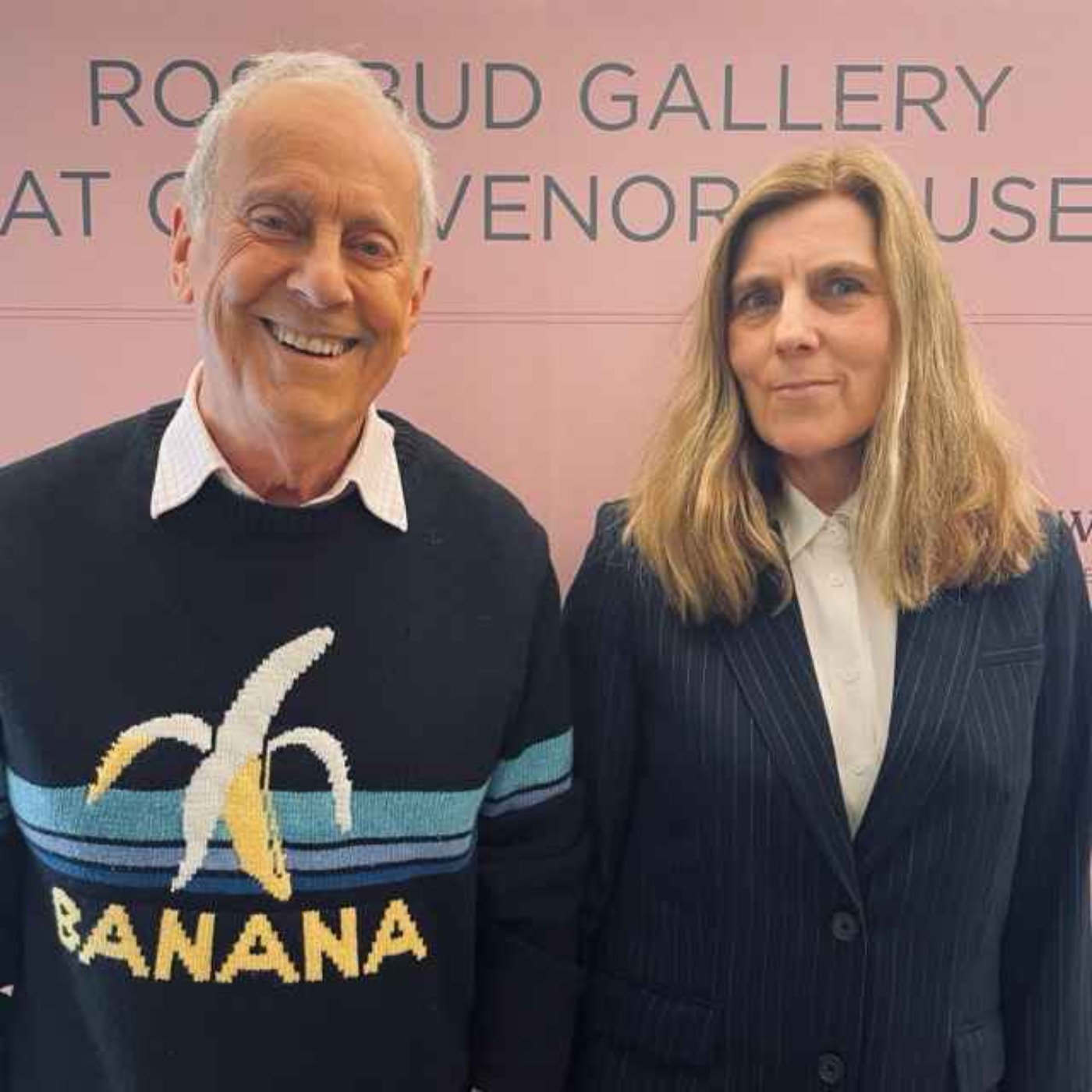
This episode was recorded at the JW Marriott Grosvenor House in London.
Hosted on Acast. See acast.com/privacy for more information.


