
 Ask ChatGPT


 Rosebud with Gyles Brandreth
22 Feb 2026 · 1h 12m · 28 chapters
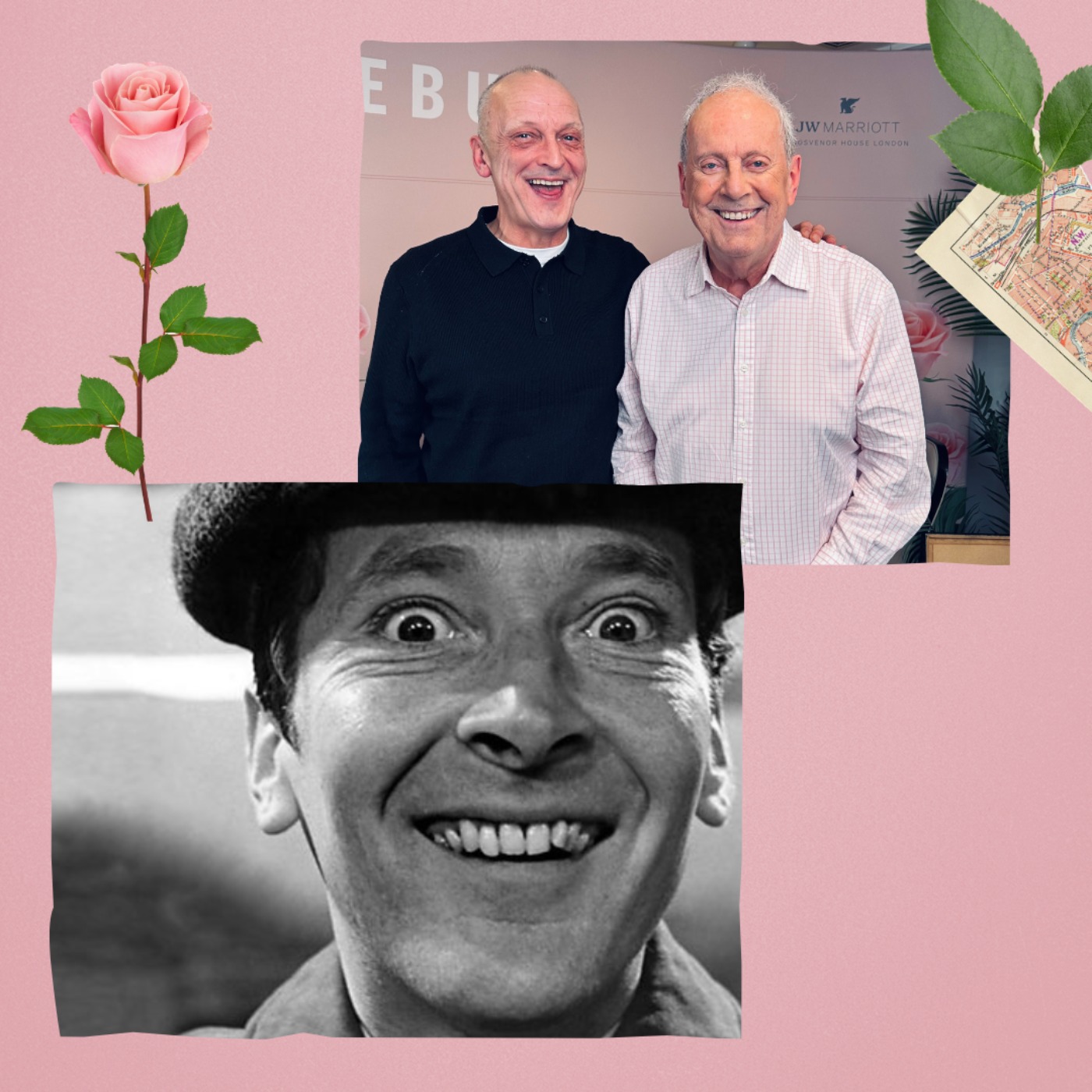
More Rosebud Special - Kenneth Williams at 100, with David Benson
This special episode celebrates what would be the 100th birthday of Kenneth Williams, a celebrated British entertainer known for his unique voice and humor. Gyles Brandreth hosts David Benson, an actor who has performed shows about Williams for over thirty years. They discuss Kenneth's life, relationships, and struggles, offering insights into his character, work, and the impact he made as a cultural icon.
Written by AI. May contain mistakes.
Discussion on Kenneth Williams' impact and legacy as a performer.
“on the 22nd of february 1926 100 years on i wanted on the day to celebrate this remarkable person.”
David Benson shares his unique connection to Kenneth Williams through performance.
“because we are celebrating what would have been the 100th birthday of Kenneth Williams, a remarkable actor, a writer, a personality, a raconteur, and a proper friend of mine.”
A detailed look into Kenneth Williams' early career and influences.
“where, if people know this, they've been to London and been into the hotel, There used to be inside the coffee shop, just by the park lane entrance, a large photograph.”
Insight into Kenneth's relationships, especially with Sid James and Tony Hancock.
“We'll talk a little bit later about his modest childhood, his parents.”
Discussion on the significance of Kenneth's diaries and his personal struggles.
“But to do that, we need also to discover, I think, the real David Benson.”
David Benson recounts his childhood experiences and aspirations as a writer.
“and they whittled it down to a shortlist.”
Reflection on the moment David's story was read by Kenneth Williams and its significance.
“in front of this very old black and white television.”
Explore Kenneth Williams's challenging childhood and its impact on his identity.
“but I knew it was not going the right way.”
Delve into Kenneth's struggles with intimacy and his experiences in relationships.
“to do about Kenneth, I was horrified to find these resonances and similarities between myself and him.”
Discover how comedy served as an escape from a turbulent home life.
“Kenneth told me that he had never had a proper full sexual relationship of any kind with male or female.”
Learn about the intersection of familial relationships and mental health.
“And she did not want to, but your father, who was a doctor, decided for her health and possibly for his health and his children's health, this was essential.”
Explore how mimicry and performance shaped David Benson's artistic journey.
“Other members of the family had estranged and become estranged, and I can understand why, and they didn't want to know.”
David shares his early experiences with mimicry and the influences on his performance style.
“from behind a polystyrene rock, and he would make this noise.”
David discusses Kenneth Williams' complexities and the impact he had on his own life and career.
“And he could be impossible, particularly in a restaurant as the evening wore on.”
Insights into the darker aspects of Kenneth Williams' life and the pressures of fame.
“But behind that, there's someone very disturbed and unhappy and lonely.”
David reflects on his life in comparison to Kenneth Williams and the challenges of settling down.
“We felt, Michelle and I felt bad about him towards the end because he'd been impossible at our house one evening.”
Exploration of Kenneth Williams' transient lifestyle and artistic identity.
“and i don't know where i'm going where i'm going to live and that's something that seems to have been all my life.”
Discussing Kenneth's autobiography and personal anecdotes shared during collaboration.
“You know, when he gave up the drink, he couldn't do the voices.”
Reflecting on Kenneth's memories, relationships, and the subjective nature of his diaries.
“We often ask people what their first, in fact, we always ask people what their first memory would be.”
Examining the friendship and chemistry between Kenneth Williams and Maggie Smith.
“and there in the audience are Kenneth Williams and Maggie Smith, ruining it by heckling and laughing in all the wrong places, and poor Frankie is really struggling to keep the audience against this.”
Discussing why Kenneth Williams remains a beloved figure decades after his death.
“If Kenneth liked us, we must be okay because Maggie Smith could be difficult with people.”
Explore what makes Kenneth Williams a lasting figure in entertainment.
“For one recording, he just couldn't, he could not believe, you know, for just a minute he was getting£100.”
David Benson recounts Quentin Crisp's candid thoughts on Kenneth Williams.
“So the last words of Quentin Crisp will be a Rosebud exclusive.”
Discussion on significant moments of joy and sadness in Kenneth's life.
“I think there were times when he did hate himself.”
Exploring personal experiences and connections related to Kenneth Williams.
“Think no evil of us comes from the letters of Kenneth Williams.”
Discussion on the lessons learned from Samuel Johnson's philosophy of life.
“Think about it is it going to be the death of your father so recently?”
A stream of French phrases and words highlighting cultural references.
“Message, Frère Jacques, Salon, port avion, Pétue Laclaque.”
A collection of abstract and humorous statements reflecting on identity.

Get the gist, explore an idea or ask about something said.
 Claude
On Rosebud with Gyles Brandreth, what are the key points of this episode?
Searching your listeningAutomatic transcript. May contain errors.
0:00Music
0:18David Benson: If you're listening to this for the first time, it's Sunday the 22nd of February, 2026. It's a special day. It's a birthday. it's the birthday of a remarkable entertainer actor raconteur who i was lucky enough to count as a friend it's the birthday of kenneth williams he's no longer alive he died quite a few years ago had he lived well today would have been his 100th birthday remarkable kenneth williams born on the 22nd of february 1926 100 years on i wanted on the day to celebrate this remarkable person. His story was complicated. He was complicated. But my goodness, he could make you laugh. Kenneth Williams on a chat show.
1:06David Benson: Well, he was extraordinary. He was the perfect guest. Kenneth Williams. Well, in a carry on film without Kenneth Williams, it wasn't a carry on film. If you enjoyed Beyond Arcane, Round the Hall, Hancock's Half Hour in the early days, there was Kenneth Williams. I worked with him a lot during the radio show Just a Minute. it. I got to know him because I work with him on his books, starting with acid drops. So I wanted to celebrate him, and I've got a special friend who's going to celebrate him with me. So I hope you will join me today on Kenneth's birthday to mark the centenary of the great Kenneth Williams.
1:41David Benson: I was going to say, cue the music, but I think that's quite wrong. I'm going to say, carry on, music.
1:59David Benson: This is a special edition of Rosebud because we are celebrating what would have been the 100th birthday of Kenneth Williams, a remarkable actor, a writer, a personality, a raconteur, and a proper friend of mine. And I'm not alone in the studio today because I've got several people with me. Actually, I've only got two people with me. One is my producer and friend Harriet Jane, and the other is my special guest, David Benson. David, I knew Kenneth Williams. Yes. You didn't, but you are the closest thing in the world to Kenneth Williams that I now know.
2:42Gyles Brandreth: Well, in terms of my voice and my ability to do an impersonation, not the definitive one, because there are as many different Kenneth Williams's out there as there are Hamlet's. It's a well-defined character which many actors have played. I think I was one of the early ones, back in 1996, when I first performed my one-man show, Think No Evil of Us, my life with Kenneth Williams. I was returning, really, to a subject that... People used to say, why did you choose Kenneth Williams? And the truth is, he chose me. And maybe we can talk about that, what happened in 1975. I never met him, but we worked.
3:25Gyles Brandreth: You could say I wrote for him. Gosh, we're going to explore all of that.
3:29David Benson: Before we do, we're at the Grosvenor House Hotel in Park Lane, where, if people know this, they've been to London and been into the hotel, There used to be inside the coffee shop, just by the park lane entrance, a large photograph. And it's no longer there. And I asked the manager of the hotel to produce it for me because I wanted to share it with you. And just have a look at this picture and see what this picture evokes in your head. What are we seeing?
3:54Gyles Brandreth: Ah, yes. Amicia, I want to go into Canada. There is Sid. Oh, lovely Sid James. Marvellous. Yes. Oh, windbag he was. Oh, no, he was very, very good. Wonderful professional. I don't know who she is in the background. Who's that? That's the tea lady, I think. In the background? Yes. The tea lady in on the right? Oh, Patsy, of course. Patsy Rowlands, not to be, of course, mistaken for Gina Rowlands, a very different kind of an actress. Both marvellous in their different ways. And there's me, of course, having me up outrageously, flogging it gutless, as always. Did Kenneth get on with Sid James? Well, I'm going to talk as me now.
4:36Gyles Brandreth: From what I understand of their working relationship, it was one that went over many, many years, starting with Hancock. And when Kenneth first came into the Hancock's Half Hour Show, in 1954, I believe, he was coming as a classical actor, a proper rep-trained actor who had just done Bernard Shaw's St. Joan in the West End, where he was spotted, I believe, by Dennis Mayne Wilson. and he kind of claimed this was because he could do two characters in one. The young Dauphin from St. Joan and also the old man, you see, who he characterised just talking like this. But in fact, that was a stock voice of his that he used many, many times.
5:22Gyles Brandreth: He was asked onto the programme to be a kind of voice man in the way, I suppose, the way that Peter Sellers had been or was concurrently on The Goon Show. So Kenneth found his way into what he called frivolous entertainment. I don't think he and Sid James were compatible types. No, I think they were. It was a lot to do with competition. And Kenneth didn't like competition. And Sid James was the obvious competition for him. And then he'd carry on film. Who was going to get top billing?
5:51David Benson: So he's born in 1926. 26. So we're celebrating the centenary. We'll talk a little bit later about his modest childhood, his parents. His father was a hairdresser. He's leaving school, going into draftsmanship, then joining the army, being in the Far East as an entertainer, meeting people like Stanley Baxter, John Schlesinger, Peter Nichols, then coming to London, becoming an actor, as you say, his classical career to begin with, being in rep, finding himself playing with Lawrence Olivier, Moby Dick, with Orson Welles, imagine. Imagine all of that, then getting into review, with Maggie Smith. We'll come back to all of that.
6:33David Benson: Though Hancock's half hour is what makes him famous. Tony Hancock, the most famous comedian of the 1950s on the radio, then on television. He comes in really as a support player, as you say, as a man of voices. And Sid James is the partner, the sort of sparring partner of Tony Hancock. That's right.
6:52Gyles Brandreth: But as always with Kenneth, when you read his diaries, and this is what really has given us the full portrait of Kenneth Williams, answered those questions many of us had during his lifetime. Who is this man? What's fueling him? How can somebody like him be so incredibly, ebulliently funny every time he's on a chat show? He's always brilliant. And you think, well, who is he? But the diaries, which were published in 1994, posthumously, of course, gave you the other side of someone who was, I suppose we would say manic, depressive, bipolar, I don't know. But in every single job he ever did, he would start with great enthusiasm and very quickly talk himself out of his initial enthusiasm into cynicism and sort of dislike, really, of everyone he's working with the material.
7:42Gyles Brandreth: Happened on the carry-ons, happened with Hancock, happened with Brown the Horn, happened with everything.
7:47David Benson: Well, our job today is to discover the real Kenneth Williams. But to do that, we need also to discover, I think, the real David Benson. Born the 11th of January 1962. 1962. I want to discover how you are interested in Kenneth Williams, because your life and his, even though you never met him, somehow are linked, aren't they?
8:09Gyles Brandreth: There was a competition that was announced in 1975, probably during the summer holidays, for children to write a story for Jack and Ori, that wonderful program that I watched from the moment I really had consciousness. I love Jack and Ori. And they announced this competition, so I wrote a little story in 17-18. Age 12. Age 13, in fact. And the story was very much influenced by my own comedy obsessions at the time, which were principally Spike Milligan and The Goon Show, which I had discovered all by myself. I remember they re-released the Ying Tong song, probably about 1971 or two, and it did quite well in the charts.
8:51Gyles Brandreth: And I remember hearing it as an 11-year-old. Can you invoke a bit of it? oh gosh there's a song that I'll recall my mother sang to me that's about as far as I'm going to go with it because it's more crazy than Bohemian Rhapsody but the only bit I remember is the yin-dong yin-dong yin-dong yin-dong oh I know every note of it because I played that record I bought the 45 first record I ever bought and I played until it was worn out but then I discovered that this wasn't just this song that there were these whole programs that you could get on records, which were not musical, although they had music in, but were these stories with these characters whose voices featured in this crazy record.
9:34Gyles Brandreth: And that was the beginning of my goon show obsession. Back to Jackanory. Back to Jackanory. So I entered the competition, and there were 15 ,000 entries. And out of that, the judges, well, they had lots of people reading these stories, and they whittled it down to a shortlist. and then the other judges were K Webb, the late K Webb from Puffin Books, Kenneth and H.E. Todd, who the writer of the Brewster... Bobby Brewster stories. I knew Toddy, a great man. Did you?
10:06David Benson: Yes. Who do tell. He was just a lovely person. He was a shoe salesman.
10:10Gyles Brandreth: Was he really?
10:11David Benson: Who wrote the stories about Bobby Brewster. H.E. Todd. I knew him. I knew, of course, K Webb, the founding editor of Puffin Books. Yes. And Kenneth Williams. These were the three final... So Ken was going to read the story, Kay was going to possibly publish it, and H.E. Todd was one of the best-selling children's authors of that time.
10:29Gyles Brandreth: Whose work I loved, the humour of the Bruce's stories, was right up my street. So anyway, finally I get a letter from Daphne Jones, the producer of Jack and Roy, saying your story is on the shortlist. Then another letter came, it was posted or written on the 3rd of December, 1975, and so I received it only two or three days before the actual broadcast saying your story will be read on Wednesday the 10th of the 7th by Kenneth Williams and so that was we had no video, this was 1975 nobody had home videos then so my dad borrowed a little tape recorder one of those old fashioned portable ones and I literally held it up and I have in my bag over there I brought to show you the actual cassette tape that, can I just yeah of course you can, it's too exciting this is I know I couldn't resist that because this is it's only a little cassette tape it's of no, in itself it's of no great value or significance, bear with me viewers where is it?
11:36Gyles Brandreth: see I lost it because it's historic this is the only record we have thank you so much it is and I thought I'd lost it quite recently, thank you and in fact I hadn't I hadn't and I had it digitally restored there it is, now that's the tape can I see? it's a 30 minute tape cartridge 30 minutes, so the tape is slightly thicker than a longer duration, and it simply says on the inside Jack Anori, Kenneth Williams 10th of December 1975 that's the actual tape, no noise, high frequency and it still plays and you stood there, sat there We sat round the television set, the whole family, and I had the tape record on a little table as I recorded in front of this very old black and white television.
12:26Gyles Brandreth: And I just pressed those two big chunky buttons, you know, you have to play and record together. And it started the recording, and a minute into the recording, we'd totally forgotten there was a man decorating the house, and he came barging into the room, put his paint tins down. We were like, shh, quiet, quiet, quiet. And you can hear that on the tape. You can hear this clunk in the background. It's terrible. But that was it. And as soon as my story finished, I stopped the recording. So I've got the first part of the show, which does not exist in the BBC archives. And what is it called, your story?
13:03Gyles Brandreth: It's called The Rag and Bone Man.
13:04David Benson: So the moment this story is read on national television, on Jack and Naughty, this is the moment that doesn't just change your life. I think it defines your life.
13:12Gyles Brandreth: It does. This is the road. maybe this is the rosebud moment because it defined it in as much as it was a moment of triumph of glory i had actually done something that i secretly dreamed of to get up in front of everyone in front of the whole school and suddenly do an amazing tap dance or play the piano and astonish them all and yet i did do it with this story but my overriding memory of it is one of humiliation, shame, embarrassment.
13:44David Benson: Why?
13:45Gyles Brandreth: Well, first of all, because I was now associated in the minds of my schoolmates and enemies with the campus man in England. And I was going to a Birmingham comprehensive secondary modern school in the 1970s. And I was also at this point struggling with my own sexuality, which I didn't have words for really, but I knew it was not going the right way.
14:08David Benson: You were 13.
14:09Gyles Brandreth: I was 13 and I knew. Or are you thinking girls are not for me? Yeah. Well, it wasn't so much girls are not for me, but I knew what was for me. Boys were for me. Yeah, and I have no explanation to this day. Why did that happen? Why was I wired that way? I had no idea. I was horrified. And I have memory of praying to a God that my father said didn't exist, saying, why me? Why is this happening to me? Why is my mother? Why have I got a mad mother? and why am I feeling these things that I'm not supposed to feel? Couldn't this be happening to someone else? Why is it happening to me? It just seems so unfair.
14:46Gyles Brandreth: And did you have a mad mother? Yes. That sounds very flippant and glib to say mad but she was... We later, it was given a name, Paranoid Schizophrenic. Oh, that's quite serious. Yeah, very serious. It was a very, very challenging childhood. Was it just you and your twin sister Miranda? I have an older brother, a year and a half older and a twin sister, Miranda. And it was really my twin sister who copped it. She was the focus of my mother's paranoia. It was shocking. My memory of it has always been that it happened very suddenly when I was five years old, that up until that point, she'd been lovely, beautiful, gorgeous mother, and that this lovely woman had suddenly flipped and become violent, lashed out, would hit you for no reason, and accuse you of the most terrible things like trying to kill her in the mind or trying to steal my dad from her or trying to, you name it.
15:44I mean, just mad stuff that we couldn't comprehend.
15:48Gyles Brandreth: But this is why it's so difficult because this is your mother. This was my mother. But when your parent suddenly becomes terrifying for reasons that you can't explain, you really have no way to rationalise this at all, it must set something up in you for life that i'm sure it has in me that i'm still trying to figure out and i it's odd that when that kenneth should have chosen my story because in some ways there is a similarity between it in as much as we are both me and kenneth had a problem with relationships we sort of crave them and yet find them almost intolerable that's something i share also with Quentin Crisp is another person who I very much seized on when I discovered Quentin Crisp and found a real parallel.
16:41Gyles Brandreth: I saw something of myself there. Same with Kenneth Williams. And I just wanted to say that when I started researching for the show that I had decided to do about Kenneth, I was horrified to find these resonances and similarities between myself and him. And I think I partly wrote the show in this portrait that I created of him, maybe to inoculate myself against the same disease or the same symptoms that he clearly suffered from now in
17:10David Benson: kenneth's case his problem was not his mother who he loved very much lou yeah it was more his father just describe to us now what what was kenneth like at 13 given we're doing parallel lives here
17:24Gyles Brandreth: he was evacuated during the war and there is a story maybe he would have even told you about it that he was evacuated to stay with a gentleman who was very, who he claims gave him his foundation in literature, in how to speak, in how to deliver poetry. That was what he took away from that time that he was billeted with this chap. I think in the diaries, in the introduction, there was a suggestion that maybe something else happened. It was more close, physically close, but there's There's no evidence whatsoever to suggest that or support it. Given Kenneth's revulsion and horror of intimacy expressed throughout his life, it seems unlikely that that would have happened.
18:12Gyles Brandreth: However, he was taken out of that world of working-class London. He grew up in social housing, probably very desirable now, but very close to St Pancras Station, opposite where the British Library is. and it's all still there the tunbridge association which built this blocks of social housing in the
18:33David Benson: late 19th century and that's where kenneth grew up his father was a hairdresser yes and give me if you can recall how kenneth would describe his father his father's attitude yes he would always
18:44Gyles Brandreth: say oh he'd be brutal to these uh people who come in asking for he said yes his lady would come and saying, oh, I'd like a blow wave piece, a blow wave, you look like a tart, look like a tart with a blow wave, no, you don't want a blow wave, or some bloke would come in and say, yeah, so I just like a little henna wreaths or something, or whatever, and he would ridicule the, yeah, whatever, iron hoof fire, iron hoof, now that, of course, iron hoof is, what's that, pejorative term for homosexuals.
19:15David Benson: Cockney rhyming slang.
19:16Gyles Brandreth: Yes. Iron hoof, poof. And so Kenneth would have grown up very much hearing that aggressive attitude, as we all did to some extent. And it does affect you how you feel about yourself, because you think, oh no, I'm that thing that they're talking about, that other thing, one of these other people. The word queer, for instance, I associate with that. I remember hearing it used when I was young. And so-and-so was queer, you know. It was queer, queer. It was a horrible word that I dreaded being called that myself, as indeed, of course, I was a couple of times.
19:47David Benson: Kenneth told me that he had never had a proper full sexual relationship of any kind with male or female. You mean he was a virgin, he claimed? Yeah, that's the line he took. He said there was the occasional Barclays Bank. Well, that counts. More rhyming slang. Yeah, touch the Barclays. But that he was sort of nervous of that. and later when he became friends with joe orton yeah the playwright yeah who led a very active life yes sexually and they would go on holiday to north africa kenneth would be there in his blazer or even a tweed jacket um sitting nervously on the beach yes while joe orton would be off looking for attractive north african boys to help pleasure him that's right and of course when we
20:36Gyles Brandreth: read the Joe Orton diaries now, I think it's actually quite disturbing to read how young some of these Moroccan lads were. And now I think we see it in a whole different light.
20:55David Benson: Kenneth discovers you, then you discover Kenneth. And why do you decide to write a show about him? It's exploring both you and him. Take us on that journey.
21:05Gyles Brandreth: I suppose if I hadn't had the experience of particular experience of acting that I had in Edinburgh from about 1990 to 96 when I started to do my own work I might not have done it that way now I was working in a bookshop at the time in Edinburgh which we were felt very brave because it was a lesbian and gay bookshop called Lavender Menace named after Oscar Wilde and his coterie. And it was a lifeline. When I first went to Edinburgh with a rucksack on my back in 1985 to start a new life, I went straight there and said, could I volunteer? And they said yes.
21:41David Benson: Because your life at home was unsatisfactory. You have this mother who is...
21:45Gyles Brandreth: That I'd all left behind. My dad remarried by this time. Oh. Yeah. And were you sympathetic to your dad leaving your mother and remarrying? Oh, yeah. Oh, my goodness. It had to happen. In the first version of my show, I described her being sectioned. Two years after the Jackanori story, when I was by now 15, and I was at home, and I wasn't supposed to be, I was supposed to be at school, but I was actually playing truant, because it was football on a Wednesday afternoon, and I hated playing football, so I used to sneak home, which was very naughty, but on this particular afternoon, my dad arrived, I heard his car pull in to the driveway below my bedroom window, and I thought, why is dad here?
22:24Gyles Brandreth: so Wednesday afternoon he has an antenatal clinic on a Wednesday he was a doctor family doctor never comes home on a Wednesday but there was his car so I kept very quiet and I heard him come in talking to my mother downstairs and then I heard another car pull into the driveway and doors open and close one two three four of them and these people came into the house and I heard them downstairs talking to my mum and then things started to get voices started to be raised there was a great thundering sound she came running up the stairs locked us off in the bathroom and then these people came and stood outside the door and said come along barbara open the door look we're not going to hurt you barbara come on but you have to open the door now barbara and basically they broke the door down and sedated her and took her out and that was the last time i saw for several
23:14David Benson: years sectioned is usually when a member of the family goes to the police and then the courts and actually says this person is not capable of looking after themselves, they must be taken into care forcibly whether they want to or not. And she did not want to, but your father, who was a doctor, decided for her health and possibly for his health and his children's health, this was essential.
23:35Gyles Brandreth: Yeah, they had actually divorced and she wouldn't leave the house. That's how bad things had got. But you were still living at home. Yes, we were all living at home with this insane situation. And it came to a crunch and eventually, I don't quite know how, but the men in white coats, literally as we used to say, were called and she was taken away.
23:55David Benson: And were you in your head, was this one of the reasons in your head you were beginning, you were disappearing into this world of comedy?
24:01Gyles Brandreth: I'm sure that the reason I did, I was really deep in that world of comedy, was because of the madness of my home life. My twin sister was sent away to boarding school, which for her was a horrible experience, like being sent to prison. Whereas I had the freedom of my bedroom with a lock on the door, which was very important. my privacy and then there I disappeared into a world of comedy of old records of music as well I discovered Fred Astaire and the the films of all the music of Berlin and Gershwin and Cole Porter became while I was still a Birmingham school boy in the 70s that was my soundtrack so I was in a fantasy world and you you find yourself in Edinburgh performing through this lovely bookshop where you're working I just packed my bag one day I packed my bag I said I've got to
24:47David Benson: make a change I've got to change my life I should have asked you when you lost your mother yes when she was taken into care yes did you lose her forever was it like the end of your life with her
24:57Gyles Brandreth: no it was there were about five four or five years when I detached completely and then I started to get back in touch and over the course of up until three years ago when she died in a care home very peacefully. I had established a very loving relationship with her, which I'm so glad I did. Other members of the family had estranged and become estranged, and I can understand why, and they didn't want to know. And did she remain paranoid, schizophrenic for the rest of her life? She did, but she calmed down. The fire went out of it. The anger, the rage, the terrifying rages that she had, but she still maintained not only her delusions, but a strange diction and syntax that she started to use.
25:43Gyles Brandreth: And I would start to quote you, but it's so shocking, some of the things she would come out with. You can always edit it out there.
25:51David Benson: Give us an example. She would say something like, if you try and take my life, David, you die of cancer of the rectum cancer of the rectum in you david how about that that's sort of things you would
26:08Gyles Brandreth: suddenly shock you with and that was what was going through her head and she talked to the neighbors like that of course we couldn't have friends home can you imagine i mean but i want to tell you one story very quickly pertaining to the jackanori story because they sent out researchers to all the children including as far north as Fife I think they had just to record them reading the story and to make sure they had actually written it so a researcher came to my house to interview me and I remember this very serious man with a beard and driven up from London with a great big tape recorder on his reel-to-reel ones which I loved and he recorded me reading my story and then he said are any of your parents in because I need to you know, affirm that this is the right story.
26:58Gyles Brandreth: So, of course, only my mother was in, and she came in, and I thought, oh, God, no. And he said, could you just confirm that David wrote the story? And she refused to confirm it. I don't know if he wrote the story. I think God wrote it. I can't actually remember specifically. I blanked it out. But I do remember getting very, very anxious indeed, because I thought, she's going to blow this whole thing. and I actually more or less forced her out of the room with her white knuckles gripping onto the door jam, pushing her out and saying, go away, go on, get out, get out, and slamming the door shut.
27:31Gyles Brandreth: And then sitting down as I am with you now and trying to continue the conversation with this poor man from the BBC who looked utterly shocked by what he'd just witnessed. But I couldn't explain it to him. When did you start doing interesting voices? What was the first voice you did? I think at school, I seem to remember, one of the first voices I remember doing was Dr. Smith from Lost in Space. But I will do it, but it's a very loud shout, so I have to do it off camera. He would see an alien staggering out from behind a polystyrene rock, and he would make this noise. It was like, like that. Sorry, listeners, I hope that didn't break your eardrums.
28:10Gyles Brandreth: But it was that noise, and I used to do it at school, and of course got a tremendous reaction for doing it. That was one I remember doing. But I used to impersonate teachers at school and classmates, people off telly, generally, I've discovered very early on I had a facility for this. And I don't know why that should be, but I was a mimic. And this was something my mother didn't like. She used to say, you're a mimic, David. You shouldn't mimic other people. You should be yourself. Learn to be yourself. Don't take other people's lives from it. You should be talking that kind of way. So I thought, OK, but to be a mimic was what just came very, very naturally to me.
28:44Gyles Brandreth: So, why did you take Kenneth Williams' life? I had wanted to do a one-man show for some years. I wanted to do what I'd seen my heroes do, like Barry Humphreys, who I'd seen perform so many, many, many times and just was in awe of. And the other great influence on me was someone I never met because she died before I was born. Would you know who I mean by Ruth Draper? Of course. Famous American Impressionist. Well, not Impressionist, but... Well, she did characters. Yes. A bit Joyce Grenfell-y, but in America. Joyce Grenfell essentially stole or borrowed everything she did, a lot of what she did, they're talking to invisible people.
29:23Gyles Brandreth: She got that from her Auntie Ruth and they were related. Joyce Grenfell's father, I think, was related to Draper and she had nothing on stage apart from the old chair, just like we have now, a table, a chair, nothing else. And everything else she would evoke through the brilliance of her acting and her writing. And I thought, as soon as I heard one of her records of the Italian lesson, this brilliant monologue, I thought, that's what I'd like to do. and it took me a few years but when I decided to do a show about Kenneth I thought I want to try that technique and see if I can people a stage as she did and so the scene that people most mostly remember from the show is Kenneth having dinner in a restaurant with three people at the table waiter coming over the chef people at other table annoying him autograph hunters coming over the food arriving and this was very much my attempt to do a ruth draper to make the audience
30:18David Benson: see things that weren't there now i'd like you to evoke that scene because kenneth and you well admired hugely liked a lot we were proper friends yes but he could be impossible particularly towards the end of his life when i think he had lots of frustrations with his career that maybe was drinking too much. Do you think, Rhonda? I do. And he could be impossible, particularly in a restaurant as the evening wore on. Yes. And when I came to see your show, I could not believe, and I was with people who also saw it, who had known Kenneth, they thought he must have been there. You must have seen it.
30:57David Benson: Tell us a little bit, and indeed give us a bit of Kenneth, during the course of this evening, what happens in this Italian restaurant.
31:04Gyles Brandreth: All right, yes. Yes, well, the reason I came up with the scene, I spoke to a very good friend of Kenneth's who you may know when I was doing my research called Paul Richardson, who worked as the technical director at Southern as well. He lived in the same building block as Kenneth and knew him and his mother, Lou, very well. And I chatted with him and he said, well, he told me we'd go to an Italian restaurant. He would insist on having his back to the room because he didn't want to be spotted or noticed or bothered by people. then would talk so outrageously, loudly, that everyone knew he was there.
31:38Gyles Brandreth: So, I mean, I'm just dropping to the scene very briefly. He would do something like, Ah, yes, hello, Silvano. Yes, hello, very nice to see you. Are you ready to order, everybody? Ready to order? Yeah, no, they're too busy talking. Well, give us another minute, will you? Oh, by the way, is Vittorio in? Oh, will you send him out to see me, please? Yes, send him his uncle Kenneth is here. Oh, I can worry about him. Yes, send him out. Thank you very much for doing. So I said to this great Nick with a wig, I said, what's all this about you saying that you know Maggie Smith? Yes, he was. Remember he was going on about how he knew Maggie Smith?
32:11Gyles Brandreth: I said to him, well, I do know Maggie Smith very well indeed. As a matter of fact, she's an old and dear friend of mine. I asked her. I did. I did. Jeremy, I said to her, I said, Max, I said, have you ever heard this great Nick with a wig, have you? Ever heard of him? She said, no, Kenneth, I've never heard of him. He must be one of your friends because he's not one of mine. I said, no, he's not one of my friends. He said, he's one of your friends. That's what he said. No, he's not one of my friends. I've never heard of him, Kenneth. I said, she said, she never heard of you, mate. No. And he said, no, well, she wouldn't have, you see, because I'd changed my name five years ago because I was caught engaged in an act of gross indecency with an Irish labourer in the gents on Kilburn High Street and the shame really killed me mother.
32:52Gyles Brandreth: I said, why, your mother wasn't down there with you, was she? Laughing at it. He bought me own beer. No, he didn't. He started crying and he goes on like that. So it's just, you talk so fast, I think, that the audience don't have time to think too much and they start to picture everything and they will tell you afterwards about the food, about what the waiter looked like, about everything.
33:19David Benson: My life with Kenneth Williams. What did Kenneth Williams give your life? I suppose Kenneth gave me, well, something to aspire to.
33:34Gyles Brandreth: I thought he was brilliant. I never failed to laugh my head off when I saw him on television, even though towards the end, as you say, you could see he was running out of gas, really. He was doing exactly what he lamented in his diaries, which was telling the same old stories. But you still wanted to hear them. So he gave an example of professional excellence, really, of flawless technique and of wit of how to tell a story. And yet he also gave a terrible warning of watch out because this man's life, there's something else going on. It's not just the brilliance of this firework display at dinner or whatever on television, and that incredible voice that was like a virtuoso instrument, like a Stradivarius that he could whip up and down the scale and change instantly, and his face in such a magical way.
34:38Gyles Brandreth: That was something I aspired to. But behind that, there's someone very disturbed and unhappy and lonely. and I think once I started researching his life that became very important because I realised there's a terrible price to pay for fame and celebrity and for being a brilliant burning talent. You could compare him to so many other people like say Judy Garland for instance. A brilliant burning talent who burnt out and just simply couldn't do it anymore. And I think that was very much the same with Kenneth and that for any performer really is a warning. In a moment I'm going to take you through some photographs
35:21David Benson: that I brought with me that I know Kenneth enjoyed and liked and kept and marked the milestones in his life and you can see if you can evoke what he might have felt about those photographs. But I know you're coming back to the subject this year with a new show because it's the centenary I assume but also have you got something new to say about Kenneth Williams and what is it?
35:46Gyles Brandreth: Well, I wanted to do the old show, Think New Evil of Us, but in a new way. So I'm reminting the show in that all the scenes with Kenneth, which I think are stand-alone, I don't want to change those scenes, I'm putting in Act Two. Act One will be me talking about, as I'm talking with you now, about the Jackanory story, about my home life, about my reaction to the story as it was being played. so we will, for the first time, I will be playing extracts from the recording and stopping it. So here we are.
36:19David Benson: Kenneth Williams is the story of a very troubled person who is also very brilliant and has many, many happy moments. Michelle, my wife, and I had many, many happy evenings with him. And he had good friends. Gordon Jackson and the actor, Gordon Jackson, Scottish actor, you remember from upstairs, downstairs, and his wife, Rona, were close friends of Kenneth's and were like another family to him. he was also great friends with Stanley Baxter and his wife yes so he had good friendships he loved his mother they lived in opposite flats yes Kenneth was quite um antiseptic I went to his flat it's not true that he wouldn't allow people to use the loo he did I was allowed to use the loo in his flat but he went in the evenings over to sit with his mother have supper and watch tv but he also was unhappy he didn't form any permanent relationship one-to-one i don't think at all in his life he became a little bit selfish and self-centered i think in his
37:19Gyles Brandreth: friendships towards the end as much as to what he'd be demanding without giving anything he would
37:24David Benson: be demanding of people somebody would offer to take him on a lift somewhere and he would make them go further than they planned to go he would be a little bit thoughtless in that regard um controlling maybe i don't know i think anyway he was he was troubled but let's not overlay the troubled nature of it no but when he died he told me that his own father had taken his own life yes his father as we've discussed was a barber yes and he kept what kenneth called a stash of poison that he used to kill himself kenneth told me he also had a stash of poison and though the coroner's verdict was you know open open uh some people think well that was to save his mother's you know who's still alive her feelings and wasn't clear could well have been an overdose he hate he was not very well he was due to go into hospital for an operation yes he hated the idea of that he could just have been taking literally an overdose or he could have had enough and in fact i think the last entry in the diary is what's the bloody point what's the bloody point So it's, I think, reasonable to think maybe he took his own life.
38:31David Benson: He certainly talked about it. Yes. So he ended not very happily. We felt, Michelle and I felt bad about him towards the end because he'd been impossible at our house one evening. What happened to him? Well, in fact, we loved having him to dinner because, of course, he was a star. And he would often come to have supper with us after he'd recorded a Parkinson programme. We didn't live too far away from the BBC, which they recorded early in the evening. he'd come to have us supper with us and then watch it and loved watching it and then if it'd gone well he got a bit carried away having drunk too much he'd drop his trousers you know and say the bum's hanging down in pleats and all of that we had him we used to have dinner parties in those days sometimes for sort of 16 or even 20 people and there was one at which we had the head of an oxford college the principal of my wife's old collegest anne's college oxford and uh kenneth who was a distinguished academic lady but quite serious and Kenneth was flattered to be seated next to her because he was self-educated he was an autodidact yes wonderfully well read and learned but a little bit uncertain with serious academics and they seemed to be getting on well but then he drank too much and by the end of the evening I suddenly heard him calling her not in an amusing way, but in a harsh way, using the C word to her face.
39:55David Benson: Good Lord. Repeatedly. Oh, that's horrible. It was horrible. It was a nightmare for us. We were in our 20s, early 30s. We didn't know what to do. This lady, this distinguished lady, didn't know how to respond. It created an awkward atmosphere. And so we didn't see him for a while. And when we moved house, quite soon after that, we got a postcard from him simply saying a picture of him it was a carry-on photograph a still photograph of him looking up a periscope you might recognize it that was the front of it on the back of it he had written is there life in whatever our street was that we'd moved to love Kenneth.
40:42David Benson: And he was reaching out to say, are you still there? And we weren't. And a few weeks later, we heard on the news that he had died. And of course, there were other friends we discovered who also had had enough. Yes. So he backed himself into a corner. And what I want to ask you, before we look at pictures of Kenneth, is you are now, I think, is it two years older than Kenneth was?
41:06Gyles Brandreth: Yeah, I'm 64 yesterday.
41:07David Benson: Yeah, there we are.
41:09Gyles Brandreth: Two years old in Kenneth.
41:10David Benson: Now, you, having had a pretty troubled life, indeed a more troubled childhood, I think, than he had, though he had a father who was hostile and unsympathetic, he had a mother who was loving, and he had friendships and a very satisfying career for much of it, much acclaim, and yet he ended up unhappily. Are you in a good place now?
41:38Gyles Brandreth: yes and no i think um it's impossible to answer that question until it's all over when somebody dies and i think the meaning of their life then becomes apparent but while you're still living it you don't really know what's coming up i'm in a situation now where i find myself in a sort of state of insecurity in as much as i have to move soon from the house where i'm living and i don't know where i'm going where i'm going to live and that's something that seems to have been all my life. I've always been moving on. I've never settled down and found my home. And I'd actually quite like to at my age now.
42:13Gyles Brandreth: But I have to face the fact that I'm still like when I was in my 20s. I still am on the move. And I can't settle down anywhere and unpack my books as I'd like to.
42:24David Benson: Do you resent, as Kenneth did, the fact that he felt at the end he was reduced to being a series of funny voices and old anecdotes you have done brilliantly and i know recently we've been doing dad's army as a show hugely successfully in which you play several characters yes can you go
42:40Gyles Brandreth: well yeah the the dad's army show is called the dad's army radio show which i do with my very good friend jack lane and we both between us divide up all the characters from dad's army he does mannering Jones others and I do a would you mind awfully just a forming three neat ranks quickly as you can now come along Jonesy old boy that's it thank you so much John the Mayor who I adored as a schoolboy and wanted to be him when I was a schoolboy and you've done Frankie Howard as a show am I right and I did a show about Frankie oh no yes yes you see but no no listen no don't don't don't Randworth here don't don't don't don't shame isn't it anyway no see with fangia that's all you need to do is just oh no you don't need to do it you've got to sustain it over two hours that's the challenge so anyway so i could do all these voices but that was never what i wanted to be i never wanted to get stuck doing kenneth or stuck doing voices to me that's a trick that i can do and it's a very useful one but i don't i'm not mike yarwood or anything like that i i would never be a professional impressionist it's a tool that I can employ to help me tell stories.
43:48David Benson: Of course, I knew Mike Yarwood. He wasn't very happy being Mike Yarwood. No. That's why I gave it all up. Well, actually, he gave it up, too, because of the drink. And he gave up the drink, which was good.
43:56Gyles Brandreth: He was so brilliant. He influenced generations. You know, when he gave up the drink, he couldn't do the voices. No. Yes. I didn't know that. Yes, no, yes. Well, there you are. That's Ghosts' Show. It's another indication of what it costs people to get up and be brilliant and effortlessly funny as they seem to be.
44:20David Benson: Let's have five minutes with these pictures before I ask you three final questions. Oh, yes. I think you're completely fascinating, David. Oh, thank you.
44:27Gyles Brandreth: And I... Well, it's only because you're fascinating, Giles, and actually I'd quite like to turn this around and interview you. No, no, that's not going to happen. I'm going to show you these photographs.
44:36David Benson: Kenneth wrote an autobiography. We worked... I worked on all of his books. His first book, Acid Drops, which was a number one bestseller. Yes. I thought of the idea and the title went to see him about it and we worked on it together.
44:49Gyles Brandreth: And how did you, I haven't got time, but how did you work on it? Would you put it together and he write the story? In the case of Acid Drops, yes.
44:55David Benson: But with his autobiography, he wrote it all himself. He wrote it in longhand at home. Goodness. And then he came to our house at 10 in the morning and spent the day reading me his story with me trying to improve it, make it more human, get in more anecdotes, make it a bit more gossipy than it was. it was quite tense because we at that stage had small children yes and we didn't want him smoking in the house and he had to smoke so we had to break every hour for him to go and i stood with him out in the street and have a cigarette a breath of fresh air as barry cry used to call it so that was a little bit of tension i see so i know his story very well from his point of view but as you look at some of these pictures i'm going to ask you a few questions this is a picture of Kenneth as a little boy.
45:44Gyles Brandreth: Ah, yes. Look at the rire. Oh, the spungold in the air here. Spungold. Yes.
45:51David Benson: The delightful child. We often ask people what their first, in fact, we always ask people what their first memory would be. Do you know what Kenneth's first memory would be?
45:59Gyles Brandreth: Well, he was born in Caledonian Road. And so I suppose if he would have remembered something of the life up in those, in those days, he would remember tin baths because that's what they had. They literally still had a tin bath. He might remember the cat catcher coming round because there was, I discovered, I did some research, and there was a man who used to come around every week to drown the kittens from these households. Yes. So he might have remembered all sorts of things like that. What do you remember of this? Ah, the rose and the ring. There he is. It's Princess Angelica.
46:32David Benson: His first stage role. Yes. It's a school play. You're right, Princess Angelica. It's Thackeray's The Rose and the Ring. Thackeray's. And doesn't he look good?
46:40Gyles Brandreth: He looks good. and he's in drag, of course. That's the extraordinary thing. What's amazing, the review that he quotes from somewhere is he says Kenneth Williams, with his sharp-witten pert vivacity or something like that, dominates the stage. And you see that he was born fully formed. The Kenneth Williams that we all knew and loved later was present in childhood. And certainly when he was in the army, Peter Nichols told me he was exactly the same as the later Kenneth Williams. This is a picture of him with his sister. That's Pat, his sister, yes. who he was very fond of, wasn't he? He was, but they had, like with everyone, including his mother, they had a sort of love-hate relationship.
47:17Gyles Brandreth: With his mother, it was love-hate. He found it very frustrating. In the diaries, he was saying, sometimes I'm screaming inside with a madness. Oh, you know, shut up, you know. But it was his daughter as well.
47:27David Benson: I don't think we should take the diaries as 100 % the truth overall. No. It reflects his mood in the moment. Yes, yes. So if he's been drinking when he's writing them, or he's in a temper, or he's just had a letter from Peter Rogers, which he feels is insulting because he's not being offered any more money to appear in the next carry-on film. It reflects all that.
47:47Gyles Brandreth: It does, yes. Would you agree with that? And also he would, I know from meeting someone like, for instance, I remember many years in Edinburgh I shared a venue with Rodney Bewes from the like the lads, who was lovely to me. We got on very well. And he said, oh, Kenneth, you know, you see he put stuff in his diary about me. And I said, what happened? He said, well, he basically turned it completely on his head what had actually happened. We were filming a public information film It was very, very technical. And I was trying to remember all this dialogue. And Kenneth was over talking to the cameraman, dropping his trousers, doing the whole bit.
48:16Gyles Brandreth: In the diaries, he says, I was trying to remember my dialogue. That idiot Buse was macking about and spoiling my concentration. So he took it and turned it on his head, as he did the famous occasion when he went with Maggie Smith to see Frankie Howard performing at the Establishment Club. And it was recorded that night and put out on a record. You can still find it. Frankie at the Establishment. his great breakthrough comeback performance written by Johnny Spate, and there in the audience are Kenneth Williams and Maggie Smith, ruining it by heckling and laughing in all the wrong places, and poor Frankie is really struggling to keep the audience against this.
48:54Gyles Brandreth: He's being upstaged by the audience, and he makes jokes about it. He says, there you are, one thing you don't see very often, ladies and gentlemen, one chameleon laughing at another one. Yes, there you go, and writing all the jokes down at the same time. Cheeky devil, no, listen. And he put that in the diary. He says, we went to see Frankie. He was very good. But there was this woman in the audience heckling and annoying him all night. And he dealt with it very well. But the recording is there that proves it was the exact opposite of that. So that's to prove your point, as you say. Don't take it as read.
49:25Gyles Brandreth: He had pictures from Hancock's half hour. Oh, yeah.
49:29David Benson: And he told me that he admired Hancock hugely, but that Hancock couldn't cope with, he felt, being upstaged by Kenneth's voices. I think there's something in that. Hancock was wanting to be a solo act because he dropped Sir James as well as Kenneth. He did, yeah.
49:48Gyles Brandreth: But do you think it's interesting, Giles, that most of the Hancocks that people remember, I think, are not the ones with the supporting cards. I agree. Blood Donor, Radio Ham, all those ones are the ones, and then you have Patricia Hayes and wonderful characters like that, but not the stock team.
50:04David Benson: You're quite right. And in fairness to Sid James, he always said to people, oh, we miss you on Hancock's Half Hour. And he would say, well, the ones you do remember are ones like the blood donor in which I don't appear. It would ruin it if Sid James suddenly came into the blood donor, wouldn't it? But later in Round the Horn and Beyond Our Ken, he had the wonderful leadership of Kenneth Horn.
50:26Gyles Brandreth: Yes, who he does appear to have adored. And he was like, I think, a father figure.
50:30David Benson: An English gentleman.
50:32Gyles Brandreth: Yes. And a father figure. Am I right in that? Yes, I believe it. It sounds like it from the Dice. He absolutely loved him. He looks at him as a very solid, reassuring, calm, non-judgmental man, like you, Giles. That's Kenneth, and this is? Hugh Paddock. Give us a famous catchphrase. Oh, hello, I'm Julian, this is my friend Sandy. Oh, hello, bonnet of audio, Dolly Olde. Now, those two didn't particularly get on. Oh, really? That's interesting. There was rivalry. They went their ways after the recording.
51:01David Benson: Oh, because Hugh Paddock, even though that was such a famous catchphrase, hardly gets a mention in the book.
51:06Gyles Brandreth: No, I think it was a professional respect between them, but they didn't really like each other.
51:11David Benson: One of the loves of his life was Maggie Smith. And here's a picture of them in review together in Share My Lettuce. And I think the reason that Michelle, my wife and I, were lucky enough to become proper friends of Maggie Smith, and essentially would come round to our house, have supper in the kitchen on her own, we really knew her, was entirely because she knew that we'd been a friend of Kenneth. and that made her feel secure with us. If Kenneth liked us, we must be okay because Maggie Smith could be difficult with people. What do you think was the chemistry between them? Because they almost mimicked each other, didn't they?
51:47Gyles Brandreth: Well, there is a recording from the 60s, which you may find on YouTube, of Maggie Smith being interviewed and Kenneth joins the interview and she does say, this play I'm doing at the moment, I'm just doing complete Kenneth in this. which he obviously adored because she did actually do what he wanted to do, which was remain. She could do comedy, but she was also a serious actress who could do Othello with Olivier and what have you. She did everything. I do have a couple of stories about Maggie Smith. Well, the first, really, when I was doing Think No Evil of Us for the first time in 96, I came back to my dressing room at the King's Head to find a handwritten envelope and note inside saying, dear David Benson, I was listening to LBC today and you, quote, put the heart across me, as the Irish say, because I thought it was Kenneth.
52:43Gyles Brandreth: And I hear very good things about you and I hope we'll meet one day. I wonder what, I'm working at the moment in the theatre where we met each other, the comedy theatre. She was doing Adam Bennett's Bed Amongst the Lentils, which, what, I mean, amazing performance. I wonder what Kenneth would have made of all this. Yours, Maggie Smith. Can you imagine, I was an unknown, really, actor in my 30s already, but coming down from Edinburgh, and I got the card, a fan letter, essentially, from someone who is untouchable as a goddess-like figure. However, I want to tell you one other addendum to this, which may or may not be of interest, not something I've talked about publicly, but now she's dead, I think, sadly, and we all miss her.
53:28Gyles Brandreth: I feel I can. when I first was again at the King's Head I was given a folder of Kenneth related items by a dear friend of his called Michael Whittaker who you know I think I know Michael Love lovely man who was a close friend of Kenneth's and really looked after him and it was letters and photographs and press clippings or handwritten letters to a man called George Boric who you know and these were all from the end of Kenneth's life the last two three years and in one of them he says this was six months before he died he said I was I was supposed to go to I think LWT asked me to go and review Maggie in her new show which was Letters and Lovage and they did occasionally send people out celebrities to go and do a review come back to the studio and talk about it and they said I had a letter back from Robert Fox the producer saying please could you not come Maggie says if she heard that laugh on opening night, she'd simply go to pieces.
54:27Gyles Brandreth: So please, any other night, but not tonight. And he said, I'm a pariah. And they told me not to come. Nobody wants me. I mean, I feel absolutely dreadful. So in the letter, he was actually very hurt by this indeed. And as far as I know, they didn't make it up. Like you with, you know, as far as I know, and I think that's maybe why when she heard me on the radio, it caught her and she thought, I'll write to that chap because it brought something of Kenneth, this unresolved conflict perhaps. I'm only guessing this, I don't know for sure.
54:56David Benson: But it's interesting that he didn't understand what she wanted was right. It would have been a distraction.
55:02Gyles Brandreth: And when you consider that recording with Frankie Haddon, you hear them both in the audience, her as well doing this laugh. Yes, it's...
55:08David Benson: Well, I know she loved him to the end.
55:10Gyles Brandreth: Yes.
55:10David Benson: I'm going to ask you three questions, I'm going to ask Kenneth three questions, requiring quick answers. Yes. But can you, I think, do you know why he is still remembered? but you're doing a show about a man who died how many years ago?
55:24Gyles Brandreth: Well, he died in April 88.
55:26David Benson: So it's a long time ago. It is. And there's an audience for Kenneth Williams now. It's the Carry On films in part.
55:32Gyles Brandreth: The Carry On is just a minute, I think, is still played. The radio show. What else just around the hall?
55:39David Benson: Those London Weekend Television, an audience with. Yes. When he got the first of those, he couldn't believe it. He was offered and took£10 ,000 for one show. He could not believe it. He'd never had more than£5 ,000 for a whole carry-on film over the years. I think maybe at the end it went up to£6 ,000. But, I mean, it was never more than that. For one recording, he just couldn't, he could not believe, you know, for just a minute he was getting£100. £10 ,000! But, my gosh, if you see those, it's extraordinary.
56:12Gyles Brandreth: It's the Kenneth Williams time capsule of everything you want from him.
56:15David Benson: But why, for someone who died in 1988, do people still remember him, do you think?
56:19Gyles Brandreth: I think there was something for my generation that captivated everyone who saw him. And I found when I was first performing the show in 96, there were a lot of people who were much more obsessed with Kenneth than I was coming to see the show. I didn't realise there were all these carry-on enthusiasts and people who were almost devoting their lives to Kenneth. And there was, I don't know what it was, but there was something about the voice, which, you know, I find now if I go out in the street and do it, people stop. Electrify. There's something about the voice that's electrifying. His outrageousness, the fact that he was gay and sort of, well, obviously in great conflict about that.
57:04Gyles Brandreth: I think for young gay people like me, there was something there that you subconsciously recognised. Someone who was in torment about their inner self.
57:14David Benson: and he was torn also about supporting gay rights yes he was in sympathy but at the same time i mean i remember him saying he was asked to go and speak at homosexual law reform yes gathering and he agreed to go but he said to me you know the love that dare not speak its name is now shouting the odds from the rooftops that sounds very like a quentin crisp quote he was
57:36Gyles Brandreth: did you know that quentin crisp reviewed the kenneth williams diaries i didn't in the sunday times and I have a copy of it it's fascinating because he didn't like him at all there's going
57:47David Benson: to be at one time a Quentin Crisp special on Rosebud because I recorded the last conversation Quentin Crisp ever had with anybody good heavens yeah I'm afraid I kill people I'm not feeling too good myself I went to New York I had lunch with him uh flew back wrote the article and by the time it appeared, it was that following Sunday at lunchtime on Tuesday, by Sunday he was dead, it appeared as the obituary piece. God. Ah. Yeah. How amazing. So the last words of Quentin Crisp will be a Rosebud exclusive. We're not rushing it out because we know nobody can compete with it.
58:26Gyles Brandreth: Well I met Quentin on several occasions, he was a real hero of mine, and 30 odd years ago when I lived briefly in New York, first thing I did was look him up in the phone book and go and see him. But I did mention to him, when I was planning the show, I'm thinking of doing a show about Kenneth Williams. And he said, he raised his chin and looked down and he said, he was a nasty piece of work. And I said, really? Do say more. He hated himself. He hated his body. He hated everything he loved. Mostly he hated himself. And he hated his audience. And he felt that he was someone who'd been given tremendous gifts and had no idea how tremendous and precious they were.
59:08David Benson: I don't think he was right. I think there were times when he did hate himself. I think he loved his audience. He respected his audience. He was always wonderful with children. I travelled often with him on the underground, on the trip. And though he liked to be left alone, people always did leave him alone. When people did speak to him, he was friendly with them. And he was never anything but very friendly to children who the Drakonori did love him.
59:31Gyles Brandreth: Yes.
59:31David Benson: So he had satisfying moments in his life. So, three things. And first Kenneth and then you, because you're alive. And Kenneth is just a memory. I'm teetering on the brink. I often, I always ask people, often ask people, for a moment of joy in their lives. Having looked at Kenneth's life, what do you think was one of his moments of joy?
59:49Gyles Brandreth: Well, I would think any of those performances were like the one you mentioned an audience with. And there was one that he did in 1976, a special called The Kenneth Williams Show, sketches. And in the diary he writes about the feeling in the studio, how everything just went right. And a moment of sadness in his life? A moment of sadness. How could you pick one from a life that seemed from his diary to be so full of moments of sadness? He had good friendships with people like Michael Whittaker, Paul Richardson, with Michelle and me,
1:00:26David Benson: but it was, you know, damaged towards the end, with Maggie Smith, but again, from what you've told me, I didn't know that, damaged towards the end. But he did have good friendships, but he never had a partner. No. And I think that was a sadness to him.
1:00:44Gyles Brandreth: Yes, and it's a sadness I identify with. I have had relationships. I find them very difficult. I feel sorry for anyone who ends up in a relationship with me because, like Kenneth, I'm very caught up with myself and it can be quite hard to let somebody else in. but it's something identified with cancer because i sort of crave it and at the same time have talked myself out of it as well i want someone to look after me and he was almost fetishistic when it
1:01:12David Benson: came to cleanliness and hygiene and wholesomeness yeah and i think it probably was a sadness to him that when he went to north africa you're quite right to make the point that what they were doing was not a good thing to be doing anyway in search of young men in north africa but he never let himself go and i think he regretted that he was so contained when his friend who was a very close
1:01:34Gyles Brandreth: friend of his joe was so liberated yeah i think there was a clear contrast between the two of them they were both more or less of the same generation and i excuse kenneth a lot because he was of that generation that was criminalized all their lives so there was this feeling of the state of the police being against you and that just for your inner vulnerability your love that you wanted to give you dant and i think that does affect some people a moment of joy from your life i think probably the moment of joy in my life that was that was probably the first performance of think the evil of us in the church hall in edinburgh on the 10th of august 1996 the fear and anguish that i took up to that point of walking onto the stage this absolute terror and then going on finding the audience completely receptive and coming off going behind the little stage and listening to them all cheer before i went back on to take my bow and thinking i've done it i've done it i've done it listen to them i've done it i'm emotional now thinking of it it was something at the age of 34 i thought it was way beyond me and it happened and i think i'll never recapture why did you call it think no evil.
1:02:52Gyles Brandreth: Think no evil of us comes from the letters of Kenneth Williams. He writes several letters where he signs off. Think no evil of us, yours Kenneth. And I just thought I like that because I want to write a show where he's, you show him at his worst but then redeem him. You see all the worst things about someone but get rid of that and then see the real heart of how good and wonderful they are.
1:03:14David Benson: Well I hope we have redeemed him talking about the ups and downs because the reason we're talking about him is that he has lived. He is a cult.
1:03:22Gyles Brandreth: huge great cult and he brought laughter that precious gift to the world that was his real value and I think he knew it and
1:03:31David Benson: I can anticipate the moment of sadness for you and I don't, almost don't want to ask you because it's going to make me cry as well it will, am I guessing wrong? Think about it is it going to be the death of your father so recently?
1:03:43Gyles Brandreth: My dad died, yes about a few weeks ago I actually have a strange thing when I hear that someone's died, I never feel grief. I always have this feeling of calm and of, oh, I'll never see them again. I'm really sad. But we all have to go on our journey in the end. And if, like my mother and my father, they go peacefully, calmly, without any pain, then I can't feel too sad for anyone who goes that way because that's what I wish for us all.
1:04:10David Benson: So choose a moment of sadness from your life then. Oh. That one comes into your mind quickly.
1:04:17Gyles Brandreth: oh a moment of sadness that's that's really quite a confronting question
1:04:30Gyles Brandreth: I think actually I would probably say the death of my grandfather Arthur C. Hodgson my father's father who was a headmaster in Dudley at the Rennes-Ness school for 40 years was a natural actor was someone I dearly loved and influenced me hugely. He could speak in funny voices. He was a bit like an old coward, and he had these long ears and those similar eyes, and he spoke a very, very clipped voice. But he was very funny as well, and I think he was someone I... He's like my guardian angel. I think he's my granddad. And I was sad when he died that I hadn't been in touch with him and said how much I loved him and told him.
1:05:12David Benson: when my father died Kenneth wrote me a lovely letter a long letter and simply said at the end to endure is all to endure is all I like that good and I wanted to mention that because he was a kind person very kind to me I was lucky to know him and you were lucky to have had so much success through him what have Kenneth Williams the last question what have Kenneth Williams and your life now you're 64 64 good grief
1:05:40Gyles Brandreth: it does seem strange There's a Beatles song about that. There is. A song I grew up listening to. It was everywhere. What have you learned?
1:05:48David Benson: What's the lesson of life for you?
1:05:49Gyles Brandreth: I think the great mentor of my life, guru, was not really either Kenneth or Quentin Crisp, who was for a while, but this may surprise you, Samuel Johnson. Oh, the great Dr. Johnson. Yes. The lexicographer, a great hero of Kenneth's.
1:06:05David Benson: Yes, he was. Came from Litchfield. And Kenneth would regularly go to Litchfield
1:06:10Gyles Brandreth: and visit Dr Johnson's house. Yes, which I have as well. And I revere Dr Johnson as a writer. Most people who know him love him from Boswell, from the reported conversations, but I love the Rambler essays, the Vanity of Human Wishes, which I have to heart, all 363 lines, and I've gladly performed it for you. What it's helped, what Johnson, I think, more than anything has taught me is the danger of vanity, of be careful what you wish for. of yearning for things, stretching out your hands incessantly to grasp that which you cannot keep. And I learnt so much about seeing other people's, the traps they get into through vanity.
1:06:53Gyles Brandreth: And it's always been a wonderful corrective to have to heart, particularly in my head, lines of Samuel Johnson that are a wonderful corrective against that kind of hubris, or thinking you're wonderful or thinking you've got it all sorted out and you know the answers to everything. You know the truth about everything. No, you don't. Life is mutable. We all are constantly changing and learning new lessons and that's the most important thing, Giles. You are a great example of somebody who never stops learning and that's why you're so youthful and fresh because you're open to life and that is what it's all about.
1:07:30Gyles Brandreth: Gathering all the information, all the experiences you can so that when you go, you can pass it back to the great universal consciousness. I'm making this up as I go along. That's my idea. As someone who's not religious, passing it back, the sum of what you learned, I think, goes back into a great big sum of knowledge. That some universal consciousness is gathering to learn about life through us.
1:07:56David Benson: I've learned a lot from you today about you, about Kenneth Williams, and about life. and when we come up with a suitable anniversary for Dr. Johnson, David Benson, we want you back. Thank you. You're marvellous. Thank you so much, Jazzy. It's an honour. My thanks to David Benson for that completely fascinating conversation and for those extraordinary moments of bringing Kenneth back to life. If you want to catch David's brilliant show, My Life with Kenneth Williams, you can. He's touring right now and there are dates coming up at the Evil Arno Theatre in Guildford and in Galston, Peterborough, Exeter, Weymouth, Milton Keynes, Shoreham by Sea and Tunbridge.
1:08:37David Benson: All the links and details are in the show notes for this episode. But I think we should give Kenneth himself the last word. It's his birthday, after all. Yeah, in his ensemble. Well, he would be. It is his 100th birthday.
1:08:52Gyles Brandreth: The number is the song of love. is about two people who are, you say, crossed in love, he love and she love him, but they cannot be married because they are, you say, husband and wife. It's entitled Marquette Suzette, which means a flaming hot dish.
1:09:25Gyles Brandreth: And so is Suzette.
1:09:55Gyles Brandreth: I'm very obsessed with my wife. I'm a tender blonde, tender restaurant. I'm a tender blonde, tender blonde, and I'm a tender blonde, and I'm a tender blonde. I'm a tender blonde blonde, Message, Frère Jacques, Salon, port avion, Pétue Laclaque. Fiancé ensemble, longniète Lingerie de toilette Gouloise cigarette Entourage ma prépses Citron, Mirage, Parvelle, Hauteuves, Brutte et Chanel, Chaises, Langes, Sacha, Disset, Fuselage, I'm a very proud man I'm a big fan I'm a commissioner My answer is Brigitte Bardot I'm a border That's not a year The French are the nonsense Au Parc-Grand Prix, espionage, griller, camembert, fromage, mayonnaise, all night, garage.
1:12:14Gyles Brandreth: RSVP, ma frère, sous -é.
1:12:24Thank you.
In this special edition of Rosebud, we celebrate the late, great, self-proclaimed cult that is Kenneth Williams - on what would have been his 100th birthday. One of the greatest British entertainers of the twentieth century, Williams was revered for his unique voice, his impeccable timing, his virtuoso storytelling and his brilliant appearances on Parkinson, in the Carry On films, and in series from Hancock's Half Hour to Round the Horne to Beyond our Ken.
In this conversation, Gyles talks to the actor David Benson, who has been performing shows about Kenneth Williams for thirty years. Gyles and David talk about their own relationships with Kenneth - and they each give their own unique perspective about this complicated and gifted man. We find out about his childhood, his difficult relationship with his father, and his tortured relationship with his own sexuality. We hear about his working life, and the end of his life. Interwoven with this story are anecdotes from David Benson's life - whose life in some ways mirrors that of Kenneth Williams. This is a fascinating and unusual edition of Rosebud which we hope gives you a fresh insight into a household name.
David's show, My Life with Kenneth Williams is currently touring, tickets are available here.
Don't forget to subscribe to our YouTube here. Join The Rosebud Family here. And visit our website here.
Hosted on Acast. See acast.com/privacy for more information.


