
 Ask ChatGPT



In this episode of Rosebud, host Gyles Brandreth engages in a captivating conversation with Wayne Sleep, a renowned ballet dancer known for his extraordinary agility and unique life story. Brandreth and Sleep delve into Sleep's childhood, struggles, career milestones, and personal anecdotes, marked by humor and insights.
Written by AI. May contain mistakes.

Get the gist, explore an idea or ask about something said.
 Claude
On Rosebud with Gyles Brandreth, what are the key points of this episode?
Searching your listeningAutomatic transcript. May contain errors.
0:00Hello again, I'm Giles Brandreth, and this isn't quite Rosebud, this is something a little bit different. it's called More Rosebud you can still get regular Rosebud every Friday but on a Tuesday we're bringing you something that's just a little bit alternative so Phil Leppard well we told him to leave the orchestra behind and just play the theme tune simply himself on the piano he's done just that Phil, cue the music
0:46It's Tuesday, it's more Rosebud. I'm Giles Brandreth and I'm with my friend, my colleague, my producer, Harriet Jane. Harriet, as you know, when I was a little boy, I used to appear in Broadstairs in the summer holidays when I was quite a little boy at the Pavilion on the Sands, also at the Bohemia Theatre, and at the, well, there was an outdoor place where you could perform as well, doing acrobatic dancing. So I didn't know you did that at the theatre as well. Oh, yeah. And people were paying for tickets. Well, I was just part of either a talent show or at the Pavilion on the Sands in Broadstairs.
1:29There was a wonderful entertainer called Cecil Barker who performed there for many years. and there were three nights in the week when I would be up on stage, carnival night, novelty night and children's night. Three nights? Three nights. Gosh. And I would just do a little turn dancing and then one year I did appear at the Bohemia Theatre, which is another theatre in Broadstairs and what I remember vividly about that is I did my acrobatic dancing and ended up landing on my knees, not realising that the floor of the Bohemia Theatre, unlike the floor at the building on the sands, which was wooden.
2:03This was concrete. I can still feel, I mean, we're going back 70 years, I can still feel the pain in my knees as I left. Did you get a graze? A graze and a bruise. Oh, ouch. But the show went on. I still had my arms outstretched. What I wanted to ask you, as a little girl, did you do dancing? I did. I loved ballet, actually. And I used to go on Saturday mornings to the Flavel Hall in Dartmouth. and my teacher was called Miss Lucen and I thought she was the most beautiful woman I'd ever seen. Like a princess, graceful. She had plaits that she put round her head. You know when you do two plaits and then you pin them to the top of your head.
2:46I just thought that was wonderful. She was absolutely brilliant and I danced. I mean, I don't think I was particularly good but I thought I was going to be a ballerina. Did you have a tutu? At one point, yeah. Pink or white? Pale blue. I think my mum... Pale blue? Picked it up in a second-hand shop. It didn't fit very well. Or maybe it came, was put in the wash with your dad's socks or something. It did look good. It came out pale blue. And when did you give up dancing? When I left that town. That was in Dartmouth when I was 10. And did you dance later? Did you ever do ballroom dancing? No. I guess I like, I dance now, but more, not disco, it's not called disco dancing.
3:26But when I go out, if I go out, I would dance. Really? Yeah. I love dancing. Yeah, but it's not ballet dancing. No, of course not. But I find it very... You like to move to music. Yeah, it really gives me a feeling of euphoria and of release. You know, like Sue Perkins was saying, I love to dance to music. Yeah. I'm hopeless at dancing to music. I do move around the kitchen. I play music. I play French songs from the 1940s, 50s. Yeah. Charles Trenet, people like that. Josephine Bakker. Yeah, but they're not very danceable. No, I then move around the kitchen. I move to the music. Yes, okay. I sway and I move.
4:07But I'm hopeless as a dancer. I've appeared in pantomime twice with the brilliant Bonnie Langford. I think it would be a lovely Rosebud guest one day. I've known Bonnie since she was a little girl and we appeared in Cinderella and I used to have a routine with her and I could never get it right. And always at the end of the routine she'd be facing the audience, arms in the air, and I'd be facing my back I put it to the audience's arms in the air. But that's funny, Joel. Yeah, so the director said, keep that in. Yeah. The next night, I ended up, I couldn't keep it in. A different place. No, I ended up facing the audience.
4:35I couldn't work out how to do it. I was a hopeless dancer. I mean, if someone was to give me steps and tell me you've got to do this at this time, I don't think I could do that. That's very difficult. That's Bonnie Lackett. That's pro. Oh, she is. She is one of the most professional artists I have ever encountered. I mean, that's a whole other level from the kind of dancing that... I learned so much from her. When she was 10 or 11, I learned things from her. She used to appear with a boy. I think she did a show with him on television called Mark Curry. And when we first did pantomime together, he played Buttons.
5:07And I remember him telling me the story of when he had first worked with Bonnie as a child. And Bonnie's mother, Babette, was still alive, who had her own dance school. And she put children into pantomimes called Babette's Babes. and they would stand, him standing in the wings, and Bonnie went on first. And Mrs. Langford said, Mark, when you go onto that stage, Mark, what are you going to do? He said, no, I don't know, Mrs. Langford. I don't know I'm going to stand up tall. No, Mark, what are you going to do? Oh, Mrs. Langford, I'm not going to stand in front of Bonnie. No, Mark, what are you going to do?
5:42I don't know, Mrs. Langford, what am I going to do? Mark, you're going to sparkle. and if you see bonnie on stage even now you know all these years later she sparkles and also she extends her arms and her fingers to the very i would stand on stage though watch her arm go further and further the fingers go further and i try and stretch mine and i also i could see her eyes actually scan the whole theater every seat her eyes covered them she just wow came came alive It came alive, but also the skill of her dancing. I've always loved watching ballet. And I became briefly a friend of a great choreographer called Kenneth McMillan.
6:26And we were going to create a ballet together. Really, it was going to be the story of ballet. It was for children. Rather like Benjamin Britten's Guide to the Orchestra, the young person's guide to the orchestra. This was going to be a young person's guide to ballet. And I remember we had a lovely lunch at a restaurant called Biotis, planned it all out, and then he died. without him the Royal Ballet weren't so interested in doing it. I wonder why not. So that is leading us up to our guest today. He is Wayne Sleep. You've heard of him? Had you heard of him before I suggested this? Yeah, because he was a TV personality.
6:58He was a TV personality. He was in his day a really remarkable ballet dancer. Yeah. But hampered by his height. He could do all those jumps. In fact, it was in the Guinness Book of Records, I think for doing more of those, whatever they are, entrechamps or jumps in one leaping off the floor than anybody else. He did it for Roy Castle on the Guinness Book of Records on television and is in the Guinness Book of Records. But better than that, I think whoever it was, he'll tell us, I'm sure, who ran the Royal Ballet, described him as perhaps the greatest virtuoso dancer the Royal Ballet has ever produced, which is remarkable.
7:38Hampered, though, by his height. Yeah. And I, over Christmas, read his book, Just Different, and was moved by it. Because this is a person whose childhood has written his life. What happened to him, as we'll discover, being an illegitimate child at a time, when it was such a scandalous and shocking thing, finding he was gay at a time when he was brought up, he was still against the law. never in his life telling his mother that he was gay. Shouldn't die that long ago. His story is extraordinary. And you'll remember, we recorded this at my home and then we had lunch with him. And the thing I remember most vividly at lunch was afterwards when he demonstrated for us the different ways in which Rudolf Nureyev and Margot Fonteyn took their curtain calls.
8:31It was so funny. It was sensational. It made me realise we may have to get cameras so that we can occasionally film people doing things like that because he was sensational. Yeah, because he's a dancer, his physical impressions were brilliant, weren't they? I love people that can do physical impressions of people. He's very, very funny. I've known him for 40 years. We were quite close once upon a time, literally quite close because he used to drink too much. And I remember he climbed all over me once. I did not complain. I was flattered that so great a dancer. sudden yeah so this is if you're into ballet you what's interesting i hope about rosebud is that we meet people sometimes people say oh how could you have interviewed them i couldn't bear it well actually we don't always talk to people whose views we may necessarily agree with do we no um and we don't talk to people who have to have our experience i mean we talked recently didn't we to a young man youngish man who'd won the grand national yeah well neither of us has been a jockey we're not really into racing we have reservations about the grand national as a race yeah we're vegetarians we're vegetarians and yet his story was compelling yeah so we like to have different people and impressive impressive yeah be they a billionaire oh speaking of billionaires hold on i brought a present for you what yeah yeah yeah what yes a billion a billion pounds Not a billion pounds, but a gift for Harriet from a billionaire.
10:04This is amazing. This is a gift for you, Harriet. He'd arrived at my house because he didn't have your address, but he said in the note that this is for, it said for Giles and Harriet, one for you and one for her. So that's for you, Harriet. Oh, my goodness. It's a punnet of Dyson Farming strawberries. Strawberries. Oh, so it is from a billionaire. Yeah. That's absolutely lovely. Who wants to be a billionaire? I do. Because then you've got a farm that makes strawberries and you can send them to people that you... Well, wasn't that actually... That's so touching. Fresh, juicy, sweet, intense. Yes.
10:43A little bit like Wayne Sleeper. True. Fresh, juicy, sweet, intense. That's what he is. He is a remarkable person. His story is phenomenal. He is our special guest today. Welcome to More Rosebud with Wayne Sleep. Cue the music.
11:13Wayne, we always begin with the same question, and it's simply this. What, Wayne Sleep, is your very first memory? Well, I have several memories to begin with, because once my memory started, it didn't just stop at one object. And I think the first one was my great-grandfather playing the saucepan lids with his long nails. And I remember laughing so much and crawling around the floor, chasing him around the kitchen. He played them with his nails? Yeah, well, he had longs. He didn't clash them together. He sort of tinkled on them. No, he just did it like a banjo. Yes, the saucepan lids. and they were only rough saucepans in those days, not the posh ones you get today.
11:55And the first memory I had was him showing the slate underneath his skin where he'd been blown up when he was planting dynamite in the quarries on Dartmouth. But I used to be fascinated by the stone under his arm. Under his skin? He had stone? Slate? Slate, flat slate. Who is this great-grandfather? Well, he was called Bill Hortop, his name was. and when my grandmother was 12, that's his daughter, during the Depression, he walked from Plymouth to Manchester to get a job and they all went to work in the mills. So your grandmother started up in the north. Yes. And what happened to her? Well, she became a housewife, actually.
12:43She had a husband. She threw him out. So I don't know my grandfather either. And what was your grandmother called? Emma Lathey, Emma. And do you have any recollection of her? Oh, God, yes, yes, yes. She used to come to see all my shows. When they first came to see one of my shows at Covent Garden, it was snowing, and halfway up in the car, the car broke down, and my mother and my auntie, Ruth, got a lift from a truck driver to take them to Covent Garden, so they rolled up in the lorry. And what was she like, your grandmother? What sort of a person? My grandmother was a wonderful woman, so sweet and gentle.
13:24And she used to hug you, give you a kiss like a real grandmother would. But she'd say, I know what you're talking about. Don't forget me. And then she'd say, oh, you're cruising for a bruising. Yes, that was a bad time. Full of good advice. Oh, yes. So tell us about your mother. She was one of the three daughters of your grandmother by her first marriage. Yes. She, your grandmother, got rid of her husband because he was no good. No good, well, he was doing disgusting things. What do you mean by disgusting things? Sanitary things. Oh, Lord. What on earth does that mean? I won't go to it. Well, he didn't use the outside toilet very much.
14:07No. And he made her clean up. Oh, please. Those are insanitary things. Yeah, so in the end she just... Enough's enough. When it got worse. She said, get out. Well, it started sort of all right, but then it got worse. Deary, I'm sorry to hear that. Then she found another husband? Yes, I'm very happy with him. And did you quite like him? He was just like a step-grandfather. Yes, I mean, you know, I saw him a lot. And I moved from Plymouth when I was five. When my mother married my stepfather, he had a sister living in Hartlepool, County Durham. So we moved 16 hours at Tork in a car to get to Hartlepool.
14:42And we lived there from when I was six years old. So tell me, your mother, there she is when you're born, the 1940s. Yes. How old is she then? 25. She's 25 when you're born. In 1948. And obviously she's got a boyfriend of some sort because she has a... Oh, how does she have you? What sort of person was she then? Was she working? Well, she wanted to be a singer. She had a natural soprano voice, an amazing voice. What was her name? Joan. So Joan. Joan. but she sang at amateur things for the British Legion and when she went to work in a summer camp as a waitress they had a band and he was the leader of the band Ah, your father was the leader of the band Did he sing or conduct?
15:26What did he do? Conduct and played something Played an instrument, yeah And she felt him, was he a bit older? Yes, but he was very good looking and I've seen photographs of him and yes, it was all going terribly well but then she got pregnant, came back to Plymouth and I've seen the letter since she's died and it all goes like, oh, couldn't get any petrol on the black market. Oh, the van broke down. Oh, we've got another gig somewhere else and he never actually came to see me. So he had excuses for not coming. And then she found out he was married. So this band leader turned out to be a married man.
16:06Yes. He basically seduced your mother. Yes. Made her pregnant and then disappeared, buggered off. And did she ever see him? After that? No. So that was it? That was it. He made her pregnant and that was it? She had to get the adoption papers for me. I had to be adopted because it was his child. Oh, the law was clearly different in those days. Yes, I had to have adoption. So you were his son. And what was his surname, do you know? Holland. Holland. Fine. And did he ever see you? Never. Didn't even come when I was born. Wow. Yeah. It wasn't that far away where he was working. Oh. Celsie. Oh. So how did she cope?
16:49Obviously her mother was good, wasn't she? Well, she's never coped. She's never coped with her. She's always felt terribly guilty in front of God. She did the wrong thing. It stopped her having a career. Well, I stopped her having a career. Is she alive still? No. And she then became a Jehovah's Witness. which separated us much more because she wanted me to be one. And I said, I have to find it my own way. So essentially, he ruined her life. Yeah, yes. But he gave her you. Yes. And was she a loving mother when you were a little boy? Oh, my God, yeah. I got so much love. It was wonderful. And from her sisters because they all had children about the same time.
17:30And did they rally around? Because in those days, talking about the 1940s, having a child out of wedlock... Oh, terrible. She had loving family. It was all right. But cousins and things and distant people would turn their nose up at her. And she tried to hide her stomach and things like that. And when she was pregnant? Yes. Because she was on her own. And she didn't have any brothers to protect her. It was all girls. In those days, that's even worse. Where was she living? With your grandmother? No, she had her own room. And what we used to do, our family, there's so many relations. they used to rent a house and everybody had a room in it oh good idea yeah and so we were on the ground floor with my great grandfather and everybody used to cook sunday lunch you could smell it coming out of all the different rooms it was one not everybody had a kitchen and no toilets no bathrooms and we had a toilet outside and po under the bed but there was a sense of family as well as a sense of...
18:32Oh, yeah. Oh, yes. Marvellous family sense. I think they took her in, you know. And was that a sense... And they were all women. I mean, most of the... They were all girls and aunties. All the men married in, and they're the ones who could be quite... Well, they wouldn't talk to you or, you know, quite moody because they all had to work in the dockyard, which is very hard work in the naval barracks. So it's just women and me. Which you loved. Yes, I loved it. Were you conscious of any sense of shame when you were a little boy, a tiny boy? No, not at all. I've never felt shameful in my life. So at home, I'm picturing you, your mum, your gran, your grandpa.
19:13It's a family set up. Do you go to school? Yes, went to school. I went to school a year before I was meant to because my cousin Jackie was a year older than me and she lived down the road. And her mother taught me my first dance steps. so I would walk Jackie up to the school when she was five and apparently I hang on to the radians and wouldn't let go because I wanted to come into the school and I caused such a fuss they let me come in and sit at the back where I fall asleep so was Jackie your first friend outside yeah yeah she was my cousin and you liked her oh I wrote a letter to her when I was eight saying I was going to marry her oh yes yes romance always yeah are you still in touch with her um she's gone she's gone just gone you're born in 48 yes your mother struggles on doing her best with her parents and grandparents yes and then she meets another man yes because she needed a name for me and also anybody with a child in those days one parent would find it very hard to get a man so i think she had the last of the pickings actually because he was rather i think he had a problem of being rather moody he'd go to bed at seven o 'clock at night if we made a noise watching the television or sand the paper down i said to my mother leave him you know if you're not happy you know go and i'll buy you a house said no i can't do the same to your sister as i did to you the guilt you see so when my sister moved i got this message from george my best friend saying phone your mother i was on tour he said i said what's it about um you'll see and i phoned her and all she said was wayne buy me a house i said you're leaving him wonderful so i bought her a house um around the corner on mutley plain a big house six bedrooms so she then started taking in the family of course they'd only rented accommodation and she could you know It gave them it for£5 a week.
21:16Then when my mother died, nobody wanted to move out. So it caused quite a fricker. Oh, my gosh. I didn't really see the family that much afterwards. And I'd moved to London, a different place. It's quite a complicated family saga. Yes. But I'm trying to keep pinpointed. Yes. So your mother is bringing you up as best she can. She meets this new man. Yes. What's his name? Stanley. Is he the man called Sleep? Yes. So Stanley Sleep. Yeah. You're named after the stepdad you didn't like. Exactly. Yes. You lumbered with that. His only claim to fame, I think, is that his cousin was Charles Causley. The poet?
21:52Yes. Well, that's quite distinguished. It's not bad, is it? So he may have been, was he intelligent? Yes, he was. And he worked in Plymouth Gin Factory as a clerk of works. And I think he was really, and he was so tidy. His writing was immaculate. And he could add up so quickly. And he could do woodwork. He had a very good brain. but no social skills whatsoever. Well, maybe he was, as they now say, on the spectrum in some way. He was a strange person. Yes, he was. And was he at first kind to your mother, at least? She had a few years of happiness. Yes, she did, yes. And they were close. And did that mean you were then excluded?
22:30Maybe that was the problem. I think I caused the battle, looking back. I think it was probably me. Because I remember tying my shoes up once, my sandals from Marks and Spencers during the buckle and he pulled it really tight. And I thought there's no need for that. And I was only five or six, but I never forgot it. He resented you. Yes. Of course, he also, with your mother, had a daughter. Yes. Became your sister. You call her your sister. She's actually your half-sister, isn't she? Yes, yes. So 10 years of age, she comes in and she becomes a good friend of yours. She was an ally. You liked her?
23:06Yeah, I loved her. That was good. We used to play fabulous games. Mind you, I nearly killed about three times. What sort of games did you play? Well, we had a lovely promenade on the seafront. And the North Sea can be treacherous, you know. And there was a pier that had broken in Hartlepool. Where do we know? We're in Hartlepool County, Durham. Very good. So there was a lovely slope down onto this big promenade where we used to do school games at the end of the summer. So I'd take off for a walk. I'm in the pram. And I said, you'll love this one, Joe. And I used to let the pram go. down the slope, almost into the sea, and run and just catch her before she died.
23:43Oh, my goodness. I'm sure she fell in. She laughed and she loved it. Yes, she did, and you didn't kill her, so that's fine. Yeah, yeah. And so you loved her. Yes. You loved your mother. Yeah. Did you actively hate Mr. Sleep, or you just sort of had reservations about him? I just didn't realise he existed. No, you just ignored him. And he was on night work a lot. He had to go and work in a factory, Steakley Magnesium Company, where they built bricks, made dolomite or something. I mean, it was all any comeback, you know, filthy to have a tin bath in front of the fireplace. My mother called me a fuss ass as soon as I could.
24:18A what? A fuss ass. A fuss ass? Yes. What does that mean? You're a bit... Well, fussy. You're a bit fussy, a bit dainty, things done properly. Everything had to be done properly. From an early age. And there was this great big fella sitting in his tin bath. I know. Felthy. Felthy bastard. But you, of course, were the little bastard. Yes, exactly. I mean, given it so long ago, did people ever say, call you a little bastard? No, they called me everything else, because I did dancing class. From an early age, when did you start the dancing classes then? When I was six, five, six. How on earth did that begin?
24:50When I was three, my auntie said, well, when she got married, the reception was in a hall, and it has a raised platform at the end with curtains. And I'd never seen one of those. and there were steps up onto it. So I went up onto it and I went behind the curtain with my cousin Barry and we found this skip and we pulled out these wigs with plaits. I remember the yellow plaits. And apparently I sang, my baby has gone down the plug hole. And the whole of the family were in hysterics. And the more they were, the more I did. I was just a natural entertainer. I think that's what it was. Oh, wonderful.
25:33And they said, you've got to put him to something dancing. And my mum said, well, what can you put a boy to? There's nothing. And there wasn't in that respect. So I had to join a dancing class with 30 girls. I didn't mind that at all. Yeah. I loved it. Whereas my cousin Barry looked at all these girls and ran away. And from there it went from strength to strength. And when I was eight, I was doing tap dancing and modern musical, which is now called jazz, for the under 12s, where all the different dance schools from all the counties would come, like, to Middlesbrough or Newcastle, and there'd be about 20 schools entering all the different things you could take.
26:13There'd be ballet, there'd be jazz. And I was eight, and I sang, Five foot two, eyes of blue, Oh, what those five feet can do, Can anybody see my girl? I could do, I could do. And apparently brought down a house. The adjudication stood up and went and steeped the gold medal. and I got the highest mark for the under 12s so I got a cup and another cup for the highest mark in the whole competition and she stood up and said now where's this boy's mother he must learn ballet and my mother ran out of the auditorium my son barely never never never ran the other way she wasn't answering to that man in tights no the only thing we knew about ballet was Benny Hill in tights with limp wrists.
27:01That's the only thing we ever do. A very loose job. And she didn't want that. And I'm sure her second husband, well rather her first husband, your stepfather didn't want that either. He didn't have an opinion. Oh, we can keep him out of it. Well he was. Just incidentally, why did they break up in the end? Why did she leave? Was he beating her up or was he anything going, what was going wrong? Just so moody and so difficult to be with, you know. Yeah, in certain ways he would chastise her but no bruises just mentally really it was a difficult thing and you know i remember well i think he did this on purpose my sister's gonna hate me for this this is her father but she understands but she never got any of this you see well she was his daughter yes exactly yeah so um i used to get carsick all the time and it used to take 16 hours to get to pretty much so i think he used to swerve the car even more to make you more classic so he'd be surreptitiously working out little things to do but he never ever for me forbade any money towards my dancing classes well done he was great in that respect when you had your success obviously your mother was thrilled did he though obviously he was kicked out yeah did he maintain any interest Did he see your success?
28:19What happened was my mother got the house and I came to visit her six months after saying everything okay. She said, yes, Auntie Bob has moved into the middle floor. I thought, here we go. Have the whole nation in there soon. And because my mother was a very giving, very generous person. And I said, what's in that room? She said, oh, well, that's your father. I'd given him a bed sit for£10 a week because I felt sorry for him. She let him back in? Yes. And gave him in the house you'd given her? She left him and he was in, yes. And he moved into this room. Oh my goodness. And she used to leave his tray of food outside his door and he would take it and go back in his room.
29:06And then leave the empty tray back for her to clear away. Yeah. And they went on like that till he died, did they? Yeah, yeah. Goodness. And the first conversation I had with him was when he invited me into his room first time. And my mother died after the funeral and just gave me the series of events. And she died and I thought to myself, this is the first time I've ever had a conversation with you. And he died a year later and ready to make his lunch. Oh, my goodness. What a story. How do you think this childhood, we're going to talk about your career in a moment, how do you think this childhood has affected your personality?
29:40Oh, it has. In what way? I'm belligerent. I didn't want any help from anybody. And I didn't take fools easily. It had to be right. And that's how I was able to form a group, you know. When did you first think you might be gay? Oh, always. Oh, really? From a little boy? We didn't use the word gay in the 1950s, did we? I don't know what they used. Queer. Yeah. We were queer. And when did you realise you might be queer? I realised when I was queer when I saw photographs in the Dancing Times of the men and I started getting excited by them. And it was more the men than the women. Nobody in the street or anything like that didn't fancy people.
30:25I just used to have a collection of boys, which we all did naughty things. You know, I had my first one in a sand bunker. That didn't have it. On a golf course. We won't go there. Oh, no, we won't go there. We wouldn't want to interrupt you. So we definitely won't go there. Just enjoy. So, but what did your mother make of that? She didn't know. She didn't know. And I kept it a secret. In fact, I think you kept it a secret all your life from her. Yes. You never came out. Never came out. Many people felt that they wanted to come out to their mother. Yes, and they wanted me to come out with them when everybody was coming out, like Freddie Mercury.
31:06and David Houghton said, why don't you come out? And I said, my mother's still living in Plymouth. She would feel ridiculed by other people. You felt you were protecting your mother. Yes. Do you now regret that? No, no, it's fine. I even took this girl with the harpist from the orchestra. God, her heart was so big in that bedroom. And you took her home to pretend she was a girlfriend? Yes. And she went along with this, the girl. Well, she wasn't. She didn't know. Was she a sort of girlfriend? No, I think she thought she was my girlfriend. That got worse. So I found letters that she'd written to my mother after my mother died saying, Wayne seems to prefer the company of elderly men these days.
31:50She hadn't said older men. There's the old song, I took my harp to the party and nobody asked me to play. I took my harpist home to my bedroom and neither of us wanted to play. Oh, but she did, but you didn't. I said I wanted to draw her. Ah. So I had my art pad and I had my pencil, but I turned the lights down so no, I couldn't see the pad. Oh dear. So really you were doing this, you felt, to protect your mother. Yes, definitely. Definitely. Nobody else. And you and she had a good relationship, weren't you? Wonderful. Until she became a Jehovah's Witness, then she would start arguing with me.
32:29And she became a Jehovah's Witness, do you think, for what reason? I think she was lonely.
32:40so aged eight this marvelous moment happens you get the gold medal you are the clearly the best dancing child in the northeast yes yes and this person says you must go to ballet school yes you go home and you say to your mum did you hear what she said we're gonna go to ballet school and what happens but it was the teacher my teacher and she said you know he really should learn ballet because you learn to jump that way you learn to spin and you learn to have line as well you know there's nothing worse than a bad line with a single foot at the end of it i mean fred astaire could get away with it but it was more ballroom and stuff i got a scholarship for two free classes a week when i was 10 9 9 i started so she went along with that and the free classes were where the classes were in harley pulled up my dance school and she had to get the syllabus from London, the boy's syllabus, because she'd never taught a boy's ballet class before.
33:33And one foot goes out there, and it's all in French. You know, so I said, I told you, Rond de Jean, Auteur, and all that sort of thing. So this excellent teacher is making your boy ballet dancer. Yes, and she'd never taught a boy before. And then she said, there's a scholarship going in London, I was 12 and she said a Leverhulme scholarship for two people and to get free tuition at White Lodge the Royal Ballet School boarding school she said why don't you take Wayne to London and see and my mother said is he any good and she said well I think so Mrs. Sleep and she said well why didn't you tell me before she said well I didn't want to make the other mothers jealous and so we got on a train, we got sleeping birds on the way down we had to sit up all night on the way back because we couldn't afford it and I arrived Saturday morning for King's Cross, I remember having to find Barron's Court and we stood in line with about 200 other hopefuls and by 4.30 that afternoon there were only 7 of us left Oh my and I had to do a written essay, my mother had to be interviewed.
34:53She was so nervous. I wasn't nervous at all. I was so excited. And after my fourth audition, all of them came in. Devaluwa, Fontaine. Forgive me, Ninette Devaluwa. Yes. Was she the head of the school? She came for the fourth, for the final. And Margot Fontaine. Margot Fontaine, Nadia Doreen, David Blair, Michael Soames, all the Royal Ballet, basically. Sacked and watched you young people. Yes, seven of us. Seven, 12 year old boys yes and the teacher was a guy called Harold Turner who was very famous as well and I didn't know any of them no of course not I was aspiring you know having fun and then they gave me an orthopaedic test downstairs in the physio room to make sure you were physically up for it yeah and flat turned out everything everything you need for a ballet dancer in fact Peter Wright in his book said the director of one of the raw ballets he said Wain Sleep was born in fifth position
35:54Was it Ninette de Valois who later said you were the best dancer she'd ever known at the Royal Ballad School? Well, she said that I was the best virtuoso dancer the Royal Ballad had ever produced It's not bad going, is it? Not bad. On This Is Your Life, so I've got it Yay! Well, that is pretty good going. But of course, you were 12 years old and the orthopaedic test couldn't show how tall you were eventually going to be. No, you're right. Because you sang that amusing song about being 5 '2 with eyes of blue. How tall were you by the time you were 12? Well, I was fairly, I was more or less the same size as everybody else.
36:28It was only, well, I was 14, 15, they started to shoot up around me. And they said, tomorrow morning, you'll take your son to Great Ormond Street Hospital to have his wrist x-rayed. Oh. Because that's the point at which you'll develop most, and they can really assess how tall you're going to grow. How interesting. Yes. and we couldn't stay the night because we couldn't afford it. So we didn't do the test. If I'd done the test, I might not be sitting here now. How interesting. They never knew you were going to stop at 5 '2". They wouldn't have given it to me. The requirement of height is between 5 '7 and 5 '9, the smallest you can be for a male dancer.
37:09I'm 5 '2". My goodness. And I wasn't going to get in. So 16 to 18 was crucial. I realised I wasn't going to grow anymore. so all the training would have gone to nothing. Nothing. So here you are, how long do you stay at the ballet school? How long do you stay at the Ballet Ballet School? From 12 to 16, then 16 to 18. And during the period when you didn't grow, what were you thinking in your head and what were they, the teachers, thinking? The teachers were thinking it was a write-off and so I was going to take growth hormones and Devalwa heard that I was going to take growth hormones and said, no you're not.
37:46what's this I hear about you taking a pill sleep nonsense she said a boy grew far too tall for me to have him in the company he grew to 6 foot 4 from there to 6 foot 4 and he outshot all his strength brittle bone, God knows what happened to him she said and I had to sag him and it's ruthless isn't it and she said you're just going to have to turn twice as fast as everybody is and jump twice as high Now get on with it. So I got on with it. And then for my graduation performance, she put in a role for me that was the first virtuoso ballet Frederick Asher never choreographed for a man. And it was all virtuoso steps and the rest is history.
38:35How fabulous. Yeah. So you really wrote all to her for her support and for challenging you. Yes. And did you end up jumping twice as fast Fast and twice as high, yes, you clearly did. I was a virtuoso dancer, which doesn't mean that I was a romantic dancer because I could have been, but I wasn't tall enough to stretch with long line and soft grace. That's Anthony Dowell. But in a different way, I could, yes, I was very fast and I could do aerial things that others couldn't. And were you distressed when you were in your teenagers? I've been depressed all my life. I mean, really, because of that?
39:12Because of the height. I'd chip on my shoulder. but mostly I had solos on my own you see. But were the other students teasing you about it? Well I think a lot of boys in the company thought what's he doing here he's a midget they used to call me a little dwarf. I mean in reviews it used to be the pint sized, the puppet like, always alluded to being so tiny. Did you get on better with the girls at the Royal Ballet School than the boys? I've always got on better with girls. Yeah, love girls. And they used to say to me when I was in the company, Wayne, you're not gay. And so I said, no, I'm not. I was trying to be booked for them.
39:55And I remember Rudolph, you know, I was a student looking into the wings, all the court of ballet looking to the wings, you know, standing there at the sides of the stage waiting. And I thought they were all looking at me, you see, as Rudolph groveled everywhere into my loins. You know, just... Oh, forgive me. I'm rather Mr. Trick here. We're talking about Rudolf Nureyev. How are you suddenly with him when you're still a student? Well, I could make up for boys in the court of ballet who were off. So to make up the numbers, I do the peasant dance with the company members. So I was already doing...
40:28And Rudolf Nureyev, who, of course, then the most famous ballet dancer in the world, is with the company as a guest artist. And he sees you in the wings and he forms a friendship? Well, after his solo. After his solo, he comes off exhausted? Yes. Feeling maybe something for two is a court for. Well, no, he didn't get that far. But, you know, just I'd feel drips of hot sweat going onto my neck and he'd just sort of wipe it off for me. And I'd go and I'd run. I just ran. And he laughed. You know, it was all in a joke. Ugof used to go round the studio because we'd have a new input of male dancers.
41:08So at the first day of the new season in September, if he was guesting with us, he would go around and see what the new talent was, you see. And he walked all around the bar, and he saw this boy called Dougie Howes, whose father was a fishmonger in Bermondsey. A real cockney lad, but beautiful face, you know. Almost girlish face, because it's so pretty. And Botticelli-like. And he looked at Dougie, and he looked him up and down, because he was just showing off to all of us. it was telling you all right for small occasion and the boy answered back here I ain't gay bent or kinky and you tell that Wayne Sleep because I was after him as well
41:58oh my you were right eventually though choreographed a ballet for you didn't he no created one yes oh sorry yes you just take these things for granted you've had them all or create ballets for you, but he did, didn't he? Well, a major part in one of the ballets. I was part of the second act of Nutcracker, and I was the Nutcracker doll in the first act. We had a sort of duel going on all my career whenever he was there. You know, sort of competitive, really, I suppose. What was the quality he had that is the reason we are still talking about him? He put men on the map of ballet. Major ballets like Sleeping Beauty, Swan Lake, the male had one solo in those ballets, that's all.
42:46It was mostly to partner the girl. And you had to wait till the third act in the Sleeping Beauty to see the prince dance. He put a dance into a first act and a second act for the men, which was fantastic, you see. Can you remember the first time you appeared on the main stage at the Royal Opera House? Yes. It was a character part. It was Cinderella, and Ashton and Heltman were the ugly sisters. This is Sir Frederick Ashton and Sir Robert Heltman, famous for being ugly sisters in Cinderella. It's a very amusing double act. Yes. Apparently they would sit in their dressing rooms, having a fag, maybe a glass of champagne, and be chatting.
43:30And they'd still be chatting when they walked on stage and sat there to start the scene. So they'd just carry on as they were from the dressing room. I mean, just as, like, Morecambe and Wise, for instance, and all these great double acts, you see. You have to have something. They were gay as well, weren't they? Obviously not all great ballet dancers are. No. But why do you think there is a disproportionate number of gay male dancers? I don't know, really. It's not like that so much now. Oh. And if you're gay, you don't walk around with limp wrists or jewels on your fingers, you know, so much.
44:10It's not camp anymore. But were you as a boy camp? No, because you were trying to be... Hide it. You were trying to hide and be butch. I became gamp when I was a student, I've just realised, because all these boys from outside the Royal Ballet School had been influenced by each other, and they loved, you know, dressing up, and her darling, you know, Oh, she's so camped, that Wendy. That was my... Was your nickname, was it? Nickname, yes. Everybody had girl nicknames, even the straight guys.
44:42Paul Clarke was Petula Clarke. Of course. Yes. John Reed, Elvis manager, was Beryl. Beryl Reed. Freddie Mercury was Melina McCurry. And it just goes on and on. I mean, even Rod Stewart had one. It was just camp. And who was your first boyfriend? When did you discover? Oh, Graham Powell was my first boyfriend. Oh, I shouldn't. Well, that's okay. I said it now. And what did you offer him and what did he offer you? Love. Well, that's important. We were in love. He was in the next bed to me in the boarding school. And we had a code. We used to hold hands in the dark from bed to bed. And A is one squeeze.
45:26B is two squeeze. So it took all night to say, I love you. Oh, but how lovely. And then often we used to help each other out. But if the housemaster came by, he would open the door in a dark. I've never seen Graham jump so high from one bed to the other. Well, given you were dancers, you could jump between beds quite easily. Exactly, it came in useful. Nobody would notice. Oh. That was awesome. And we've always been friends. He died very young. Oh, sorry. And your life in those days was your work. You lived for being in the ballet. Yes, yes. When did people start to notice you in the world? When did critics start writing about you?
46:08Well, at my graduation performance. Oh. And before that, Ashton and Helpern were doing Cinderella. And they wanted a very small Napoleon Bonaparte and a tall, handsome Duke of Wellington to be their suitors in the ball. Amusing idea. Yes. and they couldn't find anybody small enough in the company to do the disparity fights. And I was walking out the corridor as a student. Ashton stopped me. Stop! And he turned to Helpman and went, What about him? Helpman looked me up and down and went, Far too tall. But I got the role. And I could lift Ashton parallel. If he jumped to me, I could lift him to there.
46:57Wow. parallel in my arms. And that's what got me in the company, I think, because I could lift him. Gosh, you were strong. I was, because I was always left with the tallest, heaviest girl in pas de deux lessons, because none of the boys wanted to partner the tall girls because they were too heavy. So I was getting the tallest girl in the class. And that's how I became incredibly strong. Brilliant. And when I got into the company, Macmillan... This is Kenneth Little. Yes. was doing a ballet called Elite Syncopations and gave me the most wonderful pas de d 'oeuvre and he put me with the tallest girl in the company and he said now see if this doesn't work out and it isn't funny it's an old gag and I'm cutting it so beware anyway so I got into rehearsal and he said can you put her on your shoulder and flip her off for her yeah and he couldn't believe it because I had all the strength from having the tallest girls and it became a wonderful part of Derf for us just being the house down.
47:57And were you aware of how brilliant you were in your head? No, because I was always seeing somebody else do something, you know, I thought it was good. Because you weren't being the prince. We were silently competitive. But you did have this chip on your shoulder because there you were brilliant. You knew you were never going to play these big roles. You were never going to be Romeo.
48:22you'd left behind the whole hartleypool world you're now in a different completely different sphere were you a likable young man do you think um oh yes i think i was very polite you had friends within the company they liked you yeah i think there was a bit of jealousy because uh they'd been waiting for certain roles and i just jumped jumped over them jumped over them because you'd wait for your roles, you know, over the years. It's quite hierarchical in that sense. Oh, yes. You'd never speak to a principal unless they spoke to you. That was the rule? Yes, more or less. Gosh. Also, I knew people like David Hockney and people like that.
48:57Now, how do you know people like David Hockney? There is this famous painting of you and your friend George. At Tate Britain. At Tate Britain. It's a painting of you. Probably the most valuable thing about you has nothing to do with you. It's a painting by David Hockney. And I think he's taller than I am by portrait. How did you find yourself with this sort of set of persons? And who was George Short? George was your flatmate for a while. Yes, George and I have known each other for 60 years. Were you an item at that time? Yes, we were an item. David introduced us. Ah, and how did you meet David Hockney?
49:30Well, I was doing ballet class with Rudolph. And, you know, it's not strange for somebody to walk in and sit with the directors, you know, and watch a bit of class. But this morning, a guy came in with a pad and pencil, and he had white hair, black-rimmed spectacles, different coloured socks. And I thought, God, this is fantastic, you know, and colour. And sat there, and I thought, this is useful. I could spot on him because I could see him before I turned around in the pirouette. In your 20s, these early days of you becoming a star, all the extraordinary people you mentioned already, Rudolf Nevarev working with him, David Hockney being painted by him.
50:16Yeah. Who else from that period do you remember as extraordinary? I can't believe I knew them. Stephen Sondheim. Oh. I used to, well, I did a film for Ned Sherin as well. I got, and I used to go out with John Dexter. Oh, the director. Yes. Who could be rather fierce, particularly with the ladies. Oh, don't you worry, I got a bit of it. He was particularly, he always had a whipping boy. I think Derek Jacoby suffered under him when he was supposed to. Because every night I had off, if I wasn't being a student in one of the ballets, every night I had off down to the old Victor National Theatre. And I didn't care what was on, I bought the cheap ticket for standing room at the back.
50:56And you could stand down the aisles in those days, right to the stage on the walls. Yes, get really close. Yes. I saw Albert Finney in Much Ado with Baggy Smith. I saw, oh, so many stars. I think I slept through one of Laurence Olivier's gracious performances. Yes. Because I find a seat after the interval. Because I was so exhausted. There was a gap. Yes. Quite comfortably. Got spitted at by John Giorgert. But I learnt so much, you see. So I was into my acting as well. You could act. Yeah. I could dance, sing, act. You could do it all. Were you happy? Well, because I was so small, no, of course not.
51:39You weren't. So you were sad in yourself. You were depressed. Yeah. I didn't fit. I was a loner. I didn't fit in with the company at all. And I think that's what Rudolf Wallace was as well. Well, you were, as your book, I love your memoir, by the way, just different. And you felt you were just different. Yes, as I came up with that. Different. So you can make up your mind different in what way. Yeah. You were just different. Yes. And that was challenging. Yes. And David Hockney adored me as well for that, I think. This is an extraordinary period in your life. We've got to, because of time, cut to the 1980s.
52:14But George, sorry, can I just... Yes, I do want to hear about George. How I met George. George had a bookshop in Savile Row. So it was round the corner from Bond Street where the gallery was. And then I was introduced to George by David. So we all became family. We were a family, a small family. Ozzie Clark, Celia Berswell, Manon O 'Blannick, who lived in a bed sit round the corner. We all lived in Notting Hill around there. Ian Charleston. We were all a community of friends. And David would have teas, you know, at the weekend. And did you get a bit crazy during that period? Well, I tried the wacky-backy, darling, you know, and all that stuff.
52:55There was no cocaine then. And did you drink too much? I seem to remember when I first met you at the end of the 70s. You were drinking, I think, probably too much. Yeah. Well, that was depression, probably, with my roles. And I could. I didn't have anything to... And did it affect your work? No, not at all. Well done. No, never. Never. Work first. I mean, sometimes your hand would shake at the bar and you'd sweat it out by the end of class. But I never became an alcoholic. But I got to the point when I was 40 years old and I'd done everything I wanted to do. I'd done 10 tours of Dash. I had to invent new stuff every year.
53:37I did the Dominion 3 ,000 people. I did the Apollo Victoria for 11 weeks. Sadler's Wells sold out for four weeks. You did amazing. And, of course, dancing with Diana. Oh, yeah, of course. Everybody still remembers and loves. How did that come about? Well, Diana was patron of the London City Ballet. And she wanted somebody to teach her ballet and jazz and tap. I was one of the only ones who knew all three syllabuses. I couldn't teach her because I was on tour, so I sent my ballet mistress down to teach her whenever she was free. The ballet mistress said, Diana's going to ring you tomorrow morning if you're free.
54:14Be by a telephone at 11 o 'clock. And I picked up the phone and said, Is that Wayne Sleep? I want to dance with you at the Friends Christmas Party when they do the cabaret this year. So I went to meet her in a studio, and she was in a pink leotard, tights, leg warmers, jazz shoes and a headband. Blosser. And she sailed above me like this monumental goddess and looked down at me with sheepish eyes, you know, and those eyelids. And anything I said, she just blushed up like it, you know. And she said, I've got the music. It's Billy Joel's Uptown Girl. I want to dance with you because the royals did come on occasionally and walk across the stage at our Christmas party.
55:03And it was to thank the friends of Covent Garden for being so generous and keeping the operas alive. And so they got a free party with sausages on sticks. And a royal would come in the royal box and maybe appear. But I don't think they're expecting a four-minute routine, full-out jazz, a bit of tap, high kicks at the end, and me lifting her across the stage. Was she any good? Yes, she could do it all. Really? Oh, yes, when needed training, obviously. But she could kick her legs up. And, you know, musical, that's all you need. And the swank, the style. She'd waft across the stage and then just do a little hit.
55:42Like a duck to water, darling. I was the nervous one. So I did a bit. And I hadn't been back to the opera house for three years. So me coming back was something for the audience anyway. And I thought, just you wait. and I did these big things showing off and then I presented to the wing and on she walked so she walked on for eight counts stood and just looked at the audience just stood because I wanted them to take it in they thought it was a lookalike first of all then eight more I did the same again for her eight walks, stand and there was a gasp from the whole audience of silence it was like that they could not believe it.
56:24It wasn't clap, clap, clap, oh, it's her. Not like that at the opera. And then we started, and after every single step we did, they would, and suddenly it built and built and built, and the crescendo went on and on, and people were taught, you know, they wouldn't let us go. And she said, I want to do it again. I said, you're not, because I knew all the photograph machines would come out, and you catch a ban at me. Because there's no footage of it, is there? There's a few seconds. There's 20 photographs from the in-house photographer who actually sold them when he retired to the Daily Mail for 250 grand or something.
57:06Did you stay friends with her? Yes, 10 years we had. She'd come to mine, and because Kenton Palace was near, I'd moved to South Kenton to amuse, and there was a cut through like that, and she'd be coming past me, and she drove by and went, oh, hello, because I could see her in the car. What, nurse, that you're driving, that old banger. She said, it's my camouflage, darling. Move on. She always came to my shows. She came to see me in cabaret and then would come backstage and sit in three. One day, I was performing at the Dominion Theatre, and she said, now, where should I sit? Shall I sit in the wings or should I sit out front?
57:45I said, well, sit out front, you'll get a much better view. She said, do you want them to be looking at you or me? I went, sit in the wings. That's a great story. Now, Graham, we've heard about, and George, we know, was your boyfriend. The 80s came along. Were you playing the field? As much as I could. Well. Because, of course, the 80s brings with it. Well, it was the 70s. It was the beginning of the 70s. America. AIDS. America. AIDS came in late 70s, 80s. there was no AIDS in this I first went to New York in 1967 with the Royal Ballet and we did a three month tour of America all over we used to do Los Angeles the Shrine Auditorium where they subcent the Oscars then we got San Francisco for a week so Haight-Ashbury was all going on hippie power every street in every city in America had a hippie street where they soaked patchouli oil and a Jostick so I had to have that in my bedrooms every time and flared trousers, velvet trousers, everything.
58:51I had Cuban heel shoes which were platform shoes where I looked about 5 '10 and I had flared bottom trousers and so if I got picked up in a gay bar I'd lie in the bed before I took my shoes off so they couldn't see how small I was because I'd have dropped a foot off. But it had changed by the late 80s. Oh God. 70s, forgive me. It became a morgue. but um a morgue well more or less i mean gosh the village all the gate bars were shut and everything and that changed your lifestyle oh yes radically maybe because i'm so small i didn't get pecked up as much as a good-looking tall boy so that might have saved my life and it wasn't a fair disease i mean i'd been at it for you know a long time i wouldn't say i was that promiscuous but um I didn't need sex and the only way to find it was to meet somebody there were no real gay bars where you could pick up people and it was only for the instant and there were certain places you could go that were known, fields and places that were known only to gay people where you could meet another gay person elsewhere would you meet them and they were isolated and it was against the law and it was frowned on and then AIDS of course ruined it totally and there was a boy Julian Hoskin in the company who'd just come out he'd had a girlfriend in the company and blonde beautiful boy his first sexual experience he got AIDS and died 10 weeks later oh my it was ruthless and the press had a field day they were going to accuse me of having AIDS they camped outside my muse house and there's no back way out and I had a letterbox to the hall and some steps up and I heard a guy come out we know you're dying and I was there this is for real come out we know you're dying through your letterbox that's when I went off everything that's when I started to drink gosh because I thought I never came into this profession to have these things slung at me and they were going to put a thing in the Sunday news of the world that I had AIDS because Freddie Mercury just died and Kenny Everett, who I knew, and they thought, oh, he'll be next and just went for it.
1:01:18And everybody thought I might have it, you see. But you survived that. Well, it's been there all my life now, but then I just thought, and also I'd done everything I wanted to do. I'd done musicals. I'd done Shakespeare plays. I did She Stoops to Conquer with Judi Dench. I mean, you know, I was okay, you know. You've done it all. And I was invited to do these things and appear with Morecambe and Wise and This Is Your Life and The South Bank Show and da-da-da-da-da. What more does a girl want? Absolutely. And eventually you find a husband. Yes, incredible. That was incredible. My mother died the same year.
1:01:52I think she sent him to me. Wonderful. Oh, literally, when she died. She died in the June. I met him in the September. And by then it didn't matter. She didn't need to know because it was after. And you are actually married to him. You got married. Yes. And how's that worked out? So far, so good? Separate bedrooms, separate bathrooms. Now, we adore our cuddles together. We just love each other so much. And, oh, he's very Latin. Short fuse, I think. Oh. Oh, yes. Not so bad these days. But I made him my dresser. I was doing a 32-week tour with a history of dance in all aspects. The Can Can in 1890s.
1:02:32Lovely. Started in the bordellos. delos and then i said in 1926 charles linbergh did the first solar flight across the atlantic so that's how the lindy hop was born very good charles linbergh lindy hop things like that and then we do and then we do the dance brilliant so that was very hard work and i made jose my dresser it was more exhausting in the wings than it was on stage and i was doing the charlie chaplin and I go, the trousers, the trousers. No, the shirt. I'm going to get trousers. Shut, shut. All right, shut, shut. And then... Oh, it's so funny. Now, look, we've got to end. I've got three quick questions for you.
1:03:11Instantly, what comes into your head? The greatest moment of joy from your young life. When I say joy, what comes into your head? Having a beautiful mother. Lovely. And the greatest moment of sadness? Oh, when I didn't grow. When you didn't grow. When I didn't grow, yes, it's got to be really. Yeah. Yes. And it's still sad. And what in your life have you learnt after all these years? Tenacity. Staying power. Fontaine taught me that word. Margot Fontaine. In what way did she teach you that? Well, she came on to This Is Your Life For Me. She flew across from Panama. And there was a little reception afterwards.
1:03:53I had to go back and do the evening performance of Cats. They caught me on stage. And she said to Deval Wah, hasn't Wayne done well? And she said, yes, but Margot Wayne did it all by himself. And so I just warm things up a bit. So I said, but Margot, you were so famous in the world in your own right. What was it you had individually to get to this great? I said, was it your ballet teachers? Was it Ashton creating for you as his muse? Was it whatever? What was it? None of that, Wayne, dear. Tenacity. And that I never forgot. And that's what I think I was born with a bit of. And you've got it still.
1:04:37Yes. Thank you for tenacity. Thank you for your staying power. Thank you for being you. Thank you for being you. Wayne Sleep, just different.
1:04:59Thank you.
1:05:29That was more Rosebud with music by Phil Leppard, production by Harriet Jane, and in the chair, me, Charles Brandreth. Thank you for listening.
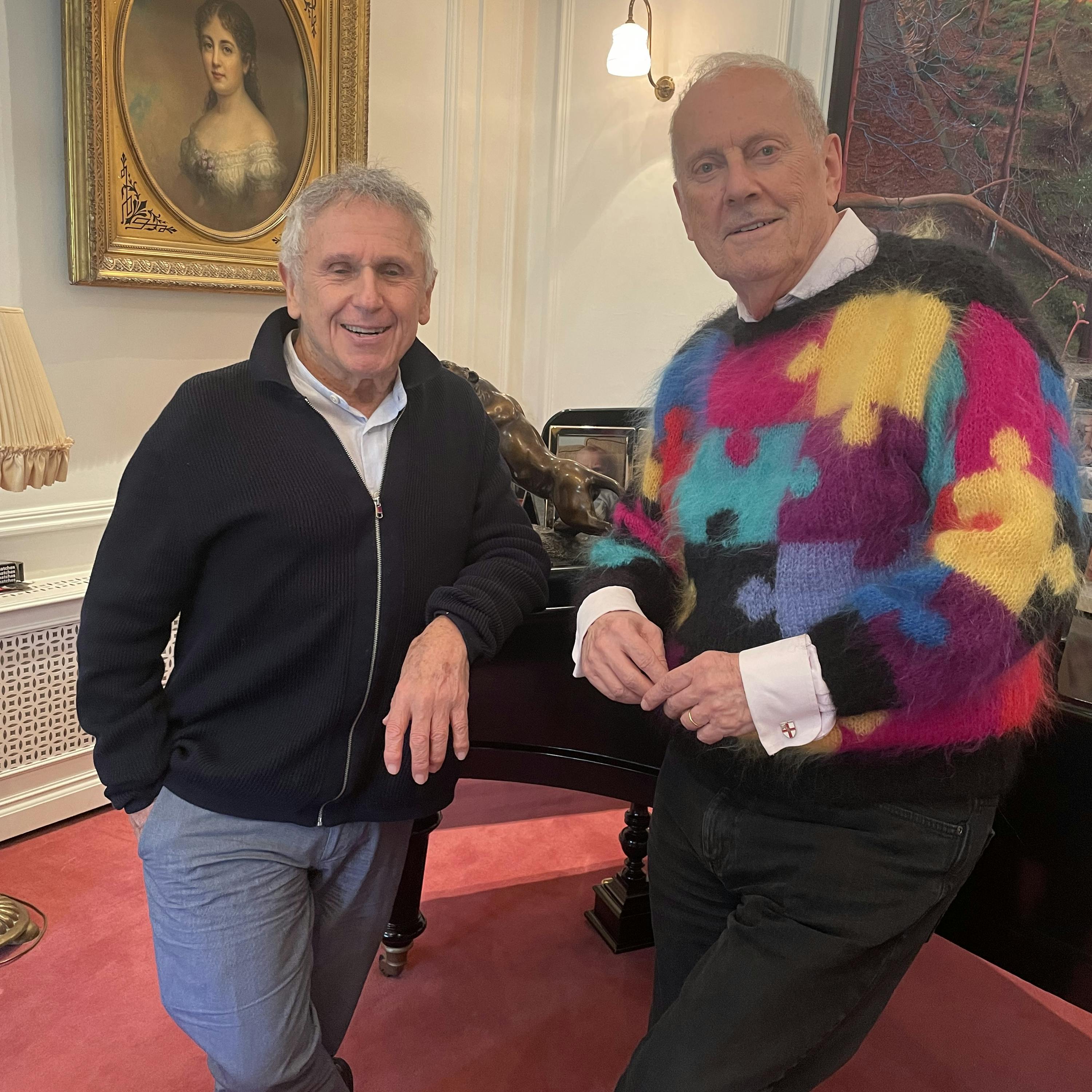
Wayne Sleep was once called "the finest virtuoso ballet dancer the Royal Ballet has ever produced" by the founder of the company, Ninette de Valois. In this episode, Wayne tells Gyles his remarkable story - raised by his single mother in Plymouth and Hartlepool, Wayne overcame poverty and his short stature to become one of the most well known and successful British ballet dancers of all time. It's a fairytale that includes David Hockney, Rudolph Nureyev and Princess Diana, and much more besides. Thank you to Wayne for your time, wit and energy. Enjoy this.
Learn more about your ad choices. Visit podcastchoices.com/adchoices
Hosted on Acast. See acast.com/privacy for more information.


