
 Ask ChatGPT


 Rosebud with Gyles Brandreth
2 Jan 2026 · 1h 22m · 42 chapters
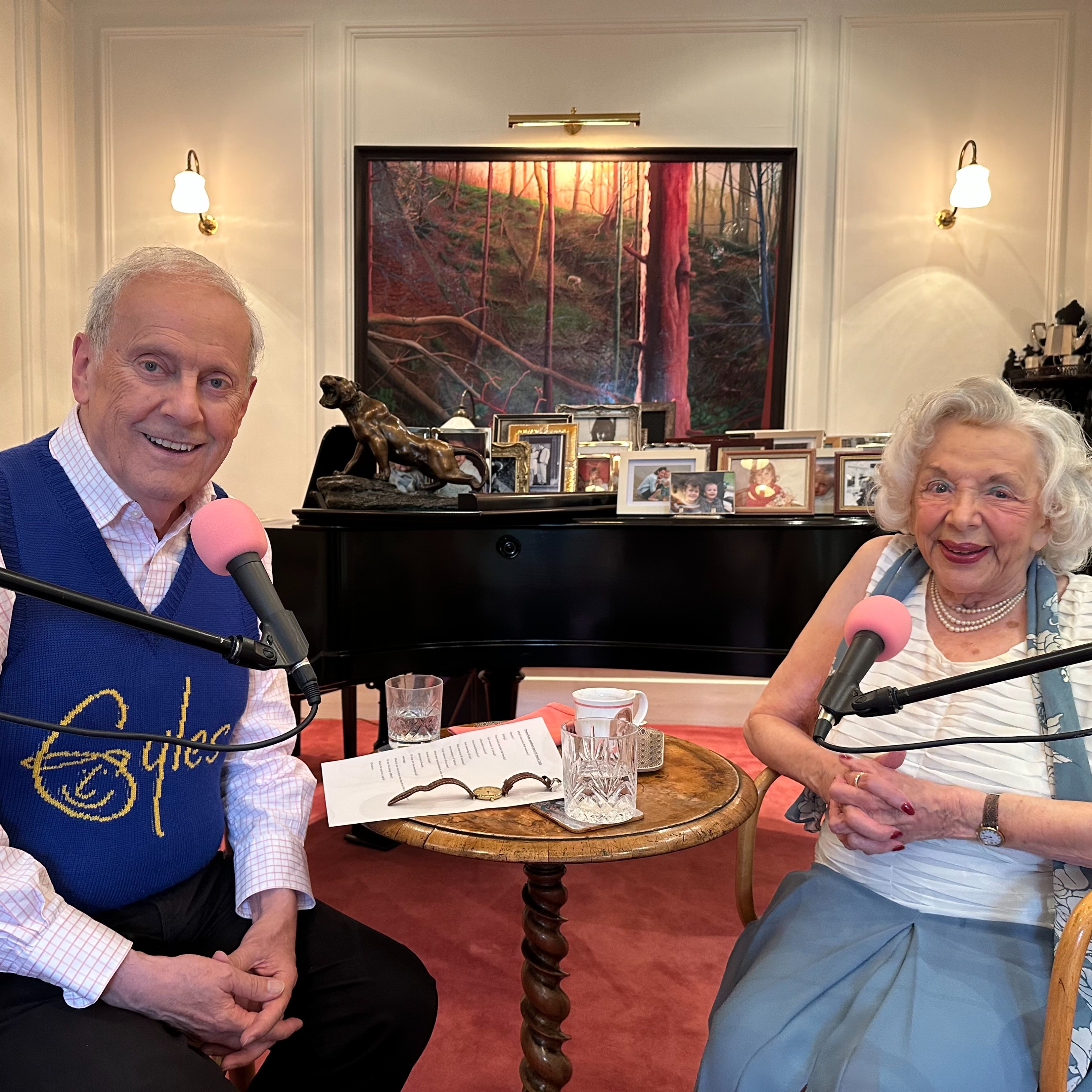
Host: Gyles Brandreth
Gyles Brandreth, a legendary British writer and broadcaster, interviews fascinating guests about their first memories and experiences in a blend of nostalgia and laughter.
Written by AI. May contain mistakes.
Gyles shares what to expect in the new year for the podcast and its community.
“We do actually have several centenarians who are regular Rosebud members of our family.”
Gyles introduces Thelma Ruby, a remarkable centenarian actress.
“But today's conversation is so special, I want to get on with it.”
Thelma Ruby shares her first childhood memory and dance experiences.
“Thelma Ruby, born the 23rd of March, 1925.”
Thelma discusses her early education and performances as a child.
“All I can remember is that I was out for a walk with my nanny and I got lost.”
Thelma shares details about her parents and their origins.
“I think now they start, I mean, they start much earlier at nursery school, but I didn't go till I was five.”
Thelma recounts her grandfather's journey from Lithuania to England.
“jews leaving lithuania oh yes it was in the 19th century when they it was a lot of persecution and everyone who could left.”
Thelma talks about her mother's career as a child performer and their family life.
“As soon as you were allowed at the age of 10 to go on the stage, and I've got on my wall at home a bill from Morecambe Pier in 1911 when she was 10, where she's billed as dainty little Paula Ruby, a real juvenile star.”
Thelma reflects on her parents' relationship and her childhood memories.
“Lovely and what were they like together what is your give me what they were like together when you were young what's your early memories.”
Thelma shares her relationship with her older brother Geoffrey.
“he'd say, why am I spending all this money?”
Exploration of Geoffrey's early school experiences and mischief.
“And I felt very inferior, I think, because whatever I said was what I'd already heard Geoffrey say.”
Thelma shares vivid memories of her first home in Leeds.
“Now, I was so shy, I never, ever told anybody that my secret ambition was to be an actress.”
Thelma reveals her hidden dream of becoming an actress from a young age.
“I've never, only once did I remember anything anti-Semitic in my whole career and life.”
Thelma discusses her awareness of her Jewish identity during her school years.
“In fact, at one point, my grandparents came over and took a flat, and we lived with them with a very happy year.”
Recollections of Thelma's experiences in school plays and her love for theatre.
“and she swears it's true that at the performance, we didn't have a stage, but we had curtains that you closed just by a string, but you could pull them together.”
Thelma reflects on her awareness of the impending war and its impact on her family.
“Yes, I did have, but more from my college in New York.”
Thelma recounts her challenging journey to America amid wartime fears.
Learn about the challenges faced during the journey to America and the emotions involved.
“But we were in a boat that was not a steamship.”
Explore Thelma Ruby's early life in New York with her mother and their support network.
“And were you frightened or excited on this boat trip?”
Discover Thelma's experiences in high school and her early interactions with diverse cultures.
“So you and your mother, I imagine, were very close because of the pair of you in New York.”
Uncover how attending Finch College influenced Thelma's career aspirations in acting.
“I wasn't going to tell his Uncle Henry to pay for me to go to a private college and I couldn't go to a free one because I wasn't an American citizen.”
Hear about Thelma's return to England and her experiences during the war.
“One of the jobs I got was teaching Sunday school in a synagogue, and it was on Long Island, a place called Great Neck, Long Island, and you had to get a train.”
Learn about Thelma's first steps into acting and how she developed her stage name.
“And I come back home exactly the same date, leaving New York on October 6th, arriving back in England October 16th.”
Explore Thelma's experiences performing for soldiers during WWII and the emotional impact.
“And so that's in November 1940, I became Thelma Ruby.”
Thelma shares vivid memories of V.E. Night, highlighting the emotions and experiences of that time.
“And after five years of blackout, they had floodlit the fleet.”
Thelma discusses her early career in theatre after moving out on her own, reflecting on her enjoyment and professional growth.
“But now is the time when, for the first time in your life, you're really without your parents.”
Thelma recounts her first job in Edinburgh, the challenges she faced, and the kindness she received from colleagues.
“I'd fallen asleep just before we arrived and when I opened my eyes and heard all that, I didn't know what they were talking about, the Scottish accent.”
Thelma reflects on her experience in a repertory company, emphasizing the rapid learning and improvisation required.
“I remember going all around Edinburgh trying to get digs.”
Thelma discusses her romantic relationships and the complex dynamics surrounding them.
“So two shows, you're doing a 7 o 'clock show and an 8.45 show, that sort of thing, yeah.”
Thelma shares her experiences portraying Golda Meir, detailing her preparation and the emotional connection to the role.
“but I would like to ask you why you think that came about.”
Thelma reflects on the personal growth and insights gained from portraying Golda Meir, emphasizing her admiration for her strength.
Thelma Ruby shares her admiration for Golda Meir and discusses human rights.
“because in Israel she's not altogether popular and I knowing her whole story and and making it my business to really understand her from childhood onwards.”
Thelma Ruby reflects on her experiences working with Topol and Orson Welles.
“because they're people who are famous and you've worked with.”
Thelma recounts humorous and challenging moments from her time working with Orson Welles.
“Yes, two people I didn't like No, I don't think I should say names Okay, you don't need to say names What sort of people were they?”
Thelma discusses her friendships with co-stars, particularly Judy Dench.
“Well, the Lord Chief Justice was an elderly actor and was in such a state he was still in his dressing room.”
Thelma shares her favorite moments and thoughts on life as she turns 100.
“Eight shows a week there were real tears streaming down her face.”
Thelma reveals her insights on longevity and the importance of optimism.
“A moment of sadness that comes immediately into your head.”
Thelma shares her regrets and the lessons learned from her emotional experiences.
“Well, keep breathing A lot of it is luck I am luck I think part of it is because I've always been an optimist My cup's always half full I try and let other worries slip over me I try not to worry.”
Thelma Ruby shares her insights on life, happiness, and personal growth after reaching 100 years.
“I think I'd have been a bigger name and a bigger star if I'd been able to talk back and fight for myself.”
Gyles expresses his admiration for Thelma Ruby and her impact as a centenarian.
“And as you can tell, I love Thelma Ruby.”
Gyles recalls his childhood experiences in a church, highlighting its significance in his life.
“So the idea of these extra episodes is I'm going to be taking Harriet down memory lane.”
Gyles reads a letter from Dr. Linda Stephen discussing the science behind tears and emotional responses.
“Rosebud will still be here free for you every Tuesday, every Friday.”
Gyles wraps up the episode by expressing gratitude to listeners and inviting engagement.
“thanking you for taking the time and trouble to write in such a fascinating way.”

Get the gist, explore an idea or ask about something said.
 Claude
On Rosebud with Gyles Brandreth, what are the key points of this episode?
Searching your listeningAutomatic transcript. May contain errors.
0:00Happy New Year. This is 2026. This is Giles Brandreth. This is Rosebud. Cue the music.
0:30Happy New Year. I'm Giles Brandreth welcoming you to the first Rosebud of 2026. We thought we would start with somebody very special. We've actually found a centenarian for you, somebody who has been alive longer than almost all our listeners. We do actually have several centenarians who are regular Rosebud members of our family. More about the Rosebud family in a moment. But simply to say to you, thank you so much for being with us again this year. We promise you we have a lot of excitements in store. Today, as I say, a centenarian. I think the most remarkable centenarian you will ever have come across.
1:10But, well, this month alone, the treats we have in store for you. We're famous on Rosebud for having theatrical nights, theatrical dames. Well, we've got certainly one of each of those this month. And we've also got a movie icon. Oh, yes. Lots of excitements on Rosebud this year. free for you every Tuesday, every Friday, right through the year. And something new this year as well. We're launching the Rosebud Family. This is for people who want that little bit extra, including ad-free listening, updates on events that may be happening, and some extra episodes. Me and Harriet tripping down memory lane together.
1:51Me reading you a murder mystery. I hope you enjoyed the Christmas murder mystery. You can still catch up. It's all there. It's there forever. That's the joy of Rosebud. It never leaves you. And I hope you never leave us. If you want to join the Rosebud family, it's quite simple. You simply go to patreon.com, P-A-T-R-E-O-N.com forward slash rosebud, and everything you need to know will be told to you there. I'll tell you more about that at the end of today's conversation. But today's conversation is so special, I want to get on with it. it's with a friend of mine who I've known for a number of years her name is Thelma Ruby she's an actress she's more than 100 years old I went to her 100th birthday party last year so she's coming up for 101 I went to a birthday party and I was honored to sit next to her and I realized talking to her why she has lived so well for so long she is an incredibly positive person.
2:51She told me over lunch on her birthday that she couldn't remember ever having been angry in her life. It's a remarkable thing, isn't it? She is a remarkable person. And then after lunch, I said a few words, and then she, on the stage, did a turn. Well, she's an actress. She can sing, she can dance, and how? I mean, she was, oh, with Topol in Fiddler on the Roof. She was in Cabaret with Judi Dench. She's worked with Orson Welles. She's been with the greats, and she is great. She is Thelma Ruby, and I think you will find her story completely fascinating. And I thought we should start with the centenarian, because as the year goes by, we're going to be, well, we're going to be going down, probably.
3:36We're not going to have a centenarian every week. We may well have people in their 90s, 80s, 70s, 60s. We're going to have some young people as well. All sorts on Rosebud. This is going to be a very special year. I'm thrilled that you're with us at the start of it, and I know you will enjoy, my friend, actress, entertainer, writer, a unique human being who is going to begin our Rosebud year with the centenarians' perspective. Cue that music.
4:17Thelma Ruby, born the 23rd of March, 1925. That's more than 100 years ago. Yes, and yesterday I got the most beautiful flowers from my nephew, celebrating that I'm now 101 and a half. Well done. Oh, that's excellent. He's going to celebrate every six months from now on. Well, many happy returns. I want to take you back a long way because I want to hear from you, Thelma. What is, in your head, your very first memory?
4:54It's a strange memory because it must be from when I was very tiny. All I can remember is that I was out for a walk with my nanny and I got lost. and I cried and I found a wall and I put my hands along the wall and I can just remember myself trying to find somebody by walking along this wall. That's my very first memory. That's an interesting memory. But the first thing I clearly remember, I think, or one of them, I didn't start school till I was five. I think now they start, I mean, they start much earlier at nursery school, but I didn't go till I was five. But before that, I went to a dancing school in Leeds.
5:39Miss Cooke Yarbrough was her name. And we did a concert at the Leeds in Roundy Park at the music festival, We Little Girls. And I can remember the dance. I can sing you the melody. What is the melody?
6:00You know the Heifetz memory? Yes. And I can remember the dance. Skip, skip, and we had a chiffon scarf. We were up, down, and up, down with the chiffon scarf. And I remember that very clearly. What is extraordinary is you could probably do that still. Oh, I can. Skip, skip, skip, turn around. Okay. Tell us why you're in Leeds, who your parents are, why you had a nanny. Who were your parents? Take us through each of them. Well, on the face of it, they weren't well matched. It so happened they had 58 happy years together. Good. My father was born in Lithuania, but carried as a baby to Dublin, where he grew up, and qualified as a dentist at Trinity College, Dublin.
6:53And he was one of nine children, and his older brother had come to Manchester, also a qualified dentist, and he said there's an opening for a jewish dentist in leeds so daddy came to live in leeds what was his name when he left lithuania what was his childhood name louis wigader louis wigader that was his name that was your dad and why did the family leave lithuania were there many jews leaving lithuania oh yes it was in the 19th century when they it was a lot of persecution and everyone who could left. This is what people used to call the pogroms. The pogroms and all the anti-Semitism was there.
7:39And my grandfather came. He actually came ahead of time. He stopped on the way. He was a diarist and I've got his diaries. So I know everything that he did. Goodness. So it's a wonderful treasure we've got. So this is your grandfather. My grandfather. He came over in the late 19th century. That's right. And he went to the north of England for what reason? Because there was a Jewish cell. No, first of all, he came through Amsterdam. He came through England. But he ended up in Dublin, where he had no money. He was a door-to-door salesman trying to just make a living. And after a few months, I think someone said, isn't it time you brought your wife?
8:22And his wife was pregnant with Daddy. and so his wife came over with a little baby and he had other little children and then they had lots more in Dublin and eventually Grandpa opened a shop selling wallpaper and pictures to go on the wall. Wonderful. This was in Dublin? In Dublin, yes. In fact, apparently the name of that shop is still all over Ireland, Wiggeda. Well done then. Yes. Excellent. So he went to Dublin, but your father then came to England. So he came after he was qualified in 1914. So he came to Leeds, and my mother was born in Leeds. And who was she? What was her name? Lubelsky was her surname, but she was a child performer, and she went on the stage with her first two names, which were Paula Ruby.
9:21Ah, this is where the Ruby comes in. So Paula Ruby was her stage name. That's right. And she began as a child performer? Yes. As soon as you were allowed at the age of 10 to go on the stage, and I've got on my wall at home a bill from Morecambe Pier in 1911 when she was 10, where she's billed as dainty little Paula Ruby, a real juvenile star. and she was on the bill with all these famous music hall performers and what she did apparently was to have a copy of their clothes and sing their songs and i've even got a little picture of her as vestity singing i'm following in father's footsteps which was her famous song vestity was a famous male impersonator which is quite a fashionable thing yes to be a woman dressed up as a man in evening suit and so your mother as a little girl did it little girl dressed up as a man singing i'm following in father's footsteps lovely oh what fun and my grandmother her mother was very hospitable and heard that this young dentist was on his own a young jewish dentist and so she invited him for a meal and he fell in love with this 13 year old school girl waited for her and they were engaged when she was 17 and married when she was 19.
10:54Gosh and it clearly worked because they had 48 not 48 children 48 years together yes. Lovely and what were they like together what is your give me what they were like together when you were young what's your early memories. Well my father was very religious my mother less so but she said when she married him yes okay i'll keep everything for you darling and so we had a religious home which meant saturday the sabbath we weren't allowed to ride to carry money to poke the fire goodness some some people don't turn on lights but we did turn on lights and were you as a little girl religious yes i was actually i was until well really till i went in the theater until my early 20s and i decided the theater was my religion and really left it behind and what were they like as a couple he was very religious does that imply he was quite traditional did he expect from his wife traditional wifely virtues well i don't know if expected she certainly He gave it, but she was a bundle of fun.
12:09She was beautiful. She was bright. She was funny. She was so talented. She grew up with a beautiful lyric soprano singing voice. And then she was in Noel Card's This Year of Grace. Oh, in the 19th. In 1928 in London. So she was allowed. He didn't mind her going on as a professional actress. No, he said from the beginning, I'm proud of what you can do. And can you picture them together for a moment? Conjure up a picture of your parents together at their best. Well, they were always loving. They went everywhere together if they could. Mother would cook. We had always, we had fish on a Friday night and we had chicken on a Saturday lunch.
13:03and we had roast beef on Sunday. I can see them now with Daddy and Joe. Oh, Daddy was so funny because when we'd go out for a meal, he'd say, why am I spending all this money? We have much better food at home.
13:23And I've only got happy memories. I can't think of anything unhappy from my childhood. You had brothers and sisters? I had one older brother. That's all. That's all, yes. Gosh. Geoffrey. Geoffrey. Yes. And what is your recollection of him? Oh, I adored Geoffrey. He was two and a half years older than me. I was painfully shy as a child. Painfully shy. You wouldn't think it now, I know. But why do you think you were shy? Because clearly your mother was not shy. No, she wasn't. Maybe your father was a little bit, was he? Quite reserved? He was shy, yes. And Geoffrey was so brilliant. Oh. And I felt very inferior, I think, because whatever I said was what I'd already heard Geoffrey say.
14:07And he was a naughty boy in some ways. He was expelled at the age of seven from school. What did he do? Well, I went to the Leeds Girls High School, which was a girls' school, and we had a brother's school, which was the Leeds Grammar School. But for the first two years, I think from five to seven, boys and girls were mixed in the little nursery school and he went there and the girl in front of him had long hair and he cut all her hair off they felt they couldn't cope with him anymore and they sent him to the grammar school so all through his school career he was a year ahead of all his uh all the people in his house yes but he coped quite well he was certainly capable of that yes he was he was brilliant describe the house that you remember your first house in leeds what was it like well i was born at home and it was chapeltown road it was a lovely old house it later became a club oh i had an experience i was with my husband in leeds and we were passing the house and i said i don't know i'd love to go and have a look at it now because i grew up in that house and we went and rang the bell.
15:25She had a front room, a lounge, which we hardly used. We lived in the morning room at the back and we had a dining room. And I went into the lounge and it was this terrible club and there were all these people smoking drugs and terrible music and everything. And I said to Peter, please take photos of what it looks like. He started to take photos. well they immediately threw us out because obviously they were all underworld characters how interesting oh it's rather sad your beautiful home my beautiful home yes mother had the lounge all in wine color with a piano and and we only used it for visitors for guests and your bedroom can you remember your bedroom oh yes i had a bigger front bedroom jeffrey had a little bedroom next to me but on saturday night they'd put the radio on the landing between us so we could listen first of all it was in town tonight followed by variety variety there was a variety show with comedians and we could both listen to it in our bedrooms i had a big bed and i had two mirrors Now, I was so shy, I never, ever told anybody that my secret ambition was to be an actress.
16:50Never. Even from the earliest age, that was your secret ambition. Naturally, in a way, because your mother was still having been a child before. I adored her, and her sister Mona, my aunt, was an actress, a repertory actress mostly, and I used to listen to her lines while she was trying to learn them. In fact, one day, I was watching the show. It was The Ghost Trade. Oh, yes. I know the player, yes. And she dried, and I called out from the audience. I remember the line, I agree with Willie. You're in the audience watching this, and she dries, and the prompt comes from the stalls, from Thelma, little Thelma.
17:31Little Thelma. Now, you mentioned the mirrors. That suggests to me that you were looking at yourself in the mirror and thinking, I'm going to be an actress one day. Well, one mirror was for the film, and the other was for the stage. So when you were in front of one mirror, you were thinking, this is going to be my life when I'm an actress on the stage. That's right. And the other mirror, this is me when the film's, when I'm going to be a movie star. That's right. And you turned between one and the other. That's right. But never revealed this to anyone, to Geoffrey, to your mother? No, never. It's just in your head.
17:58Never. In fact, if I hadn't been evacuated to America, I don't think I would have become an actress. I wouldn't have had the courage. I don't know what my parents wished, which would be to marry a nice Jewish doctor or lawyer from Leeds. Maybe from Manchester. Were you conscious as a little girl that you were Jewish? Oh yes. Obviously you were at home because the faith was important to your father. Oh yes and most of the friends were Jewish. My parents' friends were all Jewish and we went to a synagogue every Saturday. But the schools you went to weren't necessarily Jewish. No, no, no. I went to an ordinary school.
18:36And were you welcomed there? Were you conscious when you were away from the home that we are Jewish people? Did you feel self-conscious about it? Well, every morning at school we had separate prayers. There was the Christian prayers and we Jewish children had Jewish prayers. But it wasn't a problem for you? You didn't feel as a family? No, I'm very lucky. I've never, only once did I remember anything anti-Semitic in my whole career and life. Well, in a hundred years, that's quite good news, isn't it? It is, isn't it? But what was that incident? Oh, it was when I was in The Three Waltzes, my first show, which was with Evelyn Lay.
19:14Oh, Boo Lay. Boo Lay. And my line was in the second act. And the scene is the wings of a theatre. And I ran up to the lady playing her dresser. And I say, Mrs Evans, Mrs Evans, come quick. Kate is doing an encore. The king stood up and clapped. Oh, a great line. That was my first line on any stage. Well, I'm not surprised you remember it. But it was during that that you experienced some... Yes. I auditioned with a line, and it was the stage director who was taking the audition, and he said, no, I think you should do it. And I said, well, I did it this way because I thought, which is something you shouldn't do.
20:03If a director asks you to do something, do it, and if it doesn't work, then you can talk about it. So he took me into the dressing room. He said, oh, you people, you're always so pushy. Oh. But I'm going to give you the part. Anyway. He gave me the part, yeah. But he meant you Jewish people are always so pushy. Yes. But that's the only thing in 100 years. That's the only thing I can remember, yes. Oh. Go back to you as a little girl at school. Are you clever? Do you do well in classes? Yes. Yes, I was bright. In fact, the first year, this is quite a nice story, I think, I was evacuated to Dublin for the first year to stay with family over there to get out of the danger of the bombings.
20:48War breaks out in 1939. That's right. And so your mother, you and Geoffrey first go to Dublin. Your father's staying in Leeds. No, my mother didn't go to Dublin. I stayed with other members of the family. In fact, at one point, my grandparents came over and took a flat, and we lived with them with a very happy year. We got on so well with my darling grandmother. She made me laugh. She was so funny and she was so delightful. How did she make you laugh? Evoke what was making you laugh with your grandmother? What sort of thing did she do? For instance, she was mad about theatre and when she got the daily paper and that she saw some variety star of 99 and died, she'd say, always, grandmother will be sorry.
21:41And she was just always a delight. And so we had a lovely year living with them in Dublin. And in the schools you were at in Leeds and in Dublin? Oh, and in Dublin, I went to school, the Alexandra School, and you asked if I was bright. There they had a system where each week you had a place to show how well you'd done the week before. One, two, three, four, you know. And number one was always a girl, a Jewish girl called Ruth Sampson. She was always number one. I could get to number two, but I could never beat number one. Of course, we lost touch. But many, many years later, She was coming to London.
22:26She was living in Australia. But she had a sister in London, and she'd found me, and could we meet again? So we did. We met again. And then she moved to Israel because her children had gone to live there. And this month, I've been invited to her 100th birthday. Wonderful. So she's the only other person I know that's got... Who's 100? Yes. And is she still number one? I think you should both take an IQ test when you meet up. Well, we don't meet up. She lives in Israel. Well, no, but if you do meet up. Well, we will, yes. If you went to the party. You're not going to go to the party then? No, I'm not going to the party.
23:05Well, on Zoom. I've sent a message, you know. I think you should both be given an IQ test because I think you should be number one. It's a long race. But now you're both in your 101st year. Isn't that lovely? As this bright girl coming second in the class at school, what were the subjects you were strong in? French I loved, English I loved. In the nine years I was at Leeds Girls High School it was no drama and that was what I wanted. Only twice, now I'm going to tell you about those twice. The first was the first year I was there when I was five and they said we're going to do The Old Lady Who Lived in the Shoe as a play and she's going to have two children, Mary Mary, quite contrary, and Tom Tom, the Piper's son.
23:59Now, those who are playing in Mary's group are so-and-so, so-and-so, so-and-so. Those who are in Tom's group, so-and-so, know Thelma Wiggeter. I was about to burst into tears and she said, the old lady who lives in the shoe is Thelma Wiggeter. So now this, I don't remember, but my Aunt Mona was there and she swears it's true that at the performance, we didn't have a stage, but we had curtains that you closed just by a string, but you could pull them together. She said, and at the performance, the curtains stuck. And she said, I move forward, and pulling the curtains together, I said, you thought you were going to see me put my children to bed, didn't you?
24:50But you're wrong. And closed the curtain. Well, then, how old are you at this time? Five. Wow, brilliant improvisation. She knew then that I'd be on the stage. And what was the other play that you did at school? The other play was A Kiss for Cinderella by... Oh, Jane Barry. Jane Barry. And I played a man, Danny, a wounded soldier. and this was in 1936 and I'd lost touch with the Leeds Girls High School but at one point I needed a dentist in Wimbledon where I live and someone recommended a lady dentist and I went to her and I said where are you from? She said I'm from Leeds. I said what school do you go to?
25:38She said I went to Leeds Girls High School. So both of us there in the surgery stood singing the school song in Latin, Juvenes Adeste, we are Guinness Puri Quay. And she told me there was a London branch of what they called, they called them the old girls at the Leeds Girls High School. So I went to a meeting there and a lady came up to me. She said, I remember you in a kiss for Cinderella. I said you couldn't possibly that was 1936 she said I do so another lady came up I said isn't it remarkable this lady remembers me in the play I did called A Kiss for Cinderella this girl said I was in it oh extraordinary wonderful so those are the only theatre things I did at the Leeds Girls High School was there a teacher there though that was special to you and did you have a memory most people have a special teacher in their lives?
26:41Yes, I did have, but more from my college in New York. Good. Okay, well, let's get you to New York. Before we get to New York, though, this is the 1930s, born in 1925. By 1939, you're 14. How aware are you and your family of the impending war and what the war was about? very much so because we knew what was happening to the tumors you know already the refugees were coming we never knew of course until after the war how bad it was but we were certainly aware and my brother was very aware my brother followed all the news in fact when he was a naughty boy and they didn't know how to punish him first of all they put him down in the coal cellar which he loved he could play with the coal and make things from it and then when he got older if they took away the daily paper that was his biggest punishment he followed everything and i remember being in the garden with him and he had a big map this was somewhere in the 30s and a bird did his business on the map he said that's the only place where the war won't get to because that's the lucky place and he knew he knew about Nazism and about Germany so you understood why your father wanted to send you safely to America yes
28:21so you arrive your ship was spared well Well, that was a bit of a, because we went out in a convoy of, I don't know, 10, 20 boats. But we were in a boat that was not a steamship. It was run by, I suppose, electricity or something. Anyhow, it broke down on the first day. Gosh. And the rest of the convoy sailed on. And we were stuck with all these U-boats just floating around. But then they mended it. So on our own, we crossed, took 10 days to cross to America. We arrived on the 16th of October. And were you frightened or excited on this boat trip? I was excited. I can remember sitting on the stairs there with some friends I'd made on the boat and having my very first alcoholic drink.
29:13Tom Collins, well, I didn't know it was alcoholic, but there's a bit of gin or something in it.
29:21and I remember enjoying it very much after I got over my seasickness I'm a very bad traveler because you're 15 16 by now so you can have a little alcohol did you know I was 14 14 I was 15 actually 15 yes because March 1925 yes you're 50 so you arrive in New York and this really is the making of your life isn't it oh yes tell us about that where do you go to live well first of we arrive in New York, amongst daddy's good deeds, he was full of helping people, was he started a lot of boys clubs. He was very, very keen that boys should have clubs to go to. And he had just brought over to England an American boys club.
30:08And the people from that club met us at the boat and put us in a hotel, and after a couple of days, somebody drove us up to Albany to meet our sponsor. Wonderful family. They were wealthy. Daddy wasn't allowed to send any money. Uncle Henry kept my mother and myself for four years in America. I will not take a penny, he said. And this isn't Uncle Henry, you call him? I called him Henry Barnett. It was Uncle Henry. And he was not actually related to you. He was just a good man. Just a good man. Who funded the whole of this thing. Yes. Wonderful. Wonderful family. I'm still in touch with his great-grandchildren.
30:52And so where did you and your mother live? And so when we went up to visit him, mother said, look, all my life I've lived in the provinces. Would you mind if we lived in New York? He said, no, I'll send you the money down to New York. So we lived in New York. where about for a year in one west 68th street and then for three years in 106 west 76th street yeah this is good this is manhattan yes and did you go to see shows was it was it all was life going on there was someone we we met there or we knew i can't remember how we knew him but he bought us theater tickets for the whole time we were there he would buy us theater we could we didn't want to spend a penny more than we had to so we couldn't buy theatre tickets but he bought us tickets i remember his name was jaime ross this man and so the tickets were always in the name of mr ross and i remember going to a show one night we're sitting and enjoying the show started some people came up and said you're in my seats we said no we're in he said no our name is ross Our tickets were in the next door theatre.
32:01Oh, in the wrong theatre. In the wrong theatre. And that was Panama Hattie. Oh, my goodness. Well remembered. So you and your mother, I imagine, were very close because of the pair of you in New York. Yes, that's when we really became very close. Mother got a job at the British Consulate in New York as a receptionist. in her most English-speaking voice, she would meet people with, can I help you? And she was happy to do that, having been a performer herself. She didn't mind. Oh, we both. I mean, last year I was there, I got as many jobs as I could to try and help, you know, not. And then I first of all went to a high school called Julia Richmond High School, 7 ,000 girls at school.
32:52first time I'd ever met a black person ever was at that school. And obviously you would be conscious of that because they looked unusual to you. They did look unusual. It was lovely getting to know them. And I graduated because in those days the English school was on a higher level than the American school. So I graduated. I got there in October and I graduated the following June. what to do. I've gone over for safety. I wasn't going to tell his Uncle Henry to pay for me to go to a private college and I couldn't go to a free one because I wasn't an American citizen. We went up to Albany to the headquarters of the education department and they said, well, there is a college in New York that may give you a scholarship, which they did.
33:44And this was this wonderful place called Finch. And when I was being interviewed to go into the college. She said, what subject would you like to major in? And I said, well, Daddy thinks I could be a writer because I was writing poetry then. I said, but I'd like to be an actress. It was the first time I'd said it aloud. And she said, we have a fine theatre arts department here and it's only because of Finch and only because of Uncle Henry taking us there. The only reason that I became an actress was because of that moment in 1941 when I went into Finch. Can you remember the first time you were on a stage thinking, yes, it is going to work?
34:34I don't know that I remember, but I do know that it happened at Finch. I was in many productions there. I remember one day going in backstage and someone rushed up to me and said, oh terrible Pearl Harbor's been bombed I said who's she?
34:56and they had for the men's parts they brought in professionals to keep the standard really high for the productions but by then then America of course after Pearl Harbor then they came into the war they joined the war and helped bring it to an end indeed and your plan there was always to return to England when the war was over And we returned while the war was still on. I think mother thought that dad had really been on his own long enough. And were you on your own in the sense that, were this when you first encountered boys? There were 7 ,000 girls in the school. Yes. Can you remember any early boyfriends?
35:34Yes.
35:38Yes, I suppose I can tell the story. One of the jobs I got was teaching Sunday school in a synagogue, and it was on Long Island, a place called Great Neck, Long Island, and you had to get a train. And the first day when we got a train with the other teachers, we got on the train, and I said, you know, I'm teaching this morning, I've got a book to teach from, but I don't know what I'm going to teach. I don't know anything. So this teacher, who was a rabbinical student called Bill, He said, I'll tell you what, he says, you go in and you spend the first half hour teaching them how to say your name, Wiggeda.
36:25She said, if they ask you anything you don't know, just say, oh, I'm glad you asked that question. I think you should go home and look it up and tell me what you find out next week. Well, Bill became a great friend and we would go out actually every week to a different synagogue. You know, there are all different sects and types of Judaism and there are different synagogues and we'd go and... Oh, synagogue tasting. You would explore the different synagogues. It's like Peter, when I met him, when we went round to the different theatres, he said, we weren't on a pub crawl, we were on a theatre crawl.
37:07So this was a synagogue crawl. Very good. And you and Bill, did you hold hands? No, no, we were just friends. But I remember I wrote a diary for a few weeks and now I keep a diary every night and have done since 1978. But I just kept it for a couple of weeks in January and I found it and it said, went out with so-and-so last night. No intelligent conversation. You're quite demanding. I was such a slob can you remember the first boy who actually did offer intelligent conversation and was a boyfriend boyfriend
37:54no I was rather backward in that way no bad thing you know I had a romance which I never talk about because it was with a married man and went on for a very long time no was this when you were there No, this was back home when I was in my early 20s, yes. But I hadn't been, you know, I never went to clubs. I never went to pubs. I think I was rather backward. Well, you were reserved. And also, you were concentrating on your work, loving what you were learning at Finch. And then you come back home. And I come back home exactly the same date, leaving New York on October 6th, arriving back in England October 16th.
38:40Goodness. And I was 19, which, of course, I had to be called up because the war was still on. Oh, girls were called up, were they? Oh, yes. Did you not know that? I didn't realise that they were called up. I mean, I knew they served. Oh, yes. And with distinction. We had to go. Wow. We were called up. I didn't want to go into a factory or into uniform. I wanted to use, if possible, my newly acquired skills. I found out that if I went into ENSA Oh yes That was counted The entertainment I mean I know It was called Entertainment National Service Association But as you know I do know The troops called it Every night something awful Yes And the headquarters was at Drury Lane Theatre So Mother and I came down From Leeds to London And we stood at the side watching the auditions and there was an old lady playing the violin and there was a very portly tenor saying oh things come home at even time i thought surely i could do better than that and i went on and oklahoma the show had opened on broadway but it hadn't come to london so there's a song in that that i sang i can't say no a comedy song in my loudest most raucous voice What's the opening line of it?
40:04Can you remember? Yes. I'm just a gal who can't say no. I'm in a terrible fix. I always say come on, let's go. Just when I ought to say nicks. And I imagine they said we'll take her. Well, a man ran onto the stage at the end and said, you're just what I'm looking for, for a show that starts rehearsing next week. Come into my office. The dressing rooms in Drury Lane were the offices. So Mother and I went into his office. He said, what's your name? I said, Thelma Wigander. He said, you can't go on the stage with a name like that. Nobody would be able to spell it or pronounce it. I hadn't really thought.
40:48I thought maybe Thelma Leeds would be a nice name. Thelma Leeds, rather good. And Mother spoke and said, well, my stage name was Paula Ruby. He said, Thelma Ruby, fine. Be at rehearsal on Monday. Wow. And so that's in November 1940, I became Thelma Ruby. 44. 44. November 1944, you become Thelma Ruby. And I still am Thelma Ruby, all these years later. And what was the show? The show was in the hospitals division. We went to hospitals all over the country. It was a review, and I was singing comedy songs. I got a few comedy songs. And I grew up very quickly because one audience, they'd all been blinded.
41:37One audience, they'd all lost limbs. And across the front were couches onto which they lifted the boys who'd lost all four limbs. And they went to stately homes, which were convalescent homes. We went all over the country. And on VE night, which was one of the most memorable, there was a surgeon during the war called Archibald McIndoe who did marvellous work plastic surgery on people who'd been burned and they had to have a lot of operations and this was the place they went to between operations so there were boys with no faces no noses no ears but it was V.E. night what a night what an audience they were how they laughed how they cheered I can even remember a boy standing next to me afterwards in the bar with no hands and he stuck his uh the end of his arm into his beer oh and lifted it we were all drinking to peace and when we went home it was very late it was the middle of the night and we were stationed in chichester and we had to drive through Portsmouth.
42:53And after five years of blackout, they had floodlit the fleet. And when we got back to Chichester, people had gone home by then, but they had floodlit the cathedral and the cross in the middle of the town. I'll never forget V.E. Night. Wonderful. But now is the time when, for the first time in your life, you're really without your parents. Your father's still being a dentist in Leeds. That's right. Your mother's gone back to be with him. That's right. And you are really, you're theatrical, but you're actually innocent. How did you manage then to live on your own? I mean, did you miss your parents?
43:31Or were you so busy performing it didn't matter to you? No, I enjoyed it. I must say, I must confess that I've always enjoyed my career. If I'm working, I'm happy. When I got back to London after the tour, I didn't have anywhere as a home while I was touring round with Ensa. I even joined Equity at that time. I must be one of the oldest members. I think you are one of the oldest members. I suspect you may be the oldest member of Equity. Possibly the oldest working one, yes. I think at this stage, in fact, I may write to them and say, I don't think she should be paying the subscription any longer.
44:10Oh, I don't. Oh, you don't? No, I just got in under the wire where if you were over a certain age, you didn't have to pay. Oh, good. But you're still getting the work, which is good. So how does your then professional career outside of ENSA, how does that take off? Well, the first job, there was an agent, and I'm trying like mad to remember her name. She was a little lady and she had her office in Cambridge Circus on Shaftesbury Avenue. And because I'd come back wearing nylon, which hadn't come to England yet, I had a nylon raincoat, a nylon hat, a nylon umbrella. She used to call me Little Miss Nylon.
44:56And she sent me on a job. It was a musical just after the war called Here Come the Boys. and it was previewing in Edinburgh and somebody in it had taken ill with a small part, would I go and replace them? Well, I'd never been to Scotland. So I'd go on the train up to Edinburgh. I'd fallen asleep just before we arrived and when I opened my eyes and heard all that, I didn't know what they were talking about, the Scottish accent. And I was told to go to one of the hotels, a big hotel. Fanny Farmer I think was her name who was looking after the show asked for hers so I went found the hotel found Fanny Farmer she said oh yes oh yes dear we'll book you in the hotel for tonight tomorrow you must go out and find digs it was Christmas time when all the digs were taken but so she said we're doing a rehearsal with your CD in here in the hotel well, now I'll take you to it.
46:03So I go and I sit, and the rehearsals go. She said, oh, yes, she's better. The person you've come to rehearse, we don't really need you. Oh, no, she'd got better again. She got better again. So you turned up all the way to Edinburgh. Edinburgh. And what do they do with you? So she said, okay, stay here for the week, just make sure she's all right. I remember going all around Edinburgh trying to get digs. I eventually did. and then to go to the theatre to rehearse and nobody knew who I was and I sat in the rehearsal. Nobody talked to me. There was a choreographer called Buddy Bradley from America.
46:44He's the only one who came and talked to me. You see, I've never forgotten. I also never forgot that during the night I got a... Oh, we rehearsed all night those days. I got a terrible headache and a girl from the chorus came up and said, are you all right? I said, no, I've got a test. She said, I'll find you an aspirin. Do you know, I'll never forget the kindness of that girl that night in the chorus, the only one to talk to me, and she went and found me an aspirin. So I can still sing you the songs from that show. Give me a flavour of one of them, your favourite. I'm not afraid, not afraid of the dark.
47:27And it was a lovely show. And at the end of the week, they said, well, we might be able to fit you into the chorus. I said, well, I'm not really a chorus. I don't sing and dance. So she sent me back to London. So that was my very first job. And when did it begin to take off for you? And then the following year, the first time that I'd done a proper part since leaving Finch, actually, was when I got into Harry Hansen's Court Players Repertory Company, twice-nightly weekly rep. Was this in Bournemouth or somewhere like that? No, we toured around. We were in Stockton-on-Tease, Keithley, Stoke-on-Trent and Chester over a whole year.
48:17And this is how it happened. Twice-nightly weekly rep. Amazing. On Tuesday, we read through the play and set the first act. did our two shows and had to learn the first act that night. So two shows, you're doing a 7 o 'clock show and an 8.45 show, that sort of thing, yeah. Wednesday the second act, Thursday the third act, Friday a run-through, Saturday a run-through, Sunday we had the day off, Monday dress rehearsal had opened that night with a new show. Wonderful. Well, it was good and it was bad. And it was good. It certainly taught you to learn quickly. It also taught you to improvise when things go wrong, which they did very often.
49:02But you had no time to develop a character and to do any real acting. It had to be all at the last minute.
49:16Sadly, we're not going to have time to go through each of your career moves. There are three particular performances I want to talk about. But before I do, and I'm not going to pry into your illicit romance, but I would like to ask you why you think that came about. Were you looking for an older person because of your father? I mean, have you thought about that since? It just happened. It just happened. These things happened. It was when I matured, I guess. I think I really was backward. I wasn't bothered about boys. and did you worry at the time did you think no forgive me it was a romance it's me calling it an illicit romance forgive me for bringing my prejudices to the party and then I was terribly lucky to meet Jay Jay Lewis he cast me in a film he was a brilliant film man he wrote directed and produced films two of his famous ones were The Baby in the Battleship and Morning Departure.
50:21Do you remember both of those? And that's when I had a romance that I could be open about. And we lived together for... With Jay? With Jay for nine years until he died, yes. But you weren't married? No, I wasn't married until I was 45. Well, we can talk about Peter in a moment. Yes. But what did your parents make of that? I mean, given that your father was... Well, my father never knew. Ah. Because he'd have been heartbroken because he wasn't Jewish. Ah. So that was another reason. And that really mattered to daddy. In fact, it was better to live with him than to be married to him. That would have so upset your father.
50:59Yes, yes. Yeah. So I stayed with him and I adored him and it was a lovely relationship. And then when did Peter come along? And then, oh, I'd known Peter. I first met him when I first went to visit my brother who'd gone to live in Israel. This is Peter Fry. Peter Fry. And was he Jewish? Yes. He was everything I could have ever wished for. Well done him. I mean I was so lucky. That's what I say. I've had such a lucky life. Where and how did you first meet him? Well I went to visit my brother in Israel in 1959. My first visit to Israel. And so Geoffrey introduced me to Peter. And that was in 1959.
51:45You're 34. and oh that was quick and whenever I went to Israel because my parents had gone to live there I looked him up we were friends and whenever he came to England and I was living with Jay a lot at that time he met Jay they got on very well together and he was married and had a little girl and it was 1970 1970, before we were both free. So from 1959 to 1970, we were just friends. And then you got married. And you were an absolute pair, weren't you? Oh, yes. You were each other. It's what I had really waited for all my life. And I've read your lovely joint autobiography, in a sense, that you did with him.
52:36And your remarkable creation that you and he created together was your, Is it a one-person show, the Golda Meir show? No, no. It's a play, is it? Explain how that came about. Well, the story of that is quite interesting. I went to live in Israel with Peter. A friend phoned, and he was a South African director who lived in Israel, but he phoned me. He said, I'm in a terrible state. He said, I've got to go to South Africa next week and start rehearsing a play about Golda Meir. they insist I bring someone from overseas to play the part and I've cast a well-known actress here and she's just phoned me she's on her way to hospital she can't do it so can you do it?
53:21My goodness I said I can't go to South Africa next week he said I'm coming around now with the script so Peter said you've got to do it it's such a wonderful part so I said I'd do it and so I was taken to meet Golda during the week before I went. Wow. She lived not far from us in Tel Aviv in a simple little bungalow. If there hadn't been a security man outside, you wouldn't have known she was unusual. She opened the door, she made the tea, and we sat down to talk, and she said, Thelma, I want you to do me a favour. I said, what is it, Mrs Mayer? She said, I saw this play on Broadway with Anne Bancroft, and she stooped.
54:10She said, I don't stoop. I can see why Anne Bancroft and why I might have done it, because we're both quite tall, and she was very short. You know, you stoop to try and look shorter. I said, I promise not to stoop, but you are giving me a problem, Mrs. Mayer. She said, what's that, my dear? I said, well, you never stop smoking, and I don't smoke. she said oh don't let that worry you just once in a while light a cigarette put it straight out in the ashtray she said then come back afterwards and tell me all about it so off i went to south africa and the management we worked for had a tradition that the night before the opening night they would have all their black workers come and see a preview the last preview so the first time I did this play was to this all black audience and the last speech I say in the play is straight to the audience in which I talk about I hope that the future will be with peace and shalom and I end up by saying shalom to the audience I said that and a black man jumped up and started waving to me he said shalom and then another woman got upset then the whole black audience got up all waving to Golda and saying shalom shalom shalom and I just stood on the stage and wept because I knew they wouldn't be allowed to see this play after this particular night we're coming towards the end I want to ask five questions the first of which is what did you learn from being Golda Meir for so many years what did you learn about yourself about the world about her what did Golda Meir teach you well a lot really because in Israel she's not altogether popular and I knowing her whole story and and making it my business to really understand her from childhood onwards.
56:27I'm a tremendous admirer of hers, her strength and her principles, you know, her dedication. She was a great, great woman, I think. I only hope that maybe some of it rubbed off into me. As I say, I don't lose my temper, but I do feel things quite strongly. One thing is I believe in human rights. I believe in everybody should have the right to live the best they can. Maybe that's come from her. I learned to love to do a part that you could keep doing for eight years and still find each performance exciting and challenging. I want to ask about two other people because they're people who are famous and you've worked with.
57:20You were infiddle on the roof more than once. Did you do it with Topol? I did it three times with Topol. Topol had a reputation of being a bit difficult. That's right. He had that reputation. And that, as I say, has happened with two other actors I've worked with as well. I happened to get on so well, we become close friends and I loved him. We were very close. Why did people say he was difficult? Because he was demanding. Because he could be. What he and Orson Welles, which I'm sure you're going to mention now, had in common is that they had a whipping boy in the company. They had someone that they were particularly horrible to.
58:06And there was one actress, the one playing the matchmaker in London, maybe I shouldn't mention her name, they hated each other. but I was friendly with both of them so if they had anything to say to each other I had to do it they'd come to me and I had to pass on the message Is there anybody you haven't got on with in your entire life? Yes, two people I didn't like No, I don't think I should say names Okay, you don't need to say names What sort of people were they? They were actors that I just didn't like and I didn't get on well with Only two Well, I suppose in a hundred years that's not too bad It's not too bad.
58:45Two people didn't get on with. But I do. You know, when I was with Stephen Burkhoff, Anita Dobson and Henry Goodman, there was only five of us in the company, and whenever he said anything, because he both directed it, wrote it, and starred in it. This is Stephen Burkhoff, yeah. And when they criticised them, they would talk back at him. They knew how to stand up. I've never been like that. I just burst into tears, if anybody's as critical of me. And he became such a lovely friend, treating me like I was his mother. He would confess all his problems to me. And maybe that's my, you know, what's good about me, maybe.
59:37How did you get on with Olsen Wells? Again, I was so friendly with him. What were you doing with Orson Welles? Well, I'd done Shakespeare only three times in my career, and this was the very first time. Orson Welles had put together two parts of Henry IV and called it Chimes at Midnight, and he was doing that on stage. As a boy, he'd gone round Ireland, I think on a donkey even. That's the line he took. That's the story he told. Whether it's true or not, we don't know. The first time he was given a chance to go on stage was given in by Hilton Edwards and Michael McClearmor of the Gate Theatre.
1:00:20And as a thank you, every few years he would go back and perform in Dublin. And this was one of those occasions. I was to play Mistress Quickly to his Falstaff. My first Shakespeare ever. And I'm with Orson Welles, for goodness sake. As Mistress Quickly. As Mistress Quickly. Imagine how thrilled I was. we did the first reading and for some reason and I've never found out why Orson disappeared for two weeks either he was ill or he had another job or for some reason he didn't well Hilton Edwards was directing the play so he carried on directing us but no leading man he came back for the third week he didn't know a word oh lord he had the book no for the whole week no so we get in the train to go to belfast he has his own compartment to work on his lines and we're to open on the monday night he was very naughty he really was very naughty because i'm standing waiting to go on i look next to me there's a complete stranger he's got on a bald wig with a bit of white hair coming down a red nose red cheeks he padded himself out he was a big man to twice the size totally unrecognizable we were all in a state of collapse he of course was brilliant and this is just from that night one story is uh there's a man playing his servant henry wolf his name was the actor playing nim and he has to go to the side of the stage and say, here comes the Lord Chief Justice.
1:02:08Well, the Lord Chief Justice was an elderly actor and was in such a state he was still in his dressing room. So again, and I thought, you know, how do you improvise Shakespeare? I can improvise a modern play. What if anything goes wrong in Shakespeare? So again he says, here comes the Lord Chief Justice. Nothing. so Orson sitting at the front Henry goes next to him and said I said he cometh but he cometh not
1:02:43oh wonderful oh extraordinary but when we got to Dublin he took to me and the boy playing Hal and every night after the show he invited us back to his hotel I thought what am I going to talk to Orson Welles about it. He's so brilliant. I can't talk. I needn't to worry. He talked all night. I never had to open my mouth. Yes, all Orson needed was an audience. And he, you know, he made a party for my birthday and he was so kind and I loved him. Well, it's interesting. The great stars have loved you. There you are. You, Mistress Quickly to Orson Welles' Falstaff and later in Cabaret, I've seen the poster, Equal Billing, judy dench thelma ruby in cabaret yes and judy loves you well i love judy what a wonderful friend and what a wonderful person to work with i had once seen where i had a long speech followed by quite a long song where i'm facing directly the audience she has her back i'm the only one to see her face.
1:03:51Eight shows a week there were real tears streaming down her face. And I know that one of the principles of good acting is if you know how to listen. And that's one thing she's brilliant at as well as acting is to listen. She sent me the most wonderful present for my 100th birthday. What was that? It's a cushion and on one side it says Thelma 100? Never. And on the other side And all my love, Judy. Oh, I love her. She's a marvellous friend. I'm so proud that she's my friend. Well, I'm so proud that you're my friend. And I'm sorry we're coming to the end, but we have to. Quickly, just what comes into your head when I say this.
1:04:37A hundred years you've been around. A moment of joy that comes immediately into your head when I say that. A moment of joy, Thelma. My hundredth birthday party is one. You were wonderful at it. Oh, I love that. You were so wonderful. It was fun, wasn't it? You were so kind to do what you did. It was wonderful. My wedding to Jay, to... Well, Freudian slip. Look, if it hadn't been for your dad, you probably would have married Jay. Yes. And then you would still have married Peter later because Jay had died by then. That's right. So it's perfectly fine. Yes. So your marriage to Peter. My marriage to Peter and my life with him, which was constant joy, it really was.
1:05:18And you didn't have children together, but his daughter, was his daughter close to you? Is that all right? Yes, she is. Yes, she's just in her 70s now. She's very religious, which I don't agree with. I don't agree with any fanaticism. But she had 10 children. Oh, my. So never having had a baby, I've got 10 grandchildren. They're all married with children. I've got 54 great-grandchildren. And I've got three great-great-grandchildren. Good grief. I've got one great, great, great grandchild now. That's amazing. Never have you had a baby. That's the way to do it. Let somebody else take the strain.
1:05:57A moment of sadness that comes immediately into your head. Well, in my entire life, my sadnesses have been when someone I love has died. That has been a great sadness. Your parents said they lived to a good age, like you? No, nobody's lived to my age. mother died at 77 and i'm like her physically my grandfather my husband and my brother all died at 77 daddy well he thinks he was 92 but because they had no birth certificates where he was born he never really knew his age so he chose june 21st as his birthday because it's the longest day in the year he could have the longest birthday bless him so we always had june 21st is daddy's birthday but they lived long enough to see your success and they followed me all over the country seeing me in shows yes yes they always encouraged me which was well you know a lot of parents come to me and say should i uh encourage my child they want to become an actor or actress and i say yes you must encourage them because they may not succeed but they mustn't go through life thinking if only I'd tried What is the secret of a long life?
1:07:17Well, keep breathing A lot of it is luck I am luck I think part of it is because I've always been an optimist My cup's always half full I try and let other worries slip over me I try not to worry. As I say, as you say, I've never lost my temper. Because I've been blessed with a lovely career, wonderful friends. None of my contemporaries are still alive and I still had 100 people I love at my party. I'm so lucky with my friends. I think that's a great help to becoming 100. I've known you a few years now and I've not yet detected your weakness. what is the weakness in Thelma Ruby there must be something that isn't quite right in you I've never noticed it I've done a few things that I regret I've got some great regrets one is I did a terrible thing to Bill Kramer the one that I was supposed to marry oh did I tell you that he came back into my life No, we had you being quite innocent together in New York, not even early years.
1:08:35He came over to England after I'd come home and followed me for a whole summer trying to persuade me to marry him. And in the end, I sort of thought, nobody's going to love me this much again. Okay, I will marry him. And he had to go back. He had a congregation in Hollywood at a synagogue there. Because he'd become a rabbi. He became a rabbi. He was a lovely man. I just wasn't in love with him. A week before the wedding, I called it off. He came back. Oh, did you tell him in person or did you write to him? No, I told him, but he just wept and wept and wept. It was terrible. But then he came back again to try and, I think, change my mind.
1:09:21And this is one of the regrets I have. I did something terrible, I think. I was on tour in Cardiff and I had some friends there and I was in the car with them and I was driving through, and I said, oh goodness, Bill Kramer. And I knew he'd come to the stage door that night. And I went out at the front of house and he'd come all the way to, you know, that was a terrible thing to do. I think weakness, yes, I think my weakness is weakness, actually. You know, when Anita and Henry were talking back to Stephen. Stephen Burkoff, yeah. Stephen Burkoff, and I wasn't. I think I'd have been a bigger name and a bigger star if I'd been able to talk back and fight for myself.
1:10:12I'm not a fighter. Peter was. He fought in the Spanish Civil War, and he was a great fighter for what he believed in. I think that's possibly my greatest weakness, is I'm too soft. We get to the last question. you've lived a very full life very full life and at the end of it which will be a few years hence I hope I want to be at all the parties at the end of it as you look back what do you think you've learnt what has Thelma Ruby learnt in her century on earth that you want to share with others I've learnt to make the most of every moment I've learnt to try and you know, turn something like loneliness.
1:10:57I don't get that because I enjoy my television. I love sitting in front of my television and that's how I spend most of my days now. Learn to appreciate what I get as I get so much from the people I know, from the places I go, from enjoying being taken out for a good meal, well, any meal. I've learned to try and be a good person, to try and care about everybody. Maybe that's all part of my being so soft, do you think? That, you know, that I can't be hard about anything. I can't be, maybe I should have been more decisive, but I think being the way I am is why I've had such a happy life. And being the way you are is why we've had such a happy podcast.
1:12:01Well, that was Thelma Ruby. And as you can tell, I love Thelma Ruby. She's going to be 101 in March. and I think she is truly a remarkable individual. And I thought, actually inspiring, to start the year with a centenarian who is so alive. I'm going to try and seize every moment this year. Anyway, a wonderful way to start the year as far as I'm concerned. And as you could tell, I was moved by the conversation. I love rosebud and I love the growing rosebud family. and I want you to know Rosebud as you know it is continuing forever and a day with our usual program of shows every Tuesday there's more Rosebud every Friday we've got a star guest and we've really got some very big stars coming up that's free and forever if you want to listen to those episodes with an ad free service we're introducing a new subscription service We're calling it the Rosebud Family because we feel it's very much a family affair, Rosebud.
1:13:12And what's going to be happening on the Rosebud Family is, as well as ad-free, we're going to have some extra episodes, me and Harriet chatting. And we're going to have, oh, me reading murder mysteries. There's going to be a way of, you know, a kind of community where we can all chat to one another. The Rosebud retort. All that's going to be happening. There will be a cost to this, to support it, to make it happen, for$99 per month. And you can find out all about it by going to a website that goes like this, patreon.com forward slash Rosebud, P-A-T-R-E-O-N forward slash Rosebud. All the details are there.
1:13:57So the idea of these extra episodes is I'm going to be taking Harriet down memory lane. Well, I hope she'll take me down one of her memory lanes too. now and again but i'm i'm beginning by taking her back to a church in london that i used to go to literally 70 years ago when i was a very little boy i thought it'd be fun to well to take harriet who wasn't even born then of course um down memory lane with me and we went to a church in london near gloucester road tube station called saint stephen's i was the boat boy oh the boat boy used to carry the little silver boat containing the incense oh because this is a high anglican church there's lots of incense what people yeah casually call smells and bells yeah and the clergy person or clergyman except more men in those days would walk along carrying the durable which was the um lovely thing that contains the incense yeah he was known as a and he would take incense from my boat which i was carrying at his side i just have to pause here it's quite an important job child it was a very important i mean this is my first sense of responsibility i brought you here because this is possibly the most important time of my life wow the formation of my life i am what i am because of this church so we're going to be releasing one down memory lane episode a month and then going to be two episodes of me reading from one of my murder mystery stories every month.
1:15:34And there may be other. We may be dipping into our own week by week diaries, lots of treats and special things and surprises as we grow the Rosebud family and come up with more ideas, ideas that you may like to contribute. So do join the Rosebud family if you fancy it. But if you don't fancy it, no worries. Rosebud will still be here free for you every Tuesday, every Friday. And thank you. We love it when you get in touch. The email address is quite easy to remember, though I always find it difficult to remember because I never know whether there's a the in it or not a the. Anyway, I think the address is hello at rosebudpodcast.com.
1:16:11In fact, I know that because I've got one of your emails in front of me. Regular listeners will know that I've been fascinated by where tears come from and the reason why we cry when we're sad or happy or moved, you know, different kinds of tears, is what triggers them. And I'm delighted that a listener called Dr. Linda Stephen has written us an email all about crying. Linda Stephen. I wonder if she's related to Virginia Stephen, who became Virginia Woolf. Anyway, that's by the by. That's me. I can't resist a name drop, can I? Just can't resist it. One of my new year resolutions is fewer of them.
1:16:49But since I've mentioned Virginia Woolf, when you meet me in the street, do shake my hand, because I did once meet Leonard Wolfe, who was very young at the time, but when you shake my hand, you'll be shaking the hand that shook the hand, that held the hand, that held the pen, that rode the waves. Oh yeah, that's part of being part of the Rosebud family. That's the kind of thing you get thrown in, free, gratis, for nothing. Dr. Linda Steeman has written, Dear Giles and Harriet. Harriet, of course, is my friend and producer, who pops up every Tuesday, as occasionally does my wife, for Michelle. We really are a rosebud family.
1:17:24Dear Giles and Harriet, I'm writing on the subject of Charles's curiosity about tears. I'm a neurologist, recently retired, not an ophthalmologist. But as the process of crying involves the brain and nervous system as well as the eyes, this prompted me to email you. Tears are so fascinating. They are circulated by a very clever transport system. Tear fluid is produced by our lacrimal glands at the upper outer edges of our eyes. These glands are regulated in part by our autonomic sympathetic and parasympathetic nervous system. As we blink, the tear spreads across the cornea, the eye surface, before being absorbed into tiny holes, puncta, in our eyelids.
1:18:09The tears then travel from the eyes through the canals and ducts into the nose, where they evaporate or are reabsorbed. Tear fluid is composed of three layers, an inner mucus layer which helps the tears adhere to the cornea, an aqueous middle layer, and an outer oily layer which prevents evaporation. This complex fluid contains many hormones, neurotransmitters, lubricants, water, and proteins. Did you know that there are three categories of tear production? Basal, reflex, and emotional Basal tears are produced constantly to keep the eye surface healthy and clean Reflex tear production occurs when the eyes are exposed to irritants such as dust or onion fumes Although all animals, including humans, produce tears to protect and lubricate the eye surface Only humans do so as an emotional response We can cry in response to physical pain, sadness, joy, frustration, anger and other emotions.
1:19:14From an evolutionary viewpoint, crying may elicit help with people more likely to aid someone who cries. Crying is associated with a person's beliefs, age, personality, culture, societal response to tears as well as gender. In adults, women have been found to cry more often than men. perhaps because crying in women is more socially accepted. Research has shown that when someone cries, there's an increase in autonomic nervous activity, as well as activation of several brain areas. There's so much more to be discovered about tears and crying. From the stimulus to the production of tears, the process is complex and the exact mechanisms are not well understood.
1:20:01Having lost my husband far too young three summers ago, I'm well acquainted with tears, but listening to your podcast with the perspectives and experiences of so many intriguing individuals certainly helps to enrich my day. Best wishes, Dr. Linda Stephen. What a fascinating letter, Linda, and thinking of you in your widowhood, thanking you for taking the time and trouble to write in such a fascinating way. If there are any other doctors out there who want to get in touch, please do. I was reminded reading that of a saying of the great Mark Twain, man is the only animal who blushes or needs to.
1:20:50That's it from me. It's been wonderful having you for the first rosebud of the new year. My thanks to, of course, Thelma Ruby, to Linda Stephen, to my lovely producer and friend Harriet Jane, and most of all, to all of you who are very much part of the Rosebud family. Happy New Year. See you next week.
1:21:25Thank you.
1:21:55Thank you.
We're starting 2026 with a remarkable person: an actress who is 100 years old, and still a bundle of enthusiasm, vibrancy and joy. It's Thelma Ruby, born in March 1925, and acting since the 1940s. In this episode she tells Gyles about her long and fascinating life: about her childhood in Leeds, in a religious Jewish family, where they couldn't poke the fire on the sabbath. About her formative years in New York City, where she was sent with her mother and brother to escape the bombing in WW2. About her return to England and work for ENSA, and her first love affair. About performing with Orson Wells, her famous portrayal of the first female prime minister of Israel, Golda Meir, and about her friendship with Dame Judi Dench.
Thelma also tells Gyles her secrets for a long life, and talks about her one hundredth birthday party.
If you love Rosebud and want more, why don't you join the Rosebud Family, our new subscription service? It's £4.99 a month and you'll get bonus episodes, murder mysteries, and you can join here.
Enjoy this!
Hosted on Acast. See acast.com/privacy for more information.


