
 Ask ChatGPT



Episode topic: Nicola Benedetti, artistic director of the Edinburgh International Festival, discusses her upbringing, violin training, performance psychology, and her shift from prodigy to arts educator and festival leader.
Nicola Benedetti (born 20 July 1987) is a Grammy-winning virtuoso violinist and major figure in music/arts education. She became widely known after winning BBC Young Musician of the Year. She is married to trumpeter/composer Wynton Marsalis.
Benedetti says festival leadership involves staying connected to artists’ human experiences, not just schedules—she debriefs and seeks “smallest interactions” that build community. She argues classical training must include mental and physical health support, and that nerves rarely outweigh preparation. She credits Suzuki-style ear-led teaching and a strict, imaginative teacher (Natasha Boyarsky at the Yehudi Menuhin School) for reshaping her technique.
Her first memory is waking in Auntie Molly’s garden. She practiced daily from ages 4–8, reaching grade 8 by 8. She recalls early success with Elgar’s “Salut d’Amour,” and performing at Yehudi Menuhin’s funeral at age 12 (Westminster Abbey). She describes a difficult early tour (Sibelius/Bruch) and later “re-centering” by taking two months off.
Written by AI. May contain mistakes.
Nicola discusses the challenges and realities of being an artistic director.
“I think that's an accurate depiction of how I'm feeling.”
Nicola shares her first memories and her father's journey from Italy to Scotland.
“I have to ask you, Nicky, what is your very first memory?”
Learn about Nicola's father's diverse business ventures and personality traits.
“He became the dry cleaning king of Scotland.”
Explore the passionate and tempestuous relationship between Nicola's parents.
“But clearly the big ups you've got from him, well done.”
Discover how Nicola observed and experienced her parents' intense relationship.
“None of us understand sort of decorum in other people's families.”
Understand the significance of music in Nicola's upbringing and her family's traditions.
“how that was not, it wasn't a peaceful, nothing was peaceful.”
Learn about Nicola and her sister's joint introduction to playing the violin.
“who very sadly just passed away, He taught himself the guitar at home.”
Delve into the teaching methods used for Nicola and her sister and their parents' expectations.
“And that method allows you to very quickly actually start producing some kind of sound and tunes and melody on the instrument.”
Discover the unique challenges Nicola faced as a left-handed violinist and her determination to succeed.
“Yes, I was very traumatised by that at the beginning.”
Introduction to the show and its focus on reality TV.
“There's a headline every 30 minutes for our show, I'm pretty sure.”
Discussion about childhood violin practice and experiences
“You got to grade 8 by the age of 8, so you were clearly accomplished and you were clearly practicing a lot.”
Exploration of feelings and emotions associated with playing music.
“I think there's two very different emotions.”
Insights into early friendships and personal connections.
“No, but even doing it, the eyes are pricking up with emotion, aren't they?”
Transition to music school and its impact on personal growth.
“And she was my absolute best friend until I left Scotland when I was 10.”
Discussion on the teaching methods and philosophies in music education.
“You know, I think it's all there in the heart of his sound, but he carried that out till the end.”
Explore the psychological and physical demands of classical music education.
“If you are obsessively five, six hours a day practicing, trying to perfect unbelievably difficult stuff, you have to take care of the health of the mental health and physical health of that person in equal measures.”
How music serves as a refuge during the insecurities of adolescence.
“And I have a stepdaughter who just turned 18, who's a fantastic singer.”
Discover the significance of Yehudi Menuhin in the speaker's life and career.
“And though I only had a few interactions with Yehudi Menuhin, I did know him.”
Learn strategies for managing nerves during high-pressure performances.
“Yeah, and William and Harry and Charles were all standing right in front of us.”
Reflect on the pressures and recognition following a major music competition win.
“That's when you became sort of a household name for people who love music.”
Discuss the challenges of handling publicity and performance reviews.
“we need to talk about the iconic Abercrombie denim because it's all I've been wearing around lately.”
“They've been performed phenomenally well millions of times.”
Nicola Benedetti shares personal stories of joy and sadness from her childhood.
“Already a commander of the Order of the British Empire at 39.”
Nicola discusses the lessons life has taught her through her experiences in music.
“So finally, I feel I've learned a lot sitting here talking to you about life, about love, about the reality of music making.”
Gyles thanks Nicola and engages with an audience email about childhood memories.
“My thanks there to Nicola Benedetti for, I thought, a completely fascinating conversation.”

Get the gist, explore an idea or ask about something said.
 Claude
On Rosebud with Gyles Brandreth, what are the key points of this episode?
Searching your listeningAutomatic transcript. May contain errors.
0:00There's a headline every 30 minutes for our show, I'm pretty sure. Welcome to Get Real. I'm your host, Amanda Hirsch. This is the show for the reality TV obsessed. You thought the show was crazy. Living it was crazier. I was dripping sweat before I even started. For the stars and stands of the Hulu reality verse. Do we think she's stirring the pot to secure a place on the show? Find and listen to Get Real wherever you get your podcasts. And stream new episodes Thursdays on Hulu and Hulu on Disney+. Terms apply. Hey, it's Paige from Giggly Squad. We need to talk about the iconic Abercrombie denim because it's all I've been wearing around lately.
0:37Their high-rise wide leg jean has become such a staple in my closet, especially when I need something that just goes with everything. Their neutral garment dyed denim is perfect. And when I'm going out in the West Village, you know it's a bra-free top and a pair of low-rise jeans. Between the classic fit and the viral curve love fit that eliminates waist gap, there's literally a pair for everyone. It's truly denim made iconic. Shop Abercrombie denim and more in the app online and in stores. This is Rosebud, a conversation about people's memories. Welcome to the party. Cue the music.
1:38Hello again, I'm Giles Brandreth and I'm in Edinburgh for this very special episode of the Rosebud Podcast. It's very special because I'm here in Edinburgh, part of the Edinburgh Festival, a major global arts festival. Its director, its artistic director at the moment, is a remarkable individual. The first woman artistic director since the foundation of the festival back in 1947. It is Nicola Benedetti. And Nicola, she lets me call her Nicky, which is nice. Nicola Benedetti is here in Edinburgh because, of course, as the director of the International Festival, the programme of events, concerts, theatre, it's an extraordinary programme, dance.
2:22It continues right to the end of the month of August. And if you know her name, it's probably because you admire her as a violinist. She is a virtuoso violinist who has won awards for some of her recordings, who I first met when making a film about her for the one show more than 10 years ago. We went somewhere, it was a hillside, and she played for me, and indeed for the camera, but I felt it was for me the Larkus ending. And it was the most beautiful outdoor music I have ever heard. And I thought, you are remarkable. Obviously, she's a great violinist. She won Young Musician of the Year years ago.
3:03That's how she became a household name. And she's gone on to become not just a virtuoso violinist playing around the world, but also somebody who's a major figure in the world of music education, arts education. and now, as the director of this international festival, a major figure in the arts world. She's married to a composer and performer. She began her association with the American trumpeter, composer Winton Marsalis, when I think she was about 17. She's going to tell us more about that. It led to the composition of a violin concerto and a fiddle dance suite for her by him, which she recorded back in 2019.
3:42And I think that violin concerto won her the Grammy Award for Best Classical Instrumental Solo in 2020. Anyway, I'm thrilled to have her. Her story is remarkable. Her parents are remarkable. Her being a child prodigy is extraordinary. Her leaving school, I think at 15 or wanting to, and then becoming this international figure. The names she is able to drop are extraordinary. I think you are in for a treat with a very special, remarkable individual. One of the great music people of our time. Please enjoy Rosebud with Nicola Benedetti.
4:32Well, this is a very special Rosebud because it's coming from the beautiful city of Edinburgh in Scotland. It's coming from the Edinburgh International Festival. and I'm in the presence of the artistic director of the International Festival. I've met quite a few of her predecessors and I've been telling her that she is certainly the most exciting one I've met, the most delightful one I've met. She is Nicola Benedetti and she is also, as well as being here in Edinburgh because of that, she is a virtuoso violinist famous across the world. I feel very thrilled to have you and thank you for coming.
5:08Thank you so much for having me. It's such a pleasure. You're into the festival now. Are you exhausted? I think that's an accurate depiction of how I'm feeling. Under my eyes are feeling a little bit tender. The reality of it is that you were up until three in the morning discussing possibly artistic differences or issues with some of the artists you've got appearing with you. That is. This happens. This is the reality, isn't it? I didn't know we were going to share that with everybody, but yes, that is. We don't know who they were. We don't know. We don't know the details. I won't divulge the details.
5:44But that is the reality of it because people think, you say this, oh, it's been marvellous. But the truth is you're up till three in the morning because what sort of things are worrying people? What kind of thing are you working on at that time? I think artists that are on tour, so much of their memory of a place is also the people that they connect with and the time that they have around that stage performance. Having done it for many years myself, I know the difference in memory when you have felt like you've had a glimpse into the feeling and spirit and community of where you are versus just the formal, official, professional aspect, which is the hotel, the backstage, the soundcheck, the timings, the on and off stage.
6:36We talk about it all the time at the festival. But I'm always trying to say, you know, the smallest interaction with an artist to thank them. Even if you didn't like what they did, find something that you did like, you know, that human touch goes such a long way. And yes, sometimes that does involve sticking it out to the end of whatever their after party is and discussing, you know, there's lots of debriefing. We'll come back to your role as the artistic director of the International Festival in a moment. You've been up till three in the morning. As you know, I once interviewed Sir Edward Heath, who was a conductor and a musician, as well as being a former prime minister.
7:21And twice during the interview, he fell asleep. Soundly, deeply, profoundly. It felt rude to wake him up. So if you nod off, I will understand. and I'll just ask a very long question and then nudge you and hope that you say something coherent at the end of it. And nothing you say can make me fall asleep. Well, that's great. I will be engaged and energised the whole time. So let's begin at the beginning. Nicola Benedetti, born 20th July 1987. I have to ask you, Nicky, what is your very first memory? My very first memory is quite unglamorous. waking up in the garden of my Auntie Molly and it was a family um like it was somebody's birthday um and I remember I I was asleep in the in the buggy not exactly sure how old I was maybe three or four and all of our we had we had an incredible uh sort of cabal of really beautiful personalities of the older generation of our family my parents were not young when they had um me and my sister uh and that was our you know that was our happiest times was when all of those aunts uncles grand-grandpas were.
8:49Tell us then about Auntie Molly, why you remember her. You're in your buggy, you open your eyes and there is Auntie Molly. Who is she in relation to your parents? She married my uncle George, who was on my dad's side, Italian. So my dad came over from Italy when he was ten on his own. My dad, Giovanni. Giovanni Beneditti. Giovanni Beneditti. He comes to this country, why? He was sent over by his parents. Obviously, Italy post-war was a hard place to be and their families, any industry work possibilities, everything had been virtually decimated. And there had been at the turn of the century, then in the 20s and then obviously again in the 50s and early 60s, a lot of migrations over to Scotland in particular.
9:51Why is that? Why do so many Italian families came to Scotland? Is there a reason? I think certainly post-Second World War, Scotland was slightly preferable to England. I mean, it was just slightly less destroyed. and there were very strong ties of the expected cafes and ice cream parlours and of course being a very tight-knit family tradition with the Italian family set up. I think there was always somebody to go to if you were sent over to Italy and my dad was one of those young people. I think he was seen as, there was a lot of pressure on him to save the family, really. So he comes over age 10.
10:44Comes over age 10. And how does he save the family? What does he do when he grows up? So, well, my dad, you know, he often tells the story of going to stay with, not my Uncle George, but another relative who was a raging alcoholic and gambler. was married to a saint of a woman. My dad had like a little sort of curtain partition in their bedroom. That's where he slept. And would hear this man coming home every night, night after night after night, having ravaged the takings of the cafe and spent it all on gambling and alcohol. So they had an Italian cafe. Yes. Where in Scotland? West of Scotland.
11:41West of Scotland. So Irvine, various different towns within Ayrshire. He is drunk, the proceeds, rolls into bed. Yeah. Next to this saint of woman. And your poor father is hidden behind the curtain hearing all this. Who was severely asthmatic, the woman. So my dad would regularly tell stories of hearing her stopping to breathe, you know, and he was a little 10, 11 year old without his parents, separated from his family, a million miles away. And I say all that coming back to Auntie Molly because my uncle George and Auntie Molly were really his saving grace. They were the one source of comfort and security and love and I think something that made my dad feel a little bit more safe.
12:29But he obviously was enrolled in school, Catholic school, next year Protestant school. My dad will also say that he came to Scotland thinking Mussolini had won the war. and was confronted with another religion, this absolute hatred between the two religions, between the two schools, a lot of violence, a lot of fighting, you know, Scottish youths. It was an absolute culture shock to him. But no, my dad left school at 15, very, very creative, very bright, very ambitious, started working in the cafe from the minute he arrived in Scotland, but at 15 started working at a dry cleaners and was always able to see solutions to problems.
13:22And I think would have actually been a great artist or musician had he been given the chance. But he was just that sort of mind, that sort of spirit. He quite quickly worked his way up within this dry cleaning business and eventually managed to convince various different people to give him a small loan to buy one shop. And that turned into eventually the leading dry cleaning business. He became the dry cleaning king of Scotland. Well, yes. Yeah, yeah. Sort of. Yeah. Well done him. And then he had a whole life of that really. Entrepreneurial ship went into various different businesses, whether that was paper or first aid kits, cling film.
14:22So, yeah, he was, I'm speaking, I'm saying was, my dad is still alive, but he's in his mid-80s now and he's been suffering from a lot of health issues recently. But he has been full heart, full risk, full personality his whole life, you know. Well done. So definitely big ups and big downs. But clearly the big ups you've got from him, well done. How did he meet your mother and who is she? My mother, Francesca Benedetti, she came over to Scotland from Italy when she was three years old. Italian mother and Scottish father. They met at a dance. They were both great dancers. They would clear the floor doing jive and like the whole, you know, I would say sort of Greece-esque.
15:16Lovely. Yeah. And was the marriage a good one, a happy one? They got married after knowing each other for about 10 months. And my mum was just turned 21. My dad was 30. So quite a big age gap. And they've had a, they've had a colourful marriage, let's say. Well, that's good. A little bit of up, a little bit of down. Yeah, I would say they're a passionate Italian. They're both incredibly fierce and in a way fearless characters. is extremely bold, extremely passionate, and they've sort of led every part of their lives in that way. Were you conscious of the tempestuous nature of their marriage when you were a girl?
15:58Oh, nothing was hidden in our family, no. So we're still that way now. None of us understand sort of decorum in other people's families. This is very interesting to me because I would have, in my family, I'd have no idea about what was going on beneath the surface. Give me an example of that, of the tempestuous nature and you observing it or being part of it as a little girl. So my mum is fiercely intelligent, capable, great cook, beautiful person, personality.
16:37and at in her mid-20s stopped pursuing her career to very much you know became very much the homemaker and um i my dad was a very difficult person, like, and is a very difficult person. He's also an incredible person, but he is, he is not the one you're going to say, oh, you know, like, not a, not a, not, not a, not a diplomat, not a peacemaker. He's one that will bring full, he'll burst into a space. So of course to deal with that as, as the, the person living alongside that, you know, and to manage the degree of risk that he was willing to take, whether that be how fast he drove a car or a boat for that matter, or, you know, the fact that he would take, he took her skiing.
17:36She'd never skied before, strapped these enormous big wooden planks to her. I took her to the top of the like hardest ski slope and was just like, I'm sure you'll be fine because she was very like sporty. My mum, she ran for Ayrshire and she was very competent in that way. Like, she never tried it before. And of course, then she like fell, ended up splitting her head open. They had to get an ambulance up to this was that. That's just things that would happen constantly around my dad. You know, the number of lives he saved, getting people out of the sea. I mean, they would they would take a speedboat.
18:17And Largs was our sort of closest season, because we grew up on the coast in Ayrshire. And he would take a speedboat to Largs Marina and basically taught himself water skiing tricks. And there'd be hundreds and hundreds of people like standing at the side. He'd then get my mum out there. I'm sure you'll be fine. Try it. And speed off on this boat. just an absolute daredevil, no fear. And he lived that way financially. He lived that way on a day-to-day basis. He lived that way in his proximity to danger. But then, you know, he also had a very responsible aspect of his personality where he would, when it came to me and my sister.
19:12I mean, he was absolute hard line on certain dangers. But, you know, you can imagine how that was not, it wasn't a peaceful, nothing was peaceful. Was it happy? Happy in the sort of, yay, kind of happy sense. No, but like full of heart and joy in a very exuberant way. High emotions were in our house all the time. And that could be good and bad. But, you know, yeah. This is pure Italy brought to Scotland, isn't it? It really is. Your sister is older, younger? She's four years older. Four years older. Yeah. And you and she got on when you arrived? You've been friends ever since? Oh, yes. Me and my sister are incredibly close.
20:03Tell me about your first memory of music of any kind. So my mum's dad was a big lover of music, sort of popular song merged with folk and the Scots tradition. So I'm thinking it would be likely something like My Bonnie Lies Over the Ocean. Give us a moment of that to remind us. My Bonnie Lies Over the Ocean, My Bonnie Lies Over the Sea, My Bonnie Lies Over the Ocean, so bring back my Bonnie to me. So I would say like that or Danny Boy, they would, he played the mouth organ. They would sing. My mum had two sisters and a brother. Oh, dear. Sorry. Her brother just died. Oh, I'm sorry. No. No worries.
20:57No, it's fine. These things happen, don't they? Yeah. Oh, dear. Well, these aunties and uncles, they mean a lot to you. Oh my God, my uncle, yeah, 100%. He was so close to all of us. He was like 65 as well, 67.
21:15So my mum's dad, he would have, my mum had two sisters and a brother and they could sing in harmony together. So in a very homespun way, my mum's brother, my uncle Tommy, who very sadly just passed away, He taught himself the guitar at home. My mum was desperate for piano lessons, but daren't ask because they couldn't afford any sort of formal lessons. But I would say they had a real love for, it wasn't classical music, wasn't necessarily other styles of music, but it was a love for a really good quality song. And why did they get you into playing an instrument? Your older sister, Stephanie, she was already playing the violin.
22:05No, we began on the same day. Oh. Yeah. How did that come about? My sister, from the age of four, so when I was just born, saw someone in her school with a violin and heard somebody play it. And she started asking my mum, I want to play the violin. Love the violin, love the violin. For four years, she asked to play the violin. and obviously my mum had a little baby um my mum's sister was also um diagnosed with cancer during that time and very tragically died when she was in her early 40s my mum was dealing with a lot of different things so I think probably having us start a squeaking violin at home was not her priority um but when I was four and my sister was eight and we were both old enough to start um she had us begin together and i'm left-handed so i hated the first lesson was trying to play this way instead of this way and um and i was also i was on the other hand happy to do anything my sister so you went together into a room yeah you were given two violins one a mini mini violin yours probably a 30 second size yeah it's 30 second i think so 30 second of the proper violin.
23:22Yes. And your sister a 16th. I don't know what the next size up would be. Yeah, probably a quarter for an eight-year-old. Yeah. So the pair of you stand there holding your violins and they say, what's the first thing you learn? Well, our teacher Brenda Smith is a Suzuki teacher. Suzuki is an incredible teaching method that has focused on the ear more than starting with the technical aspects of playing. And that method allows you to very quickly actually start producing some kind of sound and tunes and melody on the instrument. But of course, you have to physically learn to pick it up first. I'm just marvelling at why your parents, who could now afford it because of your father's entrepreneurial nature, would think of you as a four-year-old, hers and eight-year-old.
24:13I know it was her ambition, giving you violin lessons, the pair of you, and Suzuki with a proper teacher. These were people who had ambition for you immediately, did they? Absolutely. I mean, my mum was incredibly ambitious for us. And I would say not in a way that put sort of pressure on us being good at something. It wasn't that, it was pressure on us to acknowledge and be grateful for the opportunity we had. And that was, I would say, drummed in like a mantra. She did not have the opportunity to learn any extracurricular activities or to take part in that other than sport that happened at school.
25:03And here we were with this opportunity. You do not disrespect that opportunity. So I think that happened to be channeled through the violin, but it just goes to show for those that are not exposed to all sorts of types of options of where to channel a child's talent or interest outside of the core subjects that are taught at school. It does depend on your environment. We happen to have a phenomenally good, enthusiastic, relentless violin teacher that had grown a Suzuki community and workshop base in Ayrshire. And my mum had access to that. My sister saw somebody playing because of that. And so we fell into that system and both happened to be really quite good.
25:54And your first recollection of your first lesson is of being in tears because of this being left handed and being given a right handed instrument. Yes, I was very traumatised by that at the beginning. I was obviously really determined to want to hold it the wrong way. But she was such a fantastic teacher. And so much of the work that I do now that is supporting teachers is with a memory of her relentlessness and tenacity. And it was strict and quite fiercely kept us moving forward all the time, but always done with this enthusiasm and smile. Most of the violinists in the world hold the bow in their right hand.
26:38Yes. You hold yours in your... No, I play the way that everybody plays. So you've had to change that. So you are a left-handed person. Is that the way it has to be? It's not possible to play the other way around. It's very antisocial to be in an orchestra where everyone is doing this and the bow is pretty long and goes in lots of directions. If I were to have learned this way, that would have posed a lot of... There are some fiddlers and more of the folk traditions of left-handed violinists. You string the instrument the other way. It's possible to do just like a guitar, but it's not... There's lots of research showing how difficult it is for people who are right-handed or left-handed to be made to write with the right hand.
27:19they develop stammers and all sorts of other problems. You had no difficulty. After this first traumatic lesson of crying, you just got on with it. I did get on with it. What hand do you write with now? I write with my left hand. No, I'm very much... You are a left-handed person. I'm absolutely left-handed person. But you play the violin with your right in order not to knock the eye out of whoever is in the second row of violins. Yeah, but the leading of the left versus right hand, obviously both hands do such difficult things with the violin. The bowing is not really easier or harder than the fingers on the left hand.
27:53And it's such an awkward and lopsided instrument anyway to play. So what strengths are sort of compensated for when you're essentially, you've put the opposite skill in the opposite hand?
28:17There's a headline every 30 minutes for our show, I'm pretty sure. Welcome to Get Real. I'm your host, Amanda Hirsch. This is the show for the reality TV obsessed. You thought the show was crazy. Living it was crazy. I was drinking sweat before I even started. For the stars and stands of the Hulu reality verse. Do we think she's stirring the pot to secure a place on the show? Find and listen to Get Real wherever you get your podcasts. And stream new episodes Thursdays on Hulu and Hulu on Disney+. Terms apply. Hey, it's Paige from Giggly Squad. We need to talk about the iconic Abercrombie denim because it's all I've been wearing around lately.
28:55Their high-rise wide leg jean has become such a staple in my closet, especially when I need something that just goes with everything. Their neutral garment dyed denim is perfect. And when I'm going out in the West Village, you know it's a bra-free top and a pair of low-rise jeans. Between the classic fit and the viral curve love fit, that eliminates waist gap, there's literally a pair for everyone. It's truly denim made iconic. Shop Abercrombie denim and more in the app online and in stores. Do you keep hearing podcast ads like this one, for example, but always wonder how you actually get involved with them for your own brand or organization?
29:33Well, it's easier than you think. We're Acast, and we give you the platform to do it all yourself. Browse thousands of popular podcasts. Choose the shows that match your perfect audience, set your budget, and launch. And if you want a hand, our podcast specialists are there to help you launch with confidence. This is podcast advertising without barriers. Get started at acast.com slash advertise.
30:03You got to grade 8 by the age of 8, so you were clearly accomplished and you were clearly practicing a lot. Yes. Were these happy years or they were focused years? It's a most unusual young childhood to have from the age of four to eight to go from nothing to grade eight. Yeah, I would. How did you achieve that? I definitely practiced. I practiced every day, often hours a day. How many hours a day when you were a little girl? My mum raised it incrementally. So when we started playing the violin, she would get the violin out every day, but for five, ten minutes. But it was every day. It was not a, we didn't, I mean, I look at my own daughter now and look at the answering back and she's two, answering back and questioning to me that she does that.
30:52I'm not sure that we ever would have gone away with that. We did what we were told. And then that was increased to, you know, 15, 20 minutes, 25, 30 minutes. I definitely enjoyed the practice part more than my sister did my sister enjoyed the playing together part so when you know there was groups of musicians and I think more of the social aspect um I could get very lost in the world of playing so I would go into a room and wouldn't really know how much time had gone gone past and I very clearly remember that feeling and part of it was the emotion of music and part of it was the excitement of the challenge of trying to get better so I would be like I could see the notes in front of me I'd be trying to um improve this really difficult thing and there was something that was like exhilarating about that so is that the essence of the emotion that you're feeling exhilaration what are you feeling no seven and eight as a little girl playing for hours on end in a room alone?
32:01I think there's two very different emotions. One is the, the, one is from the music and it is the world of, it's like an insight. It's like an insight into something that you don't understand at six, seven, eight, but you feel. And, And so I very clearly remember being led by the melodies I was playing. And then you'd start to learn double stops where you're playing multiple lines at one time and just the sonority of that. And it's like an energetic vibration, isn't it, that comes out of an instrument. I very clearly remember being almost like hypnotized by that. And I remember also thinking my teacher would have told me, you know, you have to be methodical in your practice.
32:53you should be practicing this bit and then practicing the difficult bit. And I would just end up like doing these big sweeps of the piece from beginning to end because I would be so kind of taken by the music. So I would say that was one emotion. What was the first love affair with a piece of music? What was the first, the composer, the one piece? Elgar's Salud Amour. And how does that begin? How does that go? What's the bit we've written?
33:19It's hard to sing. No, but even doing it, the eyes are pricking up with emotion, aren't they? Yeah, it's one of a fairly substantial collection of kind of Elgar miniatures that are very personal. So I'm picturing this young girl, pre-adolescent girl, in her room playing this and all that's happening, all the exhilaration and the emotion of it all. But you're going to primary school as well. Do you have a best friend? Who's your first best friend outside of Stephanie and the family? Amy. Amy Adair. And why were you and she friends? Oh, I'm going to get emotional again. Oh, dear. I haven't spoken to her in a long time.
34:09Sorry. Don't worry. I don't know why that's making emotions. No, it's okay. It takes you back. One second, yeah. If you can think of a nice story about what you and she got up to. She was a very wee bugger to me a lot of the time. Well, that we have to keep in. I'm sorry, that's being kept in. She was a very wee bugger to me a lot of the time. But you had fun together. She was a proper friend. So Amy, I knew from the age of about four or five. And she was my absolute best friend until I left Scotland when I was 10. But Amy was such and is such a deep thinker. You know, she would, me and her would talk for hours on end.
34:49I mean, just analysing the world and she went on to, I mean, she has just gone from thing to thing, which is trying to do good for other people. And that's how she was from childhood. I mean, just such an intelligent, aware, fascinating young person. So me and her were just, you know, you could just, it didn't matter where, we didn't need anything. We would just sit and talk forever. How wonderful. And it was very, very, it was awful, actually, when I said that I was leaving to go to music school and to go to boarding school in England. So your teenage years are spent playing the violin and being in school?
35:32Well, I got accepted to the Yehudi Menuhin School in England. I attended that from the age of 10, horrifically homesick, had an incredibly strict teacher, terrifying teacher, actually. She was also a genius teacher when it came to the remoulding of the physicality of playing. And if I may just speak about this for two seconds, just because so much of my life's philosophy goes back to her teaching. And it's it maybe seems like a bit of a stretch, but it's so interconnected. She asked me to stop playing for the couple of months before I attended the school because her name was Natasha Boyarsky. She had been brought over from Russia by Yehudi Menuhin when he set up the Yehudi Menuhin school.
36:25If only many men, for those who don't know, and they wouldn't be listening to us if they didn't know, was a child prodigy himself, a great virtuoso violinist, also a conductor and the founder of this school. The founder of this school and also a humanitarian, you know, somebody that believed in merging worlds together, believed in a cross-cultural exchange, a cross-generational exchange, how he conducted himself throughout his life. You know, I think it's all there in the heart of his sound, but he carried that out till the end. So go back to your teacher. She asked that I stop playing the violin for two months before attending school, which I did not do because my mum thought I, she just couldn't deal with the idea of me not doing anything for the summer.
37:15And the idea was to unlearn what was a fairly tense and tight and controlling way of playing. I was trying to play harder and harder pieces through this sort of gripping. I had all kinds of like funny angles in the way I was playing the violin. and it was excellent teaching, but it was not a good technical basis for playing. So the idea was for me to forget physically as much as that as possible and relearn a way of playing that allows the body to breathe, reconnects you to a sense of grounding, and forms very natural and personalised physical positions with violin. And so it was a fairly torturous first six months where I went from playing Tchaikovsky Violin Concerto to playing open strings again for six months.
38:06But I believed and trusted this teacher so much. But she was both a monster and a genius. Yeah. And how did that manifest itself? I mean, simply in her discipline and her talk, the way she spoke to you. I mean, how did she show? Why were you terrified of her and yet admiring of her? she could be the sweetest, most, you know, little things. Like she would speak of the violin as if it was a living, breathing being and would appeal to the sweetness in an 8, 9, 10-year-old in our approach to how we would deal with like a kitten or a puppy and she would speak in these incredible, incredibly vivid, imaginative terms.
39:00Every piece we played, she would sit in her chair, you know, she would rarely stand up, she'd just sit in this chair and it was always her studio room that we would be in. She would sit in her chair and she would tell you a story about the piece that you were playing and it was so vivid and so beautifully crafted that she would bring you into this world of imagination. And similarly, she would use that imaginative power to get you to stop being controlling with the instrument, but to allow the sonority of the violin, the vibrations of the violin to speak themselves. It's kind of like if you, it's like, it's connected to everything.
39:40If you're trying in a relationship to force someone to do something that it's okay maybe to a certain point you can get them to do that thing but in the end after time goes by you are not winning with that person you know you are not through force going to get the best out of them and she would she would somehow get into the mind of an eight nine ten year old that this was how to approach an instrument you had to allow it to breathe It coaxed the sound out of the instrument. The flip side was that if you were doing badly, if you hadn't practiced, if you were not hardworking, if you were not concentrating, it was the absolute opposite flip side of just a terrifying person that was not going to.
40:36You know, there was no monitoring of you shouldn't speak to a child like that or you, you know, you know, the fear was absolutely real. I was lucky because I liked practicing. I was very conscientious. I also had a very strict mother. So I was not I was used to quite like a fiery and fearful environment. I don't mean that in a sob story way at all. You know, I have no qualms with that aspect of my upbringing. That kind of teaching wouldn't be really tolerated today. She'd have to modify her. It would be tricky today. It would be tricky. So under this tutelage, though, you developed brilliantly.
41:20Can you remember the first time you performed in front of an audience and thought, yes, yes, yes, I've got it. I'm delivering. This is exciting. I never felt that because I was always too either in my own world. I mean, I remember when I did the Ayrshire Music Festival. So I was maybe seven or eight and all the people in my category, you had to say what grade you were. And all the people in my category were, you know, in their sort of late teens. and I remember my mum backstage with me, this was in Ayr Town Hall and she was like, Nicola, you're not focused and I was running around and I was just in a total, you know, I was just being a child and then somehow violin would go in hand and I would walk up, I'd be completely immersed in this kind of focus and I think that's generally how I was until I was maybe about 13 or 14 when you start becoming far more aware of your environment and the whole notion of kind of nerves and what can go wrong and also I don't necessarily think the environment that surrounds classical music education and development really encourages either a huge amount of creativity or supports the psychological development that is needed alongside the refining of such a difficult skill.
42:45If you are obsessively five, six hours a day practicing, trying to perfect unbelievably difficult stuff, you have to take care of the health of the mental health and physical health of that person in equal measures. Otherwise, when it gets to the point where you have to play that in front of people and all you're focused on is like a million and one tiny little hurdles that could possibly go wrong, that's what's going to happen. You have to develop a healthy overview. And I think that is something that we are way behind the sporting world in terms of that support. When you were 12, 13, the physical changes that came with adolescence, did they knock you sideways or did you just take them in your stride because you were playing the violin all day?
43:30I think the violin was such a centering safe haven. And I have a stepdaughter who just turned 18, who's a fantastic singer. I mean, she's just so natural. And I tell her all the time, tie yourself to something that really you own and it is not going to be, that can't be ruined by anything around you. and I think of all the normal insecurities that you go through between the ages of 12, 13 and 22, you know, and if you have that thing, it's like a bit of armour, you know, that you can be protected within that world. Were there boys at the school? Did you have any? Plenty boys at the school. A fair amount of handsome boys at the school.
44:30Oh good, that's nice. That was encouraging. Did you have a crush? Can you remember your first hand-holding or kiss? Yes, yes. The first boy I really fancied was called Leonard, and he then became my boyfriend when I was 19, and we were together for nearly 10 years. Oh, my gosh. Yeah, and he's still one of my greatest friends. So a proper relationship? Oh, proper, very proper relationship. Oh, well done him. What instrument did he play? He's a fantastic cellist, now a conductor. Well, he both plays and conducts the world. Could you imagine having as a boyfriend somebody who wasn't a musician? I mean, you obviously met at school, you bonded, he played the cello.
45:08Yeah, as a serious boyfriend probably would be, I don't know, I find a lot of people fascinating and interesting and inspiring. And actually, when I really started learning about the world and being hugely curious about the world in my very early teens, A lot of the people that inspired me most were not musicians at all. Yehudi Menuhin was a kind of outlier. What does that mean, an outlier in this context? What I mean is that a lot of the people I was deeply moved by would be individuals of a story of sort of hope in the face of adversity. It wasn't like my heroes in life were all the best virtuos violinists or the greatest conductors.
46:02I loved music deeply. I loved classical music deeply. I loved the violin deeply. But I was always and still am. And I think you would, like if you're looking at the things that I'm doing now, it kind of shows up in every choice that I make. I'm sort of about music and what it reveals is for me more about the insight into the human experience. And though I only had a few interactions with Yehudi Menuhin, I did know him. And this is what he was all about as a person. Yeah. And you had the honour and privilege of playing the violin at his funeral. I did, yes. So I met Yehudi Menuhin a number of times during my first year at school and had the honor of playing the Bach double with a great friend of mine, Alina Ibrahimova.
46:55And I was due to play Bach A minor concerto with Yehudi Menuhin. I was due to start having lessons with him. And that date fell about three weeks after he passed away. and instead we played a tribute concert to him because the concert was going to be in Birmingham Symphony Hall and so we played a tribute concert to him in Birmingham instead with Jean-Pascal Tortellier conducting and the funeral of Yehudi Menuhin both at the school and then in Westminster Abbey both Alina and I played the second movement of that Bach double concerto And on days like that, did you have nerves? Oh, yes. Yeah. How does one cope with nerves when you're young?
47:46And I mean, what do you do about the nerves? Westminster Abbey, Yehudi Menuhin. Yeah, and William and Harry and Charles were all standing right in front of us. And, you know, I was 12 and they were really handsome young boys. And I know I shouldn't have been thinking about that. I'm glad you were. In that poignant moment. But, you know, there was lots about, and the abbey was filled with, I mean, the who's who of, yeah. But, look, when you are practicing something hours and hours a day, the nerves are natural, but they don't, if you're serious about that thing, they don't really make a big dent on what it is you are prepared to do.
48:37you know like that amount of investment in a thing is going that the fruits of it are going to show up whether you're nervous or not this is interesting i've had conversations about this with great actors and with great athletes and they say basically if you've done the training if you've done the rehearsing fundamentally you know it's going to be okay yeah so the other thing is quite in a way superficial in a way you've got to get up get in there and get on with it exactly and And what's strange is that in the worst moments of anxiety pre-performance, you think that you believe in that state of vulnerability, that the margins are huge, that you could play really badly or play really well.
49:20The reality is very rarely that, you know, they feel big to you, but basically what you can do, you're likely to do. Thank you. This is good advice coming from the International Festival to us mere mortals on the fringe. We are pleased to be reminded of that. We may think it's a disaster, but in fact, it's only marginally different from what we did yesterday. That's quite a consolation. Now, we the public got to know you through, I suppose, you winning Young Musician of the Year. That's when you became sort of a household name for people who love music. Big thing for you or just took it in your stride?
49:52No, it was a huge thing. I didn't sleep for about three days before that final and very nervous, but not during the performance. During the performance itself, I was calm.
50:14There's a headline every 30 minutes for our show, I'm pretty sure. Welcome to Get Real. I'm your host, Amanda Hirsch. This is the show for the reality TV obsessed. You thought the show was crazy. Living it was crazier. I was dripping sweat before I even started. For the stars and stands of the Hulu reality verse. Do we think she's stirring the pot to secure a place on the show? Find and listen to Get Real wherever you get your podcasts. And stream new episodes Thursdays on Hulu and Hulu on Disney+. Terms apply. Hey, it's Paige from Giggly Squad. we need to talk about the iconic Abercrombie denim because it's all I've been wearing around lately.
50:52Their high-rise wide leg jean has become such a staple in my closet, especially when I need something that just goes with everything. Their neutral garment dyed denim is perfect. And when I'm going out in the West Village, you know it's a bra-free top and a pair of low-rise jeans. Between the classic fit and the viral curve love fit that eliminates waist gap, there's literally a pair for everyone. It's truly denim made iconic. Shop Abercrombie denim and more in the app online and in stores. Here's a tip for you. There's a podcast out there with fans waiting to be your next customer. They tune in every week.
51:29They trust the host and that host wants to talk about brands like yours in their own words to their audience. The problem is you just haven't been introduced yet. We're Acast, where that introduction happens. As the world's largest podcast marketplace, we let you browse shows, see who's listening, and book host-read sponsorships or run your own ads all from one platform. Transparent pricing, real-time data, complete control. Start advertising on podcasts by visiting acast.com slash advertise.
52:06Were you conscious of your appearance? What did you wear? How was your hair? Did that matter to you? Do you think about that as a performer? Oh, it's so funny because I was in such a bubble. Me and my mum went into Harvey Nichols in Edinburgh. Yes. And it was like an occasion. So we were like, let's buy a really nice dress. My mom literally said this dress shimmers like Shimonovsky. It was like some like momentary thing. And it was a strapless dress that had a, it was an Amanda Wakeley dress. I went on to then like pretty much wear Amanda Wakeley dresses for a good 10 years after that. And I just tried it on.
52:55It fit. It was comfortable. There was nothing obstructing the violin. I curled my hair like I would do for any, I didn't think anything of it and went out and I was, you know, playing. I was wearing heels, I was 16. And it wasn't till a while later, all of these things started to filter back to me by the odd person that dare tell me the actual truth of how much shit talking there was about my choices. of dress and that I was like I dressed so over the top and I was trying to trying to be older than my years and I was like and I my mom is an unbelievably fashionable person like my mom will be the best dressed person in any room at any time and my mom's in her mid-70s now and still walks in and she's like the person that like people comment on how she's what she looks like and how she's dressed.
53:56So that was kind of my influence, I guess, in terms of choice of clothes and grew up very taken in with her love of fashion. So I was oblivious, completely oblivious. I just thought, oh, this looks good. So, you know, and there was quite a lot of that that continued in the next couple of years. How did you cope over those years with the publicity that came with being this prodigy and suddenly playing everywhere and all of that. I think there was, yeah, it was a few worlds running in parallel, I would say. So there was, yeah, I remember doing the first kind of big press day after winning the competition.
54:40I remember very clearly that the picture of me was almost the whole front page of the Times the day after the competition and that that was, it wasn't a given for any winner of BBC Young Musician.
55:00But then it was a whole, I think also because I was Scottish, Scotland really rallied behind a Scottish person winning. The final was in Edinburgh that year. So it was in Asher Hall, a complete full circle. I think there was a lot of flurry I was a certain person at a certain time in a certain place doing a certain thing there was a lot of energy around it but oh my goodness so many awful moments give me an example concerts I didn't play well I remember being on tour playing Sibelius Falling Concerto that was probably a couple of years later Now, this was a tour that I should never have done in this way.
55:42I was playing Sibelius for the first time, Bruch. So for anyone that doesn't know, Sibelius is like a 40 minute, incredibly profound, difficult taxing concerto. Sibelius for the first time, Menzel Concerto and Bruch Concerto. These two are like hard and incredibly, they're the real warhorses of, so everyone knows them. They've been performed phenomenally well millions of times. Those three on one tour with one day off and it was like 12 gigs. Just insane. But, you know, I look back on that and I think, God, that was such an impossibly difficult. I would never do that now with all the experience I have and the improvements in my playing over time.
56:28I would never do that now. After the first concert, the probably very well-meaning assistant at IMG Artists thought it would be a good idea to send me the reviews of the first concert of the tour, which were, I mean, I can't remember the exact words, but it was basically, it was not good about me at all. Rightly so. I wasn't playing well. You should never read your reviews. Well, I just opened an email. Would it have been an email? I just opened the email. And then I had to get on stage another 12 times knowing that the whole touring party, you know, and I was doing something I should never have been doing.
57:07You know, that's a kind of, I would say, a microcosm of lots of things that were happening. And I remember when I was about 22, maybe, calling my, my first manager ended up leaving. So I had a different manager ended up calling her and saying, I need to get off this conveyor belt and re-centre myself with my playing and my music. All right, taking that two months off and repositioning your whole life. Yeah. And it was like, but we've got these tours planned. The pressure on me to not do that, even though everyone could see I was headed for a potential car crash, you know, and it was like, let's just get the money in whilst we can.
57:53And did you manage to clam off the? Oh, I did. Yeah. The world gig? Yes. Well done. Tell me about your husband, who he is, how you met him and what happened there. So my husband is Wynton Marsalis. He's obviously a very, very good trumpeter, very well-known jazz musician. When did you first set eyes on him, physically see him in person? In person, I was 17. And it was in their fairly newly built home of jazz in the centre of Manhattan. And you were out there performing yourself, were you? I was there because I was invited as a student delegate to a weekend of activities called the Academy of Achievements Summit.
58:42But you didn't lock eyes on that occasion? Oh, I know I met him and I was playing with Itzhak Perlman sitting right in front of me. Elie Wiesel was speaking. Winton Kathleen Battle was singing. Our first address to all the students for those couple of days was Bill Clinton, Denzel Washington, like on and on. It was just the most ridiculous weekend ever. Some of the most charismatic people in that field, in the world, in the room with you. But the student musicians on one of the various different events over the weekend, we had to perform a short piece. So I was backstage. This was in the kind of middle size hall called, I think it was then called the Allen Room.
59:32So it was Winton and his quintet, Kathleen Battle, me and the pianist that I was there to play with in this tiny little space before having to go out and perform right in front of it. sack problem and the whole thing was absolutely crazy but um we had a brief exchange and conversation and then over the years um I whenever I could I would see the band play got to know some of the the band members and um and then I remember the first real time I got to know Wynton better was when I asked if I could play some music to him when I was doing my debut recital in New York and so me and the pianist I was touring with at that time, we went to his apartment, performed Ravel's Sonata, which has a blues movement, the second movement.
1:00:24For him, he worked with us for like three hours on this piece. It's just the most unbelievably inspiring. How old were you when you were to New York? I was maybe by then, maybe 18 or 19. And then, you know, I think Wynton could see that I was not only trying to improve as a violinist and a musician. I would send him tapes of my performances. I would ask his advice on musical things. But I started very young touring schools trying to take the violin into educational environments. I started doing that when I was 16, 17, 18. And so he and I had that natural connection. So you sort of gradually fell in love through the work.
1:01:14I mean, what I'm trying to get is how did it turn from, because you were, you know, 1920, he's in his mid-40s then. So he's a different generation. When does it turn from being the great trumpeter, also a composer, creating things together, you sending him tapes, him saying let's work together, into what has blossomed into this, we hope, happy marriage, you've got a child etc he's one of the star attractions at the festival so what was the transition I want a moment I want a moment in your head if you've got it because this is about memories, first memories when you thought something strange was going on here the moment for me was the first moment I met him there was never a diversion well there was a diversion nice boy that we mentioned a moment ago No, what I mean is that my connection to and sort of kindred spirit for Winton was from the second I met him.
1:02:17Maybe it was also from him to me, but I was 17. So naturally our worlds did not collide in that way then. But of course we then, about 12 years ago, we started working on the violin concerto that I effectively begged him to write. So we then asked if he would write a piece of music for violin, which was originally going to be just for solo violin. Much smaller undertaking than writing for violin in a full symphony orchestra. I then stepped in for Janine Janssen when she cancelled playing with the New York Philharmonic and Vladimir Urovsky. I believe that was 2012. And Wynton was in town, came to the concert and he was like, you are really quite a good violinist, better than I even thought.
1:03:15Because I'd been sending him tapes of concerts of mine that I wasn't always happy with to get his view. And he loved that performance so much, he said, he pivoted at that point and said, OK, I'm not going to write a solo violin piece. I'm going to write a full concerto. And that was a massive moment. And at that point, my then, between American and European managers, they then brought together a whole collection of, I think it was seven different orchestras around the world that were going to be the touring parties of this premier violin concerto. How long have you been married now? We got married in 21, so five years.
1:03:49And what's it like? Because he is a quarter of a century older than you. He is. He's much older than you. Is there a challenge to that? Not. Not yet. Look, we have grown up in such drastically different parts of the world and effectively in different generations. However, my interests and... Oh, I can see that. I mean, you're totally like that. Yeah, but not just musical, though. It's like our sort of, our view of the world is scarily aligned and similar. And some of that may have been his influence on me through such formative years. But, and sometimes I have a bit of a self-reckoning with that.
1:04:40Like how much of my worldview has been formed by knowing him. But then I like find notes that I had written to myself when I was 14, way before I met him. And I've not changed all that much. But, you know. What did your parents make of it? My parents, by the time I said, this is the person I want to be with, my parents had been used to me making very bold and outlandish and highly risky choices like leaving school when I was 15. You know, they weren't in support of that at all. but I was convincing enough you know that it was the right thing to do and why I wanted to do it so I think by that point my parents were sort of a little resigned to okay she's going to carve her own path and it's not necessarily necessarily going to be what we approve of um but then of course they got to know Winton I think it was tough for my dad obviously as such a much older person and I think there were there were big discussions that they probably had but I would say that was one of very few things that there was only an element of their worries that they really brought to me and I think um I remember somebody saying to me uh like you know well is this relationship going to continue almost like surely it it's this is not a long-term thing and I remember saying I would never have stepped into it if I wasn't utterly convinced that this was my life this was going to be the person I would marry because the risks and the the not risks but the extremities of it were so overwhelming you know living in different continents such a big age gap the um the the the cultural and also racial aspect of our marriage all of these things play a huge factor in tensions of what is difficult anyway for two touring musicians At a personal level, what does he give you most, at the most intimate level?
1:06:41What is there special about this special man? I don't know how to do justice really to the degree of respect, not as a musician and executing what he has done in the face of such challenge through his life. That should be fairly obvious. But on a personal behind closed doors, he's not an easy person, like not at all. And I've definitely, I've copied my mum in that way. My dad was not an easy person. Wynton is not an easy person. But he is the goodness and profundity in him that I have the chance to have an insight into every minute of every day. Is he good as a dad? Is he changing the diapers?
1:07:33Oh, yeah. He does all that. Yeah, he does all that when he's there. Yeah, yeah, yeah. No, but that's what he will give to Elise. I mean, Elise is his fifth child. Wow. what he will give to her um and has has given to his other children is um is is a a sort of world insight that is not it's not easy to come by so i i i have to work out how i just ensure that that that is um that that i provide an environment that that can allow Elise to access and and focus on that relationship to her dad and to not expect or need him to be absolutely everything else you know that that's I accept that that's not who I married is is is I mean my my sister and her husband and the kind of relationship they have and how he is in their home um you know I I'm never going to have that um but what I what I do have you know is is a huge blessing.
1:08:45I trust that Elise is going to be brought up to be an engineer or a doctor or perhaps even an accountant or a lawyer or is she already playing the trumpet? What is she doing? She's got a little violin. Oh no. Yeah, she does. And she actually, she just turned two a couple of months ago. She's got a proper violin. Yeah, she's got a proper violin. She's got a 32nd violin and she likes to pick it up and play her violin like mummy. Okay, three quick questions and then I'll release you to go back to your day job now because you're no longer practising six hours a day, are you? No. And does it reach a stage where you've practised so much?
1:09:26Yes, I think so. Different people have very different views on this. Some people feel that, you know, if you're a musician, it is your calling to address your instrument for at least an hour or two every single day that's not my relationship to the violin because I think that sense of connection to people and to the world around me I get from so many different types of experiences and forces so it's but I'm not like a lot of my colleagues in that way and I've had to really get comfortable with being very, not seeing them as like the status quo that I have to kind of live up to. Can I say, Nicola, you do it your way.
1:10:06Yeah, yeah. You're doing it brilliantly. I mean, look at you. You're such an achiever. I'm so young. Already a commander of the Order of the British Empire at 39. You'll soon be a dame. It's, you know, written in the stars. Most of your predecessors as the international festival directors here became knights. So you're there. You're there. Three quick questions before I release you. One is I want a moment, whatever springs to mind, just say what comes into your head, from your earlier years, a moment of joy. Joy! Going to my gran's house, which is the clues in the Ock and Leckie State, where we just were for my Uncle Tommy's funeral, and going for five, six-hour walks, led by Uncle Tommy, Uncle Tam.
1:10:55and there would always be about five or six people, kids of all whomever and at least seven or eight dogs and often a goat. And we would go off into the estate and nearly fall off cliffs constantly and then come home and have tatties, beans and mints cooked by my gran. It's perfect. And a moment of sadness that comes immediately into your head. A memory that I remember so clearly making me sad was when my mum burnt a stew. She was so meticulous at getting things right all the time. Like we just never saw my mum do anything not great, you know. And she burnt the stew. And I remember just being, I think I had to like leave the kitchen because I was, I was, I didn't want to show her or my sister that was upset about the fact that, like I was actually crying.
1:11:50I think about the fact that my mum burnt the stew and that she felt bad because she it's almost like she didn't know how to deal with the emotion of having done something wrong. And the fact that she was apologising, I couldn't I couldn't deal with it. That's a rosebud first. The saddest moment, a burnt stew, but from your mum. Yeah, I couldn't. I couldn't. So finally, I feel I've learned a lot sitting here talking to you about life, about love, about the reality of music making. I do remember, which I think maybe you don't remember, but I do remember being on a hill with you somewhere and you playing Lark Ascending.
1:12:23And that was very emotionally stirring. When did you start? About 10 years ago, was that? Yes, yeah. I loved it. Just you. It's a wonderful piece. Yeah, it is. But what, I've learned a lot, what, Nicola, Nikki, has life taught you? to increase like an openness and a curiosity and a patience for something that is not your worldview um i think is the only is the only thing that i i force myself every day to try to get back to that place like you think you're sure of this because I've got my mum and dad's spirit you know this is right but can you within the things that you believe are full of integrity and are correct can you within that that feeling hold as much space as possible for all the possible questions and all the other perspectives and all the world views and lived experiences that that people have that are equally real to them and equally valid.
1:13:33Be open to every possibility. Yeah. Lovely. Nicola Benedetti, thank you so much. Thank you so much. Thank you.
1:13:45My thanks there to Nicola Benedetti for, I thought, a completely fascinating conversation. My thanks too to the W Hotel here in Edinburgh for providing us with our studio. The festival, The International Festival goes on as long as The Fringe does. Nicola Benedetti has got this incredible programme running to the end of this month. And I'm here too with Harriet Jane, my producer, till the end of the month as well with our Fringe show. Oh, before we go, Harriet, my producer, has found an email. We get so many emails and we love getting them. And we do try to reply to as many as we possibly can.
1:14:20This is Dear Giles and Harriet. This is an email from David Mortimer. and it's about childhood sadness. David writes, When I was nine years old, my best friend was a boy called Peter Goodchild. We were in the same class at school and he lived in the next road to me. There was a path between them that we used to walk to each other's houses. During the summer term, to my shock, he told me that his family were moving to New Zealand during the holidays. I think it must have been a denial. But on the day before they left in August 1962, I was invited to tea at his house with his parents and five siblings.
1:14:58At the end, we said our goodbyes, and I walked home along the path. After a couple of minutes, I started crying, and was still in tears when I arrived home. I didn't know the word bereavement then, but that is what it was. He departed, and we lost contact, but I often wondered what had become of him. Your podcast prompted me to take action And I managed to trace a likely candidate Through an online search Using just Peter Goodchild New Zealand A short biography came up together with an email address I reflected on this discovery Do I take the next step and try to contact him? I talked about it with my wife and a good friend And decided, if not now, when?
1:15:44I sent the email And a few hours later, I received a reply it was him he remembered me and even sent images of a class photo featuring us both and a card that i'd written in in a very neat nine-year-old handwriting wishing them bon voyage it turned out that he now lived in kent and we had the opportunity to meet up for lunch at his house with our wives last week we both married in 1975 and have 17 grandchildren between us It was a great reunion. We had so many memories and so much to catch up on. He said, It was like a dream after 64 years. This was sadly an unexpected bonus of listening to Rosebud.
1:16:32Thank you, David Mortimer. Well, I think Harriet and I believe that this is exactly why we do Rosebud. Thanks for being with us for this very special episode. Thank you, David Mortimer and everybody else who writes to us at hello at rosebudpodcast.com. And a particular thank you to Nicola Benedetti. It's been a special one. I hope you agree. All the best from Edinburgh. This is Giles and my producer Harriet Jane saying thanks for being with us and cue that music.
1:17:16Thank you.
1:17:50Rosebud is a Plain Jane production produced by Harriet Jane, hosted by me, Giles Brandreth, with music by Phil Leppard, and recorded this week at the JW Marriott Grosvenor House in London's Park Lane. Room service. There's a headline every 30 minutes for our show, I'm pretty sure. Welcome to Get Real. I'm your host, Amanda Hirsch. This is the show for the reality TV obsessed. You thought the show was crazy. Living it was crazy. I was drinking sweat before I even started. For the stars and fans of the Hulu reality verse. Do we think she's stirring the pot to secure a place on the show? Find and listen to Get Real wherever you get your podcasts.
1:18:31And stream new episodes Thursdays on Hulu and Hulu on Disney+. Terms apply. Here's a tip for you. There's a podcast out there with fans waiting to be your next customer. They tune in every week, they trust the host, and that host wants to talk about brands like yours in their own words to their audience. The problem is, you just haven't been introduced yet. We're Acast, where that introduction happens. As the world's largest podcast marketplace, we let you browse shows, see who's listening, and book host-read sponsorships or run your own ads all from one platform. Transparent pricing, real-time data, complete control.
1:19:11Start advertising on podcasts by visiting acast.com slash advertise.
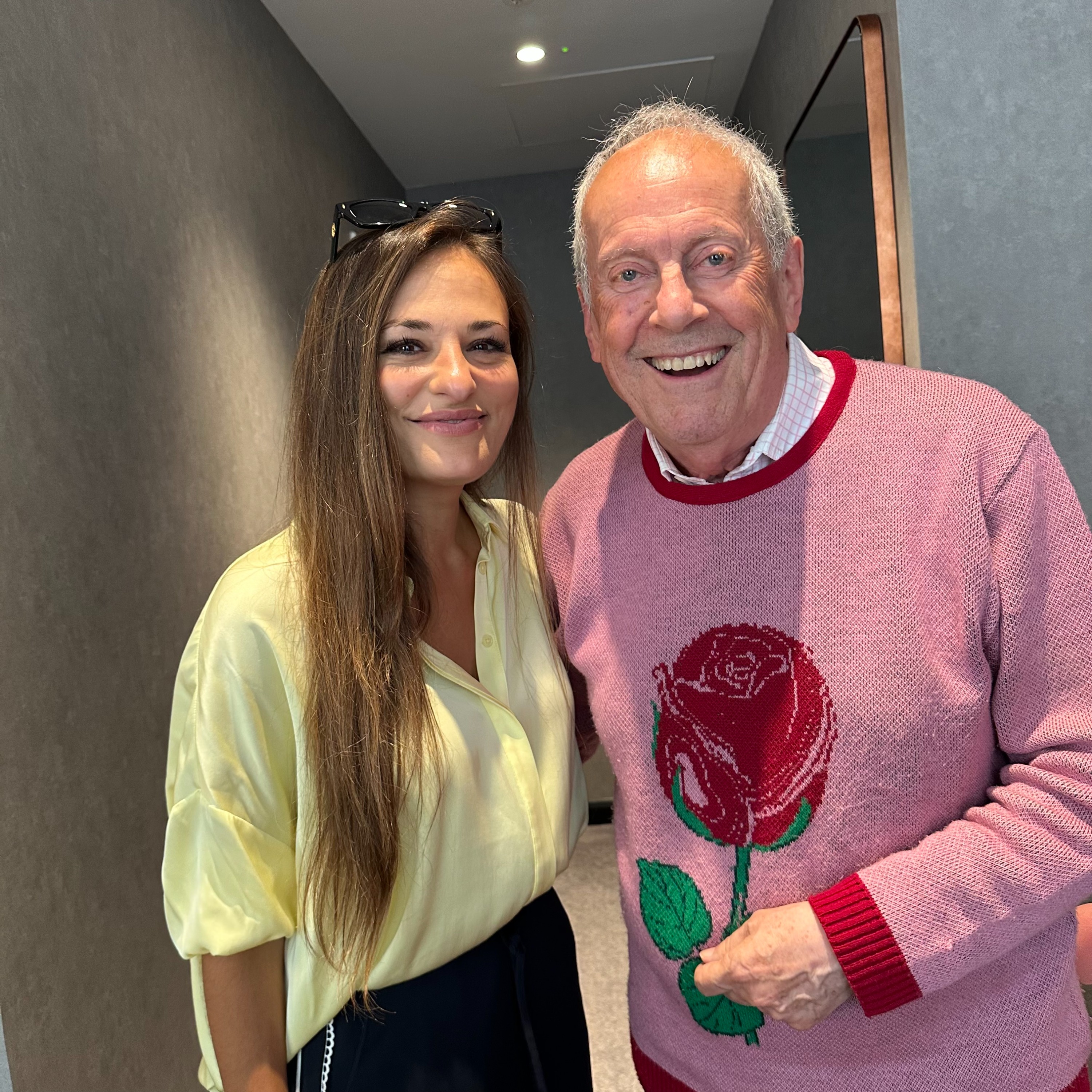
Our guest today is the Director of one of the world's major arts festivals: The Edinburgh International Festival. She is also a world-class virtuoso violinist. It's Nicola Benedetti. In this conversation, Nicola talks to Gyles about her remarkable parents, who migrated from Italy to Scotland and through hard work and willpower created a new life and two highly talented daughters. She talks about learning to play at the Yehudi Menhuin school, and about playing at Menhuin's funeral. She talks about practice and posture. She talks about winning the BBC Young Musician of the Year, and about meeting and marrying her husband, the American trumpeter and composter Wynton Marsalis.
This is a fascinating and inspirational conversation. Our heartfelt thanks to Nicola Benedetti for her time and brilliance.
The Edinburgh International Festival is on until the end of August 2026.
Hosted on Acast. See acast.com/privacy for more information.


