
 Ask ChatGPT



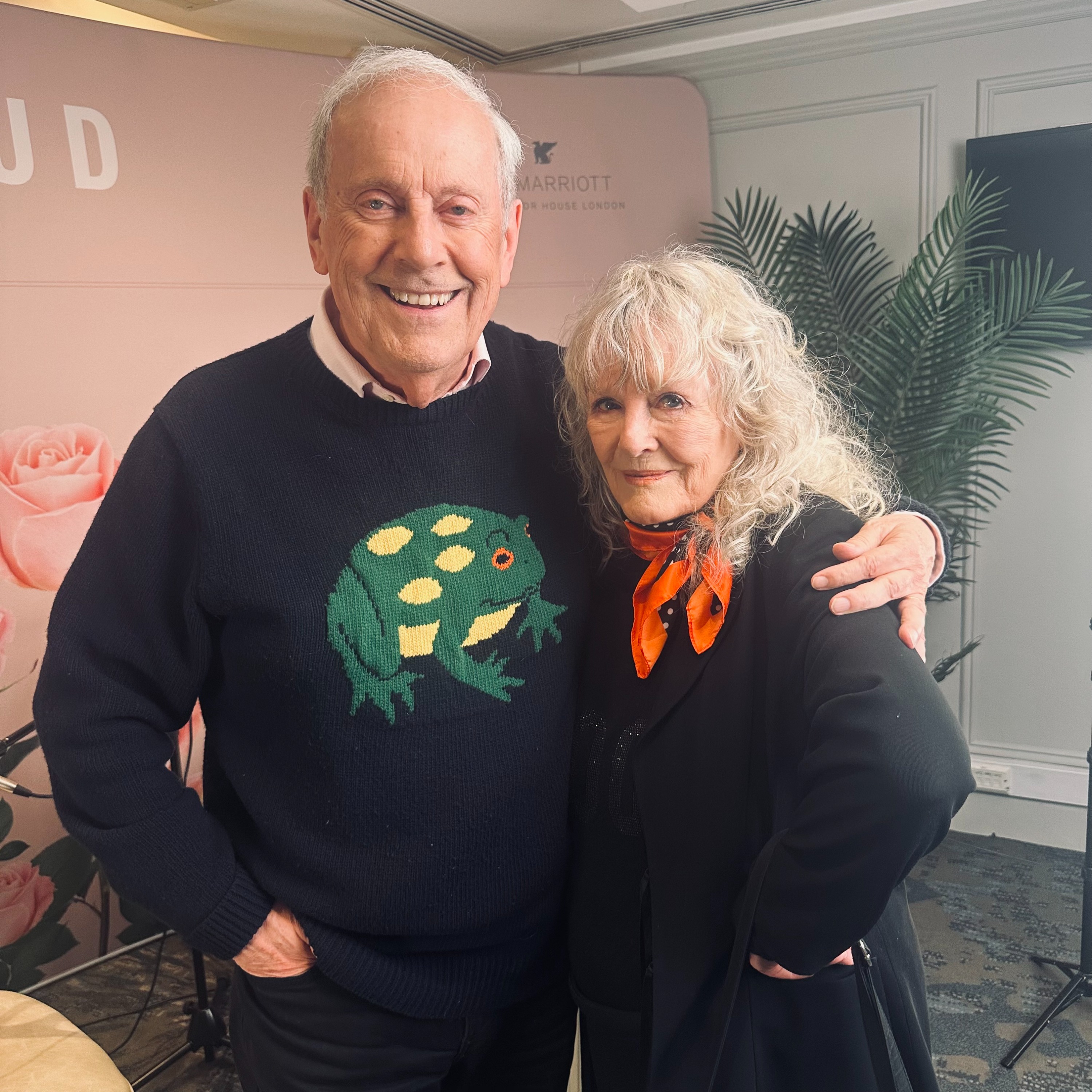
In this episode of Rosebud, Gyles Brandreth interviews the legendary British singer, actress, and songwriter Petula Clark, who is celebrating her upcoming 93rd birthday. The conversation delves into her long and remarkable career, reflecting on her childhood, her complex family dynamics, and her experiences in the entertainment industry.
Written by AI. May contain mistakes.

Get the gist, explore an idea or ask about something said.
 Claude
On Rosebud with Gyles Brandreth, what are the key points of this episode?
Searching your listeningAutomatic transcript. May contain errors.
0:00Wherever you are in the world, whatever mood you got up in, however you're feeling right now, Well, you can take an hour or so off from harsh reality and tune in to somebody else's story. Welcome to another episode of Rosebud.
0:35Welcome to Rosebud, where today's guest was a household name even before I was born. I know that seems hard to believe, but it's true. The reason that she's on the show today is that next week she will be celebrating her birthday, and I thought we ought to have a birthday special for this very special person. She's going to be 93 next week. Yes, our guest today is Petula Clarke, British singer, actress, songwriter, who started her professional career as a child performer, and I think I'm right in saying has had the longest career of any British entertainer in history. It spanned more than 80 years.
1:20She's going to be with us for the next 60 minutes or so, so please welcome the great Petula Clarke to Rosebud. Cue the music.
1:42Petula Clark born 15th November 1932 I am afraid so yes but I haven't got the name right I know what is your real name what was your birth name the name on my birth certificate is Sally I love Sally actually And do you like being called Sally? What do your intimates call you? Well, one or two people call me Sally. So I may slip between the Petula and the Sally. And if it's Petula, do you like being called Pet or Petula? I've never really liked Pet. You know, I used to be called Pet when I was a young girl, and I never really liked it that much. So, Petula Clark, tell me, what is your very first memory?
2:26I remember seeing the sea for the first time and being wildly excited, but I still am every time I see the sea. And it was from the top of a bus, an open bus, in Bognor Regis. I was with my dad. He was from Sussex. And when I saw the sea for the first time, I was just over the moon. And it stayed with me every time I see the sea. any old sea will do, you know, the Atlantic, the Mediterranean, wherever. So who was your dad? What was his name? When was he born? My dad's name was Leslie Norman Clark. He was born in Chichester in Sussex and he was extremely handsome. I mean, he looked a bit like an old time movie star, something between Errol Flynn and Ronald Coleman.
3:16I don't know if you remember Ronald Coleman. And I absolutely worshipped my dad. He had always wanted to be an actor himself and was never allowed to do it. What did he do? Well, he was a nurse and so was my mother. Nurse? He was a nurse? They worked in a hospital, yes. In those days it was unusual to be a male nurse. A male nurse, yes. And your mother, who was she? my mother was doris phillips she was welsh from south wales and uh that's that was the most joyful part of my my childhood being in wales you used to go there a lot well of course during the war we went there a lot and when i say we myself i have a sister perhaps staying with our grandparents in a funny old stone house with whitewashed steps.
4:08And I still love the accent. You know, they love the accent. I love it. Well, you're allowed to do it. I'm not. My wife was born in Swansea. I'm not allowed to do the accent. Describe to me the first home you remember. I can picture the garden. The garden was important because we had a willow tree in the garden. and I used to climb up the willow tree and stay in there for hours with the birds looking down at life. It was nice. And in those early years, you know, in the 1930s, before the war comes, can you remember the food you ate? Can you remember the sweets? Give us a flavour of taste when you were a little girl.
4:53The food. None of us cared too much about food. Our mum used to cook, but she was, our mum was not very well. She was, in fact, she had tuberculosis and she eventually died of it. But I used to love going to the sweet shops. I used to, I was a bit off the wall. I always had music going on in my head. I used to sing all the time. Can you remember the first song that you sang? Yes, I used to sing all the sort of pop songs of the day. You know, we used to have the radio on. I learned a lot from that. In fact, I now have music that goes through my head that I probably learned when I was a child. Classical music, and it stayed in my brain.
5:34And were they musical, either of your parents? Were they musical people? Oh, my mother was Welsh, and she had a lovely singing voice, but she never sang in public. She was a very shy lady, but she knew how to sing. And your parents together, they seem an unlikely couple, the way you describe them. your mother doris being shy reticent discreet and your father this rather extrovert character the frustrated actor um how did they get on can you can you pitch them together i don't think they got on very well to be frank um and i started singing going out and singing for the troops my dad was in the army and he was more or less managing me and our mother was left at home with uh with Baps my sister and eventually my dad fell in love with someone else and she was lovely I really liked her uh but it was that kind of difficult situation did your mother die young because of the tuberculosis no she died because she she had been ill for a very long time but she did die young yes she's in her 40s oh it's very that's very young yes so just explain how this happens your mother is looking after babs who is younger than you yes a couple of years younger than you a couple of years yes but you are daddy's girl yes definitely right from the start yes and you are fulfilling for him his latent ambition to be i think that's probably true yes what's your first recollection of of performing you say you were singing at home can you remember performing in the kitchen performing it it was in we used to live near Kingston on Thames and we used to get on the 65 bus to go to Kingston on Thames and they had a big store there which I think they still have bentors and I used to love going there of course I used to go with with my dad was almost always with my dad they had what they call the escalator hall and between the escalators they had a platform and at this time they had an orchestra playing there now I had never seen an orchestra and suddenly there it was and it was absolutely thrilling and my dad said would you like to sing with him yes and he asked the conductor who was a man called Harry Fryer.
8:04And he said, all right. And so I went up, stood in front of the microphone, which I'd never seen before, and sang with an orchestra. And that was amazing. And they paid me, Bentall's paid me with a tin of toffees. And you were six years of age? Something like that. A little girl. A little girl. And had your father had that in mind, you think, when he took you to bentles was he thinking i mean i'm just asking i don't know i i don't know i i know certainly later he was very keen on me having a career that's for sure but i don't think bentles was part of any recollection of that experience of of being there on the platform by the i know the escalators at bentles because many years later believe it or not i was father christmas at bentles in Kingston.
8:57Oh, sorry I missed that. And they do it by those escalators are still there. Oh, they really. So they had this orchestra there, the music to entertain the customers. Yes. On the little girl comes and what did he call you? Sally? Or had he thought of a name? I think he called me Petula. Petula Clark. Because he invented this name, didn't he? Yes, my father invented it. I've never really got the real story of that. He said, he told me once that he made it up out of two ex-girlfriends. I mean, that's the kind of thing he would say. He was a bit special, my dad. Yeah, we're getting a picture of him.
9:35We both like him and we're a little bit wary of him. So he pretended once upon a time he'd known a pet and he'd known a girl called Eula. Yes, that doesn't sound right. Who he met on manoeuvres maybe. It doesn't sound right to me. Well, anyway, so he formed the name Petula for you. Yes. Did you accept that immediately? Well, listen, if my father said it, it must have been right. He could do no wrong in my eyes. So Petula Clark, you were, age seven, Bentles of Kingston, up you get. Did you like the experience? Were you an extrovert like him or were you shy like your mother? Oh, no, I loved it. I am shy.
10:13I've never felt that I was part of showbiz. I know a lot of showbiz people, but I don't have that mentality. I don't feel as if I am in show business, which has been odd, I suppose, after all these years. It is a bit odd, since you've been working professionally for 86 years. It seems a bit odd to say. It is a bit odd. I've never really felt part of the business. What then happened? Were you going to school? I was going to school. I was not very gifted in school, let's put it that way. I had more of a life in interior life than exterior. You know, that's a long time ago. It's almost like talking about someone else.
10:56Yes, except it was a long time ago, but you do remember the war coming. Was it the war that took you to Wales? Is that where you were sent away? Well, we were certainly spending more time in Wales once the war had started. And we didn't know what war was, you know. But we were never scared. Of course, we had this dreaded air shelter, you know, the air raid shelter. and then eventually my dad got fed up with that so he built a trench a real army trench outside the kitchen and we used to dive into that uh which we thought was much more fun than an air shelter and did he join the army yes he yes he did your mother was still nursing was she no no no she was she was a housewife yeah she was looking after in theory she was looking after you and babs yes indeed but how does the the performing take what's the next stage in your performing journey?
11:49Well, I started singing for the troops. But hold on, you can't just say that. I mean, one moment you're at Bentles at Kingston. The next moment, war breaks out. How do we find you, this little girl, shy mother, extrovert father, suddenly performing to the troops? What happened? Well, my dad was in the army in uniform. And I don't quite know how this happened. because I wasn't aware of what was going on. But there was a show, a BBC radio show called It's All Yours, which used to be done from the Criterion Theatre, which is in the middle of Piccadilly, as you well know. And it's still there. And the BBC used it because it's underground.
12:40And it was more or less an air raid shelter. and it was a show that was for children who had father, cousin, brother serving abroad and you'd go along and send a message. I had an uncle called Uncle Duncan and my father, I don't know how it happened, but I found myself there and I had my name and address pinned onto my sweater so that the announcer could read it. And I sang. What did you sing? Mighty Like a Rose. Oh, is that a well-known number? Sweetest little fella, everybody knows. Don't know what to call him, but he's mighty like a rose. Sweet little song. Charlie. And they heard it in the control room and said, we would love you to sing that on the show.
13:40and so I did and that was the first time I was heard on the wireless So this is during the Second World War Yes You're in the Criterion Theatre taken there by your father normally to sing something or to do something for your Uncle Duncan To send a message Message Uncle Duncan who's serving in North Africa and here is young Petula Clark and we understand Petula you're going to sing to us today That's right And then you break into this song and people go, wow, this is amazing. Yes, and there was an orchestra there and they joined in. I mean, it was just like in the movies, you know. And it was, there was an enormous reaction to it.
14:21And the BBC thought that was pretty great. And they sort of took me on, more or less. As a child performer. As a child performer, of course. And then I started singing for the troops. and there was another little girl who was also, Julie Andrews was singing for the troops and we used to travel around together quite often. Goodness. And with your father came with you to do? Of course. But not your mother. No. So she stayed at home with Babs. Yes. And so who did Julie Andrews have with her? Did she have her parents with her? Yes, it was a sort of act. Ted and Barbara Andrews and their little girl Julie.
14:58Oh, yes. Barbara played the piano and Ted sang and Julie sang an amazing voice. She had a beautiful voice. I was very in awe of Julie. And we used to travel around on these troop trains and we didn't know where we were going half the time. We were going to different camps all over the UK. Often at night, you know, with the blackout, we would sleep in the luggage racks because we were both very skinny. Well, and quite small because you're a little girl. Quite small, yes. She was a little younger than me. And it was done like a show. So it was a kind of travelling, entertaining the troupe show. And you were one of the turns within the show.
15:38Or was it just you two? Just a pair of you girls? I can't remember that. I think there were other people involved. You know, there was an organisation called ENSA. Ah, yes. We were not part of that. Every night something atrocious. Freelancing. But you were freelancing. Yes. You were a separate thing. Of course, we weren't getting paid, naturally. Oh, weren't you? I got paid once. somebody gave me this piece of paper and I didn't know what it was we were in the car, we had a car at the time and I thought, I don't know what that is and I threw it out the window, I thought it was just a piece of paper and my father was furious of course, that was five pounds well that was a lot, I mean seriously that was a lot of money I know I felt very bad about that and tell me about the performance there's a stage that's been put up there's a bit of it there's somebody at the piano Yes, you know, these were camp shows, if you'll excuse the expression.
16:35But, you know, they were soldiers and sometimes they were Poles. They would be Brits, of course, Poles. And then, of course, eventually Canadians, Americans. We would just sing. We didn't know who we were singing to. Did you chatter between, was there any patter between the songs? I used to do a comedy sketch. sketch you know julie was very very prim and proper you know with her as we picture her yes and i would do comedy bits and semi-jazz things i was much more sort of out there was this material you were improvising or material being written actually there was one sketch called movie mad which is about this maid this housemaid who was dreaming of being a star so i used to be cockney accent and all that you know just wait too long get on the pictures on the water bill you suck they were something like that sorry about that and my dad wrote one for me called lizzie the land girl from london so he was with you at all times so he came he was he was my manager oh he literally and so maybe he was being paid a bit well you know he was in the army and he was getting, what do they call that, a special leave because our mother was ill and he was taking me around.
17:57Yeah, he had special dispensation to take you around to entertain the troops. That's right. And your set, how long did it last? My set? Well, that's what it is. You're in the wings. Dan is saying, you're on now, Petula. Well, I would maybe sing Ave Maria. Oh. Oh, yes. I would sing something like that and then maybe, When that man is dead and gone, which was about Hitler, of course. That went down very well. I bet so. And my movie Mad Sketch. So I suppose I did 20 minutes. Very good. Not bad. And you ended with Ave Maria. You ended on a sentimental moment. I don't remember now. I'd have shaped it that way.
18:37The reason I'm fascinated by it is it's easy to say, you know, as a child I entertained the troops. but if you stop to think about it we're talking about a little girl who is you know 10 11 12 13 well you're only 13 at the end of the war yes so you really are a very young person what is the most memorable moment for you of the war if i said the war years what comes into your head what's the most memorable thing that happened to you in the war oh it was it was all memorable uh we lived very close to an RAF base. They would send up barrage balloons and there was a huge gun going along the railway.
19:13And it was in some strange way, it sounds terrible saying that, but it was sort of exciting. I don't think children quite really understood what was going on. And after the night of bombing, we would go out and pick up shrapnel and all that kind of thing. And we found that perfectly normal. You know, this was a very special time in our lives. You were going to school as well as performing. Well, kind of, yes. I'm jumping ahead now. I became quite famous and they asked me to make a movie, The Rank Organization. So I did. This is a medal for the general. Medal for the general. Yes. But I had a tiny role in this film.
19:56But then I went on to do more. In fact, I was in about 20 movies altogether as a child, as an actress, not as a singer. And it was your dad sorting all this out? My dad was with me most of the time. And he made the arrangements. The film company approached him. Well, yeah, I was put under contract. I was put under contract to rank. I sort of got all the little girl roles that were around. There weren't many other little girl actresses around. And do you remember having any friends outside of the grown-ups that you were working with in the film set? I had a couple of friends from school who were just as introverted as me and we used to hang out together in the shrubbery telling each other magical stories and singing.
20:49but you know I always wanted to be one of those girls who plays netball that never happened. Did you realize it was an odd childhood at the time? Well I realized that it was different but you know that's the way it was and I accepted it and that's what my dad wanted and he was very happy. He was having a very nice love affair with this other lady which made things a bit difficult at home because I knew about this love affair and so I was having to lie to my mother all the time which was not a good situation to be in. Were you aware that your mother was ill? Yes, we knew she was ill and eventually she went into a sanatorium and that was very strange.
21:44It's hard to talk about any of that.
22:02Here you are, appearing in 20 films, singing on the radio continue. Oh yes, I did a lot of radio. And you were contracted to the BBC at the time. Well, the BBC were very, they liked me and they put me into different things. And of course, eventually I started doing television when television came along. But there were some big radio programs that you were on in the 40s and 50s, weren't there? Oh, well, a variety band box. And, you know, I met all the stars. Vera Lynn, of course, whom I adored. And Arthur Askey and Jack Warner. Yes. Vera Lynn, she was kind to you, was she? Very. And what do you think you learned from her?
22:40What did you get from knowing Vera Lynn? I realise now that I was learning from her but I didn't realise at the time but it was her simplicity and she was very musical I loved that part of her her voice was perfect in fact I sort of rubbed shoulders with a lot of the great names of the day And were they good with you and good to you? Yes, they were lovely and I don't think I was a spoiled show kid you know my father was very strict with me I don't think I ever put on airs and graces I did I didn't even know what being famous was and you know at school later on when I was making movies I I used to miss a lot of school because you know when you're making a film you're away for a couple of weeks I used to go back to school and knew nothing now what were they talking about and of course the other girls thought oh big star can't do your algebra I can't did you decide anything did you ever discuss with your father what your future was going to be did you ever say to him dad shouldn't I just be at school for a while no no I was quite happy with what I was doing I hated school anyway and what did you make she was called Annie wasn't she his girlfriend yes I loved Annie oh good yeah so that made it all the more complicated because actually you loved your dad and you loved his girlfriend and you weren't seeing so much of your mum so the the sense of of guilt and deception I can see it would have made it all quite complicated for a teenager to cope with she was very very good with me Annie you know my mother was very shy and I knew nothing about growing up as a girl about you know menstruation and all that kind of thing and And it was Annie who guided me through that moment in my life.
24:29And she was a lovely lady. And she and our father had a son. Oh, did they eventually get married when your mother died? Well, this was before they got married. But Chris, whom I absolutely adore, is my half-brother. But it was a weird situation. Talking to you now about it makes me realize how weird it was. Well, forgive me, but it's intriguing. It's intriguing because it's such an unusual childhood and one sort of almost takes it for granted. Oh, yes, but you look like the child star. Most people's childhoods are quite complex. But you're talking about childhoods in one way or another, don't you think?
25:11I don't know about your childhood, but we've all got a story to tell. Mine is, I suppose, a little bit odd. But then when you start digging into people's lives, you know, it's... Did you have an ambition? Do you think as a teenage girl? Did you see where this was going to lead you? I didn't even know what ambition was. I still don't. I've never been ambitious. I just do what comes up. Or I say no. Or I say yes. I'm not driven by ambition. In fact, I wrote a song about it. I was interviewed by this woman. Really awful woman. She said, oh, it's Miss Clark. And what drives you? I don't know. Where is it?
25:59Glamour? Money? And it really bothered me. I couldn't find an answer to this silly question. So I went away for a couple of days and then I wrote a song called Driven by Emotion. And that really is what it's all about. I'm driven by the actual joy of doing it. Does that sound banal? to you? No, doesn't it? Sounds intriguing and convincing.
26:35So, here you are as a teenage girl, driven by emotion. Is emotion coming into your life? Do you, can you remember your first crush, your first boyfriend, your first kiss? oh my first crush real crush because i i started very late all that stuff was anthony newley oh my that is quite late oh yes oh he was lovely he was good looking and funny and talented and absolutely nothing happened between us how did you meet him how did you i met him where we were making a film called Vice Versa with Roger Livesey, and it was directed by Peter Ustinov. It's a great film. It's a fun film where everything is upside down.
27:25Yes. Anthony Newley was my first crush. And he was a boy at the time, wasn't he? Well, yeah. I was a very young girl. But, of course, he was more interested in Diana Doors and people like that, you know. Well, understandably. Then he married Joan Collins. See where I'm going. What can you do? what can you do not a chance but not a chance but look where that ended up what kind of fool anyway uh you did the right thing liking him and i'm glad it didn't because he could have he could have messed you up terribly probably yes but it might have been fun yes so antony newly we park him that was the crush that nothing happened yes and then tell me more what was the next i want to know the crush that where something did happen the enthusiasm oh well nothing happened for a long time and I was rather disappointed when it happened.
28:16I didn't think too much of it. Oh. If you get my... I do get your drift. Who, do you remember, I suppose it was Annie who told you the facts of life, was it? Yes, she did, yeah. And when I was making London Town, which was a musical which was made in England, it wasn't very good, but I was in it. And there was a lady called Tessie O'Shea. Oh, of course we know. Played the ukulele. Large lady. Rather fat lady. And at one point, she took me on her very fat knee and started telling me the facts of life, which was really alarming. So I sort of erased that from my memory. But that was the first time I heard anything about that stuff.
29:00That's interesting. Because you say you erase it from your memory, but it's pretty vivid. You've painted a very clear picture of Tessie O'Shea. I can see her. She was a large lady with the ukulele. and she sang. Yes, she did. So you learned the facts of life in a rather coarse way from Jesse O'Shea, in a more refined and caring way by Annie, who was like a stepmother in a way to you. Yes. When did Truls the Norwegian come along? Ah, Truls. Well, I used to go to Hampton Court quite a lot. I loved history. And this particular day, I was sitting down on a bench near the river, the Thames, and this young guy comes up to me and he's very handsome and he didn't recognize him because most people's you know i was quite well well known by then because he didn't know who i was and we just started talking i said he's foreign okay and he said can can we meet up tomorrow can you come here i said yeah all right we'll have a cup of coffee we did and uh sat down on the bench and then suddenly he kissed me and it was a real kiss you know the full thing which i had not known anything about and i slapped his face of course oh and marched off disgusting you know anyway he followed me and late that night i could hear strange scraping noises by the side of the house he was climbing up the waste pipe, you know.
30:31And he was quite a big guy and the whole thing sort of collapsed. And my dad, of course, went raving mad and chased him off the premises. I mean, the drainpipe collapsed. He fell off the drainpipe. It's like a moment in a movie. But, you know, he was obviously very amorous at the time. And I never saw him again. He had to go back to Norway, of course, and we wrote to each other a few times, but, you know, these things just fade away. Was there an enormous amount of fan mail? A lot of fan mail. I used to do it all myself. Because you were. I mean, you've been a household name all my life. Yes, sorry about that.
31:12No, but it's delightful. So, I mean, I knew you as a little girl and you were charming. Was I? Oh, you were pretty and you were lovely. I didn't know you personally. Oh, I wasn't pretty. I'm sorry. I'm afraid you were pretty. I'm not just speaking on behalf of that. I had some pretty moments. I had some rather sort of spotty moments. It's funny about beauty. You know, I'm not a beauty, but I can sometimes convey some kind of beauty, which is coming from somewhere, I don't know, but I'm not really a beautiful woman. Well, we'll argue about that later. At 17, you're only 17 when your mother dies.
31:55Yes, we knew our mother was ill. And we went, our dad sent us off with a couple of friends to go by the seaside, you know, just to get away. And when we came back, this is Babs and I, our mother had died and she'd been buried. And the house had been sort of redecorated. And Annie was living there. And that was it. It was as if it had never happened. It was a very weird experience that I never quite understood. Well, you must listen to an episode we've done of the Rosebud podcast with a woman called Julia Samuel, which is about bereavement when children are not allowed to face up to it, which was more done in those days.
32:50The feeling was, we actually draw a line, we move on. I'm sure Annie and your dad meant for the best. I'm sure of it. So, but it means that you didn't have at that time a chance to process it. And grief for your mother, you just had to get on with life. It was a strange feeling that what happened and a kind of strange emptiness, but it wasn't exactly bereavement. You're right. We were not allowed to bereave him. we weren't allowed to talk about her it was something that that was done it's gone not good so your career how does that evolve what happens next well I was under contract so they would call us by then we had a telephone sort of on the Friday to say we want Petula on Monday at Denham or Pinewood or Shepparton and and I would know nothing about the movie and never seen a script.
33:49I would see it when I got there. I was growing up. Physically, I was changing. And I started doing television. I had my own little television show called Pets Parlor. Pets Parlor. This is the early days of television too. Very early days. Black and white, if you mind. Indeed. And what happened on Pets Parlor? Not a lot. What would we have seen? Oh, dear. What happened? What was the show? It would be a very cosy little programme that didn't cost very much money, of course. And I would sing. And sometimes I would have a guest. Sometimes even Babs would come on. It was a cosy little programme and people liked it.
34:32I bet they did. But, you know, I found it not particularly interesting. And, you know, I have a very musical mind and I wanted to do something interesting. I wanted to sing some interesting songs. And one week I sang a song called When the World Was Young, which is a marvellous Peggy Lee song, whom I adored, Peggy Lee. There was a lyric saying, Games we used to play, lying in the hay. Something, When the World Was Young. And people thought it was disgraceful. Oh, because you're playing in the hay. Our pet singing about you-know-what, I found that really painful because I was just singing a beautiful song.
35:19The audience knew me as the little girl and just didn't want me to grow up. So when they started seeing a little bit of bosom and, you know, singing songs that had a bit more, you know, love and stuff, they didn't like it at all. They wanted me to stay with Put Your Shoes On, Lucy. And did you want to grow up or did you want to stay as a child? Oh, no, I wanted to grow up, of course. You know, that's what teenagers want to do, you know. Not necessarily. I knew a child actress who appeared in a series I wrote about Alice in Wonderland, of Thames Television. She, well, she became anorexic, I'm afraid, as a result of wanting to stay as a child.
35:59She didn't want her body to develop. That is very strange. She wanted to go on being a child star. But you were ready to grow up. Oh, yes. Yes, I wanted to be a woman, you know. But the audience didn't want to see that. You know, what happened to Shirley Temple? Hollywood just took her away, kept her away for a few years before she came back. So what happened to you? Because you never stopped. No, I didn't stop. So what happened? What happened is it was not very comfortable. But I got through it. It was actually not a very happy time in my life. My adolescence was not easy. When did your father eventually let go?
36:38When did he cease to be your manager? and let you breathe your own air? The situation became really difficult because he was my manager, but he was my father. And we would be at home maybe having a meal together and we would talk and talking about my career. And I was thinking, now, wait a minute, who am I talking to? My manager, my father. And I was starting to get different ideas about what I should be doing. I wanted to make my own mistakes. And oh boy, did I make them. but I had to say to him one day this is not working anymore which is not easy Wow, how old were you by then? Early 20s? Oh yes, I was in my early 20s and it was about time for me to move away and find somewhere to live on my own and just start living, you know And how did you do that?
37:32What happened? Well, that's what happened I moved out of the house and Babs came with me, my sister because she had sort of had enough to and we found ourselves living in an apartment near Westminster and we didn't have any furniture and we went along to an accountant because I had no idea how much money I had and I mean I used to sometimes say to my dad you know how much money do you have and he would say oh you're a very rich young lady okay went along to this accountant I said well so how much money do I have he said 500 pounds I said 500 pounds yes that's it that's what you have so there there it was and Babs and I struggled through and And I remember that we didn't have a fridge.
38:36And I didn't have the money to buy a fridge. It was like£75 or something like that. And so I did a really awful gig somewhere up in the Midlands. And came back with£75 and bought myself a fridge. Well done. Did you then, in a sense, turn on your father because of this? £500 after 20 movies? I certainly asked him what had happened to the money. He didn't quite, he didn't say he didn't understand. I never really got an answer. And, you know, he was not a, I don't think he gambled, I don't know. But he liked cars, that's true, he always had rather splendid cars. But, you know, money goes. And you found a new manager?
39:25No, no, I sort of fumbled away at it myself. And then the breakout comes, does it, when you go to France? Why do you go to France? Oh, yes. I feel the gear changes. I was singing quite a lot in Holland and in Denmark, where they speak very good English. I was making hit records, like, with all my heart. And then we started getting phone calls from Paris, from this record company saying, oh, you must come over, you know. Because there was this girl called Dalida, whom I eventually got to know quite well. She was a very big star and she was copying my songs. Well, everybody was doing it, you know.
40:05We were copying American songs. Eventually I said, okay, what do you want me to do? Well, we're doing this gala at the Olympia. What's the Olympia? I don't know the Olympia. I knew the Olympia in England, London, you know. Very different thing. Slightly different. I said but you know I'm singing English I can't I don't speak a word of French that's okay don't worry anyway I arrive and I had the worst cold you know they're one of those real lovely English colds with the red nose and I could hardly speak so the first thing they do is they put me into a car and I get to Paris and take me to a doctor okay and in the waiting room the waiting room was all sort of napoleon type furniture very sort of dark and in comes the doctor looking like napoleon good afternoon he didn't speak any english and he made out a prescription which was given to this person i was with from the record company and we raced across paris to to a pharmacy to get this thing okay and i look and i said well what are these ah les suppositories oh no yes suppositories i said oh no wait a minute no it's for my throat and she said yes yes it's very good i said what do you want me to do this you put them in the bottom I thought this is really Napoleon's revenge.
41:41So anyway, you know what? It worked. No. Yes. And the next day I wasn't on form, but I could at least speak, you know. And so I did the show. I sang my three songs. And the Olympia, of course, is like the Palladium. Of course it is. It's where Yuff did all her best stuff. Yes. so there I am in front of this huge French audience singing three songs in English and I'm being absolutely terrified because I had no idea I couldn't even say bonsoir and pulled the place down well done well done they loved it look this is what everyone needs to know a suppository is what you need there you go up one end there's a lot the other a lot to be said for it gosh so that was a breakout moment in France.
42:29That was a breakout moment, yes. And anyway, I thought, well, I've done that, now I can go home with my hot water bottle and my cup of tea, you know. But I went to the office, the record company office, and the boss was saying, you saw what happened last night, you know, what a big success, you know, you really must record in French. And I said, now listen, I want to go home, I don't want to need... And then the light over his desk went out and in walks this gorgeous man as far as i could see he stood on the desk changed the light bulb and there he was claude wolf the man of your life yes the man of your dreams with whom you were for how many years 60 odd years oh my gosh so that's that's how it happened yeah and what did he have to offer what what in those 60 years how you can't sum it up in a sentence and it will be difficult for you now because he only died last year I know so what what did you have together for those 60 years bliss I think you could call it we were very much in love and you had three children yes we had two girls quite quickly and they were enchanting and then eventually we had the boy.
43:51And how did your father cope with this? Did he come to the wedding? Did he know about the children? He met Claude, of course, and Claude came over to London, and he realised that Claude was the one, and he was very good for my career too. It was probably not easy for him, but he realised that this was the right thing. And it was the right thing. Well done you. Yes, it was. Yes.
44:30When I told people I was going to be talking to you today, they all began to sing one song. What is the song they began to sing? When you're alone and life is making you lonely, you can always go. Come on. Downtown. Right. Right. Isn't it amazing? Every single person of lots of different generations. Yes. Even young people go straight into that. Has it been, I mean, has it made you the most money of all the records you've made? Yes. I mean, it was the biggest hit. When I went to America, it had already been a hit over there. And I mean, America was waiting for me. It was the most extraordinary thing.
45:11I mean when you make it in America it's quite different to anything else and it wasn't planned Downtown came out and that was it And did you enjoy it? Did you reddish it? Well sometimes one feels flat after a great triumph You think oh well there we are on we go But you can't even Well the wonderful thing Tony Hatch wrote and Jackie Chant wrote Downtown but then they followed it with I know a place don't sleep in the subway couldn't live without your love Sign of the Times I mean, they just kept writing great, great songs and big hits. And no, it didn't feel flat by any means. It was, you know, America is a huge country.
45:53There's so much. And I was working with wonderful people there. I went to L.A. and I was working with Quincy Jones and all the best people. I mean, you've met everybody. You've worked with everybody, literally. Not everybody. No, but of all these great encounters, all these great names that you could drop, which is the one that sticks in your mind? The person who, when you get to the next world after Claude, you look forward to meeting the most? Oh, there are so many. So many have gone. Yeah, well, that's why I'm courteously putting them in the next world where they're waiting, they're lining up.
46:36which of the greats would you wait to see i never sang with sinatra i mean we spent some time together and he was he was lovely um but astaire of course fred astaire was just so amazing and we spent a lot of time together and when we were filming finian's rainbow we used to travel travel around the countryside in a funny old limo with francis coppola and all three of us singing together and he would get me to sing he loved don't sleep in the subway and he would say well what does it really mean patola i thought well i don't think it means anything for editor well sing it for me again and then i would get him to sing for me because i loved the voice of fred astaire so these were magical moments you know this just just the three of us having a great time And Francis wanted to film out in the countryside and dancing around in fields.
47:36And of course, Fred had never done anything like that before. Fred was of the old school, you know, you don't break into a field. And Francis said, yes. I said, yeah, let's do it. So the three of us had a wonderful time. Of your stage roles, the film Finian's Rainbow is going to be your film. Stage roles, which is the one that stands out for you? I sort of enjoyed doing Sunset Boulevard once I got the hang of it. You did it a long while, didn't you? Yes, because I did it in London for about 13 months and then I did it on tour in the States. It's a funny thing because I really didn't like the role.
48:20You know, Norma Desmond, I didn't like her. Well, let's face it, she was a nasty lady and totally deluded, you know getting ready for her next close-up you know which is never going to come and i didn't like her and then eventually after playing her for so long i sort of started liking her understanding her and i did something which i don't think andrew ever knew lloyd whipper near the end of the tour in america i decided to play the last scene totally in a totally different way because i mean all through this i mean she's just unpleasant and barking at people and and then of course the butler is always saying she was wonderful she was this marvelous young person you know this great star but we never see that and so at the end you know the scene where she comes down on the stairs the newsreel people are there because she's murdered this guy and she thinks that they're there because she's a star.
49:26So she says, I'm ready for my close-up. So I decided to take her back. I'm ready for my close-up. Is that giving us a clue to why you've sustained this career so long? You're still totally engaged in the enterprise. Yes, I am totally engaged. For better or for worse. Well, for better as far as I'm concerned. We're almost at the end. I want you to give me, from your long and amazing life, what comes instantly into your head when I say, Peter Clark, a moment of joy. Oh, a moment of joy for me is every time I see the sea, any old sea, or the country. I love nature. I am more and more fond of nature.
50:17How have you managed to stay so normal, given you've had this most unusual childhood? Why do you think you seem, I mean, I've only met you a few times, but every time I've met you I've been struck by how straightforward you are. Easy. Uninteresting. No, far from it. Friendly person. Yes. I care about life, love. Love is the most important thing. I do mention it in my book. Love and music and garlic. Love, music and garlic. Yes. In that order. Well, this is marvellous because it means you will be spared having Dracula take you away. You see? So you got it all. There is one last, two last questions.
51:10I asked for a moment of joy and I've got you by the seaside, wherever it is. A moment of sadness that comes into your head. I've been living a lot of moments of sadness recently since my husband died. I didn't realise how important that had been to me. You know, you sort of take things for granted. I think we all do that. You know, I was Madame Wolfe. I wasn't Petula Clark. I was his wife. And you lived in Switzerland, didn't you? We did move to Switzerland. That was his idea. He wanted to do that. My husband was Jewish, and he'd had to wear his yellow star as a kid in Paris. It was tough for him, and I don't think he ever quite got over that.
52:07And so he felt safer in Switzerland, and he wanted his children to be secure too. So we moved. and it's fine. It's fine, but it lacks some kind of... Well, I go to Paris as often as I can to sort of get a shot of Paris from time to time. And of course, London I love. London is probably where I belong. And where are you going to live now? I live in Geneva. You're going to go on living in Geneva? Yes. Yeah. And when you mentioned, when we talked about sadness, do you cope with that by singing? Because I've noticed, quite rightly, we began with music being central to your life, even as a little girl.
52:56Yes. And classical music as well as popular music. When Claude died, did you cope by singing? How did you cope? How do you cope? I don't know if I coped for a long time. I'm limping my way through life. I'm better now, but it's a very hard blow, and it's something I don't understand. I don't understand death. I try to, but it's hard. Yeah. Okay. We've come to the end, and I want to know what you have learned. I feel I've learned a lot just being with you. Education for me. What have you learned in your extraordinary life, though you deny the extraordinary nature of it, it is extraordinary, as people will discover if they read, is that new Petula, which is a fascinating autobiography.
53:56But what in a nutshell do you think you have learned?
54:03I don't want this to sound negative, but I've learned that I don't know much.
54:11I've done my best with what I've had. You know, you play with the cards you're dealt with.
54:21I still do believe in love and music. They are the two most powerful things in my life and I couldn't live without them. Well, I don't think we could have lived without you. Petula Clark, I'm now going to call you Sally and say thank you very much for being part of Rosebud. Thank you. I enjoyed it. Isn't she remarkable? I hope I get to 93. And if I do get to 93, I hope I'm like Petula Clark. She is so positive. She's brilliant, actually. And next week, she will be 93. So happy birthday, Petula Clark, and thank you for being with us. And thank you, listeners, for being with us too. Have we got time for an email?
55:07I think we have. And here we have a letter from Mandakini Cor in India. Dear Giles and Harriet, I'm writing from New Delhi, India. I discovered Rosebud by chance and has quickly become one of my favourite podcasts. I usually listen late at night. But a bit of personal context, I grew up in Simla, which was once the summer capital of the British Raj, and now live in Delhi with my family. I studied economics at Cambridge, celebrated my 50th birthday this July, and work as an economist at the World Bank. Some of my earliest memories are of daisies, dogs and sunshine in the Himalayas. As an only child, I was and am very close to my parents, and grew up reading Enid Blyton.
55:50When I visited England for the first time as a nine-year-old in 1984, I was disappointed by London. It didn't quite match my imagination of the land of the famous Five and five find-outers. Thank you for the joy and occasional sadness your podcast brings. I truly appreciate it. Warm regards, Mandakini. It's interesting. In many ways, I feel, it's a lovely email, thank you very much. I know what you feel about London, because I often hark back in a good way to the 1950s when I was first reading Enid Blyton. Because though there are adventures in England, somehow it's a safe and enchanted world.
56:33For my mother, who was born in India in 1914, in fact she was born in what is now Pakistan, she was born in Royal Pindi, but it was then in India. Her childhood in India never left her. We often say on Rosebud, a childhood lasts a lifetime, and for my mother it certainly did. She left India when she was in her late teens she went to Canada to go to university then she went on to London to go to London University having been at the University of Ontario but for the rest of her life though she visited India she never left it and I may have mentioned this before I was very happy for her that when she was 96 and dying she was put into a private ward at the hospital where she was living at that time, the last weeks of her life.
57:24And she was put into a sort of private room by the hospital, because clearly they knew that, you know, she was going to die maybe that night or the next night. And she was thrilled that the porter who pushed her bed from the ward to the private room was of Indian heritage. And she spoke to him in Hindi. A childhood lasts a lifetime. so well done remembering the famous five and thank you for sharing those memories with us mandakini thanks so much for listening thanks so much for getting in touch it's rosebud on a friday more rosebud on a tuesday and the more listeners we have the happier we are and thank you for spreading the word i know people leave nice reviews for us which is fantastic on wherever they find their podcast but also i do know that people tell friends and we've grown and grown and grown, I think entirely because word of mouth.
58:19So we need you to spread the word about Rosebud. Thank you for doing so. Thank you very much for being with us on the Rosebud journey.
58:48Thank you.
Petula Clark has been famous since she was a child, when she was discovered on a wartime BBC radio show, and she has been on the radio, film and television ever since. In this episode she talks to Gyles about her remarkable and long career, about what it was like to grow up as a child star and about her complex relationship with her father. She talks about finding fame in France, and about Downtown, Don't Sleep in the Subway and working with Fred Astaire. She talks about her mother's early death from tuberculosis, and the death last year of her husband, Claude Wolff. This is a fascinating, poignant and intriguing conversation with one of our most enduring stars.
Petula Clark's new book, "Is That You, Petula?" is out now and available here.
Thank you Petula for taking the time to talk to us at Rosebud. Cue the music.
Hosted on Acast. See acast.com/privacy for more information.


