
 Ask ChatGPT



Written by AI. May contain mistakes.

Get the gist, explore an idea or ask about something said.
 Claude
On Rosebud with Gyles Brandreth, what are the key points of this episode?
Searching your listeningAutomatic transcript. May contain errors.
0:00Welcome to Rosebud. I've got a question for you. Is your bestie zesty? If they aren't, drop them. and listen to this episode of Rosebud where I have to tell you, our guestie is zesty and perhaps the bestie we've ever had. Cue the music.
0:38Welcome to this week's episode of Rosebud, where my very special guest is Philippa Fairclough, also known as Philippa Perry. Born on the 1st of November, 1957, she's a psychotherapist and an author, and a most fascinating person. She's written some hugely successful books, I suppose the best known of which is probably The Book You Wish Your Parents Had Read, and your children will be glad that you did. That was published a few years ago and followed up by the book you want everyone you love to read and maybe a few you don't. She is a person of wisdom and wit, as you will discover, and she wrote a fascinating sub-stack, actually, about Rosebud and the nature of memory.
1:25I knew she would be special because a few months ago when we had a conversation, a Rosebud conversation, with her husband, Grayson Perry. He spoke about her with such respect, awe and admiration. I thought, you're pretty interesting, Grayson, but I imagine she may be even more interesting. You can judge by listening maybe to both episodes. But right now, I want you please to welcome to Rosebud, Philippa Perry. Cue the music.
2:08Philippa, before we begin, I was reading your sub-stack. Oh, were you? And I was very excited to see that Rosebud and I were mentioned. Yes, I did, because I'm so excited to be here. Well, I'm excited to have you here. But I then went on reading and I was intrigued by some of your thoughts about memory and the nature of memory. would you just before we get into your memories just explain what your feelings are about memory and how much we can trust it so that we know whether when listening to your recollections of your childhood how much we can believe what is memory what is memory memory isn't something you lay down and put in a filing cabinet and it stays the same.
2:57Memory is retelling a story and like all stories when we tell them it depends on what mood we're in whether we tell a jolly story or a sad story. It depends how we've matured and changed since the incident we're describing happened. We might give it different meanings. So in other words, every time we recall a memory, we're reinventing it, we're reconstructing it. It doesn't stay the same. Memory is a reconstruction, it's not a reliving. So you as a therapist in your work, when you talk to people and ask them about what's inside their memory box, you're not expecting them to tell you the whole truth, you're expecting to tell them their memory as of today they're telling me a truth and the truth that they're really telling me is how they feel because your feelings will inform your memories so they're telling you how they feel now not necessarily how they felt then well it depends so how they how they want to feel about it how they actually feel about it how their feelings about it change it's it's fascinating it's really interesting because it isn't a stuck thing it's something that keeps changing as you change good but i'm going to put you to the test as we have our conversation i may occasionally ask you is this how you're feeling now is that how you're feeling then can we rely on you in any way shape or form i've been listening to your podcast with people and i think you're an excellent therapist you ask some really good questions well we shall see we shall see i'm going to treat this like free therapy i'm going to enjoy myself well let's begin at the very beginning if we may by going back as far as you can remember i want philipa perry born when were you born 1957 1957 of November first of November Wigan Wigan Wigan I was born in Wigan because I think that was the nearest private nursing home to my parents home in Warrington what is your very first memory though must be a few years later I've got some early memories but I'm not sure what order they're in so it's very difficult to go which is the first because they're not in order.
5:35But when I knew you were going to ask me that question, something jumped into my head and it was this. I'm sitting at the breakfast table. I think I've got a bowl of cornflakes in front of me, maybe some double cream on it as a special treat. And the mood is very sombre. It was my mother, my sister and me. My sister and I either end, and my mother in the middle. And we're very somber because my father has taken Mitzi, our rusty coloured Labrador, to the vet because Mitzi was out of sorts. And we're just kind of waiting for him to come back. Anyway, he comes back and he comes back without Mitzi.
6:22And he announces that Mitzi had to be put down. Now, I don't know at that time what that meant, but my sister was i've never seen anybody so angry she was so furious she screamed she banged the table she went straight into the kitchen and she got the biggest sharpest carving knife she rushed out of the back door and she ran down the drive screaming she was going to murder the vet because he'd killed mitzi and i feel quite emotional talking about it now because mitzi was a very special dog and um i'm interested you wanted to murder the vet not your father because he was the person who took mitzi to the vet well it's strange like because our parents keep us alive we never actually we we're more likely to blame other people than our actual parents for things so like when your parents produce another child rather than hating your parents for that you're more likely to hate your sibling.
7:29You don't often realise it's your parents that are to blame for everything. But yeah, I've never seen anybody so mad. Well, now unpack that. Tell us who these people were. Tell us first about these parents of yours. The father, the man who took Mitzi to the vet to have her put down. My father, what was he? Born in 1919, I think. My mother was born in 1916. And he was a builder and a civil engineer. He was a major in the war. And he was in an engineering corps. I think that was the best time of his life from what he said. And they came from local families. My mother's slightly posher than my father's.
8:17My mother's family home had paintings and books and William Morris everywhere. and my father's family home was sort of more austere there was sort of wooden settles and not that many books and very few paintings and a huge fire and no central heating and um dust but it was it was a big house but it was there was a lot of economies going on but your mother is older than your father yes and she comes from this more more bourgeois yes more refined sort of like and what were her family how did they get their money mill owners ah and my father's family were also mill owners but they were flower mill owners not textile so these were comfortably off lancashire families yes and they got together do you happen to know how they met and what i think the families always knew each other sort of distantly so in very big gatherings they they might have known each other not very close but and my mother had a good war my father had a good war in what way did your mother have a good war well she was a lorry driver oh in the war she enjoyed the fact that she'd be driving a a lorry and the soldier would say i'm not getting in a lorry driven by a woman and she said well you can walk then and then she was recruited to hush hush work which turned out to be because she'd been to art school what it was that she made 3d models of ordnance survey maps so when you were parachuted into territory you knew where you were because you'd seen these 3d models so she was doing quite skillful work and do they meet after the war then they they started courting a little bit after the war and I know what the proposal was because my father said to my mother won't anybody have you then and she said to him won't anybody have you either and they reckoned they should just get together because nobody else wanted them it's not the most romantic thing was there some truth in that do you think well my mother was 38 i think when they got married and my father was 35 so they were both getting on a bit i mean those days that was very late that was very late yeah gosh and were they then happy when they got together my father would say they were my mother tried very hard to be happy and i'm probably committing a felony by saying i don't think she was all the time because I think she was a bit bored.
11:06She gave up work because after the war, she was working in London in the Lord Mayor's office doing architectural models and stuff. So she had a good social life. She had lots of friends. And to give up that and go back into the north of England, you know, make a home even before any babies arrived, I think it might have been boring. But when I asked to was it boring she said oh no I was getting fed up of work but I I don't know so she accepted her lot yeah very much so they lived together till the end of their days yes yeah and how old were they when they died oh my father was 96 oh my goodness my mother died first at a very young 83 what was the house like that you lived in in Warrington when you were a little girl when I was a very little girl it was a semi-detached 1950s house so I suppose it must have been quite new when we moved in when they moved into it and they moved into it just after they got married my father told my mother I've bought a house without saying do you want to live here this is what he was like she didn't have a chance to inspect it and lived there until I was about seven when my grandfather died and we moved into the paternal family home which was rather a handsome house was it a cold comfort farm so this is where the austerity and the settles come in yes i mean it was uh i think people will be disagreeing with me when they hear this but it was uh wood paneled throughout but i always thought it was rather austere because i was always cold what was your bedroom like you remember huge because when my mother took over the house, she knocked down many walls because my father came from a family of about six children.
13:04So there were lots of smaller bedrooms and my mother knocked them all into huge bedrooms. So it was a big room. And I was lucky apparently because the main fire from the big room underneath my big room was what heated the house. So you've got the warmest room. If that was the warmest room, I dread to think what the other, it was so cold. So do you have a happy recollection of your childhood at home, being in the house? It was mixed, I think. There were very happy moments. Like when you were on the same page as my father, he was hilarious, he was very witty, he was very funny. And we could get along together, joking together very well.
13:48If you disagreed with him about anything, you're in disgrace. Oh. And wrong and bad. He was totally sure of himself. Oh, very sure of himself, yes. So what was the bad side then? If the good moments were when... I think my parents did the very best they could. We played a lot of cards, which I really liked. I was taught bridge, which I've loved all my life. I was given a piano to strum on, which has gave me a great deal of joy and does to this day. what I didn't like, and this is my parents doing their very best, was being shocked quite a lot of the time. You know, a shock. And I got shocked when I didn't realise I was being naughty, and then I was told I was, and then my father thought the only way to teach people to be good was to hit them.
14:44So there was rather a lot of physical punishment. But that's quite odd, isn't it? Not in the 1950s and 60s. smacking was de rigueur. You know, spare the rod and spoil the child, I think. And was this a proper hitting in the sense, hold out your hand and you smacked it? Yes, hold out your hand and then smacked it, yes. I mean, that's how he was brought up. He was caned at boarding school and stuff. It was just like part of his make-up. This is what you do to children. And what did your mother feel about that? I'll tell your father when he gets home. So she wouldn't do the actual hitting. She would delegate if she was annoyed.
15:20So she was in step with him. They were as one on the way the children should be brought up. Oh, you didn't. I don't think my mother was strong enough to really stand up to him. And was your sister, she's older than you, your sister. She's still alive? Oh, yes, she is. And she was your best friend, was she, when you were little? No, I'm afraid not. I think what happened when I came along is that poor Belinda got very, very jealous of me. you know the new baby and rather than take her jealousy seriously and comfort her the fact that she now had to share her parents I think they mocked her for it and so she hated me all the time we were growing up and then when we went when I went to the same boarding school as her she sort of hated me then she hated me until we were adults and by that time I was almost scared of her and so it's been very difficult she's a really nice person but it's been it's been difficult for me to wholeheartedly love her because there's something in my body that holds back because she because the way we've been taught and brought up you know it was the the hating on me was physical as well I mean she did beat me up you say beat you up probably beat you up I mean bruise you and pinch you and well there was there was falling downstairs there was being picked up by downstairs so there was being picked up by my hair there was there was time when I I think this is a memory I hope I haven't made it up but there was a time when I had a toy guitar for a Christmas or birthday present and she hit me with it and it broke and then I got into trouble why can't you look after your things so I can remember a lot of things like these shocks and things being unfair but it wasn't all bad we had some good times you know we had we had you know this podcast is called Rosebud we did have a sled and we did have a slope and we did go down hills and go we you know we had a lot of fun and my parents I think they weren't cruel by the standards of the day and they were doing their best.
17:37Is it possible that you get on to, I'm just thinking back, talking about your system, to my sisters, I think my relationship with them was on tramlines, so that whatever my relationship was when I was a little boy remained the same. It's very difficult to break out of that. And I had lunch yesterday with my 86-year-old sister, more my sister of 10 years or more older than me, and I thought this is exactly what we've been since we were children, and my same feeling about my other two sisters no longer alive and I really and that maybe was with you with your sister it's just you you're on this track and it's continued and breaking it is that it's very it's difficult I mean I think we both tried very hard like my sister has been really sweet and she's you know said I know what happened and I'm sorry and I don't feel it's her fault because I feel it was you know it was the way her jealousy was not taken seriously Your mother was 38 at the time of the marriage.
18:35Around that. That's why there were only probably two children. There's two of us, yeah. And two girls. Yes, that was a huge disappointment to my father. Huge disappointment. His big joke was to say, even the dog's a bitch. Hilarious. Well, it's a generational thing. My father had three daughters before I came along. And if I'd been another girl, I was going to be called Mercedes. Because a Mercedes is what he really wanted. Oh. He certainly didn't want another daughter. If he had one, she'd be called Mercedes. So at least he could say I've got a Mercedes. But I was the golden boy. And how was that for your sisters?
19:09Oh, it was the price of the rest of their lives. Oh, my gosh. In a way. He loved them. And they loved him. They loved him to distraction. But how were they valued in comparison to you? Exactly. They weren't. I was the golden. But I was 10 years later. So you were a beautiful surprise. I was like the, exactly. But that's, so how did he, I mean, these are jokes he made about you girls. He was very funny. Yeah. Those were the sort of jokes. Yeah. Your mother, I get the impression too, was quite aspirational. No. No? I'm afraid not. Ah, not socially, I meant socially aspirational. Oh, socially, yes.
19:51Yes. Within her setting there. Within her setting. With a strong husband. Here she is. Yeah. They were very concerned that we shouldn't be common. They sent us to a school miles away so that we wouldn't pick up a Warrington accent, but I can do a Warrington accent very well, actually, and it comes very naturally to me. I've always admired Harcind the Bouquet. I mean, is it wrong to say there's a touch of that here? Oh, not wrong at all. Not wrong at all. My mother had a horror of being common. You and non-you was on our bookshelves, the Nancy McFord, and copied to the letter. and if a title person came into the circle, she was sort of like, oh, it's such a shame that she never realised that I became Lady Perry.
20:39She would have loved it. Fantastic, yes. But I'm afraid, I got spanked once for saying the word toilet instead of lavatory. But that was in my head just now to ask you about that. Yeah, I got spanked for that. Because it's lavatory paper, isn't it? Not toilet tissue. Oh, good heavens. Lavatory, toilet. See, I even wince now, the idea of toilet tissue. It's sort of like, there's nothing wrong with it. Nafton and serviette, all of that. Oh, terrible. It's spanked. I mean, literally, wait till your father comes home. I hold out your hand for that. Not a joke. And when my daughter was growing up and she picked up a word like toilet, I just sat on my hands and kept my mouth shut because I didn't want her to have this idea of common and not common.
21:26but my whole body was going oh I'm not sure about that word can we say loo but I'm actually so much better now and I can say where's the toilet with barely a flinch now you'll be pleased to know that the late queen Elizabeth II because of her grandchildren using the word toilet yeah came to be quite comfortable with it well I'm going along the same route isn't that wonderful yeah we can accept things in due course yeah going back to your childhood who's your first friend outside of the home? I'd say it was Sarah Lunt is the first one I can remember. She was great fun. She was at my primary school.
22:01When you went to visit her house or have an overnight stay with her, her family was so relaxed. And I noticed that. She seemed a lot more comfortable around her parents and I was a lot more comfortable around them as well. And we were allowed to do things like play with makeup and make a mess and it not being terrible. And the school, the primary school? Oh that was awful absolutely awful we didn't have words like dyslexic when I was at school and I am dyslexic and I couldn't really read till I was eight and I was told that I was lazy and I tried so hard and I was just not believed also I lost my possessions the whole time I lost my cardigan I lost my pencil case I'm just very untidy child there's part of the dyslexia probably who knows yeah i got into trouble the whole time whilst trying to be good i mean if you get into trouble and you enjoy being naughty that's great but when you're trying to be good and you get into trouble it's painful anyway i had a trick which was we had these vitamin tablets called halibur orange oh i remember them if you eat about six or seven of them they make you throw up i didn't know that so i would say i've got tummy ache and overdose on halibur orange and then throw up and then i could get a day off school gosh is that why you were sent to boarding school or was that part everybody was sent to boarding school in my family like my sister or my cousins it was the thing it was the thing to do and also that's part of the social aspiration of my parents both went to boarding school i mean like it was their way they didn't know any other way really it was a generational thing that's what they did and what was the school you were sent to the school ofst mary's and anne abbots bromley again i was always in trouble told i was lazy it was the same thing they didn't expect me to get any o levels because i couldn't spell so they thought oh she'll just fail but i actually got nine yay
24:16and then did you have friends though at the school i did i had yes i had patience costa uh that friendship went apeshit when later on i slept with her boyfriend yeah i know bad who else did i have i had claire jones she was a sweetie uh we i like the you know you have dormitory dormitory after dark chatting opening up your hearts sharing everything in the dormitory i mean those were lovely friendships it's a strange i I mean, you're now reminding me of that interesting experience of talking to other people in the dark. Yeah. It's an odd thing, isn't it? You're speaking up at the ceiling. It's a bit like psychoanalysis, really.
24:54You're lying on the couch. Because you don't actually turn... Well, it may be different. I'm now thinking about being in the dorm. Yeah. And you look upwards. You don't look at the person you're talking to. And voices come from different corners of the room. And somebody who hasn't spoken for quite a while then pipes up. Yeah. It's quite interesting. Yeah, and then somebody starts crying because their dog's been put down or their cat's been put down at home and they've just got a letter. Do you remember adolescence in the sense of coming of age, becoming grown up, the physical changes? I can remember looking, standing next to a girlfriend and we had, when the new buildings, like all boarding schools, there was always new buildings.
25:36When the new buildings came along, we had a full-length mirror in the dorm. and I can remember standing in front of it in my underwear next to my friend in her underwear and noticing that my hips didn't go out they were sort of straight down from my armpits you know to my feet no shape at all and my friend sort of had a bust and hips and I can remember doing the comparison and thinking it wasn't fair because she was slightly younger than me so I can remember waiting for it and it never coming i can remember thinking everybody else has got their periods except for me and did it worry you i can't remember if it worried me or not i guess it does because i can remember it i guess it did yeah i mean i mean i'm intrigued because i'm now thinking that i don't remember the change i've seen there was a kind of continuum you don't remember your voice drop breaking or anything no isn't that intriguing you don't remember your shoulders filling out no or your pubes starting exactly isn't it strange maybe i've blanked it out or even more so the beginning of growing a beard which would be a very strange thing which you've never experienced believe me believe me giles when you get to a certain age you do start to grow a beard This is marvellous.
26:58You've missed out on nothing. This is the joy of life. You do get, I don't know what it is, the lack of oestrogen and progesterone. Suddenly your testosterone takes over and you have to pluck your chin hair. Did you have crushes on some of the other girls? Oh, yes. Oh, yes. Very much so. There was one called Anne. When I was about 10, I think she must have been about 16. Oh, my God, I adored her. I used to follow her around. She was very sweet to me. She tolerated your devotion. Yes, she did. She was very, very nice. And good teachers. Everyone has a great teacher. No. I think this is the big sorrow, actually, that no teacher ever spotted any talent or hope or potential in me at all.
27:42I can't really remember an adult believing in me. I've thought about this a lot. And I just thought, if only I'd had that, I might not have taken so long to catch up with everyone. Gosh. were you still at school when you discovered boys that was much later they have school dances oh god yes with repton the yes the local boys school was repton a proper public school too we had dances with them and the record that came on was je t 'aime oh my gosh for the slow dance this is pure 60s yes so there was quite a lot of je t 'aime and then there'll be Were you a wallflower or did people ask to dance with you?
28:25I was a very good looking young woman, although I didn't realise it at the time. Did you wear glasses? No, I didn't have glasses then. Long blonde hair, skinny, but I didn't realise I was good looking. I don't know if anybody ever does, but I was not a wallflower. It wasn't that I was a honeypot either, but, you know, something in the middle. So you're 16, 9. Oh, no, wait a minute. I leave school at 15. Oh. because my parents I think wanted to stop paying the nanny so they sent me to school a year early so when I when I was four they told the school I was five and so I went all through school a year early you hadn't mentioned the nanny well I haven't really got a very solid memory of her, the photographs of her the photographs but I do remember when I was about 10 and very homesick at boarding school crying and crying and crying because I kept saying I don't know what my mother looks like I'm face blind, that's another thing I've got but I forgot what my mother looked like and somebody showed me a photograph of my mother and I went no that's not her I remember that and I never sorted this out until I had psychoanalysis years later that actually I was missing my nanny because she was the person who looked after me until I was four.
29:52Hold on you've got to explain this to me you're missing your nanny though you tell me you have hardly any recollection of her. Yeah it's a sort of physical memory I think. What did she offer you that your mother didn't she offered you physical She knew how my egg was cooked, which is runny, yellow, solid, white. Yeah. She knew that you don't send my clothes to the laundry because I don't like the starch. So you have to hand wash my clothes. Really, I just took her for granted. But I think she was a very safe person that I didn't get into trouble with. And you're telling me that you didn't recognize your mother, not only because you have visual blindness about faces.
30:33Blindness, yeah. But also because... It wasn't the person I was missing, but I couldn't remember her at that time. We're jumping ahead now, but before we leave your parents and your childhood, when you had the therapy, when you began thinking about this, what was wrong with your childhood and what was right with it? What have you learnt? What was absolutely great about it is that I realised, when I grow up and look back at it, that they did their absolute best for me, but they misfired on several fronts. So that gave me the material for the book you wish your parents had read and your children would be glad that you did.
31:18That has helped so many people because I was able to think about it so much about what well-meaning parents want for their kids. For example, my father would be really angry if we weren't happy so we get told off for not being happy and that's because he wanted us to be happy I think maybe because he saw it as a reflection on him but so one of the things I say in this book is that you know accept your children whatever mood they're in you know don't think you've failed if they're unhappy you know comfort them rather than scold them into happiness you know things like that allowed me to write this book and how did you discover the things to put in your book I discovered them because, first of all, I had this perfectly adequate childhood.
32:07And then I was depressed and unhappy. So why was that? So then I went into therapy. And then when you like therapy so much, you become a therapist. It's sort of like pyramid selling, I think. And so then I trained, became a therapist. And then I had many, many patients. And what I learned from these patients was about their childhoods. And many of them were telling themselves off because they were saying, my parents were perfectly nice people. And here I am unhappy. And it was because they weren't allowed to be who they were. There were these parents trying to push them into certain directions or certain molds or be like me.
32:54or and so that's what I learned and it's very small adjustments allowing people to be who they are because your line is always it's one of your mantras my parents meant well they did their best and really what you're telling me now is their best wasn't good enough or it was right but in the wrong way they meant well they meant well but they needed my book which they couldn't have read so it's not their fault because I hadn't written it yet. No, because they did want the best for you. They did. They tried everything. And they were very generous, financially speaking. They left us money and things like that.
33:36And it wasn't their fault that you had dyslexia and therefore forgot that. And it hadn't been discovered yet. Exactly. And so why was this person who was very verbose and apparently clever so bad at written work? Is there any one deduction to be made? she must be lazy and she must be told off and did they know that you were crying yourself to sleep at school when you were did you tell them did you share i don't know were there any aunties and uncles or grandparents oh i had the best aunties the best aunties uh my mother's sisters um auntie bar and auntie joan they were an absolute sanctuary and they lived in my mother's familial home, their old family home.
34:21They taught me to cook. They taught me to garden. They taught me to make jam. They'd play games with me for hours and hours and hours. All these Victorian and Edwardian board games, they'd play with me. They were wonderful people. Whenever I went back in the holidays, I'd spend as much time with them as I did at home. And then after I left home, whenever I came back, I'd always go and see them. I mean, I was friends with my parents after I left home. And I don't want to get the right idea that we're always at loggerheads. But I felt like they never really got me. But I felt like my aunts did. Fifteen.
34:59And you leave school. Why? Because, according to the records, I'm 16. But I'm not. I'm 15. And then I'm sent to finishing school in Switzerland. And I can ski and speak French. but it's fabulous marvellous isn't it but in so many ways I'm so with your parents because they really were doing the best you were living this comfortable established middle class life doing what everybody else does everybody goes to boarding school and then goes on to finishing school what was the finishing school like? it was a huge chalet with girls from all around the world all a lot posher than I was and I didn't have the posh script.
35:45You know, it's a different culture. I don't know about all the things they're talking about, like coming out and coming out balls. I don't know what they're talking about. But having said that, I did make friends and we invented a language. We weren't allowed to speak English. We had to speak French the whole time. And so we learned a sort of franglais, which was great fun. and so instead of saying d 'accord we went Dax Dackey and and in your head what was happening what were you thinking your life was going to be presuming I had any life going on in my head at all um I my great comfort because once I did learn to read that was my comfort and I read and it was books that kept me company at school and at finishing school I just read all the time and what sort of books the obvious one anything I could get my hands on the Brontes that sort of thing Brontes are a bit bleak for me I'd rather have Neville Shooter or something I just read anything Jane Austen was my first love but forgive me you haven't answered the question what was in your head oh what did you books just the things I was reading not think I'm what am I going to do with my life no I just lived in the moment and went from I didn't have any ambition Tell me if this is unusual or it's usual, because you've had lots of patients and clients over the years.
37:10You've talked to lots of other young women and men. Are there lots of people who are like that? I think it was a thing of the time. I was treated very much like a girl by my family, so I wasn't expected to have a career. They were quite old-fashioned, like, you know, my mum didn't have me until she was 41, and so I had Edwardian parents. They didn't really expect me to do anything other than get married. So they put me in the way of the Swiss finishing school people, hoping I'd marry some sort of aristocrat. And then they sent me to the Oxford and County Secretarial College, thinking I was... The famous ox and cow.
37:52That's me, ox and cow. You were an ox and cow girl. Hoping I'll find a man there. There you are. And my mother said, what I'd like, darling, if you could get someone with a very big house and then your father and I could live in the lodge. when we get older. And she was only half-joking, of course. I don't think she was joking at all. So how was it? You then went to Oxford, though? The Oxford... Well, you asked me what was going on in my head, and I sort of dodged that question a bit. I said it was books, and it was. But I think what was going on in my head was no-one will want to marry me, and I can't do anything, so that would be that.
38:30And I haven't really got much to offer. I'm not very interested. and so when I was at the Oxford and County Secretarial College I was promiscuous with all the boys. Now why, what is the reason for that? Because you wanted to be liked? Because I wanted to be loved, I wanted to be liked. Can you remember the first of those occasions?
38:56Yes. Do you need any more information? Only if it's fun, if it's either amusing or interesting. A lot of it was fun. And a lot of those boys were very nice boys. Students of the university, were they? Yes. A lot of those boys were nice. And a lot of them said, you're not thick, you know. And I went, really? Because I thought I was. You thought you were thick? Yeah. And the first boy, was it a boyfriend before it became? No, I didn't have a boyfriend. So you were just giving yourself to blokes who wanted? Well, I fancy people. and I think I had quite a high sex drive and I wasn't sort of excited.
39:36I mean, some boys I think I might have written letters to in the holidays, but nothing lasted more than about a month or two. And I'm not quite sure why not. I can't really remember. But then... Is this... There was a boy with cheekbones. Ah. Do you remember... I don't know if you know Oxford. Do you remember the pub, the mitre? Of course I remember the mitre. Famous in the high. That's right. Well, there was a bar in the basement of the mitre, and that's where we used to go for some reason. And there was a boy there with really good cheekbones. He looked like Freddie Mercury. And he became my first husband.
40:15Oh. And I got married very young because I thought no one would have me. So here was the first person that was interested and asked. So I said yes. I got married to some cheekbones, but apparently that's not something you should base a marriage on. Well, in your experience, there may be others who've had more success. Quite right, Giles. Is there any upside to the promiscuity? I mean, if people listening to this say, oh God, I did this, or my children are doing this, or I'm doing this. It's a great way of meeting people. I did meet people, and some of those people I met, they didn't turn into boyfriends, but they did turn into friendships.
40:52Is there a downside? Does one feel cheap? do you feel um i depends if you'd like it or not and i think i did enjoy sex so i think that so the upside was the fun yeah it was it was quite fun but i think i might have overdone it overdid it and because you were needy yeah i was a bit needy yeah and did others did your family know about this obviously no no no if they listen to this it'll be a great shock did you well it's Actually, in heaven, this is a top podcast. Can I tell you, St. Peter plays it. Oh, no. I've had it. To be serious about this, though, rather than larky, how could you have avoided doing that at that stage in your life?
41:38I think that if somebody has said that I did have the potential to be clever, I think I could have had better interests than boys and transistor radios. You know, if somebody had said, you know, you could do English literature at university or something like that, I think I could have taken myself more seriously. I didn't take myself seriously. So it's a combination of things. It's both wanting to be loved, wanting to be loved for myself, but also a lack of self-respect and self-worth. I told you you were a good therapist. No, I'm just trying to work it out from what you're telling me. No, that's absolutely spot on.
42:17But what I'm finding difficult is to know how you at the time could have reversed that. In fact, what you needed was a boyfriend not with his high cheekbones, but who recognised your worth and said, let's do something together to make life more interesting for you. And maybe that's what the boy did. Your first husband, Mr High Cheekbones. What I did was I was hopeless. I mean, I went to the Austin Cow. I got a job as a secretary and I was obviously hopeless at that. But what I was quite good at was being useful in an office and making friends. And I was at this firm of solicitors. And so they made me a litigation clerk.
42:59And I sued people who revoked on their higher purchase agreements through the county court. And what I found out by doing this work is that debtors tend to abscond. and what you had to do then was employ an inquiry agent who was an ex-policeman with size 12 boots who would go around and go hello hello hello where is this person now and they all go oh I don't know and I just thought this is hopeless so in the evenings I would do my own inquiry work and I was very good at it does Joe live here of course he went to his nan's yeah oh where does his nan live bless you thank you and then I'd meet Joe and I'd go Joe these high purchase agreements what we're going to do he goes oh I know and he'd go I can pay you four pounds a week don't overstretch yourself Joe one pound a week will do and then we'll get that telly paid off in no time and they were grateful I was solving the problems I was nice I would listen.
44:02I didn't go in as the authoritarian enemy. And I think this was the beginnings of me becoming a psychotherapist, if anything. It was like talking to people. And so I became quite a successful inquiry agent. And I set up a business, tracing absconding debtors, following errant husbands. Fascinating. And I ran this business. What was it called? First of all, it was called Philip Fairclough, this was my name, and then it was called Fairclough and Partner. Which was your, which was the cheekbones? The cheekbones. When he graduated, he joined me in the business. Good. Your wedding to him, did your mother enjoy that?
44:43Did you do a proper formal wedding? Oh, it was her wedding. Yeah, of course it would have been. It was at the family home. She did everything. And your father walked you down the aisle? Oh, everything, yeah. And I said in the car on the way there, I'm not sure whether it's a good idea on marrying cheekbones. and he went, oh, for goodness sake. Oh, get on with it. I don't blame him, really. But you are supposed to take your daughter around the block twice, you know. That's why you're allowed to arrive late. To make sure it's a good idea. And the good father will get you off the hook. It would have been good.
45:17So how long did the good side of it last? The good side of my marriage? To Mr Cheekbones. We were married seven years, I think. Oh, did you have children? No, that was a lucky thing. He was quite dismissive of me. He colluded with that was a bit of a waste of space and I was a bit thick and I didn't know any different. And he was a railway enthusiast as well. He went off on the railways quite a lot on Saturdays, which is good. And one Saturday when he was away, I was going to have some friends round for lunch. and I had this sort of folding table and I caught my wrist. There's a little scar there.
46:03I caught my wrist in the folding table and it got an artery and whoosh, blood everywhere. And so I thought, I better go to the hospital, you know, holding it down. I went out into the street. Taxi driver took me to the hospital. I rang up my friends from a payphone in the hospital. I say, oh, lunch is a bit skew-iff, I'm afraid. And then my friends came straight to the hospital, looked after me, were really nice. And I was sort of expecting to be told off, you know, for being clumsy. And I thought, oh, that's nice. You know, sort of people are treating me differently. And then I went to pick my husband up from Euston after his day on the trains.
46:44What have you done to yourself? Because I had a bandage. What have you done? Oh, you're so clumsy. But, oh, no sympathy. My friends gave me sympathy. There's a different way of treating people here, isn't there? And it just hit me like then, this is no good. some people should be kind to me you know like I'm kind to people I'm not saying they should be especially kind to me but oh you stupid person you're so clumsy when someone's hurt themselves I don't think that's very good so I decided okay this has got to end and it did
47:19so cry freedom after seven years the business is going well I sold the business. I sold the business and moved to London. And I got a job in McDonald's because I told you I wasn't very ambitious. And do you know, they made me manager after six months. I loved it. I'm not surprised. It was so fun. I think it was my gap yard because you don't have to go around the world to meet people from all different cultures. You just have to work in McDonald's. And it was good. Well done. Did you return to the promiscuity medico round? No, no. You had enough of that? Yes. Enough of men for a while? No, I didn't have enough of men.
48:06I thought it was about time to find a baby father. Oh. Because I knew I wanted, so I, it was before the age of the internet and dating. So we had to actually meet people in real life. So I did a lot of evening classes. And one of the evening classes I went to was creative writing, where I met this boy who I'm sure was most unsuitable because he liked dressing up in women's clothes. But he was very funny. And we got on. And the thing about this boy, right, he was staying over once and I said I'll go and get the coffee and when I got the coffee I slipped up you know because I am a bit careless and I was cleaning it all up and he and he came out and said can I help you I thought oh how lovely he said oh let me help you've you've fallen you're right you know I just thought oh yeah this will do this is nice he's nice and what was he called Grayson Perry So that's how you met?
49:08At evening classes. At evening classes. And what first attracted you to Grayson Perry? A red leather jacket, blonde hair, sense of humour. But there was something very, very special about him, which was he was such an original thinker. I had been told how to think by my parents. I've been told how to think by my culture. I've been told that this was common or that wasn't good taste or don't read that, read this. He could look at something without the lens of class. And that was such an eye opener. he wasn't aspiring to go to another class he was just himself and I don't think I'd met someone like that.
50:09Were you just concerted by him wanting to dress up in women's clothes? Not at all for some reason what happened was sort of first date sort of thing he said do you want to go to a private view or a transvestite club I'm not an idiot I said a transvestite club please and then he said will you pick me up and so I went to his house opened the door and I thought oh god he lives with his mother and it wasn't his I said is Grayson in and he looked at me because I'd done myself up like a drag queen he looked at me and he said who are you because he'd only seen me without makeup before and I had a huge wig on, had false eyelashes, my mouth was twice its normal size.
51:00He didn't know who I was. And I went, I'm Philippa and you're Grayson, aren't you? Because he looked like a secretary. He was in a Marks and Spencer suit. And I was sort of like a drag queen because transvestites and drag queens are quite different. I didn't realise at the time. Anyway, we had a great time. You were made for each other, clearly. Clearly. But I seem to remember him telling me that it was the dressing up is a fetish. That's right. And a fetish, he explained to me, is really an erotic thing. That's right. We use it as a kind of, well, that's what it is. If someone's got a shortcut to eroticism, don't knock it.
51:41Saves a lot of trouble, Giles. Gosh. So that's what it is. But were you a fetishist? No. Women very rarely are. I just like dressing up. Do you still dress up? I'm dressed up for you today. I see. And you're not noticed. But you're not dressed up as a drag queen. No, I'm not. You're just dressed up as a drag queen. No, I don't often dress up as a drag queen, no. Yeah. And as the years have gone by, you and he obviously have got on tremendously well together. We do get on well. I think it's because we're both quite grown up now. I think I grew up, you know, from that sort of needy, promiscuous person to someone who believes in herself.
52:20and we had a child together which is a fabulous project isn't it a really wonderful thing to do when and how and why did you become a therapist i resisted it for as long as i could but when the calling is there i didn't want to be a therapist i didn't think i was up to it it's a vocation is it yes i when my darling darling aunts gave me money initially and then left me money. I didn't have to work nine to five anymore. And I went to art school. I did okay as an artist. I had one guy that was obsessed with anything I made and he bought everything I made. So I was, I could earn a living as an artist, but I found the powdered milk and the Radio 4 a bit much, you know so I volunteered for a suicide helpline I think I volunteered because I think oh I want to give something back that's what I thought but actually what I really wanted but I didn't know yet was I wanted to know whether it was safe to explore feelings and I found out not only was it safe to explore feelings it actually helped you often talk about boundaries when I hear you talking are there boundaries to exploring one's feelings because you say you wanted to explore your feelings i'm somebody wouldn't want wouldn't feel necessarily comfortable the idea of exploring your feelings but i could think yes i can explore them to this extent but i know there are boundaries otherwise it becomes self-indulgent it's not that it's self-indulgent it's that if i open this box will I become completely overwhelmed with what's in it and so I was too scared to open the box and it was only by working at a suicide prevention place that I learned it was safe to open boxes I learned that you can have a tap and like a tap you can open it and when it feels like it's overwhelming or getting too much, you can close it.
54:34And when I was first in psychoanalysis, I was going through some painful parts of my childhood. You know, I was sort of journaling. I was sitting at my kitchen table and I was crying. And I went back to the analyst and I said, oh no, wait a minute, what happened? I was crying at the kitchen table. The doorbell went, it was a parcel, dry my eyes, get the parcel, shut the door, then carry on with my crying again. And I said to the analyst, I'm phony. That was fake. If you can turn it off and on like that, it can't be real crying. And she said, okay, it was phony, was it? Who were you crying for?
55:12Who was there with you? And I went, well, no, when I was on my own, she went, so you're kidding yourself, are you? I went, no, I guess not so that's how I learned about the tap you've got a tap and I think people think oh god if I explore my childhood and find out why I am like I am I'll never put it back in the box and I'll be miserable forever but no we've all got a tap we can turn it on and off now you mentioned self-indulgent I think if therapy is done properly it's the opposite of that because you learn how you impact other people and you can learn how not to impact them so negatively but yes it can bad therapy can be indulgent uh you know people are um encouraged now to hold their mental health up in front of them like some sort of shield and an excuse rather than as a means to becoming more resilient.
56:12Is that the problem of our time? Maybe it is, but I keep getting into trouble for talking about it, so I won't. Fine. Okay. We're coming towards the end. Are you getting tired? No. Oh, no. Though I'm conscious that any session with a therapist is only going to be 40 or 50 minutes, the maximum. 50 minutes, but sometimes if somebody comes from abroad, you'll give them a double session. Oh, do you? You'll give them a double session. I might do. As I've seen from him, people saw after 15 minutes immediately stopping, even mid-sentence. Our time is up. See you next week. See you next Tuesday. There's some cows out there.
56:44Why do some people, and this is not what I was going to ask, but suddenly it comes into my head, feel uncomfortable when they see Grayson in a frock? Why does it make them feel uncomfortable? It clearly doesn't make you feel uncomfortable. I think I have felt uncomfortable in the presence of some men dressed up as women because they have tried to include me in their performance. If it is a performance with Grayson, I don't feel like that because he's so completely comfortable with himself dressed up. he's doing it for himself is not doing it to get a thrill out of other people's reactions so I think that's the difference if somebody's dressing up because they're using you as part of their fantasy that's without your permission and that makes you uncomfortable but I don't think Grayson does that he does it also I think as part of a performance in a sense of is he can be part to the exhibition sometimes.
57:49I think he likes dressing up. And whether other people see it as a performance or not, I don't know. He doesn't see it as art. It is just his thing. I know. I remember once discussing with him, dressing up as Alice in Wonderland. He said, oh, Giles, that's the crack cocaine of it all. Go for it, man. Go for it. Oh, do you want to dress up too? Oh, no, I have. But only in performance. Have you ever been a pantomime Dame? I've been a pantomime Dame. I wrote the scripts for a wonderful double act called Hinge and Bracket. Oh my goodness! So dressing up as women is a world I know well. I love Hinge and Bracket and that was all you.
58:31Well, I wrote the scripts. But they were fabulous. It was all them actually. They were genius. They were genius and they were very comfortable. What's interesting about both of them is they were comfortable as themselves. Yes. As Patrick V and George Logan. And they were equally comfortable. the case of Patrick even more comfortable as Dame Hilda Brackett and Dr. Avadne Hinge. Now which one was Hinge and which one was the Brackett? Hinge was the one who sat at the piano oh right and Brackett was the one and who was the most comfortable in who really enjoyed the dressing Dame Hilda was really happy as Dame Hilda Brackett that's who she'd wanted to be oh wonderful but she was very uncomfortable when she bought a house in Wimbledon and we used to see her a lot of that time she and her mother used to come to us for christmas and they just she just bought this house in wimbledon and discovered in the attic or the loft costumes clothes clearly women's clothes but big enough for a tall man to wear and realized that she'd found herself buying a house that had belonged once upon a time to a victorian man who dressed up as a woman how fascinating she found that very uncomfortable because it's too much of a coincidence isn't it it's like what quantum physics was at play here for that to happen that is amazing but i think i would do it because it's fun to do and also but i would never do it privately i would regard that as i would regard that as kinky yes that's what my husband is a little bit kinky he would do it privately yeah And he does.
1:00:03He does. Yeah, and he's told me a few stories. Anyway, that's by the by. Let's move back to you. Oh, yes, me. Me. Well, I think there is an element of that, because what is nice is that we are inviting you, because you're you, onto Rosebud. And were there times when he, because he became hugely famous and hugely successful for the Turner Prize and all that, before you, in your way, found your own place in the world through your books? I imagine, but maybe it's just ridiculous, women cope better with having men who are in the public eye than men cope with women. Well, maybe, maybe women do, but I didn't.
1:00:50Oh. I had a big narcissistic injury festering around that. what happened was before he was famous if we went to a party or something we'd have to work equally hard to make new friends or whatever and then he became famous and I can remember one big party at the taped and a friend from art school came rushing up to me that I hadn't seen for ages I was so pleased to see him and I went hi and he went oh hi I've always wanted to meet your husband and I thought I said I'm fine how are you quite sarcastically it was that sort of injury that began to happen and I began to feel a bit invisible and I didn't want to and I was working as a psychotherapist at this time and I thought I do really good work as a psychotherapist and nobody sees any of it except for my patient.
1:01:47So what I'm going to do is write a book about it. So it was, it came from that injury that I started writing. And I said to Grayson the other day, actually, I would never have started on this journey if it weren't for you. And I've enjoyed it so much that I'm so grateful for you being there that I could get jealous of and try and compete with. I mean, I don't think I would have gone down this path. I'd probably still be just happy enough being a psychotherapist but I didn't want to just be in a shadow. I couldn't cope with it. Is there one patient or one case that has taught you more than others?
1:02:29They all teach me quite a lot. I'm an agony art now and the letters I get in move me and teach me. You're quite a crisp, brisk agony art. I like your style as an agony art. You don't indulge people writing in there was i'm not chat gtp no you don't necessarily give us what you what we want people writing how many times have you written in giles well all i'm saying is you told me pull yourself together remember there are boundaries don't be self-indulgent think of the consequences of what you're doing you're going to hurt not just other people but yourself pull yourself together giles that seemed like quite old-fashioned advice yes i'm sorry about that But sometimes I'm really holding and loving and kind.
1:03:11It depends on what I get in. If I get in, should I have an affair? I usually go, when you write your own story, your life isn't the only one you affect or something pretentious like that. And if somebody says, I don't know who I am anymore since my husband left and my mother died in the same week, then I'm pretty holding and not so challenging. Does everything normally you find go back to childhood? Are we what our childhood made us? Yep. Sorry. More or less. Either because we are still in that script or because we've looked at that script and rebelled against it or rewritten it. But that was the starting point.
1:04:04Yeah. look back and i say to you a moment of joy from your childhood oh a moment of joy a moment of joy what comes straight away into your head oh my first grand slam bridge love bridge my parents taught me bridge um and uh i used to play with my parents and my grandmother who lived to be 101 and one and I think I was playing with granny and I and I called and bid a grand slam about age 11 or something I mean my father got a bottle of champagne oh he started me drinking really early it's interesting yeah these poor parents of yours they gave you everything they gave you the great joy of your life when we went on holiday in France I was six years old and the avian water cost more than the van du table so he said i had to water down my avian with van du table and thus i started drinking well that's of course what french people did with their small children as well yeah and so so i'm not going to hear a word against this good edwardian even though he was born in a georgian era he was he was a good man he meant as you say he meant well he meant well went well okay and a moment of sadness oh i think losing my auntie joan that was that was tough really really tough um and losing people like um why was it particularly tough with her i think she was the most the most she was the person i had a really good relationship with As a child and then as an adult.
1:05:48And why was the relationship so good? What can we learn from her that helped you? Authenticity. She wasn't pretentious. She wasn't snobby like her dear sister, my mother. She was a wonderful person, very generous. Everybody loved her. I'm not alone in loving her. I miss her to this day. And I can remember I was walking down Chapel Market in Islington and I suddenly was overcome with sadness and tears started pouring down my cheeks. I thought, why? Why am I crying? I felt so sad. Then I realised it was a year to the day of her death.
1:06:39Well done. While we think of her with affection, I think of your mother, Curious, with affection. Oh, I do too. Because, you know, she was authentic in her pretentiousness. That was real to her. And that was because of her insecurity that she was like that. And I don't think my father helped her confidence any, really. I mean, he did love her. But again, everybody had to toe the line. You weren't love for yourself. You were love for agreeing with him. And we'd hug them now if they came into the room. Because I'd have to stand up and shake his hand and say, good to meet you, sir. But you'd hug him.
1:07:13Oh, probably. Yeah, I would, yeah. And you'd hug her? Oh, definitely, yeah. Bless them. We weren't a very huggy family. More of a shaky hands family. But, yeah. Yes, of course I loved them. And without them, I'd never have any career. I wouldn't be a psychotherapist. Thanks, Mum and Dad. That was great. What have you learnt overall? I've learnt that you're a really nice man. Oh, don't know. I've been a person to do this. No, what have you learnt? Not today. What has this interesting, really quite odd life that you've led taught you?
1:07:53That nothing, I'm sure everybody says this, that nothing is more important than your relationships with your most significant others and your most significant friends. Thank you for a significant conversation. Philippa Perry.
1:08:13Well, I've never been to a psychotherapist, but if I did, I think I would go to see Philippa Perry. What a lovely and interesting and stimulating person she is. Wonderful. Well, that was another treat. Who will we have next week? It's wonderful. I love Rosebud because each and every week we meet these unusual and interesting people, and I certainly learn a great deal from them. I hope you've enjoyed it as much as I have. And have we got time for a quick email? I hope we have. Oh, yes. We've heard from Peter Jane Armand. Dear Harriet and Giles, love, love, love, Rosebud, and I've enjoyed every single episode many twice.
1:08:55My earliest memories are all quite traumatic, from sleeping cats attacking me when I poked them, to weeing in my mum's colander, which was kept in the same cupboard as my potty. but it's a great conversation starter when out meeting friends old and new however on yesterday's podcast Harriet mentioned her dream about not being able to see out of her car windscreen to drive and this very morning I woke up in such a lather because I'd been dreaming I was driving my daughter and her partner to a new job in my tiny car and had somehow got in the back seat and was trying to wrap my arms and legs around the driver's seat to drive without them noticing.
1:09:37I woke myself up by yelling, stop, stop, stop, and saw my legs were cycling furiously in the air. The thing is that I only ever seem to have anxiety dreams in some form or another, which kind of puts pay to the popular saying, may all your dreams come true. Just a thought I'd share. Yours, Peter Jane Armand. wow i have dreams too but the only ones i recollect rather like you peter jane are the disturbing ones my main nightmare involves me being in some kind of a flying craft and i'm flying between other craft and i'm just missing them i do survive and then i wake up but to wake up bicycling wildly.
1:10:24Oh my gosh, that's extraordinary. Maybe we should get a guest on. We've had quite a few psychiatrists, psychotherapists. Maybe we should get a proper dream interpreter on who could explain some of these dreams that we get. Yes, people say sweet dreams. When did I last have a sweet dream of me walking through a bluebell wood, you know, with Harriet singing me a lovely lullaby. That never happens. That never happens, you know. I occasionally have nightmares when I wake up Harriet's in my ear saying why didn't you ask that question? didn't you read the notes? didn't you read the notes? why didn't you?
1:10:58and I wake up in a lather I then say to myself well I didn't feel it was a legitimate question I should have asked it should I? life isn't easy life isn't easy and sleep isn't easy oh lord and as ever thanks so much for listening without you there'd be no podcast and with you it's special because you are you are and if nobody has said that to you today i'm saying it to you now you are special my physiotherapist for nola says charles you can even give yourself a hug self-hugging is a thing go for it go for it no one's looking i won't tell anybody go on give yourself a hug squeeze thanks for being with us bye now
1:11:50Thank you.
1:12:30That's this week's Rosebud, recorded at the Grosvenor House Hotel in London's Park Lane. Produced by Harriet Jane, who of course also appears every Tuesday with me, Giles Brandreth. Thanks for being with us. See you next time.
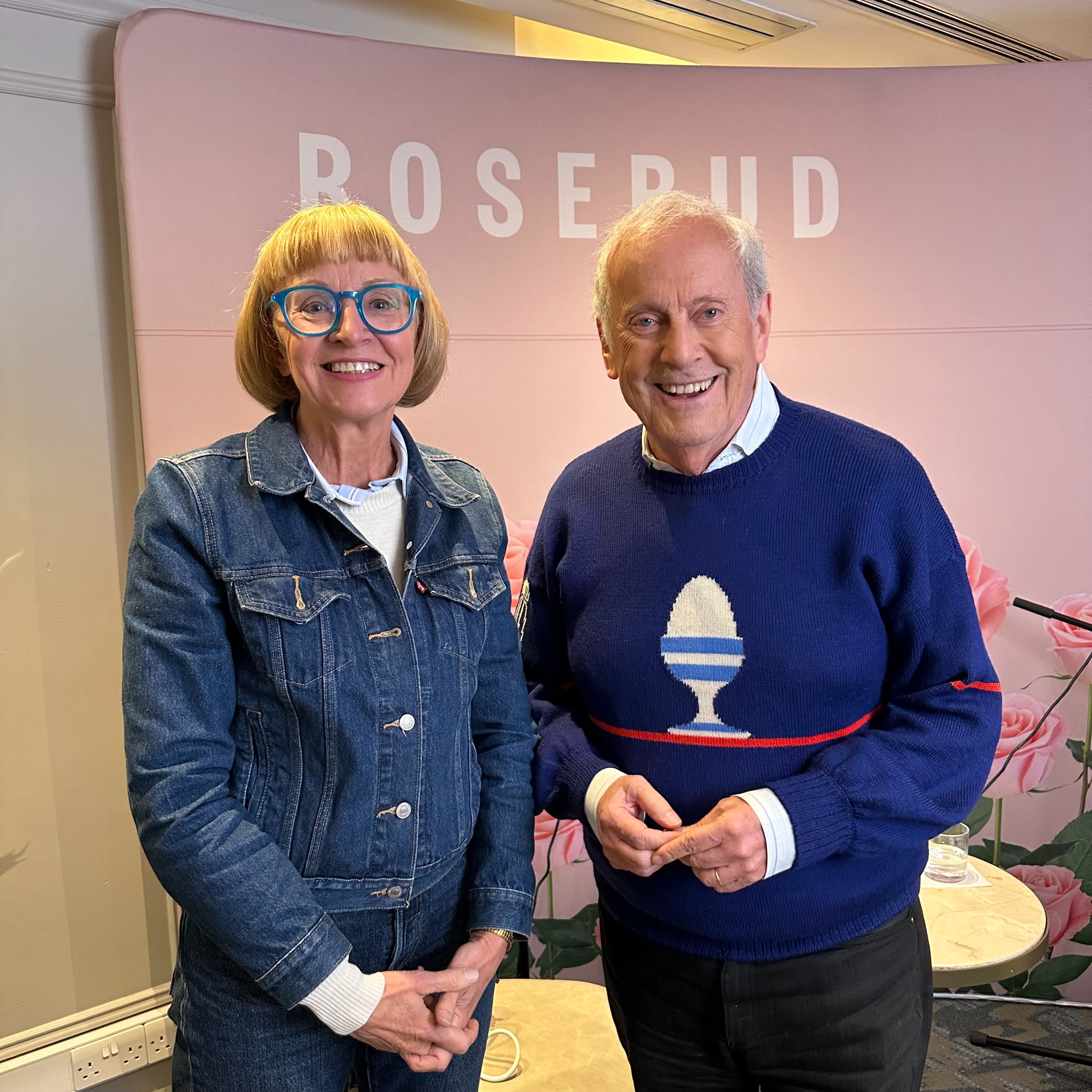
Gyles talks to the writer, psychotherapist and agony aunt Philippa Perry. And this is a fascinating conversation about family dynamics, the salience of childhood experience, and how small adjustments in the way we speak to children can make a big difference to their self-esteem. It's also about how Philippa's own emotionally cold childhood - via Swiss finishing school and private detective work - led her to become one of the UK's best selling writers on psychotherapy. Her books "The Book You Wish Your Parents Had Read" and "The Book You Want Everyone You Love to Read" have sold millions of copies worldwide. Philippa is also well known as the wife of the artist and Rosebud alumnus Grayson Perry, and she tells Gyles about their first date and about why their relationship works so well.
Philippa's Substack is well worth reading and subscribing to here.
Enjoy this!
Hosted on Acast. See acast.com/privacy for more information.


