
 Ask ChatGPT



Host: Gyles Brandreth
Gyles Brandreth invites fascinating guests to share their first memories and experiences, leading to laughter, nostalgia, and deep reflections.
In this episode, Gyles Brandreth interviews Richard E Grant, a renowned actor known for his roles in Withnail and I and Can You Ever Forgive Me? The conversation delves into Grant's extraordinary childhood in Swaziland, marked by privilege but also profound familial challenges, including his mother's departure and his father's struggle with alcoholism.
Written by AI. May contain mistakes.
Explore Richard E. Grant's background, including his name and family origins.
“I'm making my way to Grosvenor House now.”
Listen to Richard's reflections on his childhood memories and family relationships.
“And it obviously did lots of nursery rhymes.”
Delve into Richard's insights on his parents' personalities and their impact.
“His name was Henrik and he was an incredibly charming, erudite, fast-talking, popular person by day.”
Discuss Richard's contrasting relationships with his mother and father.
“He was taller than Frank Sinatra I imagine.”
Understand Richard's cultural background and how it shaped his upbringing.
“We lived in a large house because of my father's job.”
Examine Richard's views on his mother's personality and its implications.
“were let's take your mother first did you meet her parents you know what yes and what were they like They were very, very strict German.”
Explore how beauty affects personal relationships and the complexities it brings.
“Anthony Clare, the psychiatrist, and he explained to me that beautiful people have real problems in life because human beings find extremes of any kind quite difficult to adjust to.”
Delve into Richard E Grant's childhood memories and the impact of family affairs.
“Take us back to your about 10 years of age.”
Discuss the nature of childhood friendships within the context of cultural changes.
“And all your friends, I imagine, were white children.”
Learn about the complexities of sibling relationships and the impact of rivalry.
“that my father gave us boxing gloves for Christmas because we fought constantly.”
Reflect on the nuances of family Christmas celebrations in a unique cultural setting.
“And also, you're now known by your work name, and he's probably still got the family name.”
Explore how upbringing influences financial habits.
“So he was just trying to, you know, get a few, 50 pounds, 20 pounds, get a little bit extra here and there.”
Delve into the personal history of the guest's father's alcoholism.
“Let's get back to my, nevermind my family addiction with spending too much.”
Discuss the guest's attempts to help his father and the consequences.
“When I was 15, I naively thought that, because there was no Alcoholics Anonymous or anything help like that you could get in Swaziland, I emptied a case of his scotch in the scullery.”
Examine the complex relationships with both parents over time.
“Did you ask him about, did you say, Dad, are you going to behave?”
Understand the importance of confronting family issues and past traumas.
“When she left home to go off with her lover, how frequently did you see her after that?”
Explore the complex relationship between Richard E Grant and his mother, and how psychoanalysis helped facilitate their reconciliation.
“But I'm very grateful that I had that rather than going to the end of her life and my life with something not reconciled.”
Delve into Richard E Grant's reflections on his father's alcoholism and the extraordinary circumstances of his funeral.
“And in that moment, you did forgive her.”
Discuss Richard's experiences with faith, loss, and grief following the death of his mother and the emotional aftermath of their relationship.
“He gets, he gets, he didn't get liver cancer.”
Explore Richard E Grant's childhood interests in puppetry and theater, and how they shaped his career in acting and filmmaking.
“because everybody wanted to have puppets.”
The conversation delves into Richard's early romantic experiences and relationships during school.
“Week in, week out, I once got one half bottle.”
Richard and Gyles discuss their experiences of losing their virginities and the perceptions surrounding it.
“No, no, no, not more, because I was 12 then.”
They reflect on the book 'The Joy of Sex' and its influence on their understanding of relationships.
“And Harry and I, producer, we read on Tuesdays on Rosebud.”
Richard shares his experiences in school theatre and his journey towards a career in acting.
“With those strange illustrations, sort of with a wash, line drawings, with a rather unpleasant wash on the cover.”
Richard recounts a formative performance that inspired him to pursue acting professionally.
“And you were able to form a multiracial company?”
Richard discusses his move from Africa to London and the challenges he faced upon arrival.
“So I secretly thought, well, if they can do it, then it gave me hope.”
He shares the story of how he met Joan Washington and the beginnings of their relationship.
“And that, for you for a while, that was the case, wasn't it?”
The discussion turns to Richard's experience of grief after Joan's passing and how he has coped.
“And then when I understood that she was getting a divorce, that, you know, things were possible.”
Richard reflects on the importance of sharing his grief and the supportive responses he received.
“Why did you, because it was so raw when Joan died.”
Explore the bittersweet memories of a loved one and the impact of remembering them positively.
Delve into the shared experiences of visiting antique markets and the joy of haggling.
“And because, you know, being Scottish as well, known for their abstemiousness, would then haggle and say, oh, it's not, it's not.”
Discuss the enduring love for performing and memorable moments in theater.
“It's interesting that that has endured with you.”
Learn about the importance of finding joy in everyday moments, even amidst challenges.
Reflect on significant moments of joy and sadness throughout life experiences.
Discover the story behind a name and the importance of personal identity in life.
“Obviously, Joan's death is incomparable, but really from your earlier years, a moment of sadness.”
Understand the valuable lessons life offers and how to embrace experiences.
“Grab every morsel and crumb that you can.”

Get the gist, explore an idea or ask about something said.
 Claude
On Rosebud with Gyles Brandreth, what are the key points of this episode?
Searching your listeningAutomatic transcript. May contain errors.
0:00Richard E. Grant: We optimize hydration, movement, supplements, and sleep. But most people completely ignore the air they're breathing. And when your air is off, your body feels it first. The Blue Signature Air Purifiers by Blue Air quietly remove airborne pollutants, odors, smoke, and allergens, supporting deeper sleep, better recovery, and clearer focus. It's the most customizable air purifier you can get, with exclusive accessories designed to fit your space and your style. Visit BlueAir.com and use code SIGNATURE30 to elevate your wellness routine.
0:30Gyles Brandreth: If your skincare isn't working, you're probably skipping one essential step. Gentle daily exfoliation. Bare-faced toning pads remove dry, dead skin cells so the rest of your routine can actually work. They help reduce clogged pores, improve tone and texture, and leave skin looking smoother and clearer without irritation. One of these sells every three minutes. They have over 653 ,000 five-star reviews, and the results speak for themselves. If you want real results and a routine you'll actually stick to, start here. Visit barefaced.com and use code SKIN15 for 15 % off plus free shipping. Barefaced.
1:14Gyles Brandreth: Less steps, better skin.
1:18Richard E. Grant: I can't tell you how excited I am. This week I met a man in Middlesbrough who has tattooed Rosebud on his arm. I think we've arrived. Cue the music.
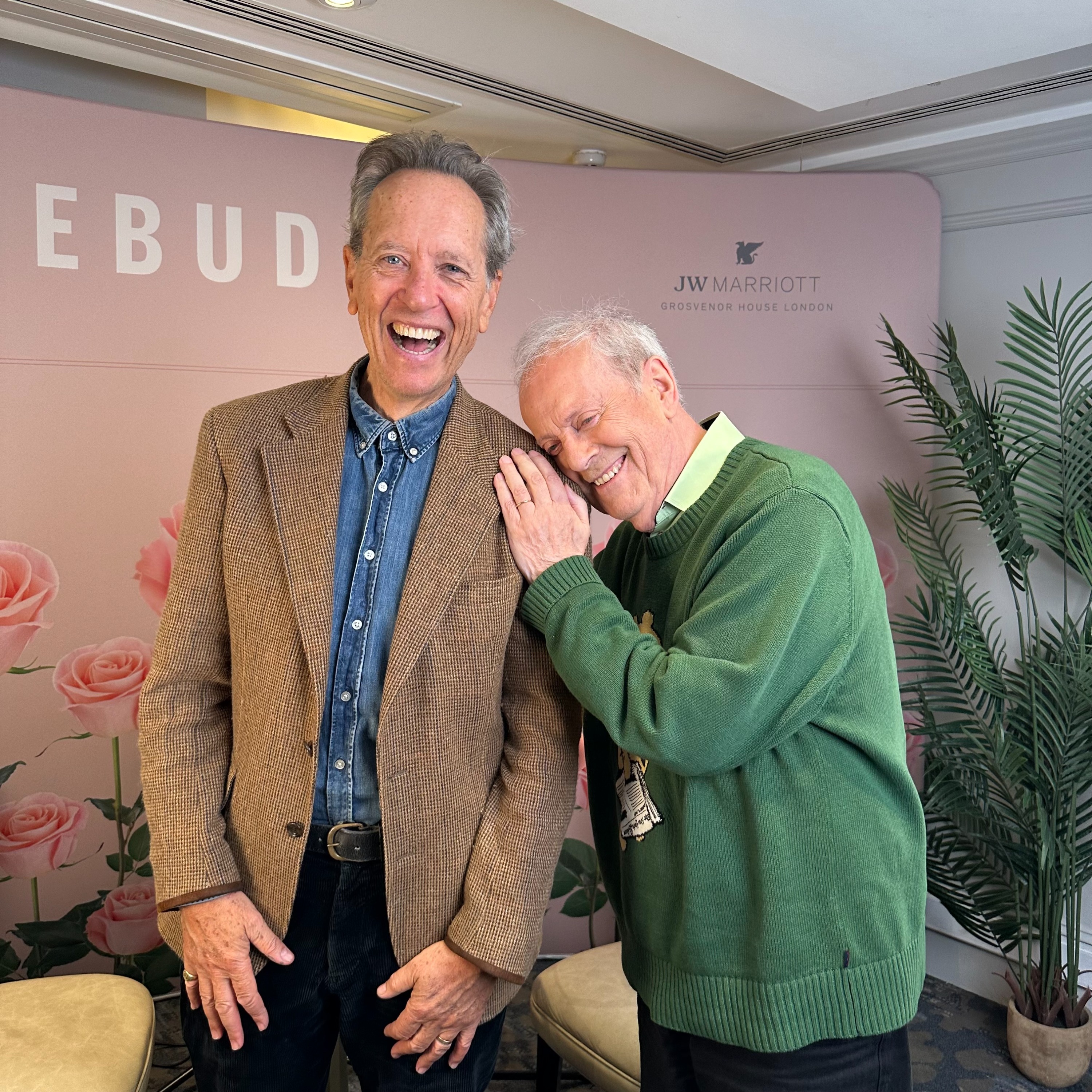
1:51Richard E. Grant: Hello, this is Charles Brandreth, and it's time for another episode of Rosebud. I'm speaking to you from a coffee shop around the corner from Grosvenor House in Park Lane, where we're going to record today's conversation. And I'm excited about it because it's with somebody that I've known off and on for a number of years, but remains a bit of an enigma to me. I first came across him, as you probably did too, when he appeared in a film called Withnail and I. Yeah, it's going to be Richard E. Grant. I'm at least going to find out what the E stands for. Of course, he's been a success for many years, recently in a film called Can You Ever Forgive Me, which I think he was nominated for an Oscar, a BAFTA, a Golden Globe, you name it.
2:33Richard E. Grant: Even more recently, Saltburn. I was intrigued some years ago when I saw a kind of, well, it was a biography, his own story on film called Wah Wah, which he directed and wrote himself. and I feel I got to know him quite intimately after his wife died only a year or two ago, Joan Washington, when he took to social media and bared his soul in a very raw way. Anyway, a fascinating character, a remarkable actor and I think we are in for a very interesting hour with Richard E. Grant. Enjoy. Cue the music. I'm making my way to Grosvenor House now.
3:25Richard E. Grant: Richard E. Grant, born on the 5th of May, 1957. Have I got that bit right? Yes, you have. What is, since I've got the birth date right, what is the name on your birth certificate? Richard Grant Esterhuisen. Who? Say it again. Richard Grant Esterhuisen. How do we spell the Esterhuisen? E-S-T-E-R-H-U-Y-S-E-N. We'll discover more about that, I imagine, in a moment when we hear about your family. So that is who you were born as. That's when you were born. What I want to begin with is by asking you, Richard. Do people always call you Richard? Yes. Have you ever been Dick or Dickie? Not to my face. Okay.
4:01Richard E. Grant: Richard. Have you been called Jilly? Yes. I just went through that phase. Did you? I liked it. Right, Jilly, what's next? what's next is to discover from you Richard what do you think is your very first memory
4:17Gyles Brandreth: I had a wind-up plastic gramophone and when I was four and a bright yellow 45 single that on the A side had Polly put the kettle on which I played endlessly and that was that's my first memory
4:39Richard E. Grant: I can picture this little record player, and I can picture the very small plastic records. And it obviously did lots of nursery rhymes. Was it a B-side, or was it just the...
4:51Gyles Brandreth: It was the A-side that I played until, you know, I think it just wore out. That's what I remember. Polly put the kettle on. Polly put the kettle on. I love it on.
5:00Richard E. Grant: Where is this happening? What sort of age do you think you were?
5:02Gyles Brandreth: This was in Swaziland, which has now been changed three years ago by the current king to Eswatini. But it was a British protectorate and gained independence in 1968. And my father was the director of education, which is why we were there. But the surname implies some kind of Dutch or... Oh, it's Hungarian. And it was changed from Esterhazy to Esterhuisen at some point, apparently. So when I worked in Hungary about 30 years ago on an ill-fated Bruce Willis film, I was greeted at the airport as though I was very grand because this was my passport.
5:44Richard E. Grant: So you still keep your passport in your birth name. Yes, it is. Yeah. Very good. So who was this father of yours?
5:52Gyles Brandreth: His name was Henrik and he was an incredibly charming, erudite, fast-talking, popular person by day. and when my mother left him he then switched into a Jekyll and Hyde mode of um because he hadn't drunk very much before the divorce and then a subsequent to that drank a bottle of Johnny Walker scotch per day what's your earliest recollection of him he my mother I think was I noticed compared to other mothers that she wasn't very maternal she she was very forthright about that she would never bake she would never play bridge she loved sport I think basically she was a man she played tennis and hockey and was incredibly competitive and my father was the one that was much more paternally present although very un and I think that's generational I don't whether it chimes with your experience, but they're not touchy-feely in any way.
6:59Gyles Brandreth: I mean, I think I can count on one hand the amount of times my father ever hugged me or shook my hand, and my mother almost never. But I think that is generational rather than sounding judgmental in 2026. Who was your mother? Her name was Leonie Ulmerstahl, and she was Norwegian-German, but for intense purposes sounded completely English her family had emigrated to southeast Africa in the 1890s I think and so I had this extraordinary experience of I worked I did a documentary in Norway about 15 years ago and I saw three people in the street that I thought were my mother. And then I realized that it was something that just in her features.
7:50Gyles Brandreth: And I then, in those days, you could have a phone book. And I looked up Olmish Dahl and there was a huge farming community in the middle of the country with that surname. How did your parents meet? Goodness me. I can't, I, I, I, at a dance in Swaziland, as far as I remember. But that's all I know. Was there an age difference between them? she was five years younger than he was and she was obsessed with Frank Sinatra her entire life and I think that my father was a kind of the poor man's version of Frank Sinatra and she was nicknamed the Lauren Bacall of Swaziland because she was a handsome blonde and they both loved dancing and Glenn Miller Music and Nat King Cole and Frank Sinatra obviously.
8:43Gyles Brandreth: They were tall. He was taller than Frank Sinatra I imagine. He was taller than Frank Sinatra. He was six foot one and my mother was five foot ten. Oh so she was tall. For a girl that's very tall for that period. And very good for playing tennis and hockey and doing all those things.
9:00Richard E. Grant: This is the late 1940s and they meet early 1950s?
9:03Gyles Brandreth: Yeah. Yeah. Late 1940s early 50s and I was born in 57. So they're a stylish couple. Yes, they were from the photographs that I've seen. But she, my mother was very prescriptive in that she said, I'm never going to cook. And we had Swazi, housekeeper and cook. And she taught her seven meals. And we had those. Military style. I knew what we were having every single day of the week. And that's what I had for my entire childhood. And was your father, Did he have dinner with you in the evening? Yeah, we had dinner together. But when he became an alcoholic, he would try and do everything to avoid eating dinner.
9:47Gyles Brandreth: And so it got pushed later and later. And God help you if it got to nine o 'clock, because then he literally had this personality switch and you had to run for the trees. Before we get to that, let's have you as a little boy.
10:00Richard E. Grant: Yes, probably put the kettle on. Yeah, what are your games? What's your bedroom like? I mean, what sort of house do you have?
10:07Gyles Brandreth: We lived in a large house because of my father's job. And we had a swimming pool and a huge garden and two gardeners. So it was a life of incredible privilege. I'd never cleaned my own shoes, made my own bed, boiled an egg. I had no domestic skills whatsoever because everything was catered for.
10:31Richard E. Grant: And you had loving local servants who were black people. Yeah, exactly. Who loved you and looked after you. Did you have a nanny figure?
10:37Gyles Brandreth: Yes, called Regina. Regina, wonderful. And she was the queen of your life, I imagine. She was the queen of my life. She was much more present and maternal than my mother ever was. But I think that my mother wasn't really cut out for being a mother.
10:55Richard E. Grant: What's the best recollection you have of your mother in those early days?
10:58Gyles Brandreth: uh she oh goodness me i'm struggling to think of one a sweet moment a sweet moment um giles you've got me i can't think of one that is jumping out at me whereas i can think of many of them with my father but give us one with your father and a couple oh he brought he would bring home what was called an eskimo pie at five o 'clock when he came home from work which was two wafer biscuits with a wedge of size of a bar of soap vanilla ice cream in the middle of it and that Eskimo pie is something that I can remember thinking my father is the bringer of Eskimo pies on a daily basis so I've he was a good man yes he was why do you think they were like they
11:46Richard E. Grant: were let's take your mother first did you meet her parents you know what yes and what were they like
11:51Gyles Brandreth: They were very, very strict German. And at six o 'clock, my mother's father, my grandfather, had soup. And the grandfather clock in his drawing is to strike six. And that is when you had to sit down and eat soup. And if you weren't at the table, you weren't allowed to come and eat. So it was very, very formal.
12:13Richard E. Grant: And what we would think of, it's a cliche, as Germanic.
12:17Gyles Brandreth: Yes, Germanic and Edwardian, really. Yeah. And when you visited, where did they live? They lived in the south of Swazilad. Ah, and you went to visit them? Occasionally. Yes. Occasionally, but I mean, there was no warmth. No.
12:33Richard E. Grant: Apart from the soup. And the rooms feel fairly dark, even though there was sunshine outside. You went into rather a shuttered room.
12:41Gyles Brandreth: I remember all the pictures were hung off those brass picture hooks on a rail. I can picture the scene completely. Picture-wire, I can think.
12:50Richard E. Grant: so why do you think your mother was as she was not maternal quite masculine in her in her approach to the world why do you what made her the girl the woman she was uh i think that like anybody
13:06Gyles Brandreth: born with beauty it opens doors for somebody all their life she was very used to men courting her and giving her everything that she wanted and i think that doesn't change because i saw her a couple of years before she died two years ago. And the women that she was playing bridge with were still kind of not awestruck by her, but certainly wary of her and said that she was a formidable person.
13:36Richard E. Grant: Were they almost in her court?
13:38Gyles Brandreth: Yes, exactly right. In her court.
13:42Richard E. Grant: And as a result of this, was she self-obsessed? Was she what we would now call narcissistic?
13:47Gyles Brandreth: I have read an entire book about narcissism, and she ticked every single box, which made it easier to understand and feel compassion, because that is who and what she was, I think.
14:06Richard E. Grant: Many years ago, I worked with Dr. Anthony Clare, the psychiatrist, and he explained to me that beautiful people have real problems in life because human beings find extremes of any kind quite difficult to adjust to. So it's unusual to have, if you're very beautiful, to have a normal relationship because people are awed by your beauty. And was your father handsome in that sense? So did they feel, ah, we found each other?
14:29Gyles Brandreth: I think that he found her and he told me that she ran off with a musician while they were engaged so already she was a bounder and my father you know doggedly stuck to his obsession and plan and married her. So in the light of that, it's no surprise that she then had multiple affairs during their marriage, and then one which finally led her to divorcing him.
15:05Richard E. Grant: If we're looking at her kindly, she could have been somebody who needed the reassurance of love, because she felt she wasn't loved, wasn't wanted, and constantly sought the affirmation of being desired? Well, I remember my father being kind of smitten with her.
15:25Gyles Brandreth: And he said on his deathbed, when my stepmother just stepped out of the room, and he could barely talk at this point, because he had brain and lung cancer. And he said, I've never stopped loving your mother. And I pointed to where my stepmother just walked out the door. And I said, do you mean, and he said no your mother and in that moment i understood the tragedy of his life because he had this unrequited love for her so she was worshipped by him and that obviously either annoyed her or wasn't enough and she subsequently you know many years later wrote me a letter after i'd had psychoanalysis in which she described the frustration of being a colonial wife in this hierarchical pecking order of real snobbery and that because my father's position she wasn't allowed to work and she said you know I fell out of love with your father and in love with his best friend you know when you're older you can understand those things but when
16:33Richard E. Grant: you're a child you think it must be your fault when you the famous story of you being in the back seat of the car and discovering her in the front seat indulging the act of darkness with her husband's best friend. What was your thought at that moment? Take us back to your about 10 years of age.
16:54Gyles Brandreth: I knew, yes, I was 10. I knew we'd come back from a cricket match and I was asleep on the back seat. And the car had stopped and the engine was still running, lights were on, headlamps. but there was this rhythmic movement in the car which I didn't recognise and then cautiously peeked over the front seat and found and saw that my mother was having sex with my father's best friend I didn't really understand what they were doing but I certainly knew that they were kissing each other and making noises that you instinctively know that it's something that you shouldn't be witness to.
17:39Richard E. Grant: Before that, did you already know that something wasn't quite right between them? Oh, yeah, yeah, yeah.
17:43Gyles Brandreth: It was very, very clear that she was having an affair with him. Yep. And they met every Wednesday. They played golf together on a Wednesday afternoon. And because our family and their family were best friends, my father and his best friend's wife became close to each other because they knew what was going on. Well, they were golf widows of a different kind. They were indeed. And I was great friends with their children. And of course, when they divorced, that all ended. And I lost my friends.
18:14Richard E. Grant: Before we get to that stage, I want to take you back to the... I'm trying to find a golden moment in your childhood. You're there playing Polly Put the Kettle On. You've got this Regina. This is the lovely nanny who is warm and, you know, what does she call you?
18:31Gyles Brandreth: She called me... I was given a nickname, and this is a tradition in Africa that I don't know whether it exists anywhere else, but you're given a name that describes your character and your physical qualities in one. So she called me Mondlwani, which means the man who walks with his head in the clouds. Oh. And my father's nickname was Mallagini Pani, which means the man whose brain runs faster than his feet.
19:01Richard E. Grant: You have shrewdly observed both these characterizations. Yeah. Well done. So just in your bedroom, what sort of bed do you have?
19:12Gyles Brandreth: What are the books you're reading? I had a single bed. I had every single Enid Blyton book that she had ever written. And I know they're now.
19:22Richard E. Grant: No, they're coming back. It's all right.
19:23Gyles Brandreth: They are coming back. Have they been woked and.
19:26Richard E. Grant: No, they've been unwoked again. They've been unwoked again. We happen to be recording this on World Book Day. A big survey was conducted of the most popular books among people in this country, in the U.S. Kingdom. And recently, the Famous Five comes first. Famous Five. Enid Blyton is the top, which is fantastic. But The Faraway Tree, is that not your favourite book? The Faraway Tree.
19:48Gyles Brandreth: Do you not? This? Not my favourite book, no. But do you remember it? Yes, The Secret Seven and The Castle of Adventure, all those adventure books and The Famous Five, all of those books, I was absolutely obsessively read followed by the Hardy Boys, and then everything came after that. So in the early years, parents aside, there's happiness.
20:08Richard E. Grant: You're enjoying yourself, are you? Yes, from what I can remember, yeah.
20:13Gyles Brandreth: The Treehouse and my best friend, Jonathan Cullen, whose father was the headmaster of the school that I went to, St Mark's. I met him at nursery school when I was three, and he now lives in Los Angeles, and we have been friends since then. Uninterruptedly. And all your friends, I imagine, were white children. Yes, I had some. It was 1964 when I began school was the first year that black Swazi students and Caucasians were allowed to be in the same classroom. So Tansom Deniso, who now runs the sugar mill in Swaziland, we were friends from the age of six.
20:58Richard E. Grant: so the parents world clearly from the way you describe it there is a touch of I know it's a different part of Africa but the white mischief of the novel and the film it's that sort of world
21:07Gyles Brandreth: cocktail parties wife swapping booze bonking and boredom the three B's of colonial expat life but a merry childhood with Enid Blyton and Bonnie put the kettle on exactly because there was no television Suarez only got television in 1979 I think after I left so it was the BBC World Service round the horn and just a minute. Otherwise reading was the way out and there was one cinema. And you had a brother? I had a brother, yeah. And he was older, younger? Two and a half years younger than me and we never shared friends, a bedroom, went to different schools, had chalk and cheese interests and I have been estranged from him since my father's funeral 46 years ago.
21:53Richard E. Grant: And what is the root of that, do you think?
21:57Gyles Brandreth: his narrative is, I've discovered, is that he believed that I was the favourite child. And you can't really dislodge that if somebody believes that. Although my father loved sport, he played rugby and cricket, and I didn't play rugby. I played cricket badly. So my brother was the sporty one. So the idea that with a sport-obsessed mother and a sport-mad father, that I should be the person who wanted to be an actor, should be the favoured one, doesn't quite fit the reality.
22:34Richard E. Grant: But that is what he believes. But also the reality is that the firstborn usually is the favoured one because you are the golden child that emerges. And I'm sure you look pretty good in those cricketing whites, whether you could actually hit the ball very far.
22:47Gyles Brandreth: I'll go with the golden, Jo, I'll ask. Thank you.
22:50Richard E. Grant: So when did this falling out with your brother begin?
22:53Gyles Brandreth: Or was there never a falling in? There was never a falling in. Exactly. Yeah. There was no falling out. I never felt a kind of loss of anything because I didn't have something that was extraordinary. You know, it was a great friendship in the first place. I remember that in 1969, when I was 12 and he was, what, nine and a half, that my father gave us boxing gloves for Christmas because we fought constantly. So that tells you.
23:24Richard E. Grant: and did you before we before we dismiss him completely since clearly you have all your life dismissed him did you either of you ever think along the way this is absurd we're brothers we have a lot in common because we do have parents in common we have this childhood
23:41Gyles Brandreth: yeah but we had completely different interest and uh when i was promoting the autobiographical film that I wrote and directed two decades ago called Wawa. I was on a chat show publicizing it in Johannesburg and somebody gave me a recording of what he had called in six months before I had been on this program slagging me off up down and sideways. So you know I think that if somebody's jealous of you or feel that you've somehow wronged them there's nothing you can finally do about that. so are you do you have siblings i have siblings i get on well with but two of my sisters didn't
24:22Richard E. Grant: speak for 40 years and what changed uh and they no death changed they went they went they went to their graves and indeed one of them the one who survived when i was speaking at the funeral of the one who had died yes she couldn't cope with all the nice things i was saying about her sister my sister and she was literally groaning in the in the it was a small chap was on the memorable a funeral because my sister, the one who died, worked at Parkhurst Prison and ran, was involved in an organization called Lesbians Ignite. And so one half of the congregation were rather traditional women wearing pork pie hats and sort of tweed jackets.
25:06Richard E. Grant: And the other half was prisoners attached to prison officers. And in the front was my family and my sister who had not been on good terms with the sister who died and as i spoke she went oh no and people going shh please why did they why did they they had a fight they had a physical fight
25:29Gyles Brandreth: when they were about 18 and 20 yeah uh i think about my younger sister being gay
25:35Richard E. Grant: which my older sister didn't like oh i see and uh they were from that day not reconciled but i do remember the Christmas when we were all together at Christmas, the younger sister saying to the older sister who'd instigated this, come on, Jane, this is stupid. We can't go on like this for the rest of our lives. And the sister just looked away. So she didn't try again. Have you ever tried? Because you are the successful one. You're the clever one. You've been to the psychoanalysis. Have you ever actually said to your brother, come on, this is absurd. We can't go to our graves with this lifelong active animosity because it's active in his case he's actually phoning radio stations to slack you off this man has got to be in his bonnet about you
26:22Gyles Brandreth: well clearly but i don't i it's not reciprocated i don't feel that yes what you said before did you feel that you had something that is then lost i've never felt that. No, he was a stranger. Yeah.
26:37Richard E. Grant: And also, you're now known by your work name, and he's probably still got the family name. He does. Yeah. So he wasn't part and parcel of your childhood, but your parents were. Give me the last good family moment. There must have been a family Christmas or something. Did you have, does anyone have family Christmases in Africa?
26:54Gyles Brandreth: Yes, yes, you do. and everything's cold on Christmas Day. And we had Christmas pudding as well as watermelon at the same time and the sound of cicadas. It signals Christmas. At the beginning of December in Switzerland, you'd have cicadas. So Christmas, yep. I remember asking for pen and puppets every year and I got those and I still have all of them. Oh, have you got a good collection? I do. Which is your favourite?
27:24Richard E. Grant: What's yours? Mr. Turnip. Mr. Turnip. Do you remember Turnip? I do. I have a Mr. Turnip. You have a Mr. Turnip? I do. I haven't seen a Mr. Turnip in years. I lost all mine. How do you lose them? I know. How did you lose them? I fear, over the years, my parents had money worries. They sold them off? My father sold his stamp collection. He had wonderful cigarette cards collected from the time of the First World War onwards. You know, complete cricket teams, all that sort of thing, from the 20s and 30s. He sold everything. Was he a gambler? No, he just spent a little bit too much. Every year, a little bit too much.
28:02Richard E. Grant: So he was just trying to, you know, get a few, 50 pounds, 20 pounds, get a little bit extra here and there.
28:07Gyles Brandreth: Has that made you very careful about money?
28:11Richard E. Grant: Yes, I think it has now. It's a family characteristic, but I think I'm on top of it now.
28:24Richard E. Grant: We optimize hydration, movement, supplements, and sleep, but most people completely ignore the air they're breathing. And when your air is off, your body feels it first. The Blue Signature Air Purifiers by Blue Air quietly remove airborne pollutants, odors, smoke, and allergens, supporting deeper sleep, better recovery, and clearer focus. It's the most customizable air purifier you can get, with exclusive accessories designed to fit your space and your style. Visit blueair.com and use code SIGNATURE30 to elevate your wellness routine.
28:55Gyles Brandreth: If your skincare isn't working, you're probably skipping one essential step. Gentle daily exfoliation. Bare-faced toning pads remove dry, dead skin cells so the rest of your routine can actually work. They help reduce clogged pores, improve tone and texture, and leave skin looking smoother and clearer without irritation. One of these sells every three minutes. They have over 653 ,000 five-star reviews, and the results speak for themselves. If you want real results and a routine you'll actually stick to, start here. Visit barefaced.com and use code SKIN15 for 15 % off plus free shipping. Barefaced.
29:39Gyles Brandreth: Less steps, better skin. Are you noticing your car insurance rape creep up even without tickets or claims? You're not alone. That's why there's Jerry, your proactive insurance assistant. Jerry handles the legwork by comparing quotes side-by-side from over 50 top insurers so you can confidently hit buy. No spam calls, no hidden fees. Jerry even tracks rates and alerts you when it's best to shop. Drivers who save with Jerry could save over $1 ,300 a year. Don't settle for higher rates. Download the Jerry app or visit jerry.ai slash a cast today.
30:17Richard E. Grant: Let's get back to my, nevermind my family addiction with spending too much. Let's get back to your father and the drinking too much. Was he a drinker? Do you think when he met your mother?
30:24Gyles Brandreth: No. And I, because I wasn't sure about this, I've asked people that knew him really well. And I said, how much did he drink? Because they, they had cocktail parties and went out almost every night that I can remember. And to a man and woman, they said, prior to your parents' divorce, we don't remember your father drinking very much at all. And I have no memory of him ever being drunk when my mother was still doing with us. But the day that she left, he drank an entire bottle of Johnny Walker because I found him in a chair and I thought he was dead. What happened on that day? Oh, she left at six o 'clock in the morning and she came to my bedroom and said I am getting a lift and I'm going away and I won't be coming back because I am no longer in love with your father and I knew who she was in love with I'm you know it was absolutely clear by that point how old were you then I was 10 and so she she left and she said you won't have to go to school today.
31:29Gyles Brandreth: So I went with my father on a school visit. He went in the south of the country.
31:37Richard E. Grant: He was a school inspector type.
31:39Gyles Brandreth: He was in charge of education. He was in charge of education, yes. So he, I suppose, subverted me by saying, let's go and see the school. And I have no memory of why my brother wasn't with us. Gosh, I had no thought of that. And so I went and I asked him on the trip, is she coming back? And he said, I don't think so. And I said, well, not for a while. And I said, how long is a while? And he said, maybe a long time. I said, how much is a long time? And then that evening he called her and begged her to come back. And it's, I think, one of the three times that I ever heard my father cry. And I was sitting underneath the dining room table.
32:24Gyles Brandreth: We had one of those Bakelite phones. and he begged her and begged her and then dragged this entire bottle of scotch which I found next to him um with a radiogram had the uh the the needle was you know at the end of the record and I found him you know in the middle of the night slumped in a chair with the bottle lying on the floor and I thought he was dead and because I was so tiny I couldn't um I couldn't get him to bed so I just covered him with a blanket and from that day onwards for the next 13 years he drank a bottle of that every single day which I found as I said earlier on his deathbed was unrequited love
33:11Richard E. Grant: from my mother poor fellow did you try indeed did you try to do anything about it beyond oh yeah yeah
33:18Gyles Brandreth: So when you were small, what did you try to do? When I was 15, I naively thought that, because there was no Alcoholics Anonymous or anything help like that you could get in Swaziland, I emptied a case of his scotch in the scullery. And I was halfway through the 11th bottle, and I felt something very cold on the back of my neck, and it was a gun, and he was at the other end of it. a revolver and he fired and I ducked in time because he was so drunk and then he chased me around the garden and I thought that I found a good hiding place and he he had the presence of mind to switch the garden lights on and the swimming pool and then found me and then came up and said I'm going to blow your brains out and I said do it just get it over and done with right now so the pistol was right next to my forehead but because he was so unsteady when he pulled the trigger it missed so I you know collapsed on the ground and then ran and I went to stay with my Scottish piano teacher called Bunny Barnes who was my great mentor and real she was the person that
34:38Gyles Brandreth: was the mother figure that my mother wasn't able to be for me. And she gave me sanctuary until I was persuaded by my stepmother to go back a week later.
34:52Richard E. Grant: So your father found a girlfriend quite quickly, did he, after your mother left? Yeah. Had he already been having affairs himself, do you think? Not as far as I know. So he was devoted to your mother. the horror of her departure drives him literally to drink to drink he then finds a nice person who becomes your stepmother who's known for six weeks and he marries her well he marries her instantly yeah the divorce has come through i'm free marry me absolutely what's she called
35:17Gyles Brandreth: annemarie and we like her do you like yeah she's a very very kind woman she's now dead but she was incredibly kind and what did she see in him why did she want to make sure she was a case study yeah exactly like this and she she fell in love with him and so they got married very quickly to her mother's absolute horror because she was also younger than him she was younger than
35:43Richard E. Grant: him by 10 years yeah yeah and he was a divorcee he had these two divorcee had two children and he was an alcoholic and we could now see he was already now by the time they got married and he was apparently drunk at the wedding how did he hold on to his job because he was one of those
35:59Gyles Brandreth: what I now understand is a functioning alcoholic. He got driven to work and got driven back again. So he would manage to be... What's so extraordinary about this addiction is that many people said to me after they'd seen my film, you have misrepresented your father. He was not an alcoholic. We never saw him drunk. And I said, well, that was because he would do it in secret. and be functioning during the day, but then, you know, come nine o 'clock at night, you would get this sudden switch into somebody unrecognisable. So how long did you actually live at home with him? Well, until I was,
36:44Richard E. Grant: I went to university when I was 19. So you just went to Bunny for refuge at that terrible time when there was the crisis. Yes. But then you were persuaded to go back home. Yes. Did you ask him about, did you say, Dad, are you going to behave? Do you call him Dad or Daddy? Oh, dad, yeah.
36:59Gyles Brandreth: Or pa, dad. And he claimed to have no memory of what he'd done the night before.
37:04Richard E. Grant: That's possible.
37:05Gyles Brandreth: And he would sign a check and shift it across the dining room table at breakfast. And I would push it back and say, I don't want that. I would just like you to be sober. And he said, yes, yes, yes. So he'd make all these promises. And of course, you believe that. The other thing is that unlike now where people talk about it, nobody nobody would mention that someone was an alcoholic or an adulterer you had to keep all that quiet so when somebody would phone after nine o 'clock at night and say oh could I speak to your dad um I'd say he's in the bath he's just gone out he's gone to sleep he's in the garden you always you had to lie and it became something that you got used to doing did you think through
37:48Richard E. Grant: your feelings about him did you think I like him I love him oh I loved him you are you absolutely
37:53Gyles Brandreth: loved him. I started keeping a diary after witnessing my mother in flagrantry in the car because I tried God, got no answer. And I obviously couldn't tell anybody. So I thought that by writing it down, somehow that would make the unreal real. And I've done that. And I suppose it's stood me in good stead because when I've met and worked with people that I never dreamt that I could possibly ever do so, somehow writing it down makes it more real than anything else, if that makes sense.
38:26Richard E. Grant: Total sense.
38:27Gyles Brandreth: Yeah.
38:28Richard E. Grant: I keep a diary too.
38:29Gyles Brandreth: You do. Yeah.
38:32Richard E. Grant: We'll be writing about you later. Pages to write about you. Pages. So what have you got, do you think, now? Because we often say a child would last a lifetime. time um what positively do you think you've got from your your parents that is in you today
38:48Gyles Brandreth: i have from my mother an incredible obstinacy and determination so i never give up on things and i think that is that indomitable spirit is what she had um and maybe that's german Teutonic, whatever it is. And from my father, a love of reading, people. And when he was sober, he was glass three quarters full and very optimistic character. So that is what I feel I always have been. That no matter what's going on, I kind of think, well, it can't be that bad. And having survived this stuff, you know, these two key moments in my childhood, I think it's your nature that, because I know people who had stable childhoods who suffer from depression or are kind of miserable in life and feast on bad news.
39:48Gyles Brandreth: And I don't do that.
39:49Richard E. Grant: When she left home to go off with her lover, how frequently did you see her after that?
39:55Gyles Brandreth: She used to come down every two weeks.
39:58Richard E. Grant: Oh, quite regularly then. Yeah. And did she marry him and find happiness with him?
40:02Gyles Brandreth: No, because he was threatened with disinheritance. So he got transferred to, he was a mining engineer. He got transferred to Peru. And then she married another man called David Hogan. She married him on the rebound. And he was, he is now dead. But he was, for me, probably one of the most staggeringly boring people I've ever met. his conversation was jane's good book of fighting sea ships that's what he he liked to talk about and things in the second world war which was not my great passion and he thought that anything to do with a theater was absolute anathema so we had nothing in common whatsoever literally nothing and he and my mother bickered and fought on a daily basis until this poor man finally died about five, six years ago.
41:00Gyles Brandreth: And what was your lifelong feeling about your mother
41:03Richard E. Grant: as the years went by as you grew up?
41:05Gyles Brandreth: She was very formidable. So until I finally confronted her about what had happened when I was 42, what I'd witnessed when I was 10, she had enormous power to... She could shut down a room. she could ice people out in monumental olympic level sulking and that's a very powerful thing to to do if you literally cut people dead but the moment that why did you decide to confront her
41:38Richard E. Grant: thought you'd been going through therapy you thought yes i had i had analysis when i was
41:41Gyles Brandreth: psychoanalysis when i was 42 as i'd sort of hit the wall and i thought that i was paralyzed and couldn't get out of bed so i saw an extraordinary man called christopher bolus that steve martin had put me in touch with and he literally saved my life because he made these connections that I was 42 at the time when my father had been 42 independence had come he'd lost his wife he had a 10 year old child I was 42 thought that I had no career left our daughter was 10 he said these things subconsciously play upon you and so once I understood that I tripped the light fandango after the first analytic session and then went every week for 18 months and during that process he said you you have to reconcile or come to some understanding of your mother while she's still alive that's a great opportunity i sent her a fax with one question and i didn't get a reply and then two months later i got an 18 page letter what was the question something like
42:54Gyles Brandreth: I was awake in the car in July when you were with John coming back from the cricket match and they didn't hear anything and then she wrote this detailed letter explaining what it was like to be a young colonial wife in a way that made me understand the position that she was in it moved you yeah incredibly so i flew out met her in a restaurant but there's nobody there you flew to which city i flew to um swaziland i met her and we had a very very forthright conversation and i said right up front i come in peace and i said but the one thing because i wrote a reciprocal letter about what had happened to me after she left which she was appalled by but she had no idea that my father had become an alcoholic um or so she claimed and then i said mom the one thing you haven't addressed is what happened that night in the car when i woke up and she leant forward and let out a kind of animal
44:07noise that i've never heard before and she said three magic words please forgive me
44:12Gyles Brandreth: and it completely changed our relationship and reconciled us as much as it was possible to so that I could Skype her every 10 days subsequently and we would talk about books and music and they they were the kind of neutral things that because she was a voracious reader read four or five books a week and that is what we had in common but it was like having a relationship with a kind of slightly formal, distant aunt rather than a mother. But I'm very grateful that I had that rather than going to the end of her life and my life with something not reconciled. So that was all entirely due to psychoanalysis.
44:59Gyles Brandreth: And in that moment, you did forgive her. I did. And the power shifted. My fear of her completely dissolved.
45:09Richard E. Grant: Yes. Because also then you were giving her something. You were giving her your forgiveness. Absolutely. And she knew that. Yeah. And so, and in the end, so do you, in the end, I mean, the moment I asked about your father, you said, oh, I loved him. I loved him. I did. Do you say now of your mother, actually, for what she was, she was the person she was, and I did love her?
45:29Gyles Brandreth: No.
45:30Richard E. Grant: You can't say that? No. I'm afraid not. So your mother died three years ago? Yeah. Three years ago, yeah. And that was fine, I mean, in a sense. Yeah, I never shed a tear. Did you say goodbye, though? Did you go to her funeral? on?
45:40Gyles Brandreth: No, she wouldn't have one. She said that she wanted champagne and oysters for her bridge buddies. No, I didn't have, I went to stay with her six weeks after my wife Joan had died. and so this is four and a half years ago and she was so without compassion and having been widowed herself a year before that that I left after seven days instead of staying for two weeks and at the end I sent her an email saying you know it was my fault entirely that the visit was such a disaster because i was in such grief and wasn't good company and then she wrote back richard agreed your visit was a total disaster regret to say we have nothing in common whatsoever other than classical music and books mother that was it that was the sign off from my mother so dr freud I rest my case.
46:51Gyles Brandreth: As you can see, I'm obviously a terrible person who, you know.
46:54Richard E. Grant: No, not. I'm only sympathetic because there must be reasons she found it so difficult to show compassion after the circumstances. Let's finish with your father and get back to you. Your father is this Jekyll and Hyde figure during your childhood. The drink, I imagine, kills him.
47:12Gyles Brandreth: Cigarettes do. He gets, he gets, he didn't get liver cancer. So he chain smoked. So he got lung cancer and brain cancer. At what age? 53. Oh, gosh.
47:23Richard E. Grant: And do you remember his death? How old would you have been then? I was 24, and his funeral was extraordinary
47:36Gyles Brandreth: because a young priest called Becky Gumeza, who I'd been at school with, had done an evangelical course in America and had come back and he did the oration at my father's funeral. And he misguidedly believed that he could raise people from the dead. So he jumped into the grave, unbolted the coffin and then there's this, you know, Joe Orton multi-Python moment where myself included, everybody leant forward to look. That was my father weighing about 55 pounds. dead as a doornail and uh then he becky had to be consoled and pulled out of the grave because he was in such a state because he'd not managed to raise this man from the dead so the coffin was re-bolted up and soil put in and certainly would have amused my father if he'd been there to see it um so that was that was how his his life ended yeah extraordinary has faith been part of your life you said i tried you tried when you were small oh i went to sunday school every every week and then i prayed fervently on my knobbly knees for three nights after my mother left in 1967 and got no reply and so kept a diary instead.
49:27Richard E. Grant: Autotrader. Really. Just go to autotrader.com and get picky. Search through dealer listings for the make, model, colour and the features that matter to you. Then just drop in your info and you'll see all the cars that fit your budget. Really. Once you've found the car of your dreams, you can have it delivered to your driveway or you can pick it up at the dealership. Really. So buy your next car entirely online on Autotrader. Head to autotrader.com or search the Autotrader app.
49:55Gyles Brandreth: If your skincare isn't working, you're probably skipping one essential step. Gentle daily exfoliation. Barefaced toning pads, smooth skin, unclog pores, and help the rest of your routine work better, all without irritation. One of these sells every three minutes. They have over 653 ,000 five-star reviews, and the results speak for themselves. Get 15 % off plus free shipping at barefaced.com with code SKIN15. Performance comes down to controlling what you can. For tennis pro, Jessica Pagula, that means starting with the air around her. She can't control her opponent or the match, but she can control her rest and recovery.
50:38Gyles Brandreth: That's why she's trusted Blue Air for five years and counting. Blue Signature air purifiers are engineered to perform and designed to impress, with seven stages of advanced filtration, up to ten times more odor removal, and customizable colors and accessories. Shop BlueAir.com and use code signature 30 to save.
51:22Gyles Brandreth: probably the biggest reason why pen and puppets succeeded so hugely in the 1960s, because everybody wanted to have puppets.
51:30Richard E. Grant: I was into them before. Oh, you had them before.
51:32Gyles Brandreth: Right.
51:33Richard E. Grant: I had them. And during the holidays, I started to have one every week in Broadstairs. It was a toy shop. We used to go for some holidays to Broadstairs. Wow. And my mother and I were in Broadstairs for, I think, eight weeks. My father would come down for two of the weeks, and then would come down at weekends. Yeah. and every week I was allowed to have a new Pelham puppet. I had quite a big collection. Yeah. And I had the toy theatre that went with it.
51:58Gyles Brandreth: Yes. So you weren't financially strapped if you were getting a weekly. I got two of my birthday, two at Christmas. You got them weekly for eight weeks.
52:07Richard E. Grant: But this was the problem. My mother managed to get from my father whatever she wanted. Uh-huh. So if she wanted for me my Pelham puppets, I got my Pelham puppets. But what got me? And they've all gone. Oh, and I can't believe that. How many puppets did you have? You must have had 60. I think almost, because there was a kind of catalogue. You could see what you had. Yeah. And I had the things like the skeleton, the ghost one. Yes, I got that. Oh, dear. And also there were characters. There was a Cinderella one, wasn't there? Yes, I've got that. Oh, of course you've got a one. I must. I'm sorry.
52:36Richard E. Grant: I don't know why we're doing this here. I'm going to be coming around to your place to play with your puppets. All right. But what got you into that?
52:42Gyles Brandreth: Where does that strain come from? I have no idea. I made miniature theatres out of shoeboxes with cut-out figures stuck on lollipop sticks and a bedside lamp and painted the scenery. So where that comes from, and then made glove puppets and then subsequently string puppets, where that comes from, I have no idea. And is that what has informed your life?
53:01Richard E. Grant: Is that why you are the actor that you are today and the filmmaker from that childhood thing? So here we have this boy who is living a lot in his head and with his puppets. Exactly, yeah. At school, do you find friends?
53:15Gyles Brandreth: What sort of school are you at? There were only two schools where I lived. One was called St Mark's, where I went until O-levels and A-levels. And I then went to Waterford-Kumtlawer, which was a couple of miles outside of the town. And this is where Barney was one of the teachers? Yeah, she was one of the teachers. And she taught the piano, did you say? She taught the piano, she taught French and English. So I had over three different things. and she also played the piano for all the amateur musicals that this was in a theater club so that is where i spent all of my time if i was in school plays i was at the theater club as being one of the youngest members and she saw a like-minded soul she loved she did yeah and she's very critical as well she wasn't somebody just said oh everything you're doing is you know you're picasso darling but uh she was very very encouraging we kept up a correspondence until she died in 2007 at the age of 94.
54:10Gyles Brandreth: And were there boys and girls at the school? Yeah, co-ed. And do you remember your first crush? Oh, yeah. Jill Smith, when I was six, we were both turfed out of class by Mrs. Nairn for talking too much. And then when I was 12, I had a crush on Betsy Clapp with a double P, who was American. And Neil Armstrong had landed on the moon that summer or winter where we were. And so she was the only American that I'd ever met. I thought she was so exotic and gum-chewing and fast-talking, taught me how to French kiss. And I thought she was it. And then she left after a year. And I was on a chat show in America about seven years ago.
54:55Gyles Brandreth: And her sister called into the thing. And I subsequently had lunch with her in Soho a year ago with her daughter and she's widowed and it was extraordinary we had no no correspondence since
55:07Richard E. Grant: 1970 but was it was it a meeting of fire was there did you kiss her but i imagine you kissed
55:14Gyles Brandreth: her nicely on the cheek and they sat down on the cheek yeah there was absolutely no no tongues no tongues no tongues whatsoever but i tried to make perfume for her out of gardenia and rose petals boiled up and shook water so as i've been lifelong obsessive about scent and smelling everything and touching everything. So that then led me to actually make perfume and launch it at Liberty. Is that so available? 12 years ago. Your fragrance is available? It is, yeah. What's it called? It's called Jack and it's unisex. It's the top notes of lime, marijuana and mandarin. My God, oh. And it sells at Fortnum's as well.
55:47Gyles Brandreth: Well, I'm a regular Fortnum's customer
55:49Richard E. Grant: because that's when I get my sparkling tea.
55:51Gyles Brandreth: You'll have to go onto the second floor of the perfume department and you'll find it.
55:55Richard E. Grant: I will go. I will go. Because you don't drink now, do you? I've never drunk. You've never drunk. allergic no enzyme yes that i i remember this so you don't drink your father did you don't i don't drink so i have this sparkling tea i'm now going to go what floor do i find and i just going to say jack please second floor second floor do i say mr grant sent me do i'm allowed to do that you can i'm going to i'm going to i don't think i'll give you a discount though they might just give you a bottle they might put up the price they see me coming i get hooked on it that because I mentioned the sparkling tea.
56:26Richard E. Grant: Week in, week out, I once got one half bottle. Oh, did you? Yeah, so I'm going to be trying to get Jack. So fragrance is important to you. So here you are at school. Who's your first proper girlfriend? Girlfriend, girlfriend.
56:37Gyles Brandreth: Girlfriend, girlfriend, Betsy Clapp.
56:39Richard E. Grant: Oh, so you held hands, you kissed? Well, French kissed, yeah. And more?
56:43Gyles Brandreth: Yeah. No, no, no, not more, because I was 12 then. And subsequently, other people who, you know, they're not widowed or divorced. so probably best not to mention who they are.
56:57Richard E. Grant: We don't need to go there. But do you remember, I do not want names, do you remember losing your virginity? Yeah, I was 15. How old were you? Gosh, well I don't think I'm daring to tell you. Why? Well, because I was quite a bit older. Oh. Well, it depends. It rather depends. What does losing your virginity mean?
57:17Gyles Brandreth: Having penetrative sex.
57:19Richard E. Grant: Full, complete penetrative sex. Yes. Then I would say 18. 18. Right. Yeah. Okay.
57:27Gyles Brandreth: I was an early starter. You clearly were.
57:30Richard E. Grant: Have you kept a diary of that?
57:31Gyles Brandreth: I have.
57:32Richard E. Grant: So have I. I have. I remember it very, very, very clearly. It's down in my basement. And Harry and I, producer, we read on Tuesdays on Rosebud. We read bits from my teenage diary. So we've had a lot of my dalliances, my romantic relationships, with a reasonable amount of detail, quite sufficient. I've offered her the X-rated box. No, thank you. So we're not going to know actually what happened.
57:58Gyles Brandreth: No.
57:59Richard E. Grant: But just remind me, when you were 15, using your virginity, was it fabulous or was it just sort of it's happened?
58:05Gyles Brandreth: No, I thought it was fabulous. Yeah. Oh, yeah. I'd read the, I think every parent that I knew then when I was growing up, and maybe you had this as well, they had a book called The Joy of Sex in the bedside table. With those strange illustrations, sort of with a wash, line drawings, with a rather unpleasant wash on the cover. Yes, line drawings. And the man had a beard and quite long hair. And the woman, I can't remember what she... Had a Scandinavian look to them slightly, didn't they? Yes, kind of Scandi look, yes. And so there are all these illustrations about what... And I thought, well, I can't wait to try all this.
58:43Gyles Brandreth: So I did.
58:44Richard E. Grant: Let's get back to you at school. Is it... Where are you finding your happiness? At school? Where? Oh.
58:52Gyles Brandreth: With doing plays and puppet shows, which I did in this full-size theatre that I had in the garage. And I did that every summer holiday to earn money, to pay for the records and books that I voraciously collected.
59:05Richard E. Grant: And did you have good friends? I mean, were you an easy young man?
59:10Gyles Brandreth: I had five great friends. And what in your... And I'm still friends with those five people.
59:16Richard E. Grant: That's good.
59:16Gyles Brandreth: Yeah. And do you see them quite regularly? Well, one lives in Perth, one's in Los Angeles.
59:21Richard E. Grant: one's in cape town and one's in norfolk oh well so and you're in london most of the time yeah but
59:28Gyles Brandreth: you know with skype and whatsapp the video thing we have now i can see them so you're a teenager
59:33Richard E. Grant: in african schools you're obviously doing a levels and oh and a levels yeah cambridge board uh and with a plan to go into university and your parents yes my father my father said with
59:44Gyles Brandreth: your brain and your results you've got to go to university and i said i wanted to go to a drama school and he said I won't pay for that so I then found out that there was a local architect called Tom Bailey who directed many of the plays that I've been in said that Cape Town University had a drama department as well as an English department in which you could combine over four years the theatre diploma which is all practical and then a straightforward academic degree so I applied for that got in and that's what I did and my passion and my concentration was all on the theatre diploma side and the academic was kind of a by-product and this was a happy time you were having hugely yeah did you live in a flat or share in a flat and I shared with other people uh and then co-founded a multiracial theatre company in 1980 when I graduated and my father got ill.
1:00:46Gyles Brandreth: Well done. Actually, that's an achievement. Yeah. So that's how we started.
1:00:49Richard E. Grant: But this is the era still of apartheid.
1:00:51Gyles Brandreth: Yeah, 1980.
1:00:53Richard E. Grant: And you were able to form a multiracial company?
1:00:57Gyles Brandreth: Yes, that was the irony there, that you couldn't live in the same areas, you couldn't go to the same restaurants or cafes or whatever, but you could work together in a theatre. And did you see your future in Africa, or was England always a mecca? I was always coming to England, and we used to come over four years on what was called home leave and see everything in sight.
1:01:17Richard E. Grant: Do you remember a formative performance on stage that you saw as a young person? You thought, yes, I'm going to be up there one day.
1:01:23Gyles Brandreth: Yes, I saw Gary Warren, who was 15, in Mame with Ginger Rogers playing Mame.
1:01:33Richard E. Grant: I remember it. You remember it? She didn't do a great deal. She came on and she held her arm up like that and her dancing was just to tap her left foot.
1:01:41Gyles Brandreth: It didn't matter. But it was Ginger Rogers. It was Ginger Rogers. Exactly. And Gary Warren was 15. Gary Warren was 15. I was 12. It was 1969. I thought, Gary Warren, he's a 15-year-old and he's on the stage. It is possible for me to actually do this. It's not a pipe dream. Of course, everybody else said, ridiculous, you can never be an actor. So I secretly thought, well, if they can do it, then it gave me hope. And it was hope fulfilled. Hope fulfilled. Because here we are. Exactly, here we are. So when did you leave Africa? In April 1982. My father died six months before. And did you feel suddenly I'm an orphan?
1:02:21Gyles Brandreth: Did you? I suppose to some extent. And I arrived with two suitcases. Did you have money from him? I got a small inheritance from my father. And I arrived with two suitcases and two boxes of cassettes and a Sony Walkman. so I felt a bit like Dick Whittington coming to seek at the age of I'd just turned 25 to seek my fortune in London and I gave myself five years I thought if I cannot get semi-regular work as an actor then I will go back to Swaziland and open up a pineapple beer stall or something on the side of the road but I hope that that wouldn't happen and how quickly did it happen? I got work in January 1983 and then an agent and started getting fringe work and did a play with Annette Crosby written by Ronald Harwood called Tramway Road and was nominated Best Newcomer in the Plays and Players magazine, which used to exist.
1:03:19Gyles Brandreth: And Mary Surway, who was trying to cast Withnale, got me in having seen that and that literally changed my life. Yeah.
1:03:27Richard E. Grant: Ronald Harwood, who you mentioned there, often said to me, Giles it only takes the one by which he meant you only need one thing in his case it was the dresser yes and with Ned and I it only takes the one it was defining for you wasn't it it was in a sense it's been both wonderful and because it was so defining yeah Ronnie found the dresser it's the one but it was so much the one that whatever came next couldn't quite match the one yeah And that, for you for a while, that was the case, wasn't it?
1:04:03Gyles Brandreth: Well, I think that to get a part that is so well-written as that part is, for any actor lucky enough to get to play it, they don't come around many times in a career. So grateful for that. When did you meet Joan? In November 1982, because my agent said, you're six foot two, you have black hair and blue eyes, you could play Northern Irish. So, because of all the troubles, plays being done on films and television at the time. So he said, how's your Belfast accent? And I said, debatable. And he said, go to the Actors Centre. There's a woman there called Joan Washington who's doing a series of regional British dialects.
1:04:49Gyles Brandreth: So I went and did the course with her and 12 other actors. And then I said, could you teach me privately? Because I'd been for an audition with Charles Sturridge and he said you speak like somebody from the 1950s.
1:05:01Richard E. Grant: Of course because you came from Africa where you'd lived really like a person from the 1950s.
1:05:05Gyles Brandreth: Exactly. So I then said could you make me sound more like somebody from the 1980s. So she gave me three lessons that I thought I'd never see her again. And then in January 1983 she was doing a play for the Royal Shakespeare Company and said if you come round to the house I'll cook you dinner if you'll put all this Sisuati dialogue on tape for me. So I did go around and didn't go home. So essentially a conversation began in bed in January 1983, ended in bed on Thursday, the 2nd of September, 2021, 38 years later. Still talking and still holding each other's hands. Wonderful. That's how I met.
1:05:51Richard E. Grant: And was the attraction, does the attraction begin that evening with that meal and the ending up in bed? Yeah. or that's when it began it wasn't when you were taking the lessons with the other people there
1:06:01Gyles Brandreth: oh i i was very taken with her when when i had the private sessions and before that but she was married and and oh she was her husband was you know they lived separately he was living with a makeup artist in manchester and used to come home once a month and was the same sort of age as you no she was eight years older than me and i thought and i thought well you know she has a seven year or child, she's married. There's no possibility here. And then when I understood that she was getting a divorce, that, you know, things were possible.
1:06:36Richard E. Grant: And where was the child on the night that you stayed?
1:06:38Gyles Brandreth: In his own bedroom. And I'd read him a story and got on really well with him. Good. Okay.
1:06:45Richard E. Grant: So, we can't go into all of your marriage, but what do you think you gave her?
1:06:50Gyles Brandreth: Fidelity. Good. And because her husband had been serially unfaithful within six months of their being married. She placed a high value on that, as I did. And we both said to each other, jokingly, you know, I'll kill you if you sleep with anybody else. So we stuck, you know, we absolutely stuck to that. I think that trust is absolutely the bedrock of a marriage.
1:07:14Richard E. Grant: And I know a lot about what she gave you because I've read your very moving book. Thank you. And I came to one of your shows when you were promoting the book and it wasn't a dryer in the house. So we won't go into that, except here you are now, is it how many years? Four years. Four years. And we know that wonderful phrase attributed to Elizabeth II, that grief is the price we pay for love. You shared your grief with us, first in, because I follow you on social media, in some very moving, raw posts, then in your book, then in what became, in a sense, a show. Yeah. Where are you now? How are you coping with the grief?
1:08:02Richard E. Grant: Are you lonely? Just unpack a bit of that for us.
1:08:05Gyles Brandreth: Not lonely. I live communally because our daughter and her now husband chose to a couple of years ago to come and live in our house so we all live together and i'm kind of like a concierge i do most of the shopping the majority of the cooking because they're both very busy and she's going to have a baby in june congratulations so we'll be first grandchild first and only grandchild yeah they only want one well that's what they say
1:08:36Richard E. Grant: who knows what happens but anyway enjoy that do you allow yourself a girlfriend would you allow
1:08:40Gyles Brandreth: yourself a girlfriend i haven't thought about it i've certainly been set up with people and i keep being told by people you know it's four years it's time you must find somebody else but i'm not consciously looking but you know if i walked out the door now could have fooled what happened um i wouldn't be close to that yeah you wouldn't feel guilty no but i've not had any inclination whatsoever.
1:09:06Richard E. Grant: Why did you share so much? And was it helpful to you? I know it was helpful to other people. Yeah. That was the upside. Why did you, because it was so raw when Joan died. It was so...
1:09:18Gyles Brandreth: I think that because I'd grown up in a family of having to keep secrets and saw when I had analysis how toxic they are and how toxic they can be to people's lives, I found it much more empowering to talk about everything. The response I've had from people who've had the shared experience has been incredibly heartening and life-enhancing. So I found I've got great solace from that.
1:09:47Richard E. Grant: What's been the best moment you can remember since becoming a widower? The sort of moment I think actually it's all right.
1:09:53Gyles Brandreth: Oh, the best moment I remembered very, very clearly was that a year ago I stopped remembering Joan as she was when she was ill and only remembering her in the best of health and that trick of memory I am so grateful for because only when you know I'm scrolling on my phone through things from four years ago and I shocked to go oh I see that's what she looked like but that's not how I remember her and certainly the photographs I've got around our bedroom and in our house are you know the best of her so I'm
1:10:36Richard E. Grant: very grateful for that of your 38 years yes can you evoke for me just a lovely day or a lovely
1:10:42Gyles Brandreth: moment just to give us a flavor of the other good times uh going to an antique market usually sunbury um kempton race course which happens twice a month on a tuesday and making bird sounds to find where like that uh to find out where she was and we would separate and then we'd walk down an aisle of stuff and i would know exactly what she would choose and vice versa and then she would go to the stallholder and put on, because she was from Aberdeen, she'd put on a really thick Aberdonian accent. And because, you know, being Scottish as well, known for their
1:11:30Gyles Brandreth: abstemiousness, would then haggle and say, oh, it's not, it's not. You should give them the full thing and then beat them down in price, whereas I couldn't possibly do that. So that That was something that we shared and delighted in very, very regularly.
1:11:45Richard E. Grant: Are you still in love with performing the theatre? Yes. Yeah, I love it. It's interesting that that has endured with you. Oh, that's never gone away. What's been the high point for you in performance, the moment, in terms of enjoyment? Not the big successes, because you had Withnil and I. And then what was the film very recently that you had that was a huge success? you were nominated for lots of awards in a bookshop.
1:12:10Gyles Brandreth: Can You Over Forgive Me? Yeah, which I love that. Melissa McCarthy, true story.
1:12:13Richard E. Grant: If you haven't seen it, listeners, it is so satisfying and enjoyable. Apart from, as it were, obvious successes like that, what for you as a performer, can you remember a moment when you thought, yes, this is working?
1:12:27Gyles Brandreth: Oh, I don't know that I ever feel that. Oh. There's always a feeling like it could be better, or, yep, it's never entirely. it's a sort of weird
1:12:41Richard E. Grant: sound in the oyster moment we're almost at the end is there something that we have not touched on that you would like to touch on anything that you want to say at this stage in your life you're in a good place aren't you
1:12:56Gyles Brandreth: I'm in a really good place I literally live every day because my wife said four days before she died I challenge you and our daughter to try and find a pocket full of happiness in each day and I think that that is a guilt-free mantra by which to take as much pleasure as you can out of things because goodness me the news if you dare look at it is bad enough at any moment of the day
1:13:25Richard E. Grant: we've reached the end I normally ask for a moment of joy and a moment of sadness yes give me a moment of joy from your younger years
1:13:35Gyles Brandreth: playing Mordred in Lerner and Lowe's musical Camelot in 1975 when I was at school I thought that that was about just as fancy as you could because I sang I danced and I played this evil character in it and the praise that I got from that was very enjoyable because all the people the naysayers that said oh you'll never be able to do it suddenly came around and saying oh yeah we saw you in that so i love that is there a part you're still waiting to play that's on your
1:14:08Richard E. Grant: do you have a list or have you done a lot of ipson no ipson because you look you've got that
1:14:14Gyles Brandreth: head you've got a head yes you see i could do you could do it i would like to play king lear before i pop my clogs excellent yeah good the chance of anybody offering me king lear is about as likely as baboons turning into... Beacocks. Beacocks.
1:14:32Richard E. Grant: We'll work on it. We know some people. Thank you. We'll see what we can do. And a moment of sadness. Obviously, Joan's death is incomparable, but really from your earlier years, a moment of sadness.
1:14:48Gyles Brandreth: When my best friend, Richard Clarke, left Swaziland in 1970 to go and live in Perth, Australia, and I thought I would never see him again. We kept, wrote aerograms to each other as pen pals for about a year, and then he stopped. And I had a reunion with him when I worked in Sydney for the first time in 2002, and we've stayed in touch ever since. Lovely.
1:15:17Richard E. Grant: And what, Richard, has life taught you? Oh, the E, I suppose, comes from when you were...
1:15:22Gyles Brandreth: Oh, I had... There was another Richard Grant. There was another Richard Grant, and he was a retired actor. And his original name was Peter Grant. He'd had to change his name. And so when I spoke to Equity, they said, oh, there's been a complaint. So I phoned him up. She gave me his telephone number. And I said, could I put a letter in between? Because I've had all my photographs printed with my name on. I can't afford to buy new ones. And he said, yes, yes, of course. So I phoned back, Equity lady, and she said, what's the letter going to be and i went r a g r b g r d g so you haven't got all day e so that's how it stuck so it's like harry s truman it stands for nothing at all stands for nothing yeah except
1:16:07Richard E. Grant: for excellence yeah exactly it's ecstatic richard extreme it's a brilliant name can i say thank you very much i think you're a brilliant person what's life taught you oh that it's it's there for the
1:16:20Gyles Brandreth: taking. Grab every morsel and crumb that you can.
1:16:24Richard E. Grant: Well, I'm glad that we've grabbed more than a pocketful of happiness from you. Richard E. Grant, thank you. Thank you. Well, what did you make of that? Do you feel, you know, that familiar face, the face of Richard E. Grant better than you did before? I certainly do. And, oh, do watch him as well on YouTube. If you've listened now and haven't actually seen him, do watch him on YouTube, because the way he laughed It's very interesting to me the way he turns his head and that, well, his high teutonic forehead and the hair standing up. Fascinating to watch the man as well as hear the man. Anyway, we are now on YouTube.
1:17:03Richard E. Grant: And let us know what you thought of that conversation. You can join us on Rosebud Reflections on Facebook, all sorts of places where people talk about us. Obviously, if you've listened and liked it, feel free to recommend and put something nice in the box underneath. and if you have other ideas of other English stars that we should be featuring, let us know. Marilyn Roberts has been in touch. She writes, hi, Giles and Harriet. I thought my first memory would be interesting to you as I imagine your lives in Britain would have been very different to mine in the outback of Australia. It was a very hot summer in 1955.
1:17:42Richard E. Grant: I was three years old. We had a ferocious bushfire which came right up to the fence around our farm. I remember being terrified and waiting inside the house with my older brother. My mother was fighting the fire with Dad and the workers and successfully prevented the house from burning. However, unfortunately, it burned the chicken pen and killed our chickens. I was very upset. That evening, we had a storm and it rained on the burned ground which helped to put out embers and burning logs. My dad carried me on his shoulders across the burned paddocks to show me that the fire was out and to reassure me that we were safe.
1:18:22Richard E. Grant: I've never forgotten it. I can remember the smell of burning grass and timber. My father was a gentle, lovely grazier, a true countryman. I am to this day terrified of bushfires. Australia is a very harsh land, as I'm sure you've heard. I have many lovely memories of farm life. I was educated at home until I was 12 and had some wonderful ponies and spent those fabulous years riding across the paddocks and helping dad at shearing time with muster. It was an idyllic childhood. Anyway, I hope that gives you a small insight to the life in the outback of Australia in the 1950s. Best wishes, Marilyn Roberts.
1:19:04Richard E. Grant: That's completely fascinating. What a reminder of how different a childhood can be in different parts of the world. There we were with Richard E. Grant, his childhood in Africa. Now I've had Marilyn's childhood in Australia and the terror of the bushfires. Wow. And the harshness of the land in Australia. I've never been. Maybe we'll get to Australia one day with Rosebud. I hope so. Thank you for joining us for this episode of Rosebud. You will find us wherever you get your podcasts. You'll find us on YouTube. If you want to join the Rosebud family, as you know, you simply go to patreon.com forward slash Rosebud.
1:19:43Richard E. Grant: That's p-a-t-r-e-o-n dot com forward slash Rosebud. And of course, take part in Rosebud Reflections on Facebook. We're here, we're there, we're everywhere. We're back with you next Tuesday and next Friday. And if you're a family member on Sunday too. But from me for now and from Richard E. Grant. That's all. So the E stood for nothing, like Harry S. Truman, you know, the American president. The S stood for nothing. Interesting. You meet interesting people on Roseblatt and you live and learn, don't you? You learn something new every day. You live and learn and of course you die and forget it all.
1:20:23Richard E. Grant: Cue the music.
1:20:34Thank you.
1:21:08Richard E. Grant: Rosebud is a Plain Jane production produced by Harriet Jane, hosted by me, Giles Brandreth, with music by Phil Leppard, and recorded this week at the JW Marriott Grosvenor House in London's Park Lane. Room service.
1:21:23Gyles Brandreth: If your skincare isn't working, you're probably skipping one essential step. Gentle daily exfoliation. Bare-faced toning pads remove dry, dead skin cells so the rest of your routine can actually work. They help reduce clogged pores, improve tone and texture, and leave skin looking smoother and clearer without irritation. One of these sells every three minutes. They have over 653 ,000 five-star reviews, and the results speak for themselves. If you want real results and a routine you'll actually stick to, start here. Visit barefaced.com and use code SKIN15 for 15 % off plus free shipping. Barefaced.
1:22:07Gyles Brandreth: Less steps, better skin.
We at Rosebud are thrilled about today's guest, and we know you will be too: it's Richard E Grant. Actor, writer, influencer and star of one of the most loved British films of all time, Withnail and I, Richard talks to Gyles about his extraordinary childhood. Born to good-looking parents in the ex-pat community in then-Swaziland, Richard's young life was full of Enid Blyton, barbecues and Pelham puppets - but things changed when his mother left the family and his father descended into alcoholism. What follows is a story full of shocks and surprises - including adultery, attempted murder and estrangement - and is well worth listening to. Richard also tells Gyles about his move to London, how he broke into acting, and how he met and married his wife, Joan Washington. And he talks about how he has coped since Joan's death in 2021.
Many thanks to Richard for this fascinating conversation.
Don't forget to subscribe to our YouTube here. Join The Rosebud Family here. And visit our website here.
Hosted on Acast. See acast.com/privacy for more information.


