
 Ask ChatGPT



Host: Gyles Brandreth
Gyles Brandreth engages in conversations with notable figures about their first memories and experiences, often filled with humor, nostalgia, and stories.
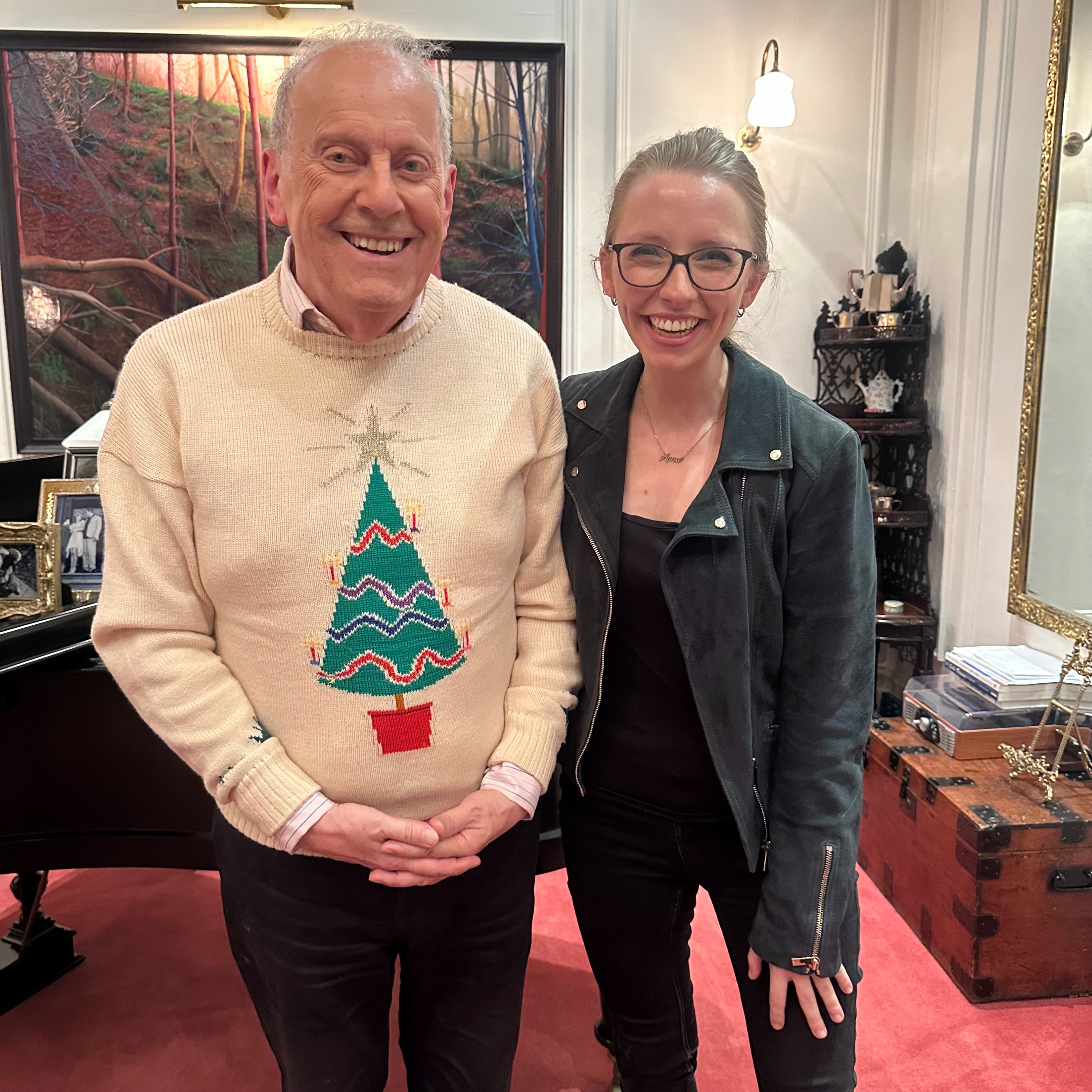
In this festive episode, Gyles converses with Anna Lapwood, a prominent organist, music director, and social media sensation. Lapwood shares her journey from a musically-inclined childhood to becoming a celebrated artist at the Royal Albert Hall.
Written by AI. May contain mistakes.

Get the gist, explore an idea or ask about something said.
 Claude
On Rosebud with Gyles Brandreth, what are the key points of this episode?
Searching your listeningAutomatic transcript. May contain errors.
0:00If you're listening to this on the day it goes out, it's the Tuesday before Christmas. I'm Giles Branruth. Welcome to More Rosebud. Cue the music and add some jingles.
0:35Harriet, Merry Christmas. Merry Christmas, Giles. Is Christmas a big thing still in your life? I love it. Yeah, it's a great time of year, isn't it? I think it's the most exciting time of the year it is. And after Christmas, everything gets a bit boring for a few months. So I like the pre-Christmas bit. Well, this is a special episode. And I've got actually an appropriate email to read. This comes from Tony Clark. It says, Dear Giles and Harriet, For many years, my mother, now 88, has given a recital of a poem at Christmas parties. She claims that she learnt the poem as a young girl and that it was by Eleanor Fargen, children's author, 1881-1965, whose famous poem, Morning Has Broken, became an equally famous song.
1:22Morning Has Broke. That's the one, isn't it? Anyway, unfortunately, she cannot remember where she found the poem. we've searched through available works by Ms Fargen but have been unable to find the poem or anything that resembles it oh so this is also a challenge for our listeners would it be possible to ask the listeners of the wonderful More Rosebud podcast if they recognise the poem and can shed light on its source so the poem is called The Turkey it's supposedly by Eleanor Fargen but if you know better please email us at what's the address hello at rosebudpodcast.com. Okay. Do you want to read the verses alternately?
2:02Me do one, you do one. Okay, we could do that. Yes. There was a turkey once who heard from some extremely tactless bird that he was to be put away and eaten up on Christmas Day. Intensely fussed, he asked his mum if this were true that someone's tum was to be his final resting place his mother pulled a dismal face alas she said the gods have willed that christian tummies should be filled with tender turkey meat each year you must be brave about it dear but this little turkey was not going to end up in a pot very cunning very quiet he took to a starvation diet at last as fell the first soft snow though suffering from vertigo and scraggy as a piece of string this gallant animal took to wing over the sleeping farm flew he and came to rest upon a tree in a land called turkey where they say they've never heard of Christmas Day.
3:11And no one cares one little bit what anybody eats on it. That's fun. It's a fun poem. Yeah a pro-vegetarian poem. Yeah which is as it should be because you're a veggie. I'm a veggie. And Michelle who's here as well for Christmas is a veggie too and I'm a sort of veggie well i'm a pescatarian veggie but occasionally i fall i mean i've been hopeless lately i know you have yeah we're not really very serious veggies but you're a serious veggie what are you looking forward to eating on christmas day michelle oh i haven't even thought of that it'll probably be like last year another nut roast or maybe mushroom wellington a mushroom wellington would be very nice yes something like that but definitely i don't like to feel i'm killing something on such an important day.
4:02Very good point there. Well, we've got rather a special episode now because it's a musical episode and the star, well, our special guest is Anna Lapwood. Now, you've seen Anna Lapwood, Harriet, haven't you, in performance? I have at the Royal Albert Hall where she is the organist in residence. She is an organist. The first ever. And she's more than that. She is a musical phenomenon and a very interesting person. in a nutshell what what's Anna Lapwood's claim to fame? Anna Lapwood is a brilliant organist she was the youngest ever director of music at a Cambridge college straight out of her own undergraduate degree at Oxford she was offered the job of directing the choir at Pembroke College Cambridge at the age of only 20 or something and she's a bit of a musical prodigy isn't she She is.
4:53She plays. You could describe her as the Roy Castle of classical music. Well, in that, Roy Castle, who I knew, could play almost any instrument you set before him. And I think Anna can. And I think she's got that gift as well. Yeah, you're going to talk to her about that. She plays the harp. She plays seven types of recorder. She does, yeah, she's amazing. But she's also a person of extraordinary energy, enthusiasm. She's inspiring. I think you were really taken by her, and our listeners will be in this conversation. we're featuring choirs as well today yes so we're featuring the choir of pembroke college cambridge which she talks about in her interview with you and will we have her playing the organ yes and we've also got her playing the organ at the end and i hope we're going to have what you have long promised us which is a little musical treat from you and the members of your choir voxetera it's a clever title voxetera yeah i hope you're going to give us a merry little christmas have yourself a merry little Christmas lovely that's a treat should we keep that right at the end stay the course to hear Harriet and her friends actually I have heard it it's lovely I think we've got rather a special episode cue the music
6:13Anna Lapwood born 28th July 1995 95. Our first question, Anna, is always the same question. What is your very first memory? I think it's actually my first piano lesson, which I feel is very on brand. But I started piano when I was about four. And honestly, when I think back, I was thinking about this on the way here. I was thinking, what is my first memory? And I had lessons with this lovely lady called Christine Wild. She taught all of the children in the village where I lived. And she had this house with a little garden and she had fairy strawberries in her garden. And one of my earliest memories is walking through the garden after our piano lesson, picking the fairy strawberries.
6:57And yeah, she set me off on my musical journey. Can you then remember your very first musical memory in the sense of what tune or piece is first lodged in your head that you? I remember. I don't remember what pieces I was working on in those lessons, but I remember going to my school music teacher. And, you know, after music lessons, sometimes people take it in turns to play the piano and just mess around having fun. And I was really excited because I'd learned a new piece. And I said, can I play? Can I play? And she said, only if it's not chopsticks. I said, it's not chopsticks. It's not chopsticks.
7:31And I sat down and played and it was chopsticks. I just didn't know the name because, but I was so proud of the fact I'd learned this new piece. And then this teacher was like, not Chopsticks again. That, I don't know how old I was at that point, but that must have been quite young because I moved on from Chopsticks eventually. So why were you playing the piano age four? Who were your parents? What is your origins? So my dad, he worked as a parish priest. And so I grew up sort of surrounded by music from that side of things. I mean, there was an organist at the church. There was a church choir that I think I have vague memories of singing.
8:03What kind of church was he? Church of England. Church of England. And what kind of a building was the church? I remember the smell, you know, the smell of Mr. Sheen, the furniture polish. That is the instant that comes in. But I was really quite young. So I remember it as being huge. It might have, in fact, been quite small, a little sort of village church. But I remember it as being the most cavernous building with this huge long aisle and a gallery at the top. So I spent a lot of time in there, often helping clean the furniture and going to all the services, singing occasionally in the choir with a cassock that was so long it kind of trailed on the floor.
8:45And my mum worked in paediatric palliative care. So she was the lead doctor at Helen House in Oxford. What were they called? They are called. They're still very much called Susie and Robin. Is it awkward as a little girl being the clergyman's daughter? No, I don't. I think it gives you a community straight away. I just remember we always had people around, around to the house or around to look after us if mum and dad were off working. There were always people that we knew really well who would kind of step in and come and say hello. And yeah, there was this instant community the whole time. I don't think it was ever awkward.
9:26You lived in a vicarage. Yeah, a beautiful, a lovely vicarage until I was about eight or nine, I think. Describe the vicarage as you go in. Is there a big hallway? I remember it had two rows of windows. So it's two floors and these big, big windows on the top floor and this very beautiful front door, I remember. You walked through and then you had a quite small hallway. Dad's study, dining room with a little piano. and there was a little playroom where we used to sit and watch tv sometimes my dad's study he also loved doing recordings so he recorded us as kids singing for fun so we had this little studio built in a big garden with these trees that I remember being terrified of because they swayed so much in the wind there were conifers so bizarre the things you remember there were conifers and they swayed so much in the wind and my bedroom was the nearest to these trees and so whenever there was a storm I would go and sleep in mum and dad's room with them because I was so scared they would fall over.
10:29How many of them were you? I have a brother, an older brother and yes it was the four of us and we had a very fun time. And how much older is your brother than you? He's two years older. Did he resent you when you came along or was he accepting of you from the start? There is a very funny video somewhere of when he met me for the first time and I was this tiny, tiny little baby. And he holds me and he starts playing with my finger like this and he's going finger, finger. And then I kind of wriggle and I don't like what he's doing to my finger. And he just goes, enough, baby, and tries to push me off.
11:04It's one of those classic early videos. But we, you know, we get on so well. And he, I actually will say he is kind of the reason I took up music in that I looked up to him so much and I still do. And he took up various different instruments and I would basically watch him practicing and think, oh, that's so cool. I want to do that. And then I would sneak in and steal his books and sit there and learn. But I would practice quite a lot more because I wanted to get to be as good as him. And then he would stop practicing because I would overtake him. Before we get into the music, just describe your bedroom, if you can remember it.
11:45What the pictures were on the wall? What colour was the duvet? Did you have a favourite one? Did it feature Paddington Bear? I had a red bunk bed. I remember that. And I had a lot of cuddly toys. So my nickname was Beanie when I was growing up because I had so many Beanie babies. and it was one of those things where I think there must have been, it feels looking back like there are about 50 in the bed at any one time. It was probably more like 20. But sometimes you wouldn't really be able to fit in the bed because there were so many little cuddly toys everywhere. Did you read in bed? Yeah, I used to love reading.
12:21I still do, actually. What were the first books you read? I have no idea. Absolutely no idea. Probably Biff, Kip and Chipper. Those were the sort of classic children's books. I remember them. And I remember loving Ina Blyton, but those probably weren't the first books at all. They were later on. But I used to love just that thing of going into the world of the book. I can just sit and then disappear into the book four hours later to come out. I used to like reading under the bedclothes. Yeah, I used to do that as well. But I went to a boarding school. And so after lights out, I had a torch. Yeah.
12:58And I would read. It had three colours, my torch. This is a generation or several before you. And so I would read normally with the yellow light. And then if it was a particularly scary thing, I'd put on the red light. And then sometimes the green light. Oh no, I know those torches. Yeah, you swivel the top. That was fun. I went through a phase of knitting under the covers. I developed a love of knitting. I don't know how old I was, maybe 10, 11. But the worst thing, you know that thing when you hear your parents come upstairs to check that you're asleep and you kind of pretend to be asleep for five minutes until you hear them go away, you would lose where you were on your knitting row.
13:40And it was so you could see on the scarf or whatever it was where one of the parents had come upstairs to check on me because the stitching would go all wrong for a row and then it would recover again. Given your father was a vicar, did you say your prayers as a little girl? Of course, we prayed every night. On your knees by the bedside? No, no, no, no. It was more a kind of, I think, one or the other parent would come in each night before bed and we would just... And they'd sit on the edge of the bed and you'd say your prayers together. Yeah. This is a generational difference. My father, who was born in 1910, he, to the end of his days, would kneel at the bedside.
14:19Did you do that as well? As a little boy. Yeah. Certainly I did. Yeah. And it was quite a good discipline, actually. I think there's something about the mindfulness of that. I mean, now I journal every evening before bed, and I feel that it's almost a similar thing for your brain in that it's a time to reflect on what went well in the day, what didn't go so well, how you're feeling, checking in with yourself, checking in with the relationships that really matter to you. It's a similar kind of exercise just to take that moment to reflect, which we don't do enough. When you say journaling, is that like a diary or is it simply an account of your mood and experience?
15:00What is the difference between a journal? I mean, I know people say, oh, I'm journaling tonight. But what is the difference between journaling and keeping a diary? That's a really good question. I don't even know if there is a difference. I think maybe it's a fashion thing. I would suggest the difference is I don't know. I keep a diary. Yeah. So I will recall today. I'll put Anna Lapwood down. I'll do a bit about your appearance your demeanour the most interesting thing you said whether I liked you or not then I'll put something about you know lunch that sort of thing I might even put what's happening in the world a bit of news in it I think journaling is more intimate more personal, more reflective of your mood what would your last night, what kind of thing did you include in your journaling?
15:50I forgot to do it last night Because, no, I try to do it every night, but I got back from tour yesterday and I got home at two in the afternoon and I fell asleep immediately. Two in the afternoon? Two in the afternoon. Two in the morning, it's excusable to fall asleep. Two in the afternoon, you have the dosette, the snooze, you get up and journaling. I had a three and a half hour dosette accidentally and then basically lay on the sofa staring at the ceiling for a little while and then went to bed. So it was not a journaling evening last night. But normally it's, you're right, it's less documenting what's happened.
16:25It's more documenting how you're feeling and trying to almost shut off the conscious part of the brain, which tells you what to write. And instead saying that can just go and have a holiday over there. And I'm just going to let the other bit of my brain splurge onto the paper. I do exactly the same thing before I perform. Every time I perform, I sit there for 15 minutes just before I go on stage. And I try and just write whatever comes out my brain. In your dressing room? In my dressing room, yeah. So you sit at the table. Yeah. You open your journal. Yeah. Do you put the date? Yeah. And would you say, Ron Albert Hall, Wigmore Hall, wherever you happen to be, Elizabeth Hall, so you know where you are?
17:06Yeah. And then what? then it's for me it's about trying to let whatever distractions are in my brain out onto the paper so sometimes it might be oh i'm feeling really great today sometimes it might be i had a really annoying conversation with someone earlier on that pissed me off and i don't really know why and i'll just let that work out on paper for however long it takes and if i get distracted by something even if it's mid-sentence I will let it come out onto the paper because I think one of the biggest things about performing that I find as a musician it's about letting the distractions come into your brain and not saying go away go away but letting them exist and letting them sort of just drift past and say hello and not letting them throw you and I find if I can start that exercise before I go on stage it's much easier when I am on stage because the worst thing is when you're mid-flow and a random thought comes into your head like oh did I shut the window and then your brain has a knee-jerk reaction to it that then goes into your playing and then you stumble or whatever it is whereas I'm learning that if I can just sort of say yeah I don't know if I shut the window but I can't do anything about it now that's fine and then you can carry on it's a safer way of being on stage, I think.
18:28And so I try and kind of get that process started with the journaling. That's fascinating. I'll give you two examples of things that I do. One, a few years ago, I was in a terrible state. And I bumped into a director before going on to do a show who said, it's not a problem. Go with what you've got. Just play with what you've got. And I went on with what I'd got. And it was fine. The other lesson that I always remember, when I was very young, 20 or something, I had lunch with a famous actor at the time, a man called Sir John Clements, who produced his own plays and was starting a play at the Theatre Royal Haymarket, which is one of the most beautiful theatres in London.
19:07And we were up the road having lunch. And I was with my then best friend, no longer alive, another actor who was also in the play. And the young actor wanted to have a glass of wine. And the older actor said, no, no wine at lunch. We've got a matinee at half past two. And the young actor said there's virtually no one in the audience the plays are flop no one's coming and the older actor said remember there may be one person in the audience who has never seen you before be your best for that one person yeah so i think that every time so important every time i stand at the wings i think oh god is that one i'm there's somebody who's never seen me before i'm going to be my best yeah there's a lovely quote that circulates on social media every now and And then the composer, Eric Whitaker, shares it every year.
19:55And he says, in the same way that a doctor never knows when someone might walk in desperately needing their help on a random day. We never know as musicians when someone might walk into our concerts with a soul. This is the quote with a soul that is weary, that desperately needs our help to just lift them, even if it's only for half an hour. And I think you're totally right. Like just almost forgetting about what we're doing as a like going out and performing all this stuff, forgetting about that and just saying, I'm doing it for that one person. I don't necessarily know who they are. I might not know about it.
20:33I might never know about it. Or they might message me on Instagram afterwards and I might find out. But knowing that there will almost always be at least one person like that in an audience, I think totally transforms the whole experience of performing. So prayer and journaling in their own way are part of your life. Is faith still part of your life? Yeah, it is. It's interesting now because I've just had, I've just left my job in Cambridge. I have spent the last 10 years working in the church, conducting services in the church. Because you were the? As the director of music at Pembroke College.
21:09And the first female director of music in the, how many hundred years is Stuart? Well, they were founded in 1347. Good. The first female since 1347. Well done you. Thank you. So you've given that up. So you were going to church literally daily. But I think it's a really interesting thing when you're working in the church. You're doing a job and it can be quite hard to feel faith in that because you're focusing so much on, right, I have 40 people in front of me. I need to make sure that they all do the right thing at the right time. Remember to stand up. The organist was struggling with this bar earlier.
21:43So I need, it can be quite hard to engage with it on a faith level. But having said that, I had so many moments in that job where randomly, hello. This is Bella, I should explain. Bella, who really took offense at you. This is our lovely cat. Bella's decided she's. She wants to go for a walk now. She's. No, don't apologize. That's all right. You're talking about a different God. She is indignant at that. Yeah, I was just thinking, what are her views on her? Yeah. Go on. yeah I had so many experiences in that space where we would be singing a hymn hymns in particular always get me and I would suddenly feel this overwhelming sense of emotion intense emotion and a sense of otherness and a sense that there was something bigger at play often it would be something like at a really emotionally poignant moment in a piece the sun would shine through the window in exactly the right way and little things like that that served as a kind of tug back each time and it's interesting now I obviously don't have the close work with the church in the same way I'm not in churches the whole time I'm spending more time in concert halls but I still get this sense of other quite regularly in concert experiences that if I am playing in churches I'll often have a moment where the bell will join in and it happens to hit at exactly the right point in the piece by complete chance I haven't planned it and that those little things that make you feel there is something else going back to your childhood for your 10 uh give me because clearly you had a lovely childhood yes give me the worst of it what's the worst experience of your childhood was ever a bad day what was the worst of you as a child as a little girl this is before you're 10 yeah yeah my brother and I used to fight a lot in a in a kind of this was how we interacted with each other we fought and I once punched his tooth out oh so he did ask me to I'm just gonna make sure that is very clear he said punch me punch me punch me over and over again and I said, I'm not punching you.
24:01And then he just kept pushing. So I punched him. And I don't think he intended for me to punch his tooth out, but I did. And yeah, so that perhaps is the hidden side of Anna that doesn't luckily exist anymore. I don't just go around punching people. But yeah. But you're capable of it, is the point. Evidently, as a little, I don't know how old, I'm maybe five or six. That tells us probably a great deal. To be fair, he did also punch my tooth out a couple of years later. So I feel we're even. He gave me a sweet and he wanted it back, but I'd already eaten it. Did you, still being a small girl, watch television?
24:42We used to watch a little bit of TV, not loads. I remember we watched films more than we watched TV. And then we used to watch educational TV quite a lot. If we were ever ill, we had the, I think, was it the Discovery Channel or something similar? and we had a sort of accepted repertoire of what we could watch if we were off school. Were your parents quite serious people? They were serious in that they were very keen that we did well academically and that, for example, I said I wanted to be a musician from the age of five or six, I think, and they were very keen that I kept my options open and that I did well at school and could go into medicine or whatever it was if music wasn't an option.
25:27Tell me what your mother did. Paediatric palliative care. You said that. Yeah, so she worked in a children's hospice. Exactly. And you, in fact, mentioned the one in Oxford. Yeah, and I used to, actually, I used to go there every weekend. And were you conscious of that? And obviously, she must have begun as a normal doctor. Yeah. And then came to specialise in that. Were you conscious that she, when you were a little girl, were you conscious that she was spending her days working with children who were mostly with life-limiting conditions? was that a thing you were aware of? I was definitely aware of it maybe not when I was really young but by the time I was maybe 10 11 I yeah I went there every weekend because I did music school on a Saturday morning and then in the afternoon she would be working so I would go to the hospice and I would do my homework in one of the rooms there and I got to know some of the patients there quite well there was one girl called Charlotte that I whenever she was in we would watch a film together or something.
26:22And I remember it becoming very normal that she would come home and say, it was a really hard day today, this patient died. And that was a normal thing to hear growing up. And I was aware of the toll it took on her. I was aware that she would be really upset for a number of weeks each time it happened, but also that she had to have the sort of strength to keep working and not let it affect things so much that she then couldn't do her job. Were you aware then, what I'm clearly aware of now, and you'll be aware of too, that your parents were good people? They clearly were very good. They are good people.
27:00Were you conscious of that or just take it for granted? These are the parents. I think I was aware of them being good people. I think I saw the sort of sacrifice. I mean, both of them worked incredibly hard. I mean, really long hours. My mum would be up doing her emails until two, three in the morning every day, having just done a big shift at the hospice. Like they they were always working, but I never sort of saw that as something I resented at all. It was I had a great admiration for it. I think they've taught me a fierce work ethic. and I think I saw their kindness to people and I remember when I was a teenager we the car in front of us flipped just randomly we're in the Lake District going down a road and the car we came around the corner and it flipped and watching them both spring into action immediately and seeing them shift mentality instantly from being parents to saying we have a job to do to make sure this person's okay.
28:05In fact, it was a young girl, it was a teenager, who was driving the car. And I remember being very proud of them in that moment and seeing them in their kind of professional setting, I guess. Did they help the girls survive? Oh, she was, she was fine. She was, it looked worse than it was. I think she was more worried for her parents, because I think it was her parents' car. But it was that thing of just going, huh, they're very cool people. Was there music in the family in earlier generations? There's a very funny story about this, actually. My granny went to a fortune teller when my mum, either before my mum was born or just after my mum was born.
28:46And they said, you're going to have a very gifted daughter who is going to be an extraordinary musician. And my granny literally went out and bought a piano immediately after this. She said, right, that's it. I'm going to, I don't know when it's going to happen. But, and none of them were really, I mean, my mum sings a little bit, but none of them really played the piano. And then I came along and everyone said, here she is. This is what the fortune teller was. The musical messiah. It was, but I find that so hilarious that she went and bought a piano. But I find it so impressive. The trust in that, in that conversation.
29:22And where's that piano now? Still in her house. And it was an upright. A little upright piano. And every time I went round there, I would sit and play. Everyone else would be talking. I had no interest in talking. I just sat and played. So your first memory is your first piano lesson when you were four. Did you demand this? Why did somebody think of it? I mean, because of the fortune teller? I mean, is that how it happened? I actually have no idea why I started piano lessons. I know I demanded other instrumental lessons later on, but I can't remember the road to the piano lessons. But I remember after that, that I got addicted to taking up different instruments.
30:06Yes, because you won't know this name, but when I was young, there was an entertainer called Roy Castle, who famously could play more instruments than anybody else. 35. Now, I think you have 35. I know seven of them were recorded. Not quite 35. But quite a few. Yeah, I went through a phase when I was going to secondary school. I introduced myself for a while as, hello, my name's Anna Lapwood. I play 20 instruments. That was it. That was my welcome to my world. And I learned pretty quickly not to do that because it's not necessarily the way to make friends. But I just thought it was the coolest thing in the world, finding an instrument and figuring out how to transfer the skills of your other instruments onto that one and I yeah I would sort of save up my pocket money and find instruments in charity shops and find teach yourself the clarinet books and just spend all my free time learning how to play so you begin with the piano yeah and you're quite good immediately are you got it with your little hands they still I don't know if I was the chopstick story makes me think that I wasn't anything remarkable at all.
31:12I think I was just very determined. Yeah, I think I just practiced a lot from a young age. Well, seeing your parents' work ethic as well. Yeah, yeah, yeah. You just, they were working, you were working at the piano. Yeah. And give me in quick succession what the 20 instruments were in the order of you picking them up, if you can remember. I am going to say a total disclaimer. I think 20 maybe was an exaggeration, but I will try. I'm giving you several recorders. Yeah, it was seven different kinds of recorders. So we're down to 13. Yeah, I'll try. I'll see if I can do it. I'll see if you give it the right order.
31:44I had a phase where I could do this. I could list them, but I haven't had to for quite a while. So I started with piano, violin after that, viola. I don't know if that's actually in order, but it's in my brain order. So piano, violin, viola, clarinet, flute, guitar. Don't laugh. Penny whistle. Very different technique to the recorders. I believe it. Seven different kinds of recorders. I don't know where we've got to now. uh drums harp singing organ came very very late uh i've lost track but yes and which of those well obviously we're going to come to the organ in a moment because that's what you're famous for which of those at the time and you were doing that party for fun for let's do this yeah let's give it a go and also satisfaction i can do it but which of those was giving you the buzz harp was the one that I totally fell in love with harp and piano and it's funny yes it was for the fun yes it was for the buzz and the sense of satisfaction but I actually think more than that it was honestly how I felt most comfortable engaging with the world in that I inherently I'm quite a shy person I've got very used to being an extrovert but I am definitely an introvert and particularly at school I was quite shy and I found that I mean I had a stammer for a while I found it really hard to communicate what I wanted to say with words but I found with music it kind of didn't matter and I could I felt that I could express all of the emotions whatever they were however intense they were I felt I could just pour them into the instrument and it kind it didn't matter to me if anyone else got that or not it was my way of being an emotional being in the world just sitting and playing that was what I loved
33:38going back to you as a little girl yeah uh who was your first friend outside of the home Can you remember them? Oh my gosh. No. Who would that be? I had friends at my primary school who... And what was the primary school? The Manor Prep School. It was an independent prep school? Yes. Co-ed or just girls? Early on it was co-ed. And then I went to Heddington Girls School after that. And then I was in all girls education all the way through to university. but actually I remember one of my early friends from primary school I then ended up accidentally at secondary school with her and we used to laugh because when I was at primary school one of my obsessions was custard skin very bizarre but I loved custard skin and I wrote an entire song about my love of custard skin can you remember any of it I know I believe it was along the lines of I love custard skin custard skin custard skin can't remember the melody but this one girl then knew me again at kind of 16 and she said oh yeah I remember you wrote that song and I was there thinking no brilliant yeah could have been your nickname Kustelskin don't it's yeah but could it be that you don't clearly remember these childhood friends because a lot of your life was in your head you were loving playing the piano you were loving the musical instruments you were feeling secure at home yeah but also I think I did I spent certainly from the age of seven onwards most of my free time was spent practicing um and I don't I don't resent that for one second I did have friends and I did uh kind of I don't know go to parties and things like that like kids parties not kind of wild parties but I just loved playing and making music can you remember the very first time you sat at an organ yes and i remember absolutely hating it for a really long time because your feet didn't reach the petals no it was i mean i was i think i was about 14 when i started organ so i started it really late and and why did someone suggest that you do that so my mum suggested up to this point i was completely set on being a harpist professionally.
35:56I had decided this was my path. I was focused. I was trying to kind of ignore my academics a little bit to focus on the harp, not successfully. I'm so glad it wasn't successful. I have friends who are harpists. It's a nightmare. Oh, it's an absolute nightmare. If they're a great classical harp, it's fine. But if you're having to earn your money, as they often are, at parties and balls, sitting in Grove in the house, nobody's listening. You're there, stringing away. You're just doing glissandos. Oh, it's a nightmare. Oh, you were spared. Do you have your own harp? Yeah, and I still have it actually and you do occasionally take it to a party i i wish i could still play but the thing with harp is your um your fingers you build up calluses and it takes years to build them up properly and if you don't play for a week you feel the difference i now haven't played properly for i don't know six years seven maybe even longer and so if i try and play i can play for about five minutes and then they hurt so much this is maddening because we brought the harp up from the basement oh do you actually have one what a waste I don't know you've got to be a no we might have a harp but we don't but but basically my mum turned around and she just said have you ever thought of taking up the organ and I was like oh my gosh that's the worst idea I've ever heard why would you suggest that I'm going to be a harpist don't distract me I've got my path and I think my mum she was always thinking what are the next steps what's the next thing we're going to do?
37:21How do we give our children the best possible chance going forwards? And she had been reading about organ scholarships at Oxford and Cambridge. And she said, so I said to her, no, I don't want to take up the organ. And she came back straight away, very cleverly with, well, did you know that if you're an organ scholar at Oxford or Cambridge, you get a grand piano in your room at university? And she knew that that is exactly what I needed to hear because I loved playing the piano for fun. And so I immediately changed my mind and said, okay, I'll learn. And by that time, did you have a grand piano at your home?
37:55I can't remember when we got, we did get a grand piano. We got an old Steinweg. It wasn't a Steinway, it was a Steinweg. But at this point, we were living on site at a boys boarding school. Because your father became a champion there. And they had a chapel with an organ and a tiny little organ. But I remember there was a very, very inspirational director of music at this school called Gareth Price, who gave me all of my early organ lessons. And he was incredible in that he just didn't set any limitations on what he thought I was capable of. He just said, my first ever lesson, he said, right, what's your favourite key?
38:30And I panicked and said, E minor, which is ridiculous because it's not my favourite key at all. But I said E minor and he said, great, we'll learn this Barker piece, the Predator and Fugen E minor, which is one of the biggest, hardest. And it took me many, many, many years before I could actually play it. But he, approached our lessons with this sense of you could do anything what do you want to do and actually I think that is such an inspiring way of teaching and is so helpful in the world of classical music where so often the teaching can be the opposite which is like no you're not ready for that no you can't do that no you shouldn't try actually it's a mental battle being a musician more than anything else and having a teacher who you really feel just believes in you a hundred percent is a very liberating thing so I had this flip where I had a great teacher an amazing teacher but I hated the instrument because I couldn't do it I just could not do it because there's so many things to think about is that it it's the coordination between your feet and your hands so I had always found that learning a new instrument came quite naturally to me and it was just a problem to solve and with the organ I could not solve the problem I could not rewire my brain to think of my left hand as the middle of the texture.
39:42It was so used to being the bottom. Everywhere, every instrument I played, the left hand was the kind of bass. And then suddenly it was the middle and your feet were the bass and you had to sever the link in your brain between your left hand and your feet. And that is a process that took me, I don't know how many years, maybe two years. And until I'd figured out how to do it, I was stuck on kind of grade three organ, having already got grade eight on all these other instruments. And I felt I couldn't communicate with it. I didn't understand. And how did he help you? I mean, apart from giving you the feeling, I can do it, I must do it.
40:15Technically, what is a teacher teaching you? He taught me patience. And that sounds like such a cliched thing to say, but actually, sometimes there is just no substitute for time. And I was in such a rush. I was always in a rush when I was young. And I think I still am a little bit now. But I wanted it to happen instantly. And if it didn't happen instantly, I couldn't understand why. And I thought there must be something wrong. Like I should be able to do this. And he taught me patience and he just said, it will come. You just keep practicing it. Here are more fun things we can do with the skills you have until that link is severed.
40:52And it is just one of those things where one day it just suddenly feels easier. At school, were you a bit of a loner? Did you do, were you in the school of plays? Did you do any sport? I loved theatre so I did stage school for nine years. Oh Saturday morning? Every Friday evening. Friday evening excellent and were you good? I did I had the lead in one of our stage school productions we did when I was in year 11 maybe at school but I think it was one of the first moments I started to realise you can't do everything because I had this crazy time where I I had all my exams, my school exams. I was the lead in this play.
41:32I had one of my grade eight instrumental exams. I can't remember which one. And I was juggling so much as a teenager. And I didn't, again, I didn't really understand it. I was like, why can't I do it all? I must be able to do it all. I must figure out how to do this. And obviously over the years, I've learned that you literally can't do everything. Or if you try, you will do things badly. And I gradually learned to focus. And so I stopped stage school for sixth form, basically, so that I could focus a bit more on music and academics. Well, we know the three most important words in the English language are don't dabble, focus.
42:11But, but I think there is something really interesting there because I, at primary school, remember being told over and over again by my music teachers, you've got to stop taking up more instruments. so this was I think when I was I don't know six instruments in or something and I decided to take up the flute and the head of music said no no no you can't if you want to if you're serious about being a musician you have to focus now it's the only chance you have of making it and I remember even at that age thinking I don't think that fits for me actually and I would say the reason I'm now a musician is because I didn't focus earlier on because I let myself experiment and you think of the luck of finding the right instrument for you I mean if my mum hadn't suggested that I try the organ if I hadn't happened to have had an inspirational teacher who could slow me down a little bit and give me that patience and that time I would not be doing this now or I might be a harpist maybe but life would look very different might have been the greatest harpist of all time I don't think so.
43:19No, you might. But you never know, do you? We don't know. Yeah. Speaking of rushing things, it rhymes with crush. Yeah. Can you remember your first crush? Were you a teenager? Oh. I was not a teenager. I was, it was on, I used to go on Christian acting camps every year called Stage Fright. Stage Fright? Stage Fright. Great name. And my first ever boyfriend was called Andy. And he was on Stage Fright. And he lived in Yorkshire. and we phoned each other every night on the landline. And my parents would get, they'd be like, Anna, for goodness sake, you've been on the phone for an hour. The cost of it.
43:55Yeah. Because in those days, you think you paid for a landline, didn't you? Yeah, but we were together for about a year. I think we didn't really see each other, but we spoke every night. But actually, those are the best, in a sense, the speaking is lovely. Yeah. Because, oh, it's before you discovered journaling. Yeah. You could just burble away to each other. Yeah, but we were completely devoted to each other for it. It was very sweet. I don't know what he's doing now, actually. I wonder what he's doing now. Well, maybe he'll hear this and get in touch. Yeah, who knows? Who knows? Very good.
44:20I mean, did you have any good experiences, apart from Andy? Do you remember? I had many, I had many lovely, sorry, that sounds weird. I had many lovely relationships. But seriously, I think. No, nice relationships, what do you mean? Yeah, I'm very, very happy. And I think. I'm asking really, because did he get it? Really, what I'm trying to find out is that the music, the focus on the music, the amount of practising required means the rest of your life. Yeah. sometimes take second place. And I know a lot of very gifted people who are supreme in their craft who found relationships quite difficult because their principal relationship is with the piano, the organ, their presence on stage, whatever it may happen to be.
45:00Yeah. I mean, I think when I was young, I think because I was at an all-girls school, actually music camps were where I would meet a boyfriend or whatever. And so it was always kind of, I had several relationships with musicians who happened to be in the same orchestra or whatever it was. And it was I think it's a shared language, which I see is a really important part of me and sharing myself with someone. I think it is I find now it's a very different thing in that, yes, the life of a touring musician is intense. And I was in a relationship until last year. and it was one of those things where we were looking at it together and it was like actually I'm not ready I don't think to put all of that to one side or to change I'm on this crazy roller coaster at the moment and I'm actually not ready to get off that roller coaster and I will be at some point and I'm looking forward to doing that at some point and settling down but life is moving so fast right now and I actually think it would be a bit selfish for me to ask someone else to come on that journey with me right now.
46:11Also having been a boy myself, can I say it's quite difficult for us boys to cope with somebody like you who is immensely gifted and to go because I've seen the footage of the people at the Royal Albert Hall, thousands of them cheering, hallooing, there you are in your sparkly jacket and you know Taylor Swift hits the organ keys. I mean it is amazing and for some chaps that's not easy to live with or cope with i've always i i my the people i've been with have always been really supportive of what i do i think it's more that you're asking someone to share you with three million other people and that is a really bizarre thing i think particularly with the kind of parasocial side of social media um it is it is parasocial media?
47:01I think the whole thing with the way social media is working at the moment is you develop a kind of relationship with your fans in inverted commas like I feel like I know them not all of them obviously but I get to know their stories and I actually care really care about them and in a similar way I think they feel like they know me like properly know me and you're asking someone to share a bit of who you are at the moment feels quite selfish to ask anyone to join that because it is hard it's really really hard and I feel very lucky to be living a very very intense period of my working life at the moment and I am sure it won't last this intensely forever I hope it doesn't last this intensely forever but I am loving every moment of it and being on the road and I love that lifestyle and right now I'm just throwing everything into that and seeing what happens it can last a lifetime I met Frank Sinatra it was the same right to the end so you you keep doing it your way get back to your mother I like I see what you did there thank you get back to your mother thanks to her you apply for an organ scholarship at Oxford is that the you just apply is it Mordland College you apply to straight away so it's interesting with organ scholarships it's the only way you can apply to multiple colleges so you can also apply to Oxford and Cambridge or you could when I was applying so you basically put all the colleges you're interested in in ranked order and the reason I applied to Magdalen was the director of music had heard me play at some kind of open day and had just said to my mum she should think about going for a bigger scholarship and I I knew nothing at all about the organ world I should say like I got the hiccups sorry I always get the hiccups when I get excited I don't know about you that's good yeah it's when you get the stammer I get a bit yeah then you're like what have I done the hiccups are fine but I I knew nothing about the organ world I knew nothing about the different kinds of scholarships I'd sort of read about it a little bit and I knew that Maudlin was kind of one of the best and I said well I want to go for the best um because I was very competitive still am quite competitive uh But I sort of hadn't quite twigged that it was playing for eight services a week, which I mean, I'd read it on paper.
49:26I understood that as a concept, but I hadn't accompanied a choir on the organ before ever when I went to Oxford and suddenly I was playing for eight services a week. And when I say it was a steep learning curve, I mean, music had always been the thing that I was good at. and suddenly I was bad at it. I was really, really bad at it. I couldn't do it. I couldn't accompany the choir. I didn't know how to do it. I didn't know the music. It was like suddenly being in a world with a whole language associated with this world that I didn't know. So I remember being told to go and get the psalters from the song school and I was like, what the hell is a psalter?
50:06I don't know. And I was in a panic walking around the song school looking for something to do with salt as opposed to sals. No, seriously, because I had sort of been in the orchestral world up until that point and then suddenly was launched into this world I didn't understand and I so nearly quit after, well, in the middle of my first term I was crying Hello Bella It's extraordinary isn't it? As she said I was crying Bella has formed a fixation She's the therapy cat She is the therapy cat I'm going to let her back in She wants to come back in Come back in Bella Oh, she's looking at, she's anxious for you.
50:45She heard you got the hiccups. Oh, Bella. You are a lovely lover. We'll attach to this podcast some pictures of you and Bella. Bella's looking up with you with great affection. Anyway, so go on. Yeah, so I found in that first term, I was basically crying every day. Oh, no. I was so tired because I was doing chorister rehearsals every morning at 7.50 in the morning. then doing all my university work then playing for the service then staying up to write the essay uh social life non-existent and i was just i found it so so hard and i wrote my resignation letter uh and then i remember having this conversation with myself where i you know the film the devil wears prada of course you know the scene where anne hathaway says to stanley tucci she says i'm trying and she just won't see that I'm trying really hard I'm putting everything into that and he says you're not trying he says you're I can't remember the exact words but it's something like you're deigning to do this as your job but you're not trying you're not throwing everything into this you're just doing the bare minimum and then complaining that you're not being praised and I had that conversation to myself and it wasn't that I was doing the bare minimum but I was like right before we quit we are going to do everything we can to make sure that this is really not the right thing for us so I came back from the Christmas vacation a couple of weeks early and I practiced the organ for eight nine hours a day and sure enough suddenly things started to go a bit better and I basically kept that up for the rest of my time it's funny in life we've discovered doing this podcast over the last couple of years the luckiest people also turn out to be the hardest working uh yeah i didn't sleep basically i didn't sleep for three years i remember times when i would be up until three in the morning and i would set my alarm for 45 minutes later so i could get up and write my essay that was due in at nine and it was i'm not recommending this to anyone i should say i would do things very very differently if i were going back and i i might have quit actually if I were going back it was not a healthy lifestyle for three years did you have a bit of a breakdown or did you work yourself through it I worked myself through it I mean I think I don't think my mental health was great when I was going to seek help from anyone was there a director of music there you could actually share these woes with not really in the the culture I think at the time uh and I think more generally in Oxford at the time was get like get on with it carry on and I do think that that's changed but I remember just thinking I just have to get through this and then I got the job in Cambridge as soon as I finished my degree at Oxford and I knew I wanted to do things differently and I wanted to sort of have my students mental health kind of at the front of my brain the whole time because I had just had the experience of feeling like I was a little bit and not really knowing what to do about it.
53:58So having three years as a student, you suddenly found yourself, and also I imagine having graduated with a first? Yeah. Just, just. You say just, just. A first is a first. Yeah. You got it. And you then immediately have applied for this job at Cambridge, Benbrook College. You become the first female. I mean, remarkable that they should trust someone so young. I think that was more of it, actually, more than the woman thing. It was the age that was what people were most sort of surprised by. And possibly concerned about it, because what do you mean, 22, 23? 21. 21? In fact, I got the job when I was still a student.
54:38So I was appointed at the age of 20, and I started at 21. And I knew nothing, or rather I thought I knew a lot, but had to unlearn a lot and relearn a lot in my first few years. what did you learn in your time there almost 10 years about human nature what did you think you learned in your 20s starting at 21 within your charge people only a couple of years younger than you and some older as well wow looking at what what did what did you learn that if you want people to perform at their best they need to want to do it for themselves not you can't just expect them to care about it as deeply as you do about about the finished result and that the way to get the best results is to invest in people as human beings I mean I think my first year I came in with all these big ideas and I was very I was quite an angry director of music I would say my first year I was quite grumpy if things didn't go right I was furious and I was like well why don't you care and actually that's not conducive to making good music at all particularly when you're working with a group of students who have a million different time pressures and why would they want to be there if you're shouting at them the musical results and the personal results are so much better when you put the time into each individual person and you think okay they they weren't singing quite as well today I wonder if they're okay let's check in um and it's a very it's a it's a very time-consuming way of operating but my goodness me is it rewarding and by the end I had people who were staying on and this is not me sort of flattering myself it's flattering the environment they stayed on to do PhDs so that they could stay in the choir and you develop a relationship with these singers that spreads across six seven years you see them grow from an 18 year old all the way through and the music you can then make is really special
56:51before we get to your breakout moment why you're here why you become this famous personality i've been fascinated by all this that you haven't mentioned wanting to be a composer yourself to write music? I did. I wanted to be a film composer. That was my... I realised I said I knew I wanted to be a musician and I think I went through various different permutations of that. But I really wanted to be a film composer for several years and I had composition lessons, all of this stuff. I used to write the whole time. I don't know if I wrote well, but I wrote constantly. So from the age of, I don't know, six, seven, eight, I was writing.
57:31it was often relating to something happening in my life so I wrote a piece for my favorite teacher at school when I was leaving the school and I performed it for her in assembly like it was always that kind of thing and then when I was at university I actually had my composition lessons stopped because I didn't get a high enough mark in my harmony and counterpoint and it was seen by certain people in the faculty that you had to have your harmony and counterpoint at a first level as opposed to a 2-1 in order to carry on doing composition. Now, I think that is utterly ridiculous because yes, it's important, but they shouldn't be dependent on each other.
58:13Didn't bother Mozart. Well, but it was one of those things where I wish now that I'd kind of said, no, I'm not stopping. I want to keep going. But it meant I developed a quite big mental block around composition for quite a long time. And I came back to it maybe four years ago and started writing little bits and pieces every now and then for the choir at Pembroke. And by the end of my time at Pembroke, pieces just kept popping out. And yeah. There's a possibility of a Rosebud cantata as a result of today. Well, I think I would never be able to be a composer who kind of writes to commission. No, it's not a commission.
58:52It's a suggestion. We can't afford commissions. I can tell you on this podcast, I'm just hoping to inspire you. I'll see what I can do. But tell me, tell me then you, you haven't got a piece you can play as that you composed, but is there a piece by a fellow composer from that time you could share with us? Yeah. One of the really big things that I tried to do in my time at Pembroke was use the platform I had in the college to shine a light on voices who perhaps hadn't had that exposure. So particularly looking at female composers, trying to redress the balance there, I made sure that we had at least one piece by a woman in every single service.
59:32By the end of my time, I think it was nearly 50-50 in terms of the ratio at every service. And that was something that I cared really deeply about, but it also opened up this whole world of music that I hadn't heard before. And it was such a cool thing being able to discover these new pieces the whole time and one example of this is this young composer Lucy Walker. Lucy actually she was a student and she sent me an email saying she wouldn't mind me saying this I've said it before she sent me this email saying I've written a couple of choral pieces but I'm terrified of sharing them because I don't think they're academic enough for Cambridge would you mind having a look and I had a look and they were brilliant and I said to her well if I program one of them do you want to come along have a listen give us your feedback suggestions and we can sort of go from there so she came along and this was just after one of the major covid lockdowns when we were starting to be able to socialize again and we all had pizza together after the service and she stayed for the pizza and then one of the organ scholars started jamming on the piano and everyone started singing disney songs and she stayed with us for a couple of hours and she loved it so much that she ended up joining the choir and she then wrote I don't know how many pieces across the course of two years must have been something like 30 pieces and we sang them all because they are so brilliant and I'm so proud of her because she's now writing she had a piece at the last night of the proms last year she's writing for BBC Singers for Vultures 8 for the 16 everyone is now commissioning her because she writes with such an authentic voice and we recorded her away in a manger and it's just it's so hauntingly beautiful it is so different to the away in a manger that everyone knows and I think once you hear this one you kind of never want to go back.
1:01:50We never want to go back. Tell me about your breakout moment. I mean, how did that happen? What happened? I think one of the big breakout moments was a collaboration with Bonobo. So this was after I'd been appointed as associate artist at the Royal Albert Hall. so I had already you were still doing your stuff at Pembroke yeah yeah yeah and this was I'm trying to think maybe four years ago and I had said to them at the Albert Hall they'd said what do you want from this relationship what's your kind of dream if you could just press a button what would happen and I said I would love it if it became the norm for people coming to the hall for artists coming to the hall to include the organ in their shows whatever genre they are I would love it if it just became a kind of novelty and we all sort of laughed and said oh yeah be nice it won't happen but it would be nice and then I think it was only maybe three weeks after that meeting that I was doing an overnight rehearsal at the hall and this band Bonobo had just finished doing their fourth show out of five and I was playing playing away and the thing about playing the organ there after a show is if there's anyone in the bar it basically shakes the bar because the organ sound is so loud and it shakes the foundations.
1:03:03So obviously the band were in the backstage bar and they were like, what the hell is that noise? And they came out to explore. And I always, if anyone comes to explore, whoever they are, I always invite them up to the organ. So I had no idea who these people were. I had never heard of Bonobo, but I just said, do you want to come and see? And I showed them the organ. We got chatting and they said, oh, wouldn't it be cool if you join the show tomorrow? and I said well I'm free I'm in London I could and it ended up happening on such crazy notice I think it was something like 18 hours between that conversation and the show itself and it was a complete surprise the only people who knew about it were the core members of the band and the sound team but the orchestra didn't know the audience didn't know and it was honestly the most life changing concert I've ever done and I don't say that lightly I grew up thinking that classical music was the best music and was more valid than other music for whatever reason and that it creates a better emotional response and I sat there in this concert waiting to play and I had tears honestly I had tears streaming down my face because I was going what this is such good music everyone is having an amazing emotional response I'm having an emotional response I don't know the music but I'm loving it and then I crashed in with the organ and the whole crowd started screaming and cheering and and we knew it we knew something had happened we knew that there was a special energy and then it went completely viral afterwards and I still now get people coming to my concerts who say I am here because I saw that one video of you playing with Bonobo I've never been to a classical concert before I've never been to an organ concert but that video was the coolest thing I've ever seen.
1:04:45Are you different as a result of this? Because you are now a phenomenon. You appear like a show business character because of your outfits. You have some three million people around the world who are devoted to you, who watch everything that you do. You go to the Royal Albert Hall, which is I think the largest space of its kind in London, and people go wild. has that affected you? Only in a positive way I would say in that I think it's given me more confidence I think it has given me the confidence to be the musician I want to be instead of the musician I feel I should be and I think that is the big difference between who I am now versus who I was when I played for that concert because I think I was tying myself in knots trying to please everyone.
1:05:35I think particularly in the organ world, it can be, people have very strong opinions. I mean, the classical world, generally, everyone has very strong opinions about the right path, all this stuff. I, for the record, think there is no right path for anyone. I think it looks different for everyone. For any one person, I think there could be 10 different right paths. But for me, I think I was really twisting myself around trying to find the right path and trying to tick every box for every person and I hated performing I utterly hated performing as a result and I actually thought I was going to have to give it up because I got so nervous and I think that bonobo concert and what it unlocked for me in terms of exploring other genres and having a bit more confidence to explore other genres and then film music and all of this stuff it unlocked a different way of being as a musician than what I thought I had to do and now I play the music that I love whatever genre that music is and I know that 95 % of people who come to the concerts love it 5 % don't like it and that is okay and even if that percentage shifts that is still okay because it is the music that I feel so deeply about and I never perform something that I don't love and it just it changes the relationship with performing so much because you go out on stage every day so excited to share this stuff with people as opposed to going out there to prove that you belong on the stage and it's a it's a completely different thing and I honestly credit that bonobo concert with unlocking that for me four quick questions before we hear you in action what is your nightmare do you ever lie in bed at night fearing something and if you don't imagine what your nightmare would be now.
1:07:23What is your nightmare? My nightmare, and I know this has been consistent for many, many years, is not being able to do music. Honestly, I remember talking about it when I was at school with my friends, them being like, this is so weird. But I remember saying, what if one day I just wake up and can't do it? Or what if I get in an accident? And what if I break all my fingers and I can never play again? What if I lose my hearing? that is something I am terrified of because it is such a huge part of who I am sorry it's not quickfire but up until recently I had no backup I had no sense of what I would do if I weren't a musician now I do have an answer though I'd be a therapist because I've been going to therapy for the last year and a half and it has been such a valuable part of my life and I sort of did some support for my students over the time as director of music and I have decided if I ever had a catastrophic accident and couldn't do music anymore I do now have a backup plan what does therapy at the moment give you oh it is the most important part of my life at the moment in terms of stability and talking therapy I mean what happens talking therapy and once a week 40 minutes once a week 55 minutes 55 um yeah extended the range yeah charging so much these days it has to You know what?
1:08:42It's funny. I feel very lucky that I can pay to go to therapy every week. And I will say it is an investment, but it is such an important investment. And for me, it started when I was having to make some really big decisions, deciding to leave Pembroke. And I was really struggling with that. I mean, I was crying every day, every service I would cry in front of the choir, because I thought, oh, what if it's the wrong decision? I love this so much. Maybe this is stupid. and therapy helped me work through that as a concept leaving something as a concept it's not something we're taught I don't think really we're taught how to take all the opportunities but not how to walk away from something positive because life is a long process of saying goodbye yeah but we're not taught how to do it and I didn't have a pet other than a fish so I didn't ever have to really say goodbye to something I care deeply about until you ate the fish you felt quite good about the fish too, didn't you?
1:09:38I did not eat the fish. It sadly went down the toilet when it died. But, oh no, actually, I had a fish funeral for one of my fish. Yeah. Funnily enough, I had a fish funeral. Did you? When I composed this poem. Did you actually? I had a fish funeral. Was it a proper priest and everything? No. I had a proper priest as my dad, but it didn't count. Of course. You had a blessing. I was a celebrant and I spoke this poem. It was Spot the Goldfish. Do you remember the poem? I do remember the poems. Actually, it's the shortest poem in the history of world literature. It rhymes, it says it all. It's called Ode to a Late Lamented Goldfish.
1:10:11Can I hear it? The title is longer than the poem. I suppose we can just fit it in. Let's see if we can. It goes like this. Ode to a Late Lamented Goldfish. Oh, wet pet. Thank you. Okay. Feel free to send it to music. I'm going to come back with another. Okay. So I was very attached to this goldfish. It was the only pet I ever had. And it had this whole funeral. I was distraught. there is a photo somewhere of me holding said dead goldfish when it died with tears anyway i was in drama class about a year later and we were doing some sketch together and i had to say the words ashes to ashes dust to dust and i burst into tears and my drama teacher took me to one side and said i'm so sorry have you have you lost a family member recently and i said those were the words spoken at my goldfish's funeral.
1:11:02I don't know how the drama teacher kept a straight face, but she did. Well, of course, there's a word spoken by your father. So he was used to saying it. And he kept a very straight face as well with the whole burial process. Well, my next question is wanting a serious answer to something similar, which is what comes into your head when I say a moment of sadness in your life? The dead goldfish. Seriously? No. Well, no, that was, losing a pet is a deeply distressing thing as a child. But what about the granny we heard about? The granny's still alive. Oh, good, oh, the rest of them. Oh, well, that's fine.
1:11:38No, I mean, I... Leaving Pembroke for the last time? I mean, a moment of sadness. Or maybe you don't entertain sadness. No, no, no, no, I absolutely do. And I have cried a lot in the last year over the Pembroke stuff. Yeah, I would say, but the thing is, it's not really a moment. It was six months of deep sadness and deep fear, I guess, about whether it was the right decision. And I, yeah, I really, I was absolutely distraught. There were some services where I was literally standing there, like tears streaming down my face trying to conduct. And I think, yeah, it taught me a lot. I feel that I've grown a lot from going through that experience.
1:12:24And what about a moment of joy? I think the moment when you're on stage and something happens in the audience where the energy in the room just seems to catch light and I feel very lucky that it happens quite regularly. My most recent one, I was playing in the Elbe Philharmonie in Hamburg and I was about to play, I've been writing a Lord of the Rings organ symphony and as you do, I was about to start playing it and someone in the audience shouted for Frodo and we all just erupted with laughter and it was so joyful and that's what I want from my music making I want it to be spontaneous and collaborative and responsive and relaxed and fun and that feels like is what's happening at the moment before I met you I was quite fearful for you because I thought here you are 30 dazzling absolutely and you are clearly as brilliant as the write-up is you're extraordinary phenomenon and i thought it's very difficult to sustain these things but i now have no fears oh i think you do what i was trying to say is that i have no fears for the next 60 years you're only a third of the way through and maybe less than that you're working life and because of you there will be variety going along the way so you know you don't need to sustain this you may well sustain it like Frank Sinatra.
1:13:53But you actually can do lots of other things like the composing, like maybe being a therapist on the side. But you know, and I think actually, that's an important thing to say is this whole idea of the right path and the right choices. I honestly don't think that that really exists. And I feel like sometimes that can be a deeply limiting thing because I honestly am pinching myself every day. And I don't say that. I really am going, is this real? The whole time at the moment. And if I look back even a year ago, I don't think I believe half the stuff that I currently get to do and we're talking about happening in the next year or so.
1:14:30And I think just choosing to follow the path that keeps making you happy at any given point in time and letting yourself divert from that path as something else makes you happy, I think is a really, really powerful thing. I'll take that as the lesson that life has taught you. It says one last question before we listen to your music in the evening here the end of the day when i'm cleaning up in the kitchen i play music okay and i'm only really interested in french composers just to let you know just to share that i may make an exception in your case and sassans i quite yeah yeah but i my favorite composer is a french composer and also he's a singer called charles Trenet.
1:15:16You've heard of him? So I play him and that gives me pure happiness instantly. It's my rush. What do you play when you, at the end of the day, just want to feel good? What's your feel-good music? Also French, but slightly different. Melody Gardot. I don't know if you've heard of her. She's a jazz singer. And I have loved her music since I was a teenager. and I have listened to it kind of religiously, I would say. I know it so well that I can sing along and I have my own harmony that I do every single time without fail. And I will put that music on every evening while I'm doing the washing up. And, or if I'm on a flight, wherever I am in the world, I still come back to that same music.
1:16:01So Melody Gardot. Go and have a listen. Move over, Charles Trenet. You should. There's a new girl on the block. Yeah. And you're on the block here because I'm going to play something of yours. What are we going to play of yours? This is music by another young composer. a young guy called Christopher Churcher. He has just finished at Oxford, I think. And he wrote this piece and he said he was inspired actually by one of my albums, Luna. And loads of people wrote to me about this piece saying, you have to look at it. You have to look at it. And it just felt like the whole universe was trying to point me to this piece of music.
1:16:34And it is genius. He wrote it when he was 19. It paints the image of when you're standing, looking at the sky and there are no stars and you're waiting for that moment when the first star comes into view and then it's you hear it start to sort of sparkle the music sparkles in the right hand and from that point onwards it's just like the sky is filling with blazes of light until the end when it is just fully ablaze well thank you for filling rosebud with blazes of light thank you I think you're a bit of a genius. Let's listen to you in action, Anna Lapwood.
1:17:44The End
1:18:05Anna there on the organ. She's marvellous. It did really make me think of stars coming to life in the night sky. And what an interesting human being. Anyway, Christmas is coming. You'll be with your family. Yes, looking forward to it. We will be with ours. We hope, if you're listening, you will be with your family if you have one. And if you haven't got one, can I tell you, all you need to do is curl up with a rosebud because we have got, well, a galaxy of stars from the last couple of years. So you could spend Christmas with anybody, from Judi Dench to Joanna Lumley to... I was going to say Keir Starmer, and then I thought, that's not very Christmassy.
1:18:41Not very Christmassy. But we do have a wonderful interview, we did either last Christmas or the Christmas before, with Rowan Williams. Oh, that is Christmassy. The former Archbishop of Canterbury, who was lovely and told a wonderful story, because he looks a bit like Father Christmas, of being stopped on a train by somebody who thought he was Father Christmas. Yeah, could you check my tickets, Santa? what fun well it's time to say Merry Christmas to everybody Michelle what is your wish for everybody listening I just the usual thing hope that they're healthy wealthy and happy healthy wealthy and happy you can't ask for much more can you so Merry Christmas to you Michelle Merry Christmas to you Harriet thank you Merry Christmas to you Charles yeah we're gonna have a very Merry Christmas we've had a very happy year thank you so much for listening to Rosebud But seriously, we hope you have a lovely Christmas.
1:19:32I'd bought some mistletoe, but both Michelle and Harriet said, sorry, mistletoe is so last year, Giles. It got cancelled. It's got cancelled. Didn't you read the memo? So I've taken my mistletoe away. Though I do remember about 50 years ago, appearing on Radio 4 at Christmas and recommending to people mistletoe tea. I was talking about Christmas traditions. And I suggested lovely mistletoe tea. It's like chamomile tea. You just drop a few berries into boiling water. The lines lit up immediately. It's poisonous. With doctors from all over the country saying, for God's sake, don't, don't, don't.
1:20:15It will kill you. It will kill you. Did you just make that up then? I made it up on the smell of the moment. Oh, Giles, you're a loon. I just thought, well, I just thought this is a bit of fun. Just brew a bit of hemlock tea. Happy Christmas. Well, so that was my fun idea. Mistletoe tea, it sounds so good. Now you can't kiss under it. You can tell you've never been to the countryside. You could drown in it. Never eat unidentified berries. Oh, is that one of the rules? Well, yes. You shouldn't be eating things you don't know about. So, don't eat anything you shouldn't, but enjoy the feel of Christmas and enjoy Christmas music.
1:20:48Yes. You belong to a choir. I do. Called Voxetra. Voxetra. These are, it's men, women, based in North London or just women? Both men and women, yes. and based in North London, directed by someone called Jane Hopkins, who's our conductor. And I know you've got a concert coming up in March. We do. That you've invited me to. Yes, we've got a concert in March. Dvorak's Stab at Marta. Oh, that sounds a bit serious. It's very serious. Well, March is the serious concert. Christmas is the frothy concert. That's been and gone. We want frothy. So have you had a number specially recorded for us? Yeah, and this is frothy.
1:21:24It's have yourself a merry little Christmas. That's our message. That's the rosebud message. Wherever you're listening in the world, truly have yourself a merry little Christmas. Cue that special music from Voxetera. Now, where is the mistletoe? I left it outside. Oh, come on. Michelle. Come on, darling. What? Oh, please. Oh, you produced the holly. Where's the... Oh, she's chasing me with holly. Oh, no, no. Oh, no. Have yourself a merry little Christmas. Let your heart be light. From now on, our troubles will be out of sight.
1:22:20Have yourself a merry little Christmas Make thy old tide gain From now on our troubles will be miles away
1:22:46Oh, dear us, the golden days Happy golden days, O Lord Faithful friends who are dear to us Gather near to us one song New values we all will be together If our faiths allow Hang a shining star on the highest floor
1:23:40And have yourself a very little Christmas now O Lord, may we all us in golden days, and the golden days of God. Thank you.
1:24:36And a shining star on the highest dawn.
1:24:49And have yourself a merry little Christmas now.
1:25:06Thank you.
We have another Christmas treat for you today - an interview with the prodigious musical talent that is Anna Lapwood. Anna is the official organist of the Royal Albert Hall in London, a successful recording artiste and a social media star with millions of followers. A multi-instrumentalist, she was the youngest ever person to be appointed Director of Music at a Cambridge college (and we will hear a bit of Pembroke College chapel choir singing in this episode). In this conversation with Gyles, she tells him about her childhood growing up in a close family in which her parents inspired her with their work ethic. She talks about learning 20 instruments as a child and teenager, and finally taking up the organ when she was 15. She talks about the breakthrough moment in which she accompanied the band Bonobo at the Royal Albert Hall - creating a viral video which has been shared millions of times on social media. She talks about the importance of following your own path, her love of therapy, and the place journalling plays in her performance preparation.
This episode features the chapel choir of Pembroke College singing 'Away in a Manger' by Lucy Walker and an excerpt of Anna Lapwood's performance of 'This Shining Night' by Christopher Churcher on the organ. It also features Harriet's choir, Voxetera, singing 'Have Yourself a Merry Little Christmas'.
Anna's latest album 'Firedove' is available to buy here
Thank you to Anna for this fascinating and inspiring interview.
Merry Christmas to all our wonderful listeners from Gyles, Harriet, Michele and Bella the cat!
Hosted on Acast. See acast.com/privacy for more information.


