
 Ask ChatGPT



Fran Lebowitz discusses growing up in a Connecticut town, her family history, her dislike of marriage, political division in the US, and her path from expelled schoolgirl to New York writer and cultural critic. She also reflects on reading, sexuality, and her work at Andy Warhol’s Interview magazine, plus why she stopped writing (“writer’s block”) and now talks instead.
Fran Lebowitz (born Oct 27, 1950) is a New Yorker cultural critic, public speaker, and author of Metropolitan Life, Social Studies, and The Fran Lebowitz Reader. She worked as a journalist for Andy Warhol’s Interview magazine (owned at times by Peter Brandt), and she is known for her distinctive talk.
She had a “happy childhood” due to bicycle freedom, library access, and movies. She says politics are dividing the US more than in her lifetime; Democrats have books/essays, Republicans have guns. She argues against marrying at 21 and mocks repeated remarriage. She stopped writing due to unresolved writer’s block.
Her first memory is being placed in a crib while her father and uncle assemble it. She was punished for “speaking out of turn” and was expelled for being “a bad influence” and “usurping power.” In New York she took many jobs (cab driver, house cleaning) and once wrote pornography for $500. She describes meeting Andy Warhol at Interview’s “tin foil factory” area and says she couldn’t stand him; she disliked his exploitation and the “cesspool” around him. She credits Nancy Drew for learning to read independently and John O’Hara for recognizing lesbianism.
Written by AI. May contain mistakes.
Gyles introduces Fran Leibowitz and discusses her significance.
“Yes, it's a Friday, if you're listening in real time, and it's me, Charles Brandreth, in a state of some excitement, because today I'm talking to you from New York City.”
Fran shares her views on technology and her lack of interest in podcasts.
“Fran, I'm so excited because this is our very first podcast in the United States of America.”
Fran discusses her earliest memories and family background.
“Well, I care very much that you're here, and I'm very thrilled that you're here.”
Fran delves into her family's immigration history and its impact on her life.
“And so basically his job was to clean the horses.”
Exploration of the speaker's parents' unfulfilled dreams and family dynamics.
“he went to art school and then his father my grandfather who was an upholsterer and had a little shop had a heart attack.”
Discussion on the speaker's happy childhood experiences and parental relationships.
“Your father wasn't drinking particularly heavily.”
Insights into the speaker's long-standing friendship and views on marriage.
“Like the one guy who's now in his fifth marriage was telling me why all the other wives, what was wrong with him.”
Anecdotes about the speaker's school experiences, social interactions, and family gatherings.
“Well, when we do, we argue, so we don't.”
Exploring childhood experiences of being punished for speaking up and finding popularity among peers.
“But we went very often with my mother's parents where there'd be like a thousand people at dinner.”
Reflecting on the freedom experienced through learning to read and riding a bicycle.
“of the town if the children were voting.”
Discussing the first impactful books and the realization of wanting to become a writer.
“So those were the first book that thrilled you.”
Reflecting on the challenges of teenage years and the realization of being gay.
“people can write books yes then I thought I'm gonna be a writer because to me this seemed like such an amazing thing.”
Describing the struggle of understanding sexuality in a conservative environment.
“I've never been asked an algebra question I thought, what were they preparing me for?”
Discussing the expulsion from school and subsequent move to live with relatives.
“And how old were you before you felt able to do that?”
Exploring various jobs taken to survive in New York, including writing pornographic content.
“That's when we were smoking outside the building.”
Discussing the time spent working with Andy Warhol and the underground press.
“My rent was, at that point, a little over$100.”
Fran shares her experiences of writing for Andy Warhol's Interview magazine and her thoughts on Andy Warhol himself.
“because I'd like to also write for Interview.”
Discussion on Warhol's influence, Lebowitz's relationship with him, and the culture surrounding the Factory.
“that he would get now, he would have died years before in order to get these prices.”
Lebowitz discusses her passion for books, her extensive collection, and how it affects her living situation.
“Well, I mean, I talk instead because I have to...”
Lebowitz reflects on moments of joy and sadness throughout her life, sharing valuable life lessons.
“because I've admired you for a long time because of your ability to talk.”
Brandreth thanks Lebowitz for the conversation and presents her with a token honoring Oscar Wilde.
“Like, I mean, the things I learned now, they're small, like big things.”
Explore favorite quotes and reflections on the wit of Oscar Wilde.
“Well, there's so many good lines from Oscar Wilde.”
Gyles Brandreth shares insights on Fran Lebowitz's unique perspective and humor.
“I have to say, it's a great privilege being here in New York City and meeting the woman who in many ways epitomizes the New York voice.”
Learn about Fran Lebowitz's views on reading and the pleasures of sleep.

Get the gist, explore an idea or ask about something said.
 Claude
On Rosebud with Gyles Brandreth, what are the key points of this episode?
Searching your listeningAutomatic transcript. May contain errors.
0:00Welcome to Rosebud. This is my podcast with me, Gyles Brandreth, produced by my friend Harriet Jane. And we're very lucky. We have literally millions of downloads. We've become a huge podcast worldwide. There are millions of you out there. So I'd like you all to join with me now as I say what I say every week as we begin another episode. Are you ready? On the count of three. Three, two, one. Cue the music.
0:51Welcome to Rosebud. Yes, it's a Friday, if you're listening in real time, and it's me, Charles Brandreth, in a state of some excitement, because today I'm talking to you from New York City. It's very exciting. We've done a few interviews in New York, and this is a very special one. And my special guest today is someone who, well, really is the sensibility of New York, is the voice of New York. In fact, the New York Times called her a modern-day Dorothy Parker. As some of you may know, I'm the president of the Oscar Wilde Society, and at a recent gathering of Oscar Wilde enthusiasts, we fell to talking about who might be considered a contemporary Oscar Wilde.
1:34And we banded a few names around. Older people mentioned the great American James Baldwin, who had an incredible way with words. And I know our guest today, well, she was an admirer of James Baldwin. Somebody mentioned Stephen Fry. Well, he's certainly remarkable, and he's already been a guest on Rosebud. Well, today's guest is a woman. She's a New Yorker. She's a phenomenon. She is Fran Leibowitz. She's a cultural critic. She's a public speaker. She's an author today with writer's block, famous for her books, Metropolitan Life, Social Studies, the Fran Leibowitz Reader. And then she really stopped writing.
2:16She was a journalist. She worked, for example, on Andy Warhol's interview magazine. I don't know that she got on that well with Andy Warhol, you'll discover as you listen to our conversation with one of the great talkers of our time, I feel very privileged. I saw the Martin Scorsese documentary series about her, and I thought, this is a woman I want to meet. And now I am. And now you are too. This is an intimate conversation with a remarkable individual with a brilliant mind and a wonderful way with words. Welcome to Rosebud with Fran Leibovitz. Cue the music.
3:08Fran, I'm so excited because this is our very first podcast in the United States of America. and I wanted you to be our very first guest for a reason I'll reveal to you at the end of our conversation. You are not familiar with the world of podcasting, are you? Because you don't have Wi-Fi, you don't have Internet, you may not even ever have listened to a podcast, though I know you've appeared on a few. I've appeared on millions. I've listened or seen zero. Is there a reason for this? Yeah, I don't look at anything about myself. It doesn't matter what it is. It could be a newspaper, it could be a magazine.
3:42It's about yourself. But are you against Wi-Fi because you don't have a mobile cell phone and things? No, I'm not against it. I'm just not interested in it. It's not been for you. You know, when they first invented the kind of computer you'd have in your house, it was called a word processor. So it was before the internet. And a friend of mine who's a screenwriter got one, and she said, this thing is fantastic. You have to come look at it. So I went to her apartment. I looked at it, and I thought, this is just a very fast kind of typewriter, which is all it was then. It was way before the internet.
4:13And I don't need this because, A, I don't know how to type. And, B, I write so slowly, I could write in my own blood without hurting myself. So I didn't get it. Then, eventually, it was the Internet. Now, obviously, I didn't know the whole world would go into this machine. But by the time it did, I was so removed from it. I just don't care about it. Well, I care very much that you're here, and I'm very thrilled that you're here. And I'm going to ask you our first question. Our first question is always the same. I'm going to give you your name. I hope I've got this right. Frances Ann Leibovitz.
4:46Correct. You still have a friend I know who calls you Francie. I do. Because I have my oldest friend, not by age, but by length of friendship. We grew up together. So we're friends since we're four. She still calls me Francie. Which no one, there's no one alive who even knows who that is. But you are Fran. And how long have you been Fran? I know when I was about, I don't remember, when I was about 12 or 13, I said, this is too childish, Francie. Call me Fran. And so that's what people call me. Fran. Fran. Fran, born on October the 27th, 1950? Correct. Good. I want to ask you, Fran, what is your very first memory in your head, the one that is in your head, the memory, not from a photograph, from your mind's eye?
5:31Well, like everyone who could testify to this is dead now. But my mother was from Connecticut. and we used to go visit her parents all the time. My mother had a younger sister, also dead. And when we went to my grandmother's house, the bigger bedroom was my aunt's bedroom because she was five years younger than my mother. She had lived there longer. My mother was already in school, you know, at school. So I always said, I remember being like young enough to be in a crib, which is an infant, being put in the middle of that bed while my father and my uncle put my crib together. And I described it and everyone said, you could not remember this.
6:12But I described it and everyone said, well, that was the crib. So I don't know. In my mind, that's my first memory. And who were these parents of yours? My mother's name was Ruth. Her maiden name was Splever. Okay, you've never heard this name. I have never heard this. And you've never heard it because her grandfather, my great-grandfather, when he came to this country from Russia at the very beginning of the 20th century before the revolution. He didn't speak English. When he got here, they asked him, what was his profession? Because he thought you get to the United States, they give you a job.
6:55And so he said in whatever dialect they spoke, splaver, which meant woodcutter. So they wrote down splaver. I mean, the people who were at Ellis Island or mostly like Irish, first of all. And so everyone in the world named Splever is related to me. What his last name really was was probably nothing because Jews in Russia didn't really have last names. They didn't have birth certificates. They were not citizens. And so that became their last name. And did he do well for himself as a... Well, he wasn't killed in a pogrom. I mean, I have to tell you that this idea that immigrants in that era where it was a huge immigration of Eastern European Jews of Irish, of Italians.
7:36They came for different reasons. The Jews didn't come here to get rich. They came here to not get killed. That's a very big motivation. They were escaping. The Tsar was incredible. I mean, he deserted the army. And so basically his job was to clean the horses. That was his job. And he ran away. He escaped. And my grandfather, his son, came here. He didn't know how old he was. He didn't know when his birthday was. So my mother and her sister made up a birthday for him. He said he remembered that soon after he got here, he had his bar mitzvah. So they knew he was 13 soon after he got here. And he said it was summertime.
8:20So my grandfather's birthday was always celebrated August 15th in the summer, even though we have no idea when that was his birthday. He went right to work at 12 years old. My grandfather never went to school. Jews weren't allowed to go to school in Russia, and he went right to work. And yet he was the only relative of mine who loved to read. I don't know where he learned to speak English, but everyone when I was a child and reading all the time, they would say, she's just like Phil. Look, she's just like Phil, reading all the time. This was somewhat frowned upon. And so he had a lot of different jobs.
8:55By the time I was born, he and my grandmother owned a restaurant in Derby, Connecticut, which was in Milltown then. And my father's family, my grandmother was Hungarian and my grandfather was Czech. And they were Libovits. They were Libovits, although we did find out. So, of course, my father had four siblings and every one of them spelled their last name differently because my grandmother, when she had these children, she had them with a midwife. She didn't go to the hospital. and the midwife wrote down a different spelling. And of course, these guys, the three, you know, the men, they just kept these spellings.
9:38They never said, look, we're brothers. My father was in business with one of his brothers. They spelled their name differently. And what was your father's name? Harold. Harold. So how did Harold and Ruth meet and what were they like together? They met because my father's family moved from Brooklyn to Morristown, New Jersey, where I was born. And my mother's family had lived there at one time. They weren't living there at that time. But my mother went to college near there. My father had a friend who was going out with my mother's college roommate or something. And that's how they met. And what were they like as a couple?
10:20My mother told me, I don't know when this was, not that long ago, by which I mean like 20 years ago, I married your father because he was so handsome. My father was extremely handsome. And I thought first, that is an idiotic reason to marry someone. Then I realized my mother was 21 when she got married. That's exactly what a 21-year-old would do, which is why, if anyone's listening, do not get married at 21. Oh, do you not think it's a good idea to marry somebody who's handsome? I don't think it's a good reason to marry someone. I think it's a reason it's not reason enough in your view yes to marry I mean I really am surprised people get married at all I have to tell you but I know they do um by the zillions uh but when I think about what it means to be married to someone I think like this is the thing my father was actually pretty kept his looks for a long time most of his life actually but it just is to me seems like men do this all the time.
11:12I know that. Women don't do it as often. But my father was in art school when my mother married him. It was right after the war. So my father went into the army. He enlisted the day he graduated from high school. So this is how small this town was. My father and his best friend left the high school graduation when it was over, walked into the town, not far, it's a few blocks, and enlisted in the army. By the time my father got home, he walked like a few blocks down. My grandmother was standing on the porch of their house and said, you couldn't wait for them to take you because she already had two sons in the war.
11:56But already the news has gotten down. People say everything is so fast now. Not as fast as in a small town. So your parents get married. He's handsome. What has she got to offer? My mother is also very good looking. my father when after they met so my mother's family still live in Derby Connecticut so it was like some vacation from school my mother was there my father wanted to call her my father always told this story so he called used to be something called information where you called to get a phone number so he called information for Derby Connecticut and he said he wanted a phone number of Schussplavor, but he didn't know the address.
12:41And the operator said, well, there's two Schussplavors here. Is it Ben or Phil? Philip is my grandfather. My father said, I don't know her father's name. Well, what's her name? My father said, Ruth. The operator said, oh, that's Phil's daughter. So my father then said to my mother, how small is this town that you live in? And I don't know how long they knew each other. not very long when they got married. And what were they like together? What's your recollection of them when you were a little girl and later on? Well, first of all, I thought they were movie stars, my parents. I mean, they were both very good looking.
13:16My mother, one thing that was like not a contention, but my mother loved to dance and she was a very good dancer. My mother apparently as a child or as a young girl wanted to be a dancer. My mother, to watch a Fred Astaire movie with my mother, which we did frequently, would be for my mother to say 40 times, I would have been a better partner than Ginger Rogers and so she said she announced to her family I'm going to be a dancer and her grandmother who ruled the family said don't be ridiculous only tramps are dancers so to be in show business was really that was not their idea so she'd not become a dancer but I would have to say she was regretted her whole life people say well people move on and yes she moved on obviously but I'm telling you she was in pain watching a Fred Astaire movie she was a very good dancer I don't know if she's as good as Ginger Rogers maybe my father was not that great a dancer and like at weddings and parties and stuff like that she would dance with him but she had a cousin who was a very good dancer and mostly they would dance together and what did your father do after the war?
14:23he went to art school and then his father my grandfather who was an upholsterer and had a little shop had a heart attack. And his mother, my grandmother, said, tell my father, you have to go in the shop. Someone has to run the shop. So they ran that as a family business, as a mom and pop business? My father did, and his brother for a while. And my mother, I would have to say, my belief is she never forgave him for that. She did not want that. My father was really talented. I have all of his drawings in my apartment. And he wanted to be a commercial artist, like an illustrator. Everyone comes into my apartment and goes, who did these?
15:05My father. So she wanted to be a dancer. He wanted to be an illustrator and an artist. Neither of them achieved that ambition. Were they disappointed? Yes. And were they disappointed in each other? No. I think that my father was more happily married than my mother. I think she wanted him to be an artist. He was very talented. I think he was so delighted to be married to my mother. And he didn't mind it as much, I don't think. Did they live together all their lives? Yes, until my father died. And overall, they were content. I would say that, I would say my father's more content than my mother. You know, I think they were, I mean, as marriages go, I think they were happily married.
15:49I think that, I don't know, my father lost his business. He didn't lose the business. He'd lost, at a certain point, the store, my father's store, the building that it was in, he was renting. And the landlord tripled or quadrupled the rent, and he had to give up the store. Well, what's intriguing me is I think you had a happy childhood. Very. I had a very happy childhood because, first of all, this was a very good town to be a child in. My parents seemed very happy. They were happy when I was a child. So the 1950s, through the 1950s. Yes. And I think that I said to someone recently, they said, how did you have a happy childhood?
16:25It's like against the law, by the way, for a writer to have a happy childhood. So I said, well, I had a bicycle. a library card, and there were two movie theaters. I mean, what more could you want from life? So I really did. You know, it was a very pretty town, too. And I had a very enjoyable childhood. And it was a home that worked in the way that those homes did. Your father wasn't drinking particularly heavily. He drank a bit. But there wasn't... Both my parents would have a drink before dinner. Yeah. And they smoked? Oh, my father smoked a pipe so much that even though my father probably stopped smoking that pipe at least 10 or 15 years before he died, when he died and I had to take care of getting rid of his clothes and stuff, his clothes still smelled of pipe tobacco.
17:12His whole closet, which I'd never been in my father's closet, obviously, and I'd go through my father's things, there was such a strong smell of pipe tobacco. My father also kept all of his pipes because he stopped smoking the pipe because his dentist told him, you have something in your mouth, And if you don't stop smoking that pipe, you're going to have cancer. And he stopped. Okay. And he always used to say, when I'm 90, I'm going to start again. So he saved all his pipes, hundreds of pipes. Okay. And so one of the things I didn't know what to do with them when he died, like my father also left like a hundred neckties.
17:45And I remember saying at the time, my father's in the last generation of men who, when they die, you have to think what to do with a hundred neckties. But the pipes, I thought, well, there's nothing I can do with these pipes. And some of them were beautiful. you know and after that after i threw them away because i didn't know you threw away your phone's like what could i do with these pipes i thought you can't give them to someone else and then like i was telling this story to people and this guy at the table who i know known for a long time said what are you talking about i smoke a pipe sometimes don't you know that i said yes but would you smoke someone else's pipe he said yes you just changed the what there's the thing that you put in your mouth i said if i jonathan if i'd known that i would have been happy to give them to you because I'm not a person happy to waste things.
18:29The ties, I spent like a year. Who deserves this tie? But the pipes, yeah. What intrigues me is that you had this happy childhood, parents who got on well, and yet you don't advocate marriage because their marriage gave you a... No, because me, because I'm not them. You know, my mother... I'm not meaning for you, but on the whole, you said a moment ago, I don't... Well, I don't advocate that you get married at 21 because you know uh i mean especially now now 21 is much younger than it used to be so so not anti-marriage it's just not for you and not what what's your what's your take on marriage today well i mean one thing here's like a rule i have if you were a friend of mine you know you get one wedding present from me if you get married 16 more times you're not getting You only would get two prisons if your spouse dies.
19:23But I know off the top of my head, three people, of course all men, because women can't do this usually unless they're Elizabeth Taylor. Three men who've been married five times. If you've been married five times, at what point do you think, you know what, you're not good at this. Like the one guy who's now in his fifth marriage was telling me why all the other wives, what was wrong with him. and truthfully the ones that I only I only knew four of them he was right but I finally said to him yeah that's true but I knew that okay you weren't paying attention yes you're right about this woman around I said but did it ever occur to you you are bad at this stop getting married why did you get married over and over again how did you get on with your sister well um my sister is almost four years younger than me um so I think that pretty much I was not delighted for there to be another child in the house.
20:14I think I remember when my mother was pregnant with my sister, I had a cold, like a very bad cold. And I was complaining because my mother wouldn't let me go out and play and she wouldn't let any children come in the house because they would get my cold. And she said, but soon you'll have a sister. And then you will always have someone to play with because they'll be living in the house. And so I believe I was disappointed when my mother had a baby instead of a four-year-old child. So that's it. Like, I would go in the room, the baby, and like, she couldn't talk. She couldn't do anything. She's just a baby.
20:55So I think that if you ask my sister, which I'm hoping you won't, that I was not a very nice older sister. Like, I feel like I would say, no, you can't come to us. No, you can't, you know.
21:17Were you a nice friend to your friend Francie? Well, the one who called you Francie, who is still your oldest friend, so you've known her literally more than 70 years. Did you talk a great deal? Were you the dominant one? Are you still? No. Well, here's the thing. It's very interesting because I think it was last year she got this big award from Harvard Business School. Oh. And she called me and said, I'm getting this, I forget what it's called. And it's a very big thing. And I'm chartering a plane. And I want you and her two sisters and one of her brothers-in-law and her partner, her business partner, we're going to go up for the day.
21:59So you can see me get this award. So I said, okay. And so we went to see her get this award. It was a very big thing. and they had like a lunch and a dinner and all this stuff. We went to the graduation. And so it was like 12 hours. And I kept going outside to smoke. And I was outside and this man said to me, who was outside smoking, why are you here? I said, because this friend of mine is one of these people, wants the award. And when they were talking about it in these speeches, they said something about one of her companies. She owns a venture capital firm. I don't even know what she does. I once asked her, do you own a company, Debbie?
22:43She said, I own 172 companies or something. Wow. So I don't even know what she does. She started out as a banker. So I said, so they said, and what they said was she sold this company for$9 billion. Not personally her money, but it sounded like that. Do you have a number? because I might be getting in touch. No, so I said, so the man said to me, was your friend the one who made$9 billion? So I said, yes. And he said, did she give you any? And I said, no. And he said, why not? I said, she's very greedy. Okay. So when we were kids, what Debbie was like a really great athlete. You know, she was really good at math.
23:28These are things I was not, okay. And she would not help me. Like in the classroom, I would go, tap, tap. What's the answer to number four? And she would always say to me, she wouldn't tell me. And then after school, I would say, why won't you tell me? I said, Debbie, I can't do this. It's too hard, the math. And she would always say to me, you just have to concentrate, Francie. But it's not true. I can't do it. I have only half a brain. What intrigues me is this high-achieving, athletic young woman, who obviously is a business genius, has made billions and been very generous with it, and is a committed Republican, is your oldest and in many ways one of your dearest friends.
24:09You love her. And yet you are none of these things. No, other than the opposite. So I'm interested that you are comfortable to have a friend. I imagine you never talk politics. Well, when we do, we argue, so we don't. I mean, she's not a Trump voter. okay okay so uh but every other republican you know that has been uh available she votes for but it means you're quite a giving person and she's a giving person too you know there are things you know truthfully i have recently said this to someone if you live in a country where politics are the most important thing you're living in a bad country you know i mean they're most of my life and not all of it but most of my life in this country Politics was not the main thing that divided people.
24:59It is, I mean, it has been, but not like it is now. I do these speaking days. I do them all over the world. Every time I'm out of the United States, people ask me, I take these questions from the audience, is there going to be a civil war in the United States? And I used to say, no, we're not that organized. But truthfully, now what I say is I hope not. Because we, meaning the Democrats, we have books. We have essays. We have opinions. They have guns.
25:29So, but this kind of division that exists now has not existed in my lifetime, even when Nixon was the president. You know, we hated Nixon, but not like this. Going back to the 1950s, give me a flavor of you as a little girl, this fairytale life you had. What would be a day in your life? What time do you get up? What do you have for breakfast? What is school like? What's going on? Well, you know, I actually, I remember my first day of school. Okay, my first day of school in kindergarten. So I wasn't even five. So this eager child goes to school for the first time, and it ended with me sitting in a corner with a Band-Aid pasted over my mouth, holding up a sign saying, I am a chatterbox.
26:12That this is what the teacher did. Day one. Day one. Day one. Okay. So I was like really worried. I couldn't believe this and this is what I was constantly being punished for every report card in grammar school was like Francis speaks out of turn Francis asked too many questions Francis asked too many questions was constantly on my report card my parents would say stop asking so many questions why do you think you were asking so many questions because I was interested because I wanted to know to me like a child that asks a lot of questions is a curious child, which now people, I think, would like think, great, the kid wants to know stuff.
26:56But then what they really wanted to be was well behaved. When I was in public school, every morning you said the Pledge of Allegiance, you sang the National Anthem, you read the 23rd Psalm in the Bible, and you said the Lord's Prayer. I never heard these prayers, right? These are Christian prayers. So my mother stood behind me, and we had to say the Lord's Prayer. And the first, and here's what she heard me say, Our Father, who art in heaven, Harold is his name. So afterward, my mother said to me,
27:34Francie, it is hallowed be thy name. My mother knew the prayer, although she didn't teach it to us. I said no it's Harold she goes it's not Harold wait I said yes our father is our Harold is daddy's name she said this is not about daddy do you think the class is praying to daddy now by the way I did because I worshiped my father so why not of course the class will naturally be lying to my father and so like I didn't understand that now no one explained to me this is the word i never saw it written down i get the impression that as well as asking questions you were answering back being fresh yeah okay uh the exact thing that i now get paid for is exactly what i was punished for so consistently that as a child i almost never had dessert because leave the table oh it happened at home as well yes well this would not so much not in just with my parents.
28:36But we went very often with my mother's parents where there'd be like a thousand people at dinner. You know, my mother's cousins or, you know, all the children. And I almost never got dessert. Leave the table. Because you're being fresh. Don't talk back. And at school, did that make you unpopular with the teachers and popular with the children? I was very popular with children. I mean, I was like, was no problem. I could have been the mayor of the town if the children were voting. And in your head, What sort of person were you becoming as you went from the 50s to the 60s as the teenage years approached?
29:10How did you think of yourself? Well, as a child, I remember when I first realized I could read by myself. I remember the sensation of it. I realized, because I was always asking, could you read me this, could you read me this? And I remember when I could actually read, actually read, not just like a few words. and it was an incredible sensation. It was the exact same sensation that I remember when my father let go of the bicycle. He was teaching me how to ride a bike and it was the exact same sensation because to me it was the exact same thing, freedom. Now I'm free because once you had a bicycle when I was a child, you could go anywhere in the town.
29:53No one cared where you were. No one ever asked where you were. There was no such thing as a bicycle lock. There was nothing. You left the house on the bike. You only had to be home, like on the weekends, you know, for meals. Okay? Other than that, no one knew where their children were. No one cared where they were. No one asked where you went. They had no interest in the subject whatsoever. So you could ride around. The bicycle was a freedom machine. And being able to read by yourself meant I didn't have to ask my mother to read to me. I could just read. So those were the first book that thrilled you.
30:25Well, the first book I read completely by myself like that was a Nancy Drew book. People don't know what they are anymore, but Nancy Drew. It's a school girl story. Yes. No, she was a girl detective. Oh, a girl detective. I mean, there were very few books really for girls in that way, you know, when I was a child. But the Nancy Drew books were a big series. I didn't own that many books. My parents didn't really have money. I would take them out of the library. But every time there was an occasion where I would receive a gift, what do you want for your birthday? A Nancy Drew book. What do you want for Hanukkah?
30:55A Nancy Drew book. And then when I got old, I bought all the rest of the ones. And my friend Debbie came to my apartment and looked at them and said, you have all the Nancy Drew books? This is a millionaire. I see, you know, Debbie, you could buy them too. But there are people who collect them. The New York Public Library has a collection of all of them. But I don't remember how old I was when I realized that people wrote books. My mother read, we went to the library every week. When I got older and I had my bike, I went more than every week because you could only take three books out at a time.
31:28and my mother's books had on the jacket flap a picture of the author and I remember saying to her who's this she goes that's the author what's the author the man who wrote the book people write books I think I thought they were just there like trees you know what do you mean people people can write books yes then I thought I'm gonna be a writer because to me this seemed like such an amazing thing. Like, I mean, it's not that I had, I certainly had a higher opinion of the human species than I have now, but I didn't have a high enough opinion that I imagined they could write books. It's like being a god to write a book.
32:12Oh, you're asking a lot of questions. You've got a lot of opinions. You're going to be an author. You're going to write a book. Do boys come onto the scene? Girls? Do you have a first crush as a young teenager? I did not enjoy my teenage years. This puts me, in my opinion, in the majority of 99 % of people who hated their teenage years. Only old people think it's fun to be a teenager. Okay? I mean, you look good. It's true. If you look at pictures of yourself, you think, even if you thought you were just a very ordinary looking person, you would look at a picture of yourself and you'd go, I was beautiful.
32:47Like, why wasn't I a movie star? Why was I a junior in high school? but I hated most of my teenage years first of all algebra that's when you got algebra which is something so horrible to me that once I think it was in 9th grade that you had algebra that the first time I took algebra 1 3 times I had to take it in summer school I had to take it over and over again I never could pass it I'm 75 I've never been asked an algebra question I thought, what were they preparing me for? Why were they torturing me over this? Like, I don't know what it is. I couldn't pass it. Did you not discover the love in your teenage years?
33:33That's one of the exceptions. No, I mean, I can't remember how old I was. Pretty young when I realized that I was probably gay. And I remember, I would not have even heard of it. This is something I cannot explain to people who were young. Because it did not appear anywhere in the world. There was no appearance of it. you know there was no like there was no words for it though not even bad words for girls it didn't exist if i wasn't such a bookworm i would never have heard of it but i did know of it from reading what did you read well there was a writer who i still recommend to people named john o 'hara who was a very very famous writer yes very famous writer um he published many books um he was not that highly regarded and he because he was so popular um but he's a wonderful writer very important American writer, I think.
34:20And he was very popular then. And my mother would always take his books out of the library, and I would read them. Or I would take them out of the library. And he wrote about everything John and Harry, including lesbianism. And I think that's how I knew. And then reading other books. I mean, I used to say, if you were gay in the 1950s, where you figured this out was in the library. Where you looked through the card. There was no place to find it. It didn't exist in the culture, you know, in a small town. Do you remember first hearing the word lesbian? I don't remember hearing the word first I don't remember the first time but I do know that my friends who grew up in New York City they're completely different even ones who were older than me say what are you talking about but this was a small town so in your head did it worry you?
35:02very much I remember very vividly I was in the backyard I was reading a book and I remember exactly this thought well I guess if there's such a thing as lesbians someone has to be them but why does it have to be me? because I realized I could not live this life, that I could not stay. I love this town. I love this life. And I thought, you have to leave. You can't stay here. And I was maybe, well, we still live in that house. I was 12 was the oldest I was. And the majority of people in the United States who were gay in that era, they did stay there. They just pretended to be straight. But that never seemed like an option to me.
35:42So I would never have wanted to live a total fake life like that. But you didn't share this with your parents. Oh, no. I don't believe I ever discussed it with my parents. Did they before they died? I do not believe we ever discussed it. Did they realize? I'm certain they realized it, but I do not believe we ever discussed this. How did you deal with it as you went through your teenage years? I just, I didn't talk to anyone about it. It never would have occurred to me. And didn't do anything about it? Did you have crushes on other girls? I had crushes on girls, but I never. You never actually told them?
36:15No, no, no, no, no, no, no. And how old were you before you felt able to do that? When I left home. Yeah. And that's one of the reasons that people came to New York, okay? That's one of the reasons people went to cities, you know. People, like the difference, say, between San Francisco and New York, I used to say this when I was young in my early 20s. In San Francisco, being gay is enough, but not New York. You've got to have something else, okay? So in San Francisco, being gay, in the 70s especially, you know, you're being gay and you could be a waiter and just a waiter. In New York, if you're gay and you're a waiter, you're really a playwright.
36:52I'm a waiter, yes, I'm a waiter, but also I'm a composer. But in San Francisco, that was unnecessary. And that wasn't the case. So you leave school and go to New York. But why did you leave school? I was expelled. You were actually expelled for doing what? What was the offense? You know, I don't... The headmaster sent a letter. I happened to be not in school the day I got expelled because I had the flu, the actual flu, not upper dead flu, which I often had, but the real flu or the real cold. I was sick. And the letter came to the house. And I remember the letter just saying, she is a bad influence on the other girls and she's usurping my power.
37:32Oh. The power. I was like a 16-year-old kid. And that was it. I got expelled. You were usurping his power because you were answering back. I guess. But I mean, I didn't do anything. and the kind of thing you would imagine you'd have to go to get expelled. You know, I didn't even get caught smoking in that school. You know. You were already smoking by then. Oh, I started smoking when I was 12. Well, I mean, like at the age of 12, I was smoking a pack a day. Okay. And as I mentioned to you earlier. Yeah. That's when we were smoking outside the building. Right. I went to, I've been to Australia twice.
38:08I'm going again. And that is like, you know, 24 hours of no smoke. and when I finally landed two days later or whatever it is I said to the guy I was with the last time I didn't smoke for that long I was 11
38:26so you're expelled from this school and you find yourself in New York no first I was sent to live with my mother's sister which was a real punishment believe me my mother's sister was married to a German IBM engineer and they have four children. And the idea was that would whip me into shape. So I went there, did that would be in shape. The second I was 18, I left, I came to New York. And then what did you do in New York? Because you had a variety of jobs. One of them, I think, was writing pornography or attempting to. Yes, I had many, many jobs because I came to New York, I didn't have any money.
39:03I didn't have any degrees, including a high school diploma. I got an equivalency diploma, which is a useless document. I didn't know how to type. and that was the big thing. I just did any kind of job you can imagine. I cleaned houses. I drove a cab. I was a private driver. I mentioned, because the research mentions it, you writing pornography. Yes, I did that once. Oh, just once. It was a one-off piece because... Because it was too hard. Given that you were, A, a lesbian, and B, as you were telling me, not a very experienced one at that stage, the material might have been quite thin. I don't know.
39:41It wasn't that. By that time, I was already in my 20s when I did that. But there were these publishers. It's always a surprise that people were young. That pornography used to be written. Like, what do you mean you wrote it? But there were books, and there were publishers that just did that. And if you gave them a finished book, you got$500. I mean,$500. My rent was, at that point, a little over$100. So I thought, this is fantastic. This is like winning the lottery. But I couldn't do it. It was too hard. It was too boring. So I started asking, do it with me, we'll do it together, and I'll give you half.
40:16Then it was, do it with me, I'll give you a quarter. By the time it ended up, there were like 20 of us sitting in the apartment. I think each of us made like 50 cents. Is this the period, because we're now, I suppose, in the end of the 60s, is this the period you end up working with Andy Warhol? Is this the same sort of time?
40:40well this wasn't the 60s it was the 70s I during that period of like the early 70s like 70s 71 I worked sometimes five sometimes six days a week but I never worked on Wednesdays because on Wednesdays the Village Voice came out and the Village Voice had a thousand Hope Wanted ads in the back. So whatever bad job, one thing about New York in the 70s, there were a zillion bad jobs. You could get a different bad job every week. It was very easy to get a bad job. So I would look in the one ads because I always hated whatever bad job I had and I would think, I'll get a different bad job, one I prefer.
41:20So I saw an ad that said wanted for underground newspaper, advertising salesman. So I thought, a magazine, it's a magazine, it's a newspaper. I could write for this magazine if I get this job. So I applied for this job. I beat out several qualified people. And I started writing for the magazine. But very few people read this magazine. We called them underground newspapers. They weren't underground, really. They were quarterfold newspapers. But I had a friend who wrote for an interview. and I thought, I asked him, can you get me an appointment with the editor of Interview because I'd like to also write for Interview.
42:05So he did. It was very easy to get this appointment and that's how I started writing for Interview. And Interview was the magazine run by, owned by? Yes, I don't think, it was not, it was called Andy Warhol's Interview. But was he there? Yes, but at that point that I started working there, he did not own it. it was owned by this guy Peter Brandt who owned it on and off various times kids ask me was it the tin foil factory no that was in the 60's I'm not that old it was on Union Square it was initially on Union Square West when I went there the first time and I went up in an elevator and when the doors opened the elevator there was a steel door behind it and there was a piece of legal paper on it that someone wrote knock loudly and announce yourself.
42:56So I bang on the door. Someone said, who's there? I said, Valerie Solanis. That was the woman who shot Andy. Andy opened the door. So right away I think, this is a genius. I say I'm the person who shot him and he opens the door. Okay, first of all, I'll tell you something. I was really surprised to see him because even though it's called Andy Warhol's interview and it's a factory, I'm not thinking at all of Andy. I'm thinking I hope I can get this job righty and so then he asked me what was I there for and I said I had an appointment with the editor and he said what do you do and I said I'm a writer and he said oh here's the thing this was a very lucky thing for me when I was that age like 21 no one my age wanted to be a writer everyone 21, 22, 23 in New York who wanted to be an artist, wanted to be a musician, or a filmmaker.
43:53There was zero competition. So I got the job right away. It was very easy. And did you like him? Andy, no, I couldn't stand him. I don't like him at all. Nor did he like me. Why? Well, I noticed right away the high number of deaths around him. Okay? This Valerie Serrano sort of attempted to assassinate him. Yeah, she at that point was in jail, I guess. You know, but I mean, I'm not saying that he should have been shot. No. Okay? I didn't shoot him. I didn't think she should. No one should be shocked. Did you admire his art, his style, his brand that he created? No, no. I kind of, at the beginning, kind of liked it, but I never really loved it.
44:32And truthfully now, I mean, to me, the more you look at it, the lesser is to see. Okay, I don't like it. Like, I do believe that if Andy knew the prices that he would get now, he would have died years before in order to get these prices. I will tell you that I got paid in art after my first book came out because the taxes were so high. I used to think it would be so great to make some money. Then I made money on my first book. It was a bestseller. The top federal income tax rate was 70%. Seven zero. They took all my money. So then I thought, well, it's not good to make money. I used to think it would be good to make money.
45:15So I said, don't pay me in money. Pay me in art. so I had all these Warhols at which point but then no one remembers this but me because it didn't affect that many people I suppose before Andy died his reputation was very low and I sold all my Warhols two weeks before he died if you'd done the algebra you wouldn't have made that mistake your friend Debbie would not have made that mistake you might have because they were worth I use some of them to pay a lawyer. You couldn't give them away. Do you want these Warhols? No. How about I give you the Warhols instead of the$1 ,000 I owe you? No. No. It's not worth it.
46:00Why didn't he like you? Well, I wouldn't talk to him. I mean, I didn't talk to him. One of the things Andy did was I had around him all these kids. He called them the kids. Actually, we were kids. Um, and he was a vampire, you know, he took ideas from people he took, you know, um, and also, I mean, he exploited people. He would not me, uh, but I mean, there were a lot of people with drug problems around him. He encouraged this. He never did it himself. He encouraged the kind of very dangerous behavior that he never participated in. Um, he was much older than these people and me. And, you know, I thought it was exploitive.
46:42And I, like, I never, I mean, I saw Andy probably during that period, almost every night, because that world was very small. But I didn't deliberately ever see Andy, nor he me. He did not like me. He thought, I think, you know, first of all, the factory was a cesspool of anti-Semitism, racism, misogyny, you know. And I knew he didn't like me. And I don't like him, I don't think, for the same reasons. But I never really had that much contact. I mean, I had contact with him in my soul all the time. I would see him every night at the party. Hi, Andy. Hi, friend. That was it. I'd never talk to him, you know, at any length, you know.
47:26I never hung around with him. Our conversation is about your early years, so we don't really get into the triumph of your first books, which are bestsellers, but I'm intrigued. You wanted to be a writer, and then you stopped publishing because of writer's block that has continued? Just unpack a little of that. Believe me, I cannot answer this question. If I knew what was wrong, I would fix it. I don't know. I can't answer the question. But you brewed about it still or not? Or you've just accepted, I don't write anymore, so there we are. I talk instead. Well, I mean, I talk instead because I have to...
48:04You earn a living. in a living. But, no, I do think about it. But I don't talk about it because I don't know. Because you love books. I mean, is it true that you've got, is it 10, 12, 15 ,000 books in your home? It is true. Well done. That's why I have to work so much. Because you have to house them. All right, they take up a huge amount of room. They take up, like, every time I've looked for an apartment, the real estate broker is, after, like, a few apartments, they'll go, why do you need such a big apartment? because I always thought it has to be this big. Do you give a lot of parties? Never.
48:41I've never given a party in my life. It's for my books, because I have also all my books from bookcases, not shelves, bookcases, 19th century wooden bookcases with glass doors. So they take up a huge amount of space. You need a lot of walls. Finally, after a few times, the broker will say, you can't afford an apartment big enough for your books, which I already know. Okay, I already know that. You should put half of them in storage. Then you can afford the apartment. And I always say, what if I told you I had four children? Would you say, you can't afford an apartment but you can have four children.
49:19You have to put two of them in storage. I'm not putting the books in storage. So consequently, I live in an apartment I absolutely can't afford in order to house my books. And are they your children? Well, to me, they're better. Okay, first of all, like except for the housing, that's it. You have to house them. You don't have to feed them. You don't have to listen to them. You don't have to. And they're full of things that you want to know, children generally are not. But obviously I spend all my time working in order to house them. So they're very important to me. Very good. One of the reasons that you are here today is because I very much wanted to meet you because I've admired you for a long time because of your ability to talk.
50:04When I first came to America in the 1960s, on late night television, I discovered James Baldwin as a person who talked. I realized after I'd seen him talk that I already owned one, if not two, of his books. But I hadn't really read them. I had never been so captivated by a human being talking as by James Baldwin. And years later, when I discovered you, I thought, hmm, there's an echo of that. you we are similar ages I'm a little older you also were hypnotized by him were you? Yes that's the first time I heard of him there used to be a television show that was on Sunday afternoons called the David Suskind show and my mother was watching it one after Sunday afternoon I was you know I don't know how old I was maybe 11 or 12 I went into the room and I started watching he was on I'd never seen anyone talk like that either and I asked my mother who he was and she said James Baldwin.
51:06I said, who's James Baldwin? And she was full of disdain. You've never heard of James Baldwin? Now I'm thinking to myself, you know what? I'm 12. Wouldn't that be your job? Like, if I don't know who James Baldwin is, it's not my fault. It's your fault. So she told me he's a writer. The next day I went to the library and I got some books of his and yeah, he was a mesmerizing talker. People who don't know him, They must look him up. Because he also had these bulging eyes, didn't he? I mean, the way, the speed and the beauty of the way he expressed ideas. He did have, he was one of, I never met him, but he was one of, I believe, 10 children.
51:46And he had, one of his siblings was a sister who I think was the youngest. I think he might've been the oldest. I knew the sister because she was a friend of Toni Morrison. And Toni knew the whole family. and I was having dinner with her once with Tony and his sister and she said, you remind me of Jimmy and I thought that's like the best compliment I ever got it's the greatest compliment by far it's why I brought you a little present which I'm going to give you in a second when I've asked you my last three questions which is a little plaque it's really a paperweight I know you don't have computers and things but you allow yourself a little paperweight of course I have plenty of paper around my apartment, believe me it's a profile of Oscar Wilde.
52:31Because I'm the president of the Oscar Wilde Society and we were having a discussion about were there people who could talk in the style of Oscar Wilde living today. And I mentioned James Baldwin and one of the fellow members mentioned you and I thought we must present this little plaque of Oscar Wilde to you. Well, I'm very honored. I hope it's real. I hope it's not like that soccer-like thing that they gave to Trump. This is for real. this is for real I appreciate it you get to keep it three more quick questions from your early years or actually from your life a moment of joy sheer joy well when my first book came out there used to be a lot of bookstores in New York okay and there was a bookstore on 5th Avenue called Scribner's which I think probably had been owned by the publisher it was a very beautiful storefront they had to keep the storefront it was a landmark and I don't know what's in there now some t-shirt store or something like that And I lived in the village at the time.
53:30And a friend of mine said, came to my apartment. She said, I'm taking you uptown. I want to show you something. So I said, what? We got in a cab, not my regular form of transportation. And when we started to get further uptown, she gave me like a scarf. She said, tie this around your eyes. So I did. We get out of the cab. She like leads me to. She said, take the scarf off. And the whole window was my book. and I was like so first I was shocked it didn't seem like a real thing to me I would have been thrilled if there was one copy but it was a whole window and that was like one of the most fantastic moments a moment of joy, truly a moment of sadness there have been many there really have been many I could not pick out the saddest moment of my life then pick out one, it doesn't need to be the death of your parents the death of a pet you keep animals no I eat them but a moment the game in a way is rather like with the Scribner's thing that immediately came into your head that I said joy and that came to you because there are far fewer moments of joy than there are sadness like I would say that I was quite I mean so many people have died you know not just my parents but I mean when Tony died even though I knew I knew she was dying and I don't even remember who called me someone called me and said Tony died and I like I just felt like I can't describe it a lot of these feelings of sadness are like in your stomach it's like he just drops out um but you know I don't know if that's the saddest I ever was but it was a moment of extreme sadness and what has life taught you 75 is a good age to be you've got a good look you're still smoking I like your style what has life taught you everything here's the thing I think like here's what I know I know everything I'm gonna to know.
55:23Like, I mean, the things I learned now, they're small, like big things. You know, I can't imagine what giant things are left to know, you know, uh, what to me, the most stupid question people ever ask is, do you have any regrets? Are you kidding? By the time you're 75, you're 98 % regrets. Okay. 98 % regrets, like 2%, I don't know, water, you know, whatever the best, like, of course I'm filled with regrets. People when say they don't have any regrets are lying or they're incredibly stupid, you know, one or the other. Well, I certainly have no regret about asking you here. Here's your little plaque.
56:00I'll open it for you. Well, thank you. I have a favorite line. Well, there's so many good lines from Oscar Wilde. Never commit murder. He gave good advice. Never commit murder. A gentleman should never do anything he cannot talk about at dinner. Do you have in your head a favorite quotation of your own? a line by somebody else or even a line of your own there you are a little plaque of Oscar Wilde to put on your desk well thank you it's a little something it's very beautiful I think we don't celebrate talkers as much as we should and nobody talks for me more engagingly than you do do you have a line in your head that comes back to you of Oscar Wilde it could be Oscar Wilde or anybody else is a favorite quotation you know I'm not filled with favors to tell you the truth I'm too old to have one favorite.
56:49That's very good. Okay. Well, you're one of my favorites. Well, I appreciate it. Thank you very much. Thank you.
56:59Oh, how I loved that conversation with Fran Liebowitz. I have to say, it's a great privilege being here in New York City and meeting the woman who in many ways epitomizes the New York voice. And her dry, sardonic sense of humor is extraordinary. I've been collecting quotes of Fran Leibowitz for quite a while so I already knew her views about algebra and smoking and I remember because I'm a trustee of a charity called the Queen's Reading Room which is Queen Camilla's charity for encouraging the joy of reading and we treasure a quote of Fran's that says a book is not supposed to be a mirror, it's supposed to be a door I've got another of her quotes that I keep on my bedside that I like It's all about sleep She once wrote that I love sleep I love sleep because it is both pleasant and safe to use Pleasant because one is in the best possible company And safe because sleep is the consummate protection against the unseemliness That is the invariable consequence of being awake What you don't know won't hurt you sleep is death without the responsibility that's the voice of Fran Leibovitz and I'm so pleased to have had it while I've been here in New York till the next Rosebud thank you for your company and if you're listening to this in bed you're allowed to sleep now without any sense of responsibility enjoy good night
58:43Thank you.
59:20Rosebud is a Plain Jane production produced by Harriet Jane, hosted by me, Giles Brandreth, with music by Phil Leppard, and recorded this week at the JW Marriott Grosvenor House in London's Park Lane. Room service.
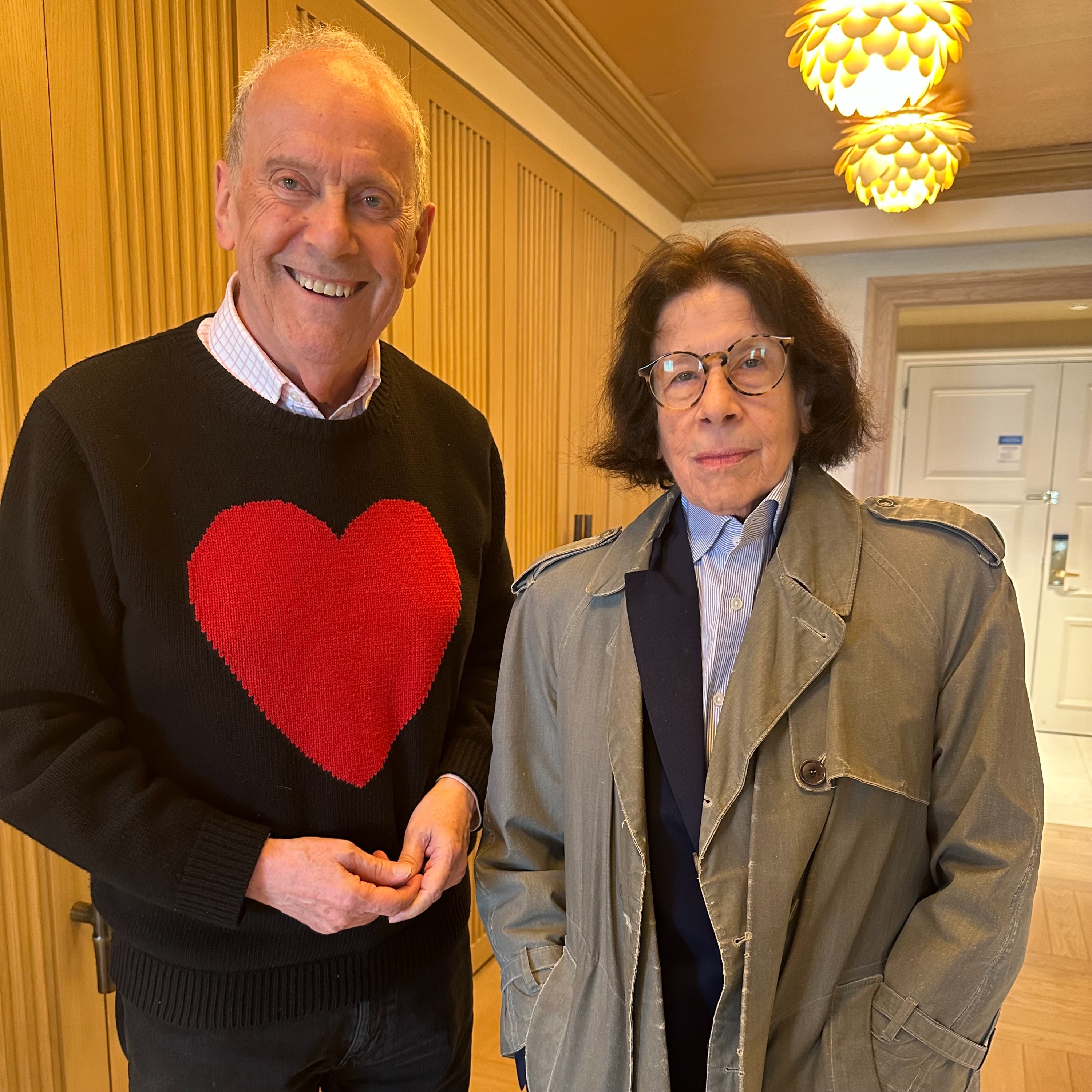
Leading up to the 250th anniversary of American independence, Rosebud is giving you a series of interviews recorded in New York City. Our first is with the sharpest observer of New York life - the wit, conversationalist and writer, Fran Lebowitz. In this brilliant interview, Fran tells Gyles about her family, who moved to the US from Russia and Eastern Europe to escape the Jewish pogroms. She talks about her happy childhood, cycling on her "freedom machine" around her pretty hometown in New Jersey, where her father owned an upholstery business and her mother had aspirations to be Fred Astaire's dance partner. She tells Gyles about being punished for being a chatterbox at school, about knowing she was gay from a young age, and about moving to New York to become a writer. She talks about Andy Warhol and being paid to write porn. She talks about smoking, the internet, and her enormous collection of books. Finally, Gyles awards Fran a medal from the Oscar Wilde Society, in recognition of her brilliance as a talker.
As you might expect, this is a fabulous conversation. It's well worth your time.
Enjoy this.
Hosted on Acast. See acast.com/privacy for more information.


