
 Ask ChatGPT



Rosebud records in New York City with author Harlan Coben, discussing his life origins, family, writing philosophy, and the appeal of morally gray characters.
Coben credits parents for teaching reading “organically” through constant books; he says critical thinking and empathy help him write characters he doesn’t agree with; he avoids research because it delays writing; he always knows the ending and builds suspense from the twist.
his earliest memory is the 1964 New York World’s Fair Unisphere and “It’s a Small World After All”; his father’s last concern was a hotel room key found in his front pocket after a heart attack; a childhood baseball-game incident where his father confronted a heckler; growing up near a rumored nuclear missile base and a mansion tied to Richie the Boot Boyardo (both later confirmed); his writing origin in Spain while working for family travel business, leading to his first novel “Aim to Please.”
Harlan Coben (guest). Host: Joss Branforth (interviewer). No other guests named.
Written by AI. May contain mistakes.
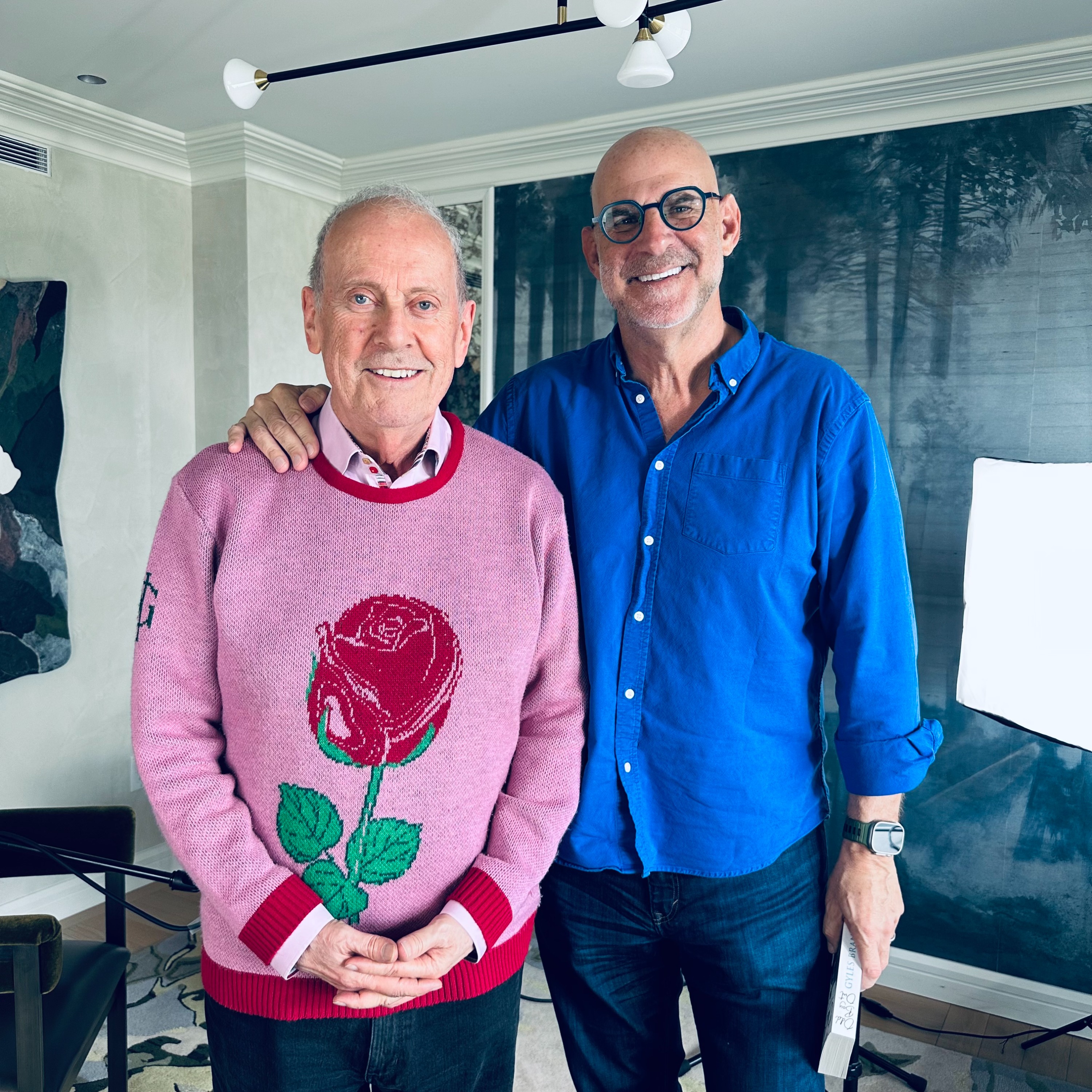
Gyles describes his meeting with bestselling author Harlan Coben in NYC.
“Boost your credit scores instantly by getting credit for bills you're already paying.”
Gyles describes his meeting with bestselling author Harlan Coben in NYC.
“This week I happen to be in New York City.”
Harlan Coben shares his earliest memory of the New York World's Fair.
“And I learned a great deal about writing, about life from a remarkable writer, who I now count as a proper friend.”
Harlan discusses his parents, their names, and how they met.
“And I still see it every once in a while.”
Harlan reflects on his parents' intelligence and their impact on his life.
“So it was like half kind of caught in that balance where, you know, wanted more, couldn't quite have it and was fighting for it.”
Harlan recounts his relationship with his father and the impact of his passing.
“They were not messy people, but their bedroom could best be described as the style as early American fire hazard.”
Exploring the impact of losing a father and cherished memories.
“So I went into his clothes and I checked his front pocket and it was the key to his room.”
Discussing the quirks of his mother and their relationship dynamics.
“How did your mother cope with losing him?”
How his parents shaped his storytelling and work ethic.
“And what do you have from each of them in you today?”
Recalling friendships and experiences during childhood and adolescence.
“And so I have to be able to see four or five steps ahead and come up with a lot of what ifs.”
Discussing the music that shaped his teenage years and identity.
“I played basketball and that was sort of what I was known for.”
Describing the peculiarities of childhood in a suburb with mafia ties.
“who wasn't at some point, you know, troubled.”
Delving into his family's connections with organized crime and its impact.
“I worked with him from 1984 when I graduated college in 1992.”
Explore the enigmatic life of a family member involved with the mob.
“he started to send his guys on these trips.”
Discuss the appeal of flawed characters and their impact on storytelling.
“Can you explain why we find these figures so attractive?”
Learn about the experiences that shaped a writer's career and their early works.
“I showed to a lot of people at the time.”
Explore Harlan Coben's unique approach to writing novels without strict formulas.
“And from then on, did you have in your head, and is there a formula for writing a successful novel of the kind you've described?”
Coben discusses the balance between research and imagination in storytelling.
“My second favorite quote on writing, I gave you my favorite with E.L.”
Learn about Harlan Coben's journey to becoming a bestseller and the impact of his breakout novel.
“And hopefully that will end up somewhere, maybe in a book, something that will happen to me.”
Coben shares insights on his collaborative writing experience with Reese Witherspoon.
“hit, I had already finished the book after that called Gone for Good.”
Learn about the unexpected collaboration between Harlan Coben and Reese Witherspoon in writing a novel.
“And Reese came to my apartment and we sat down and she told me the idea.”
Explore Harlan Coben's insights on the importance of a supportive spouse in his writing journey.
“Tell me of the moment you first saw your wife.”
Coben shares his critical views on social media and its effects on society.
“But when the big things hit, like when my father died, my mother got very ill, that's where she's shown, you know.”
Coben discusses the bittersweet memories of his father's death and the impact it has on his life.
“I don't think I would have ever been a writer if I was a child where I wasn't bored out of my mind sometimes and making up stories in my head.”
Explore Harlan Coben's reflections on life, gratitude, and the impact of small moments.
“to think of what his last thoughts were, but those are still the moments, and the moments that he still visits me in dreams, which still happens now.”
Gyles Brandreth discusses social media and upcoming events, including tea with the Queen.
“Oh, my thanks there to Harlan Coben for literally dropping by.”

Get the gist, explore an idea or ask about something said.
 Claude
On Rosebud with Gyles Brandreth, what are the key points of this episode?
Searching your listeningAutomatic transcript. May contain errors.
0:00Hi, it's Paige from Giggly Squad, and this episode is sponsored by Experian Boost. Summer glow-up? Check. Credit glow-up? Even better. Boost your credit scores instantly by getting credit for bills you're already paying. Your phone, utilities, rent, and insurance. I wish dating kind of worked like that. Connect your bank account, add those on-time payments to your Experian credit file, and your FICO score updates right away. You could instantly raise your FICO score by an average of 14 points with Experian Boost. Download the Experian app for free today. Results will vary. Users who received a boost improved their FICO score 8 from Experian by an average of 14 points.
0:39See App Store or Experian.com for details. Results will vary. Not all payments are boost eligible. Users who received a boost improved their FICO score 8 from Experian by an average of 14 points. Some may not see improved scores or approval odds. Not all lenders use Experian credit files. And not all lenders use scores impacted by Experian Boost. See Experian.com for details. Host unforgettable backyard barbecues with savings from Whole Foods Market. Get the good times going with made-in-house chicken or pork sausages and ready-to-cook kebabs for hassle-free flavor. Grab tasty flatbreads and their new balsamic chicken salad in the prepared foods department.
1:14Keep things fresh with organic red cherries, strawberries, and peaches at their peak. And stock up on bug sprays and sun care must-haves. Make your summer sizzle at Whole Foods Market. D-U-B-E-S-O-R. I'm coming to you backwards and forwards. This is Rosebud. I'm Joss Branforth. Cue the music.
1:59Hello again and welcome to Rosebud. This week I happen to be in New York City. I've come to New York to record episodes of Rosebud, but I've also come because this week coincides with the visit to the United States of America of King Charles III and Queen Camilla. And yesterday I got together at the New York Public Library with Queen Camilla because I happen to be a trustee of a charity called the Queen's Reading Room. This is the charity set up by Queen Camilla to spread the joy of reading. So she was in New York at the New York Public Library, and there was a fascinating panel of authors there, distinguished authors.
2:41And one of them was Harlan Coben, who I know has supported the Queen's Reading Room in the past. He is literally one of the world's best-selling authors. I mean, his books have been translated into 46 languages that sold more than 90 million copies. He's a Sunday Times number one bestseller, a New York Times number one bestseller. He's a big international star on the writing scene. And now his books have been turned into very successful Netflix series. So I thought, you're in New York, I'm in New York. Let me grab you. Let me bring you over to Essex House, overlooking Central Park, where we have our Rosebud studio in New York.
3:20Let me sit you down and let me discover the plot twists of your life. Who is Harlan Coben? And I'm thrilled. He said, yes, I'll come. And I learned a great deal about writing, about life from a remarkable writer, who I now count as a proper friend. I've only met him two or three times, but I really felt I bonded with him, and I think you will too, as you listen to, I think, a very special Rosebud conversation with one of the world's most successful writers, Harlan Coburn. Welcome to Rosebud. Cue that music.
4:11so harlan coben am i pronouncing the names correctly you are you're going to explain to me in a moment what the origin of them is we reveal to people your date of birth is that all right yes born on the 4th of january 1962 that's correct harlan what is your very first memory You know, it's funny. I was just thinking about this the other day because I think I was maybe two and a half, three years old. And I went to the New York World's Fair, which is not far from here in Queens. And maybe you've seen this. If you land at JFK Airport, you drive past this, what looks like a giant globe. It's a unisphere.
4:44It's a gigantic statue of the planet Earth. And I have a recollection of staring at that. And then also the sound of It's a Small World After All, which they played at that World's fair. In fact, when I was younger, I thought when I first went to Disney World that I had imagined it from that, but no, they had played it there. So my first memory, and it's very, very vague, I was maybe under three years old, was the World's Fair in New York City staring at that unisphere that now all of you drive by. If you come in from Kennedy Airport, when you're coming into New York, look on your right and you will see it by Citi Field where the Mets play.
5:22And why would you have been there? Were you in a car being driven past it? My parents took me to it when I was like two or three years old. To go to the World's Fair. We went to the World's Fair. Of course, I remember absolutely nothing else about it. My parents are long gone, so I can't really ask them. And being a fiction writer, I think about this a lot. And having just read a memoir, I think of this a lot. I never really know sure what is memory and what is fiction. It's a very thin line, as you and I both know. So for years, I also had a pennant, what they call like a flag, a pennant. A pennant, yeah.
5:50Sort of a triangle-shaped thing. Hanging on my wall felt one from when we visited that time. So maybe I just imagined that memory from looking at that for most of my childhood on a wall. I don't really know anymore. But that's my oldest memory. I can still see. And when I go by it, I still get hit with that really strong deja vu. And I still see it every once in a while. Who were these parents of yours? What were their names? And how did they meet? My father was Carl Carl. And my mother was Corky Barbara. But I already called her Corky. C-O-R-K-Y. Fine. Carl Coben. Yes. And who was he? Well, Carl, first of all, he was Cohen, which probably doesn't surprise too many people.
6:30We changed the name because Cohen was so common where they were. This is before I was born. They changed it. My mom just like, because her real name is Barbara. Barbara Cohen was like saying John Smith in certain neighborhoods. And she didn't like that, I guess. So she, my mother was very odd with a lot of things with names. But so they changed it to, to Coben. My mother was from New Jersey. My father was from Boston, Mass, a city called Revere, Revere Beach, right outside of Boston. And God, I don't even remember. They met, I think it was about a four-year age difference between them. And literally like two weeks after they met, my mother had already planned the wedding and just hadn't told my father yet.
7:11Wow. Yeah. So when he asked her, and she was like, you know, I've always wanted to get married on October 23rd because she already booked the place. So she kind of already was playing him. My. Yes, playing them early. What age would she have been when she was thinking of this? Four years younger than me. Oh, God, I think she was... My mother lied so much about her age, I get years confused. In fact, right before she died, one of her last requests was that I not put her birth date on her tombstone. Oh, bless her. Because she lied so often about it. Well, we must respect that. So we must. So she was in her early 20s, let's put it that way at the top.
7:44Well, Corky, in her early 20s. And what's the rule in Washington? Give us... You're a novelist. Give us that paragraph. Yeah, she was caught in that. She was a very modern day feminist. She marched with Gloria Steinem. We had a bumper sticker when I was a kid on my car. Think about this bumper sticker for a moment. And the ladies out there will, I think, really love it. But it said, women who seek to be equal to men lack ambition. This is in the 70s. This is on our car. So she was a big sort of outward feminist on the one hand. And on the other hand, she was also like, she was from a bad production of Fiddler on the Roof playing, you know, Golda.
8:24So it was like half kind of caught in that balance where, you know, wanted more, couldn't quite have it and was fighting for it. And was she an achieving person? I would say yes. Both my parents were extraordinarily intelligent. And I think they were frustrated that they didn't do better in their minds in sort of life. though they did far better, I think, than they should have, than they exceeded. And we have, there's three of us, three sons that they had. I'm the middle child. And my older brother, Larry, just retired as the CEO of NRG, which is one of the largest energy companies, a Fortune 500 company at NRG Stadium, is where the Houston Texans play.
9:06And my younger brother, who has lived in London for over 30 years now, was an investment banker and now a columnist for of Financial Times. So everybody did accomplish, but we were pushed quite a bit when we were younger. They wanted you to be achievers. They did. And you delivered. What did your father do? My father, by trade, was an attorney, but he was vice president of a, most of his life, he was vice president of a sort of commercial laundry business, the kind of place that went around at night and grabbed all the tablecloths from restaurants and cleaned them off and brought them back the next day.
9:43That was what he did most of the time. Well, what he did at the age of 57, he lost his job and the company was sold. And I think that was a terrible thing. Men are so, we're so defined, unfortunately, by our jobs that I think that was very hard on him. So that's why you said earlier that there was a sense of slight disappointment in their lives, that it might've been better. They might've done more. I think that's most people anyway. I mean, my parents were both, they really were super intelligent. Both of my brothers, this is Americanism, so I don't know if this will translate, were both sort of geniuses.
10:18Both my older and younger brother, they got into Yale as undergraduates, both graduated Harvard Law School. Those are the two top schools in the country. We take a standardized test called the SATs here. Both had perfect SAT scores. So I was like the idiot brother between these two geniuses who were skipping grades and doing all that. And so everyone in my family, I was probably the dumbest person, and I put that in quotes to some degree, in my family. Really, everyone was sort of an intellectual and very... With your parents, how did their intelligence manifest itself? You know, I was thinking about this because, you know, yesterday you and I were with the Queen at the Queen's Reading Room event, which you've been so active in, and I've been active in, literacy.
11:06And so my parents were funny in the sense that, you know, today's parents, we teach our, we're always taught like we have to read to our kids all the time and you have to make sure they have an hour of reading. My parents never did any of that because they loved books and they taught us to read organically. You know, parents back in those days, never for, I don't remember my father ever sitting me on his knee to read me a story, but they were surrounded by books. They were not messy people, but their bedroom could best be described as the style as early American fire hazard. Because there was so many books just piled everywhere, teetering, and every kind.
11:40You know, paperbacks, comic books, coffee table books, nonfiction books, how-to books. We were just always surrounded by books. The earliest gifts I remember always getting were books. We didn't necessarily have a great deal of money. We weren't buying any toys, but we could always buy. If we wanted a book, we always got one. We went to the library all the time. And so we were surrounded by a love of books and story my whole life. How were your parents together? Can you remember what they were like as a couple? Yeah, you know, it's hard. I looked through a little bit through rose-colored glasses.
12:15Both of my parents died young. When I say young, not like, you know, my father was 59. My mother was about 60, again, when I can't tell her real age. So they were both fairly young when they died. It seemed to me they got along okay. They had their share of fights and disagreements. And when my father died, it was sort of the first death in the family for almost everybody. And it was sort of the first cut is the deepest. And I think it was really devastating for all of us, my brothers, myself, my mother. And I think it's why I write so much father-son stuff in almost everything I do. Because you wrote a big piece, didn't you, 20 years ago, The Key to My Father.
12:53Yeah. And was this the key to your father, this moment of disappointment and rejection in his job? What was the key to your father? No, I think the key to my father was that, you know, he was, I think there's a lot of guys like this. He could be charming and he could have all the friends he would have wanted, but he really didn't have an interest. He really only cared about his family. And he cared with that kind of ferocity that, you know, I say today's parents are helicopter parents, right? They're around you all the time. My father was a take a bullet dad. Like if somebody was going to hurt us in any way, shape, or form, he would take the bullet for us.
13:29He made you feel safe. He made you feel secure at all times. And the key, and the key to my father was when I called, and he was going in for, he had a heart attack in Tampa, Florida. And I was flying down to see him. My mother and I were flying down. And all he was worried about was finding the key to the hotel room. And I couldn't figure out why. and after he died um that night and i spoke to his doctor next day and it's just you know you're furious you're angry it seemed like he was healthy i dropped him off at the airport i said well did you tell him we were coming he said yes and i said i don't think you did i think you're lying to me he said no i did and he said to me he said tell my tell them to check uh my my front pocket like well what else did he say because that was it that something like his last words were to check his front pocket?
14:19And he said, well, yeah. So I went into his clothes and I checked his front pocket and it was the key to his room. He wanted to make sure we had a place to stay that night when we got there. That was his last thought. That was, that to me sums up my father. And how old were you when he died? And how old was he? He was 59. I was 25. Yeah. And were you thrown by that? Did it, was that a year? Because often people, the death of their father, you go slightly off the rails. It's discombobulating. It destroyed me. I mean, it still destroys me now. That's why I wrote that essay for the New York Times, and I just wrote a memoir where I still talk about them.
14:56And I think everything that I've done since, it was the start of a bad period of time in the sense of, I think by the time I was, I think, 30 or 35, I had done seven eulogies. I didn't do my father's because I was too destroyed to do it at the time, and I regret that, so I learned to make sure I do it for the other people in my life. it was the again the first cut was deepest and i know i probably people will say that i look at him with rose tinted glasses but i don't think so even when i became a father it was kind of like i was trying to figure out how he did it like like i was an apprentice studying a master magician how did he you know push me to succeed without ever me fit making me feel like he was pushing me how did he love so unconditionally you know but wanting still to make you succeed and please him without making it a precondition.
15:44He was one of the calmest fathers I ever saw. I really don't remember him making mistakes. Again, people will say, well, you put him on a pedestal in death, but I don't think so. And I think my two brothers would actually agree that he was magic and he was the whole family. And when he died, it was shattering. What's your sweetest moment with him that you recall? Well, I tell you, it won't sound sweet, but it really was sweet. He took us to a baseball game. This is a big tradition in America. And my younger brother had this player that he loved on this other team. And my father managed. We had really bad seats.
16:20But a friend had given him really good seats, two seats behind the dugout that he could call out to the player. So my brother and I sat there for a little while. I was 10. My brother was 5. My brother's yelling out to the player. And this guy turns around and he says to my brother, shut up. He's yelling too loudly. And I said, you don't have to shut up. You can yell as loud as you want. and keep on, I'm 10 years old. This is an adult male with a beard. He grabs me by the shirt collar and pulls me forward and says, you tell him to shut up. He's giving my girlfriend a headache. He tells him to shut up and he kind of throws me back.
16:52And I'm like stunned. So we went back up to our regular seats. I didn't say anything to my dad for a second, but he could see the look on my face. And I told him the story. And my father just went storming down. And I'm watching through binoculars and my father is standing behind him, just screaming. in his ear as loud as he can. And then he starts pushing the guy to go, the universal symbol of let's go outside and settle this. And the people came out and broke it all up. And my father came back and said, you guys can go sit back there. And they're like, no, dad, we're pretty good with you. So that's one of my favorite memories of my dad.
17:27I've used that in books more than once. How did your mother cope with losing him? Because if he was this rock for you, I imagine he was for her as well. Yeah, she was flightier. and she was eccentric. She was quirky. I mean, she went by one name, like Fabio or Cher. Everybody kind of knew her. And she was a very attractive woman. She was wild, a free spirit into all kinds of, you know, she was a hippie in those days and things like that. I think it was really hard on her because he was kind of a straight man. I mean, I have another really odd picture of them, which gives you maybe an idea of them from, I think it was 1978.
18:05They were at a bar mitzvah for a friend of mine. It was really hot outside. So my mother had a little too much to drink and just took her top off. She's sitting there in her bra at a bar mitzvah. And I'm sitting there, I look at the picture and she's sitting there with this bra on and my father's next to her, like perfectly winter tie, like, like nothing's going on. Almost like King Charles would be, you know, like just very like matter of fact about it. And that in a sense summed up their relationship. He kind of kept her on the rails. And so I think it was, it was really hard. And And then not long after that, she started to get sick.
18:37So his death was sudden, a snap of the fingers just gone. That was devastating. My mother's was prolonged in cancer, and it was hard to watch. And I don't recommend either, by the way, for the grieving. I'm sure it was easier on my dad than my mom's death was on her. But for the grieving, it was tough. So I got to sort of experience both a slow death and a fast death with a parent. And what do you have from each of them in you today? What did they give you? Well, my mom was the storyteller. And she's the one who, I think she wanted to be a writer. She never, I never actually saw her writing, but she talked about being a writer a lot.
19:16And at least, you know, my parents never saw any of my success, which is also something that haunts me. But she's got to see at least that I started to write in the beginning. And she had the imagination and was wild. I think the work ethic that it takes to do it is probably more my dad. And I think one of the things that's most underrated in a writer, and we talked about this the other day at the Queen's Reading Room, was the importance of critical thinking and being empathetic, being able to take all sides of a position. When I'm a writer, I'm often defending positions that I find abhorrent or that I don't agree with because that's my characters do.
19:54And I have to defend them or make the person believe them because that's part of what writing is. It's not everybody has my viewpoint. Explain the phrase critical thinking. I mean, it's a phrase that people use, but what does that mean? Yes, it's sort of Socratic myth. In other words, when I was in college, I don't really know, though. I mean, I know now if my professors were right wing or left wing. What we would do at Amherst College, which was a wonderful small college in Amherst, Massachusetts, we had, to give you an idea, we had, I think, 450 kids per grade. And while I was there, I lived next door to David Foster Wallace, who wrote The Infinite Jest.
20:28and my fraternity brother was Dan Brown, who wrote Da Vinci Code. So I'm not even the biggest selling author in my own fraternity at a college with less than 400 people per grade. But what we were taught was we would read philosophies and theories and arguments, and then our job would be to defend them and tear them apart. Didn't matter who they were, didn't matter if we loved them or hated them, we had to defend them and look at them. That's critical thinking. And it's really important in writing. You know, I write twisty stuff. I write very plot heavy, very twisted, a lot of twists and turns and trying to fool you things.
21:05And so I have to be able to see four or five steps ahead and come up with a lot of what ifs. That's really what my job is, a lot of what ifs. So I think that education really helped with that. When you were a boy, who was your best friend outside of the family? Assuming you were friends with your two brothers or you being in the middle, maybe you weren't friends with them? Well, it was interesting that we had a number of years apart. So my older brother was three and a half years older than me, but because of his genius, and I say that, I mean, he was in, one day he went to school when he was in third grade and they just moved his desk down to fourth grade.
21:39And all of a sudden he was with kids a year older, which I think was devastating for him and a big mistake on my parents. But so we were fairly separated by school by almost five years. My younger brother's five years younger than me. So I was closer to both of them than they were to each other. But especially my younger brother, I think I was probably closer to, because my older brother had to go through a lot of stuff. I mean, as you know, when you're that age, he was a May birthday, so he was already on the younger side or middle side. And when all of a sudden, you know, you're with a bunch of 10-year-olds and you're 10, but now you're with 11s or 12-year-olds, all of a sudden you go from being one of the biggest or one of the better athletes to one of the lousier ones.
22:16It was, you know, academically you had no issue. But the other stuff I think was tougher for him. Being that smart I think was tough on both of my brothers in different ways. And your first friend outside of the family? Oh I think I'd have to probably pick Jeff Mitnick. Oh. I played basketball and that was sort of what I was known for. If you ask kids I grew up with. This is because of your height because you are tall aren't you? I'm tall. I'm six foot four still to this day. And I played high school and college university basketball. So this kid was my co-captain all the years from like first grade, I think when we first met until we graduated high school, we played, we were on the same basketball teams together.
22:57And I still, but I saw him two or three weeks ago. I think we, you know, we still follow the New York Knicks now. And in the late 60s, early 70s, what sort of a little boy were you? What was the music you were listening to? What kind of books were you enjoying? What games were you playing? Well, it's funny because it's, everything comes back, doesn't it? So 1975, I was 13 years old, Bruce Springsteen came out with the Born to Run album, which was the seminal album of my life still to this day. My brother had got it. And, you know, in those days, as we know, we had those liner notes with the lyrics in it.
23:29And I would sit there. And in my view, the Born to Run album is also one of the great short stories collections of the 20th century. People haven't listened to it that way. Follow the lyrics along Thunder Road, Jungle Land, Born to Run, She's the One. Meeting Across the River, Night, 10th Avenue, Freeze Out. I think it's just named every song that's on the album. So often I've listened to it, and I will see Bruce next week when he's playing at Madison Square Garden. So he's been a part of my life since I was 13. But I listened to a lot of the rock and roll of that day. I listened to Super Tramp and Steely Dan and all of those groups in the 70s, the Doobie Brothers and moving into the 80s with Tears for Fears.
24:19And were you listening alone or with friends? Were you going to? Both. There was a couple of friends I had that were like the music friends. You know, they were sort of different than the basketball friends. So you're a happy kid. These are. Yeah. You know, I think, you know, adolescence is a war, I think, for everybody. Don't you think? Don't you think? I'm not sure. I don't think. I mean, I don't know. I don't know anybody, especially anybody who does sort of creative work or artistic work. or I hate to word artistic, I prefer creative, who wasn't at some point, you know, troubled. I think adolescence is tough on everybody.
24:55We all have these, you know, insecurities that we're dealing with. We're all trying our best to find our way. And we're all very, very confused. I think my wife has worked out the solution. I never reached adolescence. She tells me I've come to grow up. I don't think I got much beyond 12. I mean, during your adolescence, what were the troubles? I mean, when did you discover girls? Yeah, young. You know, this is, I think actually younger, because it was more mysterious maybe when we were younger. We were girl obsessed pretty young. I don't remember exact age, but it seemed very young. And, you know, you always seem to have a crush on the person who didn't have a crush on you.
25:37That's just life. I assume it's the same today. Though it's interesting, I don't think my children, who are all grown now, but I don't think that they were quite as sort of girl crazy as the guys of my generation were. So, I mean, I just think it was, it was a lot, you know, we were pushed to exceed, um, a lot of expectations, but on paper, what's interesting about my town is on paper, it is a classic American suburb. I was born in Newark, New Jersey. I grew up in Livingston, New Jersey in a split level three bedroom. I mean, it could have been on any TV show house, You know, the same, maybe a little smaller in some, but exactly that.
26:15I grew up in a town where everybody was very, very similar and the same. But we had two rumors in my town when I was growing up. One was that behind these barbed wire fences and no trespassing signs was a nuclear missile base. And the other one was behind this baronial mansion with these guards at the door, and these lion statues belonged to Richie the Boot Boyardo, who was one of the models for The Godfather. and that he burned bodies in the backyard. And what I found out after I grew up was both rumors were true. Oh. Absolutely true. We had the Nike nuclear missile base hidden behind Riker Hill Elementary School.
26:53Wow. And right next door to it, weirdly enough, Richie the Boot Boyardo lived. And you can look up his house. It's this weird baronial mansion with these weird statues outside of it. And that they did burn bodies, according to his grandson, who I've met, in this furnace in the backyard. So this is the kind of town I grew up with. I grew up very much in the heart of mafia, very much in the heart of organized crime. My grandfather was part of organized crime. I found out a little later on. Which, the parent of who? My mother's father was president of the Liquor Salesman Union. Oh. Which, yeah, do I need to go into more detail than that?
27:31He was president of the - Did you know him ever? Oh, yeah, I was very close to my grandfather. I knew him, yeah, he died when I was, I died after my father. He died around the same time as my mother. So I knew him very, very well. I worked with him from 1984 when I graduated college in 1992. For eight years, we worked together in this travel business. So that was the front, was the travel business, but behind the scenes. I think he left. I mean, he sort of spun off. What he did was when he was president of Liquor Salesman Union, he started to send his guys on these trips. And he realized, I have a talent for this.
28:06and so he sort of spun that off into being a legit source of revenue. And then eventually he was able to, I think, to ease himself out of the mob. When I was 12 years old, he disappeared for two years. Explain. What was he doing within the mob? We don't really know. I mean, it's part of the mystery. I've been talking to my uncle about that. We don't really know. We knew he was involved with Longy's Willman and the Jewish mob, which, you know, Cosa Nostra is what they used to call the Italian mob. They used to call the Jewish one the kosher. That's right. So that's cute, right? But I don't know.
28:43I mean, it was whispered about. And so I don't know how much he was also using just to play around because he was a player as well and, you know, had a pseudonym and other families and things like that. And you wouldn't want to ask a lot of questions because we thought maybe he was a bag man for the mob or something like that. So I don't know how much of it was really going on. I don't know what he really knew or did. A lot of it is just sort of rumors on our side. But I think he was pretty involved.
29:30Boost your credit scores instantly by getting credit for bills you're already paying. Your phone, utilities, rent, and insurance. I wish dating kind of worked like that. Connect your bank account, add those on-time payments to your Experian credit file, and your FICO score updates right away. You could instantly raise your FICO score by an average of 14 points with Experian Boost. Download the Experian app for free today. Results will vary. users who received a boost improved their FICO score 8 from Experian by an average of 14 points. See App Store or Experian.com for details. Results will vary.
30:05Not all payments are boost eligible. Users who received a boost improved their FICO score 8 from Experian by an average of 14 points. Some may not see improved scores or approval odds. Not all lenders use Experian credit files, and not all lenders use scores impacted by Experian boost. See Experian.com for details. Host unforgettable backyard barbecues with savings from Whole Foods Market. Get the good times going with made-in-house chicken or pork sausages and ready-to-cook kebabs for hassle-free flavor. Grab tasty flatbreads and their new balsamic chicken salad in the prepared foods department.
30:36Keep things fresh with organic red cherries, strawberries, and peaches at their peak. And stock up on bug sprays and sun care must-haves. Make your summer sizzle at Whole Foods Market. Hey, Pablo Torre here. As a sports journalist, I've covered global sports for many years now. And there is one thing that I can promise you. Nothing compares to the World Cup. And this time, it is even better thanks to McDonald's. You have the chance to take home one of nine legendary cups when you order the FIFA World Cup meal. The cups feature some of the biggest legends in football, like David Beckham, Terry Henry, and Ronaldinho, Christian Pulisic, Lamine Yamal, and Alfonso Davies.
31:14Right now, get one of nine legendary cups when you order the FIFA World Cup meal only at McDonald's. At participating McDonald's, only for a limited time, while supplies last, all rights reserved, copyright 2026, McDonald's at the FIFA World Cup 2026.
31:33Can you explain why we find these figures so attractive? Because what you're telling me, he's involved in criminal matters. Look at the way your eyes are lighting up. They are. I mentioned this story. I mean, I'm so sorry you're here and your grandfather isn't. But why do we, because we know that what he was doing, we don't really approve of. Right. him being a ladies man and possibly taking money that he shouldn't. And yet he's the stuff of some of your stories. Characters like that. Why do we love that? I don't know. Have you worked it out? Actually, I don't. I mean, I really don't. I think that, you know, when you're right, one of the rules that they used to tell me is you have to make your character likable.
32:11You have to make him nice and likable. And I find that's wrong. You want your lead character to be the guy that if he's sitting at a pub, you want to listen in on his conversation. or you want to sit and get his life story. You don't want someone who's likable. You want someone who feels real and authentic and damaged a little bit and interesting. And so I think that's why. I think there's a side of us that, I prefer to write not great evil or great good. I don't like that. I like to, I pretend I'm at the line. Let's talk about a pitch for a football match. You know, people put it out with line and if you trample on it enough, you don't really know where's out of bounds and where's not out of bounds.
32:48It's fair is foul, foul is fair. I want to play as close to that line as I can. I find that's the person that's the most interesting. The villain you can almost see yourself doing. And I think that's sometimes part of the appeal of also, I think, some of our bad politicians. It's not that they're being honest, because we know they're not. They're lying like rugs. But we almost admire the fact that they don't give a crap about that. They are id. That's this id and superego and all that. They don't care. and there's a side of us that kind of admires that. You were listening to Bruce Springsteen.
33:22He obviously is a great influence. What were the books then? We know you read lots of books because there were so many books around, but what were the seminal books for you when you were a teenager? I read more, I guess in more in elementary school, I start with C.S. Lewis's Narnia series. It was huge. A teacher had read part of that to us when I was in fourth grade, so I was at 10 or 11 years old and I read that whole series. A Wrinkle in Time series, Madeline L 'Engel, was a big factor. When I was a little younger, I loved Charlie and the Chocolate Factory, Roald Dahl. Did you read, as a teenage boy, pornography?
33:56Did you come across any? No, not really. I mean, because it wasn't much of it around. I mean, if I stumbled across a Playboy or a Penthouse forum, yeah, I would read it and look at it or whatever. But it wasn't around very much. That generation, were you introduced to the facts of life by your parents? I imagine your mother rather than your father would have told you the details. You know, frankly, neither one of them did. I sort of had to learn it on the streets and through trial and error. Well, that could be a fun way of learning. It actually was. Show and tell. I think it was some trips overseas when I was young where I was able to be taught by better teachers, I think.
34:36But yeah, that was embarrassed. I have to pause for a moment. Just unpack that gently. trips overseas where I had to be informed by those who knew better. What does that quite mean? I was younger because my grandfather and my mother were in the travel business. So I got to go over. It's funny, we didn't have any money to travel when I was a kid. We didn't go around. Until I started book touring, I really had never seen my own country. But because my grandfather was, you know, they were chartering planes or whatever else, I could always hop on one and pretty much go for free. So at the ages of 16, 17, 18, those years, I would go over and sometimes do a little bit of work for him or whatever and stay overseas.
35:19And so sometimes over there, let's just leave it at that. Good, we can. What do they call those three dots at the end of a... I don't know, but I don't know. There's a word for those three dots. That's what we're using here, those three dots. And they're so effective because sometimes the imagination can make it richer. Yes, and they will. Believe me, they'll make it a lot better than my actual answer. So when did you begin writing stories? You were enjoying the stories that Bruce Springsteen was telling you in song, and you were loving the fiction that you were reading. But when did you think, I can write a story?
35:53I was working one summer when I was in college. I worked for my grandfather and my mother. they needed somebody to be in Spain, the Costa del Sol of Spain, to handle the clients that were being sent there. So I spent eight weeks there. And it was a very strange experience because I think I was still in college. I was like 19 or 20. And I was much too young to handle this much responsibility. And I was not very good at it. And there's 50 like adult Americans, like my parents' age would come in and I was supposed to take care of them. And the experience is very strange. And I said to myself, I should write a book about this.
36:28And one of the reasons you do it And this is one of the problems with modern technology. There's, you know, what was I going to do when I'm in, I don't even, I didn't even speak Spanish. I couldn't watch the TV. I didn't really have any friends out there. There's no electronics. There's nothing to play with. I read a ton of books. There was a used bookshop. I think I went through every book that they had there, but I was like kind of bored and I bought a notebook one day and I wrote and I wrote, um, I started writing a novel. Never written a short story in my life. I started writing a novel about this really cool tour guide, American young tour guide, who was taking care of these annoying clients, called the book Aim to Please.
37:07I came back to the States and actually wanted to finish it. I went to a bunch of professors at my college and I was like, can I do this as some kind of independent study? All of them kind of said, no, you've never taken even an English class here. So I wrote it on my own. And I think I just found my thing. I just loved doing it and I just felt like I was good at it. I wrote an entire novel my senior year of college. Wow, so you're 20 or 21. That's the rage. I wrote an entire, it was terrible. It was a terrible novel. So it wasn't really good. I still have it someplace. But I got the bug from that, the virus from that.
37:37And once I had that, I never let go of it. I started to write more. Did you show it to anybody? Oh, yes. I showed to a lot of people at the time. And I tried getting it published. But, you know, no, it wasn't any good. Or even if it's good, you know, how hard it is to get something published. When I first started, and that year, this is what we're talking about now in the 1980s, just getting published was a major accomplishment. There was no indie presses. There was no sort of things like that. You had to get published by a real big publishing house. And that was my dream. I was like, if I could just one day, one day have one book published.
38:13I just want to be a published author. I want to walk past a bookstore one day and just see one copy there. That was my first goal. Did you have any other dreams? or was this, well, you wrote your first novel age 21. Was this the dream or did you have other things you thought I might do this, I might do that, but I'm enjoying, I mean, or was it right from the get go? From the moment I started to write, that was it. I mean, I always wanted to be a pro basketball player, but that dream kind of started to fade around 15 or 16. And by 21 was pretty much, you know, I was a good college player or maybe, but I was not gonna be a pro basketball player.
38:48So this was the dream. and it was something once I attached myself to it I just I knew I don't want to I hate when people say stuff like that and and sound corny and make you sound highfalutin or anything like that but I just I was not going to give up on it and I wrote three full novels that never saw the light of day three full novels and people will say wow that's like a but how what a better way to learn how to write. The problem also, people think, this is also strange to me, that I wrote a novel, I should be able to get it published. You never have any experience or, you know, it's like, you could have a talent of LeBron James.
39:27If you've never played basketball before, you're not going to be a good basketball player. Why do you think you'd be a good writer? You're a writer too, Joss. You know this as well. Writing is one of the few things where quantity inevitably does make quality. You do get better at it. Maybe there's a time when we'll start getting worse and maybe we've reached that time. I don't know. But it's really kind of foolhardy because we all can do it. We all can write. I did think, well, my first novel, why isn't this getting published? And now I look back on it. Oh, there's a reason. It really was terrible.
39:55It sucked. I thought it was good, but it wasn't. And so you learn, the best way of learning, I wrote three novels to learn how to write novels. And what were these novels? Were they thriller novels? They were adventure stories? What were The first one was this story of this, it was a autobiographical, but this tour guide, and I made it into a romance as well. And I, you know, it was so pretentious and pompous and self-absorbed. I'm embarrassed about it, but it's still someplace. And then I started to write what I love, which I call, again, we call what I write, I guess, mystery or crime fiction.
40:26I always, I prefer the term suspense, but I would call it the novel of immersion. That book that you take on vacation and you don't even want to leave your hotel room because you have to know what happened to these characters. Or you go to bed at 10 o 'clock or 11 o 'clock at night and you think, I'm just going to read for 10 minutes. And it's four in the morning and you're still reading. I love that feeling as a reader. And the fact that as a writer, I sometimes give that to people is really, you know, really thrills me. And it's the reason I love to do what I do. And so those were the kind of books I was starting to try to write right away.
41:00And so these first four books were not published? First three were not published, yeah. So my first book was accepted when I was 26 years old. And that was? Play Dead, it was called. And you just sent it in via an agent or? I had, no, I sent it, I actually had sent it to someone who had gone to Amherst College a few years ahead of me. And I said, I just want an opinion on it. Like, where do I go with it from there? And she passed it on to somebody else. And next thing I knew, they wanted to publish it. So I got published actually very, quote unquote, easily once I got published. And I was given$1 ,500 advance,$1 ,500 American dollars.
41:39Not that bad, given. It wasn't that good either, but I didn't care. I really wasn't, I still don't. I know it sounds phony. I've never done anything, I've never done any writing things for the money. I've certainly been financially compensated quite well. but it was just such a thrill to get published. It was one of the great moments of my life, really. And from then on, did you have in your head, and is there a formula for writing a successful novel of the kind you've described? No. In fact, I just finished my next book that'll be out in September. It's called Plot Twist, a memoir on writing, where I sort of did what Stephen King did with on writing or Anne Lamott did, where it's a book on how to write mixed in with memoir from my life, some of the stuff we're talking about, the story of my grandfather disappearing for two years, my parents' death, things like the nuclear missile base I mentioned, all these things are in the book and how they made me write, how those things, my real life ended up showing up in the fiction and how I write.
42:41So no, I don't, there's not a formula other than, I'm always trying to make it suspense film a thriller one of my favorite writers a man named elmore leonard who wrote a big short maybe people remember that movie and some other greats um you had a great writing advice where he said i try to cut out all the parts you'd normally skip i love that and i write like that i write like there's a knife against my throat and if i bore you you're gonna kill me i write like we are cavemen sitting around a fire and if i bore you someone's gonna pick up a big rock and hit me over the head with it and someone's going to take my place.
43:20I write with that kind of energy and that kind of intensity. But I've never, I don't, I don't, I've read them. I don't really understand all these three act structure stuff. I don't, I never follow any of that. In fact, I try to, I try to go against the grain. A lot of what I write is like, what have I seen before? How can I change it around to be something slightly different? But you do know the end at the beginning? I do know the end. You know, I've done surveys of writers, informal ones, and I would say 65 % do not know the ending and 35 % to 40, somewhere near, do know the ending. I always know the ending.
43:57So I start with some really, I know that weird twist beginning. If you watch, say, Fool Me Once on Netflix, and in the beginning of it, Michelle Keegan plays the role of Maya Stern and her husband had just been murdered and she gets, she puts a nanny cam to watch her child. And one day she comes home and looks at the nanny cam and sees him playing with a man from the back and the man turns around and it's her dead husband. And that was the opening hook. I'm like, wow, I love this opening hook. I know the answer before I start. I know, is it really the husband? What happened? I know that answer.
44:29I don't know anything in the middle. I know the beginning. I know the middle. I compare it to driving from where we are right now in New York City to LA. I may take Route 80. Chances are I'll go via the Suez Canal or stop in Tokyo, but at least I know I'm going to end up in LA. My second favorite quote on writing, I gave you my favorite with E.L. Doctorow. My second favorite quote comes from E.L. Doctorow. I'm sorry. The first one's from Elmore Leonard. E.L. Doctorow says that writing is like driving at night in the fog with just your headlights on. You can only see a little bit ahead of you, but you can make the whole journey that way.
45:01The only thing I add is I know where that journey's going to end. Do you do, some writers do, a great deal of research? I do none. I do as little as possible. Every other writer you will talk to will normally say they do a lot of research, and I will defend that position for those who want to be writers out there. The problem with research is that it's more fun than writing, and you will do anything not to write. We both know this, Giles. You staring at that blank page, you will do anything not to write. There are days I'm sitting there going, I'm going to write, but first let me put aluminum siding on my house, like anything to avoid that horrible moment where we're alone.
45:37So I'll do research. Most writers do research as an excuse not to write. And then you get caught up in the research and you're loving the research and the research is so much fun and you're forgetting to write. So I would tell people, you know, look, if you're writing a book about 18th century Afghanistan, yes, of course, my books are in the modern present day. I do as little research as possible. My research is always to call the person, ask them about it, because I always get that tidbit that's not in the book that's going to make that moment come to life for me. So, and the other reason is a lot of times you get too caught up in the research and you slow your story down by giving us too much back to it.
46:15Yes, that is the difficulty. I mean, I've been the victim of that because I write fiction sets in the 19th century. And you then discover the menu at that particular restaurant in 1882 and it's so delicious and amusing you might want to describe the lobster bisque and all the and but actually we want to hear some more conversation we want to know who done it right i mean so i i fight so i'm the only one i know who says don't i try to tell people do as little research as possible so example we're in new york if i was setting a scene we were the other day at the new york public library let's say i'm setting a scene there there's two ways of handling one is someone can go, oh, wait, I can't write it today.
46:56I have to go to the New York Public Library. I have to hear the echo on those stairs myself. I have to say, no, no, no, you've been there before. Look at them pictures, imagine it. You have an imagination. Use your damn imagination. And then later, go by and change it and move it around. But don't let it stop you from writing. I try to live my life this way with this very, very simple credo. Does it help me produce pages? Good. Does it not help me produce pages? Bad. and that's kind of part of the key to as much as i links back when i was 60 years ago at the park school baltimore uh the head of english because i was wanting to write my first novel i said what is what what do we i need for this and he gave me a mark twain quote which you will be very familiar with all you need is application apply the seat of the pants to the seat of the chair exactly and is that your view yes i mean you have you have the hardest part of writing is writing and you know even though I wrote this book on how to write outlining is not writing creating characters is not writing coming up with ideas is not writing hang with your friends at Starbucks is not writing reading is not writing only writing is writing only the moments you actually produce words on a page or a screen actually do I count as writing the rest of it comparatively speaking is flotsam and jetsam yes it's part of it and I'd love to fill myself up all the time you know when I leave you here, I will walk through Central Park back to my apartment and I will watch the people and I will soak it all in.
48:26And hopefully that will end up somewhere, maybe in a book, something that will happen to me. But I need to be thinking always with the writer's mind frame, always that sort of thing of what can I use and how can I turn things around to turn it into story. In your mantra, I know it's 98 perspiration percent, 98, 2 % inspiration, but there's that a little bit extra? Well, first of all, I disagree. It's 2%. Because sometimes you're, you know, the problem is you have to make sure you're also working smart. Like if you have a really bad idea, don't stick with it because people tell you you have to keep working at it.
48:58So, so work smarter than that. Don't be just 99 % perspiration. It is the work, but you have to make sure that that 1 % or that 2 % is really powerful stuff. And if it's not, change that one or 2 % until you have something. It takes me a while before I have an idea that I know I'm going to now live with for the nine months or whatever else I'm writing this novel. An idea is not a book. There's a lot of times what I think is a great idea, but it's throwing out seeds on arid land. Something hopefully will hold and start to grow. Once it starts to grow, now you're nurturing it and working on it. But don't work on a seed that's not going to grow.
49:36And what was your breakout moment? How did you move from this small, slightly literary publisher to mainstream. What happened? My 10th novel. Your 10th novel? My 10th novel was called Tell No One. That was my first New York Times bestseller. I had a breakout moment. I had done two at that small house. I did seven, am I doing math right? Seven Myron Boletar novels. Yes, I wrote seven books of my character, Myron Boletar, all done well. And Myron was slowly growing and I'd won a couple of awards and was getting some traction. It was published in the UK. It was a W.H. Smith Fresh Talent Award winner.
50:12Congratulations. One year, thank you very much. I think it was 1997 or eight, somewhere in that area. But 2001, I released a book called Tell No One that changed my life dramatically. We all have, not we all, but the girls who are lucky enough to be in that bestseller realm have what we call that the breakout book. For me, it was a book called Tell No One and changed my life. Number one bestseller, New York Times. It wasn't number one, but it spent a long time on the list and started to climb. Yeah. It did really, really well. And how did it change your life? And did it change you as a person?
50:40Yes. Here's the thing. I mean, I was 39 years old. And the day that I first hit the New York Times bestseller list was July 11, 2001. And the reason I know the exact date was that my fourth child was born on that day. So it was a big day. So I had a newborn two-year-old, four-year-old, and seven-year-old, which I thank goodness for because success does mess with your head. even on a small time basis. And my book was not, it wasn't Da Vinci code. It wasn't the firm. It wasn't like that. It did very, very well, but it wasn't like that kind of a breakout, but it still messes with your head. And so I get like, I don't even know how someone like Justin Bieber can be, can survive the sort of fame that these young rock stars get or whatever else.
51:25It's a, it's a, it is a, I think even for anybody, it's a bit of a mind screw. Luckily I, I had a really stable family life. How did it change your behavior? What were you doing? Oh, I don't think I changed my behavior that much. But it was like a strange kind of a freedom. It just messes with your head when you're one thing and then you're another. I think fame does that. And luckily, writers don't have that kind of fame. I have a number of, you know, I just did a book tour with Reese Witherspoon because Reese and I wrote a novel together. and I see the way people react around Reese and what she's got to kind of deal with and a lot of it's also fun I mean don't get me wrong I think that you know these people but it's just it just messes with your head I don't know how else to put it did it mess with your relationship with your wife did she think no it did not just because I think maybe because we were so buried in you know take this baby we gotta still drive the kids to school I had all that sort of thing there's a great Flaubert quote also that I apply to writing, where he says, be regular and bourgeois in your real life so you can be violent and original in your work.
52:35And so I was regular and ordinary and bourgeois in my real life. There was no way around that. So it wasn't like I could go off, you know, and start hanging out at nightclubs. I had newborn kids at home. But it may be a different circumstance it could have gone another direction but it didn't and but i could see with a lot of other people who have broken out i warn them it's going to mess with your head i was friends with dan brown as i mentioned dan and i went to the same fraternity i had the same fraternity and he sent me da vinci code before it came out no one knew what it was and i read it and i gave it one of those endorsements blurbs on the front cover and then i could see because i you can feel these things happen i felt it would tell no one too i could see da vinci code was going to break out I didn't think it would break out the way it did but I could see a breakout and I remember Dan calling me not long before the book came out and asking me about like oh should I do these speaking engagements or whatever else I'm like Dan I'm telling you right now duck your head down and write your next book now because your head's about to be messed with because the success is going to hit you in a way you're just not going to expect and years later we're still friends he was saying I should have I should have really listened because it was it was hard when all these things came to write the next book.
53:48I was, I was also lucky enough that before Tell No One hit, I had already finished the book after that called Gone for Good. So I didn't, you know, it paralyzes you. You'll see a lot of times when that author has that breakout moment, they get paralyzed. You're worried, is my next book going to be as good? I can, you know, I'm not going to name any names because a lot of them are friends of mine, but you see a lot of times they have that big book and then it takes them a long time to come up with the next one. And so So duck your head down. Writers are best if we just kind of ignore the outside world.
54:19That's why the internet is so bad for us too. Any kind of feedback is bad for us in that way. So just duck your head down and get back to work. Because you've gone on writing. Yeah. And you've done, I mean, since then, they've all been bestsellers. They're sold around the world, something like 28 languages, at least, if not more. 46 languages. 46 languages. No. Yes. 46 is what I'm told. Well, that's good. And millions of sales. which is fantastic. Do you think, well, I'm not going to go on anymore because you don't need to go on anymore. Why do you write the next one? Or is that why you did one with Reese, to do something different, to have a partner?
54:57What motivated that change? Well, I still love writing. That's what I am. I don't know what else I would do. A lot of our friends, for example, they tell me, oh, I paint now as a hobby or I do whatever. I write. I mean, that's my hobby too. I'm obsessed with it. I think part of it is that I don't have any other hobbies. I don't have any other interests. If I didn't write, I don't even know what I'd do. I golf now, but I'm terrible at it, and it's a terrible thing to do, golf. It's like, I don't know why I just didn't jam glass into my eye instead of taking up golf. But there's nothing else I really want to do.
55:32So I don't think I'd ever retire. I might slow down or whatever else. The case of Reese Witherspoon was interesting. thing i i i knew reese a little bit and and reese called me and she said i have an idea i want to talk to you about um i'll be in town this is maybe two or three years ago now we just the book just came out um and i actually was not going to do it i initially kind of wanted to maybe collaborate on a novel she had an idea and i was prepared to tell reese i'm not that guy there's other people who do the collaboration thing every time i say i'm never going to do something i end up doing it so i should never say that but i was always like i'm never going to collaborate on a novel it's too hard, blah, blah, blah.
56:08And Reese came to my apartment and we sat down and she told me the idea. And I was like, oh dang, I like this. And we started bantering back and forth. And she's just, she's so gifted in so many ways, Reese. I mean, people know that she's not just an actress anymore. She's an industry. She has a Hello Sunshine Studios. She just knows how to handle people. And she's wonderful with the story. And we spent 23 hours, it disappeared. And I'd gotten doing the story right then and there. And at the end she goes, so are we going to do this? And I'm like, well, how do I say no to Reese Witherspoon with that and face and this thing going on and like the big smile.
56:45And I love this idea and I was already in love with this character and I was like, yeah, let's do it. And so Reese and I spent, I think about nine months, I guess it took us to write, write the novel. And then it came out, it's called Gone Before Goodbye. It came out last, I think October, just came out in paperback in the UK last week. And we had a blast. We had a blast. And we had a blast.
57:16Hi, it's Paige from Giggly Squad, and this episode is sponsored by Experian Boost. Summer glow up? Check. Credit glow up? Even better. Boost your credit scores instantly by getting credit for bills you're already paying. Your phone, utilities, rent, and insurance. I wish dating kind of worked like that. Connect your bank account, add those on-time payments to your Experian credit file, and your FICO score updates right away. You could instantly raise your FICO score by an average of 14 points with Experian Boost. Download the Experian app for free today. Results will vary. Users who received a boost improved their FICO score 8 from Experian by an average of 14 points.
57:55See App Store or Experian.com for details. Results will vary. Not all payments are Boost eligible. Users who received a boost improved their FICO score rate from Experian by an average of 14 points. Some may not see improved scores or approval odds. Not all lenders use Experian credit files, and not all lenders use scores impacted by Experian Boost. See Experian.com for details. Host unforgettable backyard barbecues with savings from Whole Foods Market. Get the good times going with made-in-house chicken or pork sausages and ready-to-cook kebabs for hassle-free flavor. Grab tasty flatbreads and their new balsamic chicken salad in the prepared foods department.
58:31Keep things fresh with organic red cherries, strawberries, and peaches at their peak. And stock up on bug sprays and sun care must-haves. Make your summer sizzle at Whole Foods Market. Hey, Pablo Torre here. As a sports journalist, I've covered global sports for many years now. And there is one thing that I can promise you. Nothing compares to the World Cup. And this time it is even better thanks to McDonald's. You have the chance to take home one of nine legendary cups when you order the FIFA World Cup meal. The cups feature some of the biggest legends in football, like David Beckham, Terry Henry, and Ronaldinho, Christian Pulisic, Lamine Yamal, and Alphonso Davies.
59:09Right now, get one of nine legendary cups when you order the FIFA World Cup meal only at McDonald's. At participating McDonald's, only for a limited time, while supplies last, all rights reserved, copyright 2026, McDonald's at the FIFA World Cup 2026.
59:28Tell me of the moment you first saw your wife. Amherst College. I was a sophomore in college, and she was a freshman. We both played college basketball. Oh, so do you have to be tall as a girl to play basketball? She's tall, too. Yes, she is tall. Oh. She's 5 '10". Yeah. Yeah, 5 '10", I think. And I was smitten right away. So we started to date. We've been together since, yeah, I was a sophomore and she was a freshman in college. And what has she given you? Oh, God, everything. I mean, I actually don't know. Forgetting the family and life and love and all the things, I actually think it would be very, very difficult to be a writer without a supportive spouse.
1:00:14And we've both been— Why do you say that? What do you mean by that? I just think that if somebody doesn't understand that you need the time, you need to disappear. My family gets it. Like there's times that I'm just like the worst company in the world when I'm just sort of going off. And my kids kind of make fun of it. Like, oh, dad's off in la la land now. And I just like, oh, I get like hold of an idea and I start chasing it around the room a little bit. And I, you know, I need that. It's also great because I was the dad that was home. My wife's a pediatrician. She always wanted to be a doctor, always wanted to be a pediatrician.
1:00:44And I think one of the strengths in our relationship early on was that we both wanted the other to succeed. It always strikes me as weird. And I'm not saying this in a trying to appeal to a feminist kind of way. I don't get the guys who sabotage the women in their lives thing or want to be the breadwinner or the main man. Like to me, because when we were first starting out before the writing success, she was actually making more money and more successful. I thought that made me look great. You know, like even selfishly, I would say, wow, yeah, I was able to get this fantastic woman who's not just, you know, beautiful and wonderful.
1:01:20but she's a pediatrician. I'd be bragging about her. And other guys, I don't really understand why guys sort of undermine their woman because in a sense, you're undermining yourself, aren't you? What was the most difficult time in your marriage? Was it when your father died because you had a kind of wobbly moment amounting to a breakdown? I don't know. But was that for her the toughest time? I think for her, maybe it was the best time. I think because she proves herself under fire. It's the small things that sometimes will upset her or she won't be, you know, where she'll decompensate. But when the big things hit, like when my father died, my mother got very ill, that's where she's shown, you know.
1:02:04Like that's where, you know, as a writer, I talk about the grenade theory of writing, which is you throw a grenade in a room, you never know how someone's really going to react. You may think the big, strong, brave guy is going to be the one jumping on it and then ends up being the character who is the most seemingly lacking courage character. It's the surprising thing. So when I'm writing something, when you throw a grenade in a room, I try not to figure out who's going to do what until that grenade is in the room. And in my wife's case, the bigger the problem, the more she rises to the occasion.
1:02:38And have you failed ever? Is this one you regret within your domestic life? No, I mean, in terms of domestic life, I think it's been, you know, again, writing, it was my 10th novel that was my first published novel. I didn't have a TV series. You know, now I'm known as Mr. Netflix American, British TV. My first TV series, English language TV series, didn't come out until I was 54 years old. So it's been, you know, I was a little later in my first New York Times bestseller when I was 39 years old. so it wasn't like you know um overnight success really happening when i was young and all that so the patience in a way it ends up being better is there anything you're ashamed of in your life well if it is i wouldn't i don't think i talk about it on any podcast uh there's sure there's things that i've done that i would rather do over again but i'm also i'm not a backward looking or forward looking guy i i actually really do try to stay in the moment i was just really wondering whether you're still involved in the mafia oh through family connections whether you wanted to come clean about that no i i did not no i never got involved in that sort of a thing i actually didn't really know all the stuff about my grandfather i mean it was weird stuff because like he just vanished for two years my mother did show me an article in the newspaper where that said, you know, the union chief sought for an indictment.
1:04:04And he just, so he left the country. He basically moved over to France for a while. And we took this wild ride. And they didn't tell me why. My whole family, my aunt, my uncle, all of our families rode up to Montreal once because he went to Canada so we could see him after he'd been gone like a year and a half. And I was kind of like, you know, I was a kid, I was like, where's Pops? And they would just like stall me on it. Like, oh, he's overseas for all of a month. One day my mom says, if anybody asks, your grandfather got sick when he was overseas. I'm like, well, why would anybody ask? Well, a policeman asked.
1:04:35Why would a policeman? You know, I was like freaking out. I've got three more important questions to ask you, and then I release you. You've given us a masterclass, if I may say so, on writing, which I have loved and I hope will profit from in years to come. Is there anything you'd like to say that I haven't asked you about? something that is in your head at the moment you'd like to get out into the world off your chest? I mean, I think this is something that, again, you and I were involved in with the Queen's reading room yesterday where we were talking about, I hate social media. I'm on social media, yes, and you can follow me on Instagram to learn more about my career.
1:05:13But my use is a tool for promotion. I think social media has been one of the most detrimental developments in my lifetime. I can't overstate how bad I think it is. I think it's made people divisive. I think it's made people stupid. And even worse, they think they're smart, which is the most dangerous man. It's not the dumb man. The most dangerous man is the man who doesn't know what he doesn't know. And none of you know anything. I think you're learning something off the internet. It has made us more tribal. It has made us more follow our own narrative. And I think most of the problems that exist today where we have no middle anymore, we have no rational thought, we have no pragmatism, we have no critical thinking, can be traced back to the dangers of social media.
1:06:01And I will add another one. I don't think I would have ever been a writer if I was a child where I wasn't bored out of my mind sometimes and making up stories in my head. And you did too, Giles, when you were young, didn't you? We walked in woods. We walked in our backyard. We had nothing to do. And so we started to tell stories to ourselves. And those times when I was a kid, when I would, I would take baseball cards and make games out of them and try to invent worlds for those, for them and, and, and make up things in my head with, with on basketball courts or on baseball fields or walking through the woods.
1:06:36Now I would just scroll like an idiot, like a mindless idiot. Like I do now, like we all do now. So that my only rant is as much as you can, let's get our social media, let's get the electronics out of the classroom. And we all know this. This is not something surprising. You sitting at home listening to us right now, no, tonight, don't scroll. Read a book. God, you know you'll be better off for it. We all know this. And yet it's like we're ingesting poison. And we know we're ingesting poison, but we can't help it because it's yummy. It's a drug. It is. And how have you coped with your children?
1:07:11And do you have grandchildren now? I do not have grandchildren yet. My oldest just got married. Luckily, my kids are pretty good with social media, but the world around them is affected by it. And this is why when parents will say to me, like, oh, so I'm doing really well because I'm not letting my kid have social media until they're 15. But if every other kid's doing social media, now your kid's an outcast, and it's a problem for the kid. So we need to do it as a society. We really need as a group to say, you go to school, everyone's phone's locked up. You have no emergency you need to use your dang phone for.
1:07:44We never had emergencies. Then go down to the principal's office if you have an emergency or your parent has to reach you. No one has to reach you during the day at school. We should be locking up the phones during the day, but not just one or two kids. I'm sorry. It makes those kids outcasts and makes it harder for them too. And they're affected by all this. It should be from all of them. And you should, if you learn something from social media, understand you didn't learn it. I'm with you all the way. And I'll make sure that there's a clip of that on Instagram to spread your message. Yes, at Harlan Coben.
1:08:11By the way, you can follow, at Harlan Coben. So still whoring my wares while I say all of that. Yes. Three more quick questions, then then we're done. A moment of joy, particularly from your early years. Just what instantly comes into your head, a moment of joy. I just always think about my dad because I still miss him so much. I know that sounds corny. I'm 64 years old now, and he never got to be anywhere. He died five years earlier than that. It's weird. I feel like I'm sometimes on borrowed time. I guess also specifically a certain hit in a baseball game, a certain shot in a basketball game, was just moments of joy.
1:08:55But the thing, you know, you go back in time, I really miss my dad. I still miss my dad every day. And that, I imagine, would be your moment of sadness. Yeah. I mean, that was the most devastating thing was sitting in that hospital when we flew down there. And I have written an essay on it. And this memoir that comes out in September, I talk quite a bit about my father's death. But there was just a moment there I heard. It was a hospital, and we've been there since midnight. And the doctor came in around 3 or 4 in the morning, and he said, OK, I got him out. He's not in great shape, but we got him out.
1:09:30And then he left, and I heard a beep, and just like a continuous beep. And I just knew. I just knew. My brothers and I looked at each other. They had gotten down there. My mother, we just all knew. and it was like a longer beep and we just knew he was gone. And they then handed me his, we went to a room, he told us he was dead, and they handed me that bag of clothing and I remember hugging it the whole ride home and then eventually finding the key. So that's still, in many ways it's an uplifting memory to think of what his last thoughts were, but those are still the moments, and the moments that he still visits me in dreams, which still happens now.
1:10:10that's one of my recurring dreams um are still are still the toughest i'm going to be giving you when you go a copy of a book of mine which is a childhood memoir called odd boy out which is essentially a letter to my father um because because aren't we lucky to have had them that's the other thing i mean i i love i can't wait i mean and one of the quotes that i've said is you can't have an up and out of down you can't have a left without a right you can't have a good without and evil and you don't get to have that kind of great father without having the tears so he's worthy of them i don't feel bad that i'm swelling up right now he deserves them and what would be outrageous and absurd and horrible is if i didn't and how lucky for you and i is that we have that in our lives well how lucky for us that you've been here how did what this is the last question what has your life taught you wow um well i've given a lot of it here i've you know i ranted on different things my i've had a remarkable life i cannot believe i wake up still every day i cannot believe this is my life in terms of luck i mean again yesterday i got to do a panel on literacy at the New York Public Library at the invitation of the Queen of England.
1:11:35This little Jewish kid from Newark, New Jersey, a tall Jewish kid. It's every day my life is a, I look at this and I just cannot believe this is my life. Do you have faith? I do not. You do not. In terms of classic religious faith, I do not. No, because I always like to think that there is a heaven, because then your parents could see what you've achieved. Yes, and unfortunately, I wish I had that comfort, but I don't. But fortunately for you, I do. And so please, I hope you're right. As one of the most popular podcasts in heaven is Rosebud. So your parents will both get to know that Harlan, you made it for them.
1:12:13They may have had disappointment in their life, but the triumph that is Harlan Coburn. If they were listening to a podcast, it would definitely be yours. My parents would have loved to listen to your wisdom, as I have over the years. And it's been, you know, the first time I got to meet the queen at Clarence House, you were there and you spoke. And it was just like, it was almost like somebody had, it was like the perfect warm up act. Like, oh, here's a moment of normalcy in this place. It was like you were, you offered us a warm blanket to those of us who had never been there before and were a little intimidated and not sure what this was all about.
1:12:50And you were just the guy who said, it's all good. Come on in, gather around. We're all the same here. and it was a really cool moment. You and I usually only meet at palaces. That's true. That's the way it's organized. This is the first time we met without royalty in the room. I think what you learned from life, because you didn't really share that, was how lucky you've been and be grateful for it or maybe live in the person. The other thing I point out, which is the opposite of what I just said, is in the end of the day, life is lived in the small moments. Those moments are great and I appreciate them And, you know, I love being on set on the TV shows and all that.
1:13:27But really, what I'm lucky enough is I've spent most of my life alone in a room. And I don't regret one moment of that. Think about that. Most of my life, because I've written 37 and a half novels or whatever it's been, I've spent alone in a room making stuff up in my own head, just sitting in a room alone. And I don't regret one moment. The real secret of life is the moments in between, to be able to love the moments that They're quiet because 98 % of your life, even if you are somebody who's rich and famous or whatever else, those are the moments for the most part that you have. And so that's really what I've learned is that when you appreciate the smaller moments, everything else is going to fall into place for you.
1:14:08I've cherished our moments together. Thank you. We have to go now because we have an invitation for tea with the queen. But it has been fun. Tell her I say hi. Well, no, you're coming too, Colin. You're coming. Oh, you're going. Yes. It said plus one, and I'm taking you today. Okay, here we go. Okay. Harlan Coben, thank you so much. Thank you, Giles.
1:14:33Oh, my thanks there to Harlan Coben for literally dropping by. I said goodbye to him, and he said, it wasn't going to take me 80 minutes to walk home. I've enjoyed seeing you. And as we gave each other a hug, he reminded me, in fact, that we are going to meet again, he and I, in September this year, because at the end of September, the Queen's Reading Room, the charity that we both support, is having a literary festival at Chatsworth House up in Derbyshire. And he is coming to that. And I will be there too. So I will meet him again. I look forward to meeting him again. I'm going to feel guilty now about getting onto social media to promote all this.
1:15:08It's difficult. I agreed with everything he was saying about social media. And yet I'm hooked. I know it's bad. I am hooked. I'm trying to sort of pull myself back. But how else am I going to let people know except via Instagram and TikTok and X, all the things that we're doing at Rosebud. And in truth, Harlem promotes his books on social media. Anyway, I think you've got to just keep these things under control. By the way, if you want to meet me, and indeed my producer, Harriet Jane, do come to Edinburgh during the month of August, because we've got a show on there every day at four o 'clock in the afternoon in George Square.
1:15:49the Assembly George Square you can go to them, we'll just go to Edinburgh Fringe and look it up and there are still some tickets available a while to go, every day at 4 o 'clock just an hour long show called Up Memory Lane and we're just having a bit of fun, we might sing some songs as well and it won't be on social media it'll just be us on stage with you in the audience it'll be real people getting together and that's what I love about Rosebud, it's real people getting together, and today my very real person, was Harlan Coben. What an interesting man. And as Harriet Jane, my producer, remarked, how stylish.
1:16:27Charles, he's got a look, and it isn't a stupid look, it's a stylish look. I don't think she was implying that mine's a stupid look, but she did say that. Oh well, you've just got to take the rough with the smooth, haven't you? Anyway, Harriet Jane is our producer. This is a Plain Jane production, and we're very grateful to Alec Cadell for helping us put it on YouTube, because you can see many of these interviews as well as hearing them. There's a huge back catalogue as well, and other authors like Lee Childs, Richard Osman, well, just dip in the great Sir David Hare, playwrights, poets, novelists, they're all here on Rosebud.
1:17:03The real thing is that you're here on Rosebud too. Thank you for your company. Until next time, this is Giles with Harlan walking across the park. I can almost see him through the window. Bye, Harlan. I enjoyed being with you. Till next time, goodbye.
1:17:48Thank you.
1:18:15better. Boost your credit scores instantly by getting credit for bills you're already paying. Your phone, utilities, rent, and insurance. I wish dating kind of worked like that. Connect your bank account, add those on-time payments to your Experian credit file, and your FICO score updates right away. You could instantly raise your FICO score by an average of 14 points with Experian Boost. Download the Experian app for free today. Results will vary. Users who received a boost improve their FICO score 8 from Experian by an average of 14 points. See App Store or Experian.com for details. Results will vary.
1:18:51Not all payments are Boost eligible. Users who received a Boost improve their FICO score 8 from Experian by an average of 14 points. Some may not see improved scores or approval odds. Not all lenders use Experian credit files, and not all lenders use scores impacted by Experian Boost. See Experian.com for details. Hey, Pablo Torre here. As a sports journalist, I've covered global sports for many years now, and there is one thing that I can promise you. Nothing compares to the World Cup. And this time, it is even better thanks to McDonald's. You have the chance to take home one of nine legendary cups when you order the FIFA World Cup meal.
1:19:24The cups feature some of the biggest legends in football, like David Beckham, Thierry Henry, and Ronaldinho, Christian Pulisic, Lamin Amal, and Alphonso Davies. Right now, get one of nine legendary cups when you order the FIFA World Cup meal only at McDonald's. at participating McDonald's only for a limited time while supplies last. All rights reserved. Copyright 2026. McDonald's at the FIFA World Cup 2026. Who knew Walmart business could help a thriving office motivate their employees? Pamela knew. She uses Walmart business to get the assortment of items her team needs at the prices she loves.
1:19:58As the office manager, it's my job to make sure my team stays on top of their game. I can get the basics like cleaning supplies and paper towels. But what they really care about, snacks. And she can get everything they need when they need it. Greg loves wheat crackers, Brenda craves sour candy, and Max, oh boy. He needs protein bars and milk and applesauce and turkey. Built for your business. Who knew?
Our guest today is the hugely successful author of twisty, suspenseful, page-turning, gripping novels - such as Tell No One, Fool Me Once and Deal Breaker - Harlan Coben. Here, Harlan talks to Gyles about his childhood, spent in a very ordinary all-American town in New Jersey, which had secrets and rumours lurking beneath its cookie-cutter exterior. He talks about his family - his inspirational father who died too young, and his mother, who lied about her age and was a feminist and a wild-child. He talks about his grandfather's shady mafia dealings. He talks about falling in love, being at college with Dan Brown, and the poetry of Bruce Springsteen. Harlan also talks in depth and detail about his approach to writing. If you've loved any of Harlan's brilliant books or watched any of the thrilling Netflix adaptations of his work - you will find this fascinating. If you're not yet familiar with Harlan's work - you'll want to be after listening to this. What a charming, perceptive and wise person... Thank you Harlan for your time, energy and stories.
Enjoy this.
Hosted on Acast. See acast.com/privacy for more information.


