
 Ask ChatGPT



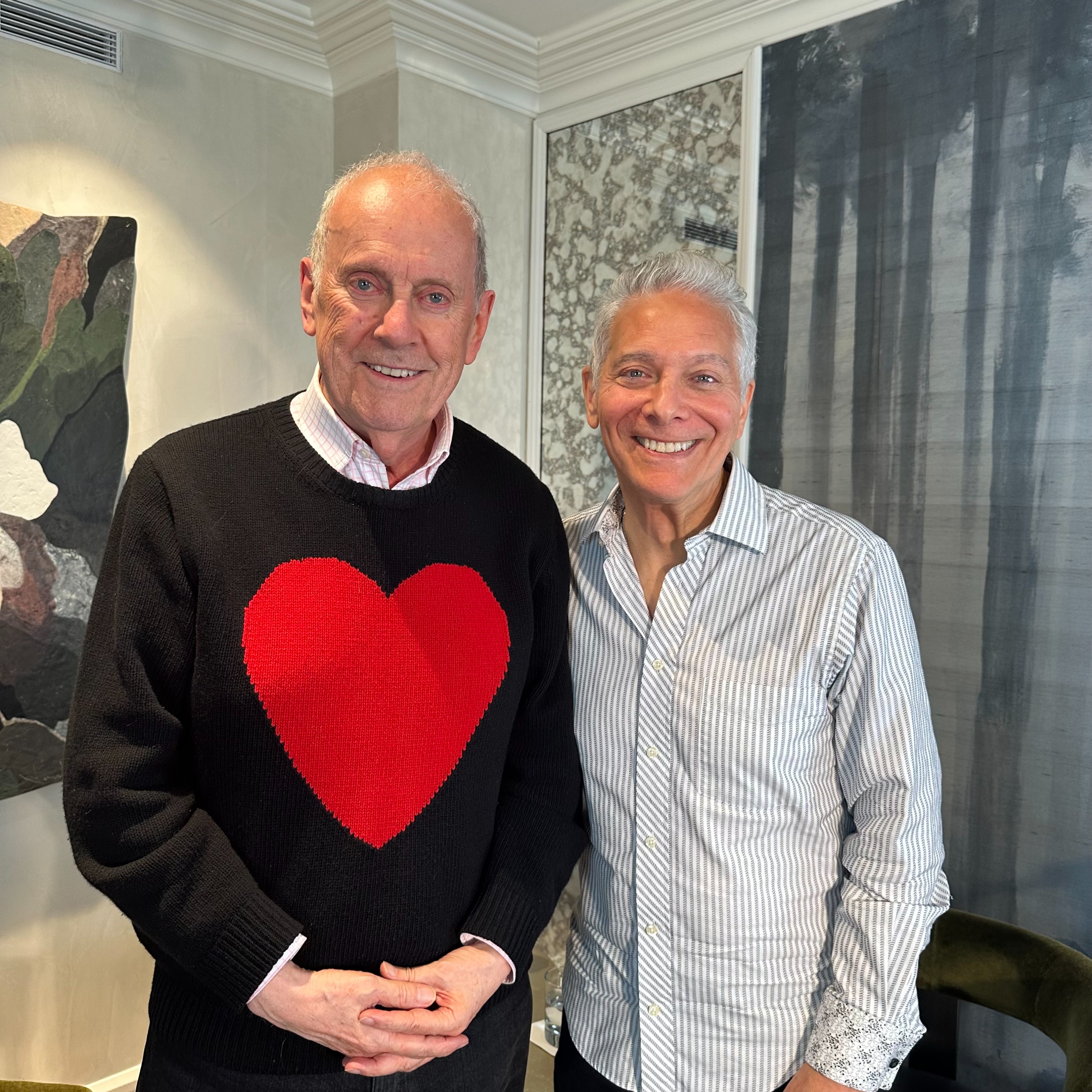
Giles Brandreth meets American entertainer and music specialist Michael Feinstein (“Rosebud”) in New York’s Central Park to discuss Feinstein’s life story—his early piano gift, coming of age as a gay Jewish boy in the early 1960s, and his career building the Great American Songbook through relationships with major composers and performers.
Michael J. Feinstein (born Sept 7, 1956) is a collector and interpreter of American standards. He worked for Ira Gershwin cataloguing Ira’s phonograph records after being introduced by June Levant. He later became closely associated with Rosemary Clooney and Liza Minnelli.
Feinstein says he played piano by ear from age five after hearing music in his head, and he believes in reincarnation as an explanation. He refused his bar mitzvah at 13, describing Jewish ritual as not spiritually meaningful to him. He credits Rosemary Clooney as a “second mother” and describes Liza Minnelli as “joined at the hip,” including helping correct financial exploitation around her.
his discovery of Oscar Levant materials at a Hollywood record store; learning lyric precision from Ira Gershwin (e.g., rhyme issues in “Someone to Watch Over Me”); meeting performers like Johnny Ray and Rosemary Clooney; Liza’s party at the Mondrian Hotel leading to Algonquin Hotel bookings and his New York debut.
Written by AI. May contain mistakes.
Acast offers a platform for brands to get involved with podcast advertising.
“TheSameMonday.com helping people worldwide getting work done faster and better.”
Gyles reflects on his admiration for Michael Feinstein and the significance of their meeting.
“I'm actually in New York's Central Park, or overlooking Central Park, it's a beautiful view.”
Michael shares his earliest memory involving a crib and his mother's soothing presence.
“So would you please welcome to Rosebud, the great Michael Feinstein.”
Michael discusses his mother's narcissism and her impact on his life.
“Well, no, a traumatic moment like that is for often a first memory, falling downstairs, hurting yourself, but to jump up and hit your head.”
Michael shares insights about his father's career, their family tensions, and the relationships within his family.
“I say that compared to my mother because later on in their relationship, my father wanted to have couples therapy with my mother because they were having issues and she refused to go.”
Michael talks about how his parents' love for music influenced his own musical journey from a young age.
“These three children, your older brother and sister and you, were you, the three of you, kind of allies with your father in conflict with your mother?”
Michael Feinstein shares the story of discovering his piano talent at a young age.
“No, a console, which is lower than a spinet.”
Feinstein discusses the pressures he faced as a child prodigy and how it affected him.
“There was some of that, and then I started to feel the pressure of it, And then I started to feel uncomfortable playing in front of my family because it was like, oh, here's Michael.”
Feinstein reflects on his childhood identity struggles and feelings of isolation.
“So that's in your head from the age of five.”
Explore Michael's early feelings of spirituality and identity in relation to his upbringing.
“because strangely enough, I had a sense of spirituality since I was, I'd say, eight or nine.”
Michael reflects on his solitary childhood and relationships with peers and family.
“Can you give me an example or a moment of being childlike during your childhood years?”
Discussion of Michael's mother's tap dancing and his early exposure to classic musical films.
“because of your mother being a tap dancer and one of the best tap dancers in Ohio.”
Michael details his journey from playing piano bars to envisioning a music career.
“You were still giving us your Kel Porter, the Gershwin Irving Berlin.”
A story of how a psychic predicted Michael's future connection to George Gershwin.
“I moved to LA and that was October of 1976, I think.”
Michael shares his encounter with Oscar Levant's records and his impact on his life.
“After that, I was collecting old records.”
Michael recounts his introduction to June Levant and the significance of their meeting.
“And he, at one time, was the most popular pianist in the United States.”
Michael describes his relationship with Ira Gershwin and the knowledge he gained.
“And suddenly I started to realize that this knowledge might actually get me somewhere.”
Insights into the artistry of Ira Gershwin and the nuances of songwriting.
“What are the three most commercially successful Ira and George Gershwin numbers?”
Discussion of Michael's experiences with iconic songwriters and performers.
Explore the legacy of iconic songwriters and the Great American Songbook.
“because he plays, he knows Ira Gershwin he works for Ira Gershwin And then I met Harry Warren through IRA.”
Discover the experiences of meeting famous performers and establishing connections.
“to receive up to$10 a month in statement credits at participating partners.”
Delve into the deep friendship and mutual support between the host and Liza Minnelli.
“And then I would go after work to Rosemary's, and we would hang out, and she would say, tell me about Ira today, or after I became friends with Liza Minnelli, tell me what Liza did, what's happening with Liza.”
Understand Liza's struggles with relationships and health while maintaining her spirit.
“And your relationship with Liza is intriguing.”
Learn about Liza's positive attitude despite her chronic back pain and the impact it has on her life.
“And so her biggest problem is her back pain.”
Explore Michael's experiences with anxiety, his relationship, and the spirituality that guides him.
“And I have to say that my spiritual life is the thing that makes me happiest.”
Discover the essential life lessons Michael shares about gratitude and the importance of art.
“and that we must always cling to and appreciate art.”

Get the gist, explore an idea or ask about something said.
 Claude
On Rosebud with Gyles Brandreth, what are the key points of this episode?
Searching your listeningAutomatic transcript. May contain errors.
0:00This is a Monday.com ad. TheSameMonday.com helping people worldwide getting work done faster and better. TheSameMonday.com designed for every team and every industry. TheSameMonday.com with built-in AI, scaling your work from day one. TheSameMonday.com that your team will actually love using. TheSameMonday.com with an easy and intuitive setup. Go to Monday.com and try it for free. Yes, TheSameMonday.com. Do you keep hearing podcast ads like this one, for example, but always wonder how you actually get involved with them for your own brand or organization? Well, it's easier than you think. We're Acast, and we give you the platform to do it all yourself.
0:44Browse thousands of popular podcasts, choose the shows that match your perfect audience, set your budget, and launch. And if you want a hand, our podcast specialists are there to help you launch with confidence. This is podcast advertising without barriers. Get started at acast.com slash advertise. I can't tell you how excited I am. This week, I met a man in Middlesbrough who has tattooed rosebud on his arm. I think we've arrived. Cue the music.
1:41Yes, this is Rosebud and I'm Giles Brandreth, but I'm not in London's Park Lane. I'm actually in New York's Central Park, or overlooking Central Park, it's a beautiful view. It's a lovely day for meeting somebody, to me, who feels like an old friend. I've not actually met him face to face before but I first saw him when I was in New York in the 1980s as a cabaret performer he was singing at a piano in a room at the famous Algonquin Hotel and I was taken to see him because I was told this is a musical sensation he's called Michael Feinstein you must see him, you'll be blown away nobody seems to know and understand the great American songbook like he does.
2:29And they told me, you know, he knew Oscar Levant, he knew Ira Gershwin. And I went into the room and there was this very young man at a piano, and it was magical. So I've admired him for many years. And he's obviously a musicologist. He is a collector of music. He's an interpreter of music. He did indeed work for Ira Gershwin, the lyricist brother of George Gershwin. But he's also well known as being a friend of some great musical interpreters themselves. Rosemary Clooney, I think, was like a second mother to him. And he's known for his long friendship with Liza Minnelli. In fact, recently, he and Liza Minnelli had a series of conversations which were recorded on the basis of a new book.
3:16And I've always been fascinated by Liza Minnelli. And I've been lucky enough to meet her a couple of times. But I've not met this guy before. So this for me is a very special day, meeting a very special man who has brought to life, well, some of the music that has been the backdrop to my life. So would you please welcome to Rosebud, the great Michael Feinstein.
3:55This is very exciting, Michael. I hope I'm getting the name right. Michael J. Feinstein? Yes. So far so good. Born the 7th of September, 1956? Yes. Our first question, always the same first question, what is your very first memory? I remember being in a crib in our little house on the top floor. It had a slanted ceiling. and I was jumping up and down, jumping up and down, and I jumped and I hit my head on the ceiling and I fell out of the crib and started crying and my mother came and soothed me. And that is the earliest memory, pain. Well, no, a traumatic moment like that is for often a first memory, falling downstairs, hurting yourself, but to jump up and hit your head.
4:45Yes. But then there was the soothing mother. Yes. So who was the soothing mother and where was the crib? Florence May Cohen, Maisie Feinstein. Say the whole name again. Her maiden name was Florence May Cohen, but she became Maisie, M-A-Z-I-E. And she was a big fan of Anne Southern, who made the Maisie movies in the 40s at MGM. So what was she like? Describe her to us. She was narcissistic. Oh. She was a performer who... I'm going to stop you already. Forgive me. It's a word people use now very liberally. What to you in relation to your mother does that mean? That it was usually about her, that the subject would always come around to some way personally about her as opposed to me.
5:36Anybody or anything else, or as opposed to you. Yes, or to anyone. She just was a wonderful person who was a little damaged And she was funny, though. She was very funny. Why was she damaged? I'm not sure. My grandmother, her mother, was also very strong-willed and self-possessed. And I assume that she didn't get the attention that she craved from her mother. This is, of course, armchair psychology. But my mother was just a fascinating character. In her later years, she was living with me. And one day I went into her bedroom and she was watching television, an old movie, black and white film, no sound, no titles, just looking at the picture.
6:21And I said, mom, why don't you have the sound on? She said, I know what they're saying. That was my mother. So when you were born, she was married? Yes. To whom? Ed Feinstein. What was he? What was he like? Describe him. He was great. He was a salesman. He never finished high school, and he was always embarrassed by that. And he told people that he finished high school, but I found out later that he didn't. But he had many different businesses and eventually became a salesman for the Sarah Lee Company and then a vice president. And he traveled - Is that already making cakes, cake mixes? Yes, they made cakes.
6:58And then they became a conglomerate and they had a meat division and he sold meat. And at the age of 21, I stopped eating red meat because of that, because he told me about what happened in the slaughterhouses, which he had visited, and that was enough for me. And did your mother, before she married him, have a job, or did she have a career? She was a tap dancer, and she did very well in Columbus, Ohio, where they were born, as was I, and she was the toast of Columbus, and then she went to New York to become a chorus girl, or maybe a star, but she was so intimidated by the city that she came back home, so she was always talking about how she could have had that career.
7:40And as well as being a meat salesman, was your father also a performer? He loved to sing. He was an amateur singer and everyone on his side of the family sang. We'd have family gatherings where all the brothers, his brothers would sing barbershop quartet harmony and I'd play the piano and it was always wonderful. My father was a very quiet man and always desiring to grow and to evolve. And I admire that so much about him because I saw him transform throughout his life, as very few do. Oh, unpack that a bit, as very few do. I think that there are some people who are very set in their way. I say that compared to my mother because later on in their relationship, my father wanted to have couples therapy with my mother because they were having issues and she refused to go.
8:36And he always was trying to become a better person and to learn how to speak to people and to look at the things in himself that needed attention. And my mother was the opposite. So I guess it's comparing the two of them. So you're saying he was ready to evolve and change and develop and learn, but she was what she was and remained that always. Yes. With both the strengths of that and the weaknesses of that, I assume. Yes. And did their marriage consequently come asunder at the end? My father spent more time at my house than home with my mom in the later years. But they stayed together as a couple because of the generation they belonged to?
9:18Yes, they both had affairs. And my father met a woman that he was, I think, in love with. And I said, why don't you be with her? And he started crying, and he said, I'm afraid that if I get sick, she won't take care of me. Oh. So. When you were younger, were there brothers and sisters? I have an older brother and an older sister. And were you as a family aware of these tensions between your parents, the different types that they were? I didn't know as much as I learned later, but yes, there were tensions. and my father would shut down and my mom would always say, don't give me the silent treatment.
10:00It was a whole thing that would go on. The very fact that when I asked you to describe the first word that came out when she was narcissistic suggests that you feel that you maybe paid a price for that, but at the same time you clearly adored her. Is that right? There were things I adored about her because she could be very funny and she had a big heart. and if she weren't my mother, I probably would have adored her more because everybody, all of her friends loved her deeply. I saw her do things that I felt were very cruel. Give me an example of that. Her older brother, my uncle Leo, was the kindest man and his wife died and he was living alone in Virginia and he came out to visit for several weeks and I wanted him to move in and live with us so we could take care of him and make sure that his last years were happy ones.
10:56And she wouldn't have it. She started screaming and yelling at him and abusing him in ways that were just horrible. And he never fought back. He was not that kind of a person. He just was so deeply hurt by that. And it became clear that he wouldn't be able to stay with us. I asked my mother. I said, Leo has nobody and we want him to move and be with us. And she said over my dead body. And so he spent his last years alone. And I feel very sad about that. These three children, your older brother and sister and you, were you, the three of you, kind of allies with your father in conflict with your mother?
11:39Or how did the three of you fit into the family mix with this tension between your parents? My father wasn't around much because he was a salesman and he was traveling a great deal. So it was mainly my mother. It wasn't until I moved to California that my parents moved to California. And in the later years, I saw more of their interaction. But yes, they did fight a lot. And as kids, we would just sort of try and stay out of it. My mother was a person who wasn't really in touch with her feelings, which was hard for me because I'm perhaps overly in touch with my feelings. And when she would clean the house, she'd go around and she'd be sighing.
12:21I'd say, what's wrong, mom? She'd say, no, nothing's wrong. And she'd go, I'd say, what's wrong? She'd say, nothing's wrong. And I was like five years old. I'd say, what's wrong? She'd say, nothing's wrong. Why do you keep asking me what's wrong? So she just wasn't in touch with her feelings. So I learned later, I couldn't expect her to be something she wasn't. How did you get into music so young? She was a tap dancer, so she loved, I imagine, the music from the shows, that kind of tap dancing. Yes. The generation that she was brought up on. Tea for tea. All of that, absolutely. And people like Fred Astaire were her heroes.
12:58That's that generation. Ginger Rogers. Well, of course. And your father being a singer, the kind of music he enjoyed was of the period? Yes. he loved to sing kiss me once then kiss me twice then kiss me once again it's been a long long time a lot of those 40s charming things so how did you get into music because you were playing the piano as a as a prodigy age five I mean how did you get into music when I was five my parents had bought a new home that they'd saved up money to to buy and it was It was beautiful. Not a huge house, but a new house. And the living room was empty, and my father had saved$500, which was supposed to go for the purchase of furniture.
13:49And then one day he said, let's get a piano. And my mother said, no, no, we have to have furniture. he said I just I want a piano and none of the kids played or exhibited any particular musical talent so I don't know why he had that in his mind but I remember they took me to the local piano store and said what piano do you like and I saw this big white grand piano and I said I like that one and they said no no no honey and they they found a spinet which is the low low back piano. No, a console, which is lower than a spinet. The spinet is up to here and a console is even lower. Anyway,$500. They bought that piano.
14:31A lot of money. It was. It was. Back in 1961. That's a lot of money. Yes. And we had the piano in an empty living room. And could you at that stage play? I sat down one day and started playing. On this piano? Yes. Not having played before. That's right. So you sat down at this console piano that had cost$500 in this empty living room and you found a gift. Yes, it just was there. I just understood how to negotiate the keys. But you were not given a lesson? No, no. And my mother heard me. She was in the kitchen And she came around. She said, who taught you that? And I said, I made it up. And she said, no, you didn't.
15:18I said, yes, I did. And she said, well, did your father teach you? Because my father could play chopsticks and heart and soul, but nothing substantive. And I said, no, no, I made it up. And she sent me to my room for lying because she was certain that I couldn't have just sat down and played. And when my father came home that night, I guess he wasn't traveling at that point, she said, did you teach him to play that? He said, I don't know what you're talking about. And then they realized that I could play the piano. So I just started picking out tunes and playing them. I just would play what I heard.
15:53When your father bought this piano, did your older brother or sister play it? No. So he just bought this almost as a thing to have. Aspirational. It's quite a nice thing to have a proper piano in a house, a new home. Let's have a piano. And then this amazing child sits down and plays it. And what was, when you sat down, age five, and began playing the piano, can you remember the sensation? What was the feelings inside you as you began to play? It was exhilaration because I could hear something in my head and then I could translate it. and it was a wonderful feeling. It was a release. It was a release.
16:36And how did you get a teacher then and did you learn to play other people's piece of music? Because this is stuff you're improvising yourself. Yes. So did you then have formal teaching? They then think we'd better get him a teacher. They took me to a teacher at Capital University, which was nearby, and she was a very nice lady who would put this little book, children's music book in front of me, and then she would demonstrate the tune, and then I would play it. Well, I wasn't looking at the music. I was just copying what she was doing. And then after about four weeks or five weeks, she put the book down in front of me and said, play this, and I said, I can't.
17:20I said, play it for me. And she said, well, you've been reading this. I've taught you to read. I said, no, I can't. And then my mother was waiting in the hall and she went out to the hall and said, Mrs. Feinstein, do you know that your child is playing by ear? As if it was, you know, the worst thing. My mother said, yes. And she hadn't realized that I was playing by ear. And at that point I said, I don't like lessons. I want to play myself. And my mom said, okay. So that was the end of the lessons. Later, I did take some other lessons, But the only substantive thing that I learned from piano lessons was a wonderful teacher, Miss Cook, who taught me chord substitutions.
18:03She taught me how to play a G7 or an A9 augmented, those sorts of things. So I could read chord symbols and I could sort of figure out a lead sheet of something. But that was about it. Have you explored this and how this phenomenon occurs? Because it's most unusual. I believe in reincarnation. Oh. And I'm certain that I came back in with something from another time, because I do have flashes of experiences in other times, and I'm certain I just came back in with it. So in your explanation of it, in an early incarnation, you were somebody who could play the piano, and that gift returned as part and parcel of your time this time around.
18:50Yes. I believe that we are given certain things from other experiences that are purposeful for our evolution in this life. And this phenomenon of being able to play, did it make you a strange child where you put on show because you could do this? Did it become the thing? Oh, Michael can play the piano by you. We haven't had any lessons. There was some of that, and then I started to feel the pressure of it, And then I started to feel uncomfortable playing in front of my family because it was like, oh, here's Michael. Play, Michael. And then I was like, I don't want to do that. So later reading about Judy Garland and how she would make people wait before she went on stage, I understood.
19:36Because one is treated as a commodity. And her only power was to say, you can't make me perform. I only go out there because I want to. So it made perfect sense to me that one time when Garland came off stage and her managers, Fields and Beigelman, were standing there and she had just finished a spectacular concert. And they said, now, Judy, when we do the show next week, she said, wait a minute. The only thing I want you to say to me when I walk off the stage is that I was great. Do you have to bleep that? I would not know. We don't need to bleep that. The authentic quotation. I'm with you. So you were thinking, I don't want to do this.
20:13Did you have friends outside your home? Very few. Oh. I stayed inside. I'd play the piano. I'd write things. And I never went outside. And my parents were always pleading with me to go outside, go outside and play. The older brothers and sisters, were you friendly with them? Friendly, but no. They were older. They were older. And so I was very, very isolated. And because my father was traveling and he had no interest in sports, when I started doing athletics in junior high school and we'd separate the kids for the different teams, they dreaded it when I was on the team because I was hopeless. So you were a child who liked playing the piano.
20:57You mentioned writing. What were you writing music? Was it writing songs? What were you writing? Just little stories and drawing things, even though I can't really draw, but just. So you were busy living in your imagination. Yes. Come with me and you'll be in a world of pure imagination. We love all that. So you were living in this life of pure imagination. You go to school, though. Yes. And are you any good? I'm clearly no good at the sport, but are you any good at anything? I was a terrible student. terrible because I didn't like, I wasn't disciplined. I'm still not disciplined. If I have a deadline, I have to get it together and I do, but I am not disciplined.
21:44And because of that, I was terrible in school. And I remember in high school when everybody was getting ready to go to college, the guidance counselor came to me and said, you are not college material. You should not go to college. And I said, okay. And my parents did not push me to go to college. And they said, what do you want to do? I said, I want to play the piano. And I started playing in local piano bars and restaurants in Ohio. Had there been a teacher there at school who did encourage you? Were there some teachers who saw some potential? Yes, Mr. Mastin, my drama teacher, because I was involved in theater and doing roles and playing piano for the school announcements over the PA system and such.
22:33So I was doing music, but I wasn't doing it in the school programs, not in choir or in band or any of that, because I wasn't reading music. So I was doing it all on my own. So we have this loner with an absent father, narcissistic mother, older brother and sister who are not very interested in him. He is living in a world of pure imagination where he can play the piano brilliantly. Do you have close friends at school? No, not really. But, you know? I had one. I had one and we're still friends. Good. And he, she? She. And what age is this that she becomes your friend? We met when I was five, when we were five.
23:12And she had an interesting family life too. So we tended to spend a lot of time together. We both, I think, felt like outcasts. You bonded over that? Yes. What's her name? Celia. Celia. Well done. So you're still friends with Celia? Yes. And then when you became a teenager, do you remember your first crush? Or maybe Celia was your first crush, or she's really just a friend? She was just a friend because I knew I was gay from the age of five. But I don't think in 1961 the concept of being gay was really known among five-year-olds. The word didn't exist. I just knew I was attracted to the same sex, not the opposite.
23:51At the age of five? Yes, I remember very clearly. Describe that moment then that you remember. There was a safety patrol who was helping the kids cross the street. He was, how old was the safety patrol? 13, 40, 50. And I felt an attraction to him, either an emotional attraction. I don't think it could have been sexual. I don't know what it was, but I felt an attraction. So I felt an attraction that early. So that's in your head from the age of five. And was that complicated for you? Terribly. because I knew it was wrong. How did you absorb that it was wrong? Because 1960s, early 60s, which we're talking about, people didn't talk about these things much, did they?
24:35Or maybe they did, I don't know. My mother had a friend who was a lesbian, and it wasn't stated that she was a lesbian, but I knew that she was because she was in charge of all the swimming programs at the local Jewish center, and she was a very butch woman, and I sort of figured it out. And then my mother made some comment about her, and then somebody at the Jewish Center speaking about her said, oh, well, she likes girls, you know. And then he looked at me and said, not that that is bad, not that that's bad. But there were always messages like that around. And you sensed that it was, in quotes, bad.
25:16So you were not only a loner, you were a loner who had a secret that was a bad secret. In my young mind, yes. And that meant when you were a little bit older, did you therefore not feel able to respond to it? So when as a teenager you may have had bigger, proper crushes, you couldn't express it? Well, the first time that I had any sort of intimate contact with another person was when I was in seventh grade with a classmate who felt the same way that I did. We had a sleepover and discovered that we both were attracted to each other. So we did something. but the other awful part of that of that time was that there were several older married men who
26:18tried to do things with me who were repressed and and it was it was traumatizing
27:01We'll see you next time. See who's listening and book host-read sponsorships or run your own ads all from one platform. Transparent pricing, real-time data, complete control. Start advertising on podcasts by visiting acast.com slash advertise.
27:21Your family, you were Jewish. Were you actively Jewish in the sense of was faith important to your parents and to you as a family? Only on the big holidays. But I mean, did you have your bar mitzvah and all of that when you went through all that? I refused my bar mitzvah. And what age would you have been then? Well, 13. So once you get to that teenage, you become to assert yourself now. Yes. Well, they said it's time for you to, they sent me to Hebrew school and all of that. And I hated Hebrew school because I just couldn't figure out what significance it had to anything in my life. And I didn't feel any sense of spirituality.
28:01because strangely enough, I had a sense of spirituality since I was, I'd say, eight or nine. I used to go and look at the stars and think that there's something greater out there. And the Jewish faith, I didn't relate to the Jewish faith in terms of spirituality. It was just ritual to me. And I also didn't like the music in the synagogue because it was always minor lament And it didn't hold a candle to the wonderful choral music in the church that I'd hear here and there. And so I just, I didn't understand the reason to be bar mitzvahed. And my parents' friends were saying, oh, he must be bar mitzvahed.
28:42He won't be a man. You know, you're not a man until you're bar mitzvahed. And I told my parents that I didn't want to be. And they said, well, but they say you're not a man. And I said, well, isn't it true that you can be bar mitzvahed at any age? And they said, yes. I said, so if I change my mind, I'll tell you. And they said, okay. They were fine with that. Yes. Can you give me an example or a moment of being childlike during your childhood years? Because you're giving me a five-year-old who's already playing the piano, who's a loner, who knows from the age of five that he's gay, who has a best friend who is a girl who also comes from an unusual, troubling family, who also feels a loner.
29:24You form a bond because of that. These are quite grown-up things to have in your life from a very early age. Give me little Michael. Give me a playful Michael. Was there a playful Michael? And if there was, what was he doing? I don't think there was. I don't remember ever going out and playing or doing any kid things. I really don't. I remember family gatherings. I used to love the Fourth of July and the family holidays and such. But no, I didn't do anything with my peers. As a matter of fact, in school, I kept looking around saying, what am I doing with all these kids? I mean, I couldn't wait to get out of school.
30:04When my parents had friends over, I was always sitting with them. and my mom would say, don't you have something better to do? I like to be with them and sit and listen to them talk and be with the older folks. So I couldn't wait to get out of my childhood. And entertainment that came into your childhood because of your mother being a tap dancer and one of the best tap dancers in Ohio. We presume. Let's give her that. All right. Narcissist she may have been, but come on. She didn't make it on Broadway, but she made it big in Columbus. She did. Yeah. But I can picture her like my mother would have been, loved the movies of the 30s, the 40s.
30:43You mentioned Red Astaire, Ginger Rogers, Judy Garland, all of that. So though these were films a generation before you, you were watching Easter Parade and the rest of it as a child. Yes. And were you responding to them? Were you thinking, this is my world as you saw those? I related to them musically. I thought that the music was so incredible. Listening to the orchestrations and what they did with the songs was dazzling. And I started learning about the creators of the films. People like Roger Edens or Conrad Salinger, the orchestrators who nobody knows, but they are my heroes. So you leave home age 16?
31:33uh well no actually i was 20 when i moved to la yes so i lived at home until and when you started playing in these piano bars i was still in high school my last year of high school or maybe my junior year i was i started playing in restaurants and bars in in ohio and this is just popular music of the time i was playing older songs i would play at places where i could do show tunes and do older songs because I wasn't playing contemporary songs, occasionally one or two, but I wasn't playing the pop things of Elton John or Billy Joel or Carole King or any of those things. You were still giving us your Kel Porter, the Gershwin Irving Berlin.
32:12Yes, I was already in that world. Delightful. But eventually you leave school and you grow up. And did you have your destiny in your head? I knew I wanted to do something with music, but I was playing piano bars. So I thought, how am I possibly going to have a career other than playing piano bars for the rest of my life? So I did that until I could figure out what else I would do. And then what happened? How did something else come along? From the time I was very young, I had this insistent voice telling me to move to Los Angeles.
32:52And I finally listened to it. I remember and is this a voice that speaks to you we've already talked about the idea of reincarnation and your spiritual awareness is this a voice actually talking in your head or is it just a mood and a feeling it can be both or either it really is a visceral feeling of you have to do this it was like a pole something like this beckoning finger saying, come, come. And so you followed. I did. You followed your dream. Yes. And what happened? How did the dream become a reality? I moved to LA and that was October of 1976, I think. I had just turned 20 and I was playing in a restaurant and a waitress there told me she'd gone to a psychic.
33:56$20, you could get a psychic reading. And I thought, oh, that sounds interesting. And I went to this psychic named Carol Costa who was giving me, saying this and that. Nothing was making much of an impression. She was nice. Then I said something about music and I love the music of George Gershwin. And she said, you know, he's very strong around you. He's very strong around you. And I thought, okay. And I said, you know, his brother's still alive. She says, you're going to be working for him. You're going to meet him. And less than a year later, I did. It is truly bizarre. After that, I was collecting old records.
34:34I was collecting 78 RPM records from the time I was five. And in - From the time you were five? Yes. This is when your life really takes off at five. Some of us are waiting for us to take off now, but well done. Age five. Michael is, yes, go on. Yes, I went to a record store in Hollywood called The Record Collector looking for some rare issues of some things that I desired. And I asked the proprietor if he had a very rare LP called Oscar Levant at the Piano, which was Oscar Levant's last recording, recorded in 1958, issued in 1961, and didn't sell very much and was very hard to find. He said, I don't have that.
35:13He said, but I have some records that belonged to Oscar Levant. Personally? Yes, and he showed me this cache of old radio air checks and soundtrack rehearsal discs that spanned his entire career that he had purchased from an auction of the Levant estate. And who was Oscar Levant in a sentence? Oscar Levant was a very famous concert pianist who was a specialist in the music of George Gershwin, being Gershwin's close friend. And he, at one time, was the most popular pianist in the United States. He received more money for his concerts than Horowitz or Rubenstein, and then became a movie star as the second banana in movies like An American in Paris and The Bandwagon and Rhythm on the River.
36:03So he was something of a hero of yours already. Yes, I loved his wit, and I loved how he had preserved the legacy of Gershwin. He was the finest interpreter of the music of Gershwin, and I had become obsessed with Gershwin. And so I was working at this piano store at that point, at the time I had found these records of Oscars. And the woman who worked there had friends at the William Morris Talent Agency, and they got me June Levant's phone number, Oscar's widow. And I called her up out of the blue and introduced myself over the phone. So she invited me over for the purpose of getting the records back.
36:40but after she met me she fell in love with me and I fell in love with her because every time she'd start to tell me a story about Oscar Levant I knew the story. Did you realize what a quaint young man you were age 21 with these enthusiasms loves from a generation or two before your own life did you know in your head I'm a bit odd? Yes, yes. And at the same time, meeting June Levant and meeting, I was meeting people who actually appreciated me for knowing these things. And suddenly I started to realize that this knowledge might actually get me somewhere. And June Levant, a number of months later, created an introduction to Leonor Gershwin, who asked me to start working for she and her husband Ira, cataloguing his collection of phonograph records.
37:33So George Gershwin is the composer. Ara Gershwin, when I was a very small boy, of course I assumed was the sister, as many millions, I think, did. But Ara was the brother, older, younger brother, who was the lyricist. Is that right? Yes. George Gershwin was born September 26, 1898. He died July 11, 1937 from effects of a brain tumor. Ara was born December 6, 1896, and died August 17, 1983. So Ira outlived George by many, many decades. And Ira went on to collaborate with other composers after George's death, including Jerome Kern and Harold Arlen and Kurt Weill and even Aaron Copeland. And Ira was well retired when I met him.
38:17He was 80 and I was 20. And we became very closely bonded. How wonderful for you, clearly. Yes. And was it probably rather lovely for him to have this young man taking such an interest? It was great for him because his close friend Eddie Carter had just passed away. Ira was very, very sad and they were looking for somebody to come into Ira's life. He was housebound. Ira was housebound. I'm leading to a proper question, but what... I prefer the improper questions. What are the three most commercially successful Ira and George Gershwin numbers? Well, it's hard to say because songs change in popularity with the times.
39:02I mean, currently, Love is Here to Stay is probably one of their biggest songs. I've Got a Crush on You, but there's Embraceable You, there's Fascinating Rhythm, there's The Man I Love, Someone to Watch Over Me. They Can't Take That Away From Me. So, now the question, I need to the question. You name those, and as you say the titles, I can think of a melody. What was the nature of the genius of Aya Gershwin as you saw it? He was able to capture the vernacular of the time and put it into a song. Things like Swonderful, or Of The I Sing Baby, or With A Hey Nani Nani and A Ha Cha Cha. He loved wordplay, and he was able to find so many different ways of expressing the oft-expressed emotion of love very, very cleverly.
39:58And I can see what you gave him. You gave him, well, admiration, and you were young and beautiful, and that's charming to have around the house. What did he give you that you have in you still today? he taught me about lyrics because I was so focused on the music that I didn't pay as much attention to the words and he would play me recordings of different interpretations of his songs and I would learn why he liked this one why he didn't like that one where somebody had changed this or had changed that and sometimes a singer would miss the rhyme for example in someone to watch over me the bridge is although he may not be the man some girls think of as handsome and when streisand recorded it she sang although he may not be the man some girls think of as handsome and iris said she missed the the rhyme or yip harberg who i met through ira wrote a song happiness is just a thing called joe and everybody always thinks the first line wrong because it's not it seems like happiness is just a thing called joe he wrote it seems like happiness is just a thing called joe those little things mattered so much to these writers they they were they used to call ira the jeweler because every syllable it was important and when you're talking about this was this the most thrilling time of your life it was it was because Ira Ira was a link to history and he would show me these unpublished songs of George's he introduced me to Yip Harburg and to Harold Arlen and I spoke to Irving Berlin on the phone and I met Comden and Green at his house and Andre Castellanets and Arthur Schwartz and then I had Gravitas because if I would get hired to play for a party they'd say oh we want Michael because he plays, he knows Ira Gershwin he works for Ira Gershwin And then I met Harry Warren through IRA.
42:05Harry Warren? Harry Warren was the most successful songwriter of the 20th century. He had more hit songs than any other composer of the 20th century. Harry Warren? Yes. Give me one of them. Well, three Academy Awards, Lullaby of Broadway, On the Atchison, Topeka, and the Sanford, you'll never know. Okay, song by Harry Warren. It's okay. I think you've won. Jeepers Creepers, Chattanooga Choo Choo. Oh, he was great. At last, The Morning I See You, Lullaby Broadway, 42nd Street. You're getting to be a habit with me. September in the rain. You must have been a beautiful baby. No love, no nothing. I had the craziest dream.
42:43You knew this dream. An affair to remember. Oh, I knew him very well. You clearly knew him. So you are being introduced to this amazing world. And this is the Great American Songbook. And you are living with the Great American Songwriters. Is this when also you begin to meet the performers? Yes. Who was the first star performer in whose presence you found yourself? Well, when I was playing piano bars in Hollywood, I met Cloris Leachman. I met Johnny Ray. Johnny Ray was a huge star. I think he's the only singer in history who had songs on the hit parade number one, two, three, and four. The only one to have all four positions.
43:20And he knocked Elvis Presley off the charts. I met Johnny and I met Rosemary, who was a great comedian and a dear friend. And then Iris' next door neighbor was Rosemary Clooney. And I met and became very close to Rosemary, who became like my second mother. And how did she become like your second mother? Rosemary Clooney, a name that still resonates. How does she become to be your second? What does that mean, being your second mother? Because we had a very close, intimate relationship and I told her everything. And she gave me advice and nurtured me. And you told everything because there was, though there was so much excitement going on, there was unhappiness in you?
43:58Yes. Because you knew you were alone, only really at ease with these much older people, and in a world of music from a generation before? Were you not making proper friends of contemporaries? Had you had any success with a real boyfriend yet? I had no boyfriend. And I mean, I was very industrious romantically, but no deep connection to anyone. I was too scared. That was the thing is that I was, most of my life I've had to deal with fear. And Rosemary helped me a lot with that. Even though one time before we went on stage at the Hollywood Bowl together, she was very nervous. And she said, honey, it never gets better.
44:41She walked on stage. But I found that it does. and I'm most comfortable on stage and people say, aren't you nervous on stage? And I thought, well, I know what I'm doing. There's lights and there's sound and there's people who were there who've come to see me perform. So that's one of the places where one has more control than we do in life. So I came to learn that.
45:32We'll be right back. to receive up to$10 a month in statement credits at participating partners. Uncover more ways to reward yourself at americanexpress.com slash explore-gold. Enrollment required. Terms apply. Do you keep hearing podcast ads, like this one for example, but always wonder how you actually get involved with them for your own brand or organization? Well, it's easier than you think. We're Acast, and we give you the platform to do it all yourself. Browse thousands of popular podcasts. Choose the shows that match your perfect audience, set your budget, and launch. And if you want a hand, our podcast specialists are there to help you launch with confidence.
46:10This is podcast advertising without barriers. Get started at acast.com slash advertise.
46:20And where were you living? I was living in Hollywood in a little studio apartment, and I'd drive every day to Ira's house in Beverly Hills. And then I would go after work to Rosemary's, and we would hang out, and she would say, tell me about Ira today, or after I became friends with Liza Minnelli, tell me what Liza did, what's happening with Liza. And how did you get to know Liza then? Through her father. Vincent Minnelli was very close to George and Ira. They worked together on Broadway in the 30s, and remained very close after they all came to Hollywood. As a matter of fact, Vincent was at the hospital the night that George died in 1937, and Vincent would come over and visit.
47:01And Leonore Gershwin, Ira's wife, had a big crush on Vincent. I don't know if they ever had an affair, but Vincent was wonderful to me. And he would talk about Liza. So when I met Liza, it was like meeting a long-lost cousin. And Liza was named after the Gershwin song, Liza, and Ira was her godfather. So there was that connection. And how did you click? Why did you click? With Liza. With Liza. I saw her at a number of parties. It's really funny because I would play at these Christmas parties. This was Christmas of 83, I think, or maybe it was 84, 83. And she would say, oh, meet me at the Nucleus Nuance restaurant when you're done and I'll meet you there.
47:50and I said really yes because I was playing these songs and she'd sit down and sing and she she she knows standards like and she remembers lyrics much better than I do anyway I went to the nucleus nuance and waited an hour and she never showed up and then I was playing another Christmas party and in she comes because that was a Christmas party for lifestyles of the rich and famous which was a very popular show at the time and everybody had to pay homage to Robin Leach because he was the flavor of the month or whatever. And she said, I'm sorry I didn't show up. Meet me at New Calistons. Second time she told me to meet her, though I went there and she didn't show.
48:30But the third time I was playing Vincent's, her father's Christmas party. And that was fun because all the old Hollywood stars were there, Gene Kelly and Sid Charisse and Tony Martin. And they were all there and I was playing all their songs. I was because I'd play their songs and they would look at me and smile and they'd come over and sing. and it was great. And then at the end of the evening, everybody had gone, but Liza was still there and she sat down next to me and we were making music and talked for about an hour. And you were more similar in age, though she was a bit older than you. We're 10 years apart.
49:05And Liza said, you know, kid, from now on we're joined at the hip. I thought, yeah, yeah, right. And I was playing at the Mondrian Hotel at that point in the lounge and she came in. She started coming in every single night. And this was after she had gotten out of Betty Ford and was spending time in Los Angeles recovering. And so she had a period where she wasn't working and we bonded deeply. And then she decided she wanted to host a party for me. She said, I want to host your opening. I said, I'm already open. She said, nobody's going to know that. We're going to make this your big opening at the Mondrian.
49:38And then she invited people to this party that amazed me. It was the kind of party that if it hadn't been thrown for me, I certainly wouldn't have been invited to. Elizabeth Taylor and Gregory Peck and Henry Mancini and Melissa Manchester and Kelly LeBrock, who had starred in the, what is it, The Woman in Red. She was all these amazing people. And Liza gave me that gift, and that got me my first national publicity. and there was somebody there from New York who invited me to play at the Algonquin Hotel the following January and that's how I got the opportunity to go to New York. And you became famous as a result of that.
50:20From that gig, yes. And your relationship with Liza is intriguing. Do you think, has it been equal? In the sense, do you think you've given her as much as she's given you? She opened a door to you. to a whole different world and she she lifted the world in which you lived what what have you given her do you think i think i've given her a great last act because um she was um treated horribly by the people around her they they stole everything from her what what period is this well this was up until about 15 years ago i mean And she had a road manager who stole millions from her. Literally. Literally millions.
51:10That's no exaggeration. And the last big thing she did on Broadway, was it Minnelli on Minnelli or Liza's at the Palace? I don't remember. But we had lunch and she said, why am I not making any money? This is selling out and I am not making money. So she and my husband Terrence were looking at the financials and we started seeing things where people were taking money. And then she had business people on retainer who were charging her$25 ,000 a month for nothing. And so we cleaned that up. And it took years. Well done. You were hands on. I think maybe when I last saw her, it might have been during that period, because she was then married to that rather unusual person, David Guest.
51:55He was a bit unreal, David. I don't know. Obviously, you knew him. He was an awful person. Oh, as bad as that. Well, he took great advantage of her. He told her that she would never have to work again, and he was going to support her, and they were going to have this wonderful life. So it's all the same period of losing everything. Yes, yes. Why do you think she was vulnerable to that? Well, she believed him. She liked him. He put on his best behavior with her, and he could be very charming. but I think she wanted to believe him. I think she wanted a way out because she needed help at that time.
52:40That evening when we were together, she and I had a conversation about David and indeed about all the men in her life because we were in London. And she was saying very earnestly, but I love them all. I did love them. I did love them. Yes. Even the ones that were gay, particularly the ones that were gay and didn't tell me they were gay. and then we began talking about because we were in Park Lane in London about when she was I think staying at the Dorchester Hotel this is some years before and fell in love with Peter Sellers oh yes yes famous British film star and announced their engagement and I was sort of smirking about it or smiling about it she said don't don't it was real it was real at the time and I found that actually rather moving.
53:29She made me understand that not every love lasts and some loves are stupid, but in the moment that it happens, it is real. And I found that rather affecting. Yes. Oh, she loved them all. I mean, she loved Peter deeply to the end. And I think the most enduring one was Jack, Jack Haley. Jack was wonderful to her. And I spent a lot of time at Jack's house with Liza. Who is the most exciting performer that you have worked with as a performer? Oh, definitely Liza. And what is the definition of that excitement? Why is she the most exciting? Because she has this ability to galvanize feelings inside where you just, you feel like you're going to explode in joy and in connection or feeling everything feels larger than life.
54:26The interesting thing about Liza that I came to learn is that she would come out and seemingly give everything to the audience, and she would. However, at the same time, she was drawing all the energy from the audience. She would soak it up like a vampire, and people would leave her performances exhausted. And afterwards, she wasn't exhausted. She was filled up, and then we'd go out to dinner, and she would stay up all night. So even though she gave everything, at the same time, she was filled up by what she got from the audience. And she took all of their energy and she went out partying and everybody else fell in a heap.
55:07But she, we must get back to you, but she has had highs and lows, physical highs and physical lows. Great high. I mean, I remember seeing her in London in the 80s when you're interested in anything so exciting in your life, exactly what you're describing. But then she had drink problems, which she got on top of. Then when I saw 20 years ago, she had physical problems. I don't know what they were. And I've seen a TV show that you've done with her about her life in connection with the book that you've done together. And there she doesn't look totally well. What is the reason for these highs and lows?
55:42And really what I want to ask you is, you've had some of them yourself, and how have you avoided the excesses of them? Liza has back pain. Her body is compromised from all the years of dancing. And so her biggest problem is her back pain. She'll take medicine if it's in terrible pain and sometimes it will affect her. Or sometimes she has so much pain that she can't think clearly because it's bad. So she deals with that. And yet she is the most positive person I know. The thing about Liza is that she never wanted to be like a mother. She never wanted sympathy. She never wanted pity from anybody.
56:28Never. She never wanted to be seen in a wheelchair because she never wanted people to worry about her. She just wanted to be this person who entertains. And it pained her tremendously when she had to be seen less than. Yet at the same time, she says, I have to live my life. I can't be what people expect me to be. I'm older and this is where I'm at. And if people take pictures of me where I look bad, well, when I'm gone, they're going to print the good pictures. And you in your life, have you had ups and downs? Yes. Just describe those and also how you have come through. What makes you think I've come through?
57:11No kidding. Well, if you haven't, I'm here to help you. Good. I care, Michael. It's going to be all right. Stick with me. We'll be positive together. But no, what kind of highs and lows have you had? Because you've not had the drug issues that she had or the drink issues. Or have you? No. No, I have had a dance with marijuana through the years. But I stopped for 20 years. Literally 20 years I didn't touch it. I had a lot of depression. I think it had to do with being gay and being afraid of showing who I am and all of that. And for decades I had this sort of low-grade discomfort. Not physical tremor, but just this low-grade sort of feeling of, you know, like the other shoe's going to drop.
58:01And I went to… Ongoing anxiety. Yes. Permanent anxiety. But very, very low. And did it affect your playing the piano, which is how you own your living? If I would, sometimes I'd get, if I got very nervous, it would be hard to play. And I went to a doctor and tried different medications, but everything that I tried, I felt horrible. They all had side effects. So it became very clear to me that I could not take medication. So I went to a lady with whom I started doing spiritual work, breath work, meditation and um that and the music is what has carried me through and when did you meet your partner now husband 1996 very good you came through the worst of the eight years did you unscathed reasonably unscathed well when you say unscathed i mean i i survived yeah uh but the the pain of that is uh it it comes back in waves sometimes when i think about this person or that person because I saw hundreds of people die.
59:12And that is, that's something you never forget. And then the feeling of why am I alive? I had those moments of being scared because I would be with somebody who got sick or something happened in the intimacy. And I lived. I lived. And I think about that a lot. And do you remember the moment you first saw Terrence? I do, yes. It was at a party to watch a broadcast of the Tony Awards. And I don't particularly like to watch award shows, but I had nothing. Particularly if you're not getting one. Right. Or if you're not rooting for somebody. And he was there, and he sat next to me, and we started talking, and it turned out that he was with somebody who was a friend who suddenly started acting like they were partners and started introducing them and treating them like they were lovers and putting their arm around them.
1:00:16And he was flipping out, and we started talking, and then I went up to the kitchen, and he went up to the kitchen, and we had a nice conversation and exchanged numbers and then started seeing each other. And I find this hard to believe. I thought Judge Judy was a character, a sort of act with a TV show. It turns out it's a real lawyer. Oh, Lord, yes. She was in the family court system in New York for 20 years. And she married you? Yes. It's a legitimate, I thought this is some show business nonsense. Judge Judy is, you know, but she's for real. Oh, boy, is she for real. Tell me more. Well, I wish that she was president.
1:00:55You know, I mean, she... Oh, she's a remarkable and a good woman. She's extraordinary. Ah. She is extraordinary. She does many philanthropic things, always under the radar. She has a great life because she lived until she was 50 in a one-bedroom apartment with her husband, Jerry, working in the family court system. They were both judges, and they made a decent living. But then she got this opportunity to do a television show. And it was a big decision to leave the family court system. But she thought, I'll try it. And it turned out to be extraordinary. And how did you meet that? We met through the columnist, Cindy Adams, who was having a birthday party in New York.
1:01:37And I stopped in to pay tribute to Cindy, who just turned 95. And Judy was there. And she said, oh, I love your music. I said, oh, well, come to one of my shows. And she did, and we became friends, and then we started having dinners together. Then we went on vacation together. We went to the south of France, and we'd go here and there, and we became very, very close. And when marriage equality, when it passed, when it was possible for all people to get married, Judy called me and said, I want to be the person to marry you. and she got the legal license to be able to do that in California because she was only a judge legal in New York and that was important to her to sign the marriage license.
1:02:25Congratulations. Thank you. When are you happiest? Because you're happier now than you've been. Yes, I'm happier now. Because of Terrence. Yeah. So you're happy on stage and you're happy with Terrence. Pretty much so, yeah. Yeah. Good. No, I'm wanting this to be a good time for you. Yes, yes, it is. It is. Good. It's a very good time. And I have to say that my spiritual life is the thing that makes me happiest. And how do you work that? You talked about your spiritual program. Is this a traditional, is it a faith, is that a God for you, or is it practices that you do that make you feel at ease with yourself and the world?
1:03:10I meditate in different ways. I don't have one type of meditation. Sometimes I'll meditate using mandalas, looking at mandalas. Sometimes I'll use stones. Sometimes I'll use singing bowls. Sometimes I'll do colors. Sometimes I'll sing. I'll do mantras. It's always different. Does Terence do this with you? No. Not much. A little bit. I also, I may have got the wrong impression, have thought that he isn't really into music in the same way that you are. Am I right there? That is true. But he has come to appreciate it. Oh, he's a kind man then. He's come over to your side of the tracks. He's saying, oh, yeah.
1:03:51You enjoy the Gershwin. That's fine, Michael. That's good. Well, sometimes you'll still get some of the song titles wrong. And I'll say, you've heard me sing the song for 30 years. Could you please learn the title? I have three big questions to end up with. I'm going to say a phrase, and you've just got to give me your instant answer. A moment of joy in your life. A specific moment of joy. Meeting Rosemary Clooney. Oh. That first encounter. Yes. Because she was my favorite female singer. I was thrilled to meet her. Yeah, and she was your saligate mother. Yes. And she gave you the assurance, the comfort that your mother hadn't been able to give because your mother, bless her, was a narcissist, which is where we began.
1:04:39Okay, a moment of sadness. The death of your parents? Were you sad about that when it came? Yes, more so my father, because I felt that my mother, who died at 98, was at peace when she passed. and a regret that comes instantly into your head? That I didn't work with some of the producers, music producers that I had been asked, with whom I'd been asked to work because I thought they were too pop. I thought I'd be selling out. I didn't realize that if I sold out a little bit, it would give me the power then to do more of the music that I want. I regret that. And I also regret that I didn't get the gig singing the music for When Harry Met Sally.
1:05:25It was down to me and Harry Connick Jr. And Rob Reiner picked Harry Connick. But, you know, those things happen. I have a friend. People make mistakes. I have a friend who was under contract to a British music publisher. He's British. And he and Andrew Lloyd Webber were the two people under contract. And the company had to downsize. And they had to get rid of one person. They got rid of my friend. And they kept Andrew Lloyd Webber. And he has had a very humble career. And I always wonder how he feels. every time he sees the name Andrew Lloyd Webber. So, you know, those things happen. And what has life taught you?
1:06:03This fascinating, complicated, up-and-down life where you've spent a lot of it meeting with some of the great figures of popular music and performance of our time. Great privilege, that. Tremendous. But what have you learned that you would like to share? What's life taught you? that gratitude is essential, that without gratitude one cannot be happy in life, to have some sort of sense of something greater than the physical world is also essential, otherwise one can't make sense out of life, and that music and art is equally important because it is something that brings humanity together and unites us in our hearts and souls in a way that nothing else can.
1:06:53and that we must always cling to and appreciate art. I'm very grateful for the time we've had together. If you may say so, it's wonderful. Thank you. Michael Feinstein, you're the best. My great pleasure.
1:07:12My thanks there to Michael Feinstein. What a lovely man. What a great experience, actually, sitting talking with someone who has, well, played with, talked with, spent time with so many of the greats of the Great American Songbook. Ah, what a privilege. It's very exciting being here in New York. The people you meet, the songs you hear. He said that his favorite song was Love Is Here To Stay and he kindly then sent me the version of it that he likes most and he said, you have my permission to play this? I would like you to play this, Giles. I really liked him. Love is Here to Stay, performed by Michael Feinstein for us.
1:07:55Enjoy. It's very clear Our love is here to stay
1:08:08Not for a year But ever and a day
1:08:18The radio and the telephone And the movies that we know May just be passing fancies And in time may go
1:08:38But oh my dear Our love is here to stay
1:08:49Together we're Going a long, long way In time the Rockies may crumble Gibraltar may tumble They're only made of clay But our love is here to stay
1:09:32In time the Rockies may crumble, Gibraltar may tumble, There are women of clay, but our love is here. Our love is here. Our love is here.
1:10:06to stay.
1:10:26Do you keep hearing podcast ads, like this one, for example, but always wonder how you actually get involved with them for your own brand or organization? Well, it's easier than you think. We're Acast, and we give you the platform to do it all yourself. Browse thousands of popular podcasts, choose the shows that match your perfect audience, set your budget, and launch. And if you want a hand, our podcast specialists are there to help you launch with confidence. This is podcast advertising without barriers. Get started at acast.com slash advertise.
Michael Feinstein, the pianist, singer and perhaps the greatest living interpreter of what is known as The Great American Songbook, is our guest today. He talks about his childhood, when his life was changed by his father's impulsive decision to buy a piano, which young Michael discovered he could play by ear. He talks about being an outsider, his belief in reincarnation, and his early enthusiasm for the classic songs of America's golden age. Michael talks about his deep friendship and working relationship with Ira Gershwin, and how that led him to meeting Rosemary Clooney, and later, Liza Minelli. He talks about his relationship with Liza, and what makes it special - and what makes her such an electrifying performer.
This is a truly fascinating edition of Rosebud - remarkable for its honesty, openness and tenderness. We close with Michael's beautiful rendition of "My Love Is Here To Stay" by George and Ira Gershwin, performed by Michael Feinstein. If you love music, emotion and conversation, you'll love this episode.
Enjoy this.
Hosted on Acast. See acast.com/privacy for more information.


