
 Ask ChatGPT


 Rosebud with Gyles Brandreth
8 May 2026 · 1h 13m · 26 chapters
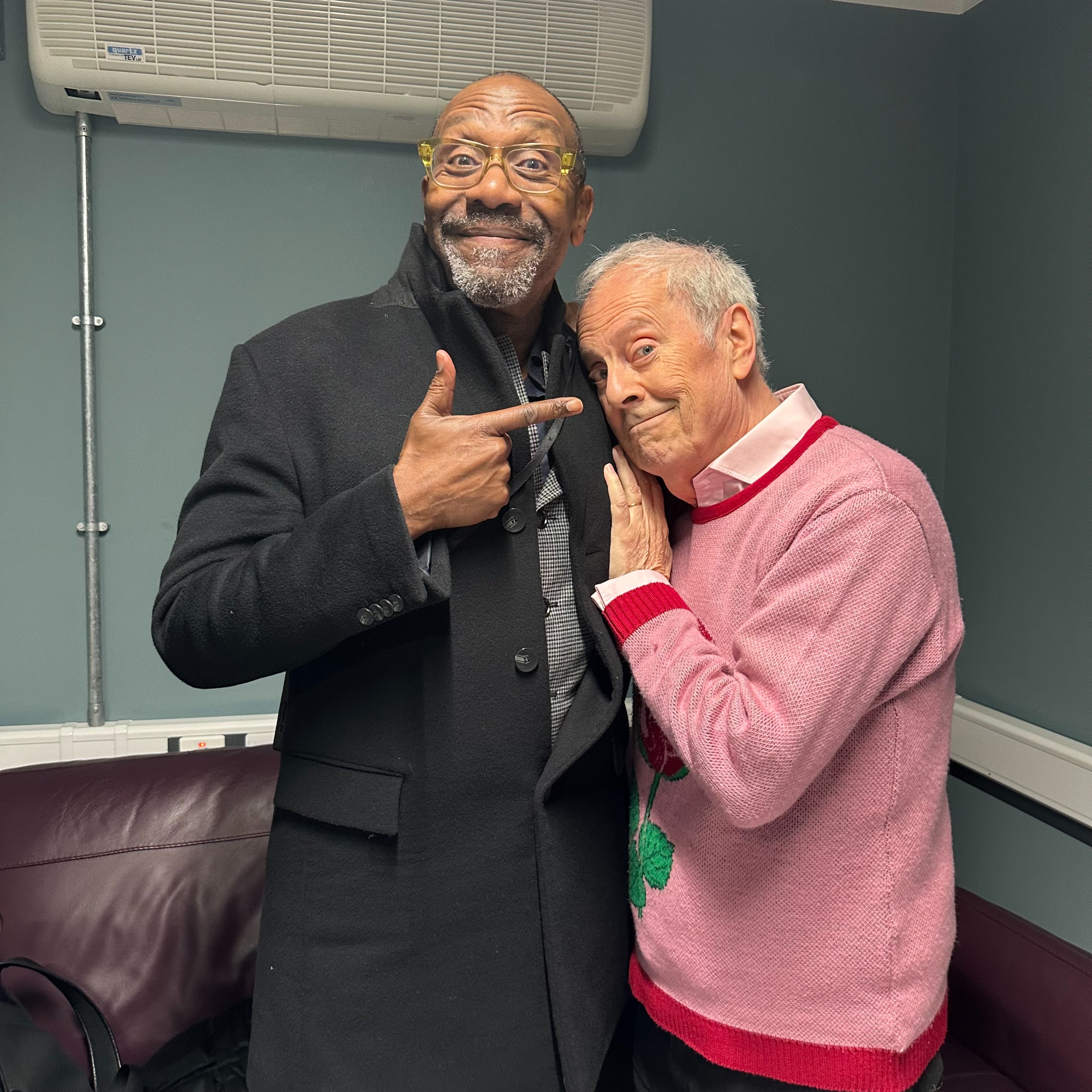
Lenny Henry’s life story, from childhood in a strict Jamaican-British family in the Midlands to becoming a breakthrough TV comedian/actor, plus reflections on black theatre, faith, racism, and the Riverside Studios building.
Sir Lenny Henry is a British comedian and actor, first appearing on TV at 16 by winning New Faces. Giles Brandreth hosts Rosebud and has admired Henry’s career across comedy and acting (including seeing him in Othello). The episode also includes a live audience at Riverside Studios for its 50th anniversary.
Henry describes his parents’ marriage as shaped by conflict and immigration—his mother’s planned move to America being blocked, then coming to Britain in the 1950s. He says he lived believing Winston was his birth father until age 11, when he learned Winston raised him and his biological father was his uncle Albert. He credits a “destiny” dream at age six (a pointing hand from the sky) with motivating his ambition. He recounts being bullied at school, including a teacher kicking him, and how his comedy talent helped him gain protection. He says his New Faces win and later TV appearance changed how audiences perceived black performers.
Riverside Studios productions he saw as a young man (Scrape Off the Black; Cape Town actors performing 26 roles); Sunday school in a van; his “wobbly Elvis” performance at Queen Mary Ballroom; his New Faces audition; the moment the audience reacted when he turned around on TV (“it’s a black kid”); and his first girlfriend and disco experiences.
Written by AI. May contain mistakes.
Lenny shares his early experiences at Riverside Studios and the impact of black theatre.
“Do you remember the first time you came into this building?”
Lenny delves into his family history, discussing his parents and their struggles.
“made me go, ooh, OK, maybe this is something I could do too.”
Lenny recounts the moment he discovered the identity of his biological father.
“And if you if you don't want to be married to me, that's fine I know it's because in the 50s remember people didn't get divorced, right?”
Discover the moment Sir Lenny Henry learns the truth about his father.
“lingual phone uh je suis uh je suis in Lloyd je m 'appelle Lloyd he'd always be doing that um Because he was studying French A-level.”
Explore how the revelation affected Lenny's relationship with his father figure.
Lenny discusses his parents' challenges in raising a family together.
“And what was the root of the sadness beyond this one, them being apart when you were conceived and all that?”
Lenny recounts a dream that he believes foretold his future.
“it was very much a thing of this is my life now.”
Lenny shares insights into his mother's faith and its impact on their family.
“And did she encourage the children all to be churchgoing people?”
Lenny discusses his adolescence and experiences with friends from different backgrounds.
Learn about the early friendships and cultural exchanges that shaped Lenny Henry's life.
Discover the impact of Lenny's strict upbringing and how it influenced his perspective.
Explore the values instilled in Lenny by his mother and her role in the community.
“You won't do it next time, whatever it was.”
Get insights into Lenny's childhood living conditions and the realities of growing up poor.
“I mean, he was very angry with my mum, but he never hit us.”
Learn how Lenny created a visual representation of his dreams in childhood.
“But we all shed a bed and then I got my own bed, about 14, I got my own bedroom and it was the little one where the boiler was so it was warm and I loved it.”
Delve into the significance of friendships formed in the park and their influence on Lenny's life.
“in that kid's bedroom and she was going to leave it alone.”
Follow Lenny's journey as he discovers his talent for comedy and performance.
“they would say, go on Len, do Max Bygraves, do Tommy Cooper.”
Discover Lenny Henry's transformative moment on stage that changed his career.
Explore how humor helped Lenny connect with peers and overcome teenage challenges.
“Before we get to the career that takes off, If you're very funny, what do the girls make of you?”
Lenny discusses his experiences with bullying and racial identity during school.
“I won't talk about her, but she was lovely.”
Learn how Lenny transformed his bullying experiences into comedic resilience.
Lenny shares his experiences of fame and the pressures that came with it.
“And did you handle it well from the beginning?”
Lenny Henry discusses his early experiences and challenges as a young performer.
“What was the worst of those terrible events when you were young?”
Lenny shares a pivotal performance in New York that changed his career.
“but I do want to touch on your life as an actor.”
Discussion about Lenny Henry's transition to acting and his role in Othello.
“And he offered me the role of Othello at the Northern...”
Discover the challenges Lenny Henry faced as a black comedian in the early days of his career.
Learn about Lenny Henry's current tour and Gyles Brandreth's thoughts on theatre.
“of Rosebud here at the Riverside Theatre why when you were six that finger pointed at you thank you so much Thank you.”

Get the gist, explore an idea or ask about something said.
 Claude
On Rosebud with Gyles Brandreth, what are the key points of this episode?
Searching your listeningAutomatic transcript. May contain errors.
0:00Rally caps, lucky socks, never stepping on the foul line. Baseball is full of superstitions we hope give us an edge. But let's be honest, most of it's just luck. That's how I used to feel about hair growth products. Until I found Nutraful, the official hair growth partner of Major League Baseball. It's physician formulated, clinically tested, and recommended by dermatologists. An actual game plan for thinning hair. Nutraful has formulas for men at every stage. There's Nutraful Men for guys 18 to 49 to help grow thicker, fuller hair in 3 to 6 months. And Nutraful Men 50 Plus, designed specifically for men 50 and up who want to keep the hair they've got.
0:39Go to Nutraful.com, promo code BASEBALL, for$10 off your first month's subscription and free shipping. Find out why Nutraful is the only hair growth supplement brand trusted by MLB at Nutraful.com. spelled N-U-T-R-A-F-O-L dot com. Promo code baseball. That's neutrophil dot com. Promo code baseball. Hi, it's Sarah Gibson Tuttle, founder of Olive and June. If you love having your nails done, but you don't have the time or the money to go to a salon every week, I have something just for you. It's called the DIY Manny Challenge, and it starts with one simple idea. Today is the day that you learn to do your own nails.
1:20So whether you're brand new to doing your nails or already obsessed with your at-home Manny routine, this is your invitation to level up your nail game with expert guidance every single step of the way. So no matter where you are in your nail journey, we've got you covered at Olive & June. Are you ready to take the DIY Manny Challenge? We've taught millions to Manny, and now it's your turn. So go to oliveandjune.com slash DIYlove20 for 20 % off your first system using code DIYlove20. That's olivanjune.com slash DIY L-O-V-E 2-0. Coming to you live from London, this is Giles Bradroth with another episode of Rosebud.
2:21Welcome to Rosebud. Welcome to another episode of Rosebud. And every week I say to you, this is a special episode of Rosebud. And this one is another very special episode of Rosebud. Oh, by the way, if we've not met before, my name is Giles Brandreth, and I am the host of Rosebud, which is a podcast of which there are more, a hundred and more earlier episodes. So if you enjoy this one, feel free to go back and dip into our catalogue. We really have had conversations about people's early memories with all sorts of folk. Today, my special guest is somebody who I've admired ever since I first saw him on television.
3:00I think I saw his very first appearance on TV when he popped up on a talent show called New Faces. He was only 16 and he won that talent show. This was the young Lenny Henry. Then I got to know him as a very funny man on the Lenny Henry show in the 1980s. And later still, I came to admire him hugely as an actor. I went to see him in Othello. And I've since, well, got to know him a bit. We have occasionally worked together. But today, we are going to be Rosebud on the Road. We're traveling to London, to Hammersmith, to the Riverside Studios, which is a fascinating building that's seen cinema history back when it was built, later television history, shows like Hancock's Half Hour were made there, later still theatre history.
3:52I've appeared there myself in a couple of shows. Somebody who has appeared there before is Lenny Henry, which is why he was keen to come back to Riverside Studios to be part of Riverside Studios' 50th anniversary celebrations. So this is a conversation, a rosebud conversation, with me and Sir Lenny Henry and a special audience. I hope you will enjoy it. Actually, I'm almost certain that you will. Cue the applause.
4:26Do you remember the first time you came into this building? It was in the 80s, innit? I lived nearby. I lived on Sinclair Road in Shippers Bush. and it's to come here and see things and the first thing i saw here i think was um was at albert and i was here with david thwellford and i watched it and i was blown away by this extraordinary story with two actors two black actors from a theater in um cape town who came here and they basically did this whole show where they played 26 different characters between themselves and david and i watched it and just thought that would be a brilliant thing to do a show like that and then the next time I think I saw Scrape Off the Black by Tundit Iacoli two occasions of two extraordinary plays where I thought yeah and those plays actually connected me to a sense of black heritage if you like I was very young and I'd grown up in Italy and talk like these and I'd seen much black theatre the people I'd seen who were off colour in the theatre were a band called New World who won Opportunity Knocks at Birmingham Alexandria Theatre and and they were in Robertson Cucho with Dick Emery.
5:35So those are the only black people I'd seen in the theatre. So to come here and to see these extraordinary performances made me go, ooh, OK, maybe this is something I could do too. So this was a great place to come in those days. Good. Well, we're going to begin at the beginning of your story. It's a very good place to start. That's where we're going to start. OK. And I have to ask you this question, Lenny Henry, Or, if I may say so, Lenworth. Yeah, my mum named me after the doctor that delivered me. Really? Dr Lenworth, it was his second name. Oh, thank you so much. He was a tampon, baby. You really helped me.
6:14You really helped me drag him out. What's your name again? Lenworth. I'm calling him Lenworth. So who was George? Because it's Lenworth George Henry, isn't it? I don't know. I don't know who George was. But Lenworth George Henry is my name. So I've got three first names. Well done. Lenworth George Henry. Thank you. Born on the 29th of August 1958. Yeah that's right. Same day as Michael Jackson. Really? Yeah. Very good. I didn't make his money but I'm doing all right. So now known as Lenny Henry what is your Lenny? What is your very first memory? Wow my very first memory very interesting. There's two actually.
6:55I'm going to tell you the one that means the most. The first thing I remember is being in a cot with my sister Kay. Kay is four years older than me, so I was little. I was like this. She was a bit bigger than me. And I remember holding on to the bars of the cot like I was in baby jail. And I was watching my mum and dad have a massive row. And that went on a lot in our house. It was literally like Plop Eye and Bluto fighting continually. And they fought a lot with fists. Jamaicans, male and female, fight with their fists. And often my mum would win. And so I was basically watching my mum beat the crap out of my dad.
7:32And it was two falls, one submission and a knockout. And I was only little, but I just thought, wow, this is crazy to be living in a household like this. And I didn't know why they were fighting. And I didn't find out for ages and ages and ages. And it turned out that my mum had been precluded from going to America a few years ago. She was a brilliant preacher my mom she could get up in church and she could preach extempore she could she could just riff on the bible she knew the bible inside out and some church deacons came from the deep south of america alabama i think and they saw my mom in a jamaican church and they went well you need to come to america because you could support your family by doing this my mom really wants to go and my dad said no winston said no why should i let you go to america bloody elvis presley bloody little richard bloody fat domino preaching and making all that he didn't want her to go so um he forbade her going and she was really made her angry and then one day my uncle clifton who was in the midlands in the 50s and he'd been working in a factory wrote to my mom and he said this dear winnie come to hengland it is such a lovely place and the people are very friendly every day they greet me with a smile and say welcome i'm working in a factory i get 30 shillings a week that's good money and you must come over here and you can earn money and send for everybody else because we've got four brothers and sisters two brothers two sisters in jamaica and bring everybody over and you can support the family because it's good money p.s bring me a wife and my mom did do that she bought him a um a mail order bride called madge my auntie madge and she came over with my mom and my auntie pearl a mail order bride yeah like during the war you know um it's something that happens in christian communities of finding a suitable woman of the church and he just said ask around and see if there's anybody who wants to come to britain and wants to marry a not particularly good-looking older man.
9:44And Madge said, I'll go to... Because the implication was this was escape from Jamaica where people were very, very poor. And this is the late 1940s? No, this is the mid-50s. Mid-50s, OK. And there's no money in Jamaica. There was a bauxite boom for a while. But generally, people were very poor. They'd just been in a hurricane. And because of the British Commonwealth passport, we had freedom of movement. We could go anywhere we wanted in the British Empire. So they came over via a boat. And if anybody's seen Three Little Birds, they'll know what happened. My mum... How many of them were there?
10:16There were three of them. And my mum came to Britain before my dad. My dad stayed at home with Seymour Hilton. I know, the guy who advertises the premier and has a brother called Hilton.
10:29You can't make it up, really. Seymour and Kay. And they stayed in Jamaica for a bit. A mum came to Britain for a year and a bit to earn the money to send for the rest of them. What was her name? When she arrived here, Winifred. Winifred. So Winifred came to Britain with Madge and with Auntie Pearl and she found Diggs in Dudley and she got sick very quickly. She got pneumonia and she thought she was going to die. And the person who was above her in the room above her was called Albert. And Albert knew she was sick and he was very, he used to make a soup and bring it to the door and knock on the door and give her soup.
11:03and when she got better he said let me show you around dudley you don't know dudley i'm going to show you and he showed her where to work the factory where she might get a job he showed her all the pubs she didn't drink she was a christian and that didn't last long and he showed her the pubs and where to go he took her to dance halls in birmingham and he eventually they fell for each other hard fell in love and i was the result and she wrote my dad winston a letter and it said dear winston when you come over you're going to find things are happening
11:42and um if you feel bad about it we can just you can stay where you are in jamaica and i'll just carry on here and everything will be fine but i'm having a baby obviously it's not yours Unless he did it by telegram or something and I'm going to keep it and I want to keep it And if you if you don't want to be married to me, that's fine I know it's because in the 50s remember people didn't get divorced, right? Nobody got divorced and Winston said wrote back and said I forgive you. Let's make it work And when he got here, he hadn't quite forgiven it yet Which is what all the rows are about and then eventually They began to make a go of it But Winston, you were thought of as your dad.
12:22Yeah, he was the dad that raised me. Albert didn't really raise me. So Winston, in your head... I didn't find out about Albert until I was about 11 or something. In your head tonight, when you're going through your gratitude list, you're saying thank you to your dad. Who do you thank first? Well, Winston raised me. So Winston is your dad. I mean, he was, despite the fact that I wasn't his kid by birth, he raised me. So I was used to seeing, you know, even though he was a grumpy bastard, I was used to him. and then when I was about 11 I met Albert for the first time although I'd seen him around because it was he he remained a gentleman caller did he as far as your mother was concerned but I'd seen him around and um this is what happened my mum said you need to meet your uncle Bertie go down the road and do some chores and he will give you a pocket money and I'd never met this guy before I didn't really know who he was so I said walk all the way down Constitution Hill see this bloke of you know uncle bertie he was that i didn't really know who he was i was 11 or something and uh i met him good evening and i went in and he had the hat on and he was making me you know clean up the holes and um he made chicken and he made chicken and rice and it was great and so i started to see him every friday and i'd do chores like cinderella robert hoover and i'd clean the windows and make the bed and everything and he would give me two and six which was a Cadbury's chocolate bar and a can of coke and um that went on for a bit and I've got a I've got a half-brother called Lloyd which I didn't know about but this guy would be there Lloyd and he started to show up on Fridays to look at me and to kind of comment and he'd always be doing lingual phone uh je suis uh je suis in Lloyd je m 'appelle Lloyd he'd always be doing that um Because he was studying French A-level.
14:13Anyway, after a while, I'd be there in my pinny doing the windows. And he said, you've got no idea why you're here, do you? And I said, no. He said, that's your dad. And I literally went, what? He said, that's your dad. And I couldn't, I slightly started to shake. And I took my pinny off. And I went to the kitchen. And Albert was in there. And he was doing that thing where you've got the rice. and it's nearly finished and you knock it on the wall to see if it's done black people would know what i'm talking about so it was knocking the pan of rice to see if it was done and it was done he put it down and i said lloyd says you're my daddy is that true and he went yes your mother never tell you and i just it was like somebody had taken my world and flipped me upside down i don't know if anybody's ever experienced this but it was really it was a massive thing for me like being hit by a truck i just didn't know what i was doing in this guy's house and now i knew scales falling off my eyes and i was very and i ran all the way up the hill to my house from about it took about five minutes to run run run and um mom was in the kitchen and she was she was banging the rice on the wall to see if it was done and it was and she put it down and i said uncle harborough says is not my uncle albert is my dad is that true she said yes we thought we'd let you get to know him first before we tell you and that's the story so so after that with the scales from my eyes now was the birth child of uncle albert who was now my my my birth father and i had to get to know him so it became a thing i'd go down on friday he'd cook for me i'd do chores and we'd chat sometimes I'd stay over on a Saturday night and we'd listen to the archers on a Sunday morning and he made a really good breakfast Albert he was a very good cook um and sometimes he'd you know like I say on the Friday night he'd make chicken and rice or sometimes he'd do soup Saturday soup but he'd do it on a Friday um because you can Jamaicans made the rules apparently you can move Saturday soup around and um he'd make my breakfast and then I'd listen to the archers with him and then i go so i got to know him eventually and um my relationship with with winston changed a little bit because he knew now that i knew what the situation was and um he was always a bit grumpy with me but he never hit me ever because mum would have killed him
16:53literally mum was like fubbita fubbita fubbita learn what's this this is how you do all these I need shuffle so mum would have killed him but he tolerated me because I really looked like Albert, it was literally like having Albert's doppelganger walking around the house going can I have some tea and I remember he used to slightly he never let you watch the cartoons if the cricket was on so when the cricket was on if you were watching Scooby Doo Winston would just come in and turn the television over turn off the tv i want to watch the cricket and that was that so he'd never bloody scooby-doo uh bloody fred flintstone so he would do that and so it was we we saw him as this grumpy man but now i kind of knew why did your attitude to him change after this moment yeah yeah yeah i respected him a lot oh you respected him more not less um well he's the guy that raised me right no but at the time i mean i can see in retrospect but at the time when you'd had this shocking revelation that turned your world upside down you went back and you met a man who'd pretended to be your dad for 11 years you now discovered he didn't pretend he was my dad and he was your dad but do you feel any sense of betrayal or no something's wrong you just accept but i have to accept it because you know when you're a kid right have you seen those documentaries of kids during the war they're playing on bomb sites and stuff there's stuff going on in their lives which they don't they know that house that used to be there isn't there anymore and then they go and play on it it was kind of like that i was i was this kid who had had this bombshell dropped in my life but i played amongst the ruins thinking it's going to work out in the end and it did i got fed three times a day i closed to go to school in you know i had friends and who were the other children in the household your sister there was um hilton
18:47bev seymour k who's four years older than me uh she came to britain when i was when i was little so she arrived and she was so i was one and she was four and then there was paul and then sharon and winston was the father of all of them apart from you ah oh that would be telling me this is a podcast and i i'm not sure i would be allowed to live you're right and this is their story and this is their story this is your story itself yeah absolutely and your parents together winston and your mother and winifred and winifred or winnie whichever winnie yeah big winnie yeah what were they like together when they weren't fighting what were they like as a couple were they happy together they weren't fighting all the time and Yes, there were moments when they were happy, but there were quite a few moments when there was sadness going on and you kind of knew.
19:44And what was the root of the sadness beyond this one, them being apart when you were conceived and all that? What was the... I think it was just a general thing of trying to recover from that, you know. And adults are very resourceful. You can hold a grudge or you can go, you know, if you're working class and you're in the Midlands and you're people of colour and this is your life, it was very much a thing of this is my life now. We're not going to get divorced. We're going to stay together and we're going to raise these kids. And that's what they did. And I respect that. You mentioned another first memory, a second one.
20:19Oh, this is the fun one. The other one was quite enjoyable, actually. I'm six, OK? I'm in bed and I'm dreaming. and I'm walking along and it's like the Simpsons the sky is very very blue you know that beautiful deep deep blue and there's Simpsons style clouds in the sky it's absolutely beautiful and this is in my dream a hand comes out of the sky like this like the lottery hand and it points at me and it's a white hand by the way with a silk cuff and beautifully manicured fingernails and a voice says you like that and um i thought have i won the lottery what the hell's going on and i just didn't know what it was and i didn't tell anybody for ages but i kind of think the voice in the dream was telling me that something was going to happen to me never thought about it for ages and i've been thinking about i'm 67 now i've been thinking about it recently i thought that's what that dream was about that dream was telling me that something was going to happen to me my destiny was manifest and if i worked hard and just threw myself into it maybe something would happen to me that would be different to everything that happened to my peers and my other brothers and sisters and it did happen
21:56Rally caps, lucky socks, never stepping on the foul line. Baseball is full of superstitions we hope give us an edge. But let's be honest, most of it's just luck. That's how I used to feel about hair growth products, until I found Nutrafol, the official hair growth partner of Major League Baseball. It's physician-formulated, clinically tested, and recommended by dermatologists. An actual game plan for thinning hair. Nutraful has formulas for men at every stage. There's Nutraful Men for guys 18 to 49 to help grow thicker, fuller hair in 3 to 6 months. And Nutraful Men 50 Plus, designed specifically for men 50 and up who want to keep the hair they've got.
22:36Go to Nutraful.com, promo code BASEBALL, for$10 off your first month's subscription and free shipping. Find out why Nutraful is the only hair growth supplement brand trusted by MLB at Nutraful.com. spelled N-U-T-R-A-F-O-L dot com. Promo code baseball. That's neutrophil.com. Promo code baseball. Quick question. When was the last time a display ad changed your mind? Now think about the last time a friend told you about something they loved. Different feeling, right? That's how podcast advertising works. A host who's built real trust with their audience talks about your brand in their own words, in their own voice.
23:17It doesn't interrupt the experience. It's part of it. With Acast, you can access the world's largest podcast marketplace. Choose the right shows, the right audiences, the right format. Then watch the data tell you it worked. You're not buying impressions. You're buying influence. Learn more by visiting acast.com slash advertise.
23:41Did your mother's faith stay with her? And did she encourage the children all to be churchgoing people? and do you have a faith still? We were made to go to church every Sunday, Giles, Gareth, Bert, whatever your name is. My mum used to do that with all of us. Hilton, Seymour, Len, Kit, whoever it is, pick up this. So my mum backslid because she got to England and this thing happened and there was lots of sadness and whatever and she didn't go to church for ages. mainly because there weren't really many churches to go to in the midlands if you were black i mean church it was different to jamaican church which was
24:34people falling over and sister mansine rolling over and she was a big woman and people go get and she's saved and she's got the spirit in black church is different to english church dearly beloved here we are my mom didn't go to church here so when when brother shepherd started his church which was behind top church in dudley they rented the the hall on a sunday and um suddenly there was a church and we we had to go to sunday school sunday school don't forget to attend Sunday school and Brother Shepard would arrive in a van outside our house he had to go around and pick up all these kids the van had no suspension at all and we'd all be crammed into this van no seatbelts remember that?
25:23no seatbelts Brother Shepard smoked fag so no seatbelts and he wouldn't wind the window down in case he got pneumonia so he'd like chain smoke all the way to
25:36God bless your children you'll be alright I would let you all to divide it. And we'd arrive at the church and we'd get out and we'd go in and they'd split us into groups and we'd have Sunday school. And it was great, actually. And I got very good on you, all the Bible stories. And then as I got older, I had faith, yes, but it was a kind of imposed faith. This was mum's faith. And she wasn't even going to church anymore. I mean, what, we've got to go to church in the van with Brother Shepard? You're not even going to get your backside to church. and because i think it gave her peace and quiet for a sunday morning um and she could cook and she could watch the telly and she could just get us out the house because there were loads of us anyway um i got a church and we'd have a bible class and then we'd all get together and sing hymns and then that'll be it and go back home and have sunday dinner um and then later on there was this moment when i was about 14 and a half where um brother shepherd and the others said okay well we're going to do a thing now because you should be saved it's not like and saving being saved means something spiritual happens to you from in here it's not just a it's not just a confirmation this was a spiritual connection that had to be made with the lord and you would feel something and it would be in your heart and you would say i'm going to give my life to christ and so there's me and there's this very lovely lady called sister mansine who was a big lady right on with the right on and we had to sing this song called come into my heart come into my heart come into my heart sweet jesus and we had to sing that over and over again and it was they just kept doing it round and round and round and then there were harmonies and then there were kind of descants and bass and it just went on and on and on for a really long time and I wasn't feeling anything and I started to panic because I was 14 and a half and I thought well it should be happening now um you know Jesus if you're gonna come this is the moment to be here and come into my heart my heart is waiting and never happened and um so I went home and I said I'm not going back to church and I was only 14 and a half but she sort of she said why I said well because you know it's not my thing anymore and um anyway um sister mancina had held my hand all the way through the ceremony and i was feeling other things thanks and um and none of those girls wanted to go out with me by the way none of those sunday school girls wanted to go out with me and um so when i was 15 i started to go to the queen mary ballroom in dudley and that's where my life began to change because suddenly i'd integrated with i had white friends now i'd been to their house i'd had tea because when you go to your white friend's house you have tea you don't because in our house you have dinner but in my white friends i said greg mac and tom these are my best friends from the park and uh you'd run across to the park and you go to mac's house or greg's house or tom's house and i go to their house and we'd have like ham egg and chips or we'd have tuna and salad and bread and butter and they come to my house and we'd have dinner we'd have tall food the the rice was so high you had to bore holes in it so you could see people on the other side of the table like this you'd be looking at them through the holes and the rice and they would have dinner and then after that they'd have to stay there and watch match of the day at our house because they couldn't move because they'd had so much food anyway so there were all these cultural differences i remember at um greg's house he said something he put his feet on the couch right and uh he started carried on talking to me and i just thought oh i'm gonna try that when i go to my house so i put my feet on the couch and said mom and then the next thing i know i was an a and e but um my mom was very strict upbringing but i noticed that in my friend's house it wasn't like that and i just thought oh there's this other world where your kids are allowed to be in a conversation with you and not get told off for speaking out of turn when you say she was strict i mean she walloped you yeah yeah she she was very very strict and i know people don't like it a lot of black journalists have criticized me for talking about it but it's my life and it happened to me so i feel like i can talk about the time when she hit me in the face with a frying pan and the frying pan retained the face of my face it was like oh william i didn't know you like mud and heart this is called len in pan um so but she she did hit you and it did hurt and um there were times when i'd be hiding under a table and thinking i wonder if she knows when to finish this it was like she really did wallop you um she she was beating me and i was bleeding from my she hit me with the other side of a belt and i was bleeding from my eyebrow and um uncle clifton came around he said and i was Bob, Bob, hit me.
30:40Is it good? You won't do it next time, whatever it was. That's how, you know, it was very strict in our house. What have you got from her that is in you today? What's she given you, Winnie? I got her work ethic. She was a woman who had three jobs. She worked in the factory. She made dresses. She cooked, she made cakes. She was a brilliant cook. She helped everybody in the community. When people came home from Jamaica, mum was the one they went to and she could sort out where, if you wanted to get married, where to get married. She could make a wedding dress. She could make you wedding cake. And she was kind of community glue, my mum.
31:15So she had a generosity of spirit and this work ethic that meant something to me. And what have you got from Winston that you have a new store? What did he give you, do you think? He didn't hit me. So I saw another way of being. He wasn't violent. I mean, he was very angry with my mum, but he never hit us. I remember this one day when I thought I was going to get Major League Hiding. I don't know what it was, but it was the summer. It was really hot. And I would run in, I would drink water. And I'd, you know, cancel pop. I'd drink the tap water. And I'd drink that. And I'd go out and I'd play and I'd drink the water.
31:46And it was a day of this boiling, boiling hot. And I came home and I had these hiccups and the hiccups wouldn't go away. And Winston walked into the corridor and he surprised me and I hiccuped and a gallon of water came out of my mouth. And I thought I was going to get a hiding. and I didn't. He just said, let's clean this up. And the other thing was, when I wanted new faces, I was with my mum and the family watching on the telly. It was a pretty major thing. And I said hello to my mum on the telly. Hello, mum, at the end of the show. And she was blown away by this. And when it was all over, mum went into the kitchen, very happy, crying and stuff.
32:24He came up to me and he put his hand on my shoulder. He said, make sure you keep your feet on the ground. That was it. That was the advice. Never said anything else. And he was the main breadwinner of the family. He sat at the head of the table and he had the biggest piece of meat. Every mealtime, dad had the biggest piece of meat. And then I won new faces. And within a very short space of time, I was earning very decent money. For doing Tommy Cooper. I wanted to do a bar. I said, it was an iron bar. You know, it's 20 quid, lovely. So I was earning this money. I did some gigs and suddenly I was able to contribute to the house and you got respect when you contributed to the housekeeping and it was really funny because mum moved dad down to the end of the table and suddenly I was at the head of the table and I got the big piece of meat bloody kids bloody new faces describe to me because there are a lot of people in this house what sort of a house it was, what your bedroom was.
33:32Did you share it with somebody? Give us a picture of where, as a little boy, you're sleeping, what you're doing, how you're playing, what toys you have, what books you have. We didn't have no toys. What's the matter with you?
33:48We had no money. What's the matter with you? If we did have toys, it was the crap one from Japan that was like the other thing that you really wanted. so instead of gi joe we had joe instead of thunderbird 3 we had a rocket with such sharp edges that when you opened it sliced your palm open we had we didn't have barbie we had tracy or tressy her hair didn't grow we have things like that in our house we had we had a we had a house that was on the corner of the street and our house we we had the cesspit underneath our house so our house was on top of everybody else's waste in the street and every summer um it would overflow during the rainy season and we'd literally be walking through the whole streets movements and um you'd call the water thing and they'd come and they'd sort it out but that happened every year our house which mum bought for three grand oh which was great but it had a hairline crack down the middle of it which was like two feet wide at one point so we never used the front door we just walked in through the hairline um we had um for a while we all shared a bed that's me and paul and kenneth and michael um which were my nephews but we were all kind of the same age but we all shared the bed and that was chaotic, especially if somebody wet the bed.
35:16It was like, ship ahoy! But we all shed a bed and then I got my own bed, about 14, I got my own bedroom and it was the little one where the boiler was so it was warm and I loved it. I put things on the wall. Do you know what a mood board is? This was my first ever mood board, I think. I had pictures on the wall which I cut out of magazines and there were pictures of the Jackson 5 and Stevie Wonder and Miles Davis and Elvis, I loved Elvis and all the Marvel Comics people and you'd spit on it and you'd put it on the wall and I'd put Iron Man on the wall and Spider-Man so I was building this frame of reference for myself and I knew that one day this would figure in my life I didn't know how I think there was a picture of Tommy Cooper there like that as well but I knew it figured in my life somewhere and I wanted a reminder every day so this is back to the finger pointing at you age six And my mum never took the pictures down.
36:14She left them where they were because she knew there was something going on. She didn't quite know what it was, but she knew there was something going on in that kid's bedroom and she was going to leave it alone. And when in your head did it begin to form a kind of shape? You knew something was special. You were picturing your future here on your mood board. You'd seen the finger pointing at you. You! Yes, you. That's what you knew. And I didn't know why the hand was white. Why wasn't it a black hand that was coming down? It was white. And I bet if you moved the clouds a bit, Kenny Rogers would be looking down.
36:45You! Anyway, carry on. Yeah. When did that turn into something more concrete? Queen Mary Ballroom. Explain. And the park. Yes. So I'd integrated. Yeah. Because Mum had said, you must go out there. And she had us all lined up in the car. You must go out there into Dudley and integrate. Meet the Dudley people, them. Eat their food. Don't complain about the small portions. she was like really strict about integration so i did i met mac and greg and tom over the park and it was they suddenly became we became thick as thieves were best friends and they they did a big thing for me they were older than me so um my first experience of being in a car and going to pubs was with mac and greg and tom they would take me all over the midlands in the car and greg told this story on imagine with alan yentob god rest his soul greg said um yeah we'd walk into a pub in the country, just outside the Midlands.
37:39And we'd walk in and Lenny would walk in and half the bloody pub would walk out because they didn't want to be in the same room as a black person. But I never knew, they never told me. It just felt like the club was, there was just more room to sit. Anyway, while we were in the pub, they would say, go on Len, do Max Bygraves, do Tommy Cooper. And I would do these impressions for them. And because I'd been watching Mike Yarwood, ding, big light bulb over my head. there's a guy on television who does impressions of other people on the telly and he's got his own tv show boing light bulb i wonder what it'd be like to have your tv show boing because up to that point there didn't seem to be any connecting umbilical cord from working class jamaican heritage there didn't seem to be any connection from that to show business and it's often the case if you grow up in a working class society you've got no idea about theater or voice projection or singing unless you've got a natural talent so when i learned that mike yard was doing a tv show i started to oh think about what is he doing when he's doing frank spencer what is that voice what is that you know dear hello a pint that's very nearly unarmful thank you very much thank you i went to the doctor the other day i walked in he said take it for your clothes stand by the window jump up and down i said why he said i can't i can't bear my neighbors
39:07and i started to write down jokes jokes became a thing with me jokes became dave i'd watched dave allen show i'd watch eric and ernie and i just started to write down jokes i exercise books full of jokes and i started to get up at school they weren't very encouraging at school but on the park all bets were off because i was len and i could do voices here's a funny story i could do i could do voices thank you very much i could do all of these voices who loves you baby i did all the millennials what the hell is he doing now that was dave allen tommy cooper max bygraves and kojak i could do all these impressions and my friends encouraged me different to school on the park different and then um i got up one night at the queen mary ballroom because this is where you could get up and do jokes or you could dance or you could sing whatever and i used to do this thing called wobbly elvis which meant you had to lip sync to jailhouse rock so you weren't really singing you were just wobbling your legs and going one through a party in the county jail and i could sing it and i knew all the words and i could do the movements like elvis and i got a stunning ovation from my peers now my peers at the queen mary ballroom were all kids my age this was an over 21 disco and everybody was underage when you walked in all your classmates were at the bar doing their homework so this is the first time my peers from school had seen me do what i was doing over the park and I think they told the teachers at school, Lenny Henry does this thing because after a few weeks I'd done Elvis and then I started to get up and do James Stewart and Tommy Cooper and shoulders back fine but it's shoulders for my Windsor Davis, anyway for the millennials my god mate, Miss Jones Leonard Rigsby the black guy rising down so I was doing all these impressions and the kids at school said to my teacher you should Lenny Henry should do the school concert because he was great the other week and suddenly the English teacher who organized the school concert said do you want to do the school concert this year you could be the compere this coincided with me auditioning for new faces I was 15 I went to Birmingham to this place called the Newcresta club sticky carpet smelled of fags and wee and we had to audition all day and I didn't go on till the end of the day and I've been watching all these people audition and it was glorious and I thought these are my people there were double acts and there were comedy show bands and there were jugglers people with dogs I don't know what they thought they were doing there was a black comedian called Ben Nightingale who was great but he never got they said next after one joke um there was a guy did Columbo one more thing it was a detective on the telly millennials I was watching all this thinking this is brilliant I love this world and I thought I better not screw this up and they've been saying next all day and then suddenly six o 'clock they said Lenny Henry and I got up and suddenly I was in a bubble where I thought I think I can do this and for 10 minutes it was in slow motion and i can't quite remember what it was like i remembered them laughing and at the end they all stood up so i thought okay this is a thing and then when i walked up then they didn't say next and then at the end they stood up and i walked off the stage and all of these managers and agents from the midlands so i didn't sign with any of them all run towards me and gave me cards please call me please call me please call me please call me and um then i had to go and do the audition again for my mom on the front doorstep because i'd bunked off school for the whole day and she didn't know where i'd been and i was late coming home for the for my tea and i stood there in the cold in the dark because it was winter and i had to go thank you very much and i had to use the phone in front of my mom and my brothers and sisters were watching through the door going like this and I think I did this, so a salesman knocks on the door and a little kid answers the door and the kid's wearing a negligee he's got a bottle of scotch and he's smoking a cigar and the salesman goes, are your mum and dad at home?
43:51and the kid says, what do you think? and my mum my mum's face
44:04my mum's face twitched and I was allowed to go in and have my tea and then from then on she was my biggest fan so when I said hello to her on the telly that was it for me and I knew that was it for me because I've been announced as Lenny Henry but at home I was Len I was called Len and then when the Expressing Star came to my house to do an interview with mum and take pictures of me. And they asked her, how do you feel about his success? My mum said, well, Lenny was always very funny at home. It was complete rubbish. I'd never done any impressions at home at all. Lenny was always doing Tommy Cooper on the house.
44:45So you have your breakout moment, age 15. Yeah, that was the audition. And then television, that was a year later. That was, I was 16. Before we get to the career that takes off, If you're very funny, what do the girls make of you?
45:05Well, they make a lot of you, but you've still got to get a car. Oh. Because I don't know if you know this, but when you're a teenager, if you haven't got a car, it's very tough at the disco. Because you say, you know, have you got a car? No, next! It was a bit like that. but girls were really you know because you know humor is a wonderful icebreaker and so because i was the kid who did impressions um the slow dances were very very numerous and lovely and you'd be done i'm not in love and you do that dance where you walked around in a circle for a long time what's your name tracy and um where'd you live i live in gordon can i walk you out it's nine miles I'll pay your bus fare book her off Dave Lewton's got a car but it was lovely and it was very very nice girls really respected you and liked you if you were funny can you remember the first girl that you held hands with or kissed and felt in your head felt in my head that would be weird felt in your head actually I rather love you and would like to say I love you to you Oh, that's nice.
46:19I can remember my first girlfriend. I won't talk about her, but she was lovely. And as first relationships go, it was a good one to have. And at school, were you happy? Was it a... How many black children were there as opposed to non-black children? Was that comfortable? Was there racism at school? I was one of the few black kids at my school. And was that an issue? Were there uncomfortable moments? Were you aware of them? Well, at St John's primary, I was bullied a lot. In what way? When you say bullied, what was happening? You know, you just got called names and stuff. You got called all the names and all the names there are.
46:55And then you'd be rolling around fighting because you had to stick up for yourself. And I can't fight. So it was terrible. I was like that kind of guy. And I just didn't like that part of school. And one of the people that used to bully me was the teacher. Oh, dear. I had a teacher that used to sort of bully me. and I remember one time I was in art they were all throwing paint around and because we're kids and I flipped paint at Ronnie Barton I think and the teacher kicked me up the bum for throwing paint at Ronnie Barton and I was really upset and I went home and I didn't know what to say to my mum because I knew there'd be trouble if I said something but I felt it was right because you know that thing when an adult does something and you're a kid and you kind of know in your heart that it's wrong.
47:45And I said, Mr. Mr. He kicked me. And the next day, all you heard coming up the road was my mum approaching the school. I want to talk to the teacher who kicked my son. He's going to get the piece of my mind. And one and two bitch licks. Where is he? And Mr. Heard.
48:17he hid in the art room in the cupboard he never came out to my mom left and in this in your secondary school how was that that was it easier more bullying um but more serious this time so all the names and ultraviolence as well and um this is why my mom had said you've got to learn to talk to people because if you don't you're going to be fighting all the day and i didn't want to fight all the time it was tiring and then this one day this kid because he called me all the names and then he'd hit me and then we'd be on the playground rolling around and this is when i was about 14 and a half and a light bulb went on over my head and i just thought this is unsustainable and i i just said you must really like me because we're always rolling around on the floor together and all the people who usually shouted fight fight fight laughed spontaneously and then I went oh okay I said why don't we get a ring and make it official I can meet your mom and dad it'd be lovely and he went are we gonna fight or what and I said um let's hold hands and skip around the playground and he ran off and from that day the people who'd been going fight fight fight suddenly became a cohort of like a ring of steel around me and every time he came to bully me after that they'd say leave Lenny alone he's funny and he's got talent and you should bog off and leave him alone and he did eventually and age 16 you win new faces oh well yes but it is because your whole life is changed by that and it was watched by 16 million people yeah 16 million and in the studio there were no black people in the audience it was just a lovely lovely white audience and they were all sitting there and Derek Hobson said here's Lenny Henry let's give him three minutes to express himself lenny henry and earlier on the producer during the day had said look don't just come on i didn't know why he was saying this by the way he said start with your back to the audience and we'll smuggle you on so they smuggled me on and i'm behind two things and they moved the things and i had my back to the audience and i was being frank spencer and i was good hello betty hello jessica who saw the queen on christmas day then and then and I turned round, and every single person in the audience went, what?
50:43Oh, my God. Wigs flew off. Corsets exploded. Fags were dropped mid-inhale. All of these people went, it's a black kid. And they'd never seen it before. And I think that now, with the internet and stuff, you know all we'd have was Sammy Davis Jr. doing impressions really there weren't any other black impressionists now they they'd seen one and I won the first one I came second on the second one I won the third one and suddenly people knew who I was and I knew things had changed because I went to Leicester and I was walking across the street with my manager at the time and a black bus driver stopped the bus in the middle of the street with all the passengers on I opened his window and went, Lady Henry!
51:33And I thought, ooh, that's different. And that was when I knew that this was real. And did you handle it well from the beginning? No. No. Of course not. I was 16. Well, how did you handle it? I gave my money to my mum. That's handling it well. I went clubbing a lot. And I was real, I loved it, because suddenly I had money. I could pay my way into clubs. what was hilarious was after spending most of my early teens borrowing money off my friends to get into clubs now they just let you in for nothing and i had the money oh you're gonna get re-come in i had no i've got money now your money's no good here chap get inside have a pint i'm only 16 i have two pints it was it was ridiculous um but i loved it and i loved being this 16 year old kid did you drink too much did you smoke too much well try darks never smoked because i lived in a house where it was all just smoke because everybody just smoked in our house and it was i could do without smoking drinking though was different because i'd had a bit of drinking because we used to have you've never had this but if you're jamaican if you're a kid you will have this you come on from school one day maybe it's a friday and all the furniture's gone and you think your parents have moved out but they haven't because they're having a rent party on the saturday and all they've done is they move the furniture upstairs and there's going to be a rent party and your mom spends all day cooking curry goat and rice and and fried fish and stuff and dumplings and so she's in the kitchen cooking that all day and your dad's gone out and he's got a load of booze from the off license and it's pay or return so he's going to sell booze and you're having a rent party because sometimes you don't have enough money to pay the rent mr brand rent so you need a rent party and people pay to come in your house to come to the party so i had alcohol but they didn't know i was having alcohol they might guess because like midnight i'm seven and i'm going every night i go to sleep i have a wet dream and they're going that kid needs to go to bed he's had some baby sham or something so um yeah i'd had alcohol and i i did like the taste of it um but it was never a problem i did like a drink and i did party a lot and i really liked it um but there was a moment when i thought i better not do this because i'm on the telly now and people so when i was in shows doing summer seasons and stuff i drank saint clemens oh yeah oranges and lemons i drank that a lot and then when i was 18 i drank more Yeah.
54:37An actual game plan for thinning hair. Nutraful has formulas for men at every stage. There's Nutraful Men for guys 18 to 49 to help grow thicker, fuller hair in 3 to 6 months. And Nutraful Men 50 Plus, designed specifically for men 50 and up who want to keep the hair they've got. Go to Nutraful.com, promo code BASEBALL, for$10 off your first month's subscription and free shipping. Find out why Nutrafol is the only hair growth supplement brand trusted by MLB at Nutrafol.com. Spelled N-U-T-R-A-F-O-L dot com. Promo code baseball. That's Nutrafol.com. Promo code baseball. You've got social dialed in.
55:20Search is doing its thing. So why do your marketing results look the same as six months ago? That's because you're fishing in the same pond as everyone else. Podcast listeners are a different audience entirely. More engaged, harder to reach through traditional channels, and ready to act when someone they trust makes a recommendation. We're Acast, and we put them right in front of you. Browse thousands of the world's leading podcasts, book host reads or run your own ads, and track every conversion in real time. Same skills you already have, brand new results. Acast. Acast.com slash advertise.
56:00so from new faces on you go yeah and is any of that because we can't touch the whole of your career we're not going to is there any of that that you are proudest of and most regret of your of your being entertaining years before we get your acting years i was very proud that i survived the first eight years because i was growing up in public yeah so i was going you know when i did i I would do a show and then I'd go out and people would see me growing up in public. I'd make mistakes. People saw me be terrible. What was the worst of those terrible events when you were young? I was in a minstrel show, for Christ's sakes.
56:41Why? Why did no grown-up say to the people around that this 16-year-old black kid shouldn't be in a minstrel show? This you toured? Yeah, no, no, I toured. I was in Blackpool. I was in Great Yarmouth with them. I did a club tour and they were fantastic people lovely people but it was just a weird dichotomy to be the only black real black kid in a minstrel show and that hurt me a lot and then my mom only came to see me with a Tesco's carrier bag on her head with eyes cut out of it so that nobody recognized her but um it was tough that um but I managed to survive that and I ended up with Cannonball hooray!
57:19Cannonball man it was great and um I did that for a bit 1980 and it was fantastic. Your most memorable, greatest night of being a comic performer. The one moment that's magic in your hair. Magic in my hair? Yeah, well, I'm just... Well, I'm trying to take you back to a time when there was, sir. I am, thank you. I'm setting a period for it. A really good moment for me was I was flown to New York by Melvin Bragg to do the South Bank show. And I've had lots of lovely moments, but this was a big standout for me because we arrived in New York and I was going to perform in front of an audience at a place called Catch a Rising Star, home of performers like Seinfeld and Eddie Murphy, all people like that.
58:03I was going to perform there on a Friday. And we arrived all jet lagged and everything on the Monday. And they said, I'll go on stage and do 10 minutes. I got up on stage. It wasn't very good. And I was with my writer, Kim Fuller, and Andy Harris, who was producing the Sad Bang Show, said, you've got to get it together. You've got to get it together. What are you going to do? What are you going to do? and Kim and me just said well we'll just write we'll just write our way out of this because we were prepared but we weren't prepared for the silence that met us the tumbleweed that rolled through on stage and then we just thought we better get on with this so we did four shows a night in New York every night and we wrote every day and on the Friday I started I felt a bit more confident and they were rolling cameras and i walked on and i had one of the best nights of my life on stage as a comedian and i did the blues singer i did the i did the preacher and i did jokes good evening my name is lenny henry yes there are black people in england we're called the accused and they liked it they suddenly liked it and they loved the fact that i did american characters and i finished with theophilus p wildebeest well oh my god the roof came off and so that was it and that triggered um live and unleashed once i'd done that and people had seen that they said well lenny should do a feature from i was one of the first ever comedians to do a stand-up comedy film in britain and when it went out it ran in the hay market theater for something like eight weeks it made its money back yay so that was they never told me that on the day by the way but it didn't make its money back so i was really proud of that In a moment, we've got some quick questions from people in the audience, but I do want to touch on your life as an actor.
59:48When I did my A-levels, one of the Shakespeare plays we did was Othello. And I was fascinated by Othello. It's the most extraordinary play. And I did a lot on the history of Othello. I discovered about the actor Ira Aldrich, who was the first internationally known black actor to play Othello around. There's a great play that Adrian Lester did called Red Velvet about Ira Aldrich coming in that time period and finding racism and opposition. It's a fascinating story. It's a brilliant story. He's a Victorian actor. Check it out, ladies and gentlemen. Anyway, I've collected some great Othellos through my life.
1:00:22And my wife and I went to Leeds, I think it was, Yorkshire Playhouse. West Yorkshire Playhouse. West Yorkshire Playhouse to see you as Othello. And of course, I'd spent a lifetime watching you and laughing like everybody else. And I came away thinking, this is a great actor. When did you discover that actually you could take on one of the most challenging parts ever written by The Greatest Playwright? I don't know. I have no idea. That's the truth. There was an inkling, because I was going through stuff in the late 90s. My mum had just died, and I was starting to get angry with everything. and I'd done my O-levels with Cannonball in 1980 something in Blackpool which was hilarious.
1:01:11I mean literally when you were on tour with... No, no, I did the North Pier at Blackpool and I was with Cannonball and so that I didn't get bored witteless, I decided to take my A-levels. So I did, no, I did my O-levels and I studied Henry IV Part I and it was my introduction to studying Shakespeare proper I quite enjoyed it and then there was a pause and then when I was doing um Hope and Glory by Lucy Gannon which I loved I was playing an idealistic head teacher and I was in the makeup room one day and I was looking my mum had passed away by this time I was looking at the Open University and my mum had always said you must get a education then keep looking for your education so you have something to file back on and this because she passed away and she was in my heart i was looking at the alpene university and i thought i'm gonna write away to see what that is and i got the prospectus and i'm in makeup and all the women are there going well you should do this and i signed up for it um we had one year that was just shakespeare and it thrilled me because my experience of shakespeare in dudley at blue coat secretary modern was me and ronnie barton reading from Romeo and Juliet because Mr.
1:02:21Nash said we had to Romeo, Romeo we're four on now, Romeo and it wasn't great so it didn't really turn us on or anything and that's why we did it on Comic Relief with Frank Bruno Juliet, Juliet, Juliet I haven't seen thee since the way in you know
1:02:45the old ones are the best ladies and gentlemen and then Barry Rutter came on the phone from Northern Broadside's theatre company, actor manager, been doing Shakespeare for his whole life. And he offered me the role of Othello at the Northern... Well, I was really scared. And I was even more scared on the first day of the read-through when I walked down the street towards the West Yorkshire Playhouse and a picture of me with no shirt on is looking out from the poster. Like a slightly podgy Denzel. And he said, Lady Henry is Othello. And I thought, not bloody yet he isn't. we haven't done the read-through yet and it was amazing it was the whole thing was an amazing experience and i tried to learn and i'd worked with bardie thomas on the text as part of the radio show and um simon elms came to the read-through sorry sorry and um but the read-through was the most frightening but also the most thrilling thing you've ever done because it's literally you're reading the play and it was so brilliant and i met conrad nelson who was my iago and he was great he just basically said anything you need we're gonna we're not gonna be the iago in a fellow where they argue or the iago thinks this is the iago show we're gonna be a pair and because of him i worked very hard we worked hard together we rehearsed every single day and um it became what it was and um i loved it and i've since really enjoyed being actor and i want to do more acting work look before we go i've got three important questions to ask you people from the audience sent in questions we've covered did they think yes they did joe gorton says sid field jasper carrot frank skinner what are the traits of brummy humor that's a very good question I don't know that because I'm from Dudley
1:04:50although listen I love Carrot, Carrot's great and I used to listen to his cassettes in my car on the way to gigs hoping that something might rub off and here's what Don McLean from Birmingham told me to do he made me, he was on Cracker Jack Cracker Jack Don McLean said, listen to comedy albums so I started to buy comedy albums and I'm a student of comedy and it began in the early 70s well this may help with the last question which is from Rod Noone, that's a funny name oh Rod Noone, I'm sorry so sorry Rod so sorry I see what you did there it's a variation on Benny Hill reading a script and going Paganini, oh sorry, page nine.
1:05:35There's a variation on that, right? You may have the answer. You may just have given the answer. What is your favourite joke? Asks Rob. Ah. It's, oh. It's a bit rude. We can risk it. Let's risk it. I don't know if I can do this on the radio. Yeah, go through. Okay, there's an old couple. There's an old couple sitting on the balcony of a old people's arm. They're sitting there, they're watching the sun go down. They've got a gin and tonic. They're very happy. And the man says to the woman, you never guess how old I am. And the woman doesn't say anything. She reaches into his pants. And she feels around a bit.
1:06:21And she looks at him and says, you're 82. He said, oh, did you know that? She said, you told me yesterday.
1:06:40And I cleaned that up. We've reached the end. Three very quick questions. I want you to give me the answer that comes straight into your head, OK? From your life... Can't believe I just did that. Oh, dear. From your life, a moment of joy. What just springs into your head when I say a moment of joy? Buy my mum a fridge. Oh. It was amazing. Buy my mum a fridge, buy my mum a house. Things that made my mum happy made me happy. Well, I think then I've guessed the answer to the next question, which is a moment of sadness. Would it be losing your mother? Oh, yeah, that was major. Were you with her when she died?
1:07:23No, I was in Australia. Because the doctor had said you can go, we've got this, it's fine just go and then the third day of the tour in canberra i'd done a show and this is weird i was meditating in the interval and i heard my mom's voice during the meditation never happened before and um i didn't think of anything of it went on stage fantastic show came off stage and i knew something was wrong wrong because the promoter walked in and her face was as white as a sheet and she said um your mom's passed away and i had to go back to the hotel and i just said i'll be back and i went back to the hotel and i rang home and my sister k was crying couldn't speak and my brother-in-law malcolm could speak he said i'm sorry lady so sorry lady she was a And he didn't even get to the words woman because I howled like a wolf for about two minutes.
1:08:25I just howled. And I don't know, I still don't know where this feeling came from. But it was proper emotion. It was proper feelings. But you know what? Jamaican funerals are hilarious.
1:08:42We dig a grave. I don't know, you know, we dig the grave. everybody has a turn at digging the grave. They hand the shovel to you and you have to join in. And there was a moment when I took over, we were all crying at my mum's funeral and we're digging the grave and somebody leaned into me and said, that's the hardest work you've ever had to do, ain't it?
1:09:05And on that bombshell... Not quite. This is the very last question. Oh, you've got to finish with that. That's hilarious. What, Lenny, has your life taught you? What's the lesson that you want to share with us? God, that's a very good question. I just think... There's a brilliant Samuel Beckett quote, I think. Ever failed, fail again. Fail better. and I think I learned that very quickly because once I'd won new faces and I was seen by 16 million people then I had to go out and do it live in front of people and it was really hard and I think I spent a lot of time thinking god when am I going to get good at this and it took about 10 years so there was lots of people not laughing there was lots of silence there was lots of people going well you're not very funny but you're a black lad you'll do there's a lot of that I did all the clubs I had people reading magazines when I walked on I did work in men's clubs where the pies arrived five minutes into my show and everybody went to get a pie I did shows like that I had people saying racist things about me when I was in the toilet and I could hear them when's the, you know, they call me names when's he going to be on then, if he's not funny we'll string him up in the car park so I had to go, I had to live and work through all of that and oh my God once I'd done 10 years it felt like I had the thing so what I've learnt is and what I would say to that kid is you've got this the thing is coming just be patient well I think we've discovered on this episode of Rosebud here at the Riverside Theatre why when you were six that finger pointed at you thank you so much Thank you.
1:11:10Sir Lenny Henry there at the Riverside Studios, celebrating Riverside Studios' 50th anniversary. And he's on tour now. I do really recommend seeing Lenny Henry on tour. It's, well, it's called Lenny Henry Still at Large. The tour's just begun. It goes on, I think, until November. Well, you can see how funny he is, but how interesting he is. I think you will enjoy seeing him on stage. He literally is travelling the length and breadth of the country. I think I'm going to catch him when he's at the Buxton Opera House. It's one of my favourite theatres in the land, built by Frank Matcham, but that's neither here nor there.
1:11:52I'm a bit of a theatre buff, as you know. And I'll be in a theatre this time next week. Yeah, the Theatre Royal Haymarket in London, one of the most beautiful theatres in the world I won't be on stage I'll be in the stalls bar with one of the most unusual actors of our time also a film star we're very lucky on Rosebud we get to meet some really remarkable people but my thanks there to Seleni Henry and my thanks to you for listening and my thanks to everybody who writes in if you want to write to us it's quite easy you can either write to us at our home address which is simply Grovenhouse Hotel Park Lane, London W1.
1:12:34Or you can send us an email. The email address is simply hello at rosebudpodcast.com. And who's been writing? Oh yeah, someone's been writing. It's a nice email from someone called Evelyn Pitsy. I'm writing about two memories. The first is my earliest memory. It was 1964. I know this as it was my fourth birthday. The memory is of me standing on my dad's shoes and leaning back, holding his hands, looking up at him and asking, what's for? I can still see his brown brogue shoes and my little feet standing on them. I'd been given a red plastic tea set and as my birthday is always around Easter, I'd been given chocolate eggs.
1:13:19I'd broken them up into the cups so he could drink tea. I love that. my other memory is a much more recent birthday memory when i shook the hand of the man who shook the hand who owned winnie the pooh i met you giles in leicester station this past weekend seeing you at the curve theater it was a birthday gift from my son jack who was with me we had a brilliant couple of hours listening to you and all your stories i love listening to rosebud you always ask the questions I want the answers to. Looking forward to listening to many more. Well, there will be many more Evelyn. Or maybe it's Ev for short.
1:14:03Actually, you put Evelyn pronounced Ev, not Eve. So maybe Ev is what they call you. Anyway, I do now actually remember our encounter in Leicester. It's quite strange, the Curve Theatre at Leicester. It's a lovely theatre. it's a modern theatre but disarmingly at the end of the performance literally the walls of the theatre lift up into the roof of the theatre and suddenly the audience is able to walk across the stage to the exit with the actors so you can't disappear into a dressing room you're there with the you know 800 ,000 people who are in the show so we were slightly overwhelmed so apologies if we were rushing through the crowd because actually we were trying to get through the crowd to get to the station, which isn't that far from the theatre.
1:14:49So I apologise if we seem to be a little bit brusque. I don't think we were brusque. I mean, I don't think, Michelle, I don't think it was a four-letter word. I think you must have misheard, madam. I'm getting a bit carried away here. The point is, we were in Leicester, and actually we are still on tour, doing some more Sundays. And then I should mention this. You can come to see Harriet and me, and indeed Michelle will be there as well, at the Riverside Studios ourselves because we are doing a sort of work in progress version of our Edinburgh show later in June. So check out the Riverside Studios in Hammersmith.
1:15:27Come along to see us there. We're also doing it at the Old Sorting Office, the Arts Centre in Barnes, OSO. Some people call it OZO. The OZO Arts Centre in Barnes. We're doing that, I think, at the beginning of July and then the very beginning of August. And then in August, we are taking a train up to Edinburgh, where we will be based for the whole of August, because they're going to be Rosebud matinees every day, 4pm, up memory lane, with me, Giles Brandreth, telling a few of my stories, and Harriet Chain, and a twist of Rosebud. So it won't be like episodes of Rosebud, it'll be us. Partly inspired by Rosebud, because it's a show about memory.
1:16:14and we hope there'll be some laughter. There may even be a few tears. There might even be some songs. A few surprises. Anyway, if you'd like to meet us both, that's Harriet Jane, my producer, and me, we will be in Edinburgh. Check out at Edinburgh Fringe or Edinburgh Assembly or even my website, gilesbrandreuth.net or even the Rosebud website, which I think is rosebudpodcast.co.uk. You'll find us somehow. In fact, if you just put in Giles Brandreth, Edinburgh Fringe, something should come up. If you try booking for last year's show, it's over. So make sure you're booking for this year's show, which is called Giles Brandreth, Up Memory Lane.
1:16:56I've left a bit there for Harriet to edit out, haven't I? Our thanks to Daniel and the team at Riverside Studios. Our thanks to Alec Cadell, who puts all this onto YouTube for you. And our thanks to Gerry Peel, who recorded it for us. our real thanks to sir lenny henry for being truly a national treasure and also a very interesting human being a very funny man and a very fine actor it's been a privilege to spend time with him until next time this is giles and harriet from rosebud saying so long thanks for Company. Cue the end music.
1:18:00Thank you.
1:18:29fishing in the same pond as everyone else. Podcast listeners are a different audience entirely, more engaged, harder to reach through traditional channels, and ready to act when someone they trust makes a recommendation. We're Acast, and we put them right in front of you. Browse thousands of the world's leading podcasts, book host reads or run your own ads, and track every conversion in real time, same skills you already have, brand new results. Acast. Acast.com slash advertise.
Our guest today is Sir Lenny Henry, the pioneering comedian, entertainer, actor and campaigner, who tells Gyles his story, and it's an impressive one: from the streets of Dudley in the West Midlands, to winning New Faces at only 16 years old, to an acclaimed run as Othello at the West Yorkshire Playhouse. Lenny brings his childhood home to life - his mother, a gifted preacher who came to the UK from Jamaica, and whose formidable personality was a huge influence on Lenny. His dads - Winston and Uncle Albert. The "tall food". The park. The mood board on his bedroom wall. This is an evocative, fascinating and very funny edition of Rosebud.
This episode was recorded at Riverside Studios in Hammersmith in London, in front of a live audience, as part of Riverside's 50th birthday celebrations.
Lenny Henry is on tour nationwide, tickets are available here.
Don't forget to subscribe to our YouTube here. Join The Rosebud Family here. And visit our website here.
Hosted on Acast. See acast.com/privacy for more information.


