
 Ask ChatGPT


 Rosebud with Gyles Brandreth
11 Nov 2025 · 1h 2m
Written by AI. May contain mistakes.

Get the gist, explore an idea or ask about something said.
 Claude
On Rosebud with Gyles Brandreth, what are the key points of this episode?
Searching your listeningAutomatic transcript. May contain errors.
0:18August this day, the 11th of November, at 11 o 'clock is when we remember the fall of all the wars since what was called the Great War of 1914 to 1918. I'm here at Westminster Abbey today in a garden of remembrance where thousands of poppies have been planted to remember soldiers, sailors, airmen and women of earlier eras. And I'm with the Army Benevolent Fund by their little plot of land and with one of their supporters who is, in my view, a hero. Here he is, Al Hodgson. Al, the reason I know your name is because you're a bit of a hearer yourself. Was it 1992? Well, tell me what happened to you in 1992.
1:02In 92, I was on patrol in Northern Ireland with the Parachute Regiment. And I was unfortunate enough to step onto an improvised explosive device, which took both my legs. Yeah. So you are a double amputee, as I can see. But you seem to have turned that to everybody's advantage. who've done extraordinary things, including, am I got this right? You were in the parachute regiment, but you were the first skydiving double amputee in history. Almost right. I was the first double amputee to learn to skydive post-injury. There were some other guys, there still are some other guys who were double amputees.
1:44There were skydivers before their injury, and they continued afterwards. but I was the first to be taught from scratch, if you like. Well, Rootsblad is all about first memories. What is the first memory you have of recovering, of coming out? I mentioned you were knocked out when the explosive that took your legs happened. What's your recollection of that? What comes into your head when I say, what's your first memory of that experience? Well, actually, I was conscious. So I wasn't knocked unconscious. And the first thought that I had was, I'm going to miss my leave because we were due to go on leave after our emergency tour of Northern Ireland.
2:26And I was looking forward to two weeks off, just getting drunk with the boys and having a laugh and ended up spending that leave in Queen Elizabeth Military Hospital in Woolwich. and your first memory of that moment you jumped out of the plane as a double amputee doing the skydiving what did it feel like as you jumped i mean the feeling was incredible what i was thinking at the time was maybe this is my first and last jump um because i didn't know what was going to happen to be honest i put my faith in my instructors oh sorry well more in a moment And the Queen, Queen Camilla, is arriving to inaugurate this Garden of Remembrance.
3:38Thank you.
4:05uh
4:23thank you
4:35We know that we are. We know that we are.
5:27It's quite a turnout here. The rain has stopped, which is good, as the Queen is inspecting. and they're all here. All the armed forces are represented. The dean and chapter by Westminster Abbey are on parade and I see the Lord Lieutenant of London. They're all here. But actually, the people who interest me are the veterans and particularly my new best friend, Al.
5:59so you were telling me about that moment of you jumping out of your plane and what your what comes into your head is your recollection of it uh well it's difficult to explain the actual feeling unless you do it yourself um there's one of the feelings though is fear of course that is you people like you are fearless oh no i don't think i've met anybody that's fearless and it's certainly not me um but yeah fear of course um but also exhilaration um it's an enormous space that you suddenly put yourself into uh not touching anything if you like in kind of a limbo between an airplane and the earth.
6:48But yeah, the fear was there because I really didn't know what was going to happen as it was my first time. But upon landing, it was just a feeling of complete exhilaration. And from there on, I carried on in the sport, formed a team with my wife Pixie, a freestyle team. we went on to be seven times national champions and uh world championship twice bronze medals and once a silver medal at the world championships hey so there's life after amputation there is for sure goodness yeah i do congratulate you who is your hero my mom of course yeah my mom's my hero and why is that why do you know I suppose mums are every boys hero really she's been there that that rock throughout everything uh she still supports me in everything I do she wasn't too keen keen on me skydiving but she still supported me and um she was incredibly proud when my wife Bixie and I won the silver medal at the World Championships.
8:06She's just always there, always loving, always makes me feel like her favourite, which I know I really am. How old were you when you were serving in Northern Ireland? I was injured at the age of 21, yes. And though it seems absurd to say it, was it almost worse for your mother than for you? For sure. I think anybody would feel that way. but you know you would rather it happen to you than anybody else and I'm sure you know it doesn't just go for soldiers but you know any member of family you would rather yourself you see yourself hurt or injured than any any member of your family or any of your friends so I think that's kind of par for the course yeah thank you Al you're my kind of hero so well done you and you're mine Well, that's it from me here at the Field of Remembrance in Westminster.
9:03I'm going to take you now, as Roosevelt is on the road, we're going to go down to Salisbury, where we're going to meet somebody who has a hero in his family, who is a national, even an international hero. It's Nicholas Soles, who is the grandson of Winston Churchill. And in our conversation, he's going to remember Winston Churchill. He's going to remember the Second World War. He's going to remember his family and share his early memories with us. We're going to Salisbury because we're doing this conversation in aid of another charity, the Edward Heath Charitable Foundation, which looks after Arundel's house in Salisbury that was once the home of Edward Heath, prime minister in the 1970s.
9:49But relevant today really is the fact that he served during the Second World War and for Edward Heath, his time in the Second World War, I think, influenced all his ideas subsequently. He was a very keen European because he believed that countries should work together his experience of the Second World War. He felt taught him that. But this isn't about politics. This is about Edward Heath. It is a conversation with Nicholas Stoames about his extraordinary family so this is a slightly different rosebud for armistice coming to you from westminster and salisbury
10:45This week, the special guest on Rosebud is Arthur Nicholas Winston Soames. Baron Soames of Fletching. born on the 12th of february 1948 yes very good year a very good year your year my year the king's year give me nicholas soames your very first memory i suppose the first thing that i really remember as being of consequence other than you know when i was four or five was when my brother jeremy was christened and I went with my grandfather in his car he took me in his car with him which was very exciting for me and um I couldn't I remember I simply couldn't understand there were thousands of people there thousands I mean literally thousands I do remember this very very strongly in my mind this terrific flood of applause for my grandfather that is something that has never left me.
11:50I've always remembered. And then there are the other things like, you know, the first time I, when I could swim properly, my grandfather told me if I could swim from when he went to America to see President Truman, that if I could swim by the time he got back from one end of the swimming pool to the other, he would give me a wigwam. And our nanny, who was in charge of us while my parents were away, sent them a telegram saying Nicholas swam one length to the other and wants to know where the wigwam is. And it came, the wigwam. Well done. It came, it came. Have you kept it? I don't think I... But it was parked by the swimming pool at Chartwell.
12:32And it was absolutely wonderful. It was a proper wigwam. Real. I can share with you the first time there's a record of your existence. Because the excellent Joe Oliver is here, I think, with us today. He has been doing some research in the Churchill Archives at Churchill College, Cambridge, and he's come up with some correspondence that's very intriguing. And here is a letter. It's sent on the 19th of February, 1948, so literally a week after your birth. And this is the first, I think, reference to you in writing that is still extant. This is your maternal grandfather, Arthur Soames, writing to your paternal grandfather, Winston Churchill, discussing your birth.
13:17And one says to the other, we have no details yet. For instance, whether he's an extraordinarily good-looking fellow like his two grandfathers. Or just an Audrey-looking bloke like his father. But these we must await patiently. Now give us your most vivid memory of your paternal grandparents. Arthur Soames, and what was his wife called? She was called Audrey. He was a prolific marrier, my lover. In my lifetime, there were two Mrs. Arthur Soameses. One was called Audrey and one was called Aunt Granny Hope. And hope was a good word. Oh, bless her. And Arthur Soames, what do you remember of him? Describe him physically to us.
14:07Well, he was a very solid figure. He'd had a distinguished First World War. he was wounded at the sob and during his recovery he had to stay completely still lying on his half side. Anyway, he got out like a lot of people did at the end of the war. He stood for Parliament and he stood for the Ely Division of Suffolk which was Clement Freud's old seat. Yes. And Clement Freud found for me a piece of my grandfather's, my paternal grandfather's election literature. It's it. Absolutely marvellous. You couldn't believe it. There he is, Arthur Sames, in a very stiff collar up to here with a brigade of guards' tie and an enormous Coaststream guards' pin.
14:57And it said, Captain Arthur Sames, wounded at the Somme, and then it full stopped. And then it said, Captain Sames is president of the Large Black Pig Society.
15:14I mean, I would love to have had that on my election literature. Did he get elected as a consequence? No, no, of course he did. Oh, I'm sorry. But nevertheless, I think it's a marvellous thing to have on your thing, but that is going to attract all these people. Maybe we should try that in the Welsh power election, I guess. He needs to have all these people in president, the large black people. So what is the most beguiling memory you have of him, you and he together, Arthur Soames? Well, you know, the thing is that I didn't really know him very well. He went and lived abroad most of the time, and I didn't see very much of him.
15:47I never felt close to him. I didn't know him enough to be close to him. Whereas your other grandfather, the famous Sir Winston Churchill, you spent a lot of time with as a very little boy. Yes. And why was that? Well, because I was born at Chartwell. You were actually born there? I was actually born at Chartwell. Which was his head? So there was the big house where my grandfather and my grandparents lived. And how long they had that house? How long they had that house? 40s and the 20s. I mean, my grandmother absolutely loathed it. I mean, she was a very correct Scot, extremely parsimilious, and knew that my grandfather couldn't possibly afford to live there in the manner which he chose to live.
16:32And so she was never really happy there, but it was a paradise, Charles. It still is. I don't know if anyone's been there, but I mean, it's marvelous, all these wonderful streams and walls and dams that he built himself. And it was a children's paradise. And so my father left the army, went to be the assistant military attaché in Paris, married my mother and came back and took on the management of my grandfather just bought this farm at Charwell. and he took on the farms and he also after my grandfather had stood down he was very short of things to do so my grandfather my father was mad about horse racing and had been quite a successful rider uh at the end of the wall amateur jockey persuaded my grandfather to become to buy a race horse and he bought a race horse and they went to deville and they bought a race horse called colonist the second and colonist the second was an unbelievably successful horse i mean second in the gold cup it was absolutely marvelous it even beat to my grandfather's great embarrassment a horse of the queens oh no very bad deeply embarrassed by it and he wrote a letter of apology I think it's so funny to think and then he once said to you know ma 'am I'm very very embarrassed about the fact that I'm going to live on the immoral earnings of a race horse the colonist was a very successful stallion He was a very lucky owner, very lucky owner.
18:05And my father, it was marvelous, really, because my father bought to my grandfather something that really interested him. He'd always loved horses, and it gave him something to think about other than worrying all the time about Russia. Do you have a recollection of him physically? You were born in 1948. He's then the leader of the opposition, and he comes home at weekends to Chartwell, lives in London during the week. and so up until I mean you're living there for how long? I mean my parents lived in so below the big house in Chartwell is Chartwell Farm and we lived in the Chartwell Farmhouse every day that my grandfather was at home I must have seen him he liked the company of his grandchildren providing we didn't whistle and we didn't make too much noise he very much liked he used to come with us every day to the swimming pool in the summer I remember this great procession of children and dogs and my grandfather had an enormous stetson with a goose feather sticking out of it and we'd go down to the swimming pool and everyone would do a display for him and then we'd go back and have a fantastic tea and so we saw a lot of it.
19:13I think to have a good relationship with your grandparents is a really wonderful thing if you're able to have it and I think I was incredibly lucky to have a completely normal relationship. It never occurred to me that my grandfather was anything special. As I said, I couldn't work it out while these people were cheering him. My parents were very clever, by the way, of managing this. They never tried to big it up. They always made it completely normal.
19:48Is the story true about you at the age of four or five or six, hearing from somebody that he was a great man, actually confronting him. Tell the story. Well, it is true. My grandfather had a German valet called Fritz who'd been a prisoner of war. And my grandfather liked Fritz very much. He was a very charming man. And his job was to stop, to one was to, you know, it's all old-fashioned Victorian valet, on the one hand, and on the other hand, to stop any children getting into his bedroom. and he used to sit outside my grandfather Fred when he wasn't doing all the things he was meant to be doing.
20:32He sat outside the bedroom all day long to stop anyone getting at him except the private secretaries and everyone. So I managed to get in there one day. I don't know how I did it. I got in and apparently he paid no attention to me at all. He was lying in bed or lying on top of the bed, wonderful silk dressing gown which had been given to him by Madame Chiang Kai-shek. They were too glamorous for any words. And, you know, his poodle Rufus was there and the cat was there, Nelson, and the budgerigar Toby, and they were all, everyone was on parade. And he was reading the newspapers. And he paid absolutely no attention to me at all when I came in.
21:15Fritz never forgave me for this. And I coughed. and he looked over his glasses and put his newspaper down and he said, what do you want, boy? And I said, is it true, Grandpapa, that you're the greatest man in the world? He said, yes, now babble off and leave me a left.
21:39And you then, did you appreciate that he was the greatest man in the world from then on? No. I mean, because you clearly... No, because, you know, as I say, my parents managed it. so well that it was never a burden or a thing. It really wasn't. He was a perfectly normal... He was very affectionate. When I went away to my prep school, aged seven and a half, I went to say goodbye to him, and Fritz had gone in ahead of me and given him a£5 note, which he put under my grandfather's pillow, and he said to her, don't forget to give that to Nicholas, is going away today to school. And I went to him and said, oh my dear boy, it's a great start to your life.
22:25And then he couldn't find the£5.8. So it was a frightful sort of turning upside down. Eventually, the£5.8 was recovered. And all he gave to me, he said, don't spend it on horses. But he was just really, honestly, he was, and to all my siblings, to have exactly the same memory of him. And my youngest brother, Rupert, I've got a wonderful picture of him and Rupert when Rupert was about four and he was sitting on my grandfather's knee and my grandfather was on one of those wonderful long things that you sat on in the summer with a huge hat on and to stop the sun and all the rest of it. And for the last three years of my life, my grandfather was a very, very old man.
23:11He'd had enough. He really had had enough. And the only real conversation that he could have, really, was with Rupert. And it's the most charming picture of Rupert looking absolutely straight at him, and he at Rupert. And it's a really sweet picture of old age. So, you know, we were very lucky, very lucky. I mean, you know, my grandmother was in her own right the most astonishing woman. I mean amazing why did you say what was astonishing about 17 treasures yes 17 she was why was she astonishing well she was very fierce she loathed showing off and she disliked quite a lot of my grandfather's friends for instance she was always furious with F.E.
24:04Smith who she loved otherwise but she said you know he used to go gambling with F.E. Smith in Monte Carlo and she'd say F.E. You know, Winston can lose in a night a year's salary what you earn in one brief in the high court tomorrow morning. And, you know, she didn't approve of much of my grandfather's. Because Evie Smith was the great lawyer. The great lawyer. The great advocate became. The Lord Chancellor of England. Lord Birkenhead. Lord Birkenhead. But he drank a lot. In fact, I think died of drink. He died of drink. Because your grandfather drank too much. He didn't drink too much. He drank just the right amount.
24:39He drank. he it's a very important it always comes up and I'll tell you the truth about the drink the thing about the drink was this that my grandfather my mother used to say when I never ever saw him the worst for drink and very often the better and the aunt there isn't a single reference to him having drunk too much I mean they say Winston drank a lot at dinner but the idea that he was not completely on top of it all was ridiculous and when you consider that in 1940 he had the entire future of the entire western free world on his shoulders i reckon he was entitled to a whiskey and soda and so did he and he came to office at a you know the same age as most people would retire at a time of war.
25:37And he developed this lifestyle, which meant that he got up, I don't know what time he, I think he was up and about, about 10. And then he, the cabinet, if there was a war cabinet practically every day, and that was at 11 o 'clock, I think. And that was either at number 10 or the cabinet war rooms. And then whatever happened, he would do all the rest of his stuff, all the paperwork, whatever it is he had to do. And then he would have lunch. And he would have a very good lunch. And he'd have a glass of champagne and a glass of white wine and a glass of brandy, probably at the end of it. I remember him saying, I have taken much more out of drink than drink has taken out of me.
26:22And by which time, he not unnaturally once again had a lie down. And he went and he used to sleep every afternoon. He used to get into his pajamas into bed and he would sleep every afternoon for two and a half hours. And he would wake up and he would work through till three in the morning. So this was the only way he could manage it at his age. And of course it was fine for him because everyone was there to do his bidding. But you know all the service chiefs had to be there and the secretaries who were all called Miss. Whoever they were. They were all called Miss. Yeah. Several Misses had to be up all through the night to take notes and stuff.
27:09And quite often, these people, there was no food. It was bloody tough on them. And I remember in one of the books about my grandfather on the wall, it may have been General Allenbrook. I mean, his wife didn't see him for a year. Gosh. I mean, she literally did not see him for a year. Eventually, obviously, he did become conscious of his greatness. Yeah. what is the essence of his greatness? What makes, in your view, a great leader? I think the first and foremost thing is courage. And he admired in people's character courage more than any other thing in that qualities because he said it was the quality that underwrote all the others.
27:56Does that include physical courage? I mean physical courage. Oh, physical courage. Well, physical and moral courage as well, but he was incredibly brave. You know, a lot of his critics will say that he was very brave because he was a terrific medal hunter, and he was. You know, when he first went to Cuba, he was in furious correspondence with the Cuban government because he hadn't got his medal. He then went to the Malacan to fight the Pataan, and then the Boer War, and, you know, he put himself always in positions of great danger and what he really wanted to do was he wanted to be awarded the Victoria Cross that's what he really wanted and in the Malacan he used to ride a white pony attracting the enemy's fire of course that was all very well for him but the soldiers didn't like it much his own soldiers rather wished he wouldn't ride a white horse and ride a lesser-coloured horse and not be shot at.
28:57They weren't shot at. I think courage, moral and physical, was his greatest single quality. I mean, you've got to have it to be able to... It's really interesting to reflect on the sort of decisions he had to take. But just one, in June 1941, the French fleet were bottled up at Mirzel Cabello and they were given a number of options. I mean, if the French fleet had fallen into the German hands, the Germans would automatically have had a much bigger navy than we would all over the world. So it was absolutely essential that whatever happened, they were stopped from getting to the Germans. So they were offered a whole lot of options.
29:42And the French navy, my grandfather had always loved and revered because when he'd been first sea lord in the First World War, he got to know the French very well he was a tremendous Francophile in a way but he was going to have to sink the French fleet and they wouldn't they wouldn't accept any of the options and this is what I call about moral courage I've tried to put myself in this position I just simply couldn't have done it. He wrote a telegram to Admiral Somerville who is commanding the British squadron of Meuse-et-Gabir who is a friend of my grandfather's and said to him I'm going to give you an order which no no admiral should ever have to receive but you are to sink the French fleet if they have not surrendered by six o 'clock this evening or agreed to any of our terms you are to sink them and you know they all had friends in the French navy and they didn't accept so they the British fleet sank on us and 3 ,000 French sailors lost their lives but the French fleet did not fall into German hands such as it was some of it fell back to us and the rest of it was locked up the rest of the war to take a decision like that requires I mean put yourself in those shoes It's unimaginable.
31:20And then right the way through the war, there were all these, you know, the sticking to your guns absolutely fervently. I mean, Dunkirk, as you've seen in the darkest hour, you see it's very well done between Lord Halifax and Chamberlain, who wanted to basically start talks to end it. And he said, no, we're not going to do it. Was he difficult to be married to? Oh, he was impossible to be married to. and those of you who've been to Chartwell if you've been around with one of the good guides when you get to the dining room that lovely rush covered room with a beautiful dining room table they should have pointed out to you on the left hand wall as you go in there is a large orange mark on the wall which is where my grandmama threw a plate of spinach at me and he's still there to this day Your mother once told me a story about being at family meals and he would enjoy and wanted to stay on and the family's all sitting around and your mother said that your grandmother, Clementine, would say, it is now time for bed.
32:28It's time for bed. And he would pour himself another glass and say, command the moment to remain. How clever of you to remember that. Well, it was very evocative. Let us command the moment to remain. My mother told me, he looked down the table at my grandmother and with his glass said, Clement, darling, let's command the moment to Romare. But all she was worried about, she was very, very correct. She was worried about the staff being kept on late at night, that the cook had to be up to cook his breakfast at 8 in the morning. On her fell all the things. By the time you're seven, he is still Prime Minister.
33:06Did you ever go to 10 Downing Street during his... Oh, a lot. I mean, during the coronation year, my father, who was then his parliamentary private secretary and looked after him and made sure he was OK. We lived at number 10 for coronation year. And I've got this marvelous photograph of my grandparents about to settle with my sister, Emma, and I standing beside them on the doorstep. And there's he in the in the full dress uniform of the night of the garter. and my grandmother was a Dame Commander who tore in order. And the uniform dress for that is absolutely beautiful. It's completely pink. It's the most beautiful puce coloured with a vast tiara.
33:52And I remember that very particularly, by the way. I remember the sound of the carriage driving up the street to pick them up and go and take them away. That is one moment I really do remember. And we lived there for about three quarters of the year. Because I marvel that you were saying that your parents made it all seem very normal and every day. It's not quite normal and every day by our standards. No, but it wasn't by then. It wasn't by then. No, that was true. Well, by then one had got the hang of it. And has it been a disadvantage? Never. Never. The thing is that prolifically, some people, when one was trying for a seat, there were a lot of people who just wanted to see, frankly, what I was like.
34:37I could tell the ones that were just there to just say, well, he's not his grandfather, is he? No, he's not. So I never felt it to be a disadvantage, ever. And I've only ever felt it to be a tremendous honour. Was your grandmother right or wrong? I know what I think, to have the famous portrait by Graham Sutherland of your grandfather destroyed. I think she was quite wrong. Yeah. But I completely understand why. I really do understand why. I mean, it preyed on my grandfather so much. He hated the idea of him being portrayed as what he was, which was a very, very old man. But it's the most wonderful painting.
35:27I've got a copy that I bought from the National Portrait Gallery. One of those marvellous prints you can get, which is, unless you were an art expert, you wouldn't see that it's not the real thing until you put your nose into it. It's quite extraordinary. It is wonderful. Yep. And my mother, who never knowingly told a lie in her life, wrote to the Times after my grandmother died and it was a very pompous letter from some frightful art sewer to the Times saying, of course, this is disgraceful behavior and disgusting and, you know, and she wrote back and said, I was forced, and I think it's such a sensible way of saying it, I was forced to be less than Frank because she couldn't portray her mother and all her mother was trying to do was to save her father real angst and grief.
36:24But I've got it in my... I've got this picture and I honestly, it's just wonderful. And your mother, Mary Soames, had a special relationship with her father. Yes, she did. I mean, I love the story that when they went to the theatre, he bought, always bought, three tickets, one for himself, one for Mary, your mother, and one for his hat and coat. That's right. It's a good theatre. And then she... Because she drove him the war and she... He served in the war and talking about the war stories we were earlier, you know, I was driving her back from dinner one night when she was very old and we were up by, we'd gone through the park and we were going up towards the Edgware Road and at the top, there's a thing called the Tyburn Monastery.
37:12Oh yes, I know where it is. And it was blown up by a doodlebug. Anyway, as chance would have had it, my mother suddenly said to me, stop the car. So I pulled into the left and said, I've never told you this. But my mother joined up when she was 18, which is the first day she was allowed to join up. And she ended up commanding a mixed battery of anti-aircraft gunners. Gosh. And she had five guns and 100 people, men and women under her command. And the gun line stretched from where the Dorchester Hotel is across the line of the park. There were five guns. They were the goalkeeper. The doodlebugs came over London, and they had to go through five different layers of guns.
37:56And her battery was the last layer. And anyway, there was this awful moment with these doodlebugs that you could hear them. They'd switch off, and there was absolute silence. And then it turned like that. And then there was this terrible whistling noise. And she realized that it was coming absolutely straight for them. So she said, everyone, get under. All they had were balsa wood tables with the mapping clans on. And they threw themselves under the table. And my mother looked up and she saw the number of the fin, the tail fin. And it flew 50 feet over their head and landed in the Tyburn monastery.
38:38and she went ashore at D-Day plus 15 with her battery to command to provide the air defense of Brussels I never knew any of this because she seemed when I knew her a very courteous gentle charming person she was very very sweet she said to me she had a very good backhand well that's what we want to hear about my recollection of her is she said i've heard you boast on the radio that you've met every you've shaken hands with every prime minister since winston churchill and um i said yes yes i am paid this one of my bullshit well i've got a treat for you and she went up to the bedroom and brought down a what would it mean a hand of your grandfather yes that it was kept in bronze or it was made it's a cast of his hand the cast of his hand and she said you now shake yeahst churchill's hand i wonder it's a very sweet thing it's absolutely marvelous i've got that hand oh wow yeah it's marvelous it's so but it's it's also a small hand i remember that and rather delicate well it's it i mean he was he was he was delicate you know this is the extraordinary thing that you look at his war and his um you know the um his service in the first World War and the wars before that, he was very hardened to battle conditions.
40:07He was very used to it. Don't forget, I mean, this is a man who, I don't know how many ministers you know, that you and I know together, but I mean, after the Dardanelles, he resigned from the government on Monday night, and by Wednesday night, he was with his own regiment in the trenches. He spent two years in Flanders, first for the Grenadier Guards, and then he commanded the 6th Battalion of the Royal Scots. Although slight, he was bloody tough. How did your parents meet? Mary and Christopher Hartley? My parents met. And Christopher Hartley? My parents met. My father was the assistant military attaché in Paris, and my mother came over with my grandfather to receive the Order of Liberation.
40:57and they met each other at lunch at the British Embassy, and he followed her to Rome. She was going to Rome, and he followed her all the way to Rome and proposed to her on the steps of St Peter's. Good grief. Quite quickly. Well, about four days later. Good Lord. And Lady Diana Duff Cooper was not at all loyal to him. Told my grandmother, you've got to watch that Christopher Save. He's a gambler and a womanizer. Well, he was, as far as I know, certainly played cards, but he wasn't a womanized. Anyway, they married and they lived happily ever after. And did they live happily ever after? Yeah, they did.
41:40What were they like together as a couple? Absolutely wonderful. It was a very, very happy marriage. And it was, you know, I always think that, you know, when you read in the papers that someone's been sent to prison and one of the things that's been said about them is that it wasn't their fault because they had a horrible time at home. When I'm about to be sent to prison the only thing I can't say is I had a horrible time at home because I had the most unbelievable wonderful childhood. I was so lucky and so we all were all my siblings. And how did that show itself? Well, it showed itself by our lives, and we were just a very big, happy family, and we were very, very lucky to have...
42:28My father was in the government. We never saw him during the week. He came down the weekends. My mother would go up during the week when the heist was sitting, as long as the children were all way at school or not there. But if the children were home, she was always put as first. my grandmother wrote her a lovely letter once after coming to stay saying you know I wish I'd had as much fun with my children as you're having with yours and I think that's just she was a generation on being with your children you didn't just leave your children in the care of free French government and when you were sent away to school boarding school what age were you seven and a half I went to a very nice prep school where I was very happy in Sussex in Albion's Rotting Dean on the sea and I was very happy there and then I was very lucky to go to Eton for five years which I loved.
43:26Who's your best friend from those days? Your best school friend? He's called William well I've got lots of my old friends actually but I have a great friend called William Delaware who I was at prep school and at Eton we went on the same day to each but also you know one has soldiers who I serve with you know who joined my regiment because you when you left you didn't go to university no did that occur i mean were you reasonably bright could you have gone to no no i also i didn't want to spend one more day in the classroom you'd had enough and i'd had enough of it and i i rarely wanted to be a soldier i i was privileged to serve in one of the the greatest regiments in the british army but it was I learnt so much and I'm so grateful for what the army did for me I did very very little for the army but the army did a hell of a lot for me and I was very lucky to be a soldier what principle did it do for you well it I mean it gives you a bit of what they call a hurry up doesn't it just to start by the time you finished 20 weeks at Mons Officer Gadets School you were marching everywhere at 110 miles an hour, saluting everything that moved, cleaning, being made to polish stain with toothpaste to make it shine brighter.
44:53You know, I mean, you learn about discipline, hierarchy, the importance of the chain of command. You learn about absolute loyalty to your soldiers, your brother officers, your regiment. I still think it's a great career. What's the most frightening experience you had in the army, or indeed have had in your life? I was frightened on the night of the Brighton bomb. Oh, you were there? I was in the hotel. Gosh. You had this terrible noise, and then there was a... Because I'd been a soldier, I'd been... You know, you got taught how to deal with every form of disaster, and one of them was anything to do with a fire.
45:32You need to get a wet blanket, a wet towel, get below it and put it over your head and get underneath it and I did that to get out and the first person I saw on the way out was a friend of yours and mine Peter Morrison and Morrie I said to him Morrie what the bloody hell is going on and he says damn young conservatives again they've let off a smoke bomb and it was a terrible night it was a terrible night It was really, but it was also a night on which we saw the very best in people, really. But I don't think any of us can understand what it is like to go to war. And my generation are very, very lucky in that their parents and grandparents had to fight two world wars, and we didn't.
46:26That is such a change in society. I was very lucky to be a Minister of State for the Armed Forces, and I used to go to all the commemorative things that I could. One of the most moving things I ever saw was the Durham Light Infantry Memorial, which is in Durham Cathedral. And if you go into Durham Cathedral, you go down this enormous aisle, and three quarters of the way down the aisle, there's a sign, like a road sign, and it just says DLI Dressing Station, and it's covered in bullets, shells, God knows what else covered in, you know always has a poppy on the top of it on the wall of the anti-chapel are the names of the soldiers and officers of the DLI who lost their lives on the first and second day of the Battle of the Somme and effectively they lost every single soldier and to this day the relatives of those that were killed at that battle they still have a memorial service where all the relatives marched together.
47:30There were a lot of old people being pushed by their grandchildren in wheelchairs, all with their medals, their parents' medals. And I remember, you know, Howard McMillan once said, you don't want to fight the Durham miners or the Brigade of Guards. Neither of them. Don't get into trouble with that. And if you saw that parade, you'd have seen why.
47:58Can you remember going back to your teenage years, your first crush? You cheeky sock.
48:09Um, I can, yeah. Do you feel like sharing any... Was it requited? Certainly not. Oh, I'm sorry to hear that. No, my love life was a disaster. Why do you think that was? Well, because it was all so bloody difficult. I never knew what to do. Anyway, I was a soldier. I was very lucky in that I look at my children. I have three children, and two of them went to co-ed schools. Their relationship, the two boys' relationship with girls, was completely normal. Whereas my relationship was, you know, the only girls I ever met were my sisters and some girls at the pony club. And that was it. That was it.
49:06And I lived in an officer's mess since I was seven. You know, I didn't know how to deal with it at all. But they're all completely happy and relaxed and it's all fine. Well done. Well. But you got it right eventually. Yeah. Because you've been married twice. Your eldest is by your first wife. Yes. And that lasted a few years. You're very kind. Your second wife I've also met, who is delightful too. I think she may be. Is she in some way related to, given this is a family with lots of relationships, is she related to the Duchess of Grafton? Yes, she's her niece. The late Queen's mistress of the Rose.
49:45Yes, she is. Thank you. She was her niece. What do you think? Unfortune. She really was fierce. She was fierce. She was magnolia. She was the mistress of the robes. What do you think you give your wife? Well, I haven't got one at the moment. Oh, are you between wives? No, I haven't got one. I'm not good at it. I don't know why. But I'm sad. I'm not married at the moment. I mean, one of the things that I really made a horlix of was that I was so thrilled with being a member of Parliament. and it was so much my life that I really can say truly that I didn't, you know, that politics really ruined my life.
50:31Before I'm going to invite a couple of questions from the audience, just thinking back to your parents and your childhood and what they gave you, what's your best recollection of what you've got from each of your parents? Christopher Soames, diplomat, ambassador, cabinet minister, and Mary Soames, who there's extraordinary military life I knew nothing of. What have they given you? Well, like anyone who's been very lucky, my mother gave me absolutely unconditional love. And it never, she was a wonderful mother, wonderful mother. My father, I was never really up to scratch for my dad. I didn't do well enough at school.
51:19But I had a very good relationship with him. He was very, very nice. He was never not nice to me, but I knew that he wanted me to do better than I'd done. I admired him very, very, very much. I mean, the stuff that he did in his political life, you know, from being British ambassador in Paris, the minister of war, the minister of agriculture. He was 32 years old in the cabinet. Gosh. You know, he was very young. He was very good at it. And he was terrific. and he was great fun to be with. He really was fun. Do you have any of his qualities in you, do you think? Well, I wish I did. It's not for me to say.
52:01Well, you looked quite like him. Yeah, but that's not enough. You lost all that weight. One of the things I admire you most for, actually, was the discipline you showed when you decided to lose weight. Well, it's because my children collectively formed up to me and said if you don't you're going to die and we would rather you didn't just now so that was it and I did make that I'm very lucky with my I'm very lucky with my children I have a wonderful relationship with them and one can be very thankful for that we have a couple of quick questions and then my final three questions I think you're marvellous by the way yes lady here in the front row microphone coming your way Hello, I was just wondering whether you are religious or not.
52:50Oh, whether I am. Yes, question is faith. Well, do you have faith? I go to church on the great feasts of the church. And every now and again more often. But as my grandfather was asked once, are you a great supporter of the Church of England, Prime Minister? He said, no, more flying batteries. So I am, you know, I want to see the church do well. And I think that Justin Welby, who, I mean, I have to say that Justin Welby is a great friend of mine. And he did one really, really silly thing, which was to close the churches during COVID. because of all the people in the world who know how to keep places clean it's the church i mean you can't get into church like someone dusting around you um uh and and you know it would have provided hundreds of more people would have gone to church for comfort for solace for and you can you know churches are laid out to be able to sit 10 feet apart from everyone you know they'd have worked it out and i thought that was such a they've trebled the size of the church of england but i don't think he deserves the rough housing he gets and and um you know we're all we've all made terrific hilos in our lives one way or another three very quick questions then you're released a moment of joy particularly from your earlier life a moment of joy what comes into your head well i can give you one actually which concerns when i was a query to the Prince of Wales.
54:40We went to, the King went to Fiji to open the Fijian Parliament. And I'll never forget it, I'll never forget it. There was a, we were on a naval frigate and she came into this harbour in Fiji and there were a thousand Fijian children singing God bless the Prince of Wales. And it echoed just around this enormous sea and the whole thing was just overwhelming. Something that will never leave you. And then a moment of sadness.
55:23Well, I've not had a good week in the last ten days in that two of my greatest friends have both died. And I'm getting to the age now which someone so young as you Giles don't have to think about but my first reading every day is the birth, marriages and deaths column of the Times newspaper and I'm at an age where my friends are dying. Well we are in fact the same age as you know and I do think more about What date is your birthday? But I am older. No, I'm younger than you. You're February. I'm March. And... Most annoying thing I've ever heard.
56:17Do you think much about death? I mean, obviously, the sadness when you go to funerals and we... No. No, you don't. No. Because you like being alive. I like being alive. Yeah. And I want to go racing on... You know, I want to go to the Boxing Day at Campton. And, you know, there are lots of things that... I want to see my grandchildren grow up and I don't want to die. Well, we don't want you to die. We love you. And we want to know, this is the very last question and then you are released, I promise you. You've had this extraordinary life, actually. I mean, really remarkable. Lots of privilege, lots of challenges, ups and downs has come to us all.
56:57What's it taught you that you would like to share with us? Very good question. I think I would like to share with any young person today that this dreadful wokery, which is poisoning so many young lives and stopping people learning about how life really is. Make your own mind up. Don't go along with the... Dennis Walters, who was in Parliament with you and me, wrote a very good biography called Not Necessarily With The Back. And I think the great thing is to make your own mind up. You know, make your own mind up. Live your own life. You don't have to do, you don't have to go to university. You don't have to do this.
57:52Do what you want to do that is going to be the best for you. And listen carefully, you know Stanley, to what people who really know what they're talking about say. Do you think overall you've done what you wanted to do? I think I've been incredibly lucky in my life. I have. Of course, I'm very privileged. I've had. But I don't regard that as being a terrible sin. I was just very lucky. But I do believe that I've had a very, very lucky life. And I've met some amazing and extraordinary people. and I have been privileged to sit with them and listen to them and all the rest of it. And you know, one is greatly blessed for doing that.
58:40Well, we feel we've been very lucky spending this time with you on Rosebud. Thank you. Cue the applause. Well,
58:52that's it for our special Armistice Day programme. fascinating to meet all those people at Westminster Abbey actually marking Remembrance Weekend and fascinating too to talk to Nicholas Soames about his life and about his memories of his remarkable grandparents obviously his grandfather Sir Winston Churchill in particular and I'm very excited too I mean this is always a special time of the year for me because my father, my grandfather were in the services I have a son who was in the army and a son-in-law who was in the army. I have a grandson who's joined the army but also my parents were stationed abroad and for them the British Forces Broadcasting Service was really an important part of their broadcasting life or listening life.
59:42So I'm really thrilled that BFBS are going to be taking Rosebud as one of the shows that they put out on the network so that if you are service personnel of any kind listening to this we're not yet on bfbs but we will be soon spread the word and um anyway let us know actually if you have interesting stories of your time of your time in service life memories that you think we'd enjoy sharing with our listeners do get in touch as ever the address is simply hello at rosebudpodcast.com my thanks to my producer and friend Harriet Jane for putting together today's programme my thanks to the Edward Heath Charitable Foundation for making our interview with Nicholas Sames possible down there in Salisbury my thanks to the Dean and Chapter of Westminster Abbey for allowing us to broadcast from Westminster Abbey it's been quite a day and particularly we're thinking of people who served in the armed forces and we shall indeed remember them Music Music Music Music Thank you.
1:01:23Thank you.
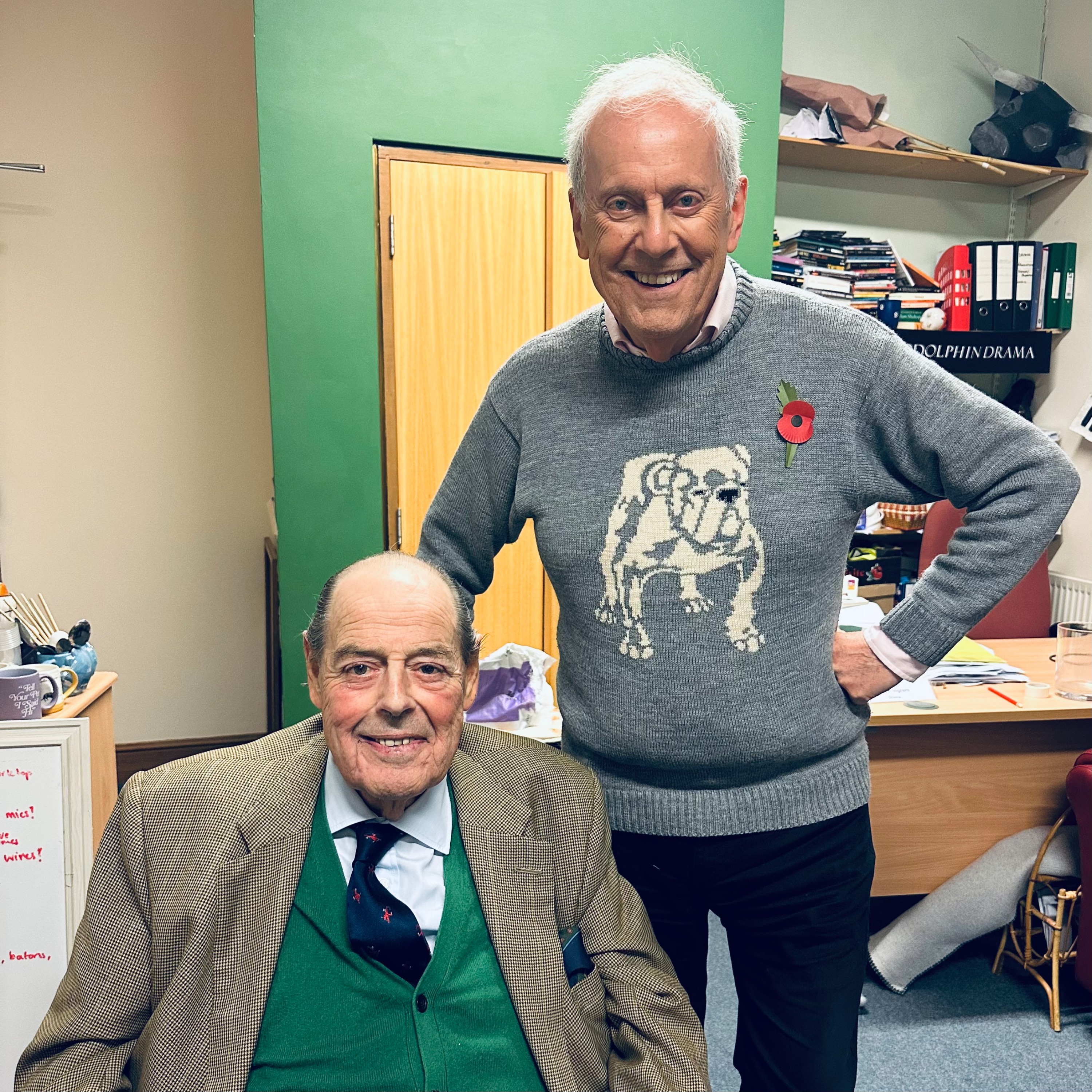
On Armistice Day, we bring you an episode of Rosebud which opens at the Garden of Remembrance at Westminster Abbey, where Gyles meets veteran and double amputee turned skydiver Al Hodgson. We then take you to Salisbury, and an interview with Sir Nicholas Soames, himself a former soldier who later became a longstanding Conservative member of parliament, recorded live at Godolphin School in aid of the Edward Heath Charitable Foundation. Sir Nicholas talks to Gyles about his remarkable family: his grandfather was Sir Winston Churchill. We hear what Churchill was like as a grandfather and family man, about his unusual daily routine, and about his immense courage. We hear about Clementine Churchill, and about Sir Nicholas's parents - Christopher and Mary Soames, and their distinguished careers. This is a fascinating episode about a great family who were so central to the history of Britain in the twentieth century.
Sir Edward Heath's former home in Salisbury Cathedral Close, Arundells, is open to the public and is well worth a visit.
Hosted on Acast. See acast.com/privacy for more information.


