
 Ask ChatGPT



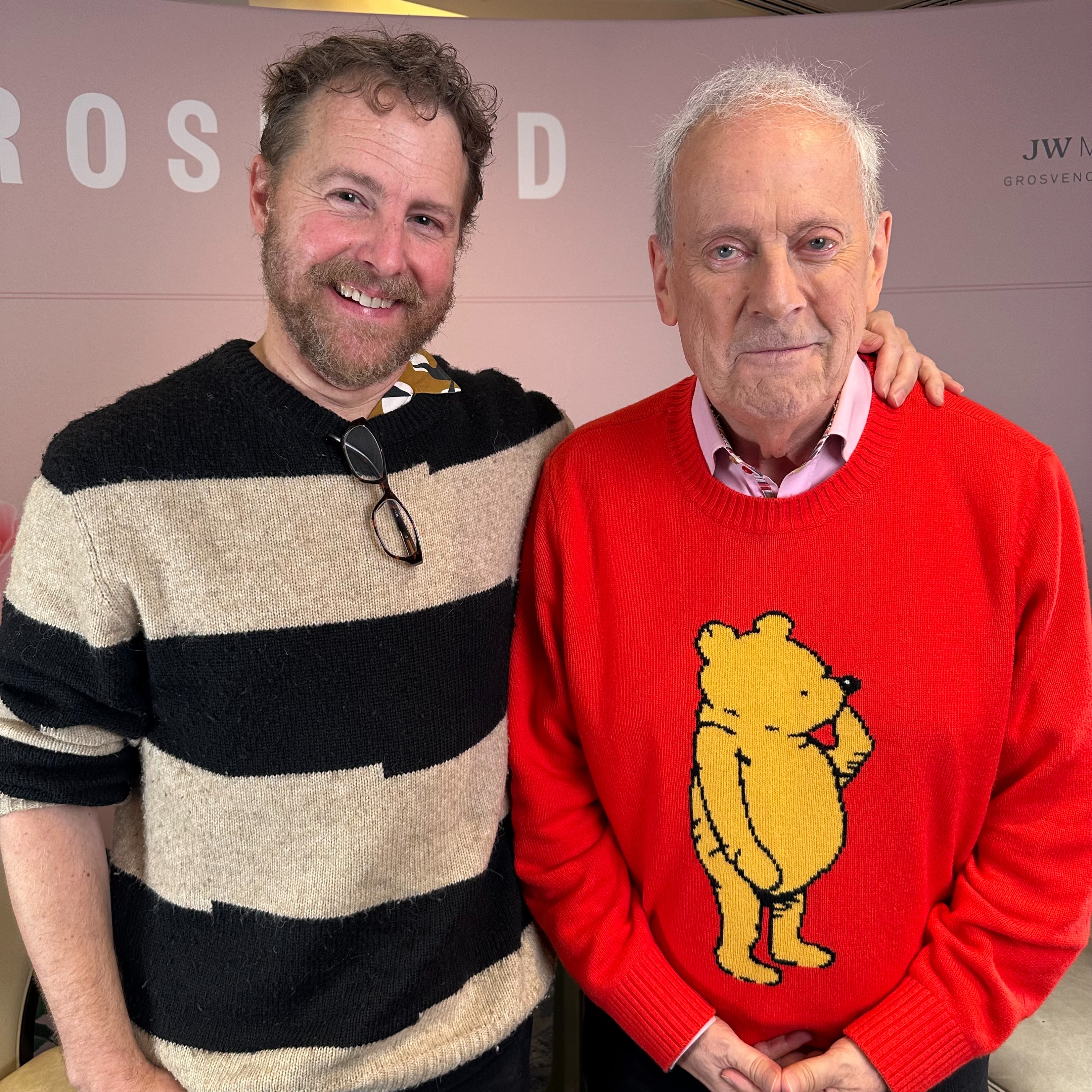
Host: Gyles Brandreth
Samuel West
The episode explores the themes of family, memory, and the theatrical legacy of Samuel West’s parents, Prunella Scales and Timothy West.
Written by AI. May contain mistakes.

Get the gist, explore an idea or ask about something said.
 Claude
On Rosebud with Gyles Brandreth, what are the key points of this episode?
Searching your listeningAutomatic transcript. May contain errors.
0:21Hello, I'm Giles Brandreth, welcoming you to another episode of Rosebud. Every week I say it's a special edition of Rosebud, and I like to think that every week it is. But this week's is very special and very poignant too, because in this week's episode of Rosebud, we are celebrating a theatrical family. And we're doing it this week because one of the members of that family died on Monday of this week. I'm talking about, of course, Prunella Scales. Great actress, most famous, of course, for playing the part of Sybil in the celebrated sitcom Fawlty Towers, but there was so much more to her. Brenna Scales, born 22nd June 1932.
1:05She died on the 27th of October 2025. Well, we're here today with her son, Sam West, another wonderful actor, currently to be seen in All Creatures, Great and Small, on Channel 5. I first saw him on stage, I think, in Richard II at the Royal Shakespeare Company, and he was wonderful. I first saw him on screen when he was a very little boy playing a young prince in a production of Edward VII on television, which starred his father, Timothy West. So this is a conversation that I recorded only a week or two ago with Sam West. I'd been last month to a celebration a memorial service for Tim West who died a year ago and it was a beautiful celebration not just of the life of Timothy West but also of the life of Brunella Scales she couldn't be there she was frail she was at home we were told she was at home having a cup of coffee and waving her favourite biscuit in our direction so everyone there very much thought of both of them that day And I'm thinking of both of them today.
2:17And this conversation, which we're playing with Sam's permission, as I say, was recorded just a week or two ago when his mother was still alive. So it is a tribute to Prunella Scales, to Timothy West, to their marriage, which was remarkable and which I felt very privileged to see at close quarters, and to the range of their work across so many years. And it's also, of course, a celebration of Sam West and his extraordinary ongoing career. So when I tell you this is a special episode of Rosebud, believe me, it is. It's poignant, too. I know you'll find it fascinating. So welcome to this week's Rosebud, which we dedicate to the memory of Prunella Scales and Timothy West in the company of their wonderful son, Sam West.
3:09Enjoy. Cue the music.
3:24Before we begin, Sam, the reason you are here, I suppose, is because you are a great star. And because when I saw, I've told you this years ago, when I saw your Richard II, I thought, I have not seen a better Richard II. Oh, bless you. And I was working at the time with Sir John Gielgud. and I told him, I don't think he was terribly amused. I'm sure he wasn't. Because he thought he was the greatest Richard II of all time. I think he probably was, yes. It's all right. And I think I said, I saw one that would rival yours, Sir John. Oh, no. Oh, really? Oh, no. Oh, oh. No, I think his crown is safe.
3:59When was that? When did you reach the same? It was 2000, 1999, 2000. It does feel a bit like when you play a part that's so, in that case, associated with one actor, him. It does feel like taking the crown for a little bit and struggling on under it and then passing it on with gratitude to the next person lucky enough to have a chance but i don't think he'll ever really lose it i first saw you i think on screen with your father when he was in edward the seventh yes the television series yes when you were playing were you playing one of his children i was i was playing the one without any lines i i was uh eight and my brother joe was five i think and it was so that would have been 1974 very good uh he was playing edward the seventh in all 13 parts of atv's edward the seventh shown when it was in put on in america as edward the king oh because if you called it edward the seventh they wouldn't watch it because they hadn't seen edwards one to six and they got confused oh that's extraordinary anyway so i've i have known of you since before you were born because i met your parents before you were born and we're also going to talk about your parents because this is rose bud but tell me because a lot of people know that your mother has is it vascular dementia it is a sort of vascular dementia yes and she is now in her 90s yes 93 i know that because i went to a 90th birthday party you did in the garden yes at your parents house in southwest london and she was actually in rather good form she was uh it was a it was a very happy day my brother did a beautiful poem.
5:34I put out a message on Twitter a few days before saying, my mum's going to be 90, anyone who wants to send her a message, I'll make sure she gets it. And I got six and a half thousand replies, which I bound. And even removing everything but the message, they made a 110 page book, which she flipped through and rather enjoyed and wouldn't remember, of course now. But at the time it was it was rather beautiful it was twitter at its best well how is she because she's now 93 she's 93 father has died my father's died they probably they went in the wrong order i mean she's not she's not very responsive and we have to be honest and say she's not well enough to know that he's gone which sort of sounds sad but then i don't want to call it a blessing but she's not mourning a 61-year marriage, which at her age is pretty cool, I think.
6:28She's in love with her carer, who is a very nice young woman. And the last proper conversation I had with her was a couple of years ago, where she said to me, how old am I? And I said, you're 91, Ma. And she said, 91? fuck
6:50beautifully enunciated, beautifully timed and it's not quite the last conversation we had but it may turn out to be the last one that made any sort of sense is she, how can we tell if she's happy in herself, last year she very sweetly came with your father they came down to Rye because I was hosting an event at Lamb House, once the home of E.F. Benson, who wrote those wonderful Map and Lucia stories that your mother, Brunella Scales, starred in the television, the original television version, with Geraldine McEwan and Nigel Hawthorne. Wonderful. It's a wonderful series. And we went down there, and your father read from the books, and he was in very good form.
7:36Queen Camilla came. Queen was there, I remember, yes. And what was interesting is that your mother seemed to recognise Queen Camilla. certainly they kissed and they were had a happy chat and if you hadn't known you almost wouldn't have known no i think that's right and she laughed at the jokes so it's quite difficult she saw my eight-year-old sing uh at the same church my father's memorial wasst james's piccadilly only a couple of months ago we've had a stair lift fitted so now she still sleeps upstairs and is looked after at home she needs constant care but she gets out and uh the pictures i have i couldn't make the show unfortunately but the pictures i have of them together show them absolutely enjoying each other's company she's never really been angry or anxious as as a person with dementia no she's she's quite content i think which is fairly extraordinary because it could be a lot worse and makes it easier for you and the family i suppose yes and we're solvent and have been able to afford drugs that have slowed the onset of the disease for nearly 25 years now, really.
8:44I mean, the most difficult thing was my father losing his best mate. And her wit going was, you know, they were always able to make each other laugh. There were two great blessings in my parents' marriage. They worked about the same amount of time. They were unemployed for about the same amount of time they were roughly as famous as each other and they always made each other laugh that's three things um and and he couldn't sort of understand where that person had gone i think i remember him telling me not that long ago that she had lost her hearing or was he that's very boring yes and he would be making because he said in the past it was fun just to chat away yeah and he could just chat and she would reply whether she'd understood or not yeah but they were companionable yes i mean there is one thing i can say if anybody's dealing with this terrible illness and and and has a a relative who who is demented then the hearing is a really important thing get it sorted get a hearing aid make sure it's up to date put the batteries in don't rely on that person to remember where they put it don't rely on that person to put them in because the connection that you have, the social web it includes, is very helpful for slowing down the onset of the disease.
10:02And as soon as you switch off and think, truthfully, that the conversation is less about you than it was, then that's a sort of one-way street. Well, we've been talking about your mother now, 93. We're going to go right back to the beginning of your story. What is your date of birth? 19th of June, 1966. Very good. Just before England win the World Cup. Yes, but you weren't aware of it. Oh, I was three weeks old. How could I forget? So what I want to know, really, first of all, my first question to you, Sam, is what is your very first memory? This question always reminds me of that brilliant gag in Tom Stuppard's Rosencrantz and Guildenstern are dead, when, to pass the time, Guildenstern says to Rosencrantz, what's the first thing you remember?
10:50and Rosencrantz who can be a bit slow says oh um gosh hang on uh no it's no good it's gone it was a long time ago and Guildenstern patiently says no you don't understand what's the first thing after all the things you've forgotten so the first thing after all the things i've forgotten is a circular glass window in the front door of my aunt and uncle's house in an army town probably all the shot but possibly colchester in Christmas 1968 when I'm two and a half and I've been sent there to get me out of the house just before my brother Joe is born which he is on the 1st of January New Year's Day 1969 and I suppose in the film my father has just dropped me off and I don't know where he's going and he's gone out of the door and I just see the door shut and the circle is there but actually I don't remember it with any particular anxiety it was just it's just a shape which I think I might have been quite fascinated by so who are the aunt and uncle we know who your parents are they are Catherine and Timmo my my uncle Timothy related to your the brother of the brother of my mother so she she married her husband she married somebody else called Timothy and they're both born in 1934, which I discovered recently was the most popular year for the name Timothy ever.
12:29So there's two of them. And he was two years younger than my mother. And was he called Scales? He was called Illingworth. Illingworth, so your mother's? My mother took her mother's maiden name because when she was an actor called Prunella Illingworth, she thought that no producer would ever employ her in the West End because it would cost too much in light bulbs. Oh, my God. so she got to her mother katherine was an actor until she got married both of my grandmothers were actors until they got married and so when my mother became an actor she was quite serious about it possibly encouraged by her own mother who hadn't done it professionally but had wanted to and then she was called what she was called katherine scales ah she later wrote children's books and worked with children, but never did it again professionally.
13:19So I think when my mum did, it became quite a thing that there was a little bit of weight behind it. What kind of a childhood did your mother have? Was she called Prunella from the start? Yes, Prue. I think quite happy. They went to the Lake District during the Second War. She was born in 1932, so she was seven when it started. They weren't officially evacuees, but they received some evacuees, which her grandmother looked after. One of the ways I prepare my children for baths now in the winter months is to say to them, skin a rabbit, to take their vest off. When my grandmother tried to do it to one of the evacuees from London, he said, what are you doing with this, my vest?
14:01And he was sewn into it for the winter. Oh, literally. And just, you know, wouldn't take it off. He did in the end, but just thought that was completely wrong, that you should remove his vest ever. Yeah. Gosh. Yes, it's quite Victorian. And so she, your mother has this nice life as a girl. I think so. I mean, quite, you know, when we got Swallows and Amazons given to us as children, I think it was quite like her childhood. She sailed and shot. And she wanted to be an actor. Yes. And succeeded as being an actor. She went to? She went to the Old Vic School in London, which doesn't exist anymore.
14:40and then when she was in her mid-twenties she was in the first ever production of a play called The Matchmaker. This is Thornton Wilder. Thornton Wilder, very good, in Chichester which did very well and transferred to Broadway and they took the whole cast I think. They opened and the reviews were good and it was obvious they weren't going to come off and she said so what do I do now? And the company said you got a class. So she studied with Uta Hagen. Oh this is the great. The great Uta Hagen who played Martha in the first ever production of Who's Afraid of Virginia Woolf. So my mother had sort of studied twice and never lost that devotion to Stanislavski.
15:25At drama school Michel Saint-Denis who ran the Old Vic school said Brunella you approach her work like it's a piece of arithmetic. and she stopped herself saying, well, what's wrong with that? There might be the right answer at the end of it. I think she thought that, you know, working hard and approaching it with, you know, who am I, what do I want, proper sort of Stanislavskian rigour. For those that don't know, how in a sentence would you describe what Stanislavski is? Well, at the time, he was sort of turning acting from opera into what we recognize as a bit like verisimilitude now. So it was a big change.
16:08If you look at books of Victorian acting, it's all about making gestures with the hands far away from the body as possible so that you can be seen from the back. And people can tell what you're feeling because of the position of your hands. And then Chekhov came along and wrote these plays. And there's that famous picture of them all sitting around at the read-through of The Seagull in 1903, I think it is, and going, what the hell's this? How do we do this? Stanislavski then wrote a number of books about building a character, and I suppose you would reduce it to, who am I, what do I want? So the work of Who Am I goes on before you go on stage, and then you come on playing your intention rather than your character, because the character is the way you choose to do things.
16:56so you have an objective or a super objective in the scene or the play it might be to kiss the girl it might be to murder the lover it might be just to get some cheese and then when you've done that that's done and your emotions arise naturally from what you're trying to do and the obstacles that are in the way so if a director says to you can you play this scene more angrily you translate that and you think what am i trying to do i'm trying to get the cheese um i'll make the cheese more hidden or i'll i'll think i'm really hungry or i'll think i've got less time to find the cheese and then you go on and go where's the cheese so you're you're you're not playing the quality of anger you're playing looking for the cheese but you've made the obstacle bigger so that your emotions arise naturally from what is stopping you getting what you want.
17:52That wasn't really one sentence, but that's... But it was a very helpful explanation. Thank you very much. Thank you very much for that. So when did your mother, now an established actress, learning from the great Uterhagen in New York, in a success, The Matchmaker on Broadway, when did she meet your father? They met on a play called The Trigon in 1962. I know slightly more about this because I've just scanned a lot of my father's photographs, which he was good at keeping. for a slideshow for his memorial. And she will be 30 then and he will be 28. That's right, yes. They married two years later.
18:30And he'd already been married once? Was he then married? He had. Because you have a half-sister, don't you? I do, Juliet, who is 10 years older than me. Yes, he was married to Jacqueline Boyer for five years. Juliet was born after one year of marriage. He was very young. They met, I think, when he was at Rep somewhere, Frinton maybe. I have to if I'm allowed to go sideways for a moment I said my dad was really good at keeping pictures the fattest envelope that I found in his archives was marked Salisbury 1955 to 57 which is rep at Salisbury Playhouse for two years actually more like one and a half years it's two weekly rep so they've just gone from one to two weekly so that in other words they do a play every two weeks they rehearse for two weeks they open it and then as soon as they open they start the next one.
19:19And I scanned all the photographs I could find that he was in. And there are 38 different plays. And as he says in his biography, we didn't always do these plays well, but we did them. And my favourite is a picture of what looks like quite a good production of The Cherry Orchard, with my father stage left, playing fierce the ageing retainer, who's 87, at the age of 23. And I cannot imagine the sort of experience that he got. I mean, it's mostly sort of romantic comedies and whodunits, but who doesn't like a romantic comedy and whodunit? And, you know, if you don't get on with the part, there'll be another one along in a fortnight.
20:05And he was a jobbing actor like his dad. His dad was quite well known, wasn't he? His dad was a working actor, but quite busy, yes. He was called Lockwood, known as Harry to everybody. Lockwood West. Stockwood West. I saw him once on stage in the musical of Billy Lyre, 1975, called Billy, at the Drury Lane. Is that Michael Crawford? That's right, well remembered. And he saw me once as Taplow in the Browning version, and then he died. So we managed to catch each other. Yes, he had a song, which Michael Crawford wasn't in, called It Were All Green Hills When I Were a lad it's a lovely song and at his memorial Brian Pringles sang it and it's a lovely song so I found the CD of it and made the mistake of playing it as my father was driving along the M1 one day and he had to pull over oh because he couldn't see yeah yeah so he loved his family he had he had he came when you knew your parents did you hear from them about their childhoods did you feel they both came from my father was my mother had quite quite a sort of middle class steady upbringing i think my father's father was i think didn't think acting was quite a respectable job unless he had a family car which he didn't have for a long time and i think my father grew up thinking acting was you know learn your lines don't bump into the furniture tour the tour the regions and if you get a job in London you're very lucky his father was I think had been an actor for 20 years before he did a job in London maybe maybe even more and his mother who was called Olive Carlton Crow she was she basically did regional touring rep in Yorkshire all her working life but she stopped when my aunt Patsy her second child was born I went down Cecil Court I know, Arthur Jane Cross Road which has, or used to have all those booksellers lovely, lovely, very expensive booksellers and I used to have a lovely theatrical shop and the man recognised me and called me and he said I've got a playbill for you and I saw and it was the Eastbourne Players must have been in the early 30s and he said look that's your grandfather and there was Lockwood but I looked further down and there was Ola as well Olive Carlton Crow and I said I've got to have this she's she's on almost nothing and i gave it to my dad and he was knocked sideways by it i framed it and gave it to him for his birthday and it's still in the family hallway so your parents meet and they married two years later yes 1964 uh and they're working a lot together or not much together my mother almost immediately does a television series called marriage lines oh which is quite successful richard bryars who was my godfather because when i was born they were working together.
23:09In fact, it's my first appearance, because she got pregnant and said, look, I'm pregnant. And they said, oh, that's okay. I mean, you're married in the series, you can have a baby. Can you have it by February? And she said, well, not unless something goes rather wrong. No, he's due in June. So I was a sort of stunt baby. I appeared at the end of the series in a bed which had a hole cut in it for mummy's tummy. So that was your first appearance? Yes. Do you get a credit? I don't, strangely, no. Or a payment. But that was, yes, as you say, that was rather successful. I think they did five series, three of which still exist.
23:44And it's sweet. It's funny. And was he a good godfather? I imagine he probably wasn't a very good, conscientious godfather. He was a delightful godfather, but he wasn't around very much. I mean, we did work together once on the Blandings, Heavy Weather, the P.G. Woodhouse, with Bonkers Peter O'Toole and Roy Hud and lots of lovely people. extraordinary people peter o'Toole i only ever had one conversation with him which given that you know his his macbeth sort of closed the theater that my father was running at the time it's probably quite a good idea but he found out that i played cricket and he said what do you bowl i said medium pace outswing he said do you have an in-swinger i said no not really he said get me a cricket ball and somebody did and he said how do you hold it i said here was it shift your finger there and more side on and deliver it like that and it should go and i played that sunday and on the monday i came in he said how did it go i said i bowled an in-swinger and it got an lbw first ball he went hooray and um that was the only conversation we ever had you threw in there but we've just got to explain that to people who don't remember this and then we're going to get back to you and your childhood okay your father running a company at the old vic yeah that notoriously i'm afraid yes opened with this production of the scottish play which we will call macbeth because we had a podcast It's Allowed, where it was full of blood and Peter O'Toole, and it got horrific notices, and it became a huge drama.
25:11And I imagine at the time you felt the blood from Glam's running through the sitting room. Just explain to people the background of that. My father and Peter O'Toole were joint artistic directors of the Old Vic Theatre. My father had worked, and my childhood is intimately bound up with a company called Prospect Theatre Company, which were a touring company started in Cambridge in the 60s who in the absence of the National Theatre and the RSC touring became Britain's premier classical touring company. And this is Ian McKellen, Edward Petherbridge? I mean, name your people really. Alec McCowan, Dorothy Tootin, Eileen Atkins.
25:48My father played Claudius to Derek Jacoby's Hamlet. Bolingbroke to Ian McKellen's Richard II. And were you travelling with the family? Yes, yes. Yes, all my family holidays in the late 60s and through the 70s were, you know, to places where my father and less often my mother, but often both of them were playing. And the British Council took these plays everywhere. I saw my father act in Egypt, Jordan, Germany, Australia, Los Angeles, Washington. I sort of grew up thinking that's what an actor is or should be even. somebody told me something that has been exercising my mind quite a lot recently which is that we should educate our children to the jobs that don't exist yet and it exercised me because i don't really know what they are of course but i think it's a good idea i was educated into a job that doesn't exist anymore so i grew up thinking i want to be a classical touring actor and there ain't any because there ain't any classical touring.
26:52My father played King Lear four times and would probably love to have died playing it a fifth time somewhere like Leicester Haymarket. But that was sort of the last hurrah. People just don't do that anymore. So this is essentially your childhood is the childhood of being the child of two actors. That's really the essence of what you were. As a little boy, can you remember your first home, what it looked like? No, we lived in Barnes for two years and I'd just come out of that when I have my first memory when I go and see um Timo and Catherine for Christmas 68 and then they move into their house in Wandsworth where my mother still lives oh my goodness so that is your childhood home yeah on the south circular in Wandsworth and give us a flavor of what you first remember of them at home can you remember the meals can you remember your What was your room like?
27:45You were the oldest of their family. We shared. Joe and I had bunk beds. We shared a room and we had nannies. I don't remember a time when we didn't have nannies. And were they live-in? They were live-in. They started as au pairs. The first few were German. I remember one called Jutta. And when they were touring, they would generally come with us. And some of them didn't last very long. One of them lasted one day. Goodness. Yeah, she was called Joe. I don't know if you're listening to this Joe. One day Joe, but you still remember her. Well, I mean, how could you not? I must have been 11. I don't think I really thought I'd driven her away.
28:25And some of them stayed quite a long time. I mean, Franca and Mandy and Maggie stayed three or four years. And did you like them? Did you ever fall in love with them? I mean, almost all of them, of course. It's not a good idea if you're a young... I mean, I would avoid this. like I would avoid sending somebody away to boarding school I think to say uh your parents aren't here very often but here is an attractive young woman who is devoted to your uh to your comfort and will cook and look after you and actually give you a bath and even give you a bath and then she's going to go away for no adequately explored reason and be replaced by another one surprise surprise I never had a relationship that lasted longer than three years until I met Laura you obviously conscious that your father was this great classical actor because there you were watching him.
29:13Yeah. When did you become conscious that your mother was a famous television star? The first series of Fawlty Towers in which she plays Sybil, with which she will always, and rightly, I think, be associated, was 1975, when I was nine. And I remember seeing one episode of that being filmed. And the second series is until four years later, 79, when I'm 13. and it wasn't vastly successful when it came out. The second series came along eventually but it didn't have that reputation that it has now of being one of the greatest things ever. I mean, people liked it and Cleese was very well known because of Python and the films.
29:56She said working with him was like trying to keep a live machine gun pointing away from you.
30:05And I do remember her coming home there was one day where she came home and she couldn't stop laughing and I said what is it she said well I just saw something in rehearsal today she's John picked up Andy and Andrew Sacks who plays Manuel he turned him upside down and shook him and I thought that can't have happened that that's I mean I know John Cleese is tall and Andrew Sacks is not very but that can't have happened and then we went to see a film and it did he just picks him up and he shakes him And I thought, this is bonkers. But it's sort of brilliant bonkers. I remember the scripts were very fat, because it moves so fast.
30:43They're fatter than an average half-hour comedy. About 10, 20 % fatter. There's so much going on. Yeah, it's really quick. She wasn't very like John's idea of the part. And he's always been very generous when he speaks about it, about how she sort of defined it. Actually, there is a Stanislavskian connection, because Sybil is always called a dragon or a monster. and that wasn't enough for my mother she wouldn't play a type so I said what what does Sybil see in Basil and she said oh oh lots of things I mean he's quite attractive he's tall he was handsome he was military he's posher than she is so it's a step up for her they had quite a nice time in bed and she brought out all these things about their backstory none of which are in the series but all of which made the relationship work.
31:36Like with Andy, anybody could have made Manuel a joke figure but what's heartbreaking about Manuel as played by Andrew Sachs is that thing that Forster says about Leonard in Howard's End, the spine that might have been straight, the dignity of the animal. When he does his flamenco and you think, yeah, you're sort of there but you're not quite. I think everybody's just at the top of their game. working around Cleese, who is, you know, mad, but brilliantly mad.
32:16Your first school? Macaulay C of E Primary, Clapham, where my brother also went. Left in 77 and went to Alleynes. Oh, an independent school. An independent school. Alleynes is a school with a theatrical connection. Yes. Because is it not founded, or the name of the school comes from, Edward Allain? Edward Allain. Was he in Shakespeare's company? He was. He's played by Ben Affleck in Shakespeare in Love. The one who says, is he going to do it like that? Which is a really good line. I mean, actually, the drama was only all right. The music was very good. I played the cello, and that's my greatest joy at Allain's, was playing in string quartets.
33:02Do you still play the cello? my younger daughter's just started i still play enough to practice with her oh well done just about and did you get into acting at allayne's is that where that i was an absolute failure as an actor allayne's uh talking of rosencrantz and gildenstone are dead as we were i i played claudius in that having auditioned for gildenstone i still haven't played it so if there are any casting directors listening i i still want to be the oldest ever gildenstone please um and I played Claudius in that which is not a very good part but does it was my first experience of Shakespeare and did you simply accept having a grandfather who was an actor father was a classical four generations actually yeah oh four generations well I'm the fourth yeah my my Ola's Ola's father and mother were also fine no I didn't I'm not sure I'm not sure I do now actually I'm not this is not I'm not being fey I'm not being fey I you know when did you when did you decide to be an actor?
33:56I realised the other day that I sort of still think I want to be a train driver when I grow up. And I'm 59 now, so I'm properly grown up. I never decided that it was what I wanted to do. And my parents, to their credit, were always quite interested in me doing something else. And I was interested in a lot of other things. I ended up doing physics, maths, chemistry to A-level, thinking I wanted to be a physicist or an astronomer. And then I dropped the chemistry and did English and ended up studying English at university. Half of me has always been scientifically fluent and mathematically fascinated.
34:28And were you happy at LA's? They were always quite cool with enthusiasm. I had the double whammy of my dad being into stuff. I mentioned this in my eulogy. His curiosity. He was a curious person in both senses. He didn't have a good childhood. I forgot to say this at the time. I mean, he had a perfectly good childhood but he didn't have a good schooling he was expelled from several schools and ended up going to and he changed schools 13 times but why what was um he wasn't very interested in the things he was being taught and a couple of his teachers beat him which he didn't like understandably um he writes about this in his in his autobiography but he did find interest in other things and in fact he's the only person in the family who sort of did something else for a while when he left school he sold off his furniture for a while and then he became a recording engineer for emi but at least he did something else for a bit and he's always been quite pleased about that um i never did so i've only ever really been only ever been an actor yeah i mean i've done before we get to university jobs yeah there were girls at the school yes you remember your first proper girlfriend yes of course rosemary good yes my first kiss my first girlfriend you can remember that you're i'm glad you can remember your first kiss oh yeah i was quite a late developer and who was your first serious girlfriend i suppose my first serious girlfriend was an actor called sally cookson uh who's now a brilliant director as well as still an actor um she's famous director yeah actually she's olivier winning director she given you much work no she has offered me something i wasn't free yeah no no no sorry sorry you didn't mean that sounded ungrateful no you do she i would love to work with her i love her work and um and uh we were together for about 18 months and and then i had a lot of wonderful relationships with people for sort of two years all of whom i could have happily gone halves on a baby with um and occasionally a one-day stand like joe the the au pair who came within 24 hours yes exactly i mean i've never never had very many one night stands but i tend to people say say i can imagine not wanting to sleep with you they said but i can't imagine wanting to sleep with you and not wanting to go out with you and i said well this is sort of a nice thing to say i think um but i did have a number of you know quite serious relationships none of which lasted more than about two or three years because i kept running away from them and um and eventually sort of stopped running away i mean at school you know you're going to go to university you're not going to go to drama school what's the idea i tried to go to i go to university first and the university is uh oxford actually i have i have a year off and i do a job i do the browning version well but you're you're quite old to play tablo if you're 18 by then i'm 19 then i'm playing a 15 year old yes i i do look much younger.
37:32I always looked much younger and then didn't know whether I enjoyed it, thought I sort of probably should enjoy it, didn't know whether I was any good at it. Went to university and there is, in the first term of Oxford, there is this thing called cuppers, one of those sort of posh code names for things that you have to explain or you have to have been there. But it's basically a drama competition for first years where you do a short play in the fifth week. And you win a cup, That's the origin of it. Oh, you win a cup. Right. Well, I didn't win a cup, but I won a bottle of champagne. Oh. We did Pinter's Family Voices, and I got an award for being an actor.
38:12And it was given to me by Katie Mitchell, who was at the time a star of Oxford Drama and became an extraordinarily accomplished and rightly lauded director, mostly of opera in this country now, but also internationally. and I never forgot that because I sort of wanted to be her and I've never actually I say I've never worked with her 20 years ago exactly 20 years ago I was approaching my 39th birthday and I knew that the play Crap's Last Tape begins with Crap making a tape on his 39th birthday the first line of the tape is 39 today sound as a bell and I thought why don't I tape myself doing that on my 39th birthday and then it's done and in 25 years time if I'm still alive I can do it with a with a tape that's the proper age because most people you know record it a few months before and try and make their voice a bit higher and sound younger and I thought no let's do it now so I called Katie Mitchell and I said look how about if I'm not sure I can pay you but if you want to direct me doing this for two days then in about 25 years time there might be a three three week job if we're both still alive how do you how do you feel about and she said well that's a good idea yes so she did and i and brilliantly i then listened to the tapes and hated them and i said i want to go back and re-record them and she quite rightly said you can't that's the point you can't improve them the whole point of the play is that you have to listen to them and deal with how they are and last year the beckett festival uh in dublin said look you're going to be 70 in 10 years time this tape exists do you want to do it and i called katie and i said look if we're both still alive and there isn't you know the world hasn't burned do we do this and she said yeah i'm up i'm up for it so they sold tickets for 2036 early bird tickets for me age 70 and craps last tape using the tape i made when i was 39 directed by katie mitchell who had given me a bottle of champagne when i was 19 i'm going to get tickets too i just have to get hold of the people in dublin get it all sorted see you there i will definitely be there i'm warming up with Gary Oldman's Crap Stars tape.
40:44It's wonderful. Who at that stage, who were the big influences on you? Who did you see when you were young? You must have seen everybody. Well, I mean, Gary was, you know, the idea that I'm friends with this man and that we've worked together twice now because I'm in Slow Horses as well. I mean, when I was young, he just played Joe Orton and Sid Vicious and then he played Beethoven and then he played Dracula. I thought these are not boxes that an actor, you know is easily put in and I just I just loved him I loved I loved his bravery I loved and Nail by Mouth which I saw again when it was re-released for its 25th anniversary absolutely knocked me sideways and when we were on um Darkest Hour together I thought well if he's if he's nice this is going to be a lovely job and if he's not I'll just sort of put my head down and say i've worked with gary oldman and he was delightful and we became quite good friends back at oxford what's your worst memory what went wrong can you remember a humiliation and embarrassment um i don't think i was a very good boyfriend um i was i was very i was a very late developer and um the sort of learning to relate to women through a succession of nannies hadn't really helped um i think i wasn't i wasn't a reliable boyfriend for many years afterwards I don't mean I was unfaithful.
42:29I just, I wasn't all there, I don't think. Given you spent a lot of time being other people and working with playwrights, dead and alive, have you learned anything about relationships from them? You mentioned how wonderful Terence Rattigan was with the Browning version and is, and he's all about relationships, men and women. Have you actually learned anything about yourself in relation to other people through the work you've done in the theatre on screen? I think, I mean, Imogen Stubbs, when she was at RADA on the first day, class of 85, she was a bit nervous and the tutor said, just relax and be yourself.
43:11And she said, I don't want to be myself, I hate myself, that's why I'm here. And I think that's true of quite a lot of actors. I don't exactly hate myself, but when I was at university I was quite shy. And playing this part and getting an award for it and then playing somebody, you know, you play people who are funnier or sexier or taller or, you know, different from you. And that's lovely. But you don't, you don't want to play them to lose yourself in the part. You want to play them to find yourself in the part, really. There are actors who can't bear being them. I think my mother didn't love being herself.
43:47And that was one of the hardest things about her dementia, because as soon as she couldn't pretend to be somebody else she she got rather upset i think i've tried to be the sort of actor who you know tolerated their own inconsistencies and and failures and i've also had a therapist for a long time i think i've learned more about accepting myself and not being too tough on myself i've always been quite hard on myself professionally one of our lovely all creatures great and small director say says why are you so hard on yourself and i keep saying well if I'm not who will be I suppose he means why does anybody have to be but it sort of keeps me up to the mark it keeps me conscientious so when you emerge from Oxford you then go to drama school I try to uh and I don't get in at the time there are two uh there are two postgraduate courses I don't get a very good degree but it didn't seem to matter what were you reading English English because you could have chosen astrophysics or ppe politics you weren't using politics i know but i was a contemporary of both david cameron and and boris johnson and i the idea that they're old enough to run the country is well have run the country quite extraordinary um and um no i i did a lot of acting i did 17 plays in three years and didn't get a very good degree but it hasn't it hasn't mattered um and i was also quite a good i was quite active in student politics quite lefty politics and i was also a fairly good archer when i was there oh um and i mean bows and arrows like the late great robert hardy yes who yes played prince albert and the famous age with the seventh which you made one of your childhood appearances yes very good all the connections um i tried to get into Bristol Old Vic, which had a one-year course.
45:41I didn't want to do another three-year course. And there were four places, and I didn't get one of them. And I did get into Webber Douglas. And then I got a job. I was offered a film with a Harold Pinter script called Reunion, from a beautiful little book by Fred Ullman about his childhood in Germany in the 1930s. and it went to Cannes and I thought well this is the life and almost nobody's seen it it's a good film um didn't win anything at Cannes and I it came out and I didn't really work for a bit but I didn't go to drama school because I was working on Narnia a year later I said will you put my place off for a year and they said no you can reapply and so i said okay if i'm not working in a year i will reapply and i was so i didn't so i never went to drama school but i wish i had i always felt very self-conscious about not having gone to do you still feel that yes i mean my my sort of summation is um making a tit of yourself in front of people who don't care i think that's a really important part of becoming an actor that I never did.
46:59I was very self-conscious about being silly. I was talking to Toby Jones about this the other day. I had to interview him for five minutes, delightful five minutes, and he trained as a clown, and it's informed everything he's done ever since. Lecoq. Lecoq. He went to Lecoq for two years, I think, yeah, and just wanted to be part of a world where you celebrated things for getting them wrong, you know, where you celebrated people for being vulnerable when they made mistakes.
47:30So when you're starting out, are you self-conscious too, not only about yourself, but about having these parents who are well-known, well-established? Yeah, yeah. I mean, that never goes away. I didn't fall very far from the tree. And until very recently, I wasn't able to think of anything, I mean, particularly professionally, but probably anything, without thinking, what would my parents make of that? I tried not to mention early on who my parents were, because I wanted to be considered in my own right. Did you think for a moment of changing your name as one of Maggie Smith's sons did? I don't know.
48:16I probably should have done. It seemed like a perfectly fine name. It's a good name. Oh, it's a good strong name. But unlike Illingworth, it's concise. Although I probably shouldn't have had two syllables, because thinking of the pattern of it, I mean, this is not something that's kept me up at night, but Timothy West and Prunella Scales, da-da-da-dum, da-da-da-dum, is much more railway, whereas Samuel West, I liked Samuel because it was full and mine, but I probably should have been Sam West. Most people call me, everybody calls me Sam unless they cross with me, and I get billed as Sam West all the time.
48:48So I probably should have been just Sam West. So I do that differently. But no, I don't think I would change my name because I sort of didn't try and do anything differently. I probably, if I had my life again, I probably would do, well, I hope I'd do everything differently because I've done it once. But I would like to have directed more. I've never directed a film and I would like to do that before I die. and I've always been fascinated by film. So I think probably if I had my life again, I might have gone with the fascination I had in film. I imagine you wouldn't redo, though, Laura Wade and the children.
49:28Can you remember, this is about memories, your first sighting of Laura? Yes, extremely well, because it was at the Olivier Awards and I'd just presented an award and she'd just failed to win one. So she was getting quite drunk. And she is born and brought up in, well, not born, but brought up in Sheffield. And I was running The Crucible at the time, the artistic director, doing the 49 weeks of The Crucible that aren't about the snooker. And she came over to me and said, I want to write a play for your theatre. And I said, oh, hello, what's your name? And she said, Laura Wade. And I said, completely truthfully, oh, I know who you are.
50:11I'm coming to see one of your plays next week because laura had had two plays running the off west end at the same time and they were both rather brilliant and both about death so she'd been um very much celebrated and this was her next play and she said when are you coming and i said wednesday and she said oh i'm there then which i think was a lie but she turned up and then i complimented her shoes and she thought i was gay and um then we met on the wednesday after her play, which was really good. And we discussed it. And I said, I want you to write a play about water because I think the battle for water is going to be the next thing.
50:48And she brilliantly said, that sounds a bit political. I don't really do politics. This was five years before she wrote a play called Posh, which when it opened in the West End had the banner headline from the Independent, a good old fashioned slice of class war. So she ended up doing politics. and then by the time she did write a play for the crucible i'd left and we were dating and then we split up for a bit and then when we got back together we had children have you ever let her down do you think well splitting up from 18 months isn't was not a happy time for her. I've tried not to since then.
51:39And has she ever let you down? Is there anything about her? Has she ever let me down? I don't think so. No. She's somebody I... I enormously admire. And she has a very, very good heart. I'm enormously lucky that she decided to take me back And you have good children you're pleased with the children You're taking it quite seriously being a parent aren't you? Well, I started very late. I do try and do it properly my One of the things I did when I was scanning my father's Photographs was I came upon a play where he for prospect in the mid-1966 which I hadn't heard of before and it was his first leading role with Julian Glover and I thought why don't I know about this play so I looked it up and it opened in July 1966 in Nottingham on tour I was three weeks old I'm pretty sure I wasn't there and you know that's how things were in those days my dad went where the work was I do feel that I felt that lack and I mentioned in the memorial that you were at that the letters that he wrote when he was away were an enormous part of my childhood and the little labels of love in the top right hand corner of the envelope are the reason I'm still a stamp collector but you know they were lovely letters but they weren't him he was away a lot and you don't do that you try and when you say i take it seriously i i do not do that my daughter was two and a half before i spent more than one day away from her and that was deliberate what do you think each of your parents has given you what of your father and your mother is in you now um my father curiosity both of them curiosity i'm a proud geek and i don't really stop and ask myself what people will think of my keenness about certain things.
53:54I think we're probably quite similar in that respect. I love all sorts of stuff. I'm trying not to have too many collections. I'm just beginning to understand what my fascination, obsession sometimes with collecting things is i'm the only stamp collector i know who specializes in one stamp oh i am samuel west collector of stamp because um i mean this won't interest anybody except me but um no there we have a lot of philaterals okay well here we are okay all right you can cut this out if it's too boring but 20 years ago i was in at a party uh and somebody was pretending to be interested in the fact that i collected stamps and said how many have you got and i thought that's a really interesting question.
54:41First of all, I have no idea. Secondly, it's not a question that any stamp collector would ask another stamp collector. And I thought, why is it not important how many I've got? And I thought, well, what you're describing is an accumulation, not a collection. And what is the difference? I never really thought about what the difference was. And I suddenly thought, a collection is defined by what it leaves out. and I thought well if I don't want to collect everything and I don't then why don't I just choose the stamp I like most because I've got quite a lot of the others I always specialized in GB British stamps so I thought well there's the 1867 two shilling blue which is the only two stamp Britain's ever produced and it's very pretty designed by Owen Jones who wrote the grammar of ornament available in five shades quite expensive at the time uh in a different in a different shade was forged by the most famous stamp forger jean de spirati the only british stamp he ever forged or was thought to be until he died and they discovered he'd forged one more but a famous and strange stamp so for the last 15 years i've just collected that when are you making the movie well story well i mean the spirati story should be told it's just Two shilling blue is the title.
56:02Two shilling blue. And I mean, I will bore for England about the two shilling blue, but I will also not apologise for it because I do think that everything is interesting if you lean in far enough. Almost at the end, we haven't talked about canals. No, we should talk about canals. And you being a child with your parents on canals, it's one of the reasons I think that the public feel an emotional engagement with your parents. They are known for being more than actors. They're known for being people. um very nice description which is which is wonderful you know my parents were two of the oldest people on television but they had been boating since 1976 so they largely knew what they were doing and first of all that's quite an important vibe that we have older people who are not figures of fun or tragedy but then of course you do add the thing about my mom's dementia and I said to my dad when they offered it to him you're gonna have to talk about this on camera in a two shot with her and he said really I said yeah honest because otherwise you're going to be doing it behind her back and it's not going to work and we thought he said but everybody knows I said everybody in the profession knows I promise you nobody else knows so they did the first episode and it came out and it was front page news on the daily express and the daily mail and everybody went oh it's so tragic and it wasn't really tragic the first thing is that canal boats neatly bisect their interests my mother is quite house proud and nesty and loves having a boat that is small and doable and hers and my father wants to travel but he also doesn't really mind how fast he travels because as he says the extraordinary thing about the British Canal system is that at three miles an hour you can travel all day and finish having a pint among people talking in completely different accents from those you left at breakfast so it suits them both perfectly and they know what they're doing and then as my mother's dementia began to take hold she said I don't always know where I'm going but I always enjoy getting there.
58:20And I thought, I don't think I have a better philosophy than that. I think that might have to be mine as well. So that was sort of enough. I took my dad to the pumping stations at Erith, the Baseljet pumping stations, which were in steam that month, for that day. And they're about 250 yards from the entrance. It took us nearly two hours to get from the entrance because the people who like canals, surprise, surprise, also like beam engines. And everybody wanted to say how much they enjoyed the series. It made an enormous difference to that part of their life. My mother never lost the vibe of filming, you know, the rigor of knowing what to do between action and cut, even in her late 80s.
59:14It's written through her like seaside rock. And her voiceovers, you know, until she couldn't read anymore, are beautiful, impeccable. I did a lockdown poetry project in 2020, which you beautifully recorded an Oscar Wilde poem for, very kindly. And I gave my mother a poem called The Old Ships by James L. Roy Flecker, because she really liked his work. And she said, oh, I don't know this. What is it? I don't know it. She sat on the edge of my bed and I recorded it in one take. She read it without a fluff. And then at tea afterwards, she started quoting great watches of this poem. And I realized that I'd chosen something that she'd learned by heart when she was about 15, which was 75 years before.
1:00:20And it was still in there. Three very quick questions for instant thought and then you're released. Right. The first is, and you've got to come, whatever comes into your head first, you can't think about this. I won't. A moment of joy from your life, particularly your early years.
1:00:38escaping from my uh brother uh who was chasing me into a an inflatable raft on a mill pond in near chichester when my father was directing in the 19 in 1974 and realizing that he couldn't swim to get me well done and a moment of sadness on the same holiday finding an old glass tank and filling it with the help of one of the actors in the play with tadpoles and sticklebacks and little shrimps and gravel and plants and the actor whose name i've forgotten made a beautiful hand painted sign and it was our lovely aquarium and it became absolutely a labour of love and a work of joy and then the next day I thought oh it's getting a bit green I think I should clean it, if I took all the other things out I could carry it inside and then I could clean it and then and then it would be even cleaner and I carried it in and I dropped it and I think if I went back over my life possibly the first thing I would change is to say to that 8 year old leave it green don't clean it and finally 59, well done you because you don't look it fantastic no you really don't look it and that's a good thing, be glad about that look in the mirror it's very important as an actor to be able to play people slightly younger than yourself I can tell you, do enjoy it, because a few years from now, you'll be my age.
1:02:31And when I look in the mirror in the morning, I feel so buoyant as I approach the mirror, and then I look at it, and my heart's... Go back, go back. My dad said to me about a particular actor, no, I said to him, how old is X? I can't remember who it was. And entirely without irony, he said to me, oh, he must be almost as old as me by now. And I said, well, he's not catching up, if that's what you mean. And he went, oh no, of course he is. He thought he'd stopped. yes well we do we do of course the terrible thing about that story is that it's so believable that we all just think oh he must be catching up now was he the same to the end your father were you with him at the very end yes yes that was that good it was beautiful absolutely beautiful he fell over uh in the summer and he died in november he never really got up again i was cross with him because he never would walk with a stick and I tried to get him to but he was also 90 so good innings and we were talking in the corner and Juliet my sister turned around and said oh and we turned around and something had changed so we sat by him I held one hand my Juliet held one hand Joe held the other I held his head and nobody said anything for about 20 minutes and he breathed more and more slowly and then there was a tiny little rattle in his throat and a shudder through his shoulders and he stopped and in the theatre there's a very strict timetable
1:04:10half an hour five minutes before curtain at 7.30 is called Beginners. 35 minutes before a 7.30 curtain is called The Half, where visitors backstage a band and the actor prepares solo. And my father died at The Half, 6.55pm. Impeccable timing, as ever. Well, you've been a wonderful guest. Thank you very much. We always ask, but you've taught us so much for the lesson that life has taught you, given now I realise you're 59. I thought you were about 30 now. I don't feel impertinent asking it because you've lived a long enough life. What has life taught you?
1:04:57I mean, my first response is I think I might have been away that week. Try not to compare your blooper reel to everyone else's highlights. I think. Well, this conversation will certainly be one of my highlights. Bless you. Samuel West, thank you so much.
1:05:21Gosh, that was very special, wasn't it? My thanks to Sam West. We recorded that conversation only two or three weeks ago. And my thoughts are with Sam, of course, and his brother Joseph, and all of the West family, because Prunella Scales died only on Monday of this week, aged 92, and their father, Tim West, died a year ago on the 12th of November last year. He was 90, she was 92. They lived long lives full of great achievement. But I was thinking last night when the lights were dimmed in the West End in honor and memory of Prunella Scales, that one of the reasons this week has felt special thinking about this particular family isn't just because they're a family of wonderful actors.
1:06:11It's more than that. I think because of their Canal series and because of the way both Tim and Brunella were open about her dementia, we felt we knew them as people. We were quite close to them. And I feel today, closer still, having listened to that conversation with Sam. Thank you very much for listening. Somebody said, oh, are you going to do John Cleese on Rosebud? thinking about, you know, Fawlty Towers, which Brunel Scales was so famous playing Sybil. And I said, well, actually, we've already had a conversation with John Cleese, and I think it's one of our best. If you want to find it, all you need to do is go to our website, which is simply rosebudpodcast.co.uk, where all the episodes are listed alphabetically, so you can find John Cleese there.
1:07:02I hope we'll find you here next week when I have no idea who our guests are going to be, but I hope they will be special people. In fact, I know there'll be special people, and I know there'll be special people listening because you'll be listening. Thank you for that. Goodbye for now. Oh, yes, cue the music.
1:07:37Thank you.
1:08:06Rosebud is a Plain Jane production produced by Harriet Jane, hosted by me, Giles Brandreth, with music by Phil Leppard, and recorded this week at the JW Marriott Grosvenor House in London's Park Lane.
The actor Samuel West is our guest today, and we recorded this episode earlier this month, not long before his mother, Prunella Scales's death on 27 October, and not long after his father, Timothy West's memorial service in London (Timothy West died in November 2024). In this conversation, Sam talks about his parents, Timothy West and Prunella Scales, and what it was like to grow up immersed in the theatrical world. Timothy was often away on tour, and Sam talks about missing him - but being inspired by his work ethic and by the life of the classical touring actor. He talks about his mother's talent and about her famous portrayal of Sybil Fawlty. He talks about his own university days, and how winning a bottle of champagne in a first year drama competition was a turning point. He talks about Stanislavsky and the craft of acting. And finally he talks about his parents' love of barge holidays, and the joy their TV barging brought to so many.
This episode is a celebration of a great theatrical family, and we're delighted and honoured that Sam recorded a Rosebud conversation with Gyles.
Hosted on Acast. See acast.com/privacy for more information.


