
 Ask ChatGPT



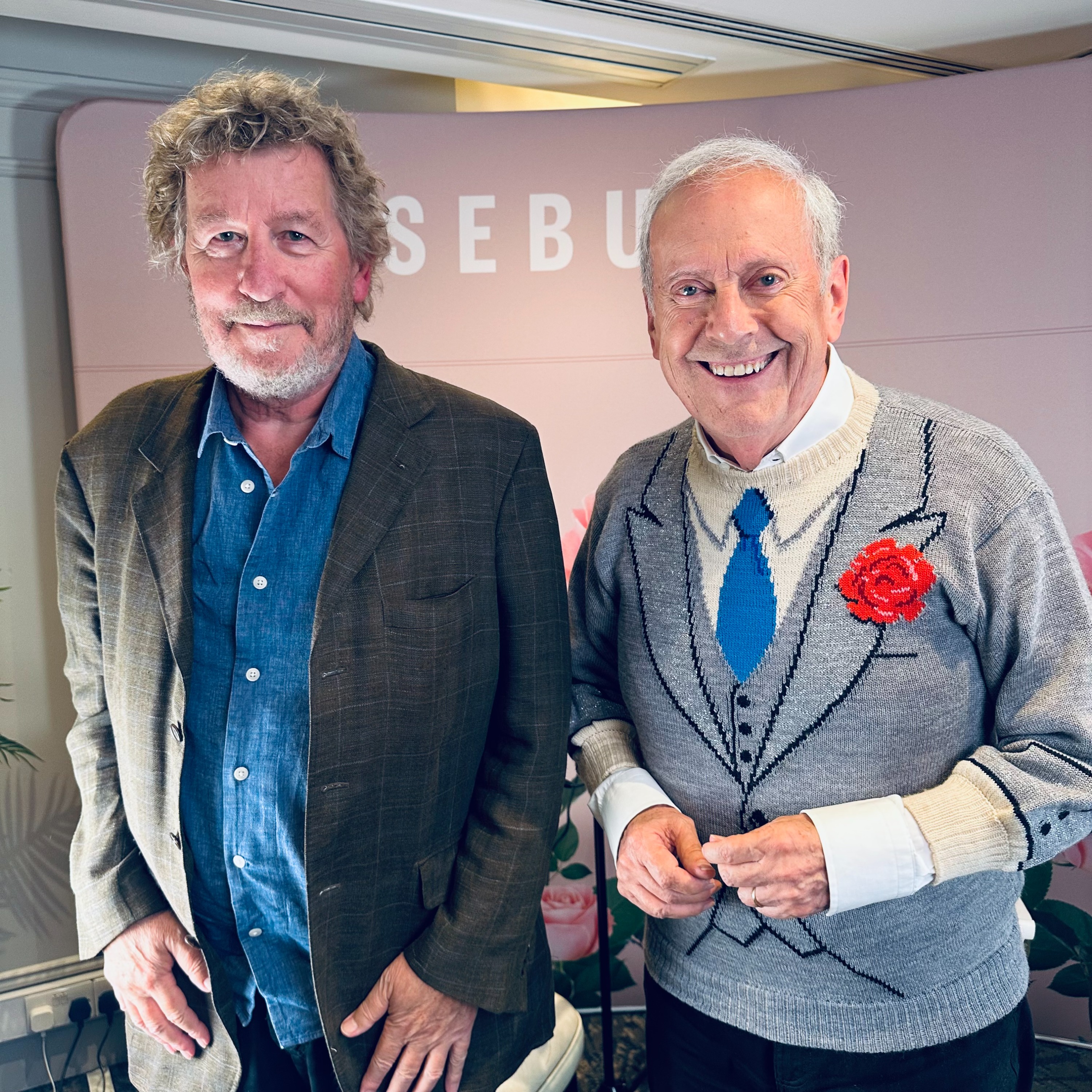
In this episode of Rosebud, Gyles Brandreth interviews the acclaimed British novelist Sebastian Faulks. The discussion revolves around Faulks' early memories, his childhood experiences, and his journey to becoming a renowned author. Faulks also shares insights about his new book, Fires Which Burned Brightly: A Life in Progress, a collection of autobiographical essays.
Written by AI. May contain mistakes.

Get the gist, explore an idea or ask about something said.
 Claude
On Rosebud with Gyles Brandreth, what are the key points of this episode?
Searching your listeningAutomatic transcript. May contain errors.
0:20Hello and welcome to this week's episode of More Rosebud. It's an episode with a literary twist, even a historical twist, because our special guest in just a moment is going to be one of my favourite novelists, Sebastian Folks. British novelist, journalist, memoirist now, best known, I suppose, for his historical novels that are set in France. The Girl of the Lyon d 'Or, Birdsong, Charlotte Grey, Made into Movies. So Sebastian Folks is coming up. But first, I'm here with my friend and producer, Harriet Jane. And the other day, we began talking about history. And you said to me, I think you came up with the idea, Giles, who would you like to be married to if it was a historical figure?
1:08Which figure from history do you think would be your ideal partner? Yes, and I said, you can't have Joan of Arc, didn't I? Oh, yes. Well, I didn't say that. I just said, oh, is it going to be Joan of Arc again? and you laughed and said you were going to come up with someone. And I have come up with someone. I can't wait to hear who it is. I've really come up with somebody and it's not Joan of Arc. Though I thought a lot of lovely thoughts about Joan of Arc. Good. But she's not going to be my wife. Is she marriage material? That's the question. Was Joan of Arc marriage material? Now, I think too much was going on.
1:41I agree. And also she was married to the Almighty. She was married to God. And, you know, you can compete with some people. You can't necessarily... You're going to laugh when you hear mine. Okay. Have you got one? Is this for you? I've got two. You've got two potential husbands. I mean, they're hopeless. Give me, as it were, the more straight one, the more normal one, the one that people might think is a possibility. Sir Francis Drake. That's so close to it, the one I've chosen. Really? It's a bit alarming. Is it? Oh, anyway, I'm not going to guess. You've chosen Sir Francis Drake as a husband material for you.
2:15I mean, I think he'd be hopeless as a husband because he's always at sea. But that might be good in some ways. It's always quite good when your husband comes back from being away or when he's away. Both is good. Both is good. He's away, you're free, and he's back. It's exciting. Exactly, yeah. Now, remind me who was Francis Drake. Well, one of the things that drew me to him is he's from Devon. He's from Plymouth, and I'm from Devon. So that's good. We'd have that in common. We could talk about Devon. We'd probably like, wherever we lived, it would be in South Devon, and we'd enjoy that. Or that could be a holiday place, maybe.
2:49And then he's got a beard, a goatee beard. I've always quite liked that. I think it's quite natty. I think I've seen a few paintings of Sir Francis Drake in kind of doublet and hose and good legs. Really good legs. Good legs. And obviously the main thing he did was fight off the Spanish Armada. That's what he's famous for. He's really quite a virile. 1605 or something. When is the Spanish Armada? I was going to say 1598. I think you're more likely. No, I think it's the gun battle plot. There's no five. No, I think I'm wrong. I know. I think you're right. So you've chosen somebody who was perhaps the greatest national hero of the Elizabethan age.
3:27Yes. He was a looker. Yeah. He had a little beard. Do you like the idea of tugging a little bit? Do you like a man with a goatee? No, I'm not going to tug his beard. I just like the look of it. Oh, really? Yeah. When I see a beard, I want to tug it. Do you? That's strange. I know. Not that I ever fancy a bloke, but I just want to tug a beard. I don't know why. I don't think that would go down well with Sir Francis Drake, Charles. I wouldn't dare. Is he the one also who was so courteous that he laid down his cloak in a puddle Yes, exactly. So that Elizabeth I could walk over it. You're exactly right.
3:56Oh my God, he's going up in my estimation every second. She had a crush on him, I think. She definitely did. Yeah. But I have to tell you, she's going to be marrying me. What? That's extraordinary. We quite independently came up with two people who would have known one another and might actually have fancied one another. Had a crush on each other. Yeah, that is extraordinary. That is weird. And I tell you when it came to me, this thought, and since I had the idea, I'm really, I'm really now into Elizabeth I. I've got books on her. I'm really getting into her. I was privileged the other day to go to the Royal Library at Windsor.
4:34And walking into the library, we went through a room called the Queen's Drawing Room. The Queen, in this context, was actually Queen Victoria. It was her drawing room. but on the wall in the Queen's Royal England there's a picture of Elizabeth I when she was Princess Elizabeth and I looked at this picture and I thought yeah you, you are the person I would like to marry she looks so beautiful in this painting the librarian then began to tell me about the painting and she said it's a most unusual painting because there are in it two books and I said oh yes how interesting She said, nobody knows quite what those books are.
5:13But I like to think, she said, that the book behind her, the large book, represents her learning. Oh, yes. And I said, was she well-educated? And the librarian said to me, she was probably the most educated woman of her time. Oh. Because Henry VIII wanted his children to be well-educated. And she was brought up as though she was a boy. So she got the same education as her brother. So she wasn't learning needlework and how to be an elegant lady, how to be a queen. She was learning how to be a ruler. And so she would have learned languages. She would have learned rhetoric. But she also learned science.
5:52She was a keen astronomer. She looked at the stars and understood them. So I think this is a remarkable person. And then in this picture, you can see, as well as the book behind her representing the breadth of her learning, She's holding a very small book that looks like a prayer book. The librarian then took me into the library and opened a box and another box and then said, look at this. And I said, my gosh, this is the prayer book in the painting. She said, well, it could be certainly Elizabeth I's prayer book. So she opened this prayer book and said, look here. And there at the back of this prayer book is a poem, a beautiful poem written by Elizabeth I.
6:38Wow. Signed by her in the most beautiful calligraphy you can imagine. The game began almost as a joke when we were chatting about it. And then when I saw this picture, I began thinking seriously about it. And I thought, what do I want in a wife? And I thought, I want somebody who is physically attractive. she's also intellectually really well educated, well read knowledgeable, she understands men, she understands power, she's got a home she's not needy she's got it all and she was long lived as well long lived and I think I think she might have liked me what do you mean? you never know can I just tell you something which is last year when I was having my therapy which we've spoken about um there was something I was unsure about doing and I was worried about it and my therapist said in order to feel better about yourself and really sure of yourself and assertive when you go into this thing that you're dreading have as a home screen on your phone a picture of somebody that is going to inspire you and make you feel like you're invincible.
7:56And it's going to be someone you relate to. And do you know the person on my phone? I don't believe this. She was the home screen on my phone for six months, that picture. I do not believe this. Yes. Oh, it's a formidable picture. Although I have the body of a weak and feeble woman, I have the heart and mind of a king. Yes. And a king of England too. Exactly, exactly, exactly. The famous speech at Tilbury. Yeah, exactly. This is phenomenal That is such an odd coincidence Isn't it Can I tell you my other ideal husband Which we can't dwell on because we need to get on with We've got Sebastian folks Was Jesus Just because I've always thought he looked so handsome In all the photos I'll put the photos, the painting
8:45And also you can come home and go Oh Jesus I've had a day, I've had a terrible day he'd be so understanding and also think of the miracles you don't have to go to Tesco or Waitrose in your case because the loaves and the fishes they're provided, the water turns into wine he's your guy I actually think he is my top husband I've had a crush on Jesus for years so I have to say I'm sorry I have to say I have to say basically both of us really wanted she wanted Jesus and I wanted Joan of Arc so we both wanted somebody who was very close to God. Yeah. And both of them came to a pretty sticky end. They did.
9:25When quite young. Because we weren't around to sort things out for them. You would have so sorted Jesus. Exactly. You really would. Yeah. And I think Joan of Arc and I would have sorted it all out. We'd have tamed the English. And also it would have been an Anglo-French alliance. You've really thought this through. I haven't really thought that Jesus is true. I really thought. I think he was pretty set on his path, actually. Well, yes, he probably was. But think, having a baby would have been easy because all the conceptions would have been immaculate. And he came back. After he died, he did come back.
9:54He did. Possibly even much better than before, really. On the third day, he rose again. We don't mean to be sacrilegious. We're only saying this in a bit of fun. So don't be upset by any of this. But I think it is intriguing that actually, in our heads, we have these fantasy partners who are Jesus and Joan of Arc. And then, when we're being realistic, we know that God and Joan of Arc aren't possible so we come down to the real world and I decide I'm going to have Elizabeth I and Harriet is having Sir Francis Drake I hope we live happily ever after in a future episode we may tell you what it's like after 25 years we may picture them on their silver wedding and see how they're getting on but for now I've got this very interesting author have you read any of his books?
10:41I absolutely loved Birdsong yes he's a brilliant writer and he's got, we should mention he's here partly because he has a book out at the moment It's a memoir, actually it's a series of episodes which is quite intriguing, it's not linear anyway, he writes beautifully he talks fascinatingly it's very intriguing so this is more Rosebud with Sebastian Foulkes
11:19Sebastian Fawkes. Oh, is that right? No. Oh, God, all right. Gosh. That's good. Well, I mean, I think we should keep that in. I've just had, everybody, a briefing from the author about how to say his name. Say it again. It's Fawkes, as in Fawkes. It is Fawkes. As in the old Fawkes home. That's the old Fawkes home. That's all Fawkes. Exactly. Exactly. It's simple enough. Yes, not Fawkes as in, you know, knives and. Now, it's Fawkes. It's Fawkes. Sebastian Fawkes. born let's hope i get this right 20th of april 1953 that's right me and adolf hitler not on the same day but the same date same date yeah adolf me and rodders from only fools and horses so sebastian folks born on hitler's birthday in 1953 the year of the coronation what is your very first memory.
12:15It's all a bit fuzzy but in the book Fires Which Burn Brightly I think I just talk about things swimming into focus. I'm probably in the kitchen at home in a village house Victorian brick house with no central heating but a nice garden probably watching my mother washing through the mangle and hang it up on a thing above the range and seeing this metal mixer clamped to the edge of the deal table through which she would put the remains of the sundae joint and turn the handle and these fearsome blades inside would cut it up into mince which we would then eat on Tuesday, Wednesday and if you were very unlucky Thursday as well.
12:58So where is this house and who was your mother? This house is in a little village called Donington which is near Newbury in Berkshire and Newbury sits absolutely in the crosshairs between north south Oxford to Southampton and east west London to Bath so it's a busy little market town my father was a lawyer he was in in Newbury had a you know in a small very old-fashioned office he was a solicitor he was a solicitor yeah and my mum was what we now call a homemaker she had worked before she'd been a nurse and then she'd been in the WAF during the war and after the war she'd worked for Elizabeth Arden the cosmetics company but once she got married I think she wanted to dedicate herself to bringing up family which was I had one older brother and then there was me.
13:46And your father had something of a heroic war? Dad had a very busy war I mean the whole idea of heroism is one that he wouldn't have liked and his fellow soldiers wouldn't have liked because how active you were in that war it was not down to your being bold or brave or willing it was just wherever you were posted and lots of brave people were posted to guard the gas works um and some very unwilling not very brave people had to go and jump off landing craft in normandy or like my father weighed a short anzio in italy um so he but he had an active time first of all in north africa where he won an MC in his first action actually and then landing in Anzio which was this little seaside place south of Rome and they they got ashore unopposed it was a brilliant surprise landing but instead of then moving on and cutting the road to Rome they were told to dig in and the Germans then very very quickly reinforced so my father and his company which was part of the Duke of Wellington's 1st Battalion and the Sherwood Foresters and the Shropshire Light Infantry were all stuck in what's called a salient, which is a little bit that sticks out like a sore thumb, while the Germans reinforced with, you know, mortars and heavy artillery and tanks.
15:03And they, of course, had only the rifles and the light stuff they'd been able to bring ashore. So he had a pretty difficult time there and was wounded in the head. And while he was in the hospital waiting to be evacuated, they bombed the hospital. So he was wounded again. uh and after three um wounds you were allowed to go home and the people said that's enough but he thought it'd be very unsporting to count the third one which was sustained in the hospital they did some sort of operation on his head um in sorrento i think and he watched mount vesuvius erupt as he lay in his hospital bed um and his elder brother who was also in italy came down to see him and he thought he was dead.
15:46So when he arrived at the nursing home, he looked upstairs and saw this familiar figure with a bandage around his head smoking a cigarette and he thought he'd seen a ghost. So he sort of leant against the banister of the stairs and wept thinking, my God. Anyway, dad was patched up and sent back to the front about six weeks later. Sent back to the front. Sent back to Anzio to lead the troops in a breakout. Eventually they were allowed to break out. So he led his company. His original company had all been wiped out in his absence, but he was switched to a different company. And they marched into Rome, they liberated Rome, and then went on up to Florence.
16:26And fighting north of Florence, one of their guys won the VC for taking out two German machine gun emplacements single-handed. And did he take all this? How do you know this? He was very, he didn't tell us much about it, no. When my brother or I made a noise or dropped a plate, he would flinch. And then there'd be a lot of laughter. Oh, dad's thinking about the guns at Anzio. Ha ha. It was a bit of a joke, really. Rather hard-hearted, now I think back about it. But no, he was very reluctant to talk about it. I think he thought, you know, he'd lost many friends. And that was all behind us. But you've researched it, clearly.
17:05You know about it. I did. I've read a lot about this. I mean, there's a huge amount of military history about the Second World War pouring out all the time. But also, Dad wrote a memoir of his own, not for publication, but in case his grandchildren might be interested. I don't think any of them have read it, but I've read it. And it's quite dry, but it's very factual. And so he was keen to get things right. And so I've sort of filled in between the lines in my mind a bit. and what was the effect on him in later years if there was one it's very hard to say and as i say in the book i don't really want to speculate um i think as far as it's possible he he sort of got over it really um and although there were horrible times when you were fighting and seeing people killed and having to you know maybe take life yourself, there were, you know, long periods of weeks or months when you're in rest or in reserve or you're traveling or you're on leave, in which, you know, you talk, I imagine, I've never been a soldier, but I imagine you talk to your friends and colleagues.
18:14And if you're an officer, you talk to the men and you talk to your fellow officers and you sort of digest the experience. And there's always somebody worse off than you. You know, one of the other company commanders was killed. I mean, in fact, at one point, all four company commanders were out of action, dead or wounded um and you just have to get on with it um but my father was a very cheerful humorous kind and well-balanced man and you know i think the way it shaped his life really was gave him a huge sense of perspective so that the trials and tribulations of his children for instance seemed to him pretty bearable by comparison but he was flinching when there was a loud noise that that he was doing that noticeably as far as you yeah but that's not because he had shell shock or anything it was just because he just had a reflex as i do when our dog barks i shrink it's not because i've got shell shock it's just some people startle more easily than others isn't what we'd now call ptsd not at all no no he absolutely not he was completely fine and would strongly dislike any suggestion to the contrary.
19:25And he was a lawyer? He was a lawyer and in the small town, small practice for a long time, which I think he didn't really want to do after the war. He wanted to join ICI, he applied to join the Foreign Office, and he narrowly missed these rather glamorous jobs. He got to the shortlist, but never quite got it. And so he rather reluctantly decided to become a lawyer. He'd read law at university before the war. but I think it turned out well though I don't think it was all that exciting to be honest but then when he was about 60 he was appointed well he became a recorder and then he became a judge because this is a time when at last solicitors were allowed to actually become judges and recorders that's right so for the last 10 years he was one of the first he was one of the very first yeah so that was I think that was great because it it gave him something very interesting in the last 10 years of his life.
20:18And he sat in London, in various courts in London, and eventually he got a sort of semi-permanent post in Reading where he heard a lot of cases from Heathrow to do with smuggling and quite large amounts of money and quite serious crimes. How did he meet your mother? They met in Reading after the war. He'd gone to finish his legal studies there. so he was living in some very modest backstreet digs and she was living in some very modest backstreet digs working for elizabeth arden and elizabeth arden at that point had some sort of pop-up in the local john lewis where she was doing a demonstration of their products and makeup and so on and a friend of my father's said to him there's a very very beautiful girl working in for the elizabeth arden pop-up in in john lewis and i bet you a pint of beer you don't dare go and ask her out for a date.
21:15So dad, you know, anything for a pint. He did. And it all went very well. Gosh. And did they live a long and happy life together? They did, yes. They moved to a little cottage, which they both loved, although they were both Londoners. They liked the quiet and peace of it and they made friends. Again, it was difficult after the war. They didn't know anyone there. But they got to know people. but I think my father's greatest friends remained the people who'd been in the trenches with him basically because you can't form friendships as close as those you do and you know under fire in a matter of life and death but he made lots of friends and my mother did too so no they had a very long and happy marriage together and were they intimate together did you feel that there was something between them that was special and maybe didn't include you that they have a relationship and the reason I ask that is because you're saying about your father and I can picture him being more at ease maybe with his old army friends no he was I don't think that there was anything exclusive about their relationship with one another it was a very quite traditional marriage and he was polite and chivalrous and she was the more traditional female part of it but she was a strong character in her own right my mother who'd had a quite difficult childhood and had you know made a life.
22:40In what way was it difficult her childhood? Her parents divorced when she was a baby and she was brought up by her grandparents and she never saw her mother really from the age of about three and her father was killed in the second world war he was a reporter so and her grandparents I'm sure were very nice but it was a scratchy funny old childhood and she He was always being sent to different schools and expelled. And, you know, it was difficult. And he was, he rescued her in a way. I mean, he was a safe harbour for her. I think she would probably say that, yes. But, you know, she was not a sort of entirely passive person.
23:24She was a very strong character and a very determined woman in her own right. How did that show itself? I think it showed herself in her determination to read, listen to music, go to the theatre, to sort of fill in the gaps of a rather patchwork education that she'd had. And to sort of, she was, you know, her determination to be a better, more educated, more engaged person, really, which she's utterly succeeded in doing. And also, she was very practical. I mean, she could wallpaper, she could paint, she could sew, she could cook. And she also did a lot of work for various voluntary organisations.
24:08She'd been a nurse, as I said, a professional nurse before the war. And she'd just volunteered at the local hospital as an orderly, unpaid. She helped run the Citizens and Vice Bureau. She read to blind people. She raised vast sums of money for the British Legion, etc., etc. etc um she was very you know busy and good-hearted person what's your personal happiest best memory of her from when you were a little boy i think um when she would come to pick me up from the little village school and she bought a car for i think 12 pounds or possibly 15 pounds which belonged to somebody's gardener and it was a really ramshackle little morris and she would she was a bit frightened of driving it not surprisingly the indicator was a sort of finger which came out of the side of the car and the windscreens were driven windscreen wiper was driven by motor which was stuck on the front of the windscreen but she would arrive early you know she was frightened of being late and she would be sitting in the car reading a book you know just always reading waiting for me to come out and then I would potter out and then say you know what's for team mum so and it was nice and she was she was happy to have two healthy children and your best childhood memory of your father oh undoubtedly um cricket I went to boarding school when I was eight and eventually I got to be captain of the cricket team when I was 12 I wasn't the best player but for some reason they made me captain I wasn't a very good captain I I don't know what I was doing.
25:46But anyway, we had a match against the fathers at the end of the term, July. And my father was quite a good cricketer. And, you know, against 12-year-old boys, anyone can be pretty good, really. But just seeing him arrive in his blazer and striped cravat and then striking the ball over the pavilion for six, I think that was happy. But he'd only hit one because he didn't want to show off. You know, he could have scored 110 minutes, but that was not what proper guys did. No, you're giving a very attractive portrait of an English middle class way of life from an era that now seems to have gone. But it was good for you.
26:26You enjoyed it. I did. I think that growing up in the 50s, it was good. You know, Meccano and Lady Bird books and little electric trains. I don't think it was much fun if you were grown up. um i mean i've read a lot of by people you know people like doris lessing and ted hughes writing about that time and they're really all at sea you know london is bombed out and rationed and um they they want to be communists um because that's the way ahead anti-fascism after what hitler has done but they're becoming aware that stalin and soviet union is really not good and then the invasion of hungary in 1956 the tanks roll in and most of them at that point leave the communist party but there's no money england is drab it's gray um and you know if you think of plays like look back in anger which is not in my view a terribly good play but it expresses a sort of intense frustration and boredom really about that life that was lived by grown-ups but if you're a child as a child you've got a tricycle you've got the beano annual you've got muffin the mule on television it was fun it was it was good yeah i know it was a lovely time to grow up i have no complaints at all and then and then when i was 10 in 1963 along came the beatles so you know what's not to like absolutely
27:55who was your best friend outside of the family when you were a little boy your first best friend i didn't really have any friends i was very antisocial um oh why was this i was very shy and i found other people incredibly annoying particularly children because they did everything the wrong way and um i just i was i didn't really have any friends until i went to boarding school and then i mean being serious you did not really have any friends were you conscious of being a bit of a loner uh yes but it was fine by me because i had home and books and I was as you say there was cracker jack or something or yogi bear on television uh and there was there were two cinemas in Newbury which I would go to fairly regularly um so it didn't really bother me and then at school this was a boarding school boarding school aged eight I mean and did you realize you were going to a boarding school when you were dropped off no uh I mean I knew technically it was a boarding school but I hadn't really registered what this actually meant.
29:00So I was dropped off there and then I was taken off with three other very scared looking little eight-year-old boys by the headmaster's wife to play some terrible sort of parlour game. Kim's game, it's called. Oh, yes. Things on a tray. And you've got to remember, one is removed one at a time. Yeah. And then when we finished that, I said, you know, I'd like to go and see my parents now. And the headmaster's wife said, well, your parents have gone. And I said, what? Gone? And I didn't see them again for a month. and you know you just plunged into this completely alien world i mean it's pretty dim of me really because my older brother had been there for two years and he hadn't been at home i might have put two together but i'd completely failed to do so so it was absolutely terrifying you were in a dormitory yeah and the dormitory with iron beds and you know chamber pots beneath you weren't allowed to go though to the lavatory was miles away and you know god knows you might do something naughty on your way uh no it was incredibly primitive and difficult but um was it difficult well it was it was very frightening and very hard to get used to but i did and you just do you just did and i you know as i said at the beginning you know you can sink or you can swim and i swam i just it took me about it took me a few weeks and then i've there my parents received a postcard which i saw the other day something like it did not take sebastian long to become an Ulster-y boy.
30:24But I don't know what happened to the other boy, the little village boy who went there, whether he died or whether I met up with him again later in life. Were you conscious of becoming a different child? I was conscious of doing things by the book. And you decided to be an establishment figure. You joined a little establishment. At the age of eight and a half, you don't use phrases like establishment figure. You use, I can't afford to miss this, I'm going to get thrashed. um so yeah um and were there happy moments yes uh we didn't we didn't make friends one-on-one but we were all a group in it together we were like private soldiers in a platoon you know you stuck together i like cricket and football and rugby and i like the work which sounds a bit sort of nerdy but um i found lessons quite easy and you were rewarded and i was given half a crown every Saturday for coming top of the form.
31:18So, you know, by the end of term, you know, that had mounted up. Were you able to read in the evenings after Lights Out? No, that would have been a beating. But you could read for half an hour before Lights Out. So I would read. I loved historical adventures. And then I discovered Sherlock Holmes when I was about 11. And, you know, and there are a lot of short stories. And so they were, that was wonderful. so a lot of reading yeah were you beaten at all uh only a couple of times and for what were the misdemeanors the misdemeanors were one um a group of us after we'd been swimming raided the school school strawberry beds oh and we were spotted by the matron inside the school and we were told to report to the headmaster he said if i beat you now you won't be able to sit down for a week so i want you to go and think about what you've done which we duly did um and another time i was beaten for talking in the wrong place i mean something pathetic but um but it didn't really hurt to be honest i don't have a crush on the matron of course it depends on the school matron i'm speaking now from personal experience i thought there was something a bit personal on one of my prep school matrons but no um miss buddle was a splendid woman forgive me give her the name again miss buddle these names though this is a novelist we're speaking to listeners he's not inventing these names i trust she was not someone you would have a crush on she was about six foot four and um with a sort of bombazine dress with what looked like a sort of bag of rugby balls under it and she was a very strict methodist and she's a perfectly nice woman but she was not not the sort of person you would have a crush on were you beginning to form ideas of what you were to be?
32:59Who were you going to be? At that age, 10, 12, no, not really. It was when I was about 14, I think, that I first read Jane Austen and D.H. Lawrence. And then it became clear to me that obviously I would have to be a novelist. This is at your next school, which is a public school. That's right. Wellington College. You know, a quite famous public school. But it has really lost its way by the time I went there in the 60s and it was really run on a sort of top dog basis by the boys themselves in their own little corridors gosh and I ran away from it when I was about just about 15 I think because I thought this whole place is so second rate and such a waste of time and uh you know I was by that time inflamed by literature and music and um I wanted to meet girls and hang out and grow my hair long and smoke dope and so on what triggered the inflammation jane austen dh lawrence yes and not hormones i mean yes all those and not forgetting rock music too which has a very inflammatory effect on the sort of the adolescent boy this is more stones than beetles given you mentioned them uh yeah well you're moving out of pop into sort of rock at about this time 68 cream led zeppelin i mean led zeppelin's first album that really shook us to the core and it it sort of fueled this sort of revolutionary feeling this very incoherent revolution and how did it manifest itself with you made me very bolshy and made me run away and then threatened to leave again and you know what did your parents what did your father say when you ran away the first time did you run home uh well i didn't mean to run home i just meant to pedal away as fast as I could.
34:46And you were on a bicycle. You literally got on a bicycle at school. Yeah, but I ended up at home, which was a disaster really, because I should, but you know, I was only 14 or something and I couldn't stay in a hotel. I'd never stayed in a hotel in my life and I didn't have any money. So they listened carefully and then sent me back. And then later on, so about then there was puberty and then there was an increase in confidence. And then I said, I can't stand this, I'm off. And they made this wonderful thing. they said because you're a bright kid and you're going to go to you know win some prizes at university or whatever we'll make a special arrangement and you can live out of the school so i went to live with a retired master in the sort of garret in his house in the woods and i would come into school for an hour a day to receive a tutorial from one of two teachers who trained me for the cambridge exam well it turns out this not very good school was actually quite thoughtful it came up with a solution it turned out well in the end i mean i am you know so much not a sort of victim of you know boarding school i was a victor you know i i came to enjoy the first one and the second one was terrible but i bent it to my will and in the end had and ended up with rather a good time explain to me how jane austen and dh lawrence made you feel if you can try and express that and you're about 14 and yeah 14 15 which is the jane austen which is the D.H.
36:12Lawrence that does the trick and what's the sensation happening in your head I think when I first pulled Pride and Prejudice off the shelf I thought this is the worst title of any book I still think so I mean what a terrible title um and but I started reading it and it was all about vicars and ladies this and so on I thought oh my god and then suddenly it was all about sort of people I didn't like who I saw as repressive authority figures but about by about page four or five, I'd realized that Jane Austen disliked them even more than I did, and that she was going to parody their aspirations and their behavior and make me laugh at them.
36:51And here was this wonderful girl, Elizabeth Bennet, who I immediately identified with because she had a proper moral sense. And what I really liked about Jane Austen, although these books were ostensibly sort of genteel they weren't really they were very revolutionary and they were about the the victory of the ordinary girl with a proper moral compass over the ludicrous panoply of society and then lawrence i think when i got to him sons and lovers was the first one i read and then the rainbow and women in love and here was somebody who treated characters in a completely different way there wasn't all that much story in his books because you know up until these authors i'd read mostly alistair mclean who you know very good fun actually but it was all story and here uh in sons and lovers you just hang out with paul and miriam and people and their family and what you know the action is that people form different relationships with one another or somebody dies or somebody moves away from the village that's there's no bank robbery or car chase somebody moving away from the village is the action but what i loved about lawrence was his attitude towards his characters which is that he felt so tenderly towards them he actually loved them as if they were his children these fictional people he had created and i thought you know i can't be a taxi driver anymore i'm not going to be a doctor and so when I'm a novelist I will I will love my characters in the way that this man loves his.
38:33Had you begun writing at all? I tried to write a novel when I was about 15 but I said all I had to say within about three pages and I'd finished it and I thought what's not even it's not even a short story. I couldn't understand how these guys got the length so no it took me so I then switched to writing poetry so I wrote a lot of poetry as a teenager which was of very poor quality um and i didn't actually write any anything of any length until i was about 22 after i'd left university well let's get you to university yeah the school thinks you're bright well clearly you are and they've found a way of handling you and they say let's try oxbridge yeah uh cambridge um they um they said just cambridge cambridge had the reputation of being harder to get into than Oxford in those days whether that was true or not I haven't the faintest idea so I quite liked the idea of that challenge and my father had been at Cambridge so I quite liked the idea of going where he'd been uh so I sat the exam and I won a little award and then I went up there with the I love this dismissive you've got a scholarship of some kind an exhibition an exhibition um and then I went there after another year away this wasn't And it wasn't derided as the gap year in those days.
39:53It was called the year off. So I'd had two years after A-level before I actually arrived. What did you fill those two years with? Well, another year at school doing my sort of preparation. And then I went to France. I went to Paris when I was 17. And I lived in a little flat. Alone? No, there was a very old lady who was the sort of landlady. And there was another student in the flat. it was a bit like sort of balzac really and then in the evening i'd go to another flat in the same building upstairs where this a doctor's widow had a sort of again very balzacian sort of bought you know a dinner table at which there would be a couple of students a couple of businessmen and you know whatever and we would have our dinner there and then off we went into the night and were you lonely during that year uh yes excruciatingly lonely yeah but that was also good for the soul um because i read enormously and then i would just walk around paris a lot i spent a lot of time in art galleries a lot of time in the cinema and a lot of time reading and i mean i i'd hope to have a rather more active social time but in fact it was very good sort of educationally and you go to cambridge and at cambridge are you a loner a mixer have you by then said goodbye to your home and family do you feel now i'm i'm grown up i didn't feel particularly grown up no i felt pretty confused uh but i i made friends in my college i mean on day one i met the boy who had the room opposite who was called ian black and we just sort of fell in love in a way I mean not in a sort of sexual way but intellectual way and Ian came from a Jewish family in Leeds and he thought of himself as rather sort of gritty and northern and minority and he viewed me as a sort of southern ponce and which is completely untrue on both fronts because he wasn't that gritty really and I wasn't that southern or that Ponzi really but you know we got on terribly well and he would give me long lectures on the Arab-Israel problem which was already obsessing him at that stage aged 18 and I would lecture him on the romantic poets and you know Keats's quest for permanence and so on and Ian went on to be the Guardian's Middle East editor and a great scholar of the Middle East has written the sort of definitive book on the Israel-Palestine conflict so that was an incredibly joyous friendship um and i made you know quite a few friends with other kids what was the best of your three years you did i assume i did three years and what was the best of those three years what's the moment that comes into your head as my cambridge i think just uh a lot of laughter with ian and another friend of mine called paul carling who was the contemporary i think just a lot of helpless laughter at laughing at ourselves and the absurdity of our ambitions and the absurdity of the world while actually being deep down very serious about it really.
43:06It just took the form of explosive laughter, you know, sometimes fuelled by marijuana and sometimes not. You mentioned the marijuana. Your father, of course, was a lawyer and we now discover he then became a recorder and a judge. Did you ever think what I'm doing could embarrass him? I should have done, shouldn't I? But there was a very sort of lax attitude towards these things. I think everyone knew that people were smoking pot. And as long as you didn't, you know, make a fool of yourself or embarrass the college or the authorities in some way, I think people turned a blind eye. And don't forget, everyone smoked cigarettes all the time then, so there was a little fog of cigarette smoke around.
43:48What was the worst of your three years at Cambridge?
43:55I became quite unhappy in my second year. I had a sort of... I had painted myself into a corner and I became quite ill, really. How did you paint yourself into a corner? What happened? Well, I had what you would now call some sort of minor breakdown, I suppose. I became agoraphobic and sleepless and super nervous. It was like I had a lot of panic attacks. What was triggering this? um nothing there was i wasn't sort of there was no profound psychiatric problem the actual condition wasn't very serious there was nothing inherited or sort of genetic or really serious wrong with me but just to sort of i think just a general confusion about what my place was going to be in the world compounded by drinking too much alcohol and smoking too much dope really the sort of thing that you know kids go through a lot but it was very unpleasant at the time but it's quite interesting to me listening to you because you're very accepting uh what what happened it's half a century ago yeah well no you're very accepting of all the things that happened your your father and he was accepting to happen whatever went on in the war you took it and you moved on that's the way it is yeah and you're telling me that you took this and you moved on but clearly you didn't move on totally comfortably because oh it's true in your second Yeah, you had this major wobble.
45:20Yeah. And what, did you have a tutor? Do they have things like moral tutors who are supposed to be keeping an eye on you? They were, in theory. I don't want to go into that in case the poor chap's listening, but there wasn't really any... He wasn't of much use. There wasn't any pastoral support. I'm sure he meant well. I'm sure he did. And why do you think you were drinking too much? Because this eventually became a serious problem for you, didn't it? No, no, no. On the contrary. Oh, forgive me. It became a serious pleasure, not a serious problem. oh very good uh no i was very lucky um my family's quite sort of big boozers on both sides but we touch wood you know we we seem to have uh escaped sort of dependency and bad behavior my parents my parents didn't drink a lot by sorts but they would certainly have you know bottle of wine every evening uh sort of thing but it didn't make them a belligerent or aggressive or sentimental it just made them more fun really so how did you come through this period of feeling uncertain, unsettled, drinking a bit too much, etc.
46:24After I left Cambridge, I went to live in Bristol for a year. I found a psychiatrist there who is a very good psychiatrist at the local NHS hospital, actually. And he thought I was too logical about everything and he just advised me. There was something slightly sort of hippie-ish about it, really, to try and think in a different way, to think in a more accepting, more, as they call it, synthetic way of thinking, which is not logical, more spiritual, more open-minded, and more accepting. Why had you gone to Bristol? I went there because my friend David was there. He was a year behind me academically, and I just thought it sounded fun.
47:02And also, I wanted to write a novel. So, that's when I wrote my first novel, when I was 22, 23. Wow. So, you just got on with it. Sat down, I bought a typewriter, taught myself how to type and bought some paper and started. Oh my goodness is that how it's done? As in Mark Twain's rule application is all you need apply the seat of the pants to the seat of the chair. Yes unfortunately you do also also lead a degree of talent and I didn't really know how to write a novel at that point but I just thought if I hit the keys hard enough and and was enthusiastic enough about it it would be fine.
47:44So where did you write the novel? Did you have a flat? I sort of lodged in various student flats, in a sort of cupboard in one, a bit like Harry Potter. And in another one I had a bed over the door. It wasn't really a bed, it was a sort of shelf, really. And I think I paid rent, so five quid a week or something. This is 1975. About then, yeah. So there's a bottle of wine on the floor near the typewriter. There's an ashtray, I assume. yeah and there's this typewriter a remington of some sort olympia olympia portable oh quite a light one oh yeah it was none you know not that light oh quite solid actually quite solid and it was a very good typewriter i bought it from a neighbor of my parents for rather a lot of money actually i think i was a bit ripped off i think it cost me like 15 quid that is does seem quite a lot quite a lot for a second-hand typewriter wasn't it and you put the into the roller the the paper the a4 or even mean full scab in those days a4 and did you type the words chapter one probably wow and what was the story what was your i mean this is this is very interesting for young people i have a grandson who is now working on his second novel he's 18 um and so there will be people wanting to hear from you how it's done what does one do you i think in those days i i just hadn't spent enough time thinking about what i really wanted to do and I just thought if I write and I think I can write then anything I write will be of interest but that's unfortunately not how it works so it was a vague sort of wish fulfillment piece about a young man who had lots of nice girlfriends and had a great time in London and so on and you were writing your life I was writing what I hoped to be would be my life yeah and it took me a long time to realize that's not really how it's done which was odd when you to how many books I'd read by this time and you know how many analyses and essays of impractical criticism I'd written um but I then sent it off to various publishers and I was astounded when they sent it straight smartly back but they did read it but you know which is hard to get a book read these days but they did read it and did you get good advice from anybody no um so I then I I came to like to live in London and how do you mean financially supporting yourself there were you working in a bar or something?
50:03I did odd jobs. I worked as a model, actually, at one point, briefly. Doesn't surprise me. It's a good face for podcasts. A life model or a fashion model? No, a sort of fashion. I modelled hats in a sort of magazine at one point. That's hilarious. Yes, it was. I was the only white man. We were modelling hats rather as worn by the Isley brothers and in 1975 and i think they just wanted one white boy in there and when was the when did the breakout happen i mean how long did it take from 22 in the first novel yeah um i think i completed three novels before i finally got one that was publishable which was a book called the trick of a trick of the light which i wrote when i was came out in 1984 so i was 31 one oh so you kept going were you ever disheartened oh frequently i mean when the rejections came yeah and had you managed to get an agent quite early on or not no um i knew an agent um but i didn't really know anyone in publishing all that world but i'd met one guy and i showed him one of the ones i'd written about well one of the novels i'd written which was about a cricket match and he said he didn't think it was any good there was no point in submitting it and then rather in a fit of peak, I thought, well, you know, the books I'm writing, they're just too good for these commercial johnnies in a silly publishing house.
51:28So I'll write something more, you know, commercial with a story for them, which I did. Anyway, to my amazement, a guy I'd met at a party called James Michy. Oh, yes. Poet as well. Yes. James said, yeah, we can. He worked for a publisher called The Bodley Head. And he said, we'll give you 1500 quid for it. Oh, that's serious money. well you know for a first novel well it wasn't that even i know it wasn't that much but no i know it's proper but i mean i'd have happily paid him 1500 frankly uh so that's sort of more that came out in 1984 more or less sank without trace it had a few reviews and but it wasn't very good but it what was wonderful was being given the confidence of i am now a published author you can say that to people and this is my book it's published by a proper publisher and that liberated me to write the book that i really wanted to write anyway which was a book called the girl at the lion door which came out um about five years later um and that which people like me would have assumed as your first book yeah because it's the first one that yes it's the first one but went into paperback and it's still in print if somebody's listening to this because they know your name uh and they have but they actually haven't tried one what would you suggest will come on to your current book but what would you suggest from your novels that people should start with on green dolphin street which is set in america in 1960 background of the nixon kennedy election uh and it's a love story it's quite it's not very tricky it's quite straightforward narration and it's got a lot of period setting and a lot of emotion and it's very character driven so I would say we give people a fairly good idea of the sort of things I do but it's pretty approachable compared to some of the others.
53:20Tell me about your own love story. Which one? Your marriage. Assuming it is a love story maybe it isn't. Yeah well we've been I married a woman Veronica that I met at work at the independent newspaper. Because you became a journalist in You worked to own a living for a while. Yes, after teaching, I became a journalist. I worked for the Telegraph newspapers, the Daily and the Sunday for a few years, and then I moved to the Independent, which was a great time, and the Independent was full of young people, and there were quite a lot of, you know, office romances going on. We've been together since then, since 87 or 8.
54:02So how long does that make it? That's a long time. We have three children. Yeah. Wow. Two in their 30s, one in their 20s. Exactly. This is 40 years together. This is a story. Coming up for it. Yeah. Because it's the 40th anniversary of The Independent next year. I love the way you remember your wedding anniversary by virtue of the anniversary of a newspaper. This maybe tells us all we need to know. It's coming up, and I think that, you know, newspaper people are rather obsessed by anniversaries. I meant in relation to your relationship with your partner, wife. Wife, yes. Wife. I can remember your first seeing her across a crowded room or I remember her first coming I remember being told about her by a guy downstairs on the foreign desk who said there's this young woman looking for a job but we haven't you know we don't need anyone we'll fill up you should really meet her she's something rather special and indeed she was what would Veronica say living with you has given her headache um what do you hope it's given her well I hope it's given her um a few laughs I think quite a lot of laughs to be honest I mean my friends of mine when they when I first started publishing books they said well you know they're good and they're great and congratulations and you know nice reviews and blah blah blah but you know what you're not in them and I was saying well that's the point I know I'm not but to them I am somebody who is very comic basically who makes jokes all the time and is quite facetious and quick and they don't see that in the books which are quite expansively slow building themes and ideas and so on so I but I think to be with to live with um god it's not for me to say what I'm like um I think my wife has learned to tolerate my ways um but I think that I'm polite and I think I'm quite good company.
55:57What is the worst of your ways that she's tolerating? I'm a pretty slow starter of the day. Oh, you know, I don't wake up with a song on my lips and spring out of bed and say, hello clouds, hello sky. That is annoying. It's a bit. I can't really talk until I've done the Times crossword. Oh, so that's that's probably takes a bit of getting years to. What's she given you? What's she given me? 40 years. Apart from, you know, William and Holly and Arthur. Great happiness. A sense of where home is and groundedness and delight. I find these things quite excruciating to talk about. I know. I'd much rather write about them in a fictional world.
56:38But this is why I think your new book is so interesting, because what you've done is a memoir and 10 essays, rather than actually saying, I was born, this is what my parents were like it's i think it was difficult to do this wasn't it i've been writing the some of the essays in in this off and on for 20 years it was a quite what was most difficult was actually trying to find a book out of it i didn't want to write a memoir with all those boring bits so it's a memoir with all the boring bits taken out and you know really fires which burned brightly is written by someone who was born in, to use a terrible phrase, a baby boomer time.
57:16And it's really an expression of my sense of gratitude to the generation that went before and to the one that went before that. And the sense of how incredibly fortunate we were not to have to fight a war. Our university fees, tuition fees were paid. It's been a breeze, really. I mean, You know, this country has always been difficult to make money in, but if there was ever a boom time, we had that too in the late 80s and 90s, and we know I lived then, and I was publishing books in the 90s and the noughties. This is the best time to be publishing the kind of serious fiction that's ever been, or possibly since the 1890s.
58:00So I think the book is really an expression of thanks. Before we let go of your life, look back and give me what first comes into your head from your earlier years when I say a moment of joy. This is before your children are born. You're a young person. A moment of joy.
58:20I think probably winning the 220 yards at school when I was 11 just led from start to finish. and I had had asthma quite badly as a child and I couldn't run more than 100 yards without having a sort of fit. And I was free and I ran like the wind and breasted the tape. I ran like the wind and I breasted the tape. Well done. What about University Challenge? Wasn't that a moment of joy? How did you do in that? We lost. Oh, I'm so sorry. I didn't know that. Getting onto the team was good enough. My wife was only the first reserve. So to get onto the team is pretty good going. It was fun. It was great fun.
58:59And my best friend, my roommate, Ian Black, was on it with me. And so we had a great time. I'm amazed that you lost if he was there, because he knew everything, didn't he? Yes, he did. But we played, the opposition was Glasgow. And almost all Bamberg Askoin's questions were about the geography of the Western Isles. And it's not that I'm bitter or anything.
59:21OK, what about a moment of sadness? What comes into your head straight away? From what period of life? Well, when did your parents die? My father died in 1998 and my mother in 2003. And were they okay at the end? Was it okay for them? In terms of, you know, compared to some poor people whose life drags on, they both had dignified exits. Do you think at all about death? I think about almost nothing else. Oh, really? God, yes. All the time. That's another reason for publishing this book now. because I, of course, because I'm a little older than you, I think about death. Well, actually, mostly I think about how exhausted I am.
1:00:04And then the joy is, you'll find this, the more old people you meet, the more ready we are to go because we get more and more tired. Yes. I just worry that my, how my family will manage, but I expect they'll be fine without me, actually. I think they will, because there's always birdsong. The royalties keep coming in. at some point i hope so final question and then you are released what have you learned what have you learned what have i learned in my life in your life what have you learned um i think i've learned that uh at the end everyone i know who has been worthwhile whatever they've done thought believed felt, achieved, etc.
1:00:54When it comes down to it, you just roar with laughter at the utter foolish absurdity of human existence. And if you don't, if laughter is not the ground base of your personality, then I'm not really interested in knowing you. I'm very glad I know you. Sebastian folks, thank you very much.
1:01:21Thank you.
1:02:00That was more Rosebud with music by Phil Leppard, production by Harriet Jane, and in the chair, me, Charles Brandreth. Thank you for listening.
Gyles speaks to the novelist and writer Sebastian Faulks, who tells him about his childhood growing up in Berkshire and his clear memories of being left at boarding school when he was seven. He talks about his rebellious streak, drawn out by rock and pop music, which manifested itself in periods of instability at school and university. He talks about the close friends he made at Cambridge, and going on University Challenge. He talks about writing his first novel and how he had his breakout moment. Sebastian's new book, a collection of autobiographical essays called 'Fires Which Burned Brightly: A Life in Progress' is out now, and available here.
Many thanks to Sebastian for coming to talk to us on Rosebud.
Hosted on Acast. See acast.com/privacy for more information.


