
 Ask ChatGPT



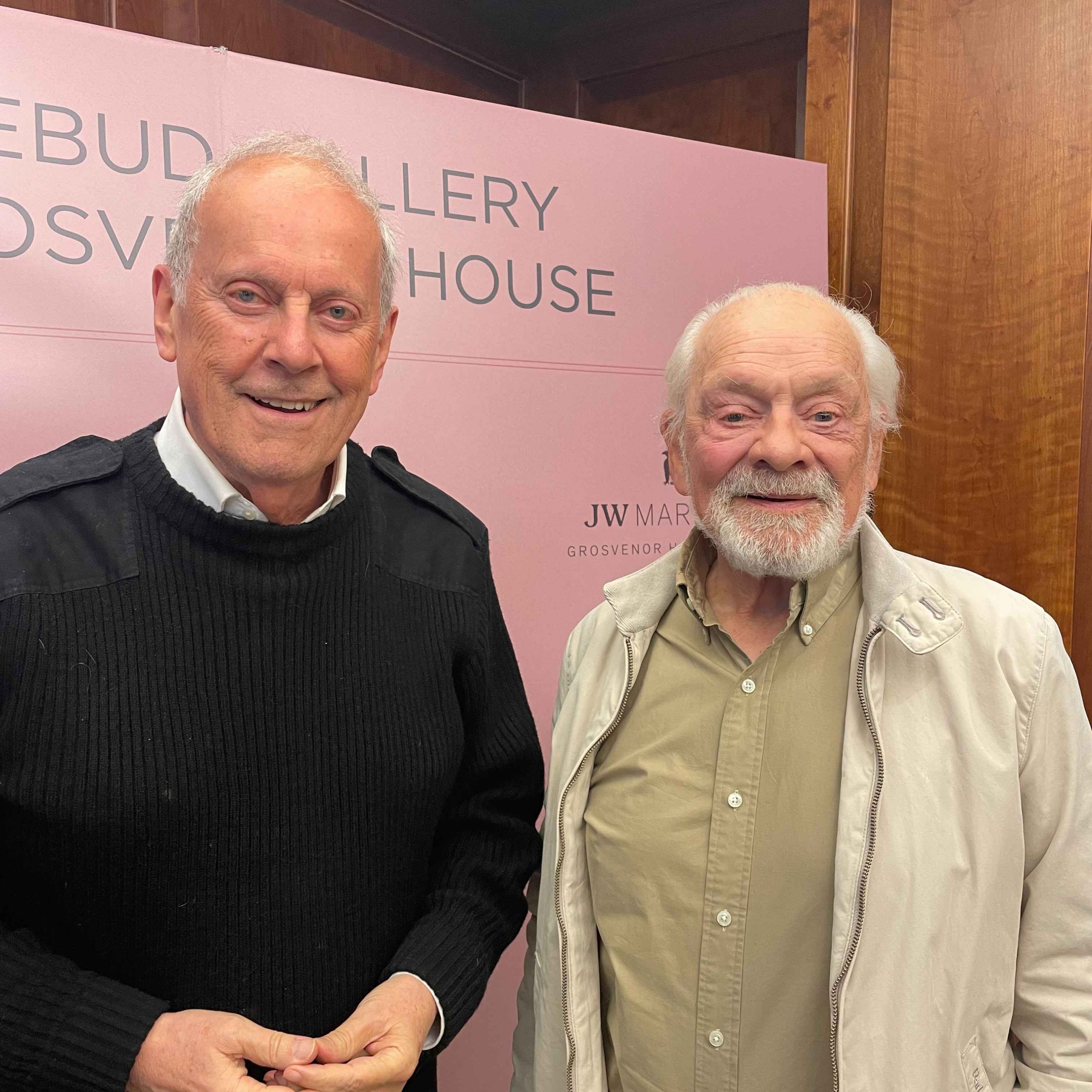
In this episode of Rosebud, host Gyles Brandreth interviews the legendary British actor Sir David Jason, known for his iconic roles in television series such as Only Fools and Horses, Open All Hours, and A Touch of Frost. The discussion centers around Jason's early memories, career beginnings, and the people who influenced his journey in the entertainment industry.
Written by AI. May contain mistakes.

Get the gist, explore an idea or ask about something said.
 Claude
On Rosebud with Gyles Brandreth, what are the key points of this episode?
Searching your listeningAutomatic transcript. May contain errors.
0:00Hello, I'm Giles Brandreth and I'm here to offer you a respite from everyday life. You can forget the cares of the world, turn off the news, stop working for a minute, don't check your mobile during this, just prepare to immerse yourself in a world of memory. Yes, we're looking forward to looking back. Welcome to Rosebud. Cue the music.
0:47Our guest today on Rosebud is one of Britain's best-loved actors. It's Sir David Jason. We have recorded this at the Grosvenor House Hotel in Park Lane. And I have to tell you, when the staff heard that Del Boy himself was coming into the hotel, They're normally extremely discreet, but they gathered around corners in the hope of catching a glimpse of him, and the bolder ones came forward to shake his hand. This person turns out to be an iconic figure in British entertainment. And quite rightly, from Porridge, to Open All Hours, to Only Fools and Horses, to The Darling Buds of May, to A Touch of Frost, which I really loved, where he played the detective Frost.
1:31Sir David, as he now is, Sir David Jason, has been at the heart of, well, many of British television's most loved and most watched programmes. So in our conversation, well, we're going to cover so much ground, how he began, you know, his, well, how he began in the theatre in North London with his local theatre group, Incognitos, which he initially joined because he thought it would be a good way of meeting girls. I'm going to talk to him about his, well, the amdram the rep years then his time in the west end that's when i first met him when he was in no sex please we're british and oh gosh must be 40 or more years ago that's when we first met one another and well actually we're going to talk about how there is so much more to him than simply del boy i think he's charming and i hope you'll find this is a charming conversation about the business with one of the true gentlemen of the business.
2:27Yes, it's Sir David Jason on Rosebud. Cue the music.
2:45I want to go back to the beginning of your story in the world of entertainment. During the course of our conversation, David, I shall try to remind you, but I don't think you will remember, of our early meetings, which go back much further than you realise, and in a way almost further than I realise too. I first met you, incredibly, with somebody called Denise Coffey. Yes. Do you remember Denise? I certainly do. She was lovely, wasn't she? Yes. And this would have been a long time ago, the late 60s, even early 70s. It would have been. I think you're absolutely right. It was 1970-ish. I was in No Sex, Please We're British.
3:25And it wasn't until I did Do Not Adjust Your Set where I met Denise Coffey. Exactly. Yeah. Which had high hopes for both of you but didn't quite work. No, it didn't. The reason for that was the creative force in that show was Eric Idle, Jones and Michael Palin. They were the three from university that worked together with Humphrey Barclay, the producer of Do Not Adjust Your Set. One of the reasons why it was called Do Not Adjust Your Set. Do you know why that was? No. In those days, you couldn't do a show, really, a television, without it going wrong. The signal would go and it would flick or stagger.
4:14And so they used to put up a sign saying, do not adjust your set. So the producer, Humphrey Barkley, was trying to put this show together for young people, a comedy show with those three, me and Denise Coffey. he chose that title because it would advertise our show because every so often they'd lose signal and the sound would come up do not adjust your set i mustn't take you down too many side roads let's stay on the main road let's begin at the beginning your first recollection of being on a stage the first time you walked onto a stage and performed i was doing a school play and we were entered into a drama festival in East Finchley.
5:04I think it was Wayside War, which was about a 17th century spy. And I think it was based on a true story. Because we'd won the drama festival as a school production, a guy came up to us after the awards ceremony with me clutching this plastic award and he said to me uh thank you very much and well done and congratulations and all of this he said have you ever thought of joining a club and enjoying the process of making amateur theater so me and my friend who was in this play said no no not really no it's not for us we only in the school play no nothing to do like he said that's a shame because we've got 20 girls and no boys when can we join up?
5:56And that's sort of roughly exactly what happened. And we did join up, and it was a very pleasant experience. But that's what got me hooked, if you like. And the school play was what? Wayside War. And what did you play in that? I played the captain. You know, it was roundheads and cavaliers. Oh, yeah. And I was a cavalier, if you like, and I was dressed in this wonderful costume. and how old would you be now at this time when you were in this 14 14 yes and what I'm really looking for is you feeling being on that stage and sensing I like this this is where I belong did you feel that yes I think I did because I think it was the first time that I had to present a person that wasn't me and you realize that the costume that you wore pushed you into an area that It was unusual for me.
6:53In other words, to be above the norm, to be grand, because the costume was. But it's interesting, as you described that, if I may say to our listeners, your body changed. You actually lifted your shoulders, you puffed your chest out, and you were becoming the cavalier. Yes. So as a little boy, as a 14-year-old, what sort of a lad were you? What kind of a boy were you? Well, I was a bit like most lads of that era, and they can't wait to be cheeky, to get involved in mischief and break the rules, always on the lookout for some way in which you can bend the rules. Yeah, so that's what it was. I was one of the lads.
7:33But what I'd learnt was in order to survive, I had to learn some way of keeping away from bullies and things. The butch ones, the burly ones, used to fling their weight about and used to push and kick and kill the younger, weaker ones. And I was one of the small, younger, weaker ones. And in order to stop being pushed and bullied by the big butch ones, I worked out of survival, I don't know how I did it, is to make them laugh. And I used to do impersonations of the teacher at the time. And I used to do funny walks. and I invented a way of using my voice. We had a teacher and Mr Lydon was a rather deep voice, like that, you, you boy.
8:31And I developed this in order to go into the playground and say, right, watch this, watch this. And you had all the boys all pulling, fighting and doing whatever they did. And I used to go out with a couple of three others and then say, hey, you boy, come here. And the whole playground would stop like that. Of course, the three lads that I was with thought it was hysterical, you see. So I was always doing pulling stunts like that. And it was only to survive so that they would enjoy me being a silly bugger rather than having to bully me because I was quite small and slight. And so they wouldn't attack me and wouldn't push me about.
9:17So they would turn on another poor little bugger who was there and beat him up and leave me alone. So it was a survival of the fittest, a survival technique in school because you didn't want to get pushed and punched. Were you small and slight because your parents were small and slight? Yes. My mother was like a midget. Oh, really? A tiny person? A really tiny person? Bless her. I was going to say something there. It was obviously really wrong. Yes, you're not allowed to say anything longer, but she was a petite. Yes, petite. Petite person, yes. And your dad, what was he like? He was of general height, but they were really nice parents, but my father, he just worked very long hours, so, yeah.
10:02And did they support you? Did they come to see the school player? Yes. Well, yes, my mother did. My father lost interest in it quite quickly. but my mother and her sister used to come to all the plays all the shows i i got hooked on it because they had what you'd call a training school attached to this club this drama yes so instead of it just being a drama group it also had on monday nights it would just be teaching you how to perform if you like which was extremely helpful in the way of building up your confidence building up your way of presenting a character to the audience and little anecdotes and little tricks and little thoughts about how you put together a character to perform on stage.
10:57I used to suck it up. I used to hunger for the teacher to tell me things. Can you remember anything in particular that you learnt? any particular trick or yes i think that one of the things was he would say now there's a way of when you come on the stage you must always remember that that is the audience right and these are the actors so what we have to do is always remember that we are presenting our characters to the audience but also to the other actors on the stage how do we do it well what we do is we share it with them the audience most important with a side facing a three quarters to the audience and a quarter to the girl that's laughing over there you see with her headphones on and so mostly it would be presenting to you who i represent as the audience that became instilled in you because who you're talking to is basically the audience so you aged 13 14 15 in the early 1950s are learning these things yes on monday nights with the local drama club in free and barnet what sort of parts are you playing when you're doing the plays are they comedy parts or drama everything no what are you doing mainly mainly dramatic or small small dramatic roles one was an agatha christie i remember where i had to play a vicar who comes into the library and he sees this dead body and it's covered in blood blood oh blood right and they said to me They said, now it's a well-known fact that when you get in and you switch the line and you say, you'll get a laugh because no actor in the...
13:04It's true of the world. Yes, could do those lines without getting a laugh. Oh, really? Okay. Oh. I will prove to you. So I prepared myself of how I would control the audience when I said the magic words, blood, oh, blood, whatever it was. and I'd gone on the first night and blood. Hey, hey, hey, hey. So I failed miserably and I got so annoyed with myself because I can't believe it. And every night I went on, we played for a week and I did blood, blood. Hey, hey, hey. Well, you've got to blame Agatha Christie. Yes, it was. Frankly, that's the point. Yeah. I think, frankly, you should have given yourself the liberty of turning on the light, pausing for a moment and saying, what is this that I see here?
13:52Just breaking the ice and then going into going close and saying blood, blood. But probably Agatha Christie was still alive and it wasn't allowed in those days. No, exactly. But the other thing is I wasn't brave enough. I thought Agatha Christie, she was such a well-known writer. She's got to be right. I've got to be wrong. They taught me a lesson. But this was at that time, this is what was driving your life. Being part of the drama group, this was everything to you. There was Monday nights, learning the lessons and then playing in the plays. That was everything. Schoolwork didn't mean much to you.
14:22No, no. Because I learnt, it took a long time, believe me, to allow my inner feelings to be satisfied by playing to an audience. So that was where I was beginning to build my confidence. Did you do any Shakespeare? No. No, never. It was all modern British plays on the whole. Yes. And so one I remember was, this is, Madam Louise, the telephone, please. I don't remember anything else about the play, except I had to say, Madam Louise, telephone, please. There was a telephone call and she had to take it. Oh, what fun. It was. But that was all part of putting together, little did I know, that it was the building blocks of your life.
15:20Yes. And so when you were at this, was there any thought that you would become an actor? Was there talk of drama school? Yes, there was. I was in a drama festival at Fry and Barnett, and I won the Best Actor Award. And in the town hall after the show, we were entertained by counsellors and important posh people. And I remember this lady coming up to me and she said, congratulations, it was a wonderful play that you did. You were a wonderful character, Tiddly Tiddly. She said, have you ever thought of taking it up as a profession? And I said, no, no, I have not, no. and she said well if you ever do you want to she said come and see us at frown barney and i'm sure we could help with getting you a scholarship right so i said really and she said yeah just come and see me because i think you've got a lot of talent right so i went home that evening and i I was so elated that someone was going to consider that I was good enough to be a professional actor, which was beyond my wildest dreams.
16:39And when I spoke to my parents, I was so high, and my mother sort of took over the reins, and she said, look, if you want to become an actor, you've got to leave home, because we can't support you because your father works hard and we couldn't do it. And I was so deflated and I didn't have the courage to be able to accept the offer of a fee, you know, because I was only 15, 14, 15 at the time. and to be able to support yourself which you couldn't really on the bursary and leave home it was an impossible task what did they expect you to do your parents what what what did they think your life was going to be well they didn't mind but they said i had to have a trade so at first i was interested in mechanical things so i became an apprentice in a garage which was in in Finchley Central, I remember, and it was a company called Pope's, Pope's Garage, which was great until the winter came, and it was bloody freezing, lying on the concrete under a car with a wind whistling up your house, your father.
18:09It put me right off.
18:17So you stayed with your parents at home. just tell me about the 20 girls at the drama group what else could you tell we might not have time for all of them did that deliver on its promise were there fun times no it was fun you were a good group of people yes but we were so what's the word polite and our ability to convince a girl that they should go out with us was totally inadequate And so we did not have the success that we hoped for. We just fumbled along with all these girls and nothing ever went any further than a couple of drinks in the pub occasionally. And you've also got to remember in those days that the difference between males and females was extremely strong.
19:12And you weren't allowed to. You can't hold her hand. you're not old enough and used to get your hand slapped today the world is so opposite to them i'm fascinated watching you now because you you are being several people as you chat to me when you talk about how you were as a lad at home you put on this slightly sort of flat voice and your shoulders go down and then when you talk about being with the girls the shoulders come up again and the cavalier returns exactly you were in your head playing different roles yes and at home you were this slightly deflated almost defeated character yeah um so how did you break out of that how do we get into show business you become an electrician so you've got to have a trade you learn that and find that quite satisfying yeah and bring home money can you remember the first amount of money you earned and i think it was three pounds a week and did you give it to your mother or did yes yeah and i got 10 shillings a week back and though that doesn't sound an awful lot there was a quite a lot you could do with 10 shillings I don't know beer was like sixpence a pint or something but it gave you this ability to work within your means so how did the transition come from being an electrician to starting a life as an actor a professional actor yes what happened was I progressed in a number of ways.
20:44I got older, 1965. I got my first professional job, right? Now, up to then, I was working with a lot of different groups as an actor. So I was widening my experience with other groups. Now, there are several people that we have in common that you may not know about. And I seem to remember this stage in your life, you knew somebody who was a friend of mine and I think we were together once when he told me this story in the shape of Brian Matthew who listeners will remember as a Radio 2 broadcaster and he did a wonderful arts program right to the end of his days but I seem to remember Brian telling me that he knew you when you were both quite young have I got this right yes is this about the right time and he sort of claimed credit I may have got this wrong for helping you move from being a really good amateur actor, hugely experienced, appearing in lots of companies, to becoming a professional actor.
21:43Yes. I'm half remembering this. What's the story? No, you're absolutely right. Brian Matthews, who was very famous at the time, wasn't he? He had relationship, I mean, don't mean... Professional. Yes. With Brian Epstein. Oh, who was the Beatles manager. Yes, yes. And this is the 1960s this is when Brian Epstein is the most famous person in the world where the Beatles get their MBE because of MBE Mr. Brian Epstein yes I was doing a play and it was called The Doc Brief and what it do you know a play by John Mortimer yes it's a great play it's a wonderful play and what happened was Brian Matthew had a little theatre down in his house in South London on the other side of South London it was nearly in the countryside and he had this private little theatre that he had built into his house and Brian Matthew and I met and we had a nice chat and he said I want to do this play called The Doc Brief would you like to do the part with me and I said oh yeah I'd love to because Brian Matthew at the time was was a very important person and he played the lawyer and you played the criminal yes yes the doc brief is what led john mortimer to rumpel to the bailey and you appearing in the doc brief led you on to only fools and horses and everything else yes i mean literally there is one why that resonated so strongly was i found a letter that was sent to me quite recently by the people who were clearing out this stuff that brian matthew had left in his demise and this person found a letter that was addressed to the managing director of RADA right and what it said was I would like to just give you an audit and hope that you would see this client who I've just seen in a play with Brian Matthew and he's a very good actor and he's desperate to find a place in a drama school and maybe you could see him sign Brian Epstein.
24:03Goodness. Yes. So I had this letter. So you were, as it were, the fifth Beatle, the non-singing fifth Beatle. It could have been. We wanted to send you to drama school and not just any drama school, the Royal Academy of Rodegarde. So what happened? What happened was, little did I know, because the letter got sent, but I was never party to it. You didn't know about this going on? No, I didn't. And so it was sent to the head of Radha, but he was replaced, I think, very soon after. I think he lost his job. So it was... So you didn't go to drama school? No. So how did you get from being this gifted amateur, playing everywhere, to getting a job, getting an agent, getting the first work?
24:49What was the very first professional job you got and how did you get it? Well, this friend of mine was this wonderful actor called Simon Oates, and he'd give me a part, a small part, in South Sea Bubble, right, which was the Noel Coward play. But what he did was he gave me, as a prop, a pair of drums, and he gave me this piece of business that would be...
25:20and of course all the other actors on the stage would hear this looking around yeah while you were playing the drums yes it used to get a nice laugh well there'd never been a laugh there before and because of that i got this letter saying would i like to join the repertory company in Bromley. So it was that, it showed me that you need an awful lot of people that has to be secretly impressed. You have to impress them. You have to make sure that you've got people behind you. I had no idea this was happening and I was only doing my best but it was impressing people and so much so that the managing director of Bromley Rep offered me a contract for a year in Bromley as one of their I suppose their comedy artists if you like and so that was a huge huge step up because I was now working as a professional and that's how you got your equity card yes because they gave you employment and then the television came as a result of that joining eric idol terry jones michael palin that crowd who were then writing television stuff you're right humphrey barclay was trying to put together a television children's television show and he'd got three members of his fraternity when they were all at university which was terry jones eric idol and uh mike palin and he was looking for two actors to break up the...
27:04The university crowd. Yes, yes. And so he'd got Denise Coffey and he was looking for someone who was different, with a different attitude, was more physical or whatever it was he was looking for. They were very different. Yeah. Because they were three university types. You and Denise were both quite short. Just short of a pair of brains, I would imagine. No, not at all. You were very bright. I loved her. I thought she was such a funny lady. She was. She was. So that's how that began. Yes. And that led to Do Not Adjust Your Set. Yes. And then, so now you're on the sort of runway of About To Be Successful.
27:43How does No Sex, Please, We're British come into it? Because that was a stage show. Yes. And that's when I met you again, I think with Linda Bellingham. No, what you're thinking of was we did a tour of the Norman Conquests. Alan Akebourne. Yes. And it was a brilliant concept of three plays. Yeah. Three full-length plays. I did learn three act plays. So that was a brilliant feat of mine. They reckoned it was bigger. The part was bigger than Hamlet in Shakespeare, which is quite a big part. You haven't yet done your Hamlet. You haven't given us your Hamlet yet. No, not yet. Not yet. Well, you know, Ian McKellen did it in his 80s.
28:27Yes. So why not? Quite right. There is scope. Well, if you're out there, I mean, I am available for a small, well, no, rather large fee. Yes, exactly. Okay, and then you have a television breakthrough, and it isn't what I thought it was going to be, which was Dad's Army, because another lot of people that we have in common was David Croft and Anne Callender. His wife, also an agent, who I think wanted you to be Jonesy, but that didn't materialise. No, what happened was that I had gone to the interview in the morning. Davy Croft said to me that I think I'd like you to play the part of Corporal Jones, unbeknownst to us.
29:13In another part of the BBC, Bill Cotton had gone to Clive Dunn and said, we would like you to play the Clive Dunn character. meanwhile they were still looking for corporal jones in the morning and had given it to me come lunchtime the boss of the head of the bbc had met david croft at lunchtime for drinks and said oh by the way i've got clive done for you and he said ah well sorry but we've just interviewed someone else and I've given it to this David Jason and he said David who's David Jason I can get you Clive Dunn and I've given you Clive Dunn but you can't who's this David Jason he said well he was an actor well he's no so in the morning I was going to be a star and by two o 'clock in the afternoon I was back to where I thought I was.
30:15I want you to know that I had lunch today with Becky, the daughter of David Croft and Anne Callender and they wanted you, they really wanted you and though Clive Dunn was very good in his own way what a loss to Dad's army you were but it didn't matter because on the slipway waiting for you was only fools and horses and how did that come about? What happened was I was doing Open All Hours at the time. Ronnie Barker, how'd you met him? Through Humphrey Barkley. Through the same guy, Humphrey Barkley, who produced these things. Yes, and he was producing a series for Ronnie Barker and they needed someone who could fall over, basically.
31:03So Ronnie was doing this sketch show and Ronnie was the boss and he used to love eating bananas. So I had to go out backwards, bowing and scraping and then falling straight on my arse as I, you know, slid on the bananas. A typical sort of old-fashioned joke that we used to do. Ronnie Barker then suggested me as the boy in Open All Hours. And I met the first assistant who became a director of Only Fools and Horses, right? That when we were doing Open All Hours, I used to play billiards with Ray Butt, who was the first assistant. Yeah, got it. And so I then used to take the mickey out of Ray Butt because he was like, you know, he was really right east ender, like that, which always fascinated me because I thought, how could he become a director?
32:07because his accent was like, you know, like that, like, you know what I mean? So he spoke like that all the time. And so it intrigued me and I liked it. I used to take the mickey out of it. All right, okay, Ray, what are you doing now? You going in off or are you going straight down the tube there? And so he used to talk like that. And so the producer, when he was casting for Derek Trotter, the director of Open All Hours said to him, what are you looking for? And he said, well, I'm looking for this character who's, you know, a Londoner, an East London sort of character. We're having a bit of a problem finding him.
32:50And he said, well, have you interviewed David Jason? He said, don't you remember? He used to take the mickey out of you. And he said, it was so successful. We all used to fall about because you two were like Matt and Jeff. and Ray Bart went, oh yes, you're right, I hadn't thought of that. I'll ask him to come in and read with me and John Sullivan, which he did, and the rest is history. It really is history. Yes. What's interesting, has that been a bore, has it been a joy? Today, arriving at Grovenhouse, people said to me, oh, you've got Delboy, oh, it's so exciting, and extra members of staff, you may have noticed, were in the foyer because they wanted to get a glimpse of you.
33:32And we're going back now 40 years ago that this was all happening, or more. You are Del Boy. I think it is one of the episodes, was it a Christmas episode, was the most watched comedy programme, the most watched situation comedy by any group of people in the history of broadcasting in this country. That obviously has been fantastic for you, but also, some people don't realise, the range of what you do. Yeah, I think you're quite right. It sort of disappoints me, really, that all of the range of the work that I've done usually gets missed and forgotten under the shadow of Derek Trotter. And one of them is, obviously, is a touch of frost.
34:17And what I liked about that, it was such a jump cut from comedy characters that I've played to suddenly play this serious character and to make him my own. You told me at the time, and we were actually doing an interview for the radio, but you told me afterwards, not on the radio, you can't broadcast this, that you used to play a bit fast and loose with the script. You took the script and then did what you... You improvised a little extra line. Are we going to deny it now? Yes, no. No, no, you're absolutely right. And the reason for that was, as I said, to humanise this policeman, which he was written as a serious character.
35:03But I always used to sneak in little bits of comedy. And the director would say to me, well, why are you putting that in there? And I said, well, because it makes him human. That I used to. I loved A Touch of Frost.
35:25We're nearly at the end. Yes. You'll be relieved to know. Thank you, Harry. I don't know. We've got a few important areas to cover. But talking of your versatility, I also saw you being Welsh, believe it or not. Yes. And you do a very good Welsh. I was a friend of Ruth Maddock. Oh, bless. Bless her. Windsor Davis. Yes. Who was wonderful. He was and he does. But when in, and even more so when in drink, and he was often in drink. Yes. And I saw you do Under Milk Wood at the Mayfair Theatre. Yes, you did. You've got a tremendous memory. Well, I loved the Mayfair Theatre. I think it's now used for sort of corporate entertainment.
36:01Probably. But it was a great small theatre inside the Mayfair Hotel. Yes. And I, in your book, this time next year, which I love and recommend wholeheartedly, there's a wonderful poster of it, of that production that I saw at the Mayfair Theatre. But in your book, you tell the story of Jennifer, I think it's Jennifer Hill, who you had an affair with at the time, and how you discovered years later you and she had a child. Yes. It's in the story. So that's extraordinary. Yes. We parted our ways and we drifted apart and she got involved with someone else and married him and that was it. And then many, many years later when she was in her cups, I do believe her daughter was talking about wherever she came from and whatever.
36:59And Jenny Hill said, well, he's that chap you call dad is not your father. So she said, well, what do you mean he's not my father? She said, well, I think you'll find that your father is David Jason. So she said, why? Because we had a fling together when we were doing these shows like Under Milk Wood or whatever. And that's what happened, she said. So that's how it all sort of came about. But what I love about the stories you tell it is that it ends happily because she gets in touch. She feels that you look similar. Something about the nose makes you think, oh, are we the same thing? Well, I've read the book.
37:40And it's all nice. And you discuss it with Jill. You have a paternity test. It all works out. Yeah. So it ends happily ever after. Yes, it does. Yeah. Which is great. Which is great. What I love about you is you've spent a life in the theatre, you've lived theatre to the full. People who are not in the theatre always think, oh, God, actors, they're always hard at it. The truth is, being in a play, you do fall in love with everybody in a company, don't you? Yes. It's just, it's like having, you don't necessarily, it doesn't need to be consummated, but every production is like an affair, isn't it?
38:12Yes. I'm not implying that you have an affair with every leading lady. No, no, no. What I'm saying is that it's a very intense period and you're all there together and you're making this thing and while you're there, there's nothing else. It is your world. And then when it's over, it's over and you move on to the next production. That's absolutely true and it always has been for me. If we were doing a play together, it would be us enjoying it for them and that's the audience. They're the most important people. I'm trying to work out what play we could do. We could do Doc Brief, the mature Doc Brief, actually.
38:44We could do Doc Brief. Actually, because it's a two-hander, isn't it? Yeah. I think we're on there. I think we'd better look it up. On your journey, you met Jill. Yes. And that obviously has worked out because Jill is even with us today. Yes. Was she an actress? Is that how you met her? No, she was her first assistant in television, Yorkshire television, which was fortunate in a way because I was looking for something that I could do after Only Fools and Horses, right? I wanted to play a character that was distant from Derek Trotter because I didn't want to spend my life playing characters that was like that all the time.
39:24So I wanted to play this character in a bit of a do, which was an ensemble piece with all of the characters that were in the show all having their moments together. And that's where I met Jill. Oh, my dear Mrs. And she is still with us. Today, beautiful as ever. Last two questions. You've worked with some extraordinary people. You mentioned Ronnie Barker. Didn't mention Nicholas Lindhurst. Maybe I should have asked about him. I had a conversation about him recently with Kelsey Grammer. Yes. Who's the actor who plays Frasier. Yes. Who said he was one of the most wonderful English actors he'd ever worked with.
40:06Oh, that's lovely. Nicholas Lindhurst. He was, yeah. I had a tremendous, we had a tremendous double act together. We were sort of like a modern version of Laurel and Hardy. And I loved those two in particular. The inspiration for me was always Laurel and Hardy, and it was a knowing fool and an unknowing fool. It was the way I used to describe Laurel and Hardy. Stan Laurel was the unknowing fool, and Laurel, Hardy, was the knowing fool. So when you put those two together, they just create such wonderful magic. It's a clever description. But they're both fools. What did you learn from Ronnie Barker?
40:58What I learned from Ronnie, which was the most important thing, was how to be generous. And Ronnie was brilliantly clever because if I had a moment of inspiration and would ad-lib a line off Ronnie's feed and get a laugh, yes, got him. Now, as soon as I had done that, he would come back with about three lines to top it. Oh, my God. So it took me ages to think of that, and Ronnie is just like that, natural. And we were standing there and laughing to ourselves about how clever we were. And he said, you know, David, he said, aren't we lucky? So I said, what do you mean? He said, here we are getting paid very well to make ourselves laugh.
41:50And that has stuck with me ever since because his attitude towards the job was exactly that. We're getting paid a lot of money to make ourselves laugh. laugh and it stuck with me and i thought what a generous wonderful statement to have made and that could only really have come from ronnie who was so generous last question yes david extraordinary life you have led thinking these 85 years beginning back there with your parents not sure what you should be doing thinking you'd be better off being you know an electrician than doing this acting business did they live long enough to see your success by the way no oh no no neither of them no oh i'm sorry yeah no it was just life taking its turn at the helm and i think my mother came to see me in no sex please we're british but that was before i was uh known from television so all the successes that I'd had on television only my sister has been part of the family to enjoy well I hope there is a heaven and that your parents do know yes that eventually you get a knighthood you take part in what is being the most popular situation comedy ever and here you are it's fantastic what have you learnt what's the lesson life has taught you David?
43:27well what has become my mantra and i'd like to pass that on and sometimes i really think i ought to pass it on to some of the actors who behave so badly because they think they're so important and it is it's the journey not the arrival so in other words you should enjoy the process of living this life, entertaining those people, making them get out of themselves and just live with you for a while and give yourself to your audience. That's the most important thing. And you are not the most important thing. That's it. Remember, it's the journey, not the arrival. Da-dee-da-da-da-da-da. Yes. I've enjoyed the journey so much.
44:23Thank you, David Jason. Well, I love him. That's the David Jason. Do read his memoir. I've enjoyed it. This time next year, A Life of Positive Thinking. It's out now. I have to tell you, David also, I know, has read my book, The Seven Secrets of Happiness. So he's really into positive thinking in a big way. So from us two positive thinkers, it's not old codgers every week, I assure you, on Rosebud. We've got somebody very, In fact, we've got our youngest ever Rosebud guest coming up. She's 21 years of age. And I'll tell you, some of the older people I've mentioned her name to hadn't even heard of her.
45:04But when I told my grandson, Rory, that she was going to be a guest, he, and I'm not exaggerating, began to foam at the mouth. And when my producer and friend, Harriet Jane, told her 18-year-old daughter that this was going to be a guest, she went wild as well. So we've got somebody coming up soon who's only 21 and who I think has something like 120 million followers on social media. So it's not just old folk like Sir David Jason and me chuntering on about our happy days in show business in years gone by. This is a programme. Tell you what Rosebud is. Rosebud is as modern as tomorrow with a lot of time for yesterday.
45:48Cue the cliché. Oh, cue the email. That's very good. Cue the email. It's quite a long one, but I want to share it with you. It's from Phil Miller in Ontario, Canada. Good morning, Harriet and Giles. Harriet, if you don't know, is my producer and friend. Giles, it's me. In a recent edition of Rosebud, you both talked about nostalgia for old-fashioned sweets, which brought a smile to my face because my wife and I have spent our last 37 years running a traditional British bakery and grocery shop in Canada. We make and sell all the traditional savoury and confectionery ranges that one would have expected to see in local bakeries and grocery stores many years ago, but we have strived to turn our store into something of a walk down memory lane, with all manner of British imported food, biscuits, sweets and clothing.
46:37We actually tell people that we're in the nostalgia business. There are so many British nostalgic things in our store that it's quite common to have people who haven't been back to Britain for many years to just stand there, look around and start welling up. Now, for my memories. I was born in 1955 in South Wales to a single mother who was only 19. When I was a year old, she married a man 10 years older than her to give me a father and to try to make a better life for us both. After they married, we lived in a small room in a boarding house with no running water, a small stove and a fireplace along with a couple of old arm chairs, a basic wooden kitchen and a bed which I believe had come with the room.
47:22The man my mother married never held a job down and I think that I can safely say that we lived in abject poverty. My mother was actually quite a good singer and I can remember her holding me in her arms while sitting on a wooden chair in front of the fire and singing a song that has stayed with me all my life. The song was Que Sera Sera, made famous by the late Doris Day. At that time, we didn't think much about life, like everyone else around us, we just muddled through. My mother suffered with kidney problems for most of my life, and eventually died three days before my 10th birthday in August 1965, making me essentially an orphan.
48:06I was eventually taken in by an uncle and then by my grandparents, where I was told, don't even think about further education. You have to get a job to support yourself, which I did at the age of 14. I was lucky enough to get an apprenticeship with a local bakery who sent me to college and my life started to turn around. In my last few months of school, I met my wife Wendy and we've been together for 55 years. We've had an amazing life. We emigrated to Canada in 1982 with two children and had two more over here. We've run a successful business for most of our lives. We've travelled out a sailing yacht for many years, flown all manner of small planes.
48:50I've also experienced skydiving, martial arts and many other cool activities. And as they say, we've been there and had the t-shirt. I'm not saying this to brag. I just want to give you an idea of where my head was at last Sunday. Because here in Canada, last Sunday was Mother's Day. On Mother's Day, my family and I went to one of our favourite restaurants, the old schoolhouse restaurant and piano bar in Brantford, Ontario. As we sat and enjoyed our dinner, the pianist started playing and singing. and the song he played, Que Sera Sera. So here I was on Mother's Day, 60 years after I last saw my mother.
49:34I couldn't speak and all I could do was look out of the window and fight the tears because my mind flew straight back to that dark little room and a doomed loving mother holding a little boy and singing Whatever Will Be, Will Be. There are so many things I've achieved in life that my mother wasn't there for. Or was she? I'm pleased to say that my children have all led lives that my mother could never have dreamed of in a million years. Incidentally, have you noticed how many of your guests that have lost parents at an early age have gone on to success in their chosen fields? Unfortunate as it is, I think that it gives one a need to succeed.
50:19I'm sorry I've written such a long letter and I hope that I haven't bored you too much but I wanted to share Sunday's experience Regards and keep doing what you're doing It's great Phil Miller Well you haven't bored me at all You've delighted me and you've moved me It's a wonderful story actually and I think there may be something in it You're right When we invite guests to come on to Rosebud we've no idea unless they happen to be people I already know, what their background is. We don't know what their stories are. For example, when we went to see Sir James Dyson, I had no idea about what had driven him, but he talked exactly about that, people who lose a parent being driven.
51:06In fact, he told us a story about, was it almost every British Prime Minister, up to and including John Major, had lost a parent quite early in their lives. It's an interesting phenomenon. We might explore it more. Thank you, Phil, very much indeed for that long but very interesting letter. Good luck with the sweet shop. When we're next in your part of the world, maybe we should do some rosebud from Canada. We're certainly going to be doing some rosebud, I hope, later in the year from New York. Maybe we should pop up to Ontario. Who knows? That's for another day. For today, it's been great having your company.
51:41Thanks for being part of the rosebud family. Until next time.
51:48Thank you.
52:29Rosebud is a Plain Jane production produced by Harriet Jane, hosted by me, Giles Brandreth, with music by Phil Leppard, and recorded this week at the J.W. Marriott Grosvenor House in London's Park Lane. Room service.
This week, Gyles is joined by very special guest Sir David Jason, who talks about memories of his career: how he started out in his local theatre group in north London, and progressed through amateur dramatics, to rep, and finally to the West End and television. There are, of course, a few cameos and helping hands along the way: Brian Epstein, Humphrey Barclay, Ronnie Barker and John Sullivan, to name but a few. You'll know Sir David's television work, because it's legendary: Only Fools and Horses, Open All Hours and Touch of Frost are classics which will be watched for many years to come. But you may not know about his early work on the stage, or his humble roots as a mechanic and then an electrician, or about the impressions he did of his teacher at school, or about the crucial role Ronnie Barker played in getting his career off the ground.
This is a funny and touching conversation with one of the true legends of British stage and screen. Thank you to Sir David for your time, and wonderful stories.
Sir David's book, This Time Next Year, is out now in paperback, published by Penguin.
This episode was recorded at the JW Marriott Grosvenor House hotel in London, thank you to them.
Hosted on Acast. See acast.com/privacy for more information.


