
 Ask ChatGPT



Written by AI. May contain mistakes.

Get the gist, explore an idea or ask about something said.
 Claude
On Rosebud with Gyles Brandreth, what are the key points of this episode?
Searching your listeningAutomatic transcript. May contain errors.
0:00Whether you're wide awake and setting out for your run, or curled up in bed and trying to get to sleep, welcome to Rosebud.
0:28my guest today my special guest today is one of those actors who is indelibly linked with one character, one character that he's played. In this case, it's the fastidious Belgian detective Hercule Poirot. That's right. You already know the name of the person I'm about to introduce because I've given you the name of a fictional character, but you know who played it. Yes, my guest today is the great actor, Sir David Suchet. I call him a great actor because I believe that's what he is. I've known him for a few years. I love his work. I love the range of his work. I think he is extraordinary. And I'm thrilled to have this conversation with him.
1:16It's a special conversation. I think we're going to talk about his grandparents, the huge influence they had on him, and his complicated relationship with his own father. David's going to tell us about starting out, of course, in Rep, where he met his wife, Sheila. He's going to talk about his work ethic, his meticulous approach which has led to some difficult relationships with directors over the years he may touch on that but which also of course led to his unforgettable performance as Poirot and make sure you listen to the very end of this interview because you are in for a real treat in fact I think you're in for a treat from the start welcome to Rosebud with Sir David Soushé.
2:00Cue the music. I agree. How impertinent can you get? You see, I can't do it. I sound French and he's Belgian. Cue the music. Ah, that's better. Cue the music. Didn't he say that he used to imagine having a coin tucked between his buttocks to make the character, so to speak, properly? Cue the music. That's better. Miss Lemon, cue the music.
2:39David, we always begin with the very same question on Rosebud, and it's simply this. What is your very first memory? My very first memory is a very strange one. I think I must have been about two or three, and we were living in Chiltern Court, just Baker Street. Above Baker Street Tube Session. Indeed. Well, it was owned by the railways. The whole block was. I know the block very well because my parents lived there. Oh, how ironic. Hughie Green lived in the flat next door. He did. H.G. Wells had lived there. Arnold Benedict lived there. And your family was living there. Yes, and my grandparents.
3:21so we were all there but our flat was very very small my mum and dad had very little money and John and I my elder brother and myself were sleeping behind a curtain and I will always remember missing mum and dad because they went out to dinner and I must have been as I say two or three and there was no babysitter and I heard her heels coming down the corridor when they came back for dinner and I woke up and I was so happy it stayed with me for the rest of my life. Gosh, that's lovely. So who were these parents of yours? My mum and dad, Jack and Joan Suchet. And Jack Suchet came over from Cape Town and studied medicine at St Mary's.
4:09Take me back with his family. Who were his parents? Well, his parents, yes. Now we get very complicated here because we can only go back, say, two or three generations to lithuania that's a good place to start so his grandparents his grandparents came from lithuania yes and they why did they leave lithuania uh because they wanted to get to a new world they were living in the pale of settlement um our family were jewish and the pale of settlement for the russians they sectioned off the pale of settlement where jews could live For people who don't know about this, you're telling us that the Russians at this time put into a kind of, in quotes, ghetto, but a large area, not just a small ghetto, an area where Jewish people could live.
4:58Yes. And where they would be accepted. Yes. And not treated. Well, it wasn't, they weren't, I understand that they weren't persecuted in any way. So my great-grandfather on my father's side got out of Lithuania to go to South Africa because the railways came in and they could get to the coast and go to a new world. But it wasn't just sort of the pogroms or anything like that. And in fact, on my mother's side as well, her parents also came from Lithuania. And when I did Who Do You Think You Are? This, where they were and what happened and our name and what it was, it was a revelation. What was your father's family name then?
5:43My father, as a young boy, was called Suchetovitz, but when he came over here, he changed it to Suchet. And that was very fashionable at that time. Suchet. Well, French. Suchet. Sounds like a box of chocolates. Oh, I'll have a little Suchet. But the problem is that everybody thinks I'm sort of related to Marshal Suchet from the Napoleonic Wars. Not everybody thinks that. Well, there's Boulevard Suchet. A lot of people have not heard of this Marchand. Everyone thinks I'm related to Marchand Souchet. But there's a famous boulevard in Paris called the Boulevard Souchet. Oh, well, it should be named after you, actually.
6:16Well, it already is. So, Jacques Souchet is brought up in South Africa with this Lithuanian background, but his father has come over to find freedom and a new life, or rather his grandfather has. Why does he come from South Africa to England, then? To study medicine. and this was this i mean this is the 1930s yeah and and especially uh saint mary's and is that easy for him to get i mean is he well yeah he got him because he got uh i think he got qualifications in cape town from cape town university and then came over now he was a research student and worked for alexander fleming and he was the unnamed doctor and there's a photograph taken by my late grandfather of the group of doctors with Alexander Fleming holding the plate on which a penicillin was discovered.
7:08The great Alexander Fleming had as one of his student doctors my father your father yes Jack Suchet so much so that he used to call him phlegm I mean that familiar I mean one of the great men of science in the history of the world in the history of the world without whom we wouldn't have antibiotics today or anything that's fantastic but the extraordinary thing is did you know this it was a it was a mistake he did nothing he put he yeah i don't know if anybody knows this story but he got he got the whatever it was on the on the uh plate yes um and before it went into the various chambers or whatever different temperatures to develop and become hopefully he just put it on the windowsill and left for an hour came back and there it was penicillin penicillin eureka being so where did that come from well indeed it was remarkable did your father ever talk about fleming yes with great great respect i think as a young doctor i mean they were all terrified of these doctors i mean the world of medicine has changed completely.
8:15Do you remember the film Doctor in the House? Oh, I love those. James Robinson Justice. And all the nurses and the doctor's student were scared stiff of this figure. And so that was medicine. Alexander was the great man. Oh, the great man. So you almost bow in the nurses' curtsy as you were. Actually, I remember my dad, I was a very young boy. My dad, I think it was the Royal Northern Hospital in Poplar or somewhere like that in the East End. Walking down the corridor, by this time he was a very eminent gynaecologist and obstetrician and consultant surgeon at Mary's Hospital. Very eminent indeed.
8:54But we're walking down a corridor and a young student nurse comes out, looks at him and she actually curtsies. To your father? To my father. And I'm a young boy and I think, wow, I can't believe this. But he was the great man. He became the great man, yes. Jack Suchet, wonderful. And always at St Mary's Paddington. No, St Mary's Paddington. He was the Royal Northern Poplar Hospital in the East End. He loved the East End. Of course, he had Harley Street rooms, number two Harley Street, actually. He had his own rooms, his own rooms. Now they rent rooms. He owned his rooms. He was a big man. Anyway, so he said to me, he said, A lot of these dear, dear ladies, because he only saw women.
9:43He was a gynaecologist, an obstetrician. They come in. They're not ill. They come in for a chat. And he said, if I have time, I say to the nurse on duty, give her a cup of tea. Lovely. What a great man. He was a wonderful man. What have you got from him, do you think? Work ethic. That's what I've got. A work ethic. He worked day after day. Day after day. and my work ethic is identical and I can't do anything less. And that's what he left me. Was he disappointed that you chose when you could have been a great man like him? You could have been the student doctor to his Alexander Fleming. Was he disappointed?
10:25I think that's possibly an understatement. And yes, he was not best pleased when his middle son announced that he wanted to become an actor. Exactly. And he never, ever really, and I must say, I don't say this disrespectfully because he's my dad, but he was never, never, never really happy until I saw him on the set of Poirot at 93 years of age. and he was watching the monitor, and he had headphones on so he could see what was happening, and he was sitting there all hunched up like this. My mother had passed away a few years before, and when another character was speaking, I just turned my head and saw him, and he was smiling.
11:15And I have to say that I felt so emotional, I stopped the take. And you would. I would, because whenever he... He never came to see me in Rep. He came to see me when I joined the Royal Shakespeare Theatre in 1973. But he would always stand outside the door and never come in, even on a press night. He didn't really want to come. He used to say to me, I don't understand what you do. I don't understand. And he was always besuited. He was always in a suit and tie. and I hardly ever saw him relaxed except at home when he would... Ask not for whom the bell tolls. I'm so sorry. No, it's nice. No, I think he may have been throwing in to say he was thrilled when he got your knighthood.
12:07He would have been thrilled by that, wouldn't he? Yes, yes. I don't know. He was very cynical about things like OBEs. He used to call them other buggers' efforts. um he of course he never got honored himself that's interesting but I think I do you know what if I'm to answer that really honestly I would say I don't I think he would have been pleased but I don't think he thinks that actors ever really deserved it he used to say to me what what you do and you're getting noted for it and all this he said you're just playing games really aren't you? I mean it's not life it's not life and death like what I do and I said to him one day I said look come on dad come on I mean you're a surgeon I'm an actor we both work in the theatre Oh very good It didn't go down well though But also to be serious he was bringing giving people life and once they're alive you're giving them life in a different way.
13:07Yes he didn't see it that way But did he, was he into music often surgeons can be into music No, he wasn't into the arts. Very interesting you say that, Giles, because you always think as an actor, well, there's the famous phrase, is there a doctor in the house? And there always is. Have you ever had to do that? No, well, very nearly, when I was in, as you like it, with dear Dame Eileen Atkins in 1973, when in the first wrestling bout, which happens in the play, I was the understudy, and I hadn't had much rehearsal. I was working with Brian Glover, who actually was a professional wrestler. Anyway, he threw me in a way I wasn't ready for it, and I ended up breaking my shoulder, and I had to have a doctor visit me in the interval with a big cortisone injection to get me through the rest of the place.
13:52I never told Eileen. Oh, you must tell her now. No, but when her character becomes a boy, she kept slapping me on the shoulder. Yes. But there was no doctor in the house. So let's get back to your... So there's your father. Was he at home? I mean, he's obviously wearing his suit. he's a figure of authority was he intimate at home i mean i'm sure he never said i love you to you because people that generation didn't and you would have shaken hands rather than hugged but that's a generational thing but did you feel intimacy with him no i had i had i had an unfortunate relationship with dad uh but it's a funny thing uh with families i don't know whether it still happens but my elder brother this is john john john suchet he was he went he was always very intellectual and clever and dad loved that and in the end he went to reuters and then he became a obviously he became a news reporter for itn and then a an anchor man for itn and dad respected that very much and John played the violin the trombone the piano and dad respected that very much and his younger son me before my younger brother arrived seven years after me so I was the younger son for a bit up until I was seven well a key bit actually yeah but it's quite a long time and i was in into jazz and i learned to uh to play the drums and uh it's not the same it's not it's not quite the same around the drums but you've got an elder brother who's playing proper music on the piano yes and and the house filled with tchaikovsky and beethoven and they're his books on the shelf now he's written all the books on beethoven he is the he's kindly given most of them to me i'm looking forward to in my retirement opening them i hope it's a long retirement anyway so i i was never really and i felt it i was never really good enough and that actually fed into my work ethic because i think there was always something in me looking at my past that wanted his respect that wanted to earn that and your mother who was she oh my mother was Joan Suchet, known as Joan Jarchet, her maiden name, and her real name was Yakov, because they came from Lithuania and, what do you call it, Frankified, her name from Yakov to Jarchet.
16:24Oh yes, Frankified or Frenchified. Or Frenchified, I never know. Mum loved amateur dramatics and as a professional she was a Wilfer. She was a dancer in the chorus line. And she was in Lilac Time with Evelyn Leigh. Oh, so she could do it properly. Yes. How did she come to do that, though? Well, she danced. I mean, she was a lovely dancer. So who were her parents in that sense? Well, they're very interesting. I have a wonderful grandmother and grandfather. My grandmother was in the original musicals in 1910, 1912, 1915. Fantastic. This is your mother's mother. My mother's mother. And what was she called?
17:05Elsie. Elsie Elsie Jezard Elsie Jezard Yes A good musical name Absolutely British to the core Came from Sandwich in Kent Oh wonderful So you see You're looking At A Lithuanian Russian English sandwich Exactly Really Aren't you I mean Sheila being the principal boy And things Slapping her thighs That sort of Oh Absolutely My grandfather fell in love with her In the East End theatre And there's a wonderful story if you've got time we've got time for this you can always cut it any wonderful story you can have it we won't be cutting you and you will really appreciate this my grandfather was an east end photographer he came he became very very well known james jarcher and he became one of leading fleet street photographers and one of the first to use the leica 35 millimeter camera and got the scoop of edward and mrs simpson at the cafe royal that's the first proper picture of them together ever published and it was my grandfather's and that shot him into notoriety you are living history here oh i am so blessed in my heritage really yeah i really am so he was quite a glamorous figure because he was photographing yeah but he was he was a rough he was a rough diamond i mean he he he won the world championship at catcher's catch can not often known what that is well i see your face tell us more about catch catch catch can it's a type of wrestling oh and he was very strong very butch he broke his nose he was he was a lovely man closer to him than anybody i've ever been closer to in my whole life and he really for me was was my real dad you love photography because you produce you gave me that beautiful book that you did a few years ago.
18:54I did. And I love it. But you're a really good photographer. And I think you may even have included in that book some pictures by this man. Yes, absolutely. And I still haven't got it with me today. But I still use his film camera that he left me the Leica M3. And that's why I use the Leica today. Say he was your real dad. Explain that unwrap that. Ah, well, psychologically and emotionally, because we had an immediate love for each other for as long as I can remember. As long as I can remember. And I used to go to him with all my worries, all my problems, all my joys and everything. And he and my mother were, and Elsie, were responsible for supporting me in the theatre.
19:38But let me tell you Jimmy's story. So he's an East End boy, right? Tough guy. He goes to the musical, doesn't he? Pick up the girl and have fun with the lads. and he's in this music hall. It's a pantomime actually and onto the stage comes this principal boy and he's sitting in the first or second row and he sees what he sees and he falls in love and he goes to the stage door afterwards and he says, as she came out in a cockney because he spoke like that, he said do you want to have a drink, duck? And she said, piss off. So he turned up the next night, and the next night, and the next night, and the last night, the Saturday night, he hired white tie and tails, top hat, and a rose from Common Garden.
20:39And as she came out, he thrust the rose, looked at her and said, this is your last chance, duck.
20:49and she said okay and they went for a drink in the pub next door oh wonderful and that was the beginning of their relationship and a lifelong love was it lifelong love oh i remember their their golden wedding we had it we all went to holiday in italy and the hotel brought a cake with 50 candles on it so i mean a big cake and we had a slice each with one glass of champagne i never had champagne i mean this was a real treat but uh they excused themselves because they were elderly at that time but they walked back into the hotel hand in hand she was amazing she elsie was amazing and jimmy just had a suitcase under his bed all packed ready for the phone to go because he was a press photographer so you are really elsie and jimmy that's what they've given you a lot they gave me everything and my mum yeah and my mum she was amazing and what did your mum have for your dad and how did they meet well they met funnily enough in epping jimmy and elsie lived in epping and my mum was a young lady and she got terrible terrible flu and i don't know how this happened my dad became a visiting doctor to the house and apparently they met this is the story i was told when he came to treat her and and they got together that way he probably he was a very difficult man oh he wasn't i don't know i don't know really did they cope together were they yeah i don't know yeah but they stayed together I never felt that there was this great love not like between Elsie and Jimmy you could see that and feel it I mean they were overt I mean they always used to go arm in arm hang on to each other but it's difficult to understand anybody else's marriage it's difficult enough to understand one's own so your parents may have before we know was your mother noticeably unhappy?
22:53no
23:01So you were born in St Mary's Hospital in Paddington. Yes, in the Lindo. 1946. 1946. And, yeah, I've got to do some work. And as a little boy, who was your first friend outside the family? Joe Miller. I used to call him boy. We were great friends in Chiltern Court. And we used to... There was those wonderful long corridors. They're long corridors. You remember them because you lived there. And we used to scoot down... down them and then when we got the first roller skates now the problem was the first roller skates for anybody listening you may not know this but they were metal the wheels on the first roller skates were metal and the carpets in chiltern court were very very thin as we were growing up now they're lovely with under you know felt and all the rest of it but they're very thin and we were terrible.
23:57We used to roller skate up and down these long corridors and making terrible noise and people opened their doors and complained. But he became my very, very, very best friend. And funnily enough, at one point, I managed to get a very small flat in Chiltern Court when I started Poirot. Oh. And the estate agent was run by Joseph Miller. Oh. So we met again after all that time. Isn't that amazing? Were you comfortable together again? Not really. No, we didn't really know each other. The skating days, all you really did was skate up and down the corridors. Skate up and down, but we were very close.
24:37What was I? Six and seven years of age. Your first school? My first school was Mrs. McCaffrey's in Maida Vale. Oh. Yes, a kindergarten. and don't forget I would have been 49 1949 so soon after the war hated it oh I hated school altogether and yes my brother John remembers up until the age of about five when I was at school he said I knew you'd become an actor in retrospect he said I knew it he I said why he said you always got off sick by pretending to be ill and it was so convincing he remains is that true were you doing that deliberately you think yes you just hated school why did you hate it what was wrong with it do you know i didn't i i don't know really why i hated it uh i just felt uncomfortable there and i didn't i suppose i didn't like being told what to do and bossed around i was very very small i was a premature baby and i was always bullied when you say bullied teased and yes you felt bullied yeah i felt yeah you felt well i was always but john was the senior boy and we always went to the same school and of course he was the clever one yeah a few years older and he won all the prizes at school and you was just you yeah little david yes next school any better saint anthony's in fitz john's avenue and uh i didn't do very well there oh and uh um yeah well i'll tell you the truth and i won't tell you why but um at the age of seven i was expelled oh i'm afraid it does beg the question well it does yes we leave everybody on the hook here oh my gosh yes but was it your fault yes oh so you did something that you shouldn't have done and that clearly you now regret i mean do you have lots of regrets in your life no but that's one that Do you feel, I wish I'd done that differently?
26:42Well, no, no, no, I've got a different attitude now. I know, I think that everything happens in the past and you deal with it and it forms your character and that's just what happens. Good. I have a little philosophy that says life is rather like a spider spinning a web. A spider spins from behind. Explain that, a spider spins from behind. Well, his silk sack is at the rear and as he's moving forward, he leaves behind his web he can't see where he's going and this is a metaphor for myself and our life we don't know where we're going but every now and again like a spider when he turns around and looks at his web and sees how certain things are joining up to certain things and he has patterns so we in our life at moments we can turn around and we always say do you know it's funny how that led to that led to that so we really never know the web we are spinning and we never really know where we're going we have hopes we have aspirations we have dreams we have disappointments we have tragedies we have pain we have suffering we have loss we have joys but all these are little moments on our web and when we look back we can see our journey.
28:03When you were a teenager, what were those hopes and dreams and aspirations of yours when you were still at school? When I was, well I suppose when I had no idea what would happen to me in prep school, we were sent away at prep school. Oh, into a warding school? Yeah, you know, a lot of people turn around and say, oh how could your parents send you away at the age of eight? But, you know It happened. Well, the war finished in 1945, didn't it? Well now, you're eight in 1953. Yeah. And we were sent to a school that Dad could just afford in Birchington in Kent. No longer there now. Because they really believed, and it was true at the time, we would get three square meals a day.
28:44Don't forget, rationing was still on. We used to get at home. Mum used to get her chickens from a friend. Actually, her friend was Joseph Miller's mother. Well, there you are, you see. Because his father owned a farm. black market and we got three meals a day we had sport and you were good at sport and i loved sport and you were good at rugby and that was my identity well and only rugby when i went to wellington school in somerset when i learned rugby there up until that time it was just what we call soccer or football yeah but at 13 i got knocked out in the first round i played junior wimbledon I think at Queen's Club.
29:28That's very impressive, Junior Wimbledon. I was good at 13. I just don't know what happened much after that. I did play tennis for my team at Wellington. But this is good. To peak at 13 if it's Junior Wimbledon is not bad. And I loved cricket and I loved soccer. Sport really became my identity until about 17, really. I was known for my sports, especially rugby. Very good. Well done. Had you met girls by then? Had girls crossed your, they're admiring your rugby players' thighs? You see, it's interesting, isn't it? From 8 to 18, I was at an all-boys school. So the only girls I would ever meet were in the holidays.
30:16And I was never a great, although it's strange to think that now, I was never an extrovert. so I was always very shy so not really no but you looked good and you were sporty I don't know whether I look good I had hair you looked good and you were sporty when was your first girlfriend remember the first time you held hands your first kiss oh my first kiss was I was young yes I had a holiday relationship in Cornwall I can't name drop can I Well, Cornwall, it sounds charming. Yes, we were at the Pelurian Hotel. Oh. Yes, in Cornwall. And there was a girl there that, what was I, 15 or something like that.
31:05And we snatched a kiss. It's interesting how these things are still so vivid in our heads. Yes, yes. You know, a lot can happen in the years going by. But that first kiss, age 15. Well, there you are. It's another little on my web. A little moment, yeah, in your web. Yes. So, you're 16, 17, you're good at sport, you're at Wellington, you're getting O-levels, you've got some O-levels? Not many. Oh. I didn't do that well. Terrible for sciences. You asked me just earlier what were my aspirations. Well, and up until the age of about 15, I really tried to emulate my dad. I wanted to be a doctor. but he not only wasn't very encouraging he was rather he really rather damning because uh i wanted to learn human anatomy so my grandmother bought me one of those kits that you got made of plastic with all you could build a body you could build those did you and you could put the organs in and take them out and you could paint yes and then on the outside you could paint the blue and the red with the veins and the arteries and i was in in my tiny little room in hampstead and my father knocked on the door came in besuited looked at me and i hadn't wanted him to see what i was doing and i was working on that and he said what are you doing so i said i'm um this is the human anatomy i'm trying to learn what what it is may just left the room and slammed the door we didn't get on really so that was sad but then bang there's another bit on my web at 16 i joined the national youth theater but you don't just join the national youth theater you have to apply you have to auditions well what happened well you see i had the most wonderful english master at Wellington School, Joe's Store.
33:08And he was also the tennis coach, so we got on very well. We always used to study plays in the classroom, but he used to give us roles. And then he used to come to me and said, you really enjoy this, don't you? And I said, yes. So he said, look, I'm going to be directing a play, and you're 16, coming up for 17 now. He said, I think I'd like to give you the lead. and I said oh come on you're choking so he said no no he said I'm really I think I think you've got something so I said well what what play and he said well it's Shakespeare and I went oh my god no please don't please what is it he said well it's Macbeth I have to tell you it changed my life there's another bit of my web a huge bit of my web I have never been so happy I have never felt so fulfilled I have never felt so released and I think we did what three nights in the great hall and I got my first good review and my mum and dad came the headmaster praised me to my parents I don't think dad was best pleased but I think mum was thrilled to bits And my English master at the end said, you know, not only were you good, I think you should carry on and discover more about this talent that you have.
34:40I'm going to write to the National Youth Theatre and you write too and we'll try and get you an audition. And I did get an audition and I got into the National Youth Theatre. Well done. And this was run by someone called Michael Croft. Yes. Who was an extraordinary individual to start this thing. Yeah, well, he was an English teacher himself at Alaina School in South London. So you joined the National Youth Theatre. Yeah, and that, in the end, changed my life. Because by 18, I had played wonderful roles. And the final play I did there was Bartholomew Fair at the Royal Court Theatre. Because we always used to end the summer season of travelling around the country as a student, you know, actors in the National Youth Theatre.
35:23We were always given a West End Theatre for a week. and at the end, at the last night, and I was leaving the National Youth Theatre, I was coming up for 18 now, and I'd also given him my notice that wasn't well received. Michael Croft was very upset. I think he was really hurt that I wanted to leave. Anyway, at the end of the last night performance, I picked up my make-up case, which even in those days was probably bigger than my role because I was a character actor with so much make-up. And I decided rather than go out to party, and I never really enjoyed those theatre parties, as I said, I wasn't as extrovert as people might think I was.
36:04I wanted to go to the stage, to the little door by the side of the stage in the auditorium because I wanted to see the scenery coming down. I wanted to see them strike the set. And there were the red velvet seats covered with white cloths to protect them because the lighting bars were coming down. And there was a stage with all the scenery coming down. And I remembered being up on stage acting and taking it terribly seriously. And I looked at the seats and I heard the audience. And that moment was so special. I thought, this is almost magic. It's like storytelling. But the audience is so involved.
36:42And we're together sharing this space. And I suddenly thought, this is where I want to spend the rest of my life. and that was the moment i decided to spend my life in the world of theater i didn't i didn't know that i would end up an actor i tried five six london drama schools and failed everyone really yes i know ended up though at lambda the london academy yes with the great norman airton but you knew you were very blessed to have this passion that you knew now what the direction was going to be. I did. I did. And by the end of it, I ended up working with an actor that I don't think many people would know now.
37:29He was a wonderful child actor, Jeremy Spencer. And he came to direct our final show. And I'd always been given juvenile roles, young leading roles. And he looked at me and he thought I'd be good at character work. And he gave me Hebel Tyson, the mayor, in The Ladies Not For Burning by Christopher Fry. And I was playing 50 years of age and having my father's work ethic, I went into the anatomy of what a 50-year-old would look like, how they would move, how they would speak. And I got so excited. I ended up losing myself in this middle-aged character role. And I got the Best Drama Student Prize.
38:20Congratulations. And went straight to rep in Gateway Theatre Chester. And that was it. That work ethic and that approach to work has stayed with you, because you are famously meticulous. You're one for detail. Yes. For getting the nature of the character right. Yes, for one reason only. Yes. To serve my playwright. And it wasn't until 1986, fast forward to the Royal Shakespeare Theatre, when I was playing Iago and Ben Kingsley was Othello. And I was looking at all the, you know, my work ethic, all the history of the people that have played Iago before me. And I thought, how am I going to do this role?
39:00How am I going to do this role? And I thought, no, no, stop that. Stop that. Nothing to do with you is to do with your writer. is to do with your Shakespeare. But how do you find out Iago? So I did something that since then I do with every single role I'm given to find out what I think the playwright wanted, especially with the... I was a classical actor. I didn't work with playwrights who were alive. Rather than work out how and what I want to do with the role as written, I would take the role out of the play and read the play without him and see what his character left with other people, how they were when he was not in their scene.
39:48What was it? What hole was left? And if you take Iago out of Othello, it ends up a love story. Honeymoon in Cyprus. Pidiago in. And it's the greatest tragedy in the world. And he's the biggest mass murderer. in the whole of Shakespeare, through jealousy. You talk about Othello's jealousy, Iago starts the play by saying, Cassius got my job. I wanted that job. He, in the words of his wife, is the disease, the green-eyed monster, the disease in Iago. It's not about Othello's jealousy. the whole play centers on Iago's jealousy. What sort of person are you? You mentioned jealousy. Have you over the years been jealous of other actors?
40:48Jealous of people getting the parts you might have wanted? Not jealous. Disappointed that I didn't. You know, you always hope you're going to get roles and you go for auditions. And as a young actor, my goodness, I had a couple of years here and there with nothing to do and other actors were getting jobs and I couldn't get a job. I ended up working at Mossbross and I ran a... I was a lift man in Hereford House in Marble Arch. I could never stop it at the right floor. And, yeah, lots of jobs. Unloading lorries full of frozen dog food and stuff like that. But there was no one in particular that I was jealous of.
41:32It's just I wish I could get in. But looking back, is there a weakness you recognise now in yourself? Not necessarily jealousy. Were you a difficult person? Should you have been more jovial? Were you a nice guy to work with? What were you like in your 20s and 30s? Well, I was always the same as I am now. I was always... I think for directors I'm difficult. Because even today, if I'm in a play today, if you cast me today, I would have the same work ethic I would work by removing my character from the play irrespective of the director I do all this before and now very lucky to be in the position I am if I'm in a play before I accept the role I'll do my own work on it and get what I think I want to do for my writer and then I'll meet the director and we'll talk about it and I will suggest and if we don't get on then I won't do it.
42:34Gosh. So that's why people sometimes say, well, it's difficult sometimes in rehearsal when I remember the great John Barton at the Royal Shakespeare Theatre Company. He did a wonderful production of The Merchant of Venice with Patrick Stewart, who was a magnificent Shylock. And after John Barton did this wonderful production with Patrick, I think it was about two years later he wanted to do it again and I before I said yes I studied the play again and I had done it in rep and I went to John and I said look you may not want this but this would be the way I'd like to go and John was thrilled seemingly and then gradually during rehearsal there came one rehearsal on a Saturday I remember before going home for the weekend where he asked me not to have, I wanted to be a very wealthy Shylock and I wanted a cigar Patrick Stewart's Shylock was not wealthy and very miserly and used to roll up, it was a modern interpretation, roll up his little cigarettes and John said to me in rehearsal one day do you know i think it would be a very interesting thing if you're dressed like you're dressed very smart but you roll up a cigarette which was a very interesting idea but i knew where this would come from come from and i went home and i agonized over this and this was only in the second week of rehearsal the six week rehearsal and i thought I know where this is going so I rang him up on the Sunday and I said can I meet you before rehearsals on the Monday and we met and I said John I want you to be very very very very honest with me and he was honest and he admitted that he wasn't that thrilled with my interpretation and he said he wouldn't pursue his idea anymore and would I continue because I was going to walk out of the production and from that moment on during rehearsal we clashed we actually clashed clashed clashed and I mean this is this is not out of school talking this is an experience that really fashioned my Shylock in the end because just the night before the press night what I didn't know was that he had ordered the costume department to take my costume and break it down and make it not look so posh.
45:28But the wardrobe department rang me and they said they weren't going to do it. So there was a little bit of fraction on the first night because... Merchant of Venice Wars going on here and it was nobody knows the story so i am difficult to work with because i will dig my heels in if i something i really believe and i won't compromise has that been a torment for you over the years yes yeah because the stomach churns in the head you think oh it's not easy sometimes i mean i have the most amazing respect for directors but sadly i didn't get on with the world famous director with Peter Brook. Oh, the great, one of the real greats.
46:16I mean, the real greats. And we just didn't get on because, what was I playing, Pompey in Antony and Cleopatra. And we clashed over that because of something I wanted to do. And I should have been, but looking back, you see, with someone like that, I have to be honest and say, you know what I should have been more malleable I think I was too proud I was too do you know what I do know because he was supposed to be one of the greats and you might have learned something and I'm just letting go of self exactly and letting this great man share what he wants this came through my father's work ethic yeah then I still got it so I'm not easy
47:05before we leave your youth and we meet sheila looking back on your younger years a moment of joy when i say joy ecstasy happiness give me something that comes straight into your head oh immediately intercepting a rugby ball in the house finals and i was on the wing i remember and we were losing and we were two points behind and there was three minutes to go in the match. That's all. There was a big clock at the end of the field and the ball was going in the opposite side and it sort of hung in midair. So everything went slow motion and I just ran towards it, intercepted. But I intercepted it and for those rugby players listening, I intercepted it on our 25-yard line.
47:55So I ran the whole length of the pitch and put the ball down. Yay! And that was one of my great moments. You describe these things as though you're making a movie. I mean, there's so many scenes in the movie. I've got your grandparents meeting at the stage door. Now we've got this wonderful moment of you catching the ball. Fantastic. But the extraordinary thing was it did go into slow motion. for me yeah and sadness a moment of sadness in your younger days oh well in my younger days while i was 18 uh my dear jimmy my grandfather died and i haven't got over it to this day i still i still worship the ground he walked on and every time and my great hobby uh you go in the other room you'll see my camera i every day i take my camera out and every day i look through that viewfinder i don't use my iphone i use the camera every day i look through that viewfinder i remember his teaching me photography every day i think of him gosh oh lovely was that was remember the funeral wasn't there for the funeral i'd already arranged with my brother john that we would travel to see our relations to to meet them in cape town and the whole holiday was booked and one of the great sadnesses I have.
49:18But I was able, and this is very, very sad and very dramatic, I was able because he died in our home and I was able to spend time with his body on my own before I left. That's a very interesting experience. I remember when my sister died, a very strange feeling, all that energy that she had and then she died. Spirit. Exactly. It makes you realise there is such a thing as a soul. Where has it gone? where has that energy gone it must have gone somewhere yeah and that's when you learned that was it almost for the first time or you just you felt something it wasn't him yeah it was just a body it was just a yeah and because of that i couldn't really touch him i couldn't and i never pulled the sheet back because i sat with him because he wasn't there really he wasn't there i know he wasn't there and you know an interesting story about spirit my my darling sheila's mother when they were living in Stratford her husband was hanging up his clothes in the wardrobe and had a heart attack at that moment, died on the bed fell on the bed, dead and she, being a total atheist, agnostic atheist, not quite sure, felt his spirit go over her head and she still when she was alive, she used to mention this as being one of the most extraordinary experiences she'd ever had in her whole life she felt his spirit depart suddenly she felt his spirit coming when you look at corpses it's not looking at a person asleep even if they're under a sheet and you can't see them breathing it's not the same they can be as still as a corpse but they're still alive yeah when did your christian faith become part and parcel of you is it much later than 1986 at 40 at 40 this is how you solved your midlife crisis i mean how did that happen jimmy again i'm doing a film in seattle harry and the hendersons or bigfoot and the hendersons it was a it was very popular with the young people they used to have cigarette cards i remember my character was a cigarette card so i'm in the hotel and i'm having a bath and I don't know why and I can't explain this I really can't explain this but I was an agnostic I think in my because I grew up in the 60s I was always aware of the Beatles and the gurus and all that and I used to think I always used to think there was something I was not an atheist your parents weren't seriously Jewish no my father was brought up very orthodox but he rejected it the synagogue he rejected it immediately when he became a surgeon so i'm having a bath why this comes to me i really don't know so i'm thinking it's funny isn't it i've always thought i said to myself lying in the bath that jimmy is on my shoulder all my life and we sometimes talk to each other and i've worked out what he would say to me at certain moments and then when i'm lying in my bath I say to myself, yeah but you don't believe in the afterlife.
52:35And I said to myself, but then that's strange, if I don't believe in the afterlife, why do I talk to Jimmy? Why do I think his spirit is still with me? And this nagged me, really, really nagged me. I was obsessed with this thought, even when I got out the bath and was drying and drying and drying, and I said to myself, life after death where did i hear about this in divinity lessons at school i've got there must be a bible by my bed and i went to my bedside table it's a hotel in seattle it's a hotel in seattle and they have gideon's bible said they so i wasn't there oh so i became upset all night i became obsessed.
53:23I wanted to find out about this. So cutting a very long story short, the next morning I wasn't filming. I went to a Bible bookshop, bought a New Testament, and I thought, well, I'm not going to read about Jesus because I don't really believe that he existed. But I know St Paul existed, Paul's letters. I did know that. So I decided to read Paul's letter to the christians in rome i didn't know it was to the christians in rome it was just called romans letter to the romans and by the end of reading that letter i had found my world for you goodness and i but then i had this is the for people listening who want to read this i'm going to read it myself tonight this is the letters to the romans letter to the romans it's after the gospels in the bible yes towards you get towards the end it's all what they call paul's epistles it's the first one we need to read and augustine was converted by romans funnily enough i think i'm right in saying um the first half of romans is very complex and very theological i didn't understand it but from there on to the end he describes a way of life and a way of viewing the world and I'd been in search of something because of the 60s and everything like that I remember reading books by Castaneda when he wrote books and talked about magic mushrooms and all that I never did it never did any of that never took one drug in all my life I've never never taken any substance at all but by the end of that I had a world view and that world view had to do with Paul's experience and it's served you well ever since yes it's not been an easy road my goodness me I'm not going to say it's in what way has it not been an easy road because I mean it's there in the Bible anybody who has a religion and a faith is swimming against the tide of secularism and it's yeah it's been difficult because I'm in the world of theatre which is not a very Christian environment and I'm certainly not an evangelist and i certainly don't go around proselytizing or anything like that but you're the way you live the way you work the way you relate to people did sheila take it on at the same time or has that i think i think she had a hard time because because my conversion began in America, when I came back, I had found something.
56:09Oh, gosh, you were glowing. Well, I was glowing. But she, fortunately for me, she's always been so wonderfully supportive. She had a Christian faith. Ah. So she understood it. But she did say to me, actually, you do realise you're going to find it. It's not always going to be easy for you. You met her at the Belgrade Theatre Coventry. Yes. Describe the first moment of seeing her physically. Your first encounter. I was told at the stage door when I'd just arrived as a new actor at the Belgrade Theatre Coventry that there was someone called Sheila Ferris, in fact, the leading lady of the company, and apparently there was a mutual friend and she had a message to give me.
56:48And I waited at the bottom of the stairs and the stage door man called Sheila Ferris and she came down the stairs to give me this message. As she came down, it was love at first sight. it was like Elsie and Jimmy in a way but it was love at first sight absolutely no question I remember I remember going into my dressing room I was sharing a dressing room with a wonderful actor called Martin Matthews and he said are you all right I said no he said what's the matter I said I've just met the girl I want to marry and how old are you I was 24 wow oh no I wasn't no I wasn't that was in 1972 so I was 26.
57:31And had you had a proper girlfriend before a sort of live-in love affair before that? Not a live-in love affair no. You'd had girlfriends? I'd had one or two really quite serious love relationships. And what was different in that moment? How do you decide this is the one when the previous ones were fun and enjoyable? I don't know I couldn't understand it but you know the most famous play in the world. Has it with Romeo and Juliet. Ding! Fall in love at first sight. And what did she think? Who is this man? Well, I'm still waiting to find out if she felt the same. No, actually, she says exactly the same.
58:10Oh, interesting. Yes, we both fell in love at the same time. So how quickly did you take it further? I mean, did you take her out straight away that first week? I wanted to. I asked her for a drink after the show every night, and I did what Jimmy did to Elsie. After about the fourth or fifth time, I said look I'm not going to ask you again and so she organised that we would have a drink and that's how history repeats itself I can see what she gives you she gives you support and love and well she's just wonderful what do you think you give her that's such a good question Giles what I've never really had to be faced with what I give her I give her laughter and we both say that the one thing with all the ups and downs that we've had in our marriage and every marriage has them we can't put a rosy gloss over that it's it's there you are there you are there you are thank you thank you um it's laughter that's kept us together the two things i would say to to the young because i often get people saying to me i wish i had a marriage like yours how would how do I know?
59:26I said, well, what finally did it for me to ask Sheila to marry me was that I suddenly realized that actually you can live with a certain number of people. You can live with them and be very happy. But I, for me, there was, Sheila was the only person I knew I couldn't live without. have you had family yes i got wonderful son wonderful daughter and grandchildren yet yes i got four grandchildren and are you still good as a family is it family life good yes we're very close yeah now is there anything you've not said about poirot because um i think people do know that you're the guy who plays poirot and did do how many years you did for 25 25 years it's wonderful But it wasn't consecutive.
1:00:18No, no. And it's a joy. It's a joy. It's comfort viewing for us. If we're feeling a bit low, we find a Poirot. People have seen it around the world. It's made you world famous. I hope it's made you hugely wealthy with all the tickles I hope you get whenever it's played anywhere in the world. You don't need to answer that. Just smile gently. Is there anything that you haven't said about it? Anything that... What's it given your life? it's given me a sense of astonishment. I said yes to ten one-hour short stories. You can buy the book, Agatha Christie's short stories. There are 30 of them, actually.
1:00:59After reading and taking advice and this, that, and the other, I decided to play him. But, you know, what do you do with Poirot? He's not an unknown character and all the rest of it, But I started reading all the books and work ethic, started reading, reading, reading, making notes, notes, notes. And I met in her books a character that I hadn't actually seen portrayed on the screen. So my work ethic to serve my writer, I decided that's the way I would play him. however cutting now to the end what is astonishing is that even now I still meet people of course who will tear up when they meet me mainly from the eastern block who used to watch Poirot with their family when they were going through all the wars and the troubles I've met people who write to me who been very ill in hospital and watched Poirot on television and said that he saved them in their time of trouble.
1:02:03I never knew that that pebble dropped into the ocean of me playing that character would have so many little ripples around the world that all come back to me somehow. And it's very humbling. it's so humbling i've seen you do an extraordinary party piece in a show where you transform yourself david suchet into poirot limb by limb can't remember if you begin at the feet or end of the feet but anyway it's a sort of top to toe embodiment of him it's fantastic do you ever stand in the shower alone and give yourself a moment of poirot for nostalgia's sake no i i to To be honest with you, I'll never...
1:02:51Yeah, if I'm absolutely honest, because of people's reaction and the fan mail and the people I meet, he follows me around. And therefore, I can never be allowed to let him go. I say to young actors who are frightened of being typecast, they've done two years and something, look at David Suchet. You can be Poirot, but you also... It gives you the opportunity to have a whole other separate career. well don't frighten be frightened of being typecast no but there you are that's my web if you look at my web and how many years i spent in classical theater and all those years in the theater growing as an actor and i wasn't until i was 40 did i have the break so i was able to use all that in my work ethic for serving agatha christie and the character that she wrote and I wasn't easy to work with because I had to fight, fight, fight for the right costumes, for the right attitude.
1:03:51There would be directors coming in wanting me to be funny, wanting me to be stupid, wanting me to be childish and I said no, no, no, I was not easy. Those 25 years looking back was determination to play him for Agatha Christie and that's what I did. And when you were being him, you were being him. I mean, when you came off the set and had lunch, you stayed as Poirot. Well, not at lunch because they used to take the moustache off and there was the moustache on my lip that made it. But no, I don't think about him in the shower. Now, almost at the end, I have a favour to ask of you, but first, before I ask the favour, what do you think you have learnt what would you share if you think of Jack on your shoulder with your grandchildren that you have learnt as they turn to you do you try to be a Jack figure to your grandchildren are you conscious of that now no I try to be completely the opposite in fact no but I think if I've made a mistake as a father I've tried to be their friend and it's always been very hard for me to be the disciplined father because of my father what I've learned and I suppose that's coming from the sort of work background starting in rep not knowing what was going to happen I think I have learned to be thankful I hope I remain humble playing Poirot taught me how to listen well he was the greatest listener one of the great gifts you can give someone you're with whether it's over a dinner, whether you're on a date or whatever you're doing is give them your best ear Brutus in Julius Caesar says friends, Romans and countrymen he does not say, listen to me he does not say, give me your ears what does he say?
1:06:01friends Romans and countrymen lend me your ears well it's been a privilege to lend my ear to you the favor I wanted to ask in a way you've answered it by giving us that wonderful line from Shakespeare's Julius Caesar there is do you have in your head a verse a sonnet four lines even a verse from the bible in your head that you sometimes come back to when you're lying in bed that you could share with us a little party piece of some kind well i i do as poirot oh i i'll tell you what i had to say to a young lady it's all about listening you see and this is what how he taught me and i can't do that but you will all the listeners will forgive me because i i will do a semi poirot voice but i i i need i i haven't got the hour to get into it all right so but he's listening uh he's with a young lady and she says to him do you understand what i'm saying mr poirot and he says mademoiselle but of course I listen to what you say but mademoiselle I hear what you mean
1:07:27David Suchet thank you very much of course I have teared up you can't not, you're brilliant thank you so much I'm not going to follow that with my impression of Hercule Paul Sherlock Holmes or anyone else I'm just going to say that was a real treat Thank you Sir David Suchet and thank you Rosebud listeners for being with us More next time For now Cue the music
1:08:32Rosebud is produced by Harriet Jane, artwork by Freya Betts, and music by Phil Leppard. Thank you.
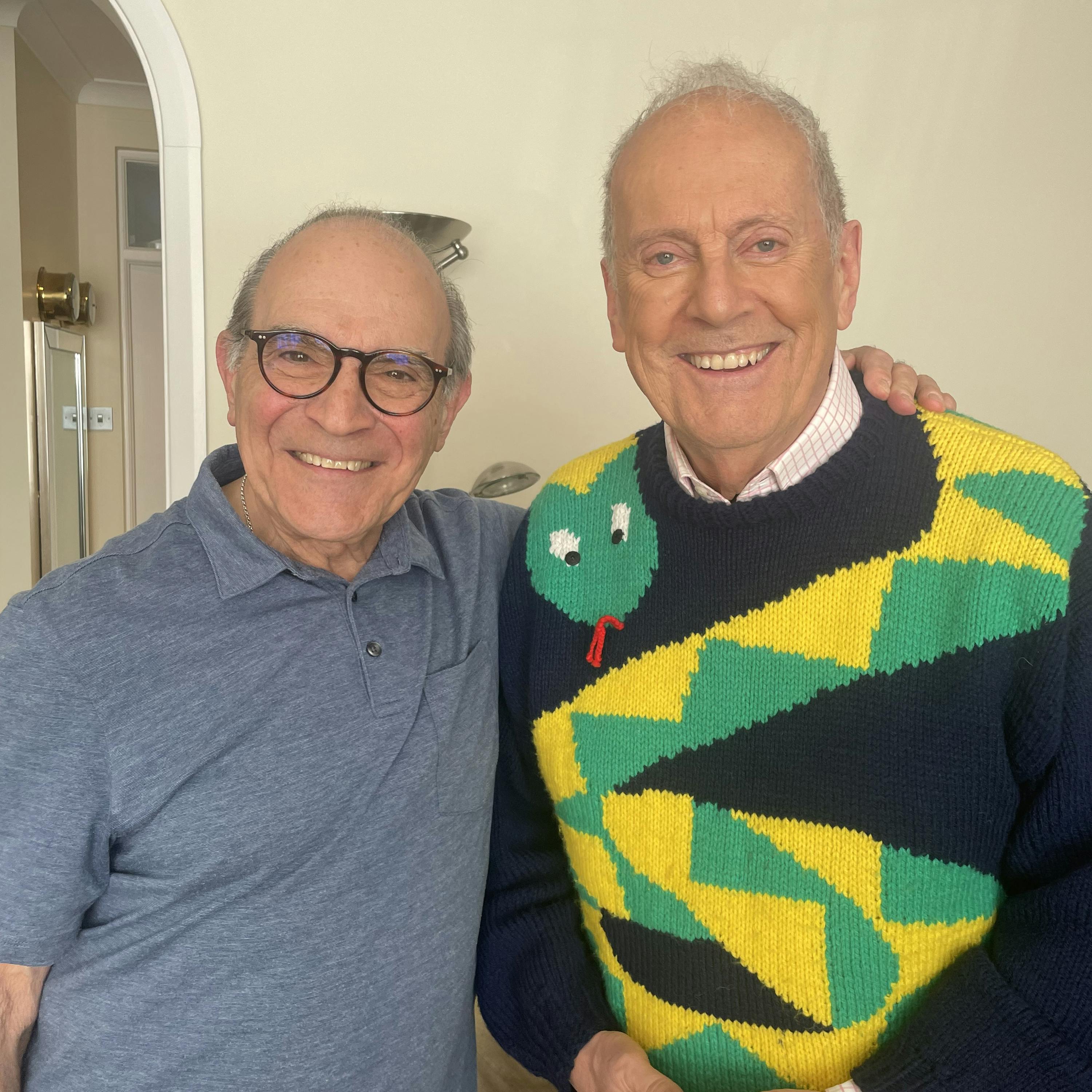
The great actor Sir David Suchet is Gyles's guest today: and this conversation gets behind Hercule Poirot - Sir David's most famous role - and delves into David's childhood, his schooldays and his early acting career at the National Youth Theatre and the RSC. Gyles finds out about David's difficult relationship with his father, the great doctor, Jack Suchet. He finds out about his close relationship with his mother and his grandparents, and the influence they had on him. He finds out about David's schooldays, his prowess on the rugby pitch, and how a teacher at school spotted his acting talent. Gyles also hears about how David's work ethic and attention to detail has sometimes led to tricky moments in rehearsals. The episode ends with a surprise which you won't want to miss!
This is a fascinating, candid and sometimes very touching interview - thank you very much to Sir David for your time and for your honesty.
Learn more about your ad choices. Visit podcastchoices.com/adchoices
Hosted on Acast. See acast.com/privacy for more information.


