
 Ask ChatGPT



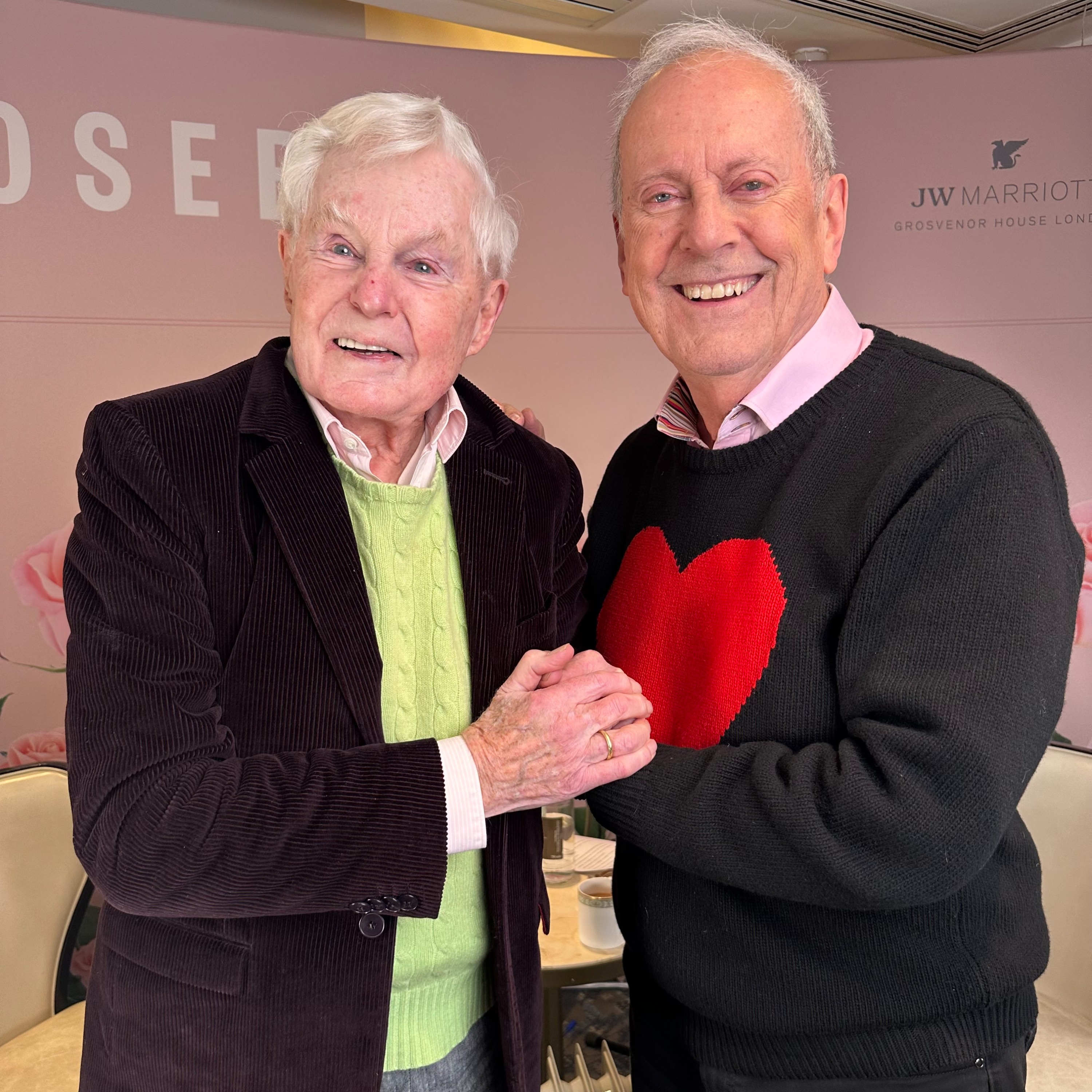
Host: Gyles Brandreth
Various famous individuals sharing their first memories.
Light-hearted, nostalgic conversations filled with laughter and storytelling.
Legendary actor Sir Derek Jacobi shares anecdotes from his life, including childhood memories, his theatrical career, and personal insights.
Written by AI. May contain mistakes.
Discussion about Derek Jacoby's illustrious career and personal anecdotes.
“Hello again and welcome to another episode of Rosebud.”
Derek Jacoby shares memories about his childhood and family background.
“Derek Jacoby, born the 22nd of October, 1938.”
Exploration of Derek's parents, their relationship, and their impact on him.
“Do you have a favourite from those days, a sweet you remember?”
Derek recounts his experiences at school, friendships, and imaginative play.
“I was young and ginger-haired and, you know, and freckle-faced and a bit vulnerable.”
Discussion on how the war affected Derek's early life experiences and memories.
“She lived up the road too, so she was handy.”
Learn about the significance of a groundbreaking wedding in 1958.
Explore the impact of being an only child and growing up during the war.
“But were you doing that, were you playing games to that extent?”
Discover a poignant childhood memory during an evacuation to a pub.
“which was near where my uncle was barracked in the army.”
Understand how being an unexpected child shaped his relationship with family.
“They weren't terribly posh, but they weren't go-blimey.”
Learn about the role of key teachers in fostering a love for theatre.
“And your first school that you remember properly?”
Explore the journey from early performances to playing Hamlet.
“took us up onto the stage of the London Palladium.”
Find out about his school life and subjects he enjoyed and struggled with.
“Let's get you from seven at the Palladium to 17 at Samlitt.”
Hear about a pivotal meeting with a legendary actor and its impact.
“I mean, we've done more than 100 of these, and I don't think anyone apart from you has known the first name of their favourite teachers.”
Delve into why Hamlet remains a compelling and personal role for actors.
“And how did you persuade or did he suggest it, Bobby Brown to direct you in Hamlet at school?”
Explore why Hamlet is such a compelling role for actors.
“It really was, because I think I'm right in saying, you are the living actor in the world who has appeared in more productions of Hamlet than any other human being alive.”
Discover Derek Jacobi's journey to studying at Cambridge University.
“And I was offered a place of both of them.”
Derek discusses his early experiences with sexuality and identity.
“And I discovered very early that it wasn't...”
Hear about Derek's relationship with his family and their acceptance.
“you know and they became my friends and I fell in love in Cambridge with somebody who was straight.”
A touching story about Derek's 21st birthday present from his parents.
“And they said, have you noticed anything?”
Derek shares his experiences and contemporaries in Cambridge drama.
“at Cambridge with your own car, your 21 years of age.”
Derek recounts his encounter with the legendary Laurence Olivier.
“played Hamlet again of course well I don't know it was all a highlight and it was a highlight because you were working all the time All the time.”
Learn about Derek Jacobi's impactful meeting and working relationship with Sir Laurence Olivier.
“But he'd bought his tea with him, so he was still in drag.”
Explore the complexities of Olivier's mentorship, including both kindness and harsh criticism.
“He had daddy, father Olivier living in Brighton.”
Discover Derek Jacobi's experiences and fond memories of working with Noel Coward.
“and I was upped to replace him as Benedict and Sir Lawrence watched the dress rehearsal of me playing Benedict and told me that my problem was that I didn't have Albert's balls.”
Reflect on notable performances and the impact of iconic roles like Claudius and King Lear.
“I always thought he was good with men, and particularly with gay men, and was very cruel to women.”
Gain insight into Derek Jacobi's personal struggles with stage fright and its implications.
“Have you ever suffered from stage fright?”
Derek Jacoby discusses the effects of stage fright on his career.
“And if I'm going to be frightened every time I go on the stage, there's no point in doing it because one day they'll all see it and it'll be disaster.”
Derek shares his experiences with envy and self-image in the acting world.
“I think there are times when everybody has experienced an envious streak.”
Derek reflects on the need for toughness in personal and professional life.
“You have as a person your father's sweetness and has it been a disadvantage to you not being tough?”
Derek talks about his long-lasting relationship and the support he receives.
Derek describes the joy he feels during curtain calls despite initial fears.
“Give me what comes into your head when I ask you, Derek Jacoby, for a moment of joy, sheer joy, what comes into your head.”
Derek shares the lessons life has taught him and emphasizes gratitude.
“I'm conscious of that because I work a lot with Judi Dench.”
Derek reveals his favorite Shakespeare line and its relevance to him.
“Certainly don't expect anything without earning it.”
The arrival of guests is acknowledged.
“Oh, the people in the white coats have arrived.”

Get the gist, explore an idea or ask about something said.
 Claude
On Rosebud with Gyles Brandreth, what are the key points of this episode?
Searching your listeningAutomatic transcript. May contain errors.
0:00If you're listening to this in bed late at night, there's been research showing that listening to intelligent conversation just before you go to sleep really helps you sleep better and dream more interesting interesting. dreams. I made that up, but I just wanted to encourage you wherever you are to enjoy this very special edition of Rosebud. Cue the music.
0:46Hello again and welcome to another episode of Rosebud. I'm really excited about this one because today I'm talking to one of my favourite people. He's a real friend of mine, but he's also one of the greatest actors of our time. I say that without exaggeration or hyperbole. He really is a remarkable actor. Discovered first on stage by the great Sir Lawrence Olivier when he opened the famous National Theatre of Great Britain at the Old Vic in the 1960s. He is the actor, I think, who has played Hamlet more than any other actor living in the world today. He is Sir Derek Jacoby. A lot of people now, well, they first discovered him on television when he was in I, Claudius.
1:29More recently, they've loved seeing him in Last Tango in Halifax. But he was a hero of mine from the 1960s because of his work at the National Theatre. And then I saw him in I, Claudius, and I thought this man can do absolutely anything. And people know he can do anything. He's won every award you can imagine. Olivier Awards for things like Serrano de Bergerac, his Malvolio in Twelfth Night. I think he won a Tony on Broadway when he did Serrano there. He is an extraordinarily gifted actor, but he's also such a delightful human being. I saw him most recently only the other day at the memorial service the celebration for the life of Dame Jilly Cooper and he came up and he's now he's a good age he was born in 1938 he came up and read something so beautifully he's got a wonderful voice and a wonderful way with him he's an extremely sweet human being but a fascinating one and he can be very very naughty one of the happiest evenings of my life was when he and Dame Maggie Smith they'd been together they'd worked together at the National in the 60s in a famous production of Much Ado About Nothing they came for supper just them the two of them and my wife Michelle and me and we sat there Michelle and me we didn't speak for three hours we just watched Maggie Smith being waspish and witty and Derek Jacoby being charming and naughty and it was glorious well if you want to listen to Maggie Smith check out the Rosebud archive her last recorded interview is here on Rosebud and I'm so glad we managed to catch Derek Jacoby because he's always working but he very kindly doesn't do many of these he said all right all right all right I'll come along and so we came to Groven the house and we chatted and we gossiped so much as you'll hear.
3:29Anyway, one of my favourite actors, one of the best on the planet. Please join us as we go, well, for an episode of Rosebud with a bit of rambling. It's a rambling Rosebud. This is a rambling Rosebud with me, Giles Branworth, and my friend and hero, Sir Derek Jacoby. Cue the music.
3:59Well, I've got to take you even further back. Oh, right. Because we're going to begin now. Derek Jacoby, born the 22nd of October, 1938. Yes. That was a mistake. Were you a mistake? Well, they knew war was coming. Oh, really? Yes. And they thought we'd better get on with it. They thought we'd better get on with it. And so I was born and Dad went off to war for six years. Seriously? Yes. You were the only child, were you? I was the only child. And so they thought, literally, that war was in the air. War was in the air. If we're going to have children... We'd do it now. Wow. And he went off, and my mother was at work.
4:37She worked in the Waltham Stone High Street. And I was kind of literally brought up by my aunt. Well, give me then your very first memory. What is your... In your head, what is your very first memory? good heavens i think my very first memory was at home in leighton stone i think it it was not the orklier the one that warred siren yeah eric yeah that there's going to be an attack yeah we had a um anderson shelter anderson shelter in the garden and we would all huddled down in that my uncle was with us at that time and he stood on guard yeah there was a lot of that going on then i mean before you tell me about your uncle and your aunt go back to who your parents were what was your father called alf alfred alfred jacoby alfred jacoby and what is the heritage of the name jacoby um my dad was never it's curious he was a bit cagey about about it I always felt he was a bit cagey.
5:53And I think there was a Germanic background somewhere, somewhere, somewhere, way back maybe, but was never, never stated. And he was known as Alf? Alf, Alf. And what sort of man was he? What was his height? What was his appearance? Oh, he was the sweetest man. Sweet, gentle creature. He worked all his life. he had his own confectionery in tobacco in his shop in Shinkford for many years I used to go in there and pretend to serve behind the counter and as soon as somebody came in, Dad you've got a customer and I'd run out the back and but I loved it, I loved pretending and of course I ate a lot of sweets.
6:42Do you have a favourite from those days, a sweet you remember? I think they were called Gobstoppers. Oh, yes. Yes. I loved a Gobstopper. A Gobstopper. Where the colour, did the colours change? Yes, and they lasted. Yeah. They lasted a long time, yes. So Alf basically is running this corner shop. Yeah. And what about your mother? Did she work? My mother worked in the Walthamstow High Street for many, many years. She was the boss's secretary in a department store called Garnham's. What was her name? Daisy. And how did Daisy and Alf meet? They were childhood sweethearts. Oh. My mother was a Hackney girl, and she met Dad in Hackney somewhere, at a dance hall, I think, or something like that.
7:29And they married fairly young. Were they happy together? Oh, idyllically. Idyllically happy. Wonderful. Mom died first. She died too young. She was in her 70s. oh well um she'd never had buoyant health you know um and what did they have in common why did they get on so well they both had a very strong work ethic they loved uh housekeeping they loved looking after the house and garden they were very proud of house and garden they neither of them sort of sat back and took. They were givers. And what sort of a house was it? It was Essex Road, 2B Essex Road. It was the end house in Leighton, the joining of Leighton and Leightonstone.
8:28It was a nice house with a nice garden, a nice big garden, which was my father's pride and joy. It was very comfy. They really made it a home. And I loved it. Were there books at home? Not many. They weren't readers. No. The books came when I was at grammar school, really. That's when books came. And was there... Do you listen to the radio, the wireless? Yes. Yes, a lot. What sort of shows do you listen to? Well, everything. Because when I was 10, I contracted rheumatic fever. And I was in bed for a year. Goodness. And they brought the bed down into the sitting room. So I had the wireless on all day.
9:11I mean, I listened to everything. Workers' play time and those sorts of things. And as I say, I did my 11 plus in bed. During the war, you mentioned your aunt and uncle. Who were they? Who were they related to? They were my father's brother, Henry. And he'd married Hilda. And they'd had his son, Raymond. and I lived a lot in their household in Leighton. And why was that? Well, because Dad was in the army, Mum was in the Walthamstow High Street, out all day, and so Aunt fed me and I came home from school. So I lived with Aunt and I sort of got on with my cousin. He was a couple of years older, so he rather bossed me.
10:02I was young and ginger-haired and, you know, and freckle-faced and a bit vulnerable. But I adored him, but I was also terrified of him. But it was a good time. And at this time, when you were a little boy, did you feel you were alone? You had the cousin. Did your parents ever talk to you about why there were no more children? no no they never did and i never questioned it no i didn't feel alone i was adored i was loved and cherished uh of course i didn't see my father till i was about six years i mean literally he was away at the wall he was away in the wall so do you remember the day he came back do you remember yes i do he never left the country he was stationed in scotland yes i remember them saying that when he came back, they were slightly worried whether I'd take to him, you know, whether I'd like him, whether I'd welcome him.
11:11But I did. He was a lovely man. He was a gentle, sweet man. I'm going to cry. That's loud. That's quite loud. Well done him. Did he live to a good age? Yes. He outlived my mum. He lived to 90. Oh, that is a good age. Yes, that's a good age. I mean, particularly for his generation. Yes. That's a very good age. And he had a girlfriend. Oh, after your... Oh. Yes. And did you quite like her? Was she all right? Well, yes. Ish. Yes. Of course. Of course. Good. Well, he needed companionship. He needed companionship. Yeah. Well done. So, the war ends. Dad is home. You're at school by now. Can you remember your first friend outside the home, apart from Raymond, your cousin?
11:54Who was your first friend as a little boy? Gordon. Gordon? Gordon Lawrence. Yes. We were at school together and we were inseparable. We loved each other. And he was my great companion and I was his great companion. And why do you think that was? What brought you together? And there was also a girl called Winnie. Oh, yes. Winnie Spurgeon. We liked Winnie. She was great fun. She lived up the road too, so she was handy. What did you and Gordon and Winnie on Winnie's days, what did you get up to as small children? Gosh. Played in the street a lot. Street games. Played mums and dads and dressed up.
12:35Lots of dressing up. Yes, I would wear my mum's clothes a lot. I think it worried them a bit. We'd all dress up. Oh, I seem to remember you telling me once about feeling guilty because you'd taken your mother's wedding veil. I had. I'd taken my mother's wedding veil and I'd worn it and I raced up the street to show Winnie my mother's wedding bale. Of course, it caught on the privets. Oh, no. Up the street, all the privet hedges. And so when I got back home, it was in France. Ah. Yeah. But my mother, being my mother, said, don't worry, it's all right, it's only a bale. Oh, bless you. They're the sort of mum's dad.
13:21Yes. Did you have a dressing-up box where you kept the clothes? Yes, I did. I had dressing-up clothes. And did you dress as characters or simply the fun of dressing up? The fun of dressing up as someone else. Yes, not characters particularly, mainly adults dressing up to be older than I was. Yeah. I went through a whole phase of dressing up as clergy. Oh! This was triggered by the election of a new pope. Oh! In the 1950s. And my father explained to me that I couldn't be pope because we were Anglicans. and therefore we had a very nice eider down which i wore as my coat yes and i had a tea cozy yeah which i had as my mitre yes and various of my father's ties which i would wear a stole oh yes and i did all the ceremony kissing the stole before putting it on oh wonderful and it was in this garb as archbishop of canterbury that i married my sweep to my sooty oh which was the first Church of England gay wedding, in my view.
14:27Oh! Back in about 1958. Oh, I love it. I love it. But were you doing that, were you playing games to that extent? No. I can't say I went that far. But I did play games a lot. I mean, I sort of lived in my imagination. I lived in my head. Being an only child, too. Yeah. And a war baby. How conscious were you of the war? I mean, your first memory is the Anderson Shelter, the air raid. But on a day-to-day basis, because you're born at the beginning of the war, just before it. Yes. By the end of the war, you're seven, so you will be remembering things. Yes. Well, I was evacuated to a place called Little Brick Hill, which was near where my uncle was barracked in the army.
15:19It was near Bletchley. I was evacuated to a pub and I went to the local school. And I remember there was one occasion when the school had a school picnic. So I turned up at the school with my picnic and I was told that I couldn't go on the picnic because I was an evacuee. I wasn't a local. Can you imagine? No. and I was sent back to the pub where my aunt received me and said, what are you doing here? And I said, they won't let me on the picnic because I'm an evacuee, I don't live here. No, she was an East London lady. She marched me back to the school and the first time I heard real East London, an East London lady giving her love a lady what for and it was wonderful she marched me back to the pub so they gave me a wonderful party in the pub fantastic you know you mentioned the East London connection did your parents speak with East London accents no no uh my aunt and uncle were much more go-blimey than mum and dad.
16:42No, mum and dad didn't, actually. They weren't terribly posh, but they weren't go-blimey. And surrounded by all these grown-ups, did they all adore you? Yes. Well, it's our favourite line in all Shakespeare. I was adored once too. I was adored once too. They gave me a wonderful childhood, yes. they love me they love me yes and I love them why do you think they did love you so much because you were the only child or well I there was also Raymond my cousin my my they love you both aunt and uncle's son yeah but I I had an angelic look about me I was ginger freckled I was a bit you know and um that got them going I think I were you conscious of that did you play up If I am absolutely honest, I was aware of it.
17:45I knew I was special in their eyes because of the war and because I was a surprise and because I was a mistake that they hadn't planned, you know. And so in a way, I suppose it made me special. and it was a speciality that I was very faintly aware of. So, in putting this now, you said they had the baby before we went off to war, but the truth is they hadn't really expected a baby at all. They hadn't really planned it. It was a mistake. Or a miracle. And I think they chose to think it wasn't a mistake. This is our blessing, our one blessing. Yes, I think perhaps they did. Perhaps they did, yes.
18:32I would like to think that. And your first school that you remember properly? Canterbury Road Primary School. I adored school. I loved it. I remember I had a teacher called Karen Hewitt. Karen Hewitt talked to me very strongly. I'm interested you don't call her Miss Hewitt or even Mrs Hewitt. Karen Hewitt. Karen Hewitt. Even as a small boy. She became a friend. Ah, how interesting. She took me up. She took me to the London Palladium. Good grief. To see a pantomime. It was my first time ever in a theatre. Cinderella, London Palladium. What was her name playing the principal? Oh, it will come to me.
19:23Yeah, I want it to come to you. A famous principal boy. Oh. She came down in the audience. Yes. Picked a couple of kids of whom I was one. took us up onto the stage of the London Palladium. We were there with the principal boy and Dan Deeney on the stage of the London Palladium. And I must have been seven, eight. I don't know. I mean, I was young. I was young. How fantastic. That was Karen Hewitt who'd taken me. She must have seen something in me. I don't know. That's a fantastic experience. She did. And is that, I mean, obviously, you can't forget that. Oh, no. So at the age of seven, you are on stage at the London Palladium.
20:00with Cinderella and Dandini oh what were their names Pat Kirkwood the famous Pat Kirkwood the best legs in the business Pat Kirkwood who later she was married to Norman, no Greg yes come on what was he called Pat Kirkwood and Pat Kirkwood and do you remember there were rumours about her and Prince Philip yes there were because they went out dancing one night yes I don't think there was anything in the story I think it was just a one night dance but she was famous for her legs yes she was I wish I could remember who Cinderella was she would have been the principal boy yes she was principal boy so she was playing Prince Charming and cannot remember Cinderella again a famous oh no it's gone but you can remember can you remember the heat of the lights you remember the oh yes yes and um being taken out of my seat and walking down the aisle we were in the stalls up the steps onto the stage it was so exciting somebody like arthur askey will have buttons yeah uh sure i think he might have been yes what a debut yes and obviously karen your friend who was the teacher saw something in you when did you begin to feel these sort of longings well you were dressing up this idea of being a performer i think quite early be as you say the dressing up and i think that that appearance on on the stage with prince charming did it i'm sure it did it yes and when did you first did you then do drama at school yes yeah yes what was the first thing you do at school oh the prince and the swine herd oh it was a dual role oh you're playing both prince and the swine herd my mother made the costumes of the prince and the swine herd um yes that was my first school play and then i did all the school plays that was my early rep really because i i ended up playing hamlet at school when i was a teenager and that went to the academy at the Edinburgh Festival.
22:35Good grief. The critics came and criticised it. Harold Hobson reviewed it. And you're sort of 16 at this time. I'm 17, 17. Let's get you from seven at the Palladium to 17 at Samlitt. You leave the primary school, you leave this lovely teacher Karen behind. Yes. And the secondary school is what? You're taking your 11 plus in bed because you're not well? Yes. And then I go to the local high school. Yes. Well, I didn't quite pass. I put in something that I had another chance. And the other chance was an interview. And I had an interview with the local grammar school headmaster. And I obviously charmed the pants off him.
23:18That was my brief. And I got in through the interview. And so I went to the local grammar school. And were you happy there as you had been at the primary school? Oh, idyllic, idyllic. It was down the road. I could walk to school. It was a lovely school, lovely sports ground. And what were your top subjects? History, which I did at university later. History in English, I think. And what were you bad at? Maths. Maths, chemistry. Oh, anything, anything scientific. Oh. And what about games, sports? Tennis. That was my only sport, really. I ran quite well until I had my legs accident. Oh, what was your legs accident?
24:06I had rheumatic fever in both legs. So until then, you were quite an athlete. Until then, I was very active, yes. Has that rheumatic fever then affected the rest of your life? In a sense. My legs have always been my weakest point, yes. Something you and Sir John Gielgud had in common. Really? Did he have? Oh, that's right, he did. He was used to criticise his legs. Yes, that's right. The neck up, the best actor in the world. The leg's impossible. The leg's impossible. I wasn't that bad, but my legs have always been weak. Yeah, they've been my weakest point. So you played tennis. You enjoyed English and history.
24:42Was there a favourite teacher? Oh, yes, Bobby Brown. Bobby Brown. I love the way you... I mean, we've done more than 100 of these, and I don't think anyone apart from you has known the first name of their favourite teachers. People would say, Mr. Brown, but it's Karen and Bobby for you. Well, it's because they became friends outside school. You know, Karen took me to the theatre for the first time. Bobby was an English teacher and took me to the theatre all the time. Well, he took school parties to the theatre and he directed the school plays. So he became intimately associated with acting and theatre and plays.
25:29Can you remember the first play other than a pantomime you went to see? Golly. Do you know, I don't think I've ever been asked that question. And do you know, I don't think I can remember the first. What's the most memorable then that Bobby Brown took you and the others to? Oh, Hamlet. With who? I think Burton. Richard Burton. So this is the Old Vic. Yeah, the Old Vic. Early 90s. He took me to the Old Vic a lot. Years later I met Burton in Switzerland. I was on holiday and I very cheekily found out where he lived and knocked on his door. Very cheekily. And a servant came to the door and I said, is it possible to meet Mr Burton?
26:19Is Mr Burton in? Gods were with me. Burton suddenly appeared behind him and said, what is it? He invited me in. Gosh. I mean, it doesn't get luckier than that. It doesn't get luckier. None of your story gets luckier than this. The parting thing was, because I told him I wanted to have been an actor when I grew up, and he said, well, if you become an actor, be in touch. Lovely. And did you keep in touch? I did. Oh, my gosh. and he became a friend too. So you can call him Richard. I can call him Mr. Brown Bobby. Yes. How fantastic. Yes, it was a fairy tale. It was a fairy tale. A very bold thing to do.
27:02It was. I can't imagine how I did it because I'm not bold. I'm not bold at all. But you clearly had a charm that could get the birds off the trees. I had a burning desire to be an actor and he was one of the greatest actors of my youth and I had the opportunity to actually meet him and I took it.
27:36And how did you persuade or did he suggest it, Bobby Brown to direct you in Hamlet at school? I, no, he suggested me because I'd done other plays. I mean, I'd done the ladies, I'd done the frock parts. Oh, because it was a boy school? It was a boy school. So I did the ladies, and then my first male role was Hamlet. The rest was history, really. It really was, because I think I'm right in saying, you are the living actor in the world who has appeared in more productions of Hamlet than any other human being alive. I've appeared in a lot, yes. I once knew how many times, but it's a lot. And you've been also, you've been in other people's hamlets.
28:22You've been, you've been in other parts. Yes, yes, yes. It's a play that I know forwards, backwards and sideways. What is, why is it so compelling? Why is it the great part to play? Because it's the one Shakespeare that relies on personality. Every Hamlet is really the personality of the person playing Hamlet. It gives you a freedom of expression. And this is your Hamlet. you know and it's it's a personality book really it's fantastic to be a school boy of 17 playing hamlet you go to edinburgh and harold hobson who was the reviewer for the sunday times yes did the reviews like your hamlet um yes uh it was the the uh oh no what did he say he's the only review i've ever read because after that i vowed never to read and i never did i to this day i've never read a review but i think he said as hamlet he would make a fine it was a good issue he didn't hate it but as hamlet he would make i can't remember it i'm so sorry well it's only if you can't remember the only review you've ever read this is why you've managed to lead a happy life i'm sure you've had excellent reviews from beginning to end so at school it's clear you want to be an actor that's what you want yes but nonetheless you applied to go to university well i'd heard that it was cambridge was a hotbed of acting ah and obviously you and it was and you were a clever boy i mean your parents i wasn't clever i was a swat fine but you studied but mr brown and others teachers thought we can get him in if we if he works hard yes yes so and was this an extraordinary thing for your family had any of them had university backgrounds at all no no no my father had left school when he was very young my mother was much more educated than my dad she was she was clever she was clever and did they have any theatrical background at all no none at all so no theater background no academic background to the cast and you get into cambridge what college do you apply I thought...
30:52King's and St John's. And I was offered a place of both of them. And I chose St John's. And by then, had you discovered a love life? Had you discovered girls or boys? I tried girls. Didn't work. No, didn't work. It just wasn't for you? No, no, no, no. And I discovered very early that it wasn't... I love their company. but when it became romantic you know snogging behind the sofa time i that wasn't for me i didn't get anything out of it because at this time we're talking now you go to if you're born in 38 you're going to cambridge in the late 50s yeah being gay is well it probably isn't even a phrase turn a phrase but it's certainly against the law doing anything oh yes oh yeah and were you conscious oh dear, I'm actually fancying boys, and that's not really done.
31:51What was going through your head? Yes, yes, all that. I knew, I suppose the word abnormal kept cropping into my head. This isn't normal, you're supposed to fancy girls. And I tried, it hasn't worked. I've got to admit to myself that I fancy my own sex so what do I do about that? How does one carry on? Cambridge kind of opened that world to me I was innocent totally innocent really until Cambridge when I met people of the same stamp you know and they became my friends and I fell in love in Cambridge with somebody who was straight. Did you keep doing that? Yeah. Yes, I did a bit. It's exhausting, isn't it?
32:52Yes, I did a bit. But Cambridge, there was just one. We became huge friends. I was best man at his wedding. Well, it's the next best thing, isn't it? It's the next best thing. Yeah, you can't have him, give him away. um and uh but it was i adored cambridge i adored can you remember before we move on can you remember your first proper love affair that actually was reciprocated
33:22yeah him one night oh really and he said this is not for me and went and got married straight away yes absolutely well at least you showed him the the right way for him. Yeah. And you confirmed the right way for you. We made up both our minds, yeah. Really what I'm asking about, was it, because you're a generation older than me. Of course you're already calling all this, aren't you? Yeah, don't worry. Yes. You're a generation older than me. Was it actually quite tough for people like you? Because now, in other words, it's totally different. You now have Richard, your husband. You know, it's comfortable for everybody.
34:03But then... Oh, it wasn't. No, it wasn't. It was hard going. It was hard going. Because it was illegal for the start. You were breaking the law. You were also entering adulthood. And you were entering adulthood as a criminal. I was in a milieu that was easier on me than for some. because the whole ethos of a university, you were thrown into the company of your own sex as well as the opposite sex all the time, you know, 24 hours to three years. And you were meeting teachers, this is a name that often comes up here, like Dady Rylands. Oh, Dady, yes. Exactly. Oh, well, Dady was, yeah. I mean, he was great.
34:56He was such a funny, sympathetic man, you know. He could tell who was and who wasn't immediately. So you were leading a kind of coded life. In a way, yeah. But it was more comfortable at Cambridge because it was more accepted amongst your... It was more accepted. But you wouldn't have discussed it with your parents. I did once. Oh. With my mother.
35:23I broke down for some reason. I was deeply in love and Cambridge with this person. And we'd had a terrible row. And I'd come home for the weekend, and I suddenly broke down, and my mother said, what's the matter? And I confessed. I told her all about it. And she just said, I totally understand. It's something all young boys go through. she said you'll grow out of it that was it it was never mentioned it again and then of course as I grew older she knew and she was brilliant in that she just tossed it off she just passed it on they were clearly lovely people they were tell me about the present they gave you was it your 18th birthday or 21st my 21st yes and I remember my My father sent me out for some cigarettes, well, again, 20 cigarettes, bought him 20 cigarettes, came back home, gave it to him, and they were standing in the doorway.
36:33The front door was open. And they said, have you noticed anything? I said, no, no. What's that? I said, it's a red car. it was my 21st birthday present i said oh did you fold that they had saved up for 21 years i'm gonna cry again they'd saved up for 21 years oh oh to buy me a car i wish this was whiskey bless them what good people they'd waited 21 effing years to see the look of my face sorry oh wonderful did could you drive by that stage at least yes oh good yes i'd taken lessons oh wonderful yeah which they paid for of course oh bless them what good people so here you are at Cambridge with your own car, your 21 years of age.
37:43Who are your acting contemporaries there? Who else is in the ADC, the amateur dramatic? Is it the same generation was Corrin Redgrave? Corrin, yeah. And Ian McKellen always seems to be... Ian is a year behind. I'm a year older than Ian. But he did... Can I tell you something? You don't look it. Thank you. You've still got the boyish, the cherubic look. You've kept that going. It's the ointment. So it's quite a crowd. It was quite a crowd, yeah. And was Trevor Nunn directing then? Trevor, Trevor was there. So it is a golden era. It's a bit of a golden age, yeah. But you get to play some of the best parts.
38:26Cambridge was like pre-rep. It was like rep. I read history. I did the history studies as and when. I kind of fitted them in, you know. and one of my best performances, dare I say this, one of my best performances was in the examination hall. Oh. I opened the paper. I think it was medieval European history. I can't answer a question. I know. I'll faint. And I... Oh. Derrick. Carried out of the examination hall in a fake faint. I've never said this ever to anybody. Perhaps you should cut it out. No, we can't. It's too late now. You've said it. And they'll forgive you. And I got what was called a ligeroot hat.
39:32Oh, yes. A sick pass. Gosh. But I couldn't answer the word. Well done. Well. But I had to lie fainting for three hours. That was much tougher. Much tougher. Much tougher. They took me outside. They put me on a camp bed outside. And I had to pretend to be asleep for three hours.
39:58Glorious. So you do emerge with a degree, though. You get a degree. Oh, I got a 2-2. Oh, fine. Yeah. That's fine. Down the middle. Down the middle, as it should be. Yeah. And you emerge and you know I'm going to be an actor now. Because you are an actor. Oh, yes. And do you apply to a rep company or what happens? Yes, I apply to the Birmingham Rep. Oh, very good. And again, you are interviewing the luckiest actor ever. Ever, ever, ever. I applied, I wrote a begging letter to Birmingham. They had seen me at the Arts Theatre as a student. playing Hamlet and they said you're in okay we'd love to have you with us and I stayed there for three years that was my rep that was my drama school really monthly rep and the highlight of those three years in terms of a performance played Hamlet again of course well I don't know it was all a highlight and it was a highlight because you were working all the time All the time.
41:06And you play every four weeks, you know. We've now reached the early 1960s, when I first remember seeing you. This is the period when the great Sir Laurence Olivier has founded the Chichester Festival Theatre on his way to founding the National Theatre at the Old Vic. And he is forming his company for these two. And I first see you in those companies. How on earth did that come about? well he was in the audience at the Birmingham rep oh one Wednesday matinee was he looking for people he was looking for people for that first national company for looking for for the kids in the company and he came to Birmingham which was a famous rep you know and uh I was playing Shakespeare's Henry VIII playing actually the Henry VIII I was playing Henry VIII because that's an older man isn't it yes i had the padding and the everything i had everything um and it was a wednesday matinee and one of my great achievements was getting out of all this rather quickly and getting to the cardoma for my tea that was my great talent uh not the performance particularly Anyway, I was sharing a dressing room with Arthur, who was...
42:32Wolsey. Cardinal Wolsey. He was playing Cardinal Wolsey. But he'd bought his tea with him, so he was still in drag. There was a knock on the door, and I opened the door, and it was an answer, Olivia. Gosh. Oh, God. God almighty, he shook my hand. And he said, well done, well done, well done. And that was it. And he went over to Arthur, who was sitting there as Woolsey, and he covered him with praise. Oh, one of the best Woolseys he'd ever seen. And all that carried on. And then he left. And I sat there. The air was a bit cold. And there was suddenly a knock on the door. I opened the door.
43:27you were Henry! He screamed at me. And I said, yes, sir. And he gave me a job. Oh, wonderful. And what was he like? Because obviously over the next few years, you worked. I adored him. I adored him. How could I not? How could I not? He cast me as Laertes to Peter O'Toole's Hamlet in the opening production at the National Theatre. I adored the man. He could do no wrong. He could be a bastard. I'd see him be a bastard to some people. He could be a tyrant. But he had the other side of him too. He had daddy, father Olivier living in Brighton. And I would go down to Brighton. and I'd spend the weekend at Brighton sometimes.
44:25I'd stay there. Gosh. He became a kind of father figure. And could you be normal with him? Because he was such a regal figure. Yes. That there might have been a kind of invisible moat around him. He was the great Sir Lawrence. Yes, and as an actor, I could never forget he was Sir Lawrence Olivier. However approachable, he made himself, and he did. And he gave you opportunities. And he gave us every opportunity. You were in his famous Othello? Yes, I was Casio. And what was it like being on the stage with him? Well, it's kind of indescribable. He was a huge presence. And the Othello particularly, I think, was huge.
45:11And we never made it to the dressing room. We always used to stay on the wings and watch him. Practically every show. um and what was he doing that was so extraordinary he was he was everything he was gargantuan he was big and he was intimate at the same time he was removed from the audience and he was part of the audience at the time it was a great lesson to learn watching him and trying to copy that particularly that sense of being on stage presenting oneself but at the same time being sitting out there with them watching yourself can you give me an example of his kindness towards you if you went to stay with him at the weekends did you call him larry or did you call him sir i always called him sir i never i could never call him larry never never never he was always sir and he did in fact say you can call me larry and i said i'm sorry sir i can't um uh did he have a cruel streak oh yes oh yes yes um he could be a bastard can you give me an example of that in relation to you yes there is there is oh god well the story i'm thinking of is the much ado when you took over from Albert Finney oh yes yes yes Albert Finney was Benedict and I was Don John and I'll be left to do a film and I was upped to replace him as Benedict and Sir Lawrence watched the dress rehearsal of me playing Benedict and told me that my problem was that I didn't have Albert's balls.
47:06Oh. And I wasn't ballsy enough for Benedict, and God, that hurt. But it was a note? It was a note, and it was a true note. I didn't have Albert's balls, no. I didn't. Albert was, you know Albert Finney. I was no Albert Finney. You were just physically totally different. I was totally wrong, and I was a gentler soul. Wool's and Alberts, you know. And you did, I mean, I remember I saw you both, you did it differently in the end from him. Because that's the end of the first act, where he is blowing smoke. Oh, yes. He's sitting with a cheroot or something, and he blows almost smoke rings. He blew smoke rings.
47:49I mean, just amazing. Yes, every night he blew smoke rings. And I don't, well, when I saw it, you did something quite different. Yes, I couldn't. Because by then, there was, I don't remember even a cigarette. No, I couldn't. I didn't even attempt the cigar stuff because he did the cigar throughout the performance. But I... No, I lie. I did have a cigar. But I certainly didn't do smoke rings. But I had the cigar because it was rather important in the way he played it. And I sat there right at the end and then noticed I was in the spotlight. and blew the spotlight out. I remember that. Yes. And it worked.
48:35Thank goodness it worked. It worked. Yes. Equally brilliant in your way. Yes.
48:47One of the other greats of that era that you were lucky enough to be directed by was Sir Noel Couch. Oh, yes. And that was in Hay Fever. Hay Fever. With a cast beyond belief. Bob Stevens, Maggie Smith, Albie Finney. Yeah. Lynn Redgrave. Lynn, yes. And Dame Edith Evans. And Dame Edith Evans, yes. Is the story true? She kept getting the lines wrong. She kept getting the lines wrong. On a clear day, you can see Marlowe. And Noel Coward. Edith, dear, on a clear day, you can probably see Marlowe and Fletcher, but it's not the line I wrote. What was he like? I adored him I loved him from his top to his bottom he was fun he was encouraging he was so part of theatre he was theatre incarnate you know and for a young actor just starting out even to be in his company to be fed and watered by him in a restaurant.
50:00And he was very generous of himself with the youngsters in the company. He was so encouraging, yeah. In your long career, have you ever met anybody you didn't like? That I didn't like? Oh, I'm sure. Oh, you've skilfully wiped them from your memory too. I've strangely forgotten their names. Oh, yes. Who?
50:29Oh, the one that springs to mind. John Dexter. Oh, the director. Yeah. I always thought he was good with men, and particularly with gay men, and was very cruel to women. But this is not your... Tell him... He was very cruel to me. He was a very famous director, for people who don't remember his name. I think he may even have directed that Othello that Olivier was in. Yeah, he did. He was a great director. Yeah. Why did you not like him? What was the difference? He was a dictator. he is directing skill was great but if you were laurence olivia of course you you got the best of his greatness if you weren't and if there was any hint that he fancied you you got the other end and he treated me like can i say shit okay and uh he did he gave me a very rough time very rough i I was terrified of him.
51:26Terrified of him. Because he did fancy you, of course, because you were cherubic in those days. Yeah. And you weren't ready to play ball. No. Or indeed. No. John terrorised you. Terrorised me. And I didn't enjoy it. I didn't enjoy it. He gave me marvellous parts. You know. And I hated it. When I mentioned that you were going to do Rosebud to people, apart from their excitement, all of them mention two things. What do you think the two things are from your lifelong work? Just members of the public. I say, oh, we've got Derek Jacoby on Rosebud. Hi, Claudius. Yes. How did that come along? Out of the blue.
52:11The first choice was Hollywood superstar. Oh, Charlton Heston. Charlton Heston. Charlton Heston was first choice. Ronnie Barker was the second choice. and um these were the producers uh choices and herbie the director said said uh i i there's an actor that i worked with uh he's called derrick jacobin they didn't know derrick jacobin from a hole in the ground and uh eventually after i think many shenanigans i don't know what went on They said, OK, we'll go with him. We'll go. He's an unknown. We'll go with him. Might be better if an unknown plays it. As it turned out, it worked. It worked. They said, OK, I'll go with him.
53:00Was it a very exhausting part to play? It was. It was six months. It was a long time. And also it was very physical, the speech. And also the make-up would take three hours. The old Claudia's make-up. so I'd have to get in at 5 a.m in the morning to get old Claudius on well I love all your work I have to say oh just I Claudius I loved you as Francis Bacon the painter yes that was good did you meet him did you know yes I mean had were you already acquainted with him oh I knew of him but you know but I'd never met him but he was sweet man he was he was lovely when was your King Lear, which I have to say people didn't see it, you missed it was it filmed?
53:45It was filmed. I'm so glad it was done on the telly people must catch that because I've seen lots of Lears from Paul Schofield onwards and yours was undoubtedly the best Oh my dear, thank you thank you, I shall cry again I shall cry, the pair of us can cry I shall be Gloster to your Lear we can cry together in a corner but it was magnificent and that's physically exhausting isn't it oh yes it is it is you get i don't know you get to the end of lear and you actually get to lear and you actually breathe your last breath and lie there on the floor the sense of a journey well trodden is is amazing is amazing and and the sense of uh a career brought not to an end, but brought to a peak, is thrilling.
54:49Have you ever suffered from stage fright? Yes. Yes, I have. And what does that mean? People use the phrase. What happens to you? You question your ability to act. you question your necessity to act you question your excitement your thrill your reason to act and you question everything in front of an audience it could only be a split second in your head split second or two seconds that they wouldn't notice. But for you, it's the only thing you can think about when you come off. Do you know what I mean? It is huge. It is huge. But thankfully, when it happens, it's not noticeable. You can cover it.
55:51You can cover it, but I promise you it happens. And it's one of the reasons I stopped acting on stage. because it was happening too often. I was standing in the wings shivering. Do you know? This isn't good for me. It's not good for them. It's not good for anybody. And if I'm going to be frightened every time I go on the stage, there's no point in doing it because one day they'll all see it and it'll be disaster. Do it in front of the telly and you can stop, forget your lines, we'll all go again. Yeah, exactly. And there's Anne Reid to make you laugh. There's Anne Reid to make you laugh. Because we all loved Lars Tango in Halifax.
56:38Yes, well, that was lovely to do. That was lovely. It was like a warm bath every time. And stage will be impossible for me now. I've lost the trick at it. No, you haven't. What are the downsides to you? Are you somebody who is envious? Has there been envy in your life? I think there are times when everybody has experienced an envious streak. Yes, I've always hated my looks. I've always envied handsome men as well as handsome women. I've always thought, you don't look like a leading man. You have ginger hair. I nearly swore, sorry. I've never been up my own self, as they say, because I think whatever I've got and whatever I'm selling is me and my faults.
57:46I'm not selling perfection in any way, sound, look, or anything, whereas I look at someone like Richard Burton, I see gold dust I see a look I hear a voice I see everything an actor should be I'm none of that Do you think it's been a disadvantage not being tougher? You have as a person your father's sweetness and has it been a disadvantage to you not being tough? Yes, I wish I'd been a bit more of a bruiser as you say a bit tougher. Yeah, I've been a bit and shown too much sensitivity. Yeah. You know, been a wilting violet too much. I've not been butch enough. I've not been aggressive enough. Can't even say the word.
58:46That's all right. We only need to meet to both burst into tears. People understand. Speaking of bursting into tears, tell me of the first time you saw Richard Clifford. your husband when was that can you remember your first encounter with him yes it was uh on the island of sark goodness um i think he was there on holiday and i was doing mr pie how long have you and richard been together 45 years oh a long time a long time and what does what does he give you oh so much support courage food i can't cook um he he's he's he's a perfect companion and michelle and i we were lucky enough to come i was i think it was also your 80th birthday wasn't it the day you got married yeah and we came to the party and it was it was very touching very moving uh was it important for you to be able to get married were you glad that in your lifetime the the the way of the world and the rules had so changed that you and Richard were able on your 80th birthday to tie the knot yes and why did it mean something to you I don't know whether I would have been able to do it had either mum and dad been alive no I don't think I would have been able I think it would have discombobulated them too much but it was it was wonderful for me that I could at last proclaim what I had always known but had lived with a secret all my life and I could last say it you know I'm not going to cry stop it to cheer you up before we finish and we are almost at the end.
1:00:45Give me what comes into your head when I ask you, Derek Jacoby, for a moment of joy, sheer joy, what comes into your head.
1:00:57Something that I always dreaded, I suppose. It was always the one part of a performance that I dreaded. But I know, love. a curtain call to actually stand there say thank you and they're saying thank you to me and I'm saying thank you to them and we've been on a wonderful journey haven't we hopefully and thank you I was always terrified of that moment I don't know why but now because it'll never happen again I remember it with joy and a moment of sadness what comes instantly into your head don't think about it the death of my parents your mother first my mother aged 71 yeah my dad aged 90 oh were you with them no I I was abroad I was working I was and it all stopped it all it all foiled it and i i was i was filming can't think what it was and news came that mama died and i said i don't care what i'm filming where i am i'm going home uh with dad um i was around i was i was there but with mom and uh the filming stopped i got on a plane i came home i think i went obviously i went back at some point uh but i came straight home perhaps i didn't take the costume on and they must have had such pleasure from your success did they live to see you get your knighthood dad did oh dad came with me oh dad came with me up up the palace yes yeah uh mum wasn't around but uh he came and uh he cried of course he cried yeah well we're going to end now with asking you you've had this lucky life so why am i crying no well why am i crying too because we've had this lovely conversation It's just, well, I think emotional engagement, funnily enough, is the secret of success when it comes to great acting.
1:03:31I'm conscious of that because I work a lot with Judi Dench. And whenever I'm on stage with her, I recognize the emotional engagement she has both with the moment and with the audience. Yes, yes. And I think one of the secrets of your success has been emotional engagement with whatever you are doing and with the moment. Yes. What is the lesson you have learnt from life? What would you share with others? What has life taught you?
1:04:04Oh, certainly never take anything for granted.
1:04:12Certainly don't expect anything without earning it. Always be grateful.
1:04:24always be aware of others, what they may be feeling going through, having to deal with. Never be self-absorbed. Never stop feeling. Never think, well, that's it. I've had a good innings. That's it. Never, never, never. Always expect the next ball to come bowling down the road. It's beautiful. Do you have a favourite line of Shakespeare that comes into your head all the time? To be or not to be, I'm afraid. That's not bad. Since you've spoken it more than any other person alive. That is fantastic. Well, I'm so glad you've chosen to be with us today, Derek Jacoby. We'll stop the tape now and you and I can fall into each other's arms and have a good cry.
1:05:15A good cry. I'm so sorry. That was magical. Thank you so much. Oh, so sorry. I just love Jerry Jacoby and I love his husband Richard too anyway enough of that but if you want if there are people we haven't yet had on Rosebud that you think we should have do get in touch we'd love to hear from you it's a very simple address hello at rosebudpodcast.com and that gets to us Harriet reads every letter she replies to as many as she can but it is seriously just the two of us doing this and then she chooses the odd one for us to share and she's chosen one today that comes from Owen Kelly and he writes oh this is very interesting I am a stitcher that's a hand embroiderer and I live in a far-flung corner of southwest Ireland near the mizzen head that's like the equivalent of land's end for you living in England I often listen to your podcast sat here in my studio stitching away.
1:06:19I thought I'd write to tell you I have such a poor memory. Even as a child, my mum used to say it was a waste of time taking me to different places as I would always forget their names, people's faces, oh so many things. Thankfully, when I was around five, so my mum told me, she gave me an old grey skirt and told me to use it as a practice cloth for my stitching. Over the years, I started stitching friends' names on it. When I was a teenager, I started stitching pictures I drew of places and events I went to or attended. After 50 plus years, I finally ran out of room and the skirt was complete.
1:06:54Oh, he was doing this all on the same skirt. How amazing. I will attach a photo for you. I'm often asked to give talks or presentations on embroidery and people are always fascinated to see what I now call my memory skirt. I've tried to keep a diary a few times in my life with little success. However, stitching my memories has given me tremendous joy. yours owen kelly well owen your email has given us tremendous joy oh there's a postscript he says yes i'm a man who embroidered i'm at least a fifth generation stitcher and was the youngest of three boys i think my mum and granny had no choice but to teach me and he sent us this amazing photograph of the skirt it is a thing of such beauty we must be sure i must tell harriet this We must, I must get Harriet to put this online on Instagram and Facebook and X and everywhere we are so that people can see this.
1:07:56It is so beautiful. I mean, the detail on this embroidery, it's a memory skirt covered in embroidery. I'm really interested in this because, as you may know, I had a cousin called Beryl Dean, who was a famous ecclesiastical embroiderer. and I think she may even have been president of the Royal College of Needlework. I think the patron is the Duchess of Gloucester but I think she may have been president for a while. I love needlework and this kind of stitching is beautiful. It's a work of art. So Owen, thank you for sharing that. Thank you for your email. If you have an unusual hobby that you want to share with us or an unusual way of keeping your memories, let us know too.
1:08:39Do you have a memory box? And if you do, What do you put in it? What do you keep in your... My keepsakes, as people know, I've got a whole room full of them. I hope you enjoyed listening to Derek Jacoby. If you want to listen to him again, I suggest you listen to him on YouTube because we're now putting our interviews on YouTube. So you can find us on YouTube. He looks so good. His hair is so white and fluffy. He's delightful. You can see the pair of us crying and laughing. It's quite fun. So you can catch every episode nowadays of Rosebud on YouTube. You simply look for Rosebud Podcast, and there we are.
1:09:16If you enjoy episodes, do please leave a message, wherever messages may be left, saying you liked it. Give us a thumbs up. We love that. Get in touch with us. And if you want to join the Rosebud family, it's quite simple. You simply go to patreon.com, P-A-T-R-E-O-N.com, forward slash Rosebud, and that tells you what to do. It gives you ad-free listening and lots of extras. but we're always here, free for everybody, every Tuesday, every Friday, and every Friday where we have remarkable people. Few quite as remarkable in my book as the Derek Jacoby. But of course I'm partial. Well, I am partial.
1:09:54I'm not impartial. I'm partial. I'm partial to Jacoby. Goodbye. Thank you. Oh, the people in the white coats have arrived.
1:10:13Thank you.
1:10:46Rosebud is a Plain Jane production produced by Harriet Jane, hosted by me, Giles Brandreth, with music by Phil Leppard, and recorded this week at the JW Marriott Grosvenor House in London's Park Lane. Room service.
Hosted on Acast. See acast.com/privacy for more information.


