
 Ask ChatGPT



Written by AI. May contain mistakes.

Get the gist, explore an idea or ask about something said.
 Claude
On Rosebud with Gyles Brandreth, what are the key points of this episode?
Searching your listeningAutomatic transcript. May contain errors.
0:00This is Rosebud, presented by me, Jiles Branworth, produced by Harriet Jane, with music by Phil Leppard. Let's cue that music.
0:30Hello and welcome to an extra special episode of Rosebud. It's starring an international star, a writer, a director, a producer, and a man who's appeared in so many films. The first I think I saw was Sid and Nancy back in 1986. Since then, there's been Prick Up Your Ears, Rosencrantz and Guildenstern are dead, State of Grace, JFK, he played Lee Harvey Oswald in that, Bram Stoker's Dracula, he played Count Dracula in that, Romeo is Bleeding, immortal beloved murder in the first the scarlet letter the fifth element air force one nil by mouth a special movie that directed by him produced by him lost in space quest for camelot plunkett and mclean the contender nobody's baby hannibal interstate 60 harry potter and the prisoner of azkaban harry potter and the goblet of fire harry potter and the order of the phoenix The Dark Knight, The Unborn, Rainfall, A Christmas Carol, Kung Fu Panda 2, doesn't talk about that a lot, Tinker, Tailor, Soldier, Spy, Dawn of the Planet of the Apes, he's been busy, he has been busy, The Darkest Hour, he won an Oscar for that, hunter killer killers anonymous mary mank he loved mank i loved mank crisis the woman in the window oppenheimer on it goes he's just been on stage in samuel beckett's craps last tape and now around the world people are watching slow horses they are watching gary oldman when i asked him it was plain Mr.
2:18Gary Oldman. Now he's appearing on Rosebud. Arise, Sir Gary. Cue the music with additional fanfare. Trumpets, red carpet, Gary Oldman is coming this way.
2:44Gary, my first question is going to be well it's always my first question what is your, Gary Oldman very first memory?
2:57well I I remember I think I remember the wallpaper in the nursery. In cinematic terms, it's the POV from the cot and a flowery, rather damp, peeling wallpaper. I think it's a first memory, but I remember very clearly. I used to sing myself to sleep. And I do remember my dad banging on the wall next door, just banging and going, shut up, go to sleep. So I would, and I was probably singing Beatles songs because I was, I've got two older sisters. I've got Jackie and Maureen. and I think Maureen is 13 years older than me. So when I was very little, they were of the age, you know, they were... So what year were you born?
4:051958. So it could have been early Beatles, the very early Beatles songs. Yeah, March 1958 I was born. So in the early 60s, you know, when I was like four or five, my sisters, they were buying those records and I would listen to them and I would slow them down. I would play 45s at 33 and a third for those listening who don't. That's probably Chinese to a lot of people, isn't it? It's like, you know. I remember 78s. You remember 78s. I actually do. We had a few 78s. But I would slow the 45s down to 33 and a third so I could learn the lyrics. so i could this is before obviously now you get lyric sheets and you get all of that well even less so now but when you bought an album that was that wonderful thing it was like really owning something and you had the lyrics and you knew where they would have recorded and that crackle of the cellophane of a new record coming out.
5:16And I missed that. I loved all of that. But that was probably what I was singing. I was singing probably a Beatles, singing myself to sleep with a Beatles song. Go back to the POV, the point of view. You're lying in this cot, looking up at peeling wallpaper. Where is the cot? Where is the peeling wallpaper? Why is it peeling? What was your home? And who was your dad who was banging on the wall for you to shut up? Well, my dad, he left when I was seven. And quite an extraordinary story, really. he ran off with his his best friend's wife as people do and um and then sadly very very shortly after that she came down with the multiple sclerosis and um but to his credit he stayed and and nursed her for many years but because i was uh young i was around seven or eight when he left my memories of him are the way i describe it it's almost like a sort of vhs of cassette tape that someone's wiped and then you just have an image for a few seconds and then it's blank tape so there's things i remember he was a pipe fitter and welder he joined the navy i think in 1936 1937 was in the North Atlantic Convoys.
7:01I believe he was in Okinawa. He didn't return until 48, 49. And for a time, he worked at Battersea Power Station. So I do remember running up the street to meet him, coming home from work. And I have a very, very vivid memory of him sitting in the armchair with me sitting on his shoulders and i would comb his hair um i liked combing his hair and there's that smell of stale tobacco and bril cream and and uh and his name was leonard his name was leonard he was called len lenard bertram oldman and what was he like len i mean there's the image that you have him he's sitting on his shoulders he had amazing penmanship oh he He had a beautiful handwriting, always wrote with a fountain pen.
7:58Sensitive now. He would write out poetry and then collage, the corners. He actually taught pipe fitting and welding and had commissions that he would go to Jamaica. My mother and my sisters went in the 50s, and then I was there in 66, 67. gosh yeah but pipe fitting like i mean pipe they did these pipes were like the size of this room oh i see huge pipes yeah they they were really huge industrial sort of pipes but um it's a skill yeah of welding he had a skill he was clearly intelligent and he was very creative yeah i mean your mother kathleen was she known as kath kath kai okay how did they get together lennon k um She had been evacuated to Cardiff and they came in, the sailors, and it was a horseshoe bar.
9:07And it was my mother's sister, Rini, and my mum, Kay, and they were working each side of this sort of horseshoe. But they would often quarrel and fight. They were barmaids. Yeah, they were like barmaids, but one side was the Yanks and one side was the British, but the Yanks always had the money and the stockings and the chocolates and the poor British sailors. So they would often fight, you know, I want the American side. so they did a little bit of dating with various armed forces people that came in and my mum got talking with my dad then his mates came in and laid down a calendar they gave her a pin and said all right close your eyes and pick a date and she sort of put the pin in a date and they looked and they said, OK, that's the day you're marrying Len.
10:13No. Yeah, and that's how it... And she did. That's how it happened. Yeah. Wow. Yeah. And were they initially happy before he found his best friend's wife to run off with? I think so. They had three children, you and two sisters. Yeah, and then I was the... I mean, I'm the durex that broke at Butlin's holiday camp. You think you are? Yeah. Or maybe with a final flourish. maybe a little moment of glory the last the last twinkle oh i think it was a very drunken twinkle because he was a bit of a drinker wasn't he that was my daddy i'd like to he liked to when his dad died pop i'm told that it really devastated my father my mum she said he went to the pub and you know really never came out so pop went and that was len then what went to pieces a bit yeah he did yeah gosh yeah it affected him what's your best memory of him before we say goodbye to him i mean did you see him again after he left when you were seven very briefly oh it's well the last the last memory that i have of him we there was something going on when we were in jamaica with the other woman and there was tension between them but i i didn't know exactly what that was you knew something was not quite right yeah and we were in a little mini bus driving back to Kingston to the airport, which, I mean, I can't watch Dr.
12:01No without going back to, at the beginning of Dr. No when he lands in Jamaica, that airport, it brings back so many memories, it's what it looked like in that period, obviously in that period. We were driving back to the airport and the Beatles were playing on the radio the song that is you say goodbye and I say hello my mom and my dad were in the back and I was sitting in the front seat and I was singing along to this tune and the driver was looking over at me with a big smile on his face and I do remember and my dad's saying, oh, yeah, he knows all the words. But it is kind of ironic, isn't it?
12:54You say goodbye, I say hello, hello, hello. I don't know why you say goodbye, I say hello. So that's a very powerful memory. So that's when you said goodbye? Pretty much. Gosh. Yeah, and we got home, and then a few months passed, and then my mum got a letter that began, you know, D.A.K. this is a letter I never thought I'd have to write.
13:24And that was sort of it. But I don't have bad memories of him. Good. I only have good memories, but they're few and far between. Did you see him in later years? I mean, is he still alive? No, he died. Did you go to his funeral? Did you know about it? I did go to his funeral. Yeah. Yeah.
13:43And what's the best of him that is in you? What do you think he gave you? that you have now. Well, the creativity must be part of it. Yeah, I think so. I mean, my mum said that he would, if they had a tiff, he didn't like confrontation. He didn't like arguments. And she said if they had a bit of a disagreement, he would go out and disappear for an hour and then come back with flowers or a box of chocolates and just put them down. and that was his way of sort of saying... Saying sorry. Yeah. I know I certainly don't like confrontation, that's for sure. I want everybody to be happy. I like it when everybody gets involved.
14:29Absolutely. You know, that's all... It's always a problem when you fall in love with your best friend's wife. Yeah. I was going to say, as I've found over the years. As you've found out many, many times. And it's just... It's just one of those things, isn't it? You've got to write that letter. it's a tough letter to write. But I think probably, what did I get? Yeah, there's probably a sensitivity and a creativity. But to my mother's credit, she could really sing, my mother. Oh. Yeah. Well, tell us about her. Kay, what was she like? Was she pretty? Was she... Oh, she was... Yeah, some of the photographs I've got of my mum from the 40s.
15:12Yeah. Yeah. She's, you know, that classic sort of slight Vera Lynn. Lovely. You know, that wavy hairdo that they had. Yeah, very lovely looking, my mum. And what was her background or her family?
15:37Well, there's French somewhere in the family because her maiden name was Sheraton. And my mum was a very good singer. When she left school, she was born in 1919, and she left school and went into tapestry. She would embroider large tapestries, and that was her thing. great seamstress great sewer could knit for england but these are skills these are great skills and i've got all the old school pictures of me you know there's the there's the sleeveless sweater that i've got and oh that's the jumper that she knitted and it's all hand knitted and in the early days of the marriage but with your sisters and you Was she a housewife?
16:36I mean, she was... Yeah, she was. Who would have been after you? Yeah. Yeah. And then when he left, I imagine there was a financial problem. Or maybe not. Yeah. Yeah. Yeah, big one. Oh, big one. It was probably like 10 bob a month or something she was getting from. From him. Yeah. So what did she do? How did she support you? She had... Well, at one time, she had three jobs. Bless her. I don't think I ever really heard my mother say, Poor me. Oh. I was surrounded by, have been always surrounded by, very strong women. Oh, toughness and resilience and survival. And of course, because she had you and your sisters, she had no choice but to keep going.
17:18She somehow had to make ends meet. So where were you living at this time? We were in New Cross Gate in South London. And you had a flat? It was a council house. i mean that memory of me in a cot would have been in the top back bedroom with tiny little fireplace i i don't know whether they were for the staff or what i can picture it with the great the size of a piece of toast at most yeah exactly and you know we had the the coal the scullery and the and the basement and the coal would come round and lift off the manhole, you know, tip the coal into the cellar and my mum would light the fire. It was tin baths.
18:08It sounds, Stephen Colbert was asking me about my growing up and I said, well, you know, we had the Coleman and the thing and you would have the tin bath and we had an outside toilet. I didn't have an inside toilet until I was about 13 you know and then of course and then he said to me and did you play with you know charles dickens a lot or because i'm painting such a sort of victorian picture of the late 50s early 60s but it was still recovering from the war but also you were good together as a group the four of you Yeah, my sisters. What are they called? They flew the nest earlier. Oh, they're all out.
18:53Yeah, they got married. Oh. What are they called? Maureen and Jacqueline. Good. Are they still with us? Yeah, they are. Great. Yeah. And how long did your mother live? Or is she still alive? No, she died in 2012. Oh, not that long ago. So she lived to a good age. But she was nearly 99. Oh, well done. Ah. And she wanted the letter from the... She wanted that letter from the Queen. so she didn't she didn't get her letter but it it she would always say to me bless her you know oh you'll win the you'll get the oscar one day and i can't you know i can't wait for you to get the oscar and and of course the idea of winning an oscar is you know you don't put it on your bucket list the odds of it are slim so i would just sort of roll my eyes and go oh you never know do you you never know oh yeah one day i said well you never know mother and um and just never gave it much thought and then when i won the oscar her health deteriorated very quickly after i think she was holding i think she actually hanging on until you got the oscar i think she was hanging on until i got the oscar well done well it's fortunate you didn't get it earlier because she'd have gone earlier she may have gone earlier kept her alive i kept her alive the californian son and that just that you know that hope of the hope that i would one day get an oscar and did she marry again briefly oh two not very very nice men who was a stepfather of you for a while was he yeah but we can forget about him oh he came and he went he came and he went and do you think you were a good son tell me did you try when she lost her husband age seven you were seven or eight Do you think you were supportive?
20:43I mean, were you feeling sorry for yourself, or did you realise she's the person I need to cuddle? Well, I didn't really have time to grieve. It's not that I replaced him, but you know, in sort of scenarios like that, the two girls were married, and it was just me and mum. So, yeah, you were the little man in the house. I was the little man in the house, exactly. And I was her company. And what did you get from her that you have now? That's an interesting one. Well, again, I think, you know, the singing, it's all creative, I think. So that runs in the veins. She was possibly a little overprotective, but I could understand, I sort of, I can understand it now.
21:36you know the husband goes the kid the two girls are married i don't want to don't want to lose another man kind of thing you know did you do things together did she take you to the cinema um
21:55tough one it's a tough one that because i just really remember us being sort of at home i think i asked because my parents used to take me a lot to the cinema and I would sit with my father on the right-hand side where smoking was allowed. And on the left-hand side, there was no smoking. So my mother sat on the left where there was no smoking. I sat with my dad where the smoking was. Right, and they used to do that announcement. Yeah. The right-hand side of the theatre is dedicated to smoking. Yeah. So my taste in films was really decided for me by my parents. Yeah. And I know you liked films right from an early age.
22:34Yeah. So did you form your own taste or was it your mother's taste? No, I think I formed my own. The first movie that I saw, my sister took me to Peckham and we saw A Hard Day's Night. Oh. Yeah. And she had to shush me. I bet. Well, she was the Beatles fan. She knew the songs even before you did. Yeah, but I sang along to all the songs. but it was my sister my sister jackie particularly maureen was a bit of a you know she was sort of out there with the mods up to all sorts of shenanigans i was jackie's little baby brother she would spoil me it was my sisters that took me to the cinema more than my mum yeah i remember my sister took me to see Fu Manchu.
23:28Would it have been Christopher Lee? It could well have been. Christopher Lee. And then there was a show that I used to like to watch called Adam Adamant. Oh, yeah. I remember my sister being very upset because I wanted to leave the cinema early because Adam Adamant was on. But that was me as a kid. For a while, I was Adam Adamant. And I was Batman. um but obviously influenced by batman from the tv and i had a sort of big rather fat plastic sort of 60s belt and i stuck cigarette packets to it and then i painted it yellow and that was my utility belt and stuff like that so i was always i made models i loved air fix plasticine drawing crayons paints i could have used myself for hours did you have friends when when you first went to school what was your first school monsoon road um in in new cross yeah and do you remember any of the friends from those days i remember a few yeah who's the first friend who springs into your mind when i say your earliest friend um ashley knight that's a good name michael blower Or an even better name in a different way.
24:45Yeah. Geoff Cook was a very, very close friend of mine. Geoffrey Cook. What made him close? We had very similar sense of humour. I mean, we used to do all those silly things that kids used to do. I'd go round his house and his mum and dad would be out and we'd pick a name from the telephone book and prank, call someone. Yes. just literally looking up somebody called smelly and phoning up and saying are you smelly the stuff that boys do because there were telephone books in those days people don't believe this everyone had their name their address and their phone number yeah you could find anyone in a telephone book um of course we did the usual you tie a piece of string to a letter box and you you run it up the street to the other letter box and when that person answers the door that one knocks and we would be across the street looking out the top window laughing and i mean all the we both had bikes so that was fun my mother would have if she had known would have heard kittens we were you know on the main road up the hill over to blackheath no helmets no lights no she would have what we sort of were getting up to you know but it was those days when you'd go out at 10 o 'clock in the morning and you would have a football match that would last until three or four in the afternoon the one game with people jumping in and jumping out because you know you've got to go for your dinner or your mum would call.
26:30I remember playing cricket using the bottom of a street lamp as the wicket and we'd just take some chalk and draw the wicket onto the street lamp. And, of course, you could play that until 11 at night because you were actually under a lamp. So you could kind of see what you were doing. It sounds good, though. It sounds like this was, for you, it was a good time. Oh, it was fantastic. Do you ever get into any trouble? No, not really. Well done.
27:08And at school, did you begin performing at school, where the school plays and things, that sort of thing? No. No, I didn't do anything like that. I had party pieces that my mum would encourage me to. Oh, bless her. What sort of thing? I could impersonate the Beatles. Singing? Yeah. With the accents and the movement? And their movement. Did you have one in particular or did you do a whole lot? I like George. Oh. Oh, so you like being different even then? I just remember thinking there was a kindness or something in his face. I mean, of course, McCartney is a miracle. He can sing like rock and roll.
27:52He can sing ballads. he can scream he can harmonize he can play all those instruments he can write that fabulous music i mean he's a genius these were the heroes of your childhood oh yeah yeah and rather than so it was music rather than cinema it was music it wasn't until a few years later the the classic black and white long long day's journey into night saturday night sunday morning would come around and play on the television yeah and you caught up with those yeah and that's when i caught up with those kind of films and those kind of actors and then was lucky enough to later actually see some of them on stage so that that that's how sort of it came about initially it was yeah it was music and i loved bowie and then as i got to a teenager the beatles bowie motown james brown and then i discovered classical goodness music and then decided i would take myself off and have piano lessons oh my goodness yeah how long did you do that um i was about 12 and who funded the piano lessons i i from my pocket money oh well done yeah i bought i bought i went to um the very very end of rye lane and there was a sort of second hand furniture warehouse and i bought an upright piano for 10 pounds which i'd saved from my i put a paper round and a milk round i did the milk round at one time and you saved up 10 pounds you bought this piano i had music lessons locally and then i studied at the blackheath conservatory music for a while well you're obviously good i wasn't bad no you clearly were good and at the school the secondary school was what did you have to take the 11 plus or was that yeah i didn't i didn't i failed because you didn't take it seriously yeah yeah so you went to whatever the local school yeah i was just too busy my head was somewhere else and were you quite a loner i mean you had these friends that you mentioned.
30:09Yeah, I was pretty... It was all happening in your head. Yeah, I was pretty... At the secondary school, I imagine there were girls as well as boys? Yeah, it was all boys. It was all boys? Yeah. So when did you first discover a girl?
30:25I'm trying to actually remember... I know her first name is Nicola. I had my first kiss when I was nine. Congratulations. Was that Nicola? yeah and is your recollection a sweet one it clearly is oh very sweet good i kissed her on the doorstep i hope you were going to say you kissed her either on the cheek or on the mouth but the doorstep will do was that a euphemism okay first time in i kissed her on the doorstep now you kissed on the doorstep her doorstep or yours about you know did you they took about you know first and second base and then they go did you get to the doorstep oh i sounds like a one of those it sounds like a victorian sort of song doesn't it oh i kissed her on the doorstep light last night
31:22um yes that's yeah well done nicola well done you but i imagine that didn't last very long No. No. No. But I remember feeling very... I'm glad you do. It was your first proper girlfriend, a serious girlfriend. First serious... That you used to go out with properly holding hands and things. Oh, that would have been when I was in college. Oh. Yeah. Well, then let's get you through your school years. Did you at that stage think what you were going to do with your life? No, no, no, not at all. So what did you think you were going to be when you were still at school? well i went to the careers officer and as we had i did do they still have them i don't know i don't know but i went to the careers officer now by now i liked cameras and i fancied being a bbc cameraman and he looked at me like i'd landed from mars what you know you could look there's three things you could be a panel beater you could be a policeman or you can be a criminal which of those three which of those three would you like now actually i want to be a bbc cameraman i've never heard of such a thing really don't be ridiculous yeah and i had one teacher who said to me you're you're stupid old man you know you will never amount to anything really said those words yeah yeah but you didn't believe him when he said it it was water of a duck's back as far as you're concerned you weren't crushed by that were you i think it was let me decide that that was i'll be the judge of that yeah what did you what did you decide to do i mean did you take you took low levels as they were called yeah i well what i did was I thought I just want to be in an environment that was in the vicinity of music at that time so I got the back of an album cover took the address from that what is it New Oxford Street DJM Records wrote to them and they wrote back and said yeah we have a vacancy for like a runner, T-boy.
33:44And I went for the interview and got the job. And this is your sort of 15? Yeah, yeah, 15, yeah. Gosh, just turned up. Just turned up, yeah. And how long did this last? Oh, quite a few years. Gosh. I would take the train in from New Cross Gate to either Chag Cross and London Bridge, get the tube to Oxford Street, Tottenham Court Road, and then just walk a few blocks to New Oxford Street. And various musicians came in. it was Elton John's record label at that time so he would come in once in a while and I would did did he notice the tea boy didn't really notice the tea boy no I'm sorry and was that a growing up moment during that period yeah very much yeah I mean overall growing up but was there a particular day or a person that you met that sort of moved you from being a boy into being an adult are we talking doorstops again well we can be now we've established what the euphemism is yes who is your next doorstep my doorstep my doorstep moments the um no who uh well the biggest influence in my life was a guy called roger williams who is no sadly no longer with us and he ran the Greenwich Youth Theatre.
35:07So there I am having all sorts of ideas about do I continue with the music or am I really talented in that area? But I loved movies, loved actors. I loved Gene Hackman. I loved Dustin Hoffman. And then, of course, Tom Courtney, Alan Bates. Albert Finney you know all the usual suspects and then one evening we were at home do you remember they used to have a movie that would come on after news at 10 and they would preview the movie give you a little taster yeah and then they would say following the news at 10 and at 10.30 you'd get the movie and I remember watching a film directed by Brian Forbes called The Raging Moon with Malcolm McDowell and Nanette Newman.
36:10I don't know if it really holds up. I haven't seen it for many, many, many, many years. I think I was about 15. I remember the preview and saying to my mum, we should watch this. This film looks really, really interesting. after the news we should watch this film together and it was like a sort of spiritual awakening or something it was like it was like the room got brighter or something I went I want to do that that's what I want to do I looked at Malcolm McDowell and I thought that is what I want to do and that was it did you subsequently meet him did you ever tell him i did i became friends with him yeah yeah we're still in touch and i was able to tell him many years later that he influenced me and he was my hero and how did you turn though sitting there with your mum i can see the pair of you because no other man came into her life ever no no it was basically you yeah indeed i want to understand that now now we know you it's perfectly understandable she was quite happy he kept going until he was 99, won the Oscar, soared on away.
37:29So there you are, the pair of you. How do you turn that, age 15, watching that, saying, that is me, I'm going to do this, how do you turn that into a reality? I went into school, but I said, what do I need to do for drama school? And it was, well, do you audition? so i said but is there anyone that could direct me or help me with that locally and they said yes there's the greenwich young people's theater so i went down to greenwich and people's theater i just walked in and it just so happened that that day there was no one there but the artistic director Roger Williams was there he just happened to be tidying up some stuff or whatever before he closed shop and he said well here's some plays that I recommend that you read but in the meantime you need a Shakespeare monologue and you need a modern piece and he said you know foils and I said I know foils very well and he said well they've got this great drama department at the top floor.
38:44It's an amazing shop. This is on the train cross road. Oh, man. It was amazing. Such chaos. I lived in there. Yeah. And if you didn't steal the books, I'd be very surprised because it was so complicated to pay for them. Do you remember that system? Yeah, because you had to go to the thing with a piece of paper. Yeah, it's very complicated. And then you had to drop the book off. You had to go to several places to pay. Yeah. I loved it in there. Loved it in there. And that drama theatre, that whole department that they had was massive. It was massive. only second only to Frenchies. So I went to Foyles, looked along the shelves, and there was a book and it said, all auditions, speeches for young men.
39:30And I took the book off the shelf, opened it up, and I opened it up to entertaining Mr. Slone. Oh. John. Of course. and the speech before he beats up the old man, heck, he acts in profusion, ashes to ashes, alas the fleeting, the sun was declining, you know, and where the guy picks him up. And I read this and it said a young man, 1920. So I was looking for, you know, you've got to look for the, I was looking for the age and I said, oh, okay, 1920, that'd be good. And I read this little speech and I thought, hmm, I kind of like that. All right. And of course, later I ended up playing Joe. Of course, that's extraordinary.
40:21But I imagine when you were up for the Joe Wharton in the film, Prick Up Your Ears, were you the first person they thought of or did you get the part in the sense that was there a competition? Because if there had been and you'd done that as your audition piece, how did that come about, in fact? I mean, that's your second big film, isn't it? Yeah. And in some ways, that's the breakout breakout. Yeah. I mean, even though Sid and Nancy is seen as the breakout. Yeah, yeah, it was one of those, it's how the stars align. It's luck, where you are at a time. I mean, of course there's talent involved and all the things, but there's so much sort of, I find, it's just luck involved, and it just so happens, and I guess you can make your own luck to a certain extent.
41:17If you have an opportunity, then you should really grab it and not squander an opportunity, and that opportunity will make another, you know, but... So armed with your Shakespeare and your Joe Orton, where do you audition, and do they all offer you places? No, Radha turned me down and said, think about something else to do for a living. Really? Yeah. And I was really disheartened. I was, actually, that was a setback. Yeah. Because all my heroes had gone there. Yeah. Yes. And, yeah. And it was, it was, and it is recognised as, it's the most famous one. The Royal Academy, you know. But I, my second audition was for Rose Bruford.
42:05And I got in and... And was that in London or slightly out of London? It's in Sit Cup. Yeah. On the most beautiful grounds, on a wonderful piece of real estate, Rose Brewford. And were you a star turn at Rose Brewford? No. Oh. No. Not particularly. I mean, I think one or two people... You know what I used to get? I used to get other students like me more than, I was, like I didn't get great amazing roles at drama school. Yeah, so the teachers didn't think all. But the second and the third years that were directing the stuff would ask me, do you want this part in this thing? And did you discover then what is now your hallmark of being able to do anything?
42:57that you could actually, you might look one way, but actually you could play anything. You could actually be Mr. Darcy and Jane Austen. You could be Hamlet, or you could be some rough type in Harold Pinter or Arnold Whisker or whatever. Is that when that emerged? Well, no. All the soup, all of this, I'm telling you, the soup it's simmering in is insecurity
43:36so no it wasn't and then it's and then it's sort of peppered with the odd thing where i did the fine well the finals and then my acting teacher maxwell shaw oh good name my acting teacher said to me um i've got one thing to say to you yeah i've got one thing to say to you yeah one yeah no one first you came you know and i went what i went oh you know but that that wasn't so there wasn't you were number one you were the best he got me he gave you the top he gave me a great mark yeah but congratulations but you wouldn't know you wouldn't know from your manner but from all that you've told me you would know because you'd got your own piano you'd learned to play the piano you were creative you were doing this artwork you could do you'd got this job to pay the way your way you were there was a determination in there no determination it's like what they say about alcoholics isn't it they say ego ego maniacs with low self-esteem
45:07so you've got you must have some kind of drive if yeah to stand up and do it in front of a bunch of people or in front of a camera or something of course you've got to have something you know but but with that comes sometimes racking insecurity i mean two years after winning an oscar i'd say to my wife Giselle two years after winning the Oscar, I'd say, was I any good? I'm not, or has that seen any good? And I'm not searching for adulation or praise or any of that. It's a genuine question. Am I any bloody good? Hmm. But what that gives you is this energy and a desire to make it better. I don't like settlers.
46:04I don't like people who just sort of say, oh, it's good enough. Someone once asked me, what's your favourite performance? And I just said, oh, the next one. If you watched yourself in a film, I thought, oh, I'm really bloody good in this. I think that would be quite a sad day, really. Although there is that wonderful story of Hal Ashby directing The Last Detail with Jack Nicholson and he takes Jack Nicholson to the dailies, to the rushes, and they run the thing and all the rest of it and then the lights come up and Hal Ashby said to Jack, so what do you think? And he went, well I was great. How was the scene?
46:48I don't know, I'm wonderful. so from rose bruford you go to where you've just come back from you go to york for your opening yeah as a professional actor yeah and this is um very much amuses uh dame judy dench who was the first guest on this podcast because she when she was she remembers almost the first time she went to the theater was to see a ben travers farce in york right and you were in a ben travers farce in the first that was the first thing you did for my first thing and you got laughs yeah and you love the laughs yes oh we love the laughter you like being on stage you were happy on stage yeah well you're somewhat you know you're somewhat responsible for me going back on the stage do you know that i didn't know that you don't know that do you share that with me you mentioned york it was my first see this is the other thing i was the first person to get a job and the first person to get an equity card from my year but that wasn't because i was a star turn at the college or anything like that i wrote my letters got my headshots sent all my letters out and all of it and they were all at the pub they were pissing around but you had your years of pissing around oh i've had years but we'll come back we can come back to that briefly don't worry be very brief so explain why because you've just returned yeah went back to york to do the samuel beckett play yeah craps last time just literally we just a couple of days ago the first time you've been on stage in 37 years yeah so why did you go back well oddly enough you got in touch with me and you said we're having this gathering for the king um would you like to come i or i think i said dinner with the king or something like that and i had imagined 20 people around a table you know this is what i'm thinking i'm so sorry no and then i got you back to the stage so i'm forgiving myself anyway so i said okay and then i think i rang you back and i said you know i have this fun it's a shakespeare event celebrating shakespeare i said i have this fantastic poem that i could maybe read or recite um about shakespeare and it's funny and it's and it's by ronnie barker and i'm sure the king liked the goons and i'm sure he liked the two ronnies and i said so you know be funny you went oh yes yes but do um that would be great and judy dench is is going to do something and um we'll get we'll get some people up doing in their bit so i'm thinking i'm one of many who is going to be doing this and i'm going to sort of stand up at the table and and casually recite this thing from my chair because i get there and it's at that hotel, the Grosvenor Hotel.
50:13And this stage, and not only is it just me, Judy and Robert Lindsay, the only three performing, it's in front of every Lord Knight and Damon of the theatre. Yes, there were the 15 Hamlets since Tom Courtney. there were a lot of hamlets the 15 hamlets there were 15 dames yeah yeah and you did rather well and the point is you coped you managed because you scurried in he's scurried in ladies and gentlemen he's scurried towards the stage looking a little bit like a drowned rat i didn't realize this is what he was thinking he was thinking all the hell have i let myself into and and it worked and that made you think actually it's quite nice playing to a room yeah that was and i thought look heavens if I can do this in front of the Queen and...
51:11And my peers. And as we know, she wasn't the only Queen there. And I thought, if I could do this in front of the Queen and these knights of the theatre, then maybe my idea about going back on the stage and doing Godot is not such a crazy idea. um and then i discovered that ben wishall was going to do it which i saw and he was it it was a fabulous production and he was fabulous in it but you know you get you just have to put it back on the shelf because you are there over someone's already thought about it oh they're already doing it you know the headline in the new york times when david kelly did it on broadway you know david kelly irish actor yeah and the headline really was this at last the crap we've all been waiting for me so people have done it other than you but you did a big success
52:20now look we've got to rattle through a few more things um one we can't do your whole movie career but it's because of being at the court that you end up in sid uh and nancy yeah yeah what intrigues me is I wrote a biography of Sir John Gielgud and saw a lot of his work admired him hugely but he was very much he was always the same person but he played the words he interpreted the character through his own personality yeah when I look at what you have done from Sid through Joe Wharton through the range of really big personalities that you have been over the years you know culminating in in Churchill but all the others you you think of who you have played Lee Harvey Oswald Dracula Sid Vicious Beethoven I think yeah a whole range of these rather big personalities you then become these people you're more in the Olivier tradition of assuming somebody else rather than being the same person uh a are you obviously must be conscious this is what I'm trying to do and b when you've done it do you need olivier when he played a part called bluntschli in arms and the man by bernard shaw yeah i know the play you know the play in fact he didn't play i think it was uh ralph richardson well anyway he was in it with ralph and he whatever played he but he played he wasn't very good and the director said to him you're not being very good because you don't love this person you've got to love who you're playing right and olivia said well this is a preposterous preposterous character and the director said but he doesn't know he's a preposterous character it's just the person he is you have to find the redeeming yeah and what i wanted to ask you is how do you these extraordinary people you've played what what do you look for what the redeeming feature in dracula well i sort of saw him well here's the thing i've been asked to play hitler more than once and I don't want to do it.
54:23Oh. No, I'm not interested. I don't want to play Hitler. Because some considerable actors, including Alec Guinness, have played Hitler. Yeah. But... No. I've also been offered to play Charles Manson and I don't want to do that either. So there's just certain things I'm not interested in. You're not going there. But I looked at Dracula as a sort of, like a fallen angel or something. I wanted to play him like a sort of real, sort of Victorian romantic. I don't have any set method of how I approach it. I always think that each character offers up its particular set of hurdles that you have to jump over.
55:13And that could be working from the inside out or the outside in. I do often quote Olivier. He said once that it's not how well you know it, it's how long you've known it. And I like to learn early on because it has to live in the cells and the DNA. It has to be in your DNA. When you're making change like the TV series, Slow Horse is hugely proud of, but there are times where we do get last minute changes and you're not thinking as the character, you're thinking, what's my next line? Yeah, I'm an actor doing this. I've got to get through the next line. And because it's just because you've only got it yesterday.
55:59Can you say that before you get a piece of paper? So just change that line to this. I really don't like that. I like to, I can't multitask. I want to give everything to the one thing. I don't want to be doing two or three things at the same time I've never never been good at that I don't like it I don't don't like the feeling I could do it but I don't like the feeling it gives me so I like to focus on the one thing I like to learn it early and I read I have crossed oceans of time to find you and I thought it's worth playing the part just to say that I know what you're saying. That was the hook.
56:46That was the hook that got me. That was the twitch on the thread. I've crossed oceans of time to find you. You know. To say that one line. Yeah. Of all the characters you've played, is there one that whom you fell in love with more than any other? Well, yeah. Most of the stuff I've done, I've already turned down and then it came back. My method of working is to turn stuff down because I'm no good and I can't do it and I would cast someone else and I'll be rubbish. Well, that's my usual, that's how I work. Yeah, when I was asked, was I interested in Churchill? I laughed my head off. I said, don't be ridiculous.
57:28I said, look at me for a start. I said, if I lost weight, I could maybe do Chamberlain at a pinch. I said, you know, and I dismissed it and it went away and came back and then another script came in. I wouldn't even read it. There was another script at some point and I went, no, no, no. But here's the thing. Some little voice in me somewhere says, I've been quite, you might say, I've been quite daring over my career. If you look at some of the things I've said yes to. And I think you have to move towards the fear that's what got me in the end got me to play churchill that's what got me back on the stage that you you sometimes have to go right up to the face of it and and because you'll be crippled by otherwise you would never do anything you you just wouldn't ever do anything if you what a maxim move towards the fear yeah and and you hear that little voice as i know you hear and and many, I'm sure Judi Dench hears it, and many people, where it says, you know, you're not really very good, are you?
58:48You know, you're not going to be, you know, this could be terrible. This could be such a failure. You know, I had it with nil by mouth when I directed. No one wanted to give me money for it. My agent was saying it's career suicide. What's he doing? you have to stop this folly and no one liked the script i won a bafta for the script but at the time no one liked the script yes what what they say is um uh failure doesn't it how it's as many orphans and the success there's that there's that yeah saying and they would and then of course they all said why didn't you come to me for money and i went i did but you turned me down we finish with wine women and song yeah wine yeah why did you drink too much is that why you gave up uh and did you drink too much and maybe i got that wrong no i did i drank much too much i thought possibly you did i drank i drank a lot but why did you drink a lot because of the insecurity do you think i think who look we're all all a bit work in progress aren't we you know i think also So it's being able to live with who you are.
1:00:06I think I've become the man. How can I explain this? It's almost the promise of the man that you could be. And I've only managed to really achieve it, I think, in the last maybe 15, 20 years. That's not only with sobriety. I was a single dad. I ended up in a divorce a custody battle I got the kids and I suddenly woke up one day I had to move out I had an empty apartment with no furniture I was 42 I had two kids single dad living under the Hollywood sign
1:00:58which is so ironic isn't it and i had to sell my piano and all my stuff because i i was skinned i'd no money and i was and i had no furniture i was just thank heavens for ikea that's all i can say a tin of paint and some ikea um i managed to actually put the bunk beds together little table and stuff like that and um and we had a telly and two really big cushions and i would sit and watch cartoons with the kids lying on the cushions watching spongebob under the hollywood sign you know i've lived i've had a colorful life you've lived life to the full i have really lived life to the full uh to the full and i've had um um i've been married a few times five yes thank you i'm just explaining to those who think a few might mean two or three it means five i wasn't actually i wasn't i was i wasn't actually gonna say the number but you but thank you for that just to remind you thank you to remind me i needed reminding did you know the actor david hemings i am not enough but i'm not i'm not proud to say it at all i'm not uh you know i mentioned david hemings just then i know david hemings is great great man he had several wives and many children and he went to supper at his place on the mantelpiece he had an old like the card that would come in a shirt when he came back from the laundry and on the back of it in different colors he's written the names of each of his wives and in other colours, the children by each wife.
1:02:47So they've never gotten into any trouble. If you ask them, you can just glance and check out the name. So five wives. You don't need to say anything about them. I love the current wife. Yeah. And you've actually described her to me as a keeper, which I think... Well, it's my longest... It's got to be my longest relationship now. Oh, she's incredible. Yeah. And supportive. and you know people sort of look at a celebrity and they kind of go oh they're breaking up or they're getting divorced or he's cheated on her or she's cheated on him you know typical those hollywood people it'll never last they often don't understand what it's like to be i'm not making excuses for it in cheating and infidelity or any of that but you're alone a lot you you travel to places sometimes you're it's not all five-star hotels and you know martinis around the swimming pool and it isn't it can be pretty lonely life on the road living out of the black bag the suitcase that you stare at and you're away from the wife you're away from the kids you're away from your home you're away from all the things that you're comfortable with and long distance when you're both doing the same thing um yes because some of your wives were actresses and your current wife isn't yes she's she's she's not an actress but has worked with and around creative people but uh i did i drank because i don't know who knows does it affect the work do you think when you see on screen could you tell a difference between a performance when you were drinking in a performance when you're not as you look at it well no i don't think necessarily but um on the last thing i did when i was really bad i was learning scenes that i'd already shot oh so you came in ready ready to shoot and you've done it last week oh and i had no memory how long ago was that though that was that was 30 years ago you know yeah um I had one very, very bad day.
1:05:08Shameful. But somehow, they said action.
1:05:15Did it. And cut. You know, you would never know. I could show you the scene now. And you would go, and I go, I'm absolutely paralytic in that scene. But it's okay. but it's actually okay and that was in a sense for a long time a curse because it allowed you to go on because it allowed me to go on and i could sort of get away with it it wasn't a good thing it wasn't a good thing but um you know i saw the light i've got sober 28 years congratulations yeah when you're drinking there's all those the the yets you know oh i well i haven't hit anyone with a car yet i haven't killed anyone yet i haven't done this yet i haven't done that Yeah, all those.
1:06:20And that is, with sobriety, a lot of the anxiety and shame and all that stuff is removed. I don't have to worry about drinking and hitting someone with a car. You know. But I don't know, we're breaking someone's heart again. and just being just too selfish and irresponsible. I wouldn't wish it on anyone. I think you're in a good place. I'm in a very, very, very good place. Three quickies and then it's over. When I say to you joy, a moment of joy in your life, Gary Oldman, joy, what springs into your head?
1:07:13well there's nothing like your kids telling you when they when they get you know when when they get old enough and they get a sense of what it is when they say to you i love you back i think that is love you dad i and we're very um is the word demonstrative we're very the boys we're all huggers and kisses and love love you know we all tell each other that we love one another but i think there's something that there's a tingle that runs up your leg and your heart beats a little faster and they have that thing where they're tired and they put their arms around you and they start to fall asleep on your shoulder.
1:08:07Oh God, it's just... I think that, hearing those first words, I love you, Daddy. Wonderful. Yeah, Papa. And if I say a moment of sadness in your life, what first springs to mind?
1:08:29hmm
1:08:35well there's a lot of those along the way and those sort of memories are usually they're usually actually connected with alcohol or too much of it I think it's
1:08:50being in the grip of booze in the very the tornado of it um you hurt people and you think actually you're just doing it to yourself that's true to some extent you know it's like a very very slow suicide but you hurt other people because people care about you and they love you and they hate to see you in a in the throes of it The people I've let down is an overwhelming sort of sadness. I hate letting people down. It's the worst thing you can do. And I also think that now giving your time to people is, I think, the most valuable thing. Our time is very precious. and I have more time for people than I did, I think, when I was drinking because one really only has time for that.
1:10:03You put the drink before everything else. I always say this because there's a lot of things I can laugh about, but I always say to people, you know, I knew I had a drinking problem when Keith Richards put me to bed and he did actually at the at the at the sunset my keontel in los angeles and then turned to my friend and said you know uh your friend gary he said he's he's very he's very sensitive isn't he your friend and my mate went yeah and he said he might want to curb that oh wonderful yeah and i did curb it eventually but um i had a lost weekend with keith richards it's a good title for a movie it's and um oh maybe it's oh clearly a movie in the making yeah i'm sorry i'm obviously i reveal something i shouldn't have revealed no but yeah oh there've been a few though but any yeah but this you know and I can look back on that and absolutely giggle about it and find it quite funny.
1:11:17But, yeah, sadness is... Last question. Go on then. Long life, longish life, plenty to come. We're loving slow horses, there's going to be more, more movies, more on stage, I sense. Yeah. All good. Good. What have you learnt, though, so far? What's the lesson? What do you want your boys to feel, to know? What have you learnt in your life, Gary?
1:11:53Do people, when you ask them this question, do they pause, like me, and just sort of sigh and go, bloody hell, how do you answer a question? or they might say i told you earlier when i said walk towards the fear yeah um but is there anything thinking overall an extraordinary life think particularly of your lovely mother living to 99 and being so resilient and keeping the show on the road when she you were seven and eight and that you know your dad left and all that what a remarkable life she led yeah um you've now led completely different totally different like from her and yet you are her child yeah what what has this experience taught you about the world and about do you have faith for example are you you somebody who has faith of any kind i go in and out yeah yeah i do go in and out um i have had um more than my fair share and sometimes do stop and pinch myself um i found myself at dinner one night in new york next to arthur miller the great playwright and I had enough vodka in me by then and I just said, I just have to ask you a question.
1:13:28I said, did you ever walk down the street and then suddenly stop and pinch yourself and go, fuck, I was married to Marilyn Monroe. And he looked at me and he went, yeah.
1:13:44and I was just such a great response yeah I do that sometimes like I'll walk down the street and just stop and pinch myself and go wow you know this sort of kid from new cross i tell you what i've tried to pass on to the boys i have a stepson who's 17 william and i have gulliver and charlie who my kids who grew up in california they grew up in california there's always this pressure where they've all got to be geniuses my kid's got to be this he's got to be the star soccer player the star football player the this he's got to be the top of his class in math he's got all of these things and i always thought you know we've had a few really good geniuses over the years but i i thought we've had geniuses let's do some really really good people in the world be a good person be a lovely person that that's the thing they are really lovely young men if I've achieved anything I'm most proud of that what the journey has taught me I guess you know you just have to you pick yourself up and dust yourself off and keep going don't you just keep going I think in the song you start all over again and you start all over again Good.
1:15:26We've had a song as well. I Wanted Wine, Women and Song. What is your favourite song? My favourite song? Sing us a phrase of it to play us out.
1:15:42Well, I know that McCartney and Lennon were great partners and songwriters together, but they were competitive as well. John would come in with a song and Paul would think oh that's good I'd better kind of up my game and then he would come in with a song and then John would go oh that's good you know I'd better go away and get in the woodshed and you know but there is a particular song that McCartney wrote that I think it was one of the few times he actually got a compliment from Lennon and he said, I really like that song that you wrote or something to the effect of, I kind of wish I'd written that and it's here, there, everywhere Here they're changing my life With a wave of a hand Nobody can deny that there's something there There changing each day of the year I mean it's the sentiment of it I mean what a legacy it's a beautiful song so that's one one sort of one of my favorites but I have got such a crazy taste of music I can listen to musicals I can listen to classical I love rock and roll I can even listen to rap it's bonkers and when I'm in there developing my pictures and doing all my photo stuff and my printing I could be listening to Bob Dylan for 20 minutes Beethoven put a bit of Miles Davis on well I hope also occasionally you'll play a podcast and one of the favourite podcasts you should be playing is your own episode of Rosebud because when you see it back, when you see the dailies, I think you'll turn to Giselle and say, well, I think I was quite good, don't you?
1:17:50To be honest, I think I can do it. You can do it. Gary, thank you so much. Thank you, Charles. Thank you very much.
1:18:34Rosebud is produced by Harriet Jane, artwork by Freya Betts, and music by Phil Leppard. Thank you.
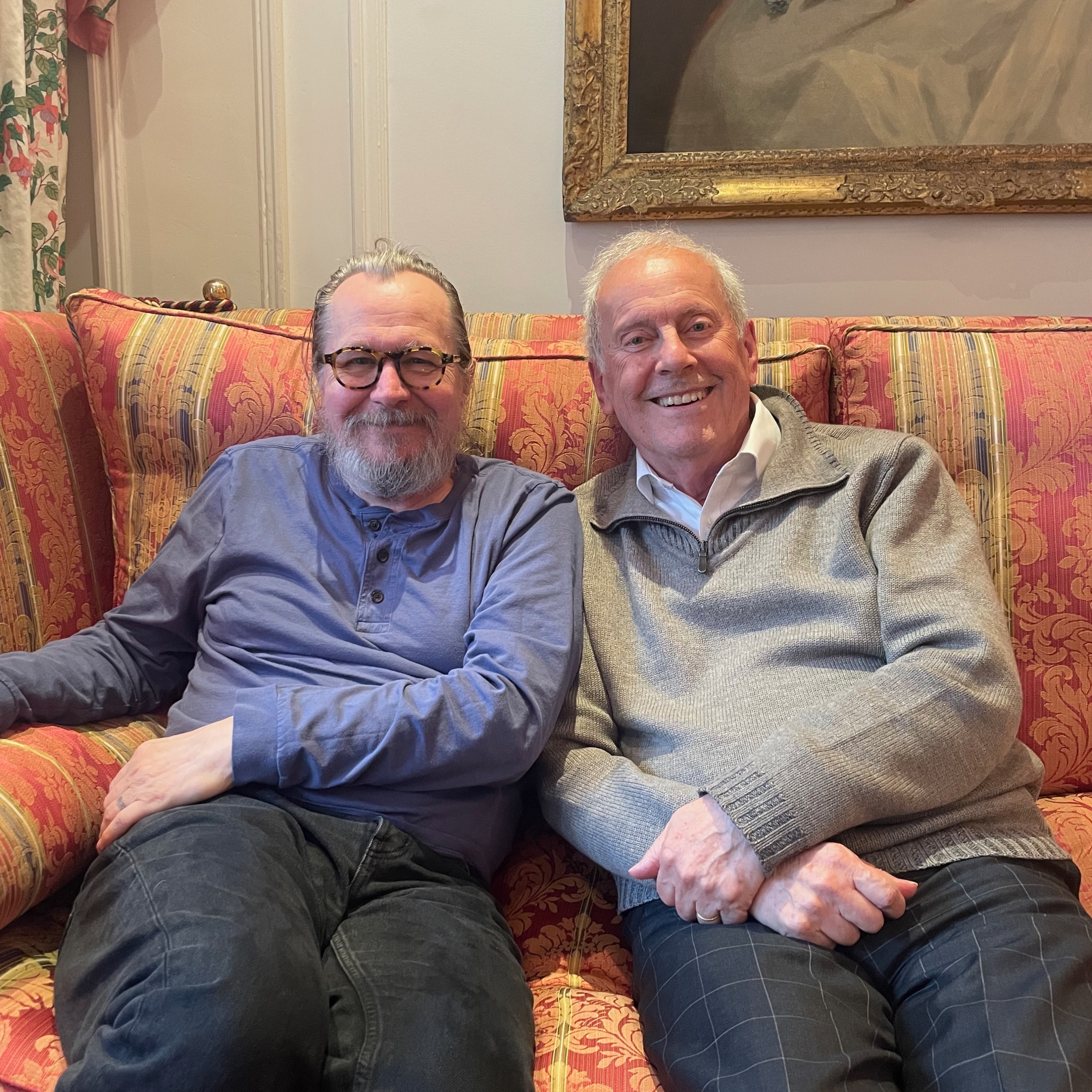
One of our most interesting, versatile and talented actors is Gyles's guest today: Sir Gary Oldman. In this very special, intimate and extensive conversation, Gary tells Gyles about his childhood in New Cross Gate in South London, growing up in a council flat with his sisters and his mum - his father left the family home when Gary was seven. He tells Gyles about his happy childhood, dressing up as a homemade batman and playing cricket in the streets with his friends. He tells Gyles about discovering the Greenwich Young People's Theatre and applying for drama school, and about getting his Equity card. He talks about Joe Orton, Paul McCartney, Malcolm McDowell and why he'll never play Hitler. Gary also talks about the perpetual feelings of insecurity which drive him. This is a fascinating conversation with a wonderful actor and we're thrilled to be able to give Rosebud listeners the chance to hear it. Enjoy this.
This podcast was recorded at Gyles's house.
Hosted on Acast. See acast.com/privacy for more information.


