
 Ask ChatGPT



Written by AI. May contain mistakes.

Get the gist, explore an idea or ask about something said.
 Claude
On Rosebud with Gyles Brandreth, what are the key points of this episode?
Searching your listeningAutomatic transcript. May contain errors.
0:00Welcome to Rosebud, and who have we got this week? Oh my.
0:25Welcome to another episode of Rosebud. we're recording this in August and the sun is shining and I wanted somebody of a sunny disposition as my guest today and I've got exactly that person some will think her a bit kooky she's certainly comical she's very very funny she's delightful and knowing her a bit she's perhaps more thoughtful and interesting and complex than you might superficially think if you've only seen her occasionally on TV. Because she's a friend of mine, I've seen her in many shows over the years. She's a great musical theatre star, as well as being a fine comic actress. I think I've seen her in Godspell, in Grease, in a wonderful show called Babes in Arms, in Me and My Girl, I loved that, in Sweet Charity, in The Pirates of Penzance, and I know that she has been in more than 40 pantomimes.
1:18but you probably first got to know her as I did when she appeared as Peggy the Shally Maid in the hugely successful sitcom in the 1980s Heidi High yeah it is Sue Pollard she went on to appear in another series written by the same people who created Heidi High you rang my lord I think she's very funny she's very delightful and I think also she might surprise you so here is my bundle of sunshine for this August weekend for you on Rosebud. Cue the music.
2:02So before we begin, can you just explain what you're wearing? Yes, I suppose for the people that don't know me, my taste is eclectic, which means I can shove anything on which I really quite like. Today I have on, it's a long kind of shirt dress, black, but with beautiful, like felt black bubbles on it, if you like. And then I'm wearing a long red dress on top of that, long at the back, but short at the front. And I've got my favourite tights on, which are all ripped, which I love with holes in. Is that on purpose? Oh, yeah. And if they haven't got enough holes in, I just rip them to get more.
2:45What is the, I mean, I've seen people with jeans like that, but tight side, it's quite an intimate, quite revealing. I absolutely understand, but it's better, easier access, you see, if you're looking. Just in case there's a jingle, I've got favourite beads on. So I apologise if there is a bit of a jingle jangle throughout the chat. That's what I've got on. Well, let's begin the chat. OK. My first question, Sue Pollard, is always the same one. It's simply this. What is your very first memory? I was four years old and I'd be at Mablethorpe, which is a very lovely little village, but in the poorer part, if you like, of Lincolnshire.
3:27And its big mother is Skegness. And I remember I was four years old. I worked with my auntie Nora and a couple of other aunties and my mum and my granddad and there was a St. Bernard, right, on the pullover. Why do they call an entrance to the beach? I mean, it's not like a trick question. They call them the pullover, so you go up there and at the bottom of the pullover, they used to have a man with a Kodak camera right and he happened to have a St Bernard dog and he'd say right who wants a picture with Miss St Bernard I think it's about sixpence and I was too nervous to sit on it but it was an enormous St Bernard and I remember just hugging it so that was my first memory.
4:17It's a lovely memory. Yeah. So this is the early 1950s? Yes it absolutely would be because I don't mind yes I was born November the 7th, 1949. Fine. So this is about 1953, just after the coronation. Yes. Do you remember the coronation at all? Not particularly, but I remember lots of people getting excited about it. You know, there were snippets of chat about, oh, it'll be lovely, and of course all the street parties and stuff. Now, before I go any further, I want to express my absolute upsetness at the Queen going. she was fantastic Queen Elizabeth II I just adored her she was marvelous I met her you know and Elina put the Royal Variety show and she had the most fantastic skin she was quite diminutive but people won't mind me saying this in a respectful way up top she was quite voluptuous you know I think that's the correct word and I just thought she was so lovely she had fabulous teeth and I said I love your skin mom can I have it she went well not till after I've gone dear I think that would be the best bet but I thought bless her she didn't mind I don't think I was being rude I was just having a bit of fun she was great I loved her good so I mean who are the this group of aunties you speak of auntie Nora who are your parents first of all who was your mum Tell us about your mum.
5:47My mum was Hilda Stapleford. My dad was Donald Pollard, hence, of course, the surname. And they were fantastic. What was your mum? What did she look like? Hilda, she was always smart in terms of pearls, cardigan, nice skirt, lovely shoes. I suppose sort of quite sensible, nice earrings. Dad always did the gardening in a shirt and tie. I mean, what would he do that for? He used to make me laugh. He went, oh, well, I'm a bit hot in this. She said, well, take your shirt off. Oh, no, I've got my vest on. Oh, no, that won't be right, you know. How did they meet? They met at a bus stop, right? Hilda used to wait for the bus, you know, at a certain time, like lots of people did, because they knew that the bus was coming.
6:41Well, in those days, if you were lucky. And anyway, one day, my dad used to walk, she worked at Boots, right? My dad used to walk to Player's Factory. For people that don't know, at that time in Nottingham, there were the three main sources of work and income. Raleigh Bicycles, Boots, the chemist, the factory, which is still there, and John Player and Son. They're cigarettes. so my dad used to be walking to the players factory and and they obviously quite liked each other anyway after about a week of nodding you know all right my dad finally spoke and said morning Hilda went morning and she said I decided to do me hair because she liked to do her own hair you know but then she said I think I'm going to style it differently so she started rather like the 1950s starlets of the time in great big rollers and the hair was always it was immaculate and she said and then your dad noticed me a bit more and one day said um excuse me would you like to come out and she said oh I'd be delighted thank you and where will we go and he said well where would you like to go she said well I like the pictures so they went to the pictures and I've got to laugh because Hilda thought it's going to be marvellous you know we'll have a lovely time at the pictures anyway suddenly she got there she thought it was going to be something like you know all this in heaven too with Charles Boyer you know well no it was a horror movie You know, with Bela Lugosi, they knocked on the door.
8:34You know how you do, knock, knock, knock on the door. And Bela Lugosi opened at this great big creek. Do you remember? Come in. And the older went, ah! Screamed her tits off and had to spend the rest of the night in the toilet. Because she was nervous where she always used to be scared. So me dad obviously never even got to put his arm around her. Well, maybe he hoped she'd jump into his arms. Oh, no. Maybe it was a tactic. How old were they at the time, though? 17. Oh, they were very young. So was he in the war? Oh, yes, he was in the war. And was he a soldier? Yes. He didn't discuss it until he was possibly in his 50s, 60s.
9:14And a friend of his, Arthur, they were having lunch one day, and he said, Don, tell me about the war. He said, well, he said it was horrible. So anyway, he went on to say that two of his best friends from the regiment, there they were, you know, they were going forward. And it was really sad. Either side of my dad, they got killed. No. Yeah. I think that's why he never wanted to talk about it. It was really sad. And he said, I don't know, he said, I happened to be spared, finish the war. and he was really, really upset because when he first got home, he had to queue all day for two sacks of coal after being in the army.
10:00And isn't it funny, I suppose, what stays in their memories? He felt he hadn't been treated properly, despite giving his all. I do believe so. Yeah. So what year did they get married? Oh, I believe it. What would it be? They were 27. Oh, they went out from, So ten years of going out together. Well, yes, he was. Then the war intervened. But he went into the war. But Hilda was upset, she said, because he was never one for writing. Ah. But this was fabulous, Sir Giles, I've got to tell you. One day she was at the pictures again, but it wasn't Bela Lugosi. I think it was something more romantic. And suddenly this sign came up on the screen.
10:41Well, Hilda Staplford, please go into the foyer where you will be getting a surprise. So she went to the foyer and there was me dad. Hilda, I'm back from the wall. She went, oh, Don, you could have said, because she had a terrible sore on her lip. She'd had a cold for about two months. She went, flipping it, this is terrible timing. I'd seen somebody for five years and you broke out. Look at me, I'm diseased. But she'd waited for him. Yeah. She went out with somebody called Jackie in the interim. But she said, he wasn't like your dad. Your dad was great. He was handsome. And she said, I suppose I loved him, really.
11:27So she said, I married the right man. And were they happy together? Oh, yes, they were marvellous. How long were they together? 60. 60 years? Yeah. Oh, a long life together. That's marvellous. Yeah, you see, that's why I'm a great believer in longevity, Giles. To be fair, darling, I mean, well, I mean, you've been right for getting on that way, haven't you now? I have. We were talking about it earlier. We were. Listeners and viewers, and we were saying, weren't we? The secret in my case is to find somebody who wants to marry who has very low expectations. Oh, stop it. Whereas your mother may have been full of optimism and hope.
12:04Were you the firstborn? Are there several of you? Yes, I was the firstborn of my sibling. She's seven years younger than me. Oh, gosh. Well, no, sadly, darling, there's a reason for that. Well, my mother was about one of 12 and my dad was about one of 12 as well. That seemed to be deregurgiles. Everybody had large families, you know. And Hilda's mother used to say, oh, pregnant again. And she used to say when she was older. Honestly, she said, your granddad only used to have to put his trousers over the bed. She said, and I was pregnant. so I suppose in those days I guess it was birth control was difficult and I don't think my mum really wanted that in the kids I guess she didn't want to put herself through that but my grandmother lost a lot of children the milk flu, she lost about six.
12:59The milk flu? There's a thing going around called the milk flu I haven't heard of this. I know it's amazing and it's called the milk flu because Yeah, I'm not really sure. It was nothing to do because the milk was off. I don't know why they called it that, but I should have looked it up. If anybody knows, could you look it up, please, and tell Giles what it is? We will find out about the milk flu. Yeah, because I thought it was really interesting. I don't know where it came. It's a bit like the Spanish flu. Given that you were an only child for the first seven years, when your sister came along, how did you feel about her arrival?
13:31I think I was quite pleased. I thought it was marvellous. but I think seven years is a bit of a gap. It is when you're 15 and your sibling's eight years old and then your mum says, take her to the pictures. Well, I said, but, you know, I'm 15 older because I called me mum Hilda from a young age. That's a bit odd. I know. Why do you think that was? I think it's because I was a hippie and it wasn't cool. Did you call your dad dad? Oh, yes, he wouldn't have it. Oh, quite right. At Christmas I'd put, obviously, darling mother Hilda. But mostly it was always Hilda. Who was your first friend outside of the family?
14:12I suppose it would have been Julie Sparrow. Julie Sparrow. Julie Sparrow. Marvellous. We were great, great friends up until, and we were still great friends, up until I became professional and left Nottingham. What sort of a little girl were you? What were the games you played? What were the toys you enjoyed having? and I enjoyed having a scooter it's fabulous then it got pinched by the boys five doors up but you couldn't prove it you know but basically I was I was mad about the theatre from a small age yeah from when I was about five you know school and everything what what triggered that um i believe it was going to classes after school this was in the infants so i was in the school play the nativity and that was it that triggered everything everything theatrical i wanted to read plays i didn't really want to play play with dolls after that but did your parents have any theatre experience?
15:15No, none at all. And they were kind of, I suppose, rather curious as to why, where this came from. Although my dad's got a great voice, you know. He's got a fabulous singing voice. And did your parents understand you as a child? Not really. Or did they look at you as a bit of an oddity? Yeah, oh, totally. Hilda said, well, why do you want to go to school looking like a Morris dancer? Because I had all these scarves. Two scarves on each ankle, you know, and scarves around my wrist. Attached. This is on top of your uniform. Yes. I just rather liked it. I don't know why. When we went to CNA, which was obviously the forerunner of something like Primark, and it was affordable, and I said, I'd like those tights, but I'd like one of each.
16:10One was a yellow pair and one was a blue pair. I said but I'd like one of each and I said I'd like one yellow leg and one blue leg Hilda went don't be ridiculous I said well you can cut them off and then sew them in the middle and have one of each no no you're just going to have a normal pair oh I'd have a normal pair I was really upset I had an imagination though Giles then I thought you know you weren't giving free reign then it was so much conformity absolutely there was no time for imagination you know what was wrong with colour no you had to stick straight there and I was like flipping heck so I guess in terms of wanting to create my own style I hadn't particularly found it yet I just put any old thing on knowing that I liked the look of that like the look of that And did your mum let you do that or did you fall out with her?
17:15Well, she let me do that because I was, oh, it doesn't matter, does it? What does it matter? I'm not doing any harm. Oh, put something different on when your dad comes home. He's gone a good ballistic. Poor man, in the garden with his shirt and tie. You know what they used to say in showbiz? You go somewhere, but you look a bit different. and they'd say, well, what have you come as? Thinking you were in, you know, fancy dress. And of course I'd say, well, I've come as myself. Anyway, he got... Do you think it upset them? I think it slightly upset them because they didn't want to be ridiculed themselves.
17:56They've got that balmy daughter, you know, and I don't think they wanted me to be ridiculed. They understood as I got older that I just had different tastes to somebody else, you know. But they came round to it because when I was 15, they bought me a fantastic all black, the Beatles look, a cap, black leather trousers, black boots. And I was in my element and it was just the most fantastic thing. But at least they knew at a young age. But this is interesting because I remember getting the bus. I used to get the bus to school. And there were the two ladies on this bus. and they happened, I didn't know, they worked at Players.
18:39Actually, my mum left Boots and she went to work part-time at Players. And these two ladies used to say to Hilda, there's a girl, you know, she gets on our bus, she's barmy. I mean, she wears all these ridiculous outfits. I mean, where does she get them from? Anyway, one day, they didn't have enough money for the bus fare. these ladies and I happened to have some money on my purse I said I'll pay you can always pay me tomorrow oh thank you I'm ever so grateful anyway they went to the factory players and they knew my mum about this balmy girl and she said do you know that girl that was balmy she's very kind she paid for our bus fare and he went that's my daughter oh but what I mean is it just shows you doesn't it it takes something like that and ever since then they couldn't sing your praises enough but having said that bearing in mind somebody has to be a trailblazer now anything goes but can you imagine 60 years ago but did they feel strangers to you is what i'm getting at you're dressing differently you're feeling different inside your head did you feel from an early age that you were a phenomenon called Sue Pollard and that Hilda and your dad were funny people working at players.
20:07No, because they did love me. Yeah, they absolutely got used to the fact that, you know, well, she's probably always going to be like this. And then they grew with that. Lovely. Do you know what I mean? Because I never veered from that. I mean, obviously, I didn't always look like, you know, a Morris dancer. Did you have grandparents that you knew? And what did they make of you? No, sadly, they all went when I was younger. Aunty Nora clearly looms large because you mentioned her name first. Aunty Nora was fabulous. She's my dad's sister. Then there was Aunty Ida, my dad's sister. Then there was Aunty Eunice, my dad's sister-in-law.
20:46Aunty Mabel, my dad's sister. And my dad, he was very protective of everybody. Then he had another six brothers. They were all marvellous. but they always rely on my dad. I think he was the reliable one. Do you know what I'm saying? I used to call him that. Was he a happy person, do you think? Oh, yes. Because he knew where he was going, what he wanted, but what he didn't want, more importantly. And he strove to better himself. And what didn't he want? He didn't want second rate, if he could possibly help it. he wanted a decent family life and he was hard worker in all his life at players he had two weeks off but he had to because he had measles so it was so contagious my dear what a work ethic he had he would have had the same thing so go back to here we are at school you're now a teenager and you're getting into this group that you call the co-optimists no it's called the no but nearly Co-operative Arts Theatre.
21:54Co-operative Arts Theatre. This is in Nottingham. Yes. And it's for young people. Yes, it's for younger and older. It was actually an amateur dramatic group. And I started off there because when I was 11, I used to wear my gabardine mat like an opera cloak, of course. Why wouldn't you? Tied round the neck at the head. And mistress said to me, Miss Smith, Miss Pollard, come to my office. Oh, God. Went to the office, said that I've had it, you know, being ushered into the end. Mistress said, now, I do feel that you have a theatrical outlet here that you need to actually, you know, nurture. She says, I have a gentleman friend called Mr White, and he's the manager of the Cooperative Arts Theatre that was formed by the co-op.
22:47Well done them, yeah. With your divvy and all that business. And it was sponsored by them. And it was just tremendous. It's still going now. So I went, oh, I'll go there then. Oh, it was the best thing I ever did. I'd be about 11. Now, who is that fantastic director? John Neville. Yes. Yeah, you'll know him, don't? Well, of course, he came to the Playhouse. Indeed. The Nottingham Playhouse. He was the founder director of the Nottingham Playhouse. That's it. And a big star in the 1950s. He and Richard Burton were the big guys at the Old Vic in London. Famously played Hamlet with Judi Dench as Ophelia.
23:25And then he went to run this theatre. Wonderful. And he was there. He came to the Nottingham Cooperative Arts Theatre to talk to us. Oh, my God. About theatre. He was handsome, you know. He was, famously so. Very attractive. Well, I was very relieved because I thought, well, he might be flipping ugly. We've listened to him for two hours. You know, he might have, you know, his nose out of jaw, you know. No, he was famously handsome. Well, he was handsome. He was great. And this was the most fulfilling part of your life. And was it when you were in the Amdram, that's where you had your first crush?
24:03No, I had my first, it wasn't a crush, but I had my first kiss on a tree stump near where I was living. They'd chopped the tree down, I don't know why. and the next door neighbour's boy was there and I was sat next to him on the tree stump and he gave me a kiss on my cheek and ran off. How old were you? At five. No, he was fabulous. I thought I could get quite like this. But I did fancy one of the guys that was on the technical crew at the Amp Drums because we had our own, you know, the set makers, didn't they? They were all there as well because you couldn't just do it with actors. I remember thinking oh he's gorgeous you know and I quite engineered we could go outside so there was only him and myself and I think I threw myself at him you know I mean what was I thinking of I think we know what you were thinking of and why not well and I thought well I was I was 15 but he was like, whoa, where's this come from?
25:08And I said, I don't know. I just wanted to put my arms around you. Did you think of yourself as attractive? Sometimes, yes, and sometimes, no. It was half and half. You know how you do sometimes, you think, well. But I think I was attractive at some times because the company, you know, you were chatting to people. I didn't think I was necessarily attractive looks-wise because I had to wear glasses from the 14s, so that didn't help. I do know what you're saying, and I'm asking the question because with your novelty, the way you dressed yourself, maybe you, I'm just asking this, you must have thought about it, were you dressing in a fun way to make yourself fun and amusing, thinking this is the way to make me attractive?
25:58because I don't feel attractive. Oh yes, there's always that. That's quite a psychological view, isn't it really? If you wanted to take yourself back and sit in a psychiatrist's chair, you could go. But no, I think as well, I think I was consciously rebelling against the ladies of the day in the 60s.
26:25What age then did you leave school? 16. You left school really as soon as you could leave school. Did you do O-levels? CSE, but I did quite well. Oh good. And I remember my first job, it was a proper job, qualified secretary and it was at the tenant rubber company. What did they do? It was all things like cladding, you know, rubber and stuff and for houses and factories. And I I remember somebody coming to the reception desk because I was the secretary. And this bloke came and he went, excuse me, can you speak up? Excuse me, can I help you? Do you do condoms? I said, did you say condoms? And he said, yeah.
27:16I said, no, but I can sell you a Wellington. I thought it was hilarious. It's quite funny. And then knock on the door. Mr. Piggy, the office manager, can you come into my office? You don't have to say, can I sell you a Wellington like that? It's not company policy. I said, I was just having a bit of fun. Well, don't do it again. So I got into trouble. Anyway. But you're 16, you've got this job and you're a proper secretary. Yeah. I stayed with the tenant rubber company until I was 20. Gosh, that's a long time. Yeah. And living at home with your parents still? Yes. And was it a house that was full of smoke?
27:58Given they worked at players, I imagine they could get cigarettes at a special price. Did everyone smoke in the house? No, Hilda didn't smoke. And my dad, he was very good at his consumption. Well done. Because he didn't want to get consumption. But this is interesting. You wouldn't believe this. And I remember what my dad said. He felt he was always straight as an arrow, my dad. And he said, you would not believe it, he said. We were given 200 free cigarettes a week and there was always a strip search and you can guarantee that sadly some of the workers were pinching the flags. And he said, it's a silly thing to do because it was instant dismissal.
28:44You know, you weren't even given a fortnight's notice. but what I'm saying is it was such a shame actually, isn't it funny what you remember anyway I was still doing the amateurs left the tenant rumpet company and then I was in another job, you know these various things that you can hear the jangles, well I wore those and I was a hippie of course as you know I was a good typist I have to say but sadly I got all my jewellery caught in the typewriter keys
29:19and i just it was ridiculous anyway the office manager came and said you're no good to us we can't have a hippie i said he said what will what will the customers think i said well it won't matter i said because i'm not at reception no you won't do yeah i'm sorry you'll have to go but during these years did you have a proper boyfriend a steady boyfriend I had a boyfriend, he was fabulous, called Pete. And we liked each other a lot. How did he cope with you, Pete? Because the way you're describing yourself is huge fun. Yeah, it is. Pete loved it. But he said, when we go and meet my mother, can you just be a little bit more discreet?
30:02I said, why? I said, she's not used to theatricals. and she might be a bit, I said yeah I don't mind doing that, why? Because he himself loved all that but once again a lot of parents again weren't used to somebody who might have been avant-garde Do you know what I'm saying? Anyway, I let myself down because I whistled When you were with his parents, with Pete's parents? Yeah What did you whistle? Oh, I see, you whistled I tried to come away from them. My goodness, you whistled to tell Pete's mum that you wanted to... And then even worse, I said, you know, your husband is very...
30:47This is to Pete's mum. Yeah, but she's got no sense in her. I'm glad you think so. Never went again. Well, I didn't want to go. I said, your mother's boring. What did he make of that? Did that kill the relationship? No, not really. Went out for another year. Well done. And were you happy together, do you think? Oh, yeah, we were. But then he went off with such a sad thing. I really thought he was great, to be fair. And he was a scout, a scouter. And then he went off with an archaea. She was a guide, girl guide. I think the Arkela's actually are the senior people who look after the Cobb Scouts yeah you're right that's where my poem comes from your poem dib dib dib dub dub dub where's Arkela in the pub we used to do that when we had the Skites and Cals in Panto you know when he had it was hilarious God we had so much fun I still say it now but people don't understand what you're talking about So Pete Pete ran off with an Arkela I'm sorry Well sort of like ahead of the Yeah no Yeah Yeah That's fine And great Well I said never mind it was very upsetting I was really really liked him but what can you do that was my first and then I met somebody else called Andrew he was fabulous went out with him for a couple of years and then of course showbiz called.
32:29Now, how did showbiz call? Because here you are, you're in Nottingham, you're still living with your parents, you've got these various jobs. Oh, no, I'd left the parents then, I'd left the parents, sorry, had a flat. In Nottingham. With my friend Julie Sparrow. Yeah, in Nottingham, the pair of you. Yeah, we got the flat. We had gotten really well, it was absolutely fabulous. There's a sitcom in this, you and Julie, the Pollard and the Sparrow. Yeah, there's got to be. I think there is. It's hilarious. God, we had good fun. She was fabulous. You know, and we really liked each other, respected each other.
32:59We helped each other out. And we went, oh, God, I've got no money again. And, you know, you get paid on a Friday and we were broke by Tuesday. I mean, I don't know what it is. Were you ever like that, Giles? I've had money what is in my time. Oh, but you know what I mean? But, I mean, how ridiculous to spend all your money at the weekend. Flipping ridiculous. What was the point in that? Well, it was just a couple of, oh, I don't know how we managed. Anyway, I saw an article in the stage. The stage then was a weekly paper and producers used to advertise, right, at the back. And I was at the Am Drums and we'd just done, where does this come from?
33:43Anybody at home? Over the ground, here comes the sound. It is a drum, drum, drum of hoopies in the galloping horses in the sand. Tell me. The Desert Song. Oh, The Desert Song. Yeah. Is that Ivan Avello? No. John Hanson, I can see him in The Desert Song. It's not by Ivan Avello. Who's it by? No. Never mind. I think he was, oh, I hate that, Austrian. Austrian? Yeah. Franz Lajar. No? No, it's... Sigmund Romberg! And I was in the chorus. Of course, it was the chorus then. It's ensemble now. I still think, what's wrong with being in the chorus? And this was, you saw this advertisement, you applied.
34:26Auditions were held where? They were held at the dance centre at Floral Street in Covent Garden. So this was a London show? Yeah. Well, it was not necessarily a London show at first, but they held the auditions there. And they were going to go on a tour. And how did you get your equity card? It was fantastic. I got the part in the Desert Song, but no equity card. But in those days, we were really lucky because the producer at the time, whoever it was, was allowed to have four non-equity members. Oh. Yes. You had to be voted for by the rest of the company. and on the first day of rehearsals, you know, you don't know anybody so you just say, oh, hello, I'm not a member of Equity but I'm hoping that, you know, I can be in the show and yeah, we got our Equity card.
35:22I want to cry because, oh, darling, it was my dream come true to have an Equity card, you know, and I don't know whether people feel the same now as I did. It was just the dream. You were able with this equity card to leave the world you'd known and to move into a new world where you felt you actually belonged. Yeah, totally. And you've never left it, have you? No. You know, it's a great, a great, great thing to bring happiness to millions of people and I'm never blase about it. I like to think I'm not. People come and say, oh, I'm still watching RDI. It was on the other week. It was fantastic.
36:16And it's just lovely to think that, you know, you're still playing pleasure to somebody that you've done. Before we get to those shows that made you famous when you were still in your early 20s, can you remember the first time you had your heart broken? Oh, yeah.
36:37Andrew Pink Andrew Pink that was his name he was absolutely I thought this was it I'd be 22 and I thought he was fabulous and you know what he also went to the Amdrams Andrew and you could tell we liked each other in the same play once and you know you'd smile and laugh and you'd wink at each other and it was all marvellous and then we got chatting and then he said to me would you like to go out I said yeah too right well madly in love with him and then sadly he fell for the wife of the other chap that was also at the Amdrams anybody listening to this and they've been in the Amdrams I'm sure I'm not the first person to say but they are by the nature of the fact that you see your leading man three times a week it's quite a social thing but it's intimate as well that's what happens if you're in a theatre company there's an intimacy that goes on oh totally not necessarily the best kind of environment to be in if you want to have a marriage of longevity or at least, you know, try not to be the leading man.
37:59Hey, but then he happened with the stage manager we had once who fell for one of the usherettes. Fantastic. There it was again. He gets free ice creams. Have you seen how many he's got? How much do we have to pay? Plumbing disgrace. It's hilarious. God, you've got to laugh. It all comes flooding back. Anyway, Andrew broke your heart. Oh, thank you. Andrew broke my heart. It was terrible. You were recovered. Yeah. And do you know the greatest thing, though, Giles? He's been one of my greatest supports. Good. He finally... That didn't last, the married wife. We could have told him. You probably did tell him.
38:42Well, I did say. I do feel... Anyway, no, that won't happen to me. Well, of course it would, because he was a philanderer. before me he'd been with two other ladies in the amdrams so fair enough you know but i liked him i don't care he obviously had something about him that the women fell for and we won't go into any parts of the anatomy here he was obviously a chap that had a lot you know going for are you a bad chooser because we may not get that far because it was really about your early memories but you have been married haven't you yes and that didn't work out no are you a bad chooser it makes me wonder if I actually don't go into in depth enough of the actual person and perhaps what is going to be like in situations how long were you married for not five years oh five years but most people know and I don't mind saying it and we're great friends and everything sadly we weren't compatible but i still hear from my ex-husband's husband hello so that's why we weren't compatible but you didn't find that out till it was a bit late in the day i found basically we had a chat about it before you got married yeah he said this is funny it was hilarious actually and all my gay friends laugh about it because it's just a funny thing these and he was quoted as saying i used to be gay but i've put it all behind me i mean i mean you've got it is funny but i mean it's hilarious and most of my they were fantastic my gay community at the time oh it was not it was a bit frowned upon 1985, 6, you know.
40:33You remember the Michael Gambon story? No, what happened there? Michael Gambon, the great Sir Michael Gambon. This is just a funny story. He played Oscar Wilde on television many years ago in a television series, I think, about Lily Langtree. Anyway, he played Oscar Wilde. And he was interviewed, I believe, he was a white journalist, funnily enough, in Nottingham, which is interesting. He was in a play in Nottingham and he was promoting the series. And the journalist said, rather nervously, playing Oscar Wilde, is it easy to play the part of somebody who is known as a homosexual? And Michael Gamble said, not a problem at all.
41:10I used to be a homosexual myself. And John said, oh, really? Well, I didn't know that. Why did you give it up? And Michael Gamble said, because it made my eyes water. Ha ha ha!
41:28Oh, I think that's great that oh bless him that's funny it is funny I'll have to remember that it is funny
41:40would you get married again if the one came along no I don't think there's any point if there is you'd have separate houses how fabulous that would be I think Helena did which I thought was great Helena Barnum Carter and her then husband Tim I thought it was marvellous they had houses next door to each other and they just had, you know, knocking on the door. Do you want to come for your tea? You know, things like that. I think that's great. Although, to be fair, the lovely Prue Leith, she's got married. Indeed. I think it's fantastic. Good luck to her. And I do believe that Maureen... Dame Maureen Lipman.
42:20Well, good on her. Yes. No. Another Rosebud guest. Yeah. Dame Prue Leith, a Rosebud guest. Oh, was she really? Yes. Come on to Rosebud and you get married again. It almost follows as night does day. Michelle! Mrs Brandreth! Can you hear that, where you are, dear? Let's go back to your breakout moment. Here you are. You've done the Desert Song. You've got your equity card. Life is there for you. And how do you have this breakout? How come you're sitting here now? How do you become famous? Where does that begin? I suppose I was very lucky to get loads of breaks to take me forward. Like, I was very lucky that every audition I went to, I was able to get the part.
43:08So that moved you on. So therefore you get to know different producers, different directors. And then I was with an agent called Richard Stone. Oh, I knew Richard Stone. Yeah, he's fabulous, Richard. Richard was, of his day, was incredibly, if you like, a well-known agent. Knew all the producers, directors, knew all the TV people. So he was actually in the know. So that was the way forward again, got introduced to all the people. And then one day he said, I've got two clients, you may know them. And it was David, craft engineer, and they're doing this new show I don't know what it's about so I did I didn't audition I just did a chat basically I was lucky yeah that was Heidi High yeah when did you realize with Heidi High that your character of Peggy was breaking through there was something special that people felt special about you when was the moment you thought that I had a very nice comment from a journalist in the evening standard it just said something about you know Heidi hi here she is this girl let's hope that she goes on and gets her yellow coat it was just something like that and I thought how marvelous and then when I went to the market the local market hey Peggy um hope you get your coat we're all rooting for you and I thought well how nice is that because people are starting to be aware of all these different characters.
44:48And also I started to have more scenes in the show and I guess it was, you know, I think David and Jimmy were very good, but they were very fair. Everybody had their episode, if you like. But they recognised the audience were investing something in you. Yes, I believe so. I suppose it was because, once again, a bit of the underdog. She was a bit, she's a bit balmy. Tell me the Paul McCartney story. Oh, yes, it was marvellous. This too. I sang a song called Back in the USSR. He sent a letter saying that was one of the best renditions I've ever heard. Right? Fantastic. Thrilled to bits I was. But we were doing, I believe it was the fourth Raw Variety show, all the Hardy High cast, and he was backstage, and he just went, Sue, Hardy High.
45:37I said, oh, hello, Paul. Can I call you, Paul? He said, yeah. He said, can I have your autograph? Oh. Said, yeah, you can. I said, can I have yours? He said, you don't want mine. I said, I do, but I didn't have any paper. So anyway, he said, it doesn't matter. Thank you. Good luck. Yeah, it was great. It's a lovely story. It's really nice, isn't it? It's a very nice story. We're getting towards the end now. There's so much we could talk about your extraordinary life. Before we get to the end, a moment of sadness that comes immediately into your head. Don't think about it. when I say, from your early years particularly, a moment of sadness.
46:15Yeah, I do remember. And it was to do with Hilda. And I was eight years old. We'd moved house. Like I said to you, my daddy was marvellous and he was always wanted... He had the first black and white telly at the other house. He wanted to be modern. And we had a black telephone. And he answered the phone. and he went quiet
46:46and he said, Hilda I think you need to take this call and she got the phone and she just went, oh no and that phone call was to say her mum had died oh but that's it although it wasn't my sadness it was but it was hilda's sadness i thought oh poor devil you know she's only 76 and her heart and she went oh thanks for letting me know and you know and she cried on my dad's shoulder and he said he hugged her and said it'll be alright it'll be alright darling you know so yeah that was my first moment of being a party to sadness really you know what I mean it doesn't have to be yours in a way does it but you feel somebody else's sadness and joy beyond the day you got your equity card the 1980s those glory days when you were a household name and face you were crazy you were all over the place well I don't know if you were all over the place.
47:56I seem to remember. I do remember meeting you then. Yeah, we did, didn't we, TV AM? We used to know each other. Also, when you were married to Peter, you were slightly high in a, not in a, well, maybe you were high in the drug sense. Oh, no. I don't think you ever were, were you? No. But you were. I'd be too nervous. You were high. I mean, what, a moment of joy can be from those days or any time in your life? I just the moment of joy was when I got the part of Peggy I screamed and jumped up and down and went I can't believe I cried and I was like this is the most fantastic thing because you felt you'd got a part with these two people that had faith in you and trusted you to just...
48:49Do people still ask you to do Peggy? Oh yeah. Very often they'll say well sometimes, you'll get the same thing won't you, in the street it's my wife's birthday you couldn't just say could you hidey-high and say hello it's Peggy Ollerinshaw here so I'll say yes I don't mind doing that and sometimes I'll go and open a date and I'll always do hidey-high but some people find out where you live and they'll go knock on the door and they'll come and they're young, they're about eight and they'll say, can I speak to Peggy? And I'll say, well, she's not in, she's doing M lines at Maplin's today. But, you know, come back tomorrow.
49:31Oh, I'll come back then, what time shall I come back? Come back about 11, so I'll put Peggy on the outfit. No, bless you. And they think Peggy lives there. But I had to stop doing it because I had hated me, went round the school. I thought, oh, I can't keep coming to Ottawa. I was a week to the door as Peggy. So I'm afraid I knocked that on the head after a bit. And you've given up cooking after your experience on MasterChef with the overcooked broccoli. Oh, yes. It was hilarious. Well, I think I put too many ingredients in. Flipping sandwich, every ingredient that was going. But you know what finished me off?
50:08Well, I think they like the sandwich, but it's like John said, I put broccoli in it. Well, it was wet. like I said you've dampened the rest of the flipping you know ingredients so oh it was hard work child what is your weakness you're such a wonderful a bullion yeah delightful funny person you make me think oh gosh she must be vulnerable because she's so wonderful I've never seen her not be wonderful and funny and making everybody happy no I know what you're saying but but maybe you're not do you have a weakness no i wouldn't like i am i can get vulnerable if i see somebody being kind or wanting to look after somebody else i could burst into tears oh yeah and have done welled up all the time but i'm fortunate enough to try and You learn what is important and what isn't.
51:17Well, I think you do. As an individual, what is important to yourself and what isn't. It's not to trivialise things. It's to just say, oh, I'm not going to get upset about that. I used, what, 30 years ago, but that was then. This is now. Don't be ridiculous. So I find you can overcome stuff. When was it that both your parents were dead now, aren't they? Yeah, Dad died about 17, 18 years ago, and Ilda died about five. Yeah, 96. Well done. Well, that bodes well, doesn't it? Mark, well. Do you think about them lots? Oh, yeah, I talk to them all the time, especially Hilda. Hilda, I'm putting this duvet cover on again.
51:58Because we used to help each other. And after a bit, she'd say, oh, it's getting on my nerves, this. I'd say, I can't do it on my own, Hilda. Oh, I've had enough. But things like that, you used to laugh, you know, we just used to laugh and say, you'll never guess who I've seen, you'd love that. da da da da da and then and then me dad i said dad you'd love this and you know things like that and i say dad what do you reckon and you know he talks to me oh yeah talk to me mum and dad every day nice very good well look i've loved your company we've come to the end of our conversation what have you learned in your extraordinary life because you've lived now quite a long time yeah Yeah, I'm afraid you cannot be anything other than yourself because you get caught out and you catch yourself out and you think, well, why did I behave like that?
52:50That's ridiculous. I don't do that. What's the matter with you? Get a grip. Do you know what I mean? No, no. Just be yourself, but also learn good manners. No, you can't go far wrong with a please and a thank you. And as I say, turn up, be kind. Well, thank you for turning up. Oh, I wouldn't have blooming missed it. And a comfortable chair, Giles. Great stuff. You're the best. Sue Pollard, thank you. I've loved it. Thanks very much. Well, I think you can see why I love Sue Pollard and feel very lucky to have known her for so many years. That was fun. That was special. And if you want to catch Sue on stage, and I have to say, you need to catch her on stage because as the review says, the one I've got in front of me, what she offers is a two-hour laughter show packed with sketches and songs.
53:40She is a unique entertainer. Sue Pollard, Still Fully Charged, is the show. It's running, well, from September through to November. If you want details of where she's on, I know in London she's at the Duchess Theatre, but she's all over the UK. You simply go to Sue Pollard Live, that's all one word, suepollardlive.com to find all the details. I shall be going. Gosh, she's great. Sue Pollard. Thank you. gosh we are so lucky that we get this i mean i'm just thinking of recent weeks if you haven't heard them do please listen in recent weeks we've had oh gary oldman the wonderful poet roger mcgough oh anthony horowitz that was a really startling episode richard osmond mel gedroich i loved her oh i met by chance this week sue perkins and she said oh you got mel you really got mel going didn't you.
54:33Oh, dear. I think she was a bit jealous of how well I said Mel's episode did incredibly well. I think I saw, I know she's her best friend, but I think I saw the green-eyed monster appearing briefly in the eyes of Sue Bergens. The point is that we try to have somebody interesting every week. I know we've got somebody quite remarkable next week. So just listen to Rosebud. If they're in the news, they're on Rosebud, and they've got memories to share, they're on Rosebud. And now it's time for one of your emails. This is from Ingrid de Groot in the Netherlands and Ingrid writes, at the age of 16 my dad died quite unexpectedly and left my mum with nine children.
55:16Fortunately she lived a long life and in September 2021, exactly one year ahead of Queen Elizabeth, passed away in the comfort of her own bed. Being 16 when my father died and with the world at my feet, I didn't grieve as badly as my older brothers and sisters, but was, and remained so until she passed at 100 years old, very concerned about and felt responsible for my mum. One of my first memories is of my dad and was typical of him. He'd been struggling with health issues on and off, and my mum was adamant that he observe a healthy lifestyle. So every morning the two of us, Dad and I would sneak down the stairs and into the kitchen.
55:58We went to fry some eggs and savour them on buttered toast, always accompanied by a mischievous wink, don't tell your mum. It was the same in the evening. As soon as mum had retired, dad poured himself an extra drop of nightcap and lit a cigarette. Oh, what a lovely memory. I rather wonder though, Ingrid, if your mother didn't actually know exactly what was going on and thought, well, let him. Anyway, thank you very much for being in touch. Anyone else who wants to get in touch with us, we love getting your emails. The address is simply hello at rosebudpodcast.com. That's it for this week. Thank you for being in touch.
56:39Keep in touch with us and stay listening to Rosebud. Oh, and do, if you've got something warm and positive and kind to say, would you leave us a review, spread the word? It helps us. It boosts morale, but it also helps us spread the word because we love making rosebud. People seem to enjoy listening to it. And so we want to share it. We want to share the love and share the stories. If you're listening in the UK, we've had unseasonably hot weather. Yeah, I'm often in Edinburgh in August. And I come back from Edinburgh and people say, oh, we've got a wonderful town. I say, yes, it's rust because it's always raining.
57:15But actually, I went to Regent's Park Theatre this week and it was raining there. too, even though it was sunny. It was sunny all day, and we sat down for the beginning of this wonderful production of Brigadoon by Alan J. Lerner and Fritz Lowe, an extraordinary musical, and as the show began, the heavens opened and the rain began to pour. It had been boiling hot all day, but we sat there through a little bit of rain, and then it cleared up, and it was wonderful. Oh, and sitting in front of me was Alan J. Lerner's last wife. He had quite a few. This was his last wife, a friend of mine, Liz Robertson.
57:51So I felt quite excited. And I thought the show's going on, I can't ask her actually to do Rosebud and tell us about Andrew during the performance. And then I saw she had tears in her eyes. And I thought, no, no, this is not the moment. If you got to get good guests, you got to pick the right moment to ask them. We've got a really good guest next week. I think I picked the right moment to ask him. Goodbye.
58:22Thank you.
58:49Rosebud is produced by Harriet Jane, artwork by Freya Betts, and music by Phil Leppard.
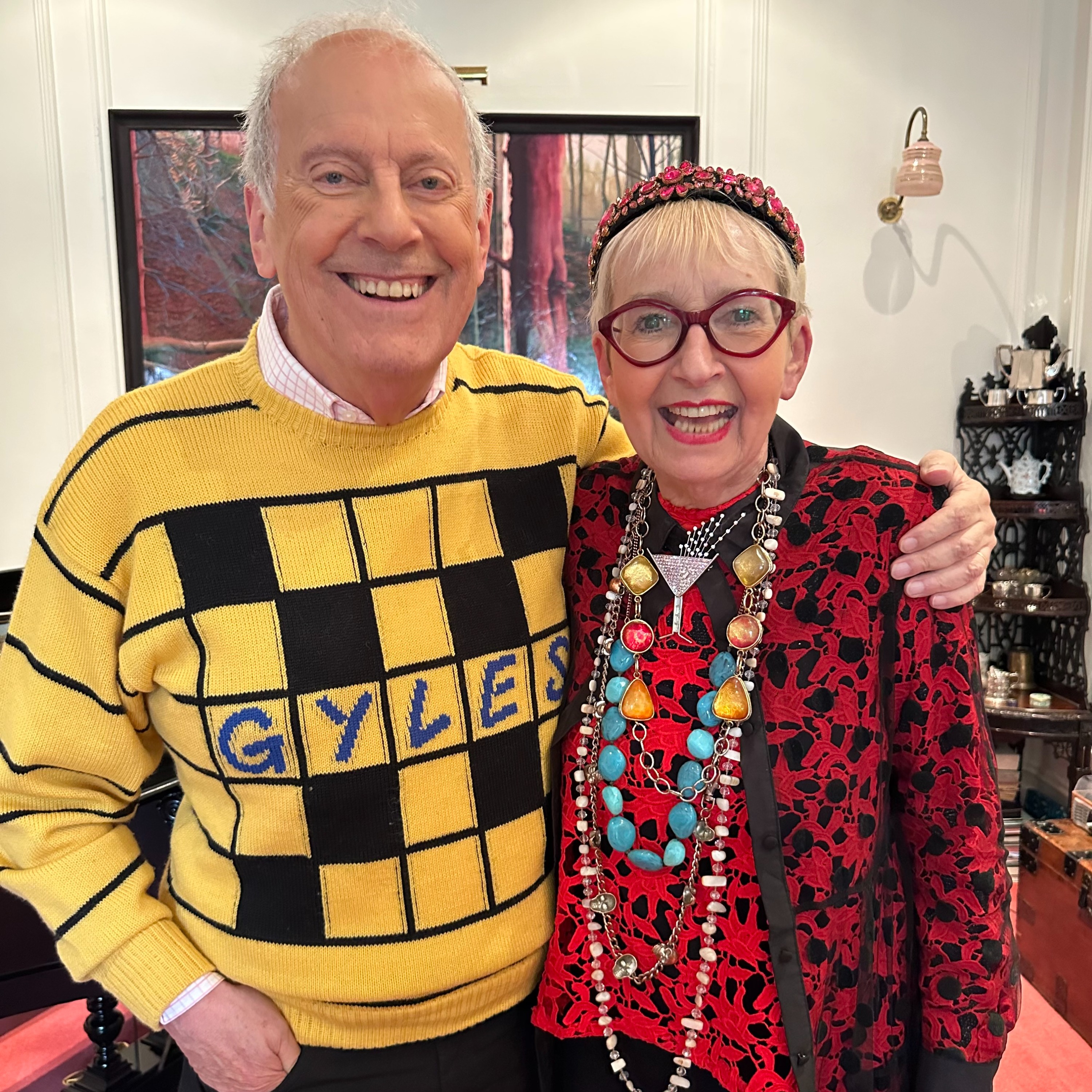
The sun is out and our guest this week is a ray of sunshine. It's the unique British comic actress and fashion icon Su Pollard. In this brilliant conversation, Su tells Gyles about her childhood in Nottingham, how she got the bug for performing when she was still in the infants and used to go to school dressed in wild outfits that made her look like a morris dancer. He hears about her parents, Don and Hilda, how her father liked to garden in his shirt and tie and their impressive work ethic. He hears about Su's first boyfriend, her first professional role and her first meeting with the Queen. And he hears about Hi-de-Hi and how Su sometimes answers the front door as Peggy. This is a unique conversation with one of the true originals of British showbiz.
Su is currently on a nationwide tour called "Still Fully Charged". Tickets and info available from supollardlive.com.
Enjoy this.
Hosted on Acast. See acast.com/privacy for more information.


