
 Ask ChatGPT



Written by AI. May contain mistakes.

Get the gist, explore an idea or ask about something said.
 Claude
On Rosebud with Gyles Brandreth, what are the key points of this episode?
Searching your listeningAutomatic transcript. May contain errors.
0:00All the best shows have catchphrases, you know, like, nice to see you, to see you nice, or, I don't believe it, even, just like that, I'm free, I'm free, so we've got ours, cue the music, cue the music, cue the music, it's our catchphrase, and here it is, Ariat, cue the music.
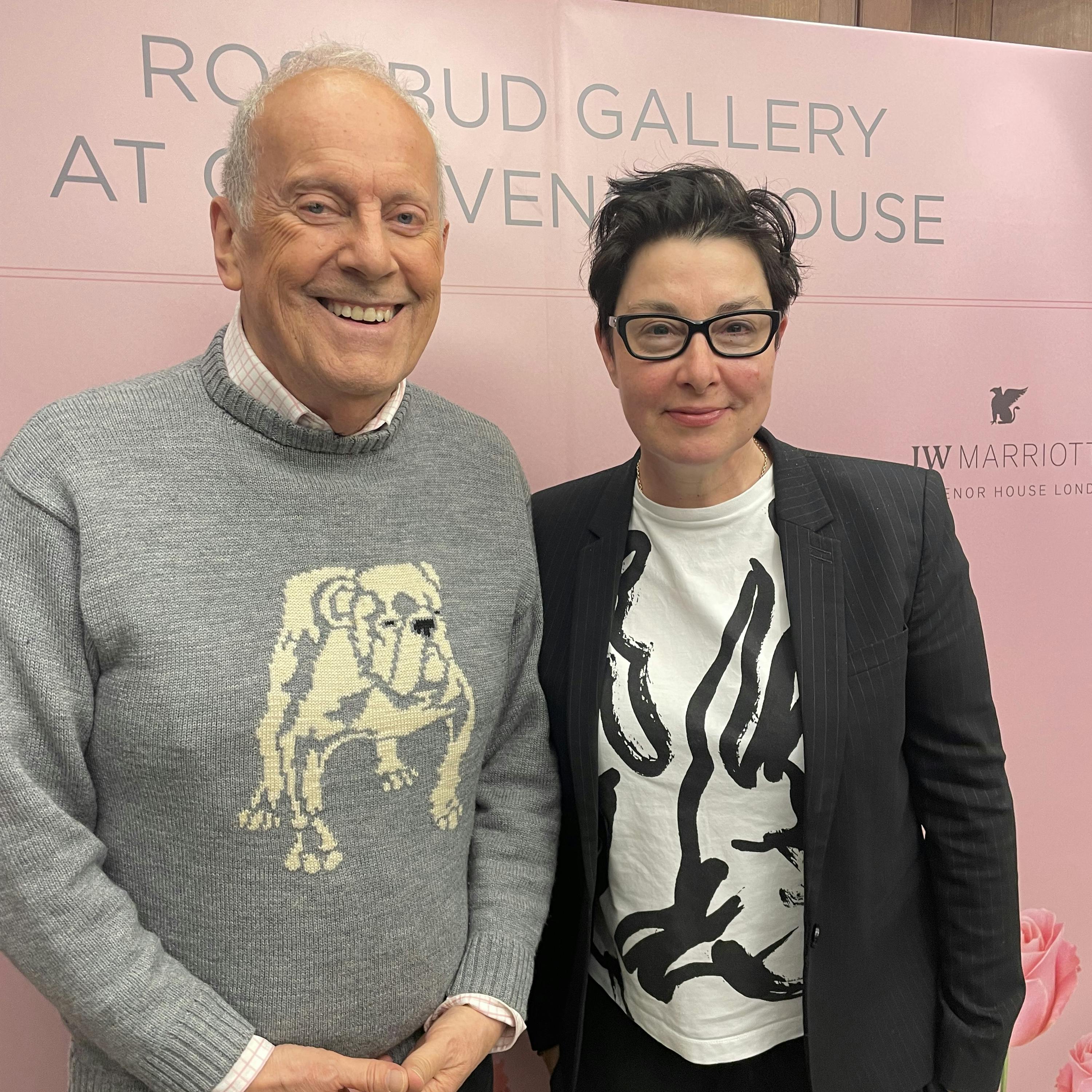
0:44Welcome to Rosebud, which I do love describing as a top 10 multi-million download podcast, which it is and I'm very proud of that. The reason of course is because you're listening and I imagine the reason you're listening is because of the remarkable guests we have and I'm so grateful to them and indeed to you. Often the guests are friends of mine and today is no exception because our special guest today is Sue Perkins, comedian, writer, presenter. I know her, I've known her over many years because we've appeared together on the Radio 4 show Just a Minute, which I first began doing in the 1980s, and now she chairs that show and does so brilliantly.
1:26I've been a fan of hers ever since I first saw her, I think on something called Light Lunch years ago. I loved her more recently on Bake Off. There's something slightly eccentric about her at all times, and I find that fascinating. If you love Sue's work, do catch more of her, because there is plenty more to catch. She's currently hosting a brilliant series called Chess Masters on BBC Two. And of course, she's back again with her longtime comedy partner, Mel Getroich, on their brilliant podcast, which is called Mel and Sue Should Know By Now, available on Audible. Today, I'm hoping to get to grips with why Sue is who she is.
2:08If you're intrigued by her, as I hope you are, stay with us. This is Rosebud with my special friend, Sue Perkins. Cue the music.
2:32So we always begin with exactly the same question, but the answers tend to vary. The question is this, what is your very first memory? At this point, by the way, can I just say I wish that I had written down somebody else's memory and recited it verbatim so that you'd be so confused and think, I can't believe that she has the first memories of Dame Judi Dench. My first memory is very elemental. It's being slapped on the cheeks with a rather cool breeze coming off the Thames on the Woolwich Ferry. And I was with my nan, my grandma, and we were off to see Jungle Book. But I didn't know that. I just knew we were going to the cinema and I was so excited.
3:11I love Jungle Book. It's incredible. It is. The Bear Necessities. That's the Jungle Book you mean. That is the Jungle Book I mean. And I have a very moving story that comes later in my life which connects me to that, which I found quite overwhelming actually. But I can bore you with that later. It's a very, very profound memory that first one. But this is good because we've got our listeners hooked now. They'll have to listen to your moving Jungle Book story. I've given you a narrative arc right from the start. This is as it should be. But I need to know who this Nan was. And why are you on the Woolwich Ferry?
3:43So, my dad's mum, Florence, who's a sort of very busty, no-nonsense, old-school, matronly figure. She was a midwife, one of the earliest intakes of midwives into the NHS. So I'm very, very proud of her. And she was just a great presence in my life. Terrible cook. Used to put the veg on at about eight o 'clock in the morning. My dad always hated fish and we never knew why. and he explained that once, because she was always working and they were latchkey kids, but she'd come home and she'd go on, I've got this fish and it stinks. So she popped it in Dettol to clean it. And grilled it. No one from that family ate fish again.
4:23So that's Florence, Dad's mum. Who was Dad? Dad was Bert. I was going to say Albert, which was his sort of given name, but he hated the name Albert. So he was always Bert or Bertie. It's a great name, Bertie Perkins. Bertie Perkins is a... He always used to say he'd be the butler in an Ealing comedy with a name like that. He would? It's great. What was he like, in fact? What does he look like? Was he tall? He was very handsome in his youth. He looked a little, there was a slight touch of the Humphrey Bogart about him. Wow. Yeah. He was very, very handsome. Very smartly dressed. We'd go to Parents' Day and be routinely told how slapdash I was, but he would always wear a posh jacket and a tie and be smart.
5:02That's how he'd grown up. And they grew up with nothing, really. I mean, I didn't really understand the depths of poverty that they lived in until I did, Who Do You Think You Are? Yeah, they were sort of very harem, scarem bunch. There were six of them. Catholic family or, you know, wandering around. I mean, my dad was in a road traffic accident in the Blitz. He was just tiny. He was tiny. He would have been, what is it, 41, 42, so he would have been six. And he was in traction in the hospital when it took an indirect hit from a V2, would it have been? and the building shook, and he just remembers plaster dust falling like snow onto his broken leg on the cast.
5:39Yeah. And what did he do for a living? How did he earn his money? He did lots of jobs before he met my mum. He worked for the Tote, which was the bookies, and lots of odd jobs. He left school at 14. He didn't have any qualifications, but he was the smartest cookie. Why did he leave school at 14 without qualifications, if he was bright? Because, you know, the saddest thing, My mum sent me this photocopied piece of paper recently, and it was a school report, probably a finishing report when he was 14 and out the door. And it said, Albert is of average intelligence and will serve somebody rather nicely in the workplace.
6:18So painful to read that. we always think of sort of that generation of sort of working class men as people who'd get just mincemeat on battlefields but of course this was after the battlefields and so they were just mincemeat in factories and all those do you know what I mean they were sort of faceless sort of droids who would just be fed into the machine and when he met my mum he was quite advanced he'd played the field he was a bit of a jack the lad we don't know the details nor would I wish to disrespect his memory by even hinting at such a thing. But he did have the Humphrey Bogart look, so...
6:51He had a life, shall we say. Oh, really? He had a life. And the mention of the totes suggests he enjoyed himself. Yes, and he travelled around with them. So he would go to the various races and, you know... And he stood by the totes' sign doing the gambling. Doing the gambling. So taking the bets, I presume. And even though, as I say, he had a very average school report, nobody thought very much of him, his party trick would be to get people to write lists of numbers and in real time he'd just add them up as if he wasn't a human computer so he was brilliant with the numbers he was a good looking touch of jack the lad traveling around the race courses and possibly who knows a girl at every race course we don't know we don't know we can speculate we can speculate so how old was he when you met your mother and who was she so he's about 30 so 30 when he met my mom that's by the standards of a Catholic boy, that's a good age to be settling down.
7:48Yes. She was, I think, 23, 24. Maybe he was 29. They got married when he was 31, I think. But, yes. And who was she? She is Anne. Formidable Anne, who was... He says that they met at a party in October 1967 and she was wearing a hairpiece. And she'd had a drink, which my mum does not do. She's not a drinker. She's naturally abstemious. and the hairpiece had fallen to one side and she sort of, I suppose in modern parlance looks a little bit like a sort of wookie. She'd got this kind of sort of strange profusion of hair growing out of one side of her head and he was captivated by her. People did have those.
8:26I remember the 60s and the 70s. Women did have little additions, extra things. You could even have a ponytail or you sort of bulked it all up with an extra thing. She had bulked it up and it had fallen. It had dropped with the booze and the animation of the dancing, I suspect. What sort of person was she at 23? What had been her background? It's hard to pathologise the living. I mean, it's hard to pathologise the dead as well. But I'd say she was very much, she very much did what she was told. So whereas my dad had a, didn't really, his father was much, much older. His father was well into his 60s when my dad was born.
9:04So an old sort of throwback, kind of very damaged sort of Victorian gentleman sitting in the corner of the room. A mum who was working, so never there. And lots of sort of dangerous, explosive, weird events happening to them as kids with no one really safeguarding them. Give me, what do you mean weird, explosive things? Just, they don't talk, the family doesn't talk about them and I know, but I know that there were, I know that there was some incident involving my aunt which was not good. No one spoke about it. This is your dad's sister, one of his older sisters. So again, they were just milling around, and something happened to her that was not good, and she stayed.
9:46She never left home. My grandma never took her eye off her again. Gosh. So whatever it was, it was very bad. Whatever it was, it made my dad wake up in the middle of the night crying her name out. People didn't talk about these things. Nobody talked about it, and I can't provide details. Now, if I knew, I suspect I probably wouldn't furnish you with them, because I have a sense what it was, but it was, London was in chaos, I suppose, at that time. You know, the rebuilding itself after, you know, being bombed out and smashed up. And she was somebody who was caught in the crossfire, shall we say.
10:20So this 1940s, early 1950s. Into the 50s, yeah. So he'd come from this rather scattergun, slightly traumatic, I mean, intensely traumatic in the sense that, you know, he was in hospital interaction when the bombs fell. But, you know, this kind of upbringing, whereas my mum, again, very working class parents, but a mother who was a daughter of immigrants from what is now Lithuania and driven to make something for herself. She saved. She was a furrier. She would move the coats across London Bridge and she'd save every penny. and she was the one when she met my maternal granddad Stan who said we're going to have a business, we're going to get into cars.
11:07And she did, she really did. So she was a go-getting car saleswoman. She was and so they had a motor company and it did pretty well, it did better and better and better and in the end they managed to send my mum to a good school and she was very dutiful and very thankful that suddenly their fortunes had changed. But it meant there was a certain degree of compliance, which knowing my mum as I do would have been quite hard for her. So my mum is very, very bright, but her parents decided she shouldn't go to university. She could have gone. Yeah. And why did the parents decide that? Because they wanted her to be a secretary for the company.
11:51Ah. So I asked my mum recently, I said, what would you have done? And her response was pure Anne, which is, I think I'd have been a fighter pilot or something. So she's got that spice in her. Is there disappointment in her? Yes, yes. But she manages it beautifully. And manages to allow all three of us to do what we need and want to do in our lives without any degree of bitterness. Three of you. This is your two younger siblings. Yes, my two younger siblings. So what attracts, well, obviously he's good looking and he's charming. Yes. And she is 23. And is she quite attractive? She's beautiful, yeah.
12:26She's beautiful. And she was a Catholic too? No, she converted. Oh. She converted. Because she wanted to get in with the in-laws. Again, wanted to do the right thing. It's like, well, you're a Catholic, I'm going to be a Catholic, and we're going to bring our kids up as Catholics. Which didn't long-term work out brilliantly. And when you were a little girl and later, did you see them together? What was their dynamic? What was it like being with a pair of them? Mum was very much the disciplinarian. They had a very traditional married life in the sense that my mum had been a secretary, but then was a homemaker.
12:59He then worked for my granddad's business. He got co-opted into that. Oh, so he gave up being a bookmaker and became a bookkeeper, actually. Yes, an unqualified bookkeeper for that. Working in the accounts department at his father-in-law's business. Yeah. So. As I tell the story, you can see how people just, I mean, I'm not saying it's not a painful thing. sacrifice at that time but they're just ceding they're ceding control of their lives to other people to other institutions or to yeah to their betters they're accepting their place in the order of things because that's what they've been told and doing and doing well at it being conscientious as being conscientious but what were they like together were they did their love affair go on as the years went by yeah they were together till my dad passed yeah they they bickered a bit but They had spark and sass and he went to work.
13:52And I, you know, I remember him, remember the storm, the hurricane of 87. Was that right? Is it 87? Yes. So he used to work in Peckham and he would drive there every day from where we lived in South Croydon. A big branch had fallen on the car and smashed the window. And he just punched it out and drove to work with no windscreen. Well done. I think he probably took a couple of sick days of his entire career. You just, whatever it was. And that is in me, that idea that you just, well, you just go to work. Yeah. Well, it's admirable. You keep going. You keep going. Yeah. Yeah. What's your fondest memory of him that comes into your head, of him, of your father and you, the sweetest moment?
14:32Oh, I mean, I have billions. I think that the memory that first comes to mind is the one that was the most frequent, which is that every day, whether we wanted it or not, he'd wake us up half as six with a cup of tea. and we would all sit in my mum and dad's room, all five of us. For some reason, we'd sit on the floor. I wasn't, I don't think it was orchestrated like that, but there was probably no room on the bed. It wasn't one of these huge, you know, it wasn't an empress bed. It was, you know, a standard double that three, you know, threw into our teens, you know, wouldn't have coped with the three of us.
15:03But, and he'd make one for my mum and that, you know, and he'd put it down and yeah, we'd all have half an hour before he went to work. And we just chapped. Lovely, that's lovely. It's a lovely memory. It's very prosaic in a way, but incredibly meaningful. because it was the metronome of my life with him. It was great.
15:28Did you have your own bedroom as a girl? Or did you share with one of your siblings? No, I had my own, actually. I had my own bedroom. What was it like? Describe it to me. My mum wallpapered everything. She was so good at wallpapering. She's so good that my sister asked her recently to wallpaper a wall. She said, I'm 83. three. And we both went, you know, you can still do it. She could line up a pattern and you know there were patterns in the 70s. I do. Vivid, vivid sort of floral explosions and they would be matched perfectly. So the return would be just so. My sister had flower fairies in her room.
16:02I think I remember that pattern. Really charming. Charming. She was in the little box room and she had flower fairies. My brother had aeroplanes and I had pink candy stripes for a while. Then they just painted it magnolia because i went through a slightly wayward phase of once i discovered there was such a thing as stickers i stickered my entire bedroom the whole bedroom was covered in them so my mum took the wallpaper down steamed it off in a huff and then we just i just had magnolia it has a single bed with a little cabinet it had a sliding door it was like g plan modular g plan sort of stuff and every night i would slide it open and i had a little treasure box which i opened recently and I could not stop laughing.
16:43It had in it all my old teeth. Oh. Yes. Because the fairy didn't take them away when the fairy left you. No, the fairy gave me the pennies but then left the tooth and I put them in the box. Some macrame that I'd done in gold thread and some whimsies which are the porcelain figurines of animals. I don't know if you remember them in the 70s. Oh, I think I do. It's a little, there's a piglet in there and a squirrel, a red squirrel and a grey squirrel, I think, and a cow. And those treasures would be poured over every night. Like it was, you know, the Holy Grail. Given you were a Catholic, did you say your prayers?
17:22No. Oh. No, I didn't. My memories of Catholicism were, I mean, again, it felt like it was tradition more than faith for me. It always, we would go to church every Saturday, there was a... Saturday? That's a bit unusual. No, no, no, Sunday. That's how bad a Catholic I was. Every Sunday we go to church. And it never got confirmed. By then I was already, I had developed a deep antipathy towards it. Because the whole kind of confession thing really freaked me out. It's really freaky for quite a sensitive child to go through that. And you were a sensitive child. I mean, as a little girl, who was your first friend outside the home?
18:00Oh, I think Helen Baxter. But I had, I was lucky, I had lots of chums. and there were lots of kids in the street that I could play with. But I was always the shyest. I was very, very shy until probably nine or ten. I mean, I was so shy that I wouldn't, I couldn't look at anyone, I couldn't speak properly, I stammered a bit. And why do you think you were shy? I don't know much about the sort of developmental side of shyness and where it comes from. I was just aware that everything was a bit overwhelming. I think it still is overwhelming. I'm very good at hiding it. Were you left-handed? Yes. Is that a thing?
18:40Well, people who are left-handed feel like outsiders in a world, so they then keep themselves to themselves. That's very interesting. It's a possibility. I don't know. Yes. Were you conscious of being left-handed? Yes. Did you go to school and things? Nuns. Oh, you went to a Catholic school. You went to a Catholic primary school. For a little bit, and then things kicked off. And there are wonderful nuns, and occasionally you want to hear stories of nuns who are less loving and giving. Well, that's why my time there was only brief. So I'm left-handed and they used to force me to eat right-handed and they would tell me that it's the sign of the devil and sinister and all that sort of stuff.
19:16And I found it very hard to eat right-handed and I become very frustrated and very tearful. Did they smack your hand? They did. And then I told my dad one day, he said, why are you so quiet? And he said, tell me. And he was a very, my dad was a man who was always surrounded by women. He listened. He was really good at listening. and so you know as I grew up I was used to this sort of parade of women who were going through divorces or sadnesses in their life coming and he was just a very wise old owl but anyway I spoke to him about it and I could see that he was very very very gentle about what I was saying and then he said what happened then and I said well she hit me and I just saw these walnuts of sort of tensed muscle in his face and he went in and then I left the school and the thing is that when my dad went to his school holy joe's i think it was called catholic school the monks hit him so hard with the side of a ruler for bad behavior that he always just he said he could almost feel it in his joints still so that was it and i went to a non-denominational school and um i had no more nuns which was good because they scared me quite a lot um and also one of my earliest memories was a kid called nicholas we were having a very chaste very early doors sort of childlike snog and then we were screamed at and then we were, it was almost like it was a sort of cinematic thing where the, you know, the focus gets widened and I realised it was underneath this enormous statue of the Virgin Mary.
20:38Oh Lord. It was all, and how are you? It's probably Ken Russell the whole thing. You're seven or eight at this time, are you? Yeah, yeah, yeah. An intimate, it's a great moment in the movie. In the movie, yeah. It'll be a fantastic shot. You know when kids just work out that two mouths can meet? It was that, it was innocent, but it was, oh my word. He went nuts after that. But can I say, So you weren't that shy, clearly. No, I'd obviously got over that. You managed to get something going. Yes, something had changed, obviously, by that point. But you blossomed aged nine or ten, did you? That's when you began to...
21:08Yeah, and then I, yes. Because you were at a happier place, being at a happier school, a better school. Possibly that, possibly just natural developmental sort of changes and just feeling a bit more comfortable. And certainly, as I moved into secondary school, much more sense of self, I suppose. and how did that manifest itself given that you come from this accepting background with parents who were doing the correct thing in reasonably modest way they weren't struggling with money by then I mean they were leaving not rich lives but you were comfortably offered home it's an odd dynamic that that one we we received patronage from my mum's parents essentially my dad was salaried by them um it wasn't a very good salary and we would get their television once they'd done with it which would be a nice television but three four years maybe later and everything we owned had gone through their hands and again you know you can be both grateful and saddened by it and i that's how i feel now at my age now it's just like god there was no breaking free of that it was it was a magnificent shadow but it was a shadow nonetheless less um and yeah both my parents just lived in their thrall my grandparents noticed perhaps that I wasn't particularly focused as a child they then paid for me to go to a very nice Quaker school where there were smaller classrooms and I remember my sister who's extremely bright both my brother and sister extremely bright but my sister is an academic she went on to to get her PhD and stuff but I remember her sitting at the bottom of the stairs holding a piece of paper that had come through in the post and it was acknowledgement she'd got a scholarship and she was teary because she knew that by doing that my parents weren't in debt to my grandparents so that's a very sophisticated thing for a child to understand i mean she's a very sophisticated person but yeah all of that going on so yes we lived comfortably on somebody else's shilling with very much the idea that i would be showing to my grandparents when they arrived things that I'd learned.
23:16So there would be these weird working class moving into Nouveau-Riche salons where the children, myself and my brother and sister, would play their instruments and do all that. Read a poem they'd written perhaps. Exactly that. Although my poems were quite dark. I read some of them. Because you began writing, I remember you told me this once, very young. You were writing reams of poetry as a sort of six or seven year old. Yeah, yeah. Of course I still got it. I mean it's mad. But this is part of you being inside your head. Yes, I think so. And you're, you know. The outside thing which I you know one as you get older you realize oh everyone feels like that everyone of course at some point feels like an outsider but the way that I tried to connect my interiority to the outside world was writing.
23:55And what were the poems about? There's one called Heron. It was the Ted Hughes of your generation by the sound of it. But I'd become obviously I'd seen a picture of a heron and I was obsessed with its beak and it was about all the things that it could destroy with it. It's so dark. Yes and the dank water. But then you have to think about it and contextualize You know, growing up, I grew up with those sort of Charlie Says films, those sort of messages. You remember the sort of voice by Donald Pleasant's going, the water is dark, but the child's going into it. He'll drown soon. You know, and you're just a guy dressed as the Grim Reaper.
24:29This is what we were all fed. The idea that the outside world is dangerous, that we're going to get bumped off, that there's going to be a live electricity pilot outside the house, which ironically there was. We had an electricity substation. So it was that much more febrile, my feelings about personal safety. So a lot of the poems were about that and about, and you know, when I started drawing, I draw skulls and sort of wilting irises. And yes, I was very fascinated by decay and deterioration. And were your parents aware that this was going on or was this kept secretly? I think they just sort of thought, oh, she's off again.
25:01I mean, really, I was such a mooncalf. They just leave me to it. There's lots of pictures of me as a child, but my mum's staring at me as if to say, what are you then? very benign but the sense of like were you pretty no no no i had one ear that stuck out and i think it's just sleeping i it doesn't stick out much now but i used to sleep on it and i think that worked quite goofy um were you funny at the quaker school where you're beginning to find your feet jolly yes i was jolly and i think i loved being around jokes and positivity i i always feel Well, jokes are the sea wall that protects you from the sort of tsunami of sadness that's always, for me, just over there.
25:47So you reinforce the wall constantly with a pun or a quip or a long, shaggy dog story or a reminiscence. Were you bright? Were you doing well academically? I was doing academically well. You were sitting in the front row? I was front row English, front row history, front row music, front row art, back row chemistry. back row. It was, now I find those things fascinating, but at the time I think I wasn't, I didn't understand the way I was being taught, and I, and when I don't understand something, my attention is gone. Gone. So A's, C's, which at that time were the borderline fail. Gosh. Was this a co-educational school, the Quaker school?
26:24No. So it was just girls? Yeah. So boys did not come into your life at all, and didn't have a boyfriend at that age? No. Boys came into my life as a 14. There was a school down the road, a boys' school down the road, and through doing plays or there'll be musical stuff. I played in an orchestra. Oh, what did you play with your instrument? Flute. Flute? I know, no one expects it. No. No one expects the delicate tinkling from the Perkins. Yes, I enjoyed the... Piano is my sort of instrument I love. I'd never play in public because I love it too much. Flute, you know, I found it... It's not an easy instrument to master, but it's an easy instrument to get okay at and certainly for orchestral work, you know.
27:00And if I was really pushing it, I could get to the first desk and if I didn't want to, I could just slide down and just didn't have to do any trills, you know. But this, you're doing well at school here. You're playing the flute. You can also play the piano. You're getting some A's in some subjects. You're clearly likeable. It's all fine. It's all fine. Oh, God, there's no problem. I mean, I don't remember my life having any problems. Yeah, then boys would come. Boys would come and go and boys would come and go. And then one day, I was 16, there was a boy and I thought, oh, what's this very strange feeling?
27:31Oh. What's this strange feeling? and I couldn't take my eyes off it. Can you define, what an interesting idea, this strange feeling. Can we pinpoint this strange feeling? Well, romantic. Is it in the stomach or the head? The strange, you're right about this, you're suddenly making me think of actually the feeling. Yes, the feeling, because I'm very much, I mean, I talk a lot, obviously, but I'm very much located in what things feel. I'm an emotionally centred person. So to understand something, I have to sort of experience it here in my heart. But it was, oh, it was an overtaking. It was a sensory kind of, yeah, overload that I'm not used to.
28:16It sort of dismantled the normal processes, both of the rhythm of breathing, of digestion, of controlling my body temperature, of being rational in my mind. It just, it was like, oh, it's blossoming, it's electricity, this beautiful beautiful boy that just arrived and i was just well done him that he could provoke this did you realize that this was happening eventually over time we ended up we ended up having a very long relationship but a proper relationship yeah he was my first ever boyfriend but it was like i couldn't i almost didn't want to speak to him because a i was quite shy but i did not want to make it real because i think those those feel it sometimes putting language to things sort of dents and deteriorates the sensation.
29:04I just liked being in the world of pure feeling for a bit. Yeah. No, I'm with you there totally. It's Cinderella and Prince Charming. Yeah. We don't want to go into the detail. It's just the idea of the wonderful picture. Exactly. Exactly. And it's chemical. And it interests me because we hadn't spoken. We were quite far away. He had a proper, I was just sort of, I can't remember what the show was, but it was, you know, a chorus back, you know, Way, way tucked behind in a sea of people with my mates. And he was set apart. I think he had two lines. And he came on and I just was like captivated in rehearsal.
29:38But these things can happen. You've made me remember many, many years ago, I was doing a television series in Cardiff. And it was called Memories. And there were famous people that I interviewed from Diana Dawes to Harry Seacombe. They had to have a Welsh connection because it was in Cardiff. Of course. Shirley Bassey must have featured. Indeed. I think she was the first guest. As she must. She must be. And at the end of the series, on the last day at the party, I was saying goodbye to various people. And a girl who'd been in the orchestra, or maybe she was one of the backing singers, because we talked to people about their memories, and then music was played and a song was sung.
30:17So I think she was one of the backing singers. And she said to me, have you been thinking what I'd been thinking? I looked at her, and I had been thinking. for six weeks and clearly she'd been thinking the same thing neither of us had done anything about it and so we both said it's too late now and that was it but isn't it interesting it was simply in the mind but was it too late at that point well it turned out to be too late i don't know um i don't know what her husband would have made of it i'm joking about the husband i know nothing more than that i don't even know her name uh it's just you telling me about that it's a curious moment that actually can be sustained.
30:52But you were lucky that when you became friends, close friends, boyfriend, girlfriend, it didn't spoil it, that you really did have a lot in common. And we still love each other to this day. I mean, he lives in France, but I just think he's marvellous. I think he's marvellous. And what do you give him? And what did he give you at the time? Safety. And a bubble. and a chance to... It's complicated, this story, because... Neither of us knew when we met, and it's a complicated story, only that sometimes people's understandings are limited. Not limited. Let me start again. Oh, I had to describe this.
31:37I want to do him justice, really, and want to properly do this justice. At the time, we loved each other. We just loved each other. and we'd meet there was he lived in pearly and i lived up the way towards croydon and we'd meet and this dilapidated little step that acted as a uh a way of getting from one road down to another in um in the midpoint and we'd sit and hold hands and you know snog and whatever sometimes we'd gravitate to a car park and drink cider um and i felt very protected by him but at the time that protection i didn't know what it was i didn't know what he was protecting me from because i had a safe life i had great parents i had a wonderful brother and sister and friends and all the rest of it and as i've got older and as our lives richard's life has developed in one direction and me and mine i've realized that we just needed a safe space to to look like we were the same as everybody else um after we split richard uh found love with his partner who is a boy.
32:41And I found love with somebody who's now a great friend of mine, but my first girlfriend. But it was never spoken. The thing that's hard to describe to people, because they just think, oh, you bearded one another. We did not beard one another. We loved one another. We had a sexual relationship with one another. We were together six and a half years. But then we realised a deeper truth and we were able to and it wasn't easy we were able to shepherd one another in separation through to the next phase of our lives and he's an immensely important person to me always for that reason so it's an unusual first love story it's a lovely story were you in a sense i've given it justice you have done it justice and you've described it very well was there an element of you also being one another in the early stages of love that's very interesting gaze into one another's eyes you mirror and you you mirror each other and also you love what you see because they're seeing what you you know yes by the sound of it it was sustained that you had something that you didn't know you had in common as it happens because you didn't you didn't either have had gay feelings when you were teenagers you were just together we were just together but eventually you in a sense or he came out to you before you yes we said we we split up and then he went through quite a lot of turbulence and called me.
34:04And of course, I was just there. I didn't know in what capacity I was there. I didn't know whether we were going to get back together or not. And I think he just really had really struggled with a few things from his past and moving into who he was going to be. And I mourned that day. I remember I was at college and I had a bawled my eyes out because I realized that that phase of us being boyfriend girlfriend was over but and it was probably I don't know I've cried that much in one burst ever maybe but unlike grief that I've had subsequently the grief ended after the tear stopped and then a whole new like okay this is where we're at now how can I help how can I and it wasn't till probably a year later that I went through my own understanding of who I was.
34:53And again, just by meeting somebody that I was able to then just call him and go, I think you need to come around to mine now. And it's great. We were unflinchingly honest. And that's not always easy to be. And it really wasn't easy to be in the late 80s, let me tell you. It really wasn't.
35:15You mentioned going to college. It's not just any old college. And particularly given that your mother didn't go to university, even though she was capable of going to university, you end up at Cambridge University. Yeah. Regarded by many people, indeed probably in the league tables of the world, it's still the number one university. So how does this girl in a family that's curtailed its own ambitions find herself going to Cambridge? Was the school rather a good school, in fact? Well. Did they encourage you? No. They didn't really. They were, they were, it was a really good school and there were some exceptional teachers.
35:51I had an exceptional music teacher who taught me more about life than anything else. I did music A-level. I was the only person on my own. It remains the hardest thing I've ever done. People scoff at music as if it's a simple thing. But, you know, there was something like seven papers, understanding symphonic form, understanding. This was, as I say, the late 80s. There was an oral exam where they just play on a terrible cassette and you'd have to work out what key it was in. what instruments they were playing and write it out. You'd have to pastiche Bach chorales. You'd have to understand contrapuntal techniques and all sorts of really intense things, mathematics, the architecture of sound, the history of why certain music both worked in communion with the period and spoke of something more revolutionary to come.
36:40That's just my petition to make people love music and accept it and, you know, be kind to people who want to spend their life studying it. But she was brilliant. She can't have been much more than seven or eight years older than me. I'm still a good friend of hers. She's an amazing woman. And she was so frustrated with me because I couldn't concentrate. You know, I got a U for my mock exam. And she then said, I'm going to keep failing you until you start really learning. This is your test for this week. Tell me everything you can about 1930s architecture. Off you go. And I became obsessed. And then the next week it was 1920s art.
37:16It was all around the period of the music I was studying. And slowly I developed this sort of panoramic understanding of culturally what was going on. And also, for your Cambridge interview, you were then prepped, weren't you? I was prepped to not just accept one thing, which was the curriculum. So it came to my interview. My dad took me to Cambridge. What did they think about it, your parents, going to Cambridge? Because it is stepping into another world. It is. And if they know the world, they know you will be leaving their world. That is a very true and painful thing for you to say because it's utterly on the money.
37:49My dad, once I'd got in, took me for a walk. And weirdly, we walked past a little step where my ex-boyfriend and I used to canoodle. And he said, I'm so proud. Please don't become posh. And honestly, now I could just, if I wasn't here, I could just bawl my eyes out. Because you're right, it's one life. It's one life just handing the baton over to another. And how could he have not wanted that for me? All that expansiveness and that joy and that opportunity that they didn't have. But how painful to let go of the lovely little world that we'd all created. I mean, I did obviously become posh and it's horrendous.
38:30You handled it quite well. Well, he was just saying, don't leave us. Leave us in some way, but always maintain the connection. so he he i at school to answer your earlier question i as i say i was good at the things i was good at and not good at other things and and i had quite sketchy mock results and i i i i sort of said to my dad you know i'm being told that i can't go to university my even my even the subjects i was good at they said you need to probably go to a polytechnic if you're going to go anywhere to a subject other than english and i think well i've never got other than an a in english i don't understand what this is about and i started really just learning from home I became quite disillusioned with school.
39:08But they were trying to put you in the box that your parents had spent a lifetime. Yeah I think they were. They were going to contain you that you were good enough for a poly. It was a great school. It didn't have any cultural history of sending people to Cambridge. It didn't. It wasn't. Oh you were virtually the first girl to go there. Yeah me and my mate in my year I think were the first. So I would read a lot at home. I'd do my own work and again I would create a constellation of understanding around the topics. You know if I we had Tessa the D 'Urbervilles as a set text so I read all of Hardy and there's a lot of it.
39:36And then I'd read things that were going on. Thanks to my music teacher, I think, well, what else was going on at the time? So I got dropped off at Cambridge for my interview at nine in the morning. And my dad was wearing a camel coat that he'd brushed down. And he said, I'll see you in an hour. And the receptionist said, you'll see her at six o 'clock. And I was like, what do you mean six o 'clock? And my dad said, I'm going to go and eat a scone, he said, I remember, which was so specific. And he went off and spent the day. And I'm so grateful that it wasn't just one interview because I messed it up.
40:06There was lots of interviews and it was an exam. And then after I did my exam, there was an interview going through the exam. And they said, well, your grades, your predicted grades aren't great, are they? And I said, no. And they said, well, what would you change? And they pushed me. And they'd say things like, what do you think about Hamlet? And then in the middle of me saying, I'm not interested in what your teachers have told you. What do you think about it? And slowly over the course of this day, it's no underestimation to say that I discovered really what I felt about everything. I was like, well, I think that's nonsense, what they've been telling me.
40:37What I think it's really about is this. This is why I've been so bad at school. And I never begged for an opportunity, but they gave me one. My exam came back that day. It was a piece of practical criticism, analysing a text. Some of it was good, some of it wasn't. They gave me a chance. They gave me a chance. And when you got there, did you seize the chance? Did you have a good three years? What college were you in? I had the best. Newhall, now Murray Edwards, I had the best three years. I met people who I will adore till the day I die. A tribe of people who, I not just share, you know, a lot of them are in our business, but the same backgrounds, the same moral core, the same values, the same passions.
41:21I'm so lucky for that reason. I owe that place everything. Did you blossom immediately? Did you feel yourself feeling free? You lived in college the first year? Yes, I had an incredible, I said, I'd like to share. You can have an option whether you shared a room. I wanted to share. And I shared with this extraordinary Welsh firebrand, Welsh Separatist. Full autonomy for Wales, which would speak a lot of Welsh that I didn't understand, but also spoke a lot of Spanish, because she'd spent her year off in Andalusia taming horses. Don't they also speak Spanish? I mean, Welsh and Andalusia. Probably.
41:54Yes. Oh, that's now. I'm thinking of somewhere in South America. Argentina is somewhere. The Gauchos will, you know. And it's also, wherever the miners went, there's these weird pockets of sort of Cornish or Welsh kind of traditions, yeah. but she was just the most unique person I'd ever met she was sweary and loud and this flame-collared hair and would just go I've spent my grant money in two days and she'd have gone up and she'd I bought stonewashed jeans and something called contact lenses and I'd watch her just basically bully herself into a corner with an outstretched finger putting this thing into her eye and they were so thick they were like sort of like a yoga mat she'd put into her eye every day and we lived expansively and madly and messily what a woman what a woman and that was the first time i met people outside of this rather you know i was a very conformist child really um i'm still with richard at this time you know my boyfriend you know nothing nothing had upset the car but sequestered in that place i could uh not my parents were controlling or anything they let me to do whatever I want, but I fully formed a sense of myself, yeah.
43:00In conjunction, in concert, with the brilliant people. And what were you beginning to do? I mean, it was your career beginning. Play. Play. I just played. Playfully played. Playfully played. We're just playing instruments, we're just fooling about. Having a happy time. Sport? No, you've met me. Giles, come on. It's very nice of you to offer that question, as if we've never met, as if something about my silhouette tended for you to believe that I'd... I can see you in an outfit playing lacrosse. Can I say? We all have fantasies. and that's mine. One day you may get that. I might inflict that on you in your dotage.
43:31But no, not sporty, but... No, rowers had to get up at four in the morning. No, drinking was my hobby. In the pubs, in the bars, in the clubs, I loved dancing, I loved boozing. I don't booze anymore. And I would talk and laugh and roar and rage about town with my little gang. I met Mel early doors. So we would be... She was a student at... She was at Trinity down the road and we met, I did, I got Shayla, the Welsh Shayla, bet me five quid, which was all that remained of her grant, still a king's ransom, that I wouldn't do an open spot with no material. So you already thought you were amusing? No.
44:10And still to this day, the audience will routinely prove me wrong, will disabuse me of that. No, I thought I... Had you done any plays and things? Yeah, I'd done plays at school. Did you join the ADC? Were you acting in plays there? Yes. So it came and I did a bit, but mainly comedy. It was mainly footlights. So I went to the comedy store there, and there was this sort of big one single spotlight that just shone on you. And up I came, and I did 10 minutes of nonsense. I can't remember about what, in this beer-stained, screaming, shouty room. And Mel was there. Mel was there. And that was the day.
44:44This is Mel, your professional partner. My professional life partner. And what college was she at? she was at trinity and she was year two doing languages yeah we just became affirmed buddies and you know again my social sphere just sort of widened so some of her years on my year yeah and in a way your life hasn't changed from then on in has it genuinely not it's been that sort of thing and things have come along and you've done them and some have worked brilliantly some haven't worked so well but on it's been and you end up with the same mel doing bake-off bizarrely I know all those years later very strange very strange I mean but I'm always open to the happenstance of things what has been the development in your life my wife is constantly saying to me Charles the sadness of your life there's been no development I would tend to agree with me there's a similar I think I think
45:44you're drinking less I hope I don't drink at all I drank myself to oblivion. I drank myself to a stomach ulcer. I mean, you're being serious. You didn't drink too much. Absolutely serious, yeah, yeah, yeah. You mean a stomach ulcer? Is that what happens? Yeah, I just ripped my stomach to pieces. Because I was still shy. You know, you don't... Shyness is something that's masked, really. And, you know, the mask stays on. And you can do a lot of work to improve what's going on underneath. But you never really... I'm shy now. I'm shy always. but I'm jolly too so I can get away with it and I can push through but in terms of personal growth the drinking's gone I understand why I must fight against the the the sadness and I do and I'm very good at it now I work on myself and I I don't wish to succumb do you have have you had a sort breakdown during the course of the 20 30 years since no i had i had i have a sort of annoying lump in my head which i've talked a lot about oh yes yeah that's a physical that's a physical thing but it can cause massive destabilization and splitting and this was benign it's benign yeah so it's symptomatic and and it can it can if the levels get um extreme which they have done it can cause it can cause difficulties so is this inherited i mean your father did your father also had a brain tumor he died of a brain tumor yeah he had a glioblastoma there was a very unpleasant meeting point of the personal and the public when uh i just brought my uh autobiography out and in it i spoke i did a chapter on what it's like you know being dressed up as a you know a victorian grandee in supersizers and having a blood test and being told that week in a crinoline that i had a brain tumor that was benign but um why were you in the crinoline we did it supersizers we just dressed up in lots of different costumes.
47:40Oh, it was a show where you dressed up in period costumes. Yes, and we'd eat the food of that period, and we had a blood test at the beginning of the week and at the end to see what the diet had done. So I had a routine hormone blood test during the Victorian one, and that's where it showed up, which was just crazy because you're dressed in all this nonsense and you're finding out something that's very impactful. So I wrote about it in my book, and the week that my book came out, it was during Bake Off, so there was a lot of attention on me. A lot of news. A lot of news. Yeah, a lot of click-baity stuff, and the red tops got onto it.
48:12And the headlines in six papers, I think it were, Bake Off Sue in brain tumour shock or something. I don't know. I'm paraphrasing, but you know the sort of thing. I do know the sort of thing. But it coincided with the week that my dad was diagnosed with a terminal brain tumour. Which, of course, they didn't know. They didn't know. And I remember going into a local newsagent and seeing it, and I don't know that I've been trapped in a more painful thing than that, actually. Just thinking that's not the brain tumour that matters. you've got the wrong story. There's this terrible real story going on that we can't escape from and that we're locked into and that there is no running from.
48:47You know, it is a closed injury. It's a closed thing and it's just not going anywhere and there's no amount of anything that I can do to change this. So yeah, that was painful. That was, and then talk about growth. I mean, I'm a very big advocate for therapy and that's where I go and I scream these things out because otherwise I'd be mad by that. Oh, you think it's a good thing? For me. But I say that knowing that for many people, sadly, it's unreachable. I don't know where I'd be if I hadn't had that, actually. And is it talking therapy you like? All sorts, EMDR and... What's the other one? Yeah, rapid...
49:25Well, that's what you do things with your fingers. Yeah, it simulates the REM movement in sleep. It's very, very good for processing difficult things. But for me, you know, I epigenetically carry a lot of sadness with me. You know, the sadness of my mum and my dad and the awfulness of actually what went before them, you know, the sort of pain of their forebears. I'm a great believer in that, that you carry it. And I've decided to park it. I'm not lucky enough to have kids of my own. But I see my sister and my brother who do have kids. They've done the same as me. They've gone, whatever we've inherited, we inherited it with great deal of love from our parents.
50:01It stops here. It stops here. My dad was very sad through a lot of his life. And as he got older, he would sometimes almost disappear from the picture like his father before him. And I don't want to be that. And were they very proud to see you at Cambridge? I think so. Did they come? Did you invite them down? Did they see you doing things? They saw me at graduation. They saw me at graduation. And I just remember my dad was at the Senate House and I was wearing a sort of ermine and all that nonsense. and they just looked brilliantly out of fish out of water. They were just, my brother was just, you know that belming thing when you put your tongue in the bottom?
50:42He was just doing that the whole way through, mocking me. My sister was rolling her eyes. My mum just looked uncomfortable. My dad looked like he was about to fall asleep. And I loved him for that so much because the whole thing is ludicrous. You stand there, you grab a finger of the, is it the prylecto, is that what it's called? You grab a finger and I still can't remember what I was told to say, nunc something or other, in Latin and it's just nonsense. It is a nonsense. It's a nonsense. You can't verify it. I think my son declined to kneel. Oh, he's... But they said, unless you touch the finger, you will not have the degree.
51:15I touch the finger, I think I might have knelt. I think you probably did kneel. I probably did. I hadn't got a whiff of the fact you couldn't kneel. I would never have knelt. You must kneel. But he had worked out, because he's a lawyer, he'd worked out that the moment of touching the finger is how you get the thing, and the kneeling is a matter of courtesy. So my view was you were discourteous. He said, I'm not bending the knee to these people. Anyway, never mind. He seems to have survived. Your parents now, these lovely people, not embarrassed, awkward slightly at this event. Yes. And then as your career emerges, obviously in your 20s, they realise, or they must discover, or maybe you tell them, that you now have a girlfriend.
51:55Richard's gone. Yes. But look, I've got this new person here. Yeah. and they say do they register anything? Well my friend Sarah got to the stage maybe
52:10in my early 20s I think I'd met somebody and you know neither of us were telling anybody about it and my friend Sarah said look you've just got to do this because you're just not who you are and I want you to have a gift of being who you are and it's an amazing gift and actually perhaps that's the developmental journey and the growth that you're talking about is is under is becoming who i really am in all of its technicolor horror and stupidity but also hopefully kindness and chattiness and fun there's no technicolor horror also no serious or stupidity there is clearly still inside you this this knot of sadness this stone that has colored your life uh i'm intrigued having seen why do you think it is you because you've had two or three girlfriends i think i've met certainly three no you're making me feel like a right little no because no you're now a person of riper years would you like to have had a last i mean thinking your parents clearly it worked for them being together worked for them yes i mean i think i i think it works as a concept for me i mean i certainly want that and and those relationships have been long and they've been wonderful.
53:27But it's something about, I don't know, we couldn't reach the finishing line together. Do you know what I mean? I think for whatever reason, people change. You asked how my parents were about me coming out to them. So my friend said, look, just do it. If you don't, I'm going to have to drive down and tell them because I'm just bored of it now. So I phoned my mum up and I remember she was eating something when I phoned her, crunching something like toast. And I said, Mum, can I come down? I just need to come down. Maybe this Sunday or something. And she just went, why? And I went, no, I just want to come down.
54:02Do you want to talk to you? Do you want to just want to... She hears... It was really annoying. I said, I just want to chat. She went, is this about telling us you're gay? Oh. I was so annoyed. It was so interesting. I went, well, it might be. She goes, well, we're quite busy this Sunday. Maybe you can come next Sunday. it was just this nothing it was just this well done her my dad just said to me your mum's told me and that was that yeah and then later he said i've seen what men can do so i'm very glad for you to which i said but dad you've got no idea what we women can do so we we rested on that point and you were lucky to have these younger siblings who could provide the grandchildren so there was no there's been no feeling of guilt about that no and they are wonderful grandchildren they really are So, yeah, that was very lucky.
54:51And I'm very, very aware that a lot of people don't have stories like that. And they're much more combative and painful affairs. Sometimes I think we don't have to talk about it. There was an element of maybe brushing it under the carpet, perhaps now. Perhaps I wanted to talk about it. But they were just brilliant. Well, I bet you didn't particularly want to talk about it. Probably, I was very awkward about it all. You know, nobody wants to go to their parents and say they're sleeping with somebody. Well, whoever it is. It's horrible. I hope we get to a stage where nobody ever has to do that. Horrible rite of passage.
55:20Looking back, when I say to you, joy, this is from your younger years, joy. Give me a moment that comes into your head, joy. Oh, so many as a child. Child, teenager, in your 20s, Cambridge. Joy, joy, ecstasy, happiness. Oh, just dancing on tables after a pantomime that all my mates were in. And we had to put a pantomime on at the ADC and cheap tickets and lots of booze and just dancing. For me, dancing is massive. When I think back to childhood, I've always found such freedom. You know, I still, I'm an old bird, but God, daytime clubbing in a shwire in Ibiza every time. I remember the last time I went, an 18-year-old boy said, Hello, you.
56:02And I said, Hello, you. And he had glow sticks around his name. He was a beautiful kid, built like an absolute brick proverbial. and he said hop on them and he sort of bent down and I got on his shoulders oh fantastic and I just danced and danced and danced and there was granddad's there and there were kids there and it was just wonderful so yes I think about and actually I've just thought about the thing that connects to the first question you asked which is when I started working and and doing all you know whatever you know the patchwork that is my my working line I got asked you something with the World Service, quite early doors, it probably would have been about 28, 29.
56:39And they said, we have lots of musicians. Ravi Shankar came in and did a live session there. It was unbelievable. And they said, we've got Richard Sherman coming in. Of the Sherman brothers. Was he the one who wrote the lyrics or was he the one who wrote the music? I'm hoping I've got the right brother. It's the one who wrote the music. And we sat down at the piano, the BBC. And I had no idea. It was very, I like all things. I don't plan anything. I like to have no scripts. I like to just see where things emotionally tend. And he sat down at the piano and he said, and he started noodling. And just, it's such a pleasure to be around musicians.
57:17And he just said, right, this is the genesis. People talk about the genesis of writing and, you know, how do you come across that idea and the different drafts that go through? This is the genesis of I want to be like you. And he starts doing it. I've got hair's gone up already. This is back to the Jungle Book, yes. He starts going into it and he starts modulating. keys are changing and he said and I was very into some of the sort of you know stuff going on the african-american music at the time and then he goes into a completely different pastiche and then he goes into it and he plays the whole song and he hasn't noticed because he's so into it I am so I'm like tearing now I was just howling inside because I was like I'm four there's the wind in my face I'm with my grandma who's got my hand in hers and she's just the nicest cutest this woman and we'll go back to hers and we'll have dundee cake in her really really overly hot council flat in lewisham and she'll carve me a slice she wishes to carve things inwards towards her enormous boobs of dundee cake which will be we discover two years out of date but who cares it's so sugary it's preserved it's fine and it's it just i'm so lucky in my career i always have moments like that which make me which remind me of the fact that time is like a vionetta It goes, it folds in on itself.
58:28But also the journey that you've gone on from being this four-year-old. Yeah. I'm the Jungle Book. And then a lifetime later, you're with the guy who wrote the Jungle Book music. Yeah. And he's playing it for you. He's playing that song, the song that I love, that's all about travel and family and the joy of music. And yeah, and that's a dancing song. It's a happy song. The privilege of your life. It's the privilege. and actually that's another developmental thing is moving from a place of i just seen sad things and and traumatic things but the gratitude the gratitude for for the 90 percent of it has been unbridled freedom and that's something that my parents never had they were in a sort of curious familial bonded labor and before that bonded to the probation of their ancestors and I just got let loose upon the world and it is an absolute joy and I intend to rinse every goddamn second of it I really do I just want to be decent and expansive and even when making mistakes to do so with a kind of grace and a and a lightness of touch we only have a few more seconds of you and I want to know all the extraordinary encounters is there one that has been very special to you.
59:51Sherman excluded. Don't say Mary Berry. We do love her. No, I adore her. We adore her. And I've said about meeting Mel and all those sorts of things. Yes, I mean, the one I come back to is something that made me, I don't know, it went beyond language, which was I was in a forest in Cambodia with the Khrung tribe. I've been very lucky enough, as you've mentioned, to travel and to see lots of things and experience lots of life in Technicolor. And the translators didn't turn up. We were supposed to have two translators, one to translate from English to Kamea, and then from Kamea to Karung, which is a really, really sparsely spoken dialect.
1:00:32No one turned up, so I was just in the village on my own for two days, just chatting to people who couldn't understand. So I very quickly went to non-verbal stuff, clowning. A lot of mime, a lot of clowning. And the leader of the women that were left behind, and the men were off. Can I swear on this podcast? Of course. I asked what the men were doing and she, because they were never around, she went, what they usually do, hunting and bullshitting. So the men were off hunting and bullshitting. The Wimps was only women. So it was this entirely female crew and I just did what they did. I woke up when they did, went to bed when they did.
1:01:03We went and picked all the lemongrass and the ginger and all the wild sort of spinach and morning glory. Yeah, all that stuff. And she'd put flowers in my hair and laugh. She smoked a pipe and then I'd smoke a pipe and we'd just go through the cashew groves and we'd listen to the birds that were making the sound of chainsaws because all the logging was happening and the forest was shrinking almost in real time. And it was one of the most special times because I couldn't rely on my usual box of tricks. It was just about who I am. She knew exactly who I was and I knew exactly who she was. And I think within two hours we held hands and we didn't really stop holding hands for ages.
1:01:39And I'm quite shy about being very tactile with people. And as we said goodbye, I said, thank you. do you know what I think I've known you all my life I really do feel I've known you all my life and we parted and gave each other a big hug and then of course comes the edit of the show and and you know the translation comes back and I watch it in translation in that moment and I say to her I think I've known you all my life and she goes do you know I think I've known you all my life I've gone again I've literally cried three times I've literally cried three but it's that it's how how what a lesson to learn in a life spent chatting that the most powerful profound connections are made with not a word in sight just holding somebody's hand and just meeting them at their own place that's what I always try and do I meet people where they are in the hope they'll meet me where I am in sadness and happiness and difficulty in ease and it's just been the thing I'm most grateful for and that comes from my mum and dad they just let me go well we must let you go you're wonderful she's very special i'm very lucky to meet so many wonderful and remarkable people well that's what rosebud is all about my thanks to her for being here and my thanks to you for listening because without an audience there's no rosebud oh before we go i've got time i think for one of our emails nigel roberts has written to us and he says i wanted to share an early memory of mine not my first, but one that has stayed with me for 62 years.
1:03:07During the Second World War, my father served in the Navy and was posted to the Far East. While stationed in Salon, of course that's now Sri Lanka, he learned to sail. Then in 1962, when I was about 18 months old, our family was posted to Singapore. One of the first things my father did upon our arrival was to join the Shangi Yacht club. He bought an old clinker-built sailing dinghy, which he painstakingly repaired and restored. After about six months, he announced that we were finally going for a sail as a family and having a picnic. So off we went, my father, my mother, my two older brothers and me.
1:03:47We sailed for a couple of hours up the Mallica Strait, but I could sense my mother growing increasingly anxious. Eventually, it became clear that we were lost. My father called out to some passing fishermen, asking for directions to Singapore, and they gestured behind us. So, we turned the boat around and began to head back. By then, the sun was setting, and as we were on the equator, it disappeared quickly. Soon, we were in total darkness. The lights of Singapore twinkled in the distance, but back then it was just a small town, nothing like the vast metropolis it is today. I imagine my parents must have been quite frightened, but as a child I was utterly mesmerised.
1:04:35Trailing behind our boat was a ribbon of glowing light in the water. When I dipped my hand in, the water splashed with light. It was alive. At the age of two, I thought it was the most beautiful and magical thing I'd ever seen. That moment, seeing the phosphorescence shimmer in the dark sea, has stayed with me ever since. Thank you again for Rosebud. It's a joy to listen to. Best wishes, Nigel Roberts. And thank you for that, Nigel. That's going to stay with me. A joy to hear from you. And thank you for your letter. And if people do want to get in touch, The email address is simply hello at rosebudpodcast.com.
1:05:22Bye. Thanks so much for listening. I'll be with you next time.
1:05:56Rosebud is produced by Harriet Jane, artwork by Freya Betts, and music by Phil Leppard.
We're really delighted that Sue Perkins is our guest on Rosebud this week, and this is a special conversation. Gyles and Sue have known and worked with each other for years on shows like Radio 4's Just a Minute, which Sue now hosts, so this conversation about Sue's first memories, family history, childhood and student days is intimate, honest, and at times very moving. Sue tells Gyles about her childhood, growing up in a close but slightly sheltered family in south London. She tells Gyles about being left-handed, about playing the flute and about her first boyfriend. She talks about how she defied her teachers' predictions by getting a place at Cambridge, and about the life-changing friends she made there. She talks about coming out and about finding herself. Thank you very much to Sue for your warmth, your wit and for your wonderful stories. Cue the music.
Learn more about your ad choices. Visit podcastchoices.com/adchoices
Hosted on Acast. See acast.com/privacy for more information.


