
 Ask ChatGPT



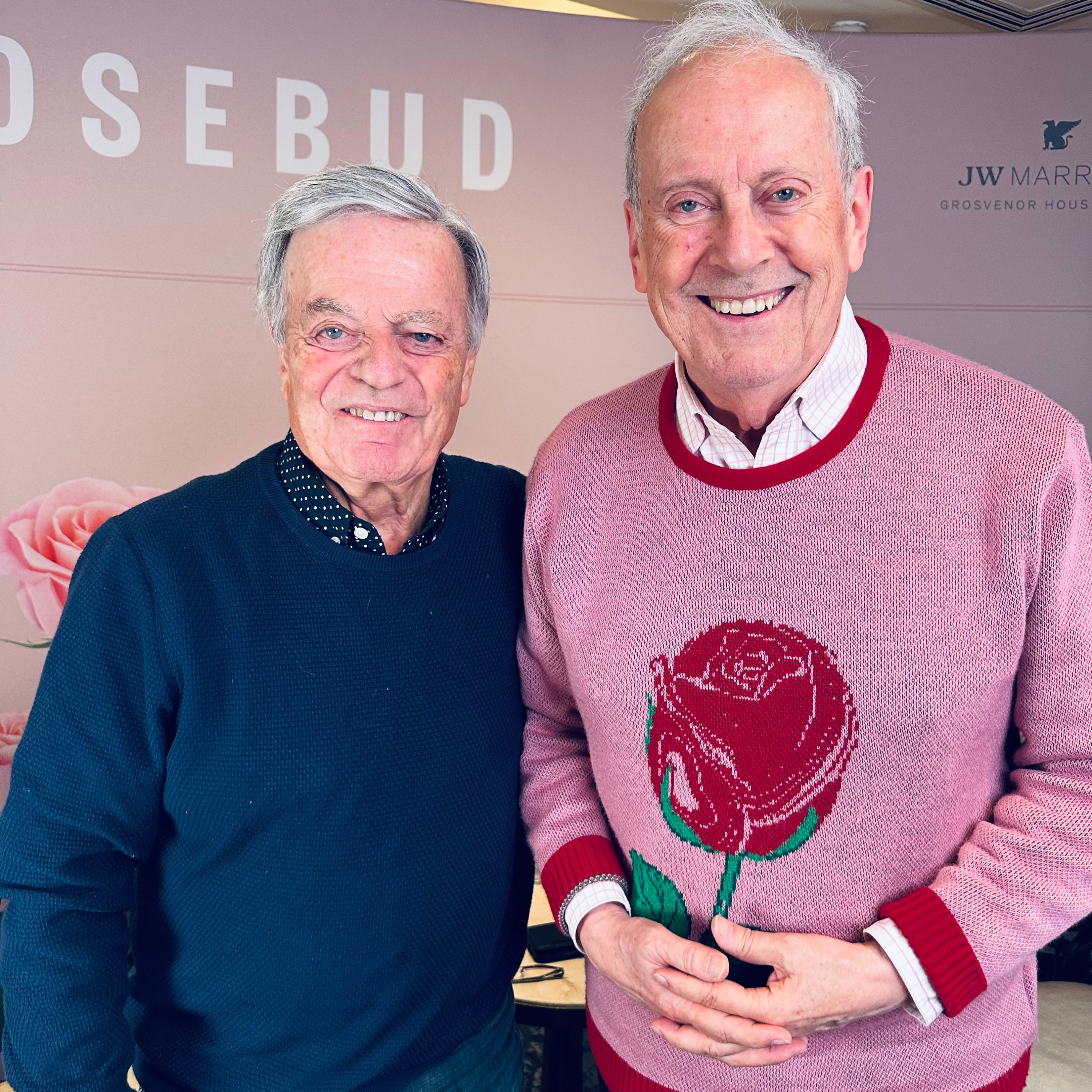
In this episode of Rosebud, host Gyles Brandreth interviews legendary British radio DJ Tony Blackburn, reflecting on his life, career, and memories. Blackburn shares heartfelt and humorous anecdotes from his early life, his groundbreaking role in music broadcasting, and personal experiences that shaped him.
Written by AI. May contain mistakes.

Get the gist, explore an idea or ask about something said.
 Claude
On Rosebud with Gyles Brandreth, what are the key points of this episode?
Searching your listeningAutomatic transcript. May contain errors.
0:00Hello, I'm Giles Brandreth and I'm wearing a sweater that was once worn by Diana, Princess of Wales. Yes, I designed a sweater that Diana bought in Kensington in the 1980s. On the front it carries the words, I'm a luxury. And on the back it says, few can afford. Well, I like to think that rosebud is a luxury we can all afford. Welcome to it. Cue the music.
0:45Welcome to this week's episode of Rosebud. I'm Giles Brandreth, and I've known our special guest today for a very long time. But if you're British, you will have known him even longer, because he's been a voice to reckon with for, well, more than 60 years. He's knocking 83 now, but you wouldn't really know it. is remarkable. He is, of course, Tony Blackburn, broadcasting since he was 21. So it is indeed more than six decades. He started out on Radio Caroline. He was then the first DJ on Radio One back in 1967. But more than being a DJ, he's also led quite a life, as we will be discovering. I knew and rather fancied his first wife, but I think that probably won't come up.
1:37Though, who knows what will come up. I know him. I admire him. I like him. I think you'll like him a lot, too. It's Tony Blackburn, OBE, on Rosebud This Week. Cue the music.
2:02Tony Blackburn, born 29th January 1943. Now, Tony, what is your very first memory? I'd like to say it was the Second World War, but I was in my cot at the time, so I don't remember that very well. I do remember my sister, actually, for the first time, my sister. And I remember my mum and dad coming back, and my sister, who was disabled, and she never was able to walk, and they just popped her on the table and there she was and that's my first memory. So you are three years old, this little girl is brought home and do they already know she had disabilities? Yes. And what was the nature of them then and what did people call them now?
2:46She had, I think it was called infantile paralysis but she was never able to walk. She was mentally fine and lovely but she was always in a wheelchair and what I remember about her and she never complained about anything it was amazing all her life and when my my mum and dad said um you know when we're no longer here will you look after her because that's always a worry with somebody who's got somebody who's disabled and i said of course i will but when my mother passed away because they were very close i said to my sister you know you come and live with us if you like but she didn't want to she she had loads of friends where she lived what was her name Her name was Jackie.
3:23And as a little girl, how did it affect you, the fact that she was disabled? Did your parents spend, did you think, too much time on her? No, no, no, not at all. They were just a very happy family. But I think when you have somebody who's disabled, it makes you appreciate what you have more. And I've always been, I was conscious of the fact that I had so much, I thought, you know going on the radio and television and stuff like that and um she didn't have so much of that but she never complained she was very happy what did she do with her life she worked at barclays and so she had a job had a job there and uh yeah she was able to i mean amazingly get around she had a a car which she'd drive it was always a tussle to get into the driving seat but she used to do that she used to drive far too fast she got pulled over by the police quite a bit i think she was a bit mad like that but she was she was a lovely person totally uncomplaining i mean yeah she never come i can't remember her complaining once which amazed me i mean i i get a cold or a cough or something i'm always complaining and was she able to live independently when she grew up or not she did she she um she moved in with a boyfriend at one stage as well who was also disabled no she had an amazing life really yes tell us who your parents were yeah my dad was a doctor down in pool in dorset and my mum was a nurse and my aunt was the worst physiotherapist ever in the world and my dad uh said to me for god's sake never go and see her but uh yeah so i was brought up in pool in dorset so your parents then your father what was his name um kenneth kenneth Kenneth Fleming.
5:10Kenneth Fleming. Kenneth Fleming Blackburn. Oh. And what sort of a man was he? Was he tall, short, handsome? About the same size as me, fairly short. Yeah. But he was a lovely man, yeah. Lovely. I mean, I grew up in a very happy family. And did he smoke a pipe? No, he didn't. I just picked up doctors of that era, like Dr. Cameron, Dr. Finley, sort of avuncular smoking a pipe with a bag that he went round to people's houses. um so what kind of a gp was he i mean he was a real really fabulous gp i mean in those days you could get an appointment to start off with and he used to go out in the middle of the night with patients and things like that you know if a patient rung up even if they got a cold he'd go and see them because in those days you know they had to in case something went wrong but he also he used to do minor operations as well at home was the surgery in your house no no no he was He had a surgery in Poole.
6:04He was a partner there. But, I mean, if I had an ingrown toenail or something like that, he'd whip it out for me. It was very useful. And you lived in a house in Poole near the surgery? It was a bungalow in Sandbanks, actually. Oh, yes. Well, a place called Lilliput. Now, very fashionable Sandbanks. Yes, it is. They are sort of million-pound houses. Well, we were just down the road from there. But it was still a lovely place to live, you know, just very, very close to Sandbanks. And I used to spend a lot of my time in Sandbanks as well. And your mother, who was she? Pauline, her name was, and she was a nurse.
6:39Her maiden name? Stone. Pauline Stone. Stone, yes. And she was a nurse. So did they meet, I was going to say playing doctors and nurses, did they meet because they were working together? You were right, playing doctors and nurses. God knows what they got up to. So how do you remember her? Was she pretty? Yeah, she was lovely, yeah. Yeah, very pretty woman, yeah. No, she was lovely. They got married very young. I mean, she got married at the age of 18. Oh, my. And when you were a little boy, what is your sweetest memory of your mother? Always coming home from school, always having something, you know, a nice tea on the table or something like that, and always being there for me.
7:18And, yeah, my mum and dad, they got on really well together, and, you know, we had a wonderful time. I could never go on one of those reality shows and, you know, go on about, oh, I had a dreadful upbringing, because I didn't. I had a wonderful time. And were they people of faith? What kept them going? No, my dad wasn't. Well, I don't know. He didn't believe in. He was an atheist, I think, as I am, actually. You know, I don't believe in it at all. But on the other hand, he did believe he used to go to, because he had a really bad back. He had problems. So he used to go to a spiritualist meeting now and then to try and get help, you know, lay their hands on you and try and get better.
7:57It didn't work, I don't think. But he was happy to give anything a go. Yes, I think so, yeah. You mentioned this aunt who was the appalling physiotherapist. Yes, grandfather. Is that his sister? Yes. He obviously never went to her with his bad back. No, no. And he kept you away from her. So were there grandparents? Who were the other members of the family? My grandparents, yeah. I had obviously two sets of grandparents. My mother's grandparents were great. they moved in next door to us in Bournemouth, or pool I should say, to help look after my sister, you know, if they wanted any help. They were great.
8:34What's your best memory of your dad? You've given us your mum coming home from school, tea is ready, there she is, this lovely motherly figure ready to look after you. What about your dad? Your best memory of him when you were a little boy? Well, my dad gave me the most wonderful advice. He said, as a doctor he was, he said, never do too much exercise. it's really bad for you particularly running he said because your legs go and he also said don't smoke he said don't smoke and he smoked 60 a day so he would so his advice but I did take his advice on the not doing much exercise which I don't like I'm not mad about doing exercise and I think that was a great idea um I think my main memory of my dad was probably the long conversation we used to have we used to stay up late my dad particularly I used to find him really interesting and we used to have long, long chats at night time, which I really enjoyed.
9:27It was great. Describe your room in this bungalow in Poole. Yeah. Well, it was a nice, very, not a large room or anything like that. Can you picture any... The bungalow was made, especially my dad designed the bungalow for my sister so that she could reach everything. Ah, so it was all on one level, of course. Yes, all on one level. So he designed it. He actually, you know, designed the whole house. And he did it beautifully, and we were there for many, many years. and it was designed mainly for her, obviously, and the kitchen stuff was all very low so she'd get to it. My room was very, very ordinary.
10:02I mean, I remember my room more than anything else because that's why I did my audition tape for Radio Caroline, you know, on a little tape recorder, and did the audition for Radio Caroline. I remember sending it, going down to Lilliput, putting it in the postbox, and as soon as I put it in that postbox, I knew I'd got the job. It was weird. I had a sense that, because I'd never, I was a singer with a dance band in Bournemouth, and that's where I started when I was 17, a guitarist and singer, with a 15-piece orchestra. Good grief. Before we get you there, we've got to send you to school. Sorry, I'm going from one place to another.
10:36That's okay, that's all right. What's your first school? First school was called Castle Court. No, it wasn't, it was called Mrs Mudge's. The very junior school was called Mrs Mudge's. And was there a Mrs Mudge's? I don't remember a Mrs. Munchess there. Do you remember your best friend at that time, outside of the family? No, I don't. I don't think I had many friends at Mrs. Munchess. I didn't have many, many friends. I've always been a bit of a loner, I think, really. You know, the girl opposite, she was probably my best friend, called Joan. She was probably one of my best friends, who was also my sister's friend.
11:13But I don't have many friends at that time. And what sort of games did you play? I don't remember playing any games. I was always into music. Even when you were quite small? Oh, yes. Yeah, I loved music. I rigged up a, we used to have a big gramophone with radio. I don't know if you remember those ones. Massive thing. And I remember rigging up a thing that I could talk over the speaker. In other words, imagining that I was a disc jockey. I remember hearing Pete Murray on Radio Luxembourg and Alan Freeman thinking I'd love to do that. and I had the speaker in the hallway so that the whole family could hear what I was doing.
11:48And in the early 1950s, what were you... You had a wireless, I assume, at home. Yes. What do you talk about, the big radiogram? Did you have a television? A very small one. I remember the very first one. It was terribly small, yeah. I remember watching the coronation on it, in black and white, of course. And what are the programmes from that era that you remember? Andy Pandy. Oh. Oh, bandy band is coming to play. Yeah, the donkey one as well. What was that? The donkey? Yeah, it was, you had the piano. Muffin the Mule. Muffin the Mule. Muffin the Mule is wonderful. It's Dobbin the donkey, it's Muffin the Mule.
12:25Muffin the Mule, yeah. With Annette Mills. Annette Mills, yes. I love that. Yeah. Oh, yes. Oh, that was wonderful, yeah. And Bill and Ben Flowerpot Man. Bill and Ben the Flowerpot Man. Very good. Flubba Dub. Oh, Hoddy Flubba. Oh, Dobby Dobby Dobby Dobby Dobby Dobby. Oh, Flubba. Oh. the wooden tops i never liked the wooden tops no no i didn't bother i was not there was something a bit alarming about daddy wooden top didn't trust him no so after you've been to mrs mudges you go to a primary school uh yes i went to a place called castle court this was an independent school uh this is a private school private school and what sort of boy were you sporty were you academic um no i wasn't academic no not at all no i was more sporty yeah sporty but it's very Very competitive.
13:10Very competitive. I'm interested you weren't academic, because clearly your father, being a doctor, was clever. He was, but it didn't unfortunately come down to me particularly, I don't think. I wasn't interested in school at all. I really just wanted to get out there and pursue, you know, music. Be in the world. Yeah, I mean, I'm the age of five onwards, really. Really? From the age of five? Yeah. You were conscious, you wanted to be out there in the world of music. Yeah, I used to listen to radio the whole time. and my mother said to me I always used to sit in a chair and say Mumus, more Mumus Mumus please when I couldn't say music Even before you could speak properly you were demanding more Mumus Yes, more music What an unusual human being you are Very odd And did your mother like music too?
13:58Yes, they all liked music Did she dance at home? No, I don't think so I mean I was more into music than my mother and father I think and I think they just went along with it they didn't realize that I really meant it at the time. I've talked to you before, and you talk about how you were given a good, solid upbringing. They were people of values and standards. How did that manifest itself, and where did it come from in their case? My dad went to a public school. He went to rugby. And he sent me away to school when I was 13. I failed to get into rugby. I failed the common entrance exam, actually on purpose, because I didn't want to go away to school.
14:39But I don't think I could have passed it anyway. So he found me a school, Millfield. I got a sports scholarship. Headmaster said, imagine I'm the Stumps. And I was meant to be a fast bowler, and I bowled it down, hit him really badly on the leg. And he said, God, that was fast. And he gave me half a scholarship, I believe. So I was at Millfield as a boarder for three years, which, you know, it was all right, but I found it a boring school, really. And I didn't want to be a sportsman particularly anyway. and when I had a, I don't know, when I came home and when I was in the show business world, I remember having a long conversation with my dad and I said to him, I said, I never really enjoyed being a boarder and he said, well, we didn't want you to go away.
15:24I thought I was doing the best for you. He said, if you told me you didn't want to go, I wouldn't have sent you. So you couldn't wait to leave Millfield? No, I couldn't wait to leave school. Which I remember from that period being a rather sort of advanced school. It had sort of quite liberal ideas. Weren't there girls as well as boys there? A few, yes. It wasn't like it is now. There are a few girls there, yes. Do you have any good recollections of it? Millfield? Oh, yes, yes. And is there a teacher from the school that you remember either fondly or quite the reverse? I don't remember any teacher there, actually, no.
16:01No, I don't really. I really, really don't remember any teacher at all. No. Oh! Excuse me. No, that's... No, I don't remember a teacher at all. This is fascinating. You're a most unusual case. I'm a very unusual person, I know. I think you are. I like that. That's good. It's refreshing. And you left there, really, as soon as you could. Because when you'd done your... What actually happened was that we were allowed out twice a term. So one day I said to the head and master, I was really fed up with it there. I had to get an exit to go out with my parents, and I said, they're coming to collect me.
16:34And they didn't. I got on a train and went home and I said to my dad I just turned up and I said um you know you're spending a lot of money on this school it's doing me no good at all and uh I'm not really enjoying it very much and they said okay fair enough and I went home and I had private tuition and got all my exams oh my goodness so I left I left Millfield and and uh I remember seeing the headmaster he said you'll come back and I didn't I knew I wouldn't so you went home and you did your exams these O-levels were done from home with a private tutor. Yeah, yeah. So you really were wanting to be a loner.
17:11Oh, yes. Well, I just didn't... I mean, it was all right. I was quite happy at school, and I got on very well with everybody. And I think I was quite popular there, and, you know, in dormitories and things like that. And it was OK, but I thought it was a bit of a waste of time. So you're back home, you get these O-levels, and what next? What are your parents' ambitions for you? I went to college. I went to Bournemouth College, and I was there for three years. And I got a diploma in business studies and never used it. And at the same time, I was singing with a dance band in Bournemouth. And how did that come about?
17:47How did you get into this dance band? I think there was a vacancy for a singer or something like that and a guitarist. And so I went to see a guy called Jan Relfini, who was the orchestra. He was the leader. and I said to him, you know, I'd love to join your band, but he said, well, you've got to play an instrument as well. So I was taught how to play the guitar. I went and learned how to play the rhythm guitar. You say that, I went and learned how to play the rhythm. This is not something you pick up in an afternoon. No, no, no. I studied it for about, I don't know, about six months or so on how to read music.
18:22You went to have lessons? Yes, I went to lessons, yeah. You paid for these and you went to somewhere in Bournemouth or pool. You met somebody. Can you remember the name of the teacher? I can't remember my name only teacher at all, isn't it? I should. But it's a long time ago now. Well, it is a long time ago. I mean, I'm 82 now. Yeah, I know. But even so, these poor people, they gave you their all. They meant nothing to me. Wiped them from your memory. I don't remember any of them. Don't remember any of them at all, no. So far, the only person we remember to name is June, the girl from opposite you.
18:50That's right, Joan. Joan, exactly. You've got the name right. Joan. And her sister, Christine. And her sister, Christine. Good. So three years of this business school. Yeah. And are your parents anxious about you at all, do you think? I don't think so. I think they, I always said I wanted to be a singer. That was basically what I wanted to be. And could you sing? I mean, did you have a bit of... Yeah, I could sing all right. I mean, nothing special, I don't think. But I sent off tapes of myself singing. Were you as good or better or worse than Jimmy Young? Oh, I wasn't, I don't think. Well, I don't know.
19:22I was a different style. Yeah, because he was actually quite good. He was very good. Yeah, I wasn't probably as good as Jimmy, no. No, I don't think so. But you felt you had a chance? Yes. And there were, at that time, hotels in Bournemouth where they had little bands, didn't they? Well, I used to have one of those. Three or four-piece. You had one? Well... What was your band? The breakaway was called Tony Blackburn and his Swinging Bells. I like it. The bells are no longer swinging, I have to tell you. They're still swinging a long time ago. But I was in the 15-piece band, and we used to do a...
19:51had a breakaway band from there. And what were your best numbers? What would you... Well, I used to do a lot of Elvis Presley stuff and things like that. Oh, with the moves? Not with the moves, no, because I had a guitar. You had to hold the guitar, that sort of. And I was singing all the current stuff. I used to listen to Red Eluxemburg and get these songs down from there. And how old are you when this is happening, roughly? Oh, that was about, I was 17, I think. 17, yeah. And in your head, well, you're living day by day, and you're sleeping at home, you go back to your parents. And are they encouraging you?
20:20They're saying, do they come and hear you perform? Yes, we used to come along to the Bournemouth Pavilion. I was there. Oh, that's... I was there at the Bournemouth Pavilion. Well, that's quite a good date. Oh, yes, yeah. Yeah, that's where I started. Oh, well, so you're obviously doing it properly. Oh, yes, yes, yeah. I was a member of the Musicians' Union and everything. And it's funny, because 60 years on, I always wanted to be... I was in the ballroom, and I always wanted to be in the theatre, for some reason, you know, up on stage. And 60 years later, that's where I ended up, with this Sound of the Sixies show.
20:51Oh, lovely. I was absolutely thrilled to be in there. So you were earning a reasonable living. Can you remember the first fee that you were paid? I can on the pirate ships. I can remember what I was paid on the pirate ships. That was£24. That sounds like quite a lot. In the 60s, it wasn't bad, yeah. So how do you get the first job? So here you are, you're playing good dates, the pavilion, the top hotels. You've got your own little group, beginning to be a bit of a name. How does that move from there to being a disc jockey? What happens? I used to get the new Musical Express. Do you remember that?
21:25Of course. Yes, I do. You know what I mean? And Melody Maker. But I got the new musical express one day, and there was an advert there wanting DJs for Radio Caroline. Explain why this was an issue for younger people who don't know about... The pirate ships. Why there were pirate ships. Because wasn't there radio in this country? Well, there was, but it was the BBC. And they had a monopoly. They had a monopoly. So the BBC had a monopoly of radio broadcasting in the UK. Yeah, there was no commercial radio. And indeed, at that time, early 50s, there was no commercial television either. No, there was Luxembourg.
21:56But that came from Luxembourg. From Luxembourg, yes. But in the UK, there was nothing? Nothing at all, no. So some guys got together and decided to... Yes. They could broadcast from outside of the country. Yeah, we had to go out into territorial waters, three and a half miles. The territorial waters were three miles off the coast of... Well, we were off the coast of Frinton in Essex, of all places. And we used to go out, we had to go through customs. We went on to a little tender boat that took us out to the North Sea. And we were on the ship for two weeks at a time. We had two weeks on and a week off.
22:33And you sent them, to get this job, you sent a kind of tape, a demo tape. Yeah, I sent a demo tape. Which you'd recorded at home in the sitting room. At home, in my bedroom, on a tape, a reel-to-reel tape. And I sent it off to them. And what would it have contained? There were four Beatles records. With you introducing them? Yes. And did you play the whole of the Beatles records as well? You gave them a kind of 20 minutes. Yes, I did. I didn't know how to edit them those days. And did you say this is... Give me a flavour of what I would have heard. I don't know. Very straightforward. Introducing the Beatles.
23:04I was rather more influenced in those days by Pete Murray, who used to tell appalling jokes. Who was on... He was on Radio Luxembourg. And he was on the BBC. On the Light programme. The Light programme, yes. Because then there was the Home Service. Home Service. It was the serious talky-talky stuff. That's right. And then the Light programme would have Arthur Askey being amusing. And then it would have... Goon shows and things like that. Goon shows and bands. Bands, yeah. Victor Sylvester and people playing... That's right. ...Palmcourt music. That's it, yes. And occasionally, we're going to America this afternoon for Bing Crosby and that new crooner, Frank Sinatra.
23:39That sort of thing would happen. That's right. And there was three quarters of an hour of music at about 12 o 'clock every day. Three quarters of an hour of music. And on the Light programme, that was it. That was it. Yeah. Midday spin, it was called. It's extraordinary. Which I ended up doing, actually. But it's... It is extraordinary. It's beyond belief, really. Yeah. And so these enterprising people, seeing Radio Luxembourg, thought we can do something similar, offshore, Radio Caroline. Who founded Radio Caroline? Well, it's an interesting way, because Ronan O 'Reilly was always... Everybody thought it was Ronan O 'Reilly.
24:10But actually, the real story is that Alan Crawford from Australia, he was in a pub, and he met Ronan O 'Reilly, and he told Ronan O 'Reilly what he was going to do, get a ship, take it out into the North Sea. Now, Ronan O 'Reilly's parents were in Ireland, and they had shipyards. And so what actually happened was that Ronan O 'Reilly swiped the idea, and he said to Alan Crawford, he said, bring your ship round, and we'll fit it all out. And of course, in the meantime, Ronan fitted another ship out and got it on the air before Alan Crawford. And so that's what actually happened, and they were side by side.
24:46One was called Radio Atlanta. That was Alan Crawford's, I believe, and Ronan O 'Reilly was Radio Caroline. Now, I was hired by, as a singer, funnily enough, by Alan Crawford, and I was hired as a DJ by Ronan O 'Reilly. So there are two boats, as it were, bobbing about in the North Sea. You've applied to both of them. No, I applied to... Just Caroline. So these two... They went into partnership, because what actually happened was, It was stupid having two boats off the coast of Frinton. So one of them, one of them, I know it's ridiculous, one of them sailed up north, become Radio Caroline north, and then Radio Caroline south.
25:30I was on Radio Caroline south. So describe the boat that you're on. What sort of a boat vessel was it? It was a very small little boat called the Mi Amigo, Radio Caroline, bobbed around on the sea. The studio was above waterline, so we were being thrown around all over the place. And are you sleeping in this boat? Yes, oh, yes, yeah. I mean, how many cabins are there? How many people can see them? We had bunks and things like that. You know, it wasn't luxurious in any way. And how many people were on the boat? We had six DJs on at the time. Six DJs? Six, yeah. And was there a captain and a mate?
26:01Yes, there was a captain, and there was a Dutch crew, and it was run as a boat, but it was anchored off the coast of Frinton. And it was, I mean, the North Sea is very dangerous. I mean, you know, we had ten force gales out there, and one night I was I was woken up in the middle of the night by one of the DJs who said I think you better get up it looks as though we're going into land and because there was a 10 force gale and we'd been rocked around and I remember getting dressed and going up on the deck and we didn't have any radar in those days and the captain was there and he shone this torch along we thought we were miles out and it must have been about 500 yards there were people walking along the seafront and he said May Day and we thought it was a bit late for that and we were taken off by what they call Breach's Boy you know rope came over and we were taken off into the arms of the local police force who took us back to the police station said how much they were enjoying the programs and sent us home and I went back on another ship in the meantime and that started sinking so we were taken into Harwich but eventually you know they found a ship that didn't sink and we kept going.
27:18So you begin doing this, it's 1964, you're only 21 years old. Yeah, yes. And how many years did you do on these pirate boats? I did two years on Radio Caroline. And who were the other? The other ship was Big L Radio London. That was the ship that I loved. It was an American-rung ship and that was a big ship. I remember we were, I was doing the breakfast show and we had a sea mist out there and we heard that there was going to be another ship coming from, and we didn't know where it was coming from. And the mist cleared, and there was this massive ship that was quite close to us called the MV Galaxy, which turned out to be Big L Radio London.
27:54And that's when I heard Kenny Everett for the first time on there, on the test transmissions, and these wonderful jingles, which I still use on Sound of the Sixties, we've had them re-sung, American jingles, and I thought, God, that's wonderful. Radio Caroline, it was okay, but it wasn't as good as this one. It was an American Top 40 radio station. So Radio Caroline, before we leave it, are there any other DJs that you remember who became good friends of yours? Well, I mean, I was on the ship with Dave Lee Travers, Simon D. Simon D, I was on with Simon D. Kenny Everett and Dave Cash, I joined.
28:30Well, the little ship that used to bring us out from Harwich, it used to go to Radio London as well eventually. and it's service, Radio London, taking all the records and food on board. So one day I was going from Radio Caroline, and I suddenly heard this Australian voice saying, hey, sport, your name's Tony Blackburn. He said, yeah. I said, why don't you join us? And they said, we'd love you to join, but we want you to change your name because it was an American idea. If you change stations, you had to change your name. And they wanted me to call myself Mark Roman and rule the Roman Empire in the evening.
29:10so i said i'm sorry i can't call myself mark roman and become you know i said my name's tony blackburn i said i've been broadcasting with two years on radio caroline i suddenly start calling myself mark roman broadcasting the same people that sound a bit ridiculous so anyhow they gave gave in in the end and i joined radio london big old radio london And you were paid£24 a week by Radio Caroline. Big L Radio London, how much were they paying you? I can't remember. A little bit more. A little bit more. I didn't go there for the money. I went there because the station was just terrific. And every modern-day commercial radio station and the BBC was modelled on that station.
29:53And I still... So what did they have that was different? Oh, it was an American format. It was a top 40 format. They used to make up their own top 40, the Fab 40, they called it. which was ahead of the national chart so they moved the records up and down much quicker so it didn't get boring and so we had records in those days and we had a box of top 10 records and then we had a box from 10 to 40 and then climbers in other words new records and the format was a half an hour one to 10 11 to 40 climber revive 45 old record one to 10 american hit and that was it and my job in the morning was we had those records and we'd shuffle them around so that you didn't hear the same record at the same time every day what was your lifestyle like when you were still with the pirate stations you were there seven days a week or five days seven days a week seven days you lived there yes we lived there for two weeks at a time then had a week off yeah very good and was there a chef on board the boat yes did you eat reasonably well yes i mean i i'm not it wasn't really interested in food i'm a vegetarian and i don't i don't really like food very much you were vegetarian from being a small boy?
30:57Yeah, five years old. Were your parents vegetarians? No, they weren't, but I went on a farming holiday, and I saw this chicken that was wandering around, and a particularly lovely chicken, it was very nice, and I suddenly realised that was served up to me in the evening, and I thought, oh God, I can't eat that. You know, I became a vegetarian. And you've been a vegetarian ever since? Ever since, yeah. And was that a problem on the boat? It was a problem in the early 60s because they didn't cater for that. And when I went to Millfield, they'd never heard of it before. And they sat me down in front of a steak and they said, you'll eat it.
31:32And I said, I can't, I can't eat that. And they made me sit there for an hour and a half in front of the steak. Then they gave up. And that was it. And also in the 60s, it's very difficult going to restaurants and getting vegetarian food. It's so different now, obviously. Did you realise in the 60s what you were doing that made you a good DJ? Not really. I remember going in, I mean, one of my greatest memories were going into the studio for the first time on Radio Caroline. And I remember going in for the very first time, I'd never broadcast before, putting these headphones on and falling in love with it.
32:06And I thought, God, I love this. I love radio. I always loved radio. I loved listening to it when I was a child. And to be on it was just fantastic. and um you know i was one of the first of that type of djs not having scripts and i remember going to the light program for the first time because when i got the job of opening up radio one i they tried me out on the light program to start off with yes before well how do you get that job because you're on these two radio stations radio caroline then radio london big l yes and you're a success there uh the next move is to come to back to land yes to discover what is like walking on you come on your sea legs wobbling from side to side yes that's right fortunately didn't still i've got used to it and how does that happen how do you get a job with the bbc well a guy called tony windsor who was the head dj at radio london um he was out on the ships he knew somebody called harold davison who was the biggest agent he looked after people like frank sinatra and all the rest of it in this country and he said i've been listening to you on the pirate ships and he said that bbc are going to be opening up a national radio station and he said they're interested in you he said i know i can get you a job there i got this job on the light program uh midday spin and i remember the first time i meant a producer i never had a producer before because we didn't have producers and this producer very nice guy he said to me He said, very nice to meet you.
33:34And he said, can I have your script? And I said, I haven't got a script. I said, I've never had a script at all. He said, well, what are you going to say? I said, I've got no idea. And he said, well, he said, oh, I've never had that before. And he showed me an Alan Freeman script, which had not half, A, F, R, R, hey, hey. All of it. Yes. Every little, how amusing. Yeah. Yeah, he had to, yeah, not half, half. And I said, and he said, well, he said, okay. He said, you're not going to use a script. He said, well, would you mind coming in an hour before the programme? Because otherwise I have to cancel the doughnuts and coffee.
34:19And that was it. That was my introduction to the BBC. Oh, goodness. Amazing. And do you remember the first time you did it? You were obviously nervous. Yes. No, no, I wasn't. Oh, interesting. No, I never suffered from nerves. Gosh. It's amazing. No, I never suffered from nerves. And you just sat there and you said, I'm Tony Blackburn, welcome to Midday Spence. Yes, yes. And I didn't put the records on in those days because they didn't have a self-operating studio. No. So it was lovely. Because we always used to joke on the pirate ships that the BBC, there'd be a dear old thing behind the desk knitting a jumper.
34:54And she was there. I promise you, I'm not joking. She was sitting there. Her job was to put the microphone on. and I remember during my program she knitted a half a jumper half a sleeve of the jumper
35:13obviously you've made the decision you're going to be a radio DJ this was for you were you sorry that you debated the singing were you still doing a bit of that on the side no when I when I opened up radio one um Harold Davidson said to me he said you used to be a singer i said yeah and he said well why don't you make records so i did i mean i've actually made 29 singles goodness and two albums and none of them have sold it's not too late this could be it is too late no i think we may be reviving your singing career i doubt it so you're learning your craft you you're tested at the light program and now comes this revolution and it really is a revolutionary broadcasting because radio one two three and four are invented um goodbye light program goodbye home service yes a new age radio one totally for the young people yes and you get behind the scenes they weren't but they were they were we were young people you were young people and they hoped they were an audience of young people yes they were very good to us because when we went there they actually more or less said look you know how to do it what do you want Just go ahead and do it.
36:22Oh, well done, though. They were very good. And so... And when you say we, a group of you were recruited, were they? Well, Kenny Everett. Kenny Everett was there. And you got to know Kenny, of course, because he was already on... From the pirate ships, yes. And you became friends, you and he? Yes, yeah, very good friends, yeah. Because you seemed quite different. Oh, yes, yeah, absolutely, yeah. I mean, when I say we're good friends, I mean, you know, I mean, we kept in touch when we were on the... We'd left the pirate station. so he was on Radio 1 for a short time, then he was fired, then he went to Capital Radio, so we did keep in touch, I remember one time I invited him down, I was living in Cookham Dean in Berkshire, and I said, why don't you come down and have dinner with us, my wife and I, and he said, that would be lovely, and we didn't have sat-nav's in those days, he said, how do I get there, and so he said, well, I just drive down the M4 and turn off at Junction 8 and 9, and you know, we're very close to there, and he said, what time, I said, about 7.30, 8 o 'clock, and he He didn't turn up till midnight, and we'd gone to bed.
37:21And there was a knock on the door, and it was dear old Kenny. He said, I'm so sorry I'm late. I missed the turning. I'd been to Wales.
37:30So that was Kenny. Get me back to the forming of Radio 1. Yeah. A group of you is put together to be the DJs, and you turn out to be the one who is first on air. Yes. So you're doing the morning show. Yeah. And this is big stuff. This is front-page news. Yes. And who are the others in the group? Well, I mean, it was a mixture because they didn't ditch. They had Pete Murray there, who was lovely. He was the one who showed me around the BBC when I first got there. And he showed me all the bits and pieces. And he was great. And you had Jimmy Young was there as well. And the DJ we don't talk about anymore.
38:08Oh. He was there. Jimmy Savile was one of them. He was there. One of the first teams. Well, he did a program, I think, at the weekends. He wasn't one of the main people there. but he was there at the time yeah but he we didn't see much of him luckily he was you know used to come in in his tracksuit and everything at christmas and things like that and so it's a mixture of the older people and us younger people as well funnily enough i brown matthew um i was interviewing him on my one of my programs on local radio and um i i said to him i said you know what did you think when we we all turned up he said it was awful he said it was dreadful he said we were quite happy doing what we were doing and then you younger people came along it ruined it and he wasn't very welcome but the others Pete Murray and Jimmy Young they were great and for you the first program what time of day was it seven o 'clock September the 30th 1967 seven o 'clock in the morning the first record flowers in the rain and I said and welcome I don't know why I said and welcome to the exciting new sound of radio one and then the jingle which was a pirate jingle because we um we had the pirate jingles the pam's jingles from america and the first set of jingles were all made by them because kenny and i we love those jingles and we said it would be a very good idea to have those american jingles to make it sound like the pirate radio ships again that was the idea so you really were allowed to create the sound that you wanted to create yes and kenny everett helped you in that yes and did you and he i mean because the set up when you say help me in that we went our own own ways but we designed we told them what we wanted we wanted a we wanted a studio that we could operate the machinery from in other words we didn't want people putting records on for us like they did on the light program and things like that so we wanted to modernize it a bit so we did design the first studio that we had in there a new broadcast old broadcasting house it was actually a simple one you know a couple of turntables and some jingles, you know, which we can play jingles on and microphones and all the rest of it.
40:16And that was it. And what reception did you get? And how quickly did you get it? I remember when I did my first programme, a journalist said to me, he said, what do you think you'll be doing this time next year? I thought it was very kind. I said, well, I hope you'll be doing this. The only criticism we got, funnily enough, was from Radio 4, who were a bit stoddy about it. You know, they didn't really like it too much, but we didn't see much of them anyway. And what was your lifestyle now? You'd now moved to London. Yeah. So you were no longer with your parents. You were no longer living on the boat.
40:48Well, I moved into Kensington, actually. Kensington. Oh. It was a flat I hired. I didn't buy it. Then I eventually bought a... It was a flat again. It wasn't a house in very near Regent's Park. Oh, well done. Yeah, yeah. Very good. And when did you meet your first wife? Around this time? My first wife, yes, it was, no, it was in the 1970s, I think it was. Oh. She was an actress. Tessa Watt, I remember. Tessa Watt. I knew her. You knew Tessa? She was beautiful. Yeah, she was. She was an absolutely delightful person. Yes. So, you haven't yet met your wife, so the lifestyle you're leading. I met her in a restaurant.
41:30Oh, which one? I can't remember the name of it. It was in, it was near Earl's Court. I remember that. And she was sitting at a table, and I said, it was a place I went to quite often, and I said to the waiter, I said, oh, you know, the lady over there, would you mind giving her my telephone number? She did. That's quite bold. Yes, it was. I was quite shy in those days. Well, by then, of course, you were quite well-known. And she was also quite well-known. Yeah, she was on TV, isn't it? She was lovely. I met her with, trying to think, Tony Britton I met her with. Is that possible? Yes. Possibly, yes.
42:04I think she was in a TV series with him. That's by the by. Yes, she was. This is about your life, not mine. You're absolutely right, yes. But I mean, I thought she was very attractive too. Yes. But I didn't dare send my number over. Anyway, there we are. That's the way it goes. Well, I wish I hadn't. It would have saved me a fortune. Oh, of course, because you didn't. Yes, because you weren't. No, she was very lovely. I mean, these things happen. Yes. But go back to before that. Yes. Your life is really your work. Yes. Every day you want to go in and do this show. Yes, yes. So what is your social life?
42:30What are you? Well, I've always been a bit of a workaholic, rather like you, I think. I think you are a little bit as well, very much so. I did The Breakfast Show on Radio 1, and then I was doing also Radio Luxembourg. I was recording for Radio Luxembourg, and I had my own... And they allowed that today, the BBC? Yes, they did, yeah. I was doing Top of the Pops. I also had my own TV show called Time for Blackburn, which was on Southern TV. I was also singing on the show as well, and I was doing discos, so I didn't have a lot of time. How wonderful! Yeah, it was great. I mean, the only time that it got a bit too much, I missed a disco because I passed out, Emily, in a home.
43:09I was just, I hadn't slept for seven, there was one particular week I could only sleep for seven hours, I think it was, and that was it. I was just working the whole time. Seven hours in the week? Yeah, in the week. And it got a bit too much for me. And I remember saying to Harold Davison, I said, I think I might be doing a bit too much. And he said, no, take it while it's there. It won't always be there. And that was 61 years ago. I'm exhausted now. And did you, this is the 60s, did you manage to avoid the drugs? Yes, yeah. That was never your thing? No, no. Is that because of your parents or because you were too busy working?
43:45I was too busy working. And I saw what it did to Kenny a little bit. if, you know, I can say that about him now. He took a lot of drugs and things. And that wasn't for me, no. And you can't, you know, you can't do all that work and be on drugs and things. It didn't interest me very much anyway. No. And the girls? Oh, yes. There was a bit of that going on, was there? A lot of that going on, yes. Well, some years ago I was given your autobiography. Oh, God, you read it, haven't you? Well, I do remember reading it and being struck by your amorous adventures, which if the book is to be believed, which maybe it isn't.
44:21It is true. It was too honest. Oh, thanks very much. Well, I'm going to say congratulations. I'm not sure that I should say congratulations. Well, my parents didn't like it very much, the book. Oh, gosh. No, but... It was published in their lifetime. Yes, it was published in their lifetime, yeah. Wow. I was a bit too honest in the book. To be honest with you, it was written by somebody called Cheryl Garnsey who was my producer at BBC Radio London when I was doing a soul show there. And she ghost wrote it with me. we used to do the programme and then we'd go and do it and she said this is okay but isn't it there should be a bit more of sex, drugs and rock and roll in it.
44:52So I said well I've done the rock and roll bit but not the drugs and so she she just said to me how many people have you slept with and I stupidly told her and it was published and I never read the book before it went out. Always a mistake. I know I got fed up with doing it and so it was published and I probably should have not been quite so honest Oh, well. Yeah. There we are. And then did you change your ways when you met Tessa? Yes, yes.
45:27Although, yes, I did. We both had affairs, which she didn't know I was having an affair with a next-door neighbour, and she was having an affair with her husband. And she didn't know that I was having an affair with her husband. With the next-door neighbour's husband? Yes, yeah. Oh. And she didn't know that I was having an affair until she read the book.
45:51Isn't it awful, isn't it? It is awful. But you have a son or a daughter from that marriage? A son. A son. And that's been a joy. Yes. And you get on well? Oh, yes, very well. I've got two grandchildren. So you and Tessa parted after a few years? Three years, yeah. Oh, really quite early on. Yes. But reasonably, amicably, no. Yes, well, she left me for Richard O'Sullivan. Yeah. Yeah. I don't know. We got married probably too young, you know, and it was one of those things. It was both of us. I was quite jealous as well. I was very possessive, I think, over-possessive, which, you know, I was in those days.
46:30I could never understand why the hell she married me in the first place because, as you say, she was very beautiful. I don't know. I wasn't very... Well, you were funny, and also you were out all the time. That left her with some free time that she could fill with... Yes, I mean, it was just a... I don't know, it was just one of those things. I would have liked it to have lasted, but it didn't last, you know. But in retrospect, you know, I'm very lucky, because I met somebody absolutely wonderful, and I'm still married to now. And so you've been together now a long time. We've been together 33...
47:00Well, we've been married 33 years now. And you've got a grown-up daughter with her. Yes, she got married last year, 28 years old. Her name's Victoria. And she's lovely, you know, she lives very close to us. And she got married, as I said, last year.
47:24How have you sustained this for 60 years? No idea. I really don't know. I think, well, Harold Davidson said to me, just be nice to people and be pleasant you know and which um i've never understood anybody who's rude to people you know and because harold said you know these people who are floor managers now might be the controllers on the way up you know i learned a lot from simon d because i went on his d time which was of course as you know the big it was a huge people don't remember it at all but it was the big chat show and i knew simon from the pirate ships obviously and I went on his show to sing actually to promote a record of mine, television centre and Simon came out and he said, right he turned to the audience and said very difficult to get tickets for this show, enjoy it if I say something funny, laugh and then he said, give me a camera and that was it and I thought, that's not the way to treat people and I saw him funnily enough about two days later in Knoxville Street and I went up to him and said, hi Simon, lovely to see you again thanks for having me on your show and I said, why did you talk to people like that?
48:34He said, what do you mean? I said, well, you weren't very welcoming to them and you just snapped your fingers at them and he said, but I'm Simon D. And I said, yeah, but you can still be nice to people, can't you? He said, I don't have to. And I thought, no. Well, he paid the price of that, of course. And he reverted to being Nicholas Henty Dodd, which was his real name. I think he went slightly mad. I think it all... Yes. Don't you? Yes, I do. He went crazy. Well... So I learnt a lot from that, actually. So you have been nice. And you're with the BBC still? Yes. You are. Ready to. They're liking you at the moment?
49:12Got a contract anyway? Yeah. I mean... Well, Helen Thomas, who's the head of Ready 2, gave me a lifetime contract. Oh. Two years. Oh, very good. No, but I've got a two-year contract which starts at Christmas. I mean, you've seen the BBC. Yeah. over 60 years, off and on, ups and downs. You've been working for them. What's the future of...? Well, I love working at the BBC. I mean, I've been offered jobs on... Well, I've worked for commercial radio for a long time as well, but I've turned it down because I love working at the BBC. I mean, do you want that to go on, being a BBC as we know it? Yeah, I mean...
49:48You're a believer in the BBC. Yes, I am, yeah, because I think... OK, you have to pay the licence fee. A lot of people don't like that idea, having to pay the licence fee. But what you get for the licence fee is terrific entertainment. I think if you took the BBC away for a couple of weeks, I think people would realise what they're missing. So I'm a great BBC supporter, yeah. I can see what your strengths are, your likeability, your work ethic, your professionalism. What are your weaknesses? I have none. My weaknesses, a lot of the time during my career, people have tried to suggest that I might like to talk more common sense, if you like, and go on more serious programmes.
50:31And that is not my strength. My strength is talking nonsense. And I like that and playing popular music and not taking it too seriously. Any regrets beyond the fact you made how many records was it? 29. 29. 29. And which is the best one, if we could find it? Well, there's a thing called Blessed to the Lonely, which I thought was one of my best. That didn't make it either. 29 records? 29 records, yeah. That's awful. Well, it got off to a bad start because when I opened up Radio 1, I made a record called So Much Love, which actually they did get in the lower half of the top 40. And it sold very well the first week.
51:06And then the pressing plant went on strike. And so they couldn't get the record. So it went in the charts and then went out of the charts. And then my singing career never really recovered. I remember going, I released a record at the same time as the Beatles and I remember going to the EMI pressing plant and the Beatles, it was being churned out on this automatic machine, you know, hundreds of them and mine was being pressed by a dear old lady in the corner and pressed. One by one. One by one. Oh, no. I don't know if they even sold those. I'm not sure. Of the people in your career, who do you admire?
51:43Who were the greats, the great DJs? Oh, Steve Wright. I love Steve Wright. I got on so well with Steve Wright. We used to talk nonsense together for hours on end. And I remember he was a bit of a hypochondriac, you know. And in his show, he used to have these pills lined up while he was doing the show. And they were all, you know, not prescription drugs except one. And coming from a medical family, he used to say to me, he said, I don't know what it is nowadays. he said halfway through the show i get really really tired and so i got this pill and i said look i'm going to move that one to the end there he said why do you do that he said because that's valium so he had no idea yeah no idea and i i said you'll be all right now
52:37and he also bought me back from america these pills that you could take to which you couldn't get in this country i mean they're over the counter pills in america and he said if you take these you'll never ever get a cold again and he had a dreadful cold and i said i said to him i said but i said but you've got a cold he said yeah i forgot to take them give me from your life thinking particularly of your earlier life a moment of joy moment of joy um in my very early life um i think probably being on the stage at the bournemouth pavilion you know as getting the job there and being in the band and it was a tea dance and playing quick steps and foxtrotts which we used to do tea dances in those days on your electric guitar on the electric guitar with the band yeah with a 15 piece band big band and it was wonderful and we used to uh in those days we used to in the evenings as well we used to have the same playlist day after day we used to play the same songs in the same order he never changed the order and i remember wheels cha-cha was always on at quarter to nine in the evening and I remember one night he changed the running order and we played Wheels Cha-Cha at quarter past ten and everybody missed their bus.
54:03I don't know why it happened, Wheels Cha-Cha. I remember that moment. And now a moment of sadness that comes into your head. Well, my dad passing away. I was about to do a show on BBC Radio London and my sister rung me up and she said, just said hello Tony, dad's dead and I said what do you mean he said dad's passed away and I thought god, unbelievable I couldn't believe it so I they let me off the program and I got into the car and went home and that was it really. So I think that was How old was he? I think he was about 74 I think. Because he had smoked all his life yeah yeah which he told me not to do yeah but he was uh yeah he was a lovely man i loved him and then my my mother passing always well she got cancer she was she was 84 i think were you with her at the time i was yeah yeah i was with her at the time yeah oh but um you know there was a certain amount of relief because she'd um i used to go and see her every day and i was working in dunstable i used to go down every day to see her in bournemouth and um And, you know, she got cancer and she was gradually getting worse and worse.
55:18And there comes a time when you think... So you were doing a radio show in Dunstable when you drove down. Yeah, I used to drive down. Because you drive everywhere, don't you? Yes, I do, yeah. You love to drive. Yeah, I love driving, yeah. So you drove down to Bournemouth every day? Every day, yes. You go down there. It's exhausting, but... Were they proud of you, your parents? Yeah, they were, yeah. When they saw what you'd achieved? Yeah, my dad was a... Yeah, I mean, being a doctor, he always used to tell his patients, you know, about that. I was his son and things like that. Yeah, he was very proud, yeah.
55:44What have you learnt? An extraordinary life you've led. I think you are a remarkable and most unusual person. But you certainly, I mean, I like you. You've done that. You haven't followed the Simon D route. You've been likeable all the way along the line, and you've been doing it all the way along the line. So I admire that hugely. What have you learnt? What's your life lesson? Don't take yourself seriously. I think that's really important. Don't take yourself seriously. And I'm very lucky, you know, I'm happily married and got two lovely children, two grandchildren. So I've just been very, very lucky.
56:17But I do at the same time, you keep your feet on the ground, you do realise that the world isn't like it used to be. And it's a very, very sad world, I think, now. And I can never understand. And one thing that annoys me about people like Putin and people like that, you know, who have inflicted so much suffering on the world and you think you're so lucky because you're not like my sister who could never walk. And I think I can't understand, you know, people being violent and things like that. I don't understand it, you know. And I see so many people who really are suffering. And I think, and we don't really in this country look after people who are disabled as well as we should.
57:00I mean, a good example is my sister in a wheelchair and she used to have to get her wheelchair from a shop that didn't have a ramp. I mean, it's stupid, the whole thing. and so I learnt a lot from my sister I think and just be yourself Well Tony thank you for being yourself with us you're my kind of vegetarian Well I really enjoy that I love the company of Tony Blackburn it's always good to be with somebody who is happy in themselves happy with what they're doing what they've done but will we be happy when we hear him singing we've managed to unearth Tony's song Blessed Are the Lonely it was a bit of a hit in its day let's put it to the test we can judge for ourselves whether Tony Blackburn is better or worse than Jimmy Young if you don't remember Jimmy Young don't worry, he's no longer with us he won't be on Rosebud but he was huge back in the day the nice thing for Tony is he's still here and he's still pretty huge he's also terrific here we are Blessed Are The Lonely from Tony Blackburn.
58:09Harriet, cue this music.
58:28Bluebird on my shoulder Has gone away That old wind blows so much colder On my sunny day I wonder how many hearts Will tear apart Till the end of time I wonder how many fools Will be left standing In the crying light Oh God bless the mountains I'm going to fall for a million years Don't bless this loneliness Born for the lonely, ever love again
59:26Rosebud is a Plain Jane production produced by Harriet Jane, hosted by me, Giles Brandreth, with music by Phil Leppard, and recorded this week at the JW Marriott Grosvenor House in London's Park Lane. Room service.
59:58Thank you.
1:00:29Thank you.
Hosted on Acast. See acast.com/privacy for more information.


