
 Ask ChatGPT



Will Self discusses his life and work—his name, childhood in London, family dynamics, addiction and sex/drugs, satire as moral reform, writing projects, and his recent serious illness (secondary myelofibrosis progressing toward leukemia; stem cell transplant in autumn 2024).
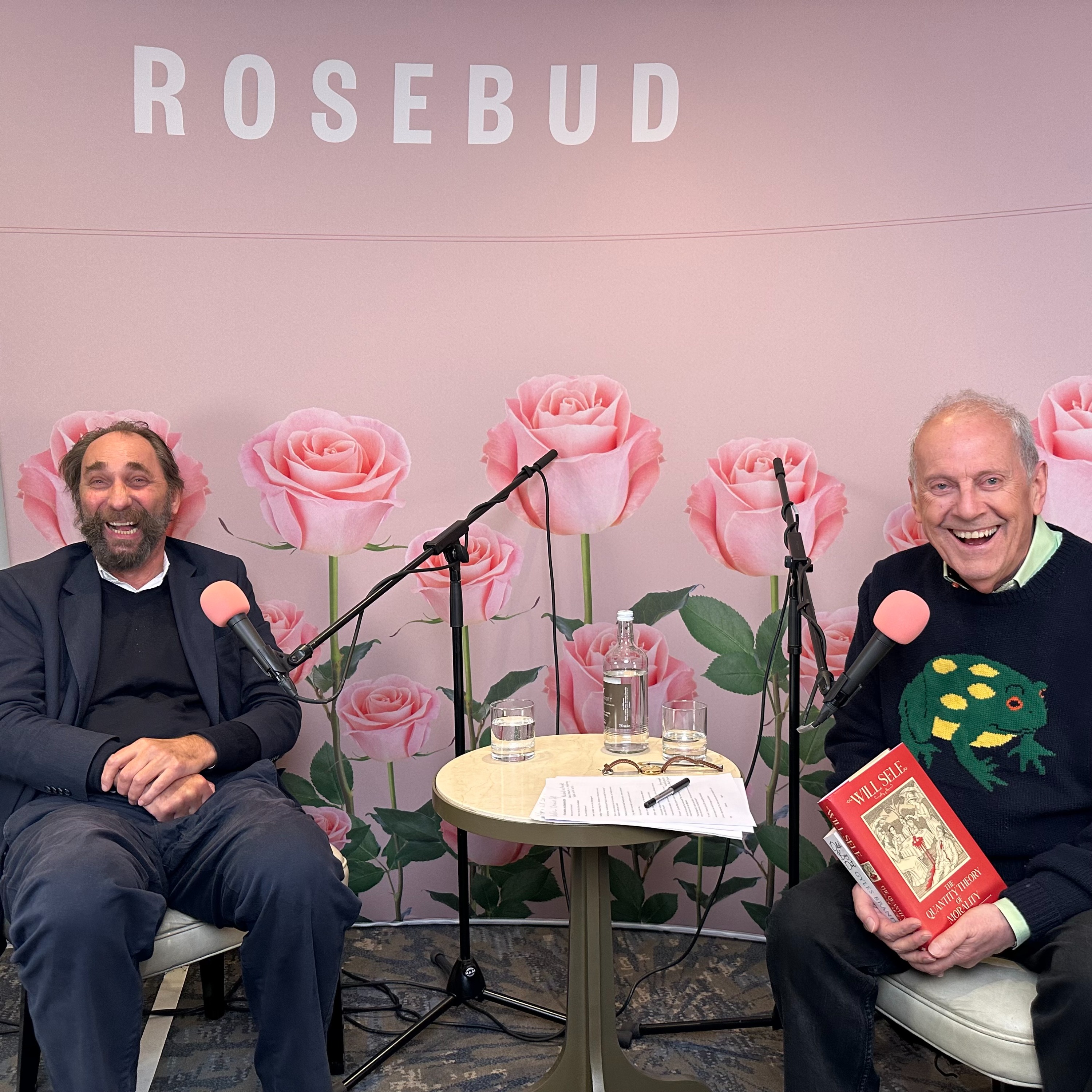
Will Self (born 26 Sept 1961) is a British satirical writer and novelist. Giles Bradroth (host) says he’s been reading Self since the early 1990s and recommends Self’s latest novel The Quantity Theory of Morality (Grove).
Self says “self” was self-adopted, influenced by nominative determinism and Freud-related wordplay. He argues satire’s purpose is “moral reform,” not just ridicule. He frames his mother’s turmoil through Ernest Becker’s “immortality project” (children/work as coping with death). He claims gender is performed (Simone de Beauvoir), and his novel defangs gender essentialism.
childhood pram views of Hampstead/Highgate and East Finchley’s Prospect Ring; smoking heavily from age 8–9; heroin addiction in early 1990s; a political scandal involving drugs on a trip during John Major’s government; writing always during addiction; TV appearance on Shooting Stars; his novel’s recurring party scenes and explicit measurement of male genital length in centimetres.
Written by AI. May contain mistakes.
Will Self shares the story behind his name and its significance.
“With the new MyLows Pro Rewards American Express card, earn 3 points per dollar spent on Lows qualifying purchases for the first 6 months after card account opening.”
Will Self shares the story behind his name and its significance.
“William Woodard Self, born 26 September 1961.”
Will discusses his earliest memories and the influence of his upbringing in London.
“wasn't when, as a child, we were in a hotel in New York and William himself was paged because he was the producer of Batman.”
Will reflects on his relationships with his parents and their impact on him.
“And I think I probably, I already knew London probably far better than most people I've walked out of the city from the centre at least 10 or 15 times.”
Exploration of Will's childhood experiences with his mother and her struggles.
“You better describe your father quickly then.”
Discussion about Will's father's career and its impact on the family.
“And he was one of Harold Wilson's activators.”
Insight into the tumultuous relationship between Will's parents and its effects.
“My father's attempts to somehow have a normal middle class life were continually being exploded.”
Reflections on how familial conflicts shaped Will's perspective and experiences.
“I can look at her all, co-respondents and everything.”
Will's feelings of estrangement from society and his family dynamics.
“And I would say, you know, I'm of Jewish heritage, Tony.”
Exploration of how Will's mother's personality influenced his desire to write.
“I said to Mum, seven, I said, I hate Miss Fitzgerald and Miss Davis.”
Will discusses his evolving relationship with his father and unresolved issues.
“My problem was transgenerationally, in an unhappy marriage, you inherit the agon of one of the partners.”
Discussing childhood friendships, early crushes, and the impact of parental separation.
“Can you remember your best friend from school?”
Exploring the wild behavior and escapism experienced during adolescence.
“Do you remember the power cuts in the early 70s?”
Recounting the early experiences with smoking and the introduction to drugs.
“Yeah, no, that's why I'm so puzzled that I've ended up just living in London, because my tendency was to go.”
Discussing early sexual experiences and the confusion around sexual identity.
“And my brother was precocious sexually, and he was masturbating, so there was a certain amount of circle jerk.”
Reflecting on the complexities of love and romantic relationships during youth.
“And the trouble was I was already on the slip road.”
Anecdote about the intersection of journalism, drug use, and political events.
“and in John Major's government, there's the famous story of you going to...”
Describing the transition from university life to struggles with addiction.
“this has become a political matter, because you were representing The Guardian and The Observer.”
Will shares his experiences with heroin addiction and its impact on his life.
“and being arrested for drugs and charged and convicted.”
Will discusses his career in writing and television, including notable experiences and insights.
“What has been, because I want to cover your television career briefly before we reach.”
Will discusses his experience with secondary myelofibrosis and its impact on his life.
“Median term survival is 80 % make two years.”
Will shares insights on joy, sadness, and facing death without fear.
“I'm deep in the Bible because I'm interested in ethics, and Christianity is an amazing religion.”
A discussion on the significance of ethics in Christianity and humanity's challenges.
“Well, it's actually one of my own because somebody asked me to sign it in a book this morning.”

Get the gist, explore an idea or ask about something said.
 Claude
On Rosebud with Gyles Brandreth, what are the key points of this episode?
Searching your listeningAutomatic transcript. May contain errors.
0:01With the new MyLows Pro Rewards American Express card, earn 3 points per dollar spent on Lows qualifying purchases for the first 6 months after card account opening. Plus, save 5 % every day on eligible purchases at Lows and earn points on eligible purchases everywhere else Amex is accepted. Card members get more at Lows. Subject to credit approval. 5 % can't be combined with any other offer. Exclusions and restrictions apply. Points subject to loyalty terms at Lows.com slash terms and credit reward terms at synchrony.com slash MLPRA dash terms. Visit Lows.com slash business credit. 102 miles ago, the oil light came on.
0:33100 miles ago, you noticed. Now, it's time to head to Take 5. This oil change, fall in love with your car all over again. In just 10 minutes, your dream technician will check your tire pressure, top off fluids, change your oil, and verify with Carfax exactly what your car really needs. All while keeping you in the driver's seat. Take 5, the stay-in-your-car 10-minute oil change. Save up to 30 % on your next oil change to Take 5. $15 value, valid at participating locations, terms and conditions apply. Gather ye rosebuds while ye may. There's a new guest waiting with quite a lot to say. So I'm going to shut up and say welcome to another episode of Rosebud.
1:13We do indeed have a very special guest for you. Cue the music. They're ready.
1:38Hello, I'm Giles Bradroth and a warm welcome to another episode of Rosebud. I always say every guest is special. This one is extra special to me because I have been reading his work now for, well, since the early 1990s. and I love the way he writes. I love his way with words. I love the way he plays with ideas. I love the fact that he is a satiric writer, but also can touch the heart. He is Will Self, and he's a controversial writer to many. He's been up for every award that you can imagine, Booker Prize, Whitbread Novel of the Year, you name it, he's been there. I've just been reading, I think, the 20th novel by him that I've read.
2:29It's called The Quantity Theory of Morality. I think that's probably inspired by his first big breakout novel, which was The Quantity Theory of Insanity back in 1991. This is an episode, I suppose, that should begin with a bit of a trigger a warning because there's going to be sex, drugs and rock and roll? Well, no, certainly drugs, certainly sex. I don't think there is much rock and roll. There's a roller coaster life. There's so much packed into this conversation. But here is a very funny, I think very wise, very interesting character. Please do. If you haven't read his latest, I do thoroughly recommend it.
3:11I haven't got to the end of it yet. I'm halfway through. It's made me laugh out loud at times. It's called The Quantity Theory of Morality. It's published by Grove. The hardback is out now. You'll certainly find it fascinating. Welcome to Rosebud. Cue the music.
3:40William Woodard Self, born 26 September 1961. Yes. So far, so good. What, have you always been called Will for short? No, it's self-adopted. My father, being of the grey flannel trouser tweed jacket profession, called me Little Willie, which was a sobriquet, interestingly, in the playgrounds of the 1970s, I was keen to lose. We'll come on to that in a moment. Yes. So I called myself Will rather than William. I thought it was dashing and Shakespearean. and it is it's a great name will self is a great name it's it i've always been interested in nominative determinism for obvious reasons i love uh stoppard's play jumpers for that reason which has an obsession with nominative determinism and philosophy and of course my mother was an amtia freudian she'd been in analysis when i was she was pregnant with me with anthony store so So the idea of self-will came at me from so many different domains as a young person.
4:51The most signature name event for me, though, wasn't when, as a child, we were in a hotel in New York and William himself was paged because he was the producer of Batman. But actually, when a friend of mine called O'Shaughnessy, when I was in my team, said, there's nothing that remarkable about your name. there's more of you in the phone book than there are O'Shaughnessy's. And actually the London phone book is something we've all lost because it allowed you to get a feeling for demography instantly. You can flip through it. And we went to the book and indeed there were more selves than O'Shaughnessy's.
5:33And that appalled me. There were only about 20 selves. But that phone book was fascinating because there were only five Brandreth's. I do remember. Right, well there you go. But there were two or three pages of people called Smelly, I'm afraid. Yes, many Smellies. And we did. Did you ever phone them up? Yes. And say, are you Smelly? The person who most liked phoning them up, he won't like being reminded of it, was a childhood friend of mine who's called Matthew Freud, who was very fond of persecuting Mr. Smelly. I suppose if he'd been called Freud, he had a license for it. Well, that was the argument, self and Freud calling Smelly.
6:12Okay. Now, let's begin at the beginning, Will Self. Born 26 September 1961. I have to ask you, what is your very first memory? I think it's almost certainly, I've thought about this a lot, there are two very early memories and they're similar. But they're in, so they're from probably when I was around one or one and a half. That's very early. Yeah. And what's the one that you think is the earliest? I think it's being in the pushchair, not the pram, though I have pram memories from the same period, because there were two vehicles. One was a pushchair and one was a silver cross pram. And one memory is being pushed along Brimmer Hill, the road in the Hamster Garden somewhere where we lived, and seeing the view from Brimmer Hill across the Hamster Garden suburb to St.
7:00Jude's, the church in the centre, and beyond it, the northern heights of Hampstead and Highgate. And the other view is contrawise going in the other direction towards East Finchley. So the council estate in East Finchley was called Prospect Ring. And if you remember, Martin Parr did a book called Boring Postcards. Do you remember that in the 90s? I do remember that, yes. prospect ring featured very strongly to my brother and mine's delight these are postcards the most boring things you've ever mentioned most boring things you see some prospect ring is still there but much changed is three or four point blocks arranged around a small council estate with a laundrette so mum would put me in the pram with a pillow slip of dirty laundry and push us up to prospect ring and there was something about being pushed in the silver cross pram up to the even in my infant mind struck me it's markedly different from the prospect in the other direction looking out towards hamster it's more or less i mean i've been writing a book on london suburbia called et in suburbia rego the last few months about the walks i took before i went into hospital because I realized that everybody, you know, the modern obsession is with the idea of the bucket list, that somehow when you're terminally ill, you're going to drag yourself to Machu Picchu.
8:30What I realized when I got seriously ill and realized I might die, there's a one in five chance of dying from the procedure I've gone through within two years, was that in fact I've lived all my life effectively in London. All of it. And that thing that torments any proper city dweller, which is I always go to the tube this way, why don't I go that way, was what I decided to do in the months leading up to going into hospital. So what I did was I walked 500 miles around London's suburbia. Wow. And I think I probably, I already knew London probably far better than most people I've walked out of the city from the centre at least 10 or 15 times.
9:16I used to do it twice a year more. But curiously enough, I've tended to avoid outer suburbia in all of this. But this is what you and Dickens have in common. Absolutely. These long walks. Dickens would leave from Doughty Street for Gad's Hill in the evening, walk overnight composing two books, alternate chapters in his head. I can only do one book at the moment. Well, you've not been well, so I think we can allow you that. So get back. You are in the pushchair. You are being pushed by your mother. Who is your mother? What is her name? What is her background? What is her character? Well, I feel I know her quite well.
9:55I wrote a novel about her that came out when I was in hospital called Elaine about her life in the 1950s. She was born in 1921 in Columbus, Ohio. Her father, Jack Rosenblum, looked quite like me. He was a loud wiseacre, is what you would call Jack. He was a wiseacre. And having known his son very well and his daughter, I know the type and me. But he was tall. He was tall. Tall. My mother's first husband was a rather eminent literary critic called Robert Adams, expert on Milton, professor at UCLA very eminent and he wrote a memoir that was never published with the description of my grandfather and the fascinating thing about this description is he describes my grandfather brilliantly and it is completely anti-Semitic the portrayal it is a cartoonish depiction of a flashy wiseacre Jew who is unscrupulous, has no morals.
11:07What's true about my grandfather is that he was a bit like that. My mother said that they survived in the Depression because my grandfather would go to a small town where the department store was about to close and he'd say, I'll organise the stock sale, I'll put up the banners, and I'll make sure that you can realise there's much money out of the... So he actually sort of was a vulture that preyed off the... And my mother was very struck by this. She didn't like him, clearly. She would describe him as a vulgarian. So what was she like? What's the essence of her personality? She wanted to be Virginia Woolf.
11:50That was her, including the insanity, probably. Was she an aspiring writer? Yes, very much so. And was she a good writer at all? No. Oh. She wasn't bad, but her chef d 'oeuvre is her diary, which I inherited on her death, which was anything up to 50 spiral-bound, narrow, faint student notebooks completely covered. And that's what inspired Elé. Yeah. I mean, I didn't read them through, and I still haven't. What is your sweetest memory of your mother, you and your mother when you were a child your sweetest memory oh giles my mother was was overpowering i mean i it was i haven't got free from my relationship with my mother probably until i went to hospital i mean you mean recently went oh yeah it's taken me decades to deal with her and my brothers haven't dealt with her at all but then what's your worst memory if we can't find a sweet one um no there are no i was her benjamin i was she adored me and and she was funny brilliant she taught me to read before i went to school she taught me to read when i was three i mean i could read and write at three i mean i'm surprised you couldn't read and write at 18 months candid with you but no well done my dad would despairingly say because mom thought i was a prodigy but dad would say john stewart mill could read and write by the age of three but in latin and greek as well that was this deflation of my genius that's good so let's go on with your mother so she was adorable as a mother she was endlessly inventive funny she was incredibly imaginative she made play dens parties she had she had a she was brilliant with kids well give me then give me a happy moment just give me a describe you doing something with her well making food with her helping her all of it i mean we cooked together we we i everything i wrote i would show to her or drew she encouraged me all the time she was physically warm we cuddled until i was about 10 or 11 until my my testosterone got out of hand i mean i was absolutely enfolded by her she also was incredibly depressed you know almost to the point of psychosis she was on valium a lot when i was a kid and she had a filthy temper like one of the like a cataclysm which i unfortunately inherited you know because if you have that bomb going off in your life particularly if it's the person who is also your world.
14:44I mean, my father was totally absent. He was totally absent. I ran away from home all the time. I was a bolter. You better describe your father quickly then. Who was your father? Peter Self. He was, in my childhood, he was Professor of Public Administration at London School of Economics. And he was one of Harold Wilson's activators. So he was the post-war generation of public servants and policy makers who drove modernization. His field was urban planning, urban and regional planning. His first book was called Cities in Flood, about the unrestricted growth of London. If you think of a novel like Orwell's coming up for air, his description of the salesman's life in the 30s, that was the environment in which my father had grown up, and he was obsessed by the idea of rational urban planning.
15:36That's why we lived in the Hampshire Gulf. And that was the passion of his life. Was your mother the passion of his life? How did they meet? No, not at all. I mean, how did they meet? Why did they get married? They were drunk and had sex, and she got pregnant with my immediately older brother when she was recently divorced from Robert Adams, her first husband, and obviously a bit of a gay divorcee, though not very gay and there was a drunken encounter I know so much about it From her diaries? Yes Including the fact that she knew she had condoms in the drawer And chose not to produce them So she was ready to become pregnant on this night with Peter Self Yes and I think that I tried to get this in the novel you know the war gave a lot of women freedom including my mother she was in her early 20s she was in new york she had a job she worked for the book of the month club she met people she knew intellectuals her husband was away in the pacific when he came back like even though he was an intellectual and so forth he still expected her to cook him dinner and kind of and and she hated it her reaction to the phenomenon that people now call patriarchy was visceral she viscerally had a contempt for the idea that men should have any social or domestic superiority whatsoever when we were late from walking on the heath for lunch mum would take the roast and throw it on the lawn so that we got home to a deconstructed Englishness.
17:30My father's attempts to somehow have a normal middle class life were continually being exploded. She stayed with your father though, divorced her first husband, comes to England, meets your father. No, meets him in America. Oh, first. Gets knocked up in the States, comes over. This is your elder brother. He was married as well. He was married to Diana Pitt, who worked for many, many years as Rocco Fortes, right-hand woman, very successful businesswoman. My father's first wife only died very recently in her late 90s, Diana. Very beautiful. And extraordinary story, she was unable to have children because her mother had been a Christian scientist and wouldn't let them operate when she had appendicitis.
18:14So they had to perform a hysterectomy. I married my father knowing that she was unable to have kids. He knew as well. But then he got broody. He wanted children. That's the condom. So he got broody. He got drunk. Your brother is conceived. We drank a lot. He drank all the time, my father. He drank all the time. How long is it before you come along? A couple of years. A couple of years. Yeah. By this time, they've moved back to the UK. Yes, they're in the UK. He's divorced. I've got all the divorce papers. I can look at her all, co-respondents and everything. So there's the brother, there's you, and there are these parents.
18:51Who are they in the early days getting on? No, they never got on. They never got on? Never. But they decided to have a second child? Were there any more than that? They had a stormy... I think they enjoyed sex. They were both quite sexy. And I think that's the trouble with marriages, isn't it? So that went on, but it was a very stormy. And my father first left when I was nine. So he walked out. He walked out. And that was it. No, it wasn't it. He came back. He was semi-detached then for several years. And that was bewildering. I mean, people wonder about, you know, I often get asked as a satirist, you know, where this huge contempt for the English comes from.
19:31And I don't really have a huge contempt for the English. What I am is a proper satirist. So I seize societies from outside. The English take it amiss because they think I should be one of their own and not see it. But the thing is, I grew up estranged from the society I was in. No, I'm beginning to understand it all, because you are Swift, you are Hogarth, you're all these things. But it's because of this family that you come from. In part, yeah. And the Jewishness is interesting, because it was very odd, the Jewishness, because Mum was an anti-Semite. I mean, she really didn't want to be identified as a Jew.
20:09She was delighted that she had blonde children. she would say to us do not make a big deal about it you pass you can pass my immediately older brother although he's philo-semitic has always passed and when in the 1980s when there was still casual anti-semitism among the middle class and i would say what do you do about it because i would call it out you know i had a boss who said to me oh you don't want to go and pitch to them over they're all yits. And I would say, you know, I'm of Jewish heritage, Tony. I find that deeply offensive. Oh, it did mean it may. You know what I mean? You know exactly what you mean.
20:51You would go through that. But my brother would say, no, I pass. I don't see the point in getting into trouble. Describe yourself as a little boy to me. I can now picture the family, this mother who is both depressed but also loving, giving, funny, sometimes angry. All these things possibly understandable given she's got this husband who is absent for a while and then he's back again and then he's absent. There's drinking going on, which fuels all this. I imagine there's smoking going on as well. I smoked like chimneys. But he at least has got the passion of his work to sustain him. She's got the frustrations of having to be a mother, feeling depressed, also not achieving what she'd like to do in her writing, despite these aspirations.
21:31We see the problems. You as a little boy, little Will, what's he like? Well, I think up until my father left, I was probably, despite my mother being very tumultuous, I was fairly happy. I was attractive. I had a lovely little blonde page boy thing. I was very jolly. My mother's nickname for me was Happy Mouth. And the joke was I would get up in the morning in a good mood and I'd just get into a better mood all day. lovely and and and actually i'm quite like that now what did you do what were the games we were playing to make you happy what were the books you were reading what made you happy i i loved alice in wonderland particularly and i would say that more than anything else it is what made me um immediately want to write stories i mean i i already wanted to write stories at three.
22:34I've never... At three? Yeah. I've never seriously doubted my vocation, and certainly by the time I was 11 or 12, it was insupportable. What school did you first go to? I went to what we would call in those days a dames school, run by Miss Fitzgerald and Miss Davis. And just to give you a portrait of how brilliant my mother was, these two old dames, who were perfectly all right, old ladies who ran a school for about 80 kids in Golders Green, and we all had little uniforms, Golders Hill School. At the end, when you left age seven, you were meant to go up to them both. They were standing on the steps, the house is still there, and you would shake their hands and say, thank you very much, Miss Davis, and thank you very much, Miss Fitzgerald.
23:21I said to Mum, seven, I said, I hate Miss Fitzgerald and Miss Davis. They are authority figures. I have no confidence in. So mum said, fine, I'll have the car waiting at the bottom of the steps, gunning the engine. I'll have my foot on the accelerator. When it becomes your turn, say whatever you want. Piss off, Miss Davis and Miss Fitzgerald, and then you can run down the stairs and leap in the car and I'll drive away. Oh, wonderful. She was a great woman. Yeah, she was a great anarchist. She had a real sense of how to flip something in an unexpected way. So you would suddenly see that it was totally artificial.
24:04She would say you'd be with her in childhood. And a beautiful young woman would walk past, trailing clouds of sort of eau de nil and kind of, you know, just absolutely a picture. And mum would snarl out the corner of her mouth, she thinks she shits chocolate ice cream. Right? You get the picture. I get the picture. What I'm wanting to know now is why you have struggled with this relationship until quite recently. As she grew older, I'm a great believer in a book by Ernest Becker called The Denial of Death. And Becker's thesis is that, au fond, everybody has what he calls an immortality project.
24:48that in order to cope with the fear of death, you have a place you go to immediately that reassures you about your transcendence. And for most people who have children, it's their children, unless they're writers, in which case it's often their work. It has to be. And for mum, it, of course, had to be the children as she got older. And after her father's death, she became fatalistic. she would walk around going, I'm going to die of cancer. It's a self-fulfilling prophecy. And this began in her 50s. And she died in her mid-60s. So for the back end of her life, there was a sense of fatiloquence about her anger as it got worse.
25:37So in a sense, she was dragging me into the grave with her. And after she died, the entire family had deconstructed. my brother was already living in the country and partly in ireland my immediately older brother my brother nick who you were at school with had gone back to the states as soon as he could so he was out of the picture i was the only person left in london my father had immigrated to australia in 1981 so i was there alone so that's why it's taken me so long to get over mom she'd come here in 1958 died in 1988, left me in vacant possession of England.
26:28Here's a tip for you. There's a podcast out there with fans waiting to be your next customer. They tune in every week. They trust the host. and that host wants to talk about brands like yours in their own words to their audience. The problem is you just haven't been introduced yet. We're Acast, where that introduction happens. As the world's largest podcast marketplace, we let you browse shows, see who's listening, and book host-read sponsorships or run your own ads all from one platform. Transparent pricing, real-time data, complete control. Start advertising on podcasts by visiting acast.com slash advertise.
27:11And your father is in Australia. Yeah. But you become fond of him in the end. You are fond of him. I was never not fond of him. My problem was transgenerationally, in an unhappy marriage, you inherit the agon of one of the partners. And you can't get over it till you deal with your stuff with the parent who finds the other parent the agon. And that's why you find... Well, the thing that most upsets them, the antagonist. As in agony. Yeah, as in agony. The cause of their agony. The cause of their agony. So until I dealt with mum, I couldn't deal with dad. I didn't even have a relationship with him on my own terms.
27:51I couldn't. She was constantly in the way. And since he absented himself, it was very difficult. As a little boy, as a child, what were you like with your friends? Did you have friends at school? Did they like you? Can you remember your best friend from school? I can. I can remember I was passionate. I was a passionate soul. And I fell in love with boys, of course, because they're adorable. Who wouldn't? And I fell in love with boys, and I would always have crushes. And I wanted to be the most popular boy. And I couldn't be the most popular boy because I was a weirdo. So even though I tried, I looked good on paper, my failing was I wasn't a good enough sportsman and I knew it by the time I was 10 but you were tall were you tall yeah I played I was my my high point was being captain of the second 15 at rugby once can you because you say you were broadly speaking quite happy as a as a boy broadly speaking up until I was my father left yeah and then it all came that was was that your first encounter with unhappiness do you think i think so yeah i think in the sense that mother was histrionic she told me after my ninth birthday party on the day of your night for my birthday and she was devastated and just completely lost and and immediately you know i knew that i had to look after her before that and and now she was like a zombie in the house and the next few years were disastrous while he was gone.
29:26There were money troubles. It was the miners' strikes. Do you remember the power cuts in the early 70s? And Mum, to be histrionic, would light the whole house with oil lamps and say, we didn't have any money, turn the heating off. What happens to you? How do these... I go feral. Literally feral. What does that mean? That means going wild. Yeah, gradually. I go wilder and wilder. What's your first encounter with going wild? What's the first thing that happens? I run away from earliest childhood. Run away from home. Yeah. And where do you run to? Who do you run to? The first time I only get the other side of the Fallon Way in the Hampstead-Gone suburb.
30:02Mum is gazetted by the Fars and turns up and busts me and takes me home. And that happens quite a bit. And then once the family's disintegrated, I have the run of the city. I used to come here to the Grosvenor House or the Dorchester. I had a sports jacket. Age 12, I'd sit in the lobby smoking Balkan Sobrani hoping some woman who thinks she shat chocolate ice cream would pick me up. Were you ever so lucky? No, sadly not. Not for a few years yet. But the thing is, my tendencies as a bolter were really pronounced. I mean, I was hitchhiking the length of the country by the time I was about 14. And were you partly enjoying this?
30:47Yeah, I loved it. Yeah, no, that's why I'm so puzzled that I've ended up just living in London, because my tendency was to go. The point was they left me in vacant possession, so I stayed. I'm seeing you at 12, sitting in the lobby here, with your jacket with your Sobrani. What was your first encounter with nicotine? How old were you then? Tobacco was everywhere. I mean, my brother and I were certainly smoking at eight or nine. Gosh. And then by the time I was 12, I smoked every day. I would go to school, and I had three cigarettes on the way to school. The last one in the park, just by the school, before I went in to fortify me for the day.
31:32I smoked very heavily. I remember when weights went out of stock. The old cigarettes used to be sold by weight. I bought up the whole stock. I was about 14. I had 300 weights or something. I smoked 20 a day by the time I was 14. Gosh. And that went on until 2018. Wow. But you've given up now. It's good. Just about, yeah. I had to. When did you get into drugs? Very early, yes. More alcohol. I mean, the family was alcohol dependent. But they weren't alcoholics, my parents, I hasten to add. Particularly my father was in no measure an alcoholic. He never, ever changed his demeanour. And what about sex?
32:19Can you remember your first encounter with masturbation? Can you remember that? Oh, God, no. I masturbated all my life. I've only stopped now because you're interviewing me.
32:35Well, feel free. This is a very relaxed podcast. I do assure you. But you don't have a first recollection of it. No, I remember just shinning up the playground equipment would get me excited. So it was even pre... And my brother was precocious sexually, and he was masturbating, so there was a certain amount of circle jerk. And then there was sex games at school with the boys, including some sex with boys, you know. And were you taking this as part and parcel of your this is what life is like? I wanted to be gay. I was rather disappointed not to be gay. I saw women were essentially unattainable.
33:19And also, they were the teachers, because this is a boys' school you were at. Yes, no, all the teachers were men, and of course they'd all been in the war. We were terrified of their trauma. Mr. Dean had been held prisoner by the Japanese. We were terrified for him. We were worried for them, all the teachers. Do you look back on this period? Obviously, it's been wonderfully rich material for your books. It's one of the reasons that I love them, because I didn't dare do any of the things that you were doing, but I've loved in retrospect at one remove. At least you're honest, Charles. Yeah, getting a taste of it.
33:53It's fantastic. This is why I have this self-shelf. I'm feeling a bit low. Pull down one of them. I can't say I was sexually very, very precocious at all. It was just like everybody else. I was desperate to fool with girls' bits, getting girls to come back with me, rolling around with them. But what I didn't realise, and it sounds odd to say it now, and people don't often talk about themselves with this degree of honesty, was that I was quite attractive. So I couldn't understand, I didn't feel attractive, nobody does, and I was spotty. But by the time I got to Oxford, I didn't really have any problems in that direction and probably it wasn't a help.
34:40What about love, though? Can you remember the first time you encountered love? I always thought I was falling in love. I couldn't believe when they turned out to have feet of clay. I couldn't believe, which was remarkably quick usually. I was desperate to be in love. Were you writing love poetry? Oh, God, yes, all of that. and yes and and yeah absolutely i mean i would see a girl and and just be paralyzed with with longing give me because i like lovely moments give me a sweet moment from your teenage years with a girl something just lovely and romantic good no none of that it didn't happen for me and i think in a way it didn't happen because you know my my late friend willie donaldson and the great Willie Donaldson said once, promiscuity is the motorway to loneliness.
35:35And the trouble was I was already on the slip road. And all of my romantic inclinations were blown away by the fact that there were lots of girls climbing into bed with me. And that was, frankly, you need not to be quite as sexually luce as I was if you want to preserve your romantic ethos intact at that age, for obvious reasons. So it was not like that. And drugs had also come on the scene, and I loved drugs. I absolutely loved them. I was a natural. And you got seriously into them. Oh, yeah, absolutely. Every new drug I took, I thought, well, this is great. And this went on and on, didn't it?
36:20On and on. I mean, it's even a little bit to our time. Because I do remember in the 1990s when I was an MP and in John Major's government, there's the famous story of you going to... They sent you to report on something. Yes, they did. I was living off the Portobello Road and I remember getting up in the morning and checking my kit for the day, my notebook, my tape recorder and my drugs. And I had a heroin habit at the time, so I had some heroin and I had some cocaine. And I thought, well, I've got to get down to Smith Square. I don't want to be too stoned first thing in the morning for the press conference.
37:03I'll take quite a bit of cocaine. So I took quite a lot of cocaine, a little bit of heroin just to keep me on the level. Then we got on the buses and went out to RAF Northolt. And, you know, I'd been a working journalist, really, but I wasn't a lobby journalist. But I was very well known by that point. It was the 96th election. I was very well known already, nationally known person. So when I got on the bus, everybody went, here he is, there he is. John Sopel I was at school with, the senior BBC correspondent, went, hello, Will. And I think that's what aroused the ire of another hack who was working on The Express called Simon Waters.
37:50Oh, he snitched on you. And he snitched on me. And what he did was he didn't even... So the whole day went off without a thing. I'm a working journalist. I'm actually very good at my job. I've never missed a deadline. You weren't inviting John Major to shoot up with you at the back of the bus. No, no, no, no, no. My only concern was when we took off in the plane, I realized that there were a lot of security detail. and I thought actually well class A drugs is not a good thing to be carrying this close to the Prime Minister so I went back to the toilet on the plane very responsibly and disposed of all of the class A drugs I had on me into my body and then went back to my seat there was no evidence that I'd had drugs on me or that I'd taken them this guy then went to Brian Mawinney because I didn't do anything untoward.
38:48I would admit to this, when we got back to Birmingham Airport, I thought, time for a spliff. On the tarmac. Oh, my God. Oh, the wind's blowing that way. I'll just go downwind of the security detail. I'm afraid I've always been a high-risk merchant. but still I didn't think I was busted until I got back from Ireland the following week. I'd been to stay with my brother who lived in Ireland and as I drove down Latimer Road, guys came, the paps came from behind the parked cars, cameras, everything and all that had happened was this guy had gone to Brian Mawinney and said I suspect he may have been using cars.
39:34He was the chairman of the Conservative Party at the time. Mawinney had gone public with it. my editor, Alan Rusbridger, at The Guardian, then said, did you do it? And I denied it, of course, because there was no evidence. Then he came back to me again and said, this has become a political matter, because you were representing The Guardian and The Observer. The Tories want to make something out of this. So I want you to sign a legal affidavit now. Well, I wasn't going to perjure myself. Now, you must be very clever indeed, because despite Despite a troubled mother, an absentee father, the exhaustion that comes with excessive masturbation, drugs, smoking and drink, you nonetheless...
40:18I always found masturbation invigorating myself. But there you go. That was one of the things that all the anti-masturbation propaganda failed with me. We're moving on. Because what I want to know is, despite all of this activity, you managed to get a place at Exeter College, Oxford. I did, yes. Congratulations. You have got superhuman energy. Unconditional place. Well done. When I was 17, so I didn't even have to get A-levels. Well done, clever clogs. Yeah, I was clever. And you went to do PPE, philosophy, politics, economics. Not English, yeah. And that was because you wanted to? I wanted to be a philosopher.
41:00I didn't want to write like Enid Blyton. I wanted to write like Dostoevsky. you know I didn't even want to write like evil in war I wanted to write like Goethe you know and it was not my ambitions were so vaunting already and were you writing at that stage what were you writing it was rubbish I mean obviously it was just rubbish you can't you know the biggest problem for a writer is you know yourself is authenticity of voice that's why it's not there are very few literary prodigies youthful prodigies for that reason because you and you need some life events and not just the the tragic comedy of childhood you need adult life events and when you left oxford when i left oxford you were going to what were you going to do did you get jobs of different i was already in too much trouble my my i doubled down on my estrangement and sense of uncanniness in the English class by becoming a heroin addict and being arrested for drugs and charged and convicted.
42:05So I already had a criminal record at the age of 20. And what was that like for your mother? I think she was upset. I think it was, and I think I cannot read the diaries from that period up until I went into rehab at 25, because then there was five years during which I was a needle-using heroin addict in a very grimy, heavy London, the London of the early 90s. So she must have been hysterical with anxiety. Can you remember the lowest point of that to describe it to us? Well, I write about it a lot because it was the building... I first went to Stockwell, where I now live, to buy heroin, and I walked there.
42:49Gosh. From North London. Wow. Because I didn't have any money. and I'd heard that a guy in a squat in Stockwell, the woman I was using heroin with, knew this guy who might have some. And we walked all the way to Stockwell and we went to this building and he was an ex-squaddy. You'd find a lot of junkies who'd been in the army. And it was the first time I think I'd seen junkies living at quite that level. They had nothing in the flat, nothing at all. Not even just sticks of furniture to slump on. there was a child that had no nappies. So I remember the first afternoon, the child just squatted and shat in the middle of the floor while we were waiting for him to get back with the heroin.
43:37And I thought, this probably is a sort of nadir, Will, but I've seen worse. I mean, I've been in a squat in the same period using heroin and somebody saying to me, we ought to get that corks out of the bathtub. and there'd been a guy dead in the bath next door for a couple of days. Guns pulled on me in King's Cross. I used heroin for a time with a very flamboyant character called David Martin who was an infamous character. You may be familiar with the story because they shot a man called Stephen Waldorf by mistake and they wanted to track down David Martin who was a transvestite which was why they couldn't find.
44:19Well, I knew David Martin well so I was already, by my early 20s stuck heavily into the major London underworld. And at that stage in one's head, what is happening? Are you just existing? Are you conscious of moments of contentment or happiness? Or that is irrelevant. You're just driven by the need for the drug. I think it's still part of the project. It's the saison en faire. It's the, you know, as one of my oncologists said to me in hospital when I was complaining about large amounts of morphine they were giving me, I said, I was an addict for 20 years, Carl, and I really try and stay clear of opiates.
44:57Keep on with the stuff, yes. And he said, oh, come on, Will. The road of excess leads to the powers of enlightenment.
45:06Well, it's good to have an oncologist for a sense of humour. Oh, my doctors. And literary awareness, too. Oh, yeah, my doctors are great. And were you writing during this time, those five years? Yes, always writing, always writing, always involved around writing. I started cartooning at Oxford, and this, again, was such a formative experience. When I left Oxford at age 20, I had my little portfolio of spot cartoons and strips, and I went round all the newspaper offices on Fleet Street, and you would have to go into reception, you'd have to say, I've got some cartoons. They'd say, well, I don't know where the cartoon is in the pub.
45:46Eventually he or she would come back, and then they'd leave your portfolio and go, not funny, not funny, not funny. The worst one was a private eye who was Willie Rushton's brother and he was an old cussed, but I never got a cartoon into the eye. And he'd just go, ah, this is shit. He once sent a batch of cartoons I'd sent to him back and he'd written across the back of the envelope, no bloody good.
46:19But, you know, I mean, it might sound trivial to people, but rejection's important. It's important to experience rejection and experience it viscerally. No bloody good. I'm grateful to Rushton Frere for that.
47:04We'll be right back. Today, to get your garden on, check out Fresh Deals, happening now at Menards. Save big money at Menards. 102 miles ago, the oil light came on. 100 miles ago, you noticed. Now, it's time to head to Take 5. This oil change, fall in love with your car all over again. In just 10 minutes, your dream technician will check your tire pressure, Top off fluids, change your oil, and verify with Carfax exactly what your car really needs. All while keeping you in the driver's seat. Take five to stay in your car 10-minute oil change. Save up to 30 % on your next oil change to take five.
47:46$15 value, valid to participating locations, terms and conditions apply. While every other channel is fighting for your customer's attention, podcasts are where they've already given it. No one accidentally listens to a podcast for 45 minutes. They choose to be here. They trust the voice in their ears. And when that voice talks about your brand, it doesn't sound like advertising. It sounds like a recommendation from a friend. Acast gives you that trust at scale. Digital precision, post-read authenticity, and performance data that proves it worked. Don't fight for attention. Buy it with Acast. Learn more by visiting acast.com slash advertise.
48:24What has been, because I want to cover your television career briefly before we reach. I was thinking to sound like that Peter Cook spoof of John Freeman. Do you ever hear that thing he did just before Cookie died with, what's the young chap, though? He's my age, Chris Morris. Yes. He said, you were interviewed in the 60s, of course, by John Freeman. Peter Cook goes, he was absolutely dreadful, but broke down in tears during the interview.
48:59yeah my television career Charles well actually it's touching on television let's I I mentioned your name to several people and they said oh the guy from shooting stars I think I think my problem on shooting stars was I was working with some great comedians some real I think they were one some of the best comedians how did it come about how did you get that drink drink drink It's the curse of the working class. I mean, you met some people in a bar and they said we're making a show. I drank in my 30s. I mean, I was a drinker as well. And I loved, for a few years, I loved Soho. I'd been an early Soho person because the first friend I made at Oxford was the relief barman at the Colony Room Club.
49:44So I first went, when I first bought it. This is in Soho. This is run by a woman called Muriel Belcher. Yes. All of that. And, of course, the Groucho opened their store, and I knew Liz Calder was my publisher, and she was one of the people behind the club. So we moved into the Groucho. Remember, the licensing laws still existed up until the Blair government. So if you wanted a drink at 3 a.m., you had to belong to the Groucho. And I used to play poker in there with Stephen Fry in the 80s. So I already knew Soho very, very well indeed. and Jim Moyer, Vic Rees, used to drink in the Groucho and we used to drink together.
50:22So one night we were pissed. Jim said, why don't you come on the show? Bob and I will have you on the show. And I went, yeah, all right then, I'll do it. And he said, oh, you're shitting me. I said, no, I'll do it. So I did it. But you are essentially, you are a writer and I think you're the most remarkable writer. For you, the breakout moment was when... Quantity theory of insanity, yeah. I'd never, my only ambition, Giles, has been fulfilled. It was to publish my first book. It's like, it's awful. It's like first love. It's never come back. All I wanted was my name on the spine of a book. I love literature passionately.
51:07So passionately that for me, for somebody to write a book and have their name on it is more important than anything. I am more impressed by somebody who's written a book than anyone. So the first big book is that one. And the last big book, is it the last big book, The Quantity Theory of Morality? No, it isn't the last big book because you're working on this new one. I've written another one. You've written one? After this. After this one. I love it. This one, I have to say, I love. It's hilarious. Yes. It's outrageous. It's hilarious. Yes. And it seems to have a character I remember from the first one who still seems to be there.
51:45zach bosner yeah he's now 93 i know but he he does tell you he's still have you finished it no ah well i'm gonna don't know i've been reading it every weekend it is fantastic the characters are hilarious i want to explain basically there's four central characters it's a series of scenes they're parties that are repeated we introduce characters we get you give the one thing where you've thrown me because we are of a similar vintage though you are younger is you give people's dimensions, the height of people, the girth of people, indeed their penis length, but in centimetres. So people of my vintage, this is actually useless.
52:22My wife said to me last night, what are you doing with the phone? I said, I'm trying to change centimetres into inches. Anyway. I should have provided a sort of ready record. Can I say, there should be at the bottom on those pages a little asterisk saying for the older reader. I will do an addition. Because people of my generation, we always did it when we were measuring up. We always did it with a, anyway, let's not go there. But with a ruler with inches. My editor said, do you have to give the length of the penis of every male character immediately after their name throughout the chapter? Maybe you can make the satiric point at the beginning.
53:01I didn't deign to answer this. because the point is that in our society, I happen to be a believer in Simone de Beauvoir, and I believe gender is something you learn to perform. And people who learn to perform masculinity are unbelievably conscious of the ephemeral symbol that they carry around with them of it. So it's hugely important in that way. And in order to underscore the satiric point of the chapter, which is to defang gender, there are two satiric chapters on gender where my objective is to make it perfectly clear how we assume gender and what the consequences might be. So in the scene where all of the characters have assumed masculinity is their gender, it ends in a funeral that's a violent battle royale.
54:00When in the scene where they all assume that they're women, it ends equally unpleasantly, you know. So it's saying gender essentialism takes you nowhere. Clearly, we're all a bit of both. Now, how are we going to figure it out, you know? So there was a point to it. if you'll forgive the pun. It wasn't just gratuitous. And indeed, I think people just don't understand satire often. You know, somebody said once, I was reading the quote yesterday, that there's a tendency among reviewers, for example, to say that something's a hilarious satire when they don't understand it. But by the same token, it shows they don't really understand satire.
54:40What is satire? The purpose of satire is moral reform. It's very uncomfortable to people. we're not just bemerding everybody for the sake of it if we were doing that we really would have a different job we're doing it because we're oddly enough people who believe in people behaving properly i know that seems really outrageous and now i think you know the telegraph interviewed me for this recent book and they put the headline that sort of they put on it was uh i used to be a junkie but that's why people should listen to me now and actually it's not as ridiculous a line as people might imagine the capacity to err and recover yourself suggests some idea of what normative behavior might be like as you were saying earlier about failure exactly because your life events will have included three marriages yes two of which uh i've ended I've ended, but reasonably amicably?
55:38No, not at all. Oh, dear. No. But do you have children by them? I have four children. So, by the first two parents. All grown up. Are you easy to live with, Will? Now, I think I'm probably very easy to live with. I have so few demands. I mean, I've... Serious illness, and if you are confronted with the possibility of dying and you take it seriously, you don't deny it or elide it into some other project it makes you your demands on life disappear completely where are you on the health front what went wrong and where are we now i have secondary myelofibrosis which is a blood cancer the problem is it flips to an aggressive form of leukemia and that's why i was scheduled for the stem cell transplant which you had two or three years ago?
56:30I had it in autumn 2024. So it'll be two years. Median term survival is 80 % make two years. So I've still got a few months to go, but the signs are pretty good. And what's it made you what's what is the difference in you now since you knew this diagnosis and the prospects? It's incalculable. I think it's enormous. I think that that it's had an absolutely huge impact on me. When your head hits the pillow at night, for personal happiness, what's going through that head of yours? Well, you look on the other side of the room. You're very lucky. One of the problems in my life in recent years has been that I am passionately in love with my wife.
57:17And I don't just love her like an old dog, but I am in love with her. So when I wake up in the morning and I see her face next to me, I fall in love again. And I think she's in the room, and she can probably testify to the truth of it. Does she find that a bit exhausting? Not in the least. She's an incurable romantic herself, and we find it very hard. We're so entranced by each other to pay much attention to other people. We're one of those awful couples. we find each other completely exciting and entrancing and having been through really severe illness and if i can come you know it may be small comfort to people because i think one of the saddest things that you face when your body won't behave anymore is to be with somebody who you know you may have um still have amul proper with in that way and and my wife and i are long past that point we love each other totally and we were even able to use the the the fact when she had to care for my body as part of our love and that is you know so for example the effect of the stem cell transplant is that you get something called graft versus host disease so your whole skin becomes not infected but irritated to the point of raising up in lumps and you have to rub steroid cream over your entire body three times a day, which burns incredibly and attacks the GVHD.
58:58My wife had to do that three times a day for months. We called it creaming, the creaming ritual. I was emaciated, bald, hairless, like a concentration camp victim, and she would have to rub every inch of my body with this cream. I was too weak to do it myself. Now that's love. Okay. Beautifully defined. That is love. Three quick last questions. What comes into your head when I say, and maybe from your earlier years, a moment of joy in the life. I don't have to reach for it. It may disappoint people that I reach for today. It's been a joy being here. It was a joy driving in. I don't mind anything like that anymore.
59:42I don't hurry anymore for anything. The joy in the now. The joy in the now is complete. And I'm not talking about sort of crystal dangling mindfulness. I'm talking about understanding that it's all we have. It's all we ever have. And to face death without fear, you need to hold that. And frankly, I don't have any fear of death anymore. Because as far as I'm concerned, this is what it's like. Nelly loves me. Nelly loves me. Nelly loves me. Nothing. and a moment of sadness a moment of sadness well terrible sadness over the last few years the death of my ex-wife very very sad no matter our differences we had two children together it was an unhappy death uh and and that it that stays with me i don't leave any of the dead at all they're with me in the room when i wake up as well my brother-in-law her brother died shortly afterwards I had to look after him I was with him when he died his death stays with me as well and the dog which they both loved it was an awful character he was one of the most he's in the book you'll get to him so you know there's been a lot of losses and really the loss of the family the kids are grown up there's no family home anymore everything's gone you're now in your mid-60s Will, what have you learned from life?
1:01:09What has life taught you? It's taught me above all. I'm deep in the Bible because I'm interested in ethics, and Christianity is an amazing religion. It's amazing. Humanism is bupkis. Humanism, Schopenhauer says of Kant, Kant is like a man who goes to a masked ball. All evening long, he dances with a mysterious beautiful woman at midnight she removes his solitaire it is his wife
1:01:47okay yeah you get the point yeah that's humanism yeah they're dancing with their wife either be a christian with all that it entails but don't pretend you can strip it of its ethics and still have anything serviceable at all. You can't. We need to understand that our problem, what I've learned, I read Jonathan Schell's The Fate of the Earth in the early 1990s. I believe in the International Panel on Climate Change's predictions. By the end of this century, this country will be near enough uninhabitable if we don't do something. Now, I didn't have all that spread bet of children for nothing all right so i am vitally concerned about adjusting our moral thinking to cope with living in a world in which we can't go forth and multiply and in which god is not obviously bounteous the problem for the abrahamic faiths is if we blow the world up is that god's purpose and how does it make god's world any more beautiful the gun's been on the table since the 6th of august 1945 and you giles are too well schooled in drama not to know chekhov's observation once you start a play with a gun on the table sooner or later it's going to be fired so the priority of defanging nuclear weapons and dealing with the climate emergency by not consuming as much are what i've learned and is there finally a line from the bible or anyone else that is one of your favorite lines?
1:03:22Well, it's actually one of my own because somebody asked me to sign it in a book this morning. So it was retailed back to me as one of my own lines. So it's perhaps a bit naughty to have one of your own aipersu. But nothing is ever lost in the economy of ideas. Nothing is ever lost in the economy of ideas. The joy is now, and now it has been a joy to have you with us, Will. Thank you so much. Thank you, Giles.
1:04:18it wholeheartedly. If you enjoyed listening to Will as much as I enjoyed meeting him, I know you'll enjoy the book. Before I go, have I got time for a quick email? I think I have. And this one comes from Keith Guy. Yeah, a guy called Keith. Oh, a guy called Guy. Keith Guy. And he writes, Good Morning, Harriet. The podcast, by the way, is called Child's Brownworth's Rosebud. I mention Harriet Jane, the producer. It's nice when we get letters saying, Dear Giles and Harriet, but good morning, Harriet. I mean, honestly, well, I mean, you know, people don't even know who directed Gone with the Wind, let alone who produced it.
1:05:00They do know that Vivian Lee and Clark Gable were in it. Anyway, that's by the by. Good morning, Harriet. I've just been listening to today's Rosebud episode and enjoyed it, as always. However, what pricked up my ears this morning was your mention of your mum smoking in bed and a nicotine stain on the ceiling above her. This triggered a fond memory from the early 1960s. As a 20-something trainee lawyer in Poole Dorset, I worked in a small practice next door to the much larger firm of Dickinson, Mansa, Brandreth and Yeatman. I believe there's a Giles family connection there. There certainly is, by the way.
1:05:41That was my grandfather in that firm, Dickinson Manser Brandreth. That's my actual grandfather. Anyway, on the letter goes. The elderly senior partner there was a Mr. Courtney Dickinson. He must have been in his 80s, but still had an abundant head of white hair. He smoked expensive handmade cigarettes. I often visited him in his office and was privileged to accept the occasional offer of a ciggy. I can see him now, sitting bolt upright, cigarette in his mouth, a streak of nicotine stain colouring his hair, and a large yellow stain on the ceiling above him. Happy days. My very best wishes to you and to Giles, Keith Guy.
1:06:25Well, a wonderful recollection there, a beautifully phrased letter, and you were completely right to send it to Harriet, because she does monitor all the correspondence. She really is quite brilliant. So thank you, Keith, for being in touch. If other people want to drop us a line, it's quite easy to do by email. It's simply hello at rosebudpodcast.com. People have been asking about shows, because the word has got out that Harriet and I will be appearing on the Edinburgh Fringe all of August, we will, 4pm every day Assembly George Square is where we'll be doing it just go to Edinburgh Fringe look up Giles Brandreth Up Memory Lane or Assembly George Square and you'll find us and you can book now and people I'm excited to say are booking now and kindly some people have emailed to say they're coming from foreign parts to catch us to meet us to see the show it's a show about memory the fun of memory the challenges of memory we're calling it actually up memory lane Giles Brandreth with a twist of Rosebud and Harriet Jane and well we hope there are a few laughs there are a few songs we're in rehearsal now and we're doing some London tryouts beforehand you can look up those we're at the Bedford Park Festival quite soon then we're at the Riverside Studios in Hammersmith then we're at the old sorting office called Oso Oso Oso Arts that's in Barnes in South West London I think that's in July and right at the beginning of August, just before we go to Edinburgh.
1:07:57So you can catch one of our tryouts, Work in Progress. That will be in the London area in the next few weeks. Or book up to see us in Edinburgh. We'd love to see you there. And we're working out a way of, after the show, making ourselves available to say hello to members of the Rosebud family who come our way. people also send very interesting comments and communications and letters to rosebud reflections which is not run by us it's just run by the people who make rosebud reflections happen and that you will find on facebook oh and if you've enjoyed the show uh do feel free to leave a comment wherever you listen to it a podcast comment or if you watch us on youtube and an increasing number of people are watching us on YouTube.
1:08:43My wife, Michelle's godson, Alec Goodell, who is the son of my best friend from school, Simon Goodell, he is looking after putting our shows onto YouTube. So one drops every Friday. Occasionally, there's an extra one as well. But check out Rosebud on YouTube and the Rosebud podcast on YouTube, and you will find us there. And again, if you like the show, you know, join up, become a subscriber. I don't think it costs anything. And leave a nice comment if you've got something nice to say. If you haven't, this is called The Rest is People Talking About Their Childhood. That's a joke. I'm sure you do enjoy Rosebud and leave the message for us.
1:09:29So that's it for me. My thanks, as always, to our producer, my producer, Harriet Jane, who you'll be hearing next Tuesday. and I hope you'll be meeting either at one of our London tryouts or when we are in Edinburgh, all of August, with Up Memory Lane. For today, from Will Self, to whom I really say thank you, and to everyone who has been listening, thank you very much for your company. It was a memorable one, wasn't it? Cue the music.
1:10:09Thank you.
1:11:03The Oil Light all while keeping you in the driver's seat. Take five to stay in your car. 10 minute oil change. Save up to 30 % on your next oil change to take five. $15 value valid to participating locations. Terms and conditions apply. Quick question. When was the last time a display ad changed your mind? Now think about the last time a friend told you about something they loved. Different feeling, right? That's how podcast advertising works. A host who's built real trust with their audience talks about your brand in their own words, in their own voice. It doesn't interrupt the experience. It's part of it.
1:11:36With Acast, you can access the world's largest podcast marketplace. Choose the right shows, the right audiences, the right format. Then watch the data tell you it worked. You're not buying impressions. You're buying influence. Learn more by visiting acast.com slash advertise.
The writer, satirist and urban explorer Will Self talks to Gyles about his childhood, his career and his life now. From his boyhood as "little Willy", the apple of his mother's eye, who was both enfolded and smothered by her love; to his adolescence when he began smoking, drinking and experimenting with drugs earlier than most; to his student days when his good looks meant he found it easy to get women into bed... this is an absorbing, entertaining and sometimes surprising episode, full of laughs, and full of astute observations (as you might expect from one of our foremost satirists). Will also talks about taking heroin on John Major's plane, being on Shooting Stars and his illness and recent stem cell transplant.
Our thanks to Will for his dazzling conversation, and for being such charming company. And thank you, too, to his wife Nellie for coming along!
Will's new book The Quantity Theory of Morality is out now and is HIGHLY recommended. You can buy a copy here.
Enjoy this... we're sure you will.
Hosted on Acast. See acast.com/privacy for more information.


