 Ask ChatGPT


Tequila as Mexican culture and a food-friendly drink, told through Bertha González Nieves’ personal journey and Casa Dragones Tequila’s approach to “sipping and pairing” rather than shot culture. She describes growing up around entrepreneurial cosmetics and a family food ritual (fresh tortillas, multiple salsas, and Monday lunches with tequila and sangrita), then a transformative 1993 trip to tequila fields/distilleries in Jalisco that led her into the industry.
tequila can be balanced and subtle (not harsh), and it should pair with cuisine globally; Casa Dragones Joven is a blend of blanco with 3-year extra-aged tequila in new American white oak; agave/water/yeast from volcanic terroir create floral-citrus notes.
pairing experiments with chefs (desserts first due to color; later oysters/ceviche and Scott Conant’s pasta with pistachio).
Bertha González Nieves, co-founder of Casa Dragones Tequila (founded 2009), former portfolio manager at major tequila producer (Jose Cuervo/1800/Centenario); Al Roker (host). Also referenced: Bob Pittman (MTV founder, co-founder partner), chef David Stafford (River Cafe), Scott Conant.
Written by AI. May contain mistakes.
Exploration of how tequila offers a glimpse into Mexican culture.
“that have this extraordinary extension of color over the hills, and then see that transformation.”
Berta discusses her family background and early entrepreneurial experiences.
“So my father and my grandfather were in the cosmetics business, entrepreneurs in Mexico of cosmetics, which was I grew up with that.”
Insights into Berta's family's culinary practices and the importance of food.
“So she did one for my father that was super mega hot.”
Berta reminisces about family lunches and the significance of tequila in those gatherings.
“Yeah, it was Herradura Blanco, which is a product that I still love today.”
Discussion on the gender dynamics in Berta's family and her father's role.
“You know, her linen closet and her glass closet.”
Berta describes her journey into the tequila industry and her early experiences.
“My mom was the director of that orchestra.”
Berta shares her pivotal meeting with Bob Pittman and its impact on her career.
“and also having the exposure to that culture was really incredible, right?”
Learn about Bertha's transition from employee to entrepreneur in tequila.
“It was really, I feel very fortunate to have had that experience.”
Discover how a chance meeting transformed Bertha's career in tequila.
“So but next day, his secretary was like, Mr.”
Explore the founding story of Casa Dragones and its cultural significance.
“but he's also been a very important mentor in my career till today, you know, when the water is not flowing, he's the person I call.”
Understand the partnerships that shaped Casa Dragones' success.
“producer that is really pushing the conversation of tequila production.”
Experience the nuances of tasting Casa Dragones Joven tequila.
“guest actually brings us something as amazing as you have brought Berta to us today.”
Discover the philosophy of sipping tequila versus taking shots.
“So I learned, you know, since that day about like me having an opinion on something I've never tried before.”
Learn about the unique aromas and flavors that define different tequilas.
“And so there's a subtle floral and citrus aroma with notes of sweet roasted agave.”
Understand how to pair tequila with various dishes for a complete experience.
“We've been invited to do a restaurant in Mexico City, to cook in one of the new restaurants, but I think we'll come to you instead.”
Discuss the significance of comfort food and personal memories tied to it.
“We go to food when we're hungry, most of all.”

Get the gist, explore an idea or ask about something said.
 Claude
On Ruthie's Table 4, what are the key points of this episode?
Searching your listeningAutomatic transcript. May contain errors.
0:00This is an iHeart Podcast. Guaranteed Human. Well, here we are. Good morning to you. Al Roker here. That's from the very first Today Show in 1952, and we've been starting the day together ever since. Good morning. Welcome to Today. For 75 years, we've woken up to breaking news, lent a helping hand, and met some pretty incredible people along the way. Oh, it has been such a fun morning on the closet. For generations, you've welcomed us to your neck of the woods, and we'll keep welcoming you into ours. Tomorrow morning and every morning, we are today. People see Mexico through the eyes of tequila, right?
0:38It's another window into the country, and that also really captivated me. I was standing in an agave field and started to see these green-blue plants that have this extraordinary extension of color over the hills, and then see that transformation. After three days of being there, I call my parents and I say, I know what I want to do. I want to go into the tequila industry. And my parents were like, oh God. I didn't even think that tequila was a male's world. But I'm not going to let my gender define my potential. So I'm going to gain my seat at the table by my work.
1:16Berta and I share three loves. Mexico, tequila, and Bob Pittman. Mexico is our family's second home, and tequila is my drink of choice, dare I say, often replacing wine at dinner. Bob and Berta founded Casa Dragones Tequila in 2009 with the vision of showing the world that tequila is a beautiful, handcrafted drink. Entering a traditionally male-dominated world, She completely redefined it, building a global brand on her own terms. She is bold, she is creative, and she is passionate about her culture. Berta is my kind of woman. Thank you, Berta. Thank you so much, Rudy, for inviting me. I'm super excited to be here.
2:07I think we always love to begin at the beginning. So you were born in Mexico City. Yeah. Tell me about your family. I was born in Mexico City, and I grew up in a very entrepreneurial family. So my father and my grandfather were in the cosmetics business, entrepreneurs in Mexico of cosmetics, which was I grew up with that. They were Mexican cosmetics. Yeah, they were producing them, selling them, commercializing them and everything. Do you have a large family? Do you have brothers and sisters? I have two older brothers. Yeah. And then I have many cousins. I have a very close family. Mexican families are really big, aren't they?
2:48Yes. For Mexican standards, our family is not that big. Quite small. And it was great upbringing. My mom, actually, a caterer. Oh, so really? Yeah. She sold a lot of cakes. And I actually was her marketing person, basically. At the young age of? I started doing little things here and there since I was 11. I was always interested in, you know. Selling and making. and telling the world. Selling and making and understanding. Yeah. They called my parents in school and they said, because they did perfumes and they did cosmetics, so I brought them in my bag and I sold them at recess. So they called my mom and said like, she's selling at recess.
3:27And she's like, what's wrong with that? If she learns how to sell, she'll do great in life. Not bad. And they were like, well, not in recess, please. So they stopped you selling. Yeah, but my mom didn't even bother, you know, giving me a hard time for that. I was very kind of passionate about like the idea of production and then the idea of like presenting products to people naturally yeah it's really all about the product i think my mother sold so many cakes because they were so incredibly good does she is that stopped now or is she she my mom is 87 yeah and she still cooks really really well uh she's no longer selling her cakes but she gifts them every year she makes her mole every year in december and she gets that's her gift and um yeah but so you grew up in a house where food was important.
4:13Very important. My mom did three salsas every lunch. What were they? And they were fresh made tortillas. So she did one for my father that was super mega hot. Then one middle for two people in the family. And then one that was not that spicy for her. She was really, she's an incredible mom. So I remember that. And then lunches was, there was very, it's like a religion lunch. So lunches were always different, but always there were all those elements that I'm telling you that were like the anchor of the lunch, right? The tortillas, the salsas, and then whatever other ideas my mother had. She was always exploring.
4:49I was interested in reading about you. I did read an interview where you talked about your grandmother's lunch. So every Monday you went to your grandmother's? So my grandmother decided to do an open house lunch on Mondays. So whomever showed up, you didn't have to confirm, just show up, you'll have your lunch. And she moved it from the weekend because people got to travel and do different things. So she did it on Mondays. So every Monday, they started with this ritual of having a glass of tequila at the table, cheering, and then starting with a lunch. And it was a tequila and a sangrita, which I'm going to talk about.
5:24And I was always sitting beside her. I was like, when can I try? And when can I try? Can I try? And it was very little. Can I try? Can I try? And can I try? Until one day, I think she was like fed up with it and she's like okay sit down we're gonna try it you know how old were you I was young I was like I don't remember exactly probably like 10 like little and um so of course I try it and you're too little that I was like okay this is what the false is all about because it tasted so strong for me but she explained the tradition and I what What's more called my attention was like the ritual of getting together with a family and cheering for that moment with tequila.
6:05You know, I think that importance of the Mexican table is kind of like where everything happens, right? In the Mexican kitchen. And I just like fell in love with that ritual. I remember it was Herradura Blanco. You remember your first tequila? Yeah, it was Herradura Blanco, which is a product that I still love today. and they always served it with a sangrita, which is a natural chaser for tequila. That's also served in a caballito glass and it looks like a tomato juice. Oh, yeah. Oh, yes. I've had that. Yes. So that ritual was very special. And I didn't know then what I know now, but it was very curious.
6:44You always told me that I was the only one that was so curious to actually try it and understand what it was. Do you think that probably planted a bit of a seed in you? I certainly think. Yeah, I certainly think so. I'm just curious about the amount of work that your mother and your grandmother did in entertaining and doing these quite complicated lunches. When I interviewed Alejandro Cuaron, the director, he said that in America, when people had wealth or when their lives got better, they had everything bigger. They had a bigger house. They had a bigger car. They had a bigger vacation. They just increased where he said in Mexico, nothing really changed in terms of the size, but they had more domestic help.
7:34And I think that also moved me because of my own Italian family, my husband's family. When you go to their homes, they had quite small kitchens. They had, you know, one small refrigerator, but there was always somebody ironing or there was somebody chopping or there's somebody cleaning. And I was wondering whether to just thinking about what your mother did in terms of making her cakes and making her salsas and your grandmother telling just come for lunch and having all this. Was there a sense of the kitchen being the center of the universe and having people? And entertaining was just it's a sport.
8:10you know there's a joy in entertainment yeah that was always like engraved in my family yeah um but they had help they had domestic they had help not my mother was very much a kind of do-it-yourself kind of woman so so she knew how to do everything right so when when they built their house the kitchen how she designed the kitchen still today she don't no longer has that house but i was always as i grew up i started noticing all the different details that she thought about that probably younger, I would never understand. You know, her linen closet and her glass closet. Like, even if it was a small space, she was able to kind of like design everything perfectly well.
8:47And the lunches and the get-togethers were always, we were always so much looking towards to them, you know. And then it was not only is the anticipation of the event, the actual event, the entertainment, and then the cleaning of the entertainment. So I was involved in the whole thing in my own. I always loved the part of like setting the table and all the decorations. That was like, I love to do that. And I still love it today. I do too. And I just think it's something that, you know, magic happens when people get together. It does. I feel the same when you gather around a table. Even in a restaurant, you know, I say in a restaurant, every table is a world and every person has a story.
9:30And I think those stories are told around a table, a story, you know. and the food, the way your grandmother had the table of people coming in. So this was all brought up in a very domestic and loving and interesting way. Although I have to say, you haven't talked about the men in your family. Did your father ever go in the kitchen? Did he participate? Never. Never. Didn't know where it was, right? Never. I don't think he could serve himself cornflakes. Yeah. Yes. Maybe not. So tell me about your father. So don't be mad. No, you won't be mad. But tell us about your father or your grandmother. But he liked to eat.
10:03That's the thing. Yes. He loved to eat. Yes. So tell me about him. What was he like? He was, he definitely liked to eat old school, you know, Mexican man. What does that mean? You know, very set in his ways. Okay. Food wise as well. No, food. My mom was the director of that orchestra. Okay, fine. Yeah. He thought he was, but really she was really directing that ship. Yeah. And so he was a very lucky man to have my mom, you know, be cooking for us for all of our lives. But so when I was, to come back to my love for tequila where it all happened. Yes. I was in university in Mexico City. And that was just, you started liberal arts.
10:47I started actually business administration. You were. So while I was in university, I got selected by the Japanese government to represent Mexico in a program in Japan. So you went to Japan? So I went to, as part of my scholarship, I was 22 years old. As part of the scholarship, they sponsored me to travel to different parts of Mexico to learn about our industries. And one of the trips was to go to Tequila Jalisco. And I went there for three days to visit different distilleries and agave fields. And I was really, that was really transformational for me. When I was standing in an agave field and started to see these green-blue plants that have this extraordinary extension of color over the hills and then see that transformation, how long it takes to harvest those plants, care for those plants, then those plants become what you drink.
11:37And then that is the drink that represents Mexico. After three days of being there, I call my parents and I say, I know what I want to do. I want to go into the tequila industry. And my parents were like, oh, God. They were like the only woman and she's like, you know, very curious. So they're like, oh, they're like, it's going to be the flavor of the month. You know, she's going to fall in love with this and 20 ,000 other things. So we don't know anyone in the tequila industry. They said, OK, baby, whatever. Yes, sure, sure, sure. So I go on this trip to Japan and I also see how people see Mexico through the eyes of tequila.
12:10Right. It's another window into the country. And that also really captivated me. and also having the exposure to that culture was really incredible, right? And that really stayed in my heart. Yeah. Yeah. And then I came back and I was like kind of like convincing. What year was this? This was in 1993. And then I finished my university and went into management consulting and then did a master's in Northwestern. But the tequila passion was sort of pushed to the side. And then when I got my master's, I said, now someone's going to give me a proper job in the tequila industry. I went and knocked on the doors.
12:45Did you? Yes. Where did you go? And I ended up working for the eldest tequila producer in Mexico and continues to be one of the leaders today. They owned at that time, Jose Cuervo, 1800 Tequila, Centenario, and many others. So I started with them in the Mexican market, managing their portfolio in the Mexican market is the first. They've never had a woman in that role. And when they introduced me to the Salesforce, they looked at me. I was 28 years old, they looked at me like, is she 15? What is she doing here? You know, like people were like, and there were like not many women in the company. Did you have a hard time?
13:21Did they respect you or did they? You know, I, first of all, when I arrived, I had not even thought about that. Yeah. I didn't even think that tequila was a male's world. That's where I was living in my own little world. And then when that happened, I didn't kind of thought about it this way. But that was my conclusion was like, I'm not going to let my gender define my potential. So I'm going to gain my seat at the table by my work and by, you know, by my work. And I had the opportunity to work with them for 10 years, starting in the Mexican market and then went to New York and worked internationally.
13:57I found my place. I found my passion. I found my platform that's going to enable me to discover really my potential. It was really, I feel very fortunate to have had that experience. But at some point, I realized that really my dream was to be an entrepreneur in the industry. With all the aspirations and the thoughts about tequila and what you wanted to do, you were still working for another company. And when I, you know, tell me about the life-changing thing that happened for when you met Bob Pittman at a party, was it? so we were actually invited to a party of actually English friends of ours that were celebrating their 10th year anniversary so they did a party in their house in Brooklyn so I go to this party and suddenly I'm in this terrace and I'm talking to Bob Pittman the founder of MTV so I am like already like wow you know and you know how magically engaging Bob is right so what are you doing tonight so we're talking so I tell him what I do and he's like really Well, I've always wanted to, you know, start a tequila company.
14:59And I'm like, really? What a coincidence. Because I've always wanted to be an entrepreneur in the tequila industry. So we exchanged cards and everything. And I didn't know if it was party talk or it was for real. So but next day, his secretary was like, Mr. Pittman, can I meet with you on this and these dates? So I put my best suit on. I go to the meeting. And we started talking. And we started talking about, you know, seriously. What year was this? This was 2000. This was in 2007. Yeah. Yeah. And we started talking and talking more and different meetings. And really, I think we always joke that it's like he convinced he says he convinced me.
15:33I say I convinced him. But for me, my life was transformed, you know, to have the opportunity to partner with such a brilliant mind and such a free entrepreneur and go on this journey together was like, you know, forever a life changing event for me. and he's not only an incredible friend of mine, but he's also been a very important mentor in my career till today, you know, when the water is not flowing, he's the person I call.
16:10My Italian father-in-law loved everything British, most of all his Burberry raincoat. He bought it in 1920 and was still wearing it when I first met him in 1968. So it meant a lot to me to be included in Burberry's 170th anniversary campaign, wearing a cashmere trench coat, fabulous red socks, and a bright blue shirt. This campaign is all about celebrating style in your own way. I was one of 170 people photographed on the streets of London, New York, Seoul, and Shanghai. Quality lasts forever. Biggest game of the season right here, right now. Starts Saturday strong. It's Big Noon Saturday on Fox.
16:56And here we go. It all starts at 10 Eastern with Big Noon kickoff. Live with an epic pregame. The crowd, the atmosphere, this is what makes it special. Then it's America's number one game. What a hit. The best pregame, the best announcers, the biggest games. Down the sideline, touchdown. It's Big Noon Saturday, noon Eastern on Fox. Black Friday is happening now at the Home Depot. Buy a select battery kit from brands like Ryobi or Milwaukee and get a select tool for free. Or check out top brand tools under$100. Get the Ryobi 18-volt OnePlus drill driver kit for only$59 was$89. Or get the Milwaukee M12 fuel cutoff soft for only$99 was$149.
17:39Find the tools they've been hoping for and one for yourself too with Black Friday's savings at the Home Depot. Limit one per transaction. Exclusion supply seat. Details in-store and online. La Casa Dragones, it's a house in San Miguel de Allende that Bob used to own, Bob Pittman. And he called it the house itself. So when we first started the project, he had two houses in San Miguel, Casa Chorro and Casa Dragones, right? So we stayed always at Casa Dragones and he stayed at Casa Chorro. and we discovered through a woman that was doing her PhD in the history of a cavalry of San Miguel de Allende that masterminded the movement of Mexican independence that Recreo 16 used to be their stables.
18:22So when we realized that story and we realized what it meant that in that small town in the center of Mexico, fourth generation Spaniards in the new Spain masterminded the movement of Mexican independence and that those were their stables. Imagine I founded that company with a founder of MTV, a free thinker, right? A true entrepreneur. And with that always a very rebellious spirit, right? So for Casa Dragones, we want it to be known as a modern and rebellious producer that is really pushing the conversation of tequila production. And that is really kind of committed from our hearts to bring new news to the tequila lover.
19:00So when we found that meaning, we're like Casa Dragones is the name, right? It stands for what we believe in. You know, visiting him there for me was very critical that I was partnering with someone that truly understands the nuance of Mexican culture. So when I went to visit him there, I was like, please, please, I hope so. I hope so, you know. So I opened the door of his house in Casa Chorro to visit him. And I walked into the house and I'm like, wow. It was one of the most beautiful Mexican colonial house I've ever been to. So, yeah, his love for Mexico is real. His love for tequila is real.
19:34And his interest in the category was very real. What did you have to do? What did you have to do? Did you buy the farm? Did you buy the company? So what we did as entrepreneurs, we partnered with a family in tequila that we still partners with. Where is tequila? They have tequila is in the state of Jalisco. So it's like an hour and 15 minutes drive from Guadalajara. Okay. And we partnered with a family there that it's, you know, their apartments, actually, I was with them yesterday. And they have 600 hectares of land. So we run the risk together on the land. So they were producing their own tequila.
20:17And then you, yes? No, they were not producing their own tequila. They had the land. And they also had a distillery. And they were producing for other people. Oh, okay. Yeah. So what we did is we first partnered with them on the land and we convinced them, first of all, from a land perspective and from an agricultural perspective, we shared the same values. We were looking for agave agriculturals and growers that were really respectful of the land. What does that mean? It means that you're not abusing the land, that you're really taking care of the soil, and that you are harvesting when the plant is really ready to be harvested.
20:57So we're not in a hurry to harvest. We're small batch producers. And then also your decisions that you make on what you put on the soil. Is there a season for the harvesting? Is it like olive trees that you do in Italy in November? The harvesting can happen in the fall and in the spring. Usually the summer months are the rainy months. And it rains so much that it's difficult to get into the fields. And actually, the fields absorb, this plant is so incredible that it absorbs the water that it needs during the rainy season. And then it releases us in the dry season. And we convinced this family to actually rent a space in their distillery to build our facility to produce our first product that is Casa Dragones Joven.
21:39And now we rent much larger space from them. And at some point, we're going to have our own distillery. So I interview a lot of people in doing Ruthie's Table 4, but it's a rare occasion when the guest actually brings us something as amazing as you have brought Berta to us today. You've brought us a bottle of? Casa Dragones Joven. And I want to say that I'm here with David Stafford, a great chef in the River Cafe. And when I told him you were coming, he kind of, I invited him and he invited himself to take part for the first time in a podcast. When I heard there was tequila tasting, I was in. You love tequila.
22:22How lucky am I? How lucky are we all? So tell us what we're having. So we are going to serve the first label we produced and the one that actually we worked so hard to deliver on the idea of sipping and pairing with food. So this tequila is a Hoven style tequila is an overlooked style in the tequila category. Let's see. And it's a blend of a white tequila with a three-year-old extra aged tequila. And then when we presented it to different chefs, it had the color of the extra aged tequila. The extra aged tequila is aged in New American white oak barrels for three years. So what you're going to find in this tequila is the floral and the citrus notes of the blanco tequila balanced with the sweetness and the spice of the extra aged tequila.
23:17When we presented it to chefs, they immediately were pairing us with desserts because of the color. And that was defeating the purpose of what we were trying to do because we were trying to prove that tequila has been really the eternal chaser and companion of Mexican cuisine. And people really drink tequila with Mexican cuisine. You start the meal with it. And you even have part of the meal with it. so we wanted to prove that tequila can be a great companion not only to Mexican cuisine but to Italian cuisine or Japanese cuisine or English cuisine and um and we took the caller out and presented to the same group of France chefs and they immediately started pairing us with oysters with ceviches actually one Italian chef Scott Conant we did a dinner for 12 people in Los Angeles and he when I saw the menu I called him because my pairing was there were champagnes and wines and he put the pairing for Casa Dragones Joven with pasta with pistacho and I called him and I said Scott are you sure this is a major moment for me like I'm very nervous okay Berta you do the tequila I do the food sip it see you at the dinner people had doubles like it was such a big you know because Because the pistacho has that saltiness and this like almost citrus in it.
24:32So I learned, you know, since that day about like me having an opinion on something I've never tried before. He even surprised me on our own goal, right? Of like actually inspiring chefs to go on a journey and really create very unique pairings. So I can't wait to see, David, what we're going to do with this. So before we do that tasting, really important to talk about the roar. Yeah, tell us when we're tasting, what we should be looking for, what we should be thinking. So first, just to give you the basics, our agave comes from the tequila region. And our fields are right at the skirt of the volcano of tequila.
25:07So we have very rich mineral soil. Our water emanates from the volcano of tequila, creating natural aquifers that go underneath our distillery. So both the ingredients that are really important to us are the water, are the agave, and also the yeast. We have proprietary yeast. So what you're looking for first is you're looking for the visual characteristics. That this Casa Dragones Joven has impeccable clarity. And if you look at the walls of the glass, you're going to see how the tequila has long and pronounced waves. If you want to like swirl it a little bit. There's around 200 different agaves cataloged in Mexico.
25:45The land is really ripe for the agave reproduction. But we can only use agave azul, tequila, and agave for this. and you should definitely add to your bucket list to go to an agave field. Oh, really? We have, it's recognized as a World Heritage Site by UNESCO, just the agave landscape. You just go. It is so mesmerizing. And we're going to go for sunrise. Okay. Because sunrise is a magical time in any field. You can, just the noise, the birds, the insects, the lights, you can see the color of the plant being transformed from green to blue, which is quite beautiful. We're going to have the first sip.
26:22can I ask you a question can you define a sip because I think it's quite interesting you've used the word sip a sip I define as something that you want to sip and savor it's about savoring it's about taking your time I think tequila was built on shots and there's a role for that and there's a role for that we believe that we want to show that tequila can be sipped can be savored as opposed to the shots okay yeah okay we're not in a hurry no no i would never drink a shot okay so i'm gonna let you have a second sip what are you thinking well the first thing is that you like you're saying you're taking out some of the alcohol notes is you you don't get that big like the tequila of my youth that you drank you get that really heavy alcohol sort of hit up you don't get it from that you know it's not like it's much more um balanced yeah you know you you do get flavor and you get so it's not saying tequila of my youth was drinking but yes that's that you don't that doesn't take your breath that's her mission we want you to change it to change that idea that you or it's also much more balanced much more enjoy the process yeah yes it's subtle it's very subtle isn't it the different and the aroma is fresh and inviting because traditionally Bob loved to say that, you know, the aroma of tequila in general had a wins factor.
27:51You smelled it, and already you were kind of like getting ready for something really strong. It's kind of a pain and pleasure thing. So we were trying to get the wins factor out, in Bob Pickman's words. And so there's a subtle floral and citrus aroma with notes of sweet roasted agave. And the taste is soft and smooth with some delicate hint of vanilla and spiced undertones with delicate notes of pear. which pear is, you know, it's sweet, but it's also acidic. So it has like that beautiful balance that can let you go salty or lets you go sweet. And this tequila, we serve it neat. We don't, of course, whomever loves this tequila and likes to serve it on the rocks, we respect their decision.
28:32We believe that this tequila should be sipped and savored at room temperature.
28:42The biggest game of the season right here, right now. Start Saturday strong. It's Big Moon Saturday on Fox. And here we go. It all starts at 10 Eastern with Big Moon kickoff live with an epic pregame. The crowd, the atmosphere, this is what makes it special. Then it's America's number one game. What a hit. The best pregame, the best announcers, the biggest games. Down the sideline, touchdown. It's Big Noon Saturday, noon Eastern on Fox. Black Friday doorbusters are almost here at the Home Depot with one day of can't-miss deals. Deck your halls with 6-inch poinsettias on special buy for$1.25, then bring the fun outside with a 4-foot bluey inflatable on special buy for$24.98.
29:27Find doorbusters across holiday decor, smart home tech, tools, and more, including the Milwaukee M18 Fuel Reciprocating Saw on Special Buy for$149. Black Friday Door Buster start at 6 a.m. November 27th. In-store only at The Home Depot, while supplies last.
29:49We've been invited to do a restaurant in Mexico City, to cook in one of the new restaurants, but I think we'll come to you instead. Come to us. I lived in Mexico for four months, and I really don't think that I had a glass of wine almost for the three months. And I'm not a big drinker anyway, but I always have wine with food. But then I was really educated into having tequila, you know, not just at the beginning of the meal, but just keeping it. I think that's something that happens to me here. If I start with the tequila, then it's very hard for me to go back to the wine after that. But it works.
30:30It's fine. It doesn't make my sommeliers very happy. Or, you know, this is going to do great damage to the Italian people like that. Maybe one day you'll let us present to them. But I think it is really, really. I find it a very wonderful drink to have with food. And we were saying what to pair this with for Berta. And I thought we should do the squid and chili and rocket. Because I often start a meal with that because it is so clear and it's so clean. and the way we cook it and the way we do it. Yeah, it's a good idea. What do you think about? Do you think about something about pairing when you drink this that you would like to eat with us?
31:06The thing that actually came into my head earlier was red mullet. I think it might work really well with red mullet. Yeah, it's a very sturdy fish. It's a Mediterranean fish. It's got quite a pronounced flavour, I think, quite a big flavour. But we had it at lunch there with a bit of tomato and olives and cake. I just thought that might balance well with that as well. I can't wait to try it. We do it very often with, as you say, Dave was saying, when you have it, even when I first have rest, you'd have with anchovies, like smashed anchovies on a piece of bread and then olives smashed on a piece of bread or just with it.
31:39And actually, I think that's a very good... It'll be beautiful. It'd be very good with it. To tell you the story, the sangrita. Bring it back to my grandmother, right? So here I am, already partners with Bob. I'm driving from tequila Jalisco with our first batch of 60 bottles for our first batch party in La Casa Dragones, right? We're going to invite, I don't remember how many people were there, we're like maybe 120 or something. And my grandmother, my mother, and my aunt were so happy that I was finally cooking something, right? So that was finally in a kitchen. It would not be the kitchen they expected, but I was finally in a kitchen doing something that they all got together in the kitchen and they created this recipe that's a sangrita to pair with Casa Dragones Joven.
32:24And they called it the Blood of the Dragon because of the name Casa Dragones. And I'm going to read you the recipe because maybe you want to serve it here. Yeah, we could. Sounds exciting. Okay, let's hear it. So it serves six people, the calculations. So it's one cup of orange juice, preferably blood orange juice, because everybody thinks that sangrita is really the base is tomato juice. But it really started in the north of the country as an orange juice with tomato juice. We do a lot with blood oranges. Not in cooking, but in the drinks, yeah. And then two cups of tomato juice. You can choose to do it locally or you can, I don't know which one brand you prefer to buy.
33:02One quarter of a cup of fresh lime juice. One tablespoon finely chopped of jalapeno or serrano chiles. You can decide if you want the seeds or you don't want the seeds. I would take the seeds out. One tablespoon, because if it has too much chili, then it's going to take away from the product. The tablespoon finely chopped Vidalia onions. three stalks of cilantro finely chopped, leaves only, and sea salt and black pepper to taste. Mix all ingredients in a pitcher, refrigerate and serve after an hour of chilling. And you can serve this alongside a glass of Casa Dragones Joven. And another trick that you could do here in the summers in your garden is you can chop cucumber, put it in the freezer, take everything out of the cucumber.
33:46You put the sangrita in there. you create a little glass and you serve that cucumber cold on the table. So people can have that with a tequila and have a little bite of the cucumber. Sounds delicious. Yes. Really refreshing. And it's kind of like a nice ritual. I think we have to go to Mexico to do the research. I think I want to have an open invitation to have a good cafe. Yeah. Come to La Casa Dragones and cook one year there. Okay. So I'm going to ask you a question now. So we always end our podcast with this question, which is, you know, First of all, it was so wonderful talking to you. We could go on for another three hours.
34:22Now we have to have dinner. One day. This is really, really just the beginning of a friendship. We go to food when we're hungry, most of all. We go to food when we experience another culture, when we're in a city like Mexico City. How do we discover what Mexico City is like? But we also go to, I think, food when we need comfort. And I hope you don't need comfort very much. I don't want you to have to need comfort. But if you do, is there something that you would go to Berta to make you feel better? Tortillas. Tortillas. Yeah, for sure. I grew up just having the fresh tortillas that I told you about during the show.
35:01So they made them fresh, and they put a little bit of oil and a little bit of salt. And as I was little, I was eating one side and the other side, and then I couldn't find the rest. So obviously it would be nice that the tortilla has something. But if it doesn't have anything, that's definitely my comfort food. Freshly made. Who makes them in your house? My mom. Your mom. Does she have that? Does she have the whole thing? It's beautiful. Yeah. Yeah, it's very beautiful. So it's a very nice comfort, but it's also warm. Yeah. We can't give you tortillas, but we are going to give you some lunch, which David's going to cook for you right now.
35:34Thank you so much. Thank you very much. Thank you.
35:44The biggest game of the season right here, right now. Start Saturday strong. It's Big News Saturday on Fox. And here we go. It all starts at 10 Eastern with Big News kickoff. Live with an epic pregame. The crowd, the atmosphere, this is what makes it special. Then it's America's number one game. What a hit. The best pregame, the best announcers, the biggest games. Down the sideline, touchdown. It's Big Noon Saturday, noon Eastern on Fox. This is an iHeart Podcast. Guaranteed human.
How do you capture the spirit of Mexico in a glass? And what does it take to make your own rules in a male-dominated industry?
On this episode of Ruthie’s Table 4, I sit down with Bertha González Nieves, co-founder of Casa Dragones, to talk about her journey into tequila, her love of Mexico and her ambition to redefine how the spirit is enjoyed. From a childhood shaped by food, hospitality and entrepreneurship to discovering her calling in the agave fields of Jalisco, Bertha reflects on the experiences that shaped her path. She also shares her family’s recipe for sangrita, passed down from her grandmother’s table, and recalls the simple pleasure of a freshly made tortilla.
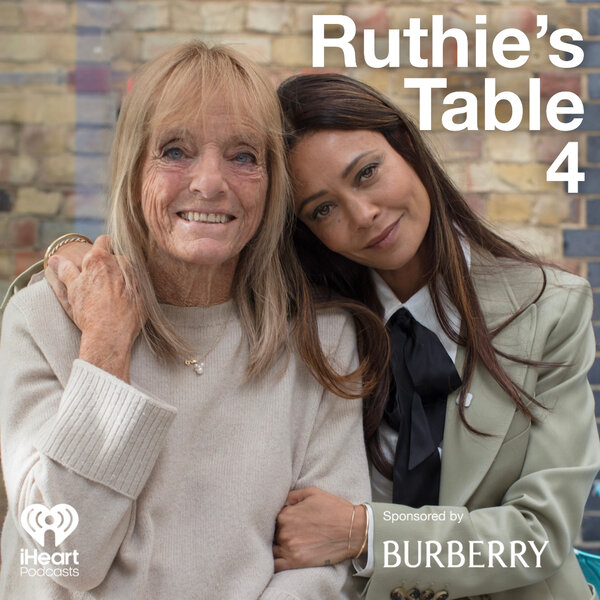
This episode of Ruthie’s Table 4 is sponsored by Burberry.
If you enjoy this podcast, leave us a REVIEW, hit FOLLOW, and turn your notifications ON to make sure you never miss an episode.
Join the Ruthie’s Table 4 community on social.
Instagram: instagram.com/ruthiestable4
TikTok: tiktok.com/@ruthiestable4
YouTube: youtube.com/@RuthiesTable4Pod
Shop River Café Books and more… www.shoptherivercafe.co.uk
Contact us: [email protected]
Credits
Presented by Ruthie Rogers: instagram.com/ruthierogers
Producer: Robbie Hamilton
Editor: Julia Johnson
YouTube Editor: Andrew Tsang
Production Manager: Bella Salini
Executive Producers: Ruthie Rogers, Zad Rogers
Recorded at: River Café: https://www.rivercafe.co.uk/
Ruthie’s Table 4 is an Atomized Studios production: https://www.atomizedstudios.tv/
See omnystudio.com/listener for privacy information.