Ask ChatGPT

 Ruthie's Table 4
12 Oct 2026 · 33m · 11 chapters

Martha Stewart and Gary Lineker discuss goals and football, food (especially Italian gnocchi and comfort cooking), nutrition changes in modern football, and Lineker’s outspoken humanitarian stance on refugees and empathy.
Gary Lineker is a former England and club footballer (Leicester City, Everton, Barcelona, etc.), later a prominent football broadcaster and co-founder of Goalhanger. Martha Stewart is a lifestyle/food media personality and host.
Lineker says goals create an unmatched “explosion” of emotions; he credits his stable demeanor for handling pressure. He argues cooking should be a life skill taught in school. He says modern football nutrition is far more professional than in his era. He says social media gave him a platform to speak out, and he believes humanitarian issues aren’t “just politics.”
Making potato gnocchi with tomato sauce; swapping fancy gnocchi toppings for tomatoes in Milan; Leicester scouting at age 12; moving to Everton at 24; Barcelona’s late dining and seafood lifestyle; support after a refugee-related controversy involving the Daily Mail; comfort food: cottage pie (beef mince).
Written by AI. May contain mistakes.
Gary Lineker shares his childhood and how family influenced his food culture and love for football.
“You came from this home in Leicester with your mother cooking, your father playing cards, your family dinners.”
Lineker discusses his journey from local football to a professional career.
“So they said, well, because you don't get the luxury of getting free food or slipping a fiver for your mum, so I'd always give it to my mum, but she'd never take it.”
Learn about Gary Lineker's transition to Everton and the challenges of leaving his hometown club.
“It was a big step because you should leave in your hometown club.”
Discover Gary's experiences living in Barcelona and how it influenced his lifestyle and eating habits.
“but it was the first time I'd ever, you know.”
Explore the intense emotions tied to scoring goals and the communal joy it brings to players and fans alike.
“it's like living on a different time zone and it's only an hour different how did you play?”
Hear Gary's thoughts on the unique physical affection displayed by footballers on the field.
“But you know what I always thought when I watch football, and I do watch football, isn't it?”
Discuss the role of modern footballers in social issues and their responsibility to speak out.
“And I think you're either like that or you're not.”
Explore how athletes are leveraging social media to address social issues.
“big players have big platforms, social media, I think that's made a huge difference.”
Discusses the importance of empathy in the context of humanitarian crises.
“You know, people say you should stay out of politics and stuff.”
Gary Lineker shares his emotional experience of receiving support from teammates.
“And then it kind of escalated a little bit.”
Gary talks about his favorite comfort food and the joy of cooking for family.
“Having 20-odd journeys outside my front door for about five, six days was weird.”

Get the gist, explore an idea or ask about something said.
 Claude
On Ruthie's Table 4, what are the key points of this episode?
Searching your listeningAutomatic transcript. May contain errors.
0:00This is an iHeart Podcast. Guaranteed Human. I'm Martha Stewart from the Martha Stewart Podcast. When you want to make your best, it's got to be McCormick. From everyday meals to hosting dinner parties, turn to McCormick. Their convenient, versatile flavors elevate every dish. McCormick has been and is an essential in the kitchen. Now they have a new line of signature seasonings crafted by flavor experts. With everyday favorites like garlic and olive oil, globally inspired ones like chimichurri and more. McCormick's signature seasonings make it easier to add bold flavors that make each bite of your meal more delicious.
0:37Try the chimichurri blend that elevates grilled meats. Explore the full array of blends and find your favorite at mccormick.com. My brother, Michael Elias, who's a writer and director of movies, tells me that when even a world-famous actor comes onto a set, no one on the crew bats an eye. The only exception is if the visitor is an athlete. Maybe it's because everyone thinks, if pressed, they could act or sing or dance, but never run a race, ski downhill, or kick a ball into a net. When Gary Lineker, one of the great footballers of our time, walks into the River Cafe, everyone stops what they're doing.
1:17And some months ago, I stopped what I was doing after reading his brave defense of refugees landing in Britain and is pleased for empathy, compassion for people in peril. Gary is never silenced on issues he feels strongly about. This sense of justice runs deep. He's one of the very few footballers never to have received a red or yellow card, consistent with who he is, principled, respectful, and fair. We're also both in the world of podcasts, although there's no comparison when his company, Goalhanger, has 18 million. Gary and I also share the world of food and this is not the first time a footballer has stepped on my turf.
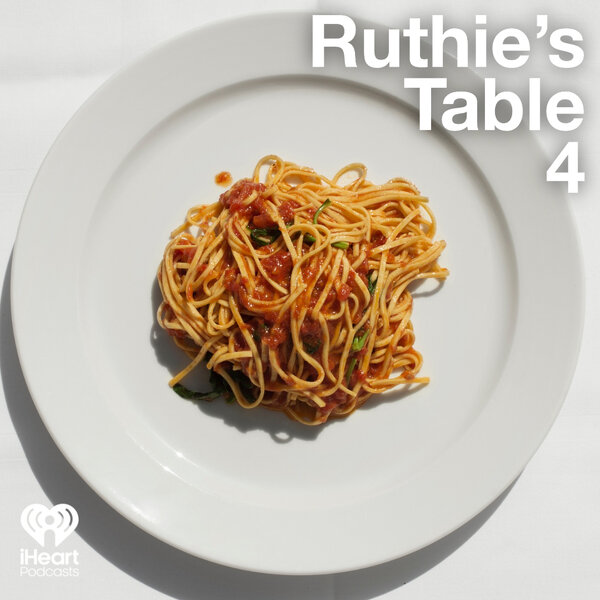
2:01There's nothing Beckham loves more than cooking. Ian Wright has his own food brand. Look at Gary's Instagram and you'll see as many photographs of what he's cooking as the goals he's analyzing on Match of the Day. Gary has been in the kitchen with Joseph Trevelli making potato gnocchi with tomato sauce. So the gnocchi, what do you love about it? I love gnocchi. I think it's quite versatile as well. You can kind of make it crispy and bake it and stuff as well, but it just works with tomatoes. Don't you think? Doesn't it? Yeah. I think you always go to tomatoes with gnocchi. It just is perfect. It's funny because I was in Milan actually last week and I was taken to this quite fancy restaurant.
2:45And I never do this, I never change something, but they had potato gnocchi with asparagus and prosciutto pancetta and it was quite complicated. And I just said, do you mind if I have it with tomato? And it was so much better. I saw the other ones and there was something. We do it, but we do it with other. We do it with peas. We do it. You can do, but it's never as good as it. I mean, there's something about Italian tomatoes as well. Do you cook a lot of Italian? Do you go for Italian food? I cook, yeah, I do a lot of Italian food. Everyone does, don't they, I suppose. It's kind of one of the great cuisines.
3:19But I love cooking Indian as well, as well as kind of British basics and stuff. So, yeah, a variety of different things. But I would say to cook, probably Italian and Indian are my favourite too. Have you been to India? No, it's on my bucket list actually. Okay. And so let's go back to growing up because you were born in? I was born in Lestia. And what was the food culture like there? Well, funnily enough, my dad was a market trader and he's a fruit truck. So he'd sell fruit. So he worked hard, get up, you know, three, four in the morning, go to the wholesale market, buy the fruit, sell it all day.
3:56Where would he sell it? In a market? It was an outdoor market, the biggest outdoor market in Europe at the time. In Europe? Yeah, it's a really well-known market. So competing with Italy, France? Yeah, well, exactly. there were also fish traders there was a fish you know a fishmongering kind of thing and there was um there was a meat place so at the end of the week he'd always kind of give them a big basket of fruit and then they'd give him like a nice piece of meat or a halibut used to he loved halibut and he so we'd get like that kind of thing and eat on a on a friday and a saturday we'd eat kind of really amazing stuff because they used to do these swap things so yeah so i kind of grew up with food in that sense.
4:34It didn't go out very often, but occasionally... So it wasn't a wholesale market? It didn't get distributed to the rest of Britain? No, this is a market. Leicester market, yeah. Leicester's now famous for its football team, having won the Premier League, obviously. In fact, people suddenly started saying Leicester properly. How do you say it properly? Well, Leicester. What did they say before? Oh, it was all Leicester, particularly in America and stuff. It was always... And suddenly people were saying their name properly. because you always hear, Leicester and all this stuff. But now, because Leicester won the league with the biggest sporting miracle ever, everyone knows how to say it.
5:10Does your family still live there? Only distant family now. My mum and dad passed away seven or eight years ago now. So I don't go back there as much, apart from the occasional time to watch Leicester play if I'm not working. So have you had the ingredients of fruit and vegetables and fish and good meat? Yeah, but I didn't cook. I was going to just say, who did the cooking? My mom was a good cook. Tell me about her. What was her background? Where did she come from? She was actually born in a place called Sherringham, which is in Norfolk, on the coast there, and moved to Leicester when she was, I think, about 10, 10 or 11.
5:49And she was a hairdresser. Beckham's mom was a hairdresser. Really? Yeah. There you go. Must be a football thing. Maybe. Two people. That's a lot of data. It can then come to a conclusion that two footballers had mums who were hairdressing. But she was a good cook, loved cooking. So would she work all day? Well, only when I was young. And then she kind of stopped hairdressing. My dad used to have a card school. He had a card school. A game called Kaluki. Okay. Playing cards. He was a gambler. And they used to have like five or six guys that used to come to our house, either on a Sunday, sometimes on a Monday.
6:32But they'd start at like 6 o 'clock in the evening and my mum would cook for everyone every night and she'd get a little pound out of the pot every time they had a kitty going on all night. But I'd go to bed, you know, because I'd have school on Monday morning and then I'd wake up in the morning, get ready for school. They're still playing. Like 8, 9, 10 o 'clock in the morning. Sometimes they'd go unbroken for 36 hours. Yeah. Honestly, my mum would constantly be supplying food all through the night. Amazing. You know, my dad, I grew up in upstate New York in a small town, and my father played poker every Thursday night.
7:10They played poker as well sometimes, yeah. And every Friday morning, before I went to school, there would be a note saying, Dear Ruthie, I won last night, here's$5. Dear Ruthie, I won last night. He won every week, and it would always be like$5 or$10. And then it was his funeral. I went to his funeral. When he died, I went to his funeral. And it was like a kind of Quakerish funeral. Everybody spoke. And this man got up and he said, you know, Fred Elias was one of the greatest guys I ever knew, but he never won a game of poker.
7:43That was really sweet. You know, he did that every Friday. I thought my dad won every game. It was sweet. So what would she cook? What did your mom cook for you? What were her dishes that you remember? Like most mothers, she'd cook a good spaghetti bolognese, really good with fish, because we get a lot of fish from the market. She'd do a really good roast as well. What kind? Beef or lamb? Either, all of them. Did your father ever cook? I can't remember him cooking, no. And did you ever go in the kitchen? No, I wish I had. And I think that's the one thing we fail our kids on. and I think that should be an absolute must-learn at school.
8:25I mean, they used to offer it all the time. You still can do a bit of cooking at school, but it's a life skill. It's a life skill, and you can be really passionate about it. You know, rather than making kids that are not very good at maths learn maths. Yes, you've got to learn your basic numbers and stuff, and reading is really important, I think. But the next thing after those two, for me, has to be, like, cooking. You know, that's one thing we all do forever is eat. I'm Martha Stewart from the Martha Stewart Podcast. You know what I love about cooking? The endless inspiration, sharing exceptional flavors, and of course, the best ingredients.
9:07I refuse to make a dish without them. McCormick has been and is an essential in the kitchen. Now McCormick's new line of signature seasonings make bringing fresh inspiration and endless versatility to everyday dishes easier than ever. There's the everyday essential, garlic and olive oil, the savory sweetness of caramelized onion, and globally inspired flavors like the herby with a touch of heat, chimichurri, and chili garlic that elevates everything from ramen to stir-fry to even grilled meats. Try the chimichurri blend to make your steaks delicious. Each signature seasoning is crafted by flavor experts to make every dish more delicious.
9:53When you want to make your best, it's got to be McCormick. Find your favorite at mccormick.com. You came from this home in Leicester with your mother cooking, your father playing cards, your family dinners. Tell us about the football when sport came into your life. Well, it came into my life way before I can remember from pretty much where I walked. It wasn't a specific day. It doesn't work like that in football. You know, I grew up playing in the garden. My brother would just kick a ball around all the time. Obviously reasonably good. Even at 9, 10, 11, I was playing and scoring loads of goals.
10:30So it just went from there. And I was spotted by Leicester when I was about 12. It's funny, my dad's market store was a family of generational business. Your grandfather had it as well, didn't you? My grandfather and his father before that. So, yeah, my grandad used to come and watch us play football everywhere. We were quite a well-known family in Leicester because of the market stall. And my grandad was watching me play one Sunday morning and the guy called Ray Shaw was there. He was Leicester City's chief scout. And my grandad knew him there. Everyone knew everyone. He said, oh, who are you watching?
11:05He said, oh, I'm watching the little centre forward up there. I was tiny in those days. And he went, oh, that's my grandson. and they took me on. I trained two, three nights a week at Leicester and then Saturdays as well for four or five years and then I got taken on. When did you leave the comfort of home? Not until I was 24. Good. It was funny, when I first joined Leicester, I joined as an apprentice and I was paid£16 a week, but they put an extra fiver in an envelope for my mum because loads of the kids there that came were in digs so the food was provided for them. So they said, well, because you don't get the luxury of getting free food or slipping a fiver for your mum, so I'd always give it to my mum, but she'd never take it.
11:53A bit like you, Ruth, she'd always give it to me back. She'd say, I don't want your money. I was on 21 quid a week, not 16 quid a week, which was a bonus. So you were at home, so you had protection around you in terms of your comfort of home. Yeah. But what about protection for being suddenly when you found fame? I'll just say that I once, this is, I think I might have told this before, but one of my programs I always remember was Michael Parkinson interviewing David Beckham and George Best. And George Best was, you know, they were on the sofa together. And when he asked Beckham a question, Beckham said, you know, I'm in the presence of one of the great heroes of my life.
12:35I think really I don't want to talk. you should just talk to him you know and what they did discuss was the you know the difference between now and then you know that and best said he just came from a simple life in the home and suddenly he was thrust in this world without press agents or managers or pr people or you know that there was there was very little around you did you feel the same way george bestow came from Northern Ireland to Manchester United at a very young age so it's a little bit different when you've got to suddenly you are on your own whereas I kind of played for my hometown club for the first eight years of my career so I was with my parents my brother you know we had family all around all my friends were still there and I think that helped me even though I was a kind of slightly late developer in terms of global kind of fame and that sort of stuff so I didn't really start making my mark until I was in my 20s whereas you know people like Best and even David Beckham well he was no they were young superstars really you know people like Wayne Rooney Michael Owen lots of players and I was kind of more gradual and I think that helped me prepare for that for a fame but also be moving away from home and all that sort of stuff so I did it at slightly older age than most of them do and I think that was actually hugely beneficial for me So it didn't feel like a massive, massive change when I shifted a little bit.
14:02And what was it like when you were 24? Where did you go then? I went to Everton. It was a big step because you should leave in your hometown club. And I loved Leicester. It was my team. I'd supported them since I was a little kid. I'd done well. I'd scored lots of goals there. But to try to build my career, I needed to go to a kind of bigger club at the time. Did they take care of you? Oh, they were great. It was a great place. I was only there for a year. You had an apartment by yourself? I was with my then first wife. We didn't get married until the next year, but, yeah, so we went up together.
14:37Did she cook? Did you cook then? She cooked, yeah, she was okay. She's a good cook. Michelle's a good cook, yeah. I didn't cook then, no. I didn't cook until eight years ago. Did you have a sense of health and food and sport? Were you guided about the kind of foods that would be better for you to perform? Not as much as we should have been. I think nowadays that's one of the great changes in football is the nutrition side of things. How did that happen? I think it's a gradual change. I think an understanding of what feeds the body and more professional outlets to it, more money coming into the game so they could afford...
15:12Clubs now, the staff around football clubs are extraordinary. When I played, you'd have a coach, a manager, a coach, maybe one other coach, goalkeeping coach possibly. You'll have a physio, and some clubs will have a doctor, and that was about it. Now they'll probably have five people just doing nutrition alone. They'll have cooks every day, cooking them food after training. In all those kind of things, it's changed dramatically. When I was, it was like, what are you doing for lunch? Well, we're going down to the pub for a pint and a pie. Before a game. Yeah, well, no, not before a game, after training.
15:50Although some players may be, some players may be. Do you know what would be, I mean, for you as an athlete, if you knew we had a game, what would you have for breakfast and what would you have for lunch? Well, you wouldn't have lunch and breakfast probably if you were playing at 3 o 'clock. So you'd probably basically have like a brunch at 11 o 'clock or stuff. I don't actually know what they do pretty much now because it used to be what you said, right, You need some carbs in you for the energy and stuff like that. But I think most of their diets are very healthy. If you look at footballers, they're all ripped now.
16:22They're all like, you know, all these abs everywhere. When I first started playing, we were told, whatever you do, don't do any upper body weight work because you'll be all stiff and wooden on the pitch and you won't be as agile. Absolute poppycock, complete nonsense. So you never saw players particularly kind of ripped and muscular in my day that you do now because that was the thinking. I rarely talk about alcohol because this is mostly about food, but I was wondering about how do you combine discipline with pleasure because we've seen people like George Best. How do you combine being a 24-year-old with being somebody who wanted to party, wanted to socialise, very handsome, with being somebody?
17:07There you are. And how do you combine that rigor with pleasure? I was never a big drinker. I didn't drink. I didn't go down. I wasn't one of those that went down the pub after training, unlike some. So I kind of looked after myself. I was very driven, very motivated, very ambitious to do better. So I tried to give myself the best chance. Yes, I like to night out with the best of them. But it's like most players, the vast majority of players, understood that even then, that, you know, that's not really a great combination, drinking loads of pints and then playing in a couple of days' time. I had a manager called Jot Wallace, who I was so terrified of that he kind of stopped me doing any of that nonsense.
17:50And what about when you went to Barcelona? Barcelona was fabulous. It was a great experience, a wonderful place to live. Was it the first experience in a foreign city? I'd been on holidays. I'd been on lots of holidays. but it was the first time I'd ever, you know. I didn't really contemplate going to live abroad, but then the opportunity came. Did you go by yourself? Got married just before we went. So played the World Cup in 86 in Mexico, came back, got married, went on honeymoon, went straight to Barcelona from there. And so the two of you had an apartment there? We had an apartment, yeah. Actually, the first four months, we thought, I thought, yeah, this is it, superstardom and stuff.
18:32that, you know, will go up and they'll put us in a luxurious hotel, penthouse suite and all that stuff. And we actually got there and we checked in this hotel, which was a four-star hotel, and we were given our room key. And we had, like, we had an entire world with us, like loads of cases and stuff like that. And we went in and we got in the room that is actually smaller than this room we're in now, which is fairly... It's a nice room, but it's a nice room. So we got in this room. We didn't have enough. I had to buy the room. I had to pay for the room next door to put the cases in. And Mark Hughes was a player.
19:11Manchester United did play that time. Well, at that time, he'd just been bought. And he came and arrived at the same time with me, and he arrived on the same day. And he came down and knocked on my door, and he said, I'm just checking your room's as shit as mine. and it was like this really brown, dank, dark place and we ended up in there for four months. Did you? Yeah. But eventually we got in a nice villa and we had three amazing years. Three years you were there. Three years, yeah. How did that affect your food and eating and experience? I mean, I loved the food there. What did you love about it?
19:46I loved the fresh fish that was always available. I mean, obviously, you know, you're living in a port there and some great restaurants. I loved tapas I loved paella on the beach I mean we had an amazing lifestyle we'd get up I'd get up in the morning about 9 something go to the ground we'd train for a couple of hours by lunch time you were done I'd come home we'd jump in the car go to the beach club at Castel de Fels we'd have like a seafood and a paella on the beach we'd leave about 5 get home about six o 'clock have a siesta for two or three hours and then go out for dinner which you couldn't get in a restaurant yeah 10 11 12 o 'clock at night because if you went to a restaurant in barcelona back then it's changed a bit now it's still late but nothing like as late as it used to be if you went to a restaurant before 10 o 'clock they'd either be empty or closed yeah um and but actually they what they do is they break up their sleep so you then go home at one two o 'clock in the morning and sleep for five, six hours.
20:56It's totally different. It was totally different, but it was... It didn't take a lot of getting used to, to be honest. It didn't take a lot of getting used to. No, it didn't. It really didn't. Did you have kids at the time? No. Even better. It wouldn't have been as good, that's for sure. Richard and I once gave a party in London. We invited the mayor of Barcelona. He was in town. And he said, I can't come for the party, but I'll come a little bit later. and so he didn't show up by you know 11 o 'clock and so we thought okay he's not going went to bed at 2.30 in the morning the doorbell rang and he was like expecting the party I'm here but I ran downstairs oh they just left it's a party just ended but I don't know how they were it's like living on a different time zone and it's only an hour different how did you play?
21:46did you do one a game night so when you were actually playing Well, sometimes the games, sometimes you play, kick-off will be like 9 o 'clock at night quite often. Oh, I see, totally. You know, Sundays you used to play at 5 o 'clock. That was kind of their Saturday at 3. Right. So they'd often play on Sundays at 5 and stuff. Why do football games start at 3? Is there a reason? Here? Yeah. I don't know. After lunch? Well, yeah, I suppose. I don't know, that's a good question. I don't know why. Who came up with 3 o 'clock? Yeah, who came up with 3 o 'clock? I'm going to find out, Ruthie. I'm going to find out.
22:20Can you find out for me? I'm going to find out. Because I come past Chelsea every time I work on a Saturday or whatever. You know, you could just always know that between Fulham playing or Chelsea playing that it's always 3 o 'clock. Well, genuine it is, unless they're on TV, then they'll move the schedule. But, yeah, I don't know why the 3 o 'clock came to start. Probably before darkness, maybe. They wanted to play early enough before they had really good floodlights and stuff. Although in the winter it's still dark before, so I don't know how that works. but I need to find out. Okay. I've never even thought about why do we kick off at 3 o 'clock.
22:54There'll be a reason. Maybe. Okay. The audience, you talk about the exhilaration of an audience. What happens when you score a goal? Scoring a goal is the one thing that I miss about that feeling. It's like, it's really hard to describe. it's like just an explosion of different emotions of joy, of relief of happiness and stuff and the reason it's I think it's so special and the reason that football is so special is that the value of a goal is so important because you know in America I go for example and they used to go but you can have a game that says there's no goals or there's only one goal and I said yes but that is the magic of football because it is so important so you have a moment and it's the same for fans watching when their team scores it's amazing because you know how significant a goal can be so when you're the person that's actually scoring that goal it's like cheering for your team except it's you that's doing it and there's nothing like it and I've had conversations with Alan Shearer and Michael Owen proper goal scorers and funny enough, I spoke to Andy Cole the other day and we were talking about the same things, that there's nothing, nothing in life.
24:19Not even eating at the River Cafe. I'm really sorry. How wonderful it always is. Wait, wait, wait. Yeah, but we might fix that. We're going to get you that feeling. That feeling, oh my God. But you know what I always thought when I watch football, and I do watch football, isn't it? I do watch it. I remember thinking that it is the only time you see men showing so much affection to each other, physical affection. Hugging and kissing. There are all these guys and they're publicly in each other's arms in that kind of incredible emotion. We're very metrosexual, these footballers. That's probably one.
24:53But it was beautiful. But what about the other side of that, when you miss a goal, when you don't score? Do you feel the hostility? I wouldn't know, Ruth. Oh, I see. it's rubbish it's it's a horrible because that is the downside of that there is well that's it and that's why scoring makes that's why when you do do it because it's you know it's obviously the most important thing and there are days where you will be rubbish but it's how you deal with that I was always lucky I didn't get too carried away when things were going well it's kind of how I am I've got a very kind of stable demeanor and stuff and I don't get overexcited when things are going well, but I didn't get down when they weren't.
25:34And I think you're either like that or you're not. So I didn't, pressure and that kind of thing didn't really worry me at all.
25:48If you like listening to Ruthie's Table 4, would you please make sure to rate and review the podcast on the iHeartRadio app, Apple Podcasts, Spotify, or wherever you get your podcasts. Thank you.
26:08I'm Martha Stewart from the Martha Stewart Podcast. You know what I love about cooking? The endless inspiration, sharing exceptional flavors, and of course, the best ingredients. I refuse to make a dish without them. McCormick has been and is an essential in the kitchen. Now McCormick's new line of signature seasonings make bringing fresh inspiration and endless versatility to everyday dishes easier than ever. There's the everyday essential, garlic and olive oil, the savory sweetness of caramelized onion, and globally inspired flavors like the herby with a touch of heat, chimichurri, and chili garlic that elevates everything from ramen to stir-fry to even grilled meats.
26:56Try the chimichurri blend to make your steaks delicious. Each signature seasoning is crafted by flavor experts to make every dish more delicious. When you want to make your best, it's got to be McCormick. Find your favorite at mccormick.com. What we're seeing now is also a kind of true unity in terms of the politics of sport. I experienced it in the Mexican Olympics, because I'm quite old, in 1968 when they did the Black Power Select, and you saw sport becoming politicised, and we've seen it in America with racism on the field. Do you feel that that, did you have, do you think that also like food has become more now?
27:44I think it has, and I think there are a variety of reasons for that. I think that you go back to, it's happened once or twice in the Olympics, didn't it happen in Germany way back? But I think it's more the fact that players now in whatever sport, big players have big platforms, social media, I think that's made a huge difference. Pretty much all sport now is televised, whereas that certainly wasn't the case. So I think, yes, and I'm actually really proud of a lot of our players. young you know people like Marcus Rashford who's you know I mean he's come to a footballer to insist that kids get fed at school which seems a bit but but amazing what he did you know we've seen you know lots of players standing up against racism um you know Jordan Henderson got all the captions together during the COVID thing and did you know and they've become really public now I understand why some don't want to do that because I think you've you've got to be prepared for criticism if you do that because people say i stick to football it's you know all this nonsense so you've got to be kind of strong of mind um and be able to take flat and thick skinned but i've really been you know proud of our young footballers i think you know take this young the england squad now you know they're kind of just a lovely bunch of characters and and they've brought a really good feeling back to our game but you should also gary be proud of yourself because you've taken in stands that, as I said in the introduction, that are bold and brave.
29:17We could talk about the experience you had most recently or other ones that you feel that you had to take a stand. Yeah, it's just something that is, you know, a couple of issues. You know, people say you should stay out of politics and stuff. I don't really see them necessarily as just political issues. I think the humanitarian issues that I take a stand for and I always, well, I have done. And I think I've changed as a person as I've got older. I think when I was young, I was cold, I was driven. I never thought about things like that. What changed for me really was social media because I got involved, you know, got onto Twitter and I quite enjoyed it and I grew a big following.
29:55Something like 9 million followers on Twitter. Yeah, just under that. I mean, that's a lot of people. A lot of people. So, I mean, if you've got a platform like that, you know, I just think what a waste it would be not to use it for what I think, not everyone will agree, obviously I understand that, what I think is to use it as a power for good. And, you know, I've always felt quite strongly about, you know, human beings not being kind enough to each other everywhere, you know, particularly this kind of tribality that we have. And, you know, it's them and us and they're foreigners and they come in here and it's like, We need people coming from all different parts of the world.
30:40And how, you know, put yourself in a situation where, say it was London and suddenly we were being, you know, bombed like they are perhaps now in Gaza or something, that kind of situation. And imagine you had to try somehow to flee home and you jumped in a kind of very risky boat and you travelled around half the world and eventually arrive at country and nobody wants you. No country can have everybody. You can't, you know, you have to have a various way, but, you know, but have some safe routes and stuff. But it's just the lack of empathy that I find hard to believe for people that have, imagine what, how desperate things have got to be to, you know, jump in a dinghy and risk your life and your life of your children to seek kind of sanctuary somewhere.
31:30and then not to be well received and it's I just I find it hard to understand and I think it's incomprehensible that you I understand people some people don't have any empathy at all for anyone I would have been ashamed of myself if I if I didn't didn't at least take a stance about something that I felt quite strongly about and what was that like for you what did you how did you find your you know your fellow athletes and you had people who really supported you oh yeah There was one when I responded to somebody's tweet that was having a pop at me and I just talked about something. And then it kind of escalated a little bit.
32:09And then it was really done by the Daily Mail because their front page took what I said completely out of context. And then we do have a tendency to, for some inexplicable reason, worry about the Daily Mail. So it kind of led from there and it spiraled a little bit out of control. But the support I had from my, I call them teammates, because once a footballer, always a footballer, but it was actually one of the most emotional things. I just found it was incredible. I shed a tear in the back of a black taxi when Ian Wright and Alan Shearer supported me, and then everyone followed suit. You know you've got mates, and you know you like mates, and you have the banter and stuff.
32:52And even a couple of days before it happened, And we have a little group chat with Ian Wright and Alan Shearer. And I said to them, I said, I've got a feeling they might take me off the show. And Ian Wright said, oh, if they do that, there's no way I'm doing the show. And I think it's one thing saying that, but then actually to follow that through. And you learn then that, you know, they are real mates, you know. And you learn a little bit about what they think about you. And I think that for me was one of the most amazing things that I've gone through in my life. The support side of it. The other side I could definitely have lived without.
33:26Having 20-odd journeys outside my front door for about five, six days was weird. But you have taken refugees into your home. You have spoken out. You are a person that gives comfort to so many people. So I suppose my last question to you, and thank you so much for being here, is that if you do go to food for comfort, if you need comfort and you need something to eat, is there a food that you would go to for that kind of comfort it depends on which time of year it is but let's say it's winter cottage pie ah cottage pie describe a cottage pie there might be people in california who don't know i'm terribly sorry well there's two types of pie one called cottage pie one called the shepherd's pie one is lamb mince and one is beef mince shepherd's pie is obviously lamb's mince because they shepherd lambs so if ever you get confused that's a way to remember around it, cottage pies with minced beef, I don't know why I've always liked it, my mum used to do it, it's one of the reasons probably, and I it's one of the things I wanted to learn to cook and then I cook it a lot, but it's basically mince and mash, typically a bit of Worcester sauce that you put in it, yeah and it's like with a layer of mashed potato on top and a bit of cheesy crispy top I mean, I love cooking, and it's great because my boys come around, they like my cooking, they come around, it keeps them coming around.
34:49They're adults now, obviously, but they're, you know, Dad, are you in tonight? A bit of dinner? All right, yeah, I'll go on and do it. Yeah, so fine, but yeah. Well, we're going to get you to come and spend a day in the River Cafe, or maybe more than a day. Yeah. What do you think? I'm expensive. How much? 16 quid in a five for my mom. Exactly. We'll play that game of cards. Thank you very much. Absolutely. Thank you, John.
35:26Soda with 10 grams of complete protein that tastes like your favorite soda? Meet Sky Pop. Zero sugar, only 45 calories, and no misleading collagen fillers. Sky Pop Protein Soda. Reach for the sky. Get Sky Pop now at Target, Walmart, or Jewel Osco. Imagine getting into one of the best restaurants in town tonight. You didn't have to plan it. You didn't have to wait for a reservation. You just walked in. After dinner, you make your way into a lively comedy club. The jokes are funny. Like, genuinely funny. Feels like a pretty great night out. It is. It's a carnival cruise. Time to take another look.
36:06Carnival is calling. Ships Registry, the Bahamas in Panama. This is an iHeart Podcast. Guaranteed human.
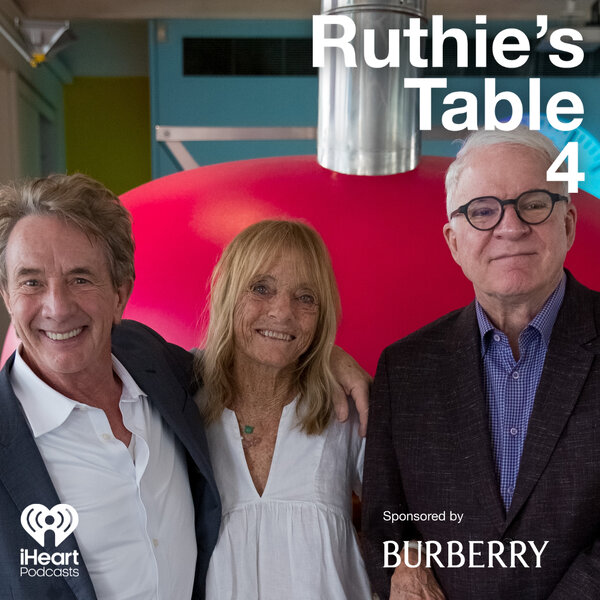
This week, we’re looking back at Gary Lineker’s visit to The River Cafe.
Over the table, we travelled from his childhood in Leicester and the food of his mother’s kitchen to the football pitches of Barcelona. We talked about fame, family, and the importance of speaking out for refugees and compassion. Gary made potato gnocchi with tomato sauce alongside our chef Joseph Trivelli, and revealed his love of cottage pie.
Hit FOLLOW to make sure you never miss an episode, and join the Ruthie’s Table 4 community on social.
Instagram: instagram.com/ruthiestable4
TikTok: tiktok.com/@ruthiestable4
YouTube: youtube.com/@RuthiesTable4Pod
Shop River Café Books and more… www.shoptherivercafe.co.uk
Contact us: [email protected]
See omnystudio.com/listener for privacy information.