Ask ChatGPT

 Ruthie's Table 4
19 Oct 2026 · 42m · 18 chapters
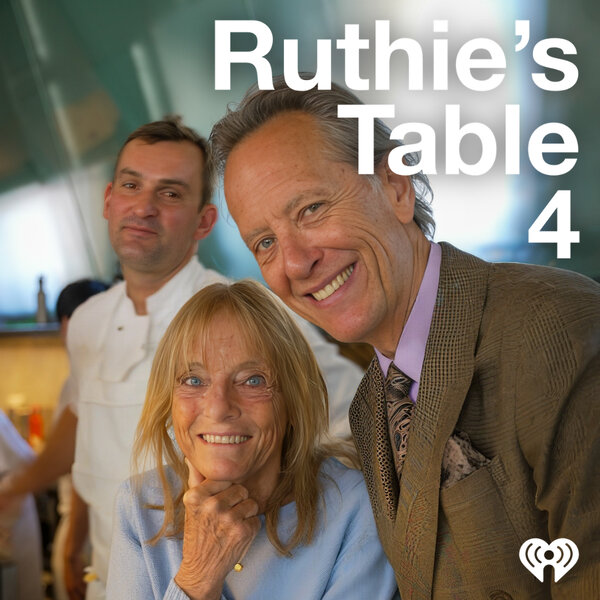
Richard E. Grant and Martha Stewart discuss grief and coping through food, including how his wife Joan’s cancer changed eating, his own son’s sudden death, and how cooking created daily rhythm and “pocket” joy. They also cover Grant’s upbringing in Swaziland/Eswatini, his acting career (including playing Henry Higgins in My Fair Lady), and food memories and comfort smells.
Richard E. Grant (actor; played Henry Higgins; River Cafe early days with wife Joan; born in Swaziland; studied in Cape Town; actor since early adulthood). Martha Stewart (host; interviewer).
“Move on” is wrong; grief is daily navigation. Terminal patients often stop wanting food; Joan’s taste became “like sand” from lung-cancer drugs. Cooking for others and routine helped both of them.
seven fixed meals growing up (beef Monday, pork Tuesday, chicken Wednesday, lamb Thursday, tinned fish Friday, roast beef Saturday, barbecue Sunday); Joan’s promise to die at home; Mexico hospital food; tomato sauce as comfort smell; Christmas pudding; River Cafe crab linguine recipe; Henry Higgins’ “no filter” interpretation.
Written by AI. May contain mistakes.
Richard E. Grant discusses how cooking helped him cope with loss.
“and I have no advice on grief because it's so personal.”
Richard and Martha share their experiences and perspectives on the process of mourning.
“Somebody said to me the other day, he said, it's been five years, Richard, you've got to move on and you've got to man up and you've got to start dating other people.”
The conversation shifts to the role of food and shared meals during difficult times.
“She said, because all of us are going to die.”
Richard and Martha reflect on their experiences with musicals and theater.
“I do think it's a beautiful, beautiful song.”
Explore the influence of musicals and childhood experiences on identity.
“And then we would take it home to the country and there was nothing else to do except just listen to it all the time.”
Discuss how family relationships shaped food traditions and experiences.
“I think she's one of those people that you might, if you're unkind, would call it narcissism.”
Learn about the cultural food landscape of Swaziland and its traditions.
“I came to London in 1982 when I was 25 years old to seek my fortune.”
Understand the role of theatre during apartheid and its socio-political implications.
“and all the people running the market were Swazi women, and they had piled-up stalls of fresh fruit and vegetables, and you bartered and every person arrived at the basket and bought their stuff.”
Explore the impact of censorship on theatrical productions in South Africa.
Richard shares his early experiences with cooking and working in a restaurant.
“Monday beef Monday beef I know the tin fish on Friday yeah what did you eat?”
Discover Richard's journey in acting and how he met his wife Joan, a skilled cook.
“and then I started getting work as an actor.”
Richard discusses the significance of home cooking for celebrations and gatherings.
“And she was a brilliant cook, absolutely amazing cook.”
Hear about Richard's humorous experiences with food while filming movies.
“every single Christmas party we had, and she'd make two of them.”
Richard shares how he and Joan themed their movie nights with corresponding cuisines.
“once a month where if we did The Godfather, we had spaghetti.”
Richard compares cooking recipes to acting scripts, highlighting creativity.
“Visit our website, shoptherivercafe.co.uk, to place your order now.”
Richard reflects on significant smells and their connections to memories.
“So when you're memorizing your lines, tell me about the difference between a kind of script and a recipe.”
Discussing comfort foods and the emotional ties they hold for individuals.
“And, of course, I boiled up rose and gardenia petals into boiled sugar water.”
Learn about the hosts' comfort food choices and their significance.
“is literally throwing them like footballs at such a discount to get.”

Get the gist, explore an idea or ask about something said.
 Claude
On Ruthie's Table 4, what are the key points of this episode?
Searching your listeningAutomatic transcript. May contain errors.
0:00Richard E. Grant: This is an iHeart Podcast. Guaranteed human. I'm Martha Stewart from the Martha Stewart Podcast. When you want to make your best, it's got to be McCormick. From everyday meals to hosting dinner parties, turn to McCormick. Their convenient, versatile flavors elevate every dish. McCormick has been and is an essential in the kitchen. Now they have a new line of signature seasonings crafted by flavor experts. With everyday favorites like garlic and olive oil, globally inspired ones like chimichurri and more. McCormick's signature seasonings make it easier to add bold flavors that make each bite of your meal more delicious.
0:37Try the chimichurri blend that elevates grilled meats. Explore the full array of blends and find your favorite at mccormick.com. When I think of Richard E. Grant, of course I think of his brilliant films and him as a great actor. but what I really think of is Richard and his wife, Joan, in the early days of the River Cafe. They were married a year before the restaurant opened and lived right across the river. Coming in for lunch, always sitting at the same table, they were warm and lovely and absorbed in each other. I remember their daughter, Olivia, being born a few years later and then bringing her in as a baby when the restaurant was still small and starting up, just like her.
1:23We all grew up and off into our own lives. Now, over 30 years later, Richard and I share something else in common, the loss of the partner we loved. People once asked me, someone asked me about my advice on grief, and I have no advice on grief because it's so personal. You know how you do it, whether I have a friend whose mother went to bed for six months and never got out because her son had died. She just took to her bed and I never stopped. So we all have different ways. And I was thinking if we start with the food part of that, do you eat for comfort or did you stop eating when you had tragedy in your life?
2:02Richard E. Grant: I ate for comfort and the last, once Joan was diagnosed and the subsequent eight months that she had left, which we didn't know were going to be so short, I cooked three times a day. Did you? But, you know, I'm so struck when anybody subsequent to her death says to me, what would your final meal be? And I said, well, the experience is of somebody who is dying is that food is the last thing that they want. That because of the drugs that she was on for lung cancer, everything started tasting like sand. So it didn't matter. It got to the point where it didn't matter what I cooked. she would say well this doesn't really taste of anything or the texture of it is is awful so she lost interest completely in food but it didn't stop having to make meals all the time so I got very inventive more inventive I mean going through cookbooks obviously yours trying to find things that she would like.
3:10So you were thinking of her. When you were cooking, it was not just a distraction for you to kind of do something. Because cooking can be that way. You have to follow the recipe. You have to put, no matter how sad you feel, you do have to put the olive oil in the pan at a certain time. And it does create a rhythm. It came as a method. It came in order almost, doesn't it? It does.
3:30Richard E. Grant: And it's also because she said to me when she was diagnosed, please make a promise to me if you can possibly keep it that we are together all the time and that I die with you in our house and I said well you know I can try and make that promise but we just don't know what's down the line but and apart from four days when she had to go into the Royal Marsden because she got an infection we managed to honor that so to go back to your thing about cooking it meant that however short the time was that I was in the kitchen it meant that it gave me some respite from dealing with the you know her pending imminent imminent loss and I suppose gave her time away from me as well and sometimes you know she would fall asleep and then that gave me time to go and cook but having that routine and something to do was incredibly be important and in terms of what you said earlier that you can't give advice about um how to deal with loss or death what i found is when people have said to me oh you get over it in time i really object to that because i think that i've never wanted to get over it it's a navigation around it on a daily basis and that's that really is the way that i find that is the way that i've i've coped with it, that I don't have an anticipation that it's sort of a hump in the road that I'm going to get over and the other side is going to be, yeah, I'm now free.
5:08Richard E. Grant: Because I don't feel like that. I always thought the worst two words in the English language was move on. Somebody said to me the other day, he said, it's been five years, Richard, you've got to move on and you've got to man up and you've got to start dating other people. That tells you more about the other person. I think if you can, I would say that because I kind of went through a death experience of my son six, maybe ten years before Richard. So I kind of knew quite a lot. And you had no preparation for that. That one was, I would say there are two types of death. Because he had a seizure and.
5:43Yeah, it was like a car crash. He was here one day and then he was gone the next. Yeah, so the ones like, you know, Richard, my Richard, and your Joan is kind of being eased into that world and the knowledge and everything. And then there's the ones that you get a call and it's a car crash. But I think that, and so, and each one, you know, for me, I couldn't cook after Bo died, after the cart, you know. I got the phone. I'd go in the kitchen and I'd start cooking and start to cry or whatever, you know. And actually coming in here was, for me, it was like coming home. But with Richard, we, you know, we ate all the time.
6:20We had meals around, you know, in the bed. We had meals upstairs. We had, you know, and he really loved to eat. So his taste buds weren't affected by it? Not at all. No, he loved to eat. I love to eat, yeah, you know. You're lucky. But what about cooking for your daughter? Where was Olivia at this time?
6:37Richard E. Grant: She came to stay with us for that entire time. And did she eat? She ate, yeah. And she, yes, she did. She cooked sometimes, but I think she found it so overwhelming, you know, dealing with what was coming. And I don't know whether you found this, But did you have a sense or get told when Richard's life was nearing its end? Not really. Not until, because he had brain doubt. Richard had a fall. Yeah. And he fell on his head and he had a bleed. And then it was a slow, we were in Mexico. And that was also interesting because Mexico, to be away from my country, away from my friends, away from, well, although I was surrounded, I never, I took two rooms in a hotel and I was never alone for four months.
7:24But I was suddenly in the Mexican world of eating at a different time, eating different foods, having no wine but drinking tequila, and there was a whole thing. And the hospital that he was in was a beautiful place, and the food was part of the whole. It was really important. People would bring food, and he always ate. And, you know, he was a great eater, Richard. So it was something we shared to the very end. But I knew he was going to die probably. We knew we were coming towards the end probably about a month before because he had a stroke. But this was after two years. But I think it might have been a different kind of experience in terms of Joan.
8:02Did she eat? She didn't eat.
8:04Richard E. Grant: In the last week of her life, she ate almost nothing. And we had a palliative carer who would come in twice a day for 10, 15 minutes. and she said to me 10 days before she said when in her experience when the person who is terminally ill stops really not wanting to eat that is usually three four days and joan had said to olivia and i two weeks before she died she said i know that it's it's the end is very near and she said please let me go and i think that this is i've now in my reading and other people have shared their experience said that that it is a very common thing for people to say let me go they want they want you to give them permission to not hold on anymore jones said you know i'm so exhausted i've had a good life i want you to you know to find a pocket full of happiness in each day and not be sad when I'm gone.
9:08Richard E. Grant: She said, because all of us are going to die. She said, you two included. Did you listen to her? Yeah, I have. It's been a great mantra by which to navigate grief ever since then, I found. You find that pocket of happiness. Yeah. Consciously finding joy in things that you may have just taken for granted beforehand. And that's been a great gift that she's given me and our daughter. Yeah. And what about work? I have had a huge amount of work since Joan died. And rather than retreat, I have grabbed all of it with great gusto. Me too. I have moments where I think, you know, how are we going to get through this?
9:54But never that idea that I might stop or give up. You know, I love doing this. We love writing our books. As I said, I love the podcast. sit down and have... Excuse me. Go on. Did you get that on camera?
10:09Richard E. Grant: We did. You just lifted the plate, licked every bit of the plate. Why not? Why not? You can't really do it in a restaurant without offending people. You think? Yeah, maybe not. I know. You know? Have you done it and offended somebody? A woman actually said, I'm offended by this, or you could just see the look? A combination. And Joan used to say, for God's sake please so all I would do is do this and then do it behind or lean down pretending that I'm doing something on the floor do you think it tastes different when you lick what you're tasting licking off the plate is that different from what you've put in your mouth I think that I think that what it is is it is like the encore after at the end of a performance what is an encore like at the end of a performance I've only done one musical My Fair Lady and And because a musical, there's music for people to re-perform, you can do a sort of final verse of something.
11:12Richard E. Grant: But in the theatre you can't. All you can do is bow. You can't say, oh, well, I'll do to be or not to be again. Do you know what I mean? It's an amazing sensation. I really love is sometimes when at the end of a musical, then it's all over, and then they come, like guys and dolls, will come out and do, you know, Luck Be A Lady or When You See A Guy or My Fair Lady. You could come out. You obviously played Henry Higgins, didn't you? I played Henry Higgins, yeah. What a great part. Yeah, absolutely amazing role. What's your favourite song from My Fair Lady? I think... I wonder if it's the same as mine.
11:47Go on.
11:47Richard E. Grant: What is yours? I've Grown Accustomed to Her Face. Yeah, I agree. Is there a better song? No. I've grown accustomed to her face. I can't see. She almost makes the day begin. I've grown accustomed to the tune She whistles nice and noon Her smiles, her frowns, her ups, her downs Are second nature to me now Here's to you. That should be the ending of this. Or the beginning. Oh, I know. Richard sang it for my 17th birthday to me. I said, that's all I want you to do is to sing me I've grown accustomed to her. I do think it's a beautiful, beautiful song. It is amazing. was that the last theater that you did yeah that's the last time i did um theater and i did it in chicago 10 years ago and then i did it at the sydney opera um 15 years ago we should bring it to london i would love to see it again you can't do it now because of misogyny because of the yeah tell me about that melissa mccarthy's daughters came to see it in chicago and they were 10 and 13 and they were appalled by the misogyny of it.
12:57Richard E. Grant: They said, how can any woman put up with that? When you were performing it, did you feel a sense of that? Well, my steer on it was that Higgins is on the spectrum and that he is he doesn't mean to be as cruel as he is. He just he says there's no filter whatsoever, so it just comes out. You should be thrown like a cabbage leaf or whatever. And he is so joy-filled when Eliza gets all the words phonetically correct that he embraces her. And it's no accident to me that straight after that she sings I Could Have Danced All Night. And it is the way that I interpreted was that that was as close as he could ever get to saying he's in love with somebody.
13:46Interesting.
13:47Richard E. Grant: So it was very physical and we grabbed each other. I think it's the first musical I ever saw. I went to see it. I was telling you the other day that my dad used to take me, because we lived in upstate New York, and every sort of big treat, maybe once every couple of months, he would take me down to New York in the car and we'd have lunch and then he'd take me to a musical. And then we would buy the record. And then we would take it home to the country and there was nothing else to do except just listen to it all the time. This is really generational that we share in this because in the 60s, every musical that came out, my parents had the LP of it and played it incessantly.
14:27Richard E. Grant: So our whole family knew the lyrics of every single musical that came out. If you say that to people now, they think you're, you know, it's insane. But the other thing about the musicals, without naming any, is that they don't have those tunes so much anymore. They're not as kind of hummable. Are they that you come out and you can remember on the street where you live? Oh, I think the people who watch Wicked would argue with us. They would probably, yeah. But I find it slightly challenging. But I haven't seen My Fair Lady ever, probably even since I was a kid. Wow. A long time ago. So you saw it on Broadway?
15:03Yeah. Do you remember who was in it? I think it was Julie Andrews and Rex Harrison. I think it was. Wow. But I was really young, I have to say. But it was my very first musical. and then I saw West Side Story, saw My Fair Lady. I saw a really one that, and he used to come in here, Stop the World, I Want to Get Off by Leslie. Tony Newley and Leslie Bricus. Yeah, and Leslie and Evie came here all the time and I used to come up to him. I remember the first time I met him, he was with Michael Caine and I said, I bet I'm the only person in this room that knows, you know, say, My Mishki Mishko for whatever those songs were or what kind of fool am I?
15:45And he loved it. He would sing it with me because you could see I have any chance to sing. But those, you kind of grow up with those. Do you know what your first one was?
15:54Richard E. Grant: The first one was The Sound of Music and then Mary Poppins. But I'd heard My Fair Lady before I saw those, before I saw the movie, and my parents had all the Rodgers and Hammerstein carousel. King and I had all of those record collection. so I knew all of those before I ever saw the movies. You were born? In Swaziland, which is now called Eswatini, which is the tiniest country in the southern hemisphere, southeast Africa, below Zimbabwe, besides South Africa and Mozambique. And why were you there? My father was the director of education for the British government, so that's why we were there, and that's why I went to school there.
16:33Yeah, and so you, that was amazing. Yeah. Tell me about your dad.
16:37Richard E. Grant: Oh, he was incredibly charming, good man by day and then a very violent unrecognizable alcoholic by night because after my mother cuckolded and left him for his best friend in africa yeah and when i was 10 years or did you no no i stayed with my father as an only child or i had a younger brother and but my i think my mother was her argument was that uh she didn't want to take me away from everything it was familiar to me and living at home. She was not a very maternal person. I think she's one of those people that you might, if you're unkind, would call it narcissism. Shouldn't really have had children.
17:21Did she marry very young?
17:23Richard E. Grant: I think in that time, that generation, she got married at 24, which was when people got married. In Jane Austen, not that she was in Jane Austen time, but by the time you were 26, you were an old maid. You were an old maid, exactly. Exactly. What are we going to do? Yeah, so 24 was not. When was your mother married to your father? Yeah, probably the same. When they were young. Maybe even younger. And I was young. I was married when I was 20. Well, I met Richard when I was 19 and then was married, had my first kid at 24. So I started very, very young. You started young. Yeah, I was a baby. Yeah.
17:54But so did your mother move down the street or did she move in the same town? No, she moved to another country. Another country. Another country.
18:01Richard E. Grant: And then that man got transferred to Peru and then she came back to Swaziland and was treated like she may as well have had a scarlet letter. Yeah, adulterous. And so people, it was that awful situation where I would meet in a Saturday market where people were buying fruit and vegetables. I would be with my mother on her weekend visit twice a month and people would speak to me who were her former friends and would literally blank her. It felt very cruel. So what was food like? My mother had no interest in cooking, so we had a cook who she taught to cook seven meals. So I know every day of the week what we had.
18:47Richard E. Grant: Did you say seven meals? Seven meals. Oh, seven as in seven days. Yeah, and they did not rotate and they did not alter. So every Monday? Tinned fish was on a Friday. Okay, seven on a Friday. Tinned fish on a Friday. Tinned fish on Friday because there's no fresh fish there. Beef on a Monday. Pork on a Tuesday. Chicken on a Wednesday. lamb on a Thursday fish on a Friday and then we'd have roast beef again on the Saturday and then a barbecue on Sunday unless we went to Mozambique which we would then have peri peri prawns. What are those? Prawns with peri peri sauce on them. What's peri peri sauce?
19:26Richard E. Grant: Oh it's the stuff that the Nando's chain have based all their fortune on it's a very very hot sauce, rectal Fire, basically. I haven't had, have you had, what did you say? Rectal fire. Oh, really? Yeah, yeah. You have to sit on an inner tube. If you have no sensitivity, if you have no tolerance for spice, like I don't, you have to sit on an inner tube for about three days because it is brutal. Really? Yeah. Wow. Before we leave the Monday, Tuesday, Wednesday, was the tin fish cooked exactly the same way then? Exactly the same. Oh, so you knew everything. Tin tuna cooked with fresh tomatoes. Was there a day you looked forward to more than one you dreaded?
20:04Richard E. Grant: No, because if you don't know anything else, then you're used to that. And then my father remarried when I was 12, and my stepmother cooked spaghetti for the first time. I'd never seen spaghetti. You'd never had a spaghetti until you were 12. So in 1969, I had spaghetti, and I was absolutely appalled. I thought that it looked like white worms in a bowl, and how could you possibly eat that? I mean, that's how provincial and isolated we were. So you grew up there and you came back to London. I came to London in 1982 when I was 25 years old to seek my fortune. So you really grew up in Africa? Oh, yeah, the whole time.
20:42You went to college there?
20:43Richard E. Grant: I went to college and university in Cape Town, which is the nearest by 1 ,200 miles, that you could do a combined English degree as well as a theater diploma because my father said he wouldn't pay for me to just go to a drama school in England. But you knew at what age that you wanted to be an actor? Well, I made shoebox theatres with cutouts when I was seven. And then when I was nine, I made glove puppets. And then when I was 12, I got some marionettes. And then I had full-scale marionette theatre in my parents' garage and did school plays in the school holidays for kids. Did school encourage you to do active-the-heb school classes?
21:25Richard E. Grant: To some extent. And there was an amateur theatre club in Swaziland. And so I was a member of that. So it was, you know, the line of when I look back on it is very, very clear that I think it chooses you. But the notion of saying that you're going to be an actor where I grew up was, you know, people said, you know, you're kidding. But also if your father was head of education, you would have thought it's an educationalist that he would have encouraged, you know, the education that the… You would think, Ruthie, but he said, you know, you have a good brain and you have good school results. why waste it on becoming an actor?
21:59Richard E. Grant: Because 99 % of them are unemployed, from what I've statistically read. And he said, you know, I dread that you're going to spend your life destitute, wearing tights, makeup, and avoiding a buggery. Did he enjoy the theatre, though? Yeah, he loved it. Yeah. Whenever we came back to England, every three years, he would take me to every single show that was on. So I remember when I came when I was seven, and then, especially when I was 12 years old, I saw just a huge variety of things. I saw Oliver, the musical, in the theatre. I saw Ginger Rogers do Auntie Mame at Drury Lane. Ginger Rogers? Wow.
22:40Richard E. Grant: So... What year was that? 1969. Did she dance? Yeah, she did. Dance, dance, sang. Wow, an Auntie Mame. Did you feel like, in food terms, in real terms, that you were always a foreigner in another country growing up? No, because all the food that I had was English food. Where I grew up was English. And all the people that I grew up with were English. Oh, they were? Yeah, so they weren't, all the expat community there were essentially mainly from England. I see. Yeah. Or people that had been on the colonial circuit that if they'd lived in India and then come into Kenya, as it was then called, then Kenya, then to Rhodesia, which then became Zimbabwe.
23:23Richard E. Grant: It was like this sort of the trail of the last countries becoming independent one by one from the British Empire. And the people who couldn't face coming back to live in England had got so enamored of a colonial life, ended up in Swaziland. Do you remember what the food of Swaziland, apart from the prawns, which you described, was there a kind of cultural? Yeah, maize. What did the people do there? Maize, which is corn, and it was made into a kind of polenta-type mixture with gravy and a small amount of meat. Yeah, that was the traditional food. Yeah. And were there vegetables or fruits or anything exotic that you were...
24:06Richard E. Grant: There were amazing subtropical fruit there, light cheese, or we call them light cheese, mangoes, but it was all seasonal. You couldn't, you know, that is what is so extraordinary about living in London, is that you can get all of this stuff all year round for the most part. But you described going to the market where your mother was snubbed. Yeah. Do you remember the market? Oh, yeah. Describe it to me. What was it like? It was a big open-air market, and all the people running the market were Swazi women, and they had piled-up stalls of fresh fruit and vegetables, and you bartered and every person arrived at the basket and bought their stuff.
24:50Richard E. Grant: And there was one supermarket as well, but going to the market on Saturday was an absolute ritual. And I think that going to the market, my mother would buy these vegetables. She didn't cook them, of course, but she would buy all the produce. And it was also a very social thing that you got to meet everybody else. And then she stopped going when all these people snubbed her. And what was the move like to Cape Town? Because then you were in university there. Yeah. Did you have your own place? Yeah, it was 1976, and it was the year that black South African students rioted against being taught in Afrikaans.
25:26Richard E. Grant: So you felt that it was the kind of crucible of revolution. And being 19 years old at that, I just thought, it's all going to happen now. The whole thing is going to change. because Nelson Mandela's daughters, Zinzi and Zeni, were at school with me in Swaziland. I did school plays with them. So we really felt that this was the moment that apartheid would end. And, of course, it took another 14 years. Did you know their mother? Did you know any? Never met her. No. Because they used to come to Swaziland by bus from South Africa and then go back by bus. Then you were taking drama courses. Yeah. What was that like?
26:09Richard E. Grant: It was, I found doing the academic part extremely tiresome because all I wanted to do was the practical theatre stuff. But in order to appease my father to get a degree, because he said, you know, without that, there's no guarantee that you could have a job at the other end. Maybe he was right. Yeah, maybe he was right. Well, partly right. Yeah, he hedged his bets, but I think he was... What was the other degree? I can't remember what you said. Oh, it was an English drama degree and then I did a theatre diploma. Yeah, I loved doing it. I co-founded a multiracial theatre company in Cape Town for a year called the Troop Theatre Company.
26:46Was that a challenge for you?
26:48Richard E. Grant: Was that... Yeah, what is so contradictory and anachronistic about the apartheid system was that you could, in the theatre, you could work with black actors and you could socialise together but you couldn't live in the same place and you couldn't go to the same restaurants, which was really bizarre. So people could shag each other. And if people came to stay that I was at school with, neighbors in the apartment block that I was living in reported us and said there were black people staying in a white area. So I then had to go every two weeks to a police station to take my Swaziland and British passports and hand them over and make a declaration that I was not harboring any subversives or terrorists.
27:39The theatre company did well. Yeah, it did really well.
27:42Richard E. Grant: We were the right people at the right time. Yeah, did both. Do you remember any of the plays you put on? Oh, we did. The first play that we did, we launched, was a play about the communist revolution in 1947 by David Hare called Fan Shen. And he very graciously, because of the politics, all other British playwrights had embargoed their work being done in South Africa and he allowed it because he thought that a play about social change was apt for that country and they flew the censorship board from Pretoria, 1 ,200 miles away to Cape Town to come and watch this so this bunch of very grumpy looking men in suits sat watching us playing Chinese peasants so yes and when you went to Cape Town you were on your own and you didn't have that Monday Monday beef Monday beef I know the tin fish on Friday yeah what did you eat?
28:39Richard E. Grant: I moved in with two other students who could cook and I used to barter with them say I will do other things I'll do the shopping as long as you do the cooking so that's sort of how it worked but when I came to England I couldn't cook right how old were you then? I was 25 I couldn't even boil an egg. Never been in the kitchen. My first job in London was as a waiter at Tutton's Brasserie. Tutton's in Cobble Garden? Yeah, still there. Oh, yeah, it's still there. So I was there for seven months and worked as a waiter. And I never got fired because I didn't drink allergic to alcohol, and I didn't steal because the amount of stealing that went on was just extraordinary.
29:16Richard E. Grant: People take sort of a wheel of cheese in a winter coat and say, come on, mate, just get that out or take this bottle for me. What did you learn from working in a restaurant? Oh, just the entitlement of some guests was absolutely extraordinary. And if people were very rude, their service became even slower. And then you could always blame the kitchen and say, I'm terribly sorry. Oh, your food is cold. Oh, it isn't the full order or whatever. There are ways of torturing people. How long did you work there? Seven months. And was that the only restaurant job you had? Yeah. Yeah. The restaurant job.
29:54Richard E. Grant: and then I started getting work as an actor. Tell me about those days. Did you have your own apartment? I had a bed sit on Blenheim Crescent, number 89, which was£30 a week. You could put your hands out either side and touch both walls. It had a loo, a tiny cubicle for a shower and a kitchenette beneath a bed that was up a ladder. So the width of the bed was the width of the kitchenette underneath. because it was parallel to Portobello Road. And at the end of the market day, because I didn't have much money, you could go and get the throwaway and the leftovers very, very cheap, all for free. So I lived on that.
30:40And so acting and starting, what year are we in now?
30:45Richard E. Grant: 1983, I met the person who I then married. You did? You met Joan? Yeah. And she was a brilliant cook, absolutely amazing cook. and rarely followed recipe books. But if she did, it was a kind of, what do you call it, a blueprint. And then she would improvise on top of that. So this became a cooking-eating relationship. Yeah, and when we got married, she said, you have to cook every other night. I'll cook one night, you cook the other night. You have to be an evolved 20th century, late 20th century man. You have to cook as much as I do. And did you go for that? Yeah. Yeah. Yeah, and she also insisted that when we got married, because she'd been married before, that we cook for our own wedding party.
31:31Richard E. Grant: So we had 100 people and we cooked the day before, well, for two days before. Do you remember the things we cooked? Everything was cold, but we cooked poached salmon and chicken and beef fillet. All of this stuff was done in advance. She had one rule that whatever party we had, especially at Christmas parties, She said, every guest has to know a minimum of two other people. Otherwise, you're not going to get harmony in a group of people. And I found that pretty foolproof, a safeguard for getting people together. Although it's always interesting to have people that don't know each other at all.
32:08Richard E. Grant: But for that real buzz of an event, knowing people, some of the people knowing each other really helps, I think. And so you had parties. And she also thought that cooking for people, that people appreciated it more than if you got in a caterer or somebody to help you. Joan used to make your chocolate nemesis every single Christmas party we had, and she'd make two of them. And I think the combination of that is, must be 36 eggs? Yeah. Exactly. I used to make it with her. What about food and film? Oh, the first film I was ever in, Withna and I, Richard Griffiths who was playing Uncle Monty my uncle had arrived from Italy, he'd been filming there with Ian Charlson and had not done any he hadn't learnt the lines terribly well and Paul McGann and I had had 10 days of rehearsal so we knew the script back to front and Richard kept fluffing his lines in this Cumbrian cottage where we were filming and because my character had not supposedly eaten for three days I had to eat very very fast a Sunday lunch of roast lamb and roast potatoes.
33:18Richard E. Grant: And I think I got through four legs of lamb and I don't know how many kilos of potato. They eventually had to have a vomit bucket next to me because I couldn't keep it down. So I've never eaten lamb willingly since then. But that is an extreme experience of eating on set. But we used to, Joan and I used to do a movie night once a month where if we did The Godfather, we had spaghetti. We did Chinatown, we had Chinese food. We watched Cabaret, we had German food. So we do food according to the theme. Slender excuse to re-watch a great movie and also eat delicious food. We did a podcast with Francis Coppola recently.
34:04And he went into great detail about the food of Godfathers and the making of the pasta sauce. there was a movie called The Grand Bouffe did you ever see that? which is about the men eating themselves to death I've seen that
34:18Richard E. Grant: and I was in Coppola's Dracula with Gary Oldman a hundred years ago and we were all staying at the Napa Valley Estate at his house for a week of rehearsals because Sony wouldn't pay for them and every night he would cook there must have been 15, 16 people and I asked him whether he ever cooked just for his wife. And he said he didn't know how to cook for two people. He could only cook for 15 to 30 people.
34:53Imagine a state-bottled olive oil chosen and bottled for the River Cafe arriving at your door every month. Our subscription is available for 6 or 12 months with each oil chosen personally by our head chefs and varying with each delivery. It's a perfect way to bring some River Cafe flavor into your home or to show someone you really care for them with a gift. Visit our website, shoptherivercafe.co.uk, to place your order now.
35:27So Richard, we are going to talk about food because I would ask you, having watched them make crab linguine, Would you like to read the recipe for crab linguine?
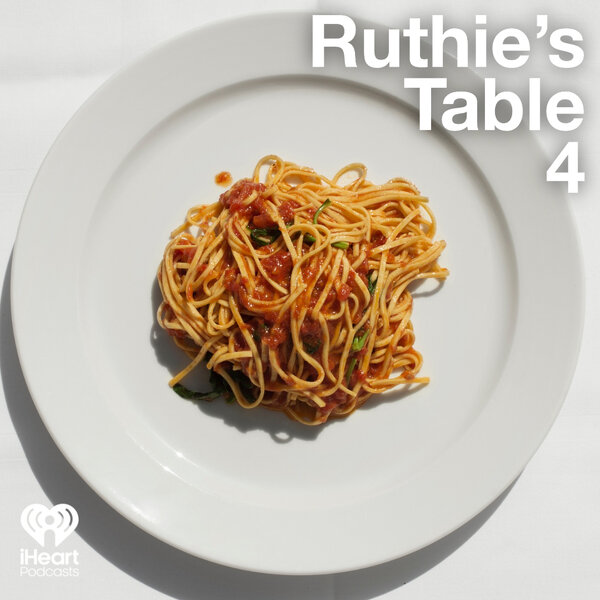
35:39Richard E. Grant: Yes. Because I have it here. Linguine with crab. Serve 10. Two large live male crabs cooked. I don't know how you'd established it there, male. Yeah, I know. That's a river cafe recipe. Three fresh red chilies, seeded and finely chopped. Juice of four lemons. Three cloves of garlic, peeled and ground to a paste. 250 ml of olive oil. 500 grams of linguine. Remove the claws and legs from the crabs. break the bodies open carefully, remove the brown meat from inside the shell, and transfer, along with any juices, to a large bowl. I get rid of most of the brown meat. Remove the white meat from the claws and legs and add to the brown meat in the bowl and mix together a tiny amount.
36:20Richard E. Grant: Add the chilies, the lemon juice, and the garlic to the crab mictuse. You can never have enough of those. Season well, lots of malden salt, stir in the olive oil. The sauce should be quite liquid. Cook the linguine in a generous amount of boiling salted water, then drain thoroughly, stir into the crab sauce, but do not reheat. Serve immediately and stuff your face. So tell me what you saw differently in Ross doing it with you. Well, Ross, I mean, he's so brilliantly fast at doing everything. And he put in dried chili and he put in fennel as well, which I'd never had, I'd never used that. And it isn't specified on your recipe.
36:59Recipe changes, yeah.
37:01Richard E. Grant: And he added a little bit of the liquid that the pasta was cooked in, into the sauce, which gave it its creaminess. Whatever it does, all the magic of science. And it was absolutely delicious. So did you miss the coriander? No, because of the River Cafe version. There you go. And that's about cooking, isn't it? Let's compare a recipe to a script. So when you're memorizing your lines, tell me about the difference between a kind of script and a recipe. Well, the exact same way. You have the recipe in front of you, But then something inspires you to add something or you go off on a tangent or you ask if the director or the writer are open to an adjunct to something or an addition or an improvisation around sections.
37:48Richard E. Grant: So it means that it evolves. It's not, unless it's Shakespeare. You can't improve on a genius, really, I don't think. And because of the rhythm and the meter of it, you would be doing a disservice, I think, if you tried to extemporize on it. Do you remember cooking for Olivia as a baby? Was food important the way you fed her? Yeah, yeah, yeah. Does she cook? She cooks fantastically. Is she? Yeah, she loves cooking. She's her mother's influence. Yeah, yeah. So we still do cook together. And she's working on your fragrance. She does, yeah. Tell us about the fragrance. Oh, I've been obsessed with smelling everything all my life, and I don't understand why everybody doesn't.
38:27Can you remember the smells of the markets? Oh, yeah. You can. Yeah. And if you go into an old-fashioned green grocer, there's one still in Twickenham that I go to every other week where you can smell the soil and you can smell vegetables and fruits in
38:46Richard E. Grant: a way that is completely non-existent in a supermarket. You have to go to French or Italian street markets to get that, as you know all too well. So I remember that smell very much. But I had a mad crush on the first American that I'd ever met in 1969 called Betsy Clapp with a double P. And Armstrong had just landed on the moon that July. So everything American was so exotic. I'd never met an American. You know, I'd seen them in the movies. So to have this gum-chewing, fast-talking, taught me how to French kiss. And I thought, well, I'll try and make her perfume for her birthday. Cool. Yeah. And, of course, I boiled up rose and gardenia petals into boiled sugar water.
39:33Richard E. Grant: And, of course, it didn't turn into osmosis itself into beautiful scent, just into a stink bomb. And then 40 years later, I was on holiday in the Caribbean, and a fellow house guest, Annie Heinemarsch, said, I've never seen anybody so obsessed with smelling everything and scent as you are. Try and make, do one professionally. So that's what inspired me to do so. Are there smells that you can't be in a room if you smell it? Cheese. You can't be with cheese. Yeah. When the cheese course comes out, I'll just remove myself. Do you? Yeah. I think it's the most putrid, disgusting. All cheese. Is there any cheese?
40:07Almost all cheese, yeah.
40:08Richard E. Grant: I can tolerate a Caesar salad because it is delicious, but that's about as far as I can go. And so if you have a pasta, you'll never have Parmesan on it? No. and I'll never eat a pizza with cheese. And you'll never eat a pizza with cheese. Chocolate is another thing that I find. The smell of it is not so, it's a bit claggy, but the taste of it is absolutely repellent to me. I think about smells and music. I can remember the song. If I hear a song, I can remember what I was wearing and where I was when I was with you. Scent is exactly the same. Scent is the same. I don't have that with scent. Scent is the shortest synaptic leap in your brain to your memory.
40:51Richard E. Grant: So you can smell something that you haven't smelled for 40 years, and like music, it will instantly take you back to the place where you first smelt that. Is there a smell, because my last question is always about, is there a food that, when you need comfort, because we all know what we eat when we're hungry, but is there, I'm going to ask you about the food, but is there a smell that if you need comfort that you want to smell? What is yours? Tomato sauce. When my son died, we all ran back to the house. Everybody was everywhere. and so all the other children and my husband, we got to the house and I was going up the steps into our bedroom and one of my kids came in and I said, Abe, put tomato sauce on.
41:33I need to smell tomato sauce cooking. I just needed to have that smell in the house that somehow there was a continuation, whatever it was. So I think that smell to me always is a sense of comfort. What is yours?
41:47Richard E. Grant: Christmas pudding. which I eat once a month. You don't? I do. You don't? You don't wait up all year for Christmas pudding? I can't wait that long. I'd eat one once a week but I'd explode. And in January, every store and shop is literally throwing them like footballs at such a discount to get. So I've got 27 waiting in my pantry at the moment. So we have your smell, your favorite smell, Christmas pudding. What is your comfort food? Baked beans. Oh, is it? Tell me about that. Oh, just baked beans because because I've had them my entire life, and you would heat them up and put them on a piece of toast.
42:23Richard E. Grant: What's yours? Probably just, if I feel a sense of stress or panic, I do want chocolate. I do find a piece of chocolate. It's that I crave. I crave a piece of chocolate. But then, again, for me it would be tomato pasta. Even if it's cold the next morning, I can have, if I have that carb of the pasta with tomato sauce, I'm a happy person. Have you always said tomato sauce instead of tomato? I go back and forth. You do? It just depends on where I am. But I'll say, yeah, you say tomato, I'll say tomato. Okay. But let's definitely not call the whole thing off. Okay. Thank you, Richard. Thank you. Wait, this is a soda?
43:04Richard E. Grant: Yeah. And it has protein? 10 grams. No sugar? Zero. And it actually tastes good? It's Sky Pop. Sky Pop Protein Soda delivers the refreshing taste you want from a real soda. Crisp and delicious with 10 grams of complete protein, zero sugar, and just 45 calories. So you're not choosing between great taste and real benefits. You're getting both in every sip. Sky Pop Protein Soda. Reach for the sky. Get your Sky Pop Protein Soda now at Target, Walmart, or Jewel Asco. This is an iHeart Podcast. Guaranteed human.
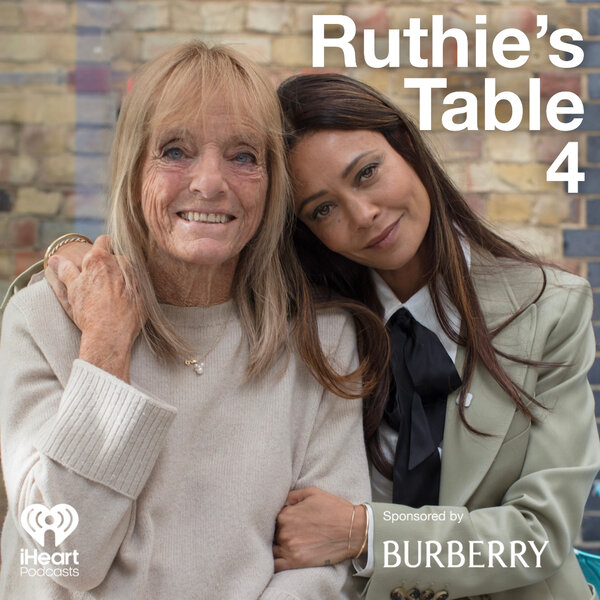
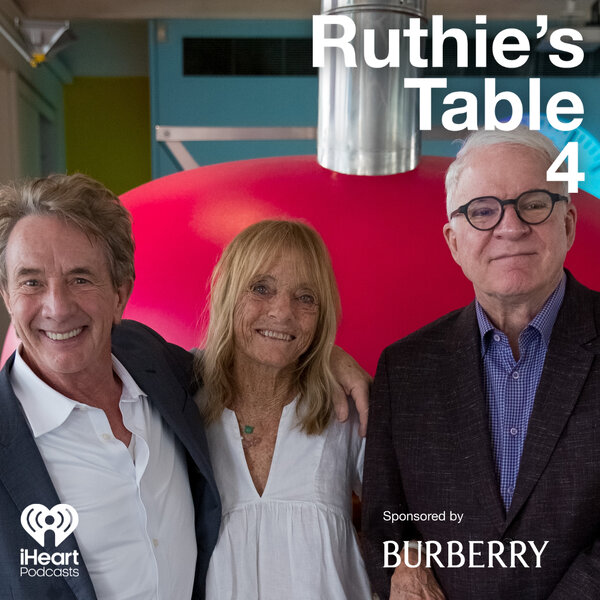
With Richard E. Grant delighting audiences on The Traitors, we’re looking back at this special episode of Ruthie’s Table 4. I remember Richard and his wife Joan in the early days of The River Cafe, coming in for lunch and sitting at the same table, always warm, lovely and absorbed in each other. More than thirty years later, Richard and I share the loss of the partners we loved. We came together to talk about family, food, friendship and, above all, the enduring joy of love.
Hit FOLLOW to make sure you never miss an episode, and join the Ruthie’s Table 4 community on social.
Instagram: instagram.com/ruthiestable4
TikTok: tiktok.com/@ruthiestable4
YouTube: youtube.com/@RuthiesTable4Pod
Shop River Café Books and more… www.shoptherivercafe.co.uk
Contact us: [email protected]
See omnystudio.com/listener for privacy information.