
 Ask ChatGPT

 Scalable
18 Feb 2026 · 34m · 15 chapters
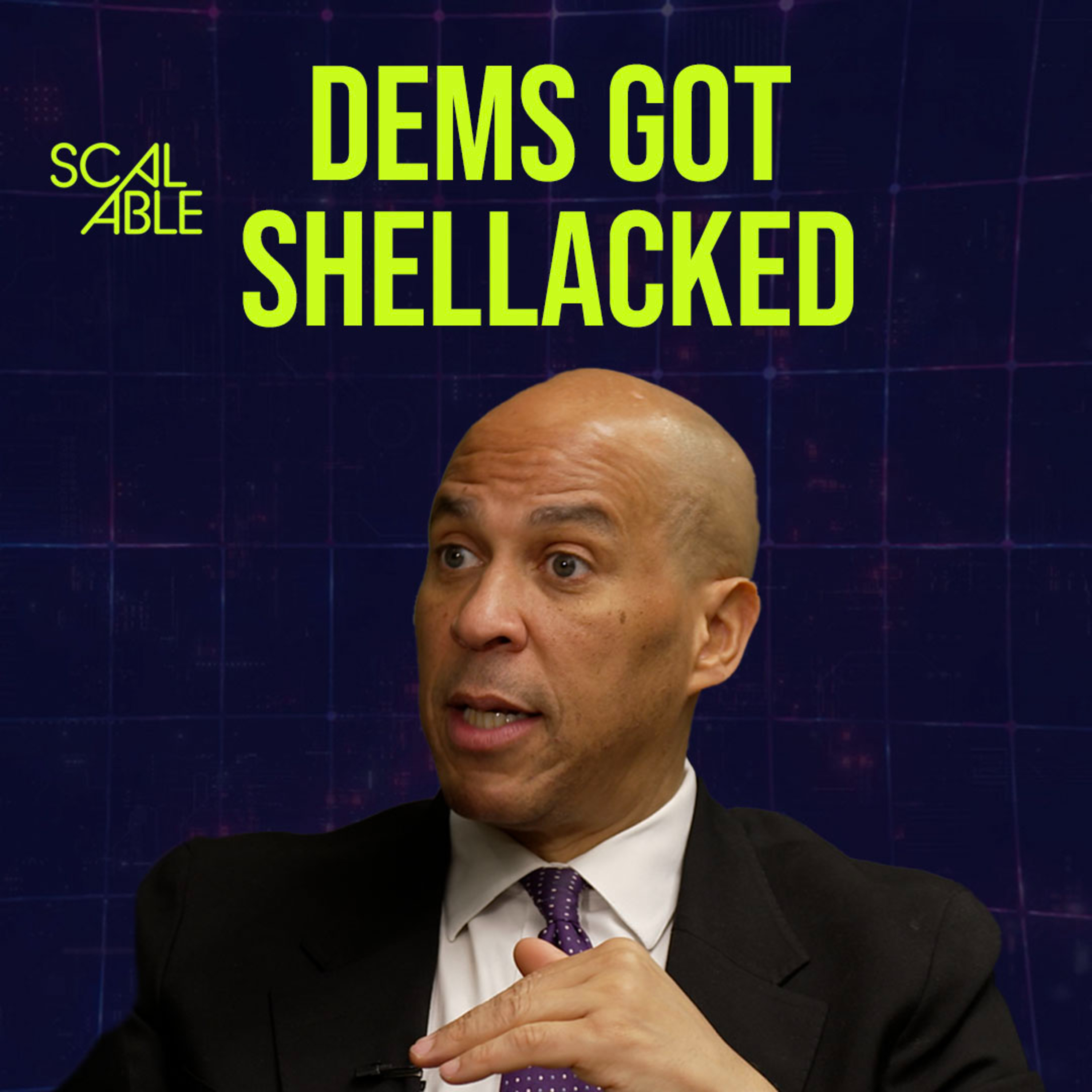
How Senator Cory Booker Convinced Democrats to Post More on Social Media
In short
Senator Cory Booker and Senate Democrats’ push to expand their social media presence via a first-ever “creator summit,” aiming to engage creators and independent media directly and improve Democratic communication online.
Guest backgrounds
Cory Booker is a New Jersey senator and former Newark mayor; he previously used social media as mayor to crowdsource city issues. The episode also references guest Don Lemon (former CNN anchor turned independent journalist, arrested while covering ICE protesters in Minnesota) and other attendees like Tina Smith, John Ossoff, Elizabeth Warren.
Key claims
Booker says Senate Democrats’ engagement rose over 430% (about 100M to 500M+). He argues Democrats lag because they didn’t adapt to where voters get news (mobile platforms, gaming/Discord). He supports teen social media bans (abject ban for 16 and younger) and calls for platform accountability against misinformation/deepfakes.
Notable examples
Booker’s “creator cauldron” idea; Democrats’ creative TikTok/YouTube/X efforts; Don Lemon’s shift to unfiltered, personal independent reporting; discussion of bot farms, AI “slop,” and Alex Preddy’s death prompting nonpolitical creators to speak out.
Written by AI. May contain mistakes.
Chapters
0:45
The Creator Summit in D.C.
Discussion about attending a creator summit hosted by Senate Democrats.
“In case you don't know us, we both come from traditional media backgrounds and have been covering social media and the creator economy for over a decade each.”
2:14
Highlights from the Event
Sharing experiences and highlights from the creator summit in D.C.
“Lemon was recently arrested for filming ICE protesters in Minnesota.”
3:40
Impressions of D.C.
Reflections on the experience of being in D.C. for the first time.
“And I've also been lucky to spend a lot of time reporting in D.C.”
5:48
Experiencing the Senate
Firsthand experience of being in the Senate, including security protocols.
“But it was very interesting to me as a reporter being in the room for the first time.”
8:08
Interview with Senator Booker
Insights from the interview with Senator Cory Booker on social media and engagement.
“And obviously, politics is a whole different ballgame than covering tech companies.”
9:26
Senator Booker's Social Media Strategy
Discussion on the effectiveness of the Democrats' social media strategy and its challenges.
“It feels emblematic of why the left has struggled to recreate the success of Republicans on social and with new media.”
14:00
The Evolution of Government Accountability
Learn how social media transformed government responsiveness and citizen engagement.
“it was amazing and it created a whole new level of governmental accountability.”
21:48
Challenges of Misinformation on Social Media
Explore the dangers of misinformation and the need for accountability in online platforms.
“Meaning that the platforms would have more accountability over what's posted.”
22:57
The Need for Cohesive Messaging in Politics
Understand the importance of cohesive messaging and effective communication for the Democratic Party.
“And as these deepfakes get better and better and better supercharged by AI, how do you combat them?”
24:28
The Role of Creators in Political Discourse
Discuss the balance creators must find between their platforms and political issues.
“I think a lot of Democrats' failures over the last decade have been because they haven't been effective communicators.”
Show all 15 chapters
26:53
Navigating the Attention Economy
Examine how the rise of AI and content saturation affects political messaging and engagement.
“I've had conversations today about the very food that we eat.”
28:00
Cory Booker's Social Media Strategy
Discover how Senator Cory Booker navigates social media to engage audiences.
“You know, across all my platforms, I have millions of followers on, I think, this month alone.”
30:00
The Impact of Social Media on Youth
Explore Cory Booker's views on age restrictions for social media usage.
“And not only I think about it, but I'm trying to teach or inform my caucus as well about how to use their platforms to break through.”
31:40
Concerns about Creator Economy and Platforms
Learn about Cory Booker's concerns regarding the creator economy and platform ownership.
“And I just want to make sure that America, I think we should move in the direction we see some of these other nations.”
33:49
Political Predictions for the Future
Hear Senator Booker's thoughts on the future of the Democratic Party and its candidates.
“I'm not sure about these prediction markets and make a lot of money.”

Ask about this episode
Get the gist, explore an idea or ask about something said.
 Claude
On Scalable, what are the key points of this episode?
Searching your listeningTranscript
Automatic transcript. May contain errors.
0:00Jasmine Enberg: Hi, everyone. This is Scalable, a weekly show about the business of the creator economy. I'm Kaya Yurieff. And I'm Jasmine Enberg. Every Thursday, we take you beyond the headlines to tell you what's happening, what it means, and why it matters. Last week, we were in Washington, D.C. for the first ever creator summit hosted by Senate Democrats who are trying to boost their social strategy. Senator Cory Booker is behind those efforts, and we sat down with him for an in-depth interview about it.
0:30Jasmine Enberg: Hi, everyone. Welcome to a special episode of Scalable, where we sit down with New Jersey Senator Cory Booker. For those of you who are new here, Scalable is a media company focused on the business of the creator economy. We write a twice weekly newsletter and publish a weekly podcast where we break down the biggest news stories in the industry. In case you don't know us, we both come from traditional media backgrounds and have been covering social media and the creator economy for over a decade each. We're also longtime friends. And last October, we joined forces and the creator economy ourselves to launch Scalable.
1:01Jasmine Enberg: Most of you already know Senator Booker, likely for his marathon filibuster, his 2020 presidential bid, or as the former mayor of Newark, New Jersey. But what you may not know is that he is also leading the efforts of Senate Democrats to expand their presence on social media and work more with creators. Yeah, and last week, we got to fly to DC to interview him about those efforts and to attend the first ever creator summit hosted by the Senate Democrats. We were part of a group of about 85 creators, independent journalists, and other industry insiders who had gathered for a day of presentations, meet and greets with senators, as well as a tour of the Capitol.
1:40I wanted to give a quick note on the room that we were in because it was very cool. It had been the stage of a lot of famous investigations, including Watergate, the sinking of the Titanic, and Pearl Harbor. And just outside of the room actually was where broadcasters filmed their hits from the Capitol and do their interviews with senators. So right outside of the room that we were in, you could see MS Now set up, for example.
2:04Jasmine Enberg: At the event, we also heard from Minnesota Senator Tina Smith and former CNN anchor Don Lemon. John Ossoff and Elizabeth Warren also dropped by. Lemon was recently arrested for filming ICE protesters in Minnesota. So he told us about that experience and also more about his transition from a cable news anchor to an independent journalist. Unsurprisingly, a lot of attendees lined up to ask him questions, including some of the biggest things he's learned in his new venture. What stood out to us, also coming from traditional media backgrounds, is that he had to unlearn a lot of what he had been doing as a cable news reporter.
2:36Jasmine Enberg: He said he started his show more like a cable news show before realizing that people wanted something unfiltered. So he made it more personal. He filmed in his home with his dogs in the background, which occasionally I I also run into issues with my dog walking around in the background. But we covered some of that, plus our takeaways from the conference in last Thursday's newsletter. Okay, Jasmine, impressions, because this was your first time in D.C. for an event like this. Yeah, it was. And I think the magnitude of what we were doing really hit me as I was landing in D.C. and I could see the Washington Monument outside of the plane window.
3:07I mean, it is not every day you get invited to the U.S. Capitol to interview a sitting senator, especially when we've been podcasters for like three months at this point. So it really just felt like this really huge moment for us. And it was also the same day that Israel's Prime Minister Netanyahu was visiting President Donald Trump at the White House. You also had Attorney General Pam Bondi testifying at Capitol Hill about her handling of the Epstein files. So again, it just felt like this really massive moment to be in DC as all of this was going
3:38Jasmine Enberg: on. It was also very fun for me because DC is my old stomping grounds. I went to college in D.C. at George Washington University. And I've also been lucky to spend a lot of time reporting in D.C. from, you know, the TikTok ban saga. I was at the Supreme Court. I've seen the TikTok CEO testify to also attending the Biden White House's first Creator Economy conference. So even among all those events, this still felt like a big moment for me because I did it independent this time. And it wasn't as cold as it was during the TikTok hearings, although it was kind of the same time of year, right? Wasn't that in January?
4:10Jasmine Enberg: It was January, beginning of the year. There was not as much snow on the ground, but much colder. I was shocked at the amount of snow three weeks after the snowstorm. That is not normal for D.C. I love the snow. I was very happy about it. But there were so many highlights from this trip, and your sister very kindly created a reel for us for all of them. But I'll give you a couple. So the first was being taken through the underground tunnel that connects the U.S. Capitol with the Senate Library. I had no idea this was there. I also had no idea that there was a tram down there that takes lawmakers between the buildings.
4:44This was completely new to me. And we were there, of course, because we were going to see Senator Booker in action on the Senate floor, which was an incredible experience. Though I do have to say that the room felt so much smaller than what I had seen on TV. And it also felt a lot emptier. And I'm ashamed to say this, but, you know, it was a very jarring experience for me not to have my phone for 20 minutes because we had to check that before we went in. Yeah, not even just phones, but Apple watches everything.
5:14Jasmine Enberg: My whole bag. And that is what is so interesting about being in the room versus seeing it on TV. I thought the same thing. I peeked into the White House briefing room for reporters when I was at the Biden White House conference. And it's the same thing. It's really tiny. And when I saw TikTok CEO show Chu testify, a lot of the representatives will ask their questions and then leave and go about their day, which was the most surprising to me. And everyone's like, oh, that's normal. Because on TV, you feel like these hearings are, you know, super packed, these explosive moments. But in reality, I mean, they're hours long.
5:46Jasmine Enberg: So if each senator stayed at the hearing all day, I mean, they wouldn't have time for anything else. So it makes sense. But it was very interesting to me as a reporter being in the room for the first time. Same thing at the Supreme Court. I couldn't have my phone in the room, so I had to take notes on pen and paper, which felt very old school. It's a very interesting experience kind of being there in person. Okay, what was the second moment? Okay, so the second moment, and this is in no particular order, but it was bonding over our aura rings with Senator Booker. So he actually wears his on his wedding ring finger, which I had never seen before, but apparently is a thing.
6:18Jasmine Enberg: Apparently it's a thing. I mean, it makes sense to me for men because for women, it's like you wear so much jewelry. It's not a big deal. to like add another, you know, ring to your finger. Yeah, well, I do not wear mine on my wedding ring finger, but he did see mine when we walked into the room and he immediately asked me if I had to check it when we went into the Senate. And the answer is yes. And apparently he has to check his every time too. So security is obviously very tight and for good reason. The other thing he asked me though was whether my aura ring tracks my naps, which Kaya, you managed to catch on camera.
6:50And I think we're playing for you right now. Does it track all your naps? Which was a very surreal experience to be talking to Senator Booker about my naps. But in case you were wondering, the answer is yes. Although I am also the worst person to ask because I pretty much only nap on planes. But I will take any excuse to talk about my Oura Ring. It's from Finland, like me, and I'm very proud of it. I also love talking about my sleep score.
7:13Jasmine Enberg: So thank you, Senator Booker, for that. I feel like I need to have an Oura Ring now. Although I'm like, I don't need an app to tell me that I didn't sleep well. Like, I know that I didn't sleep well. But the thing is that sometimes you feel like you didn't sleep well, and then your sleep score tells you you actually had an amazing night's sleep. Okay, fair. Well, Senator Booker and his team also definitely did their research on us, because when we sat down, he asked which one of us lives in Barcelona and why, and we talked a little bit about our struggles learning Spanish. Also, what stood out to me is that I'm very used to interviewing a lot of tech executives who often stick with a script, talking points.
7:47Jasmine Enberg: They often give kind of diplomatic or vague answers and often don't want to take a vocal stance on an issue. So I think what was interesting when we asked, you know, Senator Booker certain questions like, you know, where does he stand on social media bans for teens? Or what does he think about the new U.S.-owned TikTok and more? He did give us very direct answers and took a stance on those issues. So that was interesting to hear. And obviously, politics is a whole different ballgame than covering tech companies. Yeah, I mean, they have to have a point of view, right? I mean, there were certain moments where he definitely kind of went off on a little bit more of a tangent and maybe sidestepped the question a little bit.
8:23But it was, to your point, really refreshing to actually hear someone give, you know, a real answer to many of the questions that we were asked, which weren't always so easy. I mean, he was also, you know, direct and pretty open when he was talking to us before and after the interview as well. I mean, I think one of my favorite moments kind of off the camera was when we discovered that his wife and I went to NYU around the same time. And the way that happened was he said something along the lines of, I know this is an aging question, but and then asked me what year I graduated from NYU. And I was like, I can tell you my age, Senator Booker.
8:56Like, we already talked about my naps. It'll be fine. But yeah, I mean, he just, you know, was able to, you know, relate to us on a personal level as well, which, of course, is a huge part of, you know, the job that he has.
9:07Jasmine Enberg: Yeah. And I think while he was willing to, you know, take stances on issues like, you know, teen social media bans, the broader event, we really saw Democrats be unwilling to kind of position their efforts with creators as partisan, right? They were pushing a message of unity and pro-democracy, but they kind of stopped short at calling it pro-Democrat. It feels emblematic of why the left has struggled to recreate the success of Republicans on social and with new media. I mean, right wing influencers and Republican politicians, you know, aren't afraid of drawing hard lines or saying things that will offend others while the left is more likely to tread carefully.
9:43Yeah, I mean, Senator Booker was able to relate to us in person, but the Democrats haven't really been able to translate that to social media or influencers just yet. But we talked to Senator Booker all about that. We also asked him how Democrats can succeed in their influencer efforts when they really just are more cautious.
10:01Jasmine Enberg: For all that and more, here's our conversation with Senator Cory Booker. And be sure to come back on Thursday for our regularly scheduled episode. Senator Booker, we are here in your hideaway office in the Capitol because today you held the first ever conference for independent media and creators. So why hold a conference and why now? Well, I think this part of communications has exploded in a way that the Senate wasn't keeping up with. the creator economy, so to speak, is dominating more and more and growing exponentially, it seems. And yet a lot of my fellow senators weren't engaging with that communication, those communication platforms and the people that are really bringing them to millions and hundreds of millions of people.
10:43And so this was an idea that we had to really try to bring more creators in to have them engage directly with United States senators and really start to create that cauldron of creativity where we're kind of intersecting the stream, so to speak. You've also been encouraging Senate Democrats to post on their own social media accounts. How effective has that been? It has been an amazing experience. My hope when I started seeing how woefully present they were on YouTube and TikTok and all the meta platforms was to maybe see if I can get them to double their engagement with people. And the reality is they've increased it more than 430 percent.
11:20They went from having about 100 million engagements to over half a billion now. And what's exciting to me is that they've leaned in. Like, my colleagues have been extraordinarily creative, finding ways to engage with audiences that are fun and funny, informative, and have opened them up to whole new audiences. And I think the Democratic Party in particular in the Senate was not getting it yet. They didn't understand that most of our voters now get most of their news from their handheld devices, not from 24-hour cable news is definitely not from newspapers. But they had really failed to engage with people.
11:59And so now it's exciting to me to see the monstrous growth of my colleagues, especially on the platforms that are sort of ascending. X is sort of like lessening in the impact while TikTok and YouTube are expanding. to see them really lean in. It's getting exciting to me. And I'm really proud of the work that we've done in one year. So they've leaned in. Obviously, there's been a lot of growth. But how difficult was it to get them to start posting to begin with? Some of them, you know, the average age of the Senate is, I think, in the 60s. And these are people that are not native, not comfortable on these platforms.
12:32There's relatively younger senators who came up in the age of social media. And for some of them, I had to go individual senator, individual senator, and control or try to excite and activate them and their staffs to understand this. But I almost feel like they were ripe for it. And I was teasing one of my colleagues now, who's a great senator from Virginia named Mark Warner, to watch him like lean in and do front-to-camera conversations with people. He has just blossomed along with many of my colleagues. So it was a fun pulling people in. It wasn't as difficult as it was with my mom, who it's hard to get her to even FaceTime with me.
13:09But these folks understood the urgency that we would lose out as a party if we couldn't communicate where most voters really are.
13:18Jasmine Enberg: How has your own personal social media strategy changed? I was really an early mover on social media. I got a lot of awards in the early days of social media because I was a United States mayor at the time, a mayor of New Jersey's largest city. And I decided to be really transparent on social media because I realized I could intermediate the traditional media, that I could go right to my residence and that actually traditional media would follow my Twitter account. And this was really in the early days that nobody was doing that. And then I realized that I could crowdsource government in a really constructive way, that I could tell my constituents, hey, get on this platform.
13:58And if you see something wrong with the city, tweet your mayor. And it got to a point where it was really kind of collective government, we government, not e-government, where I was finding out about traffic lights out before my traffic engineers, water main breaks before my water department. it was amazing and it created a whole new level of governmental accountability. I always joke that when I came into the city as mayor, they used to measure pothole filling in like weeks and we got it down to like hours, if not minutes. And a lot of that was because people helped me identify where the problem was.
14:33And we created more responsiveness for government and then got people feeling ownership and connection to government. So that same spirit is still with me now. I'm a senator, not an executive, so I can't just fix problems. I have to introduce legislation or advocate, but sometimes I do. Sometimes people will react to me over social media or give me ideas. And so I still enjoy that. But I actually think of myself as one of the people as a Democratic senator has the most following. I actually think of myself as a creator too. And what I teach others to do in the Senate, which is be authentic on these platforms and let people get to know you as more than just a two-dimensional human being, I lean into.
15:14So I don't just talk about policy and issues of the day. I have themes that are important in my life, like kindness and decency and loving one another that I try to elevate to and think of creative ways to get my message and spirit out there as well as my work as a United States senator.
15:31Jasmine Enberg: So Democrats have historically had really strong relationships with traditional media, Hollywood celebrities, but they've lagged Republicans when it comes to creators and influencers. Why do you think that is? I think that there wasn't an understanding of the – even in the last presidential election, I think we were not showing up. I know we did very badly with young men, for example. And when I was looking at it, I realized that a lot of the platforms from Discord to some of them like gaming platforms or mixed martial arts, we weren't showing up there at all. And a lot of the voters are not every day following C-SPAN, which maybe has 10 or 13 followers.
16:11I'm joking, C-SPAN. But the reality is the Democratic Party was losing out and they didn't understand where media was moving and didn't find ways to really lean into those platforms. And so I think our party suffered as a result of it in the 24 elections. And that's when I went to Chuck Schumer, the head of Democrats in the Senate, and just said, we are getting shellacked. And I showed him the numbers, even of the Republican senators themselves and how much they were doing better than us. So I see that changing and I see a lot of people getting it. But more importantly, I have to say is I see new leadership emerging, like younger leadership.
16:52This is the baby boomers sort of last hurrah in public life because I don't think we'll have another baby boomer president. I don't think we'll have the next leaders of the Senate won't be baby boomers. New generations are coming up. And I think the Democratic Party needs a lot of change. And I think this is going to be a generational shift that's going to be a positive thing.
17:11Jasmine Enberg: What will it take for Democrats to be able to do this at scale and sustainably? I actually am excited not only that people understand the platforms, that understand where audiences are, that understand that they've got to use these platforms. But there's a whole other level that gets me very excited, which is I don't think these platforms even have fully developed yet. Like when Twitter first came out, nobody could have imagined what it would look like today. Nobody even saw new waves coming from video to that artists could use it, that musicians could use it. We're seeing it being social media platforms being used in ways that we never imagined.
17:49And new social media platforms are emerging every day that I didn't understand that LinkedIn is a great place, but people are posting more and more. Or Substack is something that now is getting bigger. So what's getting me excited is that we are just in a new frontiers of humanity where massive technological changes are accelerating into our lives from AI, robotics, automotive driving, quantum computing. And so this really favors – I know this could be staggering and intimidating to a lot of people. And we need rules for the road with new technology. But it actually could spark human innovation and human imagination and to shape these platforms and how we engage with each other.
18:31So my hope is that new leaders, in the same way that the civil rights generation understood how to use TV in a way that wasn't used before, how to get to people who are sitting on the couch and thus sitting on the sideline, that younger creators are going to start to find new ways to use these platforms to do what even our founders of this country wanted citizenry to do, to organize, to petition government, to try to create movements. And so I think the frontiers are very exciting. And I want to be one of those people that is always not only leaning forward myself, but trying to pull other people into what I think is a new civic square that's virtual.
19:09So speaking of reaching people who are sitting on the couch, one of the reasons that right-wing influencers and creators have become so successful is that they're willing to say things that may offend some people or do offend some people. How can Democrats recreate that on the left when they're just so much more cautious, both as politicians and creators? We're going to look back on this era as the same era that they used to let young people smoke cigarettes. I think these platforms have a really dark side. And for young developing minds, these platforms are trying to exploit really addictive behaviors and trying to pull people into these worlds when I think young people should not be on these platforms.
19:52They should be exploring the world. They should be letting their brains develop where they're not getting these dopamine hits that are teaching them to scroll, where they're learning deep focus and more. And what's also very scary about these platforms is as we see the loneliness epidemic expand in our countries, these platforms offer counterfeit connection. That's not real substantive human connection that can take somebody who is feeling lonely, who is feeling isolated, and give them these projections, these false projections of connection when really it's not. It's really something that could be very dangerous where exploitation can happen, where indoctrination can happen.
20:31And we need to start having a better conversation as a country. And so what I am thinking all the time is how do we counter the fact that there are entire bot farms, warehouses in totalitarian countries that don't share our democratic values out there trying to come onto our platforms and pretend that there are other Americans with the sole purpose of undermining our democracy with misinformation and lies. I go into classified briefings on this where countries who can't beat our military or can't even beat our the strength of our economy, they think that the way that they can undermine our democracy is by insinuating division, hate, extremism.
21:15And that's not just America. This is throughout the world right now. And so I think it's upon not just Democrats, but for the larger national conversation to start saying this is a place where misinformation spreads, where people should be more accountable for the lies that they spread. We have protections for these platforms that I actually don't think should persist. In a newspaper, which is a platform of old, you wouldn't be able to print the things that people are putting out on these platforms. I think that we should rethink that here so we can start doing more to correct it. Meaning that the platforms would have more accountability over what's posted.
21:51I 100 percent think that. If we are saying that, OK, we can hold those platforms accountable for trying to stop child pornography, which is disgusting and dangerous. But some of the hate speech that's out there as well, some of the misinformation, they should have obligations to address that as well. And so I don't think it's just the Democratic Party that should be countering that. I think we as a free society that had rules for newspapers, had rules for TV, had rules even for the public square, things you cannot say. I can't yell fire in a movie theater that we should have rules for the road here in these spaces and not let them become places that have that dark side, that cesspool that is drowning so many people.
22:36I do think the Democratic Party within certain bars needs to find how to fight better, how to help information get out there better. There's an old saying of an American politician said, a lie gets halfway around the world before the truth puts its pants on. Well, that speed has been supercharged with the accelerant of social media. And as these deepfakes get better and better and better supercharged by AI, how do you combat them? That's something the Democratic Party should be thinking and all of civil society should be thinking about. So the other concern, I think, when partnering with creators, especially on, you know, political messaging, is that it can have some unintended consequences, such as less cohesive messaging, which has been something that Democrats have historically struggled with.
23:21Yes. Even, you know, more serious, creators can reshape a narrative. Today, you have Pam Bondi on Capitol Hill who is testifying about the handling of the Epstein files. And of course, right-wing influencers had a really big role in shaping that narrative. Is this something that you're worried about at all as you're thinking about working with creators? I absolutely am. Look, there are creators in the conservative side that are paid, that have close relationships. The Democratic Party, I think, should have creators on our side that are doing the same. But there is a space that, you know, where do you create accountability?
23:57Where do you create cohesive messaging? What does news and information look like in this new world where you see traditional platforms crumbling? How do you create trusted information? I don't think we all know the answers to these questions yet. And it concerns me deeply. And it's why I think the Democratic Party has failed a lot because they, as you sort of alluded to, they fail to figure out how do you drive messages that are cohesive, that are part of a narrative, that tell a compelling story. I think a lot of Democrats' failures over the last decade have been because they haven't been effective communicators.
24:34And effective communication is a lot of things. It is both the medium. It's the messenger themselves. It's the message. It's understanding the power of culture. It's so many ways that different ways that Democrats, I think, have failed to rise to the urgencies of our time. And so I don't have a good answer for you beyond my own team's focus on these issues. And this is why I wanted to ascend to leadership within at least the Democratic senator caucus so I can start helping my team in the Democrat, the 47 of us, rise to this moment in a ever-changing new frontier moment where we are not exactly sure what the future looks like.
25:15I wanted to try to help the 47 of us start to try to better define that future.
25:19Jasmine Enberg: Another reason that creators are nervous about speaking out on political issues or supporting candidates is because they don't want to alienate audiences. They risk brand deals potentially. They don't want to be shadow banned. So what's your pitch to kind of nonpolitical creators to use their voices? It is hard in this new economy if you're rising up. And I've seen this with creators actually have this conversation with their audiences, especially even after Alex Preddy was murdered. I saw people that I follow that have nothing to do with politics. I like their content on other issues. suddenly say, I'm sorry, I have to comment on this.
25:52Jasmine Enberg: And we noticed that too. Yeah. And so I don't know what to tell you. I think there's a lot of existential threats to our democracy right now that are going on. I think there are unprecedented attacks on not just basic constitutional principles, but even on the media. I mean, when Don Lemon got arrested for trying to cover something that was happening, that doesn't happen in our country. It reminds me what I've seen, the erosions in the freedom of the press and free speech rights in other countries, whether it's in Turkey, where I saw the people being jailed for fake news in some other democracies.
26:26I've seen this democratic backsliding. I think all of us have to make a moral choice in times like this, where being silent, I think, has a cost to our society. Being silent can make you, in some ways, be complicit in some of the things going wrong. I understand the importance of picking battles. I always tell people for your mental health, one of the best rules I have is you do not have to attend every argument you're invited to. But I think this is a moment where if you have a platform, you should really be wrestling with what you choose to speak about in the realm of politics because politics affects everything from I had meetings today about maternal mortality.
27:09I've had conversations today about the very food that we eat. All of it is being touched by the world that you are in right now in the Capitol and the decisions that are being made by an executive that is trying more and more to act with a greater authority, I would say almost in an authoritarian way. So you brought up nonpolitical creators speaking out against ICE after the fatal shooting of Alex Preddy. How are you thinking about building on those organic moments? I have these conversations with my team all the time. Like of all the things happening, where do we choose to speak? And I think there is these weird waves that go through.
27:45We all witness it. Like everybody is talking about this. Well, how do you keep attention on Sudan, for example? How do you keep attention on the things that people aren't talking about? And so I have a lot of conversation and a lot of thought I wrestle with every day. You know, across all my platforms, I have millions of followers on, I think, this month alone. I have two Instagram. One is an official Senate account and one is here. On the unofficial one alone, we had 70 million views in a month on our content. So I think about this all the time about what to speak about, what not, how to use this platform to draw people's attention.
28:22When there is a wave going through, do I jump on a wave and be a part of that? And again, you know, I just really believe this is a time for us all to be wrestling about how do we use our privilege, our connections, our platforms to speak to what's going on. And if you're not struggling with it, I think that's a sign of a problem.
28:41Jasmine Enberg: We're also in this moment where there's just more content than ever before. There's more creators than ever before. Now you're dealing with AI slop, right? Last year we started to see this proliferation of AI content. So how does that impact your strategy? I mean, there's more noise than ever to break through now on social media. Well, I think Chris Hayes wrote a great book about like the attention economy. And I think we're really in that. Like, how do you grab attention at a time that all of us are feeling overwhelmed? You know, again, I was up last night really concerned about some issues happening in the Senate right now.
29:12But I also found myself scrolling and I'm like, oh, my God, half an hour just passed. And where did that half an hour go of my life? So I know all of us are feeling this information overload and even questioning who to listen to. And so that's why I think this space is so compelling because I'm not sure how this all settles out. But I do know for someone who is trying to drive information and understanding and awareness, I've got to think about that. And in this very room, I was having a conversation with my staff who wrote me a script about an issue that's very important to me. But I'm like, I'd scroll past that if the script, if we record it.
29:52So all the little things that creators think about, what's the hook? How do you hold people's attention? What length will people watch and listen to? We are thinking about that right now. And not only I think about it, but I'm trying to teach or inform my caucus as well about how to use their platforms to break through.
30:08Jasmine Enberg: I want to go back to something you said about young people on social media because we're seeing, you know, Australia with a historic ban for teens. And now we're seeing countries in Europe, including Spain, follow that. What do you think about that? And do you think that could ever come to the U.S.? I hope it does. If I could make a law and pass it on my own and not have to deal with 199 other members in the Senate and 435 over there, I would put a ban here on young people being on these platforms. How do you define young people in that scenario? That's a great question. Now you're going to figure out where we draw the line.
30:36And so I'm one of these people saying there should be an abject ban of 16 and younger. I think that learning about social media while you're young is important. Learning how to filter information, learning that, OK, to ask critical questions, starting that later in high school before people plunge into adulthood at 18. But I think there should be a flat ban somewhere around those mid-teen years and definitely before. When I say things like that in audiences, parents applaud because they feel out of control. And even parents that want to keep their child off social media know when they hang out at their friend's house, if they have access, it's going to undermine their parenting rules.
31:16So I'm sorry to say this to a lot of young people, and I've seen some really young influencers that are doing great things, but the data should be what's controlling this. The science actually should be what's controlling this. And all the data I look at from objective sources, not these companies, these billion dollar companies themselves, although some of their leaked data has informed my opinion. I really do believe that the science is showing that these are destructive platforms for young developing minds. And I just want to make sure that America, I think we should move in the direction we see some of these other nations.
31:53Jasmine Enberg: All right. We're going to wrap up with some rapid fire. Rapid fire. Okay. What news and political creators do you personally follow? I just saw one of them today and I hugged him. Aaron Parnas is phenomenal. My Spanish is not so good, but Eduardo Espina, he's just got an amazing platform that I love going to and trying to practice my Spanish. I love V under the desk. There's a lot that I, a lot of the old traditional, old media people who've come over to new media I follow as well. Recently, I've been listening to Don Lemon because of what happened to him too. What do you make of Governor Newsom's social media strategy?
32:24I think it's creative and I think it's hilarious. And I actually know that that's what's getting what's breaking through is not his whole social media strategy. He's another person that has many touch points. But as far as what's got a lot of attention is his mocking of the president. More power to him. I think it's it's it's important exposure that he's giving the president of how outrageous what he says and tweets is.
32:47Jasmine Enberg: What are your thoughts on the new U.S. TikTok? I have a lot of concerns. I have concerns when billionaires like Elon Musk or what have you get massive ownership stakes and then change the algorithm in ways that make them less free, fair platforms. But whether it's their own political biases or business ambitions begin to undermine what people who are on those platforms love is the freedom and openness of them all. I I think we have bad problems with the creator economy in the sense that creators are putting this extraordinary content art that they're not getting a return on the value that they're creating for these companies that are growing in stratospheric ways of wealth.
33:30So I think we need to give more leverage to creators in many ways in ensuring that their platforms are free and fair and in finding a way to monetize the content that they're creating. Who will be the Democratic presidential candidate in 2028? If I knew that, I could go on some of these other things. I'm not sure about these prediction markets and make a lot of money. I think there's going to be a lot of really great people running on our side, a new generation emerging, trying to define what the Democratic Party needs to be today and into the future. I think we need a renewal within our party.
34:07I think we need people that can really help the larger nation redeem the dream of America, because right now our country, I think, is in a crisis. But often out of dark, difficult times comes these massive leap forward for our country. And I think whoever wins the nomination should be the kind of leader that can help bring our country into a new era.
34:28Jasmine Enberg: Thank you so much for your time, Senator Booker. Are you kidding? Thank you both. It's been a pleasure to have you. Thank you.
From the publisher
Kaya Yurieff and Jasmine Enberg sit down with New Jersey Senator Cory Booker to discuss why Democrats still lag Republicans when it comes to using social media and working with influencers—and what he's doing to change that. Booker also gives his take on the new US TikTok, whether he supports social media bans for teens in the US and what he makes of California Governor Gavin Newsom's social media strategy.
Sign up for our newsletter for free at: https://scalablepod.com/subscribe
Hosted on Acast. See acast.com/privacy for more information.
More from Scalable
All episodesWe use cookies.They keep VO running smoothly and help us improve it. Privacy policy