Ask ChatGPT
 Scaling Stateside
27 Oct 2026 · 49m · 22 chapters
CFO-led playbook for expanding a European fintech (Onfido) into the US, from “zero revenue” to scaling, covering workstreams, product localization, hiring, compliance, data residency, and board-level decision making.
David Clarke, CFO at Onfido (joined ~2018) leading US expansion; previously CFO/finance leadership at PayPal (grew Europe revenues from near zero to $2.5B; opened 8–9 offices), then Skrill/CBC (turnaround and sale within under two years). Earlier career in tax/financial services (Coopers/PwC, Cantor Fitzgerald, dealer broker) and tech companies.
US expansion requires a detailed 3-year plan and assumptions; “shoot for the stars” (avoid conservative underpromising); US fraud expectations and customer experience differ from Europe; compliance and data processing can’t be underestimated; hire strong US leadership first (e.g., CRO), then sales, legal, FP&A, operations.
Onfido exited a non-scalable background-check model; early US sales hires from Cisco underperformed; product localization shifted from passports (common in Europe) to driving licenses (common in US); state registration fines; data processing moved from India to Omaha to keep US customer data in the US; board/analyst support from Gartner/Forrester to size IDV market and compare vendors.
Written by AI. May contain mistakes.
David Clarke shares his professional journey leading to Onfido.
“It provides a lot of detail around the journey ahead.”
Discussion on what Onfido was like upon David's joining and challenges faced.
“And I guess the thing just to kick off is understanding the Onfido US story.”
David describes the scaling process and product development for the US market.
“And they said, well, it doesn't really exist yet.”
Exploration of the differences between expanding in Europe and the US.
“And I was used to that from the PayPal days where we'd one created an electronic money institution as a regulated business.”
Discussion on how expectations in the US market differ from Europe.
“And as you know, with the eight-hour time difference, there was a really small window for them to be able to join some of our all-hands or executive meetings.”
Discover how cultural differences impact product strategy in the US versus Europe.
“And so we had to really think about the products.”
Understand the key learnings from the initial attempts to expand into the US market.
“we need to focus on driving licenses, whereas we were focused on passports.”
Gain insights on what boards should consider before entering the US market.
“And that was because we were typically conservative being from Europe where we said, well, actually, we want to under-promise and over-deliver, whereas our friends in America would over-promise but still deliver.”
Learn about the essential resource planning for successful market expansion in the US.
“We all knew that Hussein in particular, who is such a visionary, somebody who is so smart and can articulate a vision to not only investors, but also to potential customers.”
Explore the challenges related to data processing and customer concerns in the US.
“And although we did not know the answer to everything at the time, and we hadn't worked through everything, on the basis, we probably had six months to be able to go through this before launching.”
Receive strategic advice for CFOs on how to approach US market expansion effectively.
“And then they start to effectively recommend certain vendors to customers and produce white papers, which was really helpful for us starting to grow that business in the US.”
Learn about the importance of hiring and localizing for successful US operations.
“And it is so easy to burn money in the US.”
Understand the factors to consider when selecting a location for your US office.
“So we used to do a rolling three year plan and let them understand those assumptions and let them challenge you and push back.”
Learn about the complexities of U.S. compliance when expanding from the UK.
“Sometimes it can be based whether you happen to have passed through it that particular day.”
Discover effective hiring strategies for successfully entering the U.S. market.
“I would always remember the next time around whether any specific things you touched on, like sales tax, estate registrations, appointment law.”
Understand the importance of leadership and cultural fit in U.S. hiring processes.
“And I think moving on to the talent piece, because you mentioned location and talent, you know, very much kind of intertwined.”
Explore the differing mindsets of CFOs in the U.S. and Europe regarding growth.
“And then actually, yeah, we wanted to make sure that we were hiring salespeople.”
Learn how to identify and address constraints that hinder business growth.
“It obviously depends on the stage of company that you are and how big you are and what the risk is.”
Understand how having a U.S. presence affects venture fundraising efforts.
“And that's something I think all CFOs, I think that lens would be super helpful as they're trying to think about how to be successful in the US.”
Learn how having a presence in the US can influence boardroom experiences and investor relations.
“And then I guess the follow-up question to that is once these brands come on the cap table, how did that change the experience in the boardroom?”
Gain practical advice for CFOs on preparation strategies for launching in the US market.
“This has been super helpful and really appreciate you making time for us.”
Wrap up the discussion with insights on communication and how to connect with David.
“are getting a bit frustrated because all the resources are focused on that.”

Get the gist, explore an idea or ask about something said.
 Claude
On Scaling Stateside, what are the key points of this episode?
Searching your listeningAutomatic transcript. May contain errors.
0:13Hi, everyone.
0:14Matt Oxley: David Rose with USXP here. I am today with my co-founder, Matt Oxley. And a new initiative we're launching is we know that when the decision to expand the US, We know that's typically made at the board level. And we also know that once that decision is made, the implementation of that is almost always handed to the CFO. So one of the things we want to do is help better prepare CFOs for that execution journey around U.S. expansion. We're doing that through a few ways. We've launched just recently our CFO's guide to U.S. expansion. It provides a lot of detail around the journey ahead. We also want to talk to some people who've already been on the journey in the U.S.
0:55Matt Oxley: as a CFO. And we're very happy today to have David Clark join us. David was the CFO at Onfido and led Onfido through their U.S. expansion journey. And we're going to have a discussion today and get David's firsthand perspectives on a lot of these topics that are really important for CFOs when it comes to expanding to the U.S. So with that, David, thank you so much for making time to join us today. Please introduce yourself. Tell us a little bit about your background and tell us where in the world you are today. Yeah. Hi, David. Hi, Matt. Thanks for asking me to join you. So I'm here in sunny Rygate today, which is in Surrey, south of London, not far from Gatwick Airport.
1:33And yeah, just to tell you a little bit about my career. So in some respects, it's the traditional accounting qualification with a company called Coopers and Libran, now PwC. And I spent my three years qualifying with them in tax and small businesses, but also being in the city doing quite a lot of financial services business. And after about seven years, I was going to go to Australia with them and I was very tempted. And then one of my clients came along and said, why don't you join us? We've got a new role that we've just started advertising for in Singapore. So I joined a financial services inter-dealer broker, spent three years in Singapore, traveling every week to Tokyo, to Australia, to Malaysia, to Hong Kong, all around the region, and really loved that.
2:22And then I came back to London, spent a bit of time with them. And in total, I moved on to Cantor Fitzgerald and other financial services into dealer broker. And in total, I was with those firms for about 11 years. But I suppose that watching the Wolf of Wall Street is a bit different from living it. And it was a bit too racy for me. And I started to shift gears and went into technology and worked for some of the fast-growing tech companies, new era of network and broad vision. And again, almost looking at it in a slightly different way, so coming from the US and going to Europe. And then I got a call from a headhunter about a job at eBay.
3:05And I went along, I'd heard of eBay, and they said, oh, you're far too qualified for that role. But we've got this small company we've just acquired called PayPal. and we need a CFO. And I was very lucky to be with PayPal for 10 years, growing revenues from pretty much zero in Europe to$2.5 billion, opening probably eight or nine offices across Europe. And it was just a really great time. I was lucky enough to work with some fantastic people and they taught me an awful lot. And that experience really set me up to go to a company called Skrill, CBC, private equity, big private equity, company, asked me to go in as the CFO.
3:45We did a bit of a turnaround, grew the company, sold it within under two years to one of our competitors. And then I thought I'd retired until I got a call from Eamon and Zane about going to work at Onfido. And they sold me a story about it. And of course, having worked in financial services fintech, I understood what that product could do and how beneficial it was going to be and so they said they'd take me for as much as i could offer and it started off being two to three days a week taking my dog in as well and then that expanded to almost being 24 by 7 by the end of it um and uh yeah really a great experience which i think we're going to go into a little bit more detail as um as we develop the webinar what a fantastic story and some amazing kind of companies you've worked for.
4:39And I guess the thing just to kick off is understanding the Onfido US story. And I think just from, I think, memory, you joined in about 2018, and they've been in the US for a number of years. So what was in place and what was still needed? What did you, you know, I guess, absorb when you were there? What were those challenges? Well, I think it's interesting to look at what Onfido was when I joined back in 2018. And I still remember to this day wandering in and we had a, they had weekly all hands call. I joined on that day and was asked to stand up in front of everybody in a very crowded room and talk a little bit about myself, but more importantly, listen to where they were.
5:32And founders are very good at explaining basically what they aspire to have rather than what they actually have. And so when we started looking at what the business was at that stage, yes, they were doing a little bit of research in the States. I think they've got a culture carrier who had a bag, was wandering around and chatting to people and trying to understand the market out there for this IDV business, which actually, when I said, well, can I have a look at the product? And they said, well, it doesn't really exist yet. And what Onfido was in those days was really a background check business, which had no possibility of scaling because you paid a fixed fee.
6:11It was a government fee every time you did it. So it didn't matter whether you did 10 or whether you did a million, you were still going to have to pay 35 pounds, I think, for every check. So we had to exit that business and really focus on idv so when i joined we had zero revenue we had somebody in the us that was knocking on doors trying to understand the market but actually there wasn't a lot there so um i don't know um if everybody had watched uh hussein's uh interview with you but um one of his co-founders and i think that's a very good thing that we'll come on to later that there were three of them, Eamon, Hussein and Rahul, had done his degree stroke masters in identifying animals in the wild using this what we came to know as facial recognition technology.
7:01And so they were then trying to apply that to documents and to faces and realized that with all of the growth in online businesses, we actually needed to be much better and improve the user experience around identifying and confirming who somebody was. Because when you're standing opposite somebody, it's pretty easy to see whether they are who they say they are. But as we know now, the amount of fraud that can go on on the internet, you need to be very sure who you're dealing with. So I would say it was, you know, it was very nascent back in those early days in terms of what they could do. But the great thing was they'd hired someone called Kevin Trilley, who was the chief product officer.
7:45He was a great, great guy, very smart guy. He was based in San Francisco, just across the Oakland Bridge, I think it was. And really a classic Californian technology person who really could talk and sell you a vision. And his job really was while the engineers were still working on how to get the technology to work was to come up with products that he thought could integrate with potential clients moving forward. David, when you, as you just said, when you kind of picked up the US expansion journey, when you joined us, it was fairly nascent. And obviously you scaled hugely over the kind of the following years.
8:27And you said that you had individuals involved, the gentlemen that kind of lived over the Bay Bridge. I guess I'm just looking for kind of what happened next. What was their kind of those chapters of growth? Because I'd just love to hear kind of sequentially how that happened. So I think if we kind of step back a little bit, once we'd actually started to develop a product, we found that it was selling in the UK, particularly financial services clients, particularly a lot of online businesses. So every time we had a board meeting, every time we got together as a leadership team, we would talk about the fact that the U.S.
9:09was the holy grail. We knew that they had more e-commerce businesses in the U.S., more financial services businesses than pretty much anywhere else in the world. But we knew that, first of all, we needed to start generating some revenues and prove that we actually had a sustainable business that could grow. And then I think what we did was we realized that clients, and we had a number of big clients that were early adopters of our product. So people like Monzo, people like Revolut. And they actually were expanding into Europe. So the first thing was that they said, well, we want to go to Germany.
9:48We want to go to France. And so that actually gave us a pretty good playbook as to what it was like to go into a new country. And I think in your guide, which I have read, which is fantastic, it talks about perhaps 58 or 60 different work streams. And I was used to that from the PayPal days where we'd one created an electronic money institution as a regulated business. We'd then done a banking business in Luxembourg. And so we were opening offices, we were doing these large projects, and they were all multidisciplinary. So you need to make sure that your legal team have got the right entities set up.
10:26You need to make sure that your tax team understands transfer pricing, that your finance team understands a charter account and can produce whatever reports it needs to. But obviously, most importantly, you need to make sure you've got product market fit. And when you're going to Germany, when you're going to France, when you're going to Spain, Italy, whatever, you need to localize the product, you need to talk in a way that people understand. So we always knew that the US was the big prize, one, because of the total addressable market. Probably around that time, it was$1.5 to$2 billion total addressable market globally, of which 50 % would be in the US.
11:08So$1 billion of addressable market in the US, probably 30 % of the remains, so$300 million in Asia and$700 million in Europe. And so we wanted to get some credibility, understand those various steps. And then I think we found out that Hussein had been over there. I think he told you that his parents were living in Los Angeles. And he said, oh, I've just hired three people from Cisco in sales. And we said, oh, OK. And we then had to try and find a way to be able to onboard them. But interestingly, when we started to share some of the collateral that we would have for sales and when we started to share how we were going to potentially pay them, what the entity was, when we wanted them to jump on calls because he'd hired them all in San Francisco.
12:00And as you know, with the eight-hour time difference, there was a really small window for them to be able to join some of our all-hands or executive meetings. Well, it turned out that actually with Cisco, it turned out they were order takers. They'd done lots of marketing. Everybody knew the name Cisco. They just turned up and said, well, what product do you want? How how many do you want and pack their bag and go away? Whereas actually selling the Onfido product was a little bit more difficult. We didn't have any money to be able to spend on marketing. And culturally, I got the biggest shock when I saw some of their expenses.
12:34And culturally, they weren't great. So unfortunately, they disappeared after a relatively small amount of time. And we had to start again. If you had to describe this, because obviously you went to Europe, And then you went to the US. What are the major differences between the two? Because I think I picked up, it's a really good test bed in Europe, Germany and following the big banks, which is great. But then was there a shock when you came to America? Or did all the lessons that you'd learned from Europe transcend into the American expansion as well? Well, so we had learned a lot of things. and we'd got our checklist of 50-odd, 60-odd work streams going into Europe.
13:22But actually, back in those days, when we were still probably part of the EU, there were actually quite a lot of things that were relatively easy. Most of us, while we maybe are not all fluent in German or French or Italian, actually, a lot of them are fluent in English. And so they could understand that we didn't have to localize the product probably as much as we thought. So then we come to the US where we think that we speak the same language, but actually, you know, whether it's an elevator or a lift or the underground or the tube, perhaps we don't. And so the expectations are different. And so we had to really think about the products.
14:04And in Europe, everybody was worried about preserving capital. And you obviously talk a lot about that. And so they want to minimize fraud. In the US, I think their understanding of fraud was much better. And they were much more focused on speed of execution and the customer experience rather than what we were used to focusing on. And so one of the things that we had to do was to change our products and increase the level of automation. and for our business it's all about trying to use the machine learning ai to recognize a face or a document and give a response to a a customer as quickly as possible to say this is good this is bad or you need to do further work and the way that you would want to do that is make sure that in in europe passports are very much a normal kind of um document that people would use whereas in the US, as you probably know, probably only 30 % of people have a passport and it's all based on driving licenses.
15:05Well, we just kept getting hit by all of these culture shocks that, okay, we need to focus on driving licenses, whereas we were focused on passports. And then of course, we thought that 51 states in the US were all going to be the same. And we suddenly, the first time when we started to think about it, and we started to get a few fines appearing from states for not registering. And so, yeah, there were an awful lot of learnings.
15:36Matt Oxley: David, I know you have a lot of great experiences as a CFO, but you also do board work now. So you have that unique lens and kind of thinking through the process when a company comes to the US as a CFO, as a board member, what are the things that a board and exec team should be looking at before they make the decision to come to the US? I mean, obviously, it's a huge market. There's got to be some other decision points or other metrics to look at. What would you look at as a CFO or a board member about what should the board be looking at before they actually pull the trigger? Well, I think that you're absolutely right.
16:13So I'm a non-exec director at a company called Copper, which is collateral management for digital assets. And so I see, I suppose I have a different perspective now. I always used to be on the board as an executive and having to explain to other board members what was going on. And now I'm the board member. And you realize when you are a board member that you you aren't there day to day. You don't see everything that's going on. There's an awful lot of trust that you have to have in your executive team. And you only really see what they present to you rather than having a much bigger and fuller picture.
16:52But I think when you're going to the States or expanding anywhere, I was a great believer in three-year planning. That was drummed into me from my early days working at PayPal when we'd go to the US for strategy and three-year planning sessions. And you'd have to present what you thought you could do to be able to get investment into Europe. And although we were probably the fastest growing region and the most profitable region of all of PayPal's companies and regions, actually, the investment we got after that first proposal that we came up with wasn't as much as many of the other centers. So the Asia or the US.
17:38And that was because we were typically conservative being from Europe where we said, well, actually, we want to under-promise and over-deliver, whereas our friends in America would over-promise but still deliver. So very quickly, we learned that you have to shoot for the moon or shoot for the stars. And if you hit the moon, that's okay. But if you say you're kind of going just a few miles down the road, that's really not good enough. So I think from a board perspective, what you want to see is a great three-year plan. We all know that it takes time for a business to grow, to become established.
18:12You want to see that that plan has been well thought through and really understand the assumptions or what you need to believe in to be able to support it and give the execs the support and encouragement they need. And so clearly making sure that the total addressable market is materially enough for you to want to go there. In our case, we knew that with e-commerce us being so large in America, it was definitely going to be well worth going. And in fact, I was looking back at some old materials that I happened to find, and it just showed that we were going for the US at 2 % of total adjustable market in one of the first years that we were going there, or the end state after three years, which is fantastic.
18:59We also knew that there were a number of competitors in the US. And actually, they were coming to Europe and trying to eat our lunch. And so you could almost regard it as a little bit of a defensive move to go to the US and try and take them on in their backyard, as opposed to them coming over here. I think you want to also have a look at resourcing and capacity. We all knew that Hussein in particular, who is such a visionary, somebody who is so smart and can articulate a vision to not only investors, but also to potential customers. You have to make sure that the business can cope with him being in the States for so much of those early days, probably 70 to 80 % of his time for the first 18 months or so.
19:47And that's where actually with Onfido, having Eamon as the chief operating officer and a co-founder Rahul as the chief technology officer originally but then just becoming one of the team as we brought in people that had a little more experience at Rahul in growing the business so you want to make sure that you've got the resourcing right and that you've got enough of a playbook that's working that you can actually take to the US and and localize it so that your sales team can actually sell and be effective. But also, you've got to give them a product that works in the US and that you can support it.
20:29So it's about your pre-sales, it's about your sales, it's about your customer relationship manager afterwards, and it's operations. And another issue that we found very early on is something that's not even ingrained in law or state or federal or state law was around data and data processing. And there were so many issues with so many customers who were very sensitive about the data being processed outside of the US. And so when I started at Onfido, we had about 60 or 70 agents that were based in India that were looking after the business. By the time I left, it was almost 2 ,500 agents that were out there who had to be trained, who had to have the technology to be able to review the documents and the faces.
21:21And we built some really great partnerships. But a lot of customers in the US, even though it wasn't federal or state law, were not happy about their data leaving the US. And so we gave up in the end trying to convince them. And what we did was work with our business process outsourcer in India to set up an operation in Omaha in the US so that all of the US customers could have their data processed in the US. And yeah, we did sit down and think a lot and presented to the board, not in detail, but obviously the high level work streams that we were planning to work through when we went to the board, we obviously showed that we were taking it seriously.
22:10And although we did not know the answer to everything at the time, and we hadn't worked through everything, on the basis, we probably had six months to be able to go through this before launching. It showed that we were taking it seriously, that we understood the various work streams and requirements that we would have in the US. And it gave us time to actually work with people like Gartner and Forrester to build their kind of framework around IDV because it was so nascent that people didn't really understand it. And so we spent quite a lot of time with them explaining what it was. And then suddenly they started to help us come up with the total addressable market, which to be honest, up until then, we'd done on the back of an envelope.
22:55And so we got them to help us. And then obviously, once you start to do that, then they look at your offering compared to Gmeo and MyTech, et cetera, some of our competitors. And then they start to effectively recommend certain vendors to customers and produce white papers, which was really helpful for us starting to grow that business in the US.
23:18Matt Oxley: We see a decision point, David, happen a lot of times where a company will start off in UK or Europe, and then they'll have a certain amount of success, and then they'll raise a larger round of capital explicitly to go to the U.S. But a lot of times there's not a plan. It's like, oh, we've raised, we have to go to the U.S. What would you advise a CFO who like this lands in their lap? Like, how should they go back to the board? And the board comes and says, hey, David, great news. We're going to the U.S. How should the CFO frame that with the board to kind of give them a framework around how they should do it or how should you think about the timing of it or those sort of things versus just like, okay, we raised a round, go.
23:54Matt Oxley: Like, how would you tell a CFO to think about that? I think because the prize of winning in the US is so big for many companies, there is a natural temptation to just go. And I think most boards will appreciate the fact that you have identified that there is a significant opportunity. But if you're going to do it, you want to do it right. And it is so easy to burn money in the US. It's very easy to hire ahead of the curve as we did on Fido the first time that we did it. And that's expensive. And you realize that to localize your product, to localize all of your people benefits, so whether it's your pension, your health care, your stock option plans, all of those need to be localized for the US or you have to have an answer.
24:52And to be honest, you don't always need to have the exact answer when you do start that particular process. Most employees, when they're joining a startup or a scale up, I suppose, as you define us, they understand that you're not going to have everything in place. And that's part of the attraction, not only in terms of compensation, but also the excitement and the ride. And so they will accept quite often that you might not have everything in place. But being able to go to the board and say, we've thought about this. We recognize that there are some decisions to make. We need to think about where we want to be based.
25:29We need to think about realistically what we need to do for our product, how long it's going to take to hire people in the US. And you always want to be able to hire not just your salespeople that are going to be able to sell. but one of the first hires that we had in the US was our corporate lawyer. And one of the other second ones that came in were from a financial planning and analysis perspective, because I've always wanted to make sure that your FP &A team are based with their customers. And so, and it also gives you a bit of a check and balance when you start to see the pipeline being populated, whether they're following all of the medic principles that we were using elsewhere in the group to be able to roll those out.
26:17And you then need to make sure you've got your pre-sales. And so actually having our chief product officer based in San Jose or San Francisco, it meant it was easy for him to join many of those initial calls with customers to set the scene and he could talk a lot about it. So yeah, I think showing to the board that you've thought about so many of those issues, You have a plan in place and you're going to come back to them with a fully work through example of what that means in terms of this year's budget and overall three year plan. So we used to do a rolling three year plan and let them understand those assumptions and let them challenge you and push back.
26:58And I love it when you get people who've had the experience of doing it before and that can help you and avoid some of the road bumps or speed bumps that you might otherwise hit. And then if I may just dig into a couple of points there, you mentioned San Francisco. Location is obviously a huge element when you're expanding. Where do you create your HQ in your office? What guidance would you have for other CFOs about establishing that first U.S. office location? Well, I think there's a number of things that you can think about. You can think about cost, which obviously from a CFO perspective can quite often be an issue.
27:43But actually, it's much better to think about perhaps where your customers are based and how you can be close to them and avoid some of those travel expenses. Because the U.S., many of us forget, is a very big place and it takes a long time to get around there. So thinking about where your customers are based, thinking about the talent pool. so one from you know are you hiring sales people and they have to know customers on in financial services or do they need to know tech companies you need to think about time zone so for us being based in london and having a weekly all hands if you do have that on the west coast it's exceptionally difficult for people to join in and to actively participate whereas if they're on the east coast with a five hour time difference it makes it so much easier and i think you want to think about some of the local state requirements and so i talked earlier about some of the shocks that we received you know each of the states from memory had different requirements as to what constitutes sales so sometimes it can be where the salesperson is based sometimes it can be where the customer is based.
28:53Sometimes it can be based whether you happen to have passed through it that particular day. Any way somebody can grab any money from you, they will try and do it. And so thinking a little bit about that, what's easy, what are the type of filings that you might have to make. So there's a whole range of things and you probably aren't going to be able to meet all of those, but if you can meet two or three of them and it works for you, then that's fine.
29:20Matt Oxley: and i guess from uh let's go into the compliance piece of it so you touched on it i think that is underestimated you know if you're coming from the uk you have one government entity you know when you come to the us you have as you mentioned 51 because you have the united states federal government and 50 individual states how as your foot pit kind of grew what was is there one thing that you stand out where you're like oh my gosh this is the i completely got blindsided by this or this is a real problem that i I would always remember the next time around whether any specific things you touched on, like sales tax, estate registrations, appointment law.
29:52Matt Oxley: Is there anything in those and those experiences, David, that stood out you'd always want to warn a CFO about as they're getting ready to go on this journey themselves? I think I think, yes, there are a number of things. And this is where it's about taking professional advice and recognizing that you can't do everything. And it's very easy. And we probably were guilty of it to some extent where you feel as though your existing teams can support a 50 work stream project, including complexity around sales tax, including complexity around payroll taxes, complexity around privacy and data storage.
30:35and we got burnt by a number of those and on reflection we should have probably taken even more professional advice than we did to make sure that we understood what we were getting into and that we didn't end up with one or two fines and I think I do think you have to balance that with being nimble being fast and accepting that you're sometimes going to make a mistake But obviously, what you don't want to happen is that suddenly you're trying to raise money in the US, they're going through their due diligence process, and they suddenly identify that you've got six or seven fines either that you've already received or that are coming down the pipe at you, and you just weren't aware of them.
31:21So being self-aware to realize what you as a team can do when you're trying to expand and into a country that you don't really know too much about, when to make sure that you're hiring the right kind of people internally to be able to support you, but when you should be relying externally. And we certainly used our lawyers significantly. We used payroll advisors, we used accounting advisors initially to advise on all of those matters. We were fortunate that one of our hires, really good hire, somebody that I'd worked with before, was our tax counsel in the UK. And he was an American that had met an English girl.
32:07So he was living in the UK and he was married to her there with a lot of kids. He obviously was an American who was aware of so many of these type of issues and whether it was dealing with the sales tax or whether it was dealing with the transfer pricing, at least knew when we were getting ourselves into trouble and knew when to talk to the advisors and get local advice. So, yeah. And I think moving on to the talent piece, because you mentioned location and talent, you know, very much kind of intertwined. In what order would you say the hiring should go? Because you mentioned the kind of the salespeople came on, didn't work out.
32:50what sequentially should people be looking at budgeting for and planning? You mentioned a legal hire as well in that. Can you just talk us through that sequence? Yeah. And every company is going to be different, and it will depend on what's important to you, whether it's effectively you're expanding commercially, whether it's really sales driven, what your real business model is. But for us, after we reflected on what happened the first time, where one, we didn't think that the people we'd hired were culture carriers, and two, they weren't ripe for a scale-up business where you hadn't really got a product and a product market fit.
33:44They really needed to get down in the weeds and be able to understand the product and to be able to sell it to people. We thought, okay, we need to start with strong leadership. And the first thing that we did was go and find our chief revenue officer. It was going to be a global role. And we wanted to base that person in the US. And then we knew that if we found the right person, they'd be able to hire in their image in the US. And so, yeah, we were lucky enough to find somebody that had been in the digital ID space, not quite the same as Onfido, but a similar type of business. He'd gone through a scale-up, had been sold to a much bigger company, didn't really like it.
34:26And so I wanted to come back to a scale-up. And yeah, Tom Amorati, really lovely guy, very strong integrity, much better suited to us and helped us think about how he was going to grow in the US, the kind of industries, the kind of locations, because we were mainly basing him in New York with a core team around him. But we also wanted to have salespeople that were regionalized. And so we wanted to have some probably around Denver and some on the West Coast to deal with different kind of industries. So he helped us give a little bit of thought to that. And once we'd hired him and also when we went through that hiring process, we made sure that he met some of the culture carriers that we have within the company.
35:15So not just Hussein as a founder, but also me, the chief legal officer, people that he'd be interacting with day to day so that we all felt very comfortable and we were aligned on values and we were aligned on experience and the vision. And then actually, yeah, we wanted to make sure that we were hiring salespeople. We presented the board with a plan where we were going to generate revenues. We obviously had much higher internal targets than we actually told the board. So we didn't overpromise to the board, but we certainly made sure that we thought about quotas. We thought about how many people we wanted to hire.
35:57We looked at the ramp up period for the sales guys as well. So we weren't probably going to put them on quota for the first quarter and then probably 50 % quota in quarter two and so on so that they were ramping up. We wanted to make sure that when we were, we got somebody from operations that was going to be based in New York as well to be able to support the Denver BPO as that was coming up to speed and ramping. We wanted to hire the chief legal officer, as I said, and we wanted to hire FP &A support to be able to make sure we believe the forecasting and we could understand the kind of costs that we're going to be incurring.
36:39So, yeah, we wanted to have a rounded plan for the hiring of that team, but predominantly sales and sales related with the support from some of the legal and the financial planning analysis and operations. And then, David, in the guide, one of the points that we bring up, I'll be interested to get your take on this because you spent time both in the U.S.
37:02Matt Oxley: and in Europe across multiple companies. But one of the observations that is mentioned in there is like, as a generalization, the mindset of a CFO, and I always use the analogy, the first thing they think about in the morning when they wake up in the US, if you have a CFO in the US at a scale -up company, their first thought is almost certainly, how do we increase enterprise value today? but there are counterparts potentially again generalizing in in the uk or europe the first thoughts of a cfo to venture-backed tech company is most likely how are we going to preserve capital today and it's a really different mindset you touched on it earlier but what's your as somebody who's done a lot of these things what's your take on that general thinking or premise and then how would you advise a cfo in europe who's getting ready to go to the u.s to think about a different perspective of their role in the company from value creation to capital preservation?
37:59So it's a great point. It obviously depends on the stage of company that you are and how big you are and what the risk is. And I think you want to understand what kind of risk you're taking. I was lucky enough, I came from a background as being a risk-taking CFO. And one of the first comments that I made at an exec meeting was that actually Confido didn't seem to be believing its own hype. So they'd sold me a great story about what the company could do and where it could go and how big it could be. But actually, they hadn't invested enough behind that. And so trying to encourage them to accelerate, go faster, to think about how you create value, reminding them that most companies or most companies are valued, scale up businesses are valued based on how fast their revenues are growing and when they can get to profitability is almost secondary.
38:57And the great thing about Onfido was that because of the business model, the gross margin, if you're able to verify documents and faces automatically using your machine learning AI capabilities, the gross margin can be very high. It can be between 80 and 100%. And so actually, if you're able to grow your revenues fast, you can cover the vast majority of your fixed costs, your technology and other costs. And obviously sales will have a significant variable component, but that's okay. So long as you're selling and your plan is well thought through, you can actually afford to pay very competitive commission rates to attract really good people in and give them those opportunities.
39:46So yeah, for me, it always was about how fast can we grow this business? And in fact, based on what everybody has told me, why isn't it growing even faster than it should be? And one of my favorite questions, which I got asked, and I was a little bit tongue-tied when I got asked at PayPal was, what is the constraint to growth? And when you ask your founders what that constraint to growth is, it provokes quite a lot of thought because is it really about the product? Is it the fact that you haven't localized your products in too many places or does your product actually need to be a truly global product that can operate anywhere?
40:28Is it like a Snickers bar that you can produce it anywhere and anybody understands it and can eat it and consume it? Or is it management capability? And for many scale-ups, it is. So losing your founder while he's working in the US can mean that you lose focus in Europe or in Asia because you haven't got quite that lens of focus. Or is it the fact that actually you haven't got enough salespeople or you can't hire them quick enough? And as you pointed out, I think we grew from probably 100 people to 400 or 500 people at Onfido in the period that I was there. And quite often being able to grow enough or to hire quickly enough and then go through that onboarding process.
41:14And then your technology team needs to be able to support them. I'm sure that today with AI, a lot of this would be easier and you may not even need that many people. But you you have to think about what your constraint to growth is. And once you understand that, you can really make sure that you're investing behind it to grow the company as quickly as you want to.
41:35Matt Oxley: Yeah, that's a great framing. And that's something I think all CFOs, I think that lens would be super helpful as they're trying to think about how to be successful in the US. Let's kind of fast forward to venture fundraising because Onfido raised a lot of money, a really big round in the US for really big brands. So I guess two questions about that is, Was that experience of raising from really large brands, how much did they base that decision on success in the U.S.? And then I guess the follow-up question to that is once these brands come on the cap table, how did that change the experience in the boardroom?
42:08Matt Oxley: Because now you have a very different makeup of board members that you're interacting with. So I think that having a presence in the US makes it so much easier for venture capital to support you and get backing to be able to invest in the company. And so the fact that we were there, the fact that they could talk to reference clients, the fact that they could understand how we were winning business and had a disciplined approach to that really helped them when they came in because they could understand the market, they could understand the opportunity, they could understand the competitors. And, you know, I always love it when there are competitors in that business, because it shows you're in the right kind of spot.
42:52Because if there's a number of other competitors that are doing fine, there must be a market there and there must be opportunity. And so long as you're as good, if not better than them, you've got a great chance of growing your market share. So I think it really helps us when we went to the investors and talked about raising money, because they could look across the street, they could talk to potentially some of their investments and they could get references easily to see how good the product was, to see the integrity of us as a company and how well we looked after our customers and how well we were competing.
43:25And of course, once they came on board, that was even better because so many of them were able to, well, the big one that we brought in, were able to help us in so many ways. One, with introductions and help us with some of the strategic thinking about how we could continue to grow the business fast. And they seem to always have a contact in one of the industries that we were going after. And I think too, they were able to help us, particularly in the US with their other investments, having weekly C or weekly or monthly CFO meetings or round tables to be able to share best practice amongst many of their other investments and their portfolio.
44:07And so that was really good as you start to think about a lot of the metrics that we were using, whether it was annual recurring revenue, whether it was churn, whether it was how quickly some of the customers were ramping or costs per salesperson or costs of your administrative costs compared to your total revenue, those kind of metrics, when you're comparing yourself against their other clients or the best in the game, then that's really helpful and keeps you on your toes. So it was good. It was very supportive having that business in the US.
44:40Matt Oxley: Great. This has been super helpful and really appreciate you making time for us. I think before we wrap up, if there's a CFO who's listening to us, our discussion today, who's six months away from a US launch, what advice would you give them right now? what should they be doing to get prepared for that journey? So I think if you're six months ahead, you're probably, or you've already got your 58 work streams. You've got a plan that's sitting there. You've got your, you've got probably your strategy. And I'd be sitting down and make sure that you've got weekly meetings between now and when you launch to be able to go through that, to make sure that your strategy is sound, to make sure you've thought about all of the costs that you're going to incur and that you've communicated that well to the board.
45:35I'd also be making sure that you've built in a little bit of leeway so that you're not committing too much up front and that you've given yourself sufficient scope. I'd make sure that you've got your advisors on board and they're helping you prepare and and plan for it. And I'd be thinking obviously about the hiring process. I mean, the hiring process in the US is generally quicker than it would be in the UK or Europe. And obviously, the termination process is quite a lot quicker as well with hiring at will. But you want to be thinking about your location. You want to be thinking about where that talent pool is and what's most important to you.
46:16You want to be getting advice from your advisors about your sales tax, your filings, your registrations. And you want to just make sure that you've got somebody within your exec team or your C-suite that is on the hook ultimately for every one of those 58, 60 work streams that you may have so that they can get escalated and people are taking responsibility. I'm a great believer in something called the RASCII, who's responsible, who's the approver, who's the consultant, the informed. And having a RASCII for every one of those work extremes to know that whose neck is on the line, who's the person that actually is the responsible person doing a lot of the work.
46:55And also thinking about communication, who do you have to inform, whether it's the board, whether it's regulators, whether it's even your own employees, because what you want to do is make sure that everybody understands exactly where you're going and why there's so much focus on somewhere like the US, which has such a big prize, there's such a big carrot waiting there to be eaten. But a lot of people, if they're working in Europe or in Asia, are getting a bit frustrated because all the resources are focused on that. So making sure you're communicating to them and reminding them that actually they're the ones that are helping fund this expansion.
47:33So you need to keep them growing as quickly as they are, not losing focus. So communication is also really important.
47:40Matt Oxley: And I'll add, it might be helpful to download the free CFO's guide to US expansion. There's some good nuggets in there that might be helpful if you're about to take that journey. David, this has been really great. It's so great to hear from someone who's actually been in the trenches and actually done it before. I appreciate you sharing your insights and experience with us. If someone's wanting to get in contact with you to learn more, where's the best place to find you online or otherwise? Well, that's very kind, David. Yeah, So I'm I'm on LinkedIn and you can reach me there. David Clark. Great.
48:18Matt Oxley: David, thanks again. Really appreciate your time. And thanks. Thanks again. Take care. Thanks, David. Thanks, Matt. Bye.
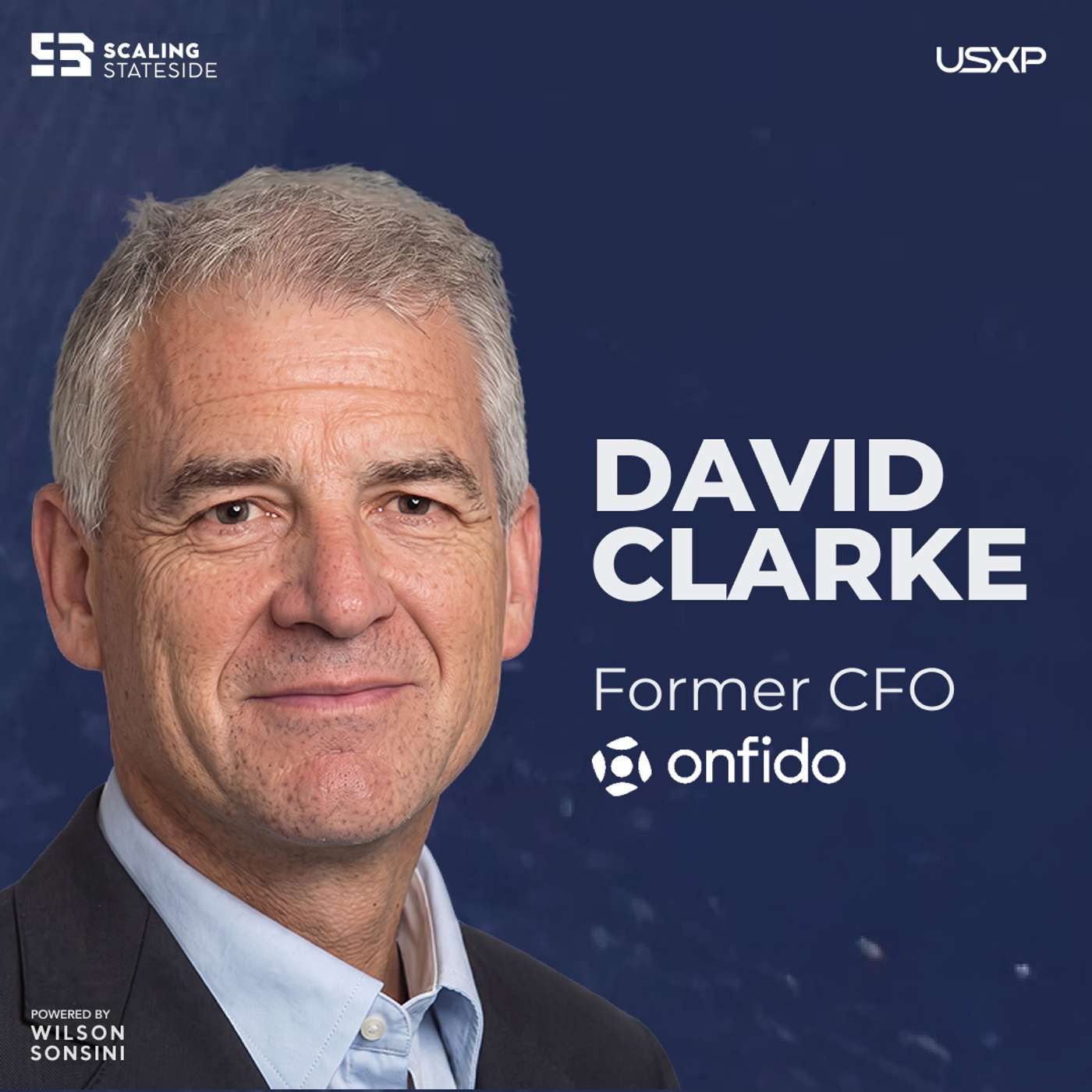
David Clarke joined Onfido as CFO in 2018, when the company had zero revenue and knew the US was the prize, home to around half of its global market. Before that he spent ten years as CFO of PayPal in Europe, growing revenues from almost nothing to $2.5 billion, and was CFO of Skrill through a turnaround and sale.
This is the CFO's side of a US expansion. Once the board says yes, the execution usually lands with the CFO: the plan, the entity, the hires, the state-by-state compliance and the investors. David Rose and Matt Oxley ask him what a board should look for before approving the move, why Onfido's first US sales hires didn't work out, how to choose a location, the compliance traps that surface in due diligence, and what a CFO six months from launch should be doing right now.
📘 FREE: The CFO's Guide to U.S. Expansion ⮕ https://www.usxp.co/cfo-guide/?utm_source=podcast&utm_medium=show-notes&utm_campaign=cfo-guide&utm_content=david-clarke-episode
What you'll learn:
– What a board should see before approving a US launch: a rolling three-year plan, the market size and the assumptions behind it
– Why Onfido's first three US sales hires didn't work out, and why the next move was a global CRO based in New York
– The culture shocks: driving licences instead of passports, and 50 states with their own rules
– The compliance work teams underestimate: sales tax, payroll taxes, privacy and state registrations, and why missed fines surface in investor due diligence
– How to choose your first US location: customers, talent pool and time zone
– Why one of Onfido's first US hires was a corporate lawyer
– The question he learned at PayPal: "What is your constraint to growth?"
– Six months from launch: weekly check-ins, a named owner for every workstream, advisers on board and a home team that stays informed
CHAPTERS
00:00 Intro
00:14 Why US expansion lands on the CFO
01:22 David's path: PwC, Singapore, PayPal, Skrill, Onfido
04:33 Onfido in 2018: zero revenue, no product yet
08:14 Europe first, then the US sales hires that didn't work
12:44 US vs Europe: same language, different market
15:36 What a board should see before saying yes
18:26 Market size, competitors and going on the offensive
23:18 Raised money to go to the US? Don't just go
27:09 Choosing your first US location
29:21 Compliance: sales tax, payroll, registrations and fines
32:32 Who to hire first in the US
36:54 The US vs European CFO mindset
39:57 "What's your constraint to growth?"
41:35 Why a US presence made fundraising easier
44:41 Six months from launch: what a CFO should do now
47:41 Wrap-up
About the guest:
David Clarke was CFO of Onfido (now part of Entrust) and led its US expansion. Before that he was CFO of Skrill and spent ten years as CFO of PayPal in Europe. He qualified as an accountant with Coopers & Lybrand (now PwC), and today he is a non-executive director at Copper.
About Scaling Stateside:
Scaling Stateside is the podcast for founders navigating US expansion. Hosts David Rose, Founder & CEO at USXP, and Matt Oxley, Co-Founder & President at USXP, talk to founders, operators and investors who have made the jump, surfacing the real playbooks, pitfalls and best practices.
🔗 CONNECT WITH David Clarke ⮕ https://www.linkedin.com/in/dgclarke/
🔗 CONNECT WITH David Rose ⮕ https://www.linkedin.com/in/davidbrose
🔗 CONNECT WITH Matt Oxley ⮕ https://www.linkedin.com/in/mdoxley
THE SCALING STATESIDE PARTNER NETWORK
Founding Partners: USXP and Wilson Sonsini
Supporting Partners: HSBC Innovation Banking, Frazier & Deeter, Carta, Dealroom and London & Partners
US Expansion Partners ⮕ https://www.usxp.co
Scaling Stateside ⮕ https://www.scaling-stateside.com
🔔 Follow Scaling Stateside for more conversations on scaling to the US the right way.
#USExpansion #CFO #Startups #Founders #Fintech #ScalingStateside