
In short
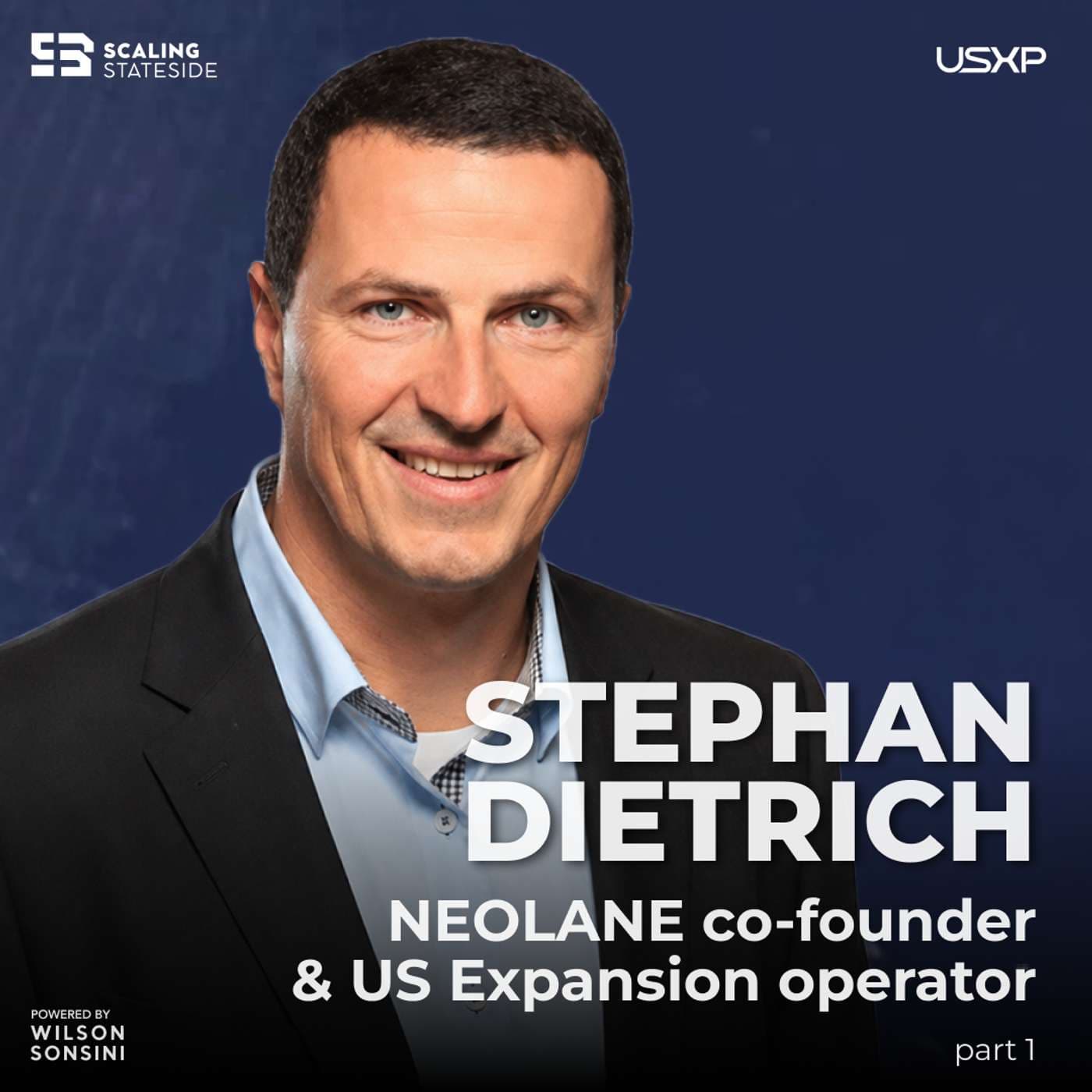
Stephan Dietrich (LeadEdge Capital) recounts building French enterprise software companies—especially Neolane—then expanding to the U.S. and eventually selling Neolane to Adobe for $600M on a ~$6M budget. He also covers co-founder roles, fundraising during the 2001 downturn, and U.S. hiring/lead-gen realities.
Guest background
German-French by passport/education; based in Boston for 19 years. Serial tech founder (Neolane, Qubisoft; earlier custom software and defense big-data work). Co-founded in École Centrale Paris; taught/mentored (Harvard Business School). Now a venture capitalist at LeadEdge Capital.
Key claims
U.S. is where enterprise software demand and capital concentrate; founders should minimize long market studies for SaaS/enterprise. U.S. hiring requires deeper interviewing and “backdoor checks.” Start with C talent, then upgrade to B/A as momentum grows; Boston was chosen to access top universities and talent.
Notable examples
Seed deal for Neolane after pitching a campaign management + customer data platform deliverable in 3 months; near-death experiences in 2003; U.S. expansion in 2007 after raising $6M Series B; “Portuguese wine in Burgundy” analogy for selling software credibility.
Written by AI. May contain mistakes. Listen to the episode to check what was said.
Chapters
Tap a time to open that second in VOStefan Dietrich's Background
0:46 to 3:32
Stefan shares his entrepreneurial journey and early experiences.
“expansion for their portfolio companies.”
From Roofer to Tech Entrepreneur
3:33 to 6:01
Stefan describes his educational journey and passion for technology.
“because we're coming to the success stories of the companies that you founded, Neolane, Qubisoft, I think there's a couple of others in there as well.”
Creating an Entrepreneurship Major
6:02 to 7:46
Stefan details how he and his co-founders established an entrepreneurship course.
“And there I met some extraordinary people.”
First Business Venture and Co-founders
7:47 to 9:07
Stefan explains his initial business venture and long-lasting partnerships.
“I discovered selling and, you know, the storytelling, the selling, positioning the value of what you do, how it's innovative, et cetera.”
Defining Roles Among Co-founders
9:08 to 12:14
Discussion on how roles were established within the founding team.
“So you meet people there, you have your first experiences, and then that kept carrying us.”
Navigating Co-founder Relationships
12:15 to 14:00
Stefan speaks about the complexities and values in co-founder relationships.
“So I mean, success is when preparation means luck, I guess.”
Navigating Co-Founder Dynamics
14:00 to 16:15
Learn how co-founders manage their relationships and decision-making processes.
“A core set of values that you are orientated towards that you both believe in or, you know, the three, four of you all believe it.”
Stefan's Early Business Journey
16:17 to 16:58
Discover Stefan's transition from college to realizing his first business venture.
“what was your first, we'll call it, real company?”
Experiences in Military and Business
16:59 to 19:33
Explore how military service influenced Stefan's business acumen and skills.
“I met some extraordinary people who are now CEOs of major companies.”
Lessons from Automotive Industry
19:34 to 21:47
Understand the nuances of negotiating in the automotive sector and its impact on Stefan's career.
“That's a super interesting first time because it's a lot less risky.”
Show all 24 chapters
Returning to Entrepreneurship
21:48 to 22:23
Follow Stefan's decision to return to entrepreneurship with his new venture.
“And then I was like, I want to come back.”
CubicSoft and Its Defense Contracts
22:26 to 23:27
Learn about Stefan's venture CubicSoft and its focus on big data in defense.
“And in this second venture, did you expand to the US at all?”
Recognizing American Business Potential
23:28 to 25:05
Discover how Stefan identified the American market as key for business growth.
“So that's kind of where I'd like to go next because obviously there's AGDS and there's CubicSoft and then obviously Neolane.”
Founding Neolane and Its Vision
25:06 to 28:00
Learn about the inception of Neolane and its mission to revolutionize marketing operations.
“So when we have that idea, so the first company gets acquired by a US company, that's eye-opening because all of a sudden you see how it like scales, how it grows, et cetera.”
The Birth of Neolane
28:00 to 29:40
Learn how Neolane was conceptualized and funded in its early days.
“And that's pretty much our seed money for Neolane.”
Early Challenges and Near-Death Experiences
29:40 to 31:12
Discover the struggles Neolane faced in its initial years and market conditions.
“And we raised like 2 million as our series A on that ID.”
The Growth Phase and UK Expansion
31:12 to 33:10
Explore how Neolane started to gain traction and expanded into the UK.
“So you have the head of the Fed telling the markets, I feel that we are in an exuberant situation in the markets.”
Navigating the US Market Entry
33:10 to 34:56
Understand the strategic insights when entering the US market from Europe.
“So the markets recovered from 2001, the bottom of October 2001, 2007.”
Cultural Differences in Hiring
34:56 to 35:58
Learn about the critical hiring differences between the US and Europe.
“frankly, there's no long market study you need to do because there's only one number is like, 50 % of the enterprise software that's sold in the world, it's bought in the US.”
Challenges of Finding Talent in the US
35:58 to 37:36
Gain insights on the difficulties in talent acquisition in the US market.
“We know selling to Germans is different from selling to Brits or selling to French people or Italians.”
Sales Strategies and Demand Generation
37:36 to 42:00
Discover effective demand generation strategies for selling in a competitive market.
“You've raised$6 million, which is not much, to go after the U.S.”
Challenges of US Market Entry for European Founders
42:00 to 44:25
Learn about the difficulties European founders face when entering the US market, especially in talent acquisition.
“who knows everyone in the industry and they're going to sell$5 million when they are this year.”
Building a Strong Talent Pool in Boston
44:25 to 46:49
Discover the strategies for attracting and retaining top talent in the competitive Boston area.
“on the talent side, was I positioned myself in Boston.”
Lessons Learned and Future Insights
46:49 to 47:58
Explore the important lessons from hiring mistakes and insights for future growth in business.
“So if you can do a, you know, part one about what it means on, you know, getting to the US and the big boulders, because the second one is once you have the talent to drive demand, right?”
Transcript
Automatic transcript. May contain errors.0:11Hi, everyone.
0:12Matt Oxley:Welcome to another episode of the Scaling Stateside podcast. I'm David Rose, the CEO at U.S. Expansion Partners. Along with my co-host and co-founder, Matt Oxley, we're on a mission to help founders from Europe better understand the U.S. expansion process, identify pitfalls and best practices to hopefully set them up for a successful entry into the U.S. market. And as part of that mission, we are having conversations here on the Scaling Stateside podcast with both founders who have already successfully expanded to the U.S. market from Europe and also VCs who are funding U.S. expansion for their portfolio companies.
0:49Matt Oxley:And today, we're very pleased to have somebody with a foot in both worlds. So we have someone who has successfully already launched several companies into the U.S. market and now sits on the venture capital side. So I would like to welcome Stefan Dietrich with LeadEdge Capital to the Scaling Stateside podcast. Stefan, please introduce yourself and tell us where in the world you are today. Hey, thanks, David. Thanks, Matt, for having me today. I'm Stefan Dietrich, and I'm based in Boston right now. And the funny accent you can hear is a little bit of German, French by passport and education, and then 19 years in the Boston area.
1:29Matt Oxley:Great. And one of the things we always like to know with our guest, Stefan, is take us all the way back to the start of your entrepreneurial roots. Tell us about your very first paying job. Yeah, so I'm a serial entrepreneur and we'll go into that in the world of tech and specifically software. But that's not where I started at all. Actually, my first paying job was, you know, summer hustle with my uncle. Believe it or not, his name was Zink and his job was roofer. And so he was, of course, manipulating zinc. That's what you put on the roofs with the tiles. And it was my first paying job to help him over the summer, get the tiles up there, do the roofing and making sure that everything is like, you know, tight.
2:12That's how I started at age like 15, 16 in the summers. I was already passionate about tech back then, and specifically like electronics. But during the day, to pay for my hobbies, I was doing a lot of RC modeling. I was pretty crazy about the little RC models. I had to pay this stuff, and it's very expensive. So I would be a roofer during the day.
2:37Matt Oxley:Hard work. Yeah, I love that. It's so interesting. Everybody has their hustle story. and roofing, I can imagine, is one of the most hardest jobs you can actually do, especially in the French summers, I imagine. It's brutal. It's brutal because sometimes you carry these tiles all the way up there in the old buildings and it was in Strasbourg along the German border and it's just beautiful, beautiful houses. You see these wooden beams like houses and it's accepted they're super old and so there's no elevator. so you have to carry the thing on your shoulders. I think it developed my resilience for sure and my uncle wasn't one of the easiest guys to work for but I learned a lot from here and resilience is clearly something that I took away from that experience.
3:26And it's clearly something that every entrepreneur needs and successful ones have like yourself. I wondered if we could just kind of dive into that period because we're coming to the success stories of the companies that you founded, Neolane, Qubisoft, I think there's a couple of others in there as well. But I'm really interested in that, going from a roofer to being a tech entrepreneur. Can you unpack that chapter for us? Yeah, of course. Of course, they're the, so very bad at school, pretty bad at school, because my parents didn't know what to do with me. That's why they were like, oh, if he becomes a roofer, at least he's going to have a job, because you always need that.
4:07And that was before AI and before Amazon. So I guess these jobs are coming back to the... No, so I was passionate about electronics. I don't know why. And that's why I was doing a lot of RC modeling because you have all these controls and remote controls and electronics that you have to communicate with so that you can have control over these little models, cars and planes and gliders. And so electronics was really my thing from age 11, 12. and then progressively you know I did like a trade school believe it or not the trade school my parents put me in a trade school because I was like this guy he's not you know my son he's not like doing well in school we're going to put him in some sort of a trade school and from there one of my professors said no way he needs to do something else and so I managed somehow to get my degree high school degree and did really well there And with that, I got into like a preparatory school that's called preparatory schools in France for these like grandes écoles, which are the best, best schools.
5:15And actually, I did really, really well there and passionate about like technology, electricity, electronics. It was the early days of computer science, very early days of computers. I have the very, very first computer that came out back then, ZX Sinclair, ZX80, 81. So I started to play around with this, so doing programming very adjacent to electronics because you needed to load electronic cards in there and you upgrade the memory and things like that. So progressively got into computer science while in preparatory school. And there in preparatory school, I did so well. Like a late blossomer, sometimes we call them.
5:58I managed to get in one of the best engineering schools in France called École Centrale Paris, which is like an MIT in the US. And there I met some extraordinary people. And I was all of a sudden, into the top of the top of the education from a technology standpoint. And I liked it all. I was just absorbing it. And I met my co-founders there to start our first company in school. And we decided to do an entrepreneurship major in the school. But the entrepreneurship major didn't exist. So we went to see the dean of the school and said, hey, why don't we create an entrepreneurship major? And this is how it could look like.
6:38And we would be the first, you know, promotion, the first like class. And so we were three students in that major that year. And the deal was like, hey, here's a project we have. We wanted to create an electronic circuit board to replace, you know, the oscilloscopes. say, hey, the computer is now powerful enough that you can read actually signals. Because my thing was electronics. And my friends that I met was electronics as well. Plus another one was really into like computer science. And hey, if we combine the electronics, we can actually measure the signals and replace these oscilloscopes called Hameg or whatever that are like bulky and everything with a combination of an electronic card plus software.
7:26And to do like signal processing, it would allow us to do a lot of stuff. So that's how the whole idea started. So we did like the entrepreneurship major in that general engineering school. So it had like a heavy computer science side, but a heavy electronics side, which was my roots originally. So yeah, so that's how you meet great co-founders. Like-minded, like-hearted, passionate engineers, in school while you're like have a lot of time on your hands and instead of partying we would like building circuit boards you know we would be assembling circuit board the school gave us like some sort of a uh an area in a lab so that we had um a place and i was like immediately among the three you have to decide you know who does what and someone has to sell and frankly i i did like the selling.
8:24I discovered selling and, you know, the storytelling, the selling, positioning the value of what you do, how it's innovative, et cetera. So among the three, I guess I was the least good coder and technician. And I was pretty passionate quickly about like, how can we take that product to market? You know, how can I do like Quark Express, like the data sheet about the product, how can I position the product with pictures, creating all the sales kits, sales materials, etc., and then putting it in the hands of our prospect customers. We didn't sell much in the engineering school. We sold a few of them, including to the school who was very supportive.
9:07They were like, okay, we can try this. But that's how everything started. So you meet people there, you have your first experiences, and then that kept carrying us. And then we worked together, I guess, like 25 years, and we built like three businesses together, the three of us. So those co-founders that you met, they stayed with you for 25 years? Yes. And those are the same co-founders that you... So we did the first one. So we did the first one and it sold in 96 to a company called Peregrine Systems in California. A guy called Fred Luddy, who's very famous now because he started service now after that, after Peregrine Systems.
9:58Co-founders that you met, they were part of that cohort where you convinced the college, the MIT equivalent in Paris that you were at to actually put on an entrepreneurial program. And you guys have stayed together. That's phenomenal. Yeah, it was, you know, looking back, it was pretty fun. It didn't really exist. And we were like, hey, you know, we want to do this. We have that project. What do you think about it? Would you, the story was like, would you let us pick among all the classes that are taught, could you let us pick, like cherry pick, like on a Chinese menu, let us pick the items we need to bring that project to life.
10:42Of course, I picked marketing classes. I picked the computer science classes, et cetera. But I picked the classes that made the most sense. And they also let us go into other partner schools to pick a class. For example, HEC had very good, very good classes, unlike business classes. So they were very accommodating. And that's, yeah, that's the beginning of the story of like, yeah, 25 year, 25 year story. And I just want to dig into the co-founder kind of, I think, conversation a little bit, because this is, you know, with Opal, I've been with my co-founders 15 years with David. I speak to David probably more than I speak to my wife.
11:26You know, you build really, really deep and strong relationships. and I think that's kind of part and parcel of you're building something together. There's somebody that you can, I think, moan at points of kind of the lowest, but also people to celebrate with as well. But I think part of this does come down to each co-founder knowing their lane. And how did you kind of delineate that? Because you said that you came from kind of an RC, kind of technical engineering background. That's where they met you. Did you orientate towards kind of more of the sales marketing side of it? And then did the other co-founders kind of pick their lane?
12:09Talk us through how you kind of figured that out. Yes, very, very naturally. It was very natural. And I guess that's part of the luck too, right? So I mean, success is when preparation means luck, I guess. And you have to be lucky enough to find co-founders who really are supplementing each other. And we clearly had that. I love the selling. I love marketing. I love positioning. I love design, et cetera. I discovered that along the way because it was not my original route, but I fell into it and fell in love with it. And clearly, another one of the three was clearly very deep technologically, right?
12:50A real nerd in terms of being passionate about everything that's the most innovative ways of programming, et cetera, et cetera. and my other partner I mean superpowers there's like really finance operations HR legal things like that that's very different so yeah that's when you're lucky enough to have like you know exceptional individuals and you supplement each other that's that's just like worked really well for us and at the same time we were in France in terms of like buddies you know it's very important We weren't going on vacation together. We've done many trips, professional trips with our teams together, but we wouldn't be like buddies in terms of being together all the time with our wives or our kids, etc.
13:37No, it was very professional. It's interesting because the board at Opal called the three co-founders the hipster, which is my co-founder, the hustler, that is me, and then the hacker, which is our product person. And it's like they give us these titles. But I think underpinning every single founder relationship that I've seen is a core set of values. A core set of values that you are orientated towards that you both believe in or, you know, the three, four of you all believe it. And I think it's quality standards, it's values, it's all of those things. And I think those only deepen over time because, you know, you know what the other person is going to say.
14:21You can finish each other's sentences and it becomes, dare I say, a little bit easier. Yeah, but it's not a linear story either, right? You have your ups and downs also in these dynamics. It's a complex dynamic. When important decisions have to be taken, etc., sometimes you get into some fights. So if we talk more generally speaking about how three co-founders are navigating the ups and downs of the company, I think we're doing a good job as also stepping back twice a year, we would do what we call the founders retreats. And we would go into a nice place with some nice restaurants in a nice area, pick Burgundy, pick whatever.
15:01There's so many beautiful areas in France or in the UK where you can just step back, or in the US, step back, relax, look at the business with a 30 ,000 foot view. And it'd be just the three of us plus a couple of like guests because otherwise it would turn very quickly into a fist fight. So we would have like a moderator and our chairman of the board, who we all respect that, was the CEO of the very, very first company we sold to, was really a little bit the voice of reason in the room, you know, hurting the cats and making sure that the three co-founders were coming to consensus in terms of like the strategic planning for the business for the next six to 12 months.
15:46that's how we would do it. So having these moments of introspection where you step back, you look at what you've done well, you're very open with each other and candid with each other and you're putting everything on the table and some heavy heart-to-heart is absolutely critical to just get the tension and the pressure out of these relationships because they're not easy on a day-to-day basis, but they're amazingly rewarding if you get them to work.
16:17Matt Oxley:Stefan, if you were doing this right out of college, what was your first, we'll call it, real company? So it probably was a weird transition because you just started doing this because you loved it when you were in school. At what point do you look around and go, oh, we're actually, we have a real business here. What was that moment? We do the first company and I'm quickly realizing also that I need more tools as a business, I quote unquote, the business guy. So I do an MBA. an MBA in France, some pretty elitist MBA called Collège des Ingenieurs, where they only recruit from the top, top, top, top schools, and there's only 35 people in the class.
16:58And that's also where I met some extraordinary people who are now CEOs of major companies. Because you take the filtering of what an MIT-like school does to you, and then you add another filter on top of it. And guess what to end up was like with like you know pretty selective individuals so um i needed these tools in my toolkits to to be stronger on the business side whether it's like legal business cases because in business business school you do a lot of case studies etc so during that time they kept going and then i went to the to the industry because i was like hey guys you're coding delivering software etc.
17:38The first business was custom software, ad hoc software, right? It's ad hoc software development. So you're a services firm and you develop ad hoc software on demand. And it's one of the business that purchased that because we were like developing their software and they were like, hey, you need to have control over that. But they didn't need me. So I went to the US and I spent time in the US because you needed to do that, you know, the military, school, the military service back then in France. And I managed to do my military service to help French companies expand into the US as a marketing analyst.
18:18So I had to do my military service. The two others also did their military service, but they did it on the technology side as a scientific in the militaries. So coding, etc. So they were coding there. One was we see it at the Energy Atomic Commission. And the other one was like also doing like some very technical like coding stuff. So you had to go through that back in these days, you know, so how to get the best. So we have that venture that we have started together. And then we split because we had to do our milancier service. So the thing like went on a little bit on the back burner, of course, because then you're going to do that anymore.
18:57But I developed my skills and my early skills in bringing a French business to the US because I was part of a bigger company. you know, a CAC 40 listed company, but that wanted to open US operations. And it was the marketing analyst, meaning the first guy on the ground there to launch a whole new business line, which was completely synergistic with what I love to do. And also gave me the appetite to bring a French company into the US. It was really my first dabbling into like, oh, how can I take that offering and bring it to market in the US? How can I find prospects? How can we find salespeople to carry that value prop and sell to customers?
19:39Matt Oxley:That's a super interesting first time because it's a lot less risky. I guess you don't have to necessarily worry about making payroll when you're doing that for a larger company or raising capital. But you get to figure out all the pieces and parts of U.S. expansion with all the pressures of running out of cash in six months. Correct. Correct. And then when I came back from that, again, the other guys came back. They were like, okay, we're going to restart coding. or going to restart doing ad hoc software, et cetera. I'm like, okay, you don't need me for now. You don't need me for now, so it's fine.
20:09I'm going to take a job in a bigger company to learn really what is a big company. And it was in the automotive space, a company called Vario, just a very big equipment manufacturer, these very strong processors, and just a sales machine. And I got a P &L because it was like very technical. It was the very beginning of the electronic control units on the cars, right? historically there was no ECUs on the car. I mean, nothing was controlled electronically. I had an old 205, a Peugeot 205. There is no ECU on a Peugeot 205. It's 32 years old. It's an antique. But then came the ECUs on cars. And I loved that.
20:48I was like, oh, wow, now there's electronics on cars. We can electronically control how the engine works with actuators and with sensors. And so they hired me. They hired me for that, to take that to market. I didn't waste big deals because you would go to Renault and negotiate a$100 million a year deal. You know, this is like big, big, big, big piece of a car. And so I did that for a couple of years just to learn, you know, the ropes of what is it to negotiate big deals? Because you negotiate with the procurement departments of automotive companies, of Toyota, Renault, Peugeot, etc. It's crazy.
21:25You can negotiate like for four hours and 50 cents because it's so critical because then they're going to buy millions and millions and it's going straight into their bottom line. So that's where I learned at the bigger scale. Also, that's where I developed my skill set in terms of negotiating big, chunky deals and learning all the ropes of negotiation. So between my business schools, where I have the best negotiation professor who was teaching us negotiation, learned a lot there. Between my experience with that big French company, chemical company that was breaking into the US, and then back into that automotive company, it's just like rounded out my skill set from a technical standpoint and from a very practical standpoint.
22:14And then I was like, I want to come back. you know, let's do CubicSoft. I want to take that business. I want to build that business, grow it out. And that's the second venture. And in this second venture, did you expand to the US at all? No. With CubicSoft? No, not yet. No, not yet. That's where we realized that the future is going to be in the US. So that was, again, like very custom software. And it's always big data in the defense. It's like a Palantir before Palantir. So we had like very sensitive contracts around big data management in a defense space. So we would be like specifically limited to the US, but we would also sell to international institutions like the IAEA, you know, the institution that controls all the nuclear activity in the world.
23:11So we would have our software deployed in Vienna in different in their headquarters, et cetera. But it was around like capturing a lot of big data worldwide through a variety of network of sensors and being able to interpret what is going on a little bit around the world for defense purposes. But it wasn't US. It was nothing with US. So that's kind of where I'd like to go next because obviously there's AGDS and there's CubicSoft and then obviously Neolane. Neolane, from what I can understand, is just all of those components coming together. At what point with Neolame, because you grew it to, from what I understand, $60 million worth of revenue that's 400 people prior to an exit to Adobe.
24:01What really made you understand and I think realize that that was an American business versus the others? From the very get-go, so the first business was acquired by a company I said earlier called Peregrine Systems in California. And we could see that enterprise software or software generally speaking, right? I'm speaking for tech here. So really like the software world, I kind of speak for any other industry or less. That the software world, a lot of the demand starts in the US. Most of the big players, all of the big players with some exceptions, business objects in France and SAP in Germany.
24:42Pretty much all of the big players back in the days were located in the U.S. So your future, whether from a capital access where the U.S. has just more capital, especially back then from a venture firm, from a venture side, or from an exit standpoint, or from a strategic partnership standpoint, that the buck stops in the U.S. pretty much. The major key stakeholders are U.S.-based. So when we have that idea, so the first company gets acquired by a US company, that's eye-opening because all of a sudden you see how it like scales, how it grows, et cetera. Then comes the time to start the third company.
25:23My buddies, my two partners are in the same building, but they're part of the acquisition. They're still standing. They're still staying with the company that acquired. And I'm CEO of CubicSoft. So the second business. And within CubicSoft, I have that idea of developing a marketing operating system. Why? Because I'm in the marketing space. I'm in sales. I'm in business dev, corporate dev, etc. So I'm in that go-to-market world. And I'm like, that go-to-market world is like, this is not automated. There's a lot of manual thing. We coordinate everything manually. We don't store our customer data property and prospects.
25:58How do we turn prospects into customers? How can we nurture prospects, etc.? And I developed a passion for what is a sales cycle from the first touch all the way to conversion, nurturing of a prospect, conversion of that prospect, upselling, cross-selling, et cetera, turning that customer into an advocate, that whole customer lifecycle. And I remember we're in the same building. My partners are with the acquirer of the first company. I'm at CEO of QGXoft. I'm like, we should start another business where it's like just focusing on the marketing operation system. Okay, because I see the major lines of business in the enterprise, they all have a go-to package.
26:45You're in manufacturing, you have SAP to drive your supply chain management, et cetera. You're in finance, you have Oracle Finance. You're in HR, you had a bunch of HR packages from IBM, et cetera. You're in every line of business, You're in sales. Oh, it was the beginning of Salesforce, right? We're talking like early 2000s. So Salesforce was like, hey, I'm going to, and Siebel System, of course, was support and sales back in the days. You remember those. So every line of business had its own package. Major software players providing solutions to drive more efficiencies in their processes, right?
27:25Because that's fundamentally how enterprise software started. I'm going to automate a number of tasks, drive more efficiency in your processes. Marketing had nothing. And marketing was like my near and dear to my heart. So I tell my partners, hey, I'm building that product. So I built the product and I sold it to a company like pretty much on paper. I said, hey, I'm going to deliver that in three months. Are you interested? They're like, hey, this is amazing. Let's deliver it. It was a campaign management solution, customer data platform and campaign management solution. So they're like, yes, if you can deliver that, we'll buy it from you.
Read the full transcript
28:01And that's pretty much our seed money for Neolane. And then Neolane is very simple. You know, you look for a name, Neolane is the new lane for the funders. Selfishly, because we're like, hey, what are we going to find? So then we, you know, we did the story around, oh, it's the new lane for the marketers. But fundamentally at the beginning, you look for a website that's available, a domain name that's available. and then you tell the story after the fact. So nailing was that, hey, the beginning of digital marketing, now we can do much more in terms of customer data, prospect data. We can take all these breadcrumbs that we get on digital properties, the website, et cetera.
28:43There was no mobile back then. We're talking 2001. So on the website, there's digital breadcrumbs. Can we bring them together to have a better understanding of a prospect? Can we run analytics on top of that? Can we know how to re-engage with prospects, turn them into customers? And once we have a customer, can we store all their transactions? Or yes, we can tie into new systems, I mean, into ERPs, et cetera. We can get the transaction. Let's build a 360 view of that customer in that customer database and then apply a layer of automation and an engagement layer on top of the data, the customer data, to re-engage these customers, upsell, cross-sell, turn them into advocates.
29:24So we activate them if they've gone, et cetera. So that was the whole vision. And I take that vision, I go to my partners, they say, hey, let's start a new date. Okay, let's. And so we sat down, they left their jobs, a few weeks off, we sold it, and we focused just on that. And we raised like 2 million as our series A on that ID. With VC that had done like 10X on the previous venture, the first venture, so they were like, okay, we have no clue what you want to do. We don't understand what you want to do. We're in 2001. The bubble has burst. Money is very expensive. We sign our first checks for our employees.
30:01We don't pay ourselves, etc. You know, the grindy way. But we raised$2 million from a VC that's like, you know, just trusting us because they did well. So, of course, they're going to give you money again. That's how the story starts. Long story.
30:15Matt Oxley:And where was this company based when you guys launched it? Paris. always in the same building. We're in the same building as the two other companies, by the way. We would stay just in the same building, just change floors, just a different floor. So we started out of Paris, right? And the idea from the get-go, back to your question, Lance, is like, from the get-go, we're like, we're going to have to take that to the US. Okay, we've seen it now. We know where the ball is going. We know that this is like, this is inevitable. At some point, we're going to go to the US. So you start in 2001, you raise$2 million.
30:46It's ugly. We had some near-death experiences in this business in like 2003 because it frankly didn't take off. It didn't take off. The customers didn't want to buy. They loved the vision. They weren't willing to spend. Remember that when we say that the bubble burst, I always saw Alan Greenspan passing away yesterday or two days ago. This guy, if you remember, he was talking about the exuberance of the markets in 1996. So you have the head of the Fed telling the markets, I feel that we are in an exuberant situation in the markets. This hasn't happened yet, by the way, because we talked bubble today, right?
31:25You know, AI bubble today. You don't have like Kevin Warsh saying, oh, the markets are exuberant right now.
31:32Matt Oxley:But irrational exuberance was the term. 96 is four years before the March 2020 bubble burst. But then it didn't go, it didn't burst, actually. When you look at the stock, the S &P 500, from March 2020, it went down all the way to October 2021. That's a long slog of 18 months going down and down and down. So we're there raising money, you know, in 2001. So from March 2000 to October 2001, it's a long slog going down. And so we're in that moment where we love downturns as entrepreneurs. I think I love downturns as entrepreneurs because that's where you get more out of every marketing buck, where you can hire better talent, the market is better, but you have to resist, you have to survive.
32:19And with these 2 million, frankly, we were close to not surviving because even all the way to 2003, it really didn't take off well. Enterprises were not willing to buy. I mean, they understood the vision, but they were not completely ready. We're like, yeah, we can manage customer data in that platform. and then do email marketing. We could automate a lot of your outbounds, communication, orchestrate, all of that, and engage your customers better, drive better top line for you. So we had our near-death experiences with this first round of funding. But then in 2004, it started to take off. We opened the UK office.
33:00Then we opened the Nordics office. Because from the get-go, we knew this will be international. We need to go to the US. and let's just see the UK as some sort of a stepping stone into the US market. And when you first landed in the US, going back to those first 12 to 18 months, what did you get wrong and what would you tell every European founder that is going on this journey to be cautious of and pass on guidance about? Yeah, so we're in 2007. So the markets recovered from 2001, the bottom of October 2001, 2007. All of a sudden, the markets go really, really strong. Really strong recovery. We decide to go to the US.
33:58We raised$6 million as a Series B. Series B,$6 million. It's cute today. These numbers are pretty cute. Series A, 2 million. Series B, 6 million. Going to the U.S. with 6 million to establish the whole U.S. operations. I have a conviction, and that's something I want to share with every founder. Of course, the natural person to go there is the go-to-market person of the three. So the deal is like, okay, now we've staffed the team in Europe with a very strong head of sales, like a late co-founder who joined us, who was leading all of sales for Europe. That's covered. And I will be that trailblazer into the US market.
34:42So in terms of market study, you hear a lot of people saying, we need to do a market study, we need to test out, go to market, etc. It really depends on what sector you're in. But when you're in tech or SaaS, so software as a service or enterprise software, frankly, there's no long market study you need to do because there's only one number is like, 50 % of the enterprise software that's sold in the world, it's bought in the US. Why? Because you have these US like international companies that buy in the US and employ it worldwide as well. So they're earlier adopters. The market is more mature.
35:18They're more willing to spend than European companies, right? They're a little bit less reluctant towards innovation. So they're adopting software way, way, way faster or adopting technology way faster in the US. I think that's one of the heavy characteristics of the US market. In addition to being like very big and deep and homogeneous, you might have, depending on some regulated industries, you might have some differences in states, but generally speaking, generally speaking, the US is a very homogeneous market with one language, one way of buying, et cetera. I'm simplifying a little bit, but it's like putting that compared to EMEA, as the US would say, you know, they put like EMA into one bucket.
36:01We know selling to Germans is different from selling to Brits or selling to French people or Italians. And they, by the way, don't have the same language. So the US market is an obvious choice. You don't need to do a long case study. You don't need to do a long like market analysis to know that roughly the US is 10 times bigger than any country you would go after in Europe. because the first thing you wonder when you're like, when you start having go-to-market fits, it's not just product market fit. You want to have go-to-market fits in a domestic market. So you start seeing the traction in your domestic market.
36:42You can be tempted to do like Germany, Spain, Italy, do I do the UK, et cetera. So we did the UK, but really as a lunch pad for the US. We did the Nordics because we had some sort of very specific play around mobile, meaning mobile engagement, SMS texting, because that became mainstream in like 2005, 2006 in Europe and was not in the US. If you remember, they had the pagers very long in the US. They didn't have like texting on cell phones. So Sonia and Rixon were the best. I mean, were just like the Nokia. Nokia and Rixon were the two biggest, you know, phone, cell phone providers out of the Nordics.
37:23So that was a natural area to experiment like engagement, customer engagement on mobile. That's why we did Nordics. But then we quickly did the U.S. And the U.S., you're in 2007. You come with your family. You settle down. You've raised$6 million, which is not much, to go after the U.S. market. So what are you facing? The most difficult, above everything, is finding talent.
37:51Matt Oxley:You're a fly by night. Talk about that, Stefan. What is the biggest difference between hiring in Europe and hiring in the U.S.? Are there some notable ones that other founders need to be aware of? Everything is different. because this is like, it's another, we speak, let's assume we speak the same language. Okay. And we speak it pretty well. Let's assume there is no barrier language, but that the way of conducting business, the way of presenting, the way of like selling or people sell themselves in the interviewing process, the whole hiring process is completely different. You know, sometimes I compare it to peeling off the layers of the non-year.
38:32You see an old rotten onion or a too young onion you cannot eat or a perfect onion, they all look the same outside. And it can be completely rotten. But you have to peel off the layers to really get to the heart of that onion to really understand, is that person actually a quality person that can help drive my business? Or is that person some sort of a B or C player? And that's the most difficult.
39:01Matt Oxley:Did you ever start to wonder why every single salesperson you interviewed was the top salesperson at the previous company? Every single one of them? I've never met a salesperson in the US who's not. I've never met a salesperson who hasn't done Trezeman's Club and hasn't been awarded like 25 things. Okay, if I don't hear that, I'm worried, by the way. Okay, but for a salesperson, I would be like, okay, tell me what are the last three best deals you had describe me the best deal you had like in the last six months and i would like have them walk through and then i would be like okay great who was it who did you sell to give me the name of the person let's go on linkedin and look up the person and i would be like okay hey by the way i know this person i know rick at this business i'm gonna call rick what is he gonna say and you look at the what's going on you know if the person has done the deal the person is going, oh, wow, that's great.
39:59Call Rick. I mean, you should call Rick. He's going to say great things about me. If the salesperson has just been contributing on the deal, sitting in the back of the bus because someone else was driving, then all of a sudden you don't get the same response. So there's lots of tactics like that that you need to develop that you're not used to when you're hiring in Europe. It's brutal. Back then we could ask, hey, give me the three last W-2s. Bring your last three last W-2s. And that tells you only a very incomplete story, by the way. But it's just like the interviewing process has to be so much more thorough.
40:40And then what's critical also is the backdoor checks. Right. Give me three references and I'm going to call your references. Okay. Ask them because it's interesting to see what are the type of people that are coming back in your reference check, in your front door reference check, but don't call them. It's a waste of your time. Yes, absolutely. So the only thing that works is like backdoor checks, meaning you know someone who has worked for that person. You know someone who has been a colleague of that person. You know someone who's managed that person. And that there is no secret there. You have to have a network.
41:17You have to be a local presence. So you have to either have your PC with deep ties into some companies who can do some backdoor checks. You have to have friends. You have to have your network. And this is something that's very long and difficult to develop.
41:34Matt Oxley:And Stefan, when you had, because you were essentially, what you're describing sounds like a marketing automation platform to me. I don't know if that's the right terminology, but it sounds something like that kind of given that early 2000s kind of tech scene. Talk about what you did at this stage for demand gen and lead gen for your own sales? Because I think a lot of people coming into the US underestimate how competitive it is. And they think, oh, I'm going to hire a salesperson who knows everyone in the industry and they're going to sell$5 million when they are this year. And they don't really realize how competitive it is to actually generate a single lead in the US and how much it actually costs.
42:09Matt Oxley:Can you kind of talk to you how you thought about lead gen for your own company at this stage when you're trying to hire US salespeople? Yes. So Matt's question was like, what was really hard? So talent is for me the hardest thing to find, acquire, retain, find good talents. At the beginning, you will start with C talents. Then you will progressively upgrade with B. You just need to be in that mindset of continuously upgrading. As a European founder coming into the US, and just to finish on that, and then we'll go to the question, David. It's like hiring sales rep to sell Portuguese wine in the Burgundy region.
42:50Okay. They're very good Portuguese wines. Okay. And you can certainly find restaurants where you can position Portuguese wines in the Burgundy region, but it's really, really hard. Right. And France specifically, you know, is known for the three Fs. The three Fs is food, fashion, fragrance. You're one of those three, you have instant credibility and you add a French accent on top of it. You're amazing in the US. Okay. Software or software is not in the three Fs. Okay, it's just not there. So software, you start with an uphill battle. It's freaking hard. So when you hire someone, you hire someone, that person goes back home and says, hey, I've been contacted by that French company.
43:35They're in tech, they do software. And your significant other, you know, spouse at home looks at you saying, are you putting the family at risk for French software selling to the US? It's like the sales rep you hire in Burgundy to sell Portuguese wine. You know, like his wife or his spouse is going to look at him or her. It's like, are you crazy? You want to sell Portuguese wine in the Burgundy region? So it's just like a little parallel here. So how hard it is to get access to the A players and you cannot get access. So you know you're going to start with C, then you have to upgrade very deliberately into B.
44:15and then you pretty much progressively, as you gain momentum, et cetera, you're going to progressively access to better talent. And my secret sauce also to finish on that, on the talent side, was I positioned myself in Boston. I didn't know Boston. I had no clue about Boston. Okay, visit the city when I was in the US. A lot of people were like, we're going Silicon Valley or New York because that's the only two worlds. I was like, no, I have to outsmart, not outspend or outtalent and not outspend my competition. So I picked Boston because of the amazing talent pool. Of course, it's easy access to Europe, et cetera.
44:51But the talent pool is second to none with like 30 of the best worldwide universities here, Harvard and MIT, Cornell, whatever you name it. It's just amazing here. And then also I love to keep my friends close, but my enemies even closer. I put myself two miles away from my number one competitor. That's like the US leader. And the play was very simple. It's very deliberate. I would hire the best guys they have progressively because I hire with the Cs. I would steal some talent from them. Mercenaries. I know they have an expiration date. Mercenaries, it really works in the US. They want to be part of the next new thing.
45:31They want to have more stock options, a bigger territory, right? When you hire salespeople, it's two things, comp plan and territory. That's the only thing that counts. So they want to have a bigger territory, a better comp plan, more stock options. and but they have an expiration date because they're mercenaries. They come to you for a reason. They're going to go to the next one for a reason. So the key was to surround them with like the young and emerging talent that we hire out of these best schools saying, okay, we're going to hire you but you have to work and train these other like young, bright, energetic, creative kids coming out of business school at Harvard, out of MIT Sloan School, out of Cornell, et cetera.
46:10And that's how I build the team because then you know that these guys have an expiration date and you can replace them by the up and coming that are really building the career and are going to be like the structure of your building. So it's a very specific playbook. And that's what, you know, I also teach at Harvard Business School. Some of that stuff, love to share. I mean, how to build like organizations like that. But that's why my secret spot and specifically why Boston was so important in addition to a great lifestyle for the family, et cetera. but it's just like a lot around talent. I think number one thing is really access to talent and being very deliberate on the talent side.
46:49So if you can do a, you know, part one about what it means on, you know, getting to the US and the big boulders, because the second one is once you have the talent to drive demand, right? And yes, David, you're absolutely right. Our platform, Neolane, is a marketing automation platform. We're a pioneer of marketing automation back in the days. now there's 9 ,000 companies in that space. Back then, there were like a few, you know, a few dozens. We're extracting so much. Would you be open for another kind of a part two of this? Because we haven't even gone into Lead Edge. We haven't even gone into the kind of Adobe acquisition.
47:29There's so many things I'd love to extract from you. Yeah, we can absolutely do a part two. It's like, okay, now you have the talent pool, your structure is in place, because, of course, my biggest mistakes also were hiring the wrong people. And that's what people are going to learn from, right? Because I think the narrative from everybody is like, did this, did this, did this, and look at me. Look at us. Look at what we did. But what are the lessons along the way? And that's really what we want to kind of unpack. And we're doing a great job so far. So I think kind of splitting it up now.
48:08Bye!
From the publisher
Stephan Dietrich built Neolane in Paris, entered the US with a $6M round, and sold the company to Adobe for around $600 million. In this episode of Scaling Stateside, he breaks down exactly how a European software founder wins in the most competitive market on earth, without outspending the incumbents.
David Rose and Matt Oxley sit down with Stephan to unpack the operator playbook most founders learn the hard way: how to choose your US city, how to hire when you can't read the culture, and why talent, not product or market, decides whether your expansion works.
This is a masterclass in "outsmart, don't outspend."
What you'll learn:
– Why 50% of the world's enterprise software is bought in the US, and what that means for your go-to-market
– The "two-mile" talent play: setting up next to your biggest competitor on purpose
– How to spot a fake sales record in a single interview (the "call Rick" test)
– Why front-door reference checks are useless, and what to do instead
– The country-brand tax on European software founders (the "Portuguese wine in Burgundy" problem)
– Hiring in a culture you can't calibrate: the C to B to A sequence
– Why the best founders love a downturn
CHAPTERS
00:00 Intro
01:00 Meet Stephan Dietrich
01:30 From roofer to tech entrepreneur
05:47 Meeting his co-founders at Ecole Centrale Paris
09:29 Selling his first company to Peregrine Systems
11:00 How three co-founders divide their lanes
14:37 The twice-a-year founders retreat
16:06 Building the toolkit: MBA, big deals, and the US
22:15 Cubic Soft: a Palantir before Palantir
23:23 Why Neolane was an American business from day one
27:54 How Neolane got its name
29:42 Near death in 2003, and why he loves a downturn
33:02 Landing in the US: what he got wrong
34:52 The one number that settles the US question
37:35 The hardest part: finding talent
38:51 The "call Rick" test for fake sales reps
40:32 Front-door vs backdoor reference checks
41:24 Lead gen and the Portuguese wine problem
44:11 Boston and the two-mile talent play
46:32 Wrap and what's coming in Part 2
About the guest:
Stephan Dietrich is a serial founder and now an Operating Partner at Lead Edge Capital, where he helps European enterprise software companies scale in the US. He guest lectures at Harvard Business School. He co-founded and led the US business of Neolane (acquired by Adobe in 2013), which became Adobe Campaign.
About Scaling Stateside:
Scaling Stateside is the podcast for founders navigating US expansion. Hosts David Rose (CEO, USXP) and Matt Oxley talk to founders and investors who have made the jump, to surface the real playbooks, pitfalls, and best practices.
🔗 CONNECT WITH Stephan Dietrich
LinkedIn ⮕ https://www.linkedin.com/in/stephandietrich/
🔗 CONNECT WITH David Rose
LinkedIn ⮕ https://www.linkedin.com/in/davidbrose
🔗 CONNECT WITH Matt Oxley
LinkedIn ⮕ https://www.linkedin.com/in/mdoxley
🏢 POWERED BY WILSON SONSINI
This episode is powered by Wilson Sonsini, the leading law firm for technology and growth companies. Wilson Sonsini helps European founders navigate US expansion, from entity formation and regulatory compliance to VC fundraising and M&A. Their deep cross-border expertise ensures you structure it right from day one.
US Expansion Partners ⮕ https://www.usxp.co
Scaling Stateside ⮕ https://www.scaling-stateside.com
🔔 Subscribe for more conversations on scaling to the US the right way.
#USExpansion #Startups #Founders #SaaS #GoToMarket #ScalingStateside #Neolane #Adobe


