 Screw It Just DO It with Alex Chisnall
17 Nov 2026 · 43m

 Add vo to ChatGPT or Claude to ask about everything you hear
vo listened to this episode to put together the overview and transcript, so there may be the odd mistake.
Jo and Jaz (co-founders of Luna) explain how their teen health app grew from a school MBA project into a global company, including investor pitches, brutal teen feedback, building trust with both teens and parents, viral TikTok marketing, scaling tech, and launching in the US.
Both met at Oxford during an MBA. They were former consultants; Jaz trained as a personal trainer and did a VC internship but chose to be an operator. They built Luna after a school pitch and later recruited teen brand ambassadors.
Teens initially loved the concept but rejected early branding and the idea of parents being on the app; Luna succeeded by making it teen-first, then adding a “parent layer” for monetization and trust. They used non-code prototypes to prove demand, then raised angel funding. Viral TikTok and community content drove growth without social-media-style chat.
“Your branding is awful” feedback; a “get ready with me” TikTok about skincare and Luna going viral; downloads jumping from 4/day to hundreds/thousands; US launch in July with seeding in 20 states.
0:00We're literally getting like four downloads a day and then like that then we started to get like hundreds a day and not thousands. They also gave us like brutal feedback as well by the way. Oh yeah they were like your branding is awful. We just took it upon ourselves to be like well we need to figure out then what do we need to do to get to where we want to be. So what do we need to do to get an app on the app store? Well let's go and google it, let's go watch some YouTube videos. How are we going to make enough money to actually like make this a scalable business? and I think we were tired, we've been doing this for like three years, feeling like we needed to take some big swings.
0:34We decided at the beginning of this year that this was the year to do it and take the plunge really and well, we are now officially fully global.
0:47Alex Chisnall: Jo, Jaz, welcome to Screw It Just It. Thank you for having us. Absolute pleasure. So you both meet at Oxford. You're both former consultants and what begins as an MBA project ultimately becomes Luna. When did this stop being an assignment and become something you thought, we actually have to build this? Do you want to go? Yeah, happy to. So backstory, we had the idea at business school. It was actually part of a school project. Joe and I being the absolute keynotes that we are, formed a really good team together, probably took a project way too seriously because we wanted to score best grades um and it was during this pitch where one of the um investors who was there evaluating our school project turned around and said look the idea for luna is is great like who's going to go and do it after the nba and at the time um joe was really interested in going into the fitness industry lining up jobs there and then i to be honest was going to go into venture capital um but then well it was actually joe to be honest i couldn't stop thinking about this idea and she called me and said hey jazz can we meet for lunch um at that point i thought is this girl hitting on me like i am a taken woman um anyway i had lunch and she said look i've been thinking about this idea i really want to potentially explore it um do you want to do it with me and at the time i was like absolutely no chance like i'm i'm here to get a good six figure salary job post mba um but you know maybe we can go and talk to some teenagers and see like what they're thinking and um whether there's an opportunity to do something so i guess to answer your question um the the moment where we thought this is no longer a project is when we'd gone to these schools alex and um these teens turned around were like this is an amazing idea like where can we download the app can we come work for you um and uh basically started like emailing us and being like you have to bring this to life and that was really the moment where i was like i really want to do this and yeah and what was luna back then it was a version of what it is today for sure it's obviously been through many iterations but primarily it was uh more of a teen friendly period tracker because we'd seen that um you know menopause was starting to have more of a moment should we say um for sure fertility tracking fertility apps but we found that like nobody was really looking at adolescent when it all sort of starts happening so we were originally like more just focused on periods and hormones and just how to deal with that first experience but it was then on going to the schools that the girls were telling us that actually it's more than that they were like I want to learn about how it affects my skin and then how does it affect my mental health and I want you to help me with all of these questions that I have I have more than just questions about periods i have questions about my whole body experience um so so yeah so we we built off that and like i say it has evolved over time but like the core of it is still very much the same interesting like you say when when certain topics have their moment and i remember like menopause like i had a podcast agency we're making podcasts for brands that are producing supplements um her menopause i'm having uh guests on like my show who are you know talking about that space as well um and i know that cycle syncing is is again like hot topic at the moment as well right um so you were going to go into the fitness industry originally well i was i was hoping to i was applying for jobs um i'd actually trained as a personal trainer just in a me too i've done that yeah so many people you speak to have done that and it's such a high burn yeah just get the qualification um and yeah i want i did i wanted to go down the kind of more the business side of fitness and sport so i was looking at the classic companies like the pelotons at the time and uh whoop and things like that but um uh yeah then obviously once we'd had this idea i very quickly stopped doing those applications did you yeah and you were going to go into venture capital yeah but i that would have been helpful yeah that would have been very helpful i get up my whole um my whole MBA around, you know, networking, work experience, internships all around VC.
5:08I did do the internship at a VC fund and realised actually, like, I'm definitely an operator and someone who wants to be on the other side of the table. Yes, it would be very helpful to have the access to the capital as well. But yeah, so much happier with the decision I ended up making.
5:24Alex Chisnall: And was there like one conversation or one piece of feedback that kind of changed everything for you initially? was it all of those conversations i think for me it really is that investors um comment and our project pitch so basically we literally had to pitch it's like dragon's den yeah style and we were it was on zoom at the time because we were hybrid half covid half in real life and i think to have a legit investor at a fund to turn around and say you know first of all i'm the dad of a pre-teen girl i see loads of pictures day in and day out i've never seen something like like this and i think this is a great idea for us was just like oh wow like someone who actually gets paid to do this for a living thinks this is awesome and then their fund actually went on to invest in luna as one of our first investors but i think having him say that that was a light bulb if he hadn't said that i think we would have been like yeah great we'll take the a star or whatever and happy days um so i think sliding doors yeah seriously and now he has got his daughter's become like a teenager who is like using Luna and yeah it feels great to brought it into the world.
6:34That I think for me is probably the biggest light bulb moment. And then combined with the trips to the schools we weren't really sure what kind of reception we were going to get from the teens that we spoke to and it was going to just be you could have absolutely fallen flat on its face and then we walked away like okay that is actually. But nobody wants to speak about it.
6:50Alex Chisnall: Yeah but actually we sort of finished the sessions and then it was break time and they would just be swarming us weren't they like really i've got ideas for you can you do this can you do that can you do this and it was actually we were like oh wow okay that's got to really motivate you right yeah and it wasn't just one school we went to quite a few and it was and it was yeah it was just the same thing over and again and even the teachers as well which i think was another seal of approval the teachers were saying gosh we have to deal with like pshe lessons you know all the time and actually we're not as equipped as we want to be like you know having resources like this would really be helpful so um combination of those i think definitely they also gave us like brutal feedback as well by the way oh yeah they were like your branding is awful well the teenagers change the color scheme right away also like what you two wearing we were there and like like in our like hot pink and like hot turquoise suits the brand was like all millennial colors i guess and they were literally like yes it needs to be pastel like you two need to dial it down and we were like oh okay we were like but that also didn't help yeah but that brutality was like we can't do this alone so of the keynotes that were then like messaging us we recruited these brand ambassadors from the beginning the keynotes yeah well we were like so do you want some work experience yeah and every week we would set the missions and be like help us do our branding like what's the app going to look like we'd record like youtube videos for them and say like you we've set you a mission this week kind of thing and they would all you know watch the youtube video fill in the surveys yeah honestly yeah and that's how we made a call out for gen z and gen a we're very proud millennials for doing that and how much harder is it to to take the leap that you've done like down the entrepreneurial route when the alternative for both of you was probably looking a bit more comfortable right yeah well i think i mean it yeah it was hard and i don't think there's ever an easy time it's just one of those things that people are like when you just have to do it.
8:44If you're going to do it, you just have to sort of jump off the diving board, essentially. I think I felt in a way it was slightly easier in the sense that we'd been doing the MBA for the year and we were already out of the workplace. I wasn't like handing my badge in to Deloitte and be like, right, I'm off to go and do this kind of thing. It was so sort of, you had already stepped away from the world of work and it was a proper crossroads of like, are we going back into work like you know the workplace and being an employee or are we going to give this a shot and we did say to each other didn't we that we would give it a year and really run hard at it for a year we like said to each other we promise that we're going to give a hundred percent you know to get this off the ground in a year and if we can't and we can't see any traction and nobody wants it and you know we can't raise any money or we can't make any money then we have to take that as a signal that it's probably not as good an idea as we think it is yeah um and then we say you know we've waste wasted but we've never wasted we've spent yeah a year plus half the year that we're doing it as a school project and that was it and then
9:51Alex Chisnall: we'll go and go and get a job and how far into that year before your kind of theory was proven we're still here yeah we are still here so i think we all we have those moments of like we'll give it another year we'll just keep going we'll just keep going i think like really when we were able to get our first angel investors yes that was like the biggest signal of like people were also behind us and our idea and i think they also accepted that the idea might change over the over time and it has changed but it just gave us that confidence that actually like people people who are not our family and friends like are willing to actually like yeah get behind us and stuff so i think um that also also helped and then also when we started to see downloads happening yeah that was a great that was a great moment we built like a well we built like a prototype version like sort of a low code no code version it was all like plumbed together in the back end with like google sheets and speaking to Zapier.
10:57Like, just it wasn't built with proper code kind of thing. And it was us individually answering questions. There was no code code. No, no, exactly. There was no code. No. And actually, but we was then sending this sort of link around to various schools and girls, and they were downloading it. They were using it. And actually, looking back, obviously, it looked awful. But they were using it. And actually that was the data that we did take to these investors to say, look, can you give us some money so we can actually hire a developer to actually go and build this for real? And we can put it on the app stores properly kind of thing then and not just being like test mode.
11:37Alex Chisnall: How long before you committed to it full time? Were you working at the time? Yeah, after the MBA, I was working part-time and then basically in the other days and evenings doing Luna and on the weekends. I think it was seven or eight months, which was when we got our first angel round of investment. And then we'd got the app to app store, I think. No, we hadn't even got the app to app store. We'd launched a pilot. Yeah, we launched a pilot. We'd got the data for it. Um, and then I, my commitment to the investors were like that, oh, I'm going to ditch the sort of day job, which was literally like doing, um, admin for like my old CEO and stuff.
12:23And, uh, yeah, but we were working like all hours of the day to get this done. It wasn't like it was nine to five and then we'll spend two hours in the evening, like doing it. Um, yeah, it was around the clock. Yeah. And it still is really. It still is. Yeah. But we love it. There's a few more people involved now, not just the two of us.
12:42Alex Chisnall: thankfully and have you ever had those moments where you've thought about going back to a safer option or are you like single-mindedly focused on we're just going to keep going until get where we want to be um i would say we are single-mindedly focused on on getting where we want to be but we definitely had those moments where we think well we're going to run out of money like yeah what what what do you do then kind of thing but you make it work you kind of thing you make it work that you don't run out of money essentially so it's not like it's been um smooth sailing should we say in terms of like oh we've never thought about like not doing this because it's sometimes you just that's the reality of like oh actually we need some more money from somewhere kind of thing um but touch wood so far we've always made it happen so um yeah i think yeah I think we're now like we've got so many more proof points and data points to show that there is a genuine need, a genuine want for Luna.
13:46And actually, we just we know what we need to do now. Whereas maybe in the first year or two, it is always a bit like, oh, let's try this. We'll try that. We'll try that. There's lots of trial and error. And then that's when you can end up running out of time, essentially.
14:01Alex Chisnall: Yeah. um and as you've alluded to neither of you came from like a product or a technology background right um yet you decided to build a technology company right not the first time i've heard that so you know um how do you start when you don't know how to do the thing you've decided to do
14:22youtube yeah yeah tutorials yeah as in like we literally just decided that we you know we would have a level of separation in our roles. And then we just took it upon ourselves to be like, well, we need to figure out then what do we need to do to get to where we want to be? So what do we need to do to get an app on the App Store? Well, let's go and Google it. Let's go and watch YouTube videos. Um, and it, hey, it's just trial and error and just, just doing it.
14:49Alex Chisnall: How uncomfortable is it? Was it being a beginner again? I feel like we're always beginners. That's the thing. Like we're still, and that's what I love about this job is that you're always learning and there's always something new to do um and I think being a consultant as well you are often just thrown into things that you have to figure out so I think personally I was okay being a beginner about it and what I would say is people are very willing to share their experience and you know talk to you about what they've done so I think as well as YouTube talking to others and like learning from them so for me I think I was okay with it and honestly like when we have an idea we just get on with it and we just figure it out so I think you have to be uncomfortable with starting from scratch and learning again.
15:34Alex Chisnall: What frightens you most? Does anything frighten you? I don't think anything frightened Lottie when I speak to you that way. I wouldn't say it like frightens me but I genuinely love my job and I love what we do. I'm happy that I like to work on this on the weekends in my spare time because we have a great team of great product and i know there's so much we can do with this so i guess it doesn't frighten me but like at some point we have to exit and move on from this company um yeah and i guess like what happens next like will there ever be anything that's been as amazing as these last few years is what frightens me i guess because it's been incredible and i'm so lucky to have got to do this with joe so and we've had some like amazing experiences that you we wouldn't have we wouldn't have got to do if it was any other job or role or um yeah so i think i'd agree i feel like yeah there's i wouldn't couldn't pinpoint anything that's like oh i'm really yeah frightened if that happens if that happens because i feel like so much of it has already happened that we just like we just figure it out it will just be fine like there will be a way there will be an answer there's always a way exactly just got to speak to the right person or get it in front of enough people or yeah you know um how important was it executing before it felt perfect i mean it still doesn't feel perfect yeah it's definitely not will it ever feel perfect and i'm always improving and that was the thing we we launched that first app which at the time felt really good it was it did feel good but we even knew then that it was not perfect we were like we've got to just get something out there in front of these teens we can't make them you know wait for years on end to then show them something exactly but then they turn around and go no your branding's rubbish guys like oh we've got to go back to the drawing board now so it was it was always about and we still are it's never about trying to be perfect with it it's like let's just get something 80 out the door and learn 100 yeah the uh not 100 80 20 yeah contradict myself there um so you're building for teenagers but as we've alluded to already the person paying approving or worrying about the product um maybe the parent um how difficult is it building something that has to earn trust from both the teenagers and also the parents well do you want to go because i mean you you've done all of the you've done all of the good marketing around yeah yeah i think the backstory is quite interesting so as we said at the start it's um it was something that came off the nba um the masters and the original idea was an app that was like the teen would use it and the parent would use it and they'd be on the same like account essentially and then when we took that to the teenagers as i said the brutal feedback they were like yeah we love the idea we love the concept but i don't want my mum or dad on this app oh my god okay right they've got to go we've got to get rid of this it's just got to be for teenagers so v1 two three four five of luna was literally just for the teens it was all about like their experience and what they would do um and then as we obviously had think about monetization and how this becomes a profitable business um we realized that teens would not pay for this you're a father of two you probably know how that goes um and no matter how hard we tried and we persevered um we realized like the only way this was going to work if it was if there was a parent in the loop and that actually we had to iterate our product um and when we started including parents in the app the the the trial to paid ratio like went up massively and we were like okay we have to make a product decision here to actually add that parent later on but in a way that doesn't impact the teens use and privacy but also switch up the marketing so all this to say I think because we started building a brand for teenagers and a product for teens we were able to create something quite cool and then we added the parent layer on the top so we built the trust of the teens first and then from a parent perspective we're just really transparent aren't we joe in terms of how we use ai where we use ai what we do processes who's behind the app who are the doctors yeah um what we share with the team like they can't see what the team's doing on the app okay um but it has not impacted our numbers or our engagement or our call factor which i think was always our nervousness and i just think if we could go back in time that we should have just stuck to our guts really but then again maybe we wouldn't have been able to have done what we've done but our brand is cool yeah i think you've spent a lot of time and effort making the brand cool like externally to the team with my ambassadors by the way not me yeah okay yeah and and that's what then i think if we hadn't had that we would never had the sort of the the role now where a teen goes to the parent says oh actually mom i really think this app is helpful oh it's really cool as well then the parent goes to look at it and goes oh actually But yeah, it's actually made by experts.
20:27It's all safe. It's not social media. All of those kind of tick box. And then it's a super easy process for the parent to essentially get the parent companion app, which also has resources on there as well for the parent now.
20:40Alex Chisnall: Yeah. Which, again, is another sort of iteration of that. They sign up, send a link to the teen and then it unlocks kind of for them. um but i think yeah i think if we'd gone straight to that i do think we would have struggled with the the cool factor and it's like not then it just wouldn't get used and um obviously then it sort of just falls flat on its face because the parents they're not going to continue paying for it if the teen isn't using it building a technology platform for teenagers um there's a coolness factor in that to get people to commit. How long did you spend on that and how tricky was it or was it something that you think you nailed from the off?
21:27I mean I think we still have to continue to do it especially because we have the parent in the loop now and the key to that success has been our brand ambassadors so it you know those those really keen students that we met from the very beginning, that's when we realized we couldn't do this without them because our branding, like I said before, was completely off. And actually, if we'd launched it as is, it would have sunk. So I think with their help, largely from the beginning, it has been a cool brand that young people want to use. What we didn't have right from the start was how to reach young people.
22:04So to begin, we'd started on Instagram because that's obviously where us millennials hang out and majority of teens are not there. They're on Snapchat or they're on TikTok. so then when we started our tiktok channel and um we just weren't posting the right content there alex and actually one day um one of our super users our ambassadors turned around and we're like jazz joe i've created a video for your tip the tiktok account like am i can you post it on there and i was like but on the actual live channel she was like yeah and i was like well i need to speak to your mum about this and get consent obviously so we spoke to her and she was like yeah no lily really like wants to go into like acting she's really into this we post it and it went viral and we were like wow okay so the the thing that we hadn't got right this whole time was like they don't want to see us or the doctors exactly they want to see themselves the community so then we created like the product ambassadors that worked with joe behind the scenes and then i recruited these social media ambassadors who are just your average girl who loves luna but who wants to maybe get into acting or be an influencer or just you know be part of this amazing movement and they do all of our socials.
23:09I ended up hiring one of them to be our social media coordinator at 16 years old. Because I was like, there's no good me trying to do the trends and stuff. And I think that's what's helped make us cool. And they always like, they're like, this is trending, we need to do this. They just run themselves. It's amazing.
23:23Alex Chisnall: And what was the content that changed the game for you, that initial one that went viral? She did a get ready with me while I tell you about this app called Luna. So she was doing her skincare and makeup for school. and it was just so relatable and people being like, oh, what's the lunar? And honestly, like, that's when we started to see the... The key is the relatability, right? 100%. And so, I mean, now the team's like, oh, we want to see like the behind the scenes of the team. But I'm like, okay, one in every 20 TikToks. Yeah, yeah, yeah. Couldn't be us doing that. But the majority is like relatable community-based content.
23:56And that is really what has made us cool. And yeah, I think it's because we just listened to the community. Like I could have just been like, yeah, great idea, but we're not posting you. but I didn't realize how many parents would be so receptive to this and how many teens want work experience and want to be able to put this on their CV or whatever so yeah yeah we love them
24:13Alex Chisnall: very cool yeah really really cool how much this is just something I've just randomly thought of but you'll build how much from the start do you think you're building a brand of building a business because you're building a an app you're building tech but how much of that initial thought went into building a brand, like a brand for teens? I think I was always quite on it with the brand stuff. I think we always knew, and actually a lot of things that the feedback we always got from investors was like, this is a great concept, this is a great idea, it's a great mission, but no teen is ever going to use this.
24:49And we knew teens were going to use it because they were telling us in these schools. You had the proof in front of you. You had the proof of these data or the app that looked so bad. So I think in order to sort of prove to people that not only they're using it, but it could be cool and it could be some of that big brands that are also going to want to partner with us in the future. We had to build something that looked good to Gen Z and Gen A as well. So I think, yeah, I think brands are really important, especially with consumer businesses. No one wants to have like an app or a product that doesn't look good on their phone, or you're not proud to say like, yeah, I'm using this health app or whatever, right?
25:25So, but then I think Joe is very much the numbers one in the organization. And it's probably like, okay, we can bring it in the marketing jazz, we need to obviously like make some money here as well. So, but I think brands are really important personally.
25:38Alex Chisnall: How many no's do founders have to hear to become comfortable hearing in your opinion? How many no's? Still need to hear them. Yeah. It's not nice to hear a no, is it? But every no is closer to the yes. Closer to a yes. Yeah, what did funding teach about rejection, I guess? Because like Louise Hill, if we mentioned a few times, said like she did like 103 pitches for one round of investment. Oh yeah, I mean I think we've definitely done that. Really? I think the funding environment has become a lot harder, personally. Everyone says that to me. Yeah, so I wouldn't be surprised if that number is two or three, two or three x.
26:19But you know what, I think I've repositioned a no to be like, if you're not getting in on this opportunity, like, that is your loss. Because, like, we know we're on to something and we know this is going to be massive and too bad. Like, if you don't get in on this round, like, the next round's going to be more expensive. So, bye. But it's true. And, um, yeah. So I think that's how we have to, like, reframe it. And a lot of people who said no to us in the beginning have then come in in subsequent rounds. But I didn't think you could do it. And you are. Or we've gone back and said, oh your daughter's on the app now like what do you what oh they love it like we want in so um yeah it's still not easy to hear no especially when you really think it's going to be yes and like that conversation went so well even my note takers agreeing with like the tone of voice and the engagement um but yeah just got just got to get used to it and it's not even just from investors it's like partners it could be from parents who don't want to pay for it or give feedback so yeah yeah we hear a lot of no's on a daily basis but i think it's just part and parcel
27:22Alex Chisnall: of um part of it really um and what's been the point where luna grew to another level and something that had previously worked suddenly broke and you literally had to figure out what do we do about this as things scale things are never as a big break yeah i mean i think all of our like technology processes and the way we do things you know just within the app in terms of like how do we create enough content or how do we answer questions like quick enough and to a high standard all of those things as we've scaled we've realized have broken in one form or another in terms of like properly broken as in like you know the system just won't hold up with the number of downloads or um you know broken in the sense that like it's not allowing us to kind of scale at the amount of downloads that were coming in and then we're getting bad user feedback and we're getting sort of uh members in the feedback box being like where's my answer and you know and and but it's kind of inevitable really like because when we you know we had lily's video go viral and we just we didn't know that you couldn't really plan for literally getting like four downloads yeah we were and then like that then we started to get like hundreds a day yeah thousands and we were like like we would literally be like yay four downloads five downloads yeah that that is insane to then be like we're in the hundreds to be that we're in the thousands yeah yeah no it is and i i could relate that to podcast and literally like the first week like two downloads and then you go one episode literally i was like that's my wife and that's my mother and then you know fast forward like somebody asked the other week like you know how many people listen to that and i went and we were coming out of like hospitality from the sponsor from tottenham hotspur stadium and i went the exact capacity of that stadium who just watched them play newcastle united and they're like yeah that's nuts and i literally remember coming back one night from an event you know that i'd kind of spent four weeks getting 100 people in a room and then going home and seeing like 60 000 people downloaded an episode in one night and you're just like that's mental yeah just you know and you only get my head around it when you go to a stadium and go everybody here yeah has just all sat together and listened to somebody chat about business for an hour yeah same with you guys it's nuts yeah and it's like even more nuts when you're like um well i had it where i was like on the bus and i looked in front of me and a girl was using like that yeah and i was like oh my god that's like an organic like yeah i was like is it weird to take a picture like right now don't do that jazz that's creepy yeah but like that is also cool and then like we're now like international and having people be like oh like lunar i've heard of you and i'm like are you sure you've heard of it no no like i've heard of you and that is like it is crazy um and i don't sometimes we don't take enough time to sit and like celebrate these like milestones because we're moving at like a million miles an hour yeah no and even i would say i mentioned them earlier like lush i remember chatting to ruina bird 25th anniversary and i was like what are you doing to celebrate 25 years of creating a 1.1 billion pound oh yeah we probably should do something shouldn't we and i was like when was it 25 oh back in april and i was it's like september or something and i'm like seriously she's like yeah we talked about doing something and i'm like we're just now moving on to this and you're like i really do think you should celebrate it lorina you know it's true yeah it is yeah um as often when i speak to people seeing um the products the service in the wild oh gives people that like seeing the can of drink yeah somebody buying a waitrose or whatever you know is the thing that such a cool moment yeah or like we have like lunar tote bags which like when you reach a certain status okay you can like cash in or whatever and i remember and you were like someone's like someone's got like a lunar tote bag yeah i saw one in the street it's just like and yeah it's just really cool um and it just shows it's not just us and like i said our family who are like yeah and sending the app store of using like there are legit people out there yeah um you mentioned international expansion then so tell me a little bit about that what's happening where are we well we are now officially fully global so until well up until sort of july of this year we were uh global but not including the usa so we sort of intentionally uh decided to not launch on the app store over there um various different reasons but we decided at the beginning of this year that this was the year to do it um and take the plunge really and uh yeah we have like officially launched in july no real like sort of big bang kind of um launch or anything soft launch in the wild out in the wild just like seeding it out there um but it's been going really really well so yeah touch wood long way it continues but it was definitely one of those moments where we were like gosh is this should we do this should we not i mean there's lots of different reasons why we wouldn't want to do it obviously there's plenty of reasons why we would want to do it's just obviously a massive market but um you know it's just it's it's very different as well with that the topics that we cover and stuff like there's also like even just local language and things like that and just ways of talking that would it still resonate with teens over there um but yeah we took the plunge in July and we're in 20 states we have like a I was going to say do you have boots on the ground no no no all here although Joe's off to Nashville next week next week we spent lots of time in the US but we we put out in the wild just to see what happened we're in 20 states I think we're going to try and start recruiting ambassadors for each state we'd love to get one in every state which would be amazing yeah if you're listening US is our second biggest exactly listenership oh really okay great Download Luna, let us know in the feedback box.
33:19But, Jo, you've also been talking... Become an ambassador. Yeah. You get great swag. Love it if we see you in the world wearing it. But Jo's been talking to all these US parents as well and who obviously love the app. And last week someone was like, you can come stay in my house. Yeah. Wow, so warm compared to the Brits. Yeah, indeed. Yeah. So we're very excited about the US and what 2027 looks like for us.
33:40Alex Chisnall: And if I could get you to choose a screw it, just do it moment in the history of the brand the business um what would that be and screw it just do it you know an aha moment something that like moved the needle uh exponentially in the business can you put your finger on anything the u.s launch definitely yeah like when we literally pressed yeah click on the app store like you literally just click a box yeah you do yeah it's not like some big like you think it'd be some sort of big confetti moment it's like just continue us but then we saw like we watching like when are we going to get our first like subscriber and like when is that going to convert and then watching that sort of stack up again um again was one of those moments like why didn't we do this beforehand and i think the other one for me has got to be the teen community you know i said posting on tiktok and just being like wow like that was an absolute game changer for us and i think we've had so many people being like how have you done this have you got this real community behind you like creating content for you like off their own back sort of thing and yeah i just and i think what people are also amazed about is that is the fact that because the app isn't social media there isn't anywhere in the app that the teens can talk to each other communicate with each other but we've still managed to create a community within the app as in you know the teens know that there are other teens on the platform asking questions going through the same kind of experiences but it's in in a safe way so it's it's yeah it's like a crazy blend really of this sort of community but in a really safe way kind of thing you know it's not just open forum and anyone can share with anyone no um has anything nearly stopped you along the way i think like last year before we'd like truly unlocked this parent layer and truly unlocked the us we were like you know thinking like how are we gonna make enough money to actually like make this a scalable business and i think we were tired we've been doing this for like three years and um i think yeah energy levels reserves running low and feeling like we needed to take some big swings and that's where we took the big swing around.
35:56We're gonna do this parent layer, we're gonna start the parent marketing channels and we're gonna go after the US. And I actually went out to the US just for a conference for a week and I ended up staying there for like two and a half months. Did you? Yeah, because I was getting a lot of good energy there. And so I think going from literally being exhausted, burnt out, very like tearful, I was there and people were like, this is a great idea. Like, we need this in America. Like, you know, you know, this is a huge country here. there's loads of funding, you need to get... I remember ringing Joe being like, right, we got to go again.
36:28Like, we've got to go raise some more money. We've got to bring it to the US market and bring it to the families here. And it just gave us like new lease of life.
36:36Alex Chisnall: Who are you talking to over there? Everyone and anyone. So it was in San Francisco. Love San Francisco. Yeah, it's so good. Like, I was on my own. Like, the only thing pulling me back was my visa and my husband being like, have you met a man out in San Francisco? but like people just talk in coffee shops oh what do you do that's awesome you should speak to this person i'm like i get that in england all the time in every high street yeah exactly in your local waitress i don't think so yeah i didn't know anyone like there and then i've come back and like you know and we've been out to america oh jazz it's great to meet you and just how do you know them i'm like oh from the time where i was like this is up in san francisco and so literally do it like you say, which sounds so alien here, doesn't it?
37:18Alex Chisnall: So what do you do? Yeah. What are you asking me that for? I know, I was like, but they're just generally curious. Just generally curious. Do you want to come for dinner? I'm like, that's creepy. Seriously, come on, meet my friend. They're doing this. And so, yeah, I think that really, well, it definitely energized me. I mean, the team had to pick up a lot of my slack because I was literally running from meeting to meeting. And I'm sure they were like, what is Jazz doing out there? But then hopefully sent some of that energy back and then we started the year ready to attack and look at us nearly a year later and it's a completely different situation.
37:51So, yeah, again, I do think it's testament to our resilience. We could have just been like, you know what, that's it. Like, we've tried everything, but we haven't really tried everything. There was still like things to unlock. So, yeah, I'm really proud of us.
38:05Alex Chisnall: Yeah, I can tell. I can tell you should be. And what do you feel? Is there anything that you need to get you to where you want to be? is it what's is there anything holding you back um what do you need like in the business to fully realize the vision that you've got i think we just need time to be honest i think we'll get there i really do believe that we will get there now um we just see my bodies on the ground yeah a few more bodies on the ground yeah yeah just a few more yeah we've got a few key hires that we'll need to make but it is you know two or three maybe um but yeah we want to keep the team super lean like we've got a great team and we know what we need to do to kind of get where we want to be and and obviously that will change over time like if you'd asked us that a year ago we would have been like oh yeah we think we know what we need to do but actually it turned out to be a bit different and but I'm just really excited to see where we are in a year's time like if we look back and you know this time what where will we be in September 2027?
39:06Yeah. Um, so. Maybe like gold status Amex so we can also upgrade our flights because we have to, you know, we're still doing the budget economy flights.
39:15Alex Chisnall: Good line. That'd be nice. So if you happen to be here in this BA and you're like, those two really deserve it, then she's going to Nashville next week. She's not allowed a credit card for the company. Yeah, I'm not. I'm cut. I'm cut off. She won't be joining Joes. I'm holding the fort here that's how we position it tag team how big could Luna ultimately be? I think you think running you think Strava right you think period tracking you think Clue and Flow I think when you think puberty and adolescence is going to be Luna whether that's the app whether that's the physical product whether that's the support for the parents and that's what we're what we're going after like we are already the leaders in the space internationally and like long may that may that continue um so that's where we're going yeah hopefully yeah okay last question finally when all is said and done how would you like to be remembered or how would you like Luna to be remembered take it whichever which way you like well how would I I think I would like Luna to be remembered is to have educated supported empowered a whole generation of young girls young women who have come to us to learn about their health and actually have you know gone into their adulthood life knowing so much more about themselves their bodies than than we did um and making a real positive impact on their lives um so yeah and And I think for me, like personally, I would want to be remembered as someone who's like done all of that and affected sort of like a generation of women, but in a way that's like, I want to be remembered for being a nice person as well.
41:08Like I don't want to be remembered for, you know, being awful kind of thing. Like, you know, a lot of entrepreneurs and do have like terrible reputations and, you only need to look to some of the tech platforms that we were speaking about earlier where actually you know people really have not got like you know good memories and things of them so yeah i think being a good person at the same time
41:36Alex Chisnall: amen mic drop um i think for me like the app that changed my life like that's what i would want women in like 10, 15 years time to say, whether that's because it helped them get a diagnosis or make a friendship or feel good about themselves. That's enough, right? To feel good about yourself. Like, you know, so I think that's that. And then I guess how I want to be remembered is the iconic millennial, because I built like a brand that's cool for Gen Z and Gen A and that is not easy. No, no. Yeah. and I just love working with that audience and I hope whatever I end up doing next will continue to work with like preteen and teen girls because I think I'm really good at like knowing what they want and delivering to be honest but yeah Iconic Millennials is what I'll go for.
42:31Alex Chisnall: Mic drop. Thank you both very much for coming in I really enjoyed our chat. Thank you for having us. It's been great. Absolute pleasure.
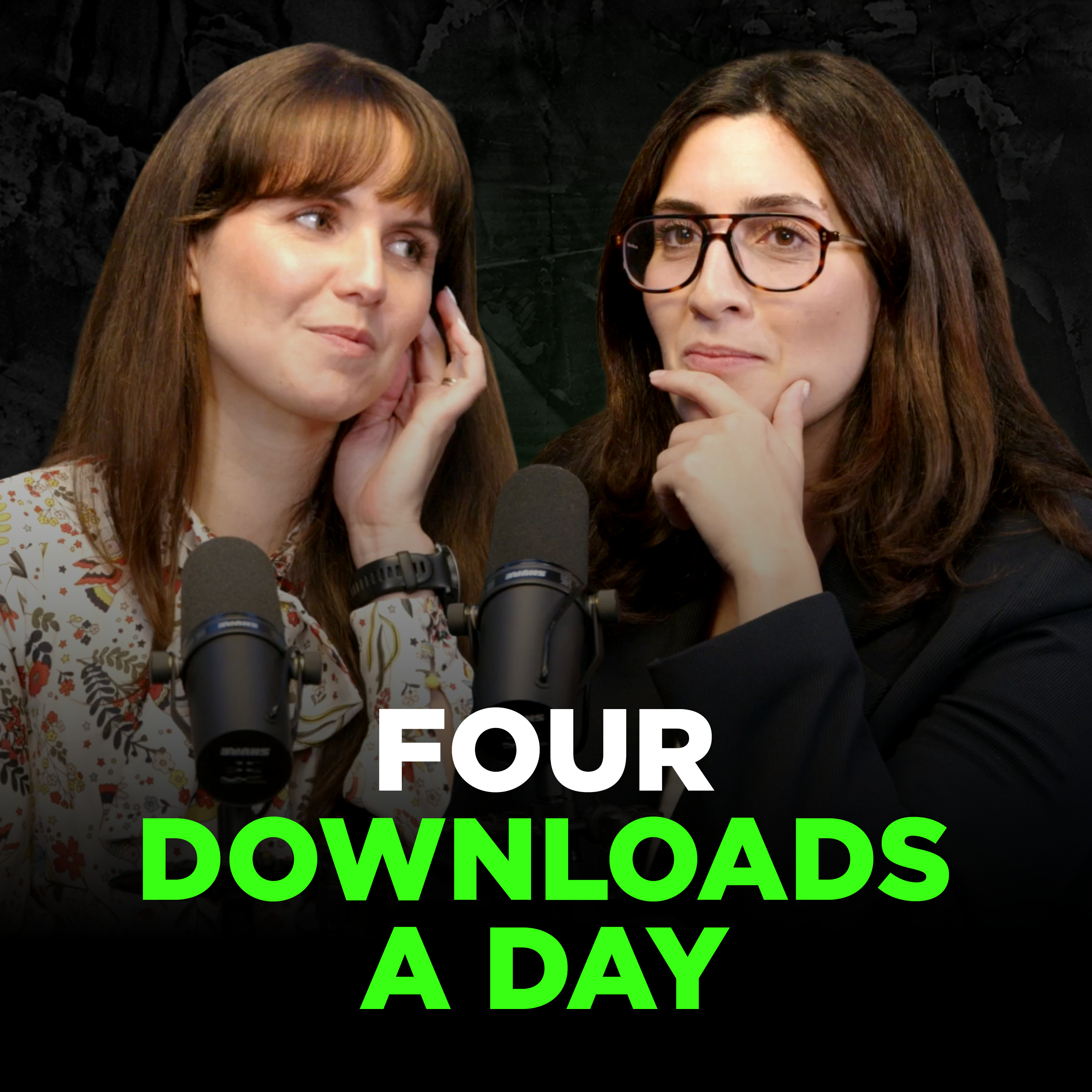
Four downloads a day. That's what Jo Goodall and Jas Schembri-Stothart were celebrating when they first launched Luna. Then a teenager created a TikTok about their app, and everything changed.
In this episode of Screw It Just DO It, I sit down with the co-founders of Luna, a health and puberty app for pre-teen and teenage girls, to discover how an Oxford MBA project became a growing business.
With no technology background, they built their first prototype using Google Sheets and Zapier, faced brutally honest feedback from teenagers about their branding and learned how to reach an audience that understood their product better than they did.
We also discuss fundraising rejection, building a business together, expanding into America and the exhaustion that nearly made them give up.
It's a conversation about listening to your customers, learning as you go and finding the courage to keep building when things get difficult.
Key Takeaways
◼️ Your customers can validate an idea before you invest heavily. Jo and Jas realised Luna had potential when teenagers testing their Oxford MBA project asked when they could download it.
◼️ You don't need technical expertise to start a technology business. Their first prototype was built with Google Sheets, Zapier and plenty of trial and error.
◼️ Brutally honest customer feedback can be invaluable. When teenagers rejected Luna's original branding, the founders listened and involved them in shaping the brand.
◼️ Your users may be your best marketers. A TikTok created by a teenage user helped take Luna from four daily downloads to hundreds and then thousands.
◼️ Build for your audience, not your assumptions. Luna evolved by listening to teenagers while also addressing parents' needs and building trust.
Subscribe to Screw It Just DO It for more conversations with founders and entrepreneurs who stopped waiting and took action.
🎧 This episode is powered by WorldFirst, helping ambitious businesses make international payments, pay overseas suppliers and collect payments from around the world.
🌍 Doing business internationally? Create your free WorldFirst account at: https://www.worldfirst.com
🎟️ Ready to take your next big step? Join us at the Festival of Entrepreneurs on 2027. Connect with ambitious founders, learn from successful entrepreneurs and discover new opportunities to grow your business.
👉 Find out more: https://www.festivalofentrepreneurs.co.uk/
Scan the code with your iPhone camera
Listen in the app.