 Screw It Just DO It with Alex Chisnall
5 Nov 2026 · 54m

 Add vo to ChatGPT or Claude to ask about everything you hear
vo listened to this episode to put together the overview and transcript, so there may be the odd mistake.
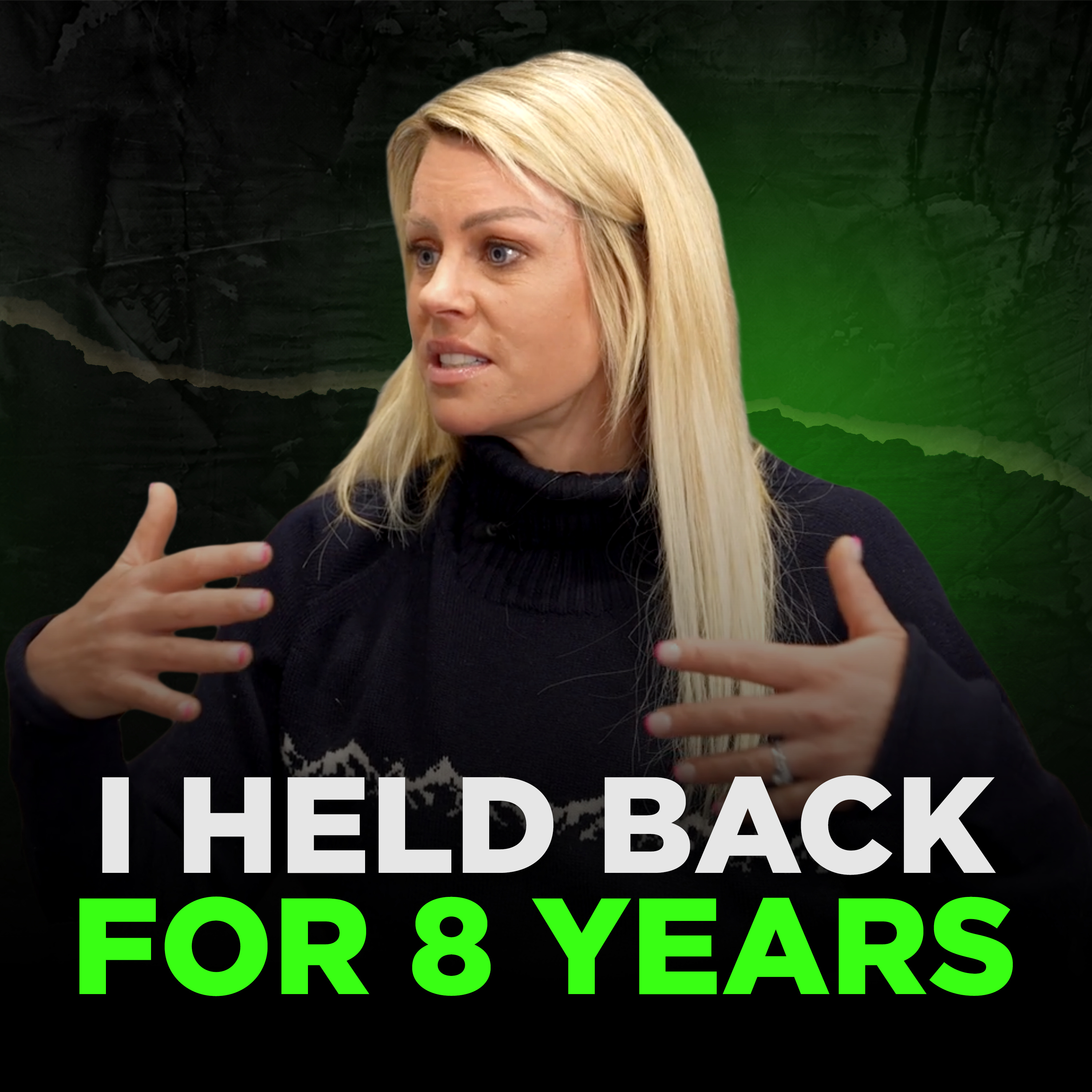
Chemi Alcott (Chemmy Alcott) reflects on skiing at “80%” for eight years due to fear of failure, then her “screw it” moment that led to becoming the first British skier to win a World Cup run, followed by years of severe injuries and how she now embraces risk, imperfection, and coaching.
Alcott is widely regarded as one of Britain’s greatest skiers: four Olympic Games, only British female to win a World Cup run, British national overall champion (seven times), and a peak World ranking of eighth. She started skiing at 18 months (first skis), raced at three, joined competitive racing at eight, and later trained with Canadian and Norwegian teams for eight years.
Underperforming to protect self-worth can block excellence; true breakthroughs come from skiing “without expectation, limitation and pressure.” Injuries taught her more than medals. Risk and failure are necessary for growth; fear is normal.
a World Cup season where she was disqualified and got a second start, leading to her historic win; a broken neck at 12 and a leg injury lasting 10 years; pandemic ice/cold therapy routines; retirement transition via physical goals and coaching (Carpe Diem Coaching) for ages 6 to 86.
0:00And I got into a very dangerous platform where I performed and chose to perform 80%. Okay, I was top 20 in the world, but I couldn't give my best. I always had this fear of failure and fear of letting all these people down. And I had a crash and I went and saw my surgeon. He said to me, listen, I want to let you know the risk now you're taking. And I skied without expectation, limitation and pressure. And I was like, right, let's just go. Nothing good can happen from this. and that's the run that I made history and became the first British skierist to win a run in a World Cup. It was the perfect run because it was so bloody imperfect.
0:38Alex Chisnall: Welcome to another episode of Screw It, Just Do It with me, Alex, and my very special guest today, Chemi Olcott. Widely regarded as one of Britain's greatest ever skiers, appearing at four Olympic Games and being the only British female skier ever to win a World Cup run. She only ranked as high as eight in the world and became British national overall champion and impressive seven times. She received the first ever set of skis aged 18 months, began racing aged three, joined competitive racing at eight and never looked back. However, her run to the top was not without its challenges. Having injured herself, I need to check this one, you know, broken over 45 bones in her body.
1:17Yeah, ridiculous. Some people know when to stop, don't they?
1:21Alex Chisnall: Clearly not you. No. Starting with a broken neck at age just 12, and you had two vertebrae. Yeah, you can see it actually. I've got a long top on, but we are. We are. Can you see that? Can you see my neck's like fused together there? It's got a big lump there. Yes. Can you see? So that's where my bones are fused together. Yeah. And then I've got my lovely leg here, which you're probably going to talk about. Yeah. Yeah. So I saw a friend yesterday at School Run who I've seen every day for four years. And he said to me, what's wrong with your leg? That's my broken leg. I've had that for 10 years.
1:58It's been coming out of my body for 10 years. It'll never heal.
2:01Alex Chisnall: So it's, I call it, oh God, I've gone off topic already. I go off with this first question normally. I call this Nick Faldo. Explain. So I think it's really negative when you're coming back from an injury and everyone every day says, how's your pain? How's your leg? I don't want to think about the crash all the time. I don't want to think about my body having to go through this, you know, painful experience. And so I was like, right, okay, I know you need to ask me because you're trying to keep your eyes out for me and make sure I'm good to go. But I don't want to call it like pain. So, and when I get swelling in the ski boot, this is it looking good, but it looks like a golf ball.
2:38Like it swells a lot.
2:39Alex Chisnall: Okay. So I'm like, right, Nick Felder. Now I'm sure the bloke's, I'm sure he's great guy i don't really know him but he was the first like famous golfer i was like nick i'm gonna call it nick so this is nick faldo and i think nick faldo might be a great guy but i just don't want him to be part of my life anymore so i my mission in life now is to get rid of nick from the front of my shin okay he's got things to do places to be he doesn't need to be hanging out on my leg anymore how do you get rid of that um so actually oh my god we've gone straight in here But I had pain every day for 10 years during my last Olympic cycle.
3:16I was pill popping. I was having a huge amount of paracetamol every single day. It got to the point where I couldn't sleep either because obviously skiing is all about shin pressure. In order or learning skiing also is about shin pressure. To have control and to stop, you have to push on the front of your shin. So I have to push through this break a lot of the time. And it's sore. Otherwise, I was compensating. you start compensating at 90 miles an hour skiing you're you're going into the injury zone yeah and so i would take whatever i could to perform and numb the pain now if i'm numbing the pain i'm also losing my senses on the skis which is not good but it was the only way i knew how to get to my last olympics and then actually the first year that i became leap center of ski sunday was the pandemic and they said to me we're gonna film we're gonna shoot this somehow we're gonna get out of Switzerland we're going to do this like aspirational program for people who are stuck in the UK um but you've got seven weeks on your own solar bubbling and interesting to know then because
4:18Alex Chisnall: I've only discovered like cold water therapy since lockdown by going down to the beach you know yeah sandbank freedom total freedom literally the only idiots on the beach and I was doing it um everyone had like a different reason to do it you know some people for their mental health yeah um for me it was I was training for my first marathon and it was just pain relief like you say as an athlete then had you used ice baths for years or do you only just discover them relatively recently yourself I think so my situation yeah yeah I know you're like I'm cold enough as it is no I remember every Olympic cycle Team GB have the Mac Daddy of accommodation in the Olympic Village it's something that you're not used to for the four years in between and that's when I first got into ice therapy because they had it there for the bobsay guys because they were all come from athletic sprinting background where ice therapy is huge um so got into it then um and then when i was ranked eighth in the world unfortunately there wasn't enough funding at the time so i joined the canadian ski team so for the last eight years of my life i skied with the canadians and then the norwegians and so i paid into their programs i raced for britain but it meant i had teammates and i had more support than if i had a private program and the canadians were really into ice therapy so we used to do it a lot um and i think it's kind of crazy because my body likes the extremes you know i love if i've got period pain i love the heat but if i've got like body muscle muscle pain i i just think the cold therapy is amazing um game ready was a big part of my life you've probably seen that's the ice compression thing you know it's an amazing part of very expensive kit that has compression and ice um and i reacted very well to it so but i i don't like the cold in England this is so weird because all the locals are like oh god you're saying this is cold I'm like yes but I'm in the mountains I'm prepared for it so yeah I'm surprised you haven't got like then um like a barrel sauna out on the uh on the deck there oh that would look nice for the heat yeah not just to look nice I mean for the heat I think infrared sauna would be the way to go I'm really think that's an incredible I sometimes in town I do the cryotherapy yeah and I think that having the infrared and then the cryo and then the although the thing with cryotherapy that really upsets me and puts me off is so you do this cryotherapy is very cold ice chamber it's like two degree two sorry two minutes minus 180 very dry cold so what you do to prepare your body is you go for an infrared sauna for 30 minutes then you go on a vibration platform okay but you have to be naked okay everything's jiggling around oh my god and the one i went to has a mirror on the back of the door.
6:59And I had to face the back because there was an infrared thing. So I'm facing this mirror. And then it defeated the object of it because I'm trying to tense my body so I look better when everything is wobbling. And I was like, guys, just a little bit of feedback. Never put a mirror in front of a vibro platform when you have to be naked. I mean, I'm body confident, but that was terrible.
7:18Alex Chisnall: That is hilarious. I love how he just dived straight in. Oh, no, sorry. I go off piece. Yay, boom. I usually do it after the first question, but we've done it before the first question. Did I interrupt your intro? I mean, that's terrible guests. Etiquette. Yeah, terrible. Fire me now. We'll let you off. We'll let you off. So loads of questions just from that initial response. But I'd love to know, because we talked about this earlier, you know, screw it, just do it moments that took you, you know, from a path you were on to a different path. And it's very much, you know, people who spend their whole lives wanting to do something, procrastinate the hell out of it and never get to do it.
7:56Alex Chisnall: Whereas someone like yourself who had their dream job, their dream lifestyle, and hopefully you're doing another version of that now with, you know, Ski Sunday presenting and all the other amazing things you were telling me about, which we will get into, including e-foiling near me in a couple of days. Yeah. But yeah, tell me any moments or a moment. First, I want to celebrate you and this epic podcast because big passion I have now in retirement is to get people to go out there and take a risk and make a change. and everyone lives in fear of that. You know, change innately is something that we don't know how to handle because we don't know if we can personally develop to handle that change.
8:35So we live within ourself. And the reason I started with that is because this is something that I'm passionate about as well. Because for eight years of my ski racing career, I skied within myself. So I was an incredibly talented youngster. When I went to World Cup, I was fit, I was healthy, and I had a great team. Sir Clive Woodward has picked me out as a one to watch. I had this huge support network of professionals there to make me be my best. But at the end of the day, it was up to me and that start gate. And I got into a very dangerous platform where I performed and chose to perform 80%. I couldn't ski 100%.
9:14I couldn't be my best continuously for over eight years. because I was so scared that if I give my all and didn't win, still didn't win, I'd have to admit to myself and all these people who'd invested in me, not just my family, but all this staff, these coaches, these incredibly talented people that I just wasn't good enough. So I found this dangerous platform to perform 80 % and I kept 20 % of my best in my back pocket to self-validate why I wasn't winning. so when I got to the bottom of a run instead of taking ownership of it I was like okay it was good it was good enough to be the best in Britain on the world stage it was okay I was top 20 in the world but I couldn't give my best I had this fear of failure and fear of letting all these people down so I chose to underperform for 8 years and then I put myself in the start gate one day a little background to this just for people who don't know ski racing it was sold in World Cup men and women race the same track it's a gnarly gnarly race it's up in the glacier there's no oxygen it's like always very very challenging first race of the season and you only get a second run in alpine skiing if you're top 30 and I was 31st so we came down I just had the most amazing pre-season training I hadn't been beaten I basically choked that first run big time let everyone down the whole team we've got in the car we started driving down the mountain and I felt like there were four grown men in the car who I'd let down.
10:46Like this young girl full of potential had chosen not to be her best and it really hit me and then the phone rang. Someone had been disqualified and I was back in this race. No way. You turn up the mountain. I inspected the course from the gondola going above it. It's like the least professional thing. I coach minis who are 10 years old who would never do that and I was at World Cup and that's what I did. So I got in that start again, finally, in the weirdest way, because my preparation for this to perform well had been thrown out the window. I was free and I skied without expectation, limitation and pressure.
11:22And I was like, right, let's just go. Nothing good can happen from this. And that's the run that I made history and became the first British ski racer to win a run in a World Cup, which has now been smashed through with Dave Riding, who's just a legend. But, you know, I set the pathway to believe that Brits could do it. And I did it in front of 40 ,000 Austrian fans. And they were like, who's this Londoner? Being our girls. Well, they didn't have a Cockney accent at all. So I don't even know.
11:46Alex Chisnall: None of the Austrians did, no. But that was my moment. That was my screw it. And the skiing was so imperfect. A very strong characteristic that I have for success is also very much my limiting. And that is my search for perfection. I've always wanted to be a perfectionist. I want people to see the best in me. I'm a people pleaser. So I took every book. But then I chose a sport like skiing, which is all about risk and pushing yourself out your comfort zone, which is more instead of the search for perfection, that's more the search for excellence because it's like a personal growth. It's a continuously evolving situation to be in.
12:24So that run, I mean, I did the whole of the steep on my inside ski. That is not written in any book on how to ski.
12:30Alex Chisnall: Your muscles will be screaming. But I was just fast. I was like messy and fast and letting it go. And that was my screw it, let's do it. And I got to the bottom. It was the weirdest thing because I was so happy and I stayed in the leader's box for so long. And my team came down and they were all chilled about it. And I was, you know, I was throwing my toys out the ground. This is it. I've done it. This is my moment. But it was really nice that they weren't matching my emotion because they knew it was in me. They were like, oh, yeah, this is just another day. You've just done it. You know, you've just delivered.
13:03And so that was massive for me. And unfortunately, after my, you know, screw it, let's do it, my life could have changed and that could have been Olympic glory and everything. But with that philosophy to push yourself in ski racing 100%, there's such a thin margin between success and complete disaster. I break my ankle two weeks after that run. And this is when my injuries happen. So having spent eight years of my life healthy, skiing 80%, I then pushed my limit, had the most amazing satisfaction in my life, but I was either winning or in a helicopter like there was there wasn't any gray area so it's a hard one hard pill to swallow because what could have happened but actually I I learned more from dragging myself up from all of those injuries that you talked about than
13:47Alex Chisnall: than any medal anyone put around my neck and when you kind of reflect back on that was that the perfect run that you ever did it was the perfect run because it was so bloody imperfect it was so free and mentally you just cast everything off I've got this big issue with perfection I think it was I've got a big family and I just wanted to prove myself and I really want to do what I'm told to do because I invest so much time into myself that if some professional are telling me to do something I will do it but it ended up me trying to tick so many boxes that I became this mechanical cog instead of this eagle willing to fly.
14:29And there are some sports that if you do that, if you took every box, you know, power ratio sports, you're going to be the best in the world. So maybe I should have done one of them. But I love skiing.
14:39Alex Chisnall: That's interesting though, isn't it? And what's your first memory of skiing then? If you like, you're not going to remember like 18 months getting your first skis or three years old, but do you have a first memory? Well, I don't know if this is my first memory or I've been talking about it so long. But I won a race when I was three years old. I did my first race at three and I've got this teddy upstairs as a medal and I won it. And, you know, for years and interviews, I've told everyone that I won this first race. And I was three. I was like this child prodigy. And my dad finally outed only about five years ago.
15:11He's like, you've got to stop telling people that.
15:13Alex Chisnall: Right. I'm like, well, what do you mean? He's like, well, it's a complete lie. You didn't win the race. I was like, well, I got this medal. And, you know, that inspired me my whole career. And he's like, yeah, everyone under the age of five got a teddy. And I said, look, I must have been fast. Come on, look, I went to four Olympics. And he's like, no, no, you weren't fast at all. And I was like, come on. He said, you stopped to give me a kiss on the way down. Like my dad was videoing. And then with the big cameras and I come over and I give him a big schmooze. And he's like, you're in a race. Get focused.
15:44But I'm three years old. So anyway, so I don't know if I remember that, but I feel like I've talked about it so much that I don't know where the memories start. Yeah, yeah. The reality comes in.
15:55Alex Chisnall: I say your first memory's around like three and four, aren't they? I'm going to pretend I remember it. And I remember winning, so. You'll stick with that story till you die. He'll be on her grave. She thought she won. Look at this teddy. And is it or was it something like becoming a professional skier? When were you first aware of wanting to be that? So I loved tennis as well as a kid. And I wanted to be a tennis player in the summer and a skier in the winter. And I was like, I'm going to make. summer in the winter olympics and not realizing how much of a dreamer i was being but i i remember having a dream and i and i have evidence of this when i was around six years old where i dreamt of winning olympics in skiing okay and the whole thing like i was on the top of the podium there was the union jacks there it was it was just a massive moment for me a pure happiness and satisfaction and i remember coming down and telling my parents and they said right you you should write write your dream down and draw pictures of it and I said I don't really get they're very they're athletes my parents so they got this and then I said well why do I need to do that and well if that's your dream it's going to be a really hard roller coaster ride to get there and there are going to be some really tough moments at the bottom when you're injured and you're hurt and you're not delivering but if you remember the purity that you had at this obviously they didn't say it in this manner how eloquent I was very intellectual when I said but then you know I kept revisiting that when i faced hurdles and went okay the dream started from a passion and you know a love of the mountains that's that's where it started and that is where kept me going that's interesting and i remember like chatting we were talking about jay morton before and he was saying to me i just love being in the mountains yeah like when i just came back i just again you you know you're obviously there very often but for most people to do it like once twice three times Yeah, it's amazing.
17:50Alex Chisnall: You get there and you're just like, I feel like I'm behind. But I think that's why I can keep jumping ahead. The reason I retired was because I wanted to keep going after Sochi. And I had a crash in the World Cup after Sochi. And I went and saw my surgeon. He said to me, listen, I did everything I could to get you in that start gate of Eurolympics and Sochi. But I want to let you know the risk now you're taking. So my bone here will never heal. So if I break my leg now, they will have to take my leg away. I do not have any bone it's got metal plate so I've got a 15 inch metal nail down the bone marrow this right leg so that's how I wait there through that metal if I break that now then that leg's gone and he's like you're sacrificing the rest of your life in the mountains the rest of the passion that you have not just for racing but for the mountain life and it was really good to have someone it sounds bad sinister take your dream away because I was so focused and I would have kept going because I love it and I love being an athlete that actually someone's saying that I was jeopardizing my health and my life you know I want to be 80 and ripping around the slopes like I love it yeah that was that was just really it was really helpful for me to transition away from being a racer because I define myself by being Shemi the ski racer for my whole life and I've got this really quirky name so I didn't really have to tell anyone who I was if I said Shemi the ski racer people people got it if they need the sport personal brands before they were personal brands exactly i know i'm so savvy way ahead of your time um interesting like again uh we're talking about nick faldo before but talking about golf like having seen tiger woods like come back from a serious injury away from the golf course i mean that was a similar um accident as i had actually yeah i was gonna ask you that okay and to see you know him kind of at his age but trying come back in and play and clearly the body is saying no at what point do you want someone to make that decision for you then when when you're sacrificing your health yeah i think if you know going to the sochi olympics i skied for four minutes before i got in the start gate at that olympic games that is nothing because i'd broken my leg three times in the preceding four years i had hardly any race experience i came 19th i was 1.8 off the lead and i was buzzing i was like i've got this even though I'm compensating and I can't push against my right leg.
20:12And I would have kept going. But, and it's not always about being competitive. And this is very hard for me to say because I spent my life trying to win. And maybe not winning, you know, not fulfilling my potential. But actually that last Olympics I went to, I'm probably more proud of that 19th than any of the better results I achieved. Because I knew I couldn't win. I was skiing with this massive impediment. but I was still having the confidence to go out there and give it a go and charge and go that's inspirational to me it's going right it's not about the victory it's about the journey you know I know that that's cliche but it is it's about putting yourself out there even though you might fail my motto is I never lose either I win or I learn yeah and I learned a hell of a lot yeah after that decision I made for my screw it moment in Solden I learned so much more
21:05Alex Chisnall: And what part of your career was that? When you say that, like, those eight years you were going at 80%, what part of your career was that, remind me? So that was when I became a senior athlete. Okay, so at the beginning. At the beginning for those eight years. And female athletes can succeed in that area. In fact, most of them are in that age. And the first year I went on to international phys, I was ranked second in the world in my age. You know, I had this huge trajectory of going to win World Cups, and then I didn't deliver. I wasn't the postman I wanted to be. You weren't the postman that you wanted to be.
21:38Alex Chisnall: Wow. And do you, are you competitive? You're one of these people now that you were super competitive then. Do you carry that into every other area of your life? Talking about racing this far. Am I competitive? Yes. Everyone will say yes. But I think it's more I'm willing to try my hardest. And a lot of people aren't. Like I will put everything on the line to be good at that. you know i won't go into anything and dip my foot in the water i will jump in like that's what life is for me now if i said yes to something i'm stubborn enough to go through with it i will jump in and try as hard as i can now that doesn't mean that i believe i'm going to win but it means i'm going to push myself yeah out my comfort zone and learn a new skill yeah and i think it's really important to still do that so at 40 last year um i learned to skateboard and my kids also learned to skateboard, they're six and four.
22:30And it was really important to me that they saw me fail at something. Because so often being a parent, we want our kids to see us succeed. Actually, they had learned nothing from that. They learn more than seeing you fail and pick yourself up. And I was really crap at skateboarding. Like they saw me fall over. I had all those like scars over my knees. I mean, I looked like a complete idiot trying to learn. And then one day I got it. And they ran over this field like, you've done it. You kept going and look, you've done it. And it was so good for them because when i try and get them to wake surf or ski or snowboard and they're falling over now they're going oh yeah mommy fell over that's amazing life lesson for them to actually we rarely do that we're like oh we want to show our kids that we're successful and happy and and you know i'm i'm warts and all like i'll cry in front of my boys when they've turned on the kind of force that i can't handle i i'm not afraid to show them that they've affected me in that kind away and i think it takes a lot of confidence to do that but um but it's massive for young people because young people now are so scared of failing yeah i've also done some terrible parenting with them if i'm honest so i because i because i want them to learn to ski by falling over to push themselves yeah i bribe them and i give them a sweep when they fall and if they lose two skis when they fall they get two sweets now this this just means that they've got massive massive amount confident and low skill and they are nightmares on the slope and they're trying to lose two skis the whole time but i think it's so important for young people to go you're gonna fail in life you know these these schools that that don't celebrate success and yes it's so dangerous because if you're a young kid and you're not learning how to make mistakes and take risks and pull yourself up then what happens when you go for your driving test and you fail like oh no no I don't feel yeah no well oh I don't get it but it's magnified isn't it because because of
24:24Alex Chisnall: social media smartphones and you see the lens of the perfect yeah yeah and I fall into that a lot like it's really important for me and I really have to try and say okay my kids aren't smiling all the time this is I lost one of my sons on uh Saturday uh uh Wisley 40 minutes I haven't actually posted this yet this is me trying so he's six years old six years and this is something I really need to post but it's it's a failure on my part and it was dangerous and it was the worst 40 minutes of my life and i've had a huge amount of pain um but this 40 minutes i mean it was and it was magnified almost by the fact that when i found him he was totally fine and he hadn't even been looking for us because i know my sons to be i mean he wasn't just unaware he was actually in a fountain at wisley where he'd seen some wish money and he was putting it in his pockets i mean the guy, the boy was stealing and then lying to me, but he was just so independent, which is great that I've given him that quality trait.
25:24But I don't know how to handle that. I don't know how, you know, how to rein him in without teaching him that the world is his oyster and that he should go out there and charge. But I had a horrendous... Anyway, and I must post about it because it's really important. But at the same time, I failed as a parent. Like it was my fault that I lost him because I chose to let him go down this path literally and in 30 meters i would meet him together because i think he needs to explore the
25:52Alex Chisnall: world you should definitely post that because every parent as a parent myself could totally relate to yeah and i remember my my eldest evie and i think she must have been i don't know four at that age born with sevens rugby festival like you know 15 20 000 people like and it is every parent's worst nightmare yeah suddenly yeah where is evie i mean it was also it was like 40 minutes where i hated humanity because i didn't understand why no one had found my son and was telling someone because i had there were radio people out everywhere but the reason is because you're not gonna look at a happy little boy nicking money from a fountain and think he needs help like he looks like he's having a great time whereas if he'd been panicked and screaming everyone would have helped him so i'm like oh gosh how do how to man how do we manage kids Well, again, there's no training courses.
26:41Alex Chisnall: There's no money for it. NCT should keep going until they're 18. Yeah, yeah. I need community support. But interested to know, what's your attitude to risk like then? Risk is imperative. We need to find risk. We need to, I mean, that's the kind of failure thing, right? Without risk, we never fail. we need to find our boundaries and push them sometimes because of all ways we're living within ourselves within our means we're not progressing as people you're 80 and that's what we found post pandemic is everyone you know risk got taken away in the pandemic so everyone became comfortable with life and now it's very hard to get comfortable people to make a change yeah and take risks so that is something that is really important find your 100 and it's going to to be uncomfortable it's going to be difficult it's going to be challenging but those moments when you drag yourself out are the moments you find out how great you can be yeah no agree agree and you know my listeners would be sick of me talking about this but it was you know for me one of those moments was was during lockdown someone like challenging me to the nhs 5k it was like run 5k nominate five people yeah pay five pounds the next week i decided to do 10k yeah the week after i did 10 miles the week after you're donating a lot of money and then a week after I did 26 miles and I did a marathon a week later so what within five weeks five weeks yeah but that taught me so much about what you can do about what you can do I literally thought and believed and still do but if I can do that I can bloody do anything yeah absolutely but then of course you have those moments then that you you'll doubt yourself and you have to you know kind of have that as your north star I think that you can achieve that but doubt and fear all that's good yeah Because if you're not doing anything new and exciting, you won't feel any of that.
28:33So all these people say, I'm scared. I'm like, that's great. You're getting out of your comfort zone. You know, the amount of times I mentor young athletes and the girls will all tell me straight up, I'm scared. I'm like, of course you are. You're about to throw yourself down this mountain. I'm like, I'm not natural. And the boys, I can see they're blocked by fear. But they'll never admit it. Because they're labs and they're not allowed to feel fear. But the girls will. The girls will. And so then I have to tell all the boys about all these times where I, you know, and shat my pants and all these things that I've done that I've scared of.
29:00And then eventually they go, oh, am I allowed to talk about this? I'm like, yeah.
29:05Alex Chisnall: Yeah. It's like you're allowed to have fear. In fact, those, and for little kids, it's like the nerves in their stomach that then become their dragon wings, but it's their choice. They're getting into that start gate, kind of like the ant fear bubble. You know, you're getting into that fear bubble, but you're also popping it and getting out of it. Yeah. And that is the moment you go, oh, my God, I've done it. And what would you say? So there you go. this is one that I'll play to my girls actually so they got to the stage now at 14 and 16 with their skiing that they like refusing to have any more lessons and they've just got you know comfortable intermediate the plassoing yeah yeah so it's like how do you get them yeah and it's probably not me because I'm the parent they won't listen to me but it's like how do you get them to actually then push themselves yeah and become better because they love it it's up there you know favorite holiday great and as you get older and you'll you'll you'll know this anyway probably but we've worked out it's the only holiday you can do as a family it's amazing isn't it everyone can do together no matter what age you get different experiences throughout the day it's yeah yeah so well the first thing towards that is you don't jump down i mean i don't like these lines but a double black diamond okay you slowly go towards your fear like you slowly start doing parts of a run that were challenging to you faces that you never thought you could do you start halfway down you just slowly build up because the worst thing you can do in skiing is or in any sports that are slightly dangerous is to push someone too far out their comfort zone they can't handle the fear that becomes debilitating so you you just slowly step towards it like you want to feel the butterflies you don't want to feel like the frozen block of you know there's no chance i can do this um but it's i mean it's essential use you skiing for your girls as a synonymous attitude to life.
30:46They have to get out of their comfort zone. Do they want to be 80 % of their best the rest of their life? If someone says yes to that, then send them to me. Bootcamp time.
30:57Alex Chisnall: Let's do that. Talk to me then a little bit about the coaching and what you do. That's you as an entrepreneur, and this is you and your husband's business. Tell us a little bit about that and what kind of age range do you look up? So when I retired, I got these kind of features on Ski Sunday and that was great, but I had a lot of time and I wanted to dedicate that time to something. And I thought, right, I'm going to go into coaching. And I was very lucky that I got a level of coaching job very high up, like World Cup. We won our first World Cup with the US ski team. And I remember we had this big celebration and I had literally shown this athlete the direction of a jump and given them the protein.
31:36I had not helped mould an incredible performance at all. I felt empty. and yet this is everything that I tried to achieve as an athlete I'd become a coach and achieved it as part of something a lot bigger than me you know I was a tiny tiny part of that but at the same time I was like this isn't what I want to do I don't want to work with elite performers I want to mold amazing young human beings through sport like I want to use skiing to teach people to fall over and get back up again and yes I might make some Olympians maybe but at the end of the day it's not about that it's about changing their lives through sport and my husband had retired at the same time from from world cup skiing and he'd gone into coaching the british disabled ski team and he'd seen what sport can do and how it could change lives so we came together and we set up a business called carpe diem coaching people think it's shemmy dougie coaching but yeah but carpe diem is something my mum said to me all the time like go out there and do it and sees it um and our youngest client is six and our oldest is 86 so we do adult performance counts which is amazing how old you can ski yeah 86 amazing um and i mean these guys are incredible athletes but um it's it's about using skiing to to to teach people the confidence to take risks like your daughters it's a great sport for that because you've got to fall over yeah whether you're learning whether you're pro you've got to push that i still fall over all the time
33:02Alex Chisnall: me too lots of crashes this last season lots of crashes um and when when are you at your happiest now oh i think i i have daily happiness i i try and have gratitudes every single day so we were talking about this before my mum died when i was younger and it made me realize the value of life and how easily and quickly it can be stripped away so i want to enjoy every single day so I try when I go to bed at night and think about three things I did well today three opportunities for tomorrow and one thing that made me giggle and genuinely if that hasn't happened I will go downstairs and try try and make it happen really yeah yeah and I know there's but not the giggle one there's certain things that make me laugh like I can YouTube videos of animals doing stuff yeah yeah every time things like that but I just I think it's really important to still giggle and to still have fun every day and it's different it's relative you know today was i went to the gym and i started dead lifting again i mean that's so weird that i did that for my whole life but my back's not been great since i rafted the amazon i just dropped that in there though just like that and today i could do it again and it made me really happy i was like oh my god i'm gonna be able to like i love this lift and i can do it again i need to get jay and you jay morton and you together and you go yeah when i was at the antarctic or when i was in the amazon when i was ever everest i know i don't know i'm that hardcore no that was a midlife crisis i turned 40 and not only did I learn to skateboard and I was like I want to do something and I don't want any snow to be involved or any ice and so I found this raft race in the Amazon uh and you make your own raft I mean it's actually it sounds like it was a bucket this moment but it was a disaster and I'm not afraid to say that okay you know I sacrificed 10 days away from my kids with my husband who had to come in because we were doing a girl's raft and then two of the girls pulled out so he had to come my cousin and our really good friend and we had to build this raft and we were put on this island with some blunt machete.
34:55It was a disaster. We were useless. We were useless.
34:58Alex Chisnall: You wouldn't have survived. And we didn't see anyone. Like, it wasn't a race because we were so slow that we didn't see anyone. But anyway, I mean, I'm sure in time I'll find a reason why I did that other than just to hurt my back. Yeah. We did see pink dolphins and no other racer saw pink dolphins because they'd all finish the race every day by 5 p.m. sunset, but we were still going. Hey, you might see dolphins Friday. Oh, amazing. Yeah, yeah, yeah. Surely they'll hear the whirring of the motor under the water. He's being able to film them as he's gliding. I'm not going to be focused on that.
35:30Don't let me have any more distractions. I've got training to do.
35:37Alex Chisnall: Talked about the injuries. How much of a role has luck played, do you think? Do you think you were unlucky? You always think you're unlucky. Or do you just think you pushed yourself so hard that you're on the line? My injuries, I'm really proud of my injuries. Every scar I have, I pushed myself. I earned these scars. Yeah. My scarless underperforming body for eight years was useless. And now my body that has come through all the nets, all the brakes, all the helicopter rides, that's a good body. And what do you think? I hate it when I do shoots and they try and cover it up. Really? So I'll do a photo shoot and they'll want me to be perfect.
36:12And they're like, can we, can we, you know. Do anything with that. Yeah. And I'm like, no, you can't. No, you can't. Don't take my warts, my war wounds.
36:21Alex Chisnall: Yeah. no i love that um and and what stage you broke your neck which you showed us at 11 12 um at that age i've got a daughter who's like just turned 13 what age do you approach fear what were you like with like you know getting back on the slopes i mean listen my neck injury is the weirdest thing ever because i became really popular when i came back with my broken neck so once i finally got a hospital in France because I was allowed to have one person stay inside with me at break time which apparently is what everyone wants to do people used to bring in cakes to bribe me to choose them really I became so popular I went to this school with a school uniform but I used to have to wear this orange yellow jumper so people stayed away with this my big so listen I remember that as becoming you know relatable and popular whereas before that I was this crazy driven freak from London who wanted to be a skier.
37:20I mean, at 10 years old, I went to New Zealand on my own to ski race without a mobile phone at 8pm on Tuesday with my one telephone card. I would walk down to the phone box and call my parents. Like, that's how obsessed I was. And then I cried on the way home. So actually, my neck break, my neck break was a way for me to become normal to my peers. Yeah. And popular.
37:45Alex Chisnall: Which is what every kid's trying to crave to do. Yeah. You want to be normal. Yeah, you don't want to stick out. And you want people to bring you cakes every day. I mean, I did. Obviously, health and nutrition when I was 11 was a little bit lower down the pecking order. Yeah. And what about kids? But all I remember seriously from that is that someone was taking away my time that I could be skiing. Okay. So you were still just thinking about getting better. So it was like the grass isn't greener. Yeah. Like, I'm not allowed to ski. And you always want to do what you're not allowed to do. Of course.
38:16Yeah. So what did I want to do? as soon as I was ready I wanted to ski again. You stood back on it.
38:20Alex Chisnall: Okay, so there was no doubt in your mind. No, it was so... Do you know what, actually, having my first big injury, being my neck break, meant that everything after paled in comparison and became easier to handle. My worst one was my 2010 crash because I was in my prime and it was a really bad injury and it took a long time to recover. But still, it's not a neck break that I had. So everything, I can handle everything you throw a curveball at you that young in your life and take away your biggest passion for life then you are going to become so obsessed and focused after that no break nothing's going to pay nothing's going to get in the way helped you then maybe yeah yeah I'm not sure I'd recommend it as a choice yeah and what about somebody you know to get to where you got you know like eight in the world for example what is the difference then and i suppose this goes for for any sport but to get to a lindsey vaughn uh michael schiffrin yeah to get to that 0.000 having coached people and and seen experience that you said what do you think like what qualities i mean it makes me sound like i have a massive ego if i say a bit of luck but there is a bit of luck you know a sport like skiing is about riding the confidence and like a lindsey von i mean massively inspirational friend of mine she came back from huge injuries but always believed that she would win right whatever she'd been through year away from the sport she got in that start going she's like i'm going to win today just huge amount of self-confidence self-belief um and you know it's it's not the technique some of the girls who are best in the world haven't got the best technique but they've got this freedom to go this self-belief to charge yeah that's interesting because i saying to my to my girls and again one's a horse rider and one's a dancer and one's just auditioned to to get into um dance academy amazing so they are putting themselves out there and they gave um they like you know put out an email going we'll let you all know in the next week if you're successful we got like a text message within an hour going we'd like to make your daughter um uh an offer but i thought wish you hadn't done that because it's like you don't have to get any gcse's to get in we'll take her anyway yeah no you shouldn't have showed her no shouldn't you should have manipulated the so my parents gave me an ultimatum they said that if i got four a's at a level i could become a ski bum for the rest of my life oh really and i got three a's and a b and life was over i remember opening that bloody letter and it was all over and then I had my B remarked and it became an A.
41:02Alex Chisnall: Would they have done it anyway? Well, of course, of course they would have. But for me, it justifies, you know, choosing skiing. I always knew that I had the backup of education. It's so important. It's imperative to believe that you have choices in life. And actually all these people who give up their lives and go to ski academies from 10 years old, what else have they got? what social skills, what academic skills, like, all the eggs are in one basket, and that basket is brutal. It's a really hard one, and same with acting and dancing. Exactly, that's the thing, you go into a super competitive industry.
41:37Alex Chisnall: Yeah, yeah. But I always say, you know, similar to what you said then, is that, you know, you can get a whole bunch of people who've got the same skill sets. Yeah. And they've reached the... What makes you different. What makes you different. Yeah, what makes you need experience. And that's interesting what you say, not the most technically proficient, unnecessarily number one, two, three in the world. Yeah, like I never tried to ski with the technique that Lindsay tried to ski. It wouldn't have worked for me. Right. Yeah, even though she was smashing me in races, I was like, no, I've got to be me, but a faster version of me.
42:05Alex Chisnall: Yeah. And given that it's an individual sport, and I guess it's different when you go to an Olympics and you're part of a team, how many friendships have you kept from your time as a professional athlete? I mean, all of my best friends are girls I ski raced against. Really? Yeah, because it's an incredible environment. to grow up and this is why i couldn't make as a tennis player i'm a people pleaser i got to a level in tennis where people were cheating the net passes they were saying really nasty stuff for me trying to get in my head and i crumbled i hated it i was like but i'm going to be your friend like i want to beat you yeah but can't we be friends and and tennis is a battle it's a war against that person whereas skiing it's so dangerous that you're skiing with and against the mountain you can only control your performance so if I came down had a great run and ended up 10th and my friends all won you you celebrate them you pat them on the back because they have gone harder than you today they found their risk you know management much higher than you yeah and so I think um you create this amazing friendship plus you're traveling around the world all together I was the only Brit so yeah I had to make friends and it was quite good I quite liked that I was the only Brit because I instead of just staying with the US ski team I would talk to everyone You know, I made amazing friendships.
43:20Alex Chisnall: You don't just go and speak to the English speaking ones. But also they get you. You know, these are girls, athletes going on the same journey as you. Everyone's getting hurt. Everyone's tearing ACLs. Everyone's coming back from it. That's not normal for the rest of life. No, no. And it's true in my experience, like when you mentioned the luck factor, because, you know, I've interviewed somebody like, for example, like an Al Barrett from Grenade who just sold Grenade for 200 million. It's like, you know, there's so many elements of luck. played a part in my journey. It's not just anyone could have created a carb killer bar or whatever, but the fact is we've had all of these breaks.
43:57Alex Chisnall: I've gone against what my board said. My board said, don't launch it. No one's going to buy it. So because I secretly went, made 100 ,000 bars, put it out into the market, and they all went instantly. So I went back to them and went. Wow. Something like that. And that takes, I mean, that's confidence. That's 100 % unbreakable confidence. I mean, luck, confidence, talent. I mean, talent is something that we can all work on. Yeah. You have to have some kind of skill at the beginning, but it's this whole kind of cog around it. I love this cog analogy, that there's an area of your life that you need to oil to keep up with the rest of it.
44:28And it's not a weakness. It's an opportunity for improvement. And if you go in there and you tinker with it and you're like, oh, my God, I'm snowballing downhill, which is a good thing.
44:40Alex Chisnall: And what was it like when you made the decision to retire? and that came from speaking to a doctor a surgeon um what was that process like for you just that recently interviewed alex good saracen's ingrid rugby player and um it's really interesting point in his life he's 34 and he said he's absolutely scared shitless about life after rugby and i was like what do all you other players talk about he's like nobody talks about it yeah saracens are like probably the most from the outside looking the most professionally set up club in in rugby you'd think the support systems that are in place yeah but it's funny isn't it because i think at that level they think that it's it's going to affect the athlete's focus if they think about life after but actually what it does is it frees them to be their best right now because they know there's an avenue and a choice after yes um but it is really scary i mean i was really lucky to have been very vocal about like molding my future um but you you lose who you are you do you have to redefine yourself very quickly.
45:42Alex Chisnall: How did you do that then? First of all, I set physical goals was the first thing. I was like, right, I'm going to do this quadrathlon in Scotland. I'm going to do Ride London. I'm going to, you know, do all this stuff to make sure I have daily physical goals because already I knew mentally that would make me healthier. And then I just said yes to everything and went, okay, actually, I like this. Oh, I don't like this i i you see so many female athletes rush into motherhood because straight away they can have another hat a massive hat where completely you're responsible for someone else and you lose that you know definition of being an athlete because you don't need it at all anymore but i didn't want to do that because i all i'd ever known was ski racing and i so i was i wanted to explore who i was away from it um and straight away i was like right well i love the mountains you know my my retirement hasn't come because i've lost the passion for it yeah so then obviously then i'm looking at roles in that with coaching and with tv because i like talking i might notice that so i was like right okay what where can i go with this and i but i was lucky i was very lucky right place right time right gender should i say you know to move into that into that world yeah um and and how much of how much of that journey does does your that team had a say in when you retired like you know your your inner circle like your your husband your your closest friends were there people going you know are you confident about that decision have you doubted that decision i know but i'm so stubborn i mean if they'd said that it would have just propelled me to jump in but like the family thing's quite interesting because i had a lot of injuries they did try and have an intervention where they asked me to to stop before sochi because they were like look and it's very selfish existence every time i got hurt i moved in with one of my brothers, my family had to help nurse me back to health.
47:40They don't get any accolades for that. I'm the one who gets to wear that Olympic star bib, and I'm the one who's there. But there's so much gratitude for all those people who put their life. So when they come together and say, we think you've had enough. I mean, you underestimate the passion that that athlete has, and again, that becomes another charging point. No, I said I would do this. I'm going to do it.
48:04Alex Chisnall: And when you try to redefine yourself and you obviously have loads of opportunities coming away and you say yes to everything, at what point then do you start choosing when to say no to? I haven't learned yet. You haven't, yeah? No. That took me a long time. Yeah. And then you kind of reframe it, I think, because it's too thin. And also now being a mother, there's the guilt. Am I around enough? You know, I'm away from Ski Sunday and then it comes to spring and I'm trying to be too present and I'm running, running club at school, which I know nothing about, but I'm like, okay, look, I'm here, everyone.
48:37I'm here. I'm here. I'm like, am I doing this for me or am I doing this for their external perception that I'm a present parent? Yeah, I don't know.
48:46Alex Chisnall: Okay. Marathons. I've said no to running marathons. Have you? Well, my ankles fuse together now. So what I found doing the quadriathlon with you, seven long rows is when I ran downhill. I was crap at downhill. I could do uphill, but downhill, I don't have enough flexion to absorb the terrain. So, yes, there you go. I said no to something. That's good. That's a start. Okay. And just to finish up then, a couple of questions would be, tell me a little bit more about the Excel scheme to develop girls' confidence through sport, because I know with my two, I'm really pleased they've carried it through, because from what I've heard, it's that kind of age that a lot of girls just ditch all sport, and there's all the distractions.
49:25I got passionate about this actually after London 2012 and I was working in schools around the countries and I realized that a lot of the young girls were saying, there's no point in me going to my PE lessons. And I thought, well, why not? And it was because they'd seen what happened to like the icons like Jessica and us winning, that they had this massive misconception that sport was only about winning and we only celebrated winners because at London we were so successful that we didn't have time to talk about the stories. like working in telly for the Olympics last year, Michaela Schifrin, supposed to go there and win everything.
49:58And she didn't. She failed and failed and failed, but was very humble and open and honest about everything she was experiencing. So we created these incredible human, real-life stories around it. Whereas London, we were so successful, didn't have enough time to talk about athletes who were maybe supposed to win who didn't interview them, because we were just celebrating gold medals everywhere. So these female pupils went, there's no point in doing sport. So I was like, right, hang on a second. So I was basically explaining the value of sport in our lives and how important it was. And this is because my work with Right to Play.
50:33I've gone around the world to some horrendously challenged countries and seen how sport is changing lives and how they use sport to teach kids imperative life lessons, life and death. And yet in our country, we have the facility to have school sport, but we don't use it enough. We don't reflect after a PE lesson or a netball game on why we've lost, how we can work together as a model team, how the outcome could have been different if we'd done X, Y and Z and talk about the resilience they're building and everything. So that was something that we created, this Excel scheme with United Learning.
51:07And it's actually self-sufficient now. So we made leaders in communities, young girls who then talk about the message for the next generation and keep going with it. and that's something that I'm really proud of, that legacy. Because I'm evident that sport isn't about winning because I didn't win.
51:23Alex Chisnall: Yeah. And what are you most excited about now with the different opportunities that you're working on? I'm excited about being in my 40s and still pushing myself physically and mentally to learn and develop. There's no cut-off point. Age should be absolutely irrelevant. Until your body completely breaks down, you have the opportunity to be better and have a different focus and create a change like keep molding like imagine you're in your own movie and you've had a few years of watching the same movie make it a new narrative go a new direction and what advice would you give for somebody who um you know you've seen an example like a dave riding for example the phenomenal success unbelievable yeah um what would your advice be for somebody who's in the uk um their dream of being a professional skier an olympic champion what would your advice be well i think keep the passion remember why you got into the sport it is a hard sport there's a lot of sacrifices you know you can't do it in this country so you have to spend a long time traveling but it is the most incredible sport i mean i meet athletes all the time who never touch their sport once they've retired my dream day is to go back and do the sport that i spent my life doing that's what mountain sport does to you you always evolve you always find new challenges and it's it's the ultimate playground and last question would be well two things if people want to connect with you what's the easiest way is it through your your website through your instagram i think my instagram shemmy ski um i don't be afraid to write to people you know if there's any questions write to me or if it's not me write to people people think that they're inaccessible well we have these avenues now to connect with people left, right and centre and do it.
53:10You know, if that person's got a little bit of magic that you want in your life, reach out.
53:14Alex Chisnall: Love it. And the last question I would ask is if you could recommend somebody for this podcast, who do you think would be a good, screw it, just do it, can't. Oh, wow. You can't get back to me on that one. Yeah. I reckon Millie Knight could be quite amazing. So just staying with snow sport theme. She's a visually impaired ski racer, huge amount of success. But she's also, I think, just become karate world champion in her first ever event. She just goes out there and never lets her disability have any effect on her goals and dreams. I mean, I could come back to you with a massive long list because I think I surround myself with people who abide by this life philosophy a lot.
54:01Alex Chisnall: Yeah, no, I thought you were a perfect candidate. So, Chairman Walker, thank you very much. Thanks.
For eight years, four-time Winter Olympian Chemmy Alcott deliberately competed at 80% of her potential. Not because she lacked talent, but because she feared giving everything and discovering her best wasn't good enough.
In this Founder Classic episode of Screw It Just DO It, I sit down with Chemmy to explore how fear of failure and perfectionism held her back until an unexpected second chance at a World Cup race changed everything.
We discuss the breakthrough performance that came when she stopped playing safe, the lessons she learned from serious injuries, and how she rebuilt her identity beyond professional skiing.
From overcoming setbacks and embracing failure to challenging your limits and finding the courage to start again, Chemmy shares why sometimes the biggest obstacle to success is our own fear of trying.
Key takeaways:
◼️ Fear of failure can hold back even the most talented people. Chemmy admits she deliberately competed at 80% for eight years because she feared discovering her best wasn't enough.
◼️ Perfectionism can prevent progress. Her breakthrough came when she stopped trying to control every aspect of her performance.
◼️ Second chances can change everything. After finishing 31st in a World Cup race, another competitor's disqualification gave Chemmy an unexpected opportunity to race again.
◼️ Your best performance doesn't have to be perfect. Chemmy describes her historic run as perfect precisely because it was imperfect.
◼️ Setbacks can teach lessons that success cannot. Serious injuries challenged Chemmy physically and mentally, shaping her approach to resilience.
◼️ Let others see you fail. Chemmy learned to skateboard at 40 so her children could see her struggle, practise and improve.
◼️ Your identity can evolve. Leaving professional skiing meant redefining herself and discovering new goals beyond elite sport.
Subscribe to Screw It Just DO It for more conversations with founders and entrepreneurs who stopped waiting and took action.
🎟️ Ready to take your next big step? Join us at the Festival of Entrepreneurs on 2027. Connect with ambitious founders, learn from successful entrepreneurs and discover new opportunities to grow your business.
👉 Find out more: https://www.festivalofentrepreneurs.co.uk/
Scan the code with your iPhone camera
Listen in the app.