 Screw It Just DO It with Alex Chisnall
15 Oct 2026 · 16m

 Add vo to ChatGPT or Claude to ask about everything you hear
vo listened to this episode to put together the overview and transcript, so there may be the odd mistake.
Charles Black’s origin story for Space TV—his “space, borderless Earth” vision, the entrepreneurial obstacles (TV licensing, satellite costs), and how he later built and scaled a space-focused tech business (NASSTAR) that delivered 4K steerable satellite cameras and broadcast results from a mission launched in Feb 2019.
Charles Black is a Yorkshire-born entrepreneur; he studied law, qualified as a barrister, then started NASSTAR from his bedroom building hosted websites, later evolving into cloud computing. He also pursued a long-held space-media idea inspired by Richard Branson.
He felt the project was an “obligation/calling,” citing a four-leaf clover moment as reassurance. He says “do it” and “go big” to turn ideas into reality.
Dark-sky childhood in a small Yorkshire village; rejected government licensing/satellite barriers; started with hosting barristers’ chamber websites; secured a Russian Energia mission via an insurance contact; faced a “deliver by 20 July or fired” critical design review; first broadcast showed beautiful 4K views of Italy.
0:00You do what entrepreneurs do, you just sort of find a way, don't you? And I thought, this is a bit crazy. How do I go about it? Everything was against me and I always remained committed to the idea. What would your advice be to help propel those people forward?
0:13Alex Chisnall: Do it, go for it.
0:19Alex Chisnall: So, to start with, tell me about that little boy from Yorkshire in the north of England who gazed at the night sky and dreamt of space. What are your initial memories? So I was fortunate to grow up on an old farm where we moved to when I was about five. And it was just in a very small village. And so we got really nice dark night skies. And I used to just enjoy looking up at the stars. And I always remember having this thought about what existed before the universe. And I used to sort of, it was probably something that the human brain isn't capable of comprehending, but like what did nothing look like before this all began?
1:05And I just found the whole thing fascinating, the idea that we're on a planet going around a star. And, you know, I wasn't into space in terms of astronomy or understanding the names of the different constellations or anything like that. It was just that reality of our existence on a planet. and that's what I thought in my head. I sort of thought if you look down at Earth from space, you see things differently. You see a beautiful planet and you'll also see a borderless world and I used to just think if everyone could see that view, it would make people think differently about how we look after the planet.
1:45And so I always had that sort of fascination and then as you said when I was about 16 onwards, I always thought I want to be an entrepreneur and I was inspired by people like Richard Branson and in fact more locally there was a chap in the village where I grew up and he had created a chain of shops he had like 110 of these shops and he was a great guy so actually my initial thought when I was then was you know retailing I was thinking right what business could I do what sort of shops could I open and there was a lot of people doing niche retailing at the time like Sophie Merman with sock shop and Tyra and I started thinking oh maybe I should do a sort of niche retailing thing but actually as I started to think through the different business ideas I sort of rejected them all and I eventually sort of found my instinct like what do I actually want to create it I don't want to create something that's you know got boundaries physical boundaries like shops because then it's sort of limited to physical locations and I didn't want to be limited in that way.
2:50And then ultimately I sort of rejected all these ideas and then gradually sort of found this original instinct of mine which was how do I create something without boundaries in sort of space and time and what sort of, what business could go on forever? Well actually what about a news business? Something that's gathering news and information about what's happening on earth and in space and broadcasting it to everyone. So that sort of felt to me like something that wasn't going to go out of fashion, for example, because you're always just telling a new, there's a new thing happening every day. There's new stories happening every day.
3:23So that's really where I sort of came up with the original idea from. And I probably spent maybe a couple of years before I sort of, of thinking of different business opportunities before thinking, right, this is what I'm going to do. space tv i'm going to send video cameras into space broadcast it to everyone use the word broadcast because it was before the word sort of streaming really came around yeah um and share this amazing reality of our existence with all with everyone should be able to access this and just see look we're on a planet it's beautiful we need to look after it and you know and as we explore beyond earth telling that story of um humanity exploring space and that that whole thing just fascinated me of you know space and creating a business that actually could in theory you know uh wasn't bound by any physical location yeah even on the planet you know because it was a sort of multi-world vision and then um not bound in a way by time because it wasn't something that would be popular or go out of fashion quick one before we get back to the
4:29Alex Chisnall: episode if you'd like to meet some of the founders you've heard on screw it just do it Join me at the Festival of Entrepreneurs on the 3rd and 4th of November at the NEC in Birmingham. 200 speakers, two days of practical business insights, and it's completely free to attend. Head to festivalofentrepreneurs.co.uk to register. And what age did you first have those thoughts that this could actually be a business then? Was that when you were 16, coming up with different ideas? Yeah, it was between 16 and finishing school. so around 18 so it's back in like 1990, 91 and yeah and then it was a sort of so I had this and I thought this is a bit crazy how do I go about it because in those days of course to do a TV channel it was before the internet so you had to get a government license to set up a TV channel and broadcast just because of scarce frequencies and therefore I knew anyone that wanted to broadcast and I thought, well, this isn't right.
5:36You know, I need to be able to, so I can't do that. And then space was very much for government agencies and the cost of building and launching satellites was very expensive. So everything was against me. So I loved the idea and I always remained committed to the idea but couldn't do much about it at that point.
5:55Alex Chisnall: and what was people's reactions then like you you you felt you had an obligation um to do this to see to see this through ultimately at some point in time um was that your overarching purpose in life did you did you feel i did feel that yeah and and sometimes it's yeah sometimes it's quite hard and i've sometimes just thought oh i can't sort to think of anything else to do and it's like i couldn't just walk away from it um and i know this will sound a bit odd and it's it's like i'm not sort of religious but i do sometimes think oh you know is there some is this my sort of calling and things like that and there's a couple of times this is a bit odd but um i used to think it's a real obligation i gotta do this i gotta devote my life to doing this and i remember once because i used to walk a lot and think i spent my childhood like just walking and thinking things through like what am I going to do in my life how am I going to do this and I remember just walking along and just stopping in this field and saying right do I really need to do this it was almost like I feel like oh yeah I've got this vision now I've got to do it and I said right if this is my calling in life I'm going to without moving I'm going to find a four-leaf piece of clover and I looked down without moving my feet and I found a four-leaf piece of clover and it was just like that it's just one of these little things where he just sort of gives you that sense of, oh, right, it's got to be then, hasn't it?
7:22That's got to be my destiny to do it. I mean, it's, you know, sure, it's pure coincidence and charting a million things. But, you know, you look at, I suppose what I was doing, I was trying to look for a reason to go, right, this is it, isn't it? I am meant to be doing this. Yeah. And I genuinely think, you know, yeah, that might have been, you know, coincidence, serendipity, luck, whatever you want to call it.
7:43Alex Chisnall: But I do personally believe in, you know, things like that happening. And, you know, just from having this podcast and interviewing like nearly 550 people over the last seven years, you know, everybody at some point, you know, in that journey who was ultimately successful in whatever they were trying to achieve has had those moments like that, that reassured them that they were on the right path. You know, you kind of need that reach, whether that's the universe, whether that's God, who knows. but reassurance is the word I think because it just feels like a you know compelled to do it but okay I'm reassured this I'm I'm doing the right thing um so yeah so that was um that was an interesting thing so that that's I felt compelled to do it um did my law degree and then um started NASTAR um started that in my bedroom because I just qualified as a barrister I don't you know I don't want to do that and and I remember writing a letter to my parents just because they were a bit disappointed so they were sort of saying look I'm not going to you know work as a barrister because I've got these ideas and and I've thought it all through so I'm going to start this internet company and um I'll start by I'll build and I'll start by building hosting websites for barristers chambers and and take it from there and that's what I did and I sort of started that um and got my first first contract with a parish chamber called old square chambers to build their website and it's actually where I met my wife she was she was working there at the time so that was a another little small world story but I didn't know how to build websites at the time either I just sort of I just went out there and I said show us a picture what it looked like so I got some graphic package and and put it together and then said right I'll work out how to do how to build a website so that was and then I just started hosting websites yeah and thought well this is the next generation is going to be hosting other applications because when I started that it was dial up modem so I'd have I literally have to sort of go online and then divert calls my flat number to my mobile phone in case anyone rang me because I'd written off and put letters through every you know written off to hundreds of barrage chains saying I could build your website None of them really had a website at the time.
10:05But then broadband started. I thought, well, actually, broadband means you don't need to deliver software in a box. You can sort of deliver it online, and that's going to be the next wave. So we started doing, initially hosted business email and then hosted applications, and that's how what NASDAQ developed into really is focusing on hosting, doing what we now call cloud computing, where we'd host all your Microsoft and your other applications and your data in the cloud, and we supplied that to businesses.
10:34Alex Chisnall: But I believe you scaled that from, you know, modestly saying, you know, you'd build and host websites to tens of millions of pounds valuation of a company when you... Yeah, I mean, I can't take... There's a lot of other people need a lot of credit on that journey because we acquired other businesses and grew through acquisition. and but yeah ultimately it was acquired for about 90 million pounds how do you literally start a conversation with someone to get a satellite in space talk us through that and then getting like you said nasa approval and yeah how do we how do you start the conversation well it's just you do what uh entrepreneurs do you just sort of find a way don't you start and you talk to people and and you you know you you you sort of learn you you do whatever's necessary to do and that first mission came about because we knew we met someone in the insurance business that it was a insurer of spacecraft so you generally you have to have them insured for law or you want to ensure them for risk against a launch failure and he said oh well I know this big space company in Russia called Energia it's got a long it's a long name but they're very famous company built and launched the world's first satellite Sputnik one in launched in 4th of October 1957 and they built Yorgagarin spaceship and they they currently build a Soyuz spaceship that takes astronauts to the space station and so this was a massive company and he said oh I spoke I've got some contacts there and they said they've been looking for 4k video cameras to put on a satellite and they can't find anyone and anyone to do it so I said oh we could do that and we only had to we had three months to deliver everything and then about got to about three weeks but I got to June sometime they came over to visit us for when you're building spacecraft and these you have like periodic reviews and this was called the critical design review just to make sure everything's been done properly and I thought well we're doing really well we'd sort of started to we'd manufactured some of the metal work we've got some of the systems done and we thought we had about another sort of three months and they basically came over and then they got on the phone to the boss and and I thought oh he'll be reported they'd be really pleased to hear about the progress we've made and they this the chap in charge of the mission finished the call and I was like so is he is you know is he happy with the progress and he said no you have to deliver by the 20th of July or I'm fired and your contract is terminated so this was you know put us under a lot of pressure we had so we had like four weeks or something right to ship this all of this hardware uh to moscow but we got it done um and then as it happens then launch got delayed so we actually had about six months after that where we had to where we were still developing the software and i remember doing our final went out there to do our final software update um like december december 2018 and then it launched in february 2019 um and that produced like better results than we had anyone could have hoped really it was like amazing steerable cameras beautiful shots of earth what was that moment like when you saw it first broadcast um that was yeah i just i remember being um i was on the way with my family it was on a weekend to the cinema or something and i remember just someone texted me the mission guy had whatsapp me a picture and it was this beautiful picture of italy and it was like i can't we can't have taken that it's just like charles for those who want to get to where they want to be with with their visions who you know keep procrastinating can't take that first step to actually start the thing they want to do whether that's a podcast or a business or whatever um what would your advice be to help propel those people forward i think you've got to uh i think yeah do it go for it uh because it's a really satisfying thing to sort of create something from nothing and to to have an idea in your head and turn that into a reality, something that's tangible, whether it's a physical product or a sort of intangible data product like ours, is immensely satisfying.
14:54I always think just, but if you're going to do it as well, go big, think big is my sort of feeling always.
15:00Alex Chisnall: If you're enjoying the conversations on Screw It, just do it with guests like Piers Linney, Richard Harpin, Ray Kelvin, Julia Barrett, why not come and see them live? On the 3rd and 4th of November, I'm going to be hosting the Festival of Entrepreneurs at the NEC in Birmingham, where they'll be joined by over 200 speakers sharing the lessons they've learned building some of the UK's most successful businesses. So if you're serious about growing your business, I'd love to see you there. Head to festivalofentrepreneurs.co.uk and grab your free, yes free, ticket.
Charles Black had an idea as a teenager that seemed almost impossible.
He wanted to put cameras in space and broadcast live views of Earth for everyone to see.
The problem? It was around 1990. There was no consumer internet, no streaming technology, broadcasting required government licences, and launching satellites was prohibitively expensive.
Everything was against him.
But Charles never let go of the idea.
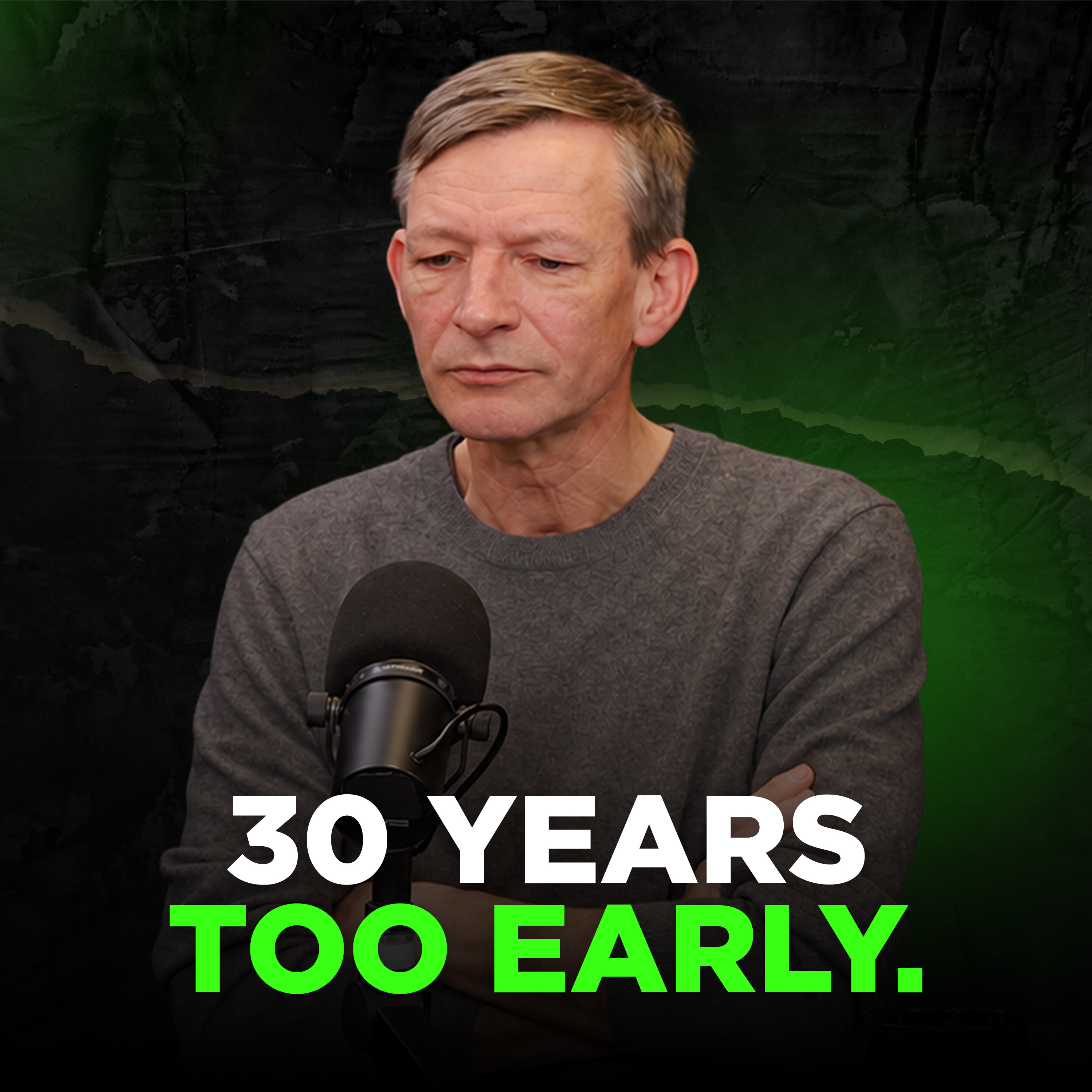
In this Founder Classic episode of Screw It Just DO It, I revisit my conversation with Charles Black about the extraordinary journey from a teenage dream in Yorkshire to eventually getting cameras into space.
Charles shares why he remained committed to an idea that was decades ahead of its time, how a chance encounter with a four-leaf clover reinforced his belief that he was on the right path, and why he chose to build other businesses while waiting for the opportunity to pursue his original vision.
Along the way, he qualified as a barrister, decided against practising law and launched an internet company from his bedroom.
He even sold his first website before he knew how to build one.
That business eventually became part of a company acquired for around £90 million.
But the dream of putting cameras in space never disappeared.
We discuss how Charles found his way into the space industry, secured an opportunity involving a Russian spacecraft company, and eventually received his first images from space, including a beautiful photograph of Italy.
For Charles, it was the realisation of an idea he had carried with him for decades.
What stayed with me most from this conversation was his willingness to keep moving forward, even when the path was unclear.
Charles also shares his thoughts on resilience, challenging convention, building something from nothing and why ambitious ideas often demand years of persistence.
His advice to anyone sitting on an idea and waiting for the perfect moment?
“Do it. Go for it.”
If you've been putting off starting a business, questioning whether your idea is possible or wondering whether you've missed your opportunity, this conversation is worth hearing.
Sometimes the idea is right. The world simply needs time to catch up.
Subscribe to Screw It Just DO It for more conversations with founders, entrepreneurs and people who turned ambitious ideas into reality.
Watch on YouTube or listen wherever you get your podcasts, and discover the decisions, challenges and turning points behind their journeys.
🎟️ Ready to turn your own big idea into action?
Join us at the Festival of Entrepreneurs, 3–4 November at NEC Birmingham, for two days of founder stories, practical business insights and opportunities to connect with entrepreneurs who are building and scaling businesses.
👉 www.festivalofentrepreneurs.co.uk
Scan the code with your iPhone camera
Listen in the app.