
In short
Podcast Notes: Screw It Just DO It with Alex Chisnall
Episode Title
How a Taylor Swift Moment Built a Global Beauty Brand
Host
Alex Chisnall
Guest
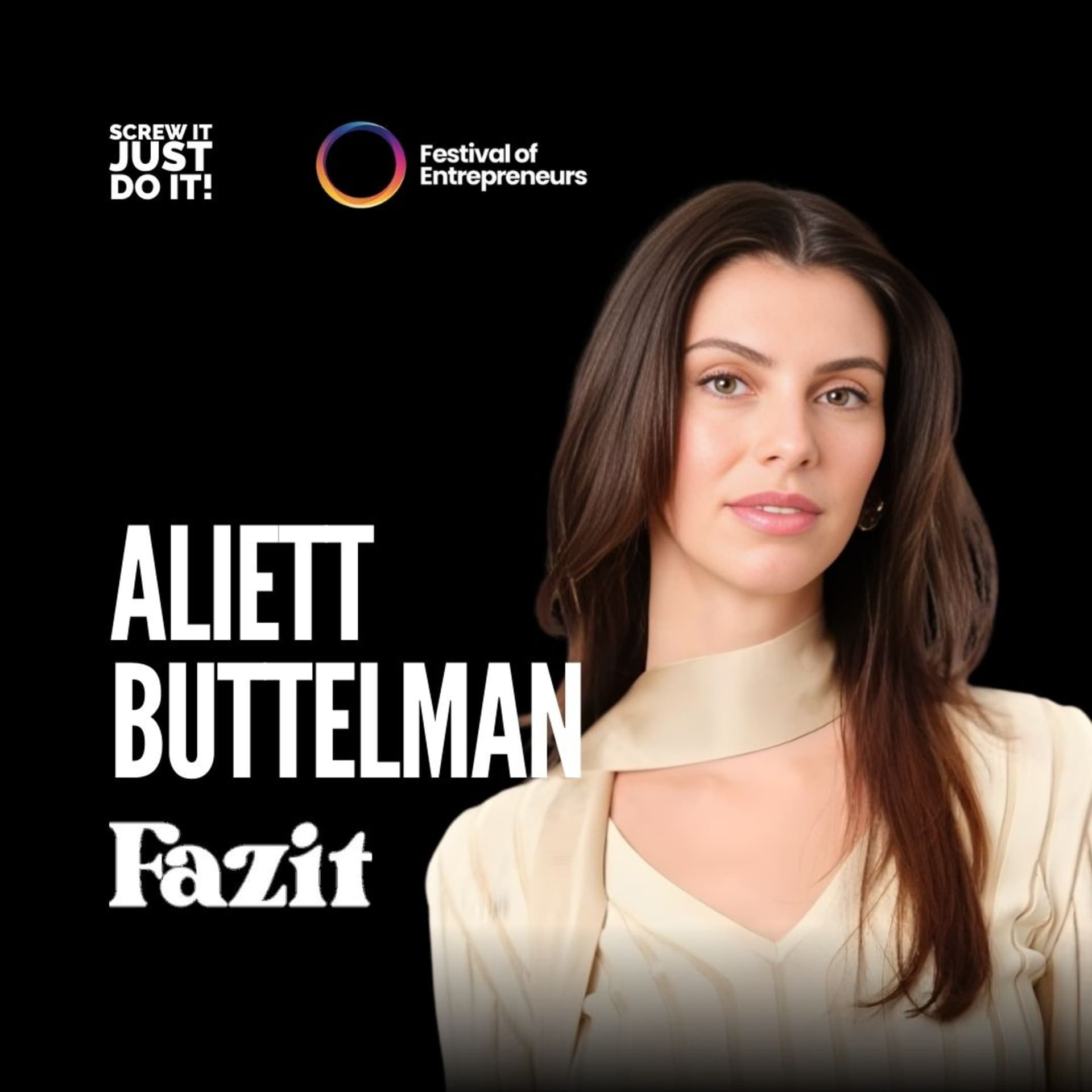
Aliett Buttelman, Co-Founder of Fazit
---
Episode Overview In this episode, Alex Chisnall speaks with Aliett Buttelman, co-founder of Fazit, a beauty brand that gained immense popularity following a viral moment when Taylor Swift wore their glitter freckles. The discussion revolves around building a brand from scratch, managing rapid growth, and maintaining a clear vision amidst the chaos of fame and demand.
---
Key Topics Discussed
- Origins and Background
- Career Path: Aliett transitioned from fashion modeling to entrepreneurship, leveraging her industry experience and connections.
- Education: Studied economics and art history at Columbia University, which contributed to her analytical approach in business.
- Screw It Just Do It Moment: Initially skeptical, Aliett agreed to co-found Fazit after recognizing the potential of a new product in a pandemic environment.
- Fazit’s Viral Moment
- Taylor Swift’s Impact: Swift was seen wearing Fazit’s glitter freckles, leading to an explosion in brand visibility and sales.
- Preparation for Virality: The company had established operational foundations to handle sudden demand spikes.
- Sales Surge: Following Swift’s appearance, sales increased by about 4800%.
- Challenges of Rapid Growth
- Supply Chain Management: Aliett and her co-founder had to quickly adapt their supply chain to meet demand.
- Dealing with Copycats: Copycat brands emerged following their success; however, Aliett emphasized the importance of innovation and strong brand identity.
- International Expansion: Discussed the significance of clarity in vision over rapid expansion to ensure sustainable growth.
- Decision-Making and Strategy
- Maintaining Focus: Founders must stay aligned with their original mission to avoid drifting as opportunities arise.
- Hiring and Leadership: As the team expanded, Aliett faced challenges in creating a cohesive company culture and effective leadership.
- Unique Positioning: Fazit aims to create a “culture of occasions” with products tied to specific events and memories.
- Future of Fazit
- Product Development: Emphasized continuing to innovate within the makeup patch category rather than branching into unrelated products.
- Community Engagement: Aliett noted the importance of staying engaged with their core audience and aligning products with their lifestyle.
---
Key Takeaways
- Virality Requires Foundations: Mere virality does not guarantee success; brands must have operational capabilities to support sudden demand.
- Innovation Over Imitation: Continuously innovating and reinforcing brand identity is critical to fend off competition.
- Long-Term Vision: Quick decisions during rapid growth phases should still align with the brand’s original goals and values.
- Engaged Followings Matter: Marketing efforts should target influencers whose audiences are genuinely engaged with the brand’s ethos.
---
Notable Quotes
- “Virality only matters when a brand has the operational foundation to handle demand.”
- “The only person who can't fire me is me. I'm going to start my own company.”
- “We don't hop on trends. We create them.”
---
Conclusion Aliett Buttelman shares her journey of building Fazit amidst the whirlwind of a viral moment, emphasizing the importance of strategic planning, innovation, and staying true to the brand's mission. This episode serves as a valuable resource for aspiring entrepreneurs looking to navigate the complexities of launching and scaling a brand in a competitive landscape.
Listen to the Full Episode New episodes of Screw It Just DO It are released every Tuesday and Thursday. Follow the show for more inspiring conversations with entrepreneurs.
Event Announcement The Festival of Entrepreneurs returns to NEC Birmingham on November 3-4, 2026. Stay connected for updates at [www.festivalofentrepreneurs.co.uk](http://www.festivalofentrepreneurs.co.uk).
---
Hashtags ScrewItJustDoIt #FestivalOfEntrepreneurs #StartupLife #Entrepreneurship
Written by AI. May contain mistakes. Listen to the episode to check what was said.
Transcript
Automatic transcript. May contain errors.0:00On October 7th of 2024, Taylor Swift walked into a Chiefs American football game wearing my gold glitter freckles by FaZeit. and a content creator had reached out to us on our FaZeit Instagram account saying, I think Taylor is wearing your product. I go to my Instagram explore page and there's just zoomed in photos of Taylor wearing gold glitter freckles. Today's guest is Aliette Buttleman, the co-founder of FaZeit Beauty, viral freckle patch brand that turned a single product into a global pop culture phenomenon. As soon as I looked at the TV and saw her walking in, I started to cry like tears of joy.
0:36And my husband, I don't know why he did this, but he started recording me. Maybe it was just like he knew this was going to be a moment in our history. From that moment, you know, that was our catalyst. And really our lives dramatically changed in the last 12 months. Welcome to Screw It, Just Do It. The show for those who decided to screw it and just did it. This is the podcast that brings you face to face with the entrepreneurs and business rebels who threw caution to the wind and built something extraordinary. Elliot, take me back to the beginning. Origin story. what was your screw it just do it moment that got you to where you are today yeah I think my my life choices in my career have led up to a few screw it just do it moments I think the first one started when I was 15 and in performing arts college performing arts high school I was a little bored and decided to become a fashion model and did that for 10 years and lived across the world making money at a young age and learning a sense of independence from there I realized there wasn't much longevity in that career path.
1:36I went back to school. I attended Columbia University. I studied economics and art history. And my last year of uni, I was so scared that nobody was going to hire me. All of my friends were getting these amazing banking jobs and just having very serious career paths. And instead of putting myself out there in that way, I decided, you know, the only person who can't fire me is me. I'm going to start my own company. And at the time, I started a consulting company for different types of brands, fashion, beauty, and tech companies. Not that I had any experience in any of this. And I met my first client, Nina LaBruna, who is my now co-founder of Phase of Beauty.
2:15And we started working on her first skincare company together. And during COVID, she pitched to me, would you like to go 50-50 on a new company together, have our shared visions aligned with a fresh new start? And I said, Nina, absolutely not. I have zero interest in having skin in the game. I want to give you advice and walk away. And she's like, come on, you know, like lockdown uncertainty, like this could just be like a fun creative outlet. So I agreed to do that with her. And honestly, about three months in, I became so obsessive with our brand that I gave notice to all my other clients and I wanted to go full in and lived off, you know, my savings net at the that wasn't a ton of money but Nina and I collectively put$13 ,000 into starting phase at beauty and I've never backed since that moment.
3:03Great story um what do you think in your background prepared you for what you're doing now is there anything you can kind of pull out and go obviously the economics degree is gonna is gonna help but anything else like performing arts background the consultancy? The surprising answer is honestly being a fashion model for a decade which is confusing to most people, but, and it wasn't a career that I loved at all. But when I think about it, every single day I showed up on set to a new company selling something new and right. I was the mode of how they were going to sell it, but I was surrounded by so many different artists on set, makeup artists, hairstylists, art directors, you know, chief marketing officers, and together collectively, we were going to create something for them to sell to the world.
3:48And that's ultimately what I do today. I wear so many hats and I'm working with all different people to bring one singular vision alive. And I think really that's, it has a lot to do with our business today. And when you think back, was there like a specific moment where you took it, like you agreed with what your co-founder was proposing? Was it something that kind of ruminated in your head for quite a while? Or was there like a moment, you know, do you know what, I'm totally into this, let's do it, let's pull the trigger? Yeah, I mean, I'm, I think, quite a risk taker in life that I, you know, once I could hear her passion, it was contagious of, okay, this is interesting.
4:30She was really showing me this type of product that she had done so much research on that didn't exist at this point, which, which, you know, I was like, okay, like there, there, there is something here, but I think in terms of going all in, it was really seeing traction of like what we were putting out in the world, slowly starting to see our messaging resonate, our social media going viral having investors or retail buyers you know slide into our inboxes and I think each one of those points you know give you this like hopeful feeling of like oh okay like it's not just us other people think we're all into something as well.
5:04Let's talk about that kind of that virality then when Taylor Swift was first spotted wearing Fazit products what actually happened behind the scenes Alia and how fast did that like move for you guys? Yeah I mean we had been working on the company at that point for about a year and a half, right? So there was a lot of trial and error and we pivoted our company from skincare patches to makeup patches. And as soon as we launched this new category, we had virality across the whole summer. Um, just, you know, videos of random people really resonating on social. And we had the strategy of, we want to get our product in front of Taylor Swift.
5:40Like the essence of our product of glitter freckles is just so Taylor and Ares tour coded. She needs to be wearing this product. And we had a whole 360 like flywheel strategy of getting getting the brand around her but on October 7th of 2024 Taylor Swift walked into a Chiefs American football game uh wearing my gold glitter freckles by phase it uh and a content creator had reached out to us on our phase it Instagram account saying I think Taylor is wearing your product and I I didn't believe I didn't register when I read the message and I go to my Instagram explore page and there's just zoomed in photos of Taylor wearing gold glitter freckles.
6:20No one in the world knew what brand this was. You know, she could have, you know, maybe drawn them on. No one, you know, really realized, you know, that there was some type of like patch adhesive to apply them. So I spent, you know, probably four hours that night contacting every single journalist already writing about, you know, Taylor's look and making sure they were crediting phase it but as soon as I looked at the tv and saw her walking in I started to cry like tears of joy and my husband I don't know why he did this but he started recording me maybe it was just like he knew this was going to be a moment in our history and I ended up without telling him posting me crying on tiktok with this text overlay of Taylor Swift just wore my you know my brand I've been a brand builder for a decade and the I think the video has like 10 million views now and that's how people started connecting the dots that okay this is this like small female owned brand and we had sales and website traffic skyrocket to about like 4800 percent um I had every news channel calling me the next morning to go to their studios or wanting to set up a set in our headquarters which was my apartment in New York um and from that moment you know that was our catalyst and really our lives dramatically changed in the last 12 months and so like looking Looking back at that, yes, there's always an element of luck and timing, of course, like I've done, you know, so many of these interviews and so many people said, you know, timing, luck all plays a part.
7:50But ultimately, as you've explained, there was a strategy and ultimately that that strategy paid off. Right. You engineered that strategy through to the pay dirt, basically. Right. Exactly. And there's so much like clickbait headlines of like overnight success phase it. And like you just said, obviously, you've talked to so many founders that it is timing and it is luck. And there is a ton of strategy that goes behind these moments. But then also, once they happen, there's also, did you as a company lay a foundation to support this moment? And we completely did. We had these months prior of having these viral moments and learning, OK, what happens in these moments?
8:30Can our supply chain sustain? Can our warehouse get out orders in time? time um also once you have a viral moment it's not just that moment you have to keep talking about that virality and you have to make it live longer so we had practiced this a bit and i guess all that practice led up to um you know the most viral moment of the last year and could i'm always interested like you know how you cope with the with the demand and always remember um a friend of mine who's also been on the show and he just had a you know relatively small bakery down in Brighton on the south coast of England and he pitched to Virgin Atlantic and they asked him for something ridiculous it was either four or five million cupcakes and he just went yeah we can do it we can do it yeah and then he's like shit what do we do now and I just thought with yourselves you know what happened and how did you deal with that did you like you said you'd spoken to the supply chain and you'd kind of maybe stress tested that to a certain degree but I'm sure nothing could expect you to be what was it I heard like sales 3 ,500 percent increase or something crazy yeah exactly something insane I mean they were doing hundreds of thousands of units of orders um no I so I handled the front end of the business so I was focused on the PR and the marketing and making sure everyone was getting this message out and that we were you know seizing every opportunity possible and my co-founder handles the back end of the business so she calls up both our manufacturer and our, you know, distribution warehouse saying you need to double team to like your team and your workforce tonight.
10:01This is what's going on. You're going to want to be a part of this. Um, and right. Like they do want to be like, they're both, you know, small business owners. Um, you know, that, you know, this, you know, we became both of their biggest clients ever. Um, so they really, you know, you know, got on the ship with us and, um, No, we never sold out of it. And again, back to the timing and luck is we had a massive order coming in two days before Taylor Swift wore the product. So we had prepared from these viral moments of like, okay, let's start increasing the inventory, the volume of the inventory we're ordering.
10:36And then once she wore it, we just hedged our bets of, okay, there's going to be an influx between her going on tour in North America and Halloween and the holidays. Let's order so much more product. And I think we had learned the lessons as entrepreneurs is that I've always believed in from the consulting side of like never over order inventory. You just don't want to be in that position as a small business. But I think at a certain point that you take a bet on yourself. I know I'm going to be able to sell through this, which we did. But yeah, I mean, the clickbait of people always saying in their marketing ads of like, you know, sold out, sold out, sold out.
11:11I was just like, I'm so sorry you sold out. It means you're not making any sales. We literally never sold out, not because there wasn't demand, but we just like kept pumping out supply. Did anything like internally break during that period? And if so, did you fix it or did everything kind of stand the stress test that everything was being put under? Other than maybe I don't know if you guys broke as well, but for sure. I mean, I definitely didn't sleep or talk to anyone for three weeks, but I broke. But no, I mean, I think anything that was in our control, we could handle. It was the third, you know, the external.
11:48It was Amazon basically bases how much product you can send to their warehouse to sell based on like your sales history. So they had limited how much that we could send to them. We sold out of that immediately. And it takes them a second because, right, it's all like an algorithm. It's automated of how much more inventory we can send to them. So they were out of stock of us for a little bit. And for us, we're just trying to call every person we know up high, like high up at Amazon, cold emailing them, like, you need to give us more space, you're going to want to be a part of this. So that, you know, broke temporarily.
12:23Retail partners, you know, were selling out immediately having us overnight product. um there was a few hiccups but I mean I think we handled it quite well and you know we were a team of just Nina and I my co-founder and I we had one part-time like marketing person and then obviously like had our warehouse and manufacturing but it was a small team trying to make this come alive and we were calling all of our friends of like can we pay a little extra money on the side to like help us during this crazy period but now you've probably got Jeff Bezos on speed dial at Amazon, right? So it's... If only.
12:55You've grown, I think I read somewhere like 30x in a year, something like that. You know, that kind of level of growth sometimes absolutely crushes some founders, right? But how have you personally like handled the pressure that's come with such a fast growing business? Yeah, I remember like the day after everything happened, my husband's uncle is a successful CEO and I told him what was happening with the business. And I was so excited to tell him and he goes, well, what's next? Like he was like so unamused by our temporary success. He's like, well, what's next for the business? What are you working on?
13:32Like somebody is going to dupe you. Copycats are going to come in. You need to be planning your pipeline ahead of time. And that's what we've had been focused on day two of what is next for us. Obviously we want to squeeze all the juice out of this lemon, but really want to focus on the longevity of the brand. No, it was, I think we came into this issue of with hyper growth of every opportunity was thrown at us. I had retailers fighting over our distribution placement in the US. I then had international retailers reaching out to us, wanting us to launch. We're still a team of three at this point.
14:07I had every Fortune 500 brands reaching out to me saying, can we please do a collab? Do you want to be on the Superbowl commercial, which was all amazing. But then I, I think I was having a hard time gut checking. Am I just taking this opportunity because I'm in fear that's never going to happen again? Or does this, or does this actually feel aligned with our brand and our mission and where we want this company to go? So I think that put some stresses on us as, you know, first time growth leaders and founders, um, and then hiring and starting to like scale our team and learning how to become a manager and a leader for the first time, I think really puts stresses on you.
14:45For so long, it's been my co-founder and I making decisions nimbly together. And we're usually, you know, 99 % of the time, you know, always aligned. But now having to express this vision to more people and getting them on board and having, you know, workflow in the same way was definitely a stress for us. It's interesting. I would say without a shadow of a doubt after doing, you know, close on a thousand interviews for the for the podcast over the years that the number one challenge that most founders like 90, 90 percent of founders out there would say to me is is actually hiring the right people and then keeping those people within your business.
15:25And have you found that and taking on more of a leadership role when you are onboarding? Yeah, I mean, that's something I'm learning every day and a part of our hyper growth, because I don't think a lot of companies grow in the same way we have over the last year was I brought on an executive business coach of, okay, I just like need somebody else to gut check with, who has, you know, organizational psychology background. and, you know, just can, it can help with, you know, these different phases that we're entering quite abruptly. But yeah, I mean, I think like creating stickiness within company and learning, like, how do we create company culture that people want to be a part that we are the cool brand that they like, they feel passionate, and then they're adding value to something.
16:05I think it's really hard to like man make that atmosphere. I think luckily, like, there's naturally this cool factor with us already and being a startup and female owned, like people want to be a part of that. But I think it's once you find great talent, like how do you, you know, how do you create that stickiness, that relationship, them like feel like they're leveling up their skillset and consistently learning more. And I think that's what I found is the most important part of it is are, if you're, if your employees aren't bored, that is a fantastic thing. Like you want to keep pushing them for them to reach their own greatness.
16:37And for them, like, you know, it's like being a founder. It's, I didn't know how to do everything, but you know, every single day you're just learning a new skill set and you are fine tuning that over time and I think that's what keeps people really excited I always remember asking the founder of Lush Rowena Bird um that question she was like we just take everything everybody that nobody else wants that that's what we do I actually love that approach yeah I do it's kind of cool especially in this day day and age right you know CV CV and you're like no none of that um and also as a reference to Lush again you know So, you know, they're famous for the bath bombs, right?
17:11Created a billion, billion pound business from it. That's still based in my town here where I live in Poole in Dorset. But how have you dealt with copycats? Because they've had, you know, everybody making a bath bomb. People like Primark are doing it for a pound, yet they're selling theirs for, I don't know, maybe five pounds, something like that, you know, 5x the price, et cetera. But how do you cope with that? I'm assuming it's happened, right? Yeah, for sure. I mean, I think it's the early days was quite emotional because we had created a category within beauty that had never existed before.
17:45This term makeup patch and then the subterm glitter freckle. And then the way we designed our packaging was incredibly unique. You don't often see models on the cover of packaging. And we were really referencing, you know, vintage magazine, a magazine stands back in the day. So to see copycats, like literally the whole thing, the terminology that, you know, our copyrighted packaging. um you know that stung in the early days but what we realized is like when you like legally can't fight china really um so all you can do is build brand and back to like what my uncle-in-law said of you no one can compete with innovation right you're if you're on to the next thing and the next design and the next category you know not that we are pushing ourselves to do that because of the copycats but you need to keep innovating as a brand and you need to you know create your brand vision and your voice and the feeling of it to your customers.
18:39And I think once you make that incredibly strong, no one can really break that, right? I have people, I have some people I see who is wearing, you know, a knockoff version of phase it and I can completely tell it's not phase it. They tag me and they tag phase it in social media, right? They, they want to be a part of our community, you know, but either like we're confused when they bought it or, you know, who knows? um and was there ever a point you you've thought about slowing down um I'm assuming not going on the conversation we've had so far no way are there so are you kidding me we just had the opportunity of a lifetime um no there's there's absolutely no slowing down I mean for most U.S.
19:19brands um within beauty you really crack the code to U.S. retail first and that can take you know like five to 10 years. We've been around for two and a half years and really like our, you know, viral moment was only a year ago. We just launched internationally at Sephora UK. And that is not a traditional route of beauty brands. And you just don't scale internationally this fast. So there's no slowing down. No. And what does that mean to you personally then launching into Sephora as well, especially coming from maybe the background that you had in modeling, et cetera, knowing the impact? Yeah.
19:52I mean, I put on my vision board two years ago of I wanted to create a brand that was going to be sold at Sephora one day. And for me, that was like, you know, the stamp of approval. So I told you I went to Cardiff a few weeks ago for our brand launch and for Cardiff's first Sephora opening ever in Wales, actually. There was a queue of 2000 people at this mall. There was confetti. There was local, you know, Cardiff and Welsh performers. I walked in and there's really only been a few pinch me moments for my career and over the last year because we've just been in fight or flight mode and we're just like really, you know, zoned in on what we want that we don't oftentimes take a step back to reflect how cool this is.
20:38but I mean someone I was singing Pink Pony Club by Chapel Rowan and I think I my eyes might have fogged up a little bit uh I it was really the coolest moment to see you know just how far we've come and to see like our brand you know next to all of these other brands um from founders I've looked up to for so long was pretty epic well um 2 ,000 people is like a lot that's like an arena like let's go and see a band like I just you know you know that's a lot of people that go down a high street especially if i can i know where the shopping mall is in cardiff where sephora is and i can kind of picture it and i was like wow that's a lot of people down there yeah but the cult following that that sephora has created of the fact that 2 000 people are waiting in line to experience their store and to shop um i mean they were waiting for four plus hours in line i mean right that's the type of brand that you know you would love to build 100 um whose decision was it talk me through that decision then of of deciding to go like international um like like two two and a half years into into the journey as well because like you say most people most beauty brands wouldn't choose that route you'd kind of focus on the the home market in the us etc but then you you get that moment of virality and and because of social media and the online world everybody knows who you are in 48 hours right yeah i mean with you know taylor being such a global presence I wasn't just on American news.
22:04I was, you know, on the BBC and, you know, all the UK outlets and people, friends in the Philippines and Australia were reaching out to me and saying, well, you're on our local news screen, that video crying. I was like, oh boy. But yeah, that kind of, you know, forced the brand into this global spotlight. And I think because our product doesn't exist other than phase it, that no one had anywhere to go internationally to experience the brand and our shipping costs were basically the same price of our products. So it really didn't make sense for most people to buy from us in the US. And we tried so hard to reduce those, those shipping costs, but you know, we just couldn't.
22:40Um, so, you know, it really made me think, okay, we need to, between that and, you know, really protecting the market and making sure copycats don't come in, we need to offer our products to our customers in these other markets. And Sephora actually came to me last November. And in my mind, I just, you know, we were thinking through larger retailers, but when the director of new beauty came to me and told me her strategy of launching Sephora is more in these like suburban markets that are, you know, don't have a beauty destination and the beauty consumer is underrepresented. That really struck a chord with us.
23:20That's exactly what we do as well. We sell products to, we think, communities that haven't been served, their desires haven't been served yet, if it's concert goers or female athletes and fans. And once I started thinking, okay, these suburban communities in the UK, a lot of those people are massive sports fans. And we know that is one of our core audiences. So even though Sephora only had about 11 stores this past year we just completely believed in them from the fact of like they are brand builders we know that they've just re-entered the market but we had confidence they were going to be scaling and people love Sephora and the way the merchandise and the brands they bring in and we're still a lean team um you know we can't you know go into thousands and thousands of stores quite yet internationally because we're trying to do that over here in the Yeah, exactly.
24:13And Elliot, what's your take on the Swift effect? You know, does celebrity virality make or break a brand long term? Yeah, I talk about this often. I call it a celebrity product fit. I don't believe that any celebrity that posts about your product, wears your product will have the Swift effect. And I know that she is a phenomenon and it's hard to equate her to, you know, anyone, any other celebrities pull. We've had tons of celebrities wear our product after Taylor Swift, including the Kardashians kids. And nobody other, it's been Taylor and then Lisa of Blackpink, who is in a K-pop girl band.
24:54She's probably been the next celebrity that has really moved the needle for the brand. And if you think about that, those are two artists with cult, you know, followings that are completely ingrained and engaged in what they're doing. Whereas I feel like a lot of other celebrities are oversaturated with the brands that they represent or work with and don't really, really like speak one-on-one to their audience and to their fan base. So, you know, I don't, I don't advise people to, you know, use celebrity marketing, you know, as a way to get to, you know, the next level of your business. But I think like if you are selling something that you know would resonate with a certain celebrity's lifestyle, then that's what I would go after.
25:36It's interesting. And I've interviewed her a couple of times over the years now, but a lady called Maria Hatsis Stephanis, who owns a hundred million dollar beauty brand called Rodial. And they do products like Dragon's Blood and Snake Venom. And, you know, it's very cool brand wise. But I always remember her telling me, and I can't remember which one now, but they paid, you know, one of the Kardashians a, you know, bootload of money to one of the campaigns. And she said, it did nothing. It didn't move our sales, you know, 0.1 % in one direction or the other. We just carried on like that. And I was like, wow, that's really interesting.
26:13You just wonder whether, as you've just said there, it's that oversaturation of that person. And you're probably going back to probably going back to something like 2021, 2022, something like that, you know, on, you know, when everybody was locked down and everybody was online anyway, you know. Right. But when you look at like, I think other A-list celebrities in the US like Hailey Bieber, I mean, she makes sense. She has such an engaged, you know, following that is really looking to see what she is doing with her makeup and her beauty and wellness. Again, that engaged following, I think, is key of whatever she wears.
26:47You know, everyone will buy. I always say that the same when people are always asking me, you know, how do you make a successful podcast? And I said, it's not necessarily getting the guests with the biggest audiences, it's getting the guests with the most engaged followings. That's like how we got the show to number one. The first time we got it to number one, like back in 2019, it was a brand called Huel, who are very, you know, big in the UK. Now, at the time, they're a 50 million pound brand. They're now like nearly a billion pound brand. But it was just the founder didn't put much content out.
27:17But when they did put content out, everybody wanted to learn about it. You know, what was he how was he building that brand? So I think 100 percent right when it comes to, you know, engaged followings. Another question I thought of was how do you keep things authentic when social media attention moves so quickly from from one trend to the other trend to the next trend to the next trend? We don't hop on trends. We create them. We are just focused on us. uh we don't look outwards uh anymore i think maybe that's something i did the early days as a founder as you just you know getting lacking that confidence a little bit so you're looking over your shoulder to see what is everyone else doing and you're assuming that's working um but now absolutely not like our packaging our voice the way our social media feeds our strategy with social media it's just so different than what everyone else is doing um the way we go into retail of, you know, I'm at Walmart and Sephora.
28:11That's not, no one's done that. That's like a big no-no in beauty. And really we break all of the rules and any advice industry experts give us, we do not take it. And I think that's, what's made us such a disruptive brand within beauty and just beyond beauty of where we've been breaking barriers. And back to what you were saying with community, I am not trying to push my brand to the beauty masses. I am trying to serve the underserved beauty you know customer the marathon runner a female fan you know the girl going to concerts and like a maximalist look of you're bringing my product to the different occasions and memories you're making at those occasions in your life and also you've got people chasing you now right it's not the other way around with you know what's happened to you guys over the last um year year and a half etc people are people are approaching you um and it's and it must I guess it must be difficult to come to a point like, you know, when when that moment happened for you, you said there'd been lots of other moments since.
Read the full transcript
29:10But initially, your reaction is to say yes to everything, isn't it? But now you're in a position, I'm sure that you can just you could look at every proposal coming and go, actually, is this going to serve us in three years time, five years time? Because you know about building brands, right? No, exactly. And I think it's important to think back of what was our vision and mission before the Taylor Swift moment and staying true to that brand. that we were building before her. And I remember the day after it happened, I called a fellow founder that I respect who has a hundred million dollar business.
29:42And they said, what, what, what, am I missing something? Like, what do I need to do? And she's like, well, did you hire a publicist? I said, yes. First thing I did this morning, she's like, okay, what retailer do you want? You need to call them right now and make this happen for yourself because you need to leverage this on. For us, I called Target in the U S who, you know, we've been in conversation for like six to eight months and you know they wouldn't pull the trigger and then I had Ulta coming to us and I had you know a bit of you know I had to make a decision of where I wanted to be and you know we decided to go with Target because that's who we wanted before the moment happened um you know so so staying true to you know who you wanted to be before that point you mentioned earlier you know when you when you spoke to somebody I think it was a uncle or friend of your husband he was like you know what are you doing next so what did you do next you know what had you what did you start planning literally the next day aliette and what are you guys working on on now with phase it yeah so we are an occasion wear brand we like to call ourselves face apparel um so just think of the t-shirts you would wear for the different occasions in your life holidays cultural moments we're doing that but with makeup patches on your face so from the taylor swift moment it was okay we're launching holiday glitter freckles valentine's day uh we launched a new color for the Super Bowl with a team that was going to the Super Bowl.
31:02So we're really playing on all of these like key moments in everyone's life. We launched the first ever kind of collarbone patches. So instead of putting, you know, like glitter or body glow on your collarbones, we have a patch that doesn't transfer to your clothes. We launched the first ever eyeshadow and eyeliner makeup patches. So like for people like me who can't do their makeup, this is like 30 seconds, like you have a sick look and you're ready to be like glammed and go out for a holiday party or, you know a charity event um we yeah we launched a massive halloween collection last month that last month was our best month this year and i think really for us it solidified okay we are this occasion where brand people want to self-express on their face for these different different moments in their lives um so yeah more to more to come so you've lent into that um and then we've got the the holiday period coming up next at the time of us chatting to each other now exactly exactly but yeah really like solidifying ourselves within both the sports and beauty world when you look back uh when you get the time to look back sound like you're you know right in the middle of the the hockey stick growth but when you do take a take a moment to look back at the success you've had with the brand what's what's one decision that you think maybe changed everything for you yeah I think when I jump on the phone with investors or retailers or advisors within the beauty world, they always ask me the same question.
32:28It's like, well, what's, what's next of product development? Like, are you doing like, you know, a tradition, are you launching a traditional beauty product aside from the makeup patches? And, you know, it would have been really, I guess, easy for a young entrepreneur to say like, oh, like all of these people who are such experts in their field, like they're telling me that I should launch a product that already exists. Why would I do that? I just created a new category that's never existed before why would i not just keep going deeper with that then to launch another type of like a body spray like that exists already um so i think really listening to our gut of we are doing something that no one else has ever done before let's keep you know squeezing the juice out of this let's keep developing you know bringing it into different you know customers and demographics topics um I think is is the best decision that we've made as a brand great answer um if you hadn't taken that leap of faith and said yes to your co-founder where do you think you'd be today god I have absolutely no idea I love that like I I yeah I couldn't I couldn't imagine another life than the life I'm currently living like that I was I was I mean I was meant to be the founder of this.
33:44What advice would you give to founders who have an idea, but keep talking themselves out of it and never pulling the trigger? I love the name of your podcast, because my advice to founders or aspiring entrepreneurs is just do it, right? That there is no other advice to give somebody than that, right? You need to get it out of your head onto paper, say it to somebody out loud. Like, that's why I believe in manifestation. It's really just a way for me to get something out of my head and put it out into the world. And I think that's what people need to do. We live in a society where building in public is so hot right now of showing the development of what you're working on on social media and to let people follow your journey.
34:26There's no easier or harder time to start a business. I think it's easier because we have all of these resources to really get you to the next level with limited resources. Hardest time because more people are starting businesses more than ever. But no, you just need to start doing it and get out of your head. And if you're too in your head, then maybe this is not. Yeah, I was chatting to someone last week and they, he's built a hundred million pound business and they were about to launch in the US and they'd spent a couple of million recruiting a team in the US. And then our friend Donald decides to, you know, launch all the different trade wars with everybody.
35:05And they're like, we literally had to pull the plug on launching in the US. And you're like, you can't kind of live your life like that. I guess once you get to that stage and you've invested that much money and you're that big a business, you can make those decisions. But equally, you can't stop yourself from making those decisions because otherwise you'd never do anything right. No, exactly. I mean, I think it's, I can't speak for your friend because I'm not running a business at that stage yet. So don't know the implications of, you know, making those decisions. But, you know, at this stage, I mean, right now I have more eyeballs on me than I did before.
35:35But back in those early days, literally no one's looking at you, no one's studying you. So just like throw spaghetti against the wall, try and fail. And that's what we did early as brand builders. We started our company with skincare patches for like acne and ingrown hairs and blemishes in a very unsexy world didn't feel like us as founders. And we completely pivoted our branding, what we looked like the product, we started selling cosmetics and people are always like, how did you get there? But if I wouldn't have pivoted and decided to like make that decision, my business would have gone under.
36:05I would, I would have no business. I would not be here today. You know, so I think, you know, it's important to um you know just do just do indeed um well look i've just got a quick um quick fire round for you um so first thing that comes into your head um short short answers um for you what what constitutes an entrepreneur what is an entrepreneur oh yeah uh they are a creative strategist they're someone who um is making something new or beautiful or different that can execute and bring it to work. What do we need to do to get more startups? We need to invest more in female-owned businesses because right now, at least in the US, only less than 2 % of female businesses get VC-backed money.
36:50Yeah, I think it's even worse here. I think it's less than 1%. I was having that conversation recently. It's unbelievable. For you, what constitutes a scale-up business? And I guess you've gone from startup up and for you the next phase is the growth and scaling up right so i think it's uh finding profitability um while you're scaling up um just like running a healthy business um two i think it's getting from making your first million is the hardest thing you can do making and then jumping from 10 to the next hardest you will will be at um why do you think the usa is better at producing like scale up in unicorn businesses than many other countries out there most countries in the world I would say probably like investment like institutional investment um I think is a lot more like rigorous over here um especially within the tech world um yeah um last question um which founder do you admire the most and that could be somebody that you've you know always looked up to as a girl growing up well that could be somebody uh now that's on your radar that people may have heard of they may not have heard of but yeah just give us somebody that you admire the most yeah uh i mean there's so many i'm gonna name the ones i want on my board currently so if someone listens and it can reach them um alison ellsworth she built poppy in five years it is a prebiotic soda company um she started it uh at a farmer's market with a different name with her husband she got into whole food she went on shark tank she just sold her company i think for two billion dollars to Pepsi.
38:25And she, I think four kids and she's in her forties. So really, you know, look up to how she scaled that business so quickly and create a category that never existed before. And now, you know, obviously there's this whole trend of healthy sodas. And then somebody, Emma Greed, who is the COO of Skims and she's a CEO of Good American, the Kardashian brands. I think she is an incredible operator, bridging talent and, you know, new messaging around a space that had little to no attention. But I think she is another incredible founder that I aspired. Good one. And last one, again, you don't have to answer this.
39:07You can I can I can follow up with you. Anyone you can think of that you think having been on this show would also be a great guest for the show. Oh, hmm. I'm going to have to think about I have so many amazing people in my network that I would. I would love to connect you guys with. But yeah, yeah, no, I'll have to have to think about that one. And if you're back over in the UK this time next year, we're putting on an event called Festival of Entrepreneurs. We just did our first event in Birmingham at the NEC for 3 ,000 people. And we have like five stages with entrepreneurs covering everything from, you know, funding to, you know, keynotes, those who've built billion dollar businesses like Lush telling their stories.
39:46If you're around next year, we'd love to have you as a guest there as well. So keep in touch. I appreciate it, Alex. Well, thank you so much for having me. Absolute pleasure. Thank you very much indeed. If this conversation resonated with you, don't just sit there, act on it. Make sure you follow or subscribe for more game-changing conversations. And remember, the only thing standing between you and your business breakthrough is the decision to screw it and just do it.
From the publisher
Aliett Buttelman went from fashion model to co-founder of Fazit, a beauty brand that exploded after a viral Taylor Swift moment. This episode breaks down what actually drives real growth.
In this episode I talk with Aliett Buttelman about what it takes to build a brand from scratch and survive hyper growth. Aliett explains how a decade in fashion modelling shaped his approach to creative work and why he walked away from consulting to build Fazit with co founder Nina LaBruna.
She shares how their glitter freckles went viral when Taylor Swift wore them and what actually happens behind the scenes when sales jump by thousands of per cent overnight. We dig into supply chain pressure, copycats, international expansion and what it means to keep a brand focused when attention moves fast.
Guest: Aliett Buttelman, co founder of Fazit
Key Takeaways:
Virality only matters when a brand has the operational foundation to handle demand.
Copycats are inevitable but innovation and strong brand identity create defensibility.
International expansion requires clarity of vision, not speed for the sake of it.
Founders need consistent decision making to avoid drifting away from their original mission.
🎧 New episodes of Screw It Just DO It drop every Tuesday & Thursday, so make sure you follow wherever you listen. You’ll hear real conversations with founders who’ve taken a risk, built something from scratch, and figured it out along the way.
FOE returns to NEC Birmingham on November 3-4, 2026. Stay connected at www.festivalofentrepreneurs.co.uk and follow @festivalofentrepreneurs for news, updates, and future events.
Real entrepreneurs. Real stories. Real strategies.
👉 Follow the show. Keep showing up. Screw It Just DO It!
#ScrewItJustDoIt #FestivalOfEntrepreneurs #StartupLife #Entrepreneurship


