
In short
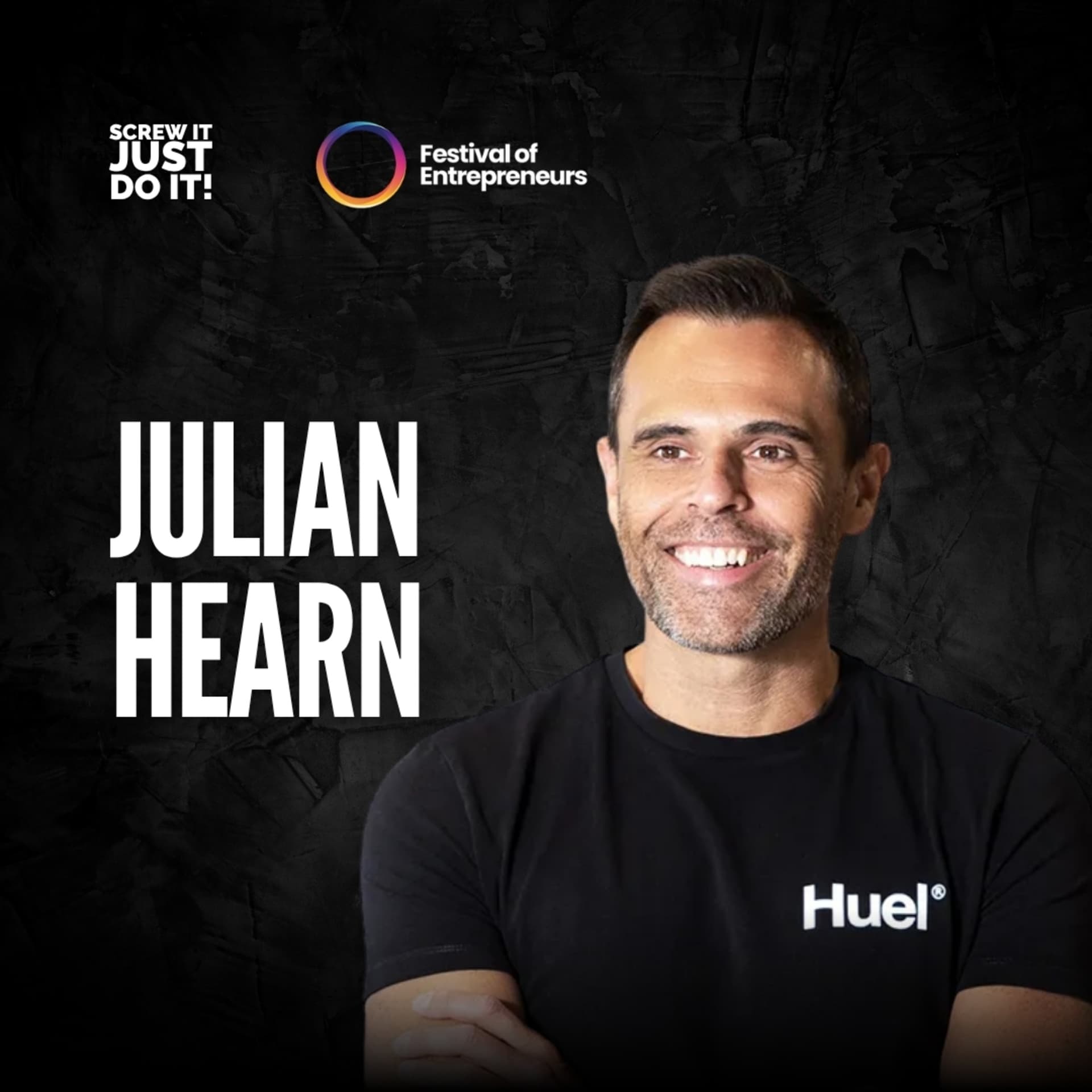
Julian Hearn, founder of Huel, explains bootstrapping Huel from idea to global brand—doing everything himself, why he avoided funding, how he scaled operations and hiring, and how his role shifted from CEO to CMO.
Guest backgrounds
Julian Hearn is Huel’s founder. He previously built his first business around 2008, selling it in 2011 for a multiple to an American business; he later started Body Hack, which became Huel’s origin.
Key claims
Early businesses are “life or death,” so founders must give 100%. You can scale by perfecting processes yourself, documenting them, then hiring to replicate. He dislikes PR/recruitment agencies, interviews everyone, and uses culture-fit vetoes. London is a “red herring” for talent; countryside retention works.
Notable examples
He packed boxes, bought cardboard, went to the post office, and dropped shipments himself. Early growth hit ~3x revenue year-on-year. He stepped down as CEO after ~1.5–2 years to focus on brand and marketing.
Written by AI. May contain mistakes. Listen to the episode to check what was said.
Chapters
Tap a time to open that second in VOThe Early Days of Business
0:00 to 0:48
Learn the importance of commitment in the initial stages of a business.
“In the early days, effectively, your business is a baby.”
Building from Scratch
1:42 to 3:54
Julian shares his journey from his first business to founding Huel.
“How long did you have your first business?”
The Process of Scaling
3:58 to 5:50
Julian discusses how he scaled his business and the importance of streamlining processes.
“And when you started, was it just yourself?”
Hiring and Culture Fit
6:07 to 10:46
Julian delves into the hiring process and maintaining company culture.
“We have two full-time internal recruiters.”
Reflections on Success
10:47 to 11:53
Insights on networking and the impact of surrounding oneself with the right people.
“That conversation just proves something.”
Transcript
Automatic transcript. May contain errors.0:00In the early days, effectively, your business is a baby. It could die the following day if you don't feed it properly. And so, you know, it's life or death at that stage. So you put everything in. It sounds a bad trait, but actually I think you have to to make it work. If you're playing at it and not giving it 100%, you're not going to get the ball rolling.
0:16Alex Chisnall:Julian Hearn, founder of Huel. We dive into how he bootstrapped the business from day one, the unglamorous hustle behind those early days, and why he believes you don't need funding to start a successful business. The rest of the business side of things was brand, packaging, website, copy, PR. So I did all of that. Packed the boxes, bought the cardboard boxes, going to the post office, dropping it. I did the whole lot by myself because I think if you do it all yourself, you can then over time perfect how you want it done. So then when you hire someone, you can say, I want it done like that. And it's exactly your way rather than bringing people in and then doing it their way.
0:48It's never yours.
0:49Alex Chisnall:Welcome to this special bite-sized episode of Screw It, Just Do It from our back catalogue of over 550 past episodes. If you like what you hear, don't forget to follow the show and grab your free two-day pass to the Festival of Entrepreneurs this October. Just head to festivalofentrepreneurs.co.uk to claim yours and don't forget to dive into the back catalogue. Want to surround yourself with 5 ,000 to 10 ,000 entrepreneurs if you've already decided to screw it and just do it? The Festival of Entrepreneurs is happening October the 8th and 9th at the NEC Birmingham, and I'm giving away free two-day pass to my listeners, 200 plus speakers, 90 plus sessions, billion pound entrepreneurs sharing their real stories, not theory, but the actual strategies they use to scale.
1:31Alex Chisnall:Head to festivalofentrepreneurs.co.uk right now and claim your free pass because the best networking happens when you're in the room with people who've already decided to screw it and just did it. How long did you have your first business? Because you exited that, is that right? Correct. Yeah, I started my first business. It must have been 2008 and built that up over three years. And in the third year, we were doing 2.5 million pound profit and packaged that up and sold that to an American business for a multiple of that. So that was about 2011. So at that point, I was 40 years old, just under 40.
2:13and yeah, I'd made enough money that I could effectively retire on if I wanted to. But I had a young child at the time. Luckily enough, we managed to do that. So took a little bit of time out, but then got itchy feet again and realized that the age of 40 or 41, I couldn't retire. I was too young. I wanted something to do. So I started looking around for something I was going to be into and something that's going to keep you busy for three days a week. yeah and uh at that point i started a company called body hack and uh that is the company that you all span out of okay okay and you still doing a three-day week no i almost never do now yeah yeah almost never did i'm uh you know for the first few years of sure it's like seven days a week and it's evenings you know it's it is massively full-on and then because in the early days you've got basically effectively uh your business is a baby it could die the following day if you don't feed it properly and so you know it's life or death at that stage so you you put everything in and I think I've said before you know you do sort of become obsessed it sounds a bad trait but actually I think you have to to make it work if you're playing at it not giving it 100 you're not going to get the ball rolling and think you have to get that ball rolling and once you do you can turn from a you know sprint mode into a more of a marathon mode so still put you know a lot of time and effort in you think the best marathon runners they still run pretty fast Yeah.
3:35So you don't slow down. You just don't want to burn yourself out or burn the staff out or burn, you know, the business out. You have to you have to move into a more of a fast but more controlled growth. You know, in the early days, we were going sort of 3x revenue year on year. You just can't keep that pace up or very difficult to. So you do slow down in terms of growth and because the numbers get that much bigger.
3:58Alex Chisnall:And when you started, was it just yourself? like when you're talking about those like affiliate guys was that the was that the plan to start just yourself did you automatically need to put some kind of team together or make a hire uh it was all myself to do everything apart from the nutritional side of the business for Huel so I found uh James Collier who is now our co-founder but at the point of pre-launch and even after launch he wasn't a co-founder he was still a consultant okay so he just filled in the gap that i had i could do everything else so the rest of the business side of things was you know brand uh packaging uh website copy uh pr so i did all of that you did all of that did all of that did a customer service pack the boxes bought the cardboard boxes uh did all the uh going to the post office dropping it you know i did the whole lot um by myself because i think if you if you do it all yourself you can then over time perfect how you want it done yeah so then when you hire someone you can say i want it done like that yeah and it's exactly your way rather than bringing people in and then doing it their way it's never yours yeah so i think the it's a really good way to do it is to get it all done yourself you perfect it you write down exactly how i want it down done and then a new person comes in you say do it like that and they have to follow your so it's basically you scaling yourself then where you can do that is by you doing it first then writing down passing it over somebody else they do exactly how you do it and then you can scale if you're enjoying this conversation and thinking i need to be around more people like this then And I've got the perfect solution for you.
5:29Alex Chisnall:The Festival of Entrepreneurs is where 5 ,000 to 10 ,000 ambitious entrepreneurs come together to learn from the people who've actually done it. It's on October the 8th and 9th at the NEC in Birmingham. And I'm giving my listeners free two-day passes. Real entrepreneurs, real stories, real strategies. Exactly like what you're hearing right now, but live and in person. Go to festivalofentrepreneurs.co.uk and get your free two-day pass before they're gone. I think otherwise, and I speak to so many other founders who just want to replicate themselves, and they all say that the hardest thing in the world is hiring.
6:06Alex Chisnall:Do you still have any input into that yourself when you are making hires, or do you have somebody now who's like, what is the HR for you? We have two full-time internal recruiters. I don't like PR, I don't like recruitment agencies. They charge too much money and are not close enough to what you want, I don't think. so I don't I prefer to do it so for the first uh two years again probably did most of the hiring myself um I still interview everybody who starts here okay so I have a veto on somebody so I'm trying to like I'm trying to interview not for their skills necessarily that's the line manager's role to find that person in terms of the the right person for the job to do the skill I'm finding the right person to fit with fuel yeah and we actually do have a second sort of culture fit team as well which is a couple of old hooligans and they would uh interview again for sort of personality and culture fit and again they're allowed to veto as well so we want to make sure we don't take anybody in that isn't our culture because then that can cause problems so it's it's a really important thing to do and i want to i want to work with people i want to work with as well so absolutely yeah yeah and do you think where you're based now in in heart of it I'm thinking talent wise you near enough to London and also thinking like universities that are near here as well to get the talent that you need.
7:24Yeah, I think we've got sort of pound for pound. I think we've got a better team than I've ever worked with before. I think that London is a little bit of a red herring. So I think if you actually go and interview people who work for inner city London companies in Shoreditch wherever, most of them probably don't live in that area most of them commuting from home counties or even further afield so what we've been able to do is approach people who typically might work for a London company they typically will live in Buckinghamshire, Harfordshire and you say to them do you want to work in you know Trink they'll go yeah I'd love to because I'm going away from the traffic yeah I'm not commuting into London so you know to you know I went into London the other day for an awards dinner and it took us sort of 35 minutes to get to london and then it took about another hour to get across london and do about seven or eight miles it's ridiculously slow so london is a really slow busy expensive place to do business and so therefore when we say to people do you want to work out in the countryside you can commute to uh work in half the time um they go yeah so it's an easy sell it's an easy sell and so it's been good for um retention as well because people like to work here we've got a nice work environment we've got a very nice office and uh cost of doing business here is a lot lower that you know the rent is incredibly low compared to central london and there's almost zero competition in terms of other cool places to work so nobody's trying to poach your staff all the time really because once they're here uh you know it's uh it's
8:50Alex Chisnall:ticks a lot of boxes for people and how's your role it changed in like from from day one literally doing everything yourself from packing the boxes to delivering the boxes website the branding etc um what's your role today and has that changed i suppose with with a kind of control that you you know what can you control essentially um because you talked about the recruitment side of things yeah you have to delegate vast responsibilities as you you're scaling your business but how's your role evolved so i must be a year and a half two years or something like that i gave up the role role of ceo um so you know in the early days you do everything so effectively you're the de facto CEO and you know as you scale up I was listening to a podcast yesterday we're talking about pirates versus navy so I think this was Steve Jobs thing saying that in the early days you got to behave like pirates you know you're a bit more wild and you just get everything done you might cut a few corners and do stuff like that and as you get bigger you have to scale you have to become more organized and more like a navy so I think in the early days it probably we were a bit more you know I'm very good at scrappy stuff and getting stuff done quick but as we scale it gets more complex and you have to do things uh in a more um slightly more corporate way and so some of that stuff i didn't find interesting so my role has changed into being cmo so i just focus on the the brand and marketing side yeah it still allows me to stick my nose into everything else because you know anything that affects the customer is still in my eyes is something that marketing should be involved in so if our delivery is slow our delivery is not right then you know i I can speak to operations.
10:27If the product's not right, I can speak to new product development and say, well, we need to fix that as well. So I still get involved in the stuff that really affects customers, but the stuff sort of behind the scenes, I find less interesting, whether it be legal or some of the HR things. I find those things not my bag. And so my area is brand and marketing, and that's what I focus on.
10:47Alex Chisnall:That conversation just proves something. You are the average of the five people you spend the most time with. So here's my challenge. Upgrade your network. The Festival of Entrepreneurs is happening October the 8th and 9th, and I'm giving my listeners free two-day passes to get in the room with 5 ,000 to 10 ,000 entrepreneurs who are actually building something. This is where the risk-takers, the game-changers, and the people who've decided to screw it and just do it come for inspiration, education, and connection. Don't just listen to their success stories. Go meet the people living them. Grab your free pass now, because the biggest risk isn't taking a chance.
11:22Alex Chisnall:it's missing the opportunity entirely. If you enjoyed that bite-sized episode with Julian, you might want to dive into the full episode. We talk about how Julian went from experimenting at home to building a near 750 million pound brand. The power of simplicity, while focusing on just one hero product early on, helped Huel cut through the noise. And we also chat about obsessing over the customer, a community, direct feedback, and clarity of mission fueled Huel's growth. Thank you.
From the publisher
In this bite-sized episode of Screw It Just DO It, I sit down with Julian Hearn, founder of Huel, to unpack the early days of building one of the UK’s fastest-growing food brands.
- How to systemise and scale from a solo startup
- Why obsessing over process is the key to future growth
- Building a culture-first team and hiring for values over skills
- Stepping away as CEO to let others lead
- Why location and work environment can be a competitive advantage
Julian didn’t just start Huel, he did everything himself. Branding, packaging, fulfilment, customer service, marketing. It was a one-man operation that exploded into a £40 million business in just four years.We dive into:Julian’s story proves that you don’t need a complicated business plan or a full founding team to get started. You need focus, fast feedback loops, and the grit to keep going when the work is heavy and unrewarded.If you're a founder stuck between startup chaos and scale-up complexity, this one's for you.
🎧 New episodes of Screw It Just DO It drop every Tuesday & Thursday - so makes sure you follow wherever you listen. You’ll hear real conversations with founders who’ve taken a risk, built something from scratch, and figured it out along the way.
🔥 Want to take things further? Join me in person this October at the Festival of Entrepreneurs on the 8–9th October at the NEC in Birmingham. The Festival of Entrepreneurs is where 5-10,000 ambitious founders come together to learn from the people who've actually done it. I'm giving my listeners free 2-day passes.
Real entrepreneurs, real stories, real strategies – exactly like what you're hearing right now, but live and in person. Go to www.festivalofentrepreneurs.co.uk and grab your free pass before they're gone. https://eventdata.uk/Visitor/FestivalOfEntrepreneurs2025.aspx?TrackingCode=ACHISNALL
👉 Follow the show. Turn up in October. Screw It Just DO It! #ScrewItJustDoIt #FestivalOfEntrepreneurs #StartupLife #Entrepreneurship


