
In short
Podcast Summary: Screw It Just DO It with Alex Chisnall
Episode Title
How The Athertons Turned Racing Success Into A High Performance Bike Company
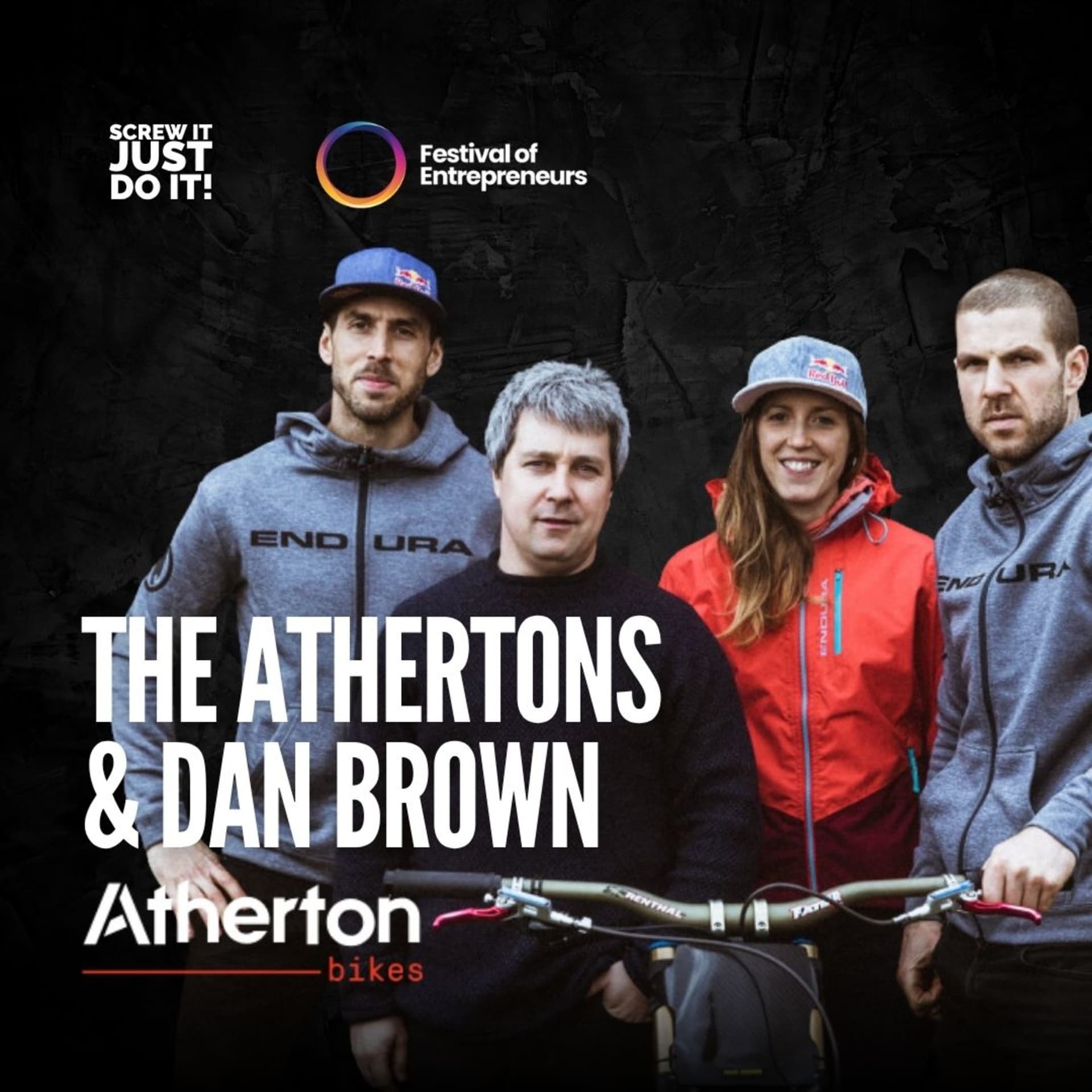
Episode Overview In this episode, the Atherton siblings—famed for their achievements in downhill racing—discuss their transition from professional athletes to entrepreneurs with the founding of Atherton Bikes. They reflect on the mindset and processes that contributed to their success in both racing and business.
Key Themes
- Mindset Transition: The Athertons emphasize how their background in racing shaped their approach to business, focusing on discipline, calculated risks, and innovation.
- Prototyping & Development: They share insights into the prototyping process, including the use of advanced 3D printing technology to create high-performance bikes.
- Team Dynamics: The importance of collaborating with specialists and maintaining a strong, skilled team is a recurring theme in their journey.
- Ownership and Independence: Establishing their own bike company allowed the Athertons to take control of their brand's destiny and ensure long-term stability.
Detailed Insights
Background and Transition to Entrepreneurship
- The Athertons had a long career on the World Cup circuit, which laid the foundation for their decision to start their own bike company.
- Their decision to leave a sponsorship with Trek—one of the largest bike brands—was seen as risky, but it stemmed from a desire to redefine their brand and legacy.
- They aimed to push boundaries not just in racing, but also in how they approached building their business.
Development of Atherton Bikes
- Collaboration with Experts: They partnered with suspension engineer Dave Weigel to enhance their bike design.
- Prototyping Process: The Athertons created over one hundred prototypes, reflecting their commitment to refining their product. They utilized 3D printing to quickly iterate on designs.
- Performance Goals: Their primary objective was to create the fastest downhill bike while also ensuring that it was accessible for everyday riders.
Key Takeaways
- Calculated Risks: Growth is fostered through calculated risks supported by adequate preparation and skill.
- Prototyping as a Tool: Rigorous prototyping uncovers weaknesses early in the development process, leading to a stronger final product.
- Team Importance: Having a skilled team is crucial for maintaining high standards and accelerating progress.
- Cross-Industry Learning: Innovation often comes from adopting practices from other industries, such as aerospace and F1 technology.
- Discipline in Business: The discipline gained from racing translates effectively into business practices.
- Creating Ownership: Building their own brand provides independence and fosters long-term stability.
Conclusion The Athertons' journey illustrates how excellence in one field can translate to another. Their story is a testament to the importance of high standards, patience in the face of uncertainty, and the relentless pursuit of improvement.
Additional Information
- New episodes of Screw It Just DO It are released every Tuesday and Thursday.
- For more entrepreneurial stories and insights, listeners are encouraged to subscribe and follow the podcast.
Stay Connected
- Website: [Festival of Entrepreneurs](http://www.festivalofentrepreneurs.co.uk)
- Social Media: @festivalofentrepreneurs
---
This markdown file encapsulates the essence of the podcast episode, providing a structured overview and highlighting key discussions for ease of understanding and reference.
Written by AI. May contain mistakes. Listen to the episode to check what was said.
Transcript
Automatic transcript. May contain errors.0:00We basically took out the main sponsor of the race team, the comfort blanket that brings. We were riding for Trek at the time, you know, that's our biggest brand in the world. And to suddenly start your own bike company, they all thought we were mad. This bike-sized episode features the Athertons, a family who turned their passion for mountain biking into one of the most successful racing dynasties in the world. It was always about, and it always has been about, pushing boundaries. You know, we started an event with Red Bull up in not too far from here, the Red Bull Hardline, and that was about pushing downhill racing a little bit further, just pushing those boundaries and you know it's what Dan G and Rachel always been about is doing things a little bit differently and this just felt right then to continue that through to continue the legacy on of the Atherton brand but also to keep pushing those boundaries.
0:44Welcome to this special bite-sized episode of Screw It Just Do It from our back catalogue of over 550 past episodes. Let's talk about Atherton Bikes which a mutual friend of ours Piers Linney initially told me about. But when did you guys all first meet and when did you become part of the business? Well, we met probably, I don't know, 2005, something like that. And then I joined them in 2006. And yeah, we raced for, what, 15 years on the World Cup circuit. It's a long time. Before thinking about, yeah, next steps. And yeah, over that period of time, we talked about starting bike companies, doing something with the Afton name, which ultimately we kind of managed to build up quite a good following of over that period of time.
1:34It's always been something, isn't it? Like we want to do something with, like say this thing we've built, but what is that? And Dan would always be sketching on pieces of paper for bike designs as we drove around Europe and in the back of sprinters and stuff. So there's always kind of seeds of ideas kicking around. but yeah kind of the bike company came about at an opportune moment really where we were coming to the end of a sponsorship contract with a global brand and there was an opportunity to join forces with a group of designers engineers who've got a pretty cool idea behind the product where they were printing 3D printing metal to make the complex areas on the bike which deal with the loads and then joining them together with carbon fiber which also allows you to make some really good fitting bikes because you could make them ultimately in any size you wanted so tying in our kind of expertise from developing bikes for other brands which we had done for those 15 years and we've designed bikes with with a number of different brands using that expertise and bringing it in this kind of concept in from from the designers and engineers was a really good combination and then add the Afton brand into the mix and it just seemed to make sense.
2:48A huge risk, huge risk and still is to this day. And is that because you shifted the model? Yeah, yeah. I mean, we basically took out the main sponsor of the race team, the comfort blanket that that brings and brought in the complete unknown of starting it. Yeah, we were riding for Trek at the time, you know, that's the biggest brand in the world. and to suddenly start your own bike company. They all thought we were mad. They still do. I was going to say, what was that conversation like? Was it a conversation, a series of conversations? Yeah, no, I mean, the path was laid out. We could have continued as we were for sure, but it was always about, and it always has been about pushing boundaries.
3:28You know, we started an event with Red Bull up in, not too far from here, the Red Bull Hardline, and that was about pushing downhill racing that a little bit further just pushing those boundaries and and you know it's what Dan G and Rachel always been about is doing things a little bit differently and this just felt right then to continue that through to continue the legacy on of the Afton brand but also to keep pushing those boundaries. Tell me a little bit about the development process then of what we should call the world's fastest downhill bike. Oh yeah it is now. And the second fastest downhill bike.
4:03Yeah, I mean, we were lucky to work with a suspension engineer called Dave Weagle, who's well known within the sport. We've known Dave probably since the start of racing, really. So we've got a bit of a relationship with him and that helped us work together in designing a suspension kinematic, which is kind of how the bike responds to bumps, hips and turns. and then kind of tying that together with the engineering and the work that had gone into the kind of concept behind the product and then ultimately design it for the first kind of 18 months racing it on the world cup circuit rach you know one two world cups on a very prototype product one that was changing from one race to the next it was it was ridiculous it was hard to keep keep up with wasn't it yeah it was ridiculous i think it was the fact that we because we were 3D printing it we weren't stuck to like a the concept of a mold um we could make changes and so the temptation was always there every race to make changes right and it is ended up with a very refined product now but you know at the time for those first two years it was a nightmare for the guys here you know every race just changing changing and uh you know it's it's given us an amazing product now but yeah the temptation's always there to make those little tweaks that inevitably can always be made.
5:29And what was the goal at the very outset? Was it to build the world's fastest downhill bike or was it to ultimately see other people riding those bikes on the streets of where you live? Well, you know, we come from racing and that's all we've ever done. So of course, the goal was to make the fastest bike, you know, whether that was kind of what we set out to do or not. but you know. Yeah, so there was kind of two halves, wasn't there? There's the performance side, which is obviously like very important to us. And then like Dan said, there's seeing, what do we say, building the bikes that we would want to ride growing up as kids and like you say, just at the bike parks, everyday trails.
6:11And it started with the performance and because that's the high end and then you sort of, with sort of filtering it down and hopefully bringing more bikes in at more of an affordable price, I suppose. I think, like Barony said, we'd always ridden for other bike companies and so the process of refining a product until it's at its very best was so kind of ingrained in what we did in the off-season that we very much worked with the engineers here and refined and refined and refined until we were super happy with the product and i think that will always happen you know uh we're working on a prototype at the moment and you know that's it's it's literally had hours and hours and hours of refinement you know just every day chipping away at it you hear about somebody like uh james dyson um he had like 500 or whatever the number is something ridiculous like that to get to the actual launch model that they did would you would you say you're perfectionist as well you can always just be better yeah i think yeah i think as a racer you you're just it's just ingrained in you you know it's very hard to blame yourself as a racer and very easy to blame the product yeah so anyone else yeah you're always looking for excuses you know as an athlete so So that mentality and that process is always there to make things better, make things better.
7:44We've probably gone 50 bikes built before we sold one. And even those first, we did the first 50 released to the public. And even since those first 50 were made, we then made further changes before we kind of drew a line under it. So, yeah, there's probably over 100 odd bikes made before. But I think that's one of the things we took from riding for brands like Trek and, you know, other other global names is that the product could be way better. You know what they're selling because it's come out of the Far East and it's just out of a factory where there's failure after failure. And they just say, OK, we'll just give you a new one.
8:21OK, that's snapped. We'll just give you a new one. Yeah, that's not really, you know, we don't want to build a company like that. you want it to be the best product that that person can literally have because them waiting for a replacement for six months that's going to ruin their summer or that's going to ruin that kid's dream you know and and it's mad seeing those top big companies the product that they actually put out and sell you know it's it's crazy that the the margin for error is just huge and and you want to we wanted to create something like dan said like we've always done you know we've always tried to do things like differently and better you know we were one of the first teams to do this kind of web series following behind the scenes of of how it is to to be an athlete on the world cup scene and and now everyone's doing it you know it's it's all about sort of finding those things that aren't been done yet and and and and doing those because that's what interests us i suppose and and doing it in a different way you know it's so exciting rather than just doing the run of the mill the same as everyone else is doing.
9:25It's exciting doing things differently. The Atherton's reminders that success is built on relentless consistency about doing the work, about building your team and about keeping your vision alive when others would quit. For more stories like this, please hit the follow button for Screw It, Just Do It.
From the publisher
The Atherton siblings built their careers on speed, resilience and control. What makes this bite sized episode powerful is how they used the same mindset to build a business. They went from dominating downhill racing to founding Atherton Bikes and taking ownership of their future rather than relying on sponsors or external decisions.
In this segment they walk through the moment they committed to designing their own downhill bike. They teamed up with suspension engineer Dave Weigel and created more than one hundred prototypes to refine the fastest bike they could produce. They adopted 3D printed technology used in F1 and aerospace, built accuracy into every component and set standards that many brands avoid because they take too long.
Their story highlights the discipline needed to shift from athlete thinking to business thinking. They learned to take calculated risks, build a team, trust specialists and stay patient through the early phases where nothing feels stable. Their approach shows founders what strong execution looks like. No shortcuts. No shortcuts. Just clarity, consistency and a willingness to build from the ground up.
This is a valuable lesson for anyone at the early stage of a product idea. The Athertons show that excellence in performance transfers to excellence in business when you keep your standards high and your process simple.
Key Takeaways:
Calculated risks shape growth when backed by skill and preparation
Prototyping reveals weaknesses quickly and strengthens final output
A strong team accelerates progress and keeps standards high
Innovation grows when you learn from other industries
Racing discipline translates well into business discipline
Ownership creates independence and long term stability
🎧 New episodes of Screw It Just DO It drop every Tuesday & Thursday, so make sure you follow wherever you listen. You’ll hear real conversations with founders who’ve taken a risk, built something from scratch, and figured it out along the way.
Stay connected at www.festivalofentrepreneurs.co.uk and follow @festivalofentrepreneurs for news, updates, and future events.
Real entrepreneurs. Real stories. Real strategies.
👉 Follow the show. Keep showing up. Screw It Just DO It!
#ScrewItJustDoIt #FestivalOfEntrepreneurs #StartupLife #Entrepreneurship


