
In short
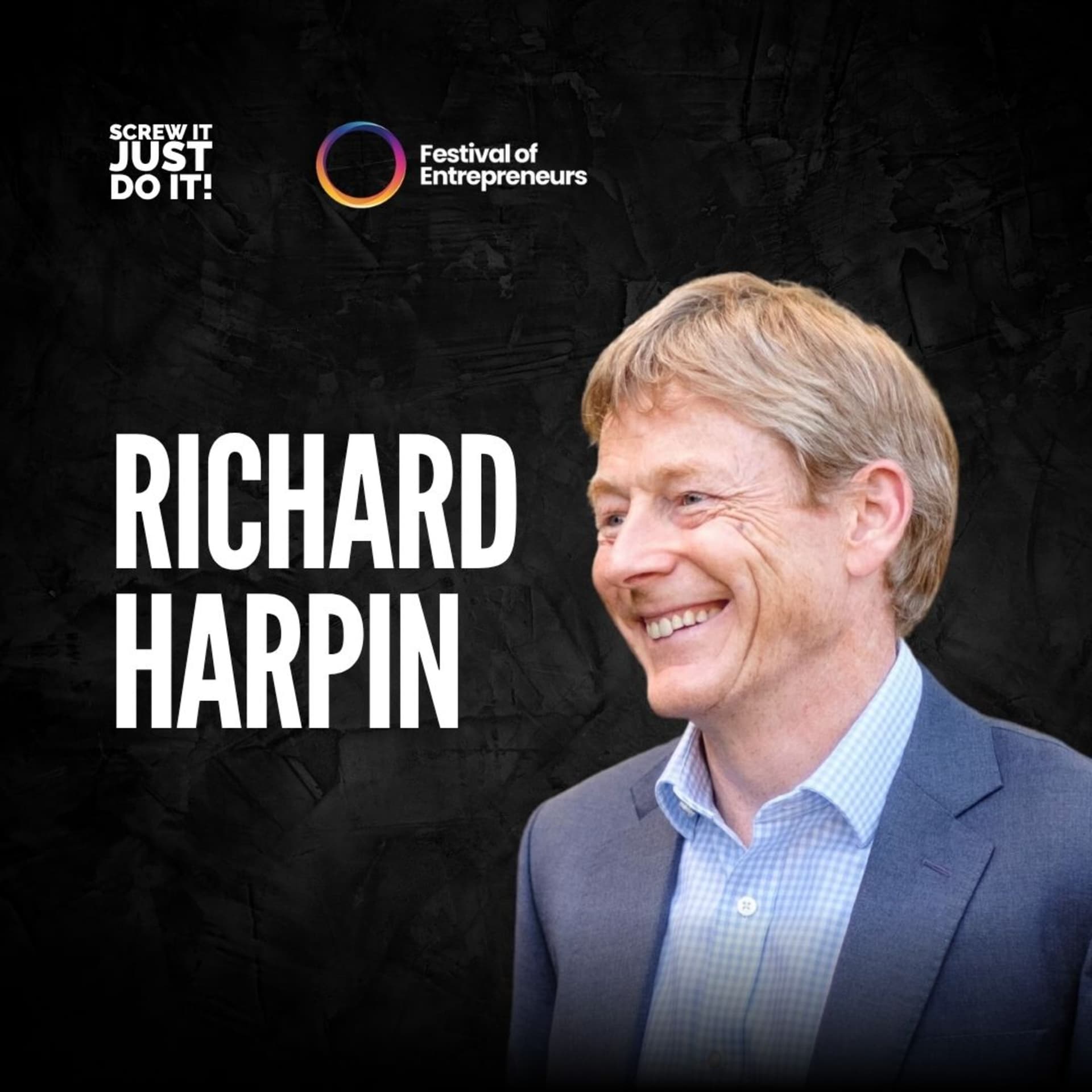
Richard Harpin (HomeServe founder) explains how to scale an entrepreneur’s business using a “nine steps” framework, emphasizing copying and pivoting, getting mentors, persistence, hiring replacements, international expansion, and continuous evolution (evolution over revolution). He also discusses his post-exit work backing founders via Growth Partner and Business Leader peer groups.
Guest backgrounds
Richard Harpin founded HomeServe, growing it from zero to over £4 billion value; he authored How to Make a Billion in Nine Steps; later became non-exec chairman and helped oversee an exit to Brookfield. He previously worked at Procter & Gamble and started an emergency plumbing business (A1 Fast Fix).
Key claims
Copy-test-improve; don’t accept “no” too easily; don’t give away majority control early; base US operations on the East Coast; paper + digital marketing can outperform; ambition and leadership drive scaling; mentor access is crucial.
Notable examples
Sutton Water plumbing insurance model copied and improved; HomeServe reached 1 million members by 2000; US expansion launched 2003; mentor Nigel Morris (Capital One co-founder) advised against Miami-based hiring; direct mail “doormat share” and strategic retail partners (e.g., Passenger Clothing).
Written by AI. May contain mistakes. Listen to the episode to check what was said.
Chapters
Tap a time to open that second in VOBlueprint for Success
0:39 to 1:21
Richard shares the nine steps he identified for building a successful business.
“I'm Alex Chisnall, host of this podcast and co-founder of the Festival of Entrepreneurs at the NEC in Birmingham this October 8th and 9th.”
Blueprint for Success
2:02 to 3:06
Richard shares the nine steps he identified for building a successful business.
“So look, I wanted to kick things off with the fact that you built a£4 billion business.”
Inspiration and Early Ambitions
3:06 to 4:00
Richard discusses who inspired him to become an entrepreneur and his early ambitions.
“And that was the magic model that really worked at HomeServe.”
Taking the Leap into Entrepreneurship
4:00 to 4:48
Richard recounts his decision to leave the corporate world and start his own business.
“all different levels of success or failure before I found the magic model of HomeServe.”
Challenges and Early Failures
4:48 to 6:04
Richard shares the challenges faced in the early days of his plumbing business.
“I joined Procter & Gamble in marketing in Newcastle.”
Turning Point and New Business Model
6:04 to 8:24
The pivotal moment when Richard shifted to a new business model that led to growth.
“We went around 15 of them, and they all said no, with one exception, little water company north of Birmingham called South Staffs Water.”
Growth of HomeServe
8:24 to 9:11
Richard discusses the rapid early growth and milestones of HomeServe.
“in the following year with the right model that could then be scaled in many countries over time.”
Hiring for Success
9:11 to 10:40
The importance of hiring the right people and delegating responsibilities.
“What did it what was the what was the emotion like when you're signing up those companies that had said no to you initially?”
Expanding to the US Market
10:40 to 13:00
Richard talks about the challenges and strategies for entering the American market.
“and it did eventually and our first international development was in France.”
Persistence and Mentorship
13:00 to 14:01
Richard shares how persistence helped him secure a mentor to navigate the US market.
“I'm a struggling British entrepreneur trying to make it big in America.”
Show all 19 chapters
Marketing Strategies: Direct Mail vs Digital
14:01 to 18:51
Learn about the effective marketing strategies that blend traditional and digital approaches.
“If you want to hire serious Americans to run your US business, you need to be based between Boston, New York, Washington, DC, East Coast, five hours time difference to the UK.”
Marketing Strategies: Direct Mail vs Digital
18:52 to 19:20
Learn about the effective marketing strategies that blend traditional and digital approaches.
“If you're enjoying this conversation and thinking, I need to be around more people like this, then I've got the perfect solution for you.”
Scaling Businesses: Lessons from HomeServe
19:26 to 23:14
Uncover the key factors in scaling a business and the importance of evolutionary growth.
“Yeah, and look, taking that into account what you've just said as well, what's been the biggest difference in scaling your business with HomeServe?”
From Exit to Mentorship: Richard's Journey
23:15 to 28:00
Explore Richard's journey post-exit and his commitment to supporting new entrepreneurs.
“And is the goal to always have been to exit at some point in the business?”
Investing in Growing Businesses
28:00 to 29:26
Learn about the importance of backing ambitious and proven business founders.
“We have 14 investments, all of them really exciting.”
The Business Leader Magazine and Community
29:26 to 31:46
Discover the creation and goals of a new business magazine and membership community for entrepreneurs.
“New book that's coming out on July the 10th, and hopefully everybody will buy a copy.”
Scaling Up and Overcoming Loneliness
31:46 to 32:50
Explore the challenges of scaling a business and the support provided by peer groups.
“And that's our business leader membership community.”
Mistakes Founders Make When Scaling
32:50 to 35:44
Identify common pitfalls entrepreneurs face when trying to grow their businesses.
“It's very similar to what we're trying to achieve with the Festival of Entrepreneurs.”
Advice for Entrepreneurs and Mentorship
35:44 to 39:42
Understand the value of mentorship and community support for entrepreneurs.
“working at Virgin Startup yes you're helping people access funding but ultimately you're helping them get a mentor someone who's been where you've been and is a few steps ahead of where you are.”
Transcript
Automatic transcript. May contain errors.0:00I always wanted to think big, grow the business as rapidly as I could. To anybody out there, I would say if you haven't got a mentor, go and get one. People are prepared to give their small amount of help for free because we all know that if somebody helps us, then we can help somebody else at a later stage.
0:20Alex Chisnall:Richard Harpin, the founder of HomeServe, a business that grew from zero to over four billion in value. Anybody can do it. If I can make it, anybody else can, particularly if you follow that framework, get a mentor, follow those steps, then the only thing that's holding you back is yourself. Welcome to Screw It, Just Do It, the show for those who decided to screw it and just did it. I'm Alex Chisnall, host of this podcast and co-founder of the Festival of Entrepreneurs at the NEC in Birmingham this October 8th and 9th. This is the podcast that brings you face-to-face with the entrepreneurs and business rebels who threw caution to the wind and built something extraordinary.
0:58Alex Chisnall:Want to surround yourself with 5 ,000 to 10 ,000 entrepreneurs who've already decided to screw it and just do it? The Festival of Entrepreneurs is happening October the 8th and 9th at the NEC Birmingham, and I'm giving away free two-day pass to my listeners. 200-plus speakers, 90-plus sessions, billion-pound entrepreneurs sharing their real stories, not theory, but the actual strategies they use to scale. Head to festivalofentrepreneurs.co.uk right now and claim your free pass because the best networking happens when you're in the room with people who've already decided to screw it and just did it.
1:32Alex Chisnall:So welcome to another episode of Screw It, Just Do It with me, Alex. And my guest today is Richard Harpin, the founder of HomeServe, a business he grew from zero to over four billion in value. One of the UK's most successful entrepreneurs, Richard is now on a mission to back the next generation of founders through growth partner and business leader. He's also the author of How to Make a Billion in Nine Steps. So if you're looking to learn how to scale, exit and reinvest with purpose, this is the episode for you. Richard, welcome. Thank you, Alex. Great to be here. Pleasure to have you. So look, I wanted to kick things off with the fact that you built a£4 billion business.
2:09Alex Chisnall:You've now written a blueprint so others can do it too. Can you briefly outline the nine steps or at least some of those steps that you've identified before we dive a little deeper? Yeah, and this was looking back at my career and the things I know now, the nine things that I wish I'd known at the start. And if I had, maybe I could have built HomeServe in 15 years rather than 30. Step number one is copy and pivot. We're taught at school that copying homework is bad. And my belief is that copying in business is good. Copy, test, improve, You need to have a unique selling proposition, but doesn't mean you can't, as a starting point, copy somebody else's business.
2:54And that's certainly what I did. I wasn't clever enough to invent a business model, but I copied Sutton Waters plumbing insurance cover, made it even better and then rolled it out big. And that was the magic model that really worked at HomeServe.
3:10Alex Chisnall:very interesting okay and i read you you you aspired to be an entrepreneur from from a very early age what or who or both inspired you it was lord hansen and he flew a helicopter in to have sunday lunch with his parents who lived in the big bungalow at the end of the cul-de-sac in huddersfield where i was born and i remember seeing that helicopter and saying um I want one of those. And my father said, well, don't be in a civil service like me earning a pittance. You need to run your own business. So that was my motivation from the age of four or five. I found out later that it was Lord Hanson.
3:53And that's what drove me to, I think, set up and develop five different businesses, all different levels of success or failure before I found the magic model of HomeServe.
4:08Alex Chisnall:and was the ambition at the very start you know that big to build a billion pound company which very few people actually get to do or did it evolve into that over time Richard yeah it was really just to come up with something that was would be successful and sustainable and that I would enjoy running never set out with that ambition of saying oh it's got to be a a billion pound value business. Right. OK. And can you identify a screw it, just do it moment that you decided that now is the time to leave the corporate world to actually go out on your own? Or was it like a series of moments? It was one, really.
4:52I joined Procter & Gamble in marketing in Newcastle. I worked on a number of brands there. I'd been there for nearly four years. I had kept my entrepreneurial hand in with a business partner. We bought houses in Newcastle, refurbished them, let them out to young professionals like us at 40 quid a room, including renting out the dining rooms in these houses. and the biggest problem for some reason all the tenants tended to call on a Friday evening saying there's water pouring out of a radiator or a block drain in the backyard or the boilers broken down and that would always be in the winter and you could not get a Geordie plumber for love nor money in Newcastle on a Friday night they're all out drinking so that was the opportunity and so that was the moment which said I need to give up my full-time job and will put my life savings with Jeremy's into into setting the business up and that was a emergency plumbing business originally called A1 Fast Fix and we put in 50 ,000 pounds.
6:04Alex Chisnall:Is that together or each? that was together get an investor and don't do it when we got one which was after we'd run out of money the bailiffs had arrived to take away our office furniture because we didn't have enough money to pay the vat man fortunately we managed to borrow a bit of money from friends and family to keep the business afloat but we needed an investor and we went around every water company company in the UK thought there's a good link between a plumbing service and a water utility. We went around 15 of them, and they all said no, with one exception, little water company north of Birmingham called South Staffs Water.
6:49And they said, we'll put in half a million pounds, but we want 52 % of the equity. And so we had to go for it. It kept the business going, but I wouldn't recommend to anybody giving away majority control more than half of your business, particularly in the very early days when we hadn't even proved the model.
7:12Alex Chisnall:And I'm guessing you felt that was the only offer on the table at that point in time. You'd had all these no's. What was the emotions like for you and Jeremy when you've got bailiffs knocking on the door and trying to take the furniture away? because that's a hell of an experience. It's that entrepreneurial determination and resilience which says we've got to find a way through this in the same way that it was those skills that after we'd got the half a million pounds investment, I grew the business bigger, but it was an emergency plumbing model that didn't work. People only have a plumbing emergency every five years, so there was no repeat business.
7:54The cost of Yellow Pages was too high. and when we were down to the last£10 ,000 somebody called me and said there's this water company in Surrey that have developed plumbing insurance cover and I copied that model tested it it worked and that was the turnaround from nearly running out of money again burning through the whole of the half million pounds to making three quarters of a million pounds profit in the following year with the right model that could then be scaled in many countries over time.
8:30Alex Chisnall:What was the kind of early growth like for HomeServe then once, you know, you got started on that business? Yeah, talk me through that. Was that early years like that? How long did it take you to get traction and how long do you think you went from, you know, very much startup to scale up? So, yeah, the business grew pretty quickly thereafter. I think by the year 2000, we got a million members. And this was a UK only business by that stage. And it had got up to revenue of around 50 million pounds. Wow. And how many years into that into the journey was that, Richard? That was that was eight years in.
9:11Alex Chisnall:Eight years in. Wow. That's pretty impressive. What did it what was the what was the emotion like when you're signing up those companies that had said no to you initially? It must be pretty satisfying. Yeah, that was great to find a model that they would sign up to. And I think it's down to one of my behaviours and values, which is persistence pays. And I think that's really important. Eventually, you can get a deal. You've just got to be really determined. Yeah, no, I agree with you. Yeah, that's like for me, it's like one of the top qualities. I think just until somebody physically tells you to go away and get to restraining order, Just don't take no for an answer.
9:52Alex Chisnall:Just keep plugging away. This is the one that I think is the most difficult for us entrepreneurs to accept. And that is hire your replacement. So I was eight years in and I got a guy that I brought in who'd done business development really well, helped me sign some of the utility partners. And I thought, I think he could do a better job at running HomeServe UK than me. I was a rubbish chief exec, called him into my office and said, Jonathan, congratulations, you're promoted. I'm giving you my job. That then meant I could work on the business rather than in the business and enabled the UK to keep growing, to deliver the right quality of customer service.
10:39And then freed me up to think about, I wonder if HomeServe would work in a foreign country. and it did eventually and our first international development was in France.
10:53Alex Chisnall:What was the reaction when you presented your job? What was the reaction immediately? Yeah, the reaction from Jonathan was, wow, fantastic. Yeah, really want to run Home Serve UK and actually takes us on to go global with locals. And if I look back to my teenage years, then I started dreaming about one day I'll go to America, I'll copy a business idea from over there and bring it back to little UK. And so when I went to America for the first time, I think it was 2001, I thought, wow, utility branded home assistance cover didn't exist. So it was taking the UK business model that I developed and launching it over there.
11:50And so I sent that very same person, Jonathan, who'd run the UK, sent him to America and And a great guy. The business developed, but we found it really tough to sign up big American utilities. We launched America in 2003. By 2010, we were still only making$10 million annual profit. And I thought, I need to find somebody that can help me crack America. And we know how many Brits have failed in America. And I was aware of that. Get a coach or mentor. I came across this guy called Nigel Morris. He was a Brit. He was the co-founder of Capital One based in Washington, D.C. And he'd lived there for 18 years.
12:42So he was Americanized. And I wrote to him. He ignored me, sent him a DHL package, and he ignored me. One evening, I called him. It's 11 o 'clock UK time, 6 p.m. East Coast time. Didn't have his mobile number. I had his landline number. But he answered the phone himself. Said, you don't know me. I'm a struggling British entrepreneur trying to make it big in America. And I just, Nigel, need an hour of your advice. And he said, oh, I'm really sorry. I do remember all the emails and letters and parcels that you sent me. Persistence pays. next time you're in America I'll give you an hour of my time I said it just so happens Nigel I'm in Washington DC tomorrow afternoon of course I wasn't I got on the next flight out of Heathrow I was in his office at 2 p.m the following afternoon and he gave me three hours of his time and he asked me two simple questions he said um so where are you based over here yeah uh I said I'm based in Miami because I wanted to set up in the call center of our underwriter and claims handler and they were based in Miami.
13:57Shook his head violently and said, absolutely not. If you want to hire serious Americans to run your US business, you need to be based between Boston, New York, Washington, DC, East Coast, five hours time difference to the UK. and he was right because everybody that we hired into HomeServant America in the early days, they either wanted to go to the beach at 4pm or smoke dope. That's not the way to build a serious American business.
14:28Alex Chisnall:No, tell me Richard, how did you get connected to him in the first place then? Yeah, no, just by working out his email and sending him cold contacts until he said, yes, I'll agree to be your mentor. Right. That's a great lesson. I saw, I wanted to pick up on as well, I think it might have been stage four that you were talking about in the book as well, because I saw it out on one of your LinkedIn posts recently as well with a really cool diagram as well on being omnipresent. Yeah. And this is really interesting because everybody imagines we're in a fully digital world and that the only form of marketing is direct marketing.
15:19HomeServe was built on paper, direct mail shots, branded as the utilities, and we kept sending them to customers every few months until hopefully they worked out that having home assistance cover was good advice for them, and they filled out the application form or called us to sign up. So we're now, we are in a digital age, but what that means is a lot of companies have stopped doing direct mail and printed catalogues. So those companies that still do it, you get a higher percentage share of the doormat. And think about in our own doormats at home, much less direct mail comes through, so we're therefore much more likely to read it And the fact is, it still works.
16:11On occasions, it works even better. You think of some of those sort of businesses that are selling clothing and homewares, Charles Tyrott, the White Company, Sweaty Betty, a business I'm invested in called Easy Bathrooms. all of those businesses have printed catalogues and they have them and they still have them because they work. So combination of paper as well as clicks. And then I don't believe in pure online businesses and having a retail presence I think is really important. That doesn't actually mean that you have to have your own stores. So I'm invested in a business called Passenger Clothing.
17:02And what they proved was when they put their bright outdoor clothing into a branch of John Lewis or a branch of Cotswold Outdoor, and then we looked at how many web visits we were getting around the radius of those stores, guess what? It wasn't cannibalizing our online business, it was growing it because some people go to John Lewis, say, oh, I like this clothing range, but they haven't got my size or I want to look at the full range. So I'll go to passenger clothing online and then they order from us. So it was a win-win for the retailer, a win for us. We're building the passenger brand and we call that model having strategic retail partners.
17:50But equally, then having your own stores and Gymshark opened their first store on Regent Street as a way of showcasing the brand, building their presence and generating some additional sales. So I would always say that if you want bricks, then test first, try a pop up store. I've got a business that I'm invested in called Stubble & Co which is really good backpacks and luggage they do pop-up stands at part runs and that works really well for them growing their presence so any event pop-up stand take a vacant store prove out the model and then have the courage to open your own permanent stores or get your products into other people's stores where they can showcase your products and brand.
18:52Alex Chisnall:If you're enjoying this conversation and thinking, I need to be around more people like this, then I've got the perfect solution for you. The Festival of Entrepreneurs is where 5 ,000 to 10 ,000 ambitious entrepreneurs come together to learn from the people who've actually done it. It's on October the 8th and 9th at the NEC in Birmingham and I'm giving my listeners free two-day passes. Real entrepreneurs, real stories, real strategies, exactly like what you're hearing right now, but live and in person. Go to festivalofentrepreneurs.co.uk and get your free two-day pass before they're gone. Yeah, and look, taking that into account what you've just said as well, what's been the biggest difference in scaling your business with HomeServe?
19:36Alex Chisnall:Is it any of those factors? Has it been people, funding, mindset even, or something else entirely? What do you think the biggest difference in scaling has been, Richard? I think number one is about the ambition of the leader of the business. And I always wanted to think big and grow the business as rapidly as I could. good a key part of our model in home serve was saying we want to be an international business proved out the model in france and let's go into other countries but let's do it focusing on one at a time let's do it properly and when we go into a country learn that ultimately you need to have a local.
20:25Americans buy from Americans. Same is true in every other country. HomeServe had almost the same business model in each country. It was no more than 10 % different to take into account sort of local regulations and laws, local differences, but it was 90 % the same, which kept the business relatively simple. And HomeServe today is in 10 countries, including a joint venture with Mitsubishi in Japan which is doing really well. So it was that international expansion that was a key part of developing the model. HomeServe America today is far bigger than any of the other countries, accounts for two-thirds of the value of the total HomeServe business.
21:16Alex Chisnall:Does it? I was going to ask you that question, what was like the split between like UK, US and the other countries that you're in, the other eight countries. Okay, so two thirds US. If we then said, what's the big issue with entrepreneurs? And the answer is, and looking back on my 30 year journey, I would say, I tried to do too much, many things that were two steps removed from the core business. and that was revolution and i should have stuck to evolution there is a role for revolution and that is at the beginning of the business when you're trying to find that mod magic model that you've copied from somebody else but you need to make it better than them and hopefully that is a bit of a revolutionary product or service thereafter revolution is dangerous but equally if you don't evolve that is dangerous as well so constant evolution we know businesses that didn't evolve like yellow pages like Nokia like blockbuster video equally remember what people said when Steve Jobs unfortunately died in 2012, Apple at the time was worth$300 billion.
22:42And the shareholders were saying, we're worried that with Steve gone, there's not going to be a revolutionary new product. The answer is, there hasn't been AirPods, Apple Watches, Apple Pay, Apple Store, Apple Music, cloud services, but there hasn't been a revolutionary new product. And yet Apple today, or before the Trump tariffs, was worth$3 trillion. So the message is evolution, not revolution.
23:15Alex Chisnall:Wow, wow, wow. And is the goal to always have been to exit at some point in the business? Or again, did that evolve during the journey, Richard? Yeah, I never really had an exit plan. I just was enjoying running the business and kept growing it, expanding it and not thinking about when am I going to sell up. We became a public company in 2004 from a de-merger of the water company group that we were part of. And in 2022, along came Brookfield, a very reputable Canadian, mainly infrastructure investor. They have a trillion dollars under management. and this was back in May 22. Share price went up 15 % on the day and we found out that Brookfield were in the early stages of making an offer for HomeServe.
24:26So we engaged with them. We managed to talk up the price to a level that was good for them and good for our own shareholders and represented the right price to sell the business. And I might have been the founder, but I was operating as the chief exec with my board of directors and saying, yeah, now is the time to exit. We've got a great price and we should do that. But back to evolution, Alex, rather than revolution, I thought I should hand over the reins to my number two to be chief exec. In fact, what we did is we split up HomeServe into two. So I handed over to two chief execs, one that was running HomeServe North America, one that was running the other eight countries across the rest of the world.
25:25And I stepped into becoming non-exec chairman for a couple of years.
25:30Alex Chisnall:right okay um so you successfully exited but then since then richard you you've doubled down on backing other entrepreneurs you've mentioned a number of the the businesses you you've invested in then what ultimately was the the inspiration behind that is obviously a lot of giving back built into that as well yeah i took a bit of time after i'd sold home serve to reflect on all the mistakes I'd made, the nine things that I know now that I wish I'd known at the start of my journey. And I thought, I need to write those down, put them in a booklet. I want to socialize those with other entrepreneurs that have built a billion pound business like Ben Francis at Gymshark, James Watt at Brewdog, and Greg Jackson, who used to work for me at HomeServe, has done a tremendous job in growing octopus energy from scratch and said are these the right things and actually it started as the eight secrets and they all said yeah you've got them spot on but you've missed one and that is the personal characteristics of the entrepreneur because i really believe you can't change the character of an entrepreneur and what you should do is play on your strengths and then hire people to cover all your weaknesses and your your gaps so how to make a billion in nine steps why a billion well it doesn't need to be but i'm a great believer that if you shoot for the stars and you only get to the moon that's fantastic but go for it have big hairy audacious goals and uh aim to build a billion pound business if you only build a business worth a hundred million that's that's still amazing and that's going to help our uk economy and i thought um i don't want to just retire to my desert island with the uh all the money i've made i want to do two things.
27:37I want to back other entrepreneurs with minority investments, putting my money where my mouth is, along with the nine steps, and help inspire breakthrough and step change their growth. And I'm doing that through an organization called Growth Partner. I have a chief exec called Jason Mahendran. He's got a team of 12 people. We have 14 investments, all of them really exciting. I've invested 150 million pounds of my own money. And we're helping those businesses to grow through show, but never tell. Minority investing. And we're looking for more good businesses that we can back. Number one, that's about great founders that are curious.
28:29They listen. They're ambitious. They're hardworking. and then they've found a business model that they've proven out. They're making money to the tune of sort of one to five million pounds. And we come along and say, why don't you de-risk a bit, take a bit of money off the table, put a bit more money into the business to hire a better team, grow faster, maybe expand internationally, develop your product or service range. And we want to inspire you to do that.
29:02Alex Chisnall:okay so that's that's the kind of people that you're you're looking to help through through grave partner so the one to one to three did you say one to five million yes but then i said well um how can i have a bigger impact than that because there's a limit to how many businesses that i can invest my own money in so um i can get the messages out there through my uh New book that's coming out on July the 10th, and hopefully everybody will buy a copy. But on top of that, I thought, how about a business magazine? I went to WH Smiths, bought every business magazine that they had for sale, and a bit upset that all bar one were American magazines.
29:50And then there was this pretty average magazine called Business Leader. It was sort of reporting on the news, even though it didn't come out that regularly. And thought, I want to buy it. And a great guy that owned it that happened to know, so went and made him an offer that he couldn't refuse. Then thought, I want to turn it more into Harvard Business Review, but a British version. We want case studies of who's done it. That's the inspiration. and then how did they do it and what are the questions that sit under the nine steps there are 62 of those so we want to answer those questions the detail of when should I develop my business internationally how much of the model should I change when I go international how do I evolve my business so all of those sorts of questions how do I go about hiring my replacement.
Read the full transcript
30:53So bought the magazine. Then I thought, we better have our own podcast as well and business newsletter. And brought in Graham Ruddock that was running those and renamed them as business leader. I thought, what's the final part of the model that we want to develop under business leader? And it's peer groups, putting together groups of 10 entrepreneurs and chief execs running businesses that are turning over more than three million quid less than 150 million pounds that are employing between 15 and 250 people and get them together and meeting regularly with some professional coaching help and with the framework of the nine steps and that was effectively copying the YPO and Vistage model, but making it even better.
31:48And that's our business leader membership community. And we've got a growing number of members. They're really pleased with how their businesses are going by the advice they're getting. It's no longer lonely at the top because they've got nine colleagues that they share their problems and their opportunities with. and it's great. It gives me that feeling that we only have 7 ,500 large companies in this country and we talk a lot about startups but we don't talk a lot about scale-ups. There are 75 ,000 medium-sized companies and we want to sign up 10 % of those as our business leader members and work with them to help them to go from mid-size to big-size, double the number of large companies in the UK, and that will do more than any government to create economic prosperity.
32:51Alex Chisnall:Love the mission. It's very similar to what we're trying to achieve with the Festival of Entrepreneurs. You must have heard through so many different businesses and on your own personal experience, What are some of the biggest mistakes founders make when they're preparing to scale, would you say, Richard, trying to get from that midsize and beyond? Trying to do too much too quickly. So not having prioritization. Really important to everybody has a to-do list. Not everybody has a not to-do list. And that is more important. keep your model simple have a list of priorities and put some stuff on the not to-do list certainly I tried to do too much that was too far removed from the at the core home service assistance membership model trying to go into too many countries at once trying to do it virtually rather than getting people on the ground trying to run the business on a shoestring rather than saying actually we should go and find an investor uh don't give away a majority shareholding find somebody that will um uh put a bit of money in for a minority shareholding ideally somebody that's going to give you some help so it's not just about getting the money yeah yeah yeah getting the experience and the advice with it as well absolutely um what's um maybe one thing you wish you knew earlier about business especially maybe in relation to to exits i think it was those all those nine steps that i wish i'd known about at the beginning there are tens of thousands of books out there i took quite a few of my steps from jim collins is good to great but ultimately I think you can't have too many steps and it needs to be a proven model from somebody who's who's done it I think looking back I wish I'd had a mentor earlier it was many years before I tracked down Nigel Morris and he helped me with America more latterly I have loads of mentors that help me.
35:14I have one today that runs a very large, very successful private equity house. And he's helping me in terms of how we develop my private investment business. So to anybody out there, I would say if you haven't got a mentor, go and get one. People are prepared to give their small amount of help for free because we all know that if somebody helps us then we can
35:43Alex Chisnall:help somebody else at a later stage yeah no 100 % agree with that that's what I love with when I was working at Virgin Startup yes you're helping people access funding but ultimately you're helping them get a mentor someone who's been where you've been and is a few steps ahead of where you are. Quick fire round to finish, Richard. So first thing that comes into your head, short and sweet. First one is what is an entrepreneur for you? What defines an entrepreneur? An entrepreneur is a founder of a business and a risk taker. Perfect. What does this country need to do to get more scale ups? I think it's all too easy to say, let's rely upon the government.
36:28But actually, We need to do it ourselves. What I would do as an ask is that every large company out there should be doing opening up their business and encouraging medium sized businesses to come and see what they're doing. We do that through Business Leader. We call it under the bonnet. Encouraging large company executives to do a bit of coaching and mentoring to medium sized businesses that need help. Forming peer groups and getting coaching. I think those things are all really important to get more large companies from medium sized ones.
37:11Alex Chisnall:Nice. And having experienced the USA market, why do you think the USA is better at producing scale ups in unicorn businesses than the UK? I think, Alex, that's because they're prepared to take a longer term view. We're a bit short termism in the UK. We're only looking at public companies and their next half year results rather than saying, where can this business be in three or five years time? So we need a greater access to capital and it needs to be more patient capital. yeah yeah what would you define as a scale-up business i would define it as our business leader definition which would be turning over more than three million pounds a year employing between 15 and 250 people i love that that's very succinct um last couple of questions for you so you're going to be speaking at the festival entrepreneurs um what can entrepreneurs at the event look forward to hearing from you?
38:20That anybody can do it. If I can make it, then anybody else can, particularly if you follow that framework, get a mentor, follow those steps, then the only thing that's holding you back is yourself. I'm really looking forward to being there I think it's at the NEC isn't it in Birmingham. Home Serve was grew up in not far from there in Warsaw just north of Birmingham and great I'll be there not just talking but listening to other entrepreneurs on stage telling their stories because I'm a great believer that you can learn one thing from everybody's entrepreneurial journey.
39:09Alex Chisnall:Yeah agreed agreed Last question for you. Which founder do you admire most these days? I admire those that have built a billion pound business. And I mentioned a few of those earlier. We don't have enough of them. There are only 56 founders that have built a business worth a billion pounds or more that are still involved in some way in that business. So we need more of them. and hopefully that will come and we're working on it and follow those steps. Yeah, perfect. Richard Harpin, thank you very much indeed. Thanks, Alex. That conversation just proved something. You are the average of the five people you spend the most time with.
39:52Alex Chisnall:So here's my challenge. Upgrade your network. The Festival of Entrepreneurs is happening October the 8th and 9th and I'm giving my listeners free two-day passes to get in the room with 5 ,000 to 10 ,000 entrepreneurs who are actually building something. This is where the risk takers, the game changers and the people who've decided to screw it and just do it come for inspiration, education and connection. Don't just listen to their success stories. Go meet the people living them. Grab your free pass now because the biggest risk isn't taking a chance. It's missing the opportunity entirely. If this conversation resonated with you, don't just sit there, act on it.
40:30Alex Chisnall:Make sure you follow or subscribe for more game changing conversations and remember the only thing standing between you and your business breakthrough is the decision to screw it and just do it.
From the publisher
Welcome back to Screw It Just DO It, the show where you meet the entrepreneurs who’ve taken risks, built from scratch, and kept going when others stopped.
This week I’m joined by Richard Harpin, founder of HomeServe, who scaled a plumbing insurance business into a global £4 billion empire. In this episode, Richard breaks down his 9-step blueprint for building a billion-pound business, covering everything from why copying and pivoting works, to how to find the right investor early, and why evolution always beats revolution.
He also dives deep into international expansion, how he backed himself when funds ran low, and why he believes mentorship is one of the greatest competitive advantages in business. Richard’s now backing the next wave of founders through Growth Partner and Business Leader, aiming to support 10% of the UK’s mid-sized companies on their scale-up journey.
There’s a lifetime of lessons in this conversation: all hard-earned, none sugar-coated.
Key Takeaways:
- Follow the 9 steps – including copying, pivoting, getting investment early, hiring a replacement, and prioritising persistence.
- You need a mentor – Richard’s own journey proves that finding the right mentor can change the course of your business.
- Evolution wins – Businesses that constantly evolve avoid becoming the next Blockbuster or Yellow Pages.
- Go global, but do it right – Be present locally. Hire serious talent where it matters.
- Don’t overcomplicate it – Strip your business back to its core value and double down.
🎧 New episodes of Screw It Just DO It drop every Tuesday & Thursday - so makes sure you follow wherever you listen. You’ll hear real conversations with founders who’ve taken a risk, built something from scratch, and figured it out along the way.
🔥 Want to take things further? Join me in person this October at the Festival of Entrepreneurs on the 8–9th October at the NEC in Birmingham. The Festival of Entrepreneurs is where 5-10,000 ambitious founders come together to learn from the people who've actually done it. I'm giving my listeners free 2-day passes.
Real entrepreneurs, real stories, real strategies – exactly like what you're hearing right now, but live and in person. Go to www.festivalofentrepreneurs.co.uk and grab your free pass before they're gone. Register here for FREE: https://eventdata.uk/Visitor/FestivalOfEntrepreneurs2025.aspx?TrackingCode=ACHISNALL
👉 Follow the show. Turn up in October. Screw It Just DO It!
#ScrewItJustDoIt #FestivalOfEntrepreneurs #StartupLife #Entrepreneurship


