
In short
Founder story about starting Seedlip from a side experiment rooted in farming and design, overcoming fear, and learning to focus on whether products taste good rather than clever branding.
Guest
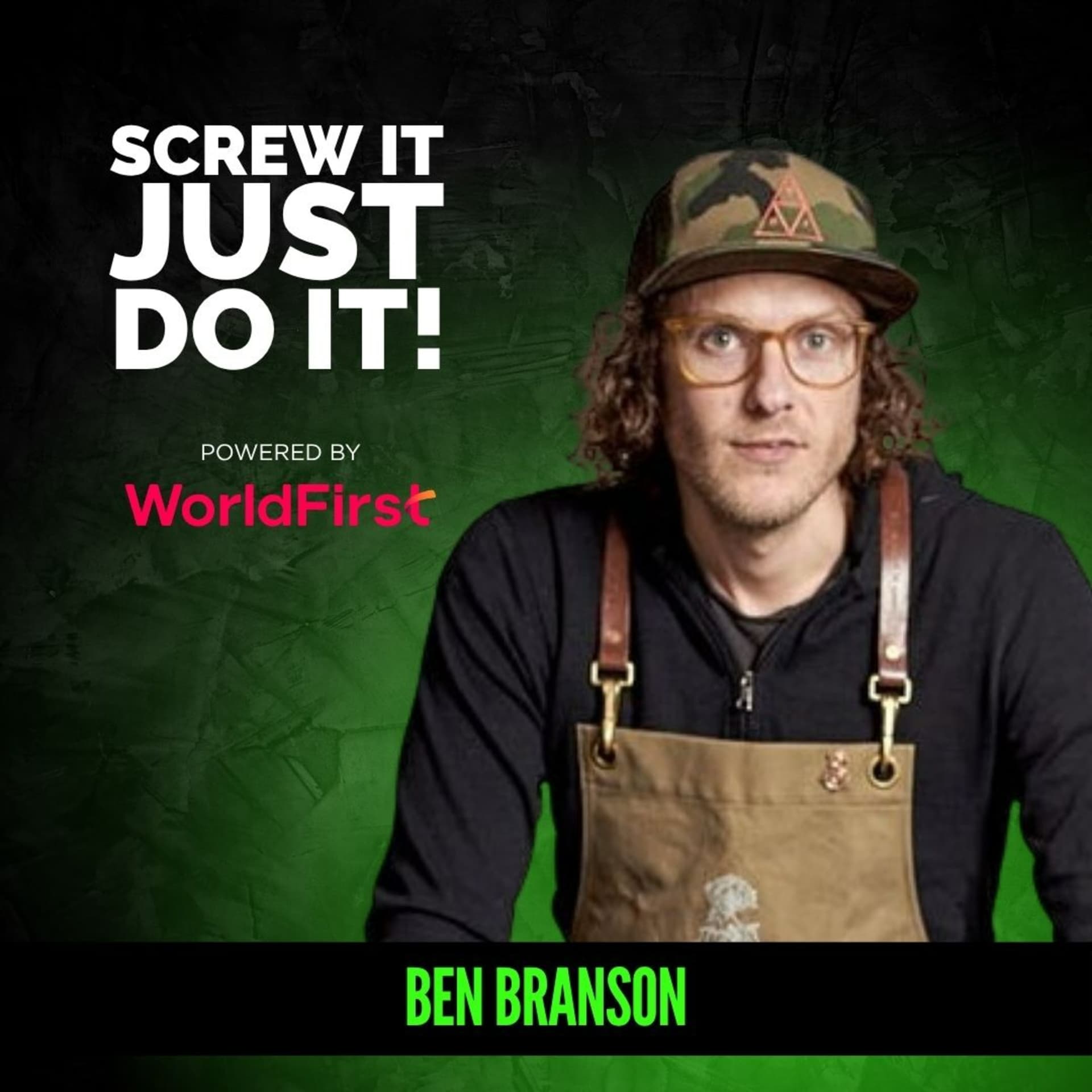
Ben Branson (Seedlip founder). Backgrounds: 320 years of family arable farming (Lincolnshire/Yorkshire); childhood on the farm (tractors, horses, field-to-table understanding). Father worked in brand design; Ben worked in design agencies doing naming projects.
Key claims
fear of getting started blocks meaningful building; gradual experimentation beats “gap in the market” thinking; “finish” means getting products onto a shelf; early customers don’t care about distillation details—taste and use matter.
Notable examples
hand-picking 90-minute “field to freezer” peas; naming Seedlip from “seedlips” baskets; first Selfridges launch (packing, invoices, sampling for three weeks); one-man risk despite a “village” of bottle/label/trademark helpers.
Written by AI. May contain mistakes. Listen to the episode to check what was said.
Chapters
Tap a time to open that second in VOBen's Background in Farming
0:45 to 0:59
Discussion on the impact of Ben's farming heritage on his entrepreneurial journey.
“I mean, I'm 39 in two weeks, you know, and I've spent my 30s, I guess, in this space.”
Early Influences and Design Work
0:59 to 1:33
Exploration of Ben's experiences in design and the origins of Seedlip.
“this is genuinely relevant for a lot of founders listening.”
Childhood Memories of Farming
1:33 to 3:00
Ben shares memories from his childhood on the farm and lessons learned.
“Now let's jump into the main conversation.”
The Roots of Seedlip's Name
3:00 to 4:24
Discussion about the naming process of Seedlip and its historical significance.
The Journey from Idea to Product
4:24 to 9:01
Ben discusses the gradual process of turning Seedlip from an idea into a business.
“And she talked about these baskets that we used to use that she was told about called Seedlips.”
Challenges of Launching Seedlip
9:01 to 12:06
Insights into the stress and challenges faced during Seedlip's launch.
“Had lots of ideas before, never done anything with them, helped other people with their ideas, but then they go and execute them.”
Transcript
Automatic transcript. May contain errors.0:00Alex Chisnall:What stops founders from building something meaningful isn't the lack of ideas, it's the fear of getting started. I'm Alex Chisnall and this is Screw It Just Do It, a podcast for people who are ready to stop waiting, take action and make things happen. Oh my God, I absolutely love numbers. My family have been farming about 320 years now, which is like nine generations. So Seedlip literally is a product of my upbringing in terms of mum and the farming side and then dad and the design side. I went into design agencies and I did naming projects for clients and it's a horrible process. You know, I started working on Seedlip in 2013.
0:42So this is like year nine or something, but it still feels like this thing is only five minutes old. I mean, I'm 39 in two weeks, you know, and I've spent my 30s, I guess, in this space. and I'm definitely not done yet.
0:58Alex Chisnall:Before we get into today's conversation, this is genuinely relevant for a lot of founders listening. Are you running a business that pays supplies abroad, receives international payments, or operates across borders? World First helps founders manage global payments and FX more efficiently with access to competitive exchange rates and tools designed specifically for growing businesses. World First have given us an exclusive offer for podcast listeners to get 50 transactions completely fee-free for 60 days. Head to worldfirst.com forward slash screw it to create a free account and claim now. Now let's jump into the main conversation.
1:35Alex Chisnall:So look, before we chat about Seedlet, I'd love to find out a little bit more about your background and how you may have ultimately helped lead you to where you are now. So tell me about your family's history of working with land. I understand that goes back quite a few hundred years. So what was childhood memories like? What was growing up like for Ben? Yeah, so my family had been farming about 320 years now, which is like nine generations of farming history, which is awesome. And really proud of that. It's not easy, agriculture and kind of arable farming these days. But it meant that childhood was kind of countryside.
2:17And I guess my brothers, two younger brothers I had growing up, all quite close in age. So it was that sort of, I don't know, whether it's building tree houses, booby traps, bows and arrows, playing around in tractors, horses. It was that sort of, you know, mum kick us out in the morning. You know, the bell rings for lunch, kick back out, come back in at tea time. And I guess what I've taken from that is I definitely, I was definitely exposed to seeing hard work, you know, from my grandfather, my uncle, especially, and just how it's hard to work with the land. So that was, that was good. I got a good grounding of, you know, you see the bag of potatoes in the kitchen, you see the chips on your plate that mum's cooked, and you kind of understand how they've got from the field to the table.
3:12that was important i didn't probably appreciate that as much you know as in the last sort of 10 15 years and then my dad is in the world of brand design yeah i didn't know okay so sealip literally is a product of my upbringing in terms of mum and the farming side and then dad and the design side and i was quite like farming growing up i was to be honest it was sort of quite uh i don't know being at school with other kids and you know parents who are I don't know lawyers or bankers or um property developers or stuff I was kind of like oh yeah we're we're a farming family that's that's quite low down the food chain you know that's it's quite humble kind of simple you know life dads and I you know sat on tractors during the school holidays and got stuck in but dad's work i always have more questions about i was always more what are you working on where are you traveling to what projects are going on you know standing in a supermarket is like an art gallery so yeah both that was all quite formative and my childhood and my memories of the farm and the land definitely informed the blends and informed um seed lip yeah in a big way and does
4:32Alex Chisnall:your mum still work the land they still farm that's our family yeah we still farm so my uncle now kind of is in charge of the farms across lincolnshire and yorkshire and you know first four years of of seedlet we were hand picking peas from the farm as a team uh 90 minute peas so field to freezer in 90 minutes um and yeah we'd pick what we needed for the year and they would then be distilled into seedlet garden and and did um did the name seedlet which i've which i've read about did that come directly from working on the land in those yeah i i remember i you know naming like is a for anyone that started a business is a really horrible fragile terrible process and i'd done naming pro you know i went into design agencies and i did naming projects for clients and it's a horrible process.
5:25So when it came to naming Seedlip, yeah, it was kind of headaches and just, but I went home and I was speaking to my gran about what it was like when we started farming, just kind of not because I wanted a name, but just because I thought I'd ask her. And she talked about these baskets that we used to use that she was told about called Seedlips. And by that time I'd become pretty obsessed with doing very random things like visiting all the botanical gardens in England and Scotland and seeing a brown sign for a farming museum you know off an A road and going and seeing it I got to know this lady who is the director of baskets at the Museum of English Rural Life in Reading which I really recommend going it's a tiny little museum but they've got 12 seed lips.
6:14Alex Chisnall:okay so talk me through the process that you went then from deciding that right i'm actually gonna build a business here and sell some stuff yeah it was um i guess it was very gradual number one there was no like oh my god there's a business in this or oh my god there's a gap in the market um it kind of was a period of just me playing around and i guess gradually unbeknownst to me at the time starting to fall absolutely head over heels in love with this opportunity to express myself um in and learn about things that really sat true with me and just gave me this outlet of kind of creativity and experimentation and uh yeah from just mucking around you know evenings and weekends it was really going out for a meal in london uh you know which i don't do very often but was doing and was going to be driving home and getting served this absolute monstrosity of a pink fruity sweet horrible ah yeah yeah okay and then that kind of you know then the dots just starting to sort of slowly join of this is this is a really poor option this doesn't fit anything and i don't want another one i feel like an idiot maybe i'm not alone in that maybe there's something in what i'm doing at home maybe i could work with the farm maybe i could work with my dad you know maybe i could find a way to bring all this together but i'm running my own design agency and that's a couple that was a couple of years old that was busy um and i was enjoying it and so seed lip initially was going to be a side project it was going to be a bit of fun to be honest to like make some liquids choose you know design my own brand maybe take it to a local farmer's market um and originally i was going to do five products in two sizes we launched i was going to do five products in two sizes it was going to take six months and it was all going to be you know it's going to cost no money and it was just going to be on the side uh fast forward to kind of launching two years later in one product in one size having put my life savings in with the tattoo on my arm and uh full time on it it was just a slow uncovering of oh my god i really love this oh my god i want to at least get this onto a shelf That was the goal.
8:58Just see it through, get it on a shelf. Had lots of ideas before, never done anything with them, helped other people with their ideas, but then they go and execute them. You know, just wanted to finish something and finish was, yeah, get it on the shelf. And what did it feel like the first time you saw it on a shelf? you know driving uh packing out the back of the car getting the first invoice from selfridges packing out the back of the car driving into london and when you deliver stuff self you know you go down into the basement and i parked in the wrong place and i didn't have the right high viz jacket on and then walking through like the tunnels of selfridges you know carrying boxes and then going and putting them on the shelf was just a massive release i think it was just a you know a kind of bit of a chance to breathe but then I stood there every day for three weeks and sampled and sampled and sampled and talked to the public for the first time and learned a bit of how to talk about it and learned that people really didn't care about how clever I thought I'd been distilling something.
10:07Does it taste good or not basically? Does it taste good and oh right now you're talking to me about how rubbish orange juice is or you know a fizzy water okay like talk to me about that don't i can't care less about your clever distillation and you know i don't really care about that um does it taste nice let me try it and when do i drink it and how do i drink it um so yeah it was good selfridges were yeah they're such an incredible platform to launch new weird businesses you know um so yeah that was sort of fond memories but also yeah it was a one-man band i was doing everything and um yeah that was pretty stressful i was gonna
10:52Alex Chisnall:that was literally my next question was it still just you at this point in time it was yeah i mean i counted because i sent i made 50 postcards or 50 prints actually of the fox illustration that we have on seed lip spice um and it was my favorite one by the way great uh yeah it's the first the first one um and with these weird delusions of grandeur you know i signed every one and sent them to the 50 people that i counted had been involved in actually helping seed lip launch okay and that's the guys that made the bottles the labels the lawyers that help with the trademark You know, it really is like a village, even though I was the only one that was taking all the risk and the only one that was on it full time.
11:37So many people in the industry were helpful. You know, lady who helped me understand what the hell a value chain was, you know, finance people who helped teach me about Excel and P &L and learned that, oh, my God, I absolutely love numbers and Excel. and spreadsheets. So yeah, it was sort of a lot of people helping and then just me the only idiot that the buck stopped with.
12:10Alex Chisnall:If this conversation resonated with you, don't just sit there, act on it. Make sure you follow or subscribe for more game-changing conversations and remember, the only thing standing between you and your business breakthrough is the decision to screw it and just do it.
From the publisher
It was meant to be a side project. Six months. No real risk.
Two years later, he had quit his job, spent his life savings, and there was no way back.
In this Bite-Sized episode of Screw It Just DO It, I sit down with Ben Branson, founder of Seedlip, to unpack how nine generations of farming, a dad in brand design, and one disgusting pink mocktail led to him creating the category of premium non-alcoholic spirits.We talk about how the business almost never existed, why naming is a horrible process, what standing at a Selfridges shelf for three weeks teaches you about customers, and the moment Ben realised he absolutely loves numbers.If you are building something and wondering whether to go all in or keep it as a side project, this one is for you.
Key Takeaways-
When a side project quietly becomes your main risk
Why most founders don’t notice the point of no return
The difference between planning and commitment
Why finishing something changes everything
🎧 This episode is powered by WorldFirst, specialists in international business payments. If your business pays overseas suppliers or receives payments from abroad, those transaction fees can quickly add up. As a Screw It Just DO It listener, you can get 50 international transactions completely fee free for 60 days.👉 Create a free account and claim the offer at worldfirst.com/screwit🎧 Don't miss a moment of entrepreneurial insight. Subscribe to Screw It Just DO It wherever you get your podcasts.🎟️ Join us at the Festival of Entrepreneurs, November 3-4 at NEC Birmingham. Two days of real conversations, practical insight, and founder-led growth.👉 www.festivalofentrepreneurs.co.uk


