
In short
AI-first business strategy and the “fourth industrial revolution” argument that AI will replace much knowledge work; advice on where entrepreneurs should add durable value and how to implement AI in SMEs.
Guest backgrounds
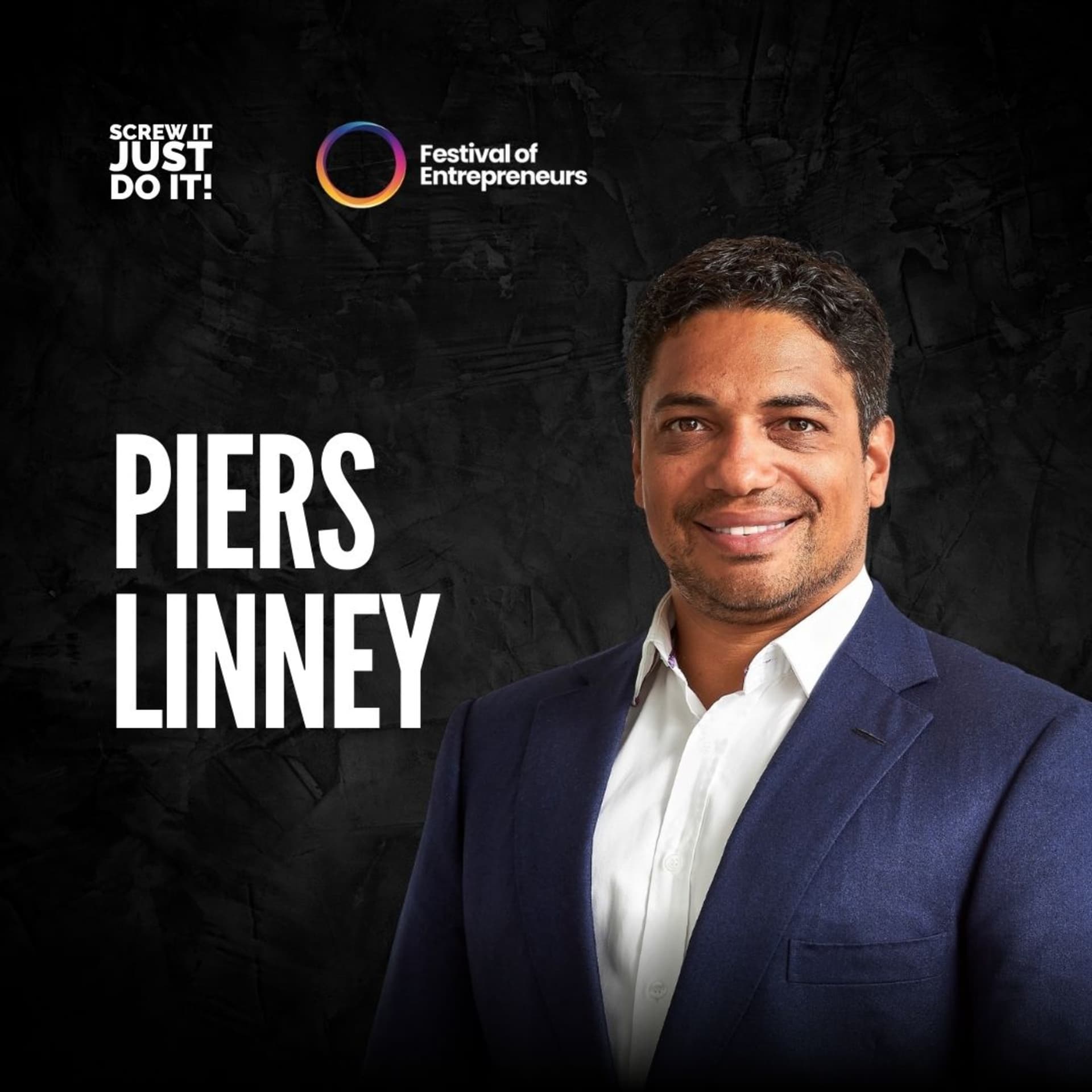
Piers Linney is a serial entrepreneur, investor, podcaster, and former BBC Dragon on Dragon’s Den. He’s co-founder of Implement AI, which helps SMEs navigate AI adoption. He’s also a qualified corporate finance venture capital lawyer and former investment banker; previously worked in telecoms/media/cloud infrastructure. Named one of the UK’s top 100 most influential Black Britons; also co-founded a 3D-printed titanium mountain bike company (Afferton Bikes).
Key claims
Businesses should move from “tweaking” to “AI-first” transformation. AI is productizing intelligence like “dial-up internet” and will compress timelines for cognitive labor. Social mobility and job ladders may stall unless people migrate to higher-value roles. “AI projects” that don’t integrate and scale fail; implementation is the bottleneck.
Notable examples
Call centers dematerializing (potentially millions of jobs). Gmail/Microsoft Copilot as horizontal commoditization risks. Text-to-video startups getting overtaken by Sora. Google Meet translation. AI agents that can use mouse/keyboard and eventually act without screens/keyboards.
Written by AI. May contain mistakes. Listen to the episode to check what was said.
Chapters
Tap a time to open that second in VOLife Before Entrepreneurship
0:45 to 2:26
Piers shares his early entrepreneurial experiences and childhood influences.
“and do things that humans just can't do?”
First Business Ventures
2:26 to 5:34
Piers discusses his first entrepreneurial ventures including a paper round and door-to-door sales.
“They're kind of like working with your hands, essentially.”
Journey Through Education and Early Career
5:34 to 7:20
Piers reflects on his education, early jobs, and the transition into business.
“So, you know, I was making quite good money out of it.”
The Impact of AI on Future Careers
7:20 to 10:05
Discussion on the implications of AI on job markets and advice for future generations.
“So, yeah, so I've kind of done a lot of things.”
Social Mobility and the Changing Job Landscape
10:05 to 12:15
Piers talks about social mobility, the risks of knowledge work disappearing, and its implications.
“But I would always qualify as a lawyer again, right?”
The New Industrial Revolution
12:15 to 14:00
Piers discusses the parallels between past and current industrial revolutions and their effects.
“management consulting, any kid that comes up to you and says, should I become a management consultant?”
The Impact of Industrial Revolutions on Labor
14:00 to 17:05
Explore the evolution of industrial revolutions and their effects on labor and society.
The Fourth Industrial Revolution and AI
17:05 to 19:46
Learn about the unique characteristics of the fourth industrial revolution, focusing on AI's role.
“And this other thing about AI annoys me.”
Piers Linney's Journey in Technology and AI
19:46 to 21:30
Hear about Piers Linney's background and his transition into AI and technology.
“We make mountain bikes with lasers in Wales in the UK.”
Building AI Solutions for Businesses
21:30 to 24:05
Understand how to create effective AI solutions and address business challenges.
“Alok Shukla, on a podcast I did for a bank in the US, in the UK, about five, six years ago.”
Show all 22 chapters
Navigating AI Implementation Challenges
24:05 to 28:00
Discuss the complexities and challenges businesses face when implementing AI technologies.
“That competitive advantage is also going away.”
Building a Reseller Layer for AI Services
28:00 to 29:34
Learn about the strategy of integrating existing IT services with new AI platforms.
“Because I think if you're in an MSP, a tech consultancy, an SI, systems integrator, they're quite big, clunky.”
Embracing New Business Opportunities
29:40 to 34:29
Discover lessons learned from previous ventures and how they influence new business strategies.
“you might have been feeling like a little burnt out.”
The Potential and Threat of AI
34:29 to 39:30
Understand the implications of AI's rapid advancement and its potential impact on jobs and industries.
“And if it looks sentient and it appears sentient, how are we ever going to know that it isn't?”
Navigating AI's Market Challenges
39:30 to 42:01
Gain insights on how entrepreneurs can create value in a rapidly evolving AI landscape.
“We were just having a conversation about festival entrepreneurs and when it comes to talking about the different talks to have the one category for AI.”
Navigating the AI Landscape
42:01 to 43:20
Learn how to add value in a tech-driven market while managing risks.
“Yes, you use all the technology because it's fantastic.”
The Future of Human Experiences
43:21 to 45:44
Explore the growing importance of human connection in a tech-centric world.
“Yeah, I knew this conversation would leave me like, One, like excited about the future, but the other hand, like scared because like you got got children and you're just like, what the hell are they going to do for jobs?”
Defining Entrepreneurship
45:45 to 47:20
Understand the core qualities and challenges of being an entrepreneur.
“That was a great example of a need at a certain time that kind of went away.”
Scaling Up Your Business
47:21 to 50:41
Discover the stages of scaling a business and the factors involved.
“So an entrepreneur to me is somebody who they see an issue, a problem, you obviously see that, and they want to solve it.”
Challenges of the UK Startup Ecosystem
50:42 to 53:26
Learn about the barriers to scaling startups in the UK compared to the USA.
“and if you're, you know, going to the festival of entrepreneurs and you're in the early stages, for example, and you're like me now, Implement AI, you're working in socks.”
Implementing AI in Business
53:27 to 56:00
Find out how to strategically set up businesses to be AI-first.
“Last question for you, then we'll let you go.”
AI-Driven Organizational Design
56:00 to 56:36
Learn how to design an AI-first organization or enhance an existing one.
“stay in that window, what should this organization look like?”
Transcript
Automatic transcript. May contain errors.0:00I got to where I am by hard work, education and experience. By bringing my skills and my hard work to the labour market. Knowledge work, cognitive labour. What was life like before you became an entrepreneur? I can't remember. I've always been an entrepreneur.
0:15Alex Chisnall:Piers Linney is a serial entrepreneur, investor, podcaster and former dragon on BBC TV's Dragon's Den. He's also the co-founder of Implement AI, helping SMEs navigate the fast evolving world of artificial intelligence. and has been named one of the UK's top 100 most influential Black Britons. How do you strategically set up your business to be AI first? That is where you should be heading towards, not tweaking the business operations that you have. What does it look like AI first, where I can use this technology to augment myself, my team, and do things that humans just can't do? Welcome to Screw It, Just Do It, the show for those who decided to screw it and just did it.
0:55Alex Chisnall:I'm Alex Chisnall, host of this podcast and co-founder of the Festival of Entrepreneurs at the NEC in Birmingham this October 8th and 9th. This is the podcast that brings you face-to-face with the entrepreneurs and business rebels who threw caution to the wind and built something extraordinary. Want to surround yourself with 5 ,000 to 10 ,000 entrepreneurs who've already decided to screw it and just do it? The Festival of Entrepreneurs is happening October the 8th and 9th at the NEC Birmingham and I'm giving away free two-day pass to my listeners. 200 plus speakers, 90 plus sessions, billion pound entrepreneurs sharing their real stories not theory but the actual strategies they use to scale head to festivalofentrepreneurs.co.uk right now and claim your free pass because the best networking happens when you're in the room with people who've already decided to screw it and just did it welcome to the show for about the 10th time i think it's hard to feel like that i've never been called a podcasting before i quite like that i'm gonna add that on my website today you need to didn't you didn't you meet your co-founder at implement ai yeah on your podcast you're on number 61 now which is quite amazing given the fact it's an ai podcast i mean you know we we start we've got out the gates pretty early yeah compared to everybody else who's probably now putting out ai podcast or podcasts about ai um the likes of i think diver ceo just did like a round table didn't they with daniel priestly and a couple other people people who don't know um like i've known since i've known you you've always been an entrepreneur but um what was life like before you became an entrepreneur i can't remember i've always been an entrepreneur uh so yes everyone's got the you know the the founder kind of backstory about um the kind of first entrepreneurial experience so mine um which is not reverse engineered one is a real one so so basically a bit of background to me people i've been on tv i did the secret millionaire on channel four i was a dragon on dragon's den you know shark tank if you're in the us people kind of think they know me but they often are quite surprised to hear i'm actually a qualified corporate finance venture capital lawyer well i was a lawyer that kind of did focused on that essentially and then i was an investment banker at what was then credit suite's first boston so quite a big um sort of bald bracket bank essentially and uh i then left banking i went into business and then i was in telecoms media telecoms cloud infrastructure now ai but i've kind of been in business since the year dot really so i grew up in lancashire which is a lancashire mill town which is where the the original industrial revolution literally happened um and i grew up with you know the weavers cottages and the mills i was fascinated by it and the these industrialists industrial revolution they were entrepreneurs essentially and it fascinated me and uh i wanted to be an entrepreneur and where i live a lot of people like that my parents knew on our kind of housing estate, essentially, where I had businesses, but they were kind of, you know, Graham had a quarry, Derek had a joinery business, Eddie had a building business, you know, you get it.
3:53They're kind of like working with your hands, essentially. And I was like, oh, I want to go in business, but I want to do something like finance or something else. And no one knew what hell I was talking about. So when I was 13, I used to deliver papers, as people did. And I had this paper round, and I got paid like five pounds a week. So I'm showing my age now. And if I was late, it was like four pounds 80. And then I went, and when I delivered papers in Lancashire, when it snowed in winter, it covered your car, right? I mean, literally, you don't get it anymore. And I thought there's got to be a better way than this.
4:28And cut a long story short, they didn't deliver papers on Sundays. So one morning, my late father didn't want to get out of bed. He said, can you get a paper for me? So I go off down the news agent on my bike, pick up the paper, bring it back. He gives me a little bit of a tip. And then I thought, hang on a minute, there's something in this. So I kind of built the paper around by the local, the neighbors. Then they expanded out beyond that. And before long, it was kind of like I covered the whole town, essentially. So that was working on a Sunday morning only and making 20 pounds. Just kind of like wealth creation.
5:01But I learned things like, you know, I couldn't go and buy the papers from the news agent because I had to sell them at the same price. And there was no margin. I don't know what the hell the margin was. So my, you know, I, I say I, my dad, negotiated with the wholesaler so I could buy them wholesale. And they're kind of like, really? I go, yeah, I need this many papers. And they're like, okay. So that kind of, you know, see the bundles of papers here right out of the back of a van in films. I had one of those. The parents dorsed them every Sunday morning. And I sorted them, delivered them. And at Christmas, I went around, got my tips, got like 200 quid.
5:34So, you know, I was making quite good money out of it. I was quite impressed with that.
5:37Alex Chisnall:13, 14, yeah. Yeah, and then after that, obviously, I got to an age where it wasn't cool having a paper round. And then, this is pre-internet, right? So I am pre-internet. That's great saying that. Sorry, what are you talking about? Pre-internet. I sold, it was called Betterware. I don't know if you ever came across this. Yes, yes. It was like Amazon. It was like pots and pans, like a plastic squishy thing. to an old lady who get open a jam jar or whatever or an old man could open a jam jar or whatever and i sold these door-to-door so you drop off the brochure literally door-to-door sales pots and patterns i did that so i kind of i was always selling anyway and at university i was doing my you know the usual thing parties a law school i was doing company formations uh what i was doing there as a young lawyer i was doing film finance with a friend of mine who's actually his business really i was helping him and he became a ceo of lionsgate in europe so i was always doing something and then i had the kind of side hustle when i was a banker because the internet was coming so like this is like 1999 and that became a business proposition and then eventually in 20 march was it january march 2000 i left to start a.com which at the time seemed like a great idea but in hindsight, that wasn't the best time into start a.com.
6:56So that was my kind of journey, really. I've been in business. I've seen before even, after the paper round, around the better wear time, I was selling like these like post like candles by mail order. And then, so it's interesting. I look back at it, all the things I actually did. I love that idea of mail order business. Again, it's pre-internet. So I was putting adverts in magazines and selling candles, right? So, yeah, so I've kind of done a lot of things. But what I learned from all of that was find something, solve a problem, customer service, build relationships. And the thing that people tend to forget is a lot of graft.
7:35Alex Chisnall:Have you got two daughters, I think, the same age as my two as well. Have you gone through the now them getting jobs themselves, like weekend part-time jobs? I've got three, actually, a couple of steps in Alfie as well. So I've acquired another one along the way. So, Tiger, that's my oldest daughter, she's like 16, coming up 17. Good grief. It's amazing saying that. Ages has come out, I know, I know. So, that's about a car scene. So, she's doing A-levels, like one of them's business, as you can imagine. And then Alfie is just about to do GCSEs. So, and my younger daughter is 14. She's coming up to start her work on the GCSEs next year, essentially.
8:18She's got two years away from it. And we have these conversations about work. And if you follow me on LinkedIn, you'll be tired. My post about this kind of stuff. But it's a difficult conversation because I don't have the answers. So, you know, Tiger's a bit like a mini me. You know, she's interested in business and doing things. And Alfie, again, is quite entrepreneurial. He was quite interested in joining the armed forces. He was in the army cadets. But I'm not sure he's going to do sort of business and IT. And Lexi is more of a quite creative. So when you look at them, you say, well, what do you think we should do?
8:56I don't have an answer. Should I go to university? I mean, you know, two years ago, I'd be like, eh, go, you know, you get a qualification. Now you get some experience. Now I'm thinking, is that experience of, you know, is it worth 45 grand in debt or 45 grand plus whatever they want to live on for me to cover it times three? so actually maybe maybe this is a bit selfish but in all seriousness it's like well what do you say to them and it's not that straightforward because as you might go on to talk about i am i'm an ai maximalist right so i think that um there'll be lots of positives it'll solve aging it might solve nuclear fusion lots of we'll live longer we'll be happier have better lifespans but i think knowledge work is going away it's all about time horizons isn't it five years 10 years 15 years and then eventually you know physical work is going to go away so what do you what do you how do you advise your children well not just children actually adults sometimes come to me and say oh i'm doing this now i think it's got long what do you think i should do it's such a
10:04Alex Chisnall:tough question isn't it because my i'm to realize mine's two years difference with you so my eldest is is 18 and she's a dancer so she's off to uh one of the top performing arts colleges for the next three years um which yeah any like follow your passion i mean my daughter lexi she's electra she's a dance scholar she's and yeah so it's interesting though evie said to me she goes i don't want to just waitress i'm on my feet all day dancing i don't want to just wait what else should i be doing and what else should i do for my next career and it's like that's a really interesting question because you know going back in the day we all thought there's one career for life isn't it but you and i have both been through many different iterations of of careers and i thought i don't know what answer to give you other than start learning about ai um whereas my my other daughter amelia she's doing gcses right now and she's doing looking to do business and and law and psychology and is interested in going to university and becoming a lawyer and it's like until two years ago i always said maybe on your podcast previously that i qualified as a lawyer I left law pretty soon after qualifying, right?
11:12But I would always qualify as a lawyer again, right? No way would I qualify as a lawyer now. Just no. It's done. Because it's not so much the law's done, it's the junior lawyering's done. So law firms, great, you know, you're going to need them. It's a regulated activity, all that good stuff for the foreseeable future. But are they going to recruit anyone less than, then it's called post-qualification experience, PQE. So are you going to accrue anyone that's got less than, say, three years PQE? Because increasingly, the technology can do it, and the technology is getting better and better. And every day I read about, because I follow these things, there's some new start-ups raised, you know,$75 million to create AI to do the regulated activity within law, or the regulated activity within healthcare, or the regulated activity within financial services.
12:06So if you're in a regulated sector, you've got some protection by the regulators. If you're not, and you're in a high-paid, unregulated sector, e.g. management consulting, any kid that comes up to you and says, should I become a management consultant? The answer is no. I don't care how much you can earn right now. You will be better off and you will earn more money in five to ten years being a masseuse.
12:30Alex Chisnall:With those physical jobs, isn't it, that would still be, like you say, when it comes to knowledge, the friends that I've got who are entrepreneurs who said, I've literally cut my legal bill down by 90 % because I'm just getting hired to do it and then taking it to a law firm, as you say, to actually get the signatures. Accountancy. You know, I mean, everything I did, I've got an accounting and law degree. I'm a qualified lawyer. I was an investment banker, which in those days was a bit of strategy in there. And then what else? I've been a partner in a hedge fund. You know, everything I've ever done is going away.
13:04Like an issue, Alex, is this, is I, you know, often I'm on TV and I get to do things. I'm sort of a, I'm a poster child with a social mobility, right? Now I didn't go from an extremely difficult background. My mum and my dad were working class. They worked hard and they became kind of middle class. Mum had a BMW, right? So, but I got to where I am by hard work, education and experience. by bringing my skills and my hard work to the labor market, right? Knowledge work, cognitive labor. Now, if cognitive labor goes to zero and knowledge work becomes its dimension, its value, how would I climb that slippery slope?
13:49How would I climb that ladder? Because I've got nothing to bring to the market anymore. So the danger is that social mobility completely stalls. And the macro danger is that wealth crystallizes wherever it is today permanently.
14:04Alex Chisnall:Do you feel, I mean, interesting, you're talking about where you're from and, you know, that being right in the heart of the Industrial Revolution, but clearly we're rather about to enter another revolution or we're actually already a few years into it. You need a long podcast for this. yeah so you've got the first yes you've got the first industrial revolution right which was really about augmenting humans with a physical labor so steam engines um you know tractors you know farm machinery initially and then that kind of obviously migrated into the factories um you know the power loom all those kind of things so the pyramid of like labor a requirement for labor right you've got the you know the the elite at the top whatever you want to call them in those days especially he had the sort of the workers there was no middle class what happened was that pyramid of labor cognitive and physical started to be filled with machinery now the issue was the steam engines the wild steam engines they're gonna they're gonna do all the work you won't need that many of them but of course what happens is it generates generates wealth gdp grows populations were growing as well so although it was filling with um tools which is what they were we use them to do stuff to augment us the pyramid was getting bigger the middle class the working class global populations so all kind of ships rose then you got the second industrial revolution which is much more about sort of um you know um electronics consumerization um you know there's fast moving goods and then those populations start to buy this stuff you know shiny objects and then the economies grew again so everyone then you had computers then you had the the third industrial revolution was computers really so going from mainframes to pcs telecommunications um the internet so all that technology helped us communicate and again create more value and more shiny objects that we could buy and economics is circular so everything grew all shows rose so although you're now filling that that pyramid with more tools computers calculators the internet communication it was still getting bigger everyone wins the fourth industrial revolution which is what we're now experiencing will be the last and that's different this is where everyone gets wrong and the point is this is the pyramid has been filled initially with tools that we humans need right and the last tools we've all been we all love and use every day is software as a service sass you know your b2b sass right the billion trillions of venture capital been poured into the last two decades of course the last last decade and the difference is this is that why do you pay per month annoyingly per month per user for software as a service the answer is because the human's got to operate it so that's a cognitive labor so difference now is we're now productizing commoditizing intelligence and the intelligence we've got today is like dial-up internet right dial-up internet was you know 30 years ago i've got a starlink of my posh van conversion right 30 years equivalent to the eyes taken three and equivalent again will be two then one then six months then a month and a week then a day then a couple of minutes right it's an exponential curve but it's intelligence and this is the difference this is the rub the intelligence can use the tools we created lots of these clever tools a computer's a tool but now mccrase is something that can use the tools and that used to be our job so first it was cognitive labor and i think that's five i did a post the other day about um you know if you use it if you use one of these you've got five years if you use i haven't got anything here a tape measure or tool belt you've probably got 10 years now you can add five years on to both of those and then definitely so if you're physical if you're if you bring physical labor to that market in that pyramid you've got a bit longer it's harder to do but robots now they understand our physical environment used to spend you know a couple hundred grand not too long ago to teach a robot what a glass was you had to show a million glasses every type of glass from every angle and you know that's a gloss now you take a picture of a room with chat gpt asking to describe it it'll tell you what the carpet's made out of so now you you implant that capability inside a machine that can move around our built environment okay whether it's you know a rumba or a humanoid robot human robots people say oh why humanoid robots because our world was built for human human shaped things so it kind of works right you put that technology in a humanoid robot And they would go, but they're not very good now.
18:55And this other thing about AI annoys me. And I would say, yet. Can you do parkour? Can you do a backflip? Mike certainly can't. I can give it a go. But they can. But they can't kind of touch or sense yet. But it's getting better. So seeing they're going to be able to touch just like we do, smell like we do, potentially, taste like we do even. So within 15 years, 10 to 15 years, you're quite happily letting a humanoid robot, look after your mum, your elderly parents. So then physical labour has gone away. So the pyramid gets filled. And we, and going back to our children, all of us actually, you've got to think about how do you migrate to that space at the top of the pyramid and add value?
19:40Because if you don't, you will be, or whatever you do, will be washed over by this technology. And this is not if, it's when. That's the only question, when.
19:51Alex Chisnall:Can you remember when you first became interested in in ai and the future and decided i'm actually gonna go all in on this i'm gonna start a business about this well yeah so i've always been interested in um the book who was by called the new new thing right so the latest technology so it was um you know it was the internet obviously computers everybody was and then for me it was um um like cloud so i was involved in cloud technology or when that kind of came around and the thing about cloud is another really important point right so i gave a keynote i did quite a few keynotes i gave a keynote about two 18 months ago um big room full of people why the financial services sector should transition to the cloud don't tell them this but i actually use the same notes from a keynote i gave eight years ago right yeah just changing names protecting citizens that's not happening in ai right i do presentations now where i have to update my slides every month because what's in them is out of date right so in ai that's not so so that excites me so i was in cloud now i am a co-founder chairman afferton bikes it's a mountain bike company on the podcast yeah you have done yeah so you know probably the most innovative, I think we're the most innovative mountain bike business company in the world.
21:16We make mountain bikes with lasers in Wales in the UK. And that's 3D printed titanium. So these are exponential technologies. Okay. So cloud, additive manufacturing, and AI really, to me, it kind of brings it all together for me. So I met my co-founder, Alok, Dr. Alok Shukla, on a podcast I did for a bank in the US, in the UK, about five, six years ago. And we kind of stayed in touch. And then he had a business in sort of a health tech business. And then about 2020, late 22, I think, when the sort of GPTs arrived, we were talking about AI. And he was doing something AI and kind of education sort of related AI.
21:58And my background is very much, most of my background has been in the channel, in the little things like Microsoft channel, selling IT infrastructure, really. not not my background merely is not software as a service i've invested in lots of those companies but it's more being in sort of you know it infrastructure cloud so we've talked about there's a big opportunity here but where do you place your bets and this is that if you're an entrepreneur thinking about ai you've got to think very hard about this every day the the 10 1500 100 AI startups where they wake up, they read the news, and they've been disrupted.
22:37You know, there were several companies, wherever you put this podcast out, last week, right, they were developing AI so you could, you know, take a picture of your body and put clothes on so you could see where you're on the way. Google just launched it. So we were kind of like, well, where do you get onto this pitch to kick the ball around? They always say, you're not on the pitch kicking the ball about, you're not going to score goals, are you? So that's kind of like, this is the biggest wave that's ever there's the book by mustafa sulliman i read that the coming wave it's the biggest wave that ever experienced in my life how do you paddle into it do you invest in it do you start a business so we kind of looked at it and thought it's the gold rush adage don't pan for gold sell shovels so and it's gone a bit beyond that now because we're not just selling shovels now we're probably building the machines that make the shovels yeah yeah so so we looked at it i thought okay let's get on the pitch so this is now early 2023 we just have an event put it out on links and event about ai people turned up now i knew a little bit about it was machine learning really because i was a trustee of nest of the uk's largest innovation foundation it's about 600 million foundation did a lot of research on the impact of automation on the economy so for example call centers right call centers they're going away they're going to dematerialize and go to the cloud unless it's high value uh it's vulnerable um a vulnerable a high value cell a vulnerable person perhaps or some other sort of edge reason for it to be human on the phone but often that they're going to dematerialize that's a million jobs in the uk
24:13Alex Chisnall:and look at other countries it's got to be millions and millions well if you're in a country where you are a low labor knowledge work economy, right? That competitive advantage is also going away. So we looked at it and thought, how do you get on this pitch? So we started doing almost like consulting about AI, talking about it, how it's going about businesses. And people said to us, well, that's great. Can we see it? So we started doing pilots. So we did these pilots, right? And they weren't called AI agents then. They were the pilots of AI stuff. Automations, we call it. it was all a bit consultative so we're doing these kind of individual pilots you know like silos of code and people were kind of blown away because what happens is you're not sure about ai you see it do something and you know then all the lights go on you're like oh my goodness i didn't that's nuts so all the lights start going on oh okay we could do this that all that so we realize actually if you're doing that is where are the pain points in you know businesses our business are kind of ideal customer profile probably a company with maybe more than 20 people 10 if they really want to become ai first but they want to invest some money in it and they've got people processes workflows you know data systems multi-offices and then you start to look at it and say well how do you scale it so you can't scale individual bits of code a lot of people on the internet talking about oh an ai agency just created these automations on no code platforms or building them like how do you how do you integrate that how do you support it how do you grow across a business so we thought a lot of ai companies these are vertical ais it does email it should pa does one thing i think you know they're growing very quickly raising lots of money i think the danger there is you wake up one morning and you know gmail does that in fact you will wake up one morning gmail does that or microsoft copilot 365 pull the finger and that does that as well so we thought actually it's better to be sort of horizontal so we're sort of horizontal so we built a platform we call the ai operating system and the ai agent so the sales custom success support operational excellence and analytics we'll probably we're building a computer use agent that can use a mouse and keyboard let's think about that for a minute where that where that one's going um so in a business the idea is is you deploy one agent or maybe two or maybe even three that work together in a team they add value and over time you expand it now they can all talk to each other they've all got shared memory they can use tools like phones email whatsapp sms and we call it agentic crm all those conversations especially on phones you're saving that conversational data and you can then use that in your marketing standard crms don't do that so we've kind of built this thing and now this question of moving to recurring revenue and scaling it but i think it's super exciting but it is it is tiring because it moves so quickly so we're more in the complexity alex where a business kind of like i want to do that and you've got you know people process integration accreditations data integrations it's not as simple as just firing up some agent and it goes and runs your business as you know in business that is not it's not as simple as that how many years have you been uh working with implement ai then between you once you started in um formally q q1 2023 so weirdly we're kind of like two years in but it's only is it took us 18 months to realize well not realize but going through that the motions of working with actual businesses okay this is the problems this is how they approached um ai adoption and implementation integration so we should build this then you've got like there's like no code platforms where you can get an agent and there's those platforms as well so there's lots of noise lots of um complexity but what people forget there's a big existing channel right lots of companies that deliver it services to companies that they trust been working for years so we want to do is build our platform get it out there we've already got customers on it and then put a layer over it so it can be a reseller layer.
28:29So people can then resell. Because I think if you're in an MSP, a tech consultancy, an SI, systems integrator, they're quite big, clunky. It took them 10 years to get into cloud. They've got absolutely zero chance of pulling this off because it's a cultural transformation. And I reckon now, we want our business to have one person in each function and they run a team of AIs. and we're building our platform and the cost of code is going down because you can now automate all the code. So it's like a perfect storm.
29:05Alex Chisnall:If you're enjoying this conversation and thinking, I need to be around more people like this, then I've got the perfect solution for you. The Festival of Entrepreneurs is where 5 ,000 to 10 ,000 ambitious entrepreneurs come together to learn from the people who've actually done it. It's on October the 8th and 9th at the NEC in Birmingham and I'm giving my listeners free two-day passes. Real entrepreneurs, real stories, real strategies, exactly like what you're hearing right now, but live and in person. Go to festivalofentrepreneurs.co.uk and get your free two-day pass before they're gone. I know that for the previous business venture, you might have been feeling like a little burnt out.
29:46Alex Chisnall:And this time, did you have a conversation with yourself, with, you know, with your loved ones, who I know, and literally go, I'm hungry to go again. And this is it. Let's go for that. Yeah, so I started a business, sort of, three years ago. And it sort of got, like, aimed at SMEs. It was in telecoms and mobile. It was, like, kind of, like, almost like trying to make that service almost free, essentially. And content and support didn't really exist. So it's like a channel into SMEs, which is, you know, it's quite a hard one to actually see. It's very hard, SMEs, because they're all so different.
30:18and you don't really know where they are, like large enterprises. And that didn't really work out. And I was a bit sort of like, ugh, am I going to go again? So I took a bit of time out. And then this came along. I just thought, no, this is a no-brainer. It was like, like I said to you, it was like this enormous wave coming in. And don't forget then, it was, you know, people say to me, I talk about exponential a lot. And they're kind of like, what do you mean? I'm kind of like, well, then it was a chatbot. And then it was an image. You're like, whoa, it's the images, rubbish images. And then it was Will Smith eating spaghetti.
30:55And you're like, that's terrible. It's quite funny. I can't believe we can do that. Now, you know, VO3 Google, depending where you put this out, we all changed the game. It's, you know, Hollywood quality HD video. And everyone's got all the fingers where they should be with audio. And I said, that's what exponential looks like. And people are like, okay. So you kind of showed them that. this was one where it's just too massive an opportunity to miss a because your tam is not just technology it's payroll right now our job is not putting people out of work i think that's a whole other thing the sites are gonna have to sort out because people are going to be our work quite frank but um it's more about augmenting the people you have because as we know human resource is a very expensive hard to manage and actually hard to find so it's actually augmented resource you've got so you can grow and what we try and do is help companies get ahead because the ones that get ahead in an exponential world are going to stay ahead because if you know if company if country act this is why nation states are obsessive ai because winner takes all if a nation state sold agi artificial general intelligence you know better humans are all cognitive tasks on monday and then and country the other country stole it on wednesday in exponential world you never catch
32:19Alex Chisnall:up i saw an article i thought of you actually the bbc did a couple of days ago it said uh and it was all around the people who think ai might become conscious and i thought i want to get your thoughts on that oh you can't it's a good headline it's like conscious sentient the thing is is i I did an event, what was it? It was about two weeks ago. So it was a room, right? 40 chairmen of the UK's biggest companies. So I'm doing my bit of AI, and you can see them like, oh, nonsense. You know, it'll never be able to do what humans do. I'm kind of like, well... And I try and be purposely provocative to encourage a conversation about this.
32:59But I really do mean this, right? We are 200 ,000-year-old firmware, right? hulking around on some meat wagon that's not particularly efficient very hard to get spare parts and our software which is is like you know memory experience education is biased out of date and also difficult upgrade as well it takes you years to learn a language so yeah are we are we that special it's that human exceptionalism that would i think we're special we've got a soul maybe if you're religious, I'm not religious. So you've got all that stuff. And I think, well, you know, this stuff has got, we can't multitask, especially men.
33:37So you can't multitask. You can do one thing at a time. Well, you've seen these things, you know, in the military, you know, tracking a million targets so they can shoot them. And the AI can do hundreds, not thousands, millions of people at once. And the brain, and you've seen it on the news, they're building data centers the size of Monaco. ours is stuck in a skull and our brains the size of a honey melon that's it and it's going to take hundreds of thousands of years to evolve so if an ai if we reach agi which is where the intelligence is it surpasses our intelligence in in all of its forms right and you're trying to run a turing test Who's testing who?
34:23So if an AI, this AGI, was to fool us that it's sentient, we're never going to know that it isn't. And if it looks sentient and it appears sentient, how are we ever going to know that it isn't? Now, the fact is, I think eventually, essentially, because I don't think we're anything special, that we're as conscious as we are. I'm not religious. So if you add that element, that's a whole different call of fish. I'm not religious. I think we're just wetware.
34:48Alex Chisnall:Bringing it back to people who've been listening who are business owners or want to be business owners, and everybody wants to start an AI business now. Maybe they've missed the boat. But how do you cut through the noise that's out there at the moment? So if you think about AI, you can go and try and build an AI technology business. We've got to build some technology. Ours is more integration orchestration than the underlying technology. In our platform, all the AI and all the pieces that made AI work, lots of different platforms that do different parts of the workflow, they're all modular. So in its simplest form, if large language model X suddenly drops a ball and large language model Y, as long as it's in the right place, it's having the right platform with the right data security, information security, we'll swap it out.
35:36We're in different agnostics, don't care. we want to put the best possible service and experience for our customers so they can deliver that to all their stakeholders that's what we are so that massive noise of ai i call it the pr the pr frontier people want to raise money and the same things then you've got the what they call the jagged technological frontier and it's jagged it depends on what you do now if you're a copywriter you're screwed if you are a lawyer it's coming for you so it's jagged depends what you're doing if you want to make um films it's not quite there yet but it's coming you know it's getting there and then within that you've got what we call the operational frontier where this stuff works and what's happening is the pr frontiers becoming the technological frontiers becoming the operational frontier very quickly and that cycle is accelerating so you know when you hear things it's like oh that's interesting you can do that now computer use is a great example it was launched by claude anthropic and then a operator by open ai and chat gpt and it can it can type and use a mouse so it can kind of like go away it'll it'll go onto some websites maybe get used to the point where you're about to check out to find a flight but it'll take longer to do it'll take you to do it, but you still don't have to do it.
36:57It's doing it for you. But very quickly, imagine this. Why will computers need screens? Alright? And two things. Or keyboards. So, number one, keyboards are going away, because unless you've got to talk on somewhere where it's noisy, for example, the idea of using a keyboard is kind of going away, because you've got to talk technology. I don't type in Chattupti. I use Chattupti Pro. I don't type. I talk to it, right? And then I look at what's come out, because often i talk too quickly and it can't quite understand it so i talk to it and then the idea behind you know a mouse and a keyboard is sort of going away as well so now i'll be able to use other things so the screen is for us see what's going on if an ai is running it forward to say go and book me a fly i don't really look at a screen well eventually and a computer use them will be it'll actually integrate at the os level as well so the screens will just be for us to see if we want to see what's going on or want an update so the internet's going away so i always say that you're gonna have an ai agent quite soon understands you your likes your dislikes your your in those your in that man knows my ecg there's your heart rate your mood your blood pressure and you'll say i want a barbecue that's another one of my linkedin posts i want a barbecue the weekend i need it by midday my mom and dad are coming 200 pounds for a new one i'll pay 150 for second hand one no problem your ai agent pops off has a conversation with 435 000 barbecue retailers in a millisecond or two comes back with a deal because actually and if you've given it autonomy is he bought it it's i've got you a new one actually it's under 85 pounds it'll be a 11 o 'clock we can deliver it by drone done so you know our grandchildren will think you did what yeah we used to go on this thing called the internet what we used to do is search and we got a long list of like results half of them were like sponsored we didn't want them there and then normally you needed a search engine to go through the search results and only then could you then look at all these things make a decision about to buy sorry that's going away and before that we'd have yellow pages the size of it's exactly that yellow pages exactly that alex the internet will look like yellow pages the old phone book to our grandchildren.
39:16So e-commerce will be like high-frequency trading. So then you've got perfect markets, perfect information, because it's very hard to create a margin. The world changes very fundamentally.
39:29Alex Chisnall:It's fascinating, isn't it? We were just having a conversation about festival entrepreneurs and when it comes to talking about the different talks to have the one category for AI. like well what we're talking about now might not be what we're talking about in the autumn because that's still four hour months away right i did your podcast when did we do it last time where i was talking about ai i was all excited then about ai yeah about 18 months ago i reckon yeah 18 months ago so things were just kicking off we were talking to companies we've kind of moving on now because we've spent all that time literally all day you know trying to sell ai to companies but more learning about how you do that and how they react to it and how you actually support them to adopt this technology because not going to do it wholesale you know you're not going to have a right we're going to have an ai5 project across our whole business that's just doomed to failure it's picking off where there's an roi and where the ai works that's been what i've been doing really since your last podcast so when i talk about ai now it's from a place of understanding and having seen, and we do think sometimes with our customers where we get something working and the hair stand up my arm because I can see where that's going.
Read the full transcript
40:46Not today, maybe not next year, but I can see in three years that that's another 2.4 million jobs gone. It does trouble me because we've got children, you know, you live in a country, you've got an economy, but it is inevitable because in our system, It's a race to the bottom, isn't it, in terms of the bottom line. And that's what's going to drive it. And all these billions have been poured into artificial intelligence. They want to return. And also personally, I'm going to say, we only mentioned your answer to your question there. If you're kind of like an entrepreneur looking at AI, you've got to be quite careful about where you create value with it.
41:25Because you hear this thing about, you know, a chat GPT rapper. All businesses are rappers, you know, over something. They're the core. What's at the core? but you've got to find something that i say where if you look a couple years down the line the technology isn't going to head you off of the past you're not going to be like intersected by it great example is a text to video so a lot of startups well they started playing with text to video a lot of startups doing text to video we're gonna you can prompt and it's going to create a video lots of them then one day open air i launched sora well they kind of launched Sora they kind of talked about it launched about a year later but they showed some demos and I was watching on I think it was on X Twitter and um as I was watching it there were adverts being served into the feed because it was relevant by text video startups which in that moment had all died it's like that all the time so you've got to be careful where you want to try and add, going back to my pyramid analogy, you've got to move to the top.
42:31Yes, you use all the technology because it's fantastic. Anyone can code now almost. But yeah, the barriers to entry are going away of starting a business, which is good and bad because now everyone can do it. We've got to find some space in that pyramid at the top where you're adding some kind of value that the technology is going to struggle in the foreseeable future, at least, to automate and do. and disrupt you. And that might be, you know, human experience. It might be, you know, the complexity of technology and integrating it. So that's why our business, you know, you can have that huge funnel of technology.
43:06It can be as big as you like, unless it's like an egg timer, isn't it? It all funnels down to implementing it. I don't care if it's AGI, ASI. It's got to be implemented. Implement AI, boom. Yeah, we did this for a lot of time, thinking about the name.
43:22Alex Chisnall:Yeah, I knew this conversation would leave me like, One, like excited about the future, but the other hand, like scared because like you got got children and you're just like, what the hell are they going to do for jobs? And to advise them is just. You don't want to be, you don't want to be like an IQ, number one. Right. So you hear this thing of, oh, don't, you know, it's EQ, not IQ. You know, that's too simplistic. Human experiences and things where, you know, it's funny, isn't it? where the big earners in our lifetime have been the bankers, the professional services, the hedge fund managers, right?
44:00No, that's going away, mate. You're going to make more money probably being a multilingual masseuse that can cut hair. I'm even going to take out the multilingual. So just because that's going away as well. You can, you know, you saw now Google have launched Google Meet that it translates in real time. Yeah, in real time. never quite real time but it's milliseconds of difference so it's something with your hands something adds value human experiences um something where there's going to be some human i think the value of human contact and human experiences will will grow exponentially in the other direction like that you're going to your business right events so you're the festival entrepreneurs so perfect example of people are going to want to get together with people you know you know they're gonna want to go home and you know people laugh about this but you'll have a conversation in your fridge you know you'll get up in the morning you'll be like good morning peers how are you but i'm fine thank you your heart your heart rates are a bit low last night you all right yeah i slept quite well actually right now i know you like um two eggs in your omelette in the morning but you only had one left so i took the liberty yesterday i've ordered you some more eggs and they've arrived here now thank you very much i know you like white pepper on your Let's have ordered some of that as well.
45:20So you'll be having conversations with your fridge. And that's your fridge. They always say, what's your air fryer going to say?
45:26Alex Chisnall:No, and that's why I like Festival of Entrepreneurs as a business model, because people will always want to gravitate towards people and have those conversations. You can have online, you can have FaceTime and all the rest of it. But I think genuine, and we saw that coming out of COVID, didn't we? There was a huge... Like Clubhouse. Remember Clubhouse? I certainly do. Yeah. I was like, that was crazy, wasn't it? That was a great example of a need at a certain time that kind of went away. But that, and that community and that, how do we, I think increasingly, how do we navigate this together? Community is massive, isn't it?
46:00Alex Chisnall:It's talked about it the last couple of years, but I feel now is the time that people are, I mean, I've just joined a running club and it's like, wow, okay. After being, you know, training on my own for like three, four, five years, it's just like, right, this is what I've been, this is what I've been missing that, you know, drives you on and comparing war wounds and different stories and stuff um right look let's finish up with a quick fire round so first thing that you can you can think of um okay first one i'm going to say which you've answered before but maybe it's a different answer now what was your screw just do at moment the point where you said i'm all in on this you got good i like the richard branson story one but is there one for for because we can use that one again is there Is there one for Implement AI?
46:42I think it was the conversations about there's this enormous wave coming in. There's a huge opportunity. It's the biggest opportunity in the economy. It's the last industrial revolution. You can get involved, very, very excited. But what do you actually do? Invest in it? Tech, what is it? And it was that, you know, I think, let's get onto the pitch and start talking to organizations about implementing this technology and find out how they approach it and how we can help them. and build a business around that. And that was kind of my most recent, you know, screw it, just do it. Let's get on the pitch and start kicking that ball around.
47:19Alex Chisnall:What is an entrepreneur for you? So an entrepreneur to me is somebody who they see an issue, a problem, you obviously see that, and they want to solve it. Now, it can be a social issue. It can be an issue where you want to make money out of it. But it's solving a problem. but it's someone who has the ability to take on and manage risk as well because that's the difference is an entrepreneur and often somebody with a job even if you're quite good at your job and you're building value and creating a value for your employer and you're winning new deals it's not the same because the if when things don't go right for an entrepreneur the outcomes are quite different so someone is willing to take on risk want to solve a problem and i think most entrepreneurs you want to you've got a hypothesis and you you've got a problem a hypothesis and you want to do whatever you can to try and prove that you were right now you've got to be able to pivot as well and the last thing really is is is being a leader you know you hear about they're going to be you know one person unicorns which will happen but you've got to be a leader you've got to be able to take people with you on that journey and they believe in what you're trying to do whatever that is believe in your hypothesis and believe that you will as far as possible be successful which means they will be too it's those kind of three or four things that if you put it into a pot make an entrepreneur it's not that born or bred thing i think a lot of entrepreneurs are bred actually that they've learned the skills you have to be born entrepreneur but i think you've got to have somewhere within you that ability to take on that risk and um and deal with the sacrifice you have to make.
48:57Alex Chisnall:I think you're right with the risk element as well because you have so many people who have jobs and they've got the idea but they've never actually gone and tried to implement that idea and never taken action on that idea. What does scale up mean to you and where are you on that journey now? So scale up, if you look at the arc of a business, the traditional arc at least, things are changing. You spend two, three years working out what am I doing, how am I going to do it getting your first customers getting your product getting your prototype and then you think oh okay well people actually do want to buy it you might call that product market fit whatever you want to call that somebody wants to buy this product and i might need to change who i'm selling it to or the product slightly to perfect it and you start to get traction so then you have another period of time where actually if i start if i spend i mean that's what venture capital's most of us gone into are two things really one is building a platform of technology and secondly is finding that product market fit and sales and marketing to sell that product to that target audience so then it's a question of you've got then another sort of two three four years putting on what you're doing of actually learning really of how to sell it and to get that and to fine tune that product and that market fit and that's where you start to scale up that's kind of if you look at financing the bottom of that exponential curve is kind of um and i'll come back to the entrepreneur experience it's kind of your precede seed and then when you start to think okay it's kind of working now it's your kind of series a and then when you really want to scale up when you know actually this works there's the market we can really grow this business by investing in it that's your sort of series b and so those series are but really about think about is risk so as you go further out there's kind of lower lower return but lower risk but much more potential or to scale.
50:41When you're an entrepreneur and if you're, you know, going to the festival of entrepreneurs and you're in the early stages, for example, and you're like me now, Implement AI, you're working in socks. I'm doing 12 out of days, man. I've got so funny because people, they know I'm involved with Implement AI and we do like a sales call and they'll be there like speaking in the nose. They'll come on. I'll go, hello. They're like, oh, they're expecting you. I'm like, you know, we're co-fans, a startup, just get on with it. So if you're in that, if you're in that early stage, the bottom of that exponential curve it just feels flat and nothing's happening it is it's just compounding you just don't feel it yet it's the grains of rice on a chessboard you know one then you double it and you keep doubling it and the first row not much seems to happen but time you get to the the last square of that chessboard there isn't enough rice in the world to put on it bearing in mind that uh this might give you
51:32Alex Chisnall:take you three hours to answer this question but a short answer would be what does the uk need to to produce more scale-ups? So we need to, so I've been working with the government on the technology adoption review. So I've attended a couple of round tables and given my thoughts on what they should do. So what is they have to adopt AI. And I mean, if you're listening to, watch the listening or watch this podcast and you're not using ChatGPT, and I don't mean writing a poem for your mom's birthday, I mean, actually knowing how to use this technology, how to prompt it, how to provide context, how to use deep research, how to just augment yourself with it, number one.
52:08If you're not doing that, you need to be doing it. In your organizations, it's how do they adopt, embrace, and implement this technology. And at nation state level, how do you create infrastructure so that the UK has a fighting chance in a world where, you know, the winner, or AGI, ASI, artificial superinterview, the winners could really take all. And that's why you're seeing those states like, you know, the kingdom of saudi arabia or the uae they're throwing you know billions of this because they can see an enormous enormous opportunity so we've got to play make people make sure the individual understands technology and you're using it organizations are but the the nation state the government has a strategy and then really for scale ups is about the technology access to finance access to talent something that we've got wrong let's not mention the b word brexit but you know you've got to have access to talent otherwise it's very very difficult to do anything as you know access to capital so i always say that ambition in our country is more or less evenly distributed right access to opportunity capital talent guidance support and technology isn't and if you fix that or you can synthesize at least then you can rinse as much value out of this uh great country as the
53:24Alex Chisnall:as it is to take great answer and why do you think a country like the usa for example is better at producing unicorns and scale-ups than we are well again if you go back to my list so you've got technology the the big players are there and why they're there so capital risk appetite there's a the culture's different people say oh we should we should create a silicon valley in like you know in scunthorpe it's like it's not going to happen because there's so many factors that led to that being where it was and why that happened so this capital is very different in the us you know people will you can fail they'll go back to you they'll back you again it's not nothing to be ashamed of there's a lot more capital and so the culture is very very different um and it's a massive market so you have 300 million people to go at if you get it right so you can scale pretty quickly create very very large businesses um but apart from that and and because of that they've created these companies like you know google and aws and amazon aws and microsoft uh nvidia that own a lot of the ai infrastructure but i do think that the ai genies out of the bottle i don't actually think that one nation will end up owning the infrastructure or the actual artificial intelligence itself you see these things like well you know deep seek you know i mean that's that's not straightforward as it sounds from the news but you know that eventually what used to cost 100 million to do will cost 10 000 to do so the u.s is a very different very very different um countries and and i'm out of words in the u.s i used to work with american bank so i spent a lot of time in the u.s and it's fair i used to raise money from the u.s from for hedge funds it's a very, very different approach to business and risk.
55:17Alex Chisnall:Last question for you, then we'll let you go. What can entrepreneurs expect to hear from you at this year's Festival of Entrepreneurs? You can ask me questions. You can hear what you want, really, if you ask the right questions. But it's more going to be about putting AI to work. So not the noise, not the news flow, not, oh, you're going to use this agent, that agent pieces together. It's about how do you strategically set up your business to be AI first? Because that is where you should be heading towards, not tweaking the business operations that you have. You can start doing that. You've got to start thinking that five years down the line, let's stay in that window, because after that things get more complicated, stay in that window, what should this organization look like?
56:05And whether it's an existing organization, business, or there's a new one you want to start, you've got to think about what does it look like AI first, where I can use this technology to augment myself, my team, the team that I need, and do things that humans just can't do. That's what I'm going to talk about.
56:24Alex Chisnall:Fantastic. I know you're going to do a few different bits and pieces for us at that event, workshop, as well as a keynote, et cetera. So excited for it. Wish it was happening next month. Piers Lenny, thank you very much indeed. Thank you for having me. That conversation just proves something. You are the average of the five people you spend the most time with. So here's my challenge. Upgrade your network. The Festival of Entrepreneurs is happening October the 8th and 9th, and I'm giving my listeners free two-day passes to get in the room with 5 ,000 to 10 ,000 entrepreneurs who are actually building something.
56:57Alex Chisnall:This is where the risk-takers, the game-changers, and the people who've decided to screw it and just do it come for inspiration, education, and connection. Don't just listen to their success stories. Go meet the people living them. Grab your free pass now because the biggest risk isn't taking a chance. It's missing the opportunity entirely. If this conversation resonated with you, don't just sit there, act on it. Make sure you follow or subscribe for more game-changing conversations. And remember, the only thing standing between you and your business breakthrough is the decision to screw it and just do it.
From the publisher
AI isn’t a buzzword anymore. It’s an operating system shift that’s already reshaping how we work, sell, and compete. I spoke with Piers Linney, entrepreneur, ex-Dragon, and co-founder of Implement AI, about what business leaders need to know right now to stay relevant.
Piers has sat on boards, built companies from scratch, and now helps SMEs navigate the complex and fast-changing AI landscape. He pulls no punches. If you’re still dragging your feet on AI, this episode is a wake-up call.
We spoke about where AI is really headed, how SMEs can integrate it practically, and why business owners need to focus on the augmented human, not just automation. He also gets candid about how he's advising his daughters on careers in a world where cognitive labour is under threat.
This episode will leave you thinking harder and moving faster about how you adapt. Because if you don’t, your competitors will.
Key Takeaways
- AI is still in dial-up phase. Most SMEs aren’t ready for what’s coming in the next five years.
- The real advantage is human + machine. Businesses that augment human capabilities with AI will win.
- Jobs are shifting. Knowledge work isn’t safe. Creativity, adaptability, and experience are what matter now.
- There’s no playbook. You need to experiment, test and build your AI roadmap before your competitors do.
- Advising the next generation. The education system isn’t ready. Parents and leaders need to step in.
👉 If you're serious about understanding the AI shift, check out the Implement AI Podcast, where Piers dives even deeper with expert guests and real-world strategies: https://implementai.io/podcast/
🎧 New episodes of Screw It Just DO It drop every Tuesday & Thursday - so makes sure you follow wherever you listen. You’ll hear real conversations with founders who’ve taken a risk, built something from scratch, and figured it out along the way.
🔥 Want to take things further? Join me in person this October at the Festival of Entrepreneurs on the 8–9th October at the NEC in Birmingham. The Festival of Entrepreneurs is where 5-10,000 ambitious founders come together to learn from the people who've actually done it. I'm giving my listeners free 2-day passes.
Real entrepreneurs, real stories, real strategies – exactly like what you're hearing right now, but live and in person. Go to www.festivalofentrepreneurs.co.uk and grab your free pass before they're gone.
👉 Follow the show. Turn up in October. Screw It Just DO It!
#ScrewItJustDoIt #FestivalOfEntrepreneurs #StartupLife #Entrepreneurship


