
In short
Podcast Summary: Screw It Just DO It with Alex Chisnall
Episode Title
The Nike Story That Changed Everything for Andy Mooney
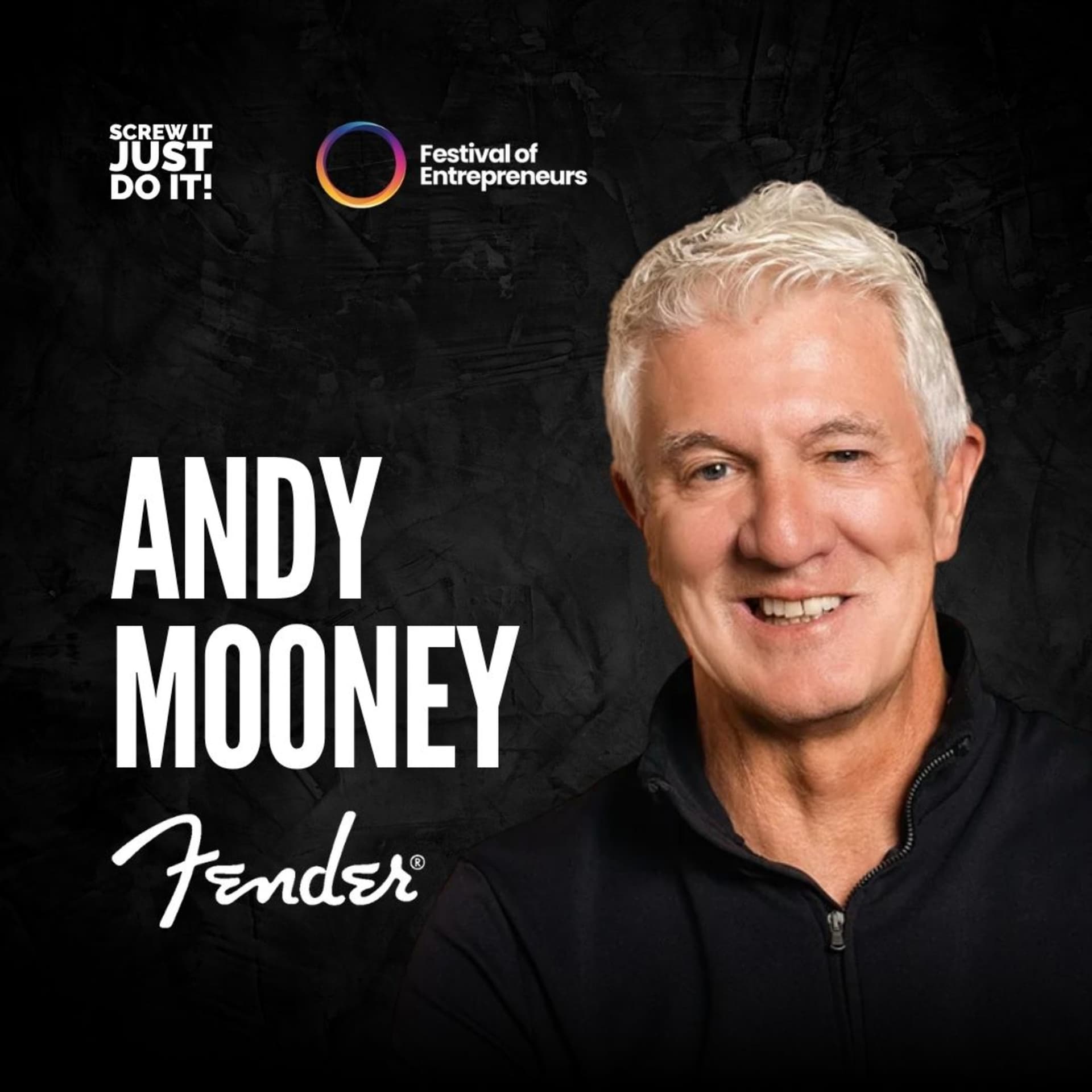
Episode Overview In this bite-sized episode, Andy Mooney, the CEO of Fender Musical Instruments, shares pivotal moments from his career, emphasizing the importance of taking risks and understanding consumer needs over traditional metrics. He recounts how his transition from finance to marketing at Nike revolutionized not only his career but also the marketing direction of the brand.
Key Themes
- Risk and Career Transformation
- Early Career Decisions
- Joined Nike at 25 with a finance background.
- Transitioned to marketing based on insights gathered from consumers rather than relying solely on spreadsheets.
- The Importance of Trusting Your Instincts
- Mooney's willingness to challenge corporate caution led to significant changes in Nike’s marketing approach.
- Consumer Insights Over Corporate Metrics
- Learning from Consumers
- Mooney emphasizes that the best ideas often come from understanding consumers, not just from boardroom discussions.
- His early initiatives included targeting specific demographics like Jamaican youth for marketing basketball shoes.
- Curiosity as a Driver of Success
- Andy’s questioning attitude and willingness to explore unconventional ideas helped him thrive:
- He actively sought knowledge and insights from various sources, including direct interactions with customers.
- Backing Yourself
- Mooney’s confidence in his decisions played a crucial role in his career development:
- A significant bet was made on his ability to predict market trends accurately, which ultimately paid off.
Key Takeaways
- Career Redefinition Through Risk: Embracing risk can lead to transformative career opportunities.
- Value of Customer Understanding: The most effective marketing strategies stem from genuine consumer insights and direct interaction.
- Curiosity Over Experience: An inquisitive mindset can often lead to innovative solutions and opportunities.
- Confidence in Decision Making: Believing in one's choices can significantly influence professional trajectories.
Personal Insights
- Background: Andy shares his humble beginnings growing up in a coal mining family with a passion for music, illustrating how his experiences shaped his leadership style and approach to business.
- Connection to Music: His love for music and guitars led him to Fender, highlighting the intersection of personal passion and professional life.
Notable Quotes
- "Real business success comes from understanding people, not spreadsheets."
- "Sometimes, one confident decision can shape the rest of your professional life."
Conclusion This episode encapsulates Andy Mooney's journey from finance to a transformative marketing role at Nike, accentuating lessons in risk-taking, consumer engagement, and the importance of curiosity—qualities that have defined his successful career across notable companies.
Stay Connected
- New episodes of *Screw It Just DO It* are released every Tuesday & Thursday.
- Follow @festivalofentrepreneurs for updates on future events and entrepreneurship resources.
Hashtags ScrewItJustDoIt #FestivalOfEntrepreneurs #StartupLife #Entrepreneurship
---
This markdown summary provides a structured overview of the podcast episode, highlighting key themes, takeaways, and personal insights shared by Andy Mooney.
Written by AI. May contain mistakes. Listen to the episode to check what was said.
Transcript
Automatic transcript. May contain errors.0:00I never went to college and felt that when I was living in the UK at the time that most business leaders had a finance background. So I literally got my finance qualifications by correspondence course. And the only company that was kind of crazy enough to give me that title was a small company called Nike. And I'd go back to my CEO and say, we need to spend more money on high cut leather basketball boots because that's what the Jamaican kids are wearing. Or we need to spend more money on these expensive running shoes because runners will pay for them. Today's bite-sized episode features Andy Mooney, the CEO of Fender Musical Instruments, whose leadership spanned reinvention, legacy and culture in one of the world's most iconic brands.
0:44And he goes, by the way, what newspapers do you take over the weekend? I said, well, the Financial Times and the Observer, I think back then. And he said, oh, I'm so glad I asked because we're advertising your position as CFO this weekend. And he said, no, no, don't worry. He goes, we can get another CFO. we can't get another one of you to do what you're doing. Welcome to this special bite-sized episode of Screw It, Just Do It from our back catalogue of over 550 past episodes. So look, most guests on this show have had a Screw It, Just Do It moment or moments where they took a big risk and it paid off.
1:19It took them from where they were to where they are now. Can you share a Screw It, Just Do It moment with us, Andy? Yeah, I never went to college and felt that when I was living in the UK at the time that most business leaders had a finance background. So I literally got my finance qualifications by correspondence course. And when I was qualified at the ripe old age of 25 and arrogant enough to feel I warranted a CEO title, a CFO title rather, The only company that was kind of crazy enough to give me that title was a small company called Nike for their UK operation that that time was based in Halifax, New Yorkshire.
2:04So I joined them in AT and spent two years doing finance, but quickly learned that doing the books was was not really the most important aspect of my job. My most important aspect was buying shoes from the parent company six months in advance. So I was a bit like a department store buyer. If you got it right, you were good. If you got it wrong, you were out the door. And I knew nothing about buying shoes. So I spent time gaining intel. I went out on the road with the reps to talk to dealers. I went to road race events to talk to runners. And then I always did something a little off the beaten track.
2:41So I hung out in Brixton with Jamaican kids because they were setting the trends. And I'd go back to my CEO and say, we need to spend more money on high cut leather basketball boots because that's what the Jamaican kids are wearing. Or we need to spend more money on these expensive running shoes because runners will pay for them. And he would every month, he'd say, calm down. All of this is too risky. And I said, hey, I understand. Well, let me push the boat out a little. Cut me some slack. I've done my I've done my homework. and by the way I'll give you a side bet of my money 100 bucks a month that I'm more right than you are so after six months of collecting the money Friday afternoon he called me into the office and said okay we're not going to fight anymore about what you're going to buy he said I appreciate that you've done you've done your work we're going to fight about how much you want to spend because you're always coming in here asking for more and more money because Nike was growing like a weed And I go, OK, that's great.
3:41And he goes, by the way, what newspapers do you take over the weekend? I said, well, the Financial Times and the Observer, I think, back then. And he said, oh, I'm so glad I asked because we're advertising your position as CFO this weekend. And I go, wow, Friday afternoon, that's usually when you get your pink slip. And he said, no, no, don't worry. He goes, we can get another CFO. We can't get another one of you to do what you're doing. They said, we want you to kind of move in and lead marketing. And I was 27. So I said, OK, how long do I have to think about this? And he said, what don't you quite understand about us advertising your position in the newspaper?
4:25So I moved into marketing and out of finance at 27, never moving back. Wow. And it was really the door opening in marketing that opened the next big door, which was moving to the States two years later. And have you seen the Air Jordan movie that's just come out a couple of months back? No, I haven't yet. I'll probably get round to it. But from what I've learned, as you might expect, the story is totally inaccurate. Right. I only saw it last week with the guys, so I thought I'd ask you, yeah. Well, the two, you have to separate who signed Michael from who built the Jordan brand. And, you know, Phil Knight, the founder, and Howard Slusher were always instrumental in signing the bank deals.
5:15They just literally bypassed. I mean, Phil walked into my office one morning when I was chief marketing officer and said, I just signed Brazil, the soccer team. And I go, OK, great. And I said, how much for? He goes, 100 million. Wow. And he goes, no, but it's over 10 years. So it's only 10 million a year. I go, Phil, I don't have 10 million left in my budget to spend. He goes, it's not your budget. It's my budget. He had 70 % of the voting stock, still does. And he made decisions that he believed were in the long-term best interest in the brand. So he was involved in the Tiger deal, Agassi deal, Bo Jackson, and definitely Michael.
5:56But the two guys who built the brand, Peter Moore, who is apparently featured in the movie, and Rob Strasser, who was the chief marketing officer at the time. Interesting. And do you, like one of my favourite books, and again, I don't know, you know, how much stock you put to it, but is the shoe dog. Yeah, it's funny. Unfortunately, my last visit to Portland was about three months ago for the remembrance for Dan Wyden from Wyden and Kennedy fame. And Portland still has, I believe, the largest kind of analog bookstore in the world on Burnside Avenue called Powell's Books. So I had an hour to kill before the event, walked in there and front and center was Phil's book.
6:38And I hadn't I hadn't got around to reading it. And, you know, I read it cover to cover over the next two or three days and then wrote him a very heartfelt note because I thought it was extremely well written, completely, completely accurate, completely self-effacing, which is what Phil always was. And I got a nice note back from him kind of thanking me. Oh, nice. No, I love that book. I thought it's fantastic. So if it's accurate, then that's awesome to hear. And look yourself, I've read about how your family couldn't afford to buy a Fender guitar when you were growing up. And now I read you've got a collection of more than 50 guitars yourself.
7:16You've probably updated that. But what was your experience growing up shaping your relationship with music and how does it feel to now be CEO of a company that makes those guitars? It's pretty remarkable. My father was a coal miner most of his life. and then worked another 20 years for British Leyland when they had a plant in the area where we lived. We had a piano in the house and he would play a piano most nights. He wasn't particularly gifted, but he always stuck with it. And he encouraged me to play an instrument. And like most rebellious sons, I said, well, I'm not playing the one you play, so I'm going to pick up guitar.
7:55So I took classical guitar lessons on a cheap nylon strung, Spanish acoustic and then as I say when I got to the I got to high school and I started to get interested in girls that's when I had to switch to electric and join the band and I you know I played all sorts of kind of variations of guitar and eventually did manage to get a a Fender Music Master which was the absolute entry-level you know Fender you could get at the time and I stuck with it for years until really at the point when I moved to the States and kind of gave up on the idea that my career was going to be connected to music. But a few years after I joined Nike, I'd given up all.
8:43I literally had no guitars in the house, nothing. One of my very good friends, a guy called Alan Rogan, who was the guitar tech for Pete Townsend most of his life, but also Angus Young and some of the great guitarists of the world. He was in town with ACDC, got by the house and dropped me off a book, basically, by Bacon and Ace, The History of Fender. So on a whim, I decided to collect every guitar that was pictured in that book. No way. And that was, you know, a 30-year labor of love. But there were still gaps, even by the time I joined Fender. But I'd already collected guitars and went back to 52 and 55, the very origins of the company.
9:24since then of course it's gotten crazy so 50 has become 100 has it wow wow wow wow wow and who interested to know Andy who that we would know say from plays Fender is but they don't even have to play Fender is but what musicians would have seen your collection like come up to your house and seen what you've got well one interesting event is you know we live in LA so when my daughter who's 16 now went to grade school you know the school she's in has a lot of personalities one of them as i found out tom morello from rage against the machine wow yeah and uh at one of the fundraising events tom had put one of his guitars up for auction which i wasn't honestly wasn't too interested in but it but it came with an hour's lessons personal lesson the guitar from tom so I go I'm winning this so I have I have bet everybody to win it and then you know went up to meet him at his home you know and Tom is kind of legendary for not endorsing anything he literally you know puts tape over the brand of amp and speaker cabinet he uses so I went up to him and the guitar that I took up that day was actually a Chris Shifflett signature guitar the guitarist from the Foo Fighters.
10:43So I go up there, I get my ears less, and I'm a huge Rage and Audioslave fan and played a number of their songs. But there's always parts of the song that you're trying to pick up how it was done on YouTube or lessons or tabs. They never quite all seemed to be right. So he gave me some really great insights, not just on how they play the songs I love, but the whole process of writing music and his approach, which is really remarkable. and at the end of the session he goes what guitars are you playing and i said as you know it's a chris shiflett signature he goes oh do you do you do signature guitars i said yeah we do not that many but we do he goes would you do mine and i go yeah but of course we would but you don't do that type of thing and he goes well he said i know i don't really because but people are knocking off my guitars are very distinctive on the web right and i'm getting nothing for it so i would rather to do it formally and then put the money to good use for his kind of foundation work that he does either with schools or with you know convicts who rehabilitate through the process of playing guitar and we were like okay great so now so soul power with the first of his guitars is now one of those hundred and my collection brilliant i love that i love that some key takeaways from andy's journey from me heritage and innovation can coexist you don't need to choose between the two Leadership is about conviction and clarity, especially when transitioning.
12:15And to reinvent a big brand, sometimes you have to break the rules. Subscribe to Screw It, Just Do It for more founder stories, moments when people dared to say yes.
From the publisher
When Andy Mooney joined Nike at just 25, he was meant to stay behind the numbers. But within months, he realised real business success came from understanding people, not spreadsheets.
In this Bite-sized Screw It Just DO It episode, Andy shares how a risky decision early in his career changed everything. He stepped outside his comfort zone, bet on consumer insights rather than corporate caution, and ended up transforming Nike’s marketing direction.
That move not only defined his leadership style but also set the stage for a remarkable career spanning Disney, Quiksilver, and now Fender Musical Instruments.
This is a story about trusting your gut, asking questions no one else will, and being willing to take a leap when opportunity knocks.
Key Takeaways
Risk can redefine your career. Andy’s transition from finance to marketing shows the power of bold decisions.
Learn from the customer, not the boardroom. The best ideas often come from the people using your product.
Curiosity beats experience. Andy’s willingness to ask unconventional questions led to career-changing opportunities.
Back yourself. Sometimes, one confident decision can shape the rest of your professional life.
🎧 New episodes of Screw It Just DO It drop every Tuesday & Thursday, so make sure you follow wherever you listen. You’ll hear real conversations with founders who’ve taken a risk, built something from scratch, and figured it out along the way.
Stay connected at www.festivalofentrepreneurs.co.uk and follow @festivalofentrepreneurs for news, updates, and future events.
Real entrepreneurs. Real stories. Real strategies.
👉 Follow the show. Keep showing up. Screw It Just DO It!
#ScrewItJustDoIt #FestivalOfEntrepreneurs #StartupLife #Entrepreneurship


