
In short
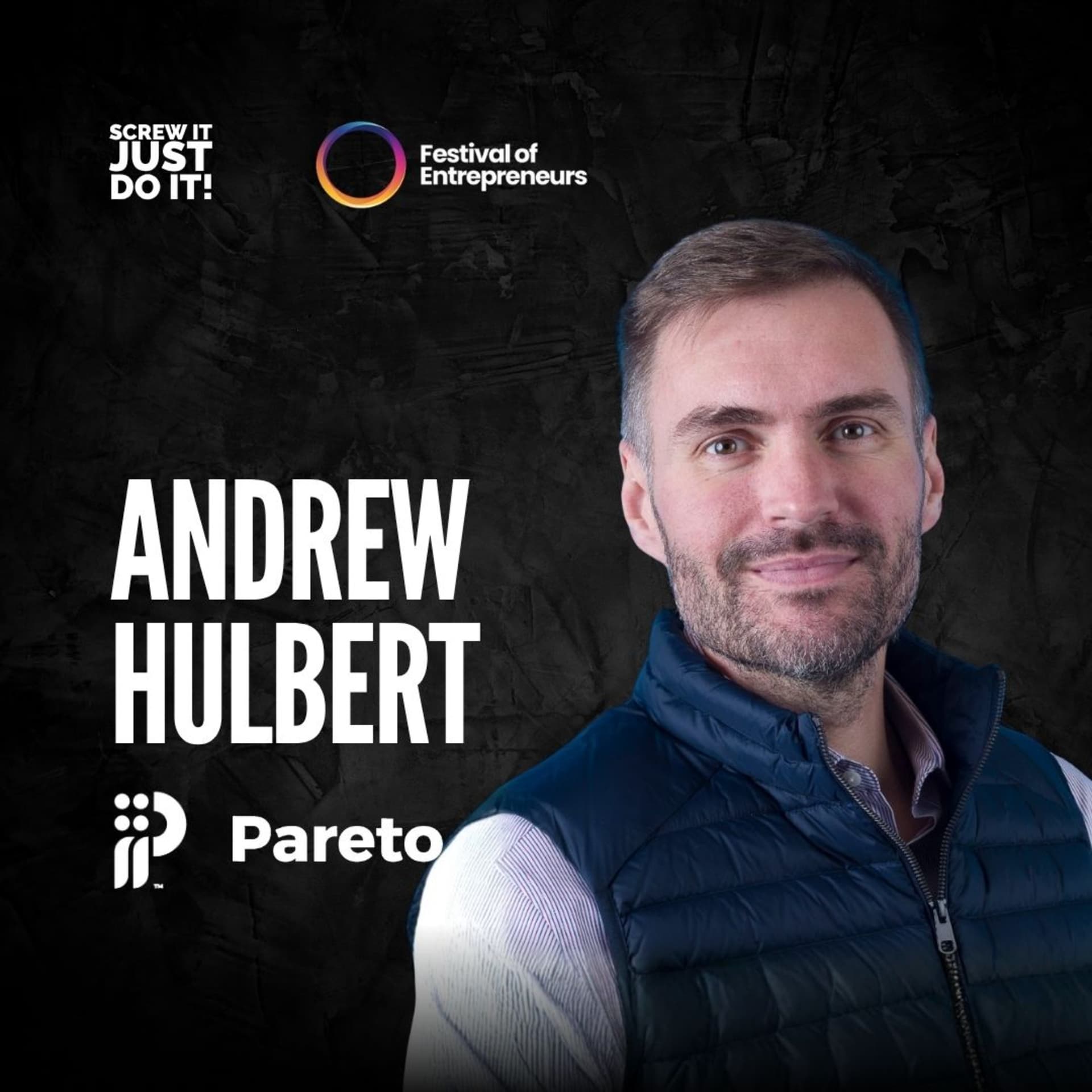
Podcast Episode Notes: What It Takes to Build and Sell a Business Before 40 with Andrew Hulbert
Podcast Details
- Title: Screw It Just DO It
- Host: Alex Chisnall
- Release Schedule: Tuesdays & Thursdays
- Theme: Conversations with entrepreneurs and founders who take risks to build meaningful businesses.
Episode Overview
- Guest: Andrew Hulbert, founder of Pareto FM
- Background: Started the business at 27 with no name, network, or funding. Grew it to a £42 million turnover and exited in less than a decade.
- Key Themes:
- The importance of calculated risk
- Smart scaling strategies
- The value of maintaining a strong team culture
Key Discussions
Starting from Zero
- Initial Journey:
- Andrew left his corporate job at 27 and began his entrepreneurial journey from his bedroom.
- Faced doubts and challenges, especially regarding finances and lack of experience.
- Focused on securing the first significant contract to establish cash flow.
- First Big Win:
- Secured a £200,000 contract with the Bulgari Hotel, which was crucial for funding the business from the beginning.
Strategic Growth Mindset
- Winning Major Clients:
- Successfully landed contracts with high-profile clients like Twitter, ASOS, and Deliveroo.
- Emphasized doing what larger companies get wrong but executing it exceptionally well.
- People and Culture:
- Hired for motivation and shared vision rather than just resumes.
- Retained 17 senior managers throughout the nine-year journey due to a shared commitment to the company’s mission.
Navigating Challenges
- Overcoming Doubts:
- Conscious of doubts increasing with success, Andrew maintained focus on growth rather than fear of failure.
- Experienced skepticism due to being perceived as “too small” compared to larger competitors.
- Growth Despite Adversity:
- Faced negativity but used it to fuel further growth, achieving up to 300% growth in certain years.
Life Post-Exit
- Redefining Success:
- Discussed the importance of presence and personal fulfillment after selling the business.
- Emphasized that true freedom comes from being with family and friends, not just financial success.
Key Takeaways
- Momentum Over Perfection: Start with securing one win rather than waiting for the ideal business plan to materialize.
- Value People: Hire individuals who align with the company’s vision and share a vested interest in its success.
- Invest in Growth: Be willing to reinvest in the business to enhance its value strategically.
- Trust in Leadership: Transitioning from operator to leader involves learning to delegate and trust others.
- Personal Fulfillment Post-Exit: Focus on relationships and personal growth rather than just financial outcomes.
Conclusion Andrew Hulbert’s journey illustrates the essence of entrepreneurship—embracing risks, focusing on strategic growth, and prioritizing people. His insights serve as practical advice for those at any stage of their entrepreneurial journey, especially in understanding the balance between personal and professional fulfillment.
---
Stay Connected: For more insights and stories, follow @festivalofentrepreneurs or visit [festivalofentrepreneurs.co.uk](http://www.festivalofentrepreneurs.co.uk).
Remember: The only thing standing between you and your business breakthrough is the decision to screw it and just do it!
Written by AI. May contain mistakes. Listen to the episode to check what was said.
Transcript
Automatic transcript. May contain errors.0:00The more successful you become, the more those doubts grow because you have something to lose at that stage. I was 27. So I, as I mentioned, I left that business, I handed in three months notice from my corporate job. I literally set up from my bedroom on my own, never run my own business before. And I had no money or backers or partners or anything at that stage. I was more focused around how do I get that first win under my belt? That's really where my thoughts were. So I sold a contract to Bulgari Hotel, which is a five star hotel in Knightsbridge, our first property services contract. It was a couple of hundred thousand pounds a year, and it paid quarterly in advance and it helped us to fund ourselves from the very beginning on a cash flow perspective.
0:39For nine years, we hired 17 senior managers and not one of them left. We didn't get it wrong once. And my superpower, or one of them, was understanding people's motivations and whether our vehicle was going to be right for them over the long term of this business. Okay, so Andrew, let's go back. What was the moment that you said, I'm going to build this myself? What was that final straw that ultimately made you start your business? It's a good question. I'm not sure there's always one defining moment because I think entrepreneurship is a lifestyle from a very early age. When I was 15, I knew I wanted to start my own business because business studies was all I was ever good at.
1:17I was also terrible at listening to other people. So I had to do it my way. There was one moment in particular, I'd worked for an SME that had been bought out by a larger organization. And I was part of that larger organization for a small period of time. and we've been out on a corporate night out you know nice dinner and drinks and stuff and I was a little bit drunk in the back of a cab on the way back out of that dinner with the people I was the senior team and I just looked around and I thought what am I doing here I don't like these people I'm not growing any longer I'm not really getting anywhere in this organization and I had just one of those moments where I looked around and thought nah this isn't for me and quite shortly after that then I handed my notice in and started Pareto from my bedroom at that stage.
1:56Got it and And tell me again, how old were you? Because I guess doing what you've done, as people will find out over the course of the next 40, 45 minutes, is that you didn't have a name in the industry. You didn't have a network in that industry. You didn't have any money. What doubts or voices in your head nearly stopped you from pushing through? Well, yeah, and we all have doubts and they always go through. For me, the more successful you become, the more those doubts grow because you have something to lose at that stage. I was 27. So as I mentioned, I left that business. I handed in three months notice from my corporate job.
2:31I literally set up from my bedroom on my own. Now that I had already worked in that career from the aspect of the property management sector, but I never run my own business before. And I had no money or backers or partners or anything at that stage. So really, because I was still a bit of an upstart at that age, 27, I'm 39 now, and I'm still an upstart these days, but a little bit less, hopefully. And it was more, I was more focused around how do I get that first win under my belt? That's really where my thoughts were. My bigger concern probably was I had a mortgage to pay and I had a wife that was on board with me starting a business, but obviously needed money so that we could pay the mortgage that we had because we were just on normal incomes in a normal job to begin with.
3:15So that was more of my focus. But what that made me do was really hone in on trying to find the first deal and the first sale. And luckily for us, I sold a contract to Bulgari Hotel, which is a five-star hotel in Knightsbridge, our first property services contract. It was a couple of hundred thousand pounds a year, and it paid quarterly in advance. And it helped us to fund ourselves from the very beginning on a cash flow perspective. there aren't many deals like that around now but in 2014 we were able to make that happen and that's how we started and that's how the cash flow began and we've stayed in a positive position all the way through the journey from that point did you just assume that that was the the average deal then given that was your first deal as entrepreneurs i think you beg steal and borrow right when when someone that if anybody who has not started yet and you're looking for your first customer or your first couple of customers if someone is going to believe in you enough to give you the first opportunity.
4:07You need to find the right person that's going to do that for you. But probably they will understand that you need some sort of special treatment to begin with to make it work for them as well. And in the sector I was in, it's serviced by lots of massive companies that are really terrible at delivering services to these corporates and organizations. This organization, Bulgari, was looking for something really high end. So to achieve high end, they had to help us to deliver that back to them, if that makes sense. But that's what real partnership is. When customers and suppliers can work together to understand the fragilities of each other and how you need to deliver service as well.
4:40That is the real sweet spot partnership piece for me. And for us, just as a first contract, it just worked really well. And we built off the back of that one. And was there a point or points early on where you thought, actually, this isn't going to work? Was there, you know, like a real low moment in those early days that nearly stopped you from actually going on that nine-year journey and achieving the exit that you did? Honestly, I'd love to say yes, but no. I was so outwardly focused and inwardly focused on making this a success that I almost didn't have time to stop and worry about the doubts.
5:16I was so laser focused on making it work. That's not always a good thing, by the way. It sounds good, but it's not always because you're so driven to do things that you can't often see what's going on around you and strategy becomes really blurry because you're just dealing with what's in front of you day to day. I think what the pushbacks you did get is even when we got to like a 10, 15, 20 million pound business with 200 staff, people were still telling us we were too small. And that was disheartening because when you were going to deliver services to a corporate client and there were five other competitors you were against that were all 300 times your size.
5:51I mean, we were tiny compared to them. There was always this concern that even though we were brilliant, we were too small. And I used to call it being friend zoned. They would take us all the way to the end and be like, Yeah, we absolutely love you. You're exactly the partner for us. But corporate deal, it's too much of a risk to use your organization. Now, that's OK. You just have to roll with those. You accept that that's what's happened and you move on to the next one. But the way you deal with that is just go and find three more and then show them that they were wrong and use that negativity to keep growing.
6:21So, yeah, you have the doubts, but we went on an incredibly fast growth curve that had sometimes 300 percent growth each year. you don't really have chance to stop and look at what's going on. Just have to try and keep within a certain level of parameters and keep moving forward. If this conversation resonated with you, don't just sit there, act on it. Make sure you follow or subscribe for more game-changing conversations. And remember, the only thing standing between you and your business breakthrough is the decision to screw it and just do it.
From the publisher
My guest this week is Andrew Hulbert, founder of Pareto FM, who started his business from his bedroom at 27 with no name, network, or funding and grew it to a £42 million turnover before exiting less than a decade later.
Andrew’s story is one of calculated risk, relentless focus, and smart scaling. From landing his first £200,000 contract with the Bulgari Hotel to winning major clients like Twitter, ASOS, and Deliveroo, his approach to business growth was simple: do what big companies get wrong, and do it exceptionally well.
In this episode, we discuss the realities of starting from zero, why being “too small” can become your biggest advantage, and how creating sweet equity helped him retain every senior hire across nine years. Andrew also shares what life looks like post-exit. Family, friends, and purpose and what it truly takes to let go without losing identity.
If you’re at the stage where you’re thinking of starting, scaling, or selling, this conversation will help you think more strategically about risk, people, and purpose.
Key Takeaways:
Start with One Win: Focus on getting your first deal, not the perfect business plan. Momentum starts with movement.
People Are Everything: Hire for motivation, not CVs. Pareto’s 17 senior leaders stayed through to exit because they shared the vision and had skin in the game.
Be Willing to Bet on Growth: Andrew’s decision to reinvest £1 million into overheads helped double the company’s value in two years.
Know When to Step Back: The biggest challenge isn’t starting, it’s letting go. Learning to trust others is what takes a founder from operator to leader.
Redefine Success After Exit: Freedom doesn’t come from a payout, it comes from presence—being there for family, friends, and yourself.
🎧 New episodes of Screw It Just DO It drop every Tuesday & Thursday, so make sure you follow wherever you listen. You’ll hear real conversations with founders who’ve taken a risk, built something from scratch, and figured it out along the way.
Stay connected at www.festivalofentrepreneurs.co.uk and follow @festivalofentrepreneurs for news, updates, and future events.
Real entrepreneurs. Real stories. Real strategies.
👉 Follow the show. Keep showing up. Screw It Just DO It!
#ScrewItJustDoIt #FestivalOfEntrepreneurs #StartupLife #Entrepreneurship


